A Brief Definition of ‘Theology’ a la Plantinga

See, even Snoopy does theology.

See, even Snoopy does theology.

What is theology?

At first blush, that sounds like a grand, magnificent, heavy, and “meta” question. And it can be. For those who love it, the practice, discipline, and joy that is the study of theology requires and calls forth numerous complementary (and contradictory) explanations of just what we think we’re doing when we study and write “theology”–which is valid, and none of which could possibly be the last word on the subject. I myself have spent a decent bit of my time thinking and reading about over the last few years and I don’t think I’ll ever tire of it. It’s kind of like philosophy that way.

That said, in another sense, the practice of theology is quite straightforward and it’s a shame that so many people feel intimidated away from engaging it just at the sound of the word. It’s my conviction that because all of life has to do with God, to some degree every Christian should be trying to think theologically about life at some level.

What I want to put forward very simple (and hopefully helpful) definition of theology for those who seem to be scared off by the very thought of engaging in such an “exalted” task. To do so, I’d like to rip off Alvin Plantinga.

Plantinga opens his very short, but landmark work God, Freedom, and Evil thus:

This book discusses and exemplifies the philosophy of religion, or philosophical reflection on central themes of religion. Philosophical reflection (which is not much different from just thinking hard) on these themes has a long history: it dates back at least as far as the fifth century B.C. when some of the Greeks thought long and hard about the religion they had received from their ancestors. In the Christian era such philosophical reflection begins in the first or second century with the early church fathers, or “Patristics” as they are often called; it has continued ever since.

God, Freedom, and Evil, pg. 1

Did you catch that? Plantinga defines philosophical reflection as “not much different from just thinking hard” about some theme. And honestly, that seems about right.

What I want to propose is that the practice of theology, and especially Christian theology, could be very simply defined as:

“Just thinking hard about what God has said about himself.”

This isn’t overly technical. Nor do I think it’s very scary. But in a pinch it gets to the heart of what theology is all about.

Now, while I think it serves pretty well on its own, let me spell out a few basic implications of the definition:

  1. First, Christian theology is clearly a human practice. Even though we’re thinking about God, thinking hard is still something people do. There’s no escaping the human character of theology.
  2. Second, and this should be obvious, it’s a matter of thinking hard. While theology should involve prayer and practice, you inevitably have to use the mind God gave you to engage in theology. What’s more, you have to really use it. So, while I do think everybody should try to think theologically, don’t take that to mean that it’s obvious, or easy all the time. It’s not. But then again, what is there that’s truly worth doing that doesn’t involve some effort?
  3. Finally, and most importantly, Christian theology is rooted in divine revelation. The main thing that separates Christian theology from pure philosophy is that the Christian theologian doesn’t just think hard about “God” in general, or based on their own experiences, perceptions, and so forth. Christian theologians think hard about what the Triune God of the covenant has already told us about himself. The good news is that God has spoken, so we don’t have to figure everything out on our own. Now, different Christian traditions will then argue about the priority of the Bible in that revelation, the teaching of the Church, or how much principles of human thought drawn from outside ought to contribute to our theological reflection. As a Protestant, I’m going to do my best to give primacy and finality to the Bible. Still, at the end of the day, if a theology is going to properly claim the name ‘Christian’, it’s going to start with revelation and then work from there. The main test of theology is not how it makes us feel, nor how hip, interesting, or relevant it is to modern concerns, but how well it matches up with what God has revealed.

So there you go. At core, for everybody who’s too scared to start studying theology because it sounds so esoteric, scary, and abstract, remember theology is just “thinking really hard about what God has said about himself.”

So what are you waiting for? Grab your Bible, get to reading, and get to thinking.

Soli Deo Gloria

5 Theses on The Knowledge of God (Or, Bavinck Puts Himself in a Nutshell)

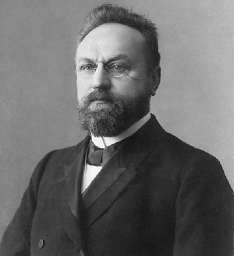
Truly dominant-looking theological man. It's a win for Reformed beardliness everywhere.

Truly dominant-looking theological man. It’s a win for Reformed beardliness everywhere.

Herman Bavinck developed one of the most comprehensive and sophisticated theologies of revelation of the early 20th Century. I was remarking to a friend the other day that one simply has to trade out a few of the names, update a few references here and there, and Bavinck could have cranked it out last year. What’s more, it’s stunning in its comprehensiveness and continued relevance.  The first volume of the Reformed Dogmatics alone clocks in at just over 600 pages and he continues to work out some of the implications and corollaries in the first pages of volume two on God and creation.

Of course, summarizing it all would be impossible. And yet in one helpful little passage, Bavinck does us the favor of summarizing himself in five broad points on the nature of our knowledge of God in revelation:

  1. All our knowledge of God is from and through God, grounded in his revelation, that is, in objective reason.
  2. In order to convey the knowledge of him to his creatures, God has to come down to the level of his creatures and accommodate himself to their powers of comprehension.
  3. The possibility of this condescension cannot be denied since it is given with creation, this is, with the existence of finite being.
  4. Our knowledge of God is always only analogical in character, that is, shaped by analogy to what can be discerned of God in his creatures, having as its object not God in himself in his knowable essence, but God in his revelation, his relation to us, in the things that pertain to his natural, in his habitual disposition to his creatures. Accordingly, this knowledge is only a finite image, a faint likeness and creaturely impression of the perfect knowledge that God has of himself.
  5. Finally, our knowledge of God is nevertheless true, pure, and trustworthy because it has for its foundation God’s self-consciousness, its archetype, and his self-revelation in the cosmos.

–Reformed Dogmatics Vol. 2: God and Creation, pg. 110

To paraphrase:

If you know anything about God, it’s because God himself has revealed it. We can’t reason our way up to God, or imagine what God is like on our own power, or natural, human abilities. For us to know what God is like, he has to take the initiative to tell us.

For him to do this inevitably involves adjusting himself to our limitations, so to speak, by using human language, concepts, and created reality to point beyond itself to the uncreated. Calvin described this as a nurse talking in baby-talk to the child she’s caring for, stooping to the child’s level to be understood.

Now, this initially seems problematic. Isn’t it possibly idolatrous to compare God to creation? Bavinck says not inherently so, because God himself created everything for the purpose of revealing his glory. In other words, creation is already suited to the task by God’s own humble and glorious design, as evidenced by the fact that we, as the crown of creation, are made to be Image-bearers.

That said, all of our knowledge of God is analogical–for every human or created thing we say God is like, we also have to see he is also unlike and beyond. These created pictures don’t reveal all there is to know about God, or exhaustively capture the reality of what the analogy is pointing to. As I’ve put it elsewherewhen you’re saying something about God or reading it in the Bible–whether about his being or emotions or something else–you have to insert a little qualifier because you’re comparing the transcendent, uncreated one to something created. Kind of like, “God is good (but not exactly the way you think of good)”, or “God is strong (and that is an understatement so serious you don’t have a category for it)”, or “God is angry (but you can’t think of it like sinful human anger)”, or “God repented (but not in the way that implies he didn’t know what he was doing)”. It’s like, but also unlike.

Of course, that doesn’t mean our knowledge of God isn’t any good. Simply because we don’t know God as fully as he knows himself, that doesn’t mean we don’t know him at all, or even falsely. No, our analogous knowledge is perfectly adequate knowledge, true and trustworthy, though suited to our cognitive capabilities.

So there you have it–Bavinck in a nutshell. Hopefully, that whets your appetite for the full dosage. I mean, if he can get all that done in brief paragraph, imagine what he can do with four volumes?

Soli Deo Gloria 

A Lie About God is a Lie About Life

liesOur culture likes the idea of heresy. Whenever you see the word ‘heresy’ used on your average blog or article it’s synonymous with bold, controversial, and creative thinking. It is thought not confined with dogma and church controls. It’s ideas that scare the “theologians”, and break out of the traditional mold. (As to why scaring theologians has become a valued activity, I’m clueless. Is there similar trend elsewhere? Should I want to perplex philosophers? Or, mystify mathematicians? Maybe frighten some physicists?)

In some quarters, heresy is sexy.

Alister McGrath has even gone so far as to talk about our “love affair with heresy.” It epitomizes all that we entrepreneurial, free-thinking, radically individualistic Americans believe about religion. It’s up to us to figure out and nobody has a right to lay down a “correct” or “right” way to think about spirituality and God.

In this context, anybody trying to talk about orthodoxy or heresy immediately calls to mind images of nefarious, medieval church councils, trials, and other wickedness.

So Why Does Jesus Think Differently? So why do Jesus, Paul, Peter, and John seem to approach the problem of false teaching differently than we do? Because they do. Very differently. A sampling:

Jesus: Beware of false prophets, who come to you in sheep’s clothing but inwardly are ravenous wolves. You will recognize them by their fruits. Are grapes gathered from thorn bushes, or figs from thistles? So, every healthy tree bears good fruit, but the diseased tree bears bad fruit. A healthy tree cannot bear bad fruit, nor can a diseased tree bear good fruit. Every tree that does not bear good fruit is cut down and thrown into the fire. (Matthew 7:15-20)

Paul: I am astonished that you are so quickly deserting him who called you in the grace of Christ and are turning to a different gospel—not that there is another one, but there are some who trouble you and want to distort the gospel of Christ. But even if we or an angel from heaven should preach to you a gospel contrary to the one we preached to you, let him be accursed. As we have said before, so now I say again: If anyone is preaching to you a gospel contrary to the one you received, let him be accursed. (Galatians 1:6-9)

John: For many deceivers have gone out into the world, those who do not confess the coming of Jesus Christ in the flesh. Such a one is the deceiver and the antichrist. Watch yourselves, so that you may not lose what we have worked for, but may win a full reward. Everyone who goes on ahead and does not abide in the teaching of Christ, does not have God. Whoever abides in the teaching has both the Father and the Son. If anyone comes to you and does not bring this teaching, do not receive him into your house or give him any greeting, for whoever greets him takes part in his wicked works. (2 John 1:7-11)

Peter: But false prophets also arose among the people, just as there will be false teachers among you, who will secretly bring in destructive heresies, even denying the Master who bought them, bringing upon themselves swift destruction. And many will follow their sensuality, and because of them the way of truth will be blasphemed. And in their greed they will exploit you with false words. Their condemnation from long ago is not idle, and their destruction is not asleep. (2 Peter 2:1-3)

Their attitude seems so intolerant and harsh. What about freedom of thought? Independence of mind?  What accounts for the difference? Is it just that we are more enlightened and cosmopolitan than these backwards dogmatists?

Eugene Petersen, my favorite pastoral theologian and theological pastor, cuts to the heart of the matter when discussing John’s attitude towards false teaching:

“Our age has developed a kind of loose geniality about what people say they believe. We are especially tolerant in matters of religion. But much of the vaunted tolerance is only indifference. We don’t care because we don’t think it matters. My tolerance disappears quickly if a person’s belief interferes with my life. I am not tolerant of persons who believe that they have as much right to my possessions as I do and proceed to help themselves… I am not tolerant of businesses that believe that their only obligation is to make a profit and that pollute our environment and deliver poorly made products in the process. And [John] is not tolerant when people he loves are being told lies about God, because he knows that such lies will reduce their lives, impair the vitality of their spirits, imprison them in old guilts, and cripple them with anxieties and fears…

That is [John’s] position: a lie about God becomes a lie about life, and he will not have it. Nothing counts more in the way we live than what we believe about God. A failure to get it right in our minds becomes a failure to get it right in our lives. A wrong idea of God translates into sloppiness and cowardice, fearful minds and sickly emotions.

One of the wickedest things one person can do [is] to tell a person that God is an angry tyrant, [because the person who believes it will] defensively avoid him if he can… It is wicked to tell a person that God is a senile grandfather [because the person who believes it will] live carelessly and trivially with no sense of transcendent purpose… It is wicked to tell a person a lie about God because, if we come to believe the wrong things about God, we will think wrong things about ourselves, and we will live meanly or badly. Telling a person a lie about God distorts reality, perverts life and damages all the processes of living.”, Traveling Light: Reflections on the Free Life (Downers Grove, Ill.: InterVarsity Press, 1982), pp. 33-35.

We don’t care about false teaching and heresy because we don’t see what it does. We don’t see that “A lie about God becomes a lie about life.” Jesus is intensely opposed heresy because he doesn’t miss the connection between what we believe about God and every inch of our lives. Paul opposes it with every fiber of his being because he is passionately for the church. John is not simply out to control his “beloved”, but rather make sure that they remain free, truly free to live the life God has called his children to.

Good theology is not just an academic exercise for “theologians” in seminaries. It’s not just for pastors in their studies. It’s for everyday Christians for everyday living. This is why we are to care about these things. This is why we preach, teach, and correct in light of the Word of God.

To sum up, we might ask a final question: “Why does Jesus hate heresy?” Because He loves you too much to have you believe lies about God.

Soli Deo Gloria

Can a God of Love Have Wrath?

bosnian gravesOne of the most common tropes in popular theology today is that a God of Love couldn’t be a God of Wrath. The two are completely and utterly opposed. The God of Jesus Christ, overflowing with love for the world in the Gospel, couldn’t possibly stand over against the world in wrath and judgement. Love affirms, while wrath condemns. Love embraces, while wrath rejects. Love is the unfathomable beauty of God, while wrath is everything dark about human hate projected onto God.

Miroslav Volf used to think that the too–until the Bosnian War, that is:

The apostle Paul ascribed to God actions and attitudes that stand in sharp contrast with how such a doting grandparent behaves. He spoke rather freely of God’s “judgment”, “condemnation”, even of God’s “wrath” (see Romans 1:18-3:20). Setting aside the litany of things that the Apostle believed merit God’s condemnation, let’s focus on the fact of it. In particular, let’s examine the appropriateness of God’s wrath, the strongest form of God’s censure….

I used to think that wrath was unworthy of God. Isn’t God love? Shouldn’t divine love be beyond wrath? God is love, and God loves every person and every creature. That’s exactly why God is wrathful against some of them. My last resistance to the idea of God’s wrath was a casualty of the war in former Yugoslavia, the region from which I come. According to some estimates, 200,000 people were killed and over 3,000,000 were displaced. My villages and cities were destroyed, my people shelled day in and day out, some of them brutalized beyond imagination, and I could not imagine God not being angry. Or think of Rwanda in the last decade of the past century, where 800,000 people were hacked to death in one hundred days! How did God react to the carnage? By doting on the perpetrators in a grandparently fashion? By refusing to condemn the bloodbath but instead affirming the perpetrators basic goodness? Wasn’t God fiercely angry with them? Though I used to complain about the indecency of the idea of God’s wrath, I came to think that I would have to rebel against a God who wasn’t wrathful at the sight of the world’s evil. God isn’t wrathful in spite of being love. God is wrathful because God is love.

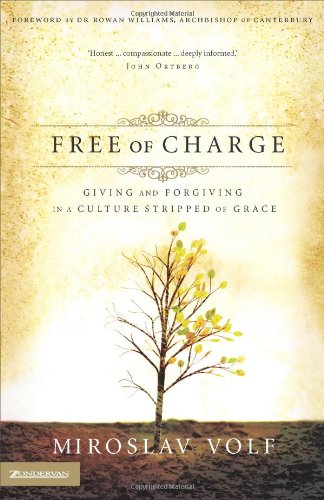
-Miroslav Volf, Free of Charge: Giving and Forgiving in a Culture Stripped of Grace pp. 138-139

Wrath isn’t the opposite of love, then–indifference is. There are caveats on all of this, of course. It must be remembered wrath is not a primary attribute of God, but rather a relative one provoked by sin–much the way mercy are. What’s more, God is impassible and so his wrath must be conceived of within the parameters of the Creator/creature distinction, with the appropriate safeguards of analogical language in place, protecting us from some crude, explosive Zeus-like wrath. And yet, the bottom line is that it is still something properly, indeed, necessarily affirmed of the God who is the Lover of the world.

free of chargeOf course, there’s a danger that comes with a theoretical knowledge of God’s wrath–that we keep it at arm’s length and fail to relate it to our own sin:

    Once we accept the appropriateness of God’s wrath, condemnation, and judgment, there is no way of keeping it out there, reserved for others. We have to bring it home as well. I originally resisted the notion of a wrathful God because I dreaded being that wrath’s target; I still do. I knew I couldn’t just direct God’s wrath against others, as if it were a weapon I could aim at targets I particularly detested. It’s God’s wrath, not mine, the wrath of the one and impartial God, lover of all humanity. If I want it to fall on evildoers, I must let it fall on myself – when I deserve it.

Also, once we affirm that God’s condemnation of wrongdoing is appropriate, we cannot reserve God’s condemnation for heinous crimes. Where would the line be drawn? On what grounds could it be drawn? Everything that deserves to be condemned should be condemned in proportion to its weight as an offense – from a single slight to a murder, from indolence to idolatry, from lust to rape. To condemn heinous offenses but not light ones would be manifestly unfair. An offense is an offense and deserves condemnation…

-ibid, pg. 139

And yet, thankfully that is not the whole of the story. God’s love is revealed not only in condemnation of sin, but chiefly in the salvation of sinners from that judgment in the death of his Son:

For while we were still weak, at the right time Christ died for the ungodly. For one will scarcely die for a righteous person—though perhaps for a good person one would dare even to die—but God shows his love for us in that while we were still sinners, Christ died for us.Since, therefore, we have now been justified by his blood, much more shall we be saved by him from the wrath of God. For if while we were enemies we were reconciled to God by the death of his Son, much more, now that we are reconciled, shall we be saved by his life. More than that, we also rejoice in God through our Lord Jesus Christ, through whom we have now received reconciliation. (Romans 5:6-11)

Soli Deo Gloria

Finding God in the Gallery (Or, Some Notes on a Visit to LACMA)

godingallery1This last weekend I took my wife to the Los Angeles County Museum of Art (LACMA) as part of a date. We went in part because my wife is a fan of modern art, the main focus of LACMA, and because I myself have finally taken an interest in it. Up until a month or so ago, while I understood that there was something going on in modern works, having a modest background in sketching, I’ve been likely to favor Medieval, Reformational (especially the Dutch Masters), or Neo-Classical periods. I’ll be honest, Campbell’s soup just wasn’t doing it for me.

After reading Daniel Siedell’s theological exploration of contemporary art, God in the Gallery, a couple weeks ago I’ve been motivated to try to engage it once more—or really, for the first time. Given that I could not help but experience LACMA as anybody other than myself, I wanted to write down a few notes, a couple of them, unsurprisingly theological in nature.

meidner1. Hey, Some of this Stuff is Good – To begin with the most basic point: it turns out modern and contemporary art is fascinating. Once you get over the fact that some of it does not look like anything you can recognize, or that the artist is not trying and failing to color inside the lines, you can begin to appreciate it for it is actually doing. Of course, not all of modern art is abstract expressionism.

For instance, there was a fabulous exhibit on productions connected to The Golem that McKenna and I loved. Also, I found myself drawn into the section on German Expressionism and the Bauhaus movement. Ludwig Meidner’s “Apocalyptic Landscape” could have easily held my attention for hours. The atrocity of anybody calling this “degenerate” art finally began to sink in.

Beyond that, easily the most “fun” piece in the whole exhibit, along with the dozens of other viewers, especially children, McKenna and I were drawn into Chris Burden’s Metropolis II:

All in all, I’m excited to continue exploring modern and contemporary art.

2. How Did He Create So Many Unique Pieces? – LACMA houses what seems to be to be a good number of Picasso’s. Probably ten or twelve. While Picasso has never been my favorite, even of the moderns, I found myself marveling at the variety and number of them, knowing that these were probably only a fraction of his total work. While distinctively Picasso’s, bearing his unique mark and style, all of them were unique, keenly differentiated by color, subject matter, and even materials used.

picassoOf course, in the middle of all of this, I realized that while I was looking at the art, I was disturbingly distracted by all the museum visitors. In room after room, I found myself unable to fully devote my attention to the pieces on display because of all the other people walking around.  There they were: the defiant tourist with the camera, determined to snap shots no matter what the security said; mothers hustling little ones about wanting them to gain culture without getting their fingerprints on it; older art connoisseurs, ex-hippies who’d since become wealthy in the market, but still cherished their avante-garde youth; young couples like McKenna and I, out for a nice day at the museum. Hair, clothes, eyes, words uttered, and accompanying gestures that spoke other, sometimes contradictory words.

It’s at that moment I realized I was distracted from the Picassos by the work of another artist: the one who made Picasso himself. And I was struck then at the thought, what is greater? A Picasso, or the Picasso? This isn’t meant as a sort of anti-Picasso Jesus-juke. I just couldn’t help but wonder at the stunning vision and power of a God who could fashion such creative creatures. God is the artist behind the artists.

3. We Are Bits of Performance Art – A final thought struck me in the same vein later on. Given the dazzling assortment of people at the gallery, inevitably I was drawn to a few in particular. There was one couple that looked the quintessential LA art couple. I don’t remember exactly what the girl was wearing bit it was hip. She had multi-colored hair, thrown up seemingly carelessly in a pony-tail. The guy had greasy, disheveled student hair and was rockin’ an older black sports-coat over a jean button-up shirt, darker pants, and to top it off, some boots. These weren’t just regular boots, though. Actually, they weren’t even boots—they were work-shoes—and you could tell. They were dirty and hacked up, with paint stains, and God only knows what else. The whole effect said, “I don’t care what you think. I’m here for the art. Not to preen or impress the rest of you.”

Of course, that took effort to say.

performance artIt’s at this point that I was reminded of one of the more illuminating sections in Siedell’s account: the care taken by contemporary artists to cultivate the proper environment for viewing their works. In a manner that can only be described as ‘religious’, installations are arranged so that the aesthetic effect is all-encompassing down to the last detail of the way the light fails on the viewer when they encounter the work. Even in those pieces that seem most inaccessible, the encounter with the piece and the viewer is carefully cultivated.

Much in the same way, this couple had carefully cultivated the experience of viewing them. Despite the initial impression of haphazardness, upon inspection, it begin to seem all-too-carefully selected for use. And this is where I began to realize that in many ways we’re walking pieces of performance art. We think and we craft ourselves, our movements, and words in relation to our respective audiences and the spaces and times we inhabit; there are layers and resonances to our movements. Some elements are carefully scripted, while others are more akin to spontaneous improvisations.

All of this raises the question: what are we performing? What image are we cultivating? Or, rather, whose image? Are we set on mirroring the idols (money, sex, power, freedom, & so forth) on offer in the culture around us? Or we take into account that we are God’s workmanship (poema; cf. Eph. 2:10), intended to be eikons of the Son in our mortal flesh (2 Cor 4:11)?

Soli Deo Gloria

Hodge and Warfield: Our View of Inspiration Reflects Our View of God

Great beard. Great theologian.

Great beard. Great theologian.

Based on Twitter it seems like everybody is talking about the doctrine of Scripture at this year’s gather of the Evangelical Theological Society (ETS). It seemed fitting then to highlight this little gem from the modern grand-daddies of the doctrine of Inspiration, Archibald Hodge and B.B. Warfield:

…it is also evident that our conception of revelation and its methods must be conditioned upon our general views of God’s relation to the world, and His methods of influencing the souls of men. The only really dangerous opposition to the Church doctrine of Inspiration comes either directly or indirectly, but always ultimately, from some false view of God’s relation to the world, of His methods of working, and of the possibility of a supernatural agency penetrating and altering the course of a natural process. But the whole genius of Christianity, all of its essential and most characteristic doctrines, presuppose the immanence of God in all His creatures, and His concurrence with them in all their spontaneous activities. In Him, as an active, intelligent Spirit, we all live and move and have our being. He governs all His creatures and all their actions, working in men even to will, and spontaneously to do His good pleasure. The currents, thus, of the divine activities do not only flow around us, conditioning or controlling our action from without, but they none the less flow within the inner current of our personal lives confluent with our spontaneous self-movements, and contributing to the effects whatever properties God may see fit that they shall have.

–INSPIRATION, by Archibald Hodge and Benjamin Warfield, The Presbyterian Review 6 (April 1881), pp. 225-60.

As Vanhoozer* never tires of pointing out, the God question and the Scripture question can’t be separated. What you think about one is bound to affect what you think about the other.

Soli Deo Gloria

*I’ve been busy so this will have to serve as a place-holder for my “Engaging KJV” series. Should be back to it next week.

What’s So Great About Vanhoozer? (Engaging KJV Part 1)

I don't know what he's thinking right here, but it could probably serve as a Ph.D. thesis.

I don’t know what he’s thinking right here, but it could probably serve as a Ph.D. thesis.

When it comes contemporary systematic theology Kevin J. Vanhoozer is the man. I think I’ve said something like this before, but The Drama of Doctrine single-handedly saved my theology of Scripture when I was in my semi-emerging phase. His recent work Remythologizing Theology: Divine Action, Passion, and Authorship is probably the most important text engaging the doctrine of God and first theology (the confluence of God, scripture, and hermeneutics) that’s come out in the last 10 years. (I’ve summarized Vanhoozer’s summary of what that’s about here.) At least, in my admittedly unqualified opinion.

Imagine my excitement, then, when I got my hands on Southeastern Theological Review‘s volume for Summer 2013, which is dedicated entirely to interacting with Remythologizing. The volume is based on an ETS symposium dedicated to the subject, consisting mainly of four critical essays by Stephen Wellum, Oliver Crisp, and Fred Sanders and is capped off by a final response article by Vanhoozer himself. I’ve been waiting to read some constructive engagement with his work, but since the book is relatively new (only a couple of years old), and has been prohibitively priced (until now), there hasn’t been much.

I’ll just say that for those interested in an introduction to Vanhoozer’s project, or further discussion of the important issues involved, these are excellent essays from top scholars. Vanhoozer’s piece alone is worth the price. In order to encourage readers to either pick up the book, or follow up with the essays, over the next few weeks, I’ll write one post addressing each of the respective essays, probably picking out a key passage framing a critical issue, as well as sections from Vanhoozer’s own response.

What’s So Great About Vanhoozer? For this first week, though, I’d like to summarize a small section from Guest Editor Mark Bowalds’ introductory piece “A Generous Reformer: Kevin Vanhoozer’s Place in Evangelicalism.” Using an early piece in the Vanhoozer corpus, Bowald highlights four key features of Vanhoozer’s theological practice that make him necessary reading for those interested the future of Evangelical theology.

1. “First among these characteristics is his commitment to affirm and promote that quintessential feature of evangelical theology: the unrivalled authority of Scripture and the appropriate and fitting practices of its reading.” (pg. 3) Though nuanced, complex, and catholic (in the best sense), Vanhoozer’s theology unquestionably Evangelical, especially in its orientation to, and robust affirmation of the authority of Scripture. Indeed, anyone who has trucked through Is There a Meaning in This Text?, First Theology, or The Drama of Doctrine has seen his passion for, not only the authority of Scripture in the abstract, but it’s lived practice. For Vanhoozer, theology is not only scientia, but also sapientia, a lived out wisdom that gives the life of the Church its particular form. Scripture is not properly read until it is performed by a company of disciples steeped in the Theo-Drama of the Gospel.

2. “The second feature on display early on is his fearless and insatiable appetite to explore and read broadly and engage positively with diverse traditions and authors.” (pg. 4) Among the many accolades his books could (and have) been awarded with, Vanhoozer’s could probably qualify for that of most interesting bibliographies. For instance, in The Drama of Doctrine, alongside the theological titles of expected theologians (Calvin, McGrath, Webster, Barth, Von Balthasar), you’ll find Jeffrey Knapp’s study Shakespeare’s Tribe: Church, Nation, and Theater in Renaissance England and Stanislavski’s An Actor Prepares. Beyond that, you’ll find these works seamlessly blended with the insights of philosophers such as Wittgenstein, Gadamer, Riceour, Searle, and Habermas. Vanhoozer won’t be limited to the usual suspects when it comes to theological dialogue.

3. “Third, he displays a unique confidence in drawing from this great breadth of material, integrating and weaving it creatively and humorously into dialogue with evangelical thought.” (pg. 4) Following off of this, it must be noted that he engages this diversity well. As Bowald points out, with section titles like “Propositional Paradise Lost? Some problems with the Concept of Revelation”, he’s obviously comfortable playing with the big boys (and girls), and it shows in his delightfully playful literary demeanor. This isn’t mere whimsy, or the sign of an unserious thinker, however, but rather a mode of communication that displays the confidence that Evangelical doctrine ought to engender. Instead of insular jeremiads, or timid, lowest-common denominator forays out into the broader theological world, Vanhoozer displays a creative ease building on and generously critiquing his interlocutors from a generously Evangelical vantage point.

4. “The last noteworthy…aspect of Vanhoozer’s work which emerges from the foundation of these first three, is his willingness to hold on loosely to method.” (pg. 4) As Bowald points out, this feature of Vanhoozer’s thought and practice is often misunderstood. While he definitely has a clear theological method, Vanhoozer is quite comfortable employing various conceptual aids in an ad hoc, bricolage fashion in order to supplement traditional doctrines; a little speech-act theory here, a bit of acting methodology there, and a dash of continental hermeneutics there and you have a retooled doctrine of Sola Scriptura ready for use.  For “serious” theologians, who need there to be a more explicit, linear, link-up between method and articulation, this can be a bit disorienting. (Of course, that’s part of the reason nobody reads them.) Bowald is keen to note, however, that this flows from his humble and generous approach to theological science–a willingness to appropriate and employ whatever insights he can, always in submission to the Word of God.

All of this amounts to a very winsome, irenic, and moderating, yet essentially conservative figure. (In a sense, think Tim Keller, but in systematic theology.) As Bowald notes: “Evangelicals have always been better at building moats than bridges. Evangelical theology tends to be insular and centripetal; Kevin Vanhoozer’s approach to theology is porous and centrifugal.” (pg. 5) All of this goes doubly for the Reformed. Vanhoozer manages to be confessional without being cantankerous, faithful without being fearful. Besides the importance of his constructive answers on the actual material questions he addresses , he is an exemplar of an approach theology interested in reaching, without compromise, beyond the borders of our own little, insular world.

And isn’t that what a truly Evangelical theologian ought to do?

Soli Deo Gloria

Part 2 – Does Diversity of Form Lead to Diversity of Message In Theology?

Part 3 – Is Vanhoozer Still a 5-Point Alvinist?

Genesis 1: Meet the Author (The Story Notes)

My church has begun a church-wide, across all departments, study through The Story, a chronological, abridged edition of the Bible that takes you through the story of Scripture from Genesis to the end of Acts in 31, novel-like chapters. That’s what I’ll be teaching through with my college student for the next 9 months or so. It’s a fun project that’s challenging me to deal with narrative sections, teach large chunks at a clip, and point my kids to Christ throughout the whole redemptive-historical storyline of the text.

That said, it seemed worth it to start posting my notes for these talks on a regular basis. It might happen every week, or not, depending on how helpful I think it is, or time constraints. My one request is that you remember these are pretty rough notes and I’m teaching my students, not a broader audience.

Well, with that intro out of the way, here’s Genesis 1.

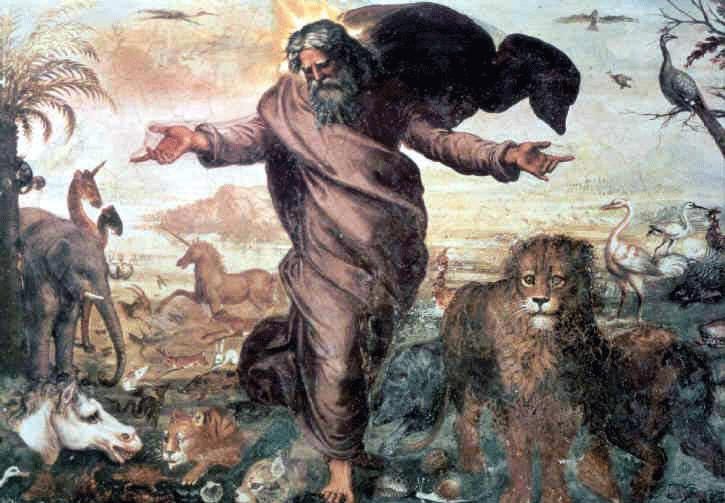
God-creating-creatures-by-RText: Genesis 1:1-2:3

Alright,  I’d like to have some nice fluffy intro, but there is so much to say here and  I can’t, which I hate so I’ll just start in. Note right off the bat, this is a beautifully-structured passage. Read it out loud like we just did and you notice it is a carefully constructed, poetic, balanced presentation whose structure has been arranged, measured, and given a rhythm and weight to it. This is not strictly Hebrew poetry, but it’s not just prose either. You’ll notice the repetition of key words and phrases over and over again with minor variations here.

There is a careful structure here built around sevens, which I wish I could go into in detail here, but let me ask you, which word stood out the most in that passage? What dominated it? There’s a lot of repetition and rhythm, but what was the center, the core, the heart of the passage?

“God”, right? I don’t know if any of you counted, but the word “God” is repeated 35 times, a multiple of 7, the number of perfection in Scripture. So, if you weren’t sure what the passage was about, very clearly, right out the gate, you see that, while there’s a lot going on, and we’ll get to some of it, at the center of the passage. and actually, the beginning and the end, stands God.

I make this point bluntly at the beginning because we’re going through the Story of the Bible and one thing you have to get clear if you’re going to understand it is just who the main character is and what is he like. If you think Gollum is the main character of LOTR you will be quite confused and disappointed at the ending, and well, throughout the novels. Or, if you understand that Frodo is the main character, but are under the impression that he is a wizard instead of a hobbit, you’ll be confused as to why he doesn’t magic himself out of certain situations. In the same way, if you miss that God is at the center of the story, and exactly what kind of God you’re dealing with, you’ll be rather confused as you read along.

So, it matters to know that this passage, and indeed, the series as a whole, is about God. This is what we’re trying to get out of this series: a knowledge of who God is, and really of God himself. Now, this passage presents to us a bit about who God is, by showing us the big thing that God ‘does’ to get the whole story going. And it tells us some key things about him that I just want us to start off with:

1. There is one God, ruler of all. – Against the ‘gods’ of the pagans and the polytheistic world, the Hebrew Scriptures testify to one God, sovereign ruler of all. In the Ancient Near East, the dominant creation myth had two gods fighting (Marduk and Tiamat), with Marduk coming out on top, killing Tiamat and creating the world out of her dead body, and human slaves out of her blood, with a pantheon of support gods behind him. In opposition to this, Genesis gives us a picture of a single God who simply commands things into existence. There is no cosmic battle, or fight, but the simple ordering of King God’s world. The stars, the moon, the sun that your neighbors worship? Those are lamps and clocks that Yahweh hung up in the sky. He is incomparable and unique. There is nothing and no one like him.

2. He is the Creator, not the creation. – God made stuff, he is not the stuff. Unlike some strands of modern New Age thought that says that God is the universe, we see that God made the universe. It all bears his mark, but he is not contained within it. Which is why he knows it inside out and is all-powerful over it. He made time and space so he is not contained by time and space. There is no limit to him. He is present to us here and now, but is not limited to here and now.  Something else that flows from this, is that the stuff is HIS stuff. All of it. Also, the stuff is good because he made it. The world is not something to be scared of, but enjoyed as his creation. (Next week we will talk about the fall and how things go bad.)

3. God is a Speaking, Communicating God – How does God make the world? God creates all things by speaking it into existence. He is, essentially, a communicator even in the way he creates. He ‘makes common’ the quality of existence to things that don’t exist yet. This also means that he is a God who can make himself known to us. We get skeptical about this nowadays because of our smallness, and our sinfulness, which is real. We start to doubt that we could ever really know what God is like, especially since so many people have different ideas about God. All we have are guesses.

Now, that sounds humble enough at first, but it denies what we see here in the text: that if God is a God who can effectively bring the world into existence through his words, so he can make himself known to us through his words. No, we can’t figure him out on our own, but God can make himself known to us.  And, in fact, part of our being made in his Image means that we can understand him when he does (apart from sin.)

4. God is Triune – This one is really the most important and undergirds and is revealed in the others. The sovereign King God who alone exists and is not creation but speaks it into existence has revealed himself as the Triune God: Father, Son, and Holy Spirit. To see this, we only get hints here in the text (The Spirit, hovering) but if you turn to John 1:1, you read “In the beginning was the Word, and the Word was with God, and the Word was God. He was in the beginning with God. All things were made through him, and without him was not any thing made that was made. (John 1:1-3, ESV)”

We see that the one God who is before all things and made all things, made it through his Word and Spirit. The fact that the world was made through the Spirit and By the Word, means that they are not the world–they are eternal God alongside the Father. See, from all of eternity, God has been Father, Son, and Holy Spirit, delighting in perfect community. This tells you something about why God created: he didn’t need us. He was perfect and complete, full of joy, love, and endless life. He was not lonely or needy. He did not make us to amuse himself or because eh needed help with things. His life is perfect apart from us. He created the world with a good purpose, though, to share himself with us.

5. God is a God of purpose and that Purpose is to Dwell With Us – To dwell with us. God created all things with a rhythm, a pattern, a meaning, an order (6 days). We saw that earlier. What I didn’t go into yet, was the two-part structure of the first 6 days of Creation. See, if you pay attention closely, you’ll see that what God does in the passage is first, create creation kingdoms (Light & Darkness, Waters & Skies, Land), and then, the next three days he creates creation kings who ‘rule’ or keep the areas (Sun & moon, Fish & birds, animals & Humans.).

More importantly, what we have to see is that the picture we’re getting is of God the King, constructing a palace, a Temple to dwell in and ‘rest’ on the ‘Sabbath’ of creation as the Creator King.  This is what anybody in the ancient Near East would have heard. At the end of those stories, the king god would always set up shop in their palace-temple and begin their rule. Here, we see the Creator King has finished establishing his kingdom and setting up his sub-rulers and so now he will dwell in his palace-temple. In this case, the whole world. (For more on this, see here.)

The idea is to dwell in the Temple of Creation with his creations. This is, in fact, why he creates us. The idea is that he wants to dwell with us to share himself with us and bless us. For us to enjoy him, know him, and enjoy the world that he made in the way that he intended us to.

That said, we are not the point of this text. We’re important. We come at the crown, we’re significant, more so than the rest of the creation, but let’s be honest, we’re still not the point. God is. We exist for God, by God, to God, in God’s Image. He makes all things and provides all things for us, but we are his. We are supporting characters.

And here’s the Problem – We tend to forget all of this. We tend to put ourselves at the center of the story, time and time again. We’ll talk about that next week in more detail when we come to the story of Adam and Eve and the fall. Still, we tend to put ourselves at the center of the story which screws with our ability to see the story for what it is. All of the problems we encounter become our problems to solve. All of the blessings in our life are our gifts to ourselves. All the purpose we have is whatever we’ve chosen for us. All of the good, the bad, the ugly, the weird, etc. is now on us or for us and to us, and the whole thing starts to lose it’s shape.

The biggest tragedy of all is that when we put ourselves at the center, we lose our ability to see GOD for who he is. It’s like losing the north star at sea, or forgetting who you’re married to, or losing equilibrium and living your life off-balance. When you lose sight of God, your life starts to lose shape.

In the Beginning –  This is what Jesus came to do: to put God back at the center of the story for us.

The true light, which gives light to everyone, was coming into the world. He was in the world, and the world was made through him, yet the world did not know him. He came to his own, and his own people did not receive him…And the Word became flesh and dwelt among us, and we have seen his glory, glory as of the only Son from the Father, full of grace and truth…No one has ever seen God; the only God, who is at the Father’s side,he has made him known.(John 1:9-11, 14, 18 ESV)

This God makes himself known, not just in general, but in one way. It’s not just ‘god’ but the God of Jesus Christ. He is the one through whom God made the world. And what we see here in John is that his purposes for Creation are reaffirmed through the life and ministry of Jesus Christ, the incarnate Son. He came to the world he made, and although we denied him, he decided to dwell with his creation that he made.

I don’t know what you needed to hear tonight. Maybe you needed to be reminded that you don’t set the grid for your life? That you are not the one setting the agenda? Maybe you needed to remember that God is bigger than your problems? Maybe you need to remember that the God who made all things can re-create the broken pieces? Maybe you need to be reminded that God’s purpose in Christ is to dwell with you? Or maybe, just maybe, you just need to take this time to worship, praise and adore something greater than yourself.

Listen to the Spirit speaking of the Son who points us to the Father, says in his written Word. Amen.

Soli Deo Gloria

Vanhoozer’s 10 Theses On “Remythologizing” in Plain(er) English

remthologizingOne of the things I enjoy most about college ministry is that I’m often forced to think through whether I actually understand all the nerdy, academic theology I read. Exhibit A: Kevin Vanhoozer’s Remythologizing Theology: Divine Action, Passion, and Authorship is easily one of the top five most nerdy, theological texts I own. I’ve read it twice and constantly find myself coming back to it, even though it’s not something I’d teach a college Bible study through.

Case in point: just last week I happened to mention the text around one my college students and she immediately wanted to know what “remythologizing” was.

I mean, when someone asks you about Vanhoozer, what are you supposed to do? Ignore it?

That launched us into an hour-long discussion explaining the difference between systematic theology and biblical theology, Bultmann and demythologizing, the confluence of God, scripture, and hermeneutics that Vanhoozer calls “first theology” and so much more. (She asked very good questions.) In the middle of this crash course, I ended up talking through Vanhoozer’s “10 Theses on Remythologizing.”

Inspired by Lewis’ dictum that, if you can’t put it in common English, you probably don’t know it, I attempted to translate the theses into normal-person speak for my intelligent, but non-expert student.

Given that not many people have read this very important text yet–and it is very important text, one of the most important in the last 20 years, probably–I figured I’d attempt a command performance of the on the spot translation summary act I did for my student the other night, only in print, and maybe not as sloppy. Maybe. I’ll essentially be trying to translate Vanhoozer’s own elaborations on the theses, in plain(er), Rishmawy-language.

Ten Theses On Remythologizing
Briefly, in many ways Vanhoozer’s project is kind of a counter-point to Bultmann’s program of ‘demythologization’ that de-storifed (mythos is story) the Gospels into timeless existential truths. In contrast, Vanhoozer’s aim is to take seriously the shape and form of the story of Scripture as God’s own communication to us of Who he is, while also avoiding Feuerbach’s notion that all god-talk is simply human projections of our best attributes onto the screen of eternity. So Vanhoozer puts forward his own program of “remythologizing” that he initially summarizes in these ten theses.

One key term to know is “theodrama”, which simply smashes “theos” and “drama” together in order to speak of the divine actions in redemptive history (God doing stuff in the story of the Bible). When Vanhoozer says, “theodramatic”, it basically means “having to do with God doing and saying stuff in the Bible.”

The italicized quotations are his, and again, the rest is my attempt at translation:

1. “Remythologizing is not a “fall back into myth” but a spring forward into metaphysics.” (27) This is not about mythologizing the text, taking us back to all-too-human gods of myth, but taking seriously the mythos, the plotof the biblical storyline to see what it reveals to us about the nature of God and the world. What must the God who acts in this story be like in order to do and say the kinds of things we see in the biblical narrative. To do that, we have to pay attention to the narrative very closely.

2. “Remythologizing means recovering the “who” of biblical discourse.” (28) At its heart, remythologizing is a project focused on the main character of the drama, God, who presents himself to us in the Scriptures through Word and Spirit. What attributes and characteristics does this God show himself to have in light of what he says about himself?

3. “Remythologizing means attending to the triune “who” of communicative action.” (28) Remythologizing is necessarily trinitarian theology because the one doing the saying in the narrative is Father, Son, and Holy Spirit (or, Father, Word, & Breath). That will shape the way we understand God’s self-communication.

4. “Remythologizing conceives the God–world relation in primarily communicative rather than causal terms.” (28) Instead of more classical categories like ‘causality’, which has some more physicalist connotations, Vanhoozer wants to rethink God’s relation to the world on the analogy of communication. The God of Scripture is a speaking God who brings us the world into being through speech and saves it through his Word. That should shape the way we conceive things.

5. “Remythologizing means rethinking metaphysics, epistemology, and ethics alike in theodramatic terms.” (29)  Instead of trying to shove the story of the Gospel into some pre-made grid like modern science, history, or secular metaphysics, Vanhoozer wants us to do things the other way around. Instead, the story of the Gospel is the criterion by which we judge all else. In fact, it generates its own metaphysical categories around God’s communication made flesh, Jesus Christ.

6. “Remythologizing means faith seeking, and demonstrating, theodramatic understanding through fitting participation in the triune communicative action.” (29) Theology is not a neutral affair. To understand God’s actions in Christ truly, there is an active element. I must be trying to situate myself within the story appropriately for this work to be properly undertaken. (This was a tough one.)

7. “Remythologizing means taking Christ, together with the Spirit-breathed canon that the living Word commissions, as the chief means of God’s self-presentation and communication.” (29) “Long ago, at many times and in many ways, God spoke to our fathers by the prophets, but in these last days he has spoken to us by his Son” ( Heb. 1:1–2). Remythologizing pays attention both to the grand story of Scripture and the Incarnation at the center, as well as the various genres, modes, and methods God has used within it to communicate himself to us. In fact, the Scriptures not only report God’s communication, but are, in fact, part of the action.

8. “Remythologizing is a form of biblical reasoning, a matter of thinking about the subject matter along the various forms of biblical discourse that present it.” (29) It’s not a matter of thinking or reading the Bible, but thoughtfully paying attention to the way the Bible teaches us to think. For instance, paying attention to the particular way a metaphor is used to communicate truth as opposed to a straightforward syllogism.

9. “Remythologizing means attending to biblical polyphony and recognizing the dialogical nature of theodramatic testimony and theological truth.” (30) God isn’t a boring communicator and the subject matter is too grand to be captured in simple fashion. Vanhoozer’s project is about paying attention to all the different ways and means, as well as angles (history, eschatology, ontology) and perspectives (divine, human, powers) from which the truth is communicated in order to “do justice” to the diverse voices in Scripture. Remythologizing shouldn’t result in flat theology.

10. “In sum, remythologizing is best defined in contrast to demythologizing as a type of first theology.” (30) First theology is how your doctrine of God, Scripture, and hermeneutics all play into one another. Remythologizing is Vanhoozer’s proposal for how that all should go together in light of the triune God’s communicating activity in the theodrama of Scripture.

Of course, Vanhoozer does much more than just put forward a methodology in this work. He shows you what he means by all of this in the process of doing some real theology involving close reading of texts, addressing issues in the doctrine of God in like the Creator/creature relationship as well as God’s impassibility, developing a doctrine of the Trinity along the lines of communicative categories, and bridging the gap between Thomism and Barthianism.  Among other things.

The long and the short of it, though, is that remythologizing is a renewed program of thinking about God on the basis of what God has said and done in Jesus Christ and the Scriptures in the power of the Spirit. In many ways, it’s simply a retooling, a new articulation of a very old approach. Of course, as Pascal says, “Let no one say I have said nothing new; the arrangement of the material is new. In playing tennis both players play the same ball, but one plays it better.”

Vanhoozer plays the ball quite well in our postmodern context and theologians of all stripes would do well to learn from this master theological re-arranger.

Soli Deo Gloria

Rob Bell At the Areopagus (CaPC Feature)

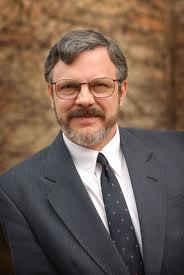
Seth T. Hahne is the man.

Seth T. Hahne is the man.

Paul’s debate with the philosophers at the Areopagus remains a favorite story of mine. The Areopagus, or Mars Hill, in Athens was the cultural and intellectual center of the ancient world, so when the apostle Paul was asked to speak there on this strange new teaching about “Jesus” and “the Resurrection”, he spoke with great erudition and made an appeal for the Gospel tailored to his ‘religious’ but intellectually skeptical audience.

What We Talk About When We Talk About God is Rob Bell’s Areopagus speech.

You can read the rest of my feature review of his book HERE at Christ and Pop Culture.

Soli Deo Gloria

PS. It’s why I haven’t written anything this week and might not write much else.