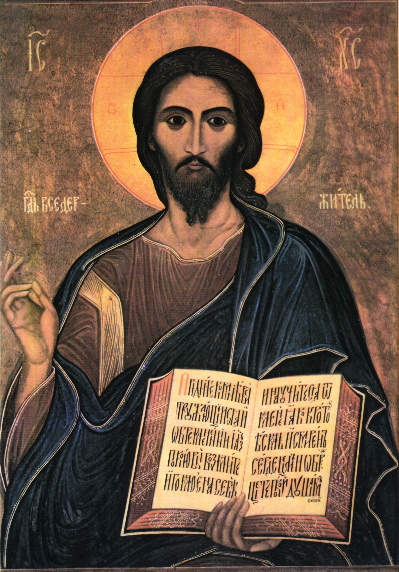
Good Friday: The Active Passion of Christ

On Good Friday, more than any other day, we are confronted with the bloody reality of the passion of our savior. As my pastor pointed out this Sunday, we’re not talking about “passion” in the typical modern sense of “driving motive” or “overwhelming emotion”, but rather his trial, torture, and death on the cross. Christ’s passion is his passio, those events of which he is the patient, the one being acted on.

Sitting in service on Sunday, I reflected on how easy it is to see Jesus in his passion as pure victim. Many of us are tempted by centuries of paintings and passion plays to see a helpless Jesus hanging on the cross, bearing the sins of the world at the hands of sinful men. Or again,  at a theological level, some of us simply see him as a passive object of the Father’s overwhelming decree and action. While I don’t want to deny either human responsibility, or Jesus’ submission to the Father, I was once again struck by the fact that Jesus’ passion was an actively chosen one.

When confronted with Pilate’s claim to ultimate human authority, the very authority and power that would be used to subject him to the cross, Jesus responds with an assertion of divine sovereignty:

christ-carrying-the-crossSo Pilate said to him, “You will not speak to me? Do you not know that I have authority to release you and authority to crucify you?” Jesus answered him, “You would have no authority over me at all unless it had been given you from above.” (John 19:10-11a)

According to Jesus, then, in submitting to the authority of Pilate and the hands of men, he is not ultimately at their disposal or mercy, but that of the One who reigns from a much higher throne.

Pushing even further back, Jesus goes on to clarify that this is not a will or authority imposed by his Father coercively, but one that the Divine Son himself actively chooses to obey:

For this reason the Father loves me, because I lay down my life that I may take it up again. No one takes it from me, but I lay it down of my own accord. I have authority to lay it down, and I have authority to take it up again. This charge I have received from my Father.” (John 10:17-18)

While the task of the cross was one given him by the Father, it nonetheless taken on by the Son in the power of the Spirit as an outflow of the perfect trinitarian unity of will to save.

Jesus’ passion, then, was an active one. Every blow received from the hands of mocking guards, he received by his own choice. Every false trial he was put through, he stood in the docket freely. Each stumbling step he took towards Golgotha, he walked willingly. Any hammer blow driving the nails deeper into the wood through his hands, was one he sovereignly allowed to pierce his flesh. And that final breath he breathed out from the Cross? He expired it at the time of his own determination.

In other words, as one of my favorite bands puts it:

…Jesus never fell in love,
With open eyes He walked directly to the cross,
He knew exactly what I cost,
and He still went.

-My Epic, “Childbodybride”

Today, then, let us praise and love the Son as the Father does, for truly, he “lays his life down of his own accord” for us and our salvation.

Soli Deo Gloria

The Doctrine Without Which Holy Week Is Not Good News

21733-unionDuring Holy Week, especially the tail-end of Good Friday and Resurrection Sunday, we celebrate the climax of the saving events of the Gospel. In this week we see all of Jesus’ work summed up. We see Jesus proclaiming and living out the Kingdom in perfect obedience to the Father. We see Jesus lifted up on the cross, bearing the sins of the people, exposing the darkness of satan, and exhausting the curse in his death. We see Jesus, risen to new life again, bringing about the New Age in his own resurrected person.

And yet, the reality is, none of these saving events are of any use if the doctrine of union with Christ is not true. Calvin explains:

First, we must understand that as long as Christ remains outside of us, and we are separated from him, all that he has suffered and done for the salvation of the human race remains useless and of no value for us. Therefore, to share with us what he has received from the Father, he had to become ours and to dwell within us. For this reason, he is called “our Head” [Ephesians 4:15], and “the first-born among many brethren” [Romans 8:29]. We also, in turn, are said to be “engrafted into him” [Romans 11:17], and to “put on Christ” [Galatians 3:27]; for, as I have said, all that he possesses is nothing to us until we grow into one body with him. It is true that we obtain this by faith. Yet since we see that not all indiscriminately embrace that communion with Christ which is offered through the gospel, reason itself teaches us to climb higher and to examine into the secret energy of the Spirit, by which we come to enjoy Christ and all his benefits. –Institutes, 3.1.1

Unless I am united to Christ, all of his obedience to the covenant, or righteousness, is not mine–I am left to stand on my own false works before the judge of all the earth. Unless I am united with Christ, then his sin-bearing death is not mine, and I am left to give an account for all my wicked sins. Unless I am united with Christ, I am not part of the crop of which Christ is the first-fruits, and I can only reap the death that  sin leads to and have no life through the Spirit. I’ll quote Robert Letham again at length on the logic of union and salvation:

According to Paul in Romans 5:12-21, just as Adam plunged the whole race into sin and death because of their relationship of solidarity with him, so the second Adam brings life and righteousness to all who sustain a relationship of solidarity with him

If, because of one man’s trespass, death reigned through that one man, much more will those who receive the abundance of grace and the free gift of righteousness reign in life through the one man Jesus Christ. (Rom. 5:17 ESV)

Here Paul reflects on his previous statement of the one way of salvation from sin by the propitiatory death of Christ, which avails for all who believe (Rom. 3:21ff). Justification is received only by faith and is grounded in what Christ did once for all in his death and resurrection (4:25).  Paul’s point is that we are not addressed merely as discrete individuals; instead, we are a team of which we all were members. His sin plunged the whole team into sin, ruin, death, and condemnation. What Christ did for us was also done as the head of a team of which we are a part. He did it on our behalf, for us–and God reckons it to our account as a result of our being united, through faith, with him as the head of the team. Our justification is therefore grounded on union with Christ.

Union and Sanctification

In Romans 6:1ff, in answer to charges that his gospel encourages moral indifference, Paul insists that believers, the justified, live to Christ and do not give themselves over to sin.  This is because they died with Christ to sin and rose again to new life in his resurrection. Not only did Christ die and rise again for them, but they died and rose with him. Union with Christ is the foundational basis for sanctification and the dynamic force that empowers it. As Paul says, “Do you not know that as many were baptized into Christ Jesus were baptized into his death; we were buried with him through baptism into death, so that as Christ was raised from the dead through the glory of the Father so we too should live in newness of life” (6:3-4).

Union and Resurrection

Paul argues in 1 Corinthians 15 that the resurrection of Christ and the future resurrection of his church is one reality (vv. 12-19). Paul argues back and forth from one to the other. If Christ is not raised, there can be no resurrection of believers. If there is no general resurrection, Christ cannot have been raised himself. The two stand together. In fact, Christ has been raised–and so, therefore, will we be. Christ is the firstfruits of the resurrection of believers at his return (vv. 19-23). Not only is his resurrection first in time, but as firstfruits, it is of the same kind as the full harvest. Hence, it is the guarantee not only that the full harvest will be gathered but that both his resurrection and ours are identical. From this it is clear that the resurrection of believers at the parousia is a resurrection in Christ. The resurrections are effectively the same…Christ resurrection and the resurrection of the righteous, separated by indefinite time, are identical because the later occurs in union with the former.

–Robert Letham, Union with Christ: In Scripture, History, and Theology, pg. 5-7

This Holy Week, then, as we contemplate Jesus’ works accomplished on our behalf outside of us, let us glory in the union that makes them ours by faith.

Soli Deo Gloria

In Which Calvin Defends Lip-Gloss (Christ and Pop Culture)

lip-glossMy wife spent this last Saturday morning ministering to and mentoring young women in foster care. As part of a larger program, she spent focused one-on-one time with a number of six teenage girls, listening to their stories, talking to them, and giving them a gift that she has cultivated with care and grace over a number of years: proper skin care and a knowledge of how to apply makeup that works with their facial features.

A number of these young women have grown up in difficult and abusive homes. Some don’t have mothers. Others had never had a stitch of makeup on in their lives and wouldn’t know where to start. And so, my wife, expert that she is, taught them how to wash their faces, massaged them, and then helped them understand how to use makeup in a way that amplifies and accentuates their natural features–eyes, cheeks, lashes, and lips–instead of drowning them out in a wash of paint.

I see this as a service and not simply a misguided encouragement to vanity, and to make my case, I’d like to call to the stand a witness: Genevan Reformer John Calvin’s theology of the body.

You can go read the rest of this, admittedly provocative, story at Christ and Pop Culture.

Keller, Evangelical Polarization, and the Folly of Measuring Coffins

So, the Evangelical twitter world just had another blowout this week. While these sorts of things happen every month or so, providing a bit of cathartic release from the build-up of rage, veiled contempt, and genuine frustration, this last one over the World Vision hiring policy kerfuffle seemed particularly nasty. Hysterical accusations were levelled, tweets were tweeted, unfriendly farewells were traded across the aisle, and a few sane arguments were sprinkled in for good measure.

In the middle of it all, on an unrelated note, Tim Keller tweeted out this:

It echoed his opening analysis in his best-seller The Reason for God, which seems worth quoting at length:

There is a great gulf today between what is popularly known as liberalism and conservatism. Each side demands that you not only disagree with but disdain the other as (at best) crazy or (at worst) evil. This is particularly true when religion is the point at issue. Progressives cry out that fundamentalism is growing rapidly and nonbelief is stigmatized. They point out that politics has turned toward the right, supported by mega-churches and mobilized orthodox believers. Conservatives endlessly denounce what they see as an increasingly skeptical and relativistic society. Major universities, media companies, and elite institutions are heavily secular, they say, and they control the culture.

Which is it? Is skepticism or faith on the ascendancy in the world today? The answer is Yes. The enemies are both right.

Skepticism, fear, and anger toward traditional religion are growing in power and influence. But at the same time, robust, orthodox belief in the traditional faiths is growing as well. The non-churchgoing population in the United States and Europe is steadily increasing. The number of Americans answering “no religious preference” to poll questions has skyrocketed, having doubled or even tripled in the last decade. A century ago most U.S. universities shifted from a formally Christian foundation to an overtly secular one. As a result, those with traditional religious beliefs have little foothold in any of the institutions of cultural power. But even as more and more people identify themselves as having “no religious preference,” certain churches with supposedly obsolete beliefs in an infallible Bible and miracles are growing in the United States and exploding in Africa, Latin America, and Asia. Even in much of Europe, there is some growth in church attendance. And despite the secularism of most universities and colleges, religious faith is growing in some corners of academia. It is estimated that 10 to 25 percent of all the teachers and professors of philosophy in the country are orthodox Christians, up from less than 1 percent just thirty years ago…

In short, the world is polarizing over religion. It is getting both more religious and less religious at the same time. There was once a confident belief that secular European countries were the harbingers for the rest of the world. Religion, it was thought, would thin out from its more robust, supernaturalist forms or die out altogether. But the theory that technological advancement brings inevitable secularization is now being scrapped or radically rethought. Even Europe may not face a secular future, with Christianity growing modestly and Islam growing exponentially.

–The Reason for God, pp. ix-x

As I thought about it, I couldn’t help observing that it seems like we’re witnessing something of the same thing at work in Evangelicalism, with some slight variations. On the one hand, you see more conservative tribes, especially of the Reformed sort, talking about the growth of the movement, praising the blitz of theologically-conservative books, and conferences. On the other hand, its not hard to find progressives and post-Evangelicals speak about the tide going their way, the upsurge of popular support amongst the younger generations, a similar spate of books, and general grass-roots rejection of conservative ham-handedness.

So who’s right? From where I’m standing, they both are. What seems to be getting lost is the Evangelical middle. Why? Well, probably a lot of reasons, but in view of the last week’s “dialogue”, in the technologically-amplified Argument Culture, centrist voices tend to get marginalized and the loudest mouths dominate the air/screen-time.

Now, though I line up theologically more to the Reformed right, as I you might be able to tell, I don’t think this is necessarily a good thing. While the ‘Evangelical middle’ isn’t always some theological safe zone, a spectrum is usually more helpful in terms of thoughtful conversation and deliberation that a highly-politicized, whole-package, two-party system you have to buy into in order to have a voice. In a polarized culture, every event, every issue becomes a battle-line to take your place on. While I don’t mind laying my cards on the table most of the time, I do like having a full deck to choose from.

As for long-term prospects, I’d say that in light the overall secularization of culture and the broader influence of liberal theology in the culture, despite the institutional decline of the mainline that Christian Smith and others have talked about, progressives and Post-Evangelicals do seem to have the cultural edge.

Of course, it’s an open issue whether they can pull their disparate streams into the corresponding institutions needed to sustain a full-fledged movement. Its anti-hierarchical, and, at times, anti-doctrinal stance makes that more difficult than more conservative or confessional groups. What’s more, I have admit, I do wonder if the superficial unity we see on flash-point cultural issues, or in vocal opposition to mutually-disdained conservative organizations, covers a deeper, disunity on fundamental presuppositions within it. Who knows? I’m just spit-balling here.

CoffinsFollowing off of this, if Church history teaches us anything, it’s that measuring coffins is an ugly business and an unpredictable one. All you have to do is study the ebb and flow of the Trinitarian controversies in the 4th century to know what I mean. A lot happened between the First and the Second councils of Nicaea.

This is why I’ll admit that I kind of cringe when some Reformed types talk in self-assured tones about the “death” of the emergent movement. The name died, sure, and Brian McClaren books maybe don’t have the sex-factor they used to, but evaluations like that still underestimate the movement’s long-term impact, and metamorphosis into the Post-Evangelicalisms of various sorts we’re seeing.

On the flipside, when progressives talk about millennial exodus from Evangelicalism and hopefully predict the imminent death of its conservative expressions, they ignore how much of that movement is not to progressive forms, but to conservative communions like Eastern Orthodoxy, Roman Catholicism, and other confessional traditions. What’s more, these prognostications seem a bit parochial in their focus on the Western, American context at the expense of the growth of robustly conservative Christianity in the Majority world and Asia.

Now, for a final note that may undermine all of my ramblings: we Evangelical/Post-Evangelical Twitteratti (and yes, I do include myself in the mix now), often-times have an over-inflated sense of the importance of our own conversations. For every blog post shared, thousands wouldn’t think to waste their time reading one. Not that it’s right, but more American Evangelicals probably know about Chris Martin and Gwyneth Paltrow breaking up than they do about the World Vision (non-)decision this week. Every once in a while, it’s good to step back and take a breathe on this stuff.

Soli Deo Gloria

Calvin on the Christian Life by Michael Horton (The Gospel Coalition Book Review)

calvinMichael Horton. Calvin on the Christian Life: Glorifying and Enjoying God Forever. Wheaton, IL: Crossway, 2014. 272 pp. $19.99.

In the history of the church, particularly its Western Protestant wing, few theological lights shine brighter than John Calvin’s. The Reformer par excellence, he stands out for his theological acumen, systematic comprehensiveness, and care as a biblical exegete. Beyond Calvin the theologian and biblical scholar, though, there was Calvin the pastor—the man passionately concerned that all of human life be lived before God (coram Deo) and in light of the gospel. Though it’s often presented this way in history textbooks, the Reformation wasn’t simply an academic theological debate about justification and the thoughts we think on a Sunday morning, but rather a total restructuring of Christian life and practice. It was about, as James K.A. Smith puts it, the “sanctification of ordinary life.” For that reason Calvin was concerned not only with teaching doctrine, but also with the life of piety flowing from that doctrine.

This is the Calvin that theologian and Westminster Seminary (California) professor Michael Horton introduces us to in his new volume on Calvin and the Christian Life. With an engaging blend of biography, theology, and commentary, and with copious reference to Calvin’s Institutes, commentaries, tracts, and key secondary literature, Horton takes us on a whirlwind tour through the Reformer’s thought as a whole.

Please read my review over at The Gospel Coalition and PICK UP THIS BOOK!!!

Soli Deo Gloria

Is God a Pluralist? (TGC)

religious-symbolsIt was in my freshman composition class at the University of California, Irvine, that I first heard a professor say, “Well, you know, most of the differences in religion don’t matter. The main point is that God just wants all is just to love each other, right?” It’s a claim that’s become increasingly familiar to me ever since.

But is it true? Is God indifferent to religion? Does he care how he’s worshiped? In other words, is God a pluralist?

While it comes in myriad different forms, the kind of pluralism I’m talking about is a sort of relativism about religion, claiming either that all religions are equally salvific, or that outward forms don’t matter since all faiths share a common core, or that the divine is too grand and unknowable to be encompassed by some exclusive set of doctrines. Unless you adhere to a conservative religious confession—Christianity, Judaism, Islam, and so forth—some kind of religious pluralism is the default mindset among the broader “spiritual but not religious” late-modern culture we live in. But why?

For one, it seems to reinforce political pluralism—the social accommodation of various religious beliefs. If there’s no big difference, then there’s not much to fight about. What’s more, and this is probably the most enticing reason to adopt it at the popular level, it seems more humble and open to other viewpoints. Everybody’s equally right (or equally wrong), so no one can claim religious superiority. It’s a more “tolerant” view since there’s no one correct religion against all the others, and thus the moral playing field is level.

At least, that’s how it appears at first.

You can go read about why this is a dubious assumption over at The Gospel Coalition.

No Miracles = No Christian Hope

resurrection jesusWhether it be Gnostic mysticism, or German Liberal Rationalism, throughout Christian history there have been numerous attempts to separate the effects, or “inner truth” Christianity from it’s concrete grounding in the narrative of God’s interaction with Israel and the life, death, and resurrection of Jesus the Messiah. In other words, we want the value of “loving your enemies” and “forgiveness” without grounding it in the Cross where the Godman concretely loved his enemies and forgave them with his own blood. We want the sense of gratitude and joy on a sunny day without grounding it in the Creator God who gives  it to us and currently sustains all things in things in being.

We have seen this in the 20th Century with various atheistic philosophies of hope that try and take their inspiration from Jewish-Christian eschatology, and transpose them into an immanent, or naturalist key, stripped of God and the miraculous. They want the hope without the “extras” of divine revelation that points beyond the limits of reason alone–they want the substance without the form.

In his Reformed Dogmatics, the great Herman Bavinck comments on the impossibility of such attempts by those rationalist theologians who tried to keep the content of revelation, without admitting the category of special revelation and miracle:

Accordingly, faith  in special revelation is ultimately one with faith in another and better world. If this world is the only world and the best world, then of course we have to be content with it. Then the laws of nature are identical with the decrees of God; then the world is the Son, the Logos, the true image of God; then the order of nature in which we live is already the full and exhaustive revelation of God’s wisdom, power, goodness, and holiness. But then what right do we have to expect that the “there” will one day become “here,” that the ideal will become reality, that the good will triumph over evil, that the “world of values” will one day prevail over the “world of reality”? Evolution will not take us there. Nothing comes out of nothing (nihil fit ex nihilo). This world will never turn into a paradise. Nothing can come forth from it that is not in it. If there is no beyond, no God who is above nature, no supernatural order, then sin, darkness, and death have the last word. The revelation of Scripture makes known to us another world, a world of holiness and glory. This other world descends into this fallen world, not just as a doctrine but also as a divine power (dynamis), as history, as reality, as a harmonious system of words and deeds in conjunction. It is work, no, as the work of God by which he lifts this world out of its fall and leads it out of the state of sin, through the state of grace, to the state of glory. Revelation is God’s coming to humankind to dwell with it forever.

-Reformed Dogmatics Volume 1: Prolegomena, pg. 376

In other words, if there is no miraculous intervention, if God is to be boxed away inside the laws of nature, restrained from acting beyond the patterns of the ordinary, if he is not allowed to decisively and supernaturally reveal himself as the redeemer of nature as he has in the narrative of Israel and Jesus, then we have no hope–not any that deserves the name “Christian”, at least. Nothing about the causes immanent to nature, or the history human nature lead us to expect more than a superficial, technical progress in the future–if we don’t destroy ourselves with it. No, Christian hope is grounded and sustained solely in the God beyond nature who can actually do something about the world because he is not limited by it.

On a slightly different note, the apostle Paul put it this way:

Now if Christ is proclaimed as raised from the dead, how can some of you say that there is no resurrection of the dead? But if there is no resurrection of the dead, then not even Christ has been raised. And if Christ has not been raised, then our preaching is in vain and your faith is in vain. We are even found to be misrepresenting God, because we testified about God that he raised Christ, whom he did not raise if it is true that the dead are not raised. For if the dead are not raised, not even Christ has been raised. And if Christ has not been raised, your faith is futile and you are still in your sins. Then those also who have fallen asleep in Christ have perished. If in Christ we have hope in this life only,we are of all people most to be pitied. (1 Corinthians 15:12-19)

The form and the content of Christian hope go hand in hand. You cannot hope in God if that God is not the God of Resurrection and miracle.

Soli Deo Gloria

If Jesus is the ‘Word of God’ Can We Call the Bible the Word of God?

Even as a lover of books, this might be one of the most terrifying pictures I've ever seen.

Even as a lover of books, this might be one of the most terrifying pictures I’ve ever seen.

“The Bible is not the Word of God, Jesus is. John says he is the Eternal Logos, the true Word spoken from all eternity, and to put such a focus on the Bible as the Word of God is to take it off their point: Jesus. In fact, it’s tantamount to bibliolatry–elevating the Bible to the 4th person of the Trinity.”

Ever heard something like that before? It’s become a truism among many of the Christian internet set, and something like it has been popular in theological circles for some time now.

I must admit, when I first heard the slogan myself, I was thrown off a bit. I mean, John does identify Jesus as the Logos, the Word, of God from all of eternity–the truest and deepest reality Father is eternally speaking. What’s more, it’s true that from time to time you can run across someone in a fundamentalist church who treats the Scriptures as if they were dropped from heaven and yet remain utterly oblivious to its central content. I can begin to see what motivates some to adopt it.

However, after the initial appeal, it appears to me that this is a mistaken move that many (though not all) use as a lead-up to falsely pitting Christ against the Scriptures. In fact, I’ve come to see this as sadly little more than a rhetorical sleight of hand, passing itself off as serious theology.

A Word About Words – The first is concerned with the basic nature of language and the simple text of the Bible. It should be an obvious point that words or phrases can, quite comfortably, have more than one proper use, or an expanded lexical range. For example, the phrase “God’s will” can refer to God’s will of command expressed in his explicit commands, but it can also refer to God’s will of decree by which he governs history. Both meanings are appropriately designated by that phrase, and context will usually clarify any confusion on that point. It ought to be uncontroversial to say the same thing is true of the phrase “the Word of God.”

At the most straightforward level, the phrase “The word of God” just means “a word God has spoken.” We find hundreds of references to God’s speech (“the word of the Lord came to”) littered throughout the canon, whether in the Law, the prophets, or the wisdom literature. Every time God spoke to Moses, he heard “the word of God.” Every time a prophet prophesied and used the phrase “Thus says the Lord”, they were speaking the “word of God.” Over and over, we see the preaching of the Gospel in Acts described as the “word of God.” That Jesus Christ is the eternal Logos of God does not change the fact that it is entirely appropriate to speak of the utterances of Jeremiah or Isaiah as the “word of God.” How much more then for the totality of all that God has “breathed out” by his Spirit?

For those worried about confusion on this point, this is why sometimes theologians have gone out of their way to distinguish what they mean by the phrase, specifying “the Word of God incarnate”  (ie. Jesus) or “the Word of God written” (ie. the Bible). They know very clearly that one has certain properties that the other doesn’t. For instance, the Son of God doesn’t have the properties of being made up of 66 books by various authors over a period of a thousand years or so. On the other hand, the Bible doesn’t have the property of being eternally-generated by the Father, or being incarnate, crucified, risen, and ascended in glory. Straightforward enough.

So when the author of Hebrews speaks about the Son’s unique revelatory function he says “In the past God spoke to our ancestors through the prophets at many times and in various ways, but in these last days he has spoken to us by his Son, whom he appointed heir of all things, and through whom also he made the universe” (1:1-2), it’s important note that he doesn’t follow that up with, “so now that we have this final Word let’s not call those previous communications ‘God’s Word.'” The conclusion simply does not follow.

Which brings me to the next point: the Word’s own view of the words. 

Jesus and the Bible

Christ himself presents us with the Word.

What Did Jesus Say? I’ve written before that it’s rather misleading to pit Jesus against the OT, or the “red letters” against the black letter sections of the Bible, given his own view of it. Once again, consider:

Is it not written in your Law, “I said, you are gods”? If he called them gods to whom the word of God came—and Scripture cannot be broken— do you say of him whom the Father consecrated and sent into the world, “You are blaspheming,” because I said, “I am the Son of God”? (John 10:34-36)

Not only is Jesus not squeamish about equating the Old Testament Scripture with the “Word of God”, he re-emphasizes their inviolability and authority by adding that they can’t be “broken.” Passages like this could be multiplied ad nauseam. In this he is followed by all of the apostles.

But instead of just repeating myself, J.I. Packer has some wisdom for us on this point:

But who is this Christ, the Judge of Scripture? Not the Christ of the New Testament and of history. That Christ does not judge Scripture; he obeys it and fulfills it. Certainly, He is the final authority of the whole of it. Certainly, He is the final authority for Christians; that is precisely why Christians are bound to acknowledge the authority of Scripture. Christ teaches them to do so.

A Christ who permits His followers to set Him up as the Judge of Scripture, One by whom its authority must be confirmed before it becomes binding and by whose adverse sentence it is in places annulled, is a Christ of human imagination, made in the theologian’s own image, One whose attitude to Scripture is the opposite to that of the Christ of history. If the construction of such a Christ is not a breach of the second commandment, it is hard to see what is.

“Fundamentalism” and the Word of God, 61–62 (HT: Matt Smethurst)

In other words, if Jesus identifies the Scriptures as God’s Word, why are we so squeamish about following suit?

The Trinitarian Word – Finally, this approach is confused because in doesn’t see that the Bible is the Trinitarian Word of God. Michael Horton calls our attention to the Trinitarian coordinates of inspiration in The Christian Faith. Reminding us of the structure of all trinitarian actions he writes “In every work of the Godhead, the Father speaks in the Son and by the perfecting agency of the Spirit.” (pg. 156) The Bible is the “Word of God” because in all the Law, the narratives, the Psalm, Prophets, Gospels, and Epistles we hear the Father testifying to the Son (John 5:39) by way of the power of the Spirit (2 Pet. 1:21).

We can see something like this understanding in Heinrich Bullinger’s Second Helvetic Confession. After calling attention to the locus classicus establishing this doctrine (“All Scripture is inspired by God and profitable for teaching,for reproof,” etc. (II Tim. 3:16–17), Bullinger puts it this way:

SCRIPTURE IS THE WORD OF GOD. Again, the selfsame apostle to the Thessalonians: “When,” says he, “you received the Word of God which you heard from us, you accepted it, not as the word of men but as what it really is, the Word of God,” etc. (I Thess. 2:13.) For the Lord himself has said in the Gospel, “It is not you who speak, but the Spirit of my Father speaking through you”; therefore “he who hears you hears me, and he who rejects me rejects him who sent me” (Matt. 10:20; Luke 10:16; John 13:20). (Chap. 1)

In a sense, it is only as we acknowledge the Bible as the Word of the Father about the Son that we truly see the Son as the Father’s own True Word. It is through the testimony of the Word of God written that we recognize Jesus as the Word of God Incarnate. What’s more, given the current illumination of the text by the Spirit we ought say with Bullinger that “God himself spoke to the fathers, prophets, apostles, and still speaks to us through the Holy Scriptures” about the Son.

At this point I think it becomes clearer that to pit Jesus as the Word of God incarnate against the Bible as the Word of God written is a false choice. It’s not only confused both at the level of language, not the attitude towards the Scripture taught to us by Jesus, but at the deeper level I fear it leads many to denigrate the diverse testimony of God to Christ in Scripture all in the name of elevating him.

So then, is Jesus the Word of God? Yes and Amen. Should we still speak of the Bible as the Word of God? Of course we should–Jesus told us to.

Soli Deo Gloria

My Evangelical Story Isn’t So Bad (Or, a Ramble on Experience, Biography, & Theology)

evangelicalsCultural narratives come and go. For instance, looking back at the movies of 50 or 60 years ago, narratives of patriotism and love of country were pretty popular. Nowadays, stories of suspicion and conflicted loyalties are far more common. I mean, in The Avengers even Captain America has to have his doubts-about-my-country moment before he dons the flag again, in order to be believable or appealing to us.

Over the last few years, we’ve seen one narrative, in particular, rise to ascendancy: the story of broken religious faith–either to be recovered, transformed, or possibly forfeited forever. While they can be found in most traditions, given my own context, I’m thinking of the “I had a terrible Evangelical experience” story in particular. An expanding number of blogs, long-form articles, and memoirs dedicated to telling these stories have emerged, and sold quite well. Indeed, it seems to be a wave with no end currently in sight.

Of course, even those specific to Evangelicalism come in different forms. For some, there’s a story of flight from churchly abuse and control. Others share their experiences in “purity culture” with its repressive and distorted teaching on sexuality and personhood. Still others give us insight into communities of scared, intellectual obscurantists set to repress all questions and intellectual honesty. A lot of it is really sad, heartbreaking stuff, for a number of reasons.

In the first place, like I said, the stories themselves are just sad. I think it would be difficult to read more than a few of them and remain unmoved by the pain of some of our brothers and sisters. Beyond that, at times, they seem to have the unfortunate effect of playing into the larger cultural perceptions/misconceptions people have about Christianity in general, and theologically conservative Evangelicalism in particular. To outsiders there’s a little bit of the “see, I knew it” effect at work. Of course, if it’s the truth, well, there’s no sense hiding it and it’s just something we have to deal with.

I think the thing that weighs on me, though, is that most of this doesn’t reflect the majority of my own very positive experience being raised in Evangelicalism. In other words, I’m saddened because I know it doesn’t have to be that way–I’ve seen it myself.

It Doesn’t Have to Be That Way – Now, I won’t lie, I’ve seen my fair share of church wreckage. I’ve been at church at least twice a week for most of my life. My mom has led women’s Bible studies since before I can remember, and my dad’s been an usher and an elder of sorts, which means I’ve been there for the pettiness and hypocrisy. I’ve watched churches split because of pride and an overweening sense of power. I’ve sat in worship services that look like concerts and heard sermons that made me long for a Tony Robbins pep talk. I’ve mourned pointless, commercialized building projects put ahead of local service. I’ve even told my own story about the awkwardness of growing up Palestinian in a Pro-Israel tribe. In other words, I have plenty of criticisms of what we might think of as generalized Evangelicalism.

Overall, though, growing up Evangelical has been a mostly positive thing for me.

I’ve been taught my whole life that Jesus loves me like the Bible says he does and that cared about me enough to die and rise again for me. I’ve had a number of good, humble, and faithful leaders and pastors who have lived out that kind of Jesus-love towards me. I’ve had elders praying for me during sicknesses. I’ve had church families deliver meals to my house when my mom was recovering from surgery. I’ve had small group leaders guiding me and my friends through awkward transition years, faithfully pointing me to Jesus when I was tempted to look elsewhere.

I don’t think I was taught anything super weird or repressive about sex. I mean, I was in the kind of junior high youth group that made goofy videos with Barbie and Ken dolls to lighten the mood, while they encouraged hormonal 13-year-olds to pursue Jesus’ vision for sexuality without shame or fear. There was definitely A LOT of grace. And while I recently have gravitated towards the Reformed tradition, partially for it’s unabashed enthusiasm for cultivating the intellectual life, I’m not sure I ever felt mentally stifled in the churches I grew up in.

I’ve seen and been a part of really great, faithful, welcoming Evangelical churches. They’ve provided resources and teaching for cultivating healthy, biblical sexuality. They’ve cared about the outsider. They’ve ministered to the poor. They’ve funded overseas missions, built orphanages, and schools. They’ve created spaces for people with questions. They’ve pointed us towards God and our neighbor with humility and passion. In other words, I’ve grown up in a sort of gentle Evangelicalism that I don’t recognize as the background to these stories of broken faith, or betrayed trust.

So, once again, I know it doesn’t have to be that way.

Biography and Theology – Where am I going with all of this? Well, there are a few places I could go, I suppose, but the reality I’ve been working through, again, is recognizing how much biography influences theology, and working through the implications for our conversations with each other. A number of these stories of pain or frustration are told as the background to shifts in theological perspective. Some of these shifts are ones that, honestly, I think are wrong and ultimately harmful. From my perspective, they represent understandable over-reactions to the association of good doctrine with bad practice. I’ve said this before, but in theology, “abuse doesn’t take away proper use.”

Still, these are real experiences and we have to deal with that as we talk about the church, theology, and Evangelicalism. Often-times I’m so locked into seeing people as positions to be corrected, I forget that they are storied-people to be heard. People respond viscerally to words and concepts that have functioned fairly positively in my own life, many times because of our differing stories. My fairly positive Evangelical experience isn’t the only one out there, which is probably part of what accounts for the relative slowness with which I’ve embraced the theological changes I have made. I haven’t been in as much of an existential rush. If I don’t recognize that, I probably won’t be of much use to them as anything more than a sparring partner.

Of course, the opposite is also true. I suppose it’s very hard when you’ve had these difficult experiences to stand back and think, “Well, maybe that’s not the only way of believing X doctrine. Maybe there are sounder, more healthy ways to approach X.” Instead, I’d imagine it’s probably pretty easy to fall into, “You’re an Evangelical, and therefore you and your churches are probably just like the people who hurt me. Whenever you say X, you mean Y hurtful thing” and so forth. But, honestly, that’s not always the case. Just as those of us with positive Evangelical experiences need to realize our stories aren’t the only ones out there, it might help if those with more negative stories try to recognize that same reality in reverse. The positive stories are real too. It’s not all that bad.

Bringing it Back – Reformedish Evangelical that I am, I can’t help but see this as another invitation back to the Scriptures. If we’re going to have conversations that amount to something more than a back and forth exchange of invincible moral experiences, we need to, as I’ve said before, understand what we have in the Scriptures as a divinely-authorized set of interpretations of moral experience.

We need to see that in the Bible we have the normative, sacred story (made up of hundreds of little stories) of Creation, Fall, and Redemption that shines a light on all of our stories and experiences. Because we are sinful (fallen) and small (finite) we can’t even be sure of our interpretations of our experiences, but God gives us a new grid through which we learn to re-read our experiences properly. In a sense, when we submit to the Scriptures, what we’re saying is that God’s experiences and God’s story gets the final word over ours. It is the one story that we can trust because God’s perspective is not limited, weighed down with baggage, or ignorantly blind like ours tend to be. It’s the story big enough to encompass all of our stories without denying, or ignoring them.

As we re-engage the text then, there’s hope that the same Spirit who inspired these words might illuminate them, opening us up to his unchanging truth together. Those of us with comfortable Evangelical experiences might be awakened from our slumber to deal with the very uncomfortable struggles of others. And those of us with hurts and scars might be willing to receive healing medicines we’ve formerly rejected as poisons.

This was all a sort of incomplete ramble, of course, but for some of us it might be a start.

Soli Deo Gloria

A Lie About God is a Lie About Life

liesOur culture likes the idea of heresy. Whenever you see the word ‘heresy’ used on your average blog or article it’s synonymous with bold, controversial, and creative thinking. It is thought not confined with dogma and church controls. It’s ideas that scare the “theologians”, and break out of the traditional mold. (As to why scaring theologians has become a valued activity, I’m clueless. Is there similar trend elsewhere? Should I want to perplex philosophers? Or, mystify mathematicians? Maybe frighten some physicists?)

In some quarters, heresy is sexy.

Alister McGrath has even gone so far as to talk about our “love affair with heresy.” It epitomizes all that we entrepreneurial, free-thinking, radically individualistic Americans believe about religion. It’s up to us to figure out and nobody has a right to lay down a “correct” or “right” way to think about spirituality and God.

In this context, anybody trying to talk about orthodoxy or heresy immediately calls to mind images of nefarious, medieval church councils, trials, and other wickedness.

So Why Does Jesus Think Differently? So why do Jesus, Paul, Peter, and John seem to approach the problem of false teaching differently than we do? Because they do. Very differently. A sampling:

Jesus: Beware of false prophets, who come to you in sheep’s clothing but inwardly are ravenous wolves. You will recognize them by their fruits. Are grapes gathered from thorn bushes, or figs from thistles? So, every healthy tree bears good fruit, but the diseased tree bears bad fruit. A healthy tree cannot bear bad fruit, nor can a diseased tree bear good fruit. Every tree that does not bear good fruit is cut down and thrown into the fire. (Matthew 7:15-20)

Paul: I am astonished that you are so quickly deserting him who called you in the grace of Christ and are turning to a different gospel—not that there is another one, but there are some who trouble you and want to distort the gospel of Christ. But even if we or an angel from heaven should preach to you a gospel contrary to the one we preached to you, let him be accursed. As we have said before, so now I say again: If anyone is preaching to you a gospel contrary to the one you received, let him be accursed. (Galatians 1:6-9)

John: For many deceivers have gone out into the world, those who do not confess the coming of Jesus Christ in the flesh. Such a one is the deceiver and the antichrist. Watch yourselves, so that you may not lose what we have worked for, but may win a full reward. Everyone who goes on ahead and does not abide in the teaching of Christ, does not have God. Whoever abides in the teaching has both the Father and the Son. If anyone comes to you and does not bring this teaching, do not receive him into your house or give him any greeting, for whoever greets him takes part in his wicked works. (2 John 1:7-11)

Peter: But false prophets also arose among the people, just as there will be false teachers among you, who will secretly bring in destructive heresies, even denying the Master who bought them, bringing upon themselves swift destruction. And many will follow their sensuality, and because of them the way of truth will be blasphemed. And in their greed they will exploit you with false words. Their condemnation from long ago is not idle, and their destruction is not asleep. (2 Peter 2:1-3)

Their attitude seems so intolerant and harsh. What about freedom of thought? Independence of mind?  What accounts for the difference? Is it just that we are more enlightened and cosmopolitan than these backwards dogmatists?

Eugene Petersen, my favorite pastoral theologian and theological pastor, cuts to the heart of the matter when discussing John’s attitude towards false teaching:

“Our age has developed a kind of loose geniality about what people say they believe. We are especially tolerant in matters of religion. But much of the vaunted tolerance is only indifference. We don’t care because we don’t think it matters. My tolerance disappears quickly if a person’s belief interferes with my life. I am not tolerant of persons who believe that they have as much right to my possessions as I do and proceed to help themselves… I am not tolerant of businesses that believe that their only obligation is to make a profit and that pollute our environment and deliver poorly made products in the process. And [John] is not tolerant when people he loves are being told lies about God, because he knows that such lies will reduce their lives, impair the vitality of their spirits, imprison them in old guilts, and cripple them with anxieties and fears…

That is [John’s] position: a lie about God becomes a lie about life, and he will not have it. Nothing counts more in the way we live than what we believe about God. A failure to get it right in our minds becomes a failure to get it right in our lives. A wrong idea of God translates into sloppiness and cowardice, fearful minds and sickly emotions.

One of the wickedest things one person can do [is] to tell a person that God is an angry tyrant, [because the person who believes it will] defensively avoid him if he can… It is wicked to tell a person that God is a senile grandfather [because the person who believes it will] live carelessly and trivially with no sense of transcendent purpose… It is wicked to tell a person a lie about God because, if we come to believe the wrong things about God, we will think wrong things about ourselves, and we will live meanly or badly. Telling a person a lie about God distorts reality, perverts life and damages all the processes of living.”, Traveling Light: Reflections on the Free Life (Downers Grove, Ill.: InterVarsity Press, 1982), pp. 33-35.

We don’t care about false teaching and heresy because we don’t see what it does. We don’t see that “A lie about God becomes a lie about life.” Jesus is intensely opposed heresy because he doesn’t miss the connection between what we believe about God and every inch of our lives. Paul opposes it with every fiber of his being because he is passionately for the church. John is not simply out to control his “beloved”, but rather make sure that they remain free, truly free to live the life God has called his children to.

Good theology is not just an academic exercise for “theologians” in seminaries. It’s not just for pastors in their studies. It’s for everyday Christians for everyday living. This is why we are to care about these things. This is why we preach, teach, and correct in light of the Word of God.

To sum up, we might ask a final question: “Why does Jesus hate heresy?” Because He loves you too much to have you believe lies about God.

Soli Deo Gloria