Defending #ClassicalTheism One Tweet at a Time

panentheismI just finished John W. Cooper’s masterful work Panentheism: The Other God of the Philosophers yesterday. It’s often charged that ‘classical theism’, the Augustinian tradition of theological reflection held broadly across Catholic, Lutheran, and Reformed traditions, is ‘the God of the philosophers’ that was forged via the synthesis of Greek Philosophy and the Gospel. Usually this charge is leveled by those putting forward an alternative, more biblical, or whatever view, often coming from a panentheistic framework, or largely influenced by it. Cooper’s main task in this judicious, fair-minded, and quite comprehensive work is to trace the philosophical lineage of panentheism beginning with Neoplatonism through thinkers like Eriugena, Bohme, Cusa, Schelling, Hegel, and so forth on down into contemporary thinkers such as Hartshorne, Moltmann and Clayton.

Well, feeling a bit feisty and inspired, I took to twitter and began tweeting a series of one-line defenses of ‘classical theism.’ Some are snarky, others not so much. It’s Twitter so they lack the precision, and probably the charity of Cooper’s work. Twitter theology is always a risk. Still they were kinda fun and some friends joined in, so I figured I’d share them here.

Finally, he’s not actually on Twitter to participate, but it’s not a party without Kevin.

And we’ll sign off on that note. Feel free to add your own in the comments below.

Soli Deo Gloria

Sometimes A Little Greek Can Save Your Doctrine of God

greekMost of the time a solid translation, good reading skills, and a solid grasp of the story-line of the Bible is good enough for constructing the rough outlines of a good doctrine of God. I mean, you can at least come up with a solid handle on the Creator/creature distinction, God’s power, righteousness, love, and so forth mostly by cruising through the text with a sharp eye and a keen mind. That said, sometimes a knowledge of the way Greek or Hebrew works can come in handy, especially when your doctrine is being challenged at that level. Take the doctrine of the Trinity, for instance.

John 1:1-3 is one of the key explicitly texts (though far from the only one) used to establish the basic outlines of trinitarian doctrine, especially the equality, eternity, and so forth of the Son. It reads like this:

In the beginning was the Word, and the Word was with God, and the Word was God. He was in the beginning with God. All things were made through him, and without him was not any thing made that was made. (John 1:1-3)

It’s hard to get more obvious than that. It clearly says that the Word, later explicitly identified as the one who becomes flesh in Jesus (1:14), was with God in the beginning, that is, before the creation, and is the agent of creation. In the biblical storyline, there are only two main categories of reality: God and all the stuff God made. The Word is clearly identified as being on the “God” side of the line.

Also, there is the explicit identification, “the Word was God.” That seems pretty obvious too. But, thing is, that’s where a dispute can arise. You see, Jehovah’s Witnesses and other deniers of trinitarian doctrine will often point out that in the Greek, the word “God” (theos) is missing the definite article in the phrase “the Word was God”, meaning it should be read as “the Word was a God” not “The Word was the God“, the sense implied by the typical English translations. In which case, it’s not really teaching he is fully God in the same sense as the Father, but that he is divine in some modified, lesser sense.

But does that follow? What’s going on here? John Frame gives us 7 reasons to think that the absence of the definite article in verse 1:1 is simply a grammatical quirk and not a theologically significant absence throwing our trinitarian doctrine in disarray (which, in any case, it wouldn’t, since the doctrine doesn’t only hang on this verse). Also, just so you know, for this discussion, he’s broken the verse up into three clauses:

  1. In the beginning was the Word,
  2. and the Word was with God,
  3. and the Word was God.

With that in mind, here is Frame’s reasons:

  1. The absence of the article may be a “purely grammatical phenomenon.” When, as here, a Greek sentence uses “to be” to connect a subject and a predicate noun, the predicate noun normally lacks the article, even when it is definite. So the absence of an article implies nothing about the precise sense of theos.
  2. This argument is even stronger in passages like ours, where the predicate precedes the subject. The “Colwell Rule” states that in such a sentence, the predicate noun usually lacks an article, even though it is definite, but that the subject of the sentence, if definite, will employ the definite article. So again the phenomenon has a grammatical explanation and does not presuppose any change of meaning between “God” in clause two and “God” in clause three.
  3. As we have seen, in such constructions the predicate noun usually or normally lacks the article. Following that normal practice here may have also served the author’s purpose to draw additional attention to the term God, the center of the chiasm [Frame identified a chiasm earlier in the text]. Dropping the article focuses on the noun itself, and it brings the two occurrences of theos closer together in the chiasm. This consideration weakens further  the need for further explanation.
  4. In similar verses, where theos is a predicate noun lacking the definite article, a reference to God in the fullest sense is indisputable (see Mark 12:27; Luk 20:38; John 8:54; Rom. 8:33; Phil. 2:13; Heb. 11:16).
  5. There are many other verses, some in the same first chapter of John, in which theos lacks a definite article, but in which the reference to God in the fullest sense is indisputable. Nobody would claim a reduced meaning of theos, for example, in 1:6, 13, or 18.
  6. Even if we grant that theos without the definite article puts some emphasis on the qualities of God rather than his person, this supposition does not entail that theos is the third clause has a reduced sense. To prove otherwise, one must show that the qualities in view are something other than the essential attributes of God. If the qualities are essential qualities, then the third clause identifies the Word with God in the highest sense.
  7. A very strong argument is needed to prove that the meaning of theos changes between clause two and clause three. That burden of prove has certainly not been met.

-John Frame, The Doctrine of God, pp 665-66

This is the kind of text and objection that has been used to mislead hundreds of thousands of, largely well-meaning people like Jehovah’s Witnesses into denying one of the most sacred truths of God revealed through Christ. Still, we see here the both the rules of Greek grammar and close attention to the use of the definite article in similar texts throughout both John and the rest of the NT reveals this objection to be a very weak one indeed.

As I said before, I think that other features of the text, the context surrounding it, and a good grasp of biblical theology are probably good enough to ward off challenges to most doctrine. The average churchgoer probably doesn’t need to know Greek in order to be confident of the truth classic, trinitarian doctrine. Every once in a while, though, it can come in handy.

Soli Deo Gloria

Mere Fidelity Podcast: The Trinity and the Bible w/ Fred Sanders!

fred sandersThis week’s podcast we had the honor of having Fred Sanders on the show. For those of you who don’t know him, he’s one of my favorite people and an excellent trinitarian theologian working over at the Biola Torrey Honors program. We talked with Fred about what goes into developing the doctrine of the tradition based on the Bible, tradition, and so forth. As usual, Fred’s great. If you like the discussion and are interested in Fred’s work, you can check him blogging at Scriptorium Daily or his excellent book on the Trinity The Deep Things of God: How the Trinity Changes Everything.

A couple of things to note, though. First, the sound quality on my end is a bit shoddy. It’s mostly fine, but the first minute there is rough. We’re working on it.

Second, please do take time if you can to rate and if possible review the podcast over at our iTunes RSS feed. Also, feel free to subscribe.

Soli Deo Gloria

Does Discussing the One God Before the Triune God Distort our View of God?

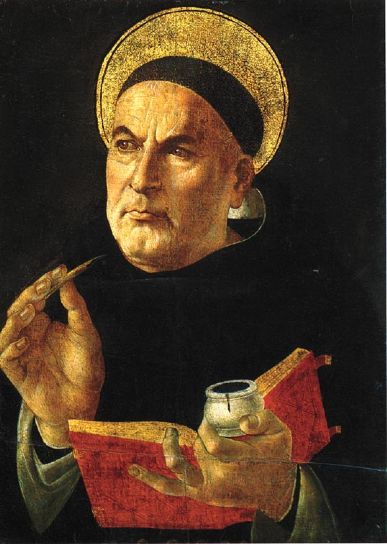
There's Thomas--he's probably  thinking about how to distort the doctrine of God right now.

There’s Thomas–he’s probably thinking about how to distort the doctrine of God right now.

In theology, everything is connected. One doctrine implies another and unless we’re careful, seemingly innocuous modifications in the order of arguments, or the way we proceed methodologically, can lead to surprising conclusions and unfortunate results. In the wake of Barth’s trinitarian revolution in mainstream theology, many 20th century theologians have argued that just such a process happened in classical theology when it comes to the doctrine of God.

Among others, Jurgen Moltmann and Colin Gunton gloomily point to Aquinas’ decision to order his discussion of the doctrine of God in such a way that he treats the divine attributes (simplicity, aseity, omnipotence, etc.) before he comes to the trinitarian persons. Because of this fateful decision, they say his discussion and the classical tradition following him comes up with a concept of God rooted less in the biblical revelation of God as Father, Son, and Holy Spirit, and more from generic categories of being drawn from Greek philosophy and human reason. From there, theologians are faced with the difficult task of trying to reconcile revelation and reason resulting in all sorts of theological puzzles plaguing the tradition ever since.

But is that necessarily the case? Does a decision to treat the divine nature or being prior to treating the doctrine of the Trinity necessarily result in a sub-trinitarian doctrine of God? Herman Bavinck actually faced that argument about 30 years before the Barthian revolution, answering the objection in the negative and defending the classical ordering in theology:

In the work of some theologians the locus of the Trinity precedes that of the attributes of God; and Frank even has serious objections to the reverse order. If treating the attributes of God before the doctrine of the Trinity implied a desire to gradually proceed from “natural” to “revealed” theology, from a natural to the Christian concept of God, then this procedure would undoubtedly be objectionable. But this is by no means the case. In the doctrine of the attributes of God the tradition includes the treatment of the divine nature as it is revealed us in Scripture, is confessed by the Christian faith, and exists–as will be evident in the locus of the Trinity–in a threefold manner. In order for us to understand in the locus of the Trinity that Father, Son, and Spirit share in the same divine nature, it is necessary for us to know what the divine nature comprises and in what ways it differs from every created nature.

And this is not merely a matter of logical ordering that classical theologians have come up because of their own prior methodological preferences. In this, they only follow Scripture:

In the matter of order, too, Scripture is our model. In Scripture, the nature of God is shown earlier and more clearly that his trinitarian existence. The Trinity is not clearly revealed until we get to the New Testament. The names of YHWH and Elohim precede those of Father, Son, and Spirit. The first thing Scripture teaches us concerning God is that he has a free, independent existence and life of his own that is distinct from all creatures. He has a being (“nature”, “substance”, “essence”) of his own, not in distinction from his attributes, but coming to the fore and disclosing itself in all his perfections and attributes.

Reformed Dogmatics Volume 2: God and Creation, pp. 149-150

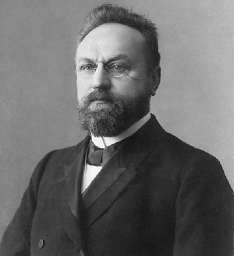
Truly dominant-looking theological man. It's a win for Reformed beardliness everywhere.

Truly dominant-looking theological man. It’s a win for Reformed beardliness everywhere.

From there Bavinck goes on to substantiate and develop with extensive biblical argumentation the doctrine of the independence of God at the head of his discussion of the attributes.

Now, I won’t say that critics like Moltmann and Gunton haven’t had some real beefs worth looking at. I almost never want to play the Greek card, but I’ll admit there are times when I read a classical bit of theology and think there’s a bit of the gap between their doctrine of God and their doctrine of the Trinity. Nor will I necessarily fault any modern theologians who’ve chosen to reverse the order and treat the Trinity first. I’m a bit partial to the method myself.

My point here is that Bavinck has given us two solid reasons for thinking that ordering our discussions in the doctrine of God in the classical way is not simply an exercise in “natural” theology, or will necessarily result in a non-trinitarian conception of God’s being. In order to speak about the way that Father, Son, and Spirit all possess the one divine nature, it’s quite logical to want to know what the divine nature is. Beyond that, and more importantly, this order of study mirrors the order of God’s own revelation. Yes, it is true that there are hints of the Trinity in the Old Testament revelation, but the doctrine only comes into its own in the New Testament. It’s hard to fault a theologian for modeling himself explicitly on Scripture this way.

Bavinck himself stands as a counter-example to this whole charge. Read through his explorations of the divine attributes and you’ll see their clear and extensive grounding in Scripture and revelation, including God’s triunity, long before he engages in any sort of theological development or philosophical reasoning that could be accused of being “natural” theology. What’s more, his locus on the Trinity is stunning; I’d be hard-pressed to find any distortions there.

In other words, what I’m is that, it does no good to write off the classical tradition as sub-trinitarian and refuse to read anything before Barth or Rahner. Individual theologians might be, but then again that’s true of modern theologians. What’s more, if you’re looking to do some theology yourself, you may have an option open to you considered closed off before.

It wouldn’t surprise me that there’s probably more than one way to testify rightly to the glory of the Triune God.

Soli Deo Gloria

Good Friday: The Active Passion of Christ

On Good Friday, more than any other day, we are confronted with the bloody reality of the passion of our savior. As my pastor pointed out this Sunday, we’re not talking about “passion” in the typical modern sense of “driving motive” or “overwhelming emotion”, but rather his trial, torture, and death on the cross. Christ’s passion is his passio, those events of which he is the patient, the one being acted on.

Sitting in service on Sunday, I reflected on how easy it is to see Jesus in his passion as pure victim. Many of us are tempted by centuries of paintings and passion plays to see a helpless Jesus hanging on the cross, bearing the sins of the world at the hands of sinful men. Or again,  at a theological level, some of us simply see him as a passive object of the Father’s overwhelming decree and action. While I don’t want to deny either human responsibility, or Jesus’ submission to the Father, I was once again struck by the fact that Jesus’ passion was an actively chosen one.

When confronted with Pilate’s claim to ultimate human authority, the very authority and power that would be used to subject him to the cross, Jesus responds with an assertion of divine sovereignty:

christ-carrying-the-crossSo Pilate said to him, “You will not speak to me? Do you not know that I have authority to release you and authority to crucify you?” Jesus answered him, “You would have no authority over me at all unless it had been given you from above.” (John 19:10-11a)

According to Jesus, then, in submitting to the authority of Pilate and the hands of men, he is not ultimately at their disposal or mercy, but that of the One who reigns from a much higher throne.

Pushing even further back, Jesus goes on to clarify that this is not a will or authority imposed by his Father coercively, but one that the Divine Son himself actively chooses to obey:

For this reason the Father loves me, because I lay down my life that I may take it up again. No one takes it from me, but I lay it down of my own accord. I have authority to lay it down, and I have authority to take it up again. This charge I have received from my Father.” (John 10:17-18)

While the task of the cross was one given him by the Father, it nonetheless taken on by the Son in the power of the Spirit as an outflow of the perfect trinitarian unity of will to save.

Jesus’ passion, then, was an active one. Every blow received from the hands of mocking guards, he received by his own choice. Every false trial he was put through, he stood in the docket freely. Each stumbling step he took towards Golgotha, he walked willingly. Any hammer blow driving the nails deeper into the wood through his hands, was one he sovereignly allowed to pierce his flesh. And that final breath he breathed out from the Cross? He expired it at the time of his own determination.

In other words, as one of my favorite bands puts it:

…Jesus never fell in love,
With open eyes He walked directly to the cross,
He knew exactly what I cost,
and He still went.

-My Epic, “Childbodybride”

Today, then, let us praise and love the Son as the Father does, for truly, he “lays his life down of his own accord” for us and our salvation.

Soli Deo Gloria

What Has Chicago to Do With Nicaea? Or, “Inerrancy Isn’t In the Bible”

inerrancy viewsOne of the frequent complaints against the doctrine of inerrancy is that, not only is a theological novelty taught nowhere until the 19th century, more than that, “it’s not in the Bible.” Nowhere is there a verse that says the “Bible is completely true in all that it affirms in history, theology, etc. in the original autographs” and so forth. So how then, if we’re Sola Scriptura Protestants, can we go about insisting on it, or other variations like “infallibility” (which, is actually the more comprehensive term), as a sort of de fide doctrine?

As you may know, I’ve been reading the Counterpoints Five Views on Inerrancy book that just came out. You may also know that I unashamedly love Kevin Vanhoozer’s work in this area–and, actually, any area to which he speaks. There’s no surprise, then, that I found his comments on the issue particularly helpful.

In his main essay, he has a number of sections dealing with the Chicago Statement on Biblical Inerrancy. In one, he deals with the charge that the CSBI unnecessarily elevates the doctrine as well as redeploys a distinction used in his Drama of Doctrine, between a judgment of Scripture and it’s conceptual expression, to clarify how a doctrinal can be biblical without being mentioned explicitly in Scripture:

Article 16  [of CSBI] states “that the doctrine of inerrancy has been integral to the Church’s faith throughout its history.” It also denies that inerrancy is “a reactionary position postulated in response to negative higher criticism.” To refute the claim that the doctrine of inerrancy was “invented” by nineteenth-century Princeton is also to rebut the objection that inerrancy, along with the Chicago statement, is a provincial and parochial concern. Can it be done? A full-orbed demonstration of inerrancy’s historical pedigree is beyond the scope of the present essay. Others have been there, done that. I propose instead to compare and contrast the Chicago statement to the creedal statement on the Trinity of the Council of Nicaea. To be sure, the framers of the Chicago statement explicitly say in the preface that they do not propose to give the statement “creedal weight,” but this is not the salient feature of my comparison. I propose to focus instead on a certain parallel between inerrancy and homoousios.

Chicago is not Nicaea: the gospel itself is not directly at stake in inerrancy, nor is it clear whether there was in Chicago a counterpart to Athanasius. I am nevertheless struck by four similarities: (1) the notions of homoousios and inerrancy both arose at a time when the truths they express— in the one case, the full deity of the Son, in the other, the divine truth of the Scriptures— were being challenged; (2) both homoousios and inerrancy are technical terms that have proven to be stumbling blocks to many; (3) neither term is biblical, in the sense of occurring in Scripture; yet (4) both terms reflect underlying biblical convictions or judgments.

My thesis, in brief, is this: while the term inerrant or the concept of inerrancy may be new, the underlying judgment is not. I owe the concept/ judgment distinction to David Yeago, who in a seminal article developed it in connection to Nicaea. Yeago thinks that Paul’s language in Philippians 2: 6, about the Son’s isos theos (“ equality with God”), is saying the same thing as Nicaea’s very different concept homoousios (“ of the same substance”). It is essential “to distinguish between judgments and the conceptual terms in which those judgments are rendered” so that “the same judgment can be rendered in a variety of conceptual terms.”  Similarly, I submit that inerrancy is saying (nearly) the same thing as John’s language in Revelation 21: 5 about the Word of God being pistoi kai alethinoi (“ trustworthy and true”).

The doctrine of inerrancy expresses a nonidentical equivalence to what Scripture teaches about itself. The problem with concepts, however, is that they gradually acquire a medley of associations, each of which affects the core meaning. Although it expresses a biblical judgment, the concept of inerrancy also shows signs of its cultural and historical locatedness. The challenge, then, is to affirm the underlying judgment together with the concept of inerrancy, provided that we can free the latter from unhelpful cultural accretions in order to free it for ministering the whole counsel of God.

–Five Views on Biblical Inerrancy (Counterpoints: Bible and Theology), pp. 212-213

In other words, inerrancy expresses a Biblical truth in different terms, in a similar way that the word  homoousios, or even ‘trinity’ does.

Of course, Vanhoozer goes on to actually make the case from Scripture that his rendition of inerrancy, an “Augustinian, Well-Versed Inerrancy”, actually is consistent with what we find there. Still, the concept/judgment distinction helps us see that the issue of whether or not a doctrine is “biblical” isn’t a simple matter of looking it up in a concordance, or finding an adequate proof-text.

Soli Deo Gloria

(Also, for what it’s worth, Vanhoozer points out that not even Chicago gives inerrancy creedal weight the way some proponents would. It’s not de fide for everybody.)

‘Substance’? ‘Hypostasis’? But Those Words are Un-Biblical!

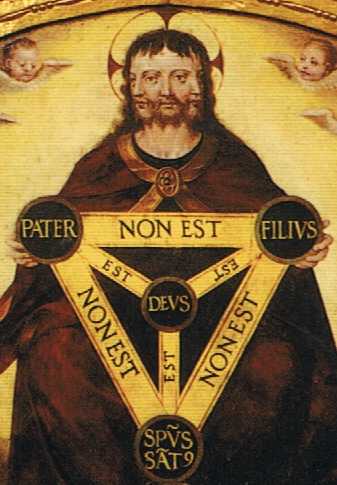
MostHolyTrinityStudying church doctrine can be a challenging endeavor for many of us, even those of us with a deep knowledge of Scripture and a desire to grow deeper in the faith. One issue that comes up frequently for students of a more Biblicist bent is: why all of those goofy, non-biblical words?

I mean, if you’re not familiar with, say, trinitarian theology you end up with all kinds of Greek and Latin words like ‘substance’ or ‘hypostasis’, ‘persona’, and later on, ‘perichoresis’, and so forth. They start to make sense once you’ve read someone explain them about 20 times. Thing is, though, most of those words don’t show up in our translations of the Bible, and when they’re there, they seem to be used in different ways. Or, heck, the word ‘trinity’ doesn’t show up at all. Shouldn’t we be ‘biblical’ in the way that we speak and think of God? How can we do so with terminology taken from surrounding Greek and Latin philosophy and thought?

Calvin tells us that he wrote the Institutes partially so that he wouldn’t have to go into extended doctrinal discussions in his commentaries. Welp, that didn’t really slow him down from writing 4 or 5 pages on John 1:1, expositing the text and defending it from various heretics old (Sabellian, Arian), and new (Servetus.) In the middle of this fascinating discussion, he touches on the issue of non-biblical language.

Now, conservative Reformer that he is, not given to excess or speculation, you might think he would want to do away with all of this jargony mess. Thankfully, he was smarter than that:

I have already remarked that we ought to be sober in thinking, and modest in speaking, about such high mysteries. And yet the ancient writers of the Church were excusable, when, finding that they could not in any other way maintain sound and pure doctrine in opposition to the perplexed and ambiguous phraseology of the heretics, they were compelled to invent some words, which after all had no other meaning than what is taught in the Scriptures. They said that there are three Hypostases, or Subsistences, or Persons, in the one and simple essence of God. The word; ὑπόστασις (Hypostasis) occurs in this sense in Hebrews 1:3, to which corresponds the Latin word Substantia, (substance) as it is employed by Hilary. The Persons (τὰ πρόσωπα) were called by them distinct properties in God, which present themselves to the view of our minds; as Gregory Nazianzen says, “I cannot think of the One (God) without having the Three (Persons) shining around me.”

–Commentary on John 1:1

He points out what Fathers like Athanasius and Augustine had before him: heretics can use ‘Biblical’ language too and use it in ‘ambiguous’, ‘perplexed’, and non-Biblical ways. For that reason, the Fathers were compelled to take language and deploy new words in order to save the meaning of the Biblical record. These were new words used to say more clearly in a foggy and confused time, what Scripture was saying. They did not do this at random or haphazardly. Nor did were they careless to leave undefined, or distinguish the sense in which they used the term from other possible senses.

I think it was N.T. Wright who somewhere used Copernicus as an analogy: say Copernicus had never given a term to his system at which the sun was the center of the universe instead of the earth, and 200 years later someone came along and dubbed it ‘heliocentric.’ Have they misrepresented Copernicus by using that new term that he did not? By no means. They simply gave it a new name in order to keep it clear. In the same way, the Fathers of the Church, guided by the Spirit, in conformity with the Word, developed ways of speaking that preserve and protect the content of Scripture even when not directly drawn from it.

This is the truth that Calvin recognizes and calls us to appreciate here. For that, thoughtful students and spiritual descendants ought to be humbly grateful: both for the work of early teachers like the Fathers, as well as for faithful preservers of the tradition like Calvin.

Soli Deo Gloria 

For more similar thoughts check out:

B.B. Warfield on the ‘Unbiblical’ Doctrine of the Trinity
Vanhoozer and Calvin on the Creeds and Scripture

Mistaking a Stick for the Son

sunpaintingEver run across those verses with God kind of loudly declaring “I am God, acknowledge that” and so forth? You find them in Isaiah (43:11; 45:5), Ezekiel (12:15; 2044), and places like that. I remember when I first read them in my studies, I was kind of put off. I didn’t get it at first. God seemed awfully narcissistic and insecure to be going on about himself like that, kind of like the awkward guy who refers to himself in third person. (“Derek doesn’t like mayonnaise. Derek is the greatest.”)

Well, later on, I read a bit more, understood the context, and began to deeply love these declarations of God’s sovereign uniqueness. He truly is the LORD, and compared to him there is no other. I love the bold, forthright assertion of his His kingly ‘colossal self-regard’, to use Walter Brueggeman’s phrase. What’s really amazing about it is that there’s actually something very humble about God coming to us and declaring himself to a rebellious people. Given our willful blindness to the truth, why should a great and mighty Creator bother with us at all? Yet in these statements God invites us to relationship with a true and living God, not the false little idols we’ve made for ourselves.

Athanasius paints helpful picture for us when it comes to understanding these passages:

And this account of the meaning of such passages is satisfactory; for since those who are devoted to gods falsely so called, revolt from the True God, therefore God, being good and careful for mankind, recalling the wanderers, says, ‘I am Only God,’ and ‘I Am,’ and ‘Besides Me there is no God,’ and the like; that He may condemn things which are not, and may convert all men to Himself. And as, supposing in the daytime when the sun was shining, a man were rudely to paint a piece of wood, which had not even the appearance of light, and call that image the cause of light, and if the sun with regard to it were to say, ‘I alone am the light of the day, and there is no other light of the day but I,’ he would say this, with regard, not to his own radiance, but to the error arising from the wooden image and the dissimilitude of that vain representation; so it is with ‘I am,’ and ‘I am Only God,’ and ‘There is none other besides Me,’ viz. that He may make men renounce falsely called gods, and that they may recognise Him the true God instead…

Discourses Against the Arians 3.8

Our idols are like finger-paintings of the sun posted in our windows. There’s no comparison to the real thing. In his mercy, God reveals himself to us that we might turn from these darkening idols to the true light of God.

Now, Athanasius is dealing with this text in his disputes with the Arians.  They were contending that in light of these, it’s blasphemy to say that the Son is co-eternal with the Father. Athanasius goes on to give the passage a Christological shape in order to expose their confusions:

Indeed when God said this, He said it through His own Word…For the Word of the Lord came to the Prophet, and this was what was heard; nor is there a thing which God says or does, but He says and does it in the Word. Not then with reference to Him is this said, O Christ’s enemies, but to things foreign to Him and not from Him. For according to the aforesaid illustration, if the sun had spoken those words, he would have been setting right the error and have so spoken, not as having his radiance without him, but in the radiance shewing his own light. Therefore not for the denial of the Son, nor with reference to Him, are such passages, but to the overthrow of falsehood.

-ibid.

Just as its ridiculous to think that the sun could shine a light without its own radiance, Athanasius says it’s a mistake to think of God saying “I am the LORD, apart from me there is no other” without His Word. The Son is not some thing external to the Father, but is of his own essence. From all of eternity God has been the Father of the Son. Which is why, when he wants to make himself  known, God declares himself to us through Jesus Christ, the Son. The Son is how God calls us away from the worship of false gods of our own making, speaking light into all of our darknesses.

Soli Deo Gloria

A Proper Christian Mysticism?

mysticismIs there a place for Christian “mysticism?” Thinking of the various incense-laden mysticisms of the East, some implying a denial of the Creator/creature distinction or a strong doctrine of Revelation, many Christians, especially Protestant ones, would vigorously reject the notion. Writing about the “intimacy of relation” we find in our Union with Christ, Reformed theologian John Murray does not shy away from suggesting properly Christian “mysticism”:

Here indeed is mysticism on the highest plane. It is not the mysticism of vague unintelligible feeling or rapture. It is the mysticism of communion with the one true and living God, and it is communion with the one true and living God because and only because it is communion with the three distinct persons of the Godhead in the strict particularity which belongs to each person in that grand economy of saving relationship to us. Believers know the Father and have fellowship with him in his own distinguishing character and operation as Father. They know the Son and have fellowship with him in his own distinguishing character and operation as the Son, the Saviour, the Redeemer, the exalted Lord. They know and have fellowship with the Holy Spirit in his own distinguishing character and operation as the Spirit, the Advocate, the Comforter, the Sanctifier. It is not the blurred confusion of rapturous ecstasy. It is faith solidly founded on the revelation deposited for us in the Scripture and it is faith actively receiving that revelation by the inward witness of the Holy Spirit. But it is also faith tha stirs the deepest springs of emotion in the raptures of love and joy. Believers enter into the holy of holies of communion with the triune God and they do so because they have been raised up together and made to sit together in the heavenlies in Christ Jesus (Eph. 2:6). Their life is hid with Christ in God (Col. 3:3). They draw nigh in full assurance of faith having their hearts sprinkled from an evil conscience and their bodies washed with pure water because Christ is not entered into holy places made with hands but into heaven itself now to appear in the presence of God for them (Heb. 9:24)

-Redemption: Accomplished and Applied, pp. 172-173

So is there a place for a properly Christian mysticism? Yes–within the coordinates of trinitarianly-conceived Union with Christ, the Scriptures teach us that we can rejoice and delight in communion with Father, Son, and Spirit.

Soli Deo Gloria

Who Adopts Us in Salvation?

The FatherIt was in seminary that I began to appreciate the significance of adoption as a distinct moment in our salvation. Even greater than our justification, being declared and thereby rendered righteous with God the King, is being received by grace into his family as beloved children. It is as children that we call out ‘Abba, Father’ and approach the throne of grace with full confidence, knowing that the King of Glory delights to hear our prayers.

The question I had in seminary was, “Who exactly am I adopted by? Is it by the Father, or the whole Trinity?” I initially believed it to be the Father as I understood adoption to occur through union with Christ the Son into his relationship with the Father. Upon hearing me express this view, one of my professors quickly corrected me and warned against introducing a split in the Trinity. To him, it is only proper to attribute adoption to the whole Trinity.  Since that time I’ve gone back and forth, but have come to the conclusion that my initial instincts were correct.

Two principles of trinitarian theology have guided me:

  • First, that although the external acts of the Trinity are undivided, the persons are still to be distinguished. In other words, the Trinity acts in a trinitarian fashion. It’s not that the Father creates, the Son saves, and the Spirit does, whatever he does. Instead, the early church fathers would say that more properly the Father creates, redeems, and sanctifies through the Son and the Spirit. In every action, the whole Trinity is involved.
  • Second, the complementary doctrine of appropriations teaches that, although the work of the Trinity is undivided, it is still fitting to attribute certain graces and actions more properly to a particular person. So, for instance, although the Father and the Spirit are involved, only the Son is properly said to become incarnate. Only the Son is born of a virgin, dies, and rises again, and so forth, even though they happen at the command of the Father in the power of the Spirit.

With these two principles in place, we are in a position to appreciate John Murray’s biblical arguments in Redemption Accomplished and Applied for thinking it is the Father who adopts us, although he does this through the Son and the Spirit:

  1. The first and simplest is that the name “Father” belongs to the first person of the Trinity, just as “the Son” is the second, and the “Holy Spirit” is the third. Jesus directed his prayers to the Father, and he is the Father of our Lord Jesus Christ. (pg. 137)
  2. In John 20:17, Jesus tells Mary Magdalene that he is not yet “ascended to the Father”, clearly referring to the first person, before going on “My Father and your Father, My God and your God.” (pp. 137-138)
  3. In a very similar point, Murray points out that Jesus’ frequent prayer to his “Father in heaven”, or some similar form of address. He also directs his disciples to pray to their Father in heaven, implying that the same divine person is in view. (pg. 138)
  4. In the New Testament, the term “Father” is the personal name of the first person of the Trinity. The Father is often called “the God and Father of our Lord Jesus Christ” (Rom. 15:6; 2 Cor. 1:3; 11:31; Eph. 1:3; Col. 1:3; 1 Pet. 1:3). The phrase “God the Father” also must refer to him (Gal. 1:1; Eph. 6:23; Phil. 2:11; 1 Thes. 1:1; 2 Thess. 1:2; 1 Tim. 1:2; 2 Tim. 1:2; Tit. 1:4; 1 Pet. 1:2; 2 Pet. 1:17; 2 John 3; Jude 1; Rev. 1:6) In almost all of these passages the Father is clearly not referring to the Son or the Spirit. From there Murray says that it is important to observe that “when God is called the Father of believers we have close similarity of expression” to the point where it is an unavoidable conclusion that the same person of the Trinity is being referred to. Again, in places like Romans 1:7 where the phrase “peace from God our Father and the Lord Jesus Christ” is used, both persons are mentioned and distinguished, while one is named “our Father.” (cf. 1 Cor. 1:3; 2 Cor. 1:2; Gal. 1:3; Eph. 1:2; Phil. 1:2; Philemon 3)

For these reasons it seems Biblically-appropriate to understand ourselves to have been adopted through the mediatorial work of the Son and the gift of the Spirit into the Father’s family by grace. This is good news. As Murray writes:

Could anything disclose the marvel of adoption or certify the security of its tenure and privilege more effectively than the fact that the Father himself, on account of whom are all things and through whom are all things, who made the captain of salvation perfect through suffering becomes by deed of grace the Father of the many sons whom he will bring to glory? (pg. 140)

Soli Deo Gloria