Who Were Rufus And Alexander? Why Are They In The Bible?

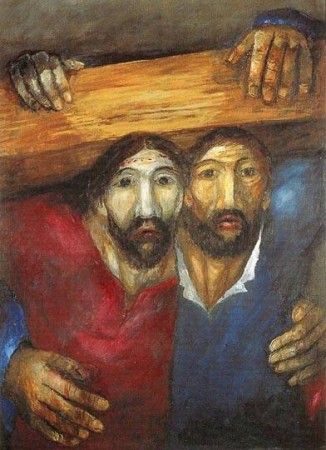
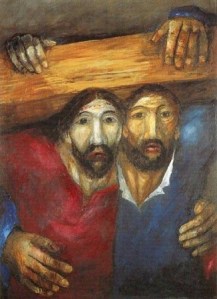
Simon CyreneAnd they compelled a passerby, Simon of Cyrene, who was coming in from the country, the father of Alexander and Rufus, to carry his cross. (Mark 15:21)

Many of us growing up in church know who Simon of Cyrene is. Simon was forced to carry Jesus’ Cross for him on the road to Golgotha. His inclusion in Mark’s account makes sense; when the almighty Son of God’s mortal strength was failing him, Simon helped bear his burden. What makes less sense, initially, is the inclusion of his sons, Alexander and Rufus, who, to our knowledge, did absolutely nothing. Why then should they be there, included in the text? What’s the point in telling us who his sons are, especially when so many others go unnamed in the account, including the relations of prominent disciples, such as Peter’s mother-in-law who was actually the subject of healing (Mark 1:30-31)?

Richard Bauckham steps in to clear things up for us:

…the way Simon is described by Mark — as “Simon the father of Alexander and Rufus” — needs explanation. The case is not parallel to that of Mary the mother of James the little and Joses (Mark 14:40), where the sons serve to distinguish this Mary from others, because Simon (very common though this name was) is already sufficiently distinguished by reference to his native place, Cyrene. Matthew and Luke, by omitting the names of the sons, who that they recognize that. Nor is it really plausible that Mark names the sons merely because they were known to his readers. Mark is far from prodigal with names. The reference to Alexander and Rufus certainly does presuppose that Mark expected many of his readers to know them, in person or by reputation, as almost all commentators have agreed, but this cannot in itself explain why they are named. There does not seem to be any good reason available other than that Mark is appealing to Simon’s eyewitness testimony, known in the early Christian movement not from his own firsthand account but through his sons. Perhaps Simon himself did not, like his sons, join the movement, or perhaps he died in the early years, while his sons remained well-known figures, telling their father’s story of the crucifixion of Jesus. That they were no longer such when Matthew and Luke wrote would be sufficient explanation of Matthew’s and Luke’s omission of their names.

Jesus and the Eyewitnesses: The Gospels as Eyewitness Testimony, pg. 52

What we have here is an early invitation to check with the witnesses. The implication, much as with Paul’s laundry-list of names in 1 Corinthians 15:3-7, is for the reader feel free to ask them about it, should they care to. Simon might be dead, but Rufus and Alexander are living witnesses who can verify what Mark has written about their father.

The constant witness of the New Testament is that the apostles were not teaching “cleverly devised stories” but were dealing with “eyewitnesses of his majesty.” (2 Peter 2:16) Our faith is still faith–it is not yet sight–and yet, it is not blind. We are asked to place whole-hearted trust in credible testimony, human, and ultimately divine, that the promises of God have been fulfilled in Jesus Christ, who, though he was strong, became weak for our sake that day on Golgotha.

Soli Deo Gloria

Who Are You Sleeping With? My Conversation with Tim Keller (CaPC)

Me and KellerSo, I was talking to Tim Keller this week when the topic of sex came up…no, wait, that’s not right.

Let’s re-frame that without me lying.  I managed to snag a ticket to the Gospel Coalition’s National Conference this week and sit in on a breakout session on the subject of revival by Dr. Keller.

I think that’s enough of a teaser. You can go read the rest over at Christ and Pop Culture HERE.

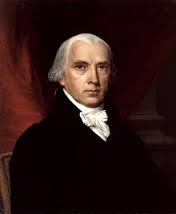
Could Constantine Have Been James Madison?

Definitely not a 4th Century Emperor.

Definitely not a 4th Century Emperor.

So after a few months of having it stare at me from my book shelf, I was able to start reading Peter Leithart’s Defending Constantine:The Twilight of an Empire and the Dawn of Christendom.  Admittedly I’m only about half-way through the work, but to me this is a tour de force of historiography and theological polemic re-examining the life and times of the first Christian Emperor, as well as the theological critique of “Constantinian” relations between church and state a la John Howard Yoder. Given that I’ve just arrived in Orlando for the Gospel Coalition 2013 National Conference I can’t take time for a truly substantial post about it yet. Still, one section in particular stuck me as worth briefly sharing and commenting on.

In reviewing his involvement in the internal affairs of the Church such as the Arian controversy and conflict between the Catholics and the Donatists, Leithart addresses the criticism Constantine receives as an un-baptized Emperor with no particular religious authority mucking about in such matters. For us moderns, it seems so obvious that there ought to be a separation between Church and State. Constantine should have taken a hands-off approach and left it bishops to handle their “spiritual” business while he took care of the affairs of state. Leithart calls this suggestion “implausible” and comments:

As we saw in the last chapter, Constantine did in fact follow a policy of tolerant concord. Beyond that, no one in the fourth century would have thought that a political regime could function without religious sanction, and it is naive to think that Constantine’s conversion  would have instantly turned him into James Madison…The question is, what were Constantine’s historical options in the fourth century? What were the constraints on his action? What, perhaps more important, were the limits of his imagination? Only when we have considered those questions are we capable of doing justice to Constantine’s interventions in church politics.

Defending Constantine, -pg. 132

The point is, when dealing with Constantine’s political legacy, we need to consider our historical distance and the limits of the subject’s own political horizon. Constantine wasn’t ruling his Empire after the Reformation, the Enlightenment, and the various historico-political developments that have shaped Western thought on religion and politics. Indeed, the separation between the two would have been an entirely foreign one, and so would the idea of an Emperor who kept a distance from the cultus. While admittedly not the biblical ideal, Leithart gives us good historical reason to think that Constantine’s foray into a constructive relationship between the State and the Church isn’t the sheer, unmitigated disaster that popular polemics would have us believe.

Soli Deo Gloria

Killswitch Engage, Edwards, and the Hell Inside Us All

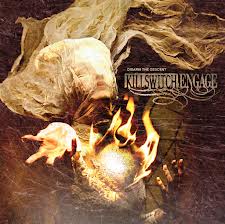
disarmKillswitch Engage’s new album Disarm the Descent came out this last week. I don’t know how many times I’ve listened to it already, but I know I’ve got a few hundred more to go. Needless to say, it’s text-book shredding perfection. Adam D. is a metal machine; he couldn’t produce a weak metal album if he tried. Also, for those of you worried about the loss of frontman Howard Jones (who was amazing), Jesse Leach has returned to the helm stronger than ever both vocally and lyrically. He even manages to do a pretty good job filling in for Jones on the live version of “My Curse” included in the special edition.

Now, this is isn’t a full album review. In fact, I mostly just want to call attention to Leach’s forceful lyric-writing in the opening track, “The Hell in Me.”


Now, once I stopped air-shredding and paid attention to what he was saying, I realized he was speaking of the spiritual struggle at work in us all he sings:

Fall down into the chaos
Staring into the depths of pain darkness and suffering
I will not be from this place, inside of me
Until I understand this part of me that bleeds and captures my spirit
If it’s the death of me, then I will loosen its grip.

[Chorus:]
Protect me from the hell that burns inside me
No one can see this is the hell in me
Bring light into the darkness
Awaken and stir this war within us all
Reveal my true intentions

[Chorus:]
No one can see this is the hell in me
Lead me out of the darkness
Strengthen and protect the voice that makes no sound
Suffer and bleed for me
Pulled from the hell that is in me
Set me free
Will you set me free?

Leach picks up on the very biblical image of fire, torment, and hell to speak of the way a soul is consumed from within by sin. Sin burns the spirit. Indeed, this is ultimately the darkest truth of the doctrine of hell–we carry its seeds around within ourselves. Paul testifies that the wrath of God is seen, not so much in his active judgment, but in handing us over the the darkness of our own hearts as they lust after those things which dehumanize them. (Rom 1:18-15)

In depicting our spiritual struggle this way, Leach channels the spirit of Jonathan Edwards who brilliantly laid out this truth in his (in)famous sermon “Sinners in the Hand of an Angry God”:

There are in the souls of wicked men those hellish principles reigning, that would presently kindle and flame out into hell fire, if it were not for God’s restraints. There is laid in the very nature of carnal men, a foundation for the torments of hell. There are those corrupt principles, in reigning power in them, and in full possession of them, that are seeds of hell fire. These principles are active and powerful, exceeding violent in their nature, and if it were not for the restraining hand of God upon them, they would soon break out, they would flame out after the same manner as the same corruptions, the same enmity does in the hearts of damned souls, and would beget the same torments as they do in them. The souls of the wicked are in scripture compared to the troubled sea,Isa. 57:20. For the present, God restrains their wickedness by his mighty power, as he does the raging waves of the troubled sea, saying, “Hitherto shalt thou come, but no further;” but if God should withdraw that restraining power, it would soon carry all before it. Sin is the ruin and misery of the soul; it is destructive in its nature; and if God should leave it without restraint, there would need nothing else to make the soul perfectly miserable. The corruption of the heart of man is immoderate and boundless in its fury; and while wicked men live here, it is like fire pent up by God’s restraints, whereas if it were let loose, it would set on fire the course of nature; and as the heart is now a sink of sin, so if sin was not restrained, it would immediately turn the soul into fiery oven, or a furnace of fire and brimstone. -Jonathan Edwards, Sinners in the Hands of an Angry God, sec. 6

Songs like this remind me to thank God for his restraining hand. Even more, I thank God that he saw the hell in me and decided to “suffer and bleed for me”, to set me free, fully and finally from the torment of sin in Jesus Christ.

Soli Deo Gloria

Planned Parenthood, Infanticide, And The Return to Paganism (CaPC)

snowWe believe that any decision that’s made should be left up to the woman, her family, and the physician.

Normally it isn’t terrifying to hear the representative of a medical organization say something like this. In most circumstances I’d love hearing about a less bureaucratic approach to medicine and health care decisions. When the representative is from Planned Parenthood, and the “decision” in question is whether to save the life of an already-born-and-on-the-table baby or kill it, it sends chills down my spine.

You can read the rest of this post over at Christ and Pop Culture.

Vanhoozer’s 10 Rules for Cultural Interpretation

I don't know what he's thinking right here, but it could probably serve as a Ph.D. thesis.

I don’t know what he’s thinking right here, but it could probably serve as a Ph.D. thesis.

I was planning on doing a couple more posts on Kevin Vanhoozer’s theory and methodology of cultural interpretation. (I still might, partly for my own benefit.) But for now, I’m going to cheat and cut to the end by laying out Vanhoozer’s 1o Guidelines for Everyday Theological Interpretation of Culture. Some of them need some unpacking, but since that would be too much work (and you really should go buy the book anyways), here they are:

  1. Try to comprehend a cultural text on its own terms (grasp its communicative intent) before you “interpret” it (explore its broader social, political, sexual, or religious significance.)
  2. Attend to what a cultural text is doing as well as saying by clarifying its illocutionary act (e.g. stating a belief, displaying a world).
  3. Consider the world behind (e.g. medieval, modern), of (i.e., the world displayed by the cultural text), and in front of (i.e., its proposal for your world) the cultural text.
  4. Determine what “powers” are served by particular texts or trends by discovering whose material interests are served (e.g.. follow the money!).
  5. Seek the “world hypothesis” and/or “root metaphor” implied by a cultural text.
  6. Be comprehensive in your interpretation of a cultural text; find corroborative evidence that makes best sense of the whole as well as the parts.
  7. Give “thick” descriptions of the cultural text that are nonreductive and sensitive to the various levels of communicative action.
  8. Articulate the way of being human to which a cultural text directly or indirectly bears witness and gives commendation.
  9. Discern what faith a cultural text directly or indirectly expresses. to what convictions about God, the world, and ourselves does a cultural text commit us?
  10. Locate the cultural text in the biblical creation-fall-redemption schema and make sure that biblical rather than cultural texts have the lead role in shaping your imagination and hence or interpretive framework for your experience.

Everyday Theology: How to Read Cultural Texts and Interpret Trends, pp. 59-60

Soli Deo Gloria

Somebody Stop Me If I Start Doing This (A Thought on Blogging)

In a fascinating recent blog post on Rob Bell and the nature of advertising rhetoric, Alastair Roberts managed to describe one of my least favorite styles of blogging:

If you read many blogs, especially from a certain brand of progressive evangelical, you will notice similar styles of writing and thinking in operation. Sentences are brief, there are numerous single sentence paragraphs, sentences in bold, or fragmented statements. Anecdotes and engaging narratives are consistently employed. Rhetorical questions, potent images, and controlling metaphors are used extensively. Such writing typically persuades by getting the reader to feel something. The responses to such pieces are almost always emotive and affirming, very seldom critical (and critical responses are hardly ever interacted with carefully).

Now, to my mind there’s nothing inherently wrong with narratives with emotional hooks, bolding and italicizing things occasionally, metaphors, potent images, rhetorical questions, and so forth. All of them have their place at that right time and the right moment. Indeed, some writers could stand to use a little more of that. (Although, let’s be honest, the UNDERLINE, BOLD, AND ITALICIZE EVERYTHING INCESSANTLY THING IS KIND OF ANNOYING AND CHEAP.)  Scripture itself is soaked in varying modes of discourse, especially narrative and potent image. That said, the over-saturation of these modes of communication in blogs of this sort is kind of like the difference between a packet of Sweet & Low saccharine or a teaspoon of sugar in your coffee; one seems like a counterfeit designed to mask the quality of the substance, while the other enhances it.

Roberts goes on:

In an age dominated by advertising and the manipulation of feelings for the purpose of persuasion, the proliferation of conversational and self-revelatory styles of discourse, designed to capture people’s feelings, where logical argumentation once prevailed, shouldn’t surprise us. Where persuasion occurs through feeling, truth becomes bound up in the authentic communication of the ‘self’ and its passion, rather than in the more objective criteria of traditional discourses, where truth was tested by realities and practices outside of ourselves. This is truth in the mode of sharing one’s personal ‘sacred story’.

It is for this reason that narrative, anecdote, metaphor, and potent images are so important for such approaches. All of these are non-argumentative ways of drawing and inviting you, the reader, into the feelings of the text. They also serve as ways of avoiding direct ideological confrontation and engagement. By couching what would otherwise have to be presented as a theological argument in an impressionistic narrative they make it very difficult to frame disagreements. The most effective communicators of this type tend to be those who elicit and direct feelings most consistently. It can almost be as hard to have reasonable argument with such people than it would be to argue with an advert.

While Roberts might be guilty of over-privileging rational, logical modes of reasoning and argumentation in his criticism, there is a real danger when the church over-corrects and plays into the postmodern fragmentation and evasion of thought. Testimony is an inherently biblical mode of discourse, but testimony is susceptible to cross-examination. Biblical testimony is not intended to subvert the intellect, but engage it, as well as the more affective dimensions of our souls. Paul gave his own testimony to be sure, creatively used potent imagery, and so forth, but then gave a sustained biblical argument that can be followed, disputed, and wrestled with. (cf. Galatians)

Alright, this whole thing was quick and off-the-cuff. The point is, if ya’ll spot me drifting into land of advert blogging, you have my permission to call me out.

Soli Deo Gloria

What’s a Culture and How Does it Work? 4 Functions of Culture According to Vanhoozer

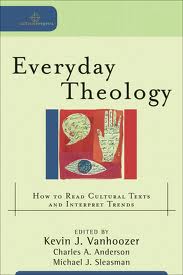
everyday theologyThe notion of culture has been on my mind for a long time now, but after joining the writing staff over at Christ and Pop Culture, I figured it was appropriate to do a little more digging on the notion of culture and cultural analysis. To that end I finally picked up a little volume edited by Kevin Vanhoozer Everyday Theology: How to Read Cultural Texts and Interpret Trends. While there are many volumes out that address the issue of biblical exegesis, there are few that address the crucial task of “cultural exegesis”, the practice of reading culture, interpreting the “signs of the times” (Matt. 16:1-3), in light of God and his revelation. That’s the gap that Vanhoozer and his co-editors (Charles A. Anderson, Michael J. Sleasman) aimed to fill. The volume opens with an programmatic essay by Vanhoozer in which he outlines a theory of culture, as well as a methodology for cultural interpretation. The essays that follow are examples of the method put into practice, with explorations of the check-out line, Eminem, Gladiator, and the blogosphere. In this post I’d like to take a (very) quick look at Vanhoozer’s view of culture and the way it works.

What’s a Culture? (Again)
Working primarily at the levels of what Roger Scruton has identified as “common culture” and “pop culture”, Vanhoozer’s discussion is fascinating and helpful many ways. One important point to note is his dependence on Dilthey’s idea that cultural studies observes the realm of human freedom, spirit, and creation v. that of nature. On this view cultural artifacts are concrete expressions of the human spirit by which our values, beliefs, and aspirations are given objective existence. As such, cultural artifacts such as songs, architecture, poetry, games, literature, and political practices “call not for explanation but for interpretation.” (pg. 22) Hermeneutics is key.

Another distinction he makes is the difference between culture and society; his chosen metaphor to understand the difference is hardware and software. Society is viewed more as the hardware of social institutions that gives shape to the shared life of a people. Culture he says, “is the software that determines how things function and how people relate in a given society. Culture is both system and practice, a means through which visions of the meaning of life (cultural worlds) are expressed, experienced, and explored through the diverse human products (cultural texts).” (pg. 27) So, police are institutional hardware that can be found across cultures, and yet an American “cop” is understood differently than a British “bobby” that usually doesn’t carry a gun. (pg. 23) Same institution, different cultural implementation.

How, then does Vanhoozer define culture? I won’t go into his very long and rewarding discussion, but in the end, Vanhoozer views culture “as a world and work of meaning. Better, culture is made up of “works” and “worlds” of meaning.” (pg. 26) It’s a work because it’s what humans do freely. Cultural objects are intentional creations–texts that communicate meaning. It is a world because these texts “create a meaningful environment in which humans dwell physically as well as imaginatively.” *(pg. 26)On this view,  popular culture is the shared context, practices, and “resources” that shapes and forms our way of life. (pg. 30)

How Does it Work?
The question remains, how does culture do this? Vanhoozer identifies 4 things that culture does to shape our lives.

  1. Culture communicates – First of all, culture is constantly communicating to us in ways both explicit as well as subtle, in a variety of formats, media, advertisements, and cultural artifacts. While there are hundreds of different specific messages aimed at a every discernable area of human life, the over-arching goal is to communicate a vision of the meaning of life, and the embodied form it should take. We mustn’t be naive the way this vision is communicated though. As Vanhoozer notes, “form and packaging” are just as important as content here. (pg. 28) Most cultural communication happens not through propositional argumentation but through allusion, suggestion, and connotation. It gives us pictures and metaphors (“life is like a box of chocolates”) that give rise to broader stories about the world we live in; subtle hermeneutical suggestions that shape the way we interpret our lives.
  2. Culture orients – This gives rise to the next function of culture: it orients us. By providing us with metaphors and models it gives us the inner logic by which we live our lives. “Life is like a baseball game”, “Life is like an episode of X show”, etc. These models also have “evaluative” and “affective” dimensions to them, in that they shape and form our loves and hates, our very sense of right and wrong. (pg. 29) Culture maps the world for us and creates a sense of mood by which we experience life. Moral and social orientation that we previously drew from family, community, and cult, we now draw from popular cultural texts such as movies, shows, song lyrics through which we construct the scripts of our lives. While How I Met Your Mother gives us a script about dating, childhood soccer-fields teach us about the nature of victory and competition. Importantly for Christians, Vanhoozer notes that while in the past culture gave us narratives of faith, we now more often find stories of “broken faith: defiance or anger at God; of fear of an indifferent or oppressive reality; of escape from sorrow over the absent God by finding joy in one’s immediate, mundane life.” (pg. 29)
  3. Culture reproduces -We need to understand that culture spreads. “Culture spreads beliefs, values, ideas, fashions, and practices from one social group to another.” (pp. 29-30) in the past through institutional force or colonization, but now it mostly happens through memetic reproduction. A “meme” is a “cultural unit” analogous to a gene in that it reproduces and passes itself on by means of imitation (mimesis). This could be anything from an idea, a fashion, phrase, song, or practice. The point is that cultural “programming” is spread from person to person, sort of like a virus, as people encounter each other and begin to copy or imitate the cultural behaviors that they see. This can happen institutionally in schools, or through parental instruction, but more often than not it’s happening informally all the time through everyday interactions with friends, online content, and media saturation.
  4. Culture cultivates – Finally, culture “cultivates”–it develops and grows. What does it grow? Well, recalling Dilthey’s point earlier, it cultivates the human spirit. By communicating and creating worlds for us to inhabit, metaphors to live by, or the basic orientation for our lives, culture develops our souls. It gives a vision of the meaning of life for our “hearts”–the seat our willing and acting–to desire and pattern itself against. “In short, culture cultivates character traits–the habits of the heart–and in doing so forms our spirit so that we become this kind of a person rather than that kind.” (pg. 31) The point isn’t that we are helpless against the onslaught of culture’s imagination or affection-shaping power. It is rather that we need to understand that it’s not a question of whether a particular show is educational, but what’s the lesson being taught? (pg. 31) Prolonged exposure to cultural texts presenting us with similar narratives and worlds shape our self-understandings and create a sort of “second nature” for good or ill. (pg. 32) Culture is a spirit-forming reality.

Because of this, Vanhoozer calls Christians to wake up and not simply walk about in culture like “sleep-walkers” unaware of the worlds which they are being invited to inhabit. (pg. 32) We need to be discerning readers both of Scripture and of culture, determining which is exerting a greater force on our hearts, and for what end. What vision of the good life are we buying into? What narratives and metaphors have we adopted? Which works and worlds dominate our imagination? The various little texts provided by marketers and other meaning-makers in pop culture, or the works and world of God as found in his Text?

Soli Deo Gloria
Enjoy a Gloriously Epic Metal Easter

Becoming the Archetype’s “Self-Existent” off of their album Dichotomy is probably my favorite Easter song. I have been moved to tears on multiple Easters as I listen to this and think about the glorious resurrection of my Redeemer. Also, it is amazingly metal.

Some might wonder if the medium fits the message. “Is metal an appropriate means to convey the beautiful truth of Easter?”

I can only answer that question, with another question: “What is more epically-metal than Jesus killing Death?” I rest my case.

Into the darkened tomb
I walked but only found it empty

My mind is tormented
My soul is shaken

As a flame is tormented by the wind and rain
As the earth is shaken by an earthquake

My heart has accepted
What my eyes could never have believed:
I watched Him die
I watched Him die

In the silence death is defeated
In my spirit the battle rages on

And then I stepped into the light
I heard His voice, I saw His face
And then He stood there before me
A man buried but never dead*

My heart has accepted
What my eyes could never have believed
I saw Him rise
I saw Him rise

HE IS ALIVE! and reigns forever
HE IS ALIVE! He’ll reign forever

Soli Deo Gloria

*Some might quibble with this line. Yes, Jesus truly suffered death on the Cross. Then again, these guys are metal-heads and it sounds awesome.

It is Finished–All of It (Good Friday According to Calvin)

it_is_finishedAt some point all of us have wondered, why is Good Friday ‘good?’ What is great about a bloody Jew on a Roman Cross suffering an execution, an act of political terrorism? Jesus’ words “It is finished” (John 19:30) are his own answer. There are a number of things I could say, but instead I’ll let Calvin expand on that for us:

It is finished. He repeats the same word which he had lately employed, Now this word, which Christ employs, well deserves our attention; for it shows that the whole accomplishment of our salvation, and all the parts of it, are contained in his death. We have already stated that his resurrection is not separated from his death, but Christ only intends to keep our faith fixed on himself alone, and not to allow it to turn aside in any direction whatever. The meaning, therefore, is, that every thing which contributes to the salvation of men is to be found in Christ, and ought not to be sought anywhere else; or — which amounts to the same thing — that the perfection of salvation is contained in him.

There is also an implied contrast; for Christ contrasts his death with the ancient sacrifices and with all the figures; as if he had said,” Of all that was practiced under the Law, there was nothing that had any power in itself to make atonement for sins, to appease the wrath of God, and to obtain justification; but now the true salvation is exhibited and manifested to the world.” On this doctrine depends the abolition of all the ceremonies of the Law; for it would be absurd to follow shadows, since we have the body in Christ.

If we give our assent to this word which Christ pronounced, we ought to be satisfied with his death alone for salvation, and we are not at liberty to apply for assistance in any other quarter; for he who was sent by the Heavenly Father to obtain for us a full acquittal, and to accomplish our redemption, knew well what belonged to his office, and did not fail in what he knew to be demanded of him. It was chiefly for the purpose of giving peace and tranquillity to our consciences that he pronounced this word, It is finished. Let us stop here, therefore, if we do not choose to be deprived of the salvation which he has procured for us. -John Calvin, Comm. on John 19:30

This is why Good Friday is good–I don’t have to look anywhere else–Christ finished it.

Soli Deo Gloria