Mere Fidelity: Confessions, Book 3

Mere FiThis week Alastair, Matt, and I take up and read Book 3 of Augustine’s Confessions. If you’d like to read along–which we encourage you to do–Henry Chadwick’s translation is available widely at a reasonable price. Otherwise, we really have been having a blast with these conversations. Some of the best we’ve done really. We hope you enjoy and are edified by them.

If you like the show, please do leave us a review on iTunes. We are also available on Google Play.

If you’re interested in supporting the show financially, you can check out our Patreon here.

Soli Deo Gloria

On Still Being a Protestant ‘From a Protestant Point of View’: Contra Hauerwas

Today is a special Reformation Day. On this day, Protestants everywhere celebrate the 500th anniversary of the “beginning” of the Reformation—Martin Luther’s nailing of the 95 theses to the door of Wittenberg Castle. Or at least some of us do. Others seem to have trouble remembering what the whole thing was about.

hauerwasTake Stanley Hauerwas. Last week he wrote up something of a rambling rehash of his ambivalence over the whole affair, and a defense (of sorts) for why he remains a Protestant despite the fact he doesn’t, “see the gulf between us and our Catholic brothers and sisters as particularly pronounced.” He has reasons. Like the fact that his wife is ordained, and that he thinks his position as a Protestant allows him to keep Rome honest about its claim to be the “one true Catholic Church.” On his telling, though, most of the reforms the Reformers wanted were acted on and we don’t have much to “protest” anymore.  It’s sort of odd, then, that we haven’t all returned to “Mother Church,” since “from a Protestant point of view” it’s hard to understand why Protestantism still exists.

Now, I can appreciate a few of the points he makes. I’m happy to confess the Church didn’t wink into existence at the beginning of the Reformation after centuries of absence. Protestants ought to be happy to appreciate pre-Reformation theologians such as Aquinas and Anselm as part of our common, Christian inheritance. There are plenty of contemporary and post-Vatican II theologians I think are worth time learning from and engaging (Matthew Levering, Robert Sokolowski, Von Balthasar, etc.). It’s a good thing to think in “Mere Christian” terms much of the time, and in an increasingly secular, post-Christian West, an “ecumenism of the trenches” makes a healthy sort of sense.

All the same, Hauerwas’ piece is wrongheaded and misleading at a basic level.

In honor of the polemics that made the Reformation possible, then, I thought I’d pick at it a bit and try to offer a bit of a counter-explanation for why, 500 years on, there’s more reason for being Protestant from a “Protestant point of view” than this putatively Protestant theologian can recall.

First, let me quote what seems to be the most important paragraph, and we can roll from there. Here is Hauerwas’ summary view of the current situation:

Five hundred years after its inception, we are witnessing the end of the Reformation. The very name “Protestant” suggests a protest movement aimed at the reform of a church that now bears the name of Roman Catholicism. But the reality is that the Reformation worked. Most of the reforms Protestants wanted Catholics to make (indulgences are no longer sold, for instance) have been made. A few Protestant denominations might still be anti-Catholic (consider evangelical pastor Robert Jeffress’s claim, recently publicized, that Catholicism has Satanic origins ), but the original idea that Catholics adhere to a legalistic perversion of Christianity that does not admit the free grace of God is seldom seen, these days, as the Protestant difference from Catholicism. Over time, historians have helped us see that there was no one thing the Reformation was about, but that if there was a single characteristic at the heart of the Reformation, it was the recovery of the centrality of Christ for making sense of why Christians are not at home in this world. That emphasis turned out to be the overriding insight that shaped the work of Vatican II, meaning Catholics have overcome the major thrust of the Reformation.

This is a ball of yarn so tangled it’s hard to know where to begin.

Let’s try the meaning of the word “Protestant.” The term does not, in the first instance, mean “protestor”, but “confessor, or witness.” To be a Protestant in the Reformation was to be one who gave voice or testified to key truths. Indeed, originally they were simply called “evangelicals”, since their concern was to give witness to key truths about the Gospel they saw being denied. The “protest movement” that followed flowed from that basic instinct.

It’s true, then, that it was not primarily about being “anti-Catholic”, but rather reforming the catholic church’s Roman deviations and sectarian traditions. (Indeed, many called themselves “Reformed Catholicks.”) Sadly, though, the Roman church resisted much of that witness and formally condemned it in the canons of Trent, which still function as part of the authoritative dogma of the Church, no matter how much Vatican II “developed” the doctrines therein.

So what claims did they confess against the Roman, Magisterial hierarchy and the Popes? Hauerwas rightly says historians have shown there were many, not just one. But after shoving grace to the side as a possible area of dispute, he manages to reduce it back to the one main thing in order to suggest there isn’t a big problem, claiming it was “the recovery of the centrality of Christ for making sense of why Christians are not at home in this world.” And since Vatican II fixed that, what’s the problem? (Incidentally, Cardinal Müller recently described the Reformation as a “revolution against the Holy Spirit,” so I’m not sure he got the memo about the meaning of Vatican II.)

Now, this take might work if he were solely describing the Radical Reformation and the Anabaptists. But it’s idiosyncratic to the point of dishonesty if that’s supposed to cover the various claims of Luther, Calvin, Bucer, Zwingli, or the majority of the Reformers who led the Reformation.

Let’s concede for the sake of the argument the idea that the issue of the nature of grace or justification by faith wasn’t still a major issue of dispute between Protestants and Roman Catholics. Are there not still significant issues at stake for those claiming any sort of continuity with the concerns of the original Reformers?

For instance, one might have thought the pattern of interpretive authority and the status of Scripture to be central. Does the Church create and authorize the Scripture (“creature of the Church”)? Or do the Scriptures authorize and create the Church (Luther’s “creature of the Word”)? Can the Spirit speaking in Scripture ever correct or trump the Roman Magisterium and Papal pronouncements ex cathedra, or does the final authority over matters of faith and doctrine lie in the Teaching Office of the institutional church?

Because unless Protestants have just ceded Sola Scriptura, then I’m not sure the differences between Protestants and Roman Catholics have been smoothed over. As recently as 1950, Pius XII infallibly declared the Assumption of Mary a de fide dogma in Munificentissimus Deus despite its paper-tissue thin support in Scripture. On the Roman view, denial of it on the authority of God’s Word is now a condemnable heresy incurring “the wrath of almighty God.” For a Protestant who actually takes a Protestant view of the domain of Christ’s Lordship through the Word, this is still an outrageous overreach on the part of the institutional church to bind human consciences beyond God’s Word.

Incidentally, this also brings up the encroachment on Christ’s sole mediation by the entire practice of praying to and through the entire panoply of saints or venerating Mary as “Queen of Heaven.” If you’re still basically unconvinced by appeals to the distinction between latria and dulia, then the fact that this is still on the books (and a regular feature of parish life across the world) might ruffle your Protestant feathers.

Or again, what do we make of the priesthood of all believers? It’s true the concept has suffered degradation and drift in some quarters of Evangelicalism. All the same, the basic claim of the teaching remains at issue no matter how many times the Roman church attempts to engage the laity. If you actually hold to Protestant teaching here (instead of merely claiming Protestant lineage), the changes are basically window-dressing since the underlying ecclesiology and polity—the structure and mediatorial power of the priesthood, the sacraments, etc.—haven’t been reformed in that way. Romanism without the Medieval abuses is still Romanism.

Finally, you might also have thought the nature of the Mass and communion to have been a central dispute. It certainly was among the Reformers themselves, which tells you how important it was to them. And even there, despite their differences, all of them stood opposed to the doctrine of transubstantiation whereby there is change “of the whole substance of the bread into the substance of the body of Christ our Lord and of the whole substance of the wine into the substance of his blood” (Trent). They had faith God could use ordinary matter to communicate grace, without God needing to destroy its nature by turning it into something else.

Disputes about the agency of Christ’s real presence aside, neither Luther, Calvin, or the rest of the Reformers thought the bread and wine had to become something else to convey the promises of God. But transubstantiation is still Roman doctrine and most Protestants still can’t stomach it, for many of the same, Biblical reasons. That seems like a big deal. And it’s still unresolved.

I could keep going here, and notice again that I haven’t even touched on justification by faith, which, no surprise, I think (and many with me) is still at issue. Especially since the dispute in the Reformation wasn’t whether God showed grace in salvation, but how he did so, whether it involved human merit, whether a Christian could have assurance of that grace in Christ…but again, I’ll leave it to the side for now.

In sum, if you hold to Protestant theology, there are still good reasons to be Protestant and to celebrate the Reformation’s reminder of these catholic Christian truths. Which brings me to one of the oddest paragraphs in the whole piece:

But I am still a Protestant, even though I remain unsure I know what I am saying when I say I am a Protestant. I can think of my life only as a living ecumenical movement — raised Methodist, taught for Lutherans (Augustana College), overwhelmed by the Catholic world, deeply influenced by the Mennonites and finally back with the Methodists at Duke. All of which, of course, means I have ended up worshiping at the Episcopal Church of the Holy Family in Chapel Hill, N.C. That I am a theologian more defined by where I went to graduate school than by any ecclesial tradition mirrors changes in the Protestant world — in particular, that the gulfs between the denominations seem only to feel smaller and smaller. And so does the gulf between Catholicism and Protestantism.

It’s one thing to grow in your appreciation of a deeper unity between the various branches of Christianity as you see a fundamental overlap in the gospel, the confession of Christ, etc. But it is precisely as you grow in that appreciation that Rome’s wildly sectarian claim to the “one true Catholic Church” widens the gulf between Catholicism and Protestantism. Ironically, the entire logic of this paragraph ought to have made Hauerwas’s reasons for confessing the name Protestant all the stronger and clearer.

As Fred Sanders notes, “We are Protestant specifically to be more catholic, to avoid the constriction and reduction that Rome requires.” Or Kevin Vanhoozer puts it this way: “the real conflict is not between Scripture and tradition but between catholicism and one particular tradition (Romanism).” If he wasn’t so interested in sighing his ambivalence and sounding more ecumenical-than-thou, Hauerwas might have been able to give testimony to that.

Remaining Protestant is not, then, a matter of being “anti-Catholic”, or keeping Catholics honest when they claim to be the one true Catholic Church (because if they actually are the true church, you’re just being spiritually disobedient and, as my Catholic friends say, you should “repent and submit to the Pope.”) Instead, it’s about giving testimony that the catholicity of the Church extends far beyond Rome to all of God’s people who worship their Lord according to his Word.

At least, from a “Protestant point of view.”

Soli Deo Gloria

My October CT Column: The Cynics Guide to Sin

ctThis is an open link to an unlocked version to my column for October’s Christianity Today issue.  Here is an excerpt:

Wickedness should not surprise us. A robust view of sin prepares us for the reality that institutions grow corrupt, politicians fudge promises, and even within the church folks gossip, cheat, and lie. Pastors fall. None of this is new.

It’s important to maintain a healthy realism about humanity’s moral potential. As Dorothy Sayers pointed out after World War II in Creed or Chaos?, “The people who are most discouraged are those who cling to an optimistic belief in the civilizing influence of progress and enlightenment.” The brutality of the war, she said, was “the utter negation of everything they believed.” Meanwhile, those who held a doctrine of original sin were better prepared to cope—sinners acting like sinners was no crushing blow.

Still, much of the news in 2017 has threatened to push my realism in the direction of cynicism. Everywhere I look, I find myself tempted to offer the most cynical take on my neighbors. Their votes? Myopic self-preservation. Their social media posts? Virtue-signaling. Their silence? Cowardice. When they change their minds? It must be cultural capitulation.

Even within the church, there seems to be an increasing temptation to believe the worst of others. On edge and distrustful, we are tempted to wash our hands of each other altogether. Why risk the struggle for unity in the body when we’re just going to get burned?

Soli Deo Gloria

Triune Atonement in Westminster

the trinityEvangelical and Reformed accounts of atonement emphasizing the penal and substitutionary aspects of Christ’s work are frequently maligned as subtrinitarian, or rather binitarian; a transaction carried out entirely between the Father and the Son. While that may be true of some popular preaching, it’s manifestly not the case in the tradition’s careful exponents and its confessional documents.

I know I beat this drum a lot, but looking into the Westminster Confession of Faith, I was struck again by how thoroughly its account of Christ the Mediator (chapter 8) is permeated by trinitarian terms and shaped by its categories, and specifically, how many references there are to the Spirit’s work in his mediation.

Here are a few of the articles:

II. The Son of God, the second person of the Trinity, being very and eternal God, of one substance and equal with the Father, did, when the fullness of time was come, take upon Him man’s nature, with all the essential properties, and common infirmities thereof, yet without sin; being conceived by the power of the Holy Ghost, in the womb of the virgin Mary, of her substance. So that two whole, perfect, and distinct natures, the Godhead and the manhood, were inseparably joined together in one person, without conversion, composition, or confusion. Which person is very God, and very man, yet one Christ, the only Mediator between God and man.

III. The Lord Jesus, in His human nature thus united to the divine, was sanctified, and anointed with the Holy Spirit, above measure, having in Him all the treasures of wisdom and knowledge; in whom it pleased the Father that all fullness should dwell; to the end that, being holy, harmless, undefiled, and full of grace and truth, He might be thoroughly furnished to execute the office of a Mediator and Surety. Which office He took not unto Himself, but was thereunto called by His Father, who put all power and judgment into His hand, and gave Him commandment to execute the same.

V. The Lord Jesus, by His perfect obedience, and sacrifice of Himself, which He through the eternal Spirit, once offered up unto God, has fully satisfied the justice of His Father; and purchased, not only reconciliation, but an everlasting inheritance in the kingdom of heaven, for those whom the Father has given unto Him.

The second paragraph clearly lays out a Nicene and Chalcedonian doctrine of Christ, with the consubstantial Son assuming humanity, being conceived in Mary’s womb by the Holy Spirit. Because the Reformed tradition has always strongly stressed the real humanity of Christ, the Second Adam, and the importance of both his passive and active obedience in the on our behalf, the third paragraph emphasizes the sanctification and anointing of Jesus’ humanity by the Spirit, empowering him to take on his office in obedience to the Father. And in the fifth paragraph, we have a clear invocation of Hebrews 9:14, where Jesus our representative high priest makes his self-offering to the Father only “through the eternal Spirit.”

Pour through the entire chapter, as well as the rest of the Confession for that matter, and you’ll see every part of our salvation is expounded with reference to three persons and their one work on our behalf.

All that to say, when contemporary Reformed theologians make a big deal of emphasis the trinitarian shape of Christ’s Mediatorial work–even on the cross–they’re not doing anything new or fancy, or fixing an inherent deficiency. They’re simply staying true to the roots of what we’ve always said: atonement is the work of the thrice-holy Trinity,  Father, Son, and Holy Spirit.

Soli Deo Gloria


Mere Fidelity: Augustine’s Confessions, Book 1


Mere FiThis week Alastair, Derek, and Matt take up and read Book 1 of Augustine’s Confessions. If you’d like to read along–which we encourage you to do–Henry Chadwick’s translation is available widely at a reasonable price.

If you like the show, please do leave us a review on iTunes. We are also available on Google Play.

If you’re interested in supporting the show financially, you can check out our Patreon here.

Soli Deo Gloria

Tradition as a Telescope Not a Dirty Window

genesis imageIn the introduction to their new translation of Genesis, Genesis 1–11: A New Old Translation for Readers, Scholars, and Translators, Samuel Bray and John Hobbins explain various aspects of their translation philosophy. For instance, they emphasize rendering words consistently which keeps intratextual ties tight, clear, and without leaving the reader to wonder why a change occurred in the text where none actually does. Or again, they play special attention to how the translation sounds when read aloud, impacting the experience and encounter of the reader with the text.
Commenting on their willingness to let the reception-history of translation play a role in their own translation, using traditional phrases drawn from earlier renderings, they say:

This translation is traditional in a further sense: it takes seriously the reception of Genesis as scripture. It has become conventional for translators to seek to recover what the text was, without the distraction (or taint) of what the text would later become. Some might consider the intervening millennia a dirty window, and desire to see the text in the clear light of day. That is a good and worthwhile pursuit, but it is not the only one.

Here the reception of Genesis as scripture and its history of interpretation, both Jewish and Christian, are taken as a telescope; they do not eliminate the gulf between us and this distant text, but they let us see further and better than we can see on our own. And if Genesis may be interpreted as part of a broader corpus of Scripture, it may also be translated with attention to that corpus. After all, to make a translation is inescapably an act of interpretation. Thus, this translation reads Genesis in a broader corpus of Scripture, one that in the translators’ tradition includes the New Testament.

In practical terms, later meanings are not forced on a clear text. Instead, translation choices are made, at least in a few key instances, that allow the reader to participate in the long conversation about Genesis down through the centuries. The reader is in a position to see the Old in the New and the New in the Old. And, as noted above, the renderings of the Tyndale-KJV tradition are favored (e.g. Gen 3:15 “He shall bruise your head”). At present, it is not conventional for a translator to be candid about considering the later reception of the text. It was not always this way. When Archbishop Richard Bancroft distributed rules for the translators of what would become the King James Version, he included: “When a Word hath divers Significations, that to be kept which hath been most commonly used by the most of the Ancient Fathers, being agreeable to the Propriety of the Place, and the Analogy of the Faith.” (10-11)

I find this view eminently reasonable and applicable beyond even translation of the text. Tradition can cloud. Tradition can impede. Tradition can stultify. But it need not always do so. Tradition can also clarify, guide, give insight, and function as a telescope rather than a dirty window. Hence the wisdom of engaging with the history of interpretation and the history of doctrine when preaching, teaching, and formulating our own.

Soli Deo Gloria

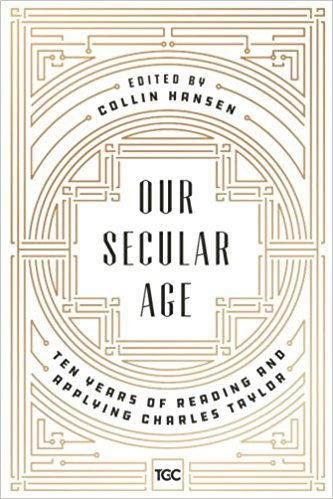
I Have a Chapter in a New Book: ‘Our Secular Age’

Our SEcular Age image.jpg

Our Secular Age, a new volume edited by Collin Hansen on the tenth anniversary of Charles Taylor’s A Secular Age, has just been released by the Gospel Coalition. Taylor’s work is one of the most significant works on the problem of secularism, culture, and philosophy of religion in the new millennium.

In this volume, Hansen has gathered together some helpful essays by both academics and pastoral practitioners both engaging and applying Taylor’s insight for theology and ministry in our Secular Age. With historical and theological essays from Michael Horton and Carl Trueman, practical engagement from John Starke (preaching), Mike Cosper (pop culture), Jen Pollock Michel (flourishing), and my Mere Fidelity compatriot, Alastair Roberts (liturgy), and many more, there’s plenty to glean from, even if you haven’t yet read Taylor’s book yourself.

Indeed, part of the hope is to take some of Taylor’s best insights and make them accessible to those who may not have the time to wade through all 750 pages of Taylor themselves. Much of Collin’s introduction can be read here.

Now, as it happens, I also had the privilege to contribute an essay on applying Taylor’s insights to ministry to Millennials growing up in the Super-Nova of belief and the internet age, (and really anybody inhabiting our cross-pressured age). Here’s one clip:

We’ve reached the point where everybody has to preach apologetically, even if your congregation isn’t mostly millennial. To be clear, I don’t think such preaching is simply a matter of incorporating in every sermon arguments for the resurrection, or the existence of God, and so forth (though some of that might help). Instead, we need to actively answer objections to the gospel from inside the mindset of our cross-pressured culture on a regular basis as a part of ourscriptural exposition.

We need to show the consistency, coherence, and comeliness of the gospel to this generation. But it is not enough to simply defend the gospel. Present the way it interrogates the dominant, unquestioned narratives of our hearers—on meaning, money, sex, power, politics, gender, and so forth—and actually makes better sense of the world than any other view on offer.

If you want to see my first ever chapter in print, you can buy copies of the book for yourself and for all of your friends and family members at Amazon.com or WTS bookstore.

If you need more encouragement, here are a couple of the blurbs:

“Charles Taylor’s A Secular Age is a landmark book, and the essays collected here ponder it intelligently and charitably. Some echo Taylor, some extend his ideas, some contest his claims, but all engage his argument with a seriousness that
the book deserves—and that Christ’s church needs.”

-Alan Jacobs, distinguished professor of humanities in the honors program at Baylor University and author of How to Think: A Survival Guide for a World at Odds

“To be secular, says philosopher Charles Taylor, is to have no final goals beyond this-worldly human flourishing. This is only one of the many insights from which pastors can profit from Taylor’s work in their ministry of the gospel to an age that has substituted spirituality and authenticity for religion and doctrine. The essays in this helpful volume do more than borrow from Taylor: they engage, question, develop, and occasionally criticize his influential account of our complex cultural moment in which we all—moderns and postmoderns, millennials and non-millennials—are trying to live, move, and have our being as disciples of Jesus Christ. Reading and applying the insights of those who have read and applied Taylor is a salutary exercise in understanding oneself and others in an age that is not only secular, but fragile, frustrated, and confused.”

-Kevin J. Vanhoozer, research professor of systematic theology,
Trinity Evangelical Divinity School

And, finally, here’s a nifty book trailer:

‘Our Secular Age’ Book Trailer from The Gospel Coalition on Vimeo.

Soli Deo Gloria


Mere Fidelity: On the Value of Controversy

Mere FiOn this week’s show, Alastair, Matt and I consider the nature, ethics, and benefits of theological controversies. As we seem to get into controversies on a more regular basis than we’d probably like, we wanted to take a week to dig into how and why one might want to do so. Andrew was not included since he has been too uncontroversial of late.

Beyond that, next week’s show will be a discussion of Book 1 of Augustine’s Confessions. If you’d like to read along–which we encourage you to do–Henry Chadwick’s translation is available widely at a reasonable price. I have already read book 1 and let me tell you, I am so excited about these shows. If we succeed in doing nothing but encouraging you to finally pick up the Confessions our work is done.

If you like the show, please do leave us a review on iTunes. We are also available on Google Play.

If you’re interested in supporting the show financially, you can check out our Patreon here.

Soli Deo Gloria

The Reforming Catholic Confession

reforming-catholic-confession-logo500 years on downstream from the Reformation, one of the most common charges against the Reformers is that they divided the Church. What’s more, once the division came, inevitably division after division followed, with fragmentation, fissiparousness, and ecclesiastical foment.

Beyond that, what have we got to show for all that division? With our various and sundry denominations, views on baptism, end-times, and so forth, what was the theological and spiritual gain? To many, the answer is, “not much.”

In an effort to answer that charge, and more importantly, to give positive witness to the gospel truths of the Reformation, a group of Protestant theologians have drafted, signed, and offered up “A Reforming Catholic Confession: A ‘Mere Protestant’ Statement of Faith to mark the 500th Anniversary of the Reformation.” The idea for it first hit Wesleyan theologian, Jerry Walls, who reached out to a range of theologians, one of which was my own adviser Kevin Vanhoozer. Vanhoozer responded positively, they got to working together, drew in dozens of other collaborators across the theological spectrum, and over a long period, together crafted and hammered out the confession presented today.

With nearly 250 signatories drawn from every continent and spanning most Protestant theological traditions and Communions (Lutheran, Reformed, Anglican, Methodist, Baptist, Free Church, Nazarene, Pentecostal, etc.), this has as decent of a shot at the claim of being “global” and “ecumenical” as you can get for Protestants.

I would encourage you to read the Statement here. You can see it covers 12 articles from the Triune God, creation, fall, redemption through the work of Jesus Christ in the Gospel, the Church, and concluding with Last Things. In covering this range, their hope is to give testimony to “the catholic substance of the faith (the consensual tradition worked out over the first few centuries of church history about the triune God) according to the Protestant principles of the faith (sola scriptura, sola gratia, sola fide).”

I would also encourage you to go read the “Explanation” as to what provoked the statement, what its aims are, what it’s trying to do (and not do), and how that plays into the particular kind of document this is. And this piece over at Christianity Today is very helpful. Finally, check out this little video snippet with Vanhoozer on the Confession:

You can catch the rest of the interview here.

To be clear, the point is not to offer up a new confession for Churches to adopt and replace your old ones. Nor is it to be a new political litmus test for good standing in Protestantism, or Evangelicalism (that is quite contrary to its intended use). Nor is it even to be a lowest common denominator harmony of the confessions.

The drafters clearly state, “We continue to appreciate the distinctive emphases of our respective churches, denominations, and confessional traditions.” The Mere Protestantism they’re giving witness to takes place in the “rooms” of the house, not simply the hallway they’re describing (to steal an image from Lewis). So, if you’re worried particular distinctives or emphases don’t seem to appear in the document, they’re not trying to erase them or take them away from you (put your muskets away, nobody is coming for Westminster, fellas).

Instead, it is an attempt to give testimony to the fact that despite our sin and confusions, despite our fallibility and error, despite all possible outward signs, despite the as-yet unresolved differences still among us, God’s Spirit was at work in the Reformation and is still at work in the Protestant churches that it birthed. In an age of polarization, there is greater confessed unity in the gospel among us than we’re tempted to believe. What’s more, it confesses that there was a permanent gain for our understanding of the gospel in the Reformation worth preserving, confessing, and passing on.

I’m not typically a “signer.” I’m wary of hastily jumping on to this or that statement, pronouncement, and so forth, so I can appreciate the hesitation some may have at this point. All the same, I think this one is worth your time and consideration.

Soli Deo Gloria


The Trinity in the Destruction of Sodom (Or, the Weirdest Argument for Consubstantiality of the Son)

Reading the Church Fathers on Scripture can be illuminating, surprising, and sometimes weird. This is part of what’s so fun about reading them. They come to the text of Scripture from a different time and place, with slightly different questions, exegetical instincts, and theological approaches, which present a question and a challenge to our own. I was reminded of this when diving into a little of Cyril of Alexandria’s work on the Gospel of John.

The Patriarch Cyril is best-known for his polemic against Nestorius and the central role he played in Christological controversies which leading up to the Council of Chalcedon (at which point Cyril was dead). Many will have read his little work On the Unity of Christ, which is what I have. I was not aware, though, that his commentary on the Gospel of John was translated until recently (Brandon Crowe quotes it in his excellent book The Last Adam). On a whim I looked it up and found online for free because, well, Cyril of Alexandria. Anyways, I started poking around and stumbled on one of the oddest bits of trinitarian reasoning I’ve read in one of the Fathers.

It comes in his comments on John 1:1, “and the Word was with God”, in his chapter arguing that the Son is consubstantial with the Father and therefore God in his own person. The trouble he’s dealing with specifically is the oddity of thinking of the Son as properly God but somehow also being “with God”, alongside him. Cyril proceeds to explain how this is so by commenting on various relevant Scriptures you might expect him to. For example, see this entirely unsurprising bit on John 14:

Consubstantial is the Son with the Father and the Father with the Son, wherefore They arrive at an unchangeable Likeness, so that the Father is seen in the Son, the Son in the Father, and Each flashes forth in the Other, even as the Saviour Himself says, He that hath seen Me hath seen the Father, and again, I in the Father and the Father in Me. But even though He be in the Father, and have again the Father in Him, Himself full well, as has been already said, perfectly exact unto the Form of Him Who begat Him, and depicting again in Himself without any shortcome, the Father whence He is:—-not therefore will He be deprived of His separate existence, nor will the Father lose His own special Being; but neither will the surpassing Likeness and Resemblance work any confusion of Persons, so that the Father Who begat and the Son Who is Begotten of Him should be considered as one in number. But sameness of Nature will be confessed of Both, yet the Individual Existence of Each will surely follow, so that both the Father should be conceived of as indeed Father, and the Son as Son. For thus, the Holy Ghost being numbered with them and counted as God, the Holy and Adorable Trinity will have Its Proper Fullness.

Alright, so far so classic Trinitarian. It doesn’t get more basic than Jesus’ discourses in the Gospel of John.

Now, jump down six or seven texts and we arrive at this fascinating bit of exegesis of Genesis 19:24:

Another. The Divine Scripture says that the cities of the Sodomites were burned by the Anger of God, and explaining how the Divine wrath was brought upon them, and clearly describing the mode of the destruction, The Lord, it says, rained upon Sodom brimstone and fire from, the Lord, since this too is the portion of the cup most befitting those who are wont to commit such sins. What Lord then from what Lord sent the fire on and consumed the cities of the Sodomites? It is clear that it was the Father Who worketh all things through the Son, since He is too His Might and His Arm, Who caused Him to rain the fire upon the Sodomites. Since therefore the Lord sends the fire from the Lord upon them, how is not the Father Other, in respect to His own Being, than the Son,, and the Son again than the Father? For the One is here signified as being from One.

I have to admit, Sodom and Gomorrah is not one of my top 10 go-to texts in proving the distinction-within-unity of the persons of the Godhead.

Still, the text is illuminating for a number of reasons. First, Cyril picks up on a real oddity in the repetition of the LORD twice in the verse. Calvin suggest the repetition emphasizes the God’s agency. Robert Alter says its a repetition of emphasis as well, but he focuses on connecting the phrase, “from the heavens” which links it to the destruction of the Flood. Gordon Wenham doesn’t comment on that repetition, but right before it he notes that the whole passage is riddled with ambiguities “the LORD”, “the men”, and “the angels” in chapter 18, but here in chapter 19 and in the encounter in, it is clear one represents or is the LORD, the Angel of the YHWH.

It seems, then, Cyril is picking up the Angel of YHWH reading and suggesting the repetition indicates something about the complexity of the agency of the One God being depicted. The argument depends on the doctrine of inseparable operations and its corollary: the outward works of the Trinity are undivided, but that doesn’t mean the persons are indistinguishable or confused in them either. In the incarnation, Father, Son, and Spirit are at work, but only the Son is incarnate and so forth. Cyril discerns a distinction of activity here as well.

Connecting this to the broader Patristic habit of seeing an order to the works of the economy as proceeding from the Father, through the Son, and perfected in the Spirit, Cyril focuses on the fact that all of God the Father’s works are “through the Son”, whom he has identified with the Angel of YHWH. And so, when “the Lord rained on Sodom and Gomorrah sulfur and fire from the Lord out of heaven”, we should understand that it is the Son who rains down fire on Sodom from the Father.

Weirder still is that while in other places the Fathers might describe the Son as the Wisdom of God, or the Power of God, by which he acts, it seems Cyril may be identifying him as the “Anger” of God, or God at work in the execution of his judgment against Sodom. (Though, it could be the capitalization in the translation is misleading me here.)

In any case, the point is that Cyril wants us to see that while the text is clear that while there is an overall unity to the act of judgment as that of the One God, there is a distinction in the agency implying an internal otherness appropriate to the two persons of Father and Son. There is one Judgement, but it comes through the Son from the Father.

Turning a bit from “trinitarian” issues, it’s worth noting that Cyril sees no problem reading the affair at Sodom and Gomorrah as an instance of active divine judgment and retributive punishment, with no mediators involved. We have here a deeply Christological exegesis which places the Son plainly at the center of the Old Testament text, but does so by making him the active agent of judgment in God burning a city to the ground. Suffice it to say this is markedly different from other recent proposals for relating Jesus to Old Testament violence. Though, it does seem consistent with Paul’s reading in 1 Corinthians 10.

At which point, it’s worth reiterating that this isn’t some weirdo outlier. This is Cyril of Alexandria, revered Patriarch, central figure in formulating and consolidating the Christological Orthodoxy for the whole Church, East and West. Now, you may be unconvinced by his reading (and I’m not sure I buy it myself),  but it does present a striking instance of the way the Fathers often don’t fit our popular expectations on these matters, which are often shaped by 20th Century prejudices, Eastern polemics, or recent progressivish retrievals.

Now, I don’t really have a big point here except that sometimes you find odd, things reading the Fathers. Though, I suppose the next time you’re teaching on the Trinity, maybe consider the story of Sodom and Gomorrah?

Soli Deo Gloria