When Can We Stop Conversing and Believe Some Stuff? A Ramble on Intellectual Narcissism

landingI’ve written before about current failure of intellectual imagination that plagues our current, cultural conversations, especially around conversion narratives. If you used to believe something for stupid, sinful reasons, then that’s the only reason anybody could hold the position you used to hold. If people haven’t updated their beliefs along the lines you have, it’s because they haven’t read the arguments you have, so they simply need to be enlightened.

What follows is a ramble on another, related angle on the same problem.

Of late, I’ve noticed that there’s a tendency to assume people are in our same intellectual position with respect to an issue that’s up for debate. For instance, if you’ve never really struggled with doubt, it’s very hard to put yourself in the position of someone who is wrestling with issues that just seem obvious and intuitive to you. In theological circles, it may be tempting to write it off as pure perversity and rebellion, rather than real intellectual and moral tension.

On the flipside, if you’ve got doubts, then it’s hard to deal with someone who doesn’t currently seem to be sharing them. Their certainty on the issue can be off-putting, or, even more, unthinkable. It’s difficult to imagine that someone has wrestled as hard as you have and then come out on the other side and still holds the beliefs you used to hold, or different beliefs, or indeed, any strong beliefs on this at all. This actually seems to be more than case nowadays, especially because our culture puts a premium on heroic doubt. I don’t remember where he said this, but Matthew Lee Anderson has pointed out that in the current intellectual climate, beliefs aren’t as valid, or true, unless we’ve passed through some period of angst, or torment over them, otherwise they appear as inauthentic expressions of bad faith.

I was thinking about all of this as I was reading Tertullian’s Prescription Against Heretics. While he probably pushes too hard in one direction, he talked about the fact that it’s fine to search while you haven’t found the truth, but once you found it, land and be content with the truth:

But at the outset I lay down (this position) that there is some one, and therefore definite, thing taught by Christ, which the Gentiles are by all means bound to believe, and for that purpose to “seek,” in order that they may be able, when they have “found” it, to believe. However, there can be no indefinite seeking for that which has been taught as one only definite thing. You must “seek” until you “find,” and believe when you have found; nor have you anything further to do but to keep what you have believed provided you believe this besides, that nothing else is to be believed, and therefore nothing else is to be sought, after you have found and believed what has been taught by Him who charges you to seek no other thing than that which He has taught.

I take him to be saying something like this: When you go seeking for a spouse, the point is to find one, right? Now, once you find one, you’re not supposed to keep searching are you? That’s not to say you’re not still learning, or exploring–but it’s of a different character now. Before I was looking for a land to settle in, but now I’m exploring the land I have. Before I was searching to find a wife. Now I’m “exploring” my wife, looking to grow and learn in the context of an already settled relationship. This is no less stimulating, adventurous, or somehow closed-minded–it’s just the way relationships work. Depth and love are not the result of constant foundation-testing and tinkering, but in building once those things have been tinkered, tested, and settled on.

Something similar is true about theological truth. I’ve searched a bit and have already landed on the Apostles Creed. That’s not up for grabs for me anymore–at least, not in a live way, really. Now, I suppose theoretically someone could provide me with defeater beliefs for it and I’d give it up, but not for now. For now I have cast my bet, rolled the dice, and landed on a basic outline of Jesus as the Crucified and Risen Lord who reveals God as Triune, salvation by God’s grace, and so forth. The question now is learning to understand what I’ve come to believe in a deeper fashion.

Where’s all of this going? Well, I suppose it comes to a few questions. Are you okay with ever landing? Is your approach to faith one that dictates we should we continue doubting and testing the same things over and over? Or, when it comes to cultural conversations on hot-button issues, do we have to keep having the same conversation? Or rather, am I expected to constantly come into every conversation with the same level of hesitancy as you do, or be deemed inauthentic and totalitarian? Can I be confident of my beliefs even as I’m tender and understanding of yours?

In the other direction, do you enter every conversation with the expectation that people have reached the level of confidence and security that you have? In other words, is every expression of uncertainty and doubt an expression of rebellion and perversity, or do you give some space for those who are still piecing it through?

I don’t have a conclusion here other than something I try to remind myself of all of the time: when dealing with people you disagree with, try your best not to be an intellectual narcissist.

Soli Deo Gloria

How Do I Know I’m One of His Sheep? I Hear His Voice

lost sheepAssurance is hard to come by sometimes. For many of us, walking through the Christian life is less a matter of one triumphant stride after another, than a collection of bumps, bruises, stumbles, tumbles headlong down a hill like Wile E. Coyote, and an occasional sober step in the right direction. In our periods of lost meandering then, it becomes very easy to doubt yourself and your faith.

“Am I a Christian at all?”

“Do I really believe this?”

“Am I saved?”

“Is this going anywhere?”

In Bible study the other night, we were struck by surprising word of comfort amidst the heat of controversy. Jesus is once again arguing with this religious critics after healing a man born blind (John 9). He goes on to discuss the difference between the wicked shepherds of Israel and himself, the good shepherd who lays down his life for the sheep (John 10). In the middle of it, he gives a reason for the very mixed reactions he’s receiving from the crowd:

Jesus answered them, “I told you, and you do not believe. The works that I do in my Father’s name bear witness about me, but you do not believe because you are not among my sheep. My sheep hear my voice, and I know them, and they follow me. I give them eternal life, and they will never perish, and no one will snatch them out of my hand. My Father, who has given them to me,is greater than all, and no one is able to snatch them out of the Father’s hand. I and the Father are one.” (John 10:25-30)

Did you catch that? Why are they not accepting Jesus’ words, while others do? Because they’re not sheep. How do we know? Because sheep recognize their Shepherd’s voice.

After some discussion, my good brother and ministry partner Matt spoke of the great comfort of those words. He spoke of the struggle he has at times to trust, his self-doubt, and flaws. But then he said this, and this is golden, “I may be a lame, kind of mangled straggler at the back of the flock, but I know I hear his voice. That assures me I’m one of his sheep. Whatever else, I know I hear his voice.”

Some of us need to hear that today. We’re caught in sin, or tripped up in doubt. Maybe we’re depressed and prone to melancholy. We’re straggling along, wondering if the Shepherd knows us. Take heart, he’s calling your name and you are his. You will not be snatched from his hand.

Soli Deo Gloria

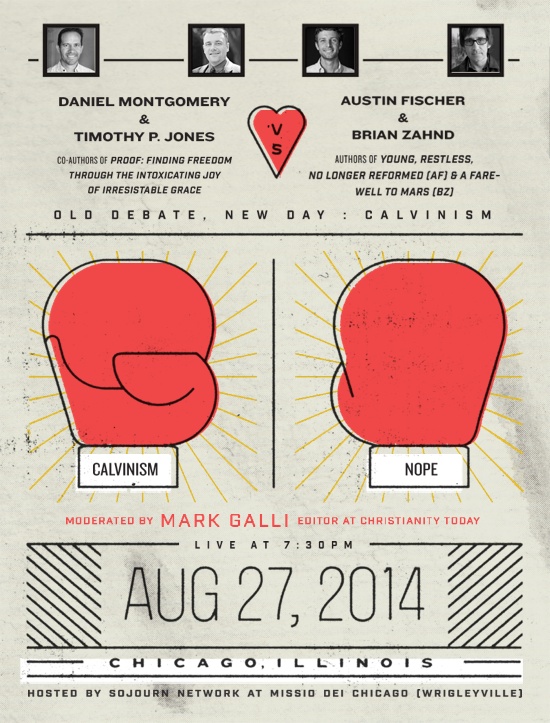
‘Plain Readings’ of Scripture, Job, and Other Assorted Thoughts on the #CalvinismDebate

debateLast week Zondervan hosted a live-stream debate between some Calvinists (Daniel Montgomery and Timothy Jones) and some Non-Calvinists (Austin Fischer and Brian Zahnd). Now, while I was excited to watch, it just so happened that my internet was slow that day, so I only caught snippets and twitter commentary while it happened. Immediately afterwards I had a trip to get prepped on, so I didn’t get to watch it until this week.

Still, because a few people in different theological wings have asked me to comment on the debate, I figured I’d give it a shot. I tried to keep this brief and failed, but even with its length, I’ve limited it to some focused observations and reflections on a few issues with the first section of the debate. This is by no means exhaustive and I won’t even try to comment on all of the issues. Indeed, I’m sure many will find this utterly dissatisfying.  And that’s okay.

To begin, a word about the players.

The Players And Confirmation Bias

I’ll be honest, going into this I already had some ideas about it. For one thing, I knew very little about Austin Fischer. I knew he wrote a book about no longer being Young, Restless, and Reformed, but not much else. I thought Kevin DeYoung had a pretty incisive review of it, but honestly, I haven’t had time to read it. As for Brian Zahnd, while I was blessed and challenged by his book on beauty (which I still highly recommend), I’ve criticized him heavily before on other issues. Based on his online writing, his rhetoric towards positions with which he disagrees, especially the Reformed, is [retty belligerent and prone to violent caricature. He’s a powerful preacher who’s got a way with words and a heart for Jesus, but I wasn’t expecting much of a fair shake there.

With Montgomery and Jones, I was predisposed to root for them. Not only do I find myself in their Reformedish camp in general, I’ve favorably reviewed their book PROOF, and have been impressed with them even in their handling of serious brotherly criticism. Though I’ve never met them, I consider them friends.

I go into all of this simply to make one point: I definitely had a side going in and that affected the way I watched the debate. Indeed, I think that’s likely the case with anyone who was interested in the event, even if you didn’t know any of them. With the subject of Calvinism, like the subject of God, you’re never neutral about the arguments. One of the most perceptive comments on the whole thing came from Mike Cosper: “If you want to see some wonderful examples of confirmation bias, check out the hashtag.” A lot (most?) of us went in pumped to see Montgomery school Fischer, or Zahnd lay down his linguistic hammer on Jones.  We already knew the right answer, we just wanted to be publicly vindicated.

Debates

Which leads me to the format of debate. In my view, public debates are pretty limited. Not enough space or time can be devoted to the various pertinent issues involved, so most of the time both sides come away thinking of the other side, “Is this the best you’ve got?” To which I’d respond, “No, of course it’s not.” I know for sure that’s not the best Montgomery and Jones have. I’ve read their book. What’s more, I’m sure it’s not the best that Zahnd or Fischer have. They hinted in the direction of some more serious arguments beyond the rhetorically-freighted, one-liners they were throwing out there. Indeed, Fischer actually did some serious, responsible, exegetical work in his response to Jones on Romans 9, which made me suspect there’s more where that came from.

Calvin and Calvinism

Next, I’m going to say something that may shock most non-Calvinists, and indeed, many Calvinists as well: Calvin did not invent ‘Calvinism’.

Whether you’re speaking solely of the doctrines concerning election and salvation as they were defended and codified at Dordt (which Calvin was already dead for), or the broader complex of thought with respect to covenant theology, ecclesiology, etc, referred to as the broader Reformed tradition, you have to know that it goes beyond him. There are many other stars in the Reformed sky such as Bucer, Vermigli, Ursinus, Knox, and a host of scholastics who delved into these issues at length. I love Calvin, but as Kenneth Stewart has demonstrated in his 10 Myths About Calvinism, his exposition of election is not the only standard or normative one for the confessionally Reformed. Indeed, most of these theologians could point back to a number of top medieval theologians, including Thomas and Augustine as representatives or precursors to their own expositions.

In other words, it’s okay to be Reformed and then think you may have to adjust your exposition of election according to Scripture with respect to double, or single predestination. Many have done so even while remaining non-Remonstrant (Arminian), and so forth. So trotting out a Calvin quote doesn’t mean that Montgomery isn’t really being a good Calvinist, even if he’s cutting things in a way that Calvin wouldn’t have agreed with. Quite frankly, I don’t think anyone’s going to say Herman Bavinck isn’t a good Calvinist because he humbly pushes back on the fairly common claim that the decrees of election are definitely about the revelation of God’s glory.

As a side-note, speaking of “Calvin’s system” as “beginning with philosophical theism” is, to be blunt, a blatant absurdity to anyone who’s read the current secondary literature, and knows about Calvin’s humanistic and vocally anti-speculative approach to the doctrine of God. One of Calvin’s most common targets were the theologians of the Sorbonne who engage in abstractions instead of the God revealed in Christ. Indeed, unlike most modern systematic theologies, the Institutes almost doesn’t have a doctrine of God philosophically considered, but instead treats the Trinity, and the nature of God as revealed in his works as Creator and Redeemer. To assert otherwise is only possible through gross ignorance of the subject, or in the face of the evidence.

Which brings me to the next point.

Jesus Rules and Philosophical Systems

Most Reformed are not intentionally twisting texts to get to a conclusion we’ve already decided on when it comes to the doctrines of grace. I certainly wasn’t. I still feel the weight of the arguments against it. I’ve said it before, but over the years I have only slowly inched closer to the Reformed side on this issue, quite reluctantly and usually through the side door of some alteration in my view of regeneration, providence, or something else that has a role to play here. Why? Because of a struggle to affirm all that Scripture affirms about God’s sovereignty, our choices, his decrees, our responsibility, his grace, and so forth.

See, despite ‘pervasive interpretive pluralism’, most Calvinists don’t give ourselves the option of affirming an “internal conflict” within Scripture, as Zahnd talks about, and then using a very specific Jesus Hermenuetic to pick which parts of the Scriptures got it right. Because of the way we see Jesus approaching and affirming all of the Scriptures, we believe Jesus as the Word of God Incarnate affirmed and inspired the Scriptures as the Word of God written. All of it. So we’re trying to get it all in at once. I’ve made this point against Zahnd before, but if your so-called “Jesus-theology” causes you to shunt to the side texts that Jesus affirmed, or dismiss as ‘biblicistic’ efforts to incorporate all the texts to which Jesus constantly appealed, you might be doing it wrong. (Now, this isn’t to say that most Arminians do this, or even that Fischer would have done it, but still, coming back to my earlier point, this is the kind of important methodological dispute that a debate like this doesn’t give space to address.)

Plain Readings and Finding the Wright Escape Hatch

Easily the most commented on line of the night was Daniel Montgomery’s about a “plain reading” of Ephesians 1.  It was provoked by Zahnd’s earlier invitation to make sure we’re paying attention the “best” scholars, such as N.T. Wright, Scot McKnight, Karl Barth, and so forth when we make these theological judgments. Montgomery later basically said, “Yes, I understand we need to read Wright, Barth, and characters like that” but really, it’s hard to understand Ephesians 1 as speaking of anything else but unconditional election on a ‘plain reading’ of Paul, which is what we ought to get around to doing more often. To which Zahnd’s retort was, “Sure, it’s plain in your theologically-rigged ESV, with your horn-rimmed Calvinist lens, translation isn’t it?” At which point, I have to admit, I laughed. Touché, Zahnd.

Now, all of the twitter commentary about this was explosive and apoplectic. And to some degree I get it. Even though Zahnd came in kind of waving his hands about “scholarship” and so forth, seemingly writing off scholarship like that and referring to Wright & Co. as a bunch of ‘characters’ rubs me the wrong way. Still, I suppose I heard it differently because I’ve read their book. Of its 200 pages there were nearly 40 pages of endnotes showing their work in the Greek, the commentaries, and so forth (including a number of citations of Barth! in the German!). They did their exegetical and theological homework. Certainly Jones is no academic slouch. So maybe we should think Montgomery’s advocacy of a ‘plain reading’ isn’t quite what it initially sounded like. If it was, though, his practice is certainly a lot better than that.

Here’s the thing that struck me, though, with Zahnd’s earlier call for attending scholarship: Wright, McKnight, Hart, and Barth won’t necessarily save you from a Calvinist reading of Romans 9 or Ephesians 1 (or indeed, the rest of the Biblical witness to God’s sovereignty.) I mean, take myself. I’ve read D.B. Hart, and you know what? He’s mostly great, but I’ll be blunt and say he also seems to never know what he’s talking about when it comes to what Calvin or Reformed types actually say about things. When it comes to Barth, I’ll be upfront and say that I haven’t read his full doctrine of election in the Dogmatics.  Still, I’ve read the Epistle to the Romans, as well as competent, sympathetic distillations of the Dogmatics, and so forth and, you know, I’m not convinced Paul is teaching us Christ is the only Elect or Reprobate one ruling out individual election. 

Beyond that, I’ve actually read McKnight on the warning passages in Hebrews, as well as pretty much everything what N.T. Wright has to say on the subject (including his big Paul book). I’m a huge Wright fan, in fact, and back when I was very hostile to Calvinism, I dug into Wright’s big Romans commentary (especially his stuff on Romans 9-11) hoping to find an escape hatch from election. I even dug into James Dunn’s commentaries, just about everything he’s written on the New Perspective, and waded through the readings like those offered by Walls and Dongell in Why I Am Not a Calvinist looking for a way out of my Reformed friends’ arguments.

In the process I found a lot of good stuff. After that, I was much better able to set the passage in the broader framework of God’s purposes for Israel, Paul’s vindication of God’s name when it seemed that his promise to Israel had failed through their unbelief, and so forth. That said, none of these things rule out, or necessitate a non-predestinarian reading. In fact, I think they largely fit well with the older insights. And that’s a conviction I came to hold when I was fighting tooth and nail in my soul to write off more classically Reformed readings.

Finally, more positively, I’ll just say there’s a lot of good, top scholarship out there that disagrees with Zahnd’s top scholarship on the issue. For every N.T. Wright and Scot McKnight, you’ve got a G.K. Beale, or a Michael Bird. For every Barth, you’ve got a Bavinck. For every D.B Hart, there’s a Kevin Vanhoozer whose trinitarian theology in Remythologizing Theology is just as philosophically-sophisticated, aesthetically-appealing, and, I think, more biblical than Hart’s The Beauty of the Infinite (although there’s much overlap). So inviting us to consider the great, “the best” scholars of our day, and then ripping off the names of top scholars who you think agree with you, doesn’t really get you places. Calvinists have plenty of names too.

Job, Lewis, and the Creator/Creature Distinction

Finally, one of the big issues of the night was the challenge by Fischer and Zahnd to explain why God would intentionally pass over, or create someone in order to be passed over, for salvation. Now, leaving aside the problem that unless you’re a Universalist or an Open Theist you still face a similar situation, I was fascinated by the response on Twitter, as well as by Fischer to the appeal to Job and mystery.

Faced with that challenge, Montgomery recalled what happened when Job challenged the justice of God’s judgments, or his wisdom in allowing Satan to torment him. What is God’s answer there? Well, read Job 38-42 and you’ll see it’s basically a long way of saying, “I’m the infinite God. You are a very finite, sinful human. You don’t have a scale for the difference between us. I was fine-tuning the galaxies, hanging up the Milky Way in the vast reaches of space, before you were even a twinkle in your father’s eye. Why would you ever think yourself competent to understand my secret judgments?”

Ironically enough, Lewis makes a helpful point in this direction arguing for God’s rationality in the risk of gifting humans with free will:

Perhaps we feel inclined to disagree with Him. But there is a difficulty about disagreeing with God. He is the source from which all your reasoning power comes: you could not be right and He wrong any more than a stream can rise higher than its own source. When you are arguing against Him you are arguing against the very power that makes you able to argue at all: it is like cutting off the branch you are sitting on.

Mere Christianity, The Shocking Alternative

To some this sounds like a cop-out and I can get that. Still, I do find it interesting that Reformed theology gets dinged for being a too rationalist system, with a cold logic that leaves no room for mystery, and yet, when the Reformed do argue from Scripture that God himself says we ought not to expect to understand the mystery of his judgments, they’re charged with obscurantist irrationality.

This is why I’ve almost come to see this as sort of theological-aesthetic judgment. You either think it’s plausible God might have some reasons for doing things you couldn’t possibly fathom, or you don’t. Or rather, you may believe that he does, but you either see it covering election, or you don’t.

Now, to this, Fischer may reply, “I still can’t see how anyone could argue it’s beautiful.” Sure. But most of us don’t initially see the Cross as beautiful, or wise either, until our hearts have been shaped and conformed to the paradoxical logic of the gospel. I’m not saying you have to buy election to see the beauty of the Cross. I am saying it’s not surprising that things which initially seem puzzling, weird, or terrifying to us, could eventually become beautiful to a mind submitted to the logic of Scripture.

Which is why I’d have to say I found Zahnd’s little line about rebelling against a Calvinist God a la Ivan Karamazov–returning God’s ticket, so to speak–so unhelpful. Back when I was an anti-Calvinist, and even now when I shudder to live in an Open Theist’s world, I have this thought: “Well, either God is that way or he isn’t. If he is, then that’s God and God is the standard of goodness.  In which case I’m wrong about the nature of reality, and for me to refuse to worship, love, and acknowledge his goodness–to call him a devil, and so forth–is frightfully close to explicit blasphemy light of my own fallibility and sin.”

Best to articulate the God of Scripture as faithfully as I can and leave hypothetical moral stands against the Creator to those atheists who have the time to fantasize about such things. My heart is rebellious enough without such a morally tempting exercise, despite its rhetorical force. (For more on the same topic, I’d suggest Wesleyan theologian Fred Sanders piece here.)

At this point I’ve said far too much and yet not much at all. I hope I’ve not been too persnickety. I really do understand the trouble people have with these issues. What’s more, I have a terribly high amount of respect for the many thoughtful Christians who see this another way. At the end of the day, though, let me just say this: our basic posture here must be humility–to God and before the Scriptures which he has inspired by the Holy Spirit to testify to the saving Son who reveals the love the Father has decided to lavish on his children since before the world began.

Soli Deo Gloria

Mere Fidelity: Made for More (w/) Hannah Anderson

Mere FidelityIn my writing career i have only endorsed or ‘blurbed’ one book and that was Hannah Strickler Anderson’s Made for More: An Invitation to Live in God’s Image. This week Andrew, Alastair, and I got to sit down and chat with her about the doctrine of the Image of God, how that plays into how women ought to understand themselves, and the way our churches can cultivate the women in our congregations well.

Give it a listen, and I highly encourage you to go pick up her book.

 Soli Deo Gloria

Different Dimensions, Not ‘Theories’ of Christ’s Death

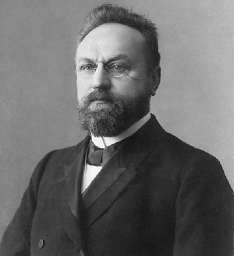
Truly dominant-looking theological man. It's a win for Reformed beardliness everywhere.

Truly dominant-looking theological man. It’s a win for Reformed beardliness everywhere.

It is very common in modern theology to talk about different ‘theories’ of what Christ’s death on the Cross accomplished. Indeed, a couple of weeks ago I talked about the way this was really a mistake that leads us to miss the various angles or aspects of the one, grand work of atonement Christ accomplished on the Cross. Just as there are various, equally important dimensions to God’s character, so there are to Christ’s salvation.

Back in the day, Herman Bavinck was also dealing with a context where a proliferation of atonement ‘theories’ were being offered up to replace older conceptions. This often provoked a sort of agnostic response that the New Testament only provided some facts about the death of Christ upon which various conflicting interpretations could be easily offered and chosen. Bavinck, instead, responded that, “Holy Scripture does not relate to us the bare fact of the death of Christ in order then to base the interpretation and appraisal of it to everyone’s own taste but from all angles puts that fact in the light of the Word.” Essentially, all of the different theories of Christ’s death find their basis in the New Testament alongside each other and ought to be maintained side by side, mutually determining each other, not ruling the others out in our theology as well.

Bavinck then goes on to show us what he means but that, and what solid, biblical atonement theology ought to look like. (Yes, this is a longish quote, but worth every minute):

The first thing this study teaches, we may say, is that the Scriptures continually view the suffering and death of Christ from a different perspective and in each case illumine another aspect of it. Like the person, the work of Christ is so multifaceted that it cannot be captured in a single word nor summarized in a single formula. In the different books of the New Testament, therefore, different meanings of the death of Christ are highlighted, and all of them together help to give us a deep impression and a clear sense of the riches and many-sidedness of the mediator’s work. In the Synoptics, Christ appears on the scene as a preacher and founder of the kingdom of God. That kingdom includes within itself the love of the Father, the forgiveness of sins, righteousness, and eternal life; and Jesus, in his capacity as Messiah, ascribes to himself the power to grant all these benefits to his disciples. Just as he has power to heal the sick, so he also has the authority to forgive sins. By this combination of powers, he proves that he is the complete Savior of his people. For that reason, too, there is no way of gaining admission into that kingdom and no participation in those benefits except by faith in his name. For it is he himself who gives his life as a ransom for many and who, in his death, breaks his body and sheds his blood to inaugurate and confirm the new covenant with all its blessings (Matt. 20:28; 26:28). In the Acts of the Apostles, the death of Christ is especially presented as an appalling crime that was inflicted on Christ by the hands of lawless men but was nevertheless from eternity included in the counsel of God (Acts 2:23; 4:28; 5:30). Therefore, God also raised him from the dead and exalted him as Lord and Christ, Ruler and Savior, in order, in his name, to give repentance to Israel and forgiveness of sins (Acts 2:36; 4:12; 5:31).

For Paul, Christ’s death on the cross was originally the great offense, but when it pleased God to reveal his Son in it, that cross became for him the crown of Jesus’ messiahship and the only means of salvation. For on that cross God made him to be sin and a curse for us in order that in him we would have wisdom and righteousness, sanctification and redemption, salvation and eternal life (Rom. 3:24; 1 Cor. 1:30; 2 Cor. 5:21; Gal. 3:13). The Letter to the Hebrews describes Christ especially as the perfect and eternal high priest who was not only himself sanctified (perfected) through suffering (2:10; 5:9) but by his one perfect sacrifice put away the sins of his people (7:27; 9:26; 10:12) and is still continually at work as high priest in heaven, continuing and completing the purification, sanctification, and perfecting of his own (7:3, 25; 8:1; 9:14; 10:12ff.). Peter pictures Christ’s suffering as that of a lamb without blemish or spot; and in that suffering he not only bore our sins and redeemed us from our futile way of life but left us an example that we might follow in his steps (1 Pet. 1:18f.; 2:21f.). And John makes Christ known to us both as the lamb and the lion, as the life and the light, as the bread and the water of life, as the grain of wheat that, dying, bears fruit, and as the good Shepherd who gives his life for the sheep, as the Savior who gives life to the world, and as the alpha and the omega, the beginning and the end, the first and the last, and so on.

So, indeed, one can find in the New Testament different appraisals of the person and work of Christ, which, however, do not exclude but rather supplement one another and enrich our knowledge. Just as in the old covenant there were diverse sacrifices and the promised Messiah was repeatedly presented under different names, so this many-sidedness in the description carries over into the New Testament and even markedly increases. The death of Christ is a paschal offering, a covenant offering, a praise offering as well as a sacrifice; a ransom and an example; suffering and action; a work and a ministry; a means of justification and sanctification, atonement and consecration, redemption and glorification; in a word, the cause of our whole redemption. Similarly, in theology various “theories” occur side by side, and in the preaching of the church, now one and now another aspect of the work of Christ is in the limelight. None of the above-mentioned mystical and ethical views, accordingly, are untrue as such; on the contrary, they are all based on data contained in Holy Scripture.

Christ, by his incarnation, in his person indeed brought about the union of God and humanity and is, as such, God’s representative to us and our representative to God: the Immanuel who as prophet makes God known to us and as priest consecrates himself on our behalf to the Father. He is the Son, the Word, the Image of God who shares with the Father in the same essence and attributes, and at the same time the Son of Man, the true human, the head of humankind, the second Adam who became like us in all respects, entered into our community of sin and death and bore our sorrows and diseases. He came on earth to fulfill a vocation, to found the kingdom of heaven, to confirm the new covenant in his blood; and in order to do that, he submitted to the will of the Father, became obedient unto death, and pronounced the “Amen” on the righteous judgment that God executed upon death in his suffering and dying. He became the faithful witness (Rev. 1:5), made the good confession before Pilate (1 Tim. 6:13), and became the high priest of our confession (Heb. 3:1). His suffering, therefore, was not only an atonement for our sins and a ransom for our redemption, but in his death the believing community was crucified with him, and in his resurrection this community itself arose from the grave. Christ was never alone; always he stood in fellowship with the humanity whose nature he had assumed. Just as all die in Adam, so they are again made alive in Christ and called to follow in his footsteps. All these elements, which come one-sidedly to the fore in the above-mentioned conceptions of Christ’s death, can be found in Scripture. What matters above all, now, is not to neglect any of them but to unite them into a single whole and to trace the unity that underlies them in Scripture. We can even say they are all inspired by the commendable ambition to link the suffering and death of Christ as closely as possible with his person. For this suffering and death were in fact not “something objective” that can be separated from his person and life and put in a category by itself. Christ’s suffering and death were not his “lot” but his deed. He had power to lay down his life as he did to take it up again (John 10:18). His death was the consummation of his obedience (Phil. 2:8).

Reformed Dogmatics Volume 3: Sin and Salvation in Christ, pp. 383-384

Of course, for those who know the atonement theology, even this still doesn’t exhaust what Scripture (or Bavinck himself) says about the death of Christ in terms of the defeat of Satan, the powers of sin, and so much more. All the same, you can see Bavinck drawing out dimension after dimension of Christ’s accomplishment on the cross on our behalf, laying them side-by-side in a beautiful, seamless whole.

After reading something like this, I wonder at our tendency to want to single out, separate, or deny part of Christ’s great work on our behalf. No, instead, we must strive in our preaching and teaching to maintain every thread of the marvelous tapestry given us in the New Testament so that the glory of Christ Crucified and Risen may be gloried in, experienced, and wondered at all the more.

Soli Deo Gloria

Mere Fidelity: What Adoption Is and Isn’t

Today on Mere Fidelity, we take up the issue of adoption both as a process and as a doctrine in conversation with O’Donovan.

Mere FidelityWe’re drawing on the following text from Oliver O’Donovan’s Begotten or Made:

Adoption is not procreation, and does not fulfil the procreative good of marriage. It is a charitable vocation indicated to childless couples by the personal tragedy of their deprivation in this area. And although it may richly compensate for the sorrow and satisfy the desire to nurture and educate children, it is still a substitute for procreation rather than a form of procreation. This is not to belittle or demean the adoptive relationship. Indeed, it might be said to praise it on altogether a higher level, inasmuch as it points beyond the natural goods of marriage to the supernatural good of charity. But adoption cannot be taken as a precedent for interpreting procreation as a simple enterprise of the will. (page 40)

The iTunes feed is here, if you’d like to subscribe (thanks to everyone who has reviewed us so kindly) and an RSS feed for the show lives here.

Soli Deo Gloria

What Are Millennials Really Saying About Marriage? (CaPC)

Pew Research on Marriage

Another week, another story on millennials comes out. This time we have one about millennial attitudes towards marriage. According to a new Pew study, about 70% of my peers think that “Society is just as well off if people have priorities other than marriage and children.” as opposed to about 30 % who think that “Society is better off if people make marriage and having children a priority.”

But as Emma Green over at the Atlantic points out, “Looking at this chart is a little like taking a Rorschach inkblot test on the topic of ‘American values: You could see a lot of different things, if you wanted.”

For instance, this could easily be read as a blaring alarm sign-posting the grim future of marriage in America. Still, given that 75% of millenials in a 2013 Gallup poll that they’d like to get married in the future, it could be something much more benign like a “not quite yet”, which would make sense given the way average marriage ages are creeping higher each year.

I say a lot more about this over at Christ and Pop Culture.

Soli Deo Gloria

A Non-Scholastic, Personalistic Doctrine of Divine Simplicity?

dogFollowing up the discussion of the doctrine of divine simplicity from Monday, one of the most frequent criticisms of the doctrine, certainly of its harder forms, is that it is not something derived from biblical considerations, but almost wholly from non-biblical, or even un-biblical philosophical presuppositions drawn from Platonist, Aristotelian, and other philosophical traditions. This charge is particularly leveled against the forms found in accounts like Thomas’ and those following in the Aristotelian tradition of reflection. For a good example of one of these accounts, I’d point you to this short post by my friend Steven Nemes.  For a good, much longer example of this sort of criticism, see Paul Maxwell’s recent, serious ETS article on the subject.

While I’m not going to try and defend or answer objections to this kind of account, I did recently run across John Frames’ account of divine simplicity in his The Doctrine of God (pp. 225-230) in which he argues that some form (probably falling somewhere in the first 5 senses of the term we listed out recently) should be attributed to God. What makes his account worth highlighting is that he’s trying to make the argument from within a theological methodology that he himself describes as “something like biblicism”, with a somewhat unsympathetic take on medieval and Reformational scholastic metaphysics. In other words, he’s kind of a prime suspect for rejecting the doctrine, and yet here he tries to find a way of salvaging and affirming it according to a “more scriptural” logic.

How does the argument work? Well, it begins simple enough. Frame notes that Scripture uses the language of attributes to describe God as “spirit” (John 4:24), “love” (1 John 4:8, 16), and “light” (1 John 1:15). Scripture says not that God has these things, but that he is these things. These are three different ways of describing God that are perspectives on the whole divine essence. What’s more, he notes that the Lord swears by his own holiness (Psalm 89:5, Amos 4:2), with the insinuation that his holiness is nothing less than himself. The same sort of logic is at work when we consider God’s truth, which distinguishes him from false gods (Jeremiah 10:10), as well as Lordship and so forth. In the case of all of these attributes, Frame says that we can’t imagine God being God without being characterized by this quality.

Frame says that while we don’t find a clear passages showing that “all of God’s attributes are necessary to his being and thus perspectives on that being, but they do provide a pattern and a way of thinking about divine attributes to which it is hard to find plausible exception” (pg. 229). From there he asks “But does this pattern justify talk of simplicity?”

It’s here that things get interesting. Frame says that if we think that the different attributes are still perspectives or angles on the one reality of God, then we’ll have to admit at least a relative simplicity even while confessing some sort of complexity. The attributes are not separate in God and so therefore we begin to see that “attributes have attributes”: God’s love is holy, his righteousness is wise, his “mercy is eternal”, and so forth. Still that shouldn’t lead us to conclude that the attributes are simply synonymous. It’s not that his justice just is his power which just is his love and so forth. Though the attributes are all together and mutually determining they are also truly distinguishable. For those who know what to look for, it’s beginning to sound like a Scotist account of the sort Tom McCall writes about in Forsaken; it allows for formal distinctions between the attributes by which they are inseparable, but really distinguishable in themselves, not just phenomenologically (or, just in our heads).

Still, despite pushing for a recognition of real distinctions between the attributes, he invites us to remember that God is a person, and so when we speak of the “divine goodness”, for example, we’re really just “referring to everything that God is”, not some abstract property. “For everything God does is good, and everything he is is good. All his attributes are good. All his decrees are good. All his actions are good. There is nothing in good that is not good” (pg. 229). When we praise his goodness, or his justice, or his beauty, we’re not praising some external standard to which he conforms to, possesses, or participates in, but rather just what he is.

At the heart, then, of Frame’s account of simplicity is the recognition that the biblical God is a “personal God.” He is not a bundle of attributes, but rather a whole person that relates to his creation as such. “The attributes merely describe different things about him. They are a kind of shorthand for talking about that person. Everything he says and does is good, right, true, eternal, and so on” (pg. 230).

Leaving a treatment of the Trinity and simplicity until later, Frame concludes:

It seems to me therefore, that there is a legitimate biblical motive in the doctrine of simplicity. We may be surprised to find that it is not an abstract, obscure, philosophical motive, but a very practical one. Those emerging from the murky waters of scholastic speculation maybe surprised to find that the doctrine of simplicity is really fairly simple. It is a biblical way of reminding us that God’s relationship with us is fully personal.

So the simplicity of God, like all his attributes, sets forth his covenant lordship. It reminds us of the unity of our covenant Lord, and the unity that he brings into our live as we seek to honor him and him alone. The Christian is not devoted to some abstract philosophical goodness, but to the living Lord of heaven and earth. (pg. 230)

Now, for some this will sound great. “Woohoo! We don’t need the philosophical speculation, or need to decide whether Aristotelian distinctions between essence/existence, form/matter, etc. are relevant in order to proclaim a simple God!” On the flipside, I can imagine some people sitting back and thinking, “Well, I suppose we can go that far, but then again, how is that any different than a really aggressive doctrine of the unity of God?”

At that point I don’t really have an answer, but I figured the train of thought was worth pursuing, sharing, and inviting comments on.

Thoughts?

Soli Deo Gloria


Mere Fidelity Podcast: The End of Nature?

Mere FidelityIn this week’s episode we begin our discussion through some of the questions raised by Oliver O’Donovan’s work Begotten or Made? We’re joined by Dr. Matthew Loftus as our medical expert and contributor, to discuss the issues provoked in this section of text:

When every activity is understood as making, then every situation into which we act is seen as raw material, waiting to have something made out of it. If there is no category in thought for an action which is not artifactual, then there is no restraint in action which can preserve phenomena which are not artificial. This imperils not only, or even primarily, the ‘environment’ (as we patronizingly describe the world of things which are not human); it imperils what it is to be human, for it deprives human existence itself of certain spontaneities of being and doing, spontaneities which depend upon the reality of a world which we have not made or imagined, but which simply confronts us to evoke our love, fear, and worship. Human life, then, becomes mechanized because we cannot comprehend what it means that some human activity is ‘natural’. Politics becomes controlled by media of mass communication, love by analytical or counseling techniques. And begetting children becomes subject to the medical and surgical interventions which are the theme of this book.

As always, feel free to share, and go subscribe to our iTunes RSS. Also, if you have not reviewed or rated us, please take a moment to do so.

Soli Deo Gloria

Mere Fidelity Podcast: On Sanctification

Mere FidelityRecently there’s been a big dustup over the issue of Law, works, and sanctification. This week on Mere Fidelity, the boys (Andrew, Alastair, Matt) and I talk about why it’s become such a controversy, the nature of repentance, joyless sanctification preachers, and so forth. Good times were had by all. You can listen here:

Also, as a heads-up, we’re going to be begin reading and discussing ethicist Oliver O’Donovan’s classic essay Begotten Or Made. I’m told it’s the finest treatment of various bio-ethical issues like transgenderism and so forth, written in the last 30 years. Here’s what I’ll say: we plan on reading and discussing it in such a way that even if you haven’t read it, you’ll get a ton out of the discussion–well, at least as much as normal. That said, feel free to pick up a copy and read along with us.

Finally, we’re prepping for the podcast feed. If the Soundcloud option doesn’t work within a couple of days, we’ll get something going by next week.

As always, feel free share if you like what you hear.

Soli Deo Gloria