A Crisp, Theological Rule of Thumb

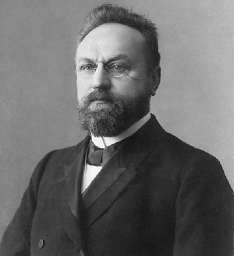
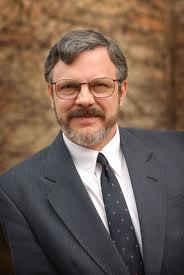
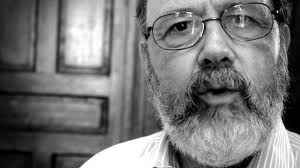
Sadly, Dr. Crisp no longer has this beard. And yet, the aura of its former magnificence still confers authority upon his pronouncements.

Sadly, Dr. Crisp no longer has this beard. And yet, the aura of its former magnificence still confers authority upon his pronouncements.

Christology can be a tricky business. What does it mean for the Godman to have both a divine and a human nature? Is there a change involved? If so, of what kind? What about Christ’s human nature? Does Christ need a soul and body, or does the Divine Word function as the soul of Christ’s human body? And if he does need one, is it a soul like others, including a human will alongside the divine will of the Word, or is that nonsensical? These are the sort of questions Oliver Crisp sets about examining early in his work Divinity and Humanity: The Incarnation Reconsidered

As anyone who has spent more than a little time reading theology knows, there are a number of methodological decisions to be made that impact the results we come to or the arguments we find compelling in Christology, and really, any other doctrinal matter. For those looking for a little guidance in these matters, Crisp offers, to my mind, a very sensible rule of thumb:

I think that a good theological rule of thumb is this: if a doctrine contradicts the teaching of Scripture, it is automatically outside orthodox Christian belief. If a doctrine contradicts the implicit teaching of Scripture and the explicit declaration of an ecumenical council — such as the denial of the Trinity — this is also outside orthodox Christian belief. However, if a doctrine is not excluded by Scripture and can find support  in the tradition, but contradicts the teaching of an ecumenical council, things are a little trickier. It seems to me that even here, one would have to show that the council in question endorsed some teaching that was itself contrary to Scripture — for what else can trump the authority of an ecumenical council of the Church, except Scripture?

Divinity and Humanity, pg. 70

With respect to the case he’s speaking of, there might be a number of views of Christ’s human nature that can fit with the Chalcedonian definition, are represented in the tradition, and are not obviously contradictory with Scripture–specifically monothelite views (the view that Christ had a single, divine will.) And yet, if for no other reason than the fact that an ecumenical council endorsed dyotheletism (Christ having both a divine and a human will) as the view most consistent with Scripture, it ought to be preferred. As Crisp says earlier “It seems to me that it is difficult to make sense of the human nature of Christ whichever one opts for, and at least dyothelitism has the advantage of being the view endorsed by an ecumenical council.” (63)

So then, when choosing between two doctrines that can be considered consistent with Scripture, if one has the weight of a council behind it, go with the council. Of course this doesn’t settle all of our theological or methodological questions, but it’s certainly a good place to start. It encourages a theological approach both humble, historical, and churchly in orientation, while still ultimately submitted to the Scripture as God’s Word.

Soli Deo Gloria

Augustine–The Dead Guy Most Recommended by Other Dead Guys

StAugustineAugustine was the first true theologian I read in college. I took a class on early medieval philosophy entirely focused on it, and I must say, it was a deeply formative experience for me, spiritually and theologically. For a while now, I’ve wanted to offer an encouragement  to those who have never spent any time with Augustine to do so–an endorsement of sorts, about 1500 years late. Thankfully, Herman Bavinck has already done it for me:

Thus Augustine became a theologian of the greatest importance for later dogmatics, one who dominated the following centuries. Every reformation returns to him and to Paul. For every dogma he found a formula that was taken over and repeated by everyone else. His influence extends to all churches, schools of theology, and sects. Rome appeals to him for its doctrine of the church, sacraments, and authority, with the Reformation felt kinship with him in the doctrine of predestination and grace. Scholasticism, in constructing its conceptual framework, took advantage of his sharp observation, the acuteness of his intellect, the power of his speculation–Thomas, in fact, was called the best interpreter of St. Augustine. Mysticism, in turn, found inspiration in his neoplatonism and religious enthusiasm.  Both Catholic and Protestant piety buoy themselves up on his writings; asceticism and pietism find nourishment and support in his work. Augustine, therefore, does not belong to one church but to all churches together. He is the universal doctor (Doctor universalis). Even philosophy neglects him to its own detriment. And because of his elegant and fascinating style, his refined, precise, highly individual and nevertheless universally human way of expressing himself, he, more than any other church father, can still be appreciated today. He is the most Christian as well as the most modern of all the fathers; of all of them he is closest to us. He replaced the aesthetic worldview with an ethical one, the classical with the Christian. In dogmatics we owe our best, our deepest, our richest thought to him. Augustine has been and is the dogmatician of the Christian church.

–Reformed Dogmatics Vol. 1: Prolegomena, pg. 139

If that doesn’t encourage you to pick up some Augustine, I don’t know what will.

For those of you interested, I’d recommend starting with The Confessions, and digging around from there. Also, this biography by Peter Brown is supposed to be top-notch, and Justin Taylor has recommended Matthew Levering’s new book on The Theology of Augustine as an excellent introduction.

Soli Deo Gloria

Can a God of Love Have Wrath?

bosnian gravesOne of the most common tropes in popular theology today is that a God of Love couldn’t be a God of Wrath. The two are completely and utterly opposed. The God of Jesus Christ, overflowing with love for the world in the Gospel, couldn’t possibly stand over against the world in wrath and judgement. Love affirms, while wrath condemns. Love embraces, while wrath rejects. Love is the unfathomable beauty of God, while wrath is everything dark about human hate projected onto God.

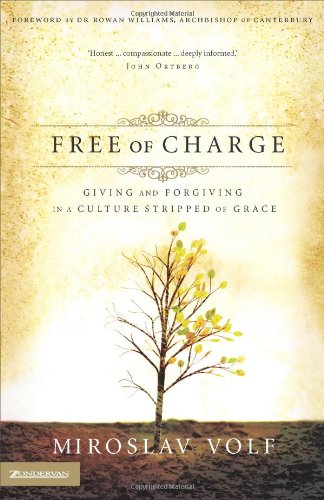
Miroslav Volf used to think that the too–until the Bosnian War, that is:

The apostle Paul ascribed to God actions and attitudes that stand in sharp contrast with how such a doting grandparent behaves. He spoke rather freely of God’s “judgment”, “condemnation”, even of God’s “wrath” (see Romans 1:18-3:20). Setting aside the litany of things that the Apostle believed merit God’s condemnation, let’s focus on the fact of it. In particular, let’s examine the appropriateness of God’s wrath, the strongest form of God’s censure….

I used to think that wrath was unworthy of God. Isn’t God love? Shouldn’t divine love be beyond wrath? God is love, and God loves every person and every creature. That’s exactly why God is wrathful against some of them. My last resistance to the idea of God’s wrath was a casualty of the war in former Yugoslavia, the region from which I come. According to some estimates, 200,000 people were killed and over 3,000,000 were displaced. My villages and cities were destroyed, my people shelled day in and day out, some of them brutalized beyond imagination, and I could not imagine God not being angry. Or think of Rwanda in the last decade of the past century, where 800,000 people were hacked to death in one hundred days! How did God react to the carnage? By doting on the perpetrators in a grandparently fashion? By refusing to condemn the bloodbath but instead affirming the perpetrators basic goodness? Wasn’t God fiercely angry with them? Though I used to complain about the indecency of the idea of God’s wrath, I came to think that I would have to rebel against a God who wasn’t wrathful at the sight of the world’s evil. God isn’t wrathful in spite of being love. God is wrathful because God is love.

-Miroslav Volf, Free of Charge: Giving and Forgiving in a Culture Stripped of Grace pp. 138-139

Wrath isn’t the opposite of love, then–indifference is. There are caveats on all of this, of course. It must be remembered wrath is not a primary attribute of God, but rather a relative one provoked by sin–much the way mercy are. What’s more, God is impassible and so his wrath must be conceived of within the parameters of the Creator/creature distinction, with the appropriate safeguards of analogical language in place, protecting us from some crude, explosive Zeus-like wrath. And yet, the bottom line is that it is still something properly, indeed, necessarily affirmed of the God who is the Lover of the world.

free of chargeOf course, there’s a danger that comes with a theoretical knowledge of God’s wrath–that we keep it at arm’s length and fail to relate it to our own sin:

    Once we accept the appropriateness of God’s wrath, condemnation, and judgment, there is no way of keeping it out there, reserved for others. We have to bring it home as well. I originally resisted the notion of a wrathful God because I dreaded being that wrath’s target; I still do. I knew I couldn’t just direct God’s wrath against others, as if it were a weapon I could aim at targets I particularly detested. It’s God’s wrath, not mine, the wrath of the one and impartial God, lover of all humanity. If I want it to fall on evildoers, I must let it fall on myself – when I deserve it.

Also, once we affirm that God’s condemnation of wrongdoing is appropriate, we cannot reserve God’s condemnation for heinous crimes. Where would the line be drawn? On what grounds could it be drawn? Everything that deserves to be condemned should be condemned in proportion to its weight as an offense – from a single slight to a murder, from indolence to idolatry, from lust to rape. To condemn heinous offenses but not light ones would be manifestly unfair. An offense is an offense and deserves condemnation…

-ibid, pg. 139

And yet, thankfully that is not the whole of the story. God’s love is revealed not only in condemnation of sin, but chiefly in the salvation of sinners from that judgment in the death of his Son:

For while we were still weak, at the right time Christ died for the ungodly. For one will scarcely die for a righteous person—though perhaps for a good person one would dare even to die—but God shows his love for us in that while we were still sinners, Christ died for us.Since, therefore, we have now been justified by his blood, much more shall we be saved by him from the wrath of God. For if while we were enemies we were reconciled to God by the death of his Son, much more, now that we are reconciled, shall we be saved by his life. More than that, we also rejoice in God through our Lord Jesus Christ, through whom we have now received reconciliation. (Romans 5:6-11)

Soli Deo Gloria

Naughty Systematic Theologians, Just Be ‘Biblical’!

Truly dominant-looking theological man. It's a win for Reformed beardliness everywhere.

Truly dominant-looking theological man. It’s a win for Reformed beardliness everywhere.

A pet peeve of mine is the tendency of some historical scholars to act as if, unlike naughty dogmatic theologians, their own confessional commitments aren’t driving any of their exegetical work. Being biblical scholars, their conclusions aren’t beholden to anything but the text, unlike those theologians coming to Scripture as they do, armed to the teeth with distorting theological preconceptions.

Apparently this isn’t a new thing.

In the first volume of his tremendous Reformed Dogmatics, Herman Bavinck comments on the similar myopia of some of the ‘biblical theologians’ of his own day:

However, this school suffers from grave one-sidedness as well. While it thinks that it is completely unbiased in relating to Scripture and that it reproduces its content accurately and objectively, it forgets that every believer and every dogmatician first of all receives his religious convictions form his or her church. Accordingly, theologians never come to Scripture from the outside, without any prior knowledge or preconceived opinion, but bring with them from their background a certain understanding of the content of revelation and so look at Scripture with the aid of the glasses that their church have put on them. All dogmaticians, when they go to work, stand consciously or unconsciously in the tradition of the Christian faith in which they were born and nurtured and come to Scripture as Reformed, or Lutheran, or Roman Catholic Christians. In this respect as well, we cannot simply divest ourselves of our environment; we are always children of our time, the products of our background. The result, therefore, is what one would expect; all the dogmatic handbooks that have been published by members of the school of biblical theology faithfully reflect the personal and ecclesiastical viewpoint of their authors. They cannot, therefore, claim to be more objective than those of explicitly ecclesiastical dogmaticians. The “pure” gospel that Ritschl finds back in Luther and Jesus corresponds perfectly to the conception he himself formed of it. All these so-called biblical schools, accordingly, are continually being judged by history; for a time they serve their purpose and recall a forgotten truth, but they do not change the course of ecclesiastical life and have no durability of their own.

Reformed Dogmatics Vol. 1: Prologomena, pg. 82

While Bavinck goes on to fill this out a bit, there are a number of comments to be made on this fascinating text. First of all, long before any postmodern theorists came along to tell us so, Bavinck knew about the historical-situatedness of all of our interpretive efforts. I point this out simply to say this isn’t a new thing, and apparently this recognition can apparently fit comfortably within the structure of a classic, Reformed understanding of Scripture, objective revelation, and so forth.

Second, and this is really the point I’m interested in, biblical theologians are just as theologically and socially-invested in seeing the texts go a certain way. This isn’t to say that we can’t have conversations across traditions about the texts, or a denial that we can correct our theological confession in light of the study of Scripture. Some of the most confessionally-conservative theologians I know of still make interpretive moves that are different than their theological forebears in the tradition, even when confessing essentially the same creed. What’s more, people do convert and shift from one confessional tradition to another. I know I have.

Still, whenever I see a biblical scholar chastising the theologians of, oh say, the Reformed tradition, for their reliance on a certain text to establish their doctrines, because an ‘objective’ reading simply doesn’t yield that doctrine, it is probably an instructive exercise to look up his/her own church affiliation.

Soli Deo Gloria

There is a Reason Everyone Still Quotes Athanasius Around Christmas

athanasiusblackdwarfThere is a reason everyone still quotes Athanasius around Christmas:

For this purpose, then, the incorporeal and incorruptible and immaterial Word of God entered our world. In one sense, indeed, He was not far from it before, for no part of creation had ever been without Him Who, while ever abiding in union with the Father, yet fills all things that are. But now He entered the world in a new way, stooping to our level in His love and Self-revealing to us.

He saw the reasonable race, the race of men that, like Himself, expressed the Father’s Mind, wasting out of existence, and death reigning over all in corruption. He saw that corruption held us all the closer, because it was the penalty for the Transgression; He saw, too, how unthinkable it would be for the law to be repealed before it was fulfilled. He saw how unseemly it was that the very things of which He Himself was the Artificer should be disappearing. He saw how the surpassing wickedness of men was mounting up against them; He saw also their universal liability to death.

All this He saw and, pitying our race, moved with compassion for our limitation, unable to endure that death should have the mastery, rather than that His creatures should perish and the work of His Father for us men come to nought, He took to Himself a body, a human body even as our own. Nor did He will merely to become embodied or merely to appear; had that been so, He could have revealed His divine majesty in some other and better way.

No, He took our body, and not only so, but He took it directly from a spotless, stainless virgin, without the agency of human father—a pure body, untainted by intercourse with man. He, the Mighty One, the Artificer of all, Himself prepared this body in the virgin as a temple for Himself, and took it for His very own, as the instrument through which He was known and in which He dwelt. Thus, taking a body like our own, because all our bodies were liable to the corruption of death, He surrendered His body to death instead of all, and offered it to the Father.

This He did out of sheer love for us, so that in His death all might die, and the law of death thereby be abolished because, having fulfilled in His body that for which it was appointed, it was thereafter voided of its power for men. This He did that He might turn again to incorruption men who had turned back to corruption, and make them alive through death by the appropriation of His body and by the grace of His resurrection. Thus He would make death to disappear from them as utterly as straw from fire.

–Athanasius, On the Incarnation of the Word, ¶8

Soli Deo Gloria

‘The Philosopher’, ‘The Theologian’…A Reformedish Lexicon

Thomas Aquinas famously referred to Aristotle as ‘The Philosopher’, throughout his writings, not because he followed him slavishly on every point, but because for the Angelic Doctor, Aristotle was the philosopher. More than any other secular thinker, Aristotle’s questions, formulations, and answers shaped and were re-shaped in Aquinas’ thought. For myself, I’ve realized that there are a number of intellectual influences that have played similar roles for me. Their thought has so penetrated the warp and woof of my own that I decided to create a Reformedish lexicon of key figures, both for fun and to encourage others to drink deeply at the wells of wisdom found here:

I don't know what he's thinking right here, but it could probably serve as a Ph.D. thesis.

“The Theologian” – I’ve already documented Kevin Vanhoozer’s greatness. Though he is a theologian’s theologian, his humble, eclectic, and faithful approach to God, Scripture, and doctrine in general has deeply shaped my own and will continue to for the foreseeable future.

Lewis“The Apologist” – C.S. Lewis was one of the first Christian prose writers I ever encountered. Like most, he took me in with the clarity of thought & expression, marvelous knack for making complex doctrines seem quite reasonable, accessible, and even more, beautiful. In college, Lewis let me grapple with the big toughies like hell, sin, and evil with intellectual dignity. What’s more, he saved me from thinking apologetic philosophy had to be boring and dull, or, even worse, disconnected from the proper worship of God.

kierkegaard 2“The Thinker” – Soren Kierkegaard is a hard one to pin down. He is a philosopher, but even more than that, he is a thinker-of-life who pressed me into the depths of my own darkened heart during my angstiest college days. I can safely say that if it were not for encountering his works Fear and Trembling and The Sickness Unto Death in college, I probably would not be married to my McKenna today. Also, his epistemology hustled me along the way to embracing the proposals of…

plantinga 4“The Philosopher” – Alvin Plantinga is my favorite living philosopher. Working in Anglo-American Analytic tradition, it is hard to estimate the impact Plantinga’s had on modern philosophy and especially philosophy of religion. The man single-handedly refuted the logical problem of evil in the 1970s, kicked classic foundationalism in the face, and made it safe to be a Christian in a philosophy program again. Plantinga gives not only good answers, but teaches us to ask the right sort of questions in the face of aggressive skeptical attacks on the faith.

Keller“The Preacher” – Timothy Keller falls under so many different categories (apologist, thinker, etc.), but at core, he is a Gospel-preacher. All of the other hats he puts on serve to accent his main call, which is to preach the Gospel to the Religious and the Irreligious alike. His several books and lectures on preaching have deeply shaped my own approach in various areas of ministry, but it may be hundreds of sermons exposing my idolatry and pointing me to Christ that have played the deepest formative role in my own spiritual theology. God has used Keller to shape the core of my understanding of God’s transforming grace through the Gospel.

Wright again“The Scholar” – I loved Paul before I read N.T. Wright, but I don’t think I knew Paul until I read Wright; the same goes for Jesus. While I don’t follow him everywhere he goes, more than anyone else Wright has introduced me to the vibrant, dynamic, pulsating historical reality of the Gospel in the New Testament. Whether it is Jesus facing off with the Pharisees, or Paul shepherding his flocks in the shadow of the Roman Empire, Wright simply will not allow us to imagine we are dealing with anything less than a full-orbed social-historical-political-theological-cosmological Jesus whose kingship has implications for everything.

john-calvin“The Reformer” – I’ve written a good amount on John Calvin over the last few months, and given a number of reasons to dig into his commentaries. Like most of these men, Calvin wore a number of hats, including scholar, theologian, and preacher. For me, he has been The Reformer. While I do love me some Luther, standing in the Reformed tradition as I am, it has been Calvin’s programmatic vision for the reformation of preaching, theology, and the Church that captured my imagination more than any of the other Magisterial Reformers. Indeed, a number of my other influences have openly paid tribute to Calvin’s influence on their own thought.

If you find yourself having never read someone on this list, I’d encourage you to do a quick Google on one, pick a work that seems interesting and go for it.

Soli Deo Gloria

Vanhoozer on Enns on Inerrancy

inerrancy viewsThe new Counterpoints book Five Views on Inerrancy came in the mail yesterday so, of course, I tore into it immediately. I’ll say it right now, if you’re at all interested in this conversation, you should pick it up. The quality of the essays and the various responses have all been top-notch for their respective positions–and I’ve only read the Mohler and Enns essays!

While we’re on the subject of Peter Enns, I have to say I was impressed. Not convinced, but impressed. I was also impressed by the various criticisms leveled at it, many which are worth quoting at length, but I’ll only do that with Kevin Vanhoozer’s because, well, it sums up my basic complaints and gives a bit of a hint as to where Vanhoozer will later go himself:

I endorse Enns’ call to conform our doctrine of Scripture to the Bible that we actually have rather than the one we think God ought to have written. My own essay contrasts an “inerrancy of glory” (aka “perfect book inerrancy,” a cultural construct) with an “inerrancy of the cross.” I draw this distinction in order to urge an inerrancy of the cross that recognizes the wisdom of God in the surprising textual form he has given it rather than the form we may think it ought to have had. Enns simply identifies inerrancy with perfect book theology, however, and then devotes most of his essay to exposing its nakedness. I agree that perfect book inerrancy, “by placing on it expectations it is not designed to bear” (p. 84), fails to do justice to Scripture. However, in my own chapter, I explore a constructive alternative. I wish Enns had tried to do this too.

Instead, Enns spends most of his chapter reacting to what I judge to be a caricature of inerrancy— what David Dockery, whom I discuss in my own chapter, calls “naive” rather than “critical” inerrancy. Enns would have been better off discussing the original drawing— namely, the definitions offered by John Frame or Paul Feinberg— rather than demeaning the assumptions and interpretive practice of anonymous inerrantists. Who are these faceless villains (“ is it I, Peter”)? Enns nevertheless makes a valid point: the doctrine of inerrancy has been hijacked by various bands of exegetical pirates who insist that the gold of true Bible knowledge is secure only in their own interpretive treasure chests.

Enns thinks the core issue is “how inerrancy functions in contemporary evangelical theological discourse” (p. 83, my emphasis). Why should the function rather than the nature of inerrancy be the crux of the matter? We don’t throw away other doctrines, like divine sovereignty or the atonement, just because some people misunderstand or misuse them. No, we try to set them right. Curiously, Enns is not interested in definitions. Even his title focuses on function: “Inerrancy, However Defined, Does Not Describe What the Bible Does.” This is strange. Why should inerrancy— the claim that the Bible is without error— describe what the Bible does? Enns’ essay suffers from two confusions: (1) a failure to distinguish the nature of inerrancy from its use and (2) a failure to distinguish inerrancy’s right use from various abuses.

–Five Views on Biblical Inerrancy (Counterpoints: Bible and Theology) Zondervan. Kindle Edition.

He goes on from there to actually substantiate his claims about Enns’ essay (with some style). But yes, Enns often reduces inerrancy to its political function; in essence he falls afoul of the principle that abuse does not remove use. As for more nuanced accounts, those are sort of dismissed as possibilities with a hand-wave towards the insurmountable obstacle of biblical scholarship. Actually, I’ll go ahead and quote Vanhoozer again with this little gem on whether or not we should rush to accept the so-called “scholarly consensus” in archaeology, or whether it’s appropriate to trustingly wait it and see what new light is shed:

Why is Enns in such a hurry to capitulate to the prevailing scholarly consensus? Theories, consensus opinions, and schools of thought all come and go. Christians are not to be blown about by every wind of academic fashion. I wonder: does he think, in light of the problem of evil, that we should concede that God does not exist? After all, there is considerably more evidence of gratuitous evil in the world than there is that ancient Jericho had no walls. It’s not clear to me how, on Enns’ scorecard, the theist fares any better than the inerrantist. Should we therefore reframe our doctrine of God to fit the prevailing extratextual “evidence”?

I found the comparison to the epistemological situation we find ourselves in with the problem of evil helpful. The point is that there is a lot of apparently pointless evil out in the world, and that could count as “evidence” that God does not exist. Indeed, it does count as evidence. And yet, as philosophers will point out, that’s not the only evidence there is, in which case the theist can put that to one side for a moment, without immediately scrapping their belief in God every time something inexplicably tragic happens. In the world of biblical scholarship where judgments on key questions like this shift every 20 years, it’s reasonable to slow the rush to throw inerrancy on the dust-heap of discarded doctrines.

Now, of course, I’m only giving you a couple of samples here. Both Vanhoozer and Enns have plenty more to be say here–no one can be quickly dismissed. Still, I hope this little taste whets your appetite for the rich feast of excellent scholarship and theological engagement you’ll find in this volume.

Soli Deo Gloria

Tim Keller: 4 Doctrines You Need To Know When You’re Suffering

walking with GodI just began Tim Keller’s monumental new book on the problem of evil Walking with God through Pain and Suffering and it’s, well, it’s monumental. I’ve read a number of books on the subject, especially in my undergrad in philosophy, and I have to say, though I’m only a couple of chapters in, it’s going to be the new classic on the subject. Unlike other works on the subject, he’s not only pastoral, or only philosophical, or only theological, but he approaches the issue of suffering from all of these angles and more. Sociology, literature, theology, philosophy, and, of course, the Scriptures, are brought to bear on the seemingly intractable burden of suffering and evil.

While we can’t logic ourselves out of pain, making meaning of our suffering is inevitable, and the framework through which you view life reveals itself most clearly in our approach to pain. Without doing a full review, I wanted to simply highlight a key little section towards the beginning where he, in short order, lists four key doctrines of the Christian faith that give deep resources for dealing with pain, suffering and evil over and against the secular or deistic view (numbers are mine):

  1. “The first relevant Christian belief is in a personal, wise, infinite, and therefore inscrutable God who controls the affairs of the world–and that is far more comforting than the belief that our lives are in the hands of fickle fate or random chance.
  2. The second crucial tenet is that, in Jesus Christ, God came to earth and suffered with and for us sacrificially–and that is far more comforting than the idea that god is remote and uninvolved. The cross also proves that, despite all the inscrutability, God is for us.
  3. The third doctrine is that through faith in Christ’s work on the cross, we can have assurance of our salvation–that is far more comforting than karmic systems of thought. We are assured that the difficulties of lie are not payment for our past sins, since Jesus has paid them. As Luther taught, suffering is unbearable if you aren’t certain that God is for you and with you. Secularity cannot give you that, and religions that provide salvation through virtue and good works cannot give it, either.
  4. The fourth great doctrine is that of the bodily resurrection from the dead for all who believe. This completes the spectrum of our joys an consolations. One of the deepest desires of the human heart is for love without parting. Needless to say, the prospect of resurrection is far more comforting than the beliefs that death just takes into nothingness or into an impersonal spiritual substance. The resurrection goes beyond the promise of an ethereal, disembodied afterlife. We get our bodies back, in a state of beauty and power that we cannot today imagine. Jesus’ resurrection was corporeal–it could be touched and embraced, and he ate food. And yet he passed through closed doors and could disappear. This is a material existence, but one beyond the bounds of our imagination. The idea of heaven can be a consolation for suffering, a compensation for the life we have lost. But resurrection is not just consolation–it is restoration. We get it all back–the love, the loved ones, the goods, the beauties of this life–but to knew, unimaginable degrees of glory and joy and strength. It is a reversal of the seeming irreversibility of loss…”

Walking with God through Pain and Suffering, pp. 58-59

Note clearly: this is no mere theism with general platitudes about everything working itself out, or karma, or what-have-you, but concrete consolation grounded in deep Gospel truth revealed in the cross and resurrection of Jesus Christ. Even the first doctrine of God’s inscrutable wisdom is one grounded in fact that Jesus was “delivered up according to the definite plan and foreknowledge of God” (Acts 2:23), for our salvation.

Clearly we could expand on all of these (and Keller will), but these four thick truths of the Christian faith are the key doctrinal pillars upon which any properly Christian response to suffering will rest. This is how the Christian begins to deal with the problem of pain and suffering. Once more, this is why doctrine matters for real life.

Soli Deo Gloria

‘Who has made man’s mouth?’ A Couple of Thoughts On Humility and Boldness in Theology

scyllaArrogant idolatry and cowardly silence are the Scylla and Charybdis of modern theology. While some prattle on, boastfully sure about the God who obviously fits their preconceived notions of deity and cultural expectations, others are too suspicious or scared to speak in more than a doubtful whisper about him.

John Webster speaks to the tension in this tight little passage (also, he gets more done in a hundred small pages than many modern theologians do in three-volumes of theologico-philosophic meandering):

‘You shall not profane my holy name, but I will be hallowed among the people of Israel; I am the Lord who sanctify you’ (Lev. 22.32). This requirement–that God be feared and his name hallowed–is in many respects the requirement of theological reason. Reason can only be holy if it resists its own capacity for idolatry, its natural drift towards the profaning of god’s name by making common currency of the things of God. A holy theology, therefore, will be properly mistrustful of its own command of its subject-matter; modest; aware that much of what it says and thinks is dust. God’s holiness means that theology stands under the prohibition: ‘Do not come near’ (Ex. 3.5). Accordingly, theology will be characterized less by fluency and authority, and much more by weakness, a sense of the inadequacy of its speeches to the high and holy matter to which it is called to bear testimony.

Nevertheless, this prohibition is not an absolute moment by which reason is entirely incapacitated. Alongside the prohibition stands with equal force an imperious command to speak: ‘Who has made man’s mouth?…Is it not I, the Lord? Now therefore go, and I will be your mouth and teach you what you shall speak’ (Ex. 4:11-12). The command is also a promise–that God will make holy reason capable of that which sin makes it incapable; that because the speeches of reason are in the hands of God, they may also serve in the indication of the gospel’s truth. Idolatry is reproved, not by silence, but by speeches that set forth what God has taught. And in such speeches, holy reason gives voice to the fear of God.

–John Webster, Holiness, pp. 28-29

And, of course, my boy Vanhoozer says something along the same lines with a bit more style:

Those who would be honest to God must strive to avoid both pride and sloth in their God-talk. Theological pride overestimates the adequacy of human language and thought; theological sloth underestimates the importance of responding to the provocations of God’s self-revelation. The one goes before destruction; the other pre-empts instruction. Yet it is hard to miss the recurring biblical theme that God wills to communicate and make himself known: “The word of the Lord came to . . .”; “the Lord said . . .”. Theology is ultimately irresponsible if it fails either to attend to what God says or to think about the nature of the one who addresses us.

–Kevin Vanhoozer, Remythologizing Theology, pg. xvi

So how do we speak well of God? By proceeding with humble obedience, listening before we speak, and submitting every word to the Word for judgment and grace.

Soli Deo Gloria

12 Reasons Membership in a Local Church Matters

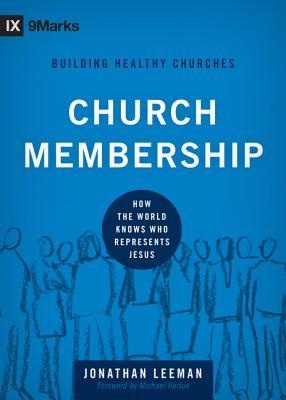
Leeman-Church-MembershipIronically enough, I don’t think I knew what church membership was until I went to a a big mega-church that told people on a regular basis that they didn’t need to become one. I had grown up with parents who functioned as committed members of their churches, but conceptually the idea of formal membership in a local body was foreign to me until a few years ago.

At the risk of over-generalizing, I think that’s about where your average American Christian (evangelical) is nowadays. Insofar as we’ve actually given any thought to the issue, we go to church, maybe plug in to a church, or at most commit to a church. But, formally belong to one? Like on a list? With like a signature and stuff? In our individualistic, consumeristic, anti-authoritarian society, that sounds too rigid, too formal, and just bizarre. The church is a family, a community where I go to get fed and built up in my faith, not some organization or institution I belong to.

For a while now I’ve been getting over that kind of knee-jerk, anti-institutional way of thinking. I mean, I’m at a Presbyterian church for crying out loud. Still, at the suggestion of a friend I finally picked up Jonathan Leeman’s couple of books on church membership and discipline (The Church and the Surprising Offense of the Love of God, Church Membership), and found his arguments challenging and largely persuasive. The issue is a big deal, and membership in the local body is far more central to being a Christian than most of us are used to thinking.

In one little section Leeman helpful summarizes a key section of his argument into 12 reasons membership in a local body matters:

  1. It’s biblical. Jesus established the local church and all the apostles did their ministry through it. The Christian life in the New Testament is church life. Christians today should expect and desire the same.
  2. The church is its members. To be a church in the New Testament is to be one of its members (read through Acts). And you want to be part of the church because that’s who Jesus came to rescue and reconcile to himself.
  3. It’s a prerequisite for the Lord’s Supper. The Lord’s Supper is a meal for the gathered church, that is, for members (see 1 Cor. 11:20-33). And you want to take the Lord’s Supper. It’s the team flag that makes the church team visible to the nations.
  4. It’s how you officially represent Jesus. Membership is the church’s affirmation that you are a citizen of Christ’s kingdom and therefore a pass-port carrying Jesus representative before the nations. And you want your representation to be authorized. Closely related to this…
  5. It’s how you declare your highest allegiance. Your membership on the team, which becomes visible when you wave the flag of the Lord’s Supper, is a public testimony belongs to Jesus. Trials and persecution may come, but your only words are, “I am a Christian.”
  6. It’s how you embody and experience biblical images. It’s within the accountability structures of the local church that Christians live and experience the interconnectivity of the body, the spiritual fullness of his temple, and the safety and intimacy and shared identity of his family.
  7. It’s how you serve other Christians. Membership helps you know which Christians on planet Earth you are specifically responsible to love, serve, warn, and encourage. It enables you to fulfill your biblical responsibilities to Christ’s body (for example, see Eph. 4:11-16; 25-32).
  8. It’s how you follow Christian leaders. Membership helps you know which Christian leaders on planet Earth you are called to obey and follow. Again, it allows you to fulfill your biblical responsibility to them (see Heb. 13:7, 17).
  9. It helps Christian leaders lead. Membership lets Christian leaders know which Christians on planet Earth they will “give an account” for (Acts 20:28; 1 Pet. 5:2).
  10. It enables church discipline. It gives you the biblically prescribed place to participate in the work of church discipline responsibly, wisely, and lovingly (1 Cor. 5).
  11. It gives structure to your Christian life. It places an individual Christian’s claim to obey and follow Jesus into a real-life setting where authority is actually exercised over us (see John 14:15; 1 John 2:19; 4:20-21). It’s God’s discipling program. 
  12. It builds a witness and invites the nations. Membership puts the alternative rule of Christ on display for the watching universe (see Matt. 5:11; John 12:34-35; Eph. 3:10; 1 Pet. 2:9-12). The very boundaries, which are drawn around the membership of a church, yield a society of people that invites the nations to something better. It’s God’s evangelism program. 

Church Membership: How the World Knows Who Represents Jesus, pg. 79-81

Membership matters then–a whole lot more than most of us are used to acknowledging. The local body is key to mission. It’s key to discipleship. It’s key to actually following Jesus instead of just claiming to.

For the unconvinced, I’d recommend picking up Leeman’s little, and I mean very little book, and examining the biblical arguments for yourself. (If you’re up to it, I highly recommend his bigger book.) Even if you don’t come away convinced of every point, you’ll be challenged to take a deeper view of what it means to be a part of the body, the Church.

Soli Deo Gloria