The Most Important Thing You Can Ask for in Ministry

Ever since I was a kid, the story of Solomon’s prayer for wisdom has been a favorite of mine. My mom would read it often to me and recall it to mind when we were talking about pretty much any subject, so that I should always seek wisdom from God before anything else. I think she knew I was going to need it.

For those of you who don’t know the story, the first half of 1 Kings 3 recounts the story of God appearing to the young Solomon in a dream after the death of his father King David. God grants him one request at the beginning of his reign. To God’s great delight, Solomon replies:

And now, O LORD my God, you have made your servant king in place of David my father, although I am but a little child. I do not know how to go out or come in. And your servant is in the midst of your people whom you have chosen, a great people, too many to be numbered or counted for multitude. Give your servant therefore an understanding mind to govern your people, that I may discern between good and evil, for who is able to govern this your great people?
(1 Kings 3:7-9)

Understanding, wisdom is Solomon’s request. God has put him in charge of a great people and he knows that he needs wisdom in order to administer justice among them for he is only a young man. God hears this and is greatly pleased and tells him that because he did not ask for money, power, the defeat of enemies, or anything of the like, but rather wisdom to administer justice, he will have all of these things and in spades. Not only will he be wise, but he will be wiser than any that have come before and any that follows. Beyond that, God will bless him with peace, wealth, and general prosperity in a way that Israel will not experience under any other king.

Ruling a Great and Mighty People I come back to that story now as a young guy starting out in ministry and I read it with new eyes. As a minister of the Gospel, I’ve been called to “rule”, administer, and care for the people of God. Call it what you want, there is an authority and a responsibility to shepherd God’s flock given to those of us who work in the church, paid or not. This is a scary task. Many of us don’t stop to think about it, but we are taking care of GOD’s people. They’re his. He cares about them. They are his blood-bought  people, so for him to place them in our hands is a weighty thing. It’s the kind of thing that we probably need a lot of understanding to accomplish.

When I read this story it is humbling and kind of convicting to think about my prayer life (and, at times, lack thereof.) What am I praying for as a minister? Working at an North American church it’s really easy to get caught up in asking for all sorts of things besides wisdom. We can get caught up asking for numbers so the attendance sheets look full and your ministry seems effective. Or how about funding? It’s easy to think that if I just had a bigger budget, I’d be able to buy the right tools to make my ministry cutting-edge, or position us to host the right events, etc. Or maybe we pray for more leaders? If I just had a little more help this thing would come together, more people would be ministered to, and the Gospel would go forward.

Now, all of these things would be nice. They’d be great. It’s no shame to ask for them. In fact, you probably should be praying for these things. Funds do help. The harvest is plentiful and we need more workers in the field. Numbers are not a bad thing. A lot of really “spiritual” Christians think that it’s a virtue to not care if your church is empty. It can be when that means fidelity despite unpopularity, but otherwise we should want people to be joining the family of God in our congregations. Still, none of these things means anything if you don’t have the wisdom to know what to do with them. Without wisdom you will spend your cash foolishly, your leaders will fail, and people will walk in and then walk out the doors–or worse still, remain in your church unchanged.

We need to be praying for wisdom. Much of Solomon’s wealth, success, and the peace of his kingdom came as a result of his wisdom. Wisdom helps you find good leaders, work with the funding you have, and know what to do with your people when you get them.  Thankfully, God is rich in wisdom and generous with it. He gives it to any who asks in faith. (James 1:5) So, just ask.

(What are some things that you pray for your ministry about? What do you usually feel is the most pressing need? Why? How good would it be without wisdom?)

Wisdom is Needed Even for Two  Something else to realize is that this goes for you–whoever you are. Everybody needs to be asking for wisdom to care for the people of God, even if you only have a congregation of two.

That’s one of the things we see in the final story of the chapter, with Solomon’s famous decision about the two women and the child. (1 Kings 3:16-28) Two prostitutes who were room-mates bore children within days of each other. One woman’s child died in the night and so she switched the two babies, claiming the live one was hers. They came before Solomon with a plea for justice. Solomon came up with a way of determining who was the true mother by offering to chop the baby in half and give each a piece. The true mother said to give the child to the other mother in order that it might be spared; the other one didn’t care. Solomon then gave the child to the one with compassion. Scary, kinda gruesome, but wise.
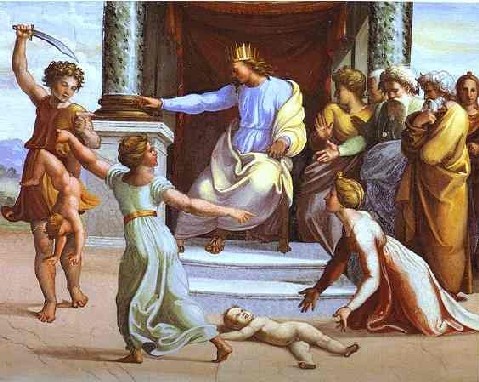
In context, the story shows Solomon’s wisdom was sufficient for administering justice within the whole of the nation. But here’s the thing, essentially the problem occurs between two women. That’s all it takes. Small-group leaders and one-on-one disciplers need wisdom just as much as mega-church pastors running congregations of thousands, because people are people no matter the size of the group.

Really Ask for Wisdom A final point when considering this story: we really need to be asking for wisdom. No, this is not just pointless repetition. One bad way of reading this story is to think that if we ask for wisdom, God will automatically give us all these other things. No, that’s not how it works. You can’t trick God into giving you a bigger budget or a bigger congregation. If your real desire is these things, wisdom will not come because you’ll fall into the foolishness that comes with obsessing over these things. Worry about getting wisdom first, seeking righteousness in the way that you care for the flock of God, and all these things shall be added unto you. (Matt 6:33)

Soli Deo Gloria

Talk is Blessed, Talk is Cheap (Or, Holiness is More than a Change in Vocabulary)

I continue to find gem after gem in my travels through Bunyan’s Pilgrim’s Progress. Both the instructive and lively narrative portrayals of the Christian life (Christian’s rousing battle with Apollyon), and the conversations between the various virtues (Charity, Faithful), vices (Sloth, Pliable), and typical attitudes (Shame, Discontent) are rich in spiritual depth and comfort.

One such exchange comes during a part of the journey when Christian and Faithful run into one claiming to be on the road to the celestial city by the name of Talkative. Faithful is quite glad to have him join them and talk of spiritual things on the journey, which it seems that Talkative is quite eager to do:

TALKATIVE: That’s it that I said; for to talk of such things is most profitable; for by so doing a man may get knowledge of many things; as of the vanity of earthly things, and the benefit of things above. Thus in general; but more particularly, by this a man may learn the necessity of the new birth, the insufficiency of our works, the need of Christ’s righteousness, etc. Besides, by this a man may learn what it is to repent, to believe, to pray, to suffer, or the like: by this, also, a man may learn what are the great promises and consolations of the Gospel, to his own comfort. Farther, by this a man may learn to refute false opinions, to vindicate the truth, and also to instruct the ignorant.

FAITHFUL: All this is true; and glad am I to hear these things from you.

TALKATIVE: Alas! the want of this is the cause that so few understand the need of faith, and the necessity of a work of grace in their soul, in order to eternal life; but ignorantly live in the works of the law, by which a man can by no means obtain the kingdom of heaven.

Apparently Talkative knows his stuff. He clearly knows the benefits of wise speech about God. Many of us could profit from an eagerness to discuss and speak about God, theology, the Bible, and our own spiritual lives more often than we do. By it we are “may learn what are the great promises and consolations of the Gospel, to his own comfort. Farther, by this a man may learn to refute false opinions, to vindicate the truth, and also to instruct the ignorant.”

Can we imagine what our general outlook would be, the witness of our lives, or the state of our faith would be if we spent more time discussing God’s goodness and not the mere trivialities to which we devote most of our conversations? How much holier would we be if we were constantly calling to mind God’s faithfulness in the face of daily temptations? Wouldn’t our constant doubts and anxieties begin to shrink in front of our eyes, if we were constantly reminding each other of the magnitude of God’s power and the unshakeable character of his promises?

The benefits to frequent godly conversation are many and deep indeed. When we read on though, we find out that Bunyan is teaching us that along with the benefits of spending our time discussing God and the Gospel, there are dangers as well.

CHRISTIAN: That is, to them that have not a thorough acquaintance with him, for he is best abroad; near home he is ugly enough. Your saying that he is a pretty man, brings to my mind what I have observed in the work of a painter, whose pictures show best at a distance; but very near, more unpleasing.

FAITHFUL: But I am ready to think you do but jest, because you smiled.

CHRISTIAN: God forbid that I should jest (though I smiled) in this matter, or that I should accuse any falsely. I will give you a further discovery of him. This man is for any company, and for any talk; as he talketh now with you, so will he talk when he is on the ale-bench; and the more drink he hath in his crown, the more of these things he hath in his mouth. Religion hath no place in his heart, or house, or conversation; all he hath lieth in his tongue, and his religion is to make a noise therewith.

FAITHFUL: Say you so? Then am I in this man greatly deceived.

CHRISTIAN: Deceived! you may be sure of it. Remember the proverb, “They say, and do not;” but the kingdom of God is not in word, but in power. Matt. 23:3; 1 Cor. 4:20. He talketh of prayer, of repentance, of faith, and of the new birth; but he knows but only to talk of them. I have been in his family, and have observed him both at home and abroad; and I know what I say of him is the truth. His house is as empty of religion as the white of an egg is of savor. There is there neither prayer, nor sign of repentance for sin; yea, the brute, in his kind, serves God far better than he. He is the very stain, reproach, and shame of religion to all that know him, Rom. 2:24,25; it can hardly have a good word in all that end of the town where he dwells, through him. Thus say the common people that know him, “A saint abroad, and a devil at home.” His poor family finds it so; he is such a churl, such a railer at, and so unreasonable with his servants, that they neither know how to do for or speak to him. Men that have any dealings with him say, It is better to deal with a Turk than with him, for fairer dealings they shall have at their hands. This Talkative (if it be possible) will go beyond them, defraud, beguile, and overreach them. Besides, he brings up his sons to follow his steps; and if he finds in any of them a foolish timorousness, (for so he calls the first appearance of a tender conscience,) he calls them fools and blockheads, and by no means will employ them is much, or speak to their commendation before others. For my part, I am of opinion that he has, by his wicked life, caused many to stumble and fall; and will be, if God prevents not, the ruin of many more.

FAITHFUL: Well, my brother, I am bound to believe you, not only because you say you know him, but also because, like a Christian, you make your reports of men. For I cannot think that you speak these things of ill-will, but because it is even so as you say.

CHRISTIAN: Had I known him no more than you, I might, perhaps, have thought of him as at the first you did; yea, had I received this report at their hands only that are enemies to religion, I should have thought it had been a slander-a lot that often falls from bad men’s mouths upon good men’s names and professions. But all these things, yea, and a great many more as bad, of my own knowledge, I can prove him guilty of. Besides, good men are ashamed of him; they can neither call him brother nor friend; the very naming of him among them makes them blush, if they know him.

FAITHFUL: Well, I see that saying and doing are two things, and hereafter I shall better observe this distinction.

CHRISTIAN: They are two things indeed, and are as diverse as are the soul and the body; for, as the body without the soul is but a dead carcass, so saying, if it be alone, is but a dead carcass also. The soul of religion is the practical part. “Pure religion and undefiled before God and the Father is this, to visit the fatherless and widows in their affliction, and to keep himself unspotted from the world.” James 1:27; see also verses 22-26. This, Talkative is not aware of; he thinks that hearing and saying will make a good Christian; and thus he deceiveth his own soul. Hearing is but as the sowing of the seed; talking is not sufficient to prove that fruit is indeed in the heart and life. And let us assure ourselves, that at the day of doom men shall be judged according to their fruits. Matt. 13:23. It will not be said then, Did you believe? but, Were you doers, or talkers only? and accordingly shall they be judged. The end of the world is compared to our harvest, Matt. 13:30 and you know men at harvest regard nothing but fruit. Not that any thing can be accepted that is not of faith; but I speak this to show you how insignificant the profession of Talkative will be at that day.

This is the danger Bunyan warns us of: apparently Talkative is just that–all talk and no action. In this passage Christian instructs Faithful in the difference between saying and doing. It’s an easy one for us to forget.  It’s easy to feel like having the right answers makes us righteous. It’s easy to feel like being able to distinguish properly between justification and sanctification means that we’ve been justified and sanctified. It’s easy to think that condemning sin with our mouths means we’ve cut it out of our lives. It’s easy to think that because we can discourse about the Trinity, we’re actually engaged in the life of the Triune God.

Bunyan reminds us that while it’s important for pilgrims on the way to discuss the beautiful things of God, we must not be satisfied with mere discussion. The Christian life is one of active participation. We must practice Christianity as well as speak of it. Faith that truly is worth the name, is one that results in a changed life, not merely a different vocabulary.

Talking about God is a great thing as long as it encourages us to talk to God; to move from conversation about the Christian life, to participation in a real Christian life.

Soli Deo Gloria

Becoming the Archetype’s I AM = The Doctrine of God + Death Metal

Alright, so this is the one where I blow my credibility with a bunch of you: I love metal music. I’m not an expert, a connoisseur, or even an amateur. I’m just a fan. Still, I love the speed, the ferocity, the heaviness, and the creativity involved with the genre and its multiple sub-genres.

One of my favorite acts is a Christian progressive death metal band by the name of Becoming the Archetype. (Think Christ as the archetype of humanity made in the image of God into whose image we are being conformed.) They embody what I’ve been saying for the last few years: some of the most creative, theological song-writing is coming, not out of the worship music industry, but the metal and hardcore scene. With albums titled Terminate Damnation and songs like  “Ex Nihilo” and “Elemental Wrath: Requiem Aeternam”, it’s obvious they don’t pull theological punches. Redemption never sounded this brutal. Thankfully they’ve been thoughtful enough to actually handle deep theology within the medium, producing complex concept albums like “Dichotomy”, which they based on C.S. Lewis’ Space Trilogy in order to explore themes of resurrection, the knowledge of God, biology and technology. (It also features the most brutal rendition of “How Great Thou Art” you’ve ever heard.)

Now, when I learned of that the band had lost bassist and frontman, Jason Wisdom, I was worried both that the music and the message would suffer a drop-off in sound as well as theological content. (He left when his wife became pregnant. Something about wanting to be a good dad or something.) With release of their 5th full-length studio album I AM, my fears were assuaged.

In terms of sound, Christ McCane’s vocals come through loud, low, and aggressive.  The clean vocals shine at times and at times, not so much. Overall, very solid. There are quite a few good technical riffs, (the opening of the title track “I AM” comes to mind), solid drumming, a few good bass-lines, and a number of heavy break-downs, even though they’ve backed off a bit from other albums. Continuing the trend off of their last album Celestial Completion, they’ve continued to place increasing focus on progressive elements. Still, it regains some of the speed, heaviness, and aggression of Dichotomy. It’s a solid metal album. The more I listen to it, the more pleased I am. My face is quite sufficiently melted.

This is not the main reason I am excited by this album. What I love most is the theological ambition driving the sound. With I AM Becoming the Archetype has attempted to do something many academic theologians no longer try: say something substantial about God.

I AM

In the Old Testament God reveals himself to Moses in the burning bush as the great “I AM that I AM” (Exod. 3:14), or simply “I AM” (Yahweh). This is his specific covenant name by which Israel was to call him.  In Isaiah, specifically 40-55, a section that draws on Exodus themes of liberation and redemption, God repeatedly emphasizes that “I am” the one who will redeem Israel. (Isa. 41:4; 43:25; 47:10; 48:12; 51:12) In the NT we find Jesus taking up the divine self-designation in the book of John with its seven famous “I am” (ego eimi) statements. Using prominent OT images of salvation he declares himself to be the bread of God (6:33), the bread of life (6:35), the light of the world (8:12), the gate for the sheep (10:7), the resurrection and the life (11:25), the way, the truth, and the life (14:6), and the true vine (15:1). Each of these predicates symbolize some aspect or form of the salvation that Jesus brings or in fact is.

In the same vein, I AM is an extended reflection on the glorious, terrifying predicates which can be ascribed to God in his saving actions, especially as they are manifested in Jesus Christ. Check out the track list:

  1. The Ocean Walker
  2. The Time Bender
  3. The Eyes of the Storm
  4. The Sky Bearer
  5. The Machine Killer
  6. The Weapon Breaker
  7. The War Ender
  8. The Planet Maker
  9. The Sun Eater
  10. I AM

Now, let’s be honest, we’re not dealing with Thomas Aquinas, or Barth, or Bavinck here. This is a death metal band. Some over the top metalness is to be expected. Still, there’s something great about a band that will speak in the first person for God and utter:

Traversing the infinite
Transcending the evident
Watch as reality bends to my will

Navigating eternity
Dispatching uncertainty
Navigating eternity
Behold in my presence
Time standing still

I am the future
I am the past
I have seen you breathe your last

The metal epicness is almost too much to bear. What I do love is that song after song we see some attribute or action of God’s, whether eternity, the act of creation, judgment, or consummation, being defined through the Son. Ending on a truly Johannine note, the refrain of the title song simply states, “I AM THAT I AM/I AND THE FATHER ARE ONE.” We know God in and through Jesus Christ or not at all.

To sum up: if you like metal, or Jesus, check out the album. Prepare for theology and epicness.

Check out the first single, “The Time Bender” below.

The Silliness of Impatience

This last weekend our church’s high school ministry went on a little retreat. The theme for the weekend was learning how to grow in Christ in the midst of an instant gratification culture. In our Siri and Google Voice instant-access context we are trained in so many ways to expect things instantaneously. We don’t understand the slow and steady discipline it takes to grow in holiness and in the grace of Christ. In order to illustrate the silliness of the kind of impulsive impatience we are so prone to, a couple of my students put together this little video. It is one of the many reasons I love my college students. I thought I’d pass it on for your enjoyment and edification. Check it out.

Impatient Paul from Josh Berry on Vimeo.

Why Jesus Hates Heresy (And So Should You)

I’d like to take a moment to point something out that may have escaped your attention last time you went to church or watched  a Nooma: Jesus and the rest of the New Testament authors don’t like false teaching, or heresy. I mean, they really hate it. It doesn’t take long reading through the thing to see the forceful way they spoke of “false teachers/prophets” and “false teaching” about God and the Gospel.  Don’t believe me? Here are just a few quotes. See for yourself.

Gentle Jesus

Beware of false prophets, who come to you in sheep’s clothing but inwardly are ravenous wolves. You will recognize them by their fruits. Are grapes gathered from thorn bushes, or figs from thistles? So, every healthy tree bears good fruit, but the diseased tree bears bad fruit. A healthy tree cannot bear bad fruit, nor can a diseased tree bear good fruit. Every tree that does not bear good fruit is cut down and thrown into the fire. (Matthew 7:15-20)

Not so Gentle Paul

I appeal to you, brothers, to watch out for those who cause divisions and create obstacles contrary to the doctrine that you have been taught; avoid them. (Romans 16:17)

I am astonished that you are so quickly deserting him who called you in the grace of Christ and are turning to a different gospel—not that there is another one, but there are some who trouble you and want to distort the gospel of Christ. But even if we or an angel from heaven should preach to you a gospel contrary to the one we preached to you, let him be accursed. As we have said before, so now I say again: If anyone is preaching to you a gospel contrary to the one you received, let him be accursed. (Galatians 1:6-9)

Now the Spirit expressly says that in later times some will depart from the faith by devoting themselves to deceitful spirits and teachings of demons, through the insincerity of liars whose consciences are seared, who forbid marriage and require abstinence from foods that God created to be received with thanksgiving by those who believe and know the truth. For everything created by God is good, and nothing is to be rejected if it is received with thanksgiving, for it is made holy by the word of God and prayer. (1 Timothy 4:1-5)

O Timothy, guard the deposit entrusted to you. Avoid the irreverent babble and contradictions of what is falsely called “knowledge,” for by professing it some have swerved from the faith. Grace be with you. (1 Timothy 6:20-21)

Old-Man John

Beloved, do not believe every spirit, but test the spirits to see whether they are from God, for many false prophets have gone out into the world. (1 John 4:1)

Beloved, do not believe every spirit, but test the spirits to see whether they are from God, for many false prophets have gone out into the world. By this you know the Spirit of God: every spirit that confesses that Jesus Christ has come in the flesh is from God, and every spirit that does not confess Jesus is not from God. This is the spirit of the antichrist, which you heard was coming and now is in the world already. (1 John 4:1-3)

For many deceivers have gone out into the world, those who do not confess the coming of Jesus Christ in the flesh. Such a one is the deceiver and the antichrist. Watch yourselves, so that you may not lose what we have worked for, but may win a full reward. Everyone who goes on ahead and does not abide in the teaching of Christ, does not have God. Whoever abides in the teaching has both the Father and the Son. If anyone comes to you and does not bring this teaching, do not receive him into your house or give him any greeting, for whoever greets him takes part in his wicked works. (2 John 1:7-11)

Peter “the Rock” Bar-Jonah

But false prophets also arose among the people, just as there will be false teachers among you, who will secretly bring in destructive heresies, even denying the Master who bought them, bringing upon themselves swift destruction. And many will follow their sensuality, and because of them the way of truth will be blasphemed. And in their greed they will exploit you with false words. Their condemnation from long ago is not idle, and their destruction is not asleep. (2 Peter 2:1-3)

This is Weird to Us

These quotes can seem disturbing to people of our age.

Our culture likes the idea of heresy. Whenever you see the word ‘heretic’ used on your average blog, news article, etc. it’s synonymous with bold, controversial, and creative thinking. It’s thought not confined with dogma and church controls. It’s ideas that scare the “theologians”, and break out of the traditional mold. (As to why scaring theologians has become a valued activity, I’m somewhat puzzled. Is there similar trend elsewhere? Should I want to perplex philosophers? Or, mystify mathematicians?)

It’s sexy.

Alister McGrath has even gone so far as to talk about our “love affair with heresy.” It epitomizes all that us entrepreneurial, free-thinking, radically individualistic Americans believe about religion. It’s up to us to figure out and nobody has a right to lay down a “correct” or “right” way to think about spirituality and God.

In this context, anybody trying to talk about orthodoxy or heresy immediately calls to mind images of nefarious, medieval church councils, trials, and other wickedness. (Which, incidentally were the result of false teaching about the nature of the church.)

So, why do they think different?

So why do Jesus, Paul, Peter, and John seem to approach the problem of false teaching differently than we do? Their attitude seems so intolerant and harsh. What about freedom of thought? Independence of mind?  What accounts for the difference? Is it just that we are more enlightened and cosmopolitan than these backwards dogmatists?

Eugene Petersen, my favorite pastoral theologian and theological pastor, cuts to the heart of the matter when discussing John’s attitude towards false teaching:

“Our age has developed a kind of loose geniality about what people say they believe. We are especially tolerant in matters of religion. But much of the vaunted tolerance is only indifference. We don’t care because we don’t think it matters. My tolerance disappears quickly if a person’s belief interferes with my life. I am not tolerant of persons who believe that they have as much right to my possessions as I do and proceed to help themselves… I am not tolerant of businesses that believe that their only obligation is to make a profit and that pollute our environment and deliver poorly made products in the process. And [John] is not tolerant when people he loves are being told lies about God, because he knows that such lies will reduce their lives, impair the vitality of their spirits, imprison them in old guilts, and cripple them with anxieties and fears…

That is [John’s] position: a lie about God becomes a lie about life, and he will not have it. Nothing counts more in the way we live than what we believe about God. A failure to get it right in our minds becomes a failure to get it right in our lives. A wrong idea of God translates into sloppiness and cowardice, fearful minds and sickly emotions.

One of the wickedest things one person can do [is] to tell a person that God is an angry tyrant, [because the person who believes it will] defensively avoid him if he can… It is wicked to tell a person that God is a senile grandfather [because the person who believes it will] live carelessly and trivially with no sense of transcendent purpose… It is wicked to tell a person a lie about God because, if we come to believe the wrong things about God, we will think wrong things about ourselves, and we will live meanly or badly. Telling a person a lie about God distorts reality, perverts life and damages all the processes of living.”, Traveling Light: Reflections on the Free Life (Downers Grove, Ill.: InterVarsity Press, 1982), pp. 33-35.

We don’t care about false teaching and heresy because we don’t see what it does. We don’t see that “A lie about God becomes a lie about life.” Jesus is intensely opposed heresy because he doesn’t miss the connection between what we believe about God and every inch of our lives. Paul opposes it with every fiber of his being because he is passionately for the church. John is not simply out to control his “beloved”, but rather make sure that they remain free, truly free to live the life God has called his children to.

Good theology is not just an academic exercise for “theologians” in seminaries. It’s not just for pastors in their studies. It’s for everyday Christians for everyday living. This is why we care about these things. This is why we preach, teach, and correct in light of the Word of God.

So again, “Why does Jesus hate heresy?” He loves you too much to have you believe lies about God.

Soli Deo Gloria

Resources for avoiding Heresy:

1. Any good systematic theology. (Classic Christianity by Thomas Oden, The Christian Faith by Michael Horton)
2. Heresies and How to Avoid Them by Ben Quash and Michael Ward
3. Heresy: A History of Defending Truth by Alister McGrath
4. Free article by Craig Blomberg “The New Testament Definition of Heresy (Or When do Jesus and the Apostles Really Get Mad?)

Beefing Up Your “Quiet Times”: Catechisms and Confessions as Devotional Literature

A little bit ago, a buddy of mine was musing about the fact that he doesn’t connect to most devotional literature of the type that truly “spiritual” people normally rave about. His critical, analytical mind and personality just doesn’t connect with warm meditation, but rather with critical analysis of history and culture.

For a while I’d found myself in a similar place. After seminary, my devotional life became a bit trickier. I find that my mind comes most alive to God when I’m reading systematic theology, or wrestling with some interesting piece of biblical theology, but when I try to slow down, pause, and meditate on something like My Utmost for His Highest, I just can’t do it. (That’s not to disparage Chambers. I loved it in college. The sad thing is, most current, popular stuff doesn’t even come close to his depth.) Because of this, finding good devotional material has been a challenge.

This didn’t trouble me much at first. I would simply pray, read my Bible, and then move on to my academic reading. Still, after a while I realized that I need a slowing down, a place for a more contemplative, heart-oriented approach to God in my devotional life. When I “just read my Bible” I found it hard to turn off the analytic mode. When I did, I didn’t really find my heart moved, but rather just bored.

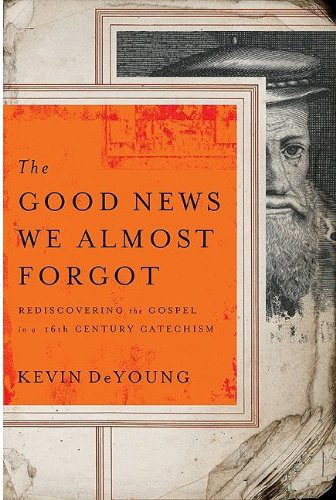
The Good News We Almost Forgot

Just when I thought all was lost, I got my hands on The Good News We Almost Forgot: Rediscovering the Gospel in a 16th Century Catechism by Kevin DeYoung. The book is basically a commentary on the Heidelberg Catechism, which you can read for yourself here. For those of you unfamiliar with catechisms, they are a series of questions and answers designed to be memorized by either new believers, old believers in need of depth, or children in order to teach them the content of the Christian faith. They’re employed across various confessional church traditions and they usually they have scripture references attached to the answers for believers to look up and study as well.

The Heidelberg Catechism was written at the University of Heidelberg at the commission of Elector Frederick III and was approved by the Synod of Heidelberg in 1563. The Catechism has 129 questions and answers that are basically commentary on the Apostles’ Creed, the Lord’s Prayer, and the 10 Commandments, but it is divided into fifty-two sections, called “Lord’s Days,” so that pastors could preach through them on each of the 52 Sundays of the year.  It is one of the most universally recognized pieces of Reformed theology across confessions and was adopted by the great Synod of 1618-1619, as one of the Three Forms of Unity, along with the Canons of Dort and the Belgic Confession.

How exciting!!!

Now for myself, having been raised in a barely-denominational Friends church, I hadn’t spent more than a minute with anything like a catechism, except to know \the Westminster Shorter Catechism’s famous first question and answer: “Q. What is the Chief End of Man? A. Man’s chief end is to glorify God and enjoy him forever.”  To my less-than-enlightened mind that was great, deep, but spare stuff.  The thought of spending a whole book reading about a catechism didn’t originally strike me as an edifying experience, because at that point, “I already knew that stuff.”

Still, my buddy told me that he’d been using DeYoung’s book as a devotion because it breaks up into 52 short chapters (2-3 pages) commenting on each of the Lord’s days.  I figured, why not? It can’t hurt.

After a short introduction to the catechism much more exhaustive than my paragraph, I got to the first Lord’s Day and read Question and Answer 1:

Q. What is your only comfort in life and in death?
A. That I am not my own, but belong—body and soul, in life and in death—to my faithful Savior, Jesus Christ. He has fully paid for all my sins with his precious blood, and has set me free from the tyranny of the devil. He also watches over me in such a way that not a hair can fall from my head without the will of my Father in heaven; in fact, all things must work together for my salvation. Because I belong to him, Christ, by his Holy Spirit, assures me of eternal life and makes me wholeheartedly willing and ready from now on to live for him.

When I read this I nearly started to tear up immediately. The first sentence alone gripped me: “I am not my own.” There is nothing sterile, dry or impersonal about this answer. At the same time, it deploys in a matter of sentences the doctrines of atonement, providence, adoption, union with Christ, the Holy Spirit, assurance, and sanctification, in order to draw me into the saving reality of the Gospel. As you read through the rest of the catechism, there are other questions of similar depth and power. DeYoung’s commentary each day was solidly theological, scriptural, and very pastoral. For the next month and a half I found myself daily edified by the truths encapsulated in the short answers and the meditation that followed.

I had finally found something to found the devotional gap in my life.

Why Read Catechisms– After this I went on a search and started reading through the different catechisms and confessions I could find, (Westminster, Luther’s, Belgic, Scots), as a part of my daily time of prayer and scripture. I found myself time and time again, blessed, challenged, and moved to worship and delight. I also found myself wondering why I had never done this before.

If you’ve never spent time with a catechism, here are three reasons you should in no particular order.

1. Hearing voices from other centuries– Christianity has been around for 2,000 years. This means that Christians have been reading, praying, thinking, and writing about the Gospel for 2,000 years. It is foolish to not pay attention to what our mothers and fathers in the faith have said in past generations as if the truth of the Gospel had a 2 month shelf-life. Their voices are needed if we are to hear the Gospel in all of its fullness in our own day. Catechisms  are a great way of doing that given that most of them were written centuries ago and have still been found spiritually beneficial after all of these years.

2. Deep truths; short phrases. Most catechisms and confessions are doing serious theology and yet condensing it down into short, memorable phrases that are perfect for meditation and contemplation throughout the day. They are perfect for engaging the mind as well as the heart with the truth of God throughout your day.

3. Know Your Bible- Finally, most catechisms and confessions are packed to the gills with scriptural references backing up every statement. You can trace them down as a devotional exercise that can help you get to know your Bible better than you did before, as well as learn the deep, biblical basis for what we believe. It also can help you get into the scriptures in a focused, guided way that is less intimidating for some people than just opening the thing up and reading it.

Where Do I Start?

Honestly, I think DeYoung’s book, The Good News We Almost Forgot is a great place to start. I don’t have a copy of my own any more because I keep giving it away. When one of my college students asks me if I know of a book they should read, it’s one of the first two or three that I recommend.

If you want to start checking out catechism right away, you can start here.