Understanding the Execution of the Rebellious Son

StoningThere are a number of laws in the Torah that, when you just look at them cold, strike us as rather outlandish, harsh, and even bizarre. You know, the kind that usually get trotted out in the middle of apologetic debates about the morality of the Bible, or the Old Testament law. For instance, that bit in Numbers 15 about stoning someone for moving a few sticks on the Sabbath. That strikes us initially rather harsh and it is, but as I’ve written before, I think there are some significant considerations at the contextual, historical, and theological level that can shed some light on the text.

I was reminded of another such text this last week when my pastor was preaching out of Hosea, in a passage referring to Israel as a rebellious son. He chose to highlight and contrast that with the Torah’s prescription for dealing with rebellious son:

If a man has a stubborn and rebellious son who will not obey the voice of his father or the voice of his mother, and, though they discipline him, will not listen to them, then his father and his mother shall take hold of him and bring him out to the elders of his city at the gate of the place where he lives, and they shall say to the elders of his city, ‘This our son is stubborn and rebellious; he will not obey our voice; he is a glutton and a drunkard. ‘ Then all the men of the city shall stone him to death with stones. So you shall purge the evil from your midst, and all Israel shall hear, and fear. (Deuteronomy 21:18-21)

Now at this point, the usual response is, “Really? I’m supposed to believe that God wants me to take little Joey outside and stone him for talking back and not taking out the trash when I tell him to? That’s a bit of an over-reaction, don’t you think?” Well, yes, taken baldly, it does seem like a bit of an extreme regime of parental discipline. But once again, I think there are a number of factors that, when taken into account, mitigate some of the seemingly inexplicable barbarism of the text.

Contextual Keys

So what are these factors?

Instruction. Well, first of all, a number of commentators note that there is no record of this punishment ever having been administered in Ancient Israel. In fact, OT scholar Duane Christensen draws attention to the explicit logic of the law as being handed down so that if it ever came to it, “all Israel shall hear, and fear.” In other words, the point of the law was “pedagogical” or educational, but not so much featuring a scenario likely to be put into practice very much, if at all.

A Son, but a Man. Second, pushing beyond that, we need to get it out of our heads that we’re dealing with some aggressive form of childhood punishment. The “son” in question is not a boy, or even just a teenager who is going through a rebellious phase, experimenting with heavy music and so forth. This is a presumably a young man, yet a still man who is of an accountable age before the Law. He stands accused by his parents of being a hardened delinquent, a “drunkard” and a “glutton.” What does that mean? Well, scholar Paul Copan says the scenario involved was something like this:

The son, probably a firstborn,  would inevitably squander his inheritance when his father died; he would likely bring ruin to his present and future family. He was like a compulsive gambler who bets away his home and life savings right out from under his family’s feet. –Is God a Moral Monster, pg. 91

More than that, drunkenness and gluttony lead to and represent a wholesale departure from the Law. You can easily imagine this including a tendency to criminal debt, familial violence, and other profligacy. This is a man, then, whose choices not only threaten his own safety but who shows every sign of being on course to destroy his family.

Families and Social Authority. What’s more, he is a repeat offender. He is someone who has rejected all counsel, all rebuke, even that of both of his parents, which was a significant rejection of all social and moral restraint in Ancient Israel. Why is this significant? Modern Westerners have trouble thinking along these lines, but in Ancient Israel, the foundation of the social fabric in terms of political authority and social peace in the clans and subgroups was the family. When the family falls apart, society falls apart. We must not forget that honoring father and mother is one of the 10 foundational commands that form the charter for Ancient Israel’s relationship with God as a nation. Historically, commentators have found in this command not only the foundations of familial relations, but the structure of human political authority in general.

Again, Christensen comments:

Respect for and obedience to parents were of vital importance in ancient Israel. In the Book of the Covenant, a son who strikes his father or mother, or who curses them, “shall be put to death” (Exod 21:15, 17; cf. also Lev 20:9); and the covenant curses of Deut 27:16 include “anyone who dishonors father or mother.”

So, this man’s rebellion was a threat at multiple levels. First, he was threatening his family, next the social order, and finally, his rebellion was an assault on the whole nation’s covenant with the Lord. Scripture, especially in the OT, doesn’t deal with us as purely independent, autonomous units. Israelites were members of Israel as a whole and it is with Israel that the Lord deals. So the whole community is implicated in this man’s rebellion and sin against God as long as it persists. One man’s disobedience is a threat to everyone.

Community Justice. Which brings us to a next point. It is important to note that it is not actually the parents who condemn or stone in the man, nor even the father alone. No, we are told that both mother and father, who have presumably reached their wit’s end, are to bring it to the leaders of the community at the gate (the court of the local village), in order for the community as a whole to evaluate and render judgment about the situation. It also bears noting that the mother’s inclusion in the process serves as something of a surprising disruption of our expectations of a patriarchal society. This is not the pure patria potestas of the Romans. This wasn’t, then, some hasty act of parental vindictiveness, but one of justice administered by the proper civil authorities.

The Obedient Son Replacing Insubordinate Israel on the Cross

One final note, though, to round out our consideration of the text. As Christians, we cannot claim to have fully examined it unless we set it in the broader context of Jesus’ own story. Remember, Israel had been created and called by God to be his faithful firstborn son (Exod. 4:22), who served him and represented him among the nations. But Israel proved false, a drunkard and a glutton, worse, an idolater and a murderer who had spurned God’s fatherly hand, rejecting his rebuke, and returning all of his good with vile ingratitude (Hos. 11).

Now, along comes Jesus, the pure, perfectly obedient True Son bringing the Kingdom of God, playing his role as the New Israel and what do they accuse him of being? A “glutton and an drunk” and a friend of tax collectors and sinner (Matt. 11:19). And what happens to him? The execution the law prescribes for the disobedient Son, death outside the gates.

In fact, it’s even worse. Paul reminds us that:

Christ redeemed us from the curse of the law by becoming a curse for us—for it is written, “Cursed is everyone who is hanged on a tree” (Gal. 3:13)

The text Paul quotes comes in the section in Deuteronomy right after the text on the disobedient son:

“And if a man has committed a crime punishable by death and he is put to death, and you hang him on a tree, his body shall not remain all night on the tree, but you shall bury him the same day, for a hanged man is cursed by God.” (21:22-24)

In effect, we see that Jesus, the faithful Son, bears the curse and punishment of God that the unfaithful son Israel deserved, in its place. He does so that in “Christ Jesus the blessing of Abraham might come to the Gentiles, so that we might receive the promised Spirit through faith” (Gal. 3:14).

Rounding it Out

Now, after all this, you still might find the law harsh, and that’s quite understandable. I do think there’s been some historical progression from the Old Covenant to the New Covenant, certainly a radical shift in implementation (I’m not a theonomist by a long shot), and the impact of Christian social thought on our moral sensibilities in the administration of criminal justice.

That said, I think with considerations like these in place, we can begin to understand the moral core to even this initially shocking text in its own Ancient Near Eastern context. What’s more, along with the concerns I outlined in the case of Numbers 15, we begin to see the way it provides some of the dark backdrop against which we understand the bright light of the gospel of the faithful Son who goes to the cross in place of a rebellious people, so they might receive the Spirit who makes them true sons. As Paul says again,

But when the fullness of time had come, God sent forth his Son, born of woman, born under the law, to redeem those who were under the law, so that we might receive adoption as sons. And because you are sons, God has sent the Spirit of his Son into our hearts, crying, “Abba! Father!” So you are no longer a slave, but a son, and if a son, then an heir through God. (Gal. 4:4-7)

Soli Deo Gloria
He Who Has Ears Let Him Hear (A Parable for Preachers)

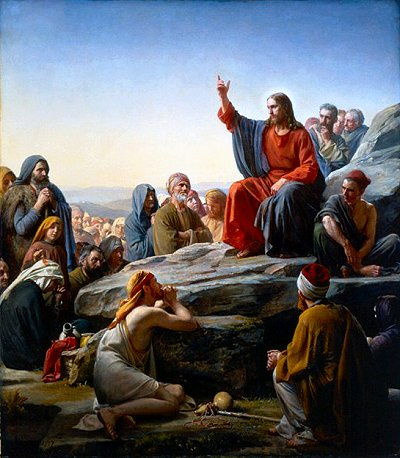
Jesus talkingEvery preacher who’s been at it long enough knows that there are some sermons, or even series as a whole, that end up showing more fruit in your own life than that of your hearers. It’s as if God set you up to preach this to bless your people, mostly indirectly, through its effects in your own life than the particular lessons they learn from you in that time. I don’t know if that was exactly what was going on, but the first summer I preached through the parables, it certainly felt that way.

I had been at my job for about a year at that point, had maybe sixty or so sermons under my belt, a cycle of seasons, and the first taste of ministry growth I’d ever seen. We’d had bit of a spurt throughout the spring and with summer beginning we had old students coming home, new students showing up, and everything was shaping up to be a smoother summer. Two hitches, though.

First, we did this odd thing where we would run our mid-week program in the park all summer so we could BBQ, play frisbee, and take advantage of the weather. The downside is that I had to preach open-air with a ton of random distractions (dogs, babies, random flocks of–no joke–squawking parrots).

Second, I was still struggling with the fact I just couldn’t seem to get through to some students. I mean, some understood, they were growing, plugging in, maturing, but others just couldn’t get a handle on what I was preaching. It didn’t matter whether I’d grab coffee with them, prayed a ton for them by name all week, tailor my talks to hit at specific issues they were struggling with, or whatever, if I looked at their corner during my sermon, it would just turn up blank stares, distracted giggles, and an apparently total lack of fruit throughout the rest of the week. I mean, it’s not even just that they weren’t listening. It’s that in the conversations I had with them later, it was clear that many of them simply didn’t understand what I was saying week in and week out. I was pitching gospel and they were still catching law–or something else entirely.

That’s when God sent me the parable of the sower or the four soils (Mark 4:1-20).

Fairly rigorous young man that I was, I picked the beginning of my series carefully. I figured I’d open up with the parable about how to understand the parables, as Jesus speaks to the crowds about his own mission to re-sow the people of Israel through the preaching of the Word, the seed. Of course,  interpreting the parable can be difficult and possibly discouraging. We need to understand that the varying responses of the four soils are not intended as an example of Christ-centered statistics (Barna Headline: Only 1 in 4 Hearers will Positively Respond to the Gospel!). In fact, it’s something of an invitation on the part of Jesus to “be careful how you hear”–take these things with an open and honest heart so that you might bear fruit (Luke 8:15).

All the same, as a young preacher struggling with my understanding of the power of the Word, my own ability to preach it, immaturity, self-condemnation, and, likely, sinful impatience, I needed to reflect on Jesus’ words, “He who has ears let him hear.” Really?

I mean, this was Jesus. The Messiah. The Son of God. Easily the greatest preacher to ever walk the plane. Author and deliverer of the most famous sermon of all time (Matt. 5-7). Not merely a bringer of the word of God, but the Word of God made flesh, proclaimed to the world in concreto. There’s no possibility about the “lack of unction” for the one who brought forth in the womb by the power of the Spirit, or the lack of “prayer life of the preacher” in the one who possessed an eternal communion with the Father.  And here he is talking about people missing it. People whose hearts are so hard the seed never penetrates. People who show quick signs of life, but then quickly fade away. People who seem to have real faith, but who allow themselves to get choked by the cares of the world.

And this was their response to Jesus?

And that was when I had to take a breath, step back, and put my own ministry in context. Whether because of youthful arrogance, or that early (or later) tendency to try to justify your own existence through your preaching and pastoring, I realized I was treating the things of God as something fundamentally within my power. I was operating under the unspoken assumption that it was my words which would open the eyes of the blind, unstop the ears of the deaf, and give hearts of flesh to those with rocks in their chest. And if it wasn’t happening, it was just clearly something wrong with me and my ministry.

But that’s simply false. If Jesus himself said there was going to be a mixed response to his preaching, why was I under the impression that I was going to have a better batting average than the Son of God? It was ludicrous.

Please don’t hear this as a deterministic shut-down of preachers who endeavor to preach with skill, prayer, and energy. No doubt there was serious room for improvement in my preparation, prayer, and ministry practice at the time (as there still is). Pastors, you can get better, preach clearer, pray deeper, and hope for greater grace in your ministry. Certainly it’s foolish to avoid those things. Still, for all that, there is a place for remembering that, though we do speak as one who preaches “the very words of God” (1 Pet. 4:11), it is God who gives the growth (1 Cor. 3:7).

For myself, that summer I learned a couple of lessons I had to continually dwell on from there-on out. First, there is a comfort in those words for preachers to understand that not every hard heart in the pews remains so because of your failure as a pastor. Not every blank stare is reflection of your powers as an orator. Not every patch of dirt stays dry because you’re no good as a sower. If you believe that, you’re just setting yourself up for discouragement and self-doubt, both qualities which, ironically enough, will rob you of power in the pulpit.

Second, flowing from this, it gave me confidence to just preach regardless of the “perceived” effects. Of course you have to be aware of your people. Good preachers are students of the Word and students of their people. Still, looking at Jesus’ parable, you can’t gauge these things week by week anyways. There are plenty of false positives as well as slow growing seeds for your to be measuring your efficacy that way. the more I learn(ed) to stop judging my sermons by the reactions I thought could or couldn’t see, the more I focused on simply trusting God to do his work with the best I had to offer up every week. As I did that, my confidence in God’s backing grew as did my own clarity.

As always, there’s more to say, but I’ll leave wind things down here. I pray other young preachers might take encouragement from these reflections as well.

Soli Deo Gloria

Can We Be Angry at Prodigals? The Frustrated Compassion of Jesus (TGC)

Recently, while reading Luke 15 and the parable of the prodigal son, I began to reflect on the character of the father. Preaching on this parable tends to highlight the father’s loving welcome, his compassion and grace upon both sons, his willingness to come out to greet both sons at great cost in terms of social shame and dishonor, and his great joy at receiving the lost son. This is right and good. But I think it’s worth considering Luke 15:20:

And he arose and came to his father. But while he was still a long way off, his father saw him and felt compassion, and ran and embraced him and kissed him.

We often focus on the fact the son was a long way off when the father saw him. The father was sitting there, waiting, hoping for his wandering son to come home. The welcoming heart precedes the prodigal’s repentance. Long before you ever thought to come back, God was there, waiting to run to you. So with our own prodigals, we wait with open arms, ready to receive with joy all who come in repentance seeking grace.
But what is the father allowed to feel in the meantime? There’s danger in reading too much into a parable beyond the plot as it’s developed, or delving deeply into the psyches of characters whose existence spans about 20 verses. Still, it says in the text the father saw him and then he “felt compassion,” moved to action.

What did the father feel before he saw the son coming home? Can we imagine him frustrated and angry? Are we to suppose during the months, or even years, the prodigal is away the father is only and solely feeling a mild, welcoming compassion? Is there no place for a holy frustration at destructive choices he sees his beloved child making? Is there no place for hurt, for grief at the pain of rejection in the midst of his unrelenting love and mercy? Are these feelings allowed for gracious Christians?

You can read the rest of my article at The Gospel Coalition.

Soli Deo Gloria

Torrey on the Trustworthy Temple of Scripture

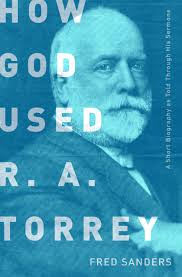
torreyFred Sanders put together a nifty little collection of evangelist, expositor, Bible college dean, and pastor R.A. Torrey’s sermons entitled How God Used. R.A. Torrey. Sanders introduces the work with a little bio, then adds brief introductory commentary before 13 representative sermons and addresses by Torrey. I’ve been reading it for a couple of days between other works and it’s been a fun little work so far. The preaching is dynamic, personal, and spiritually compelling. Also, as a preacher, it’s just interesting to see how much the game has changed, so to speak, since Torrey was calling people back to faith.

One address I enjoyed, in particular, was his famous “10 Reasons Why I Believe the Bible is the Word of God.” Torrey, of course, famously edited the collection of essays in defense of orthodoxy known as The Fundamentals at the height of the Fundamentalist/Modernist controversies, so it’s unsurprising he dedicated significant preaching to the subject of the trustworthiness of the Scriptures.

Well, the whole sermon holds up remarkably well 100 years later on, but the section I enjoyed most was his argument about “the unity of the book”:

This is an old argument, but a very satisfactory one. The Bible consists of sixty-six books, written by more than thirty different men, extending in the period of its composition over more than fifteen hundred years; written in three different languages, in many different countries, and by men on every plane of social life, from the herdman and fisherman and cheap politician up to the king upon his throne; written under all sorts of circumstances; yet in all this wonderful conglomeration we find an absolute unity of thought.

A wonderful thing about it is that this unity does not lie on the surface. On the surface there is oftentimes apparent contradiction, and the unity only comes out after deep and protracted study.

More wonderful yet is the organic character of this unity, beginning in the first book and growing till you come to its culmination in the last book of the Bible. We have first the seed, then the plant, then the bud, then the blossom, then the ripened fruit.

Suppose a vast building were to be erected, the stones for which were brought from the quarries in Rutland, Vermont; Berea, Ohio; Kasota, Minnesota, and Middletown, Connecticut. Each stone was hewn into final shape in the quarry from which it was brought. These stones were of all varieties of shape and size, cubical, rectangular, cylindrical, etc., but when they were brought together every stone fitted into its place, and when put together there rose before you a temple absolutely perfect in every outline, with its domes, sidewalls, buttresses, arches, transepts–not a gap or a flaw anywhere. How would you account for it? You would say:

“Back of these individual workers in the quarries was the master-mind of the architect who planned it all, and gave to each individual worker his specifications for the work.”

So in this marvelous temple of God’s truth which we call the Bible, whose stones have been quarried at periods of time and in places so remote from one another, but where every smallest part fits each other part, we are forced to say that back of the human hands that wrought was the Master-mind that thought.

How God Used R.A. Torrey, pp. 23-24

I have to tell you, this “argument” isn’t one that you just trot out in the middle of an apologetic dispute, especially with someone predisposed to disbelieve or be hostile to Scripture. Still, year after year, this insight into the unity of Scripture–it’s ability to consistently point to Christ through Law, Prophets, and Gospels, across various genres, generations, authors, and centuries is a continuous marvel. This is especially the case when you take off the modernist blinders and begin to pour over the various narratival and typological continuities.

The Scriptures truly are a marvelous Temple of God’s truth. But Torrey is right–it’s not a unity that just lies there on the surface. It’s the kind of thing that you come to see once you give it the sustained attention and care that it deserves. But once you see it, much as Moses face coming down from Sinai, it shines with the reflected glory of God.

Soli Deo Gloria

Protecting Pigs At the Cost of the Liberating the Oppressed

pigsThere’s often an economic cost to the freedom Jesus brings and the World typically doesn’t like that. I was struck by that reality against as I reflected on the story of the Demoniac Jesus encounters in Gerasa in the area of the Decapolis in Mark 5. In this case, the cost is a side-product of the liberation. For years, this man has been bound and filled with demons who have dehumanized him to the point that he’s living out in by the tombs, talking gibberish, away from his family, normal human community, and alienated from his own mind. When Jesus casts the demons out, they flee into a nearby herd of pigs, driving them mad, and causing them to leap off a cliff and be drowned in the lake.

Of course, various commentators assign different significance to the drowning of the pigs and the fact that the demons identify themselves as “Legion.” Some see an anti-imperial undercurrent, with Jesus posing a threat to the political principalities, drowning them in the sea, much as God drowned the armies of Pharaoh. Others have connected the pigs as a challenge to the gods of Greece–I can’t remember how it worked at this point. Whatever the undercurrent, at the end of the day the herd pigs drown in the sea and apparently this is all the village people can focus on because, instead of rejoicing the grand miracle God had wrought in setting this man free, they beg Jesus to leave the area of the Decapolis.

The Kingdom of God breaks in, disrupts the economic peace of the World, and the World insists the Kingdom see itself out the door again.

Another story that comes to mind is Paul’s liberation of the pythoness in Acts 16. After a couple of days of harassment in the streets by this young women possessed of a demonic spirit, Paul casts out the demon and sets her free. This lands Paul in hot water because the young girls’ slave owners used to make a lot of money through her ability to predict fortunes and so forth. Her bondage and slavery to the demonic powers was a source of material income. Her liberation means they’re out of a meal-ticket. And so they call on the Roman authorities to deal with these disturbers of the peace, have them beaten, and thrown into prison. Again, instead of rejoicing at the newfound freedom of this woman, the loss of economic gain provokes a hostile response to the messengers of the Kingdom of God.

Or once more, when Christianity spreads to the whole city of Ephesus, we read that the idol-makers become worried about the drop in sales (Acts 19). There are so many new worshippers of Jesus who aren’t buying their shiny new, late model gods, that it’s become really bad for business. Under the pretense of piety–worry for the great name of Artemis–the idol-makers stir up a mob and accuse Paul and his companions of slandering the goddess with their preaching of Christ. As people turn from the worship of false idols, without any explicit political or economic organizing, the economic and social order become upset.

Of course, it takes little more than a few seconds thought to think of a half-dozen ways that same dynamic is at work in the world today. Aside from situations of explicit oppression and bondage–situations which are devastatingly all too common–much of our consumeristic culture is dependent on people remaining in various levels of spiritual slavery and bondage.

In other words, somebody is making money off of a generation captive to the idea that personal identity can be achieved or reinforced by getting your hands on the newest, shiniest toys, accessories, iPads, designer jeans, and so forth. Our persistent dissatisfaction with our level of material comfort, our fear of falling behind the Joneses, and our loss of any sense for the virtue of simplicity and the vice of material excess, means someone is getting rich.  (Can we say, “Apple Watch”? Oh, but it’s okay, Christians don’t need to worry about frivolous purchases because now I can use the better version of the Bible app on it.)

Or again, a generation of porn addicts, convinced that the good life is to be found between the sheets of that next sexual conquest, is going to be an easy target for any advertiser who promises you their product will get you there. A large segment of the economy is invested in keeping us sexually aroused, so we will buy what they’re selling. A population that is spiritually bound is economically lucrative. Not to sound like some sort of Marxist theorist, but I think it’s worth asking questions about who stands to gain financially from the currently regnant sexual ideologies presented to us as the liberation of desire from shackles of prudery and repression.

And these are just two examples.

Hear me here: business is not inherently evil, nor do I believe that capitalism as an economic system is either. But the demonic forces at work in the world and in the human heart will inevitably take them (and every other economic structure). corrupt them, and leverage them in such a way that it is in people’s financial interest to see their neighbors, their brothers and sisters, captive to desires and ideologies that do not promote human flourishing. We have an interest in protecting pigs at the cost of liberating the oppressed.

And this is just one more reason that the gospel of Jesus is often opposed so fiercely by the powers that be. When the Kingdom of God breaks in, it liberates us from the idolatries that keep much of the current, sinful structures of economic (and political) reality propped up. When your identity is firmly caught up in Christ’s, and your chief desire is to seek the righteousness of the Kingdom of God, it’s that much harder to make you a shill for or sucker of the kingdoms of this world.

That will make people angry. As people hear the good news of Jesus, walk away from their idols and stop buying into the system, there will rise opposition. There will be fear. There will be slander. There will be accusations. We should count on it.

And yet, there will also be opportunities for witness. I think back to the Demoniac. Though his town asked Jesus to leave the area, the man who had been restored to his senses was set free and given the call to witness to that freedom among his old neighbors–the same ones who were frustrated and scared of Christ. What happened to him?

Well, Mark 7 and 8 records Jesus returning to the Decapolis, only this time, we see that crowds gather for him to heal the sick, the lame, and for him to cast out demons. The crowd is so great that he even has to perform another feeding miracle–the feeding of the 4,000. I don’t want to veer into unbiblical speculation, but it seems possible that as the shock of the loss wore off, and the beauty of the liberation Christ brought into his life was known, the people of the Decapolis began to see something different. Maybe they were that much more prepared to receive with great joy the costly, challenging liberation of Christ.

It may be that in our own day, as more and more of us opt out of idolatries of our neighbors, as church communities live in ways that point to the economy of the Kingdom of God, so to speak, we begin to live concrete lives of witness that not only challenge, but invite our neighbors to discover the King who sets us free.

Soli Deo Gloria

Christ is Altogether Lovely

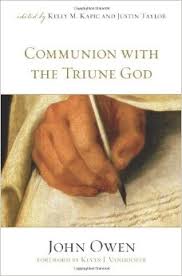
communionAll too often, when reading about pre-critical, allegorical interpretations of the Scriptures, we’re tempted to roll our eyes, and move on to modern commentaries that seem more cognizant of contextual, literary, and historical concerns. And there’s something to that. Biblical scholarship has moved on in some places and there were some rather odd interpretive excesses. But all too often, when we do so, we rob ourselves of, both exegetical insight, as well as theological treasures.

For instance, following most modern commentators, I’m not inclined to read the Song of Songs as an allegorical work on Christ and the Church. That said, I would be a fool to not marvel at John Owen’s exposition of 5:16 that speaks of the Lover, “He is wholly desirable–altogether desired or beloved.” Owen sees this as a reference to the wholly desirable nature of Christ in his person and work. And so he sets about listing all the ways that Christ is lovely:

Lovely in his person–in the glorious all-sufficiency of his Deity, gracious purity and holiness of his humanity, authority and majesty, love and power.

Lovely in his birth and incarnation; when he was rich, for our sakes becoming poor–taking part of flesh and blood, because we partook of the same; being made of a woman, that for us he might be made under the law, even for our sakes.

Lovely in the whole course of his life, and the more than angelical holiness and obedience, which, in the depth of poverty and persecution, he exercised therein–doing good, receiving evil; blessing, and being cursed, reviled, reproached, all his days.

Lovely in his death; yea, therein most lovely to sinners–never more glorious and desirable than when he became broken, dead, from the cross. Then had he carried all our sins into a land of forgetfullness; then had he made peace and reconciliation for us; then had he procured life and immortality for us.

Lovely in his whole employment, in his great undertaking–in his life, death, resurrection, ascension; being a mediator between God and us, to recover the glory of God’s justice, and to save our souls–to bring us to an enjoyment of God, who were set at such an infinite distance from him by sin.

Lovely in the glory and majesty wherewith he is crowned. Now he is set down at the right hand of the Majesty on high; where, though he be terrible to his enemies, yet he is full of mercy, love, and compassion, toward his beloved ones.

Lovely in all those supplies of grace and consolation, in all the dispensations of his Holy Spirit, whereof his saints are made partakers.

Lovely in all the tender care, power, and wisdom, which he exercises in the protection, safe-guarding, and delivery of his church and people, in the midst of all the oppositions and persecutions whereunto they are exposed.

Lovely in all his ordinances, and the whole of that spiritually glorious worship which he has appointed to his people, whereby they draw nigh and have communion with him and his Father.

Lovely and glorious in the vengeance he takes, and will finally execute, upon the stubborn enemies of himself and his people.

Lovely in the pardon he has purchased and does dispense–in the reconciliation he has established, in the grace he communicates, in the consolations he does administer, in the peace and joy he gives his saints, in his assured preservation of them unto glory.

What shall I say? There is no end of his excellencies and desirableness–“He is altogether lovely. This is our beloved, and this is our friend, O daughters of Jerusalem.”

-John Owen, Communion with the Triune God, pp. 181-182

What more can we say, indeed?

Soli Deo Gloria

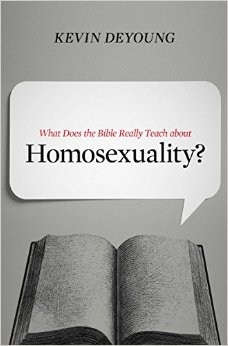
“What Does the Bible Really Say About Homosexuality?” by Kevin DeYoung (Book Review)

deyoungObviously, one of the most contested and painful issues in the church and in the world today is the moral status of same-sex relationships. Within the publishing world, there’s been a blitz of blogs, books, conferences, and symposia on the subject, with no signs of abatement any time soon. In the middle of all of this muddle, faithful Christians are understandably confused.

Many are wondering where to look for resources. They’re thinking about that heavily-footnoted blog their friend shared that made them question what they’d believed before, or pastors are wondering which of the recent spate of works will be helpful to hand to the questioning college student, or the new elder, looking to shepherd that that student faithfully.

If that’s you, I’d like to commend to you Kevin DeYoung’s helpful, new book on the subject, What Does the Bible Really Teach About Homosexuality?

Now, I’ll be upfront and say I’m a Kevin DeYoung fan. I read his blog and I’ve read a number of books, my favorite being his work on the Heidelberg catechism, which was pretty significant for my move over into the Reformedish direction. So I’m obviously predisposed to be sympathetic to his work. With that in mind, take this post as you like. Also, know I got a free copy of the book, though I wasn’t required to say anything nice about it.

That confession aside, I’ll say it’s DeYoung doing what he does best: taking a complicated subject, and with clear, straightforward prose, reviewing significant biblical and theological material, asking the important questions, explaining it, and applying it.  In this case, DeYoung is very clear about his aim, which is to treat the specific question of “What does the Bible really say about homosexuality, or same-sex, sexual activity? Is it healthy, approved of by God in the appropriate situations, or is it sin to be avoided as the Church has said for about 2000 years?”  Unsurprisingly, DeYoung answers in favor of the latter. As he says, it’s a defense of the traditional understanding of marriage.

DeYoung’s structure is really rather basic. He doesn’t really get into sociological, psychological, or political questions (except for an appendix or two at the end). Instead, the first section focuses specifically on explaining the logic of the Biblical narrative and relevant texts (Gen 1, Leviticus, Rom. 1, etc), and the second half is devoted to answering key questions and challenges like the inconsistency of the church (what about gluttony?), the disputed nature of the same-sex activities in the NT times, and other popular, understandable questions.

So what are some of the highlights?

Well, first, this is not really aimed at specialized blogger debates, or niche scholarship. When DeYoung cites his sources, it’s clear he’s done his homework and read the big names on both sides, as well as the source material carefully. He tackles the main, exegetical, historical, and contextual challenges that need to be addressed. It’s solid work. That said, it’s meant for everybody. It’s a clear book for college students with questions, educated people in the pews, pastors, elders, and small group leaders. Which is so needed. I’ve read Robert Gagnon’s big book on the subject, and I think most pastors should, but there’s no way I’m handing my kids 500 pages of footnotes.

Next, it’s pretty calm. That’s kind of an odd thing to praise, but I get tired of the histrionic tones of some the people defending a classical position on the subject. It just gets shrill, depressing, and kind of unhelpful, especially if you’re going to be sensitive and pastoral towards those for whom the issue is a source of personal pain and struggle. DeYoung manages to stay away from the bluster, all the while driving home the weighty issues of sin, salvation, and the holiness of the church that are caught up in the question. For that, I’m grateful.

DeYoung also manages to set the stage well. I think my favorite section in the whole book was the intro chapter where he sets up the question of what the Bible says about homosexuality by talking about what the Bible says about everything; he basically goes through the story-line of creation, fall, redemption through Christ, and the goal God has for everything in the consummation of the ages. One of things I’ve told my students before is that there are some answers that Christianity gives that only make sense if you’ve understood its place within the whole. Yes, you need to tackle Greek words, Roman context, exegetical twists, but he says:

…before we get up close to the trees, we should step back and make sure we are gazing upon the same forest. As is so often the case with controversial matters, we will never agree on the smaller subplots if it turns out we aren’t even telling the same story. (9-10)

The most important part of that story, of course, is Jesus’ saving life, death, and resurrection. And that’s at the center of DeYoung’s little work. Pastors, small group leaders, and just Christians, realize that you cannot simply charge into conversations about these issues armed with a knowledge of key texts. You really need to soak in and connect these to the broader gospel realities, or the medicine simply will not go down.

A final plus, it’s only maybe 150 (shortish) pages. For those familiar with the arguments, it takes maybe an hour, hour and a half, and probably not a lot more if you’re not, which is surprising given the important ground it covers. I take this to be a strength. If you’re “not a reader”, I think you can make it through this book, and, at this point, most Christians really need to have read something solid on the subject.

One word, though: the book’s title really is what the book is about. It’s a book for people for whom the Bible is the sine qua non of spiritual authority. DeYoung’s polemic is mostly about answering revisionist reinterpretations of the texts that try to get around traditional interpretations. He also spends time defending what the Bible says in the objections section, but for those who have to wrestle with more complex questions of hermeneutics, the authority of Scripture, and so forth, you’re probably going to need a more heavy work. Which is probably why DeYoung included a helpful annotated bibliography at the end.

Well, there you have it. Some of my posts are just encouragements to pick up helpful resources. This is one on a key subject that most of us are wrestling with. I hope you find it as helpful as I did.

Soli Deo Gloria 


7 Rules for Reading and Explaining the 10 Commandments

Heston, bro. 'Nuff said.

Heston, bro. ‘Nuff said.

It’s odd to think that you need rules for reading rules, but according to Francis Turretin, it’s a must. It’s really just good hermeneutics. Since each type of biblical literature needs to be approached on its own terms as well as within the broader scope the story of Scripture and theology in general, it makes sense to put up some guard-rails in order to protect against distortion, perversion, and neglect. This is especially the case when it comes to the Law of God. I mean, think about Jesus’ encounters in the Gospels–what were most of his conflicts about? The interpretation and application of the Law. “Who is my neighbor?”, or “Teacher, what is the greatest commandment?” At the heart of life as a member of the people of God, is understanding what to do with the Law. This isn’t about legalism, but simply asking the question, “What does loving God look like when Jesus says, ‘If you love me, you will keep my commandments’ (John 14:15)?”

That’s probably why in his Institutes of Elenctic Theology Turretin has a topic subdivision dedicated to the subject lasting a solid 170 pages. Indeed, one of the subsections (Vol 2, Topic 11, Q. VI) is dedicated to outlining seven rules that need to be observed preachers, theologians, and teachers of the Scriptures in order to properly explain and apply the full meaning of each of the Ten Commandments.

So what are the rules for the rules?

1. Inside Out. First, we have to remember that “the law is spiritual, respecting not only the external acts of the body, but the internal motions of the mind.” In other words, mere outward obedience isn’t all that’s required. Jesus told us that adultery wasn’t only a matter of keeping your pants on, but of guarding your eyes and your heart from lust, and murder is something you can do with a word as well as a knife (Matt. 5:22-28). True obedience flows from the motives of the heart; this is the deeper righteousness than the Pharisees and the teachers of the Law could muster.

2. “Thou Shalt Not” Also Means “Thou Shalt.” Second, “in affirmative precepts, negative, and in negative, affirmative are contained.” In other words, when the Bible says, “do this” there’s an implied “don’t do that”, and vice versa. So, when the Bible commands us not to be thieves, Luther, in his catechism said that it is also commending generosity and living with an open hand. Or again, Turretin says that the command not to kill means we ought to also “cherish our neighbor’s life in every way we can”, because God “wishes his life to be dear and precious to us.” Having no other God’s but the Lord alone, also invites and enjoins us to truly worship the Lord. As my old pastor used to put it, every “thou shalt not”, has a “thou shalt” alongside it.

3. A Head For a Whole. Third, “in all the precepts synecdoche is to be acknowledged.” A synecdoche is a figure of speech where one piece of something stands for the whole. In other words, the command forbidding one sin, actually is a stand-in for the class of sins of which it is a part. This is another way of looking at the deepening of the Law we see in Jesus’ commands to look at our heart motives. Also, you begin to see that in the rest of the OT law, much of the commands about property are just an expansion of the original command not to steal, or covet. The command against adultery rules out a variety of sexual sins, and so forth.

4. More of the Same. Fourth, connected to that last is that “in the effect, the cause in the genus, the species, in the related, the correlative is included.” This is complicated at first glance, but essentially he means that anything it takes to fulfill a law is also included in the law. So, if chastity is included in your avoidance of adultery, so is your moderation in eating habits which teach you to exercise self-control overall. Or, if children are commanded to honor their parents, parents are also commanded to instruct their children with care, in the Lord, and in loving-kindness. Even more, if you’ve paid attention to any catechisms, usually the command to honor parents is seen as the foundation for respecting the authority of magistrates, judges, and so forth. The same principle underlies both.

5. First Things First. Fifth, “the precepts of the first table take preference over those of the second.” Most Reformed divide the 10 Commandments into two tables, counting the first four commandments as being concerned more directly with the worship of God, and the second set of six being aimed at our responsibilities to our neighbor. With this in mind, when there’s a conflict, we give the first section priority: God comes first. We honor God’s Name over our parents, or the magistrate, if the choice ever comes up. Turretin sees this as flowing from Jesus’ own words when he says our love for mother and father must seem like hate compared to our devotion to him (Lk. 14:26). Or again, moral worship is more important than ceremonial worship because “God desires mercy not sacrifice” (Hos. 6:6).

6. Always Sometimes. Sixth, Turretin tells us that “some precepts are affirmative” (meaning they’re telling us to complete something) and “others negative” (telling us to avoid something), “the former bind always, but not to always, the latter always to always.” What that oddly-phrased principle means is that, even though the positive commands and duties are always in force, you can’t always be currently acting on them. I can’t honor my parents concretely when they’re not around, or give to the poor when I’m driving through a rich neighborhood. That said, I’m always supposed to avoid theft, murder, and so forth. The only command he makes an exception for is Loving God–you can do that wherever and whenever.

7. Above All, Love. Seventh, and finally, Turretin says “the beginning and end of all the precepts is love.” This is his lengthiest and most comprehensive rule. Love is the “end” and the “fulfilling” of the law (1 Tim. 1:5; Rom. 13:10).

Love discharges all the claims of God’s beneficence and of man’s obedience. As all God’s blessings flow form love and are contained in it, so all man’s duties are included in love. The love of God is the fullness of the gospel; the love of man is the fullness of the law. God is love and the mark of the sons of God is none other than love (John. 13:35).

By identifying the two greatest commands, Jesus shows us that love has a “two-fold” object, both God and humanity. As we already saw, the love of God comes first because God must always come first, from which flows the love of humanity. But what do those two commands imply? Why is the first, the “greatest command”, and how is the command to love our neighbor “like it”?

Well, the first is the “greatest command” for three reasons:

  • It has the greatest object, God.
  • It demands the most from us; body, soul, strength, and mind are to be attuned to loving God at all times.
  • It is comprehensive. There isn’t a single action in our life that isn’t directed towards the love of God.

The second is like it, not in terms of importance, but in other senses:

  • It is like it because both loving God and neighbor requires purity of heart.
  • It has the same authority as commanded by God and tending towards his glory.
  • It has the same punishment, as violating both commands leads to death.
  • They are dependent on one another. You can’t love God and hate your brother, and vice versa (1 John 4:20).

So end Turretin’s rules for reading, interpreting, and teaching the 10 Commandments. He goes on, of course, to give four more rules for how to properly obey the commands, but that might be a post for another day.

Before closing, a final observation is in order. Turretin may seem to be repeating the error of the Pharisees in seeming to add laws on top of laws and rules for avoiding the rules. In fact, that’s precisely what he’s trying to avoid in many cases. Not only does he have a section devoted to arguing against addition commands, if you see what he’s doing, in most of these sections he’s simply trying to apply Jesus’ principles to the reading of the Law. For Turretin, Jesus gives us the truest, deepest meaning of the laws God gave. He restores the laws from their false, burdensome interpretations, and reminds us of their deep rooting in the benevolence of God, who gave wise laws to his people in order to lead them down the path of life.

Why should we, as disciples, not learn from our Master? That’s what Turretin did and it’s what he invites us to do.

Soli Deo Gloria

The Folly of the Cross and the Wisdom of God: An April Fool’s Meditation

foolIt is fitting that April Fool’s Day should fall in the middle of Holy Week this year. Though it’s not noted in the Church Calendars alongside Maundy Thursday, Good Friday, or Easter Sunday, yet the gospel of Christ’s passion has always been caught up with the reality of folly has it not?

Writing to the Corinthians who were caught up in a worldly admiration of “wisdom”, so-called by the intelligentsia of the Greco-Roman world, Paul reminds them of the “foolishness” of the Cross.

For the word of the cross is folly to those who are perishing, but to us who are being saved it is the power of God. For it is written, “I will destroy the wisdom of the wise, and the discernment of the discerning I will thwart.” Where is the one who is wise? Where is the scribe? Where is the debater of this age? Has not God made foolish the wisdom of the world? For since, in the wisdom of God, the world did not know God through wisdom, it pleased God through the folly of what we preach to save those who believe. For Jews demand signs and Greeks seek wisdom, but we preach Christ crucified, a stumbling block to Jews and folly to Gentiles, but to those who are called, both Jews and Greeks, Christ the power of God and the wisdom of God. For the foolishness of God is wiser than men, and the weakness of God is stronger than men. (1 Corinthians 1:18-25)

To a world that has inverted the order of things, chosen creation over the Creator, and whose understanding has become darkened (Rom. 1), the word of salvation the Cross is something only a fool could believe. What power is there in a man broken, bleeding, dying the death of a criminal, strung up between two bandits? What delicate wisdom in the heaving, labored, last cries of one more revolutionary, peasant preacher, expiring in the backwaters of the Near East?

Paul, of course, does not mock true learning, or the various technical, scientific, philosophical, or literary pursuits that Image-bearers pursue. But the reality is that the gospel is not something you come to see because of your native intellect or the pursuit of a couple of extra degrees. Human knowing–like all human doing–is caught up in the reality of sin, rebellion, and wilful avoidance of a knowledge of the true God.  Our idolatry extends to our ideas about what’s “reasonable” and good so that we begin to call good “evil”, and evil “good.”  Down becomes up, and left becomes right. Our folly stems from our alienation from the God who made all things (Col. 1:21). Claiming to be wise, we became fools, by trying to know the world apart from the God who made it.

Little wonder, then, that this is what put Jesus up on the cross: the foolish unbelief of the world’s finest minds.

None of the rulers of this age understood this, for if they had, they would not have crucified the Lord of glory. (1 Corinthians 2:8)

Jesus came into the world as Wisdom, the Logos of God incarnate, the light of the world (John 1:1-3). But according to the irrational logic that passed for wisdom in his time, Wisdom himself had to die, extinguished by the darkness. To the religious leaders of the nation of Israel, it was better that one man die for the sake of the nation than that his kingdom message upset the balance their real-politicking had established (John 11:48-52). The greatest legal and political power of the day, Rome, saw nothing but an opportunity to exert their power and cynically extract a confession of political loyalty out of a subject nation (John 19:15). Paul knew first-hand the reaction preaching Christ to the intellectuals of his day provoked (Acts 17:32); the wisest men in the world still couldn’t recognize the good news when they heard it.

No, to see the wisdom of God in the Cross of Jesus Christ, you need new eyes, a new heart, indeed, the Spirit of God himself who given to us “that we might understand the things freely given us by God” (1 Cor. 2:12).

Yet among the mature we do impart wisdom, although it is not a wisdom of this age or of the rulers of this age, who are doomed to pass away. But we impart a secret and hidden wisdom of God, which God decreed before the ages for our glory. (1 Corinthians 2:6-7)

Though this wisdom is a hidden one, not seen by the rulers of the age, blind as they are in sin, it is, nonetheless, the wisdom for our salvation that undoes the death-dealing folly of the world. In the foolish wisdom of the Cross, God appointed his Son to undo the curse of brought on by our sinful folly through his sin-bearing death. In the wise weakness of the Cross, God appointed his Son to undo the power of death, by allowing Christ to be killed so that he might rise again because the pains of death could not rule over him who has the power of an indestructible life (Acts 2:24; Hebrews 7:16).

Beyond that, through union with him, the Crucified and Risen Christ becomes a personal remedy for our own folly:

And because of him you are in Christ Jesus, who became to us wisdom from God, righteousness and sanctification and redemption, so that, as it is written, “Let the one who boasts, boast in the Lord.” (1 Corinthians 1:30-31)

Calvin comments on this verse here:

Now he ascribes here to Christ four commendatory titles, that include his entire excellence, and every benefit that we receive from him. In the first place, he says that he is made unto us wisdom, by which he means, that we obtain in him an absolute perfection of wisdom, inasmuch as the Father has fully revealed himself to us in him, that we may not desire to know any thing besides him.

Again, a parallel verse Colossians 2:3 says that in Christ are “hidden all the treasures of wisdom and knowledge.” Calvin expands there:

The meaning, therefore, is, that all the treasures of wisdom and knowledge are hid in Christ — by which he means, that we are perfect in wisdom if we truly know Christ, so that it is madness to wish to know anything besides Him. For since the Father has manifested himself wholly in Him, that man wishes to be wise apart from God, who is not contented with Christ alone.

Christ is the only sure way we come to know the true heart of the Father. “With God are wisdom and might; he has counsel and understanding” (Job 12:13). Instead of our idolatrous, vain attempts to make sense fo the world without reference to its Maker, in  union with him, our alienated minds and logics are judged in light of and reconciled to the wise purposes of Creator, just as he is revealed to be our gracious Redeemer. In Christ, folly will be driven out as, “wisdom will come into your heart, and knowledge will be pleasant to your soul” (Prov. 2:10).

Soli Deo Gloria

Retribution in the Sermon on the Mount? (Or, the Jesus You Find At the Bottom of a Well)

JJesus and the crowds.D. Crossan has apparently written a book about How to Read the Bible and Remain a Christian. In light of the obvious, almost trite, irony of a man whose rejection of basic Christian orthodoxy extends to even a denial of the resurrection of Christ, attempting to tell people how to remain Christians, one must wonder what the point of engaging such a work with seriousness. Well, the reality is that he’s taking up one of the most recent causes du jour, which we’ve had reason to deal with on this blog on a regular basis: the problem of reconciling violence in the Scriptures with the allegedly non-violent God revealed in the preaching and person of Jesus.

Now, I’ll be honest, I haven’t read the text, but I have read his earlier God and Empire text, and from what it looks like, Crossan’s working with much the same presuppositions, with less of a focus on America-as-Rome narrative, but cashing out a more general thesis about Scripture and violence. Collin Garbarino has an excellent review of the work over at First Things. He quotes Crossan’s main thesis:

Throughout the biblical story, from Genesis to Revelation, every radical challenge from the biblical God is both asserted and then subverted by its receiving communities—be they earliest Israelites or latest Christians. That pattern of assertion-and-subversion, that rhythm of expansion-and-contraction, is like the systole- and diastole cycle of the human heart.

In other words, the heartbeat of the Christian Bible is a recurrent cardiac cycle in which the asserted radicality of God’s nonviolent distributive justice is subverted by the normalcy of civilization’s violent retributive justice. And, of course, the most profound annulment is that both assertion and subversion are attributed to the same God or the same Christ.

For Crossan, the Bible needs to be read in light of Jesus, but not the Jesus of Revelation, or anything like that, but the Jesus of the Sermon on the Mount given in the Gospels. Garbarino quotes him again:

This biblical patterning of yes-and-no justifies my choice of the nonviolent Jesus of the Incarnation over the violent Jesus of the Apocalypse as the true Jesus. Put simply, the nonviolent Jesus is the Christian Bible’s assertion, acceptance, and affirmation of the radicality of God while the violent Jesus is its corresponding subversion, rejection, and negation in favor of the normalcy of civilization.

What we see here is another variation, albeit a bit more radical, of some of the Jesus Tea-strainer hermeneutic.

In an oversimplified nutshell, for many, the arrival of Jesus, his preaching in the Sermon the Mount, his rejection of retaliation against enemies, his message of forgiveness, love, and open-armed reconciliation leads to a clear conclusion: Jesus rejected wholesale the logic of justice as retribution, or any component which contains violence. “Mercy over justice”, if you will. If that’s the case, then we must read the Scriptures as presenting us with two logics: a retributive, violent logic present in Deuteronomy, the Law, OT narratives, and Paul’s more unreconstructed moments, and a prophetic, non-retributive logic given to us in the prophets and ultimately in Jesus that overcomes retribution. God simply is not like that. Now go reorganize your atonement theology, doctrine of God, and revelation accordingly.

I bring all this up because I found his response to this sort of thing so helpful and compelling. With apologies to First Things, I’ll go ahead and quote it at length:

It seems to me that Crossan will need to cut the Sermon on the Mount down to just a few sentences bereft of context if he wants to maintain a Jesus who is primarily concerned with everyone getting their fair share. When read in context (that’s something we historians do), the Sermon on the Mount contains quite a bit of retributive justice.

The Sermon on the Mount is found in Matthew’s Gospel, the Gospel that condemns the Jews for their inability to see Jesus for who he was. At the beginning of the Gospel, Matthew juxtaposes the king of the Jews with the gentile magi, a comparison which doesn’t leave the Jewish king looking too good. At the end of the Gospel, Matthew records the people of Jerusalem shouting, “His blood be on us and on our children!” The Sermon on the Mount is an integral part of Matthew’s argument that the Jews missed their Messiah, not some parenthetical aside that somehow managed to slip into an otherwise tightly constructed theological narrative.

At the beginning of the Gospel, Matthew presents Jesus as being the fulfillment of the promises to Israel. Just as Israel experienced exile in Egypt, baptism in the Red Sea, and wandering in the wilderness, Matthew depicts Jesus as experiencing exile in Egypt, followed by baptism in the Jordan, followed by wandering in the wilderness.

Which brings us to Matthew’s Sermon on the Mount. Jesus, like Moses before him, goes up on the mount to deliver a new law to the people. Crossan imagines that it’s here we see God’s distributive justice, “God’s radical dream for an earth distributed fairly and nonviolently among all its people.”

In Crossan’s defense, the beginning of the Sermon on the Mount sounds warm and fuzzy. In the Beatitudes, Jesus announces that those who mourn will be comforted and that the meek will inherit the earth. It seems to me, however, that Jesus demonstrates good homiletic technique—hook the audience and then let them have it. Jesus moves swiftly from comforting his audience to causing great discomfort.

After pronouncing blessings on all of the good people, Jesus says, “For I tell you, unless your righteousness exceeds that of the scribes and Pharisees you will never enter the kingdom of heaven.” Wait a second—didn’t he just say that the poor in spirit receive the kingdom of heaven? So the poor in spirit must be more righteous than the Pharisees, the guys who were experts on the Law? The audience would do well to consider whether Jesus thinks them poor in spirit.

Then he says that we’re going to hell if we’re angry. And he also says that we’re going to hell if we’ve ever looked on a woman with lust. And then he says that we can’t defend ourselves from our enemies.

And then Jesus says, “You therefore must be perfect, as your heavenly Father is perfect.”

This talk of hell is pretty heavy stuff. Jesus’s law is heavier than the Law of Moses, and if you don’t follow his law perfectly, he says you stand condemned. Perhaps Jesus was referring to himself in those Beatitudes, not his hearers. After all, neither the prophets nor the Romans ever called the Jewish people “peacemakers.”

Here’s the frustrating part about this. There’s no real winning with this kind of hermeneutic, no matter how many texts you pile up.

One really can’t argue with Crossan, however, because his methodology ensures that he’s always right. If one brings up some contrary evidence to his thesis, he’ll just apply his editorial pen more liberally and label that bit of Jesus inauthentic. This isn’t how one ought to read the Bible if one wants to stay Christian.

The same thing is true with (some) other versions of Tea-Strainer hermeneutic. Produce yet another text in the Old Testament or Paul, or whoever, and it’s often simply a text that needs to be overcome, or subverted, or read backwards, sideways, or in a code we finally cracked in the 1970s.

Here’s the problem, though: either you take Matthew’s presentation as the proper context for reading Jesus’s words as Garbarino does, or you’re left with a very awkward operation of reading the words of Jesus as given to us by Matthew against Matthew. This puts us in the rather intellectually unenviable position of having to assert that Matthew is a somewhat reliable witness to the historical Jesus in many cases, but that he’s a rather poor one in others, or simply an inept theologian. It seems that he, as a disciple, or the disciples from whom he gleaned these stories, words, and theological interpretations didn’t understand Jesus quite as well as we do now. Reading at a 2,000-year remove in the 21st century, we’re finally piecing together the real, true, deep intentions of Jesus, using hermeneutical presuppositions given to us through the witness of the text, despite the text, that his disciples who authored the text have missed somehow.

Or again, I’ve made this same point with the accounts of God striking down Ananias and Sapphira as well as the Tetrarch Herod in judgment in the book of Acts. In the text, the author clearly identifies God or God via an angel, as ordering the very retributive judgment. Now, the thing to remember is that this is the same author as the Gospel of Luke, who gives us a fair amount of the picture of Jesus who tells us to forgo vengeance, love our enemies, and so forth. Either we’re to believe that Luke, or whoever you think wrote it, didn’t see the very clear contradiction, or maybe we should allow Jesus, and the Bible, to have a far more complex, yet unified message than that.

This, of course, is just a rehash of the old historical-critical Jesus Seminar problem. First, you take a statement or two from the Gospels that you label “The sorts of thing we know Jesus could say”, whether because it’s different enough from the kinds of things later disciples said, or its similar to the particular political movement you’ve chosen to set Jesus against, (or it fits with your 1970s-style political socialism) something like that. Then, you measure all the rest of the statements against it, usually pressing for strict dichotomies in order to rule out “the sorts of things we know Jesus couldn’t say”, or “the sorts of things we’re not quite as sure about.” At the end, you get the classic problem of historians staring down the well of history to find the Jesus behind the Gospels, only to end up seeing a Jesus who looks very much like a bearded, 1st Century version of themselves looking back up at them.

The same sort of logic is at work in a number of the Tea-strainer hermeneutics. Attempts to split Jesus off from the “retributive logic” found in Scripture inevitably leads to accusing the New Testament authors of a schizophrenic presentation of Jesus himself, or with the inconsistent attempt to uphold the Jesus of the Gospels, without actually upholding the Gospels. With Crossan, a bona fide historical critic, you at least get the benefit of an explicit acknowledgement of what’s going on.

Soli Deo Gloria