Jude, Corpse-Fights, and Angels: Dealing with Moral Revisionism Then and Now

michael v satan

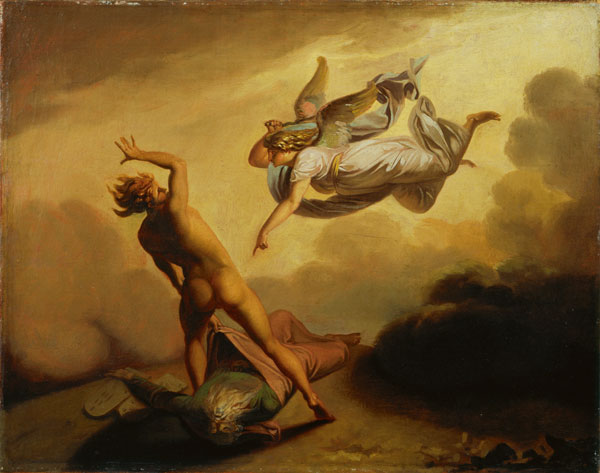
Michael challenging Satan for Moses’ corpse.

Jude, Jesus and James’ little brother, wrote probably the quirkiest little book in the whole New Testament. For one thing, it’s not a typical epistle. It’s just a short little letter, only one chapter in your Bible with twenty-five short verses marked out. But then again, so are the letters to Philemon and 2nd and 3rd John.  What distinguishes Jude is how jam-packed it is with short allusions to really intense biblical texts about judgment, densely clustered together, barely unpacked, with an expectation you’ll just be able to pick up what he’s throwing down. Beyond that, I’m fairly sure it’s got the most references to extra-biblical literature than any other NT text as well. Certainly by volume. Tucked in the back, there, right before Revelation, it’s this spicy, aggressive appetizer that whets your taste for the hyper-figural, bizarrity of John’s Apocalypse.

Which is probably one of the reasons it’s so ignored. And that’s a shame because it’s such a fascinating and relevant little text. In preparation for a Bible study, I was able to finally do a little digging into it and nail down some of the flow and even quirkier elements of the argument and was surprised at the way that even some of the weirdest stuff maps onto the current modes of argument and struggles with doctrinal debate and struggle in the church today.

The Opponents

So what’s going on? Well, Jude tells his readers very quickly he’d rather be writing a different letter–a more positive one about our “common salvation”–than the one he had to write appealing to the believers “contend” the faith once for all delivered to the saints (3). Apparently, false teachers and “believers” had stealthily snuck into the church and were threatening to lead people astray with their doctrines (4). What kind of doctrines are these? Well, in the past, there was the theory that it was Gnostics, but Richard Bauckham has argued that this thesis pushes past the evidence we have in the letter.

Jude says these opponents are drawn along by their own desires and sinful instincts the way the Israelites in the desert (cf. Paul 1 Cor. 10), the angels (the Watchers) were in pursuing the daughters of men (Gen 6), and the men of Sodom who pursued strange flesh (whether the accent is on angelic or simply male flesh), and will be judged like them (vv 5-8, 10, 19). Judging by that and his judgment that “They are ungodly people, who pervert the grace of our God into a license for immorality and deny Jesus Christ our only Sovereign and Lord” (4), it seems licentious antinomianism is probably the biggest issue. According to Bauckham, these opponents were probably arguing for some sort of rejection of traditional moral norms because they’d transcended them and were inviting the rest of the Church to join.

The Opponents’ Main Moves

So how were they making the argument? There are about two or three arguments that I can spot Jude pointing to.

1. Abusing Grace. First, it appears that they were making a false appeal to Paul’s preaching of the gospel of grace. Mistaking grace for permission, they could be preaching “sin in order that grace may abound.”

Oh look, someone abusing the gospel of grace. How surprising.

2. False Appeals to “Visions”. Second, and the next two points are connected, they are appealing to “the strength of their dreams” (v. 9).  In other words, possibly some hyper-charismatic experience, or an appeal to a new, special experience of the Spirit that elevates or moves them beyond former moral norms given in the teaching of the Apostles or Scripture.

Oh look, someone abusing the claim of spiritual experience to downgrade Scripture. How surprising.

3. Assaulting the Law. Third, these “dreams” or visions taken to be superior to Old Testament moral law as given by lesser beings. And this is where we get to some of the quirky stuff in verses 8c-10a:

…reject authority and heap abuse on celestial beings. But even the archangel Michael, when he was disputing with the devil about the body of Moses, did not himself dare to condemn him for slander but said, “The Lord rebuke you!” Yet these people slander whatever they do not understand…

So, here’s where knowing some extra-biblical, 2nd Temple Judaism literature helps. At the time, there were a couple of teachings that were popular. First was the idea that the OT law was given by angels, intermediaries, and not directly by God, though by God’s authority. You can see this idea peeking out in Paul and Acts (Gal. 3:19; Acts 7 :38).

Second, there’s the story of Moses’ burial/assumption told in the Assumption (or Testament) of Moses. If you remember, Moses died on the mountain before entering the promised land. Well, a bunch of legends had grown up around that God had sent the Archangel Michael to retrieve the body of Moses for burial. When he got there, Satan (the Accuser), argued with Michael that Moses’ body was his because Moses was a murderer. Now, Michael knew that this was a slanderous charge, but what did he do? Surprisingly, he does not condemn Satan for slander or over-reach, but appealed to the Lord to judge him for the false accusation made according to the Law.

Without getting into the status of extra-biblical materials, what does this have to do with the false teachers Jude is dealing with? Apparently they were blaspheming the “glorious ones” or “celestial beings” through whom the Law came in order to denigrate the Law, and supplant moral authority of OT Scripture with their own licentious teachings. If the Law was delivered through untrustworthy angels, then it’s all the easier to replace with private revelations. Jude responds to their arrogance by appealing to Michael’s example. Bauckham comments:

Michael’s behavior contrasts with that of the false teachers when they reject the accusations which the angels, as spokesmen for the Law, bring against them. They do so because they claim to be above all such accusations, subject to no moral authority. In fact, even if they had the status of Moses or Michael, they would remain subject to the divine Lawgiver and Judge. — Jude, 2 Peter, pg. 62

If they really understood the nature of the spiritual realm they claimed to, they would not slander revelation as they have been doing, but apparently all they understand is their own lusts. The only authority that they will recognize is their own desires trumped up in the garb of elevated spiritual insight.

Oh look, someone is denigrating the revelation of the Scripture and the Apostles’ teaching  as revealing God’s creative intent of Christian moral practice because we’ve moved past that. How surprising.

This is Not New

Don’t get me wrong here. I know there are difficult issues involved with parsing the relationship with the OT and the NT, or contextualizing the preaching of the apostles in the 1st Century in the 21st Century. I have to say, though, when you begin to study the structure of heretical arguments made in the history of the church, there is a redundancy in form that becomes increasingly familiar.  I’m not an expert, but I’ve read about these sorts of moves in the first couple of centuries, and again with some of the hyper-radicals of the Reformation and the post-Reformation period, and down on into today.

Of course, that means that, despite the complexities, modern nuances, and varied ambiguities we need to manage, Jude’s call to “maintain the faith once for all delivered to the saints” remains the same. We haven’t “moved past” this, or progressed on to a fundamentally new stage in spiritual history. Yes, history moves on, but now, as then, we live between the comings of Christ. The 1970s were not an eschatologically-significant event comparable to the changing of the covenants brought about through Jesus’ life, death, and resurrection. So, as difficult and tempting  as it might be, we are called to keep ourselves from being drawn off into false teaching:

But you, dear friends, by building yourselves up in your most holy faith and praying in the Holy Spirit, keep yourselves in God’s love as you wait for the mercy of our Lord Jesus Christ to bring you to eternal life. (20-21)

This is not a call to rigid, or harsh judgmentalism in matters of doctrinal difference, or towards those who struggle with belief. Christ-like pastors are sensitive to tender consciences. Jude continues by telling people that even though they should hate even the clothes stained by sin, they are to:

Be merciful to those who doubt; save others by snatching them from the fire; to others show mercy, mixed with fear… (22-23)

People in the pews are in all kinds of different places. We need to be prepared for that and deal gently, even as we correct false teaching coming from those set on uprooting the truth.

Thankfully, we have God’s promises to sustain us, which is why in the midst of conflict and controversy we praise him now as Jude did then:

To him who is able to keep you from stumbling and to present you before his glorious presence without fault and with great joy— to the only God our Savior be glory, majesty, power and authority, through Jesus Christ our Lord, before all ages, now and forevermore! Amen. (24-25)

Soli Deo Gloria
Torrey on the Trustworthy Temple of Scripture

torreyFred Sanders put together a nifty little collection of evangelist, expositor, Bible college dean, and pastor R.A. Torrey’s sermons entitled How God Used. R.A. Torrey. Sanders introduces the work with a little bio, then adds brief introductory commentary before 13 representative sermons and addresses by Torrey. I’ve been reading it for a couple of days between other works and it’s been a fun little work so far. The preaching is dynamic, personal, and spiritually compelling. Also, as a preacher, it’s just interesting to see how much the game has changed, so to speak, since Torrey was calling people back to faith.

One address I enjoyed, in particular, was his famous “10 Reasons Why I Believe the Bible is the Word of God.” Torrey, of course, famously edited the collection of essays in defense of orthodoxy known as The Fundamentals at the height of the Fundamentalist/Modernist controversies, so it’s unsurprising he dedicated significant preaching to the subject of the trustworthiness of the Scriptures.

Well, the whole sermon holds up remarkably well 100 years later on, but the section I enjoyed most was his argument about “the unity of the book”:

This is an old argument, but a very satisfactory one. The Bible consists of sixty-six books, written by more than thirty different men, extending in the period of its composition over more than fifteen hundred years; written in three different languages, in many different countries, and by men on every plane of social life, from the herdman and fisherman and cheap politician up to the king upon his throne; written under all sorts of circumstances; yet in all this wonderful conglomeration we find an absolute unity of thought.

A wonderful thing about it is that this unity does not lie on the surface. On the surface there is oftentimes apparent contradiction, and the unity only comes out after deep and protracted study.

More wonderful yet is the organic character of this unity, beginning in the first book and growing till you come to its culmination in the last book of the Bible. We have first the seed, then the plant, then the bud, then the blossom, then the ripened fruit.

Suppose a vast building were to be erected, the stones for which were brought from the quarries in Rutland, Vermont; Berea, Ohio; Kasota, Minnesota, and Middletown, Connecticut. Each stone was hewn into final shape in the quarry from which it was brought. These stones were of all varieties of shape and size, cubical, rectangular, cylindrical, etc., but when they were brought together every stone fitted into its place, and when put together there rose before you a temple absolutely perfect in every outline, with its domes, sidewalls, buttresses, arches, transepts–not a gap or a flaw anywhere. How would you account for it? You would say:

“Back of these individual workers in the quarries was the master-mind of the architect who planned it all, and gave to each individual worker his specifications for the work.”

So in this marvelous temple of God’s truth which we call the Bible, whose stones have been quarried at periods of time and in places so remote from one another, but where every smallest part fits each other part, we are forced to say that back of the human hands that wrought was the Master-mind that thought.

How God Used R.A. Torrey, pp. 23-24

I have to tell you, this “argument” isn’t one that you just trot out in the middle of an apologetic dispute, especially with someone predisposed to disbelieve or be hostile to Scripture. Still, year after year, this insight into the unity of Scripture–it’s ability to consistently point to Christ through Law, Prophets, and Gospels, across various genres, generations, authors, and centuries is a continuous marvel. This is especially the case when you take off the modernist blinders and begin to pour over the various narratival and typological continuities.

The Scriptures truly are a marvelous Temple of God’s truth. But Torrey is right–it’s not a unity that just lies there on the surface. It’s the kind of thing that you come to see once you give it the sustained attention and care that it deserves. But once you see it, much as Moses face coming down from Sinai, it shines with the reflected glory of God.

Soli Deo Gloria

Retribution in the Sermon on the Mount? (Or, the Jesus You Find At the Bottom of a Well)

JJesus and the crowds.D. Crossan has apparently written a book about How to Read the Bible and Remain a Christian. In light of the obvious, almost trite, irony of a man whose rejection of basic Christian orthodoxy extends to even a denial of the resurrection of Christ, attempting to tell people how to remain Christians, one must wonder what the point of engaging such a work with seriousness. Well, the reality is that he’s taking up one of the most recent causes du jour, which we’ve had reason to deal with on this blog on a regular basis: the problem of reconciling violence in the Scriptures with the allegedly non-violent God revealed in the preaching and person of Jesus.

Now, I’ll be honest, I haven’t read the text, but I have read his earlier God and Empire text, and from what it looks like, Crossan’s working with much the same presuppositions, with less of a focus on America-as-Rome narrative, but cashing out a more general thesis about Scripture and violence. Collin Garbarino has an excellent review of the work over at First Things. He quotes Crossan’s main thesis:

Throughout the biblical story, from Genesis to Revelation, every radical challenge from the biblical God is both asserted and then subverted by its receiving communities—be they earliest Israelites or latest Christians. That pattern of assertion-and-subversion, that rhythm of expansion-and-contraction, is like the systole- and diastole cycle of the human heart.

In other words, the heartbeat of the Christian Bible is a recurrent cardiac cycle in which the asserted radicality of God’s nonviolent distributive justice is subverted by the normalcy of civilization’s violent retributive justice. And, of course, the most profound annulment is that both assertion and subversion are attributed to the same God or the same Christ.

For Crossan, the Bible needs to be read in light of Jesus, but not the Jesus of Revelation, or anything like that, but the Jesus of the Sermon on the Mount given in the Gospels. Garbarino quotes him again:

This biblical patterning of yes-and-no justifies my choice of the nonviolent Jesus of the Incarnation over the violent Jesus of the Apocalypse as the true Jesus. Put simply, the nonviolent Jesus is the Christian Bible’s assertion, acceptance, and affirmation of the radicality of God while the violent Jesus is its corresponding subversion, rejection, and negation in favor of the normalcy of civilization.

What we see here is another variation, albeit a bit more radical, of some of the Jesus Tea-strainer hermeneutic.

In an oversimplified nutshell, for many, the arrival of Jesus, his preaching in the Sermon the Mount, his rejection of retaliation against enemies, his message of forgiveness, love, and open-armed reconciliation leads to a clear conclusion: Jesus rejected wholesale the logic of justice as retribution, or any component which contains violence. “Mercy over justice”, if you will. If that’s the case, then we must read the Scriptures as presenting us with two logics: a retributive, violent logic present in Deuteronomy, the Law, OT narratives, and Paul’s more unreconstructed moments, and a prophetic, non-retributive logic given to us in the prophets and ultimately in Jesus that overcomes retribution. God simply is not like that. Now go reorganize your atonement theology, doctrine of God, and revelation accordingly.

I bring all this up because I found his response to this sort of thing so helpful and compelling. With apologies to First Things, I’ll go ahead and quote it at length:

It seems to me that Crossan will need to cut the Sermon on the Mount down to just a few sentences bereft of context if he wants to maintain a Jesus who is primarily concerned with everyone getting their fair share. When read in context (that’s something we historians do), the Sermon on the Mount contains quite a bit of retributive justice.

The Sermon on the Mount is found in Matthew’s Gospel, the Gospel that condemns the Jews for their inability to see Jesus for who he was. At the beginning of the Gospel, Matthew juxtaposes the king of the Jews with the gentile magi, a comparison which doesn’t leave the Jewish king looking too good. At the end of the Gospel, Matthew records the people of Jerusalem shouting, “His blood be on us and on our children!” The Sermon on the Mount is an integral part of Matthew’s argument that the Jews missed their Messiah, not some parenthetical aside that somehow managed to slip into an otherwise tightly constructed theological narrative.

At the beginning of the Gospel, Matthew presents Jesus as being the fulfillment of the promises to Israel. Just as Israel experienced exile in Egypt, baptism in the Red Sea, and wandering in the wilderness, Matthew depicts Jesus as experiencing exile in Egypt, followed by baptism in the Jordan, followed by wandering in the wilderness.

Which brings us to Matthew’s Sermon on the Mount. Jesus, like Moses before him, goes up on the mount to deliver a new law to the people. Crossan imagines that it’s here we see God’s distributive justice, “God’s radical dream for an earth distributed fairly and nonviolently among all its people.”

In Crossan’s defense, the beginning of the Sermon on the Mount sounds warm and fuzzy. In the Beatitudes, Jesus announces that those who mourn will be comforted and that the meek will inherit the earth. It seems to me, however, that Jesus demonstrates good homiletic technique—hook the audience and then let them have it. Jesus moves swiftly from comforting his audience to causing great discomfort.

After pronouncing blessings on all of the good people, Jesus says, “For I tell you, unless your righteousness exceeds that of the scribes and Pharisees you will never enter the kingdom of heaven.” Wait a second—didn’t he just say that the poor in spirit receive the kingdom of heaven? So the poor in spirit must be more righteous than the Pharisees, the guys who were experts on the Law? The audience would do well to consider whether Jesus thinks them poor in spirit.

Then he says that we’re going to hell if we’re angry. And he also says that we’re going to hell if we’ve ever looked on a woman with lust. And then he says that we can’t defend ourselves from our enemies.

And then Jesus says, “You therefore must be perfect, as your heavenly Father is perfect.”

This talk of hell is pretty heavy stuff. Jesus’s law is heavier than the Law of Moses, and if you don’t follow his law perfectly, he says you stand condemned. Perhaps Jesus was referring to himself in those Beatitudes, not his hearers. After all, neither the prophets nor the Romans ever called the Jewish people “peacemakers.”

Here’s the frustrating part about this. There’s no real winning with this kind of hermeneutic, no matter how many texts you pile up.

One really can’t argue with Crossan, however, because his methodology ensures that he’s always right. If one brings up some contrary evidence to his thesis, he’ll just apply his editorial pen more liberally and label that bit of Jesus inauthentic. This isn’t how one ought to read the Bible if one wants to stay Christian.

The same thing is true with (some) other versions of Tea-Strainer hermeneutic. Produce yet another text in the Old Testament or Paul, or whoever, and it’s often simply a text that needs to be overcome, or subverted, or read backwards, sideways, or in a code we finally cracked in the 1970s.

Here’s the problem, though: either you take Matthew’s presentation as the proper context for reading Jesus’s words as Garbarino does, or you’re left with a very awkward operation of reading the words of Jesus as given to us by Matthew against Matthew. This puts us in the rather intellectually unenviable position of having to assert that Matthew is a somewhat reliable witness to the historical Jesus in many cases, but that he’s a rather poor one in others, or simply an inept theologian. It seems that he, as a disciple, or the disciples from whom he gleaned these stories, words, and theological interpretations didn’t understand Jesus quite as well as we do now. Reading at a 2,000-year remove in the 21st century, we’re finally piecing together the real, true, deep intentions of Jesus, using hermeneutical presuppositions given to us through the witness of the text, despite the text, that his disciples who authored the text have missed somehow.

Or again, I’ve made this same point with the accounts of God striking down Ananias and Sapphira as well as the Tetrarch Herod in judgment in the book of Acts. In the text, the author clearly identifies God or God via an angel, as ordering the very retributive judgment. Now, the thing to remember is that this is the same author as the Gospel of Luke, who gives us a fair amount of the picture of Jesus who tells us to forgo vengeance, love our enemies, and so forth. Either we’re to believe that Luke, or whoever you think wrote it, didn’t see the very clear contradiction, or maybe we should allow Jesus, and the Bible, to have a far more complex, yet unified message than that.

This, of course, is just a rehash of the old historical-critical Jesus Seminar problem. First, you take a statement or two from the Gospels that you label “The sorts of thing we know Jesus could say”, whether because it’s different enough from the kinds of things later disciples said, or its similar to the particular political movement you’ve chosen to set Jesus against, (or it fits with your 1970s-style political socialism) something like that. Then, you measure all the rest of the statements against it, usually pressing for strict dichotomies in order to rule out “the sorts of things we know Jesus couldn’t say”, or “the sorts of things we’re not quite as sure about.” At the end, you get the classic problem of historians staring down the well of history to find the Jesus behind the Gospels, only to end up seeing a Jesus who looks very much like a bearded, 1st Century version of themselves looking back up at them.

The same sort of logic is at work in a number of the Tea-strainer hermeneutics. Attempts to split Jesus off from the “retributive logic” found in Scripture inevitably leads to accusing the New Testament authors of a schizophrenic presentation of Jesus himself, or with the inconsistent attempt to uphold the Jesus of the Gospels, without actually upholding the Gospels. With Crossan, a bona fide historical critic, you at least get the benefit of an explicit acknowledgement of what’s going on.

Soli Deo Gloria

Augustine Against the Gods and the City of God For a New Age?

course of empireAs I’ve mentioned recently, I’ve finally taken up Augustine’s City of God in my reading and after the first seven books (of twenty-two) have been finding it immensely enjoyable and intellectually stimulating. I’d been exposed to small sections in my undergraduate courses, but now I’m finally taking in the full sweep of the argument and it’s quite a different experience. For those of you who don’t know, most of the first ten books (roughly 4oo pages), is caught up with Augustine’s polemic against the pagans. They had charged Christianity and Christ with the sack of Rome by the Goths, so Augustine launches a sweeping counterattack against the official theology of Rome as well as its most “enlightened” interpretations via Varro and some of the philosophers such as the Neo-Platonists.

Though not quite through the polemics, I thought it might be worth highlighting a few observations worth reflecting on briefly.

Augustine Against the Gods

First, on the material critique of the gods, it’s fairly amusing to read Augustine pick apart the official state religion and the popular iterations presented in Homer and the poets on its own terms. Augustine takes the time to comb through the writings of the poets and point out the various internal inconsistencies and between common Roman morality and the lecherous, shameful gods that are celebrated as ‘select’ among the pantheon. And then he goes on to document in detail the licentiousness that’s passed off as the proper worship of the gods: prostitution, castration, drunkenness, and countless other abominations. The gods weren’t simply non-existent for Augustine–whether figments of the human imagination or demons masquerading as gods–they were positively dehumanizing.

Looking at the practice and reality of idolatry, one Augustine’s main lines of attack is that it’s all rather untidy. Why the multiplication of so many gods to various functions? Why one god for the planting of seeds and another for their growth? If Jupiter is both father and mother of all, why the profusion of feminine and masculine deities? At one point he quite humorously points that there were about six different gods supposed to be invoked at weddings in order to ensure the consummation of the marriage, making things a bit too crowded for the Bride and Groom to get any of the work done themselves. The spirit of Elisha against the Baals on Mt. Carmel stalks Augustine’s work.

Beyond this, it’s not just that polytheism is metaphysically untidy. Augustine points out that the idolatrous spirit, once it begins down the road of multiplying deities, has no natural way of stopping. The logic of polytheism takes over and gods and goddesses begin to pop in the places that you’d least expect them. Indeed, that’s one of the problems with it. As soon as you lose the one God who creates, redeems, directs, and orders all things, you begin to need more and more gods to keep the system going. It’s not as if idolaters simply switch out the True God for another main deity. This creates the perpetual duty to please and propitiate all of them, or the anxiety that comes in making sure you pick the right one for your needs. There is no rest in polytheism.

Augustine’s polemical vision is broader still, though. He takes aim not only at popular piety, but even the more sophisticated and academic attempts to save or reinterpret the worship of the gods by Varro or even Cicero. Poet or philosopher, it didn’t matter. Augustine aimed both high and law. Actually, one of the more interesting features of his polemic is to show the way that even the more sophisticated constructions of Varro and others eventually fall prey to the same faulty metaphysical assumptions, or else fall prey to others that, while possibly less crass, are no more plausible. Idolatry is idolatry is idolatry. Of course, in order to demonstrate that, Augustine had to be familiar with both popular piety and it’s more academic variations.

In modern polemics, if it’s engaged in at all, theologians and pastors tend to stick to one level of discourse. Some love to get into the thick of more street-level apologetics, whether it be Mormons, skeptical Dawkinsians, or your run of the mill “spiritual-not-religious” critic.  Others enjoy the high-level “apologetic” conducted in academies–the kind of apologetic that doesn’t like being called an apologetic–with conversations centered around “modernity”, deconstruction, critical theory, and abstruse ruminations about the hope of a Christian theo-ontology. Usually, the two modes of discourse don’t mix. For Augustine that wasn’t an option. Chapters skewering the lewdities of the Bacchanalia or the foolishness of multiplying principles of being, give way to an examination of the metaphysical shortcomings of the Neo-Platonists.

One of the other features of note is that Augustine’s critique is conducted at the historical level as well. Indeed, after an initial defense of Christian providence against the pagans, Augustine’s critique of the gods begins there. If Christ and the worship of Christ is allegedly responsible for historical evils, for the loss of the blessings of the gods, Augustine will go to history to answer them. If the gods were such great protectors, why had the Romans suffered such great military losses in the ages when there was unquestioned Roman devotion? What of the horrendous civil wars that cause tumult and death? Or how about the various “natural” tragedies and plagues that this pantheon was responsible to deflect? Had not every god they ever worshiped failed them? Indeed, if Virgil’s press and spin-doctoring of history was to be believed and Rome was supported by the old gods of Troy, why did they have any hope in them? Why should the gods that failed Troy be expected to be the salvation of Rome?

Finally, in terms of material content, Augustine’s critique always contains an appreciation of the true desires contained in Roman values and attempts to show their ultimate fulfillment in Christ. Though his judgment is almost unrelentingly negative in terms of the actual worship or philosophical positions of those whom he engages, he has a knack for recognizing those noble elements in Varro, Seneca, or some of the heroes of Rome such as Regulus. Some of them are clearly groping towards the truth, but they are unfortunately weighed down by tradition or a lack of courage to recognize the truth. In some cases, he looks at the gods they worship and points out that what they really  ought to worship is a different one like Felicity, who offers all that the Romans seek. Of course, that’s merely a set-up to point out that true felicity comes from the one God in Jesus Christ who is the source of all good in this world and the next.

A Modern City of God?

As I have read and reviewed Augustine’s work, I’ve been wondering what it would take to write a contemporary City of God for the current age. As the West enters (and in Europe has been in) a post-Christian era that increasingly resembles an earlier, more pluralistic and pagan age, what would a full-dress assault on the “gods” look like? Does it already exist? There are a number of good apologetics works out there, but I’m not sure I know of something engaging in as far-reaching, or exhaustive examination of the philosophies, popular spiritualities, and secularized idols (ideologies) that compares to the City of God. Possibly the David Bentley Hart duo of Atheist Delusions when paired with his more recent The Experience of God could be thought of as a contender in that way.

One of the challenges to reproducing Augustine’s work in the contemporary period is that there is no recognizable “religious” system on par with the Roman cult in contemporary Western culture. Thinking about the systems of worship we tend to call religions in the West, the pluralism involved seems to be of a somewhat different sort than the variegated worship of the pantheon in ancient Rome. To take on the “gods” of positive religions like Hinduism, Islam, and so forth, would be a massive undertaking, and in the West, is probably largely beside the point. No, the only comparable reality would likely be the sort of secularized idolatry of the deification of the goods of modern culture. In other words, the sort of “hyper-goods” Charles Taylor talks about like freedom as autonomy, unfettered choice, or more obvious candidates such as money, sex, power, celebrity. In that sense, something like Timothy Keller’s Counterfeit Gods might just do the trick, only on a bit of a grander scale (and I say that loving that book).

I suppose, then, that the elements are probably all there in works that are out on the market, simply chopped up into smaller works and spread out, devoted to tackling more specific, niche issues. Perhaps City of God simply isn’t meant to be rewritten and the age calls for another kind of work altogether. A more impatient age can’t take the time to work through a thousand page onslaught on idols of the age.

I wonder, though. Maybe there’s space yet, for another Augustine to meet the current challenges.

And I suppose that’s where I’ll end this ramble. If you have any thoughts, opinions, ruminations, or recommendations, feel free to weigh in through the comments.

Soli Deo Gloria


The Nonviolent God of the Exodus?

sacrificial lambI keep returning to the issue of the consistency between the Old Testament and the New Testament in it’s portrayal of God because the issue keeps getting brought up in popular (and academic) forums. Driven largely by a particular, non-violent hermeneutic, a significant drive towards screening out large sections of the Old Testament portrayal of God is afoot.

The basic argument is that while the Old Testament is fine for what it is–a limited, time-bound telling of God’s dealings with his people according to their lights–Jesus came along and corrected that view. But now we need to go back and look at the Old Testament in light of Jesus and judge it according to his standard of non-violent love as given us in the Gospels and the Sermon on the Mount, but most of all in his enemy-loving death on the cross. By that standard, much of the Old Testament’s depiction of God’s activity falls short and we ought to gently set it aside as not a full or accurate revelation of who God is. God allowed his children, the Israelites, to tell stories about him as best they could, but now that his children have grown up into the Church, we must speak more accurately of God.

We can call this the “Nonviolent God” premise or hermeneutic. Note, this is not the “Christian nonviolence” position. Though this is inevitably a form of nonviolence, there are many like Preston Sprinkle, or even my Mere Fidelity companion Andrew Wilson, who would advocate for nonviolent practices as a part of the progressive ethic revealed in the New Testament, while still accepting the full truth and authority of the Old Testament.

Still, if we set out the basic argument in logical form, it flows something like this:

Nonviolent God Premise 1: Jesus shows us what God is like in a way that supersedes and corrects all prior conceptions.

Nonviolent God Premise 2: Jesus’ nonviolent practices show us that his God would never perform acts of violent judgment, because he would rather die for his enemies on the Cross than kill them.

Nonviolent God Conclusion 3: Accounts like those of the Invasion and Conquest of Canaan are inconsistent with the God revealed in Jesus Christ, therefore God did not command them or perform them.

These narratives, then, are highly-accommodated tellings or permissible falsehoods allowed in God’s benevolence. But thankfully we have Jesus now, we can see clearly that this is wrong, and we can move on, applying a Jesus-hermeneutic and still appropriating the OT Scriptures as they fit.

But here’s the rub that occurred to me when I was reading Psalm 78: acts like those are the chief events by which the God of Israel is identified and identifies himself in the OT. They are ineliminably at the core of Israel’s narrative understanding of the Lord with whom they are in covenant: “I am the LORD your God, who brought you out of Egypt” (Exod. 20:2, Deut. 5:6; cf. also, Lev. 26:13; Ps. 81:10). Indeed, one of the main OT confessions of faith is found in Deuteronomy, where worshipers coming to celebrate the festival of the first-fruits. Worshipers were supposed to respond to the priests as they brought their offerings to the LORD:

“And you shall make response before the LORD your God, ‘A wandering Aramean was my father. And he went down into Egypt and sojourned there, few in number, and there he became a nation, great, mighty, and populous. And the Egyptians treated us harshly and humiliated us and laid on us hard labor. Then we cried to the LORD, the God of our fathers, and the LORD heard our voice and saw our affliction, our toil, and our oppression. And the LORD brought us out of Egypt with a mighty hand and an outstretched arm, with great deeds of terror, with signs and wonders. And he brought us into this place and gave us this land, a land flowing with milk and honey. And behold, now I bring the first of the fruit of the ground, which you, O LORD, have given me.’ And you shall set it down before the LORD your God and worship before the LORD your God. (Deuteronomy 26:5-10 ESV)

The “great deeds of terror and signs and wonders” are precisely those events which our Nonviolent God Hermeneutic ought to lead us to reject as less than appropriate for the God of Jesus Christ.

Which leads me to posit couple more premises and a logical entailment that isn’t usually accepted by more Evangelical advocates of the Nonviolent God hermeneutic, but I think follow naturally.

OT Data Premise 4: The Exodus from Egypt and Redemption of Israel was accomplished by similar, if not more aggressive divine acts of violent mercy and judgment such as: the 10 plagues (rivers of blood, sickness, deadly hale, economic devastation, etc) , the drowning of a massive Egyptian army in Red Sea, and finally, the execution of the firstborn in all the land as an act of Judgment on the gods of the Egyptians (Exod. 12).

OT Data Subpremise 4.5: It is clear from the narrative that each of these acts of divine violence was not ancillary to process of redemption. It occurs precisely in and through these acts of divine judgment. There is simply no way to read out God’s activity (even those who distance God via the destroying angel must admit that it is by God’s permission, will, and command that the angel goes out. Exod 12:13 depicts God himself speaking of passing over house and destroying the firstborn in others).  

OT Data Premise 5: Yet, the God of Israel willed to be known primarily as the God who accomplished the mighty acts of mercy and judgment in the Exodus and Redemption of Israel (cf. Exodus and the hundreds of celebratory references in the Prophets and Psalms). Indeed, the foundational Passover celebration and meal memorialize an act divine violence and mercy–the death of the firstborn–which is surely as problematic as the accounts of the Canaanites (though I think there are better approaches to contextualizing that). 

Logical Entailment of the Nonviolent God Premises: Jesus reveals to us a fundamentally different God than the God of the Exodus and Redemption and therefore a different God than the God of Israel.

At this point, my question becomes, “How is this not some form of Neo-Marcionism?” Note, I don’t mean full-blown Marcionism. That would require a Gnostic rejection of Creation, materiality, and a whole lot more. But how does this hermeneutic not slowly but surely lead us to the conclusion that the God of the Old Testament is a significantly different being than the God of Jesus Christ? How can we continue to narratively-identify them when the chief liberating acts of the one allegedly deny the chief liberating acts of the other?

Again, I don’t really have as much of a problem with the kind of nonviolence approach that says God has a multi-stage plan in which his people can participate in warfare in one stage (Israel) and then move away from it in another (the Church/New Israel). I actually do believe there are significant discontinuities as well as continuities between the Old and the New Testament. Thank God for that, or I, a Gentile, wouldn’t be here. I don’t think the OT Law in its entirety is for applicable, or even advisable to today. I think Jesus has changed some things. Still, the problem comes when we arrive at a “Jesus”-hermeneutic that ends up retooling our entire doctrine of God, the cross (atonement), and entire telling of salvation history.

Let me be clear: most of the Evangelicals flirting with or advocating the Nonviolent God hermeneutic have not gone this far. I am not call them Marcionites straight out or even all Neo-Marcionites. What I am saying is that unchecked or ungrounded by other concerns, it logically flows into something like this. That’s something that ought to give us pause.

Losing the Exodus means losing the God of the Exodus. And that’s a bridge too far.

Soli Deo Gloria

Four Helpful Words Before You Preach That Awkward Word

awkwardEvery pastor has sermons that they hate to preach, especially when it comes to cultural flashpoints. Unless you’re a glutton for conflict, or you’ve got nerves of steel, the thought of misunderstanding, rejection, or turning someone off from the Gospel because you’ve got to preach on that subject this week when Joe happens to be bringing his 10 unsaved, unchurched friends might just cause you some nerves.

The tension is there for various reasons. First, you want to be faithful to God’s word. You don’t want to hem or hedge or cover over what God has spoken. It’s God’s word and it’s nothing to be ashamed of. It’s truth that, even when it cuts, leads to the beautiful healing brought about by the Spirit. Then again, you also want people to properly hear what was actually spoken, as opposed to what they’ve been culturally-trained to hear as soon as a couple of key buzzwords are dropped. As wonderful as the Word is, aside from our own natural resistance, people have mishandled it, creating a natural, understandable hesitation about certain hot-button topics.

In these situations, I have found that it’s helpful to say a few words before, or with, or after, those words we’re a little worried to utter or expound. Consider them framing words. They help set up, frame, or prepare your people to process what you’re about to say. To use an odd, distracting image, it’s like trying to clear some wax out of the ears before putting in headphones. You want as little hindering your people as possible. What’s more, these are the kinds of helpful conversation-framers that teach your people how to talk to outsiders beyond Sunday morning in the pews. By the way, at the outset, you need to know that I probably got all of these from Tim Keller at some point.

So what are these ‘words’?

1. Culture changes, so do our presuppositions. The first point is that our moral intuitions, while there for our good, are culturally-shaped, and therefore pretty malleable. Things that just “felt wrong” to people 60 years ago, didn’t feel wrong 60 years before that, and vice versa. Or again, things that just “seem obviously right” to someone in the Middle East, will “seem obviously wrong” to someone in downtown Chicago. Yes, there is a fundamental human nature, with instincts for the basic shape of right and wrong, but like our sense of fashion it’s got a certain sense drift. We’ve worn jeans for a while now, but in the 90s they were baggy and under your butt. Now, they’re skinny compressed. At both times, they “feel right” as pants, despite their wide difference.

In a similar way, some of the Bible’s answers will make intuitive sense to people out in the culture and sometimes they won’t. Right now the Bible’s answers about grounding the nature of human rights, cultivating empathy, compassion and forgiveness, all resonate with our culture even if they don’t buy the story. In other areas like sex and money, the Bible’s message is going to grate. Sometimes, then, the Bible’s answers are like an odd image on puzzle-piece. It’s only when you’ve placed it in the broader picture, that it will make any sense.

2. The Unchanging Cultural Universal. The next truth that goes hand in hand with the last point is that no culture has ever been universally right on every point. Every culture has blind spots. As Lewis has pointed out before, we might look back on the Medievals and judge them for their violence and love of marshall conquest, while they would look at an age like ours and wonder at our cheap view of sex, or physical cowardice. Compassion towards outsiders might be a premium we champion, but our lack of loyalty in marriage, or our workaholism and materialistic consumerism are things that other ages and cultures would look at us and shake their heads at. Just like human individuals, the Bible teaches that human cultures are both filled with common grace truth and yet broken by sin. If that’s the case, if the Bible is the transcultural truth of God, wouldn’t we expect for it to affirm and challenge each culture and age in different spots?

3. First Things First.  Next, and this one is mostly for the skeptics or newbies checking out the faith, keep first things first. As Keller asks in The Reason for God, “Surely you don’t want to say that just because you don’t like what the Bible says about, issue x (women, same-sex marriage, etc) you don’t believe Jesus rose from dead? You wouldn’t want to make such a non-sequitur.” The point is this: Figure out the main things first and then come back for the tough, but peripheral stuff. There is an order of importance in the Christian faith for which beliefs ground other beliefs. In other words, who cares what the Bible says about contraception or gender roles if Jesus never rose from the dead? If Jesus didn’t rise from the dead, then, as Paul says, “your faith is futile and you’re still in your sins” (1 Cor. 15:12-20), so who cares right? So, if you’re troubled and new and don’t know what to think, that’s okay. Read and learn. But first, tackle the bigger issues like God, Christ, the nature of salvation, and then wrestle with what the Bible says about your pet issue.

4. If Jesus Did Rise… Now, for those of us who have come to the conclusion that Jesus did rise from the dead and he’s the Creator of all things and Cosmic Lord of the Universe, well, then it’s time to wrestle with the Bible he affirmed as true and authoritative. It’s not possible to say to him, “Jesus, you’re my Lord, my Savior, and I trust you with my eternal destiny when I die” and then turn around and add “but right there, what you said about my bank account (sex life, marriage, time, etc), is kind of off, so I’ll have to pass.” It just doesn’t work. Now, you may take a while to study and figure out what the Bible is saying, but after you’ve said yes to Jesus, straight-up disagreement is not an option.

So there you go. Obviously, you don’t have to frame them the way I did. And, it would probably be a good idea to go cruise through Keller’s Reason for God at some point if you haven’t, just to get the clearer version of all of these. Still, points like these are worth making. And now that I think about it, they’re good, not only during the particular sermon in question, but regularly, during all sorts of sermons. You often need to be tilling the soil long before planting season if it’s going to be ready to receive the more difficult seed you want to sow.

Of course, above all, trust God himself to be at work in the Word by his Spirit.

Soli Deo Gloria

STAHP Confusing Physics with Metaphysics

remthologizing“Well, according to quantum physics we now know that God’s activity in the world must be…”

“Biology has taught us about the human anatomy so our Christology needs to reckon with…”

“In light of our knowledge of emergent properties…”

Ever hear something like this in a conversation, or on a blog somewhere? Statements of this sort are among my least favorite to run across in a modern or contemporary text in theology. In our contemporary context, many are concerned to participate in the growing dialogue between the physical sciences and the science of theology, trying to figure out how to relate the two properly. Given that the reality of God speaks to every dimension of reality, spiritual as well as material, I can appreciate the intent. The problem is that many attempt the task without the proper philosophical, biblical, or theological categories in place, which leads to a confused view of God’s activity in the world.

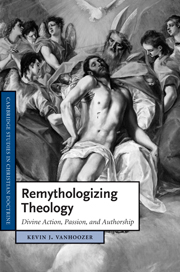
One common place where this occurs is in conversations with some sorts of relational theists, panentheists, process theists who argue that God restrains himself from too much intervention in the world, or restricts it to a limited “persuasive” sort. One given reason is that for God to intervene too much in the physical world, that would disrupt the natural order, rendering his action coercive and, therefore, unloving. While there are numerous mistakes involved in this sort of view, Kevin Vanhoozer points out that there is one basic mistake underlying them all:

Underlying this categorial confusion of Creator and creation stands a metaphysical postulate that reduces what is logically possible for God to what is physically possible in the natural order. It is precisely this metaphysical postulate that leads some panentheists to dismiss divine interventionism  on the grounds that such divine action competes with and, at the limit, negates the natural order: “The category mistake is thus a confusion between natural causality and divine action.”  When it comes to the God–world relation, however,  there is no competition,  for the relation is enveloped by an even greater Creator–creation distinction: “For no similarity can be asserted between creature and creator unless an even greater dissimilarity is included.”  —Remythologizing Theology, pg 168

At core, it is a failure to properly reckon with Genesis 1:1, “In the beginning, God created the heavens and the earth.” As the Creator of all reality besides himself, God is the transcendent Lord of all reality besides himself. He is not in competition with it, but upholds it by his very word. He is not on an even playing field with the rest of reality, but sustains the playing field in existence.

I was reminded of this point by several passages in Turretin’s discussion of the nature of theology in the first subject of his Institutes. In several places, he makes salient points that ought to be kept in mind as well attempt to think of reality in light of God and vice versa.

First, we have to understand the way that theology studies the reality of the world and God. Each science or area of study takes its cues for how it knows on the basis of what its object is, but also on the way it approaches the object.

Although physics, ethics, and medicine treat of the subject, they do not cease to be distinct sciences because they consider man in different relations: physics as a species of natural body; ethics as capacious of virtue and happiness; medicine as curable from diseases and restorable to health. Thus although theology treats of the same things with metaphysics, physics, and ethics, yet the mode of considering is far different. It treats of God not like metaphysics as a being or as he can be known from the light of nature, but as the Creator and Redeemer made known by revelation. It treats of creatures not as things of nature, but of God (i.e., as holding a relation and order to God as their Creator, preserver, and Redeemer). (Topic 1., Qu.5, V.)

Theological approaches to the relationship between theology and science need to remember their own particular mode of study.

Next, theological approaches to the problem need to remember the limits of reason with respect to God’s power. Turretin affirms the place of reason, and even the judgment of contradiction in the theology, especially since Scripture itself authorizes that. Nonetheless:

Although the judgment of contradiction is allowed to reason in matters of faith, it does not follow that the human intellect becomes the rule of divine power (as if God could not do more things than human reason can conceive). God’s being able to do something above nature and human conception (which is said with truth in Eph. 3:30) is different from his being able to do something contrary to nature and the principles of natural religion (which is most false). Nor is the power of God in this manner limited by the rule of our intellect, but our mind judges from the word what (according to the nature of a thing established by God ) may be called possible and impossible. (Topic 1, Qu.XI, XIV)

Human reason’s reach can only go so far, but we must remember that the power of God can extend much farther. He is the author of our reason and so is transcendent of it, as are his works. That said, it’s not simply the case that what theology teaches simply contradicts what is in the sciences or philosophy and we mustn’t worry about the relation between the two. It is a matter of thinking clearly about which order or of reality we’re speaking of.

Although theology teaches many things which philosophy knows not, it does not follow that a thing may be false in philosophy which is true in theology because truth is not at variance with truth, nor is light opposed with light. But care must be taken that philosophical truths be not extended beyond their own sphere and the ordinary powers of nature to those things which are supernatural revelation and power; that the physical be not confounded with the hyperphysical or human with divine things. For example, it is true in philosophy that a virgin cannot bring forth, that a heavy body is carried downwards, that fire burns matter placed in contact with it, that from nothing, nothing can come–the contraries of which theology maintains. But they are not on this account opposed to each others because these things are spoken of in different relations. In philosophy, they are denied with reference to the laws of nature, but in theology they are affirmed with reference to divine omnipotence and supernaturally. -(Topic 1, Qu. XIII, XII)

In other words, we have to let the Creator/creation divide properly frame our thought on God and the sciences. As always, whenever the Creator and the creature are confused, mixed, or held under the same category, the darkening of reason follows (Romans 1).

Soli Deo Gloria

Peter Pan’s Shadow And the Promises of God

These are a shadow of the things to come, but the substance belongs to Christ. (Colossians 2:17)

For since the law has but a shadow of the good things to come instead of the true form of these realities, it can never, by the same sacrifices that are continually offered every year, make perfect those who draw near. (Hebrews 10:1)

They serve a copy and shadow of the heavenly things. For when Moses was about to erect the tent, he was instructed by God, saying, “See that you make everything according to the pattern that was shown you on the mountain.” (Hebrews 8:5)

Clearly, one of the New Testament writers’ favorite images for relating the truth of the Gospel in the NT to the revelation of the Old Testament was that of “types” and “shadows.” The images are rich, intuitive, and quite helpful in explaining the issue of continuity between the Old Testament and the New. For that reason, Christian theologians of all ages and ecclesiastical persuasions have fastened on these two metaphors and methods of relating the truths of the two covenants, as well as the problem of progressive revelation. As we saw earlier, Turretin leaned on the idea heavily in his defense of the Old Testament’s authority.

The relationship between type and antitype is suggested by the roots of the terms with the idea of stamping or making an impression of an image on a coin or something. There is a correspondence between the stamp and the thing stamped. In the same way, an Old Testament type links up with its New Testament antitype by serving as a preview or advanced model of the coming reality.

peter's shadow 2Picking up the second image, everybody knows that a shadow is not the same thing as its object. It doesn’t have the same substance, weight, or reality. And yet, at the same time, it is dependent upon and similar to the thing that it is a shadow of. My shadow is similar, yet different from me. Its shape is determined, yes, by the light and the distance I am from the ground, but also, in a deciding sense, from my own shape.

So looking at some examples in the Old Testament, Hebrews indicates that the sacrificial system, with its various kinds of sacrifices for thanksgiving, atonement, cleansing, and so forth, all point forward to different dimensions of the ultimate sacrifice that Christ offered upon the cross. Moses was a type of Christ in the liberation and Exodus for the people of God he brought about, which prefigured the New Exodus Christ was to bring about. They are not the substance that is Christ, but they point forward in a way that is determinatively shaped by the substance that is Christ. They are the promises that are copies and shadows of heavenly and better things.

The history, practice, and theology of biblical typology is complex, storied, and well worth pursuing at length. Unfortunately, I don’t have the time, so I am not going to do that. All I want to do is follow up and make one brief, particular point about how we should think of how these metaphors function for expressing continuity and discontinuity.

A Different Type of Type

In some recent discussions regarding issues like atonement or the doctrine of God, I have seen some more progressive theological types refer to the metaphor of types and shadows in order to justify a particular kind of overturning or undermining of the Old Testament revelation. Alongside what we’ve called the Jesus-Tea-strainer hermeneutic, some have argued that now that Christ has come he has revealed the true, hidden nature of these types and shadows. Instead of coming as their more straightforward fulfillment, though, he comes as their abolishment. Or, he comes to reveal how screwed up our understanding has truly been up until this point.

Peter's shadowAs an example, when it comes to the sacrificial system, some will say that Christ served as an antitype by being an altogether different kind of sacrifice. Israelites may have offered sacrifices in the OT as propitiatory, concerned with putting away wrath, but Christ as the antitype shows that the types were distorted refractions of the reality of a God beyond the economy of sacrifice and exchange. Yes, the OT pointed to God’s salvation and victory, but the antitype of Christ shows that all of those OT victories were just shadows pointing forward to the non-violent victory of a God who would never engage in tribal warfare.

On this view, the shadows and types actually distort the reality of the original. Instead of being proper shadows, they are more like Peter Pan’s shadow, running around, behaving in ways that give a false impression of the original. Types end up, less like helpful, advanced signposts, and more like funhouse mirror perversions.

A Promising God

Now, there are multiple problems with this hermeneutic, but the first is that it actually imputes falsehood and unintended deceptiveness about God to the Old Testament authors. Of course, humans are finite and liars, to boot, much of the time. The problem is, of course, that this turns into a functional denial of God’s proper inspiration and authorship of the Old Testament and its authority. Or at least a serious demotion of it. My concern here isn’t that we’re left with a less than perfect book on our shelves. My concern is that our view of inspiration is caught up in your view of God with respect to his trustworthiness as a communicator, as well as his faithfulness as a covenant-keeper. 

Classically, Christian theologians have seen God’s history with Israel, the signs, the symbols, Temple, Tabernacle, priesthood, kingship, and the whole of it, as the divinely-intended matrix of meaning prepared with care for Jesus’ entrance into the world. Jesus fulfills the promises and signs God has made to Israel, just as he said and predicted. It is God, so to speak, setting his own expectations for what he’s going to do to save Israel. As Kevin Vanhoozer says:

Yet Jesus’ story neither begins nor makes sense apart from the broader canvas of God’s prior speech and activity in the history of Israel. Who God reveals himself to be is the one who in Jesus keeps his word to Israel. God’s speech in Jesus Christ may be definitive, but it presupposes prior divine communicative action. The God whose nature is displayed in the history of Jesus Christ is the same as the God who declares his nature by his name in Exodus 3:14 and 34:6–7: merciful, gracious, steadfast love. –Remythologizing Theology, pg. 215

On this other view, though, we come to see Jesus’ story as the last step in a valiant attempt by God to get his message across, that finally (mostly) broke through, correcting all of his earlier communicative misfires. “Long ago, at many times and in many ways, God spoke to our fathers by the prophets”, but apparently he was stuttering up until the time he said “Jesus Christ.” Not only does this rob us of the comfort of understanding God’s promise and fulfillment, it leaves us in the precarious position of having to make sense of which bits of the OT are revelatory or not, which we should discard as false or still hold as true, according to our own lights. We can’t see which promises God intends to keep, and which were simply the flights of fancy of an ancient tribal people.

Again, ultimately, what it robs us of is confidence in the communicative efficacy of our Promising God. For the life of me, I can’t see how that view of Scripture is supposed to sustain the kind of faith that Jesus spoke of when he said, “It is written, “‘Man shall not live by bread alone, but by every word that comes from the mouth of God'” (Matt. 4:4).

Soli Deo Gloria

Is the Old Testament Still a Source for Theology and Spirituality for Christians?

old testamentDoes the Old Testament still matter for Christians? I think most of us have asked that question at some point. For many of us, the Old Testament is weird and scary, full of rituals that are foreign and irrelevant. Others of us wonder what the point of studying the Old Testament is now that we have Jesus and the New Testament. I mean, didn’t his coming make all of that pointless? Can’t we kind of move on and ignore it now?

Downplaying or denying the Old Testament’s importance or binding nature as revelation has been a perennial temptation for Christian theology. Looking at the ‘newness’ of the New Testament and the finality of Christ, some of us can only imagine that having a sense of abolishment and denial instead of one of fulfillment and completeness. This was true in the earliest church controversies into much later periods such as Francis Turretin’s own time.

Apparently, some Anabaptists denied this, and so Turretin took up arms to defend the Old Testament, dedicating a lengthy question (Institutes of Elenctic Theology, Vol. 1, Q. 8) in his section on Scripture to establishing the continuing authority and authenticity of revelation of the Old Testament alongside the New Testament as part of the rule of faith and conduct for the life of the church. (Side-note: I’m not charging current Anabaptists with this, just stating Turretin’s position. So, if you are one, and this doesn’t apply, excellent!)

Regular readers of the blog will know that the unity of revelation in the Old Testament and New Testament is a theme that’s shown itself to be increasingly important for all sorts of issues. Again, then as now, some will deny the Old Testament’s authority in order to propose revisions in our concept of God, of salvation, and the nature of God’s Word. I figured it would be useful to trace out Turretin’s case here for future reference and present edification.

A couple of notes to begin. First, know that Turretin’s sections are referenced under questions and paragraphs indicated by Roman numerals. As I will be summarizing, I won’t bother much with page numbers but will stick to the section numerals to note the arguments he makes. I will also be paraphrasing, and at times, putting Turretin’s terms in my own language for clarity’s sake. Finally, I may not actually buy every argument he lays down. Still, there’s plenty of beef there.

Turretin’s Clarifications. Turretin regularly spends a few paragraphs clarifying what he is and is not arguing for, as that seems to be where much of the confusion on these issues happens. The question of the authority of the Old Testament is no different.

II. Turretin makes it clear that he is not arguing that the Mosaic dispensation or administration of the covenant in the Old Testament is still binding and authoritative for Christians. Christ has fulfilled it and abrogated it. And yet, that doesn’t rule out its use for teaching and instruction as to doctrine and revelation.

III. Turretin also wants to be clear that he is not denying that Christ clarified and reformed the law by correcting and completing it. He wants to argue that Christians can still look to the OT to help establish the rule of faith and life because, in essence, the “religion of Christ” is contained in the OT books of Moses.

IV. He’s also not denying that there’s a difference between OT and NT, or that the NT is much clearer on certain points than the OT. OT promises and types are fulfilled in the NT, and so are, therefore, more obvious. His point is that their principle of religion–revelation of God, salvation, and so forth–forms a unity and consistency such that they are still revealing the same thing, even if in a different form. In other words, if we’re proving doctrine about salvation, or arguing for a certain pattern of obedience, or teaching about God’s nature, quoting the Old Testament as authoritative is still fair game for Christians.

Francis-TurretinTurretin’s Case. Now we get to Turretin’s actual reasons arguing for his positions.

V. First, and most important, Jesus approved Moses and the Prophets and wanted people to listen to them for their salvation (Luke 16:29). Peter and the apostles follow him in this, so you know he wasn’t just talking to Jews (2 Peter 1:19). The light of the Old Testament is there, shining as a witness for all until the end of the age.

VI. Second, Turretin notes that the Church is built on the Apostles and Prophets (Eph. 2:20), which he takes to be referring to the teaching of those two groups. Assuming the New Testament gift of prophecy was temporary, Turretin assumes he has to be referring to the OT prophets whose witness is secure and sure.

VII. Third, Paul explicitly says, “Whatever was written in former days was written for our instruction, that by steadfastness and the encouragement of the scriptures we might have hope” (Rom.15:4). Even though not every text applies in the exact same way, they all still have the same author in God, so they all have a place in the life of the believer, even if that place has shifted a bit.

VIII. Fourth, appealing to II Timothy 3:14 -15, Turretin points out that if the OT was good enough for Paul to tell Timothy, a minister of the Gospel, to ground his faith and conduct on it as he had since his youth (because the OT was the only Scriptures written when Paul was writing this) it seems reasonable to think it is good enough for us.

IX. Fifth, Jesus tells his Jewish opponents to go read the OT Scriptures because they speak of him (John 5:39). This is a command that assumes the OT will point them to Christ as the way to salvation. In which case, Christ obviously approves of it and thinks the substance of the OT is the same as that of his own message.

X.  Sixth, Turretin points out that the NT authors assume that the OT “contains the same substance of doctrine as the New, both with regard to things to be believed, and to be done, nor is any other gospel proclaimed today to us than which was formerly promised in the prophetic writings (Rom. 1:3; 16:25 – 26).” Paul preached the whole plan of God for salvation to Christians (Acts 20:26) and claimed that he was only saying what Moses and the prophets said (Acts 26:22). The command to love God and neighbor is just Deuteronomy all over again.

XI. Seventh, if the OT isn’t binding for Christians in terms of doctrine and life, how are they supposed to argue with the Jews that Jesus is the Messiah, the fulfillment of OT prophecy?  Jesus and prophets did this by appealing to the OT as authoritative (Luke 24:27, 44; Acts 10:43; 17:11; 26:22; Rom. 3:21).

Answering Objections.  From there, Turretin sets out to making more clarifications and answering objections to his case.

XII. When Jesus says that the Law and the Prophets prophesied until John (Matt. 11:13), he isn’t talking about the permanence of the OT compared to the NT. You see, the two teach the same substance in different form. The first prophesies with types and shadows what is to come, the second proclaims clearly and plainly what has arrived. Jesus is saying that the OT as unfulfilled prophecy lasted until John, because now Christ is to be proclaimed as having arrived as that fulfillment.

XIII. Some charge that when Paul calls the apostles ministers of the Spirit, not the letter, he was talking about the OT (II Cor. 3:5 – 6). Here Turretin responds with some solid exegetical chops by saying that Paul is not talking about using OT in total as a document, which would be silly because he quotes it constantly. Instead, he’s talking about the movement from one covenant to the next, or one way of administering the covenant to the next. Still, he does acknowledge that “It is in many ways superior, not only because of its clarity and completeness, but also because of its efficacy, because it not only requires and commands duty as does the law, but also performs it through the law written in hearts by the Spirit.”

XIV. Turretin then points out that the incidental, or accidental form of implementing the covenant can change (sacrifices to the sacrifice of Christ, circumcision to Baptism, etc.), even when the internal meaning and substance is the same. He doesn’t deny the former, but affirms the latter.

sacrificial lambXV. Next, he addresses the abiding value of the OT ceremonies. He points out that just because we don’t have to observe OT ceremonies anymore because they’ve been fulfilled in Christ, that doesn’t mean they’re not still instructive or useful to us to meditate on. By connecting the dots between the OT shadows and their NT substance, or the promises of the OT and their fulfillment in the NT, believers can still learn, grow, and be blessed by studying the Law and the Prophets.

XVI. For those who are wondering, Jesus’  apparent corrections of the Law in the Sermon on the Mount in Matthew 5 are actually corrections of the glosses and corruptions of interpretation of the teachers of the Law at the time. He wasn’t rejecting the Law, but trying to bring out its inherent beauty.

XVII. While the NT has a full and complete revelation of Christ, in one sense, in another it does not. You can only see Christ as the fulfillment of the promise (NT), only if you’ve first seen Christ as promised (OT). In that sense, the perfection of the NT witness is dependent on the perfection of the OT witness. Removing this dimension to Scriptural truth removes a deep comfort and strengthening of a believer’s faith.

XVIII. In one of the most theologically-interesting bits, Turretin notes that only things that come directly, or indirectly, from Christ have authority for Christians. Well, contrary to what some might think, the OT has that. “But the law that was given by Moses was also given by Christ; by Moses as servant (servus), by Christ as Lord.” Turretin then argues that according Acts 7:38 the angel who appeared to Moses in the desert and on Mount Sinai, was the Angel of the LORD, the angel of the covenant and the presence, who was YHWH himself. We should see this figure as the preincarnate Christ himself, in which case Christ is the “primary author and promulgator of the Law”, and Moses was just a minister of it. In which case, the OT is binding.

XIX. For those of you wondering about that phrase “Christ is the end of the law”, it doesn’t mean he has put it away and done away with it. It means he is its goal, its “telos”, its “end”, in that he has fulfilled it by obeying it, completing its purposes in his life, death, and resurrection. Also, by writing it on the hearts of his people so they can walk in it as well. Finally, we must remember that he himself said he came to fulfill the law, not abolish it (Matt 5:17).

XX. Servants that contradict their masters should be ignored, but if they keep it, we should hear them. ” Moses and the prophets did this no less than the apostles (John 5:46; Acts 10:43), and Christ expressly enjoins the hearing of Moses and the prophets (Luke 16:29). This is not going back from Christ to Moses, but a going forward from Moses, who is a tutor (Gal. 3:24), to Christ.”

XXI. Finally, even though John’s ministry is called the beginning of the Gospel in terms of its fulfillment (Mark 1:1), this is the same Gospel that had long been prophesied in the OT (Rom. 1:2; Gal. 3:8; Isa. 52:7; 61:1).

Conclusion. To sum up, then, I think Turretin’s case holds up in the main. What’s more, many of Turretin’s lines of argument from Jesus’ and the Apostles’ use of the OT could be expanded upon at length. Christians can and ought to consider the Old Testament a valid source of doctrine and spirituality, even if we acknowledge the great clarity of the New Testament, and take care to note the way the shift in covenants changes our relation to it. It is God’s word of revelation to us, “breathed out by God and profitable for teaching, for reproof, for correction, and for training in righteousness” (2 Timothy 3:16).

Let us graciously and humbly receive it as such.

Soli Deo Gloria

Turretin: Been There, Done That (Or, The Same Old Challenges)

Beentheredonethat

This is not Francis Turretin.

Francis Turretin’s theology is interesting for a number of reasons.  First, it’s not just any old systematic theology. It’s an “elenctic” theology, which means it’s conducted in a particular fashion and is shaped apologetically. Though the account is orderly and flows in a fairly clear manner, Turretin isn’t actually covering every issue in a systematic or organic fashion. He’s covering the material by arguing for, or against positions held by atheists, Catholics, Anabaptists, and so forth, and generally getting to what he thinks ought to be covered in order to maintain the faith.

What’s interesting is that this reveals both the similarities and the differences between our context and the 17th Century context in which Turretin was writing. On the one hand, it’s been fascinating to find the questions that exercised theologians the time that most today wouldn’t bother about. For instance, Turretin devotes several questions and multiple pages to the issue of which texts ought to be used, the Vulgate, the Hebrew and Greek, the Septuagint, and so forth in his dispute against the Roman Catholic theologians, whereas I can’t imagine any major systematics trifling with the issue today. Moments like these reveal the way certain issues that are massive in our current context, will one day become footnotes in ever-shifting conversations.

On the other hand, it’s instructive to note the parallels or the similarities. When you notice a 17th Century theologian addressing a trend you still run across, then you begin to note broader, more perennial problems. So, again, when it comes to Scriptures, Turretin spends a lengthy section (Vol 1, Q. V, pp. 70-86) devoted to answering the charge that the Scriptures contain real contradictions. This question actually exemplifies both dynamics. People have always been concerned with contradictions within Scripture, and yet Turretin spends most of his time answering numeric and genealogical oddities instead of the kinds of problems most harmonizing apologists trouble themselves with nowadays.

Still, that’s not the section that caught my eye. What I found fascinating was his listing of the various opponents he was attempting to defend the Scriptures from, as well as their various motives for proposing contradictions in Scriptures.

First, he says, come the atheists and unbelievers:

“…yet the enemies of true religion and of Scripture in every age flatter themselves that they have found not a few contradictions in it and boast of their discoveries in order to overthrow its authenticity; Porphyry, Lucian (of Samosata), Julian the Apostate and others formerly of the Gentiles, and many atheists of the present day who declare that they have met with many contradictions in it which cannot in any way be reconciled. Thus there is the necessity of taking up this subject particularly in order that the integrity of the Scriptures may be preserved safe and entire against their wicked darts. (Vol. 1, Q.V,  Sec. I)

Obviously, this is unsurprising. Unbelievers are going to try to undermine the truth of the Scriptures. Dawkins and his high school fanboys will be on to exploiting any possible errors. The next three types of “under-miners”, though, are the ones whose motives I find most interesting because they are believers who “affirm” the Scriptures, and yet press the issue of contradictions all the same.

We have to deal here not only with declared atheists and Gentiles who do not receive the sacred Scriptures but also with those who, seeming to receive them, indirectly oppose them For instance, the Enthusiasts who allege the imperfection of the written word as a pretext for leading men away from it to their hidden word or private revelations; the papists, who while maintaining the divinity of the Scriptures against the atheists, do not scruple with arms fitted to themselves to oppose as much as they can its own and so the entire cause of Christianity, and to deliver it up to the enemy by insisting upon the corruption of the original so as to bring authority to their Vulgate version. Lastly, many Libertines who, living in the bosom of the church, are constantly bringing forward these various difficulties and apparent contradictions in order to weaken the authority of Scripture. (Vol. 1, Qu. V, Sec. II)

To be clear, we have:

  1. Enthusiasts who want to supplement the written word with their own “spiritual” insights.
  2. Roman Catholics who press inconsistencies in order to argue for the Vulgate (and the Magisterium in the long run).
  3. Libertines who press the “contradictions” in order to undermine the authority of the text, presumably in order to create space for their own deviations.

I found this fascinating because, with some minor variations, we basically have the same kind of moves being made by similar groups. We still have Enthusiasts or Spiritualists today.  For many, we encounter them in the hyper-Pentecostal types supplanting the text for the movements of “the Spirit” who overrules the dead “letter” of Scripture. Or, they can be found in their more postmodern descendants appealing to textual indeterminacy, aporia, or “tensions” in the text in order to introduce the insights of their own favorite cultural interpreter to fill the gap. (My current favorites are Girardian interpretations that posit discrepancies between OT and NT in order to introduce their words about mimetic theories apparently “hidden from the foundation of the world” and so forth.) Roman Catholics (though not all), will appeal to similar difficulties and tensions as a reason to stick to an authoritative Magisterium that can settle all of this nasty interpretation business for us, and just hand us a nice, clean list of doctrines. Finally, there are the modern-day Libertines, be it old-school Liberals, or progressive Revisionists, who appeal to Bible difficulties of all sorts in order to create space for reshaping Christian ethics along new lines.

Apparently this sort of thing is not as new as we’re tempted to think. I don’t know about you, but I find comfort in that.

Of course, this doesn’t excuse us from taking their objections and challenges seriously. Turretin’s example is important here in that while he doesn’t budge an inch, and he’s just as liable as any of his age to engage in some polemical flaming (we often fail to account for the rhetorical and political climate of earlier ages when we judge the writings of earlier theologians), he takes his opponents seriously enough to later report their challenges accurately and answer them with intellectual diligence.

Turretin is also instructive also in who he doesn’t list for criticism or condemnation: honest readers in the Church troubled with Bible difficulties. One could see that as an indication that he doesn’t believe they exist, but it’s also important to note that he doesn’t immediately shut down the question of difficulties. In fact, he spends the next fifteen or so pages running through dozens of them, producing the readings and opinions of various scholars and their attempts to resolve these difficulties, carefully noting the variety of options. He doesn’t simply close the conversation with a “Shut up and believe, sinner.” It seems his concern is to answer the question of contradictions presented by his opponents, precisely for those sitting in the pews who might be led astray or be deprived of the confidence of the Scriptures. Be gentle and tender with the doubters, even as you protect them from the challengers.

The current challenges we’re tempted to think of as unprecedented obstacles to a rather straightforward trust in Scripture for establishing doctrine and life, are really just iterations of very old tunes. We’ve been here before, risen to the challenge, survived, passed on the faith, and moved on to meet the next version of the same old thing.

Soli Deo Gloria