
Poor guy didn’t know how much literature he was gonna ruin.
This last week Peter Leithart ruffled some feathers by claiming, in an admitted “gleeful fit of reductionism”, that Zwingli is the reason Protestants can’t write (poetry or fiction). You can read the two pieces here and here. What follows assumes knowledge of at least the first.
Now, once you read them, you see that he’s actually making a narrower, more specific claim. If Protestants take a certain view of the sacraments, the Real Presence, of the reality linking the sign and the signified in the Lord’s Supper, etc. that has an effect on the shape of your poetics, your literary abilities, your view of the way the world and literature connect up. People who take Zwingli’s memorialist view of the Supper with its thinner link can’t help but fall into bad writing because their options are limited, while Catholics with their thick views of the way that signs can do something are in a better position to cultivate the proper imagination, the proper poetics that leads to great literature.
There are many things to say, but before I say them, a few caveats are in order.
First, I actually love a bunch of Leithart’s work. I say this not as a total endorsement, but simply to set the context. I’m not a critic.
Second, I’m not a Zwinglian. I take Calvin’s view of the Lord’s Supper and of the Real Presence and so forth. I’m in a church that takes the Supper every week. With real wine (sorry, Mom).
That said, I have tended to find that reductionism of any sort, gleeful or not, is unhelpful.
In this case, I find Leithart’s thesis unhelpful because I think it clouds our ability to actually see the phenomenon before our eyes, which is the apparent inability of North American Evangelicals with of the last 100 years or so (which is basically who he’s talking about, having ruled out Anglicans and other large swathes of Protestants who have “sacraments” and a Prayer book) to write the sort of literature that’s broadly recognized as quality. It’s too clean of a “just-so” story that hinders us from addressing the varieties of conditions that play a role in such a complex phenomenon as cultural production.
It’s also unhelpful because instead of drawing people towards the liturgical practices and theological convictions Leithart wants, this is exactly the sort of piece that fuels what Gregory Thornbury’s dubbed the “Suicide Death-Cult” tendencies of self-flagellating, young, Evangelicals who are still in emotional recovery over the Carman tapes they liked in their youth. Or, for a certain sort, a quick dip across the Tiber to embrace their inner Dante.
Also, I’m really just dubious about the whole connection.
In what follows, what I’d like to do is simply re-complicate the account and briefly list a number of reasons Zwingli might not be the main cause for Protestants of a particular sort lacking literary capabilities. Some are other contributing factors and others are questions I have about Leithart’s account.
First, what of eschatology? It seems quite plausible to construct a narrative around shifting literary output and cultural engagement on the basis of the major shift in eschatology within Evangelicalism in the last hundred years. In other words, why not blame Darby and the Scofield Bible instead of Zwingli and Marburg? If you’re so busy trying to get people saved from a world that’s about to go up in flames after the rapture, what does producing subtle literature matter? Of course, I know Dispensationalists with lovely literary sensibilities over at BIOLA and so forth, but it seems a narrative of this sort could easily be written with some force.
Next, we might speak of one feature of Bebbington’s quadrilateral defining Evangelicals: conversionism. This contributes in two ways. First, building on the last point, if conversionism is at the heart of your religion, then there’s always a certain urgency of having better things to do with our time like save souls, than build culture. In which case, certain habits, sensibilities, etc. will be less likely to be promoted in our congregations. Second, it would contribute to a need to evangelize and edify in all that we do, quite explicitly. Think of God’s Not Dead, or the way Lecrae became suspect as a sellout in some circles once he hit broad-based appeal and didn’t make every song an explicit sermon. Though, this element doesn’t seem relegated to Protestants, since it’s a mentality that even the heroine of Leithart’s story, Flannery O’Connor, was pushing back against in her own sacramental, Roman Catholic context. Apparently, sacramentalism wasn’t as strong of a bulwark against moralism as all that.
Also, broadly following the Modernist/Fundamentalist fight, there’s the broader fundamentalist disengagement from culture for fear of its corrupting influences. Of course, that also limits exposure to the good sorts of cultural influences that you need to produce the proper literary sensibility for good writing. It’s not implausible to argue that we’re still feeling the effects of it. Indeed, Evangelicals still tend to do a lot of the silo, bubble culture thing with Christian music, literature, and so forth, which is even now affecting generations of young, possible future Evangelical Protestant writers.
We can also note here the prudery involved in almost all explicitly Evangelical endeavors. We created the websites with content ratings listing every “d” word and instances of “low cleavage”, in order to protect ourselves from the crudities of mass culture. And there’s some wisdom there, of course, but when you think about the constraints that general moralism can have on Evangelical artistry, you begin to see why some of it is stilted. This was one of the bits that Leithart was on to, but was rendered less plausible by tacking it onto the un-sacramental poetics.
Another possibility one could suggest is a tight focus on historical, propositional truth, facticity, and so forth, as well as the broader loss of narrative preaching. We’re recovering it now, but you could imagine that a church tradition caught up with the question “did it happen”—which is massively important—might lose sight of cultivating a broader sense for why it matters, reading for rhetorical shape, and so forth. I’m not at all sure about this one, but someone creative could probably make a go of this reading.
Of course, there’s the old Mark Noll stand-by of populism and anti-intellectualism having infected the Protestant-Evangelical mindset. That doesn’t tend to produce the sort of fruit in keeping with righteousness Leithart is looking for. Why not go there instead of long narrative about Zwingli’s long hands reaching out from Marburg to choke our literary talent?
Finally, and this is actually a big question for me: what of unbelievers? We can take this question in two ways. First, do unbelievers ever write great literature in the 20th Century? If so, what view of the Real Presence do they take? I’m being somewhat facetious, but I think the question raises the point that far too often we’re given to make these tight connections between doctrine and practice that are far messier out in the world. Second, from another direction, are there protestant sensibilities in unbelieving authors we’re not accounting for? I wonder how easy it would be to find great secular authors grew up in churches—churches with low liturgical and sacramental sensibilities—who might exhibit those tendencies in their own writing?
Of course, all of the foregoing presupposes that we should buy the basic premise that a certain sort of Protestant can’t or hasn’t written great literature. I’m not entirely sure that’s historically true, nor even true now, but I’m not much for going into the history of it here. My point, though, is that this thing is much more complicated that a clean story about the sacraments and we don’t do ourselves any favors by simplifying things to say otherwise.
Soli Deo Gloria
 (Ecclesiastes 1:9)
 GQ ran a fascinating article last month entitled, “
 Reflecting on the nature of sin and desire in his Confessions, St. Augustine speculated that Adam sinned alongside Eve out of the bonds of natural human love. Eve was tempted by the Serpent and fell out of a lack of knowledge, but Adam knowingly chose to go down with her, since he could not bear to be parted with her. Reading Augustine’s account, we’re immediately sympathetic, recognizing the force of our bonds of love, whether married or not. My wife is “flesh of my flesh”, how would I not be drawn in with her?
 “Why Israel?”
 Except there’s a quirk with Kirk’s position. He’s already on record
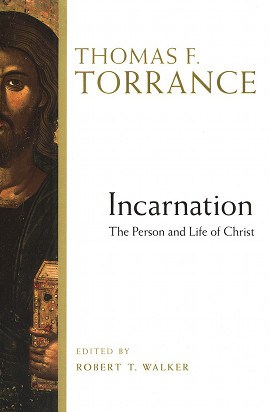
  Theology is a historical practice. We’ve been reading the Bible and thinking about it for a long time. While that doesn’t entirely rule out advances, it does mean we shouldn’t be so surprised when we find that some of our modern studies (biblical, systematic, and practical) are at times only catching up or reworking old variations on a theme that’s been played throughout the history of the church. I’ve said something like this before, but I’ve been reminded of it recently with the recent works on Christology (teaching about Christ) in New Testament studies I’ve been digging into lately.
 Last year I had the privilege of studying 1 Corinthians with my college students, or, as I like to call it, “The Book of Very Hard Sermons.” Among the most difficult and rich texts to preach from is chapter 10, where Paul is wrapping up a lengthy discussion about whether church members ought to grab a bite to eat with their pagan neighbors at the local temples. While I knew the passage had fascinating and challenging implications for issues like the sacraments (10:1-5, 14-22), temptation (10:6-13), other religions (10:14-22), and Christian liberty (10:23-32), I hadn’t fully grasped their relevance for the issue of Christology in the New Testament.
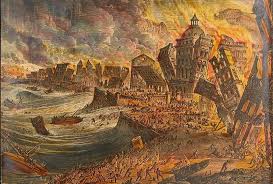 Evil and theodicy are central to the storyline of the Bible. Indeed, they are central to much of the great secular and especially religious literature in history. Theodicy, for those unaware, is the term coined (or simply popularized) by Leibniz referring to the sort of rational justifications or explanations given for the co-existence of evil and God (or the gods). Antti Laato and Johannes C. de Moor’s massive, edited work Theodicy in the World of the Bible is a collection of essays dedicated to exploring the various sorts of theodicies on offer both in the Ancient Near Eastern texts (ranging from Sumerian, Assyrian text to 2nd Temple Jewish text) surrounding the world of the Bible as well as the biblical materials themselves (both Old and New Testaments). They do so both for historiographical as well as properly theological reasons, calling on specialists to describe, critique, and retrieve the perspectives of the ancients for reflection today.
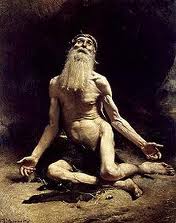 Most of Christian theology, one way or another, is caught up with the problem of evil–what it is, where it comes from, how will it be defeated, and how do we live with it in this world. God’s providence, though, is one of those doctrines that seems to uniquely impinge on the question of evil. How could a good, all-powerful God allow the amount and kinds of evil we see and experience in the world? Is it possible to speak of his control and sovereignty, his foreknowledge and wisdom, in a way that’s consistent with the world as we know it.
 Reformedish