Diognetus on Christ’s Atonement (Or, a Rather Reformed Father)

christ pantokratorThe Epistle to Diognetus is a brief, but powerful theological treasure from the early Christian Fathers. In one brief chapter the anonymous Disciple answers the question, “Why was the Son sent so late?” with a condensed account of Christ’s work of salvation on our behalf. I present it here without much comment except to say, despite the allegedly vast differences between Patristic and Reformation theologies of salvation, if I didn’t know better you could have told me Calvin or Luther wrote this:

As long then as the former time endured, He permitted us to be borne along by unruly impulses, being drawn away by the desire of pleasure and various lusts. This was not that He at all delighted in our sins, but that He simply endured them; nor that He approved the time of working iniquity which then was, but that He sought to form a mind conscious of righteousness, so that being convinced in that time of our unworthiness of attaining life through our own works, it should now, through the kindness of God, be vouchsafed to us; and having made it manifest that in ourselves we were unable to enter into the kingdom of God, we might through the power of God be made able.

But when our wickedness had reached its height, and it had been clearly shown that its reward, punishment and death, was impending over us; and when the time had come which God had before appointed for manifesting His own kindness and power, how the one love of God, through exceeding regard for men, did not regard us with hatred, nor thrust us away, nor remember our iniquity against us, but showed great long-suffering, and bore with us, He Himself took on Him the burden of our iniquities, He gave His own Son as a ransom for us, the holy One for transgressors, the blameless One for the wicked, the righteous One for the unrighteous, the incorruptible One for the corruptible, the immortal One for them that are mortal.

For what other thing was capable of covering our sins than His righteousness? By what other one was it possible that we, the wicked and ungodly, could be justified, than by the only Son of God? O sweet exchange! O unsearchable operation! O benefits surpassing all expectation! that the wickedness of many should be hid in a single righteous One, and that the righteousness of One should justify many transgressors! Having therefore convinced us in the former time that our nature was unable to attain to life, and having now revealed the Saviour who is able to save even those things which it was [formerly] impossible to save, by both these facts He desired to lead us to trust in His kindness, to esteem Him our Nourisher, Father, Teacher, Counsellor, Healer, our Wisdom, Light, Honour, Glory, Power, and Life, so that we should not be anxious concerning clothing and food.

–The Epistle to Diognetes, Chapter IX.—Why the Son was sent so late.

You can read the whole epistle here.

Soli Deo Gloria

Mere Fidelity: What’s Right (and Wrong) with ‘Relatability’

Mere FidelityThis issue we take up the issue of ‘relatability’ in literature taken up by Ira Glass and Rebecca Mead. Do we need literature to be immediately relatable? Do I need a story about a 28-year old college pastor in order to have a story I can connect to? Does the Bible have to give us characters that are immediately within our reach, or is it okay that we have to work to get into the narrative?

As always, feel free to share.

Soli Deo Gloria

Deal Gently with Bruised Reeds

bruised reedThinking about Robin Williams’ passing I was reminded of this text in Isaiah, speaking of the ministry of the coming Servant of the Lord:

“a bruised reed he will not break,
and a faintly burning wick he will not quench” (Isaiah 42:3)

Calvin commenting on the text says:

“…This is what he means by the metaphor of ‘the bruised reed,’ that he does not wish to break off and altogether crush those who are half-broken, but, on the contrary, to lift up and support them, so as to maintain and strengthen all that is good in them…Isaiah ascribes to Christ that forbearance by which he bears with our weakness, which we find to be actually fulfilled by him; for wherever any spark of piety is seen, he strengthens and kindles it, and if he were to act towards us with the utmost rigor, we should be reduced to nothing. Although men therefore totter and stumble, although they are even shaken or out of joint, yet he does not at once cast them off as utterly useless, but bears long, till he makes them stronger and more steadfast.”

As Christians we are to deal gently with the broken and mournful. It is in this way we follow the Christ we have in the gospel. We follow a Messiah who was a man of sorrows, well acquainted with the painful way of the world we live in. Indeed, it’s precisely to bring comfort and relief to those who mourn that he took up his own cross; he came that he might end their suffering in his own.

If you haven’t already read it, I’d also point you to Alan Noble’s beautiful piece “When Existence Becomes Seemingly Impossible.” He concludes:

What I want to say is that life is harder than most of us will let on, and probably the deepest struggles we’ll face will be silent and petty — things like choosing to get out of bed and get dressed. Sufficient for the day is the evil thereof, but so too is Christ’s Grace. So, get up, when you can, and carry on. Rest your burdens on He who loves you, and turn to the pilgrims alongside you. Some days, rising out of bed is a great act of worship. And when you can’t get up, let those around you bear you up as Christ’s body, always remembering that you are loved. And then, carry that mercy and grace to your neighbor, who needs it no less.

Soli Deo Gloria


Legit Ladies of the Exodus

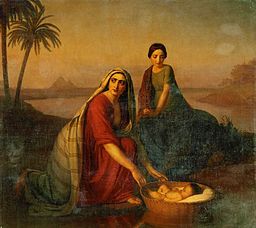
moses motherI love noticing layers and dimensions to the narratives of Scripture that I haven’t seen before. I was particularly edified the other day when reading an older post by my Mere Fidelity compatriot, Alastair Roberts, on the early chapters of Exodus. Among other things, he takes some time to highlights what a dominant role the godly, courageous women play early on in the story. I thought it was worth quoting at length:

Throughout Exodus 1 we see the fertility and liveliness of the children of Israel and the thwarted efforts of Pharaoh to arrest their growth. First, Pharaoh afflicts the Israelites, setting taskmasters over them, and forcing them to build supply cities. Later on the description of the process of making bricks will recall the building of Babel in Genesis 11. Pharaoh then speaks to the Hebrew midwives, instructing them to kill the sons and spare the daughters. The killing of the sons prevented the children of Israel from defending themselves or challenging the Egyptians, while the daughters would be spared for Egyptian men. Once again we see a threat to the promised seed and to the woman by the serpent/dragon figure. The dragon wants to kill the seed that threatens him and use the woman to produce his own seed.

The Hebrew midwives, like the godly women of Genesis, deceive and lie to the tyrant. The women of the Hebrews are contrasted with the Egyptian women, who lack their vigour. The sense is of a divinely given life that is continually outpacing the death-dealing tyrant that is fruitlessly seeking to overtake and arrest it. Having failed with the midwives, Pharaoh then instructs his people to kill every Hebrew baby boy, while saving the daughters alive. The fact that midwives are mentioned should also alert us to the fact thatIsrael is about to undergo a national birth.

It is important that we recognize that this story, as in the case of other great stories of Exodus, focus at their outset on faithful women (Rachel and Leah, Hannah, Mary and Elizabeth). Exodus 1 and 2 are all about women and especially daughters – the Hebrew midwives, the Hebrew mothers, the daughters of the Israelites, Jochebed, the daughter of Levi (2:1), Miriam, the daughter of Jochebed (v.4), Pharaoh’s daughter and her maidens (v.8), and the seven daughters of Midian (2:16). Our attention is typically on the slain sons and on Moses, and we miss the crucial role that the women play in the story.

It is the women who outwit the serpent, Pharaoh, and mastermind the salvation of the Hebrew boys. It is Jochebed and Miriam who bring about Moses’ salvation and the daughter of Pharaoh who rescues him. The place of women in the narrative will be important as we go along. Having registered the importance of this detail, we will remark upon its presence at various points as we proceed.

The women and the seed are in direct conflict with the tyrant because the story of the Exodus grows out of the enmity established between the woman and her seed and the serpent and his seed in Genesis 3:15. Until Moses grows up, the only man really active within Exodus is the greater serpent, the dragon Pharaoh. Exodus 1:15—2:10 is a story of Eve and the dragon.

Yes, when we think of heroes of the faith, there are a lot of mens’ names on that list. But we shouldn’t for an instant forget the story of the Gospel is one that includes both men and women. We have a great many fathers in the faith, but we also have some really, really legit mothers as well.

Soli Deo Gloria

“Do I Have To Go To Church to Be a Christian?” A Few Rough Thoughts

church“Do I really have to go to church to be a Christian?”

I think just about every Christian has either asked or been asked that question at some point in their time in the faith. For reasons too numerous to list right now, we live in a non-committal age about these things. We’re busy with our work lives, schedules, amusements, children’s sports, video games, sleep, and so forth. What’s more, generally speaking, religion is generally a private matter for Americans, and so when we hear that we have a “personal relationship with Jesus”, we tell ourselves that means “private” and nobody else’s business, certainly not that bunch of strangers up the street at church.

On top of that, Evangelicals with a youth-group level understanding of justification by faith tend to think that to require something like church attendance is a denial of grace itself. The question of whether or not salvation is riding on church attendance turns into the idea that it’s sort of an optional add-on.

As the issue’s been on my mind a lot lately, yet without any real, over-arching thesis, I thought I’d simply offer up an assortment of rough-shot answers sort of cobbled together in order to deal with the initial question. So here goes.

Obedience 

The other day, someone asked Tim Keller in a Twitter Q&A, “Can a person be a Christian without being a member of a church?” to which he responded:

The text in question reads:

 Have confidence in your leaders and submit to their authority, because they keep watch over you as those who must give an account. Do this so that their work will be a joy, not a burden, for that would be of no benefit to you. (Heb. 13:17)

The point is very simple. In the Bible, Christians are commanded to submit and listen to the elders and deacons (pastors, etc) whose job it is to guide, guard, and love them. Well, if you’re not a member of a church that has those leaders, you can’t very well submit to them now can you? The implication is that everyone who has professed faith in Christ is also simultaneously a part of a local body of believers. (For 11 more reasons membership matters, see here.)

The same point could be made with respect to attendance in the local body:

And let us consider how to stir up one another to love and good works, not neglecting to meet together, as is the habit of some, but encouraging one another, and all the more as you see the Day drawing near. (Heb. 10:24-25)

The, seemingly, clear command of Scripture is that believers are supposed to be regularly gathering together for the express purpose of encouraging on another, stirring each other up to love and good works in the Lord. Sounds a lot like going to church, doesn’t it? If you read the rest of the New Testament, the assumption seems to be the same. There’s no contingencies imagined where a Christian would be profitably separated off from the body for a time. Indeed, simply asking the question, “What would Paul or John say about the necessity of gathering with believers in worship?” makes the whole thing rather obvious.

Still, yes, theoretically, I’d agree you can be a Christian, be regenerate, and so forth, and not currently be in regular attendance in church. But, and this is Keller’s point, there is no way you can claim to be a Christian who is actually trying to obey Jesus and grow in godliness without it. What’s more, you can’t say you’re striving to love Jesus either. Jesus says “If you love me, you will keep my commandments” (John 14:15), which include those delivered by his apostles in the NT.

And here’s the kicker, the point where my “yes, but you’re not obedient” turns into a “maybe not.” John tells us that those who are born of God don’t “make a practice of sinning” (1 John 3:9), or disobeying God’s commands. In other words, while we may struggle with sin, believers will not set themselves in long-term hostility to God’s commands. Yet if we continue to look at God’s commands to gather with other believers and say, “You know, I see what it says, but I don’t agree, and I’m not going to obey because I don’t think it’s necessary”, there’s a real chance that disobedience is evidence of a lack of saving faith. If you’re a believer who is no longer hostile to God’s law (Rom. 8:7), the commands of God exert a force that, in the long-term. leads to greater obedience. In which case, one way or another, your butt’s gonna end up back in the pew.

4 More Reasons

The other day I wrote a piece on “dating advice” for Christians. Essentially I said that one of the key markers of a godly relationship was your commitment to the other person’s involvement in the local body. I then listed four reasons why you want your significant other seated in the pews weekly. It turns out they’re just good reasons to go to church in general, so here they are in an abridged form:

  1. Sit under Real Preaching. I don’t have the kind of space necessary to speak of the manifold benefits of sitting under regular preaching, but I’ll list a few.
    1. First, it convicts of sin and humbles us before Christ. A heart that doesn’t submit to listening to the law will be hardened against any call to repentance…
    2. Second, it reminds us of the gospel. Unless regularly reminded of the grace of Christ, the heart will begin to sink into sin, go into hiding, and find its deepest affirmation in things other than Christ…
    3. Third, the Word of God truly preached brings us by the power of the Spirit into the presence of Christ.
    4. Finally, we need to hear an outside word that we can’t quickly rationalize, twist, distort, or ignore.
  2. Meet with Other Believers…
  3. Receive the Lord’s Supper. Whether you’re a Baptist, Anglican, or Presbyterian, you want to be regularly reminded that Christ alone is the source of spiritual life—he died, rose again, and our union with him is the only true food for your soul. We need to feast on this truth regularly, or we will be tempted to draw strength from other, lesser sources… (Additional note: this one, more than any other, simply cannot take place outside the regular gathering. Scripture expects we will be celebrating the Lord’s Supper with other believers in a community that knows your confession.)
  4. Worship God Alone. Our souls need worship. Yes, everything we do under the sun is worship. Work is worship. Play is worship. Sleep is worship. At the same time, it’s important to recognize that the corporate gathering of the people of God, in receiving the supper and lifting our voices in song, prepares and shapes the desires of our hearts to focus on God throughout the whole week.

Can’t v. Won’t 

At this point an objection should be noted: “What if you can’t get to church? What if you live in a country that doesn’t have any churches?”

Well, then I’d say we’re dealing with a very special case. I think there is a very real difference between “can’t” and “won’t”, though. Sometimes we think we can’t, when the real issue is that we won’t. For many of us, we “can’t”, not because there are no churches around, but because there are no churches that we like around. We either don’t like the vibe (too big, too small, too old), or maybe something more valid such as issues with the theology (too Reformed, too Wesleyan, too Dispensationalist.) Still, going by the state of the churches Paul was writing to in the New Testament (debauchery, random heretics running around, etc.) the gathering of the body is so important that even some (very) serious flaws, let alone preference issues, shouldn’t be an obstacle to meeting together.

Now, if you’re actually in an area with literally no churches and no possibility of getting to one, then, that’s a different story. I also think there are some tragic situations, where after spiritual abuse, some time in therapy and a little space to heal, including a temporary break from more formal attendance, can be appropriate*. That said, according to the New Testament, this is far from ideal or normative. The person in the US looking for a reason to not have to go to Church can’t really build a theological argument based on that one guy on an island somewhere who doesn’t have an option. Really, the more that I think about it, unless you manage to move into an area with no churches as a missionary, it’s unlikely you’re going to come to faith without at least one or two other believers around that you can meet up with regularly.

On that point, my buddy Gavin Ortlund had a stunning point in his review of a book that’s actually entitled How to Be a Christian Without Going to Church:

The fact that cultural trends function with theological authority for Bean may explain why some of the reasons she provides for abstaining from church feel self-indulgent (not to mention rather Western and suburban). At one point she observes, “The effort it takes for over-committed, overextended people to get to a 90-minute service or give time to programs and church events can be too much. Sometimes staying home on a Sunday morning seems like the best way to remain sane” (57). In earlier times in Christian history, and in other places of the world today, believers risk their very blood in order to worship together. This is the mandate of Hebrews 10:25, where in a time of persecution “not neglecting to meet together” is part and parcel with holding fast to the faith.

I feel grieved and embarrassed wondering how Christians outside the contemporary West—Christians who walk a dozen miles to meet with their church, or who meet underground for a 10-hour service—would feel about the idea that sitting in an air-conditioned sanctuary for 90 minutes is just too difficult.

Gavin’s right on the money. There are believers around the world who risk their lives to meet in secret with 4 or 5 other believers in an apartment to read the Scriptures and sing to Jesus no louder than a whisper, while we complain that Sunday morning is “the only day I get to sleep in, you know?” This is hardly “take up your Cross and follow me” stuff we’re talking about.

Inertia and Magic Neutral Time

Make no mistake, this is an urgent matter. This is not the kind of thing where you can say, “You know, I know it’s important, but I just can’t get to it right now. When things calm down, then I’ll make time to gather.” When you do this, you’re operating on the “magic neutral time” principle:

…that faith is unchanging, timeless, and perennial. Your walk with Jesus is something you can leave alone for a while and, once you’ve done your own thing for a bit, pick up again. “Neutral time” is like calling timeout so you can go the restroom or take a break in the middle of the game; when you come back the score, time, and possession is just like where you left off last.

I call this explanation “magic” because basically nothing else in life works this way. If I decided, “You know, for the next few months, I’m not going to watch my diet or work out or take vitamins or anything. Then I’ll just pick it up again and be right back where I am now.” If I think that’s how it will work, I’d be sorely deluded.

See, when it comes to the spiritual life, inertia is a real thing. It’s kind of like the gym. One week off here and there is fine. It happens. But when one week off becomes two, two becomes a month, a month becomes a year, and so on. The less you go, the more you become accustomed to the time, or fill it in with other things, or things like guilt and shame start weighing in and make thing the thought of going even more oppressive. This is not an exaggeration; I’ve seen this many, many times, and it has long-term, wide-spread effects throughout your life, beginning with your relationship with Jesus.

Conclusion

I suppose this post has served more of a negative purpose. Not in the sense that my tone was super negative, but that I didn’t spend quite as much time making a positive case for the beauty, goodness, and blessings of membership and regular worship, so much as ruling out a number of unhelpful ways of thinking about the issue. Ah well. While the positive case should be given priority (and, indeed, forms most of the bulk of the New Testament’s witness about the necessity of the Church), planting the seed, so to speak, sometimes you need to clear the brush too.

While we could go on for a few more pages here, you get the point. “Can you be a Christian and not go to church?” I suppose the better question is, “What kind of Christian are you trying to be?”

Soli Deo Gloria

*To those who have been harmed in church, I know your pain is real. My sister is an MFT who loves to give care to those who have been wounded in the church. Let me put it this way, though, if you’ve ever been harmed by medical malpractice, eventually you have to go back to the doctor to have him fix what the first one damaged, right? There are healthy churches out there, ones that can deal compassionately and graciously with the wounded and bring the healing words of Jesus to bear on your life.

Elisha Ben Kenobi and the Power of God

The other night I taught my students on subject of the power of God out of 2 Kings chapter 8. What follows is a cleaned up, very abridged version of the talk.  

Here we encounter a funny episode in the ministry of Elisha, demonstrating the Lord’s favor and supernatural power working through him. Israel and Aram were at war with each other, and apparently the unnamed king of Aram kept sending raiding parties into Israel. Time and again, though, Elisha kept warning the king of Israel of his plans and thwarting Aram’s plans. Finally, the king of Aram had enough, found out Elisha’s location and sent a platoon of men and chariots to capture Elisha in Dothan, and this is where we pick up the text:

When the servant of the man of God rose early in the morning and went out, behold, an army with horses and chariots was all around the city. And the servant said, “Alas, my master! What shall we do?” He said, “Do not be afraid, for those who are with us are more than those who are with them.” Then Elisha prayed and said, “O LORD, please open his eyes that he may see.” So the LORD opened the eyes of the young man, and he saw, and behold, the mountain was full of horses and chariots of fire all around Elisha. And when the Syrians came down against him, Elisha prayed to the LORD and said, “Please strike this people with blindness.” So he struck them with blindness in accordance with the prayer of Elisha. And Elisha said to them, “This is not the way, and this is not the city. Follow me, and I will bring you to the man whom you seek.” And he led them to Samaria. (2 Kings 6:15-19)

Now, this is amusing on couple of levels. First, there’s the reaction of of the servant compared to Elisha. This man opens the door, probably fresh from bed, looks up, and see the place surrounded by soldiers armed to the gills. Then Elisha says, “Nah, don’t worry about it, we got more guys.” At that point, if I’m the servant, I’m looking out and saying, “Elisha, I’m looking at the jerseys and they all say ‘Aram’ on them, what are you talking about?” At which point Elisha prays and has his eyes open, and sees the fiery chariots.

obi-wanSecond, Elisha pulls a total Jedi with the blindness above:

Elisha: “This is not the city you’re looking for.” (hand waves)
Aramean Storm Trooper: “This is not the city I’m looking for.”
E: “You want to follow me now” (hand waves)
AST: “I want to follow you now.”

Beyond the humor, though, you see the difference between the reactions of the Elisha and the servant came down to one thing: Elisha knew the power of God and the servant didn’t.

Knowing the power of God is at work on your behalf leads to a radically different approach to way believers live their lives. This is why Paul was so determined that the believers in Ephesus know what was the power at work on their behalf:

For this reason, because I have heard of your faith in the Lord Jesus and your love toward all the saints, I do not cease to give thanks for you, remembering you in my prayers, that the God of our Lord Jesus Christ, the Father of glory, may give you the Spirit of wisdom and of revelation in the knowledge of him, having the eyes of your hearts enlightened, that you may know what is the hope to which he has called you, what are the riches of his glorious inheritance in the saints, and what is the immeasurable greatness of his power toward us who believe, according to the working of his great might that he worked in Christ when he raised him from the dead and seated him at his right hand in the heavenly places, far above all rule and authority and power and dominion, and above every name that is named, not only in this age but also in the one to come. And he put all things under his feet and gave him as head over all things to the church, which is his body, the fullness of him who fills all in all.

(Ephesians 1:15-23)

You see that? One of the main things that Paul is praying for this young, struggling church to know is the muscle God is flexing on their behalf! What is the power the God is leveraging? Resurrection power!

Paul says that the power that broke through the chains of death that were holding Jesus is at work for those who believe! The power that raised Jesus from the dead and seated him at the right hand of the Father is being exercised on your behalf! In fact, it’s precisely because Jesus is seated at the right hand of the Father ruling over all things–whether political powers, economic powers, and every other power you can think of–that we can have hope that he has power over the enemies that threaten us.

See, the young man was scared until he saw the power that God was leveraging for him and Elisha. But we have seen what the young man could not, we have seen God do something even greater. Kierkegaard has a fabulous quote on this in his journals:

God creates out of nothing. Wonderful you say. Yes, to be sure, but He does what is still more wonderful: He makes saints out of sinners. 

Every single one of us who have place our faith in Jesus and been united with him by the Spirit has experience personally the miraculous, regenerating power of God. Every Sunday you sit in the pew, you’re sitting next to a miracle. You’re sitting next to someone who used to be dead, but now is alive.

So what happens when you know the power of God? Plenty, but I think at least three things mark the lives of believers who know the power of God.

1. Belief in God’s power means belief in prayer.

The first thing that’s going to happen is that you’re going to pray more. Look at Paul. Paul is right here praying for the Ephesians to believe in the power of God, but he only prays that because he believes God has that kind of power. Right? That’s what we see in the story of Elisha as well.  Elisha prays for God to save because he knows the power of God to save. As James says, “You have not because you ask not”  (James 4:2). God can change things. He can improve relationships. He can heal the sick. He can lift our spirits. He can save marriages. He can save the lost. And the believer who knows this will ask in faith and begin to receive these things in accordance with God’s wisdom.

2. Belief in God’s power means trusting transformation/holiness. 

Connected to this, believing in God’s resurrection power for us, means that we have actual hope for holiness in this life. A lot of us live with this sense that, “Yes, I’m a sinner who needs to be saved. Yes, God has paid for my sins in Christ. Yes, I’m forgiven and one day I’ll be set free from sin–when I die.” But what a lot of us don’t realize is that even now God is at work and has given us the power to be transformed into the likeness of Jesus. This is what Paul tells us in Romans 8:

You, however, are not in the flesh but in the Spirit, if in fact the Spirit of God dwells in you. Anyone who does not have the Spirit of Christ does not belong to him. But if Christ is in you, although the body is dead because of sin, the Spirit is life because of righteousness. If the Spirit of him who raised Jesus from the dead dwells in you, he who raised Christ Jesus from the dead will also give life to your mortal bodies through his Spirit who dwells in you.So then, brothers, we are debtors, not to the flesh, to live according to the flesh.

(Romans 8:9-12)

You don’t actually have to stay stuck where you are. God not only saves us from the guilt of sin on the Cross, but from the power of sin through his Resurrection gift of the Spirit. You don’t actually have to keep sinning over and over, never moving forward, never getting freedom, never getting better. Through union with Christ, you have the Spirit of life at work in you, enabling you to make actual progress in holiness and freedom from sin.

3. Belief in God’s power means allowing ourselves to be weak.

A lot of us live like we have to be strong all the time. That’s the American way, right? We’re rugged individualists. We don’t need help. We’re as emotionally composed, complete, and stable as our best Instagram shots say we are. Except that’s a lie. At least for a lot of us. The spiritual reality is that we’re all weak. We’re all broken. We’ve all got bits falling off and in need of repair.

Paul says that the gospel teaches us that we see God’s strength come into its own most in our weakness:

But he said to me, “My grace is sufficient for you, for my power is made perfect in weakness.” Therefore I will boast all the more gladly of my weaknesses, so that the power of Christ may rest upon me. For the sake of Christ, then, I am content with weaknesses, insults, hardships, persecutions, and calamities. For when I am weak, then I am strong. (2 Corinthians 12:9-10)

Paul knew that it was only when we stop trying to be strong, complete, whole, and everything the way the American dream says we should, we actually tap into the way of strength. See, when I’m focused on being strong, I’m not relying on God’s power. When I’m fixated on my own natural solutions to things, I don’t give God any space to work supernaturally in my life. The upside-down reality of the gospel is that it’s only when we begin to admit our weaknesses, when we proclaim our inadequacies, that we can see the omnipotence of God.

Pray that God would open your eyes to the mighty power he is leveraging on your behalf, that you might begin to live with the confidence, joy, and peace of Elisha before the Lord.

Soli Deo Gloria

Mere Fidelity: What Adoption Is and Isn’t

Today on Mere Fidelity, we take up the issue of adoption both as a process and as a doctrine in conversation with O’Donovan.

Mere FidelityWe’re drawing on the following text from Oliver O’Donovan’s Begotten or Made:

Adoption is not procreation, and does not fulfil the procreative good of marriage. It is a charitable vocation indicated to childless couples by the personal tragedy of their deprivation in this area. And although it may richly compensate for the sorrow and satisfy the desire to nurture and educate children, it is still a substitute for procreation rather than a form of procreation. This is not to belittle or demean the adoptive relationship. Indeed, it might be said to praise it on altogether a higher level, inasmuch as it points beyond the natural goods of marriage to the supernatural good of charity. But adoption cannot be taken as a precedent for interpreting procreation as a simple enterprise of the will. (page 40)

The iTunes feed is here, if you’d like to subscribe (thanks to everyone who has reviewed us so kindly) and an RSS feed for the show lives here.

Soli Deo Gloria

Why Should Evangelicals Care About Gungor’s Doubts? How Should They Talk About Them? (CaPC)

gungor-622x414Earlier this year, Jars of Clay’s Dan Haseltine caused a bit of an uproar after he tweeted some questioning things concerning same-sex marriage. Now it appears that Gungor is the latest popular evangelical musician to be caught in the middle of a theological controversy, thanks to some interview comments and his project with The Liturgists, a group that includes people that evangelicals often find controversial (e.g., Rob Bell, Rachel Held Evans).

World Magazine sounded the alarm:

The band’s new ideas are more clearly set forth in a blog post titled, “What do we Believe?” Here the author chafes that a close friend no longer considers him a Christian: “Why? Not because my life looks like Jesus or doesn’t look like Jesus. But because of my lack of ability to nail down all the words and concepts of what I exactly BELIEVE.” Then he nails down exactly what he doesn’t believe—in Adam and Eve or the Flood. He has “no more ability to believe in these things then I do to believe in Santa Claus.”

This theological ambivalence is on display on Gungor’s latest project—a collection of EPs released under the name The Liturgists. Working with Pastor Rob Bell—author of Love Wins—and various poets, Gungor creates ambient music to accompany spoken word poems on religious themes.

Predictably, the conservative Internet blew up. Tweets were tweeted, tears were shed, and sad/angry farewells were bid. Also, from the other side, mournful recriminations against the narrow-mindedness of the aforementioned were issued as well.

I suppose I should have seen it coming. Gungor’s been buddies with Bell and recommending his books for a while, and when I saw The Liturgists’ God Our Mother EP a while back, I thought “Well, that’s just asking for some sort of reaction.” Still, despite the lack of surprise I’m feeling, it seems appropriate to reflect on some of the institutional and pastoral realities that these incidents reveal.

You can go read them at Christ and Pop Culture.

Soli Deo Gloria

Stealth Calvinist Ninjas (Or, Throw Me a Bone Here)

The title of this blog is ‘Reformedish’, and while I’ve traveled deeper into the Reformed tradition since its inception, I’ve tried to remain something of a “friendly Calvinist”, as my buddy Morgan put it. I know that the Christian tradition is broad and extends widely beyond the Reformed world. What’s more, there are a great number of non-Reformed theologians–Wesleyans like Fred Sanders, Thomas Oden, and my own prof Donald Thorsen–whose work I profit from greatly and would commend to anyone.  In other words, I try not to be “unreasonably Calvinist” about things. I don’t think I’ve written a post in the two years I’ve been blogging picking on, or even arguing with Arminians. I’ve even been the guy pleading with my Reformed compatriots to extend grace, be humble, and so forth.

Calvinist ninjas trained by John Piper to come take over your church.

Calvinist ninjas trained by John Piper come take over your church.

I say all that to caveat my comments on Roger Olson’s recent foray out from scholarship (some of which I honestly have found very helpful, insightful, and even-handed) into conspiracy-theory: “Beware of Stealth Calvinism!” (Subtle title, I know.) In the post he outlines a scenario in which Calvinists are sneakily trying to take over and convert innocent Arminian churches under the guise of combating Open theism (the view that God does not have an exhaustive foreknowledge of the future). What apparently is happening is that Calvinist pastors are drafting belief statements that are putatively designed to rule out an open theist view of foreknowledge (or lack thereof), and in the process are sneaking in statements that actually rule out Arminianism as well:

Under the guise of attempting to exclude open theists the denomination has asked its member churches to affirm the following:

We believe God’s knowledge is exhaustive; that He fully knows the past, present, and future independent of human decisions and actions. The Father does everything in accordance with His perfect will, though His sovereignty neither eliminates nor minimizes our personal responsibility.

…my main objection is that no Arminian should sign such a statement and any church that adopts it is automatically affirming Calvinism—whether they know it or not. Only a Calvinist (or someone who believes in the Calvinist view of God’s sovereignty) can say that God’s knowledge is independent of human decisions and actions. Even a Molinist cannot say that and mean it.

Now this, Olson takes it, can only be an act of incompetence, or is evidence of a nefarious intent to convert unsuspecting Arminians to Calvinism. He continues:

This appears to me to be another case, on a grander scale, of stealth Calvinism.
…This statement (above in italics) is probably being promoted as a guard against open theism, but it’s much, much more than that. If adopted by my church I would have to give up my membership—not because I’m an open theist (I’m not) but because whether intentionally or not it excludes classical Arminianism. It makes any church that adopts it automatically, de facto, Calvinist.

Arminians—beware! This tactic is continuing among evangelicals. Privileging Calvinism is already the case in many evangelical organizations that have always included both Calvinists and Arminians.

Olson’s a competent theologian, so I won’t argue with his contention that he’d have to give up his membership at the church should they adopt the statement. I suspect some theologians might dispute his judgment and say that an Arminian could affirm it, but I’ll let that alone for more qualified hands than my own.

What I want to point out in the middle of this is the bald-faced cynicism of the post. Here we don’t simply have a theological correction, dispute, or caution about inadvertent theological drift. No, here we have a warning about Calvinist tactics in general, about their alleged strategic maneuvering to crowd out and stamp out divergent thought by “stealthily” taking advantage of people’s ignorance.

I know I’m a lot younger, but if we’re dealing in anecdotes, I suppose part of the reason I find the whole thing silly is that three out of the four Christian colleges nearby me, including my own seminary, are explicitly non-Reformed, and the fourth is definitely blended. Fuller has, maybe a few Reformed theologians, certainly not of the militant sort. They’re not cranking out Calvinists ready to take over churches there. But maybe that’s just a Southern California thing.

In any case, like I said, I’ve been the guy who’s written the “Hey Reformed guys, stop being jerks so people will pay attention” post. I’ll be honest, I don’t regret writing it for a moment. I stand by it and would continue to issue a plea for helpful humility in conversation with our brothers and sisters in “other rooms of the house” as Lewis put it. What I will say is that posts like these give the lie to the idea that Calvinists are the only ones running around making accusations, imputing false motives and so forth, about their fellow believers. I don’t doubt there’s some churches here and there where something like this has happened. I mean, just about everything has happened in church before. But Olson is here taking about some widespread conspiracy to take over churches by subterfuge and deceit. Honestly, it’d be silly if it weren’t so shameful–especially for a scholar of his stature. At best it’s uncharitable, and at worst it’s cheap slander.

I’m reminded of a post by Todd Pruitt a while back writing on the ‘mean Calvinist’ trope:

But I don’t buy the hype. I suppose we could trade anecdotes. For example I could write posts about the fact that the meanest and most self-righteous people I have ever encountered are Arminians. But what would that accomplish? Honestly, some of these posts sound a bit like, “I thank you Lord that I am not like this mean Calvinist.” What is more, until prominent Arminian theologians stop publicly comparing “the god of Calvinism” with Satan, then the reports of mean Calvinists are going to ring a bit hollow.

(By the way, Olson’s one who keeps going on about the God of Calvinism as “the devil”, or a “moral monster.” For an alternative approach to arguing with Calvinists, see this essay by Fred Sanders.)

Where am I going with all of this? Well, I guess what I’m saying is, if you want Calvinists or Reformed types to cool it, be charitable, and so forth, maybe don’t give credence to, or traffic in this sort of thing. Calling for a unified line of attack on the other side usually doesn’t do much for the two linking arms for the sake of the gospel.

In other words, I’ll do my part, but throw me a bone here?

Soli Deo Gloria

“I Used To Believe X For Reason Y…” And the Failure of Intellectual Imagination

thinking homerWe seem to live in an age that lacks intellectual imagination; at least when it comes to the thought processes of others. One of the most glaring (and personally annoying) examples of this is on display in many modern “intellectual conversion” narratives. It could be about any issue really, whether politics, or religion, or broader ethical issues. It’s very common to find a thread along the lines of:

“I used to believe position X for stupid, hateful Reason Y.  Reason Y must be only reason to believe position X.”

While it’s the kind of argument you can find in just about any type of conversion article, I see it most often with stories about conversion on the issue of same-sex marriage in the church, or just in the culture at large. It’ll be an article by a post-Evangelical, or someone else, that goes something like:

You know, I used to be like the rest of my coreligionists. I used to hate gays, and was taught that they were worse than anthrax. I was very insecure about the issue because I felt that they threatened my whole way of being. If I admitted they were properly human, or whatever, then, my whole world would collapse. But that was because I’d never actually met one. Now I have and I realize that they’re kind, gentle, loving people. Also, I found out there are books with Christians who say that same-sex relationship are okay according to the Bible. I never heard any of these arguments, but now I have. So, I’ve changed my mind.

Now, I don’t bring this up to settle the issue of same-sex marriage here. (Honestly, if you try to argue about it in more than a tangential way in the comments, I’m simply going to ignore it or delete it. That’s not the point.) Nor am I saying there isn’t a case to be made along those lines. What I am saying is that the move that comes next is simply a failure of intellectual imagination. You see, what often follows is something like:

See, that’s where people are. This is the only place they can be. These are the only reasons that someone could hold the position that I used to hold.

Because they used to be hateful and insecure in their former intellectual position, everybody must be. Because their opinion was held on the basis of flawed, prejudiced reasoning, everybody’s must be. What never seems to occur to them is that you could hold a moral opposition to same-sex marriage all the while having no lack of personal warmth, goodwill, and so forth towards gay people. Or, that you could read some of that same scholarship and simply disagree on other intellectual grounds. And yet that really is the case. It’s like a child who only used to believe the earth revolved round the sun because his mom told him it was spun about by great strings and wires, but upon discovering that there were no strings and wires, thereby came to believe there were no other reasons to believe such a notion.

Again, this happens in other areas too. There’s many an article on Calvinism or Arminianism that covers the same, familiar steps. “I used to be an Arminian because I thought Calvinists were mean and I’d never read Romans 9. But then I read Romans 9 and met a nice Calvinist.” Or, “I used to be a Calvinist, but then Roger Olson told me about free will and John 3:16. If only people would read John 3:16 and read Roger Olson, nobody would be a Calvinist.”  Of course, these are ridiculously simplified, but you get the point.

This, as I said, is a failure of the intellectual imagination, and for reasons I’m not entirely sure of (and I’d love others to weigh in on), it’s one that seems increasingly common. I will say that I’m fairly sure it has something to do with the narcissism of human experience. The story we know best is our own and our human tendency is to shrink the world to fit our experiences. We take our personal stories, and instead of seeing them as one, particular, unique experience, we expand them out and unjustifiably universalize them. Did you have a bad time in a repressive, stale, and abusive Evangelical church? That must be all of Evangelicalism. Did your belief in God’s sovereignty collapse in the face of tragedy? Everybody’s must.

I suppose this is merely another angle on the problem with the absolutizing of personal experience that Alastair Roberts has brought up before, and serves to reinforce his argument that we maybe need to pump the brakes on how much we press the importance of personal narrative in theologizing. Still, I don’t want to entirely rule out the valid place that our own story has to play in the discovery of truth. My friend Preston had a very thoughtful post yesterday on the idea of midrash in exegesis. Ironically enough, though, it highlighted from a different angle the danger that occurs when we place an overemphasis on our own story as the locus of truth and meaning. By assuming everyone’s intellectual experience must be just like ours, we end up invalidating the intellectual and moral experiences of others that don’t fit our paradigm.

This, as I’ve mentioned before, is another reason to prioritize Scripture in our theological reasoning. As Bavinck reminded us, personal confession and experience is inevitably part of our reflections. Still, by focusing our reasoning and reflection on Scripture, we are submitting our own experiences, logics, and so forth, to the only Story or Word, that has any claim to be comprehensive enough to include, correct, and make sense of them all–God’s own.

Well, once again I’ve rambled far longer than I intended. For what it’s worth, don’t be an intellectual narcissist. Before you go extrapolating your own former experiences, thought processes, and prejudices to those who hold positions you used to, stop, have an actual conversation with them. You might be surprised at the results.

Soli Deo Gloria