Gentle Heresy-Hunting with Paul

correctopponentsHeresy-hunting gets a bad rap nowadays. If there’s one thing that nobody wants to be, it’s a “heresy-hunter.” And who can blame them? I mean, cruise around the Internet and you’ll find any number of “discernment” ministries dedicated to finding anybody who doesn’t line up with their particular, historically-contingent, possibly cultish understanding of Christianity and placing them on the “list” with a page dedicated to listing their dubious tweets.

Or again, there’s that guy (and it’s almost always a guy) who spends his time listening to local pastors’ sermons just so he can find that damning 2-second analogy he can email you five pages of footnotes about. Nobody wants to be him, so there’s an understandable recoil. And this is on top of our general cultural aversion to being doctrinaire about matters of religion (unless it’s a food religion, in which case we’re simply being “healthy,” and one can do no evil in the name of health).

All the same, one of the interesting fruits of reading G.K. Beale’s New Testament Biblical Theology a while back, was realizing that there’s a proper place for heresy-hunting in the church. In fact, we have a church office whose task is, in large part, to oversee, guide, and prevent against creeping false doctrine in the church: the Elder. According to Beale, Paul’s teaching on the office of elder in the Pastoral Epistles, is connected to the reality of false-teaching in the end times or “latter days” (p. 820).

Of course, in Beale’s telling, “the latter days” is a description of this time between the first and second coming of Christ. In other words, the many exhortations to guard against false teaching are a permanent and essential function of the elder in Christ’s church (Titus 1:5-16; 1 Tim 1:3-7, 19-20; 4:1-7; 2 Tim. 2:14-18; 23-26; 3:1-13). Shepherds keep sheep from wandering astray, and they guard the sheep against wolves who would ravage them with cunning and destructive teachings about Jesus that would rob them of comfort, joy, holiness, and peace.

I go into how to do that wisdom and gentleness like Paul does over in the rest of the article at For the Church. If you haven’t checked them out, I’d highly recommend it. It’s a great new resource site.

In What Ways Is God our God in the Covenant of Grace?

Opening his lengthy treatment of the covenant of grace in the Institutes, Francis Turretin notes that getting this right is of central importance to theology because it is “the center and bond of all religion, consisting in the communion of God with man and embracing in its compass all the benefits of God towards man and his duties towards God” (Top. 12, Qu. 1, par. I). That certainly doesn’t leave much out does it? But that’s not surprising, is it? Turretin is right. Looking at the biblical storyline, it’s a matter of covenants made, broken, renewed, enforced, and ultimately fulfilled in Christ.

Of course, the central covenant promise in the Scriptures is that “you will be my people, and I will be your God” (Jer, 30:22′ cf. Exod. 6:7; Lev. 26:12). God’s gift to us, in the covenant, is quite simply himself. We will be his and he will be ours. But that raises the question, “How is God our God in the covenant of grace?” not in the sense of, “How is this accomplished?”, but “What is the result?” What goes into God becoming our God? What are the “benefits” of God being our God, so to speak?

In the next section (Top. 12, Qu. 2), among other things, Turretin goes ahead and tries to outline four ways in which God becomes our God in the promise of the covenant. God becomes ours: (1) according to his nature & attributes and persons; (2) according to the communication of goods; (3) according to our conformity to God; and (4) according eternity of good things. The section is rather stunning (and lengthy). While I can barely scratch the surface, in what follows, I’ll try sketch what a blessings Turretin outlines in our possession of God according to these four categories. And when I do, we’ll hopefully begin to see how he can say that the covenant encompasses “all the benefits of God towards man.”

1. According to Nature and Persons. For all Turretin’s strengths as a theologian, he rarely waxes poetic, but this next section is beautiful, so I’ll end up quoting him at length a couple of times. Turretin notes that in reconciliation, we are brought into communion with God. We move from a relationship of opposition to love, we relate to God no longer as an angry judge to us but a Father. In the covenant, we are betrothed to him as a husband and brought under his protection as a King protects his people. Because of this, we receive him as our God according to his attributes. But what does that mean?

God so gives himself to us as to be ours as to all the attributes (conducing to our advantage and salvation). They are well said to be ours by fruition and use because their salutary effects flow unto us. Ours is the wisdom of God for direction; the power of God for protection; the mercy of God for the remission of sins; the grace of God for sanctification and consolation; the justice of God for the punishment of enemies; the faithfulness of God for the execution of promises; the sufficiency of God for the communication of all manner of happiness. And as sin brought innumerable evils upon us, we find a remedy for all in the divine properties: wisdom heals our ignorance and blindness, grace our guilt, power our weakness, mercy our misery, goodness our wickedness, justice our iniquity, the sufficiency and fulness of God our poverty and indigence, fidelity our inconstancy and fickleness, holiness our impurity and life our death.

Okay, so that’s the attributes. But what does it mean for God to be given to us “personally”, or according to the persons of the Trinity? Again, Turretin, at length:

God is ours personally, inasmuch as the individual persons are ours and give themselves to us for accomplishing the work of redemption: the Father electing, the Son redeeming, the Holy Spirit sanctifying. He becomes our Father by adoption when he receives us into his own family and regards, cherishes and loves us as sons (1 Jn. 3:1). The Son becomes ours by suretyship when he offers himself as the surety to make satisfaction for us and as the head, to rule over and quicken us. He becomes ours as a Prophet, revealing salvation by the light of his doctrine; our Priest, who purchases it by his merit; and our King, who applies it (when acquired) by the efficacy of the Spirit. The Holy Spirit becomes ours when he is sent to us and gives himself to us as sanctifier and consoler that he may dwell in us as his temples and enrich us with his blessings, light, strength, joy, liberty, holiness and happiness. Thus our communion is with the Father and the Son and the Holy Spirit (1 Jn. 1:3; 2 Cor. 13:14). Hence, baptism, which is a seal of the covenant, is administered in their name so that we may be consecrated as sons of God, the Father, as members of the Son and as temples of the Holy Spirit and enjoy the blessings flowing from each person–the mercy of the Father, the grace of the Son and the power of the Holy Spirit.*

Already, it becomes apparent what Turretin means when he says that all of the benefits and blessings of God towards humanity are seen in the benefits of the covenant in communion with God. But wait, there’s more!

2. In the Communication of Goods. I won’t do the lengthy quote thing here. Still, Turretin moves on to point out that “He cannot be our God without all things belonging to him becoming ours.” As Paul tells us, all things are ours because we are Christ’s and Christ is God’s and so we have all things in him (1 Cor. 3:21-23). Piling up verse after verse, Turretin shows us how God’s creatures serve us, God’s angels protect us, God’s earth is our inheritance, and God’s promises (for this life and the next) are ours. Every spiritual blessing in the heavenlies is ours because God is our God through the covenant in Christ (Eph. 1:3).

3. In Conformity to God. It would be absurd, though, to believe that God could become ours without our own transformation. Turretin teaches us that God “is not satisfied with pouring upon us the salutary effects of his properties, but wishes further to impress upon us their mark and likeness (as far as a finite creature can bear it) that we may be ‘partakers of the divine nature’ (2 Pet. 1:4) and be like to it (which is the most perfect form of communion).” Here is the beginning of what we might loosely call Turretin’s doctrine of “theosis“, only with a very careful attention to the Creator/creature distinction. Turretin says here that just as the sun shining into a diamond irradiates it with its glory, so does God’s shining splendor fill his children and “makes us shine like many suns” (Matt. 13:43). True communion through the covenant requires conformity to his holy character, as well as happiness, immortality, and glory in body as well as as the soul, which means that our conformity will include our resurrection so that “we shall be like him; for we shall see him as he is” (1 Jn. 3:2).

4. For An Eternity of Good Things. Finally, Turretin tells us that none of these things could make us perfectly happy “unless perpetuity was added to them.” In other words, could you imagine being perfectly satisfied in having all of these things while knowing they that were only for a little while? Because God is unfailingly good, his promise to be our God extends into eternity. “So that as long as God will be God (and he will be so forever), he will also be our god that we may forever enjoy his communion and happiness”, as the Psalmist declares “This God is our God for ever and ever” (Ps. 48:14). And we can be confident of this, not only because of the nature of the promise, but with all the other blessings of the covenant like justification, deliverance from death, adoption, the gift of the Spirit, a new heart, and the resurrection of the body, who can imagine this continuing for only a short time?

I think there’s more than enough to meditate on here for while–actually, for an eternity–so I’ll wrap it up. The underlying point I hope you’ll come away with is this: blessing of the covenant is God. We don’t go to God for anything else because anything else we might want is already given to us with the gift of the Triune God who is the overflowing source of all good things. You will never receive a greater promise than this: “I will be your God.”

Soli Deo Gloria 

*I also found a post where Scott Swain comments on the two lengthy Turretin quotes after I decided to write this post. Not only did he save me the time of typing them out, the comments are worth your time.

5 Questions To Ask Of Any Atonement Theory

atonementI’m something of a student of atonement theology. The funny thing about atonement theology is that, no matter how many books you read on the subject, there’s always one more angle (or multiple) to consider when trying to understand and explicate the saving significance of Jesus’ life, death, and resurrection. Which is why I was delighted to get my hands on an advanced copy of Biola Professor and atonement expert Adam Johnson’s elegant little work Atonement: A Guide for the Perplexed last week. There are a number of features that separate this work from a number of the recent entries into the field, but the biggest that comes to mind is that it’s not just a book on atonement theology, but a book about how to do atonement theology. It’s a “guide for the perplexed” not only as to the content of the atonement, but how to approach the problem of atonement theology in general.

All too often theology finds itself falling into familiar grooves because classic dichotomies are set up somewhere along the line, battle lines are drawn, and doing theology becomes a matter of picking between better and worse options without questioning whether they should accept the given categories in the first place. Johnson aims to shift up the conversation in atonement theology by pushing past the familiar terms of the debate between penal substitution, moral exemplar, and Christus Victor “theories” of atonement by encouraging us to turn and mine the many-splendored riches of Scripture and history for describing the unfathomable fullness of Christ’s work on our behalf.  Why settle for one when you can have all and more? Notions of victory, sacrifice, recapitulation, penalty, theosis, governmental, and so on down the line have a role to play here.

Johnson plays the role of guide in a number of ways. He clears the ground by critiquing some of the earlier conversations on the topic, less by way of negative polemic, and more by way of a dazzling invitation into a theological world unencumbered by the narrower discussions of the last century and half. He also tries to help us think through the trinitarian grounding of all atonement accounts, as well draw our attention to the importance to of attending the role the various attributes of God play a role in all of our theologizing about atonement. In these, and various other ways, Johnson aims to help us understand just how important it is for us to avoid doing our atonement theology without paying attention to the various other doctrines (God, Christology, anthropology, etc.) it depends, or impinges on.

Beyond that, Johnson actually does a ton of helpful constructive work to display to us the various facets or aspects of Christ’s reconciling life, death, and resurrection, drawing on Scripture as well as such diverse figure as Irenaeus, Von Balthasar, Calvin, Edwards, Aquinas, and, of course, Barth. While there’s plenty in Johnson’s that even the enthusiastic reader will be left chewing on (the nature of God’s suffering, the nature of atonement for the angels, the non-priority of penal substitution), the good thing is that it’s not intended to be the final word on the subject. It’s constructive as well as being suggestive for further work down the line.

Five Key Questions

While there are a number of fascinating and helpful sections in the work, one section that is particularly helpful is Johnson’s outline of five questions we should ask of any theory, dimension, or model of the atonement (pp. 47-50).

1. What is the key cast assembled in this work on the atonement? Every atonement account has a cast of players. God, humanity, demons, or angels, and so forth. Asking the question about the cast helps us understand, not only who is involved, but also what role the characters play and what emphasis a theory places on the players. Is it mostly about God? Or the human problem? Or are the demons center stage? Does it exclude those it should include, or focus too tightly on one to the exclusion of others.

2. What divine attribute, or set thereof, does this particular theory of the atonement emphasize? One of Johnson’s main theses is that every account depends on a focus on one or a couple of key attributes of God. Penal accounts might emphasize the need to satisfy justice as well as the apparent tension it causes with his love. Others such as victory accounts might focus on God’s faithfulness to his creation or his sovereignty. We need to be able to identify these, and even more, we need to ask careful questions about the way they are emphasized. Are attributes pitted against each other? Are some sidelined in favor of others? Are the ones highlighted treated according to the full witness of Scripture or is a muted picture presented?

3. What aspect of our sin does this particular theory focus on? Atonement deals with sin and different atonement accounts deal with different dimensions of sin. We need to ask which dimension this particular theory tackles. Is it focused on sin’s essence, or its effects? Is it personal, social, political, or cosmic? Is sin treated as sickness, rebellion, or bondage? Is the main problem guilt, or shame or even death? More importantly, are these set up in a way that only one is treated as the “real” problem? This is where I’ve seen problems show up in the various, reductive accounts on offer. Yes, shame needs answer, but so does bondage. Yes, we need new life, but does God grant that to those still bearing their guilt?

4. How does this particular theory develop Christ saving us from our sin? Obviously, this one follows off of the last. If atonement deals with different dimensions of sin, then there are correspondingly different methods. Does Christ pay a penalty and do away with our guilt? Unmask the powers of evil? Conquer the power of death? Heal the corrupting effects of sin in our souls and our bodies? Liberate the oppressed from unjust political systems? Hopefully, you answered yes to all of them. Still, each theory tends to focus on one or a couple of these. Asking these questions helps us identify areas of critique or needed expansion and addition to fill out our view of Christ’s full work. If your theory doesn’t admit of that, if it rules out further dimensions, then that might be a problem.

5. How does this theory develop Christ saving us for life with God and others? Finally, we need to remember that atonement is aimed, not only at saving us from sin, but for life with God. Every theory or aspect under consideration should point forward towards the resurrected life, just as atonement does not stop with the cross but continues on through the resurrection and ascension of Jesus. How is that result described? Is it union with God? Is it a new life of righteousness? Is it warm, reconciled family relations? Is it physical wholeness in the New Creation? Does it have implications for our life now, between the comings of Christ? Each aspect or theory of atonement ought to have something to say here. Now, note, not each dimension has to say everything–I’ve seen criticism of penal substitution that fault it for dealing with problems that other complementary dimensions deal with well (social, political, etc) and simply written off because people are under the impression you can’t have more than one aspect doing work at a time. That’s akin to faulting a hammer for not being wrench because you’re too silly to realize you can use both.

In any case, these five questions (and I’ve only scratched the surface of Johnson’s development of them) are a good place to start considering the various proposals, historic and contemporary, for understanding the grand, comprehensive work of Christ’s atonement. I know the book doesn’t release for a couple of months, but for serious students looking to dig deep into the manifold wisdom of God’s saving work in Jesus’ life, death, and resurrection, I highly commend preordering or wish-listing this book.

 Soli Deo Gloria

15 Doctrines That Ought to Bring Comfort In Suffering

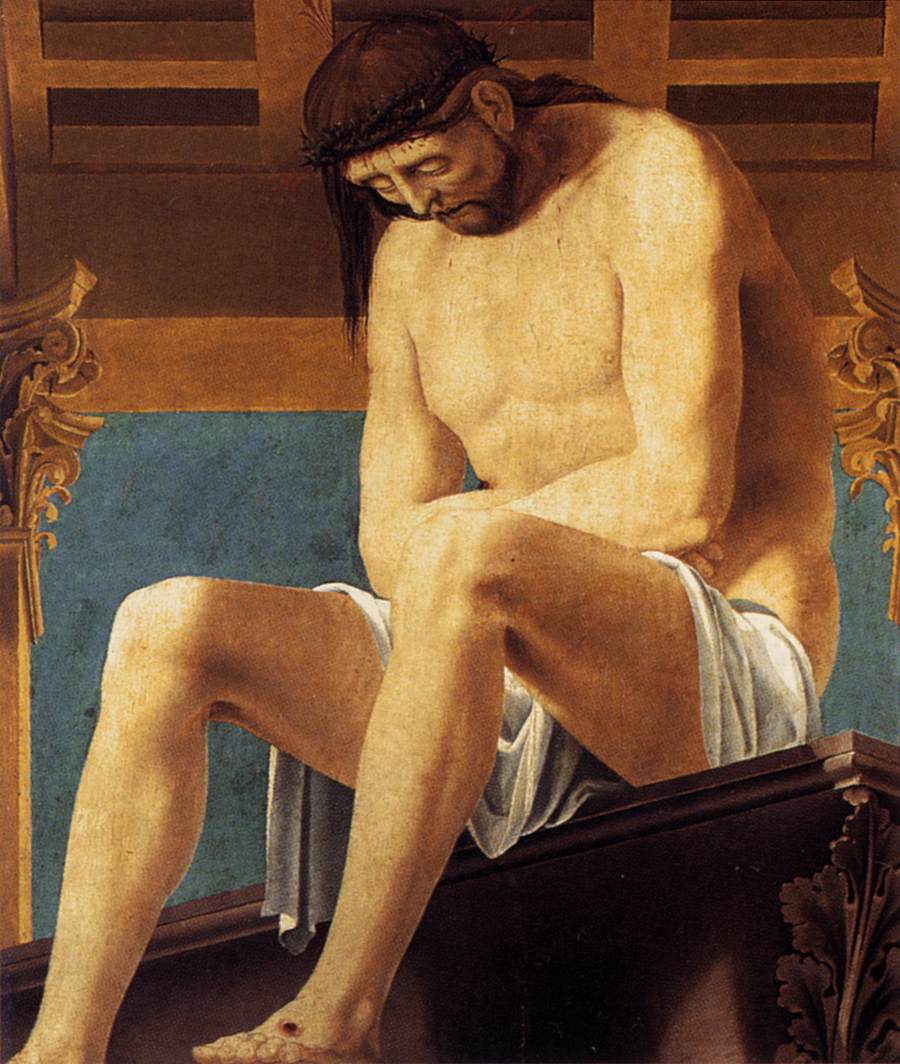
Pedro_Fernández_-_Christ_Suffering_-_WGA07807One of my fundamental convictions is that theology, while possessing theoretical aspects, is eminently practical. It’s the “doctrine of living unto God” as some of the older theologians used to put it. One of the greatest tests of that “practicality” is understanding the various ways that the doctrines of the Christian faith can serve as a comfort to us in the manifold sufferings and tragedies we encounter in this life this side of Eden and before the Second Coming.

In what follows, I’d like to simply (and briefly) point out some of the many ways the main doctrines of the Christian faith provide a comfort to the believer in times of struggle, suffering, and pain.

  1. Trinity.  Before moving to realities more directly oriented towards God’s actions on our behalf, it’s important to stop and remember the comfort of the fact that before all things, God has eternally been perfectly existent as Father, Son, and Holy Spirit. This God is holy, perfect, beautiful, righteous, loving, faithful, eternal, unchanging, impassible, all-powerful, all-present, blessed, and supremely good. In the midst of our suffering, it’s often crucial that we remember that there is a reality deeper and truer that grounds, funds, and surpasses the finite and fallen world we encounter. In that sense, God being God without me holds its own comfort for me.
  2. Creation. God created the world and blessed it by declaring it to be “very good.” In a very important sense, the world is something to be taken, received with gratitude, and enjoyed. Each and every breath in our lungs is a gift of the Creator who has provided us with every good thing, every tree in the Garden, so to speak, for our benefit. We are not souls trapped in prisons, alienated from and anxiously awaiting our natural home in the stars, but humans placed in the midst of beautiful habitat with deep purpose by a good God. Every blade of grass, tulip in the field, bright ray of sunshine, speaks of his power and goodness.
  3. Sin. Connected to this is the doctrine of sin. It’s a bit counterintuitive to think of the doctrine of sin as a comfort, but there is deep reassurance in knowing that the unease, the pain, the opposition we encounter in the world is not natural to it. The world is not meant to be this way and it is sin, not divine malevolence or weakness, that has resulted in the brokenness we experience in our bones and our souls. God hates the fractures in his handiwork and stands opposed to them as we do–indeed, even more than we do.
  4. Providence. God is not a hands-off deity who fell asleep at the wheel. Contrary to what we’re tempted to believe in our darkest moments, the world is not governed by a cold and cruel fate.  The doctrine of providence teaches us that the Triune God sovereignly causes, permits, and guides all things for the ultimate good of his creation and his children. Even the dark schemes of the Evil One will be turned on their head and used for the glorious blessing of creation.
  5. Christ. There are multiple comforts to be derived from meditating on the doctrine of Christ. John Owen gave us a few here. Still, at base, in whatever situation we find ourselves in, looking at Jesus we are given deep consolation in remembering that out of his unfathomable love, God has assumed my nature, experienced what I’ve experienced, suffered all that I have suffered, in order to redeem me, bring into proper relationship, and make me like himself.
  6. Cross. Meditating on the Cross yields comforts to carry us through a lifetime. Here are a few: First, God has damned all that opposes him. Evil cannot stand against him. Looking at the Cross reminds me of God’s utter righteous, holiness. Second, that damnation included my sin which has been punished, buried it, sent to hell. Beyond that, Christ has secured the ultimate victory against the Destructor who is ultimately behind all evil. Satan may still prowl about, but he is mortally-wounded and on the run. Because of this, I can look to the Cross and see my Crucified Savior, take up my own cross and follow him in this life.
  7. Resurrection. Christ’s resurrection teaches me many things. First, the truth is eventually vindicated. One of the great torments of life in this world is the falsification of reality, the lies we tell about each others, and God’s truth. The Resurrection is the great demonstration and unveiling of the Truth of the Son, teaching me that everything, every injustice will one day come to light. Second, death is not the end of the story because the Creator who declared the world to be very good decided to be its Redeemer who will not leave it to decay forever. Whatever threat comes against me, the worst it can do is kill me, and God can take care of that. Finally, nothing can separate me from the love of Christ. He’s already been killed once. What else could come against him?
  8. Ascension. The doctrine of the Ascension means that even now Christ on the throne of heaven, interceding for us. We have the king of the World as our advocate and High Priest. The ruler of the Universe knows what it is like to have walked through the dark vale of the world. He rules with compassion and mediates with sympathy, understanding our weakness.
  9. Holy Spirit. In the person of the Holy Spirit, God himself has come to indwell the believer. This is great comfort to us because we can know that wherever we are we are not alone in the world; not in the darkest dungeon of some authoritarian tyrant, nor the darkest recesses of our own despair. God is with us in all that we suffer and will give us whatever strength we need to face the trouble we encounter in the world.
  10. Union. By faith him, through the mysterious activity of the Holy Spirit, we are united to Christ. This means all of his benefits, all of his accomplishments are mine and secure. Every heavenly gift, all of his rights and privileges, are mine because I am his.
  11. Justification by Faith. Because of this union, I am justified entirely by faith. Christ’s death for sin on the Cross was my death, and his vindication through the resurrection as “righteous” is now mine. Because of that, I can know that none of the pain, or suffering I encounter in this life is God’s judgment or wrath against me, because that has been fully satisfied on the Cross and I’m righteous in Christ. I don’t have to fall into a pit of guilt or self-condemnation when pain or misfortune befalls me.
  12. Adoption. Also, we have been adopted in Christ. This means that God is our Father despite our sins, failures, and outward appearances. We have been fully and irrevocably been brought into the kind of relationship with God which allows me the privilege of bursting into the courtroom of the King, calling him “Abba” and making known my deepest needs, hurts, and pains with utter security and freedom.
  13. Sanctification.  Sanctification is comforting in a number of ways. I was listening to John Piper the other day talking about the joy of heaven and the end of earthly frustrations. He pointed out that the thing he’s most sick of in this life is his own sin. Sanctification is comforting in reminding us that we are not forever trapped in the sin that easily the greatest source of the daily suffering most of us face. Beyond that, the doctrine of sanctification teaches me that I have been set apart in such a way that I know that in all that befalls me, God is at work to make me holy, pure, and more like his Son.
  14. Church. The doctrine of the Church is a comfort, in that I don’t have to suffer alone in this life. The reality is that I am now part of a family, a body upon whom I can depend full of brothers and sisters, aunts and uncles, mothers and fathers. Many of these have gone before me down this path and stand ready to counsel, support, uphold, encourage, and rescue in times of need.
  15. Last Things.  Finally, of course, there is an ultimate day when God will make himself all in all. He will do this through the Return of Christ who comes to judge the quick and the dead, punishing oppression, ending it, redeeming the world, rewarding the righteous, and ushering in a day of everlasting glory. Upon that day, we will behold our God and he will wipe away every tear from our eyes. This is the blessed hope and a vision to sustain us in the darkest of hours. The light shines just over the ridge, promising a weight of glory that overwhelms these light and momentary afflictions.

I could continue at length with each of these doctrines. Indeed, in the section on the doctrine of God, each of his attributes provides a particular comfort of its own, for those of us willing to stop and meditate on them. For now, there is enough to see that what we need in times of torment, is not bland platitudes handed to us from spiritual gurus, or pinterest memes, but a soul that has marinated the deep truths of God’s Word. I’ll end by simply quoting one of the most comforting paragraphs in the history of theology, Heidelberg Q & A 1:

Q. What is your only comfort in life and in death?
A. That I am not my own, but belong—body and soul, in life and in death—to my faithful Savior, Jesus Christ.

He has fully paid for all my sins with his precious blood, and has set me free from the tyranny of the devil. He also watches over me in such a way that not a hair can fall from my head without the will of my Father in heaven; in fact, all things must work together for my salvation.

Because I belong to him, Christ, by his Holy Spirit, assures me of eternal life and makes me wholeheartedly willing and ready from now on to live for him.

Soli Deo Gloria

Mere Fidelity: Can Christendom Ever Be a Good Thing?

Mere FidelityIn case anybody’s been wondering why there have been no posts this week, I’ve been at The Gospel Coalition’s 2015 National Conference for the last few days. I have to say, it’s been a blast, though I am not quite exhausted. That said, we did record a very interesting episode of Mere Fidelity last week concerning the issue of Christendom and whether it’s appropriate for the Church and the Gospel to have some position of privilege in society, or if so, how? We touch on this in light of recent discussions concerning Church and State, power, marriage, and so forth.

Also, Matt wonders whether having a Queen might be a desirable thing.

I pray this blesses you. It certainly ought to challenge you.

Soli Deo Gloria

The Folly of the Cross and the Wisdom of God: An April Fool’s Meditation

foolIt is fitting that April Fool’s Day should fall in the middle of Holy Week this year. Though it’s not noted in the Church Calendars alongside Maundy Thursday, Good Friday, or Easter Sunday, yet the gospel of Christ’s passion has always been caught up with the reality of folly has it not?

Writing to the Corinthians who were caught up in a worldly admiration of “wisdom”, so-called by the intelligentsia of the Greco-Roman world, Paul reminds them of the “foolishness” of the Cross.

For the word of the cross is folly to those who are perishing, but to us who are being saved it is the power of God. For it is written, “I will destroy the wisdom of the wise, and the discernment of the discerning I will thwart.” Where is the one who is wise? Where is the scribe? Where is the debater of this age? Has not God made foolish the wisdom of the world? For since, in the wisdom of God, the world did not know God through wisdom, it pleased God through the folly of what we preach to save those who believe. For Jews demand signs and Greeks seek wisdom, but we preach Christ crucified, a stumbling block to Jews and folly to Gentiles, but to those who are called, both Jews and Greeks, Christ the power of God and the wisdom of God. For the foolishness of God is wiser than men, and the weakness of God is stronger than men. (1 Corinthians 1:18-25)

To a world that has inverted the order of things, chosen creation over the Creator, and whose understanding has become darkened (Rom. 1), the word of salvation the Cross is something only a fool could believe. What power is there in a man broken, bleeding, dying the death of a criminal, strung up between two bandits? What delicate wisdom in the heaving, labored, last cries of one more revolutionary, peasant preacher, expiring in the backwaters of the Near East?

Paul, of course, does not mock true learning, or the various technical, scientific, philosophical, or literary pursuits that Image-bearers pursue. But the reality is that the gospel is not something you come to see because of your native intellect or the pursuit of a couple of extra degrees. Human knowing–like all human doing–is caught up in the reality of sin, rebellion, and wilful avoidance of a knowledge of the true God.  Our idolatry extends to our ideas about what’s “reasonable” and good so that we begin to call good “evil”, and evil “good.”  Down becomes up, and left becomes right. Our folly stems from our alienation from the God who made all things (Col. 1:21). Claiming to be wise, we became fools, by trying to know the world apart from the God who made it.

Little wonder, then, that this is what put Jesus up on the cross: the foolish unbelief of the world’s finest minds.

None of the rulers of this age understood this, for if they had, they would not have crucified the Lord of glory. (1 Corinthians 2:8)

Jesus came into the world as Wisdom, the Logos of God incarnate, the light of the world (John 1:1-3). But according to the irrational logic that passed for wisdom in his time, Wisdom himself had to die, extinguished by the darkness. To the religious leaders of the nation of Israel, it was better that one man die for the sake of the nation than that his kingdom message upset the balance their real-politicking had established (John 11:48-52). The greatest legal and political power of the day, Rome, saw nothing but an opportunity to exert their power and cynically extract a confession of political loyalty out of a subject nation (John 19:15). Paul knew first-hand the reaction preaching Christ to the intellectuals of his day provoked (Acts 17:32); the wisest men in the world still couldn’t recognize the good news when they heard it.

No, to see the wisdom of God in the Cross of Jesus Christ, you need new eyes, a new heart, indeed, the Spirit of God himself who given to us “that we might understand the things freely given us by God” (1 Cor. 2:12).

Yet among the mature we do impart wisdom, although it is not a wisdom of this age or of the rulers of this age, who are doomed to pass away. But we impart a secret and hidden wisdom of God, which God decreed before the ages for our glory. (1 Corinthians 2:6-7)

Though this wisdom is a hidden one, not seen by the rulers of the age, blind as they are in sin, it is, nonetheless, the wisdom for our salvation that undoes the death-dealing folly of the world. In the foolish wisdom of the Cross, God appointed his Son to undo the curse of brought on by our sinful folly through his sin-bearing death. In the wise weakness of the Cross, God appointed his Son to undo the power of death, by allowing Christ to be killed so that he might rise again because the pains of death could not rule over him who has the power of an indestructible life (Acts 2:24; Hebrews 7:16).

Beyond that, through union with him, the Crucified and Risen Christ becomes a personal remedy for our own folly:

And because of him you are in Christ Jesus, who became to us wisdom from God, righteousness and sanctification and redemption, so that, as it is written, “Let the one who boasts, boast in the Lord.” (1 Corinthians 1:30-31)

Calvin comments on this verse here:

Now he ascribes here to Christ four commendatory titles, that include his entire excellence, and every benefit that we receive from him. In the first place, he says that he is made unto us wisdom, by which he means, that we obtain in him an absolute perfection of wisdom, inasmuch as the Father has fully revealed himself to us in him, that we may not desire to know any thing besides him.

Again, a parallel verse Colossians 2:3 says that in Christ are “hidden all the treasures of wisdom and knowledge.” Calvin expands there:

The meaning, therefore, is, that all the treasures of wisdom and knowledge are hid in Christ — by which he means, that we are perfect in wisdom if we truly know Christ, so that it is madness to wish to know anything besides Him. For since the Father has manifested himself wholly in Him, that man wishes to be wise apart from God, who is not contented with Christ alone.

Christ is the only sure way we come to know the true heart of the Father. “With God are wisdom and might; he has counsel and understanding” (Job 12:13). Instead of our idolatrous, vain attempts to make sense fo the world without reference to its Maker, in  union with him, our alienated minds and logics are judged in light of and reconciled to the wise purposes of Creator, just as he is revealed to be our gracious Redeemer. In Christ, folly will be driven out as, “wisdom will come into your heart, and knowledge will be pleasant to your soul” (Prov. 2:10).

Soli Deo Gloria

Retribution in the Sermon on the Mount? (Or, the Jesus You Find At the Bottom of a Well)

JJesus and the crowds.D. Crossan has apparently written a book about How to Read the Bible and Remain a Christian. In light of the obvious, almost trite, irony of a man whose rejection of basic Christian orthodoxy extends to even a denial of the resurrection of Christ, attempting to tell people how to remain Christians, one must wonder what the point of engaging such a work with seriousness. Well, the reality is that he’s taking up one of the most recent causes du jour, which we’ve had reason to deal with on this blog on a regular basis: the problem of reconciling violence in the Scriptures with the allegedly non-violent God revealed in the preaching and person of Jesus.

Now, I’ll be honest, I haven’t read the text, but I have read his earlier God and Empire text, and from what it looks like, Crossan’s working with much the same presuppositions, with less of a focus on America-as-Rome narrative, but cashing out a more general thesis about Scripture and violence. Collin Garbarino has an excellent review of the work over at First Things. He quotes Crossan’s main thesis:

Throughout the biblical story, from Genesis to Revelation, every radical challenge from the biblical God is both asserted and then subverted by its receiving communities—be they earliest Israelites or latest Christians. That pattern of assertion-and-subversion, that rhythm of expansion-and-contraction, is like the systole- and diastole cycle of the human heart.

In other words, the heartbeat of the Christian Bible is a recurrent cardiac cycle in which the asserted radicality of God’s nonviolent distributive justice is subverted by the normalcy of civilization’s violent retributive justice. And, of course, the most profound annulment is that both assertion and subversion are attributed to the same God or the same Christ.

For Crossan, the Bible needs to be read in light of Jesus, but not the Jesus of Revelation, or anything like that, but the Jesus of the Sermon on the Mount given in the Gospels. Garbarino quotes him again:

This biblical patterning of yes-and-no justifies my choice of the nonviolent Jesus of the Incarnation over the violent Jesus of the Apocalypse as the true Jesus. Put simply, the nonviolent Jesus is the Christian Bible’s assertion, acceptance, and affirmation of the radicality of God while the violent Jesus is its corresponding subversion, rejection, and negation in favor of the normalcy of civilization.

What we see here is another variation, albeit a bit more radical, of some of the Jesus Tea-strainer hermeneutic.

In an oversimplified nutshell, for many, the arrival of Jesus, his preaching in the Sermon the Mount, his rejection of retaliation against enemies, his message of forgiveness, love, and open-armed reconciliation leads to a clear conclusion: Jesus rejected wholesale the logic of justice as retribution, or any component which contains violence. “Mercy over justice”, if you will. If that’s the case, then we must read the Scriptures as presenting us with two logics: a retributive, violent logic present in Deuteronomy, the Law, OT narratives, and Paul’s more unreconstructed moments, and a prophetic, non-retributive logic given to us in the prophets and ultimately in Jesus that overcomes retribution. God simply is not like that. Now go reorganize your atonement theology, doctrine of God, and revelation accordingly.

I bring all this up because I found his response to this sort of thing so helpful and compelling. With apologies to First Things, I’ll go ahead and quote it at length:

It seems to me that Crossan will need to cut the Sermon on the Mount down to just a few sentences bereft of context if he wants to maintain a Jesus who is primarily concerned with everyone getting their fair share. When read in context (that’s something we historians do), the Sermon on the Mount contains quite a bit of retributive justice.

The Sermon on the Mount is found in Matthew’s Gospel, the Gospel that condemns the Jews for their inability to see Jesus for who he was. At the beginning of the Gospel, Matthew juxtaposes the king of the Jews with the gentile magi, a comparison which doesn’t leave the Jewish king looking too good. At the end of the Gospel, Matthew records the people of Jerusalem shouting, “His blood be on us and on our children!” The Sermon on the Mount is an integral part of Matthew’s argument that the Jews missed their Messiah, not some parenthetical aside that somehow managed to slip into an otherwise tightly constructed theological narrative.

At the beginning of the Gospel, Matthew presents Jesus as being the fulfillment of the promises to Israel. Just as Israel experienced exile in Egypt, baptism in the Red Sea, and wandering in the wilderness, Matthew depicts Jesus as experiencing exile in Egypt, followed by baptism in the Jordan, followed by wandering in the wilderness.

Which brings us to Matthew’s Sermon on the Mount. Jesus, like Moses before him, goes up on the mount to deliver a new law to the people. Crossan imagines that it’s here we see God’s distributive justice, “God’s radical dream for an earth distributed fairly and nonviolently among all its people.”

In Crossan’s defense, the beginning of the Sermon on the Mount sounds warm and fuzzy. In the Beatitudes, Jesus announces that those who mourn will be comforted and that the meek will inherit the earth. It seems to me, however, that Jesus demonstrates good homiletic technique—hook the audience and then let them have it. Jesus moves swiftly from comforting his audience to causing great discomfort.

After pronouncing blessings on all of the good people, Jesus says, “For I tell you, unless your righteousness exceeds that of the scribes and Pharisees you will never enter the kingdom of heaven.” Wait a second—didn’t he just say that the poor in spirit receive the kingdom of heaven? So the poor in spirit must be more righteous than the Pharisees, the guys who were experts on the Law? The audience would do well to consider whether Jesus thinks them poor in spirit.

Then he says that we’re going to hell if we’re angry. And he also says that we’re going to hell if we’ve ever looked on a woman with lust. And then he says that we can’t defend ourselves from our enemies.

And then Jesus says, “You therefore must be perfect, as your heavenly Father is perfect.”

This talk of hell is pretty heavy stuff. Jesus’s law is heavier than the Law of Moses, and if you don’t follow his law perfectly, he says you stand condemned. Perhaps Jesus was referring to himself in those Beatitudes, not his hearers. After all, neither the prophets nor the Romans ever called the Jewish people “peacemakers.”

Here’s the frustrating part about this. There’s no real winning with this kind of hermeneutic, no matter how many texts you pile up.

One really can’t argue with Crossan, however, because his methodology ensures that he’s always right. If one brings up some contrary evidence to his thesis, he’ll just apply his editorial pen more liberally and label that bit of Jesus inauthentic. This isn’t how one ought to read the Bible if one wants to stay Christian.

The same thing is true with (some) other versions of Tea-Strainer hermeneutic. Produce yet another text in the Old Testament or Paul, or whoever, and it’s often simply a text that needs to be overcome, or subverted, or read backwards, sideways, or in a code we finally cracked in the 1970s.

Here’s the problem, though: either you take Matthew’s presentation as the proper context for reading Jesus’s words as Garbarino does, or you’re left with a very awkward operation of reading the words of Jesus as given to us by Matthew against Matthew. This puts us in the rather intellectually unenviable position of having to assert that Matthew is a somewhat reliable witness to the historical Jesus in many cases, but that he’s a rather poor one in others, or simply an inept theologian. It seems that he, as a disciple, or the disciples from whom he gleaned these stories, words, and theological interpretations didn’t understand Jesus quite as well as we do now. Reading at a 2,000-year remove in the 21st century, we’re finally piecing together the real, true, deep intentions of Jesus, using hermeneutical presuppositions given to us through the witness of the text, despite the text, that his disciples who authored the text have missed somehow.

Or again, I’ve made this same point with the accounts of God striking down Ananias and Sapphira as well as the Tetrarch Herod in judgment in the book of Acts. In the text, the author clearly identifies God or God via an angel, as ordering the very retributive judgment. Now, the thing to remember is that this is the same author as the Gospel of Luke, who gives us a fair amount of the picture of Jesus who tells us to forgo vengeance, love our enemies, and so forth. Either we’re to believe that Luke, or whoever you think wrote it, didn’t see the very clear contradiction, or maybe we should allow Jesus, and the Bible, to have a far more complex, yet unified message than that.

This, of course, is just a rehash of the old historical-critical Jesus Seminar problem. First, you take a statement or two from the Gospels that you label “The sorts of thing we know Jesus could say”, whether because it’s different enough from the kinds of things later disciples said, or its similar to the particular political movement you’ve chosen to set Jesus against, (or it fits with your 1970s-style political socialism) something like that. Then, you measure all the rest of the statements against it, usually pressing for strict dichotomies in order to rule out “the sorts of things we know Jesus couldn’t say”, or “the sorts of things we’re not quite as sure about.” At the end, you get the classic problem of historians staring down the well of history to find the Jesus behind the Gospels, only to end up seeing a Jesus who looks very much like a bearded, 1st Century version of themselves looking back up at them.

The same sort of logic is at work in a number of the Tea-strainer hermeneutics. Attempts to split Jesus off from the “retributive logic” found in Scripture inevitably leads to accusing the New Testament authors of a schizophrenic presentation of Jesus himself, or with the inconsistent attempt to uphold the Jesus of the Gospels, without actually upholding the Gospels. With Crossan, a bona fide historical critic, you at least get the benefit of an explicit acknowledgement of what’s going on.

Soli Deo Gloria

What do we learn of the Cross in the Gospels? (Mere Fidelity Podcast)

Mere FidelityThis week on Mere Fidelity, the boys and I discuss Jesus’ atoning work on the Cross as it is displayed and uniquely narrated in the Gospels. In other words, what specifically do the Gospel writers tell us about Jesus’ work as theologians intent on setting forth the saving significance of Jesus’ death and resurrection?

We hope this discussion spurs your Holy Week reflections along as we head towards Maundy Thursday, Good Friday, and Easter Sunday.

Soli Deo Gloria

Why Did God Give the Tree of the Knowledge of Good and Evil? 5 Reasons

forbidden-treeAs the fountainhead of the story of the Bible, some of the most complicated questions in theology are densely clustered in the first few chapters of Genesis. After hearing the story as a kid in Sunday School, one of the first ones you end up asking is, “Why would God put the Tree of the Knowledge of Good and Evil in the middle of the Garden? I mean, given that it could derail the whole project so quickly, why put it there at all? What’s the point? What reasons could God possibly have?”

Leave it to Turretin to tackle the issue with his usual, rigorous clarity, to come up with, not one, but five reasons for planting the tree in the middle of the Garden. Before laying out his answer, though, it’s important to set a bit of background.

Locating Adam

First, you need to know that Turretin treats the question in his section dealing with human nature in its originally constituted state. That makes a big difference when it comes to a couple of his reasons. See, earlier on in this topic he points out that when you’re dealing with questions of anthropology in theology, you need to recognize there are four states you need to think about (Vol. 1, Top. 8, Qu. 1.I-II). There’s:

(a) human nature as God originally made it

(b) human nature after we made a mess of it through sin

(c) human nature after God has regenerated it as it goes through the process of sanctification

(d) human nature once God has ultimately perfected and glorified it in the future

Much confusion results when theologians don’t distinguish these states in their discussions of human nature and they end up heatedly talking past each other.

Second, you have to know that, along with all the other Reformed dogmaticians of his time, Turretin considered Adam to be entered into a covenant of nature or works, with God. Strictly speaking, it’s a covenant only by God’s condescension. God isn’t an equal party, being an infinite creator, and is only under obligation according to his own Word. All the same, Adam was given a law with curses attached for disobedience and blessings by way of reward for obedience. For more on this, see here.

From there, we can move on to discuss the Tree of the Knowledge of Good and Evil. In his section on the topic (Vol. 1, Top. 8, Qu. 4), he quickly dispenses with the idea that we can know what kind of fruit tree it was. Instead, we must discover why it got its name. Turretin’s suggestion is that the tree’s name revealed its nature as both a sacramental tree as well as pointing ahead to its experiential reality. In other words, by eating of it, Adam and Eve would know by experience what it means to know the good of obedience and the evil of disobedience.

This command to not eat of the Tree was what we might call a “positive” law in that eating the fruit wasn’t inherently good or evil, but only became so by the command of God. It’s wrong “because God said so.” Still, it symbolically represented the whole of the natural law and became a test, a trial, where the obedience of Adam would be “explored.” Would he cling to God’s own word in love and obedience, or prefer his own will by heeding the voice of the tempter? (Incidentally, for those puzzled by the reference, yes, classic Reformed theology had a robust, creational doctrine of natural law).

Making Things Explicit

So then, now we are prepared to hear Turretin’s five reasons that God placed the Tree in the Garden as an explicitly, “exploratory” command, on top of Adam’s natural obligations:

  1. In order that God, who had granted the dominion of all things to man, might declare himself to be the Lord of man and man might understand himself to be a servant bound to obey and adhere to him. Although the natural law had already clearly declared that, yet because someone might think the natural law to be a property of nature and not a law, he wished therefore (by a peculiar law about a think absolutely indifferent) to declare this more clearly. Thus on the one hand, the dominion of God might appear…on the other, the duty of man.
  2. That sin might be made the more conspicuous by that external symbol and the evil of the concealed ulcer be dragged to the light (or the virtue of the obedience be far more clearly exhibited). For the virtue of obedience would have been the more illustrious as the evil was because forbidden of God…
  3. To declare that man was created by him with free will; for if he had been without it, he would not have imposed such a law upon him.
  4. That by interdicting the fruit of a beautiful tree, he might teach that his happiness does not consist in the enjoyment of earthly things; otherwise God would not have wished to prevent his using it.
  5. To teach that God alone and his service must be sought before all things as the highest good and that we should acquiesce in it alone.

Now, many might seek to add further reasons to Turretin’s here. Indeed, one of the most interesting and compelling suggestions is that the Tree was ultimately to be a gift to Adam after passing his test (his probationary period, if you will) and entering into the blessings of obedience. All the same, at this stage in the narrative, Turretin’s answers are instructive for us.

First, it’s helpful to realize Turretin doesn’t limit himself to one reason. Oftentimes we consider and discard answers in theology because we presume there must be only one correct answer to any situation and neglect the fact that multiple answers or multiple dimensions to a single answer might be true. We shouldn’t be hasty or reductionistic, especially when dealing with the purposes of God.

Also, it’s worth mentioning how well this account comports with Paul’s illustrative retelling his/Adam’s/Israel’s situation in Romans 7 when it comes to the entrance of the Law:

What then shall we say? That the law is sin? By no means! Yet if it had not been for the law, I would not have known sin. For I would not have known what it is to covet if the law had not said, “You shall not covet.” But sin, seizing an opportunity through the commandment, produced in me all kinds of covetousness. For apart from the law, sin lies dead. I was once alive apart from the law, but when the commandment came, sin came alive and I died. The very commandment that promised life proved to be death to me. For sin, seizing an opportunity through the commandment, deceived me and through it killed me. So the law is holy, and the commandment is holy and righteous and good. Did that which is good, then, bring death to me? By no means! It was sin, producing death in me through what is good, in order that sin might be shown to be sin, and through the commandment might become sinful beyond measure. (Romans 7:7-13)

I would be surprised if Turretin wasn’t explicitly engaged in some intertextual interpretation here.

Finally, if we could sum up all these reasons into one basic thought, it’s that God wanted to make things explicit. The Tree of the Knowledge of Good and Evil clarified humanity’s relationship with God, set expectations, held out promises and threats, and instructed Adam in what his truest and deepest good was. God is not arbitrary, cruel, or unclear. He declares his law explicitly for the good of his creatures. Unfortunately, we very explicitly botched it.

Thankfully, he declares his gospel by an even clearer word: Jesus.

Soli Deo Gloria

A Man’s Got To Know His Limitations

do ya punkFor some reason, theologians don’t often get associated with the Christian virtue of humility. It’s ironic that studying the infinite Creator of all things, when undertaken without prayer or community, can lead to a puffed up and inflated sense of self. The greater the subject, the greater the pride when you feel you’ve mastered it, I suppose. In any case, this is one of the reasons I so enjoy running across encouragements to humility in theological exploration.

Yesterday I ran across a particularly fantastic example in Augustine. In one section, he takes up the question of whether God’s sovereignty implies an eternal creation. In other words, if we say God is eternally sovereign, does that require him to have been eternally creating something alongside himself to be sovereign over? Wouldn’t that be another co-eternal? Or how does the fact that God created time itself affect the question? In other words, if God created time along with the world, there’s a way in which you could say there’s never been a time where he hasn’t been sovereign Creator, but that’s because there was no time “before” he made time.

Confused yet?

At the end of a couple pages of this, Augustine wraps up his discussion like this:

And so I return to what our Creator wished us to know. What he has allowed wiser heads to know in this life, or has reserved for the knowledge of those who have reached their fulfillment in the other life, that I confess to be beyond my powers. But I thought I should discuss this question, without reaching any positive conclusion, so that my readers may see what questions they should refrain from tackling, as dangerous, and to discourage them from thinking themselves capable of understanding everything. Instead they should realize that they ought to submit to the wholesome instruction of the Apostle, when he says, ‘In virtue of the authority given to me by God’s grace I say this to all your company: do not be wiser than you ought to be; but be wise in moderation, in proportion to the faith which God has allotted to each of you.’ For if a child’s upbringing is adjusted to his strength, he will grow, and become capable of further progress, but if he is strained beyond his capacity he will fade away before he has the chance to grow up. (City of God, BK. XII.16)

There’s so much I love about this passage.

First, the fact that he did all of that in order to sum up and say, “Don’t try this at home, kids.” Now, this can sound a bit arrogant. But what have to see here is a humble vulnerability in the theological process in which Augustine is exposing his own finite understanding in the process of stretching himself to the limits of his own powers. It’s not easy for a teacher to say, “I don’t know.” All too often, the temptation is the fake a certainty you don’t possess, or hastily land on a conclusion just to have an answer for those who look to you for insight. Augustine refuses to play the expert at the cost of the truth.

With a pastoral heart, he decides to engage the difficulty that he knows might trip up some of his more inquiring readers should they wander down certain paths. The flipside is that he still discusses the issue. It’s this odd movement of saying, “Alright, I’ll go here with you if only to show you that going here might lead to trouble.” It’s not the simple wave of the hand that dismisses such questions as foolish or entirely off-limits, but one that humbly acts as a guide to the theologically perplexed.

Finally, Augustine’s example at the end is one of both caution and invitation. If you press too deep beyond what it is given to you to know at this point, beyond your spiritual and intellectual powers, you might hurt yourself. But the point isn’t to warn against theological study, but about taking care so that you may continue to proceed at the pace of growth the Lord himself intends. There are times when, for the sake of growing in a healthy knowledge of God, it is okay to say, “I’ll put this question aside for now and return it at some future point. I trust that God will continue to reveal himself to me in ways that are appropriate to me in areas that I can handle right now.”

As Dirty Harry put it, “A man’s got to know his limitations.”

Soli Deo Gloria