Gandalf, Job, and the Indignant Love of God

Then the LORD answered Job out of the whirlwind and said: “Who is this that darkens counsel by words without knowledge? Dress for action like a man; I will question you, and you make it known to me.” (Job 38:1–3)

gandalf-job-and-the-indignant-love-of-god_350_233_90Easily one of the most bracing passages in Scripture, God’s words to Job are exhilarating in their majestically aggressive grandeur. After 36 chapters of divine silence in the face of Job’s comforters and Job’s passionate self-defense—indeed, his prosecution of God’s justice and character—the Holy One opens his mouth and reduces Job to stunned, repentant silence.

At first glance, of course, it’s easy to see these speeches simply as magnificent assertions of the Lord’s raw power over human puniness. “Where were you when I laid the foundation of the earth? Who determined its measurements—surely you know! What were you doing when I was pinning up the stars like twinkle lights, little fella?” It sounds like an old man putting a young buck in his place: “I was working this job before you were in your mama’s womb.”

God seems downright salty here.

You can read the rest of the article here at The Gospel Coalition.

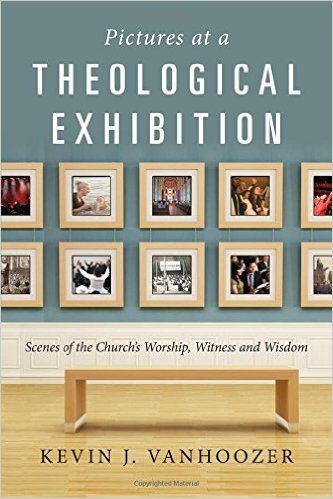
Pictures At A Theological Exhibition by Kevin Vanhoozer

Pictures At a Theological ExhibitionIn 1874, Russian composer Modest Mussorgsky created his famous, 10-piece suite of music Pictures at an Exhibition. The work was originally composed in honor of the work of his friend and creative compatriot, Viktor Hartmann, an architect and artist. When Hartmann died, a number of his friends organized a special exhibition of over 400 of his works as a tribute. Mussorgsky’s contribution was to composes this work, which was a soundtrack, of sorts, for the exhibition, based on 10 of Hartmann’s works.

Both Hartmann and Mussorgsky were committed to the idea of a distinctly Russian spirit in art as opposed to the excessive Westernization they feared would overwhelm it. And so while Hartmann’s art was devoted to capturing Russian scenes such as children playing, women gossiping, and so forth, Mussorgsky’s Pictures aims to capture that same feel, capturing the atmosphere of Russian folk songs, and so forth, that suffuses the whole. These “pictures” distill, not only Hartmann’s art, but the social and cultural message of Hartmann’s vision of a distinctly Russian spirit. They present a vision of an alternative culture, an alternative way of being, that helps counteract the spirit of Westernization, and helps Russians remain true to their identity.

It is from this composition that Kevin Vanhoozer draws the title for his recent collection of essays Pictures at a Theological Exhibition: Scenes of the Church’s Worship, Witness, and Wisdom. Much like the Russia of Mussorgsky’s day, Vanhoozer thinks the Church is called to resist the Westernization of her culture, “to the extent that it conflicts with the culture, as it were, of the kingdom of God.”

To that end, then, he argues that the Church must be steeped in the pictures, the metaphors given in the biblical exhibition, aimed at shaping the life of the holy nation of God’s people. To do so, the Evangelical church must recover a sense of the importance of rehabilitating a properly biblical imagination.

For too long, imagination has gotten a bad rap as another word for “fantasy”, “illusion”, “making things up”, or failing to come to grips with reality. Imagination, though, is a way of seeing meaningful connections, to perceive meaningful wholes with the mind’s eye, or the thoughts of the heart—sometimes in ways that are not always immediately apparent. This is not always a matter of making things up, then. In fact, the point Vanhoozer wants to make is that our imaginations can and must be shaped by these holy metaphors, these biblical images and parables that help us see the world through the eyes of the heart shaped by faith.  A biblically-formed imagination is what helps us live into the reality of what is “in Christ”, or the “theodrama” we’re inhabiting in the midst of our modern world, so to speak.

That’s why essays in this work aim to cultivate just such a biblical imagination, both by addressing specific images, or scenes from the church’s life (worship, the exposition of Scripture, etc), but also by articulating a way of doing theology that is aimed at the pastoral application of theology within the life of the Church.

Now, I won’t be so silly as to try and give some sort of “objective” review of the book. Vanhoozer is my advisor, I am a long-time reader, and I did type up the author index for the thing (while listening to Mussorgsky’s composition, of course). All the same, I figured I’d note a couple of features of the work that would give you a feel for what’s going on and why it’s probably worth your time.

First, this collection of essays is fairly unique from Vanhoozer precisely because a large number of them were delivered orally before they were printed here. There are a variety of lectures and sermons that, while still aiming high on the content level, retain their lively, spoken feel. (Yes, that means dozens and dozens of imaginative images and persuasive puns). They are “theology on the ground” and “snapshots” of ministerial theology at work in the local church setting. Also, an added bonus, since many of the sermons are expositions of Scripture, you get a feel for what Vanhoozer means when he’s talking about the “Theological Interpretation of Scripture.” For many, this might make this volume a perfect access point into Vanhoozer’s broader body of work.

Second, it’s true, Vanhoozer always seems to manage to comment on issues regarding method and prolegomena in theology. Even here, the whole thrust of the work is concerned with doing theology in a certain way. Heck, it has one of his best, short pieces on inerrancy that I’ve read (and I think I’ve read them all at this point).  That said, in this collection there’s plenty of “material” theology regarding pressing, everyday church issues.

For instance, his essay on inerrancy is actually aimed at helping pastors properly handle Scripture in the context of the church. Or again, there are a couple of essays on the theology of worship, song, beauty, and the arts for the local church. Towards the back end, he’s got a sermon on the pressing, contemporary issue of status anxiety and the way it’s addressed by the cross of Christ that’s simply good, pastoral theology. (I drew on some of its themes to preach to a group of college kids just the other day!) Probably the most interesting (because most distinct) essay in the whole bunch is the piece on the ethics of brain enhancing bio-technology. (But maybe that’s just because I’m in grad school and would be sorely tempted to use it as I take German this summer.)

All that to say, there are a number of reasons you may just want to take a stroll through Vanhoozer’s latest gallery of faith speaking understanding.

Soli Deo Gloria

Christian Dogmatics (In a Reformed Key)

Christian dogmaticsMichael Allen and Scott Swain are turning into the dynamic duo of Reformed theology. We might have to give them a combo name soon (Swaillen?). First they gave us a programmatic manifesto for the future of Reformed theology with their volume Reformed Catholicity, then they launched a series of edited volumes New Studies in Dogmatics with Zondervan, and now they’ve given us an edited work I’ve been looking forward to for a while now: Christian Dogmatics: Reformed Theology For the Church Catholic. Even though I’ve been knee-deep in papers and coursework, I’ll admit I tore into this volume as soon as it came in the mail. And it was worth it.

For Christian Dogmatics, Allen and Swain have drawn together some of the best names in contemporary, Reformed theology to offer up a work of dogmatics for the church catholic. Every part of that description matters. First, the work consists of essays on just about every major topic or loci usually treated in works of dogmatics (revelation, Trinity, anthropology, Christ, etc.). The essays are at the same time academic, introductory, nuanced, and constructive, making them ideal for use in the seminary classroom that’s willing to challenge its students (20-30 pages each).

Second, it is Reformed theology for the church catholic. Each of the authors take on a subject and work synthetically through Scripture, the broader catholic and Reformational tradition, as well as contemporary theology to expound it for the good of the whole church. It’s unabashedly Reformed, then, but it’s not narrowly Reformed. It is Christian theology in a Reformed key.

What’s more, the diversity of authors ensures variation within the Reformed tradition is on display as well. This is true both of mode and content. Some essays tilt towards biblical theology, or contemporary theology, others towards engagement with dogmaticians like Turretin, Bavinck, or Barth, while others pay a good deal of attention to the Patristics and Medievals. What’s more, I’m sure a number of the authors won’t agree with key segments of each other’s essays. All the same, though, as Allen and Swain note, the emphasis is on “retrieval for renewal.” All the essays share a thoroughly Trinitarian orientation, as well as attention to locating each dogmatic subject within the broader economy of God’s saving activity on our behalf.

In a nutshell, when someone asks me where they should go to find sophisticated, Reformed theology written by someone not currently dead, this is probably going to be my go-to volume to recommend. Honestly, it’s a fantastic collection.

I suppose with the broad comments out of the way, I’ll simply note some of the highlights within various essays in the volume, but given that there are 16 of them, I simply can’t go into major depth.

Mike Allen opens up the essays with a treatment of the “Knowledge of God” (chap 1), and gives a broad account of both revelation and the character of theology in the economy of grace. Most interesting for me was his explication of the principles of theology (ontological, external, internal), which manages to be “Christocentric”, without going full-Barthian, and hangs on to a Post-Reformation scholastic analogy of being, and doctrine of Scripture. This all sets up his creative treatment of the attributes of God (chap 3) which is something of a broader, architectonic essay since space precluded an exposition of them each individually.

Speaking of Scripture, Kevin Vanhoozer’s treatment of it is vintage Vanhoozer (chap 2), offering an account of it as “Triune Discourse.” He manages to draw on a number of familiar themes (the God-world relationship, speech-act theory, Barth, theo-drama), without it simply being a rehash, moving from economy, to revelation, to the ontology of Scripture and its role in the Triune God’s purposes, the relationship between Scripture, and tradition, and so forth. I know I’m a bit biased, but I think it’s clear why he was the obvious choice for articulating a contemporary, Reformed doctrine of Scripture.

Swain handles the chapters on both Trinity (chap 4) and the Covenant of Redemption (chap 5). Both are excellent, with the treatment of the Trinity laying a solid biblical, Patristic, Medieval, and Reformational doctrine oriented around the three persons as an exposition of the Divine Name (and names) of God. Beyond the excellent biblical discussion, his treatment of the language of ‘persons’ in the Trinity is helpful, since these things can get tricky.

Second, his treatment of the covenant of redemption includes a very helpful treatment of the divine decrees in general, especially their relation to God’s freedom, as well as attention to some of the criticisms of the doctrine from the area of Trinitarian theology. He ably shows the covenant of redemption to be an instance of “Trinitarian reasoning”, not an extraneous bit of “covenant overload” imposed on the text of Scripture—at least to my satisfaction. I may come back to engage these in a later post.

John Webster gives us two essays on Creation Ex Nihilo (chap 6) and Providence (chap 7), which also seem to hang together (I’ll likely visit these again as well). Some highlights include Webster’s clarification of the notion of speaking of God as a “cause”—which tends to have some goofy connotations in the modern period—as well as the doctrine of God itself, since Webster talking about anything is always Webster talking about God. In essence, he does this in different ways in both essays and does so magnificently.

Kelly M. Kapic constructs a Christian anthropology (chap 8) emphasizing the importance of understanding God’s purposes for loving communion with his Image-bearers, the eschatological orientation of the human existence, as well as the Christological character of the Image. It sort of belies the notion that all Reformed anthropology is “miserable worm” theology, which people often pick up from a mistake understanding of “total depravity.” Oh, and I have to say that my favorite piece of it was probably the orienting bit of John Owen up front, because, well, John Owen.

Next up, Oliver Crisp delivers one of the most unique essays in the volume on the subject of original sin (chap 9). It’s unique simply because it reads like he snuck an essay of Deviant Calvinism into the book, by arguing for a minority report, Reformed/Zwinglian understanding of original sin that shaves off original guilt. Carefully and judiciously argued, as always, but I’ll admit I’m curious what others will make of his critique of federalism and realism.

Daniel Treier’s chapter on the Incarnation is a nice, balanced blend of biblical and dogmatic reflection on a Reformed doctrine of Christ covering everything from the biblical-theology of the gospels on through the two natures, the three offices, and the extra-Calvinisticum (chap 10). One helpful tidbit was his suggestion dealing with the communication of attributes of speaking of activities or attributes of Christ that he possesses or exercises “in virtue of” a particular nature, since that particular idiom may better protect against any Nestorian tendencies.

Donald Macleod handled “The Work of Christ Accomplished”, or the atonement (chap 11), in essence giving a cliff-notes version of his recent book Christ Crucified. Which is to say it’s an admirable piece work, majoring on Scriptural exposition, that really preaches well, has a bit about the possibility of God that I’ll probably skirt past, but on the whole will likely return to as a reference, nonetheless.

Unsurprisingly, Richard B. Gaffin handled “The Work of Christ Applied” (chap 12), and drew on his history of helpful work on union with Christ and the relation between the ordo salutis and the historia salutis. One interesting emphasis was his decision to not simply treat this as the work of the Spirit—though the Spirit is everywhere here—but the work of Christ in his exaltation through the Spirit. A salutary move, in my opinion, in order to keep a properly Trinitarian trinitarianism in our soteriology, so to speak.

Paul T. Nimmo ably handled “The Law of God and Christian Ethics” (chap 13), jumping comfortably between the Reformed confessions and the biblical material here. The best section was the lengthy exposition of the various senses in which Christ is (and is not) the “end of the Law” in justification, the Christian life, redemptive history, and so forth.

Michael Horton’s first chapter on the Church (chap 14), is just classic Horton: a lot of solid biblical theology, atunement to the various dimensions and metaphors for the church that play into a multi-faceted ecclesiology, and an ability to keep his eye on the big picture. He ably expounds the advantages of a covenantal ecclesiology with everything from Roman Catholics, Anabaptists, Barthians, and Barna-style non-ecclesiologies in view. Also, a surprisingly specific, though condensed, polity section that reminded me why I’m a Presbyterian.

Todd Billings handles the sacraments (chap 15). Rich, explicitly Trinitarian, and pastoral, he expounds the logic of the sacraments as “material signs and seals” of the covenant God’s promises. Billings connects sacraments to the preaching of the gospel, the great good of union with Christ, and so forth. One particularly helpful section for me was his handling of the issue of distinguishing the logic of infant baptism from that of infant communion, from Scripture, which often gets raised as a consistency issue for the Reformed position.

Finally, Horton rounds things out again with a chapter on the Kingdom of God (chap 16). I’m really shocked at how much got covered here, as it really served as a treatment relating the kingdom of God to the church, the two-kingdoms issue, as well as eschatology both cosmic and personal. I greatly appreciated his section expounding the connection between the Spirit and the kingdom.

Well, that about wraps it up. One final thing you may have noted is that there is no chapter on the Holy Spirit—which sort of plays right into the caricature that the Reformed down-play the Spirit. Now, the fact is that each of the essays in themselves belie that since the Spirit is there all throughout. Nonetheless, it might help to know that upon asking, I learned they had the chapter commissioned twice, but both authors ended up having to back out.

As I said earlier, I can’t recommend the volume highly enough. Theology nerds, it’s a must. So what are you waiting for?

Soli Deo Gloria

Everybody Wants to be Christocentric, But What Does that Even Mean?

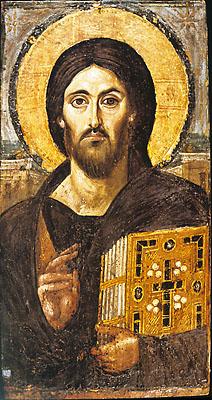
christ pantokrator“Our theology ought to be truly Christocentric.”

I can’t tell you how often I’ve heard that phrase used, nodded along, and then had to stop and ask myself, “Okay, but what does that even mean?”

Apparently I’m not the only one.

In a short article entitled “A Note on ‘Christocentrism’ and the Imprudent Use of Such Terminology” [WTJ 68 (2006): 253-60], Richard A. Muller registers a number of prudent protests about the contemporary discussions about whether certain kinds of Reformed theology are “truly christocentric” enough. Mostly this has to do with in-house conversations that started in the 20th century about whether there was a major difference between Calvin’s “Christocentric” theology and that of later theologians like Beza and the Post-Reformation Orthodox who followed. Calvin was supposed to be a good, pre-Barthian Christocentric theologian, while the rest of the tradition unfortunately took a wrong turn and based all their theology around God’s predestinarian decree, making things lopsided and decidedly un-Christocentric.

Without getting into all the details of Muller’s article and the Reformational historiography (which has largely put the aforementioned myth to bed), one the main benefits of Muller’s discussion is calling attention to the rhetorical gamesmanship that gets played when people throw the term around as a trump card: “Well, I’m just being Christocentric in my theology.” As if anyone doesn’t want to be “Christocentric”? Indeed, if you cruised through history and asked any major theological figure, especially in the Reformed tradition, “Are you trying to be Christocentric or centered on something else?”, I’ll give you to ten to one that all of them will answer, “Of course, I’m Christocentric. Jesus is everything to me.”

What’s even more helpful, though, is the attention he calls to the equivocation and confusion around the term that muddles things. “Given that such diverse figures as Irenaeus, Bonaventure, Duns Scotus, John Calvin, Theodore Beza, Jerome Zanchi, Jacob Arminius, Friedrich Schleiermacher, Ι. Α. Dorner, Gottfried Thomasius, E. V Gerhart, Henry B. Smith, William Adams Brown, and Karl Barth have been described as christocentric thinkers, some distinction is most surely necessary” (254).

And so, in order to clear the ground for a more helpful use of the term, Muller gives a taxonomy or typology of at least three kinds of christocentrism that scholars could be using to describe a theologian.

First, there’s what he calls “soteriological” christocentrism. Basically, on this view, a theologian or theology is Christocentric if it confesses that Jesus Christ is central to the process and work of salvation. At this point, unless you’re essentially a Pelagian, a radical liberal, or something on that order, most traditional, Christian theology qualifies as Christocentric at this foundational level.

Second, he says there is a kind of which places a “systematizing emphasis on the Adam-Christ typology and the priority of Christ over Adam.” He calls this “prototypical” christocentrism in that there is importance given beyond Christ as savior, to Christ as a logically and theologically prior to Adam in the plan of God for history. You can find this in the “incarnation-anyways” line of theology, or in the theology of Irenaeus or Scotus and Fransiscan order.

Third, he dubs “principial” christocentrism in that it makes Christ the “principle” of theology, building on the last two “still more speculatively, that the Christ-idea must be used as the interpretive key to understanding and elucidating all doctrinal topics.” Forms of this can be spotted in the liberal tradition from Schleiermacher onwards, which makes the Christ event a central, often corrective, interpretive grid over Scripture, and the rest of theology. In some cases, Christ is the only revelation. Barth, in a different way, is a chief representative of this type, though he has been (fairly or not) accused of more than christocentrism, but rather, christomonism (on which, I have little bit here).

Given these varieties of “christocentrisms”, it does seem wise to have some handy terms like this and be clear about what we mean when we use them. Especially since Muller notes that it is largely this last, historically-novel form that has been assumed in various discussions, and then used as the standard by which previous theologies have been judged, instead of taken on their own terms.

One more point that ought to be brought out is the way the issue of Scriptural interpretation plays a role in all of this. Muller brings out the various “christocentrisms” with respect to the structure of theological systems. And that’s good, but this also bleeds out into the issue of have a christocentric or “Christ-centered” hermeneutic. In other words, what do we mean when we say we read all of Scripture in light of Christ? How do these three types of christocentrism match up (if at all) with different approaches to typology and so forth? Can you only be christocentric in the first sense and still affirm a “Christ-centered” reading of Scripture, or do you have to buy into the second and third kinds as well?

Are we talking about seeing Christ as the fulfillment of all the prior history of revelation in a way that still acknowledges it as true revelation? Or about all prior revelation as somehow pointing to Christ and therefore legitimately read as testimony to Christ? Do we see all of Scripture pointing to Christ, then, because the eternal Son, through the Spirit, by the will of the Father is actually the active agent of revelation throughout all of redemptive history?

Or are we talking about Christ as a corrective revelation that sort of overlays prior revelation in a way that is disjunctive and discounts earlier portions as lesser, false, and in many ways misguided? Is the event of Christ, then, the only truly true revelation? In other words, we’re back the issue of the Jesus-Lens or the Jesus-Tea-Strainer and the theological presuppositions that go along with them.

Not that we’ve solved anything here, but I don’t think there’s enough clear thinking around this in popular writing on the issue.

Soli Deo Gloria

God’s Love Isn’t Neat and Tidy (The Uncontrolling Love of God, Review)

ocean vision

Evil—it’s a problem that asks, demands, cries out for explanation. The psalmist grasps the nettle when he asks, “How long, O Lord?” In the Western philosophical tradition, the question has been, “Why?” If there is a God who is all-powerful and all-loving, then presumably he’d make sure there is no evil. Yet a quick Google search shows you that evil is there all the same.

Of course, the sensible atheistic option is to admit there is no God. Historically, Christian thinkers have tried to reconcile these tensions by appealing to the existence of free will or divine wisdom, or clarifying the nature of goodness and power. Some, though, have opted to radically redefine the terms of debate.

That’s what theologian Thomas Jay Oord does in his book The Uncontrolling Love of God: An Open and Relational Account of Providence. Coming from the stream of recent theology called “open” or “relational” theism (which holds that God cannot predict or predetermine the choices we make), he’s not satisfied with traditional accounts of God’s providence. They don’t help him make sense out of life, especially the problem of “genuine” (purposeless, gratuitous) evil. At some point, they all have to appeal to mystery, and so they offer no “explanatory consistency.” In their place, Oord offers a winsome, clear, and charitable exposition of his own providential framework, drawing on philosophy, the sciences, and biblical wisdom to fill the gap.

You can read the rest of my review at Christianity Today.

Soli Deo Gloria

Mere Fidelity: What is Apophatic Theology and Can It Work for You?

Mere FidelityThis week on Mere Fidelity we took up the ever-pressing issue of apophatic or negative theology (Don’t say “God is…”, say “God is not…”). To do so, we invited Dr. David Wilmington on to discuss the nature, the limits, and the proper uses of apophatic theology, especially some of the more contemporary forms drinking from the well of postmodern influences like Derrida and so forth. At core, we discuss the issue of language for God and knowledge of the God who transcends language, yet reveals himself in Scripture, nonetheless. This is an admittedly nerdy one, but we think it’s worth your time.

Soli Deo Gloria

Mere Fidelity: Have Evangelicals Become Too Obsessed With Politics?

Mere FidelityIt’s election season again, which means that politics is on our mind more than it usually is. But is it too much? This episode of Mere Fidelty, Matt, Alastair, and I discuss the problem of political engagement and obsession in the church. We take up issues like the disconnect between different political and theological classes, the work of James Davison Hunter & the culture war syndrome, the problem of loudest voice in the room, instrumentalizing the faith, and so forth. And we even give Alastair a fantastic new nickname. You won’t want to miss this one.

Soli Deo Gloria

John Webster on Mercy: Divine and Creaturely

God without measureJohn Webster is in the business of doing “theological theology”—theology that takes its beginning and end to be God and the works of God—and so, in one sense, there’s nothing surprising about finding rich, dogmatic reflection in the second volume of his stunning set of essays, God Without Measure. In another sense, it’s remarkable given that it’s a set of essays in moral theology—indeed, the subtitle is “Virtue and Intellect”, specifically those of human creatures.
For Webster, however, dogmatics considers the creature and the principles according to which it acts only in light God—his being and the order of reality brought into being and rescued from corruption in the economy of creation and redemption. In other words, to speak of creatures and our activities, we must always consider God and his works in and through the Son and the Spirit. As he expresses it in the first chapter, activity follows being. We act out of what we are and the very first thing we must recognize about ourselves is that we are God’s creatures (3).

Moral theology, then, is a grand exercise in the famous dictum of Pauline theology that imperatives follow indicatives. Taking his cue from a theological reading of the letter to the Colossians, Webster suggests that Christian ethics is a matter of “seeking” and discerning “where Christ is”, for ingrafted into his history and life, that is where our life is and the reality out of which we must act (Col. 3:1-4). Theology cannot separate Christology from ethics, then, nor displace the primacy of the “metaphysical…over the paraenetic”, nor must it conceive of the human vocation as one separated from Christ (26).

This structure comes out in the variety of essays ranging from human dignity, courage, to the nature of theology in the university. For myself, I was struck by it in particular by two insights in his essay on the work and virtue of mercy. One on the nature of divine mercy and the other on the limits of human mercy.

Saying Jesus is Saying Mercy

But to begin, Webster makes it clear that “Christian theology speaks about mercy by speaking about Jesus Christ” (49). Jesus Christ is the reality that gives our reflection weight—not because he’s some symbol or exemplar, nor because he’s prophet or legislator of a moral truth beyond him. No, he himself is the concrete, historical, embodiment of the Word of God who “makes manifest the metaphysical and moral order of the entire creation” (51). So to speak of the history of Jesus Christ is to speak of the ultimate good and final end of creation, who clarifies, corrects, displays, and gives shape to the world as it is and as its meant to be.

Two more points before moving on. Webster makes it clear that to speak of Christ means to look back into the depths of God’s Triune life as he is the eternal Word of God, come at the command of the Father, in the power of the Spirit—to speak of Christ’s mercy is to speak of God’s mercy (52). What’s more, speaking of Christ means also looking forward into the lives of the people of God, since Christ coming as the mercy of God is aimed at reconciling and transforming the life of creatures, rendering them able to render mercy towards others (53). And this brings me to the two points that struck me.

Divine Mercy

First, Webster notes that God is intrinsically and unfadingly good—he is perfect in and of himself. This perfect goodness in himself is the ground for his goodness towards others—the relative (relating) goodness and love of God are his will to communicate goodness towards his creatures. Now, “mercy is the directing of God’s majestic goodness to the relief of the creatures in misery and wretchedness” (54). God’s mercy is God’s goodness at work to give us respite and liberation in our miserable rebellion and evil. Aquinas says that mercy is proper to God because it “involves the giving from one’s abundance to others” and “relieving their needs, a function especially belonging to a superior.”

Following this insight, Webster stops to draw out what it means for mercy to be proper to God. He urges us not to think that creaturely need is the cause of God’s mercy. No, rather, it is the occasion that brings to light God’s goodness in this particular situation of our misery. In other words, mercy is free act of God, but it is not an arbitrary one. Here he appeals to the distinction between an affection and a passion. A passion is an “emotion” that is forced, or drawn out of one under compulsion and by distress. An affection is a rational, free response consistent with who God is in himself. The upshot of this is that “God is not reduced to misery by creaturely wretchedness, so that his mercy is a relief of God’s ow trouble as much as that of the creature” (55). Quoting Barth, “God is moved and stirred, yet not like ourselves in powerlessness, but in his own free power, in his inmost being…his compassionate words are not grounded in a subsequent change…but are rooted in his heart…” (56).

God does not have to be convinced to be merciful. God, in his goodness, simply is merciful. This is the free, stable, unshaking ground of the gospel of God’s mercy to us in Jesus Christ.

Human Mercy

Of course, this divine mercy is the source of God’s victorious conquest over our sin and rebellion, bringing us back into proper relations, or fellowship with him. This fellowship in the Son and Spirit transforms and renews us, bringing us into a new order—an order of mercy, in which we begin to understand ourselves as objects of God’s mercy. “God’s active merciful presence and rule establishes a creaturely kingdom of mercy” (59). Webster goes into detail about the relationship between God’s mercy and our mercy at this point because he says “we should remind ourselves that a great deal hangs on achieving a sufficiently fine-grained description of a theological account of human mercy, but also”—and this is the point that caught my eye—“the burden of expectation which we place on human mercy” (59).

Among other points that he makes, Webster struggles to capture the tension of our works of human mercy in the command, “Be merciful, even as your heavenly Father is merciful” (Lk. 6:36). In the first place, they are the work of “God’s new creatures”, plucked up from misery, restored, renewed, and given a moral energy by the Spirit. They do not have to “strive to introduce grace into a world from which it is otherwise absent.”

That said, “because mercy is creaturely, it is limited.” Despite our new creation, we are still finite and we can only do what we can do, “no more.” This is important since it’s easy to become exasperated or hopeless at the limits to our efforts. Indeed, we can become merciless towards ourselves and others in our urgent drive to transcend the creaturely limits of our mercy. For this reason, it is so important that “creaturely mercy accept the restriction of its capacities without resentment or despair”, but instead, “venture its imperfect work cheerfully and hopefully, looking to God’s own encompassing mercy as its vindication” (61).

The work of mercy proceeds, then, because God is merciful and he is so towards his creatures in Jesus Christ.

Soli Deo Gloria

Won’t Get Fooled Again? Machen on Old-School “Jesus v. The Bible” Liberalism

What has been is what will be,
and what has been done is what will be done,
and there is nothing new under the sun.

Machen(Ecclesiastes 1:9)

The Teacher was a bit of a pessimist, so we might be prone to suspect he’s engaging in a bit of dour hyperbole. And certainly, with respect to things of the gospel, this is not strictly true. God does a new thing in Jesus Christ for us and our salvation. He creates righteousness out of sin, life out of death, and makes saints out of sinners.

Taken at a this-worldly level, though, he’s got a point. Natural patterns progress, currents come and go, winds maintain fairly regular rhythms, and so forth.  At the socio-historical level, yes, there are changes, breaks and developments, because humans are thinking, choosing, acting beings who can diverge from the script—and yet one constant that remains is human nature.

I bring all this up simply to note that the history of philosophy and theology, while developing in a bewildering variety of forms and particular details, exhibits a series of repeating patterns. A burst of rationalism and confidence usually sets the prelude to a wave of skeptical criticism. Derrida is not Montaigne is not Pyrrho, but we’d have to be blind to not see some line of continuity and familiar elements even though we can find significant differences between the thinkers. Ideas tend to make a comeback.

This is one of the reasons it’s so instructive to study the conflicts in our church history: the same mistakes tend to crop up on a regular basis, even if they do happen to show development in terms of sophistication or contextual concerns. The battles of our theological forefathers, while not an exact match for our own, can often shed light on the structure of our current debates.

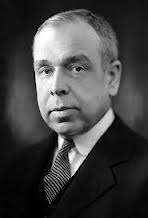
J. Gresham Machen’s classic piece of polemics Christianity and Liberalism is one such text. Written at the height of the Fundamentalist/Modernist conflict, Machen set out to clearly set out the choice before the Church. But it wasn’t so much a choice between two variations of Christianity as so many thought, but between two different faiths altogether, with different doctrines of revelation, salvation, God, Christ, and more. In other words, it wasn’t just a dispute about variations in our understanding of the incarnation, but whether there was an incarnation!

One of the key battle-grounds, of course, was Scripture: what is its nature and authority? Is it inspired or infallible? If so, how so? If not, why not? Modernists were critical for what had become the usual reasons: science, historical criticism, the moral character of the OT, and so forth. I revisited the text recently, though, and was surprised (and yet not surprise) to find Machen critiquing one very familiar argument forwarded by the liberals of his day:

The modern liberal rejects not only the doctrine of plenary inspiration, but even such respect for the Bible as would be proper over against any ordinarily trustworthy book. But what is substituted for the Christian view of the Bible? What is the liberal view as to the seat of authority in religion? The impression is sometimes produced that the modern liberal substitutes for the authority of the Bible the authority of Christ. He cannot accept, he says, what he regards as the perverse moral teaching of the Old Testament or the sophistical arguments of Paul. But he regards himself as being the true Christian because, rejecting the rest of the Bible, he depends upon Jesus alone.

So, here we are, some ninety years ago facing the now-familiar “Jesus over the Bible” view of authority and revelation. Of course, Machen was unimpressed with its earlier version, “This impression, however, is utterly false. The modern liberal does not really hold to the authority of Jesus.”

Why does he say this? For two reasons that I can see. First, excerpting Jesus from his narrative setting in both Old and New Testaments limits our ability to actually understand him. Much as T.F. Torrance argues, Jesus only makes sense (his works, his deeds, his aims) only against the backdrop of Israel as well as the witness of the Gospels and the preaching of the apostles through whom we receive our witness about him. What’s more, this runs against the practice of Jesus who both affirmed the Old Testament as the word of God and appointed his apostles to authoritatively teach concerning him and his works in the power and inspiration of the Holy Spirit.

The second point, though, is that even still, without these considerations, the vaunted allegiance to Jesus’ unique authority begins to erode upon closer inspection:

As a matter of fact, however, the modern liberal does not hold fast even to the authority of Jesus. Certainly he does not accept the words of Jesus as they are recorded in the Gospels. For among the recorded words of Jesus are to be found just those things which are most abhorrent to the modern liberal Church, and in His recorded words Jesus also points forward to the fuller revelation which was afterwards to be given through His apostles. Evidently, therefore, those words of Jesus which are to be regarded as authoritative by modern liberalism must first be selected from the mass of the recorded words by a critical process.

The critical process is certainly very difficult, and the suspicion often arises that the critic is retaining as genuine words of the historical Jesus only those words which conform to his own preconceived ideas. But even after the sifting process has been completed, the liberal scholar is still unable to accept as authoritative all the sayings of Jesus; he must finally admit that even the “historical” Jesus as reconstructed by modern historians said some things that are untrue.

So, even after declaring our allegiance to Jesus, we sometimes find that the words of Jesus as we actually have them in the Gospels—his pronouncements on eschatology, marriage, his exclusive authority, etc.—must be cleaned up. How did they deal with such a challenge to their claim that they follow Jesus? Machen elaborates:

So much is usually admitted. But, it is maintained, although not everything that Jesus said is true, His central “life-purpose” is still to be regarded as regulative for the Church. But what then was the life-purpose of Jesus? According to the shortest, and if modern criticism be accepted the earliest of the Gospels, the Son of Man “came not to be ministered unto, but to minister, and to give his life a ransom for many” (Mark x. 45). Here the vicarious death is put as the “life-purpose” of Jesus. Such an utterance must of course be pushed aside by the modern liberal Church.

The truth is that the life-purpose of Jesus discovered by modern liberalism is not the life purpose of the real Jesus, but merely represents those elements in the teaching of Jesus − isolated and misinterpreted − which happen to agree with the modern program.

We might paraphrase and say that for the liberals of Machen’s day, the central truth of Jesus’ story, his life, his consciousness is what mattered. Some of the details, certain specific teachings, or doings, if they’re not part of this central story, can be discarded or relativized without much harm done. Of course, the question becomes how you decide what counts:

It is not Jesus, then, who is the real authority, but the modern principle by which the selection within Jesus’ recorded teaching has been made. Certain isolated ethical principles of the Sermon on the Mount are accepted, not at all because they are teachings of Jesus, but because they agree with modern ideas.

It is not true at all, then, that modern liberalism is based upon the authority of Jesus. It is obliged to reject a vast deal that is absolutely essential in Jesus’ example and teaching − notably His consciousness of being the heavenly Messiah. The real authority, for liberalism, can only be “the Christian consciousness” or “Christian experience.”

Now, of course, this not an exact copy of the of arguments we find today. Downstream from the Liberal/Fundamentalist debates, our culture has shifted, and the more explicit liberalism with its anti-supernaturalism, its platitudes about universal truth, and so forth don’t set as well. We don’t mind the resurrection—we love it, in fact. As Trevin Wax has recently pointed out, old school liberals had more problems with the Creed than with the 10 Commandments, but we’ve sort of switched that up. All the same, this is one of those important moments to remember that a historical “precedent” need not be exact in all of its details and may have serious, significant differences. (In other words, Hus really was a precursor to Luther, despite their differences.)

If you look at it, though, it’s not hard to look around the theological landscape (internet or otherwise) to recognize many of the same old moves being made. We have a core Jesus consciousness, or “story” being appealed to over and against the actual words and deeds of Jesus and the apostles that he authorized to interpret and tell us that story. Some parts of Jesus’ teaching (the ones that happen to fit really well with left and center-left, progressive ethical or theological sensibilities) are upheld as the core of the message and life of Jesus and then used as a rule, a canon within the canon, to determine what really counts.

Machen draws out some more of the problems with that:

But how shall the findings of the Christian consciousness be established? Surely not by a majority vote of the organized Church. Such a method would obviously do away with all liberty of conscience. The only authority, then, can be individual experience; truth can only be that which “helps” the individual man. Such an authority is obviously no authority at all; for individual experience is endlessly diverse, and when once truth is regarded only as that which works at any particular time, it ceases to be truth. The result is an abysmal skepticism.

In a sense, I’m sort of repeating myself. But the fact is that history seems to be repeating itself. With variations, of course, but still, the pattern is there, plain as day, for all to see.

And please hear me, I really don’t want to dismiss the differences. The ability to recite the Apostle’s Creed without crossing your fingers, affirming Jesus’ death and resurrection, his Messiahship, and so forth, are not small, theological potatoes. This is not exactly your grandfather’s liberalism. Thank God for that.

All the same, many of the same root problems with your grandfather’s liberalism are there, nonetheless, simply with different symptoms. They haven’t gone away, nor are they any less corrosive in the long run.

Soli Deo Gloria

What Counts as a Historical Precedent for New Testament Christology?

Jesus monotheismFor the last 30 or so years (or maybe more), there’s been a running debate surrounding the nature, shape, and origins of New Testament Christology. How high or low was it really? Was Paul really working with a concept of Christ as fully divine and fully human a la Chalcedon, or did that come later as the Church reflected on the implications of what Paul and the other apostles wrote? And did Jesus think himself divine? Was that even an option for a 1st Century Jew? Where did that Christology eventually come from? Was it the influence of Greek, pagan cult, or rooted in classic, Hebrew monotheism? And are these even the right questions? (See Wesley Hill on this)

While much New Testament scholarship in the 20th century took it for granted that “high” Christology was a later development, scholars like Larry Hurtado, Richard Bauckham, Chris Tilling, N.T. Wright, and others, have recently forwarded a thesis of early “Christological Monotheism” that argues the earliest Christology we have is a divine Christology. From the beginning, Paul, John, and the other apostles believed there to be one God (YHWH) and yet, somehow, the man Jesus was central to that one God’s identity (1 Cor. 8, Phil. 2, Col. 1, John 1, etc).

This “emerging consensus” has grown in force and strength over the years, despite variations among the different proponents. Some emphasize the new pattern of reading Scripture that forced the early Christians to recognize Christ as the one who has come and done what only YHWH himself would come and do (Wright), or the fact that he is ascribed the divine Name (Bauckham), or that he receives worship in a way only suited to the Creator in Jewish monotheism (Hurtado). All the same, one thesis that most seem agreed on is that this “Christological monotheism” has no real precedent in the 2nd Temple Jewish texts of the period before Christ.

Crispin Fletcher-Louis disagrees. He does so in a recently published first work of an ambitious, projected four-volume series on the issue, Jesus Monotheism Volume 1: Christological Origins: The Emerging Consensus and Beyond. I’m only about half-way through it, but it’s already proving instructive and provocative. For those interested, in the series, Fletcher -Louis aims both to support and forward the “emerging consensus” while simultaneously critiquing and strengthening it from what he takes to be real weaknesses, due largely from a failure to consider biblical anthropology and theology.

While mostly appreciative of Bauckham and Hurtado’s work (often sharply defending them against critics such as James Dunn or James McGrath), here he says they’ve missed the mark. They say that the various designated emissaries of God such as kings, prophets, priests, nor angelic figures were ever included in the identity of the one God, nor did they receive the kind of worship that Jesus does in the New Testament. Fletcher-Louis thinks that while they are right to point out the real, sharp discontinuity with anything that’s come before in pre-Christian Judaism, their method doesn’t give proper due to the range of thinking about Messianic or medatorial figures present in the 2nd Temple texts discovered by recent scholarship (128-129).

At this point in the study, he notes two problems with their method. First, he thinks they handle key texts idiosyncratically, taking minority positions without showing their work enough. Fletcher-Louis aims to tackle that issue at length later, with case-studies in key texts (130).

Second, and this was the interesting point for me, Fletcher-Louis claims they don’t handle the notion of precedents properly with respect to NT Christology. Obviously, there is no exact precedent. There is a radical discontinuity and difference. There is no direct parallel, nor does the Old Testament explicitly demand the New Testament’s Christology (though it is not inconsistent with it). All the same, Fletcher-Louis says that Hurtado in particular “demands too much of the Jewish material for it ever to hope to gain a proper hearing as a factor in explaining the phenomenon attested in the NT” (131). In other words, Hurtado has too high a criterion for what counts as a “precedent” and so it’s obvious that he won’t find one. There won’t be a precedent for each and every part in a single figure, but given the fact that the “Christological monotheism” of the New Testament has many parts, it can be shown that many of the various parts can be found in other sources, even if the whole is not.

He uses an illustration I found particularly instructive:

The Dominican friar Girolamo Savonarola (1452-98) is generally, reckoned, to have anticipated Luther’s German Reformation with an uprising against the power of the clergy in Renaissance Florence. But the full flowering of the theologcal and ecclesial revolution was only seen several decades later the other side of the Alps in Germany (and Switzerland). Savonarola was an historical precedent for Luther, but by no means did his attempted reformation have all the elements of the theological, ecclesial, and political revolution that would spread from Germany.  For the waves of Pentecostal and Charismatic renewal and revival that have overtaken parts of the church in the twentieth century there is precedent in pietistic and popular movements, some of which were focused on visionary and “Spirit” experiences, in the medieval church. But in many ways modern Pentecostalism is theologically (and sociologically) quite peculiar to the twentieth century. Such is the stuff of historical precedent. And sometimes precedent entails a degree of historical causality…but sometimes it only offers an intriguing comparison from another, separate historical context… (131)

In the same way, it’s not that we must find a total package Christological monotheism before Christ for it to count as a precedent, but similar elements. Nor, argues Fletcher-Louis, should we be too worried that some anticipations to the Christology of the New Testament might sideline the uniqueness of Christian claims. On the contrary, the similarities are precisely what can aid us in understanding the distinctive character of Christian worship of Christ in distinction from surrounding movements and theologies in the 2nd Temple literature we find (132).

I find his point well-taken, though, it remains to be seen (at least for me) whether he actually does demonstrate the precedents, or whether he does properly safeguards against some of the parallelomania that’s prevalent in certain quarters of the NT guild. Given the case he’s made so far, though, and this write-up of his work by Andrew Wilson, I’m quite excited to see him make the attempt.

Soli Deo Gloria