Are You a Dualist? Is that Bad? Just ask N.T. Wright

I was a sophomore in college when I found out that there was more than one kind of dualism. I was sitting in my class on St. Augustine (it was my medieval philosophy class) when a fellow classmate brought up the issue of dualism and how interesting it was given that nobody believed it. I piped up and said, “Oh, yeah, I’m a dualist.”

Looking at me with surprise, “Oh really? I’ve never met one. That’s odd.”

I didn’t think it odd at all: “Well, I am a Christian so it’s not that weird.”

“Really? I thought the two were kinda not compatible.”

At this point I was truly confused. Turns out we both were.  See, I had been talking about mind-body dualism and he was referring to theological dualism a la Zoroastrianism where you have a good god and a bad god facing off. At that point I started to realize that the subject of dualism was far more complicated than I thought. In fact, I didn’t realize how complicated it was until I read N.T. Wright’s The New Testament and the People of God (NTPG)In that work he lists 9-10 different kinds of dualism that you could speak of when discussing the views of 1st Century Pagans and Jews.

I was reminded of this little discussion when reading this article by Wright on anthropology, or the theology of humanity, in the Apostle Paul’s thought. In it, he offers this helpful summary of his own discussion in NTPG.

So let’s run through these types of dualism or duality, beginning with four types that would be comfortably at home within ancient Jewish thought:

  1. a heavenly duality: not only God exists, but also angels and perhaps other heavenly beings;
  2. a theological or cosmological duality between God and the world, the creator and the creature;
  3. a moral duality between good and evil;
  4. an eschatological duality between the present age and the age to come.

All of these dualities a first-century Jew would take for granted. But none of them constitutes a dualism in any of the following three senses:

  1. a theological or moral dualism in which a good god or gods are ranged, equal and opposite, against a bad god or gods;
  2. a cosmological dualism, a la Plato, in which the world of space, time and matter is radically inferior to the noumenal world; this would include, perhaps, dualisms of form and matter, essence and appearance, spiritual and material, and (in a Platonic sense) heavenly/earthly (something like this would be characteristic of Philo);
  3. an anthropological dualism which postulates a radical twofoldness of soul and body or spirit and body (this, too, would be familiar in Philo).

Then there are three more which might be possible within ancient Judaism:

  1. epistemological duality as between reason and revelation – though this may be problematic, since it’s really the epistemological face of the cosmological dualism which I suggest ancient Jews would mostly reject;
  2. sectarian duality in which the sons of light are ranged against the sons of darkness, as in Qumran;
  3. psychological duality in which the good inclination and the evil inclination seem to be locked in perpetual struggle, as in Rabbinic thought.

It’s important to know about these different sorts dualisms in order to keep a clear theological head on your shoulders wading into these discussions–which I know you do everyday. But seriously, for Christians wanting to understand reality out of a properly Christian worldview, or theological framework, we have to keep in mind what Wright underlines here:

The radical rejection by most ancient Jews, in particular, of what we find in Plato and in much oriental religion, and the radical embrace of space, time and matter as the good gifts of a good creator God, the place where this God is known and the means by which he is to be worshipped – all this remains foundational, and is firmly restated and underlined in the New Testament. Creational, providential and covenantal monotheism simply leave no room for those four dualisms in the middle. In particular, I argued that such dualisms tend to ontologize evil itself, whereas in first-century Judaism evil is not an essential part of the creation, but is the result of a radical distortion within a basically good created order.

While we might not all agree with his judgments on Plato’s dualisms or body and soul, it’s important to keep distinct the things that ought to be distinct (God/creation, good/evil, present age/age to come, etc.) while avoiding tearing apart those things that should be kept together. That basic creational framework of a good God who creates a good world that gets distorted by sin is the backdrop of God’s redemption of all things in Christ. This is what the ancient gnostics missed when they created a Jesus who was simply a redeemer who saved people’s souls from their bodies–in which case, who cares what you do with your body? This is what is absent in pantheistic theologies that drag God into the world, who end up giving us a “compassionate” God that, in the end, is just as trapped in the world’s agony as we are, instead of being the distinct, but sovereign redeemer who can fix it. This is what modern Evangelicals sometimes miss with their tendency for evacuating from the world, despising creation, and simply waiting for Jesus to come back and rapture them out of their nicely air-conditioned churches they hide in most of the week.

God freely created the world distinct from himself, he loves it–he’s going to save it. He wants his people out in the world, in it, but not of it, proclaiming that good news, and working for it out in the world.

The bottom-line is: if you don’t keep your dualisms straight, you might lose the Gospel.

Soli Deo Gloria

God Didn’t Just Create the World to Spin on its Own

Last night I talked to my college group about the issue of miracles and the laws of nature. One point that came up was that too often Christians have a limited view of God’s creative activity. They think of him in an essentially deistic fashion–that God created the world and then just left it spinning to itself. On that view, miracles become somewhat random interventions of an absent God. No, instead the Bible presents us with a God who not only creates, but sustains the universe in existence, governing it in wisdom and with fatherly compassion.  On this picture, a miracle is not an “intervention” from a distant God, but a sovereign action of a God already intimately involved with maintaining his creation. It was a good discussion–I love my job.

As I thought back on it this morning, it called to mind Calvin’s excellent comments on God’s creation and governance:

Moreover, to make God a momentary Creator, who once for all finished his work, would be cold and barren, and we must differ from profane men especially in that we see the presence of divine power shining as much in the continuing state of the universe as in its inception, For even though the minds of the impious too are compelled by merely looking upon earth and heaven to rise up to the Creator, yet faith has its own peculiar way of assigning the whole credit for Creation to God. To this pertains that saying of the apostle’s to which we have referred before, that only “by faith we understand that the universe was created by the word of God” [Hebrews 11:3]. For unless we pass on to his providence — however we may seem both to comprehend with the mind and to confess with the tongue — we do not yet properly grasp what it means to say: “God is Creator.” Carnal sense, once confronted with the power of God in the very Creation, stops there, and at most weighs and contemplates only the wisdom, power, and goodness of the author in accomplishing such handiwork. (These matters are self-evident, and even force themselves upon the unwilling.) It contemplates, moreover, some general preserving and governing activity, from which the force of motion derives. In short, carnal sense thinks there is an energy divinely bestowed from the beginning, sufficient to sustain all things. But faith ought to penetrate more deeply, namely, having found him Creator of all, forthwith to conclude he is also everlasting Governor and Preserver — not only in that he drives the celestial frame  as well as its several parts by a universal motion, but also in that he sustains, nourishes, and cares for, everything he has made, even to the least sparrow [cf. Matthew 10:29]. Thus David, having briefly stated that the universe was created by God, immediately descends to the uninterrupted course of His providence, “By the word of Jehovah the heavens were made, and all their host by the breath of his mouth” [Psalm 33:6; cf. Psalm 32:6, Vg.]. Soon thereafter he adds, “Jehovah has looked down upon the sons of men” [Psalm 33:13; cf.Psalm 32:13-14, Vg.], and what follows is in the same vein. For although all men do not reason so clearly, yet, because it would not be believable that human affairs are cared for by God unless he were the Maker of the universe, and nobody seriously believes the universe was made by God without being persuaded that he takes care of his works, David not inappropriately leads us in the best order from the one to the other. In general, philosophers teach and human minds conceive that all parts of the universe are quickened by God’s secret inspiration. Yet they do not reach as far as David is carried, bearing with him all the godly, when he says: “These all look to thee, to give them their food in due season; when thou givest to them, they gather it up; when thou openest thy hand, they are filled with good things; when thou hidest thy face, they are dismayed; when thou takest away their breath, they die and return to the earth. If thou sendest forth thy spirit again, they are created, and thou re-newest the face of the earth” [Psalm 104:27- 30 p.]. Indeed, although they subscribe to Paul’s statement that we have our being and move and live in God [Acts 17:28], yet they are far from that earnest feeling of grace which he commends, because they do not at all taste God’s special care, by which alone his fatherly favor is known.

-John Calvin, Institutes of the Christian Religion, 1.16.1

Calvin, and Scripture, remind us that we serve a God who didn’t just create the world and leave it spinning. No, instead we have a God who, with fatherly kindness and great concern, reigns over it with wisdom and power.

Soli Deo Gloria

The Gospel According to Bach

Because Chris Tomlin just wasn’t good enough for Reformation Sunday, our choir performed a majestic rendition of Johann Sebastian Bach’s Cantata No. 4 this morning. Now, I have to admit I am a bit of a neanderthal and growing up in the churches I have, great as they were, I was never really exposed to high church culture; it’s not my natural jam. Still, I was deeply moved by this piece.

Musically, it was Bach–’nuff said. Lyrically, again, it was Bach, but this particular piece was based on Martin Luther’s hymn, “Christ Lay in Death’s Cold Prison.” While it was meant to be heard, not merely read, I’d encourage you to take some time this week to work your way through the verses, meditating on the deep, Gospel truths about Christ’s death for sin, and hard-won victory of the powers of hell and the grave. It is heavy with theological and spiritual substance; rich food for the soul. Eat up.

Christ lay in death’s cold prison
bound fast for our transgression;
but now he has arisen
and brought to us salvation.
Let us all be joyful, then,
praise God and give thanks to Him
and sing Hallelujah,
Hallelujah!

O Death, you spared no mortal soul
of any race or nation,
for all were under sins control,
none was without transgression.
Therefore came grim Death so soon
and with swift advance it brought our doom,
and held us in its realm of terror.
Hallelujah!

Our Savior Jesus, God’s own Son,
here in our stead descended.
The knot of sin has been undone,
the claim of death is ended!
Christ has crushed the power of hell;
now there is naught but death’s gray shell;
It’s sting he now has ended.
Hallelujah!

It was a war of majesty,
of Life and Death together;
but Life gained the victory,
and did destroy the other.
Scripture has proclaimed it so,
how one death devoured its foe,
and mocked its fleeting power.
Hallelujah!

Here is the spotless Easter-lamb,
that God the Lord did give us,
who high upon the cross was hung
and sacrificed to save us.
On our doorposts is his blood,
The price he paid to conquer Death:
the Strangler now cannot destroy us.
Hallelujah!

Then let us keep this holy feast
with all delight and pleasure,
which God the Lord makes manifest;
he is our light and pleasure,
who through the splendor of his grace
has lightened our most sacred place.
The night of sin has vanished.
Hallelujah!

So Christians, feast with joy each day
on Christ, the bread of heaven,
the Word of grace has purged away
the old and evil leaven.
Christ alone, our holy meal,
the hungry soul will feed and heal;
faith lives upon no other!
Hallelujah!

Soli Deo Gloria

Quick-Blog #5-How to Meet People in Coffee Shops

I meet new people in coffee shops. All. The. Time. (Seriously, 4 people in 2 days last week.) I mostly like this. I’m a decently friendly guy and I enjoy getting to know different, interesting people. On top of that, I’ve got a bit of an evangelistic streak in me. You probably won’t ever hear me roll through the 4 spiritual laws over an espresso, but it’s unsurprising to find me in a conversation with someone I’ve met 20 minutes prior, discussing their church history and views on Jesus. Still, every once in a while I feel like I have “Talk to me” written on my forehead. I’ve tried to think about how I happen to get into these conversations and I’ve come up with some reasons, both serious and silly. So, if you want to meet people in coffee shops you might try some of these methods, especially if you’re looking to be “missional” and relational in your approach to sharing the Gospel.

1. Read interesting books. Seriously, read interesting books, or at least ones with interesting covers. Then, leave them out on your table. Usually every couple of visits to a coffee shop somebody’ll ask me about the book I’m reading and we”ll start talking. Funniest conversation like that was when I was reading Ross Douthat’s Bad Religion I got to explain that it was social commentary and American religious history, not a biography of the band.

2.  Smile. This is simple, but I generally smile at people when I see them walk in, or we make eye contact. When I’m studying, I look up a lot and almost by reflex find myself smiling at somebody. I might have no intention of talking to them, but somehow, we end up in a conversation because I guess smiling is rare. We live in an increasingly suspicious and cynical culture. In a culture where the biggest cause of depression is loneliness, signs of life and warmth are attractive. Of course, this can easily be misread. Beware the creeper smile. Still, be friendly.

3. Notice People and Ask Questions. If you’re bold and want to be the one to start the conversation, notice people and ask them questions. People are so used to going through their days without anybody taking an active interest in them and their activities that an honest question about something you’ve noticed (again, something not creepy), will usually invite an answer that you can build into a conversation. Noticing books, unique shoes, inquiring about what they’re studying, etc. will usually draw people out of their I-don’t-know-you-keep-the-traditional-3-feet-away shell. Thing is though, you should actually be interested in those things. Don’t ask about something if all you want to do is cut to the chase and get at what you’re really interested in. Be interested in the person. In any case, you probably won’t have anything useful to say to them unless you’ve first paid attention to who they actually are.

4. Commit to Being Somewhere. Place is important. Investing time and committing to going regularly to particular places at particular times, or at least on a regular basis gives you a great opportunity to become familiar with and familiar to regulars as well as randoms. It gives you the opportunity to just start saying hi, and then building out relationships from there. So, pick a place and plant yourself.

5. Have a huge mustache (Men only). Okay, this is a joke, but I seriously get comments on my mustache from random strangers 3-4 times a week. On more than one occasion this has developed into a long conversation about Jesus and inviting them to church. Just sayin’, it’s something you pastor-types might want to try out.

6. Pray. Really, if you want to meet people, engage them about life, truth, and Jesus, then pray before you go anywhere. Pray God will give you opportunities, and wait for God to work. Sometimes you meet nobody, then there are days when you end up talking to a total stranger about their deepest convictions about life, God, and reality. You really don’t know what God will throw your way if you ask him.

Alright, that’s about it. I’m not an evangelism expert, but hopefully some of these tips can help you meet the people that God has placed around you “so that they would seek him and perhaps reach out for him and find him.” (Acts 17:27)

Soli Deo Gloria

G.K. Beale on the Presence of a Covenant in Gen. 1-3

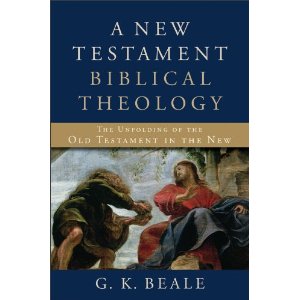
Alright, I finally cracked open G.K. Beale’s 962 page beast, A New Testament Biblical Theology: The Unfolding of the Old Testament in the New.  It’s been staring at me, tempting me with it’s theological awesomeness, so I finally gave in. At about 60 pages in I can safely say this is going to be a watershed work in New Testament studies. Describing the project in a short blog-post while doing it any sort of justice is next to impossible, especially when you consider the fact that Beale’s own description takes him about 25 pages. Still, the title alone points us to fact that one of the main thrusts of Beale’s work is to show how the New Testament can only be understood as the unfolding of the grand story-line of the Old Testament.

In order to do so, he opens with a summary and theological analysis of that story-line, beginning with a focus on the first 3 chapters of Genesis. He pays special attention to Adam, the concept of the Image of God,  and the eschatological thrust of the creational command to “conquer and subdue” the earth and “be fruitful and multiply” (Gen. 1:28), themes of crucial importance for understanding the rest of the tension and story-line of the OT.

It’s at this point that I ran across a very helpful passage discussing the presence of a “covenant” in Gen 1-3. After some careful examination of the texts Beale notes that there are a number of considerations that point us to the idea that it is possible, indeed necessary, to speak of a “covenant” relationship between God and Adam in the Garden, despite the objection that the word “covenant” is not used in the passage. The passage is worth quoting at length here:

In light of these observations, we can speak of the prefall conditions as a “beginning first creation” and the yet-to-come escalated creation conditions to be a consummate “eschatologically” enhanced stage of final blessedness. The period leading up to the reception of these escalated conditions is the time when it would be decided whether Adam would obey or disobey. These escalated conditions indicate that Adam was in a covenant relationship with God. Although the word “covenant” is not used to describe the relationship between God and Adam, the concept of covenant is there. God chooses to initiate a relationship with Adam by imposing an obligation on him (Gen. 2:16-17). This obligation was part of the larger task with which Adam had been commissioned in Gen 1.:28: to “rule” and “subdue” creation and in the process to “be fruitful and multiply and fill the earth.” Adam’s “ruling and subduing” commission included guarding the garden from any threat to its peaceful maintenance. In light of Gen. 2:16-17 and 3:22, Adam would receive irreversible blessings of eternal life on the condition of perfect faith and obedience, and he would receive the decisive curse of death if he was unfaithful and disobedient. Thus, the discernment of irreversible escalated creation conditions discussed above is the best argument for such a covenant notion.

Consequently, the argument that the word “covenant” is not used in Gen. 2-3 does not provide proof that there is not covenant relationship, just as Adam and Eve’s marriage relationship is not termed a “covenant” in Gen. 2:21-24 but expresses covenantal concepts and, in fact, is identified as a covenant elsewhere. Likewise, it is profitable that God’s covenant with Adam is referred to as a covenant elsewhere in the OT. The essential elements of a covenant are found in the Gen. 1-3 narrative: (1) two parties are named; (2) a condition of obedience is set forth; (3) a curse for transgression is threatened; (4) a clear implication of a blessing is promised for obedience. It could be objected that there is no reference to either party reaching a clear agreement or, especially, to Adam accepting the terms set forth in this so-called covenant. However, neither is this the case with Noah and Abraham, with whom God made explicit covenants. –A New Testament Biblical Theology: The Unfolding of the Old Testament in the New, pp 442-43

Again, these conclusions come after a solid examination of the texts (pp. 30-41), and is followed by reinforcing argumentation (pp. 43-46). Still, I found this passage to be helpful in showing that to speak of God’s creational covenant with Adam, or a “covenant of works”, is not an obvious imposition of foreign concepts onto the text in order to fit it into a theological grid, as is so often charged.  Rather, something like this is positively required by a close, narratively-oriented reading of the text.

As I continue to dive into this ambitious, and already thoroughly rewarding work, I’m sure more excerpts and summaries will follow this.

Soli Deo Gloria

The Day Reading Your Bible Won’t Matter

I’ve realized for some time now that my MA in Biblical studies has a shelf-life. I’m not just talking about the fact that scholarship moves on and that you constantly have to keep learning if your education is going to mean anything. I’m talking about the fact that eventually, there will come a time when learning about the Bible simply won’t matter.

You heard me. There’s going to come a day when READING YOUR BIBLE WON’T MATTER.

What day am I talking about? Check out this quote by old, dead guy, theologian Abraham Kuyper:

In paradise, before the Fall, there was no Bible, and there will be no Bible in the future paradise of glory. When the transparent light, kindled by nature, addresses us directly, and the inner word of God sounds in our heart in its original clearness, and all human words are sincere, and the function of our inner ear is perfectly performed, why should we need the Bible? What mother loses herself in a treatise upon the “love of our children” the very moment that her own dear ones are playing about her knee, and God allows her to drink in their love with full draughts? –Lectures on Calvinism, pg. 45

At the end of all things we won’t need to read our Bibles because the reality they’ve been pointing us to, teaching us about, will be here, fully available. We won’t just have to read about the glory of God in Jesus Christ, but we’ll be able to see, taste, and touch–we’ll swim in it. When face to face with our beloved, there is no need to read an old letter. In the New Creation, people won’t need Bible experts, teachers, etc. Once again, I’ll be out of a job. You won’t need to read your Bible.

Still, as Kuyper goes on to point out, this is not currently the case:

But, in our present condition, the immediate communion with God by means of nature, and our own heart, is lost. Sin brought separation instead, and the opposition which is manifest nowadays against the authority of the Holy Scriptures is based on nothing else than the false supposition that, our condition being still normal, our religion need not be soteriological. For of course, in that case, the Bible is not wanted, it becomes, indeed, a hindrance, and grates upon our feelings, since it interposes a book between God and your heart. Oral communication excludes writing. When the sun shines on your house, bright and clear, you turn off the electric light, but when the sun disappears below the horizon, you feel the necessitas luminis artificiosi ie., the need of artificial light, and the artificial light kindled in every dwelling. Now this is the case in matters of religion. When there are no mists to hide the majesty of divine light from our eyes, what need is there then for a lamp unto the feet, or a light unto the path? But when history, experience, and consciousness unite in stating the fact that the pure and full light of heaven has disappeared, and that we are groping about in the dark, then, a different, or if you will, an artificial light must be kindled for us–and such a light God has kindled for us in his holy Word.

Lectures on Calvinism, pp. 45-46

One day we won’t need our Bibles, but today is not that day. We’re still in need of light. We don’t see all things clearly. Things can get a little foggy out there. Your hearts can still deceive you, so you need someone to place “a book between God and your heart.” For now we see in a mirror dimly, but then face to face. Now I know in part; then I shall know fully, even as I have been fully known. (1 Cor 13:12)

For now, keep your Bibles open and shining light into your heart and let it remind you constantly of the day, when by God’s grace, you won’t need it.

Soli Deo Gloria

The Most Important Thing You Can Ask for in Ministry

Ever since I was a kid, the story of Solomon’s prayer for wisdom has been a favorite of mine. My mom would read it often to me and recall it to mind when we were talking about pretty much any subject, so that I should always seek wisdom from God before anything else. I think she knew I was going to need it.

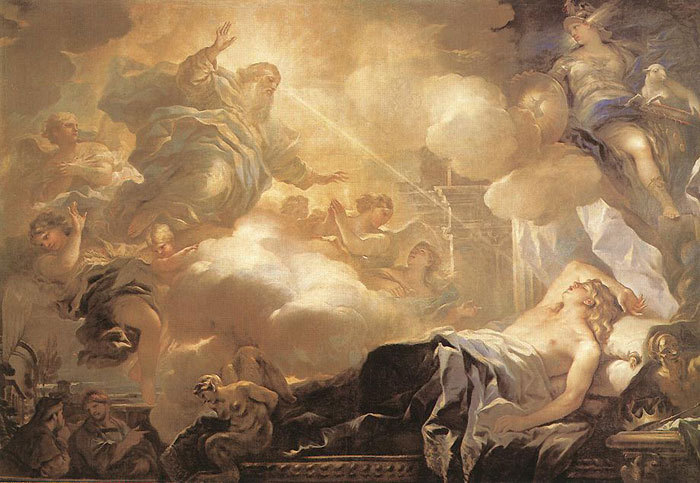
For those of you who don’t know the story, the first half of 1 Kings 3 recounts the story of God appearing to the young Solomon in a dream after the death of his father King David. God grants him one request at the beginning of his reign. To God’s great delight, Solomon replies:

And now, O LORD my God, you have made your servant king in place of David my father, although I am but a little child. I do not know how to go out or come in. And your servant is in the midst of your people whom you have chosen, a great people, too many to be numbered or counted for multitude. Give your servant therefore an understanding mind to govern your people, that I may discern between good and evil, for who is able to govern this your great people?
(1 Kings 3:7-9)

Understanding, wisdom is Solomon’s request. God has put him in charge of a great people and he knows that he needs wisdom in order to administer justice among them for he is only a young man. God hears this and is greatly pleased and tells him that because he did not ask for money, power, the defeat of enemies, or anything of the like, but rather wisdom to administer justice, he will have all of these things and in spades. Not only will he be wise, but he will be wiser than any that have come before and any that follows. Beyond that, God will bless him with peace, wealth, and general prosperity in a way that Israel will not experience under any other king.

Ruling a Great and Mighty People I come back to that story now as a young guy starting out in ministry and I read it with new eyes. As a minister of the Gospel, I’ve been called to “rule”, administer, and care for the people of God. Call it what you want, there is an authority and a responsibility to shepherd God’s flock given to those of us who work in the church, paid or not. This is a scary task. Many of us don’t stop to think about it, but we are taking care of GOD’s people. They’re his. He cares about them. They are his blood-bought  people, so for him to place them in our hands is a weighty thing. It’s the kind of thing that we probably need a lot of understanding to accomplish.

When I read this story it is humbling and kind of convicting to think about my prayer life (and, at times, lack thereof.) What am I praying for as a minister? Working at an North American church it’s really easy to get caught up in asking for all sorts of things besides wisdom. We can get caught up asking for numbers so the attendance sheets look full and your ministry seems effective. Or how about funding? It’s easy to think that if I just had a bigger budget, I’d be able to buy the right tools to make my ministry cutting-edge, or position us to host the right events, etc. Or maybe we pray for more leaders? If I just had a little more help this thing would come together, more people would be ministered to, and the Gospel would go forward.

Now, all of these things would be nice. They’d be great. It’s no shame to ask for them. In fact, you probably should be praying for these things. Funds do help. The harvest is plentiful and we need more workers in the field. Numbers are not a bad thing. A lot of really “spiritual” Christians think that it’s a virtue to not care if your church is empty. It can be when that means fidelity despite unpopularity, but otherwise we should want people to be joining the family of God in our congregations. Still, none of these things means anything if you don’t have the wisdom to know what to do with them. Without wisdom you will spend your cash foolishly, your leaders will fail, and people will walk in and then walk out the doors–or worse still, remain in your church unchanged.

We need to be praying for wisdom. Much of Solomon’s wealth, success, and the peace of his kingdom came as a result of his wisdom. Wisdom helps you find good leaders, work with the funding you have, and know what to do with your people when you get them.  Thankfully, God is rich in wisdom and generous with it. He gives it to any who asks in faith. (James 1:5) So, just ask.

(What are some things that you pray for your ministry about? What do you usually feel is the most pressing need? Why? How good would it be without wisdom?)

Wisdom is Needed Even for Two  Something else to realize is that this goes for you–whoever you are. Everybody needs to be asking for wisdom to care for the people of God, even if you only have a congregation of two.

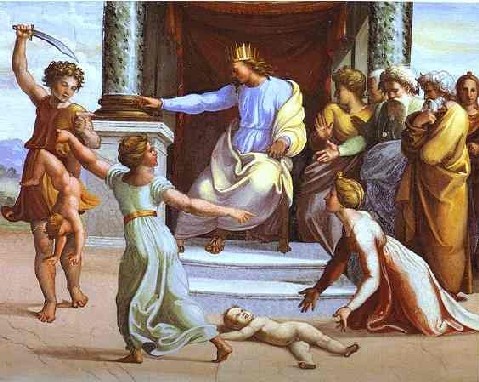
That’s one of the things we see in the final story of the chapter, with Solomon’s famous decision about the two women and the child. (1 Kings 3:16-28) Two prostitutes who were room-mates bore children within days of each other. One woman’s child died in the night and so she switched the two babies, claiming the live one was hers. They came before Solomon with a plea for justice. Solomon came up with a way of determining who was the true mother by offering to chop the baby in half and give each a piece. The true mother said to give the child to the other mother in order that it might be spared; the other one didn’t care. Solomon then gave the child to the one with compassion. Scary, kinda gruesome, but wise.

In context, the story shows Solomon’s wisdom was sufficient for administering justice within the whole of the nation. But here’s the thing, essentially the problem occurs between two women. That’s all it takes. Small-group leaders and one-on-one disciplers need wisdom just as much as mega-church pastors running congregations of thousands, because people are people no matter the size of the group.

Really Ask for Wisdom A final point when considering this story: we really need to be asking for wisdom. No, this is not just pointless repetition. One bad way of reading this story is to think that if we ask for wisdom, God will automatically give us all these other things. No, that’s not how it works. You can’t trick God into giving you a bigger budget or a bigger congregation. If your real desire is these things, wisdom will not come because you’ll fall into the foolishness that comes with obsessing over these things. Worry about getting wisdom first, seeking righteousness in the way that you care for the flock of God, and all these things shall be added unto you. (Matt 6:33)

Soli Deo Gloria

Will I Eat Pancakes Next Tuesday? A Thought or Two on Open Theism

“Derek will eat pancakes next Tuesday.”

Question: Is this statement true or false?

“Are you serious, Derek?”

Well, it seems like it has to be one or the other doesn’t it? I can’t both eat pancakes and not eat pancakes on Tuesday, (considering the whole 24 hour period as Tuesday.)

“Sure, but really? Pancakes? Why are we talking about pancakes?”

Seems like a dumb question, but in fact, it’s connected a much bigger issue: What does God know and when does he know it?

Open Theism and the Future

According to some theologians, Open Theists, there are some things that God doesn’t know that we typically imagine that God knows. For instance, he apparently doesn’t know large chunks of the future. Now there are a number of ways that Open Theists can arrive at this conclusion, but for some of them this thought is supported by the idea that future doesn’t exist. Like Greg Boyd, they hold that while God is “omniscient”, all-knowing, his knowledge does not extend to large segments of what will happen in the future because they aren’t settled yet. Some parts, like the parts where God has already figured out, “Well about that time I’m gonna save the world, and in two years I’ll eat Chinese food”, he knows. Also, he knows that the weather will work in about 25 years because that’s just kinda rolling out from what’s going on now. He can reliably infer that. Still, the chunks that have to do with us making decisions certainly don’t because that part’s not “settled”–I haven’t made that choice yet. Due to this, God does not have “exhaustive foreknowledge” of the whole of the future. This is not a knock on God though, because it is impossible to know that part of the future given its non-existence. For them, it’s kind of like him not being able to make a married bachelor–it’s a logical contradiction. According to them, the issue then isn’t God’s knowledge, but with the nature of the future. God simply cannot know the future exhaustively because it’s not there to be known.

No biggie.

Is this really the case, though? Now, there are a number of issues that might be discussed with respect to Open Theism be they theological, philosophical, biblical, pastoral, etc. because Open Theists forward reasons for taking their view in all of these areas. Now, I’ll just come clean and say that I think the view, in all of its forms, is seriously deficient on all counts and have never found it even remotely appealing–and that was before I was Reformedish. Also, as I noted, there is a variety amongst them. This post won’t deal with every type. I can’t go into the various issues today without this being way too long. I simply want to make a few small points in this little post on this one claim: that God doesn’t foreknow significant chunks of the future because it’s not there to be known.

Is that Right? Does it Follow?

Theories of Time The assertion that the future does not exist for God to know assumes one of two possible theories about time. (Really, there are a number of formulations of each and the literature is complex and dense.) The first is called A-theory and it basically says that there is an objective present, that NOW is what exists–temporal becoming is objective. There are at least two families of this view. Some theorists think that the present and the past “exist”, and others hold that only the present moment exists. On both, the future does not exist yet. The second theory, B-theory, also has a few versions but holds something along the lines that what we call “past”, “present”, and “future” objectively exist on something like a line. In a sense, the future is “already” there.

I raise this point not because I think A-theory is wrong. I don’t. In fact, I haven’t landed anywhere on this point. I do so just to point out that there are a number of options here. One could adopt B-theory and avoid this whole issue. Plenty of philosophers and theologians do. But let’s assume A-theory. Does it immediately follow that God can’t know the future because it’s not there? I don’t think so.

How Does God Know That? For in addition to holding a particular view of time, this type of Open Theism also takes a particular view of God’s way of knowing. William Lane Craig points out that are at least two ways of thinking about God’s way of knowing, two pictures of the way God comes to possess knowledge. (The Only Wise God, pg. 121) The first is the empiricist or perceptualist picture. On this view God comes to have knowledge about the world either by immediate perception or causal inference. In a sense, God knows things about the world by “seeing it”, or inferring it based on what he “sees.” If there’s nothing there for him to see, then he can’t know it. This is the basic picture that underlies Boyd’s form of Open Theism.

But Craig points out that this isn’t the only way to think of God’s knowledge of the world. One could think of it in a rationalist or conceptualist fashion. On this view, God simply possesses knowledge of all true statements. In our own experience, much of our knowledge about the world does not come by way of perception or inference. We simply know it immediately, innately. For instance, we know that other minds exist, even if just looking at other humans and animals or argumentation alone cannot prove that they’re not just robots or mindless automata, programmed to function the way we do. We know they’re not, but we can’t prove it and direct perception doesn’t gives us that knowledge. (Don’t believe me? Philosophers have tried. It’s really stinkin’ hard.) In any case, a belief about the world like that, is kind of like the conceptual furniture that comes with our minds. We don’t come to know it, we just know it.

In the same way, on a conceptualist view of God’s knowledge of the world we might think that God knows only and all true statements about the world. If there are true statements to be known about the future (even those about human decisions), then he knows those, which would be foreknowledge. Now, there are a number of ways to think about just how God happens to possess this innate knowledge of the world (cf. Molinism, God’s decree, etc.). I won’t go into them, but it is at the very least possible to think of God’s knowledge of the world in this fashion.  If it is possible, then it does not immediately follow that God couldn’t foreknow the future, even on the A-theory of time. If there are true statements about the future, God could know them without the future “being there.”

Is the Future True?

This brings us back to the issue of whether or not I will eat pancakes on Tuesday. In order for the Open Theist’s objection to work, you have to deny that future-tense statements are either true or false. The main (if not only) objection against it is something along the lines of, “The future doesn’t exist, therefore there is nothing for future-tense statements to correspond to.” But as Craig points out, this is idea is based on a confused view of the correspondence theory of truth. (pp. 55-60)

On the classic correspondence view, “It is raining outside” is true, if and only if, it is the case that it is raining outside. It must be made clear though, that “the correspondence theory does not mean that the things or events which a true statement is about must exist.” (pg. 56) This is true only of present-tense statements. It’s obviously not true of past-tense statements like, “Obama won the election in 2008.” All that is required for their truth is that they have been the case so that the present-tense statement “Obama is winning the election” is true at some point. In the same way, for future-tense statements, “Derek will eat pancakes next Tuesday”, all that is required for their truth is that the event will exist. At that time the present-tense version of the statement will be true.

A future-tense statement is true if things turn out the way it asserts, and false if it doesn’t. This is pretty common-sense stuff. In fact, Craig goes on to list good reasons for thinking that future-tense statements are true.

1. “The same facts that make present- and past-tense statements true or false also make future-tense statements true or false.” (pg. 58) The point is that it is difficult to distinguish, “It will snow tomorrow” stated May 20 from, “It snowed yesterday” stated May 22. The same event makes both true. Craig asks, “If ‘it is raining today’ is now true, how could ‘it will rain tomorrow’ not have been true yesterday?”

2. “If future-tense statements are not true, then neither are past-tense statements.” (pg. 58) If future-tense statements are neither true or false because their corresponding realities are not there, then neither are past-tense statements because they realities they speak to no longer exist. That’s silly to think, though. By the same logic then, it is silly to think that future-tense statements have no truth-value.

3. “Tenseless statements are always true or false.” (pg. 59) You can make any statement tenseless. “The Allies invaded Normandy” can be rendered tenseless by adding a date, “on June 6, 1944 the Allies invade Normandy.” There’s some loss of meaning, but it’s essentially the same content in a tenseless statement. The point is that tenseless statements are always true or false. It’s either always true that the Allies invade on June 6, 1944, or it’s not. And if the tenseless statement is true, then so is the tensed version addressing the same realities. Therefore, past- and future-tensed statements corresponding with the tenseless ones will be true. Beyond that, tenseless statements are always true or false. If that’s the case, then before June 6, that tenseless statement was true, in which case the tensed version was also true, in which case if God knows all truths, he has foreknowledge. To recap, “Derek will eat pancakes next Tuesday” can be rendered tenseless by transforming it to “On Tuesday October 9th, Derek eats pancakes.” That statement is either true or false, in which case the future-tense version is true or false. If God knows that truth he has foreknowledge.

4. “The denial of the truth or falsity of future-tense statements leads to absurd consequences.” (pp. 59-60) So, for instance, if future-tense statements are neither true or false, then the statement “Mitt Romney either will or will not win the 2012 presidential election” would not be true. This is a compound of two future-tense statements, “Mitt Romney will win the 2012 election” and “Mitt Romney will not win the 2012 election.” But, if future-tense statements are neither true nor false, then neither or these statements, nor their compound is true or false. But that is absurd because those two options exhaust the logical possibilities. He either will or he won’t win. Even more, we can’t even say that a statement like “Romney will and will not win the 2012 election” is false because that’s another compound of two future-tense statements. But that’s a self-contradiction that seems manifestly untrue. But on this view, you can’t say that.

For these reasons it seems safe to say that future-tense statements have truth values. If future-tense statements can be true or false, even ones that have to do with human decisions, like me eating pancakes next Tuesday and Romney winning the election, then it follows that God can have knowledge of them which constitutes foreknowledge.

How ‘Bout Dem Pancakes?

So, just because I haven’t made them yet, it doesn’t necessarily mean that God is ignorant as to my future breakfast choices. Now, to be sure, this isn’t a definitive statement on the foreknowledge issue. Far from it. Open Theists have plenty of other arguments at their disposal, (although, again, I think they have been handled multiple times over), and even this short treatment of this one issue is incomplete. Still, I think we’ve seen here that even if we grant that the future doesn’t exist yet, it by no means necessarily follows that God cannot have exhaustive foreknowledge of it. That idea rests on a confused idea of the nature of truth, and an unnecessary picture of God’s knowledge. In fact, I think given the fact that future-tense statements can be true or false, we’ve even gained some reasons to think that God does have knowledge of them, in which case the denial of God’s foreknowledge because of one picture of the nature of the future is a bit hasty.

And that’s all I really wanted to show today.

Soli Deo Gloria
The Gospel is a Story AND a set of Propositions

Alright, l’ve had it with the silly “The Gospel is not a set of propositions, it’s a story” meme that keeps getting thrown around in church conversations and books. It’s been beat down I don’t know how many times, but let’s just be clear: the Gospel is both a story AND a set of propositions. It includes both, it is both because stories involve propositions. What do I mean? A proposition is basically an affirmation, something asserted about the world, or a situation. “It is raining” or “Abraham Lincoln was the 16th President of the United States” are good examples of propositions. Now, when you take more than 2 seconds to think about it, you’ll realize that without propositions, you don’t have stories. Let me quickly illustrate my point:

Proposition 1: Jack and Jill went up the hill to fetch some water.
Proposition 2: Jack tripped and sustained a head injury
Proposition 3: Upon seeing his fall, Jill was frightened, tripped, and fell down after him.

Put this together and you have a short story. This is not hard stuff.

Now, let’s think about the basic Gospel announcement. Here’s the King Jesus, McKnightish/Wrightish version: “Jesus Christ is Lord.” That’s an assertion about what is the case. It’s a proposition about the Lordship of Christ. Or, try this more “Soterian”-sounding one: “in Christ God was reconciling the world to himself, not counting their trespasses against them, and entrusting to us the message of reconciliation.” (2 Cor 5:19 ) “God is reconciling the world to himself” is an assertion, a proposition that sums up the Gospel.

One more:

In the beginning was the Word, and the Word was with God, and the Word was God. He was in the beginning with God. All things were made through him, and without him was not any thing made that was made. In him was life, and the life was the light of men. The light shines in the darkness, and the darkness has not overcome it.
There was a man sent from God, whose name was John. He came as a witness, to bear witness about the light, that all might believe through him. He was not the light, but came to bear witness about the light.
The true light, which gives light to everyone, was coming into the world. He was in the world, and the world was made through him, yet the world did not know him. He came to his own, and his own people did not receive him. But to all who did receive him, who believed in his name, he gave the right to become children of God, who were born, not of blood nor of the will of the flesh nor of the will of man, but of God.
And the Word became flesh and dwelt among us, and we have seen his glory, glory as of the only Son from the Father, full of grace and truth. (John bore witness about him, and cried out, “This was he of whom I said, ‘He who comes after me ranks before me, because he was before me.’”) For from his fullness we have all received, grace upon grace. For the law was given through Moses; grace and truth came through Jesus Christ. No one has ever seen God; the only God, who is at the Father’s side, he has made him known. (John 1:1-18)

Take the first verse alone:

Prop 1: “In the beginning was the Word”
Prop 2: “The Word was with God”
Prop 3: “The Word was God”

The narrative of the Word coming into the world which rejected him and the salvation that came to those who did is a series of propositions that are connected to form a version of the basic Gospel story. Are we clear then? The Gospel is a story AND a set of propositions? Good.

Now, I get where this is coming from. People have reacted against presentations of the Gospel that are a series of de-historicized, de-narrativized, “4 spiritual laws” that takes all the drama and movement out of things. I get that. I’m not a fan of those presentations either. The Gospel is a rich, deep, and dramatic reality that shouldn’t be reduced down to a formula. Still, I’m not a fan of silly, misleading statements either. This is one of them. Stop using it, people.

Christ’s Cross and Ours: Some Thoughts on Suffering and the Life of Faith

One of my favorite sections in the Institutes is Calvin’s section on the Christian life. As much as I love his exposition of the creed, or his theological-polemical engagements with Osiander, the “Papists”, and the “Enthusiasts”, Calvin shines when discussing the practical. Beyond Calvin the theologian and biblical scholar, there was Calvin the pastor–the man who was passionately concerned that all of human life be lived before God and in light of the Gospel. This might surprise many readers but the Reformation wasn’t simply a narrow theological debate about justification and the thoughts we think on a Sunday morning, but rather a restructuring of Christian life and practice. It was about, as James K.A. Smith puts it, “the sanctification of ordinary life.”  For that reason Calvin was concerned not only with teaching doctrine, but the life of piety that flows from that doctrine.

A Life of Self-Denial and the Cross

Calvin writes, “We are not our own: in so far as we can, let us therefore forget ourselves and all that is ours. Conversely, we are God’s: let us therefore live for him and die for him.” (3.7.1) Therefore, in this life between the first and second comings of Christ, a saint’s life is one of self-denial. In order to be fully devoted to God, love our neighbors in difficulty, and bear up under adversity, we must deny ourselves and look to God alone for our blessedness.

In order to do this well, he encourages his readers to consider to the cross, because the cross of the Christian is the chief part of self-denial:

But it behooves the godly mind to climb still higher, to the height to which Christ calls his disciples: that each must bear his own cross [Matthew 16:24]. For whomever the Lord has adopted and deemed worthy of his fellowship ought to prepare themselves for a hard, toilsome, and unquiet life, crammed with very many and various kinds of evil.” (3.8.1)

To many of us, it is surprising to think that we are called to carry crosses. “I thought Christ had the cross so I wouldn’t have to?” That is true, but only in a certain sense. It is true that because of Christ’s suffering and death, we no longer have to face the penal judgment of God, or worry about the ultimate victory of the powers that he defeated on it. (Col. 2:14-15) Still, the active life of discipline and self-denial, scorn, pain and difficulty that he endured, (“while he dwelt on earth he was not only tried by a perpetual cross but his whole life was nothing but a sort of perpetual cross”), is also a model for those of us who would be made holy as God intends us. As Calvin puts it: “Why should we exempt ourselves, therefore, from the condition to which Christ our Head had to submit, especially since he submitted to it for our sake to show us an example of patience in himself? Therefore, the apostle teaches that God has destined all his children to the end that they be conformed to Christ [Romans 8:29].” (ibid.) The Christian then, should expect difficulty and suffering in this life.

The Benefits of the Cross

While nobody ever accused Calvin of being an optimist, he didn’t think that the Christian should fear submitting to the cross–there is comfort in its shadow. Following Paul, he says taking up our cross allows us to know the beauty of sharing of Christ’s sufferings in a way that enables us to participate in his glory. (Phil. 3:10-11) “How much can it do to soften all the bitterness of the cross, that the more we are afflicted with adversities, the more surely our fellowship with Christ is confirmed! By communion with him the very sufferings themselves not only become blessed to us but also help much in promoting our salvation.” (ibid.)

More specifically, Calvin sees at least six benefits to the cross we are called to bear in this life.

1. The cross leads us to perfect trust in God’s power (3.8.2) We are too quick to give ourselves credit when life goes right or our accomplishments receive praise. We trust in our own awesomeness. We think that our goodness, or wisdom, or strength is the cause of our good life and that we really have this handled. It is only when difficulties and suffering comes our way, when disease hits, markets crash, relationships break, that we are humbled and taught to rely on God’s power and strength in all things. Only the cross kills our arrogance, shows us our inability, and drives us to the perfect source of strength, God’s gracious sustenance.

Believers, warned…by such proofs of their diseases, advance toward humility and so, sloughing off perverse confidence in the flesh, betake themselves to God’s grace. Now when they have betaken themselves there they experience the presence of a divine power in which they have protection enough and to spare.”

2. The cross permits us to see God’s perfect faithfulness and gives us hope for the future (3.8.3). God’s faithfulness matters most when we are in the pit. It is in the tribulations of this life that we find God’s unswerving commitment to his children to be proven to our hearts. When we see him act faithfully in our current travails, we are given hope for God’s future faithfulness. “Hope, moreover, follows victory in so far as the Lord, by performing what he has promised, establishes his truth for the time to come.”

3. The cross trains us to patience and obedience (3.8.4) Difficulty gives us occasion to practice obedience and patience.  Virtues such as these cannot be exercised when life is going swimmingly. “Obviously, if everything went according to their own liking, they would not know what it is to follow God.” Obedience in the face of difficulty is what forms a golden character, one tested in the furnace of adversity. (1 Peter 1:7) Patience is developed only when we are called to endure situations that are unpleasant. It is in the troubles of this life, not the joys, that we learn to submit fully to God’s good commands and patiently await God’s vindication and comfort in our adversity.

4. The cross is medicine for our sin-sick souls (3.8.5) Calvin sees our fleshly or sinful desires, our ill-will, as a sort of recurring illness or medical condition that, if not kept a close eye on, would grow or deteriorate due to laxity. The crosses that we bear in this life function as a medicine, a sort of chemotherapy, or possibly as physical therapy, for the soul according to the particular conditions we struggle with such as pride, lust, anger, self-centeredness. Through the ministrations of our great physician, our souls are healed and treated according to his wisdom:

Thus, lest in the unmeasured abundance of our riches we go wild; lest, puffed up with honors, we become proud; lest, swollen with other good things—either of the soul or of the body, or of fortune—we grow haughty, the Lord himself, according as he sees it expedient, confronts us and subjects and restrains our unrestrained flesh with the remedy of the cross. And this he does in various ways in accordance with what is healthful for each man. For not all of us suffer in equal degree from the same diseases or, on that account, need the same harsh cure. From this it is to be seen that some are tried by one kind of cross, others by another. But since the heavenly physician treats some more gently but cleanses others by harsher remedies, while he wills to provide for the health of all, he yet leaves no one free and untouched, because he knows that all, to a man, are diseased.

5. The cross is fatherly discipline (3.8.6) If God is a father, then at times he will discipline us according to our misdeeds so that we mature and grow into the kind of children that look like their father. Just as any parent knows to correct a child’s lying or unkindness with a light (or heavy) punishment as the situation calls, so at times our cross is connected to some disobedience we are walking in. This is not judgment, but parental concern that motivates his permission of certain troubles that awaken us to our foolishness.  Calvin quotes Proverbs 3:11-12 here,”My son, do not despise the Lord’s discipline, or grow weary when he reproves you. For whom God loves, he rebukes, and embraces as a father his son.” As the author of Hebrews says, it is through God’s discipline that we know we are legitimate children whom God cares enough about to displease for a short time. (12:8) God works through the cross to lovingly correct his wayward sons and daughters, demonstrating a love concerned not merely with the happiness of his children, but with the deep joy that comes with goodness.

6. The cross is suffering for righteousness sake (3.8.7) Calvin goes on, “Now, to suffer persecution for righteousness’ sake is a singular comfort. For it ought to occur to us how much honor God bestows upon us in thus furnishing us with the special badge of his soldiery.” To many of us it is a foreign way of thinking, but in the New Testament the apostles’ rejoiced at being thought worthy of the honor or suffering for the sake of Christ. (Acts 5:41) Jesus himself says,”Blessed are those who are persecuted for righteousness’ sake, for theirs is the kingdom of heaven. Blessed are you when others revile you and persecute you and utter all kinds of evil against you falsely on my account. Rejoice and be glad, for your reward is great in heaven, for so they persecuted the prophets who were before you.” (Matt 5:10-12) As Calvin points out, the suffering itself is not good, but because these sufferings are the source of great honor, for God will not fail to reward the faithful believer in the Kingdom to come because of goods lost here. “If, being innocent and of good conscience, we are stripped of our possessions by the wickedness of impious folk, we are indeed reduced to penury among men. But in God’s presence in heaven our true riches are thus increased. If we are cast out of our own house, then we will be the more intimately received into God’s family. If we are vexed and despised, we but take all the firmer root in Christ. If we are branded with disgrace and ignominy, we but have a fuller place in the Kingdom of God. If we are slain, entrance into the blessed life will thus be open to us.”

Conclusion

In these various ways the cross that comes into the life of the believer can be a great comfort and hope. In light of these meditations we can see how Calvin can say,”Hence also in harsh and difficult conditions, regarded as adverse and evil, a great comfort comes to us: we share Christ’s sufferings in order that as he has passed from a labyrinth of all evils into heavenly glory, we may in like manner be led through various tribulations to the same glory.” (3.8.1)

May we also come to consider the goodness of God in the cross.

Soli Deo Gloria