The Jesus Who Quotes Himself

Jesus SpeakingBack in the day, liberal theologians liked to say Jesus never claimed any particularly extraordinary authority for himself; not to be the Messiah, the Son of God, or any of it, and that all of the church’s later teaching on it was an unjustified addition and corruption of Jesus’ originally pure, moral message about God’s Fatherhood, and the universal brotherhood of man. Usually this claim was advanced in order to forward a less doctrinally-“rigid” Christianity, more in keeping with the modern spirit, picturing Jesus as a teacher of universal moral truths and general wisdom suited to their post-Victorian sensibilities.

Actually, this kind of move still gets made today only we don’t use the “sexist” and gendered language of the “Fatherhood of God”, or the “brotherhood of man.” Typically we replace that with some talk about justice, equality, the end of oppression and such things. Don’t get me wrong, justice and ending oppression are good, biblical things. Still, it’s not uncommon to hear sentiments like, “If only we could forget all this business about Christ being ‘Lord’, or those abstruse Trinitarian controversies, or his atoning death with all of the silly theological disputes that go along with it, we could get down to the real business Jesus was about–you know, all that stuff in the Sermon on the Mount. The Sermon on the Mount! That’s the real Jesus. That’s the Jesus we should be listening to, considering, and putting what he preaches into practice. The Sermon on the Mount is where you find what Jesus was really all about–not all of this silly dogma about him that mainstream Christianity has gotten hi-jacked with.”
MachenBasically, if we could get Jesus’ ethics, his moral teachings, without all the doctrine, then we’d be good.  When J. Gresham Machen encountered this line of thinking back in his own day he pointed out the flaw, at least from the New Testament standpoint, with it:

Even those parts of the Gospels which have been regarded as most purely ethical are found to be based altogether upon Jesus’ lofty claims….But even in the Sermon on the Mount there is far more than some men suppose. Men say that it contains no theology) in reality it contains theology of the most stupendous kind. In particular, it contains the loftiest possible presentation of Jesus’ own Person. That presentation appears in the strange note of authority which pervades the whole discourse; it appears in the recurrent words, “But I say unto you.” Jesus plainly puts His own words on an equality with what He certainly regarded as the divine words of Scripture; He claimed the right to legislate for the Kingdom of God. Let it not be objected that this note of authority involves merely a prophetic consciousness in  Jesus, a mere right to speak in God’s name as God’s Spirit might lead. For what prophet ever spoke in this way? The prophets said, “Thus saith the Lord,” but Jesus said, “I say.” We have no mere prophet here, no mere humble exponent of the will of God; but a stupendous Person speaking in a manner which for any other person would be abominable and absurd. –Christianity and Liberalism, pg. 31-32

In essence he said, “Fine, let’s look at the Sermon on the Mount. Let’s see what kind of Jesus we find there: the Jesus who quotes himself.” What’s significant about that? Well, I mean, even in our modern context if you find a guy walking around quoting himself, you know he’s got a high opinion of himself. In the Bible this was a slightly bigger deal. See, a prophet of God would say, “Thus says the Lord”, but Jesus goes ahead and basically says, “Here’s what I say”–essentially elevating his word alongside the word of Lord. Actually, Machen goes on to point out that Jesus explicitly does that:

The same thing appears in the passage Matt. vii. 21-23: “Not everyone who says to me Lord, Lord, shall enter into the Kingdom of Heaven, but he who does the will of my Father who is in heaven. Many shall say to me in that day: Lord, Lord, have we not prophesied in thy name, and in thy name cast out demons, and in thy name done many mighty works? And then I shall confess to them, ‘I never knew you; depart from me, ye that work lawlessness.”’ This passage is in some respects a favorite with modern liberal teachers; for it is interpreted − falsely, it is true, yet plausibly − as meaning that all that a man needs to attain standing with God is an approximately right performance of his duties to his fellow-men, and not any assent to a creed or even any direct relation to Jesus. But have those who quote the passage triumphantly in this way ever stopped to reflect upon the other side of the picture − upon the stupendous fact that in this same passage the eternal destinies of men are made dependent upon the word of Jesus?

Jesus here represents Himself as seated on the judgment-seat of all the earth, separating whom He will forever from the bliss that is involved in being present with Him. Could anything be further removed than such a Jesus from the humble teacher of righteousness appealed to by modern liberalism? Clearly it is impossible to escape from theology, even in the chosen precincts of the Sermon on the Mount. A stupendous theology, with Jesus’ own Person at the center of it, is the presupposition of the whole teaching. -ibid., pg 32

Basically, if you want the Jesus of the Sermon on the Mount, you can’t get away from that Jesus of “doctrine”. Inevitably Jesus himself points you to the Jesus of the creeds–the Messiah, dead, buried, risen, ascended, the ruling and reigning Lord, equal with the Father, and coming to judge the quick and the dead. There is no ethical Jesus without the doctrinal Jesus; eventually you have to deal with the Jesus who quotes himself.

Soli Deo Gloria

Quick-blog #12 Westboro Baptist = Ironic Proof We Need a God of Wrath

westboroI generally have avoided discussions of current events on this blog, but Westboro Baptist Church’s most recent antics have provoked me to such indignation that I simply can’t remain silent on this one. Just two days after the atrocity at Sandy Hook, Shirley-Phelps Roper, the spokeswoman for the ridiculous pseudo-church, tweeted that “Westboro will picket Sandy Hook Elementary School to sing praise to God for the glory of his work in executing his judgment.” Apparently picketing the funerals of dead soldiers holding up signs saying “God hates fags” and “Thank God for dead soldiers” isn’t enough, so now the families of the slain children and school teachers have to deal with their grotesque, damnable nonsense. 

And when I say damnable, I mean it in the strict theological sense–because this truly is damnable. A lot of people have trouble with the doctrine of divine judgment, the notion that God has wrath, that he can be provoked to hatred and condemnation, precisely because of charlatans like the Phelps family trifling with the word of God. Ironically, the Bible shows us that it’s precisely because of these lying charlatans that we need to hear of God’s righteous condemnation.

See, the Bible says God doesn’t take lies about his character, about his Name, lightly. At the end of the book of Job, after Job’s friends spoke pious, but rash platitudes about him, ascribing Job’s misfortunes to God’s wrath or Job’s sin, God said to them: “My anger burns against you and against your two friends, for you have not spoken of me what is right, as my servant Job has.” (Job 42:7) In the midst of the comfort for Job’s sorrows, one of the most important things we need to hear is God’s condemnation of their false judgment–we need to him to reject the testimony of lying witnesses. We need to hear God’s ‘No’ of judgment, his indignation against those who falsely represent him, in order that his ‘Yes’ of comfort to the victims might be clearly articulated. If God’s comfort for the community of Newton is to be recognized, so must his anger against false prophets like Westboro.

Basically, Westboro Baptist furnishes ironic evidence that we need a God of wrath.

Update:  This morning my pastor preached on the grace and forgiveness of God offered to all through Jesus Christ, a reconciliation even for the worst enemies. (Rom 5:8-10) As I considered my own offenses and blasphemies, it reminded me of what I forgot in my anger and haste last night when writing. Despite God’s anger, his just wrath against Job’s friends for their lies about him, he goes on to encourage Job’s friends to offer sacrifices and ask Job to pray for them that he might forgive them. (Job 42:8-9) This is the irony of the Gospel–that properly understood, wrath can comfort, and grace can profoundly disturb.  As much as we ought to hate what they say, rightly condemn and stand in opposition to the false message they preach, the shape of the Gospel is one that leads us to do such things with a heart full of prayer that their hearts might be convicted and repent of their wickedness in order that they might receive the grace and mercy of God, walking in the newness of life.

Soli Deo Gloria

Some Notes on Bavinck and the Relationship Between Christianity and Culture

After my post the other day, I did a little more digging on the great Dutch Reformed theologian Herman Bavinck. In the midst of my mini-research flurry I found a classic article by Bavinck on Calvin’s doctrine of common grace, which I highly recommend.  Not only is it a top-notch exposition of Calvin’s view of culture and common grace, it is also the work of one of the architects of that great and still influential movement of Dutch Neo-Calvinism. (Not Mark Driscoll and John Piper–think dead guys).

In the introduction to the article he gives his own brief sketch of “certain lines” which Scripture draws for us to understand how we should think about culture and cultural production:

It proceeds on the principle that for man God is the supreme good. Whatever material or ideal possessions the world may offer, all these taken together cannot outweigh or even be compared with this greatest of all treasures, communion with God; and hence, in case of conflict with this, they are to be unconditionally sacrificed. “Whom have I in heaven but thee? and there is none upon earth that I desire besides thee.” This, however, does not hinder earthly possessions from retaining a relative value. Considered in themselves they are not sinful or unclean; so long as they do not interfere with man’s pursuit of the kingdom of heaven, they are to be enjoyed with thanksgiving. Scripture avoids, both extremes, no less that of asceticism on the one hand than that of libertinism on the other hand.

The recognition of this as a principle appears most clearly in its teaching that all things, the entire world with all its treasures, including matter and the body, marriage and labor, are created and ordained of God; and that Christ, although, when He assumed a true and perfect human nature, He renounced all these things in obedience to God’s command, yet through His resurrection too them all back as henceforth purified of all sin and consecrated through the Spirit. Creation, incarnation, and resurrection are the fundamental facts of Christianity and at the same time the bulwarks against all error in life and doctrine.

This quote doesn’t cover everything, of course.  Still, Bavinck calls our attention to four points Christians need to keep in mind when thinking about cultural life:

  1. pintGod is the good to which all other goods point and to whom none can compare. Focusing on or choosing any created reality over the Creator is spiritual insanity.
  2. At the same time earthly, material, and cultural goods have relative value as long as our enjoyment of them doesn’t descend into idolatry. After all, they are the creation of God. He made them to be enjoyed with gratitude as his gift.
  3. The Gospel should lead neither to ascetism, nor libertinism; not legalism or license. In other words, a pint’s fine, just don’t get plastered and run around with your pants on your head.
  4. Christ, though he sacrificed all human material and cultural goods, has redeemed all in his life, death, and resurrection.

Now, Bavinck goes on to take account for human sin, depravity, and our natural tendency towards idolatry. He points out that in the first few centuries of Christianity, the church had to take a very contrasting stance towards the broader culture because all the cultural institutions of the day were tangled up in explicit idolatry. This is a point we ought to remember as well. At times in our rush to “enjoy culture” we fail to discern the way culture has gone wrong and too easily accommodate ourselves to its prevailing consumerism and nihilistic self-indulgence. Still, any criticism or antithesis against the culture we engage in needs to be set within the broader context of affirming the God’s good creation. The problem isn’t having some stuff, it’s obsessing over stuff and denying justice to the poor in our acquisition of it; the problem isn’t sex, it’s the abuse and perversion of sex as a unitive act into a self-centered assertion of the ultimacy of my own wants and desires.

Boiling it down to one verse, we need to remember Paul’s admonition to Timothy that, “everything created by God is good, and nothing is to be rejected if it is received with thanksgiving.” (1 Tim 4:14) This keeps us both from gnostic rejection of what God has made and pagan idolatry of it. Instead, culture becomes an opportunity for joyful gratitude overflowing into the worship of the Triune God.

Soli Deo Gloria

9 Reasons The Garden of Eden Was a Temple

the gardenG.K. Beale is a bit of an expert on the subject of the Temple in biblical theology. He did happen to write a whole book on it. Given that, it’s unsurprising that he devotes some space to exploring the significance of the Temple in NT theology in his recent New Testament Biblical Theology: The Unfolding of the Old Testament in the New by sketching it’s structure and function in the OT. One of the more eye-opening claims he makes in this section is that the Bible pictures the Garden of Eden as the first Temple in the first creation. He gives 9 arguments/lines of reasoning for that point (pp. 617-621):

  1. In the later OT the Temple was the place of God’s special presence where he made himself known and felt to Israel. That is exactly how his walking with Adam and Eve in the Garden is depicted. (Gen. 3:8)
  2. Adam is placed in the garden to “cultivate (abad)” and “keep (samar)” it (Gen 2:15). The same two words are translated elsewhere “serve” and “guard”, and when they appear together, they are either referring to Israelites serving or obeying God’s word, or more usually, to the job of the priest in guarding and keeping the Temple. (Num. 3:7-8; 8:25-26; 1 Chron. 23:32) Elsewhere Adam is portrayed dressed in the clothes of the high priest, functioning as a high priest. (Ezek 28:11-19; see Beale, pg. 618 on this for more argumentation.)
  3. The tree of life served as a model for the lampstand, which was clearly shaped as a tree, in the Temple.
  4. Israel’s later Temple was made with wood carvings of flowers, palm trees, etc. meant to recall Eden’s garden brilliance  (1 Kings 6:18, 29, 32, 35); pomegranates were also placed at the bottom of the two stone pillars in the Temple. (7:18-20)
  5. The entrance to the Temple was to the east, on a mountain facing Zion (Ex. 15:17), just as the end-time temple prophesied in Ezekiel is (40:2, 6; 43:12). Well, turns out the entrance to Eden was from the East (Gen. 3:24) and in some places pictured as being on a mountain. (Ezek. 28:14, 16)
  6. The tree of the knowledge of good and evil and the ark of the covenant both were accessed or touched only on pain of death. Also, both were sources of wisdom.
  7. Just as a river flowed out of Eden (Gen 2:10), so a river is supposed to flow out of the End-time Temple (Ezek 47:1-12; Rev. 21:1-2)
  8. This one requires some serious argument so I suggest you consult Beale directly here (pg. 620-621), but just as there was a tripartite sacred structure to the Temple, Beale discerns a tripartite structure to creation with Eden standing at the center as a Holy of Holies.
  9. Ezekiel 28:13-14 refers the Eden as “the holy mountain of God” which everywhere else in the OT is Temple and Tabernacle language.

I have not come even close to doing justice to the exegetical work Beale does in this section, nor in the aforementioned book on the subject. Still, this rough sketch should be enough to show that there is a substantial case to be made for understanding the Garden of Eden as the first Temple in biblical theology.

What does this matter you might ask? The theological implications are actually so massive that I can’t go into all of them. I’ll just bullet-point a few that could be teased out into blogs in their own right (probably books too):

  • Creation — Why did God create the world? To inhabit it and dwell with people.
  • Anthropology — If the Garden is the Temple, then Adam is a priest. That has implications for our idea of human purpose and our relation to the rest of creation.
  • Israel/Covenant — God sets apart a people of Tabernacle and Temple-makers, who take up Adam’s original commission.
  • Christology — When we start to realize that Christ is the greater Temple, fulfilling all that the Temple was supposed to be, as well as the true Adam, it starts to fill in the picture on the aim of Christ’s work.
  • Ecclesiology — It follows from our thinking about human purpose, and our idea of Christ’s work that our theology of the church will be impacted by this idea as well.
  • Eschatology — If our theology of creation is impacted, then so is our eschatology, because God will fulfill his purposes at the end of all things.

The list could go on and on and on, but you get my point.  The Garden was a Temple and that’s big.

Also, if nothing else, it’s just interesting for Bible nerds and that’s good enough, right?

Soli Deo Gloria

Herman Bavinck and the Problem of God’s Glory in Predestination

Update: I’ve swung more Reformed since the original writing of this post, but will leave as is for the sake of being lazy, and because the main point still stands.  

I named this blog Reformedish for various reasons. Probably the main one is that I am a newcomer to the Reformed tradition and so there are parts of it I still wrestle with and that’s not likely to change any time soon. Unsurprisingly one such area is the doctrine of God’s predestination. I’ll just be honest and say I’ve never been excited about double-predestination for all of its logical-consistency and the strength of the biblical arguments. Laying my currently-held cards out on the table, I’m something of a Calvinistically-inclined Molinist. If you don’t know that means, don’t worry about it–I don’t know if that actually works, but that’s where I am most days–except on Thursdays when I teach–I need to believe God’s efficaciously calling people or else it’s on me and that’s just too much pressure. My buddy Scott and I have joked since college that we’ll definitely be full-blown Calvinists by the time we’re 40.

In any case, I’ll say that there is one argument that some Calvinists make I’ve always found unconvincing and will probably continue to find unconvincing even if/when I cross that final rubicon. Taking their cue from Paul in Romans 9:22-23–“What if God, desiring to show his wrath and to make known his power, has endured with much patience vessels of wrath prepared for destruction, in order to make known the riches of his glory for vessels of mercy, which he has prepared beforehand for glory…”–they argue along the lines that God’s decree of election to salvation and reprobation to damnation is to perfectly display his attributes for the sake of his glory. In a nutshell, on this view, God damns sinners according to their guilt in order to display his justice and saves some in order to display his mercy. Otherwise, how would we know about these perfections?

Truly dominant-looking theological man. It's a win for Reformed beardliness everywhere.

Truly dominant-looking theological man. It’s a win for Reformed beardliness everywhere.

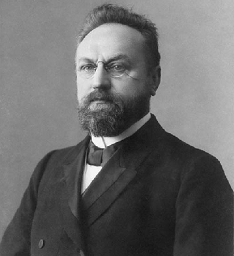
Now, Jonathan Edwards convinced me a while back that God does all things (creation, redemption, etc) with an endview towards his glory. No need to argue that point–I’m fully on-board. But like I said, I’ve never bought this particular argument. And as I mentioned, not all Calvinists do. In fact, theologian Herman Bavinck, contemporary to Abraham Kuyper and author of the beastly 4-volume Reformed Dogmatics (which would make a great present if any generous readers are wondering–just message me), had some questions about it as well. In an article on the difference between Supralapsarianism (supra) and Infralapsarianism (infra)–two positions regarding the logical order of God’s decrees–he argues that this, typically supra, line of reasoning has some holes in it:

In the first place, to say that the manifestation of all God’s excellencies is the final goal of all of the ways of God is indeed correct; but when supra includes in that goal the manner in which the divine glory will be revealed in the eternal destiny of rational creatures, it errs. For, the eternal state of salvation or of perdition is not in itself the goal, but one of the means employed in order to reveal God’s excellencies in a manner suited to the creature. It would not do to say that God would have been unable to manifest his glory by saving all men, if this had been his pleasure. Neither is it correct to say that in the eternal state of the reprobate God reveals his justice exclusively, and that in the eternal state of the elect he manifests his mercy exclusively. Also in the church, purchased with the blood of the Son, God’s justice is revealed; and also in the place of perdition there are degrees of punishment and sparks of divine mercy. The final goal of all God’s work’s must needs be his glory, but the manner in which that glory will shine forth is not thereby given, but has been determined by God’s will; and although there were wise and holy reasons why God purposed the perdition of many and not the salvation of all, nevertheless these reasons, though known to him, are not known to us: we are not able to say why God willed to make use of this means and not of another.

Bavinck makes what’s always been my sticking point: God can and does perfectly display his mercy and justice in the Cross and Resurrection of Jesus Christ, in which case that argument could just as plausibly be deployed in favor of univeralism. In a sense, if it proves anything it proves too much.

Of course, this does not disprove Calvinism, election, reprobation, infra- or supralapsarianism, or that God’s ultimate goal isn’t that final state of glory. It’s really just dealing with this one argument. Still, Bavinck’s wisdom is to push for greater theological modesty at this point. Calvin himself warned that the one who tries to pry too deeply into God’s secret counsels “plunges headlong into an immense abyss, involves himself in numberless inextricable snares, and buries himself in the thickest darkness.” (Inst. III.xxiv.4) Instead, it’s best to look to Christ, rest in his grace, trust that “although there were wise and holy reasons” for God’s decrees about history and salvation, “nevertheless these reasons, though known to him, are not known to us.”

Soli Deo Gloria

I Want to Be God (And So Do You)

I want to be God.

I discovered this in college. Actually, what I found out is that I happen to want to be God in a particular way–specifically I wanted to know everything. In a sense, there was one attribute of God’s that I coveted, desired for myself most: omniscience. There are times that I’ve wanted to know things with a sort of desperation. I look at stacks of books and feel crushed with the weight of all that I have yet to read and discover. To those that know me, this might sound funny. “Oh Derek, you and your books.” Honestly though, the sense of incompleteness and inadequacy can be tormenting–especially in light of the fact I know I will never have the time, energy, or resources to even come close to the end of my studies.

I have this theory that we all do this to some degree–we have certain attributes of God we want more. Some of us want to be everywhere at once. We have this constant feeling that we’re missing out on something, so we try to be all places at all times as much as possible so we don’t miss a thing. Others of us want to be eternal–there never seems to be enough time to accomplish everything on our checklist. We dream of bending time to our will so that we’re not limited to the 18-20 hours of the day we’re up for. Then, there are those of us who want God’s power. We strain at the edges of our human possibilities and strive to attain those things that are just beyond our grasp. In fact, we hate the idea that there might exist anything “beyond our grasp.” Of course, there are the control freaks–people who want total sovereignty of their lives, securing themselves by making sure that all goes according to their perfect plan. The list could easily go on.

be as god 2

I have named the skull “George.”

As I’ve sat back and reflected on this a bit over the years, I’ve realized that all of these desires, in some way, are a rejection of our finitude–don’t like being limited beings. Now, of course the Bible has told us for thousands of years that ever since the Garden we’ve all been striving to be God. The Teacher has said that God has put “eternity in our hearts” (Eccles. 3:11). God made us in his Image (Gen 1:26), but apparently that wasn’t good enough. We didn’t just want to reflect God’s glory, we wanted to have it.  We didn’t want to depend on God for good and evil, we wanted to “know” it/determine it for ourselves. (Gen. 3:5) The lie that we believed is that we can be god-like apart from God.

In a way, the issue is about one attribute, very much ignored in popular preaching–that of God’s aseity, or self-sufficiency. God has “life in himself” and is dependent on no one and nothing outside of his glorious, infinite, Triune self. (John 5:26; Ac 17:24-25; Rom 11:35-36) He doesn’t need anything. He is blessedly complete in the infinite perfection of his own life. This is what we want when we strive for all of the other attributes–to be the source of our own blessedness.

The truth of the matter though, is that there are only two ways of possessing infinite good: either it is yours inherently (God) or you receive it from him. This is true down to the ontological level–you can’t even keep yourself in existence if he doesn’t will it. The upshot of this is that we can either strive to be infinite ourselves (and fail miserably), or gain it by being rightly related to the infinite one through Christ. See, the very “great promises” of the Gospel is that through faith in Christ we can “become partakers of the divine nature” (2 Pet 1:4), as God redeems us from sin and grows us further in holiness and righteousness through the Spirit. In other words, this doesn’t happen by our striving for self-achieved autonomy–it happens by grace, by depending on God’s favor, looking to him alone for all of our good in Christ.

A few words then for you God-strivers:

  • If you thirst for knowledge, let God teach you the depths of knowledge and wisdom in Christ. (Col. 2:3)
  • If you long for eternity, set your hope on God’s promised future in Christ. (Rom 6:23)
  • If you strive to be present everywhere, remember that God has appointed the time and place where you would be born and live that you might reach out and find Christ. (Acts 17:26-27)
  • If you scramble for sovereignty, don’t be afraid to lose control of your life, and receive it back as a gift through Christ. (Matt 16:24-27)

Finally, if that isn’t enough: “Every good gift and every perfect gift is from above, coming down from the Father of lights with whom there is no variation or shadow due to change.” (Jas 1:17) So let him be the source of your blessedness today.

Soli Deo Gloria

Quick-Blog #11: God Listens to Prayer, But Don’t Expect Him to Obey

Time and again I find myself coming back to Luther because, even though he shoots his mouth off from time to time, you almost always come away with theological or practical wisdom you needed to hear. Take this gem of a quote on prayer:

It is impossible that God should not hear the prayers which with faith are made in Christ, though he give not according to the measure, manner, and time we dictate, for he will not be tied. In such sort dealt God with the mother of St Augustine; she prayed to God that her son might be converted, but as yet it would not be; then she ran to the learned, entreating them to persuade and advise him thereunto. She propounded unto him a marriage with a Christian virgin, that thereby he might be drawn and brought to the Christian faith, but all would not do as yet. But when our Lord God came thereto, he came to purpose, and made of him such an Augustine, that he became a great light to the church. St James says: “Pray one for another, for the prayer of the righteous availeth much.” Prayer is a powerful thing, for God has bound and tied himself thereunto. -Martin Luther, Table Talk

Luther clearly lays out a couple of key points we need to remember to keep straight for the sake of our theology and just general spiritual life.

  1. I wonder what my spiritual life would be like if I were trying to be Alfred instead of Batman.

    I wonder what my spiritual life would be like if I were trying to be Alfred instead of Batman.

    God is God. When you pray you’re making a request of your Lord, not commanding a servant. We often-times think about God and prayer as if he were our butler, like a divine Alfred (Batman’s butler/mentor) who manages to be very resourceful in helping us fulfill our missions out in the world. In fact, the situation is quite the opposite. God is equipping and aiding us in being his servants, doing his will. You are not Batman. You are not the hero of your story–God is.  If we don’t get this straight, we end up thinking God failed us when it turns out he’s simply decided in his infinite wisdom that the “measure, manner, and time we dictate” are not the way that he wants to do things. God is not in your employ. He is not someone to be fired or reprimanded. He is not waiting for your year-end performance review. He really does know what he’s doing.

  2. God Listens. At the same time, God really does listen to prayers offered up through Jesus Christ. (John 14:13; 16:23) Whatever else we think about predestination and foreknowledge, we are told that God listens to our prayers for Christ’s sake. He has “bound” himself in that way, through his promises in Jesus. So many of us do not pray because we think God will not hear us. We think we’re too guilty, too small, too silly, too insignificant. Jesus reassures us that whatever might be true of us, in Christ, we are beloved of the Father and he will always hear us. (John 14:21) He is a God who keeps his promises, even if not always in the way that we expect them.

Luther tells us to keep these two truths in mind as we approach prayer. Between them we’re able to approach the God of the universe with the bold humility of faith–and that’s the goal isn’t it?

Soli Deo Gloria

Were the Westminster Theologians “Proof-texting”?

Eventually in any discussion of good exegesis and theological method, the issue of proof-texting will come up. Proof-texting is that time-honored method of biblical interpretation that consists in citing a verse to justify some theological conclusion without any respect for its context or intended use. If you’re nerdy to care enough about this sort of thing, please keep reading. If not, here’s a video of a cute cat.

Now, as I was saying, proof-texting is often brought up in discussions as a prime example of decontextualized readings–readings that irresponsibly ignore the literary and historical setting of the text. As the popular saying goes, “a text without a context is a pretext for a proof text.” Daniel Treier notes in his article on the “Proof Text” (pp. 622-624) in the Dictionary for Theological Interpretation of the Bible that the charge of “proof-texting” is almost universally negative, and usually aimed at pop-preaching, or increasingly by exegetes at theologians’ handling of texts. Indeed, it’s fairly common to read biblical scholars prattling on in their commentaries about theologians abstractly “theologizing” and “propositionalizing” texts. (Of course, this happens and it shouldn’t and it ought to be called out. Literary and historical contexts must be respected. I’ll just confess I’m annoyed with biblical studies types acting as if attending a Methodist church instead of a Presbyterian one has no effect on their readings, as opposed to those theologians.)

The crew doing some “theologizing” at Westminster Abbey.

In any case, chief among the alleged offenders are the post-Reformation scholastics such as the Westminster Divines (pastors and theologian-types) who wrote the Westminster Confession. Indeed, at first glance the classic confession seems to be a prime example of it. In traditional printings, a quick review of the various chapters will show you very short statements with footnotes listing various single verses allegedly supporting the proposed doctrines. On their own, a number of the verses seem only tenuously connected to the doctrine at hand.

Carl Trueman has an excellent article on the way recent historical work has led to critical re-appraisal of the development of Reformed Orthodoxy and the Post-Reformation scholastics, which, in part, sheds light on their alleged proof-texting:

…the new approach has demonstrated that Reformed Orthodoxy was grounded in exegesis but engaged in constant dialogue with the history of theology. This is in part evident in its eclectic nature but also has direct application to some contemporary issues. For example, one common complaint about the Westminster standards is that they are based upon proof texts. The concern seems to be that Reformed theology has thus been built on simplistic, decontextualized reading of isolated texts. Many, of course, will be aware that the divines themselves did not want the proof texts included and that they were overruled in this by Parliament. That in itself should give pause for thought about how such texts function. Yet [Richard] Muller has explored this issue further and demonstrated that the divines were not only competent exegetes themselves and that Reformed Orthodoxy is exegetically grounded but also that proof texts in the seventeenth century were not intended as simple, blunt answers to complex questions. Proof texts operated rather as exegetical markers, directing the reader to the key verse but doing so in the expectation that the reader would check the classical expositions of that verse.

So, first off, the Westminster Divines didn’t even want the proof-texts included precisely because they were aware of the dangers of poor exegesis and context-less readings. Second, the texts were supposed to be used as pointers to further research, both of the text, and of the deeper history of interpretation. Basically, they wanted readers to do their homework.

Trueman then uses the example of the “covenant of works” to highlight the way this re-appraisal might shape our judgment about historical, Reformed orthodoxy.

One criticism is that the only reference to the pre-Fall arrangement with Adam in the garden as a covenant is Hosea 6:7. The Hebrew is ambiguous and could indeed be read as “like a man.” As such, it seems remarkably slender textual ground upon which to build such a crucial doctrine as the covenant of works. In fact, as Muller has shown through his study of the Westminster Annotations, the divines were well aware of this ambiguity. Their use of the language of covenant to refer to Adam in Eden was not built on this text, but upon Romans 5, which they saw as pointing to the conceptual presence of covenant in Eden, even as it was linguistically absent. Such a point would seem significant in assessing John Murray’s criticism of the covenant of works.*

Were the Westminster divines proof-texting then? In the sense that they are usually accused of, apparently not. Now, does that mean every reading of every text they cited was absolutely perfect? No, but the giants of Westminster probably deserve more credit than they’re typically given on this point.

If I might suggest two take-aways for contemporary biblical types:

1. When criticizing the hermeneutical approaches of different periods, we need to be careful of rushing to judgment. Anyone who’s spent any amount of time in biblical studies knows that the methods are constantly up for debate (form-criticism, redaction-criticism, literary, etc.). Who knows what readings we’ll find silly, mistakenly or not, in 20 years, let alone 200?

2. This also means we probably could take a cue from the Reformed scholastics at this point. They knew that one way of guarding against our interpretations being over-determined by the cultural and literary prejudices of the day, was by being in dialogue, both with the text, and with the history of interpretation. May we humble ourselves enough to do the same. Who knows? We might even want to throw some scholastics into the mix.

Soli Deo Gloria

*For more on the exegetical grounding of the covenant of works, G.K. Beale has some good stuff on the covenant in Gen. 1-3.

Quick-Blog #10: Don’t Get Analogy, Don’t Get God (Michael Horton on the Doctrine of Analogy)

If you’re going to study the doctrine of God, you need to understand the doctrine of analogy. It’s that simple.

Honestly, I’ve become convinced of this over the last few years as I moved from my early days as a Jurgen Moltmann fan to my current Reformedish semi-classicalism. (I have no good term for it. Whatever Kevin Vanhoozer is.) If you haven’t stopped reading already, you might be wondering what the doctrine of analogy is.

The doctrine of analogy is a very old one shared by the post-Reformation scholastics with their medieval forebears like St. Thomas Aquinas. In that sense it’s a very “catholic” teaching, shared across the tradition by Catholics and Protestants of various stripes. (I’m not too sure they’d put it this way, but I think the Eastern Orthodox would be fine with it as well.) Michael Horton laid out one of the cleanest summaries of the doctrine I’ve found in an article on the subject of the Reformed theological method. I’ve already quoted it here, but it’s worth high-lighting again:

“All of this leads us, finally, to the doctrine of analogy. When we assert certain predicates of God, based on God’s own self-revelation, we use them in one of three senses: univocally, analogically or equivocally. If we say that the predicate “gracious” means exactly the same thing, whether in God or in a creature, we are using “gracious” univocally. At the other end of the spectrum, if we say that by using that predicate we are ascribing something to God whose appropriateness is unknown to us, we are using it equivocally. If, however, God is said to be “gracious” in a way that is both similar and dissimilar to creatures, we say it is analogical. For instance, when we acknowledge that God is a “person,” do we really mean to say that he is a person in exactly the same sense as we are? When we follow Scripture in using male pronouns to refer to God, do we really believe that he is male? Unless we are willing to ascribe to God (in an univocal sense) all attributes of human personhood, predications must be analogical. Human language cannot transcend its finitude, so when God reveals himself in human language, he draws on human analogies to lead us by the hand to himself. It is correct description, but not univocal description.”

Basically, when you’re saying something about God or reading it in the Bible, whether about his being or his emotions, or something else, you have to insert a little qualifier because you’re comparing the transcendent, uncreated one to something created. Kinda like, “God is good (but not exactly the way you think of good)”, or “God is strong (and that is an understatement so serious you don’t have a category for it)”, or “God is angry (but you can’t think of it like sinful human anger)”, or “God repented (but not in the way that implies he didn’t know what he was doing)”. It’s like, but unlike.

Does this mean we can’t know anything about God? No. As Horton points out, God picks out these human analogies, especially in the Scriptures, to tell us something about himself. We just have to be careful when we pick up these analogies to use them and think of them in the way God intends us to, with the reading clues he gives us. For instance, when God is said to be our Father, we have to stop ourselves from immediately filling that word with everything we learned about fatherhood from our own fathers, but rather we must look to the way he is our Father in Christ, or better, the Father of the Son. That’s the kind of Fatherly love we look for, not the imperfect, possibly too lenient (ie. neglectful), or harsh, or whatever loves we find on earth. Again, it’s like, but unlike.

As always, there’s more to it than that, but this is supposed to be a quick-blog.

Soli Deo Gloria

Assurance in Ascension (Or, Why You Should Be Happy Jesus is in Heaven)

It wasn’t until a couple of years ago that I gave any real thought to the doctrine of Christ’s bodily ascension–the fact that after his resurrection Jesus took up a place of honor and power at the right hand of the Father in heaven. It’s not something that gets a lot of attention in contemporary preaching or in publishing, but it’s all over the NT (Luke 24; Acts 1:10-11; John 16:7; Rom. 8:34; Eph. 1:21-22; Col. 3:1-4; Heb. 9:24; 1 Pet 3:22, etc.). What’s more, it’s a central doctrine of the Christian faith–so much so that it gets a line in the creed: “He ascended into heaven, and sits at the right hand of God the Father Almighty.”

This absence is a shame because, in fact, it’s something that we’re told to consider often.

Paul instructs the believers in Colossae to “set your hearts on things above, where Christ is seated at the right hand of God” (Col. 3:1). The command is not a one-time thing because the word “set” or “seek” is in the present, active imperative indicating continuous action–basically he’s saying we should be doing this all the time. Paul wants us constantly considering the reality of Christ’s life at the right hand of the Father. Why? Because through our union with Christ, what is true of him has become true of us. If Christ is risen and ascended, then we are risen and ascended with him. (Eph. 2:4-7)  If we don’t understand this, we’ll miss out on some of the deep assurance that comes from the truth of the Gospel.

While there is far too much to say about Christ’s ascension and current rulership of the universe, the Heidelberg Catechism helpfully gives us 3 benefits of Christ’s ascension to consider:

First, that he is our advocate in the presence of his Father in heaven; (1 John 2:1; Rom.8:34.)

Secondly, that we have our flesh in heaven as a sure pledge that he, as the head, will also take up to himself, us, his members; (John 14:2; John 17:24; John 20:17; Eph.2:6)

Thirdly, that he sends us his Spirit as an earnest, (John 14:16,7; Acts 2:1-4,33; 2 Cor.1:22; 2 Cor.5:5.) by whose power we “seek the things which are above, where Christ sitteth on the right hand of God, and not things on earth.” (Col.3:1; Phil.3:14)

Christ is now in heaven as our advocate, interceding for us, lifting up prayers, presenting himself as evidence, as it were, of his accomplished work on our behalf.  There’s no need to doubt that our salvation is securely accomplished with Christ, seated after passing through heavens (Heb 4:14; 8:1). Also, since he is there and we are connected to him, we can be assured that one day we too will be seated with him, experiencing the fullness of God’s presence, ruling and reigning as God always intended us to be. He’s there “preparing a place” with the Father for us (John 14:3).  Finally, Christ has not left us alone, but has given us his Spirit as an “earnest”, a down-payment of the glory to come. And not only that, but as the catechism points out, he himself is the one who helps us to keep our eyes set on the reality of Christ’s ascended life.

Take some time this week to look up those verses; consider Christ, who is your life, risen and ascended (Col. 3:1-4). When you start to do that, all the petty things, the little things, the “earthly things” that Paul talks about, will start to take on their proper dimensions as your security in him is strengthened and your love for him grows.

Praise the living and Ascended one, our life and our assurance.

Soli Deo Gloria