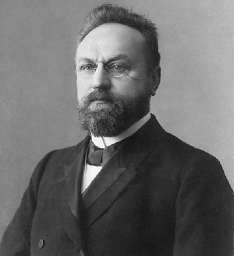
A Crisp, Theological Rule of Thumb

Sadly, Dr. Crisp no longer has this beard. And yet, the aura of its former magnificence still confers authority upon his pronouncements.

Sadly, Dr. Crisp no longer has this beard. And yet, the aura of its former magnificence still confers authority upon his pronouncements.

Christology can be a tricky business. What does it mean for the Godman to have both a divine and a human nature? Is there a change involved? If so, of what kind? What about Christ’s human nature? Does Christ need a soul and body, or does the Divine Word function as the soul of Christ’s human body? And if he does need one, is it a soul like others, including a human will alongside the divine will of the Word, or is that nonsensical? These are the sort of questions Oliver Crisp sets about examining early in his work Divinity and Humanity: The Incarnation Reconsidered

As anyone who has spent more than a little time reading theology knows, there are a number of methodological decisions to be made that impact the results we come to or the arguments we find compelling in Christology, and really, any other doctrinal matter. For those looking for a little guidance in these matters, Crisp offers, to my mind, a very sensible rule of thumb:

I think that a good theological rule of thumb is this: if a doctrine contradicts the teaching of Scripture, it is automatically outside orthodox Christian belief. If a doctrine contradicts the implicit teaching of Scripture and the explicit declaration of an ecumenical council — such as the denial of the Trinity — this is also outside orthodox Christian belief. However, if a doctrine is not excluded by Scripture and can find support  in the tradition, but contradicts the teaching of an ecumenical council, things are a little trickier. It seems to me that even here, one would have to show that the council in question endorsed some teaching that was itself contrary to Scripture — for what else can trump the authority of an ecumenical council of the Church, except Scripture?

Divinity and Humanity, pg. 70

With respect to the case he’s speaking of, there might be a number of views of Christ’s human nature that can fit with the Chalcedonian definition, are represented in the tradition, and are not obviously contradictory with Scripture–specifically monothelite views (the view that Christ had a single, divine will.) And yet, if for no other reason than the fact that an ecumenical council endorsed dyotheletism (Christ having both a divine and a human will) as the view most consistent with Scripture, it ought to be preferred. As Crisp says earlier “It seems to me that it is difficult to make sense of the human nature of Christ whichever one opts for, and at least dyothelitism has the advantage of being the view endorsed by an ecumenical council.” (63)

So then, when choosing between two doctrines that can be considered consistent with Scripture, if one has the weight of a council behind it, go with the council. Of course this doesn’t settle all of our theological or methodological questions, but it’s certainly a good place to start. It encourages a theological approach both humble, historical, and churchly in orientation, while still ultimately submitted to the Scripture as God’s Word.

Soli Deo Gloria

Augustine–The Dead Guy Most Recommended by Other Dead Guys

StAugustineAugustine was the first true theologian I read in college. I took a class on early medieval philosophy entirely focused on it, and I must say, it was a deeply formative experience for me, spiritually and theologically. For a while now, I’ve wanted to offer an encouragement  to those who have never spent any time with Augustine to do so–an endorsement of sorts, about 1500 years late. Thankfully, Herman Bavinck has already done it for me:

Thus Augustine became a theologian of the greatest importance for later dogmatics, one who dominated the following centuries. Every reformation returns to him and to Paul. For every dogma he found a formula that was taken over and repeated by everyone else. His influence extends to all churches, schools of theology, and sects. Rome appeals to him for its doctrine of the church, sacraments, and authority, with the Reformation felt kinship with him in the doctrine of predestination and grace. Scholasticism, in constructing its conceptual framework, took advantage of his sharp observation, the acuteness of his intellect, the power of his speculation–Thomas, in fact, was called the best interpreter of St. Augustine. Mysticism, in turn, found inspiration in his neoplatonism and religious enthusiasm.  Both Catholic and Protestant piety buoy themselves up on his writings; asceticism and pietism find nourishment and support in his work. Augustine, therefore, does not belong to one church but to all churches together. He is the universal doctor (Doctor universalis). Even philosophy neglects him to its own detriment. And because of his elegant and fascinating style, his refined, precise, highly individual and nevertheless universally human way of expressing himself, he, more than any other church father, can still be appreciated today. He is the most Christian as well as the most modern of all the fathers; of all of them he is closest to us. He replaced the aesthetic worldview with an ethical one, the classical with the Christian. In dogmatics we owe our best, our deepest, our richest thought to him. Augustine has been and is the dogmatician of the Christian church.

–Reformed Dogmatics Vol. 1: Prolegomena, pg. 139

If that doesn’t encourage you to pick up some Augustine, I don’t know what will.

For those of you interested, I’d recommend starting with The Confessions, and digging around from there. Also, this biography by Peter Brown is supposed to be top-notch, and Justin Taylor has recommended Matthew Levering’s new book on The Theology of Augustine as an excellent introduction.

Soli Deo Gloria

Economic Shalom–Bolt’s Theology of the Market Beyond Biblicism

boltEconomics is complicated. Establishing a Christian approach to economics seems even more daunting a task, especially given the amount of ink that’s been spilled when it comes to a Christian approach to money and wealth. Trying to wade into the conversation without any sort of guide then, can be overwhelming. As someone who has only begun to stumble towards developing my own thought in this area, I was delighted to receive a copy of John Bolt’s new little volume in the Acton Institute’s series of primers on faith and work, Economic Shalom: A Reformed Primer on Faith, Work, and Human Flourishing.

Though the cover’s a bit drab and uninspiring, the writing is not. Bolt manages to deliver an accessible, lively introduction to basic economics in what amounts to an “unapologetic defense of a free market economy set within a democratic liberal polity” (pg. 171) from a Reformed theological perspective. I emphasize “a” Reformed perspective for two reasons. First, Bolt explicitly draws from a primarily from the Dutch Reformed tradition, most specifically from the thought Neo-Calvinists like Herman Bavinck and Abraham Kuyper. Also, as is evident in his arguments against them, there are other Reformed voices who would probably disagree with his construal.

Now, while I don’t have the time give it the justice of a full review, I did want to highlight the couple of key strengths that make this a valuable resource for those looking to give deeper thought to the issues of faith and economics.

The primary strength of Bolt’s proposal is try to move us past the simple biblicism that tends to run rampant in these theological discussions. In the first chapter, he disposes of the idea that there is clearly one “biblical economics” that can be cleanly read off the surface of the text. He does so partially by surveying the economic thought of three major christian ethicists, Walter Rauschenbusch, Ronald Sider, and David Chilton, using essentially the same biblicistic assumptions, end up with a wide variety of contradictory economic proposals ranging from interventionist socialism to theonomic libertarianism.

Instead, he holds up the thought of Herman Bavinck, who put forward a more chastened reading of Scripture that takes into account it’s salvific purposes:

A Reformed approach to the Bible resists reading it in a flat manner as so many disparate bits and pieces of inspired, useful knowledge that can be picked up here and there as we have need of them. A Reformed handling of Scripture does not treat it as a manual for child-rearing one day and a textbook for financial management the next. It is a mistake to go to the Bible for scientific knowledge, a point John Calvin already made in his Genesis commentary when he observed that the words “let there be a firmament” (1:6) are meant not for the sophisticated mean of learning but “for all men without exception” and can be understood even by the “rude and unlearned.” Calvin then added: “He who would learn astronomy, and other recondite arts, let him go elsewhere.” Two important aspects of Reformed hermeneutics are illustrated here: The first is the perspecuity of Scripture, the conviction arising from the priesthood of all believers that Scripture’s essential message can be grasped by all who have been renewed by the Holy Spirit. Reformed people do not rely on a priestly caste of theologians to tell them how to read the Bible. Second, though the Bible is relevant for every dimension of human life, it has a very specific and well-defined purpose: “that by believing you may have life in his name” (John 20:31). The Bible is a salvation book and not an economics textbook or social renewal manual. And it is with this particular focus on salvation that Bavinck addresses the question of the Bible’s relevance for economics. (pg. 15)

Instead of piling up a bunch of verses and trying to see which specific commands can be cleanly mapped onto the current political system, Bavinck proposes we recover the main spiritual purpose of the Scriptures–the restoration of fallen man to God through the Gospel. From there, humans begin to be restored to their proper relationships with each other and are enabled to begin taking up the form of life rooted in God’s creational norms. Where do we go to find those norms? Well, back to the Scriptures, but now, we don’t go looking for particular commands, but the general principles that underlie and inform them. For this reason, Bavinck won’t speak directly of a “biblical economics”, but rather an economic system that is consistent with Scripture.

While not slavishly following Bavinck at all points, Bolt’s approach is broadly consistent with it. He offers up a defense of the ordered liberty of free-market capitalism as consistent with a broad biblical theology we find in Scripture: creation bursting with potential awaiting cultivation; the freedom and vocation the of Imago Dei; the universal sinfulness of humanity after the Fall; our epistemic limitations as finite creatures; the providence and sovereignty of God in the allocation of resources; biblical principles of work and charity from the wisdom literature; a conception of justice as opportunity and the restraint of evil; the truth of our redemption through Christ; an amillenial eschatology that eschews over-reach or pessimism. It is in light of these principles that he draws on the work of economists to deal with the market, consumerism, ordered liberty, and social inequality.

I’ll be brief about the second strength, as it follows directly from the first: Bolt demonstrates a humble restraint in his judgments on a where rhetoric typically runs wild. Because of this, Bolt goes about explaining basic economic concepts, demonstrating their compatibility with Scriptural principles, and dealing with common Christian objections to a market economy with sanity and grace. While it’s easy to imagine a number of robust challenges to Bolt’s account, it won’t be on account of undue dogmatism or a lack of Christian charity.

All of that to say, I would warmly commend Economic Shalom to anyone tired of simplistic accounts, both on the Right and the Left, theologically and politically. Bolt has done the Church a service writing it.

Soli Deo Gloria

Naughty Systematic Theologians, Just Be ‘Biblical’!

Truly dominant-looking theological man. It's a win for Reformed beardliness everywhere.

Truly dominant-looking theological man. It’s a win for Reformed beardliness everywhere.

A pet peeve of mine is the tendency of some historical scholars to act as if, unlike naughty dogmatic theologians, their own confessional commitments aren’t driving any of their exegetical work. Being biblical scholars, their conclusions aren’t beholden to anything but the text, unlike those theologians coming to Scripture as they do, armed to the teeth with distorting theological preconceptions.

Apparently this isn’t a new thing.

In the first volume of his tremendous Reformed Dogmatics, Herman Bavinck comments on the similar myopia of some of the ‘biblical theologians’ of his own day:

However, this school suffers from grave one-sidedness as well. While it thinks that it is completely unbiased in relating to Scripture and that it reproduces its content accurately and objectively, it forgets that every believer and every dogmatician first of all receives his religious convictions form his or her church. Accordingly, theologians never come to Scripture from the outside, without any prior knowledge or preconceived opinion, but bring with them from their background a certain understanding of the content of revelation and so look at Scripture with the aid of the glasses that their church have put on them. All dogmaticians, when they go to work, stand consciously or unconsciously in the tradition of the Christian faith in which they were born and nurtured and come to Scripture as Reformed, or Lutheran, or Roman Catholic Christians. In this respect as well, we cannot simply divest ourselves of our environment; we are always children of our time, the products of our background. The result, therefore, is what one would expect; all the dogmatic handbooks that have been published by members of the school of biblical theology faithfully reflect the personal and ecclesiastical viewpoint of their authors. They cannot, therefore, claim to be more objective than those of explicitly ecclesiastical dogmaticians. The “pure” gospel that Ritschl finds back in Luther and Jesus corresponds perfectly to the conception he himself formed of it. All these so-called biblical schools, accordingly, are continually being judged by history; for a time they serve their purpose and recall a forgotten truth, but they do not change the course of ecclesiastical life and have no durability of their own.

Reformed Dogmatics Vol. 1: Prologomena, pg. 82

While Bavinck goes on to fill this out a bit, there are a number of comments to be made on this fascinating text. First of all, long before any postmodern theorists came along to tell us so, Bavinck knew about the historical-situatedness of all of our interpretive efforts. I point this out simply to say this isn’t a new thing, and apparently this recognition can apparently fit comfortably within the structure of a classic, Reformed understanding of Scripture, objective revelation, and so forth.

Second, and this is really the point I’m interested in, biblical theologians are just as theologically and socially-invested in seeing the texts go a certain way. This isn’t to say that we can’t have conversations across traditions about the texts, or a denial that we can correct our theological confession in light of the study of Scripture. Some of the most confessionally-conservative theologians I know of still make interpretive moves that are different than their theological forebears in the tradition, even when confessing essentially the same creed. What’s more, people do convert and shift from one confessional tradition to another. I know I have.

Still, whenever I see a biblical scholar chastising the theologians of, oh say, the Reformed tradition, for their reliance on a certain text to establish their doctrines, because an ‘objective’ reading simply doesn’t yield that doctrine, it is probably an instructive exercise to look up his/her own church affiliation.

Soli Deo Gloria

Finding God in the Gallery (Or, Some Notes on a Visit to LACMA)

godingallery1This last weekend I took my wife to the Los Angeles County Museum of Art (LACMA) as part of a date. We went in part because my wife is a fan of modern art, the main focus of LACMA, and because I myself have finally taken an interest in it. Up until a month or so ago, while I understood that there was something going on in modern works, having a modest background in sketching, I’ve been likely to favor Medieval, Reformational (especially the Dutch Masters), or Neo-Classical periods. I’ll be honest, Campbell’s soup just wasn’t doing it for me.

After reading Daniel Siedell’s theological exploration of contemporary art, God in the Gallery, a couple weeks ago I’ve been motivated to try to engage it once more—or really, for the first time. Given that I could not help but experience LACMA as anybody other than myself, I wanted to write down a few notes, a couple of them, unsurprisingly theological in nature.

meidner1. Hey, Some of this Stuff is Good – To begin with the most basic point: it turns out modern and contemporary art is fascinating. Once you get over the fact that some of it does not look like anything you can recognize, or that the artist is not trying and failing to color inside the lines, you can begin to appreciate it for it is actually doing. Of course, not all of modern art is abstract expressionism.

For instance, there was a fabulous exhibit on productions connected to The Golem that McKenna and I loved. Also, I found myself drawn into the section on German Expressionism and the Bauhaus movement. Ludwig Meidner’s “Apocalyptic Landscape” could have easily held my attention for hours. The atrocity of anybody calling this “degenerate” art finally began to sink in.

Beyond that, easily the most “fun” piece in the whole exhibit, along with the dozens of other viewers, especially children, McKenna and I were drawn into Chris Burden’s Metropolis II:

All in all, I’m excited to continue exploring modern and contemporary art.

2. How Did He Create So Many Unique Pieces? – LACMA houses what seems to be to be a good number of Picasso’s. Probably ten or twelve. While Picasso has never been my favorite, even of the moderns, I found myself marveling at the variety and number of them, knowing that these were probably only a fraction of his total work. While distinctively Picasso’s, bearing his unique mark and style, all of them were unique, keenly differentiated by color, subject matter, and even materials used.

picassoOf course, in the middle of all of this, I realized that while I was looking at the art, I was disturbingly distracted by all the museum visitors. In room after room, I found myself unable to fully devote my attention to the pieces on display because of all the other people walking around.  There they were: the defiant tourist with the camera, determined to snap shots no matter what the security said; mothers hustling little ones about wanting them to gain culture without getting their fingerprints on it; older art connoisseurs, ex-hippies who’d since become wealthy in the market, but still cherished their avante-garde youth; young couples like McKenna and I, out for a nice day at the museum. Hair, clothes, eyes, words uttered, and accompanying gestures that spoke other, sometimes contradictory words.

It’s at that moment I realized I was distracted from the Picassos by the work of another artist: the one who made Picasso himself. And I was struck then at the thought, what is greater? A Picasso, or the Picasso? This isn’t meant as a sort of anti-Picasso Jesus-juke. I just couldn’t help but wonder at the stunning vision and power of a God who could fashion such creative creatures. God is the artist behind the artists.

3. We Are Bits of Performance Art – A final thought struck me in the same vein later on. Given the dazzling assortment of people at the gallery, inevitably I was drawn to a few in particular. There was one couple that looked the quintessential LA art couple. I don’t remember exactly what the girl was wearing bit it was hip. She had multi-colored hair, thrown up seemingly carelessly in a pony-tail. The guy had greasy, disheveled student hair and was rockin’ an older black sports-coat over a jean button-up shirt, darker pants, and to top it off, some boots. These weren’t just regular boots, though. Actually, they weren’t even boots—they were work-shoes—and you could tell. They were dirty and hacked up, with paint stains, and God only knows what else. The whole effect said, “I don’t care what you think. I’m here for the art. Not to preen or impress the rest of you.”

Of course, that took effort to say.

performance artIt’s at this point that I was reminded of one of the more illuminating sections in Siedell’s account: the care taken by contemporary artists to cultivate the proper environment for viewing their works. In a manner that can only be described as ‘religious’, installations are arranged so that the aesthetic effect is all-encompassing down to the last detail of the way the light fails on the viewer when they encounter the work. Even in those pieces that seem most inaccessible, the encounter with the piece and the viewer is carefully cultivated.

Much in the same way, this couple had carefully cultivated the experience of viewing them. Despite the initial impression of haphazardness, upon inspection, it begin to seem all-too-carefully selected for use. And this is where I began to realize that in many ways we’re walking pieces of performance art. We think and we craft ourselves, our movements, and words in relation to our respective audiences and the spaces and times we inhabit; there are layers and resonances to our movements. Some elements are carefully scripted, while others are more akin to spontaneous improvisations.

All of this raises the question: what are we performing? What image are we cultivating? Or, rather, whose image? Are we set on mirroring the idols (money, sex, power, freedom, & so forth) on offer in the culture around us? Or we take into account that we are God’s workmanship (poema; cf. Eph. 2:10), intended to be eikons of the Son in our mortal flesh (2 Cor 4:11)?

Soli Deo Gloria

My Top 12 Reformedish Posts of 2013

2013It’s been a year and half since I started this blog, but 2013 was my first full calendar year of writing. Because “Top 10” pieces are kind of a staple, and I saw all the other hip bloggers doing it, I figured I’d offer up my own summary post highlighting my biggest 2013 pieces on Reformedish as well as the posts I think did best on other sites. This will give some of you newbies a chance to catch up, and saves me the trouble of having to actually write some new thoughts.

Reformedish Posts – One thing I will note is that these are not necessarily my favorite posts, nor the posts I worked the hardest on. They are, for whatever reason, the ones that got shared, viewed, argued over, and so forth.

  1. 12 Tips on Keeping It Clean In Your Dating Relationship – This one went kinda viral, hitting 63,000. Kinda funny, hopefully helpful tips on keeping the sexy stuff in check.
  2. 7 Tips on How to Meet Reformed Men – Joke blog that’s pretty self-explanatory.
  3. 5 Things My Mom Taught Me About Theology – My mom is probably the biggest non-professional theological influence in my life. Parents, you have a bigger impact than you know.
  4. That Time C.S. Lewis God ‘Total Depravity Wrong’ Like Everybody Else – C.S. Lewis was awesome, but even he, like so many others, misunderstood Reformed doctrine.
  5. Christian Guy, Stop Trying to Date Yourself – Dudes, just…stop.
  6. The Cure that Killed the Patient, (Or, Sorry Zahnd, Marcionism Isn’t a Better Option) – In which I put on my argumentative Reformed hat and ‘dialogue’ with Brian Zahnd on pitting the Old Testament against Jesus.

Other Sites – Here I am kind of guessing. I don’t have the actual numbers, but these seem to have been shared and discussed the most out of the posts that I’ve written for other websites.

  1. ‘Who Are You Sleeping With?’ My Conversation with Timothy Keller (CaPC) This one got me in sooo much trouble. I mean, with topics like sex, doubt, and Tim Keller, it was kind of expected. Still, for giggles go ahead and read all the comments. Things got crazy.
  2. I Am Not Abraham’s Mistake (CaPC and TGC) This was my first big piece. Some reflections on being Arab in the American Evangelical church. Plus some theology.
  3. How Much Theology Should Couples Agree On Before They Get Married? (TGC) Surprisingly important question.
  4. False Freedom and the Slavery of Autonomy (TGC) Here I reflect on the reality that Millenials have trouble making choices, the meaning of freedom, and our need for community.
  5. The Church Failed Millenials, Just Not In the Way You Think It Did (CaPC) The Church failed us, it’s true–it unfortunately never taught us to love the Church.
  6. Faith in Humanity Just Took Another Hit: A Horrifying Holocaust Revelation (CaPC, TGC) A few thoughts on some horrifying bits of Holocaust history, the doctrine of original sin, and the Gospel.

By God’s grace it’s been a fruitful year. I can only pray that my toils in 2014 yield a greater harvest for the Lord’s church.

Soli Deo Gloria

There is a Reason Everyone Still Quotes Athanasius Around Christmas

athanasiusblackdwarfThere is a reason everyone still quotes Athanasius around Christmas:

For this purpose, then, the incorporeal and incorruptible and immaterial Word of God entered our world. In one sense, indeed, He was not far from it before, for no part of creation had ever been without Him Who, while ever abiding in union with the Father, yet fills all things that are. But now He entered the world in a new way, stooping to our level in His love and Self-revealing to us.

He saw the reasonable race, the race of men that, like Himself, expressed the Father’s Mind, wasting out of existence, and death reigning over all in corruption. He saw that corruption held us all the closer, because it was the penalty for the Transgression; He saw, too, how unthinkable it would be for the law to be repealed before it was fulfilled. He saw how unseemly it was that the very things of which He Himself was the Artificer should be disappearing. He saw how the surpassing wickedness of men was mounting up against them; He saw also their universal liability to death.

All this He saw and, pitying our race, moved with compassion for our limitation, unable to endure that death should have the mastery, rather than that His creatures should perish and the work of His Father for us men come to nought, He took to Himself a body, a human body even as our own. Nor did He will merely to become embodied or merely to appear; had that been so, He could have revealed His divine majesty in some other and better way.

No, He took our body, and not only so, but He took it directly from a spotless, stainless virgin, without the agency of human father—a pure body, untainted by intercourse with man. He, the Mighty One, the Artificer of all, Himself prepared this body in the virgin as a temple for Himself, and took it for His very own, as the instrument through which He was known and in which He dwelt. Thus, taking a body like our own, because all our bodies were liable to the corruption of death, He surrendered His body to death instead of all, and offered it to the Father.

This He did out of sheer love for us, so that in His death all might die, and the law of death thereby be abolished because, having fulfilled in His body that for which it was appointed, it was thereafter voided of its power for men. This He did that He might turn again to incorruption men who had turned back to corruption, and make them alive through death by the appropriation of His body and by the grace of His resurrection. Thus He would make death to disappear from them as utterly as straw from fire.

–Athanasius, On the Incarnation of the Word, ¶8

Soli Deo Gloria

ACTUAL VANHOOZER SPEAKING on Augustinian Inerrancy (Video)

For those of you who are curious, and you should be, here is the short video by Kevin Vanhoozer (a.k.a. The Theologian) on his Augustinian account of a “Well-versed” inerrancy that was shown at ETS 2013 last month. I highly commend it to you, especially as a teaser for his account in the Five Views book on the series. I won’t say any more because ACTUAL VANHOOZER SPEAKING:

Soli Deo Gloria

Vanhoozer on Enns on Inerrancy

inerrancy viewsThe new Counterpoints book Five Views on Inerrancy came in the mail yesterday so, of course, I tore into it immediately. I’ll say it right now, if you’re at all interested in this conversation, you should pick it up. The quality of the essays and the various responses have all been top-notch for their respective positions–and I’ve only read the Mohler and Enns essays!

While we’re on the subject of Peter Enns, I have to say I was impressed. Not convinced, but impressed. I was also impressed by the various criticisms leveled at it, many which are worth quoting at length, but I’ll only do that with Kevin Vanhoozer’s because, well, it sums up my basic complaints and gives a bit of a hint as to where Vanhoozer will later go himself:

I endorse Enns’ call to conform our doctrine of Scripture to the Bible that we actually have rather than the one we think God ought to have written. My own essay contrasts an “inerrancy of glory” (aka “perfect book inerrancy,” a cultural construct) with an “inerrancy of the cross.” I draw this distinction in order to urge an inerrancy of the cross that recognizes the wisdom of God in the surprising textual form he has given it rather than the form we may think it ought to have had. Enns simply identifies inerrancy with perfect book theology, however, and then devotes most of his essay to exposing its nakedness. I agree that perfect book inerrancy, “by placing on it expectations it is not designed to bear” (p. 84), fails to do justice to Scripture. However, in my own chapter, I explore a constructive alternative. I wish Enns had tried to do this too.

Instead, Enns spends most of his chapter reacting to what I judge to be a caricature of inerrancy— what David Dockery, whom I discuss in my own chapter, calls “naive” rather than “critical” inerrancy. Enns would have been better off discussing the original drawing— namely, the definitions offered by John Frame or Paul Feinberg— rather than demeaning the assumptions and interpretive practice of anonymous inerrantists. Who are these faceless villains (“ is it I, Peter”)? Enns nevertheless makes a valid point: the doctrine of inerrancy has been hijacked by various bands of exegetical pirates who insist that the gold of true Bible knowledge is secure only in their own interpretive treasure chests.

Enns thinks the core issue is “how inerrancy functions in contemporary evangelical theological discourse” (p. 83, my emphasis). Why should the function rather than the nature of inerrancy be the crux of the matter? We don’t throw away other doctrines, like divine sovereignty or the atonement, just because some people misunderstand or misuse them. No, we try to set them right. Curiously, Enns is not interested in definitions. Even his title focuses on function: “Inerrancy, However Defined, Does Not Describe What the Bible Does.” This is strange. Why should inerrancy— the claim that the Bible is without error— describe what the Bible does? Enns’ essay suffers from two confusions: (1) a failure to distinguish the nature of inerrancy from its use and (2) a failure to distinguish inerrancy’s right use from various abuses.

–Five Views on Biblical Inerrancy (Counterpoints: Bible and Theology) Zondervan. Kindle Edition.

He goes on from there to actually substantiate his claims about Enns’ essay (with some style). But yes, Enns often reduces inerrancy to its political function; in essence he falls afoul of the principle that abuse does not remove use. As for more nuanced accounts, those are sort of dismissed as possibilities with a hand-wave towards the insurmountable obstacle of biblical scholarship. Actually, I’ll go ahead and quote Vanhoozer again with this little gem on whether or not we should rush to accept the so-called “scholarly consensus” in archaeology, or whether it’s appropriate to trustingly wait it and see what new light is shed:

Why is Enns in such a hurry to capitulate to the prevailing scholarly consensus? Theories, consensus opinions, and schools of thought all come and go. Christians are not to be blown about by every wind of academic fashion. I wonder: does he think, in light of the problem of evil, that we should concede that God does not exist? After all, there is considerably more evidence of gratuitous evil in the world than there is that ancient Jericho had no walls. It’s not clear to me how, on Enns’ scorecard, the theist fares any better than the inerrantist. Should we therefore reframe our doctrine of God to fit the prevailing extratextual “evidence”?

I found the comparison to the epistemological situation we find ourselves in with the problem of evil helpful. The point is that there is a lot of apparently pointless evil out in the world, and that could count as “evidence” that God does not exist. Indeed, it does count as evidence. And yet, as philosophers will point out, that’s not the only evidence there is, in which case the theist can put that to one side for a moment, without immediately scrapping their belief in God every time something inexplicably tragic happens. In the world of biblical scholarship where judgments on key questions like this shift every 20 years, it’s reasonable to slow the rush to throw inerrancy on the dust-heap of discarded doctrines.

Now, of course, I’m only giving you a couple of samples here. Both Vanhoozer and Enns have plenty more to be say here–no one can be quickly dismissed. Still, I hope this little taste whets your appetite for the rich feast of excellent scholarship and theological engagement you’ll find in this volume.

Soli Deo Gloria

Reconsidering Justification with Stephen Westerholm (Book Review)

westerholmIt’s one of the odd quirks of my theological education that the New Perspective on Paul and justification is actually the first perspective on Paul I really heard when I came of age theologically. Yes, I’d grown up with sermon-level understandings of the Old Perspective, but my first book on Paul was N.T. Wright’s What St. Paul Really Said and in seminary I read James Dunn’s 700-page Theology of the Apostle Paul cover to cover in my course on Pauline theology. Add to that numerous follow-up articles and works, not least an overload of Wright (I’ve read most of what he’s written on Paul with the exception of his new volume, which I’m only 1/4 of the way through), and it’s safe to say that I’ve been familiar with the main lines of thought among some of the dominant voices in the New Perspective.

Now, of course, I’ve read some Old Perspective scholars as well. I’ve done a little time with R.B. Gaffin, Simon Gathercole, and D.A. Carson, and my favorite current interpreter of Paul with respect to the justification debates is Michael Bird, something of a Reformed mediating figure. Still, when I ran across Stephen Westerholm’s slim (only 100 pages) little volume Justification Reconsidered: Rethinking a Pauline Theme I was intrigued, so I took a little break from Wright’s big beast and gave it a go.

What caught my attention was Westerholm’s aim to:

…engage with scholars who have posed fresh questions, and proposed fresh answers regarding the familiar texts in which Paul speaks of justification. Though many of have been convinced by their interpretations, my own reinvigorated reading of Paul has led me, in these particular instances, rather to question the claims of the revisionists; I attempt here to explain why. By now a generation of scholars has arisen for whom the more recent proposals represent the only way of reading Paul to which they have been seriously exposed. I trust they may find, in reading these pages, that older interpreters saw aspects of the texts they have missed, or construed them in ways more faithful to Paul. –pg. vii

In other words, Westerholm is looking to register a bit of a minority report on the justification conversation and argue for the viability of older views on certain questions in the face of a somewhat “settled” consensus, or dealing with controversial but influential views in modern scholarship. In essence, it’s a streamlining and update of his earlier work Perspectives Old and New on Paul: The “Lutheran” Paul and His Critics

To do so, he write six chapters, each dealing with a key issue up for grabs in the debate, while focusing on a representative or key scholar whose writings influence the discussion, and, of course, a rigorous analysis of the main texts in question.

  • Chapter 1: In the first chapter, he challenges Krister Stendahl’s contention that modern interpreter’s have been too long in the hold of Western societies quest to find a “gracious God”, instead of focusing on the real issue for Paul, table fellowship between Jew and Gentile.
  • Chapter 2: From there he moves on to modify on E.P. Sanders’ thesis about grace and works in Judaism, arguing that he’s offered a helpful corrective against the notion of “legalistic” Judaism, but has nonetheless confused Paul’s fundamental argument about grace and works.
  • Chapter 3: Westerholm then engages in a discussion about Pauline anthropology focused on Heiki Raisanen’s thesis that Paul is a bit inconsistent about whether humans can or cannot do good.
  • Chapter 4: From there, in one of the longer chapters in the book, N.T. Wright comes under fire with respect to the language of “righteousness” and “justification.” Westerholm argues essentially that he has unjustifiably restricted it to covenant duties and inclusion, instead of a broader concept of righteousness as “doing what one ought to do”, and corresponding notion of justification as acquittal.
  • Chapter 5: Wright’s buddy James Dunn figures prominently in chapter five as Westerholm seeks to establish the meaning of the phrase “works of the Law” as meaning more than just “boundary markers” keeping Jews and Gentiles apart in their little air-tight spaces.
  • Chapter 6: Finally, in a brief little chapter before the summary conclusion, he touches on Douglas Campbell’s controversial critique of “justification theory”, taking issue with his Neo-Marcionite split between a God of justice and a God of deliverance.

Now, given this brief outline of the chapters, it would be an understandable mistake to suppose Westerholm is simply trying to repristinate Pauline theology from about 50 years ago, or 500 years ago for that matter. It would be a mistake nonetheless. Westerholm takes on a number of the insights of the last 50 years of Pauline scholarship in order to nuance and fill out the Old perspective, in which case, you shouldn’t expect a simple rehash of Luther or Calvin.

Highlights – While the whole thing is worth a perusal, for my money the strongest chapters were the first couple of chapters on the “peril of modernizing Paul”, Judaism and grace, and Pauline anthropology. For example, in pushing back on Stendahl’s idea that the Western focus on “finding a gracious God” is a modernizing distortion, among other points, Westerholm points us to Paul’s earliest letter, 1 Thessalonians, which has no mention of justification or the issue of table-fellowship. Right in the first chapter, Paul describes the conversion of the Gentiles thus: “you turned to God from idols to serve the living and true God, and to wait for his Son from heaven, whom he raised from the dead, Jesus who delivers us from the wrath to come” (1:9-10). Through some convincing analysis of this text, among others, Westerholm makes that case that for denizens of ancient Gentile culture used to looking for ways to avert the wrath of the gods, it seems eminently reasonable that the opportunity to find a gracious God through Christ would have been quite appealing. They wouldn’t have been to worried about getting into the Jewish covenant, but the desire for reconciliation makes all sorts of sense. In fact, he pushes further to argue that those who would sideline this “vertical” concern in order to focus on the “horizontal” one, are, in fact, in peril of modernizing Paul themselves.

Quibbles – Of course, I did have a number of quibbles. For instance, against Wright, he definitely makes the case that we can’t reduce righteousness to strict covenant keeping, or covenant-faithfulness. That said, he goes too far when he sets it off from the covenant almost entirely. Westerholm wants us to see keeping covenant obligations as simply one instance of righteousness, or “doing what one ought to do”, instead of the instance par excellence that gives the specific shape that informs the biblical account as a whole. Also, he completely denies the idea that justification has anything to do with covenant inclusion. This is probably linked to my chief frustration, which is that he basically ignored the place of union with Christ, a key element to understanding the relationship between justification and covenant (see Horton or, especially Bird here.) A further issue that probably plays into this is Westerholm’s repeated emphasis on the fact that justification is but one metaphor among many for salvation in Paul. Given that, it makes sense that he makes less of an attempt to work out the connection between covenant and justification. I also, would have liked to see more engagement with Campbell’s volume as that final chapter ends up being a bit of a tease.

Still, that said, it’s a helpful little volume. For those looking to to engage Paul’s gospel of justification from all perspectives, Westerholm’s work is a great place to start–or reconsider–your studies. 

Soli Deo Gloria