Ideological Moralism and Gospel Grace (TGC)

My life has meaning because of the Cause. You oppose the Cause. You must submit or be destroyed.”

— Modern/postmodern ideological moralism

Charles Taylor

I posted that status after reading a little section toward the end of Charles Taylor’s Sources of the Self on Friedrich Nietzsche’s analysis about the modern demand of benevolence. Nietzsche offers one of the most insightful examinations of how the modern idea that humanity must maintain goodwill toward all—”a secularized agape,” especially apart from the context of grace—can provoke feelings either of unworthiness or self-satisfaction in the human soul. Basically, the options are despair or smug self-satisfaction depending on how well you think you measure up to the standard.

Taylor goes on to analyze one further implication Nietzsche left unexplored:

The threatened sense of unworthiness can also lead to the projection of evil outward; the bad, the failure, is now identified with other people or groups. My conscience is clear because I oppose them, but what can I do? They stand in the way of universal beneficence; they must be liquidated. This becomes particularly virulent on the extremes of the political spectrum, in a way which Dostoevsky explored to unparalleled depths.

In our day as in his, many young people are driven to political extremism, sometimes by truly terrible conditions, but also by a need to give meaning to their lives. And since meaninglessness is frequently accompanied by a sense of guilt, they sometimes respond to a strong ideology of polarization, in which one recovers a sense of direction as well as a sense of purity by lining up in implacable opposition to the forces of darkness. The more implacable and even violent the opposition, the more the polarity is represented as absolute, and the greater the sense of separation from evil and hence purity. Dostoevsky’s Devils is one of the great documents of modern times, because it lays bare the way in which an ideology of universal love and freedom can mask a burning hatred, directed outward onto an unregenerate world and generating destruction and despotism. (516-517)

Taylor penned these words almost 25 years ago, but I read them and couldn’t help but think of my own generation and the one coming after us. It’s pretty common to either idolize or demonize our moral sense; we’re supposedly either relativists or morally superior activists. I’d say there’s quite a bit of both. And one “ist” I’d certainly add to the list is “moralists.”

You can go on to read the way this plays out over at The Gospel Coalition.

Wedding Photography, Sacrifice, and the ‘Price’ of Citizenship (CaPC)

“The Huguenins are free to think, to say, to believe, as they wish; they may pray to the God of their choice and follow those commandments in their personal lives wherever they lead. The Constitution protects the Huguenins in that respect and much more. But there is a price, one that we all have to pay somewhere in our civic life.

In the smaller, more focused world of the marketplace, of commerce, of public accommodation, the Huguenins have to channel their conduct, not their beliefs, so as to leave space for other Americans who believe something different. That compromise is part of the glue that holds us together as a nation, the tolerance that lubricates the varied moving parts of us as a people. That sense of respect we owe others, whether or not we believe as they do, illuminates this country, setting it apart from the discord that afflicts much of the rest of the world. In short, I would say to the Huguenins, with the utmost respect: it is the price of citizenship.”

– Justice Richard Bosson

photographySuch was the concurring opinion in the New Mexico Supreme Court’s recent decision to deny wedding photographers the right to refuse to photograph same-sex commitment ceremonies out of religious conscience. In a closely-watched case, the justices unanimously decided that Elane Photography had violated the recent New Mexico Human Rights Act (NMHRA) by not photographing same-sex commitment ceremonies.

Elaine Huguenin had a policy of photographing same-sex clients, but not same-sex ceremonies, as that would render her a celebrant and constitute an endorsement of the practice in violation of her conscience. The main decision rejected the distinction between action and identity in this case because marriage is so closely tied to sexual identity. According to the Justices, refusing to photograph a ceremony would go against the core point of the NMHRA. By refusing to photograph such ceremonies, in the court’s opinion, it “violated the NMHRA in the same way as if it had refused to photograph a wedding between people of different races.”

I won’t offer much comment on the legal coherence of majority decision. Others already have more ably than I could. Nor do I want to spend time talking about the nature of ‘equality‘, or whether ‘gay is the new black‘, or deal with the trope that this is the same thing as the Civil Rights battle.

But Justice Bosson’s concurring decision? Well, that’s something worth a few comments.

You can read them over at Christ and Pop Culture.


Could Constantine Have Been James Madison?

Definitely not a 4th Century Emperor.

Definitely not a 4th Century Emperor.

So after a few months of having it stare at me from my book shelf, I was able to start reading Peter Leithart’s Defending Constantine:The Twilight of an Empire and the Dawn of Christendom.  Admittedly I’m only about half-way through the work, but to me this is a tour de force of historiography and theological polemic re-examining the life and times of the first Christian Emperor, as well as the theological critique of “Constantinian” relations between church and state a la John Howard Yoder. Given that I’ve just arrived in Orlando for the Gospel Coalition 2013 National Conference I can’t take time for a truly substantial post about it yet. Still, one section in particular stuck me as worth briefly sharing and commenting on.

In reviewing his involvement in the internal affairs of the Church such as the Arian controversy and conflict between the Catholics and the Donatists, Leithart addresses the criticism Constantine receives as an un-baptized Emperor with no particular religious authority mucking about in such matters. For us moderns, it seems so obvious that there ought to be a separation between Church and State. Constantine should have taken a hands-off approach and left it bishops to handle their “spiritual” business while he took care of the affairs of state. Leithart calls this suggestion “implausible” and comments:

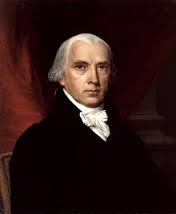
As we saw in the last chapter, Constantine did in fact follow a policy of tolerant concord. Beyond that, no one in the fourth century would have thought that a political regime could function without religious sanction, and it is naive to think that Constantine’s conversion  would have instantly turned him into James Madison…The question is, what were Constantine’s historical options in the fourth century? What were the constraints on his action? What, perhaps more important, were the limits of his imagination? Only when we have considered those questions are we capable of doing justice to Constantine’s interventions in church politics.

Defending Constantine, -pg. 132

The point is, when dealing with Constantine’s political legacy, we need to consider our historical distance and the limits of the subject’s own political horizon. Constantine wasn’t ruling his Empire after the Reformation, the Enlightenment, and the various historico-political developments that have shaped Western thought on religion and politics. Indeed, the separation between the two would have been an entirely foreign one, and so would the idea of an Emperor who kept a distance from the cultus. While admittedly not the biblical ideal, Leithart gives us good historical reason to think that Constantine’s foray into a constructive relationship between the State and the Church isn’t the sheer, unmitigated disaster that popular polemics would have us believe.

Soli Deo Gloria

Why The New Pope Shouldn’t Listen to Obama’s Advice (CaPC)

obama

Obama isn’t the most precise theologian. Nor should that be expected of him–he’s only a politician after all.

In a recent interview before the selection of the new Pope Francis, President Obama was asked about his thoughts on the incoming pope. He expressed his hope that the next Holy Father would be faithful to what he considers the “central message of the Gospel.” Admirable sentiment. I think we should all hope for a pope who loves the Gospel. The question we have to ask ourselves is: what do we mean by the Gospel? Well, according to the President it’s “that we treat everybody as children of God and that we love them the way Jesus Christ taught us to love them.”

Now, I don’t want to single out or beat up on the President, but when you have people like Andy Stanley using language about him being pastor-in-chief and what-not, his definition of the Gospel becomes culturally-important. People listen to it whether they should or not. As such it becomes a teachable moment. Being a preacher-type, I can’t help myself.

You can go read me correct the President’s theology over at Christ and Pop Culture.

Soli Deo Gloria

3 Cruddy Reasons No Christian Should Ever Use to Deny Aid to the Poor

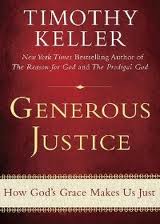
generous justiceThe other day I wrote a piece in which I outlined 3 ways Christians could reasonably disagree on what to do about helping the poor politically. It was essentially an explication of how someone could look at all of those Bible verses about helping the poor, believe them, want to put them into practice, and yet still find themselves voting against politicians and policies that attempt to enact long-term redistribution and aid to the poor via governmental programs. It was a plea for mutual understanding between economically left-leaning and right-leaning Christians, especially for the former not to assume bad-faith motives such as greed or heartlessness on the part of the latter in their voting patterns. Again, often-times these patterns are rooted in legitimate concern for the poor and a genuine difference of opinion on what is actually helpful to them.

Unfortunately, these good-faith reasons aren’t the only ones that people, even Christians, use to justify their voting, or even their giving patterns. Often-times there is a deeply un-Christian sensibility that informs our attitudes towards aid to the poor, rooted more in American, middle-class self-righteousness than in the Gospel or sound political theology. It’s easily spotted when the subject of taxes or charity comes up–certain platitudes and memes are tossed about having to do with “rights” and having “earned” our way of life, so on and so forth, implying that the poor simply deserve their lot and not our help. To a certain extent, I get it. There’s biblical warrant for connecting work with wages, property rights, etc.  Still, these truths often get used to justify callousness and are turned into opportunities for spiritual-economic pride that just cut plainly against the grain of Scripture.

Now, I originally planned to write a more substantial post in which I dealt with a number of these attitudes myself, but I ran across a brilliant quote by Robert Murray M’Cheyne that about sums it up:

Now, dear Christians, some of you pray night and day to be branches of the true Vine; you pray to be made all over in the image of Christ. If so, you must be like him in giving…”Though he was rich, yet for our sakes he became poor”

Objection 1 – “My money is my own.”
Answer: Christ might have said, “My blood is my own, my life is my own”…then where should we have been?

Objection 2 – “The poor are undeserving”
Answer: Christ might have said, “The are wicked rebels…shall I lay down my life for these? I will give to the good angels.” But no, he left the ninety-nine, and came after the lost. He gave his blood for the undeserving.

Objection 3 –“The poor may abuse it.”
Answer: Christ might have said the same; yea, with far greater truth. Christ knew that thousands would trample his blood under their feet; that most would despise it; that many would make it an excuse for sinning more; yet he gave his own blood.

Oh Dear Christians! If you would be like Christ, give much, give often, give freely, to the vile and poor, the thankless and the undeserving. Christ is glorious and happy and so will you be. It is not your money I want, but your happiness. Remember his own word, “It is more blessed to give than to receive.”

-quoted in Generous Justice, Timothy Keller, pg. 108

Note, you may still hold that governmental redistribution of economic goods is unwise, stretches beyond the government’s actual scope of authority, and is actually unhelpful for the poor–that’s fine. But God forbid that ever bleeds into an overall attitude of disregard for the poor. Objections like these should never be at the heart of any Christian who has received and understood the Gospel. The Gospel is about a God who saves by sheer grace, giving freely of himself to the undeserving. That needs to sink down deep into our minds, our souls, and reshape the way we approach even our own heart-motives for taking the economic positions we do.

If you don’t think the government should be the main source of aid, then make sure you are giving yourself, either directly, or through a church body. If you’re arguing for what you deem to be a wiser fiscal policy, beware that any of these creeping self-righteous attitudes infect your logic and your rhetoric, especially if you’re going to talk about your Christian ethics in other areas of political concern. The bottom-line with everything is: when it comes to the poor, don’t forget the Gospel.

Soli Deo Gloria