I want to briefly follow up my earlier post on the fact that theology proper cannot subsist on biblical theology alone. Earlier this week I found out I was going to be preaching the temptation of Jesus out of Matthew 4 very shortly. And it hit me just how integrative, or multi-disciplinary you have to be (or could be) to preach this text in all of its fullness.
For instance, right off the bat, you’ve got grand-scale, Biblical theological themes. Jesus facing off against Satan in the wilderness gives us a portrait of Christ as the Second Adam, possibly New Moses, but also especially as the True Israel. Various textual features teach us to read this as a recapitulation of both the trial of Adam in the Garden, facing off against Satan’s temptation of Adam and Eve through the distortion of God’s Word. Also, that this happened after the 40 days of fasting leads us to recall Israel’s sojourn and temptation for 40 years in the desert, which is only reinforced by the specific Scriptures Jesus cites against Satan from Deuteronomy.
With that in view, you could ask what this encounter means for Jesus’ ministry in the Gospels. Well, it’s an initial, partial victory over the devil at the outset of his ministry, inaugurating the kingdom of God through his teaching, preaching, healing, and exorcisms, as well as a powerful confirmation of his vocation and identity as the Son with whom the Father is well-pleased.
Of course, this raises Christological issues. This is the Son who is not only human, but divine. What does it mean for the the Son to be tempted then? Did Jesus assume a “fallen” human nature? Could Jesus have sinned given his divine nature? Or how did his unique empowerment by the Spirit come into play?
These doctrinal questions are not besides the point, but have important implications for the text’s essential meaning, as well as soteriological and existential cash value.
For instance, they have an impact on how we understand this as part of the active obedience of Christ, the Second Adam, and the representative Israel’s work for us. In union with Christ, this victory, this righteousness becomes ours by faith. Or again, Jesus victory in this text becomes ours, but also so does his example. He has given us the same Spirit in whose power he overcame temptation. We have the same Word–indeed, even more Scripture–with which to resist the devil’s temptations. Both of these dimensions of reflection and application are impacted by the dogmatic conclusions we come to provoked by this text.
Beyond the biblical-theological and the dogmatic, there is much to reflect on here existentially and ethically: what are these temptations? Different ways we’re tempted to distrust God, to imagine him wrongly, and try to provide for ourselves. They are the desires of the flesh, the temptation to get God to prove himself to you, or to achieve victory, power, and the kingdom without the cross. And each of these could provoke extended ethical and ascetic reflection.
And I’m just scratching the surface here. The point is simply this: to preach and teach any text well, you need multiple tools in your toolkit. Neither systematics alone, nor biblical theology alone, nor ethical reflection alone is sufficient for unpacking the truth, the glory, and the beauty of God’s Word for God’s people. Indeed, it should be no surprise that preaching the Word in the congregation is precisely the ecclesial act that forces one to cut through the artificial divisions imposed by the specialization of the academy.
Soli Deo Gloria

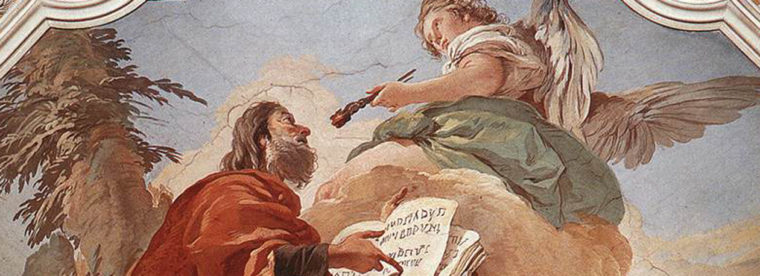 “O Come, O Come, Emmanuel” has long been my favorite Advent hymn. It’s marriage of rich, biblical theology and pathos perfectly capture the pain, longing, and anticipated joy of this season of expectation.
 The Gospel of John is typically acknowledged as having a high, divine Christology. The Synoptic Gospels (Matthew, Mark, and Luke) are far more disputed. In his recent, magisterial work,
 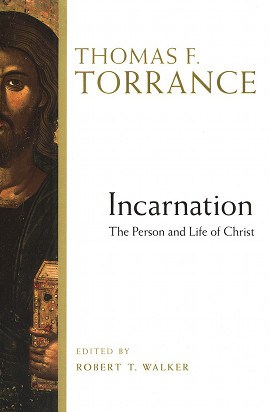 “Why Israel?”
 Theology is a historical practice. We’ve been reading the Bible and thinking about it for a long time. While that doesn’t entirely rule out advances, it does mean we shouldn’t be so surprised when we find that some of our modern studies (biblical, systematic, and practical) are at times only catching up or reworking old variations on a theme that’s been played throughout the history of the church. I’ve said something like this before, but I’ve been reminded of it recently with the recent works on Christology (teaching about Christ) in New Testament studies I’ve been digging into lately.
 For the last 30 or so years (or maybe more), there’s been a running debate surrounding the nature, shape, and origins of New Testament Christology. How high or low was it really? Was Paul really working with a concept of Christ as fully divine and fully human a la Chalcedon, or did that come later as the Church reflected on the implications of what Paul and the other apostles wrote? And did Jesus think himself divine? Was that even an option for a 1st Century Jew? Where did that Christology eventually come from? Was it the influence of Greek, pagan cult, or rooted in classic, Hebrew monotheism? And are these even the right questions? (See

 Reformedish