Rob Bell At the Areopagus (CaPC Feature)

Seth T. Hahne is the man.

Seth T. Hahne is the man.

Paul’s debate with the philosophers at the Areopagus remains a favorite story of mine. The Areopagus, or Mars Hill, in Athens was the cultural and intellectual center of the ancient world, so when the apostle Paul was asked to speak there on this strange new teaching about “Jesus” and “the Resurrection”, he spoke with great erudition and made an appeal for the Gospel tailored to his ‘religious’ but intellectually skeptical audience.

What We Talk About When We Talk About God is Rob Bell’s Areopagus speech.

You can read the rest of my feature review of his book HERE at Christ and Pop Culture.

Soli Deo Gloria

PS. It’s why I haven’t written anything this week and might not write much else.

Checking Out Churches? Don’t Forget the ‘Jesus Drinking Game’ Test

Well, now that I have your attention, some of you may be wondering what the Jesus Drinking Game Test is and why is a college minister talking about it? (Also, whether I’m going to be fired in about two sentences.)

But Peter, standing with the eleven, lifted up his voice and addressed them: “Men of Judea and all who dwell in Jerusalem, let this be known to you, and give ear to my words. For these people are not drunk, as you suppose, since it is only the third hour of the day. (Acts 2:14-15)

But Peter, standing with the eleven, lifted up his voice and addressed them: “Men of Judea and all who dwell in Jerusalem, let this be known to you, and give ear to my words. For these people are not drunk, as you suppose, since it is only the third hour of the day.” (Acts 2:14-15)

It all came up in a chat with my buddy, Andrew–a fiery, young, Welsh intellectual on the rise–when discussing church standards. Although staunchly Reformed, he keeps getting invited by his more liberal friends to their liberal mainline churches. Recounting one such experience he recalled: “I got drug to a new-agey Episcopal bible study where we did ‘centering prayer’ on ‘what God means to you, or however you perceive the Life Force.'” That did it for him. Now whenever he’s asked to check out one of his friends’ churches, “I tell them my rule: if I were to be drinking in church and take a sip every time Christ or the Gospel is mentioned, would I get tipsy? If not, I’d rather stay home.”

Now, make sure to note the hypothetical character of this test. Nowhere on this blog are you reading an exhortation to take flasks with you to church or play drinking games. For the record, drunkenness is a sin. (Eph. 5:18) Also, for my students, if you’re under 21 you shouldn’t even be touching the stuff.

The principle, however, is quite sound. As a baseline minimum, if you wouldn’t get drunk if you had to sip every time they mention Jesus or the Gospel in a church service, then it’s probably not a church you want to be going to. It might be a nice place, full of decent, moral people trying very hard to be good, have lovely children’s programs, lively social events, and a very nice pastor who is a great public speaker with a good amount of practical wisdom about your finances or dealing with conflict. All that taken into account, if this is not a place where Jesus’ Name is lifted up as the only one that saves, and the Gospel as the message that sustains, you should walk out and find another. Any church worth its salt will be drenched in Jesus and the Gospel.

Of course, merely dropping Jesus’ name and saying the word “gospel” in front of every other phrase is no guarantee of fidelity. This is probably another good reason not to be drinking in church–you want to pay attention to what they actually say about Jesus and the Gospel, measuring it against the word. (Acts 17:11) Still, for those considering a congregation to worship at, keeping the ‘Jesus Drinking Game’ principle in mind isn’t a bad place to start.

Soli Deo Gloria

Common? High? Pop? What Kind of Culture Is It? (With Some Help From Roger Scruton)

The notion of ‘culture’ has fascinated me ever since I first got my hands on Lesslie Newbigin’s The Gospel in a Pluralist Society in which he lays out his vision for engaging Western culture for the Gospel. It was around the time that the whole emergent church thing was still a thing and it seemed like everyone was talking about the shift to “postmodern” culture and what that meant. In middle of that conversation I started to realize that ‘culture’ was an important issue for evangelism, discipleship, and just ministry in general.

As I went on to read more about the issue, I found that almost everybody in the theological literature agrees that if you’re going to do ministry, then you have to understand cultural context you’re set in. Whether it’s modern culture, postmodern culture, indigenous cultures, or church cultures, ‘culture’ is everywhere and ever-so-important. Of course, this raises the issue of what exactly we mean by the term ‘culture’.

Seems like something we ought to have nailed down if we’re going to be talking about it so much.

You can almost feel the philosophy coming off of him.

You can almost feel the philosophy coming off of him.

Now I’ve had my own working definition of it for some time. The problem I’ve found is that, depending on the publication, author, or discipline you’re reading, everybody seems to have their own definition of it, many which seem to be at odds with each other.

This is why I was so pleased when I found that in first pages of his insightful little work Modern Culture, Roger Scruton helpfully lays out three different senses of the term ‘culture’ that are typically used today:

  • Common – The first is what might be called ‘common’ culture. It takes its cues from Herder, whose notion of kultur indicated the unique spirit of a nation or people as opposed to zivilization which could be shared with various other nations. This, apparently, was taken up and developed by the German romantics who pointed to the idea that culture is what shapes and is found in the various songs, art, traditions of a nation. In this view, it is what is common to all the people in a nation or tribe. This means that nobody, “however ill-educated, is deprived of culture, since culture and social membership is the same idea.” (pg. 1) It is this interpretation that most of the early anthropologists and sociologists of our day work with.
  • High – The second is what might be called ‘high’ culture and takes its roots in a more classical understanding that is linked to the idea of culture as cultivation and virtue. It is not common to all, but must be acquired through education, which usually requires some intellect, as well as leisure and resources for study. To have culture on this view is the province of the few and the well-educated. It comes with a knowledge of the broad literary canon, an appreciation of the right sorts of music and the arts. Culture, in this view, is a sort of moral-technical expertise. This idea has been championed by literary critics such as Matthew Arnold, and later by T.S. Eliot, and of course, Scruton himself. In fact, the book as a whole should be seen as a defense of high culture. (pp. 1-2)
  • Pop– Scruton says that a third sort of culture has emerged recently from the battles between the two. As we noted, the idea of common culture is usually attached to a tribe or a nation, a set, identifiable grouping of people whose culture can be identified and is generally shared. One of main characteristics of the modern/postmodern world which we inhabit is the breakdown of the various tribes associated with ‘traditional society.’ (pg. 2) There are no uncontested practices, thought patterns, songs, and narratives which can be appealed to without a sense of irony. That being said, humans still have need for a sort of solid and stable identity-shaping environment just as the traditional societies gave. It is in this situation that what might be termed ‘popular’ culture emerges, as a sort of tertium quid, a third thing, both like and unlike both of the prior conceptions. Pop culture is the province of ‘cultural studies’ programs in college and is thought of by its defenders as an equally valid ‘culture of the people’. Essentially pop culture is what’s involved when the notion of high culture as something that is a feature of “choice, taste, and leisure” in the sense of cultivation is merged with the common such as pop art and entertainment.  (pp. 2-3) As Scruton notes, “Any activity or artefact is considered cultural, if it is an identity-forming product of social interaction.” (pg. 3)

Of course, Scruton looks upon this last development with dismay, and, as mentioned earlier, in the rest of the work will launch a defense of high culture against any relativistic, postmodern deconstructions, or anti-elitist protests of the equal validity of popular culture.That doesn’t concern me at this point.

For Christians and ministers of the Gospel in particular, there are a number of theses I would like to simply list for reflection, without much additional comment.

  1. While these categories are not air-tight, uncontested, or always easily-distinguishable, it’s good to have some baseline working definitions to think with, especially when you’re reading about cultural engagement. It’s helpful to know what your author is dealing with because prescriptions for one category don’t always carry into the others.
  2. Christians should be engaged with culture at all levels. Common, high, or pop, there is no level or layer that can be ignored by ministers of the Gospel. Anything that is forming our people for good or ill, is our concern.
  3. Accordingly, effective ministers will become students of the common culture of the communities they inhabit.
  4. Depending on the type of congregation, or minister, they should also try be serious, not merely cursory, students of both the high and pop culture that our people draw on for their social-identity construction. (I emphasize ‘try’ because pastors have a lot on their plate already.)
  5. Preaching that both affirms and critiques in light of the Gospel needs to be alert to both the unconsciously formative, and consciously chosen elements of cultural formation. Sometimes it is the common cultural assumptions that are most difficult to expose, simply because they are assumptions.

As always, there’s more to say, but I don’t want to say it right now, so maybe I’ll say it later. Or maybe you should say it in the comments. Knock yourself out.

Soli Deo Gloria

Victory

christ-on-the-cross-1587This is another of my college poems. It’s one of the only ones I thought was half-way decent and meant anything:

Victory

Victory, I think, was never so bloody,

or the victor so broken—like a rag doll really.

He kind of hung there, limp.

Too much blood to look at;

I think he was more like a clump of

tenderized meat than a man.

The only thing that kept him upright

were a couple of grimy nails the size of

cigars forced through his hands.

I couldn’t bear to look at him.

(Odd, to think the man who saved my life

couldn’t stand up straight.)

Ironic, to think of His enemies’ smug smiles,

gloating over their handiwork.

The crowds mocking, laughing even, at this

Champion, even as he begged his Father

For their forgiveness.

They didn’t understand, each drop of blood,

each sigh, each groan brought Him one step

closer to His ambition, one step closer

to their lives.

They didn’t remember, no one took

His life from Him, He gave it freely.

That is why, I think, so much that day

went on unnoticed.

Nobody saw the beggar

whose sight was restored,

weeping softly.

Or the father of a girl

who was “only sleeping”, staring on

in disbelief.

The crowds weren’t listening when

Institutions fell and kingdoms were

laid low with every

lash and hammerfall.

As Laws established long before their fathers

were swept away by the blood

pouring from his torn brow.

But nobody saw it.

He killed Death before their very eyes!

And almost

no one heard

His ragged words of triumph, “It is finished”,

dragged from cracked and bloody lips,

stating his conquest.

Almost nobody saw it, besides a few friends

and a dirty thief hanging next to Him.

Still, it happened. And in the end,

Victory, poured out in blood and water that day,

like a broken fountain.

Soli Deo Gloria

Short, Admittedly Snarky Follow-Up on Process, Relational theologies and Evil

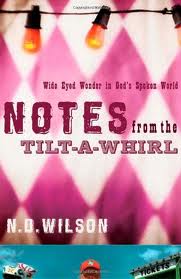
notesHere’s a little, admittedly snarky, follow-up summary point coming off of my last piece on the problem with process and ‘relational/open’ theologies and the problem of evil. It comes from one of my favorite books, a non-technical, non-specialist, super-brilliant, quirky piece of pop theology:

But if God is the creator God and He was somehow unaware of what He was starting, unaware that the Holocaust was going to happen, shocked when He first heard of Hitler’s plans, and embarrassed that He couldn’t stop him, then He still remains the first cause of all evil. He began a chain of events beyond His control.

“But it wasn’t on purpose (wring hands here). How was He supposed to know how fast everything would go to hell? He expected people to act more like Strawberry Shortcake.”

Don’t think this would get Him an acquittal. He might not like the world-accident He began, but He should have known better. If anyone could be expected to know better it’s God. Had He been drinking? I’d go with an insanity plea.

God was the first to cry. Is this comforting? He’s the first to get bad news. If only He were just a little quicker. Or maybe, “You know, He’s really sorry. When He invented fire He didn’t realize that it could burn skin. I hope you remember everything He’s said about being forgiving. Apply it now.”

-N.D. Wilson, Notes from the Tilt-A-Whirl, pg. 71-72

The point is that even the God who doesn’t know stuff and can’t do much about it, either voluntarily or due to some incapacity, is still responsible. Sacrificing God’s power and sovereignty doesn’t get him off the hook–it just tells us there was no point and weakens our hope for redemption.

Soli Deo Gloria

A Couple Notes on Process and Relational Theologies and the Problem of Evil

Pedro_Fernández_-_Christ_Suffering_-_WGA07807Over 20 years ago Ronald Goetz noted the “Rise of a New Orthodoxy” when it came to the doctrine of God being taught in academic theology. God’s immutability, (changelessness), and impassibility (inability to suffer or be acted upon from without), was axiomatic in patristic, medieval, reformational, and even early modern theology, but over the last 100 years a sea-change occurred and an acceptance, even a championing, of God’s passibility or mutability has largely been accepted. Goetz points to four causes, one of which is the problem of evil and suffering in light of the horrors of the 20th Century. (If God is all-powerful then he can stop evil. If all-good then he wants to. Evil. Therefore, no God.) After surveying them, he comes back around to the problem of evil in order to point out the weakness of two sorts of passibilist responses.

One comes from the limited God of Whitehead’s very influential process theology:

If God is conceived as being limited in power, though perhaps unlimited in love, then the defense of God in the light of evil and suffering boils down to the contention that God has created the greatest amount of good that he can, and the evil that remains is beyond his capacity to eliminate. A limited deity of this kind is portrayed in contemporary Whiteheadian-process theology, but the doctrine has a distinguished pedigree going back at least as far as Stoicism. A fundamental assumption in this approach is that an imperfect world is better than no world at all. What is unique to the Whiteheadian version of the limited deity is its departure from the classical Western view that God cannot be affected by the pain of an imperfect world. Indeed, as a seal of God’s goodness and love, God is, in Whitehead’s lovely phrase, “the fellow-sufferer who understands.”

The problem of evil has traditionally been formulated this way: How can it be that God is all powerful and all good and yet there still is evil? The doctrine that God is limited in power solves the problem by sacrificing God’s omnipotence. However, to my mind, any concept of a limited deity finally entails a denial of the capacity of God to redeem the world and thus, ironically, raises the question of whether God is in the last analysis even love, at least love in the Christian sense of the term.

All assertions of a limited deity must confront the fact that, if the world’s imperfections are the inevitable consequences of the limited capacity of God to create a world that is both perfect and free, then inescapably any other realm of being, any eschatological reality, would be similarly flawed. The blessing of eternal life would thus be impossible, for an eternal life flawed by imperfection and suffering would not be redemption, it would be hell. Hell is the prospect of wallowing forever in one’s weakness and finitude.

In Whitehead’s philosophy, the creation of the world is the result of God’s primordial yearning for a concretization of merely abstract possibilities (reminiscent of Plato’s “Ideas”) , which Whitehead calls “eternal objects.” Until they are arranged and concretized in the world, these eternal objects are merely abstractions. God’s primordial nature is governed by a “yearning after concrete fact — no particular facts, but after some actuality.”

The other pole of God’s bipolar being, his “consequent nature, “is characterized by a dependence on the continual emergence of concrete reality or “actual entities” in the world. Actual entities are perpetually perishing and arising. Each successive actual entity is capable of using in its own development the entities that have preceded it. God alone is everlasting. And his being is constituted in the process of his taking into himself all that he is able to save of all actual entities. They thus have a kind of immortality in the memory and in the ongoing self-enrichment of God. But the personal existence of all actual entities perishes. God wills the best for us and is a sympathetic sufferer with us when, in the course of the enrichment of his being, we suffer tragedy; but God alone is the everlasting beneficiary of the creative process.

To modern “protest atheism,” the fact that God, though sympathetic with the suffering of humanity, is nonetheless enriched by it, would seem little more impassive than the bathos of the sentimental butcher who weeps after each slaughter. If the purpose of our life and death is finally that we contribute to “the self-creation of God,” how, an outraged critic of God might demand, does God’s love differ from the love of a famished diner for his meat course?

Whitehead’s process God is, if anything, even more implicated in the evil of evil. Goetz moves on then to insist that if the incapable God doesn’t help, then the kenotic God–“kenotic” being used in a very specific, not-quite-NT-sense–doesn’t help much either:

To my mind, the insistence on the almightiness of God and creation ex nihilo are indispensable for an adequate understanding of the Bible’s witness, both to God’s lordship and to his capacity to save what he has created. Without the Bible’s eschatology, the God of the Bible cannot be understood in terms of agape, the radical self-giving love of one who holds nothing back — not the life of his son, not the sharing of his own being.

But this understanding puts us back on the horns of the dilemma: If God is so powerful in creation and so willing ultimately to deify the creation, why is there now evil?

Two lines of defense have become popular among theologians who find themselves, for whatever reasons, unable to speak of God as ontologically limited and yet unable to affirm the predestinarian highhandedness of an impassible, immutable God.

The first is the so-called Irenaeian theodicy (after the second-century theologian Irenaeus) : God permits suffering and evil in order that by them we might come to sufficient maturity so as to be able to inherit eternal life. The problem with such an argument is that while it offers a very helpful insight into the question of why we suffer and endure hardship, it says nothing about real evil. For real evil, as we experience it, does not build up and develop its victims; it corrupts, corrodes and destroys them.

The other line of defense can easily incorporate the Irenaeian theodicy, and indeed, might even seem to strengthen it. In this view, the statement “God is love” is virtually synonymous with a kenotic (self-emptying) (Phil. 2:7) view of the incarnation. God’s love is supremely revealed in his self-humbling. God is a fellow sufferer who understands not because God cannot be otherwise, but because God wills to share our lot.

Here, as in the case of a limited doctrine of God’s being there is a certain immediate psychological comfort in the notion that God does not require of us a suffering that he himself will not endure. However, if this comfort is to be any more than a psychological prop, it must show how God’s suffering mitigates evil. This explanation has been, to date, curiously lacking in the theodicy of divine self-limitation.

To anyone who feels compelled to affirm divine suffering, the fact that God is deeply involved in the anguish and the blood of humanity forces a drastic theological crisis of thought vis-à-vis the question of evil. The mere fact of God’s suffering doesn’t solve the question; it exacerbates it. For there can no longer be a retreat into the hidden decrees of the eternal, all-wise, changeless and unaffected God. The suffering God is with us in the here and now. God must answer in the here and now before one can make any sense of the by and by. God, the fellow sufferer, is inexcusable if all that he can do is suffer. But if God is ultimately redeemer, how dare he hold out on redemption here and now in the face of real evil?

-Ronald Goetz, “The Suffering God–The Rise of a New Orthodoxy”, This article appeared in the Christian Century, April 16,1986, p. 385

In other words, a suffering God of the sort implied by the passibilists is the God whose redeeming power is in serious doubt and the fact that he feels my pain just isn’t enough sometimes. I want to know that there is a reason for it. I want to know that there is a secure end to it. I want to know that it’s redeemable.

Soli Deo Gloria

PS. If you want my explanation impassibility and how that relates to Christ’s suffering on the cross you can go read it here.

Ben Affleck is Human! And Married! (CaPC Piece)

affleckLike a lot of Americans, I sat down the other night to watch the Oscars for the first time in years with some friends. When I witnessed Seth MacFarlane’s talented-but-crude, sexist, I-love-myself-so-much performance, I was reminded why. At the end of the night though, when my hope for humanity was at its lowest, Ben Affleck injected this wonderful, impromptu moment of redemptive decency. In the middle of his breathless acceptance speech he thanked his wife, Jennifer Garner, but it wasn’t the typical air-brushed gratitude we’re used to:

I want to thank you for working on our marriage for 10 Christmases. It’s good, it is work, but it’s the best kind of work, and there’s no one I’d rather work with.

You can go read the rest of my piece over at Christ and Pop Culture. Thanks.

Soli Deo Gloria

5 Ingredients to Being A Good Theologian

StAugustine

St. Augustine — patron saint of theologians, sore eyes, and brewers. No wonder the Reformed love him.

As a part of my reading during this Lenten season I’ve chosen to finally hunker down with Thomas Weinandy’s Does God Suffer?–a theological defense of the doctrine of God’s impassibility. God’s wired me to worship through my engagement with systematic theology, so I figure deep meditation on the issue of God’s immutable nature in light of the reality of sin, suffering, and the cross are just the ticket. Only two chapters in I can see why Kevin Vanhoozer listed it as one of 5 of the best books on the doctrine of God for theological students to engage with. He is nothing if not a model for Christian scholarly engagement.

Using primarily the words of its best advocates, Weinandy first reconstructs one of the strongest presentations in favor of passibility I’ve read yet. I even started to doubt my own newfound impassibilism (which is saying something after the amount Moltmann that I’ve read.) Thankfully he moves on to make a stunning case for the traditional doctrine. Still, I can’t tell you how much I appreciate this level of fairness, honestly, and intellectual integrity in a theological teacher.

Weinandy then moves in the next chapter to sketch his own understanding of the theological enterprise. In it he lays out 5 “ingredients that help foster and encourage the theological enterprise, and so help define the task of the theologian.” (pg. 27)

So according to Weinandy, what makes for a good theologian?:

  1. Theologians Reason About Faith – “First within the very nature of Christian revelation is the principle that faith seeks understanding…Christian theologians, their reason guided by faith and the light of the Holy Spirit, clarify, and advance what has been revealed by God, written in the scriptures, and believed by their fellow Christians.” (pg. 28) The theologian is to use the reason he’s been given, in submission to the Holy Spirit in order to elucidate what has already been revealed in such a way that it can edify and bless the community.  It is both an exercise of faith and reason, in precisely that order. It is reasoning about what we have accepted by way of God’s revelation–thinking more deeply about what we have believed in God’s testimony about himself. 
  2. Theologians Calm Down and Make a Case – “Second, Christian theology also wishes to defend, by reasoned argument, what has been revealed against those who question, distort, or attack it.” (pg. 28) There is a real place for reasoned ‘polemics’, or persuasive argument. Weinandy goes on to say that this shouldn’t be done with an attitude that assumes any and all questioning is made in bad faith or with hostility, or that doesn’t recognize the benefits of theological controversy. We would not have the Nicene Creed or the Chalcedonian definitions if the theologians of the Church were not forced to think more deeply on the mystery of Christ because of the doctrinal controversies in those early centuries. The point is, theologians make a case.
  3. Theologians Connect the Dots – “Third, Christian theology also wishes to demonstrate the inter-relationship between the various truths of faith.” (pg. 29) Weindandy gives the example of the relationship between the Father and the Son. In thinking through what it means for Jesus to be the eternal Son of the Father, the Church had to think through a bit more clearly what it meant to be a “Son” and what it meant to be a “Father.” Or, for that matter, what we mean by the idea of a person at all. No doctrine can be examined abstracted from the whole, but must be set within the full body of Christian doctrine otherwise it loses its proper shape. In other words, it’s not a bad thing for theologians to be “systematic” about things.
  4. Theologians Don’t Fly Solo – “Fourth, the work of individual theologians is not done in isolation. Theologians work within an historical context and within the Christian community.” (pg. 29) All good theologians stand on the shoulders of those who have come before them. Wanna make sure you’re a crappy theologian who runs into heresy? Do whatever it takes to remain ignorant of Christian history and the history of doctrine; never read or consider the teachers of the church in other times or places who have wrestled with the subject matter you’re studying. For the rest of us, we need to understand that neglecting the studies and advances in understanding that the Church has made over the centuries in our theological reflection is like trying to reinvent the wheel instead of trying to make it smoother. That is not to say that in certain times and places, the church can’t make advances in our understanding of doctrine (for instance the 4th century on the Trinity, or the 5th on the person of Christ, or the 16th on justification, or even now on the doctrine of impassibility) it is to say that it’s unwise to try and fly solo theologically.
  5. Theologians Worship – “Fifth, personal prayer and communal worship likewise foster theological understanding. Liturgy is a living expression of what is believed and so through participation in it one grows in an understanding of the faith.” (pp. 29-30) As the old expression goes, lex orandi, lex credendi, (the law of prayer is the law of belief). Weinandy points to the fact that in the past liturgical practices, the concrete worship of the church, shaped and gave the raw material of theological explanation. This was certainly the case in Basil the Great’s arguments about the full divinity of the Holy Spirit in the 5th century. Beyond this, we can’t begin to think we’re truly speaking of God, reasoning about the faith, if our own faith isn’t growing through a worshipful encounter with the Triune God. If theologians are not worshippers, not personally involved with the God they’re speaking of, then they’re trying to approach the task from some sort of neutral, 3rd-person perspective, describing the faith in the way a sociologist or ethnographer would. That might make for some interesting texts in religious studies, but not good theology.

There’s more to be said about the task of the theologians. I’m sure many of you have your own suggestions (feel free to suggest some in the comments.) Still, for those aspiring theologians among us, these are a good place to start.

Soli Deo Gloria

I Am Not Abraham’s Mistake (My Christ and Pop Culture Feature)

Illustration by the amazing Seth T. Hahn. Pretty stoked.

Illustration by the amazing Seth T. Hahne Pretty stoked.

9/11 was a weird day for me. I was a sophomore in high school at the time and I distinctly remember thinking to myself, “Oh God, I hope it wasn’t Arabs”, as soon as I heard that a plane had been crashed into the first tower. I’m 3/4 Palestinian and at times have a distinctly Arab cast to me. My last name is Rishmawy. Admittedly it was a selfish thought, but I just didn’t see that going well for me in high school. And I was right.

That afternoon in football practice, upon discovering that I was of Arab descent, a “Palestilian” according to one educated linguist on the team, a team-mate of mine took it upon himself to spear me in the back–twice. For those of you who’ve never played, that sort of thing hurts. Thankfully my coach caught on quickly and put an end to that. Still, for the next few years I was lovingly called “dune-coon”, “sand-nigger”, “Taliban”, “Osama”, etc. by a good chunk of my team-mates and friends. And yes, I do mean lovingly. It was wrong, and I don’t really get it, but for some reason racial slurs were a way of bonding in the locker-room. Still, it grated on me at times.

As frustrating and awkward as being an Arab high-schooler in post-9/11 America could be at times, given garden-variety prejudices, fears, and ignorance–none of those slurs frustrated me as much as what some of my well-meaning, Evangelical brothers and sisters ignorantly implied: that I and my entire ethnic heritage were an unfortunate mistake–Abraham’s mistake to be exact.

Please go read the rest of this piece at the Christ and Pop Culture blog at patheos.com.


Turning the King Into a Fox (Or, Irenaeus on the Silliness of Heresy)

fox

I love foxes, but still, not as good as Jesus.

Among other things I’ve been reading Irenaeus’ classic Against Heresies and loving it. His goal in the work is to describe and debunk the heretical teaching of the Valentinian gnostics who were perverting Christian teaching into their bizarre, absurd system. The most frustrating part was the way these gnostic teachers, in their attempt to fool the faithful, were twisting scriptures in order to support their teaching:

Such, then, is their system, which neither the prophets announced, nor the Lord taught, nor the apostles delivered, but of which they boast that beyond all others they have a perfect knowledge. They gather their views from other sources than the Scriptures; and, to use a common proverb, they strive to weave ropes of sand, while they endeavour to adapt with an air of probability to their own peculiar assertions the parables of the Lord, the sayings of the prophets, and the words of the apostles, in order that their scheme may not seem altogether without support. In doing so, however, they disregard the order and the connection of the Scriptures, and so far as in them lies, dismember and destroy the truth. By transferring passages, and dressing them up anew, and making one thing out of another, they succeed in deluding many through their wicked art in adapting the oracles of the Lord to their opinions. –Against Heresies, 1.7.1

Explaining the way the gnostic use of the Bible was unbiblical, he came up with a brilliant analogy for their method of scriptural interpretation:

Their manner of acting is just as if one, when a beautiful image of a king has been constructed by some skilful artist out of precious jewels, should then take this likeness of the man all to pieces, should rearrange the gems, and so fit them together as to make them into the form of a dog or of a fox, and even that but poorly executed; and should then maintain and declare that this was the beautiful image of the king which the skilful artist constructed, pointing to the jewels which had been admirably fitted together by the first artist to form the image of the king, but have been with bad effect transferred by the latter one to the shape of a dog, and by thus exhibiting the jewels, should deceive the ignorant who had no conception what a king’s form was like, and persuade them that that miserable likeness of the fox was, in fact, the beautiful image of the king. In like manner do these persons patch together old wives’ fables, and then endeavour, by violently drawing away from their proper connection, words, expressions, and parables whenever found, to adapt the oracles of God to their baseless fictions. We have already stated how far they proceed in this way with respect to the interior of the Pleroma. -ibid, 1.7.1

Basically it’s like they’ve taken the Mona Lisa, cut it up, and re-pasted it together in the shape of a toilet and called it Leonardo’s masterpiece–or rather an improvement on it. Now, the fact that this can happen with the scriptures, that people can take them, quote them, and use them to justify all sorts of doctrines is troubling to some. Many, in seeing the way scripture is used in the mouths of false teachers and heretics, might despair of them, or doubt their beauty and efficacy. Not Irenaeus. He says that for the faithful, this shouldn’t invalidate the scriptures or make them any less true and precious:

In like manner he also who retains unchangeable in his heart the rule of the truth which he received by means of baptism, will doubtless recognise the names, the expressions, and the parables taken from the Scriptures, but will by no means acknowledge the blasphemous use which these men make of them. For, though he will acknowledge the gems, he will certainly not receive the fox instead of the likeness of the king. But when he has restored every one of the expressions quoted to its proper position, and has fitted it to the body of the truth, he will lay bare, and prove to be without any foundation, the figment of these heretics. -ibid, 1.9.1

The key is taking the precious stones and restoring them to their “proper position”; contextual reading of the scriptures according to basic principles of exegesis matters. Verses need to be taken within chapters, chapters within book, books within the canon, and, yes, for those of us at the end of the 20th century, canon within the broader churchly tradition of interpretation. (Not that the tradition stands over the scriptures, but at the very least it doesn’t hurt to listen to what wise biblical teachers of other generations past have found in them.) When we do these things, instead of the fox, the beautiful picture of King Jesus emerges once more, ready for the adoration and worship God intended to lead us into through his Spirit-inspired scriptures.

Soli Deo Gloria