The Three-fold Work of the Spirit

people and placeWarning: This is a nerdy one.

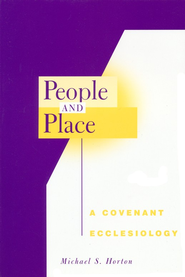
I’ve long found the three-fold office of Christ as Prophet, Priest, and King to be an extremely helpful and biblical way of organizing the complex fullness of his once-for-all reconciling work in his life, death, resurrection, ascension, and session at the right hand of the Father. What I’ve not found is a succinct piece linking the accomplishment of Christ’s final mediatorial with the present work of the Spirit in the community and the life of the believer–that is until I ran across this passage by Michael Horton:

From John 14-16 we also see that the Spirit brings about the…effect of the threefold office of Christ in these last days. As prophet, the Spirit bears the covenant word of judgment and justification, conviction of sin and faith-creating promise. This is what it means for the Spirit to be poured out on all flesh (Joel 2). As Barth famously put it, “The Lord of speech is also the Lord of our hearing.”

Furthermore, the Spirit is not merely a bonding agent between the Father and the Son, but an equal actor in the economy of grace. Although the external works of God are undivided, the agency of each person is distinct. The one Word is spoken by the Father and reaches its creaturely goal through the perfecting power of the Spirit. As the Spirit is different from the Son (“another Paraclete”), Pentecost is a genuinely new episode in the economy of grace. The Spirit “translates” for us and within us the intra-Trinitarian discourse concerning us (election, redemption, and renewal in Christ). The content of the Spirit’s teaching ministry is Christ (John 15:26b)–not another Word, but its inward effect in our hearts, provoking an “Amen!” AS one sent by the Father in the name of Christ, the Spirit preaches Christ, gives faith to hearers, and thereby unites them to Christ as members of his mystical body.

As “another Advocate,” the Spirit also ministers within us as that priestly office that Christ holds objectively outside of us. The Spirit is not our high priest, but applies the benefits of Christ’s completed work to us and unites us to Christ himself. Apart from the Spirit’s agency, we would remain “dead in trespasses and sins,” refusing the Gift, without any vital connection to Christ’s person and work (Eph. 2:1-5) We have already been reconciled to God in Christ “while we were still enemies” (Rom. 5:10), but the Spirit comes to make us friends and children of God (Rom. 8:1-27). As a covenant attorney, the Spirit makes more than a truce–a mere cessation of hostilities–and brings about a state of union.

Mediating Christ’s royal ministry, the Spirit subdues unbelief and the tyranny of sin in the lives of believers, creating a communion of saints as body ruled by its living head through prophets and apostles, evangelists, pastors, and teachers that Christ has poured out as the spoils of his victory (Eph. 4:11-16). The Spirit makes Christ’s rule effective in us and mong us by inspiring the scriptural canon and by creating a people who will be constituted by it. Jesus Christ had already appointed apostles as Spirit-inbreathed witnesses, but now at last through the ordinary ministry of pastors, teachers, and other officers in the church, Moses’ request in Numbers 11:29 (“Would that all the LORD’s people were prophets, and that the LORD would put his Spirit on them!”) will be fulfilled beyond his wildest dreams. Not only the seventy elder, but also the whole camp of Israel is made a Spirit-filled community of witnesses. The charismata bestowed on the whole body are orchestrated by the Spirit through the ordained office-bearers, who differ only in the graces (vocation), but in the grace (ontic status) of the Spirit. Thus, the mission of the Twelve in Luke 9:1-6 widens to the seventy in chpater 10. Yet this was but a prelude to the commissioning ceremony of Pentecost.

People and Place: A Covenant Ecclesiology, pp 24-25

Soli Deo Gloria

Could Constantine Have Been James Madison?

Definitely not a 4th Century Emperor.

Definitely not a 4th Century Emperor.

So after a few months of having it stare at me from my book shelf, I was able to start reading Peter Leithart’s Defending Constantine:The Twilight of an Empire and the Dawn of Christendom.  Admittedly I’m only about half-way through the work, but to me this is a tour de force of historiography and theological polemic re-examining the life and times of the first Christian Emperor, as well as the theological critique of “Constantinian” relations between church and state a la John Howard Yoder. Given that I’ve just arrived in Orlando for the Gospel Coalition 2013 National Conference I can’t take time for a truly substantial post about it yet. Still, one section in particular stuck me as worth briefly sharing and commenting on.

In reviewing his involvement in the internal affairs of the Church such as the Arian controversy and conflict between the Catholics and the Donatists, Leithart addresses the criticism Constantine receives as an un-baptized Emperor with no particular religious authority mucking about in such matters. For us moderns, it seems so obvious that there ought to be a separation between Church and State. Constantine should have taken a hands-off approach and left it bishops to handle their “spiritual” business while he took care of the affairs of state. Leithart calls this suggestion “implausible” and comments:

As we saw in the last chapter, Constantine did in fact follow a policy of tolerant concord. Beyond that, no one in the fourth century would have thought that a political regime could function without religious sanction, and it is naive to think that Constantine’s conversion  would have instantly turned him into James Madison…The question is, what were Constantine’s historical options in the fourth century? What were the constraints on his action? What, perhaps more important, were the limits of his imagination? Only when we have considered those questions are we capable of doing justice to Constantine’s interventions in church politics.

Defending Constantine, -pg. 132

The point is, when dealing with Constantine’s political legacy, we need to consider our historical distance and the limits of the subject’s own political horizon. Constantine wasn’t ruling his Empire after the Reformation, the Enlightenment, and the various historico-political developments that have shaped Western thought on religion and politics. Indeed, the separation between the two would have been an entirely foreign one, and so would the idea of an Emperor who kept a distance from the cultus. While admittedly not the biblical ideal, Leithart gives us good historical reason to think that Constantine’s foray into a constructive relationship between the State and the Church isn’t the sheer, unmitigated disaster that popular polemics would have us believe.

Soli Deo Gloria

Killswitch Engage, Edwards, and the Hell Inside Us All

disarmKillswitch Engage’s new album Disarm the Descent came out this last week. I don’t know how many times I’ve listened to it already, but I know I’ve got a few hundred more to go. Needless to say, it’s text-book shredding perfection. Adam D. is a metal machine; he couldn’t produce a weak metal album if he tried. Also, for those of you worried about the loss of frontman Howard Jones (who was amazing), Jesse Leach has returned to the helm stronger than ever both vocally and lyrically. He even manages to do a pretty good job filling in for Jones on the live version of “My Curse” included in the special edition.

Now, this is isn’t a full album review. In fact, I mostly just want to call attention to Leach’s forceful lyric-writing in the opening track, “The Hell in Me.”


Now, once I stopped air-shredding and paid attention to what he was saying, I realized he was speaking of the spiritual struggle at work in us all he sings:

Fall down into the chaos
Staring into the depths of pain darkness and suffering
I will not be from this place, inside of me
Until I understand this part of me that bleeds and captures my spirit
If it’s the death of me, then I will loosen its grip.

[Chorus:]
Protect me from the hell that burns inside me
No one can see this is the hell in me
Bring light into the darkness
Awaken and stir this war within us all
Reveal my true intentions

[Chorus:]
No one can see this is the hell in me
Lead me out of the darkness
Strengthen and protect the voice that makes no sound
Suffer and bleed for me
Pulled from the hell that is in me
Set me free
Will you set me free?

Leach picks up on the very biblical image of fire, torment, and hell to speak of the way a soul is consumed from within by sin. Sin burns the spirit. Indeed, this is ultimately the darkest truth of the doctrine of hell–we carry its seeds around within ourselves. Paul testifies that the wrath of God is seen, not so much in his active judgment, but in handing us over the the darkness of our own hearts as they lust after those things which dehumanize them. (Rom 1:18-15)

In depicting our spiritual struggle this way, Leach channels the spirit of Jonathan Edwards who brilliantly laid out this truth in his (in)famous sermon “Sinners in the Hand of an Angry God”:

There are in the souls of wicked men those hellish principles reigning, that would presently kindle and flame out into hell fire, if it were not for God’s restraints. There is laid in the very nature of carnal men, a foundation for the torments of hell. There are those corrupt principles, in reigning power in them, and in full possession of them, that are seeds of hell fire. These principles are active and powerful, exceeding violent in their nature, and if it were not for the restraining hand of God upon them, they would soon break out, they would flame out after the same manner as the same corruptions, the same enmity does in the hearts of damned souls, and would beget the same torments as they do in them. The souls of the wicked are in scripture compared to the troubled sea,Isa. 57:20. For the present, God restrains their wickedness by his mighty power, as he does the raging waves of the troubled sea, saying, “Hitherto shalt thou come, but no further;” but if God should withdraw that restraining power, it would soon carry all before it. Sin is the ruin and misery of the soul; it is destructive in its nature; and if God should leave it without restraint, there would need nothing else to make the soul perfectly miserable. The corruption of the heart of man is immoderate and boundless in its fury; and while wicked men live here, it is like fire pent up by God’s restraints, whereas if it were let loose, it would set on fire the course of nature; and as the heart is now a sink of sin, so if sin was not restrained, it would immediately turn the soul into fiery oven, or a furnace of fire and brimstone. -Jonathan Edwards, Sinners in the Hands of an Angry God, sec. 6

Songs like this remind me to thank God for his restraining hand. Even more, I thank God that he saw the hell in me and decided to “suffer and bleed for me”, to set me free, fully and finally from the torment of sin in Jesus Christ.

Soli Deo Gloria

Planned Parenthood, Infanticide, And The Return to Paganism (CaPC)

snowWe believe that any decision that’s made should be left up to the woman, her family, and the physician.

Normally it isn’t terrifying to hear the representative of a medical organization say something like this. In most circumstances I’d love hearing about a less bureaucratic approach to medicine and health care decisions. When the representative is from Planned Parenthood, and the “decision” in question is whether to save the life of an already-born-and-on-the-table baby or kill it, it sends chills down my spine.

You can read the rest of this post over at Christ and Pop Culture.

Vanhoozer’s 10 Rules for Cultural Interpretation

I don't know what he's thinking right here, but it could probably serve as a Ph.D. thesis.

I don’t know what he’s thinking right here, but it could probably serve as a Ph.D. thesis.

I was planning on doing a couple more posts on Kevin Vanhoozer’s theory and methodology of cultural interpretation. (I still might, partly for my own benefit.) But for now, I’m going to cheat and cut to the end by laying out Vanhoozer’s 1o Guidelines for Everyday Theological Interpretation of Culture. Some of them need some unpacking, but since that would be too much work (and you really should go buy the book anyways), here they are:

  1. Try to comprehend a cultural text on its own terms (grasp its communicative intent) before you “interpret” it (explore its broader social, political, sexual, or religious significance.)
  2. Attend to what a cultural text is doing as well as saying by clarifying its illocutionary act (e.g. stating a belief, displaying a world).
  3. Consider the world behind (e.g. medieval, modern), of (i.e., the world displayed by the cultural text), and in front of (i.e., its proposal for your world) the cultural text.
  4. Determine what “powers” are served by particular texts or trends by discovering whose material interests are served (e.g.. follow the money!).
  5. Seek the “world hypothesis” and/or “root metaphor” implied by a cultural text.
  6. Be comprehensive in your interpretation of a cultural text; find corroborative evidence that makes best sense of the whole as well as the parts.
  7. Give “thick” descriptions of the cultural text that are nonreductive and sensitive to the various levels of communicative action.
  8. Articulate the way of being human to which a cultural text directly or indirectly bears witness and gives commendation.
  9. Discern what faith a cultural text directly or indirectly expresses. to what convictions about God, the world, and ourselves does a cultural text commit us?
  10. Locate the cultural text in the biblical creation-fall-redemption schema and make sure that biblical rather than cultural texts have the lead role in shaping your imagination and hence or interpretive framework for your experience.

Everyday Theology: How to Read Cultural Texts and Interpret Trends, pp. 59-60

Soli Deo Gloria

Somebody Stop Me If I Start Doing This (A Thought on Blogging)

In a fascinating recent blog post on Rob Bell and the nature of advertising rhetoric, Alastair Roberts managed to describe one of my least favorite styles of blogging:

If you read many blogs, especially from a certain brand of progressive evangelical, you will notice similar styles of writing and thinking in operation. Sentences are brief, there are numerous single sentence paragraphs, sentences in bold, or fragmented statements. Anecdotes and engaging narratives are consistently employed. Rhetorical questions, potent images, and controlling metaphors are used extensively. Such writing typically persuades by getting the reader to feel something. The responses to such pieces are almost always emotive and affirming, very seldom critical (and critical responses are hardly ever interacted with carefully).

Now, to my mind there’s nothing inherently wrong with narratives with emotional hooks, bolding and italicizing things occasionally, metaphors, potent images, rhetorical questions, and so forth. All of them have their place at that right time and the right moment. Indeed, some writers could stand to use a little more of that. (Although, let’s be honest, the UNDERLINE, BOLD, AND ITALICIZE EVERYTHING INCESSANTLY THING IS KIND OF ANNOYING AND CHEAP.)  Scripture itself is soaked in varying modes of discourse, especially narrative and potent image. That said, the over-saturation of these modes of communication in blogs of this sort is kind of like the difference between a packet of Sweet & Low saccharine or a teaspoon of sugar in your coffee; one seems like a counterfeit designed to mask the quality of the substance, while the other enhances it.

Roberts goes on:

In an age dominated by advertising and the manipulation of feelings for the purpose of persuasion, the proliferation of conversational and self-revelatory styles of discourse, designed to capture people’s feelings, where logical argumentation once prevailed, shouldn’t surprise us. Where persuasion occurs through feeling, truth becomes bound up in the authentic communication of the ‘self’ and its passion, rather than in the more objective criteria of traditional discourses, where truth was tested by realities and practices outside of ourselves. This is truth in the mode of sharing one’s personal ‘sacred story’.

It is for this reason that narrative, anecdote, metaphor, and potent images are so important for such approaches. All of these are non-argumentative ways of drawing and inviting you, the reader, into the feelings of the text. They also serve as ways of avoiding direct ideological confrontation and engagement. By couching what would otherwise have to be presented as a theological argument in an impressionistic narrative they make it very difficult to frame disagreements. The most effective communicators of this type tend to be those who elicit and direct feelings most consistently. It can almost be as hard to have reasonable argument with such people than it would be to argue with an advert.

While Roberts might be guilty of over-privileging rational, logical modes of reasoning and argumentation in his criticism, there is a real danger when the church over-corrects and plays into the postmodern fragmentation and evasion of thought. Testimony is an inherently biblical mode of discourse, but testimony is susceptible to cross-examination. Biblical testimony is not intended to subvert the intellect, but engage it, as well as the more affective dimensions of our souls. Paul gave his own testimony to be sure, creatively used potent imagery, and so forth, but then gave a sustained biblical argument that can be followed, disputed, and wrestled with. (cf. Galatians)

Alright, this whole thing was quick and off-the-cuff. The point is, if ya’ll spot me drifting into land of advert blogging, you have my permission to call me out.

Soli Deo Gloria

It is Finished–All of It (Good Friday According to Calvin)

it_is_finishedAt some point all of us have wondered, why is Good Friday ‘good?’ What is great about a bloody Jew on a Roman Cross suffering an execution, an act of political terrorism? Jesus’ words “It is finished” (John 19:30) are his own answer. There are a number of things I could say, but instead I’ll let Calvin expand on that for us:

It is finished. He repeats the same word which he had lately employed, Now this word, which Christ employs, well deserves our attention; for it shows that the whole accomplishment of our salvation, and all the parts of it, are contained in his death. We have already stated that his resurrection is not separated from his death, but Christ only intends to keep our faith fixed on himself alone, and not to allow it to turn aside in any direction whatever. The meaning, therefore, is, that every thing which contributes to the salvation of men is to be found in Christ, and ought not to be sought anywhere else; or — which amounts to the same thing — that the perfection of salvation is contained in him.

There is also an implied contrast; for Christ contrasts his death with the ancient sacrifices and with all the figures; as if he had said,” Of all that was practiced under the Law, there was nothing that had any power in itself to make atonement for sins, to appease the wrath of God, and to obtain justification; but now the true salvation is exhibited and manifested to the world.” On this doctrine depends the abolition of all the ceremonies of the Law; for it would be absurd to follow shadows, since we have the body in Christ.

If we give our assent to this word which Christ pronounced, we ought to be satisfied with his death alone for salvation, and we are not at liberty to apply for assistance in any other quarter; for he who was sent by the Heavenly Father to obtain for us a full acquittal, and to accomplish our redemption, knew well what belonged to his office, and did not fail in what he knew to be demanded of him. It was chiefly for the purpose of giving peace and tranquillity to our consciences that he pronounced this word, It is finished. Let us stop here, therefore, if we do not choose to be deprived of the salvation which he has procured for us. -John Calvin, Comm. on John 19:30

This is why Good Friday is good–I don’t have to look anywhere else–Christ finished it.

Soli Deo Gloria

5 Theses on God and Christian Theology

clear wordI’ve been doing lists of 5 recently. First there were 5 ingredients to being a good theologian, then 5 things my mom taught me about theology, and now I’ve got another 5. Where will it all end? Probably not here.

In any case, these come from Mark D. Thompson’s insightful defense of that oft-maligned and mostly misunderstood doctrine of the perspicuity of scripture A Clear and Present Word: The Clarity of Scripture. He lists 5 key points about theology that must be kept in mind if the teaching about scripture’s clarity isn’t to devolve into the “static”, abstract, and impersonal notion it is commonly caricatured as:

  1. “Christian theology, at its most basic, is talk about God.” (pg. 49) Note, theologians have been saying this long before Rob Bell got around to it. Etymology aside (theos = God, logia = words), the first distinctive feature of theology is that it is concerned primarily with God. While theologians might talk about politics, humanity, the nature of reality, and so forth, in so far as they are doing theology, they are speaking of these things with reference to God. If they’re not, then they’re engaged in some other discipline, which is fine, but we shouldn’t call it theology. 
  2. Christian theology is essentially and unavoidably trinitarian.” (pg. 50) The point is that when Christians talk about God, they’re talking about the God who is wonderfully Father, Son, and Holy Spirit from all of eternity. That’s the God we see revealed in the history of Israel as it culminates in the life, death, and resurrection of the Son Jesus Christ who came by the will of the Father, in the power of the Spirit for our salvation and God’s glory.
  3. Christian theology is talk about God made possible by God’s prior decision to be known.” (pg. 51) At its most basic level the doctrine of revelation means that you only know about God because of God. It on the basis of God’s free, loving decision to be known by creatures–creatures in rebellion no less–that we come to have anything to say about him. As I’ve noted elsewhere, all of our knowledge of God is had by God’s grace. Our very knowledge of God is God’s kindness, God’s condescension to take up our feeble language and use it in powerful ways to speak to us of his great love–even more, to take up our feeble humanity and walk amongst us. (John 1:14)
  4. Christian theology can only claim truth and authority in so far as it conforms to God’s self-revelation.” (pg. 52) God has acted and spoken in certain ways to authoritatively reveal himself to us in history–our goal in theology is to be faithful to that revelation.   Contradicting God is not an option. For that reason, theology cannot be merely creative speculation, but rather a careful exposition of God’s words and works in history for our salvation, as we find them in the Text that bears his divine imprimatur. This doesn’t mean we can’t be creative in our exposition, or ever engage in what might be called metaphysical speculation, but rather that both are carried on in service of and submission to God’s own words about himself. Any “theology” that carries us beyond, or against God’s own self-revelation loses the name ‘Christian.’
  5. Christian theology is talk about God that takes place in the presence of God and in the eyes of the world. (pg. 53) Finally, theology is not done in a vacuum. Thompson calls our attention to the fact that theology happens in the presence of the God who is active through his word. “We do not speak of God in his absence or behind his back.” When we write theology, we are speaking both about God, and, in a way, to him; Augustine addressed his Confessions to his most important hearer. And yet, God is not our only hearer. We do theology in the eyes of the watching world; it’s primary character is that of proclamation. God does not benefit from theology–he already knows who he is. It is the creation that needs to hear of the words and works of God for its redemption. For that reason, theology must be engaged with the world in which we find ourselves, not in a way that blunts or domesticates it, but enables it to accomplish its intended purpose–to confront and welcome the world with the saving news of the Gospel.

As with nearly all numbered lists, this one could easily be expanded. However, these 5 lines of thought are helpful to keep clear as we think about the theological task in general, and specifically on the dynamic reality of Scripture. What we say about Scripture is unavoidably tied in to what we say about the Triune God we find revealed in Jesus Christ.

Soli Deo Gloria

5 Things My Mom Taught Me About Theology — What That Means For Your Kid

This is not my mom, but since she would probably not like any photo I picked of her, I'm giving you one of John Calvin instead.

This is not my mom, but since she would probably not like any photo I picked of her, I’m giving you one of John Calvin instead.

On a whim last week I stopped to try and think about who, out of the various books, pastors, and theologians I’ve been shaped by, has most shaped me theologically. I started rifling through the names–Calvin, Vanhoozer, Horton, Wright, Barth, Newbigin, Kreeft, Lewis, Kierkegaard–and came up with a surprising answer: my mother, Arliett. This is no joke, or even my attempt at a heart-warming post about dear old mom (who really isn’t old anyways), it’s just a practical point. For all the Calvin or Vanhoozer or Horton I quote, the deepest roots of my theological instincts can probably be traced back to my mom’s early instruction in the faith.

I’ll be straight with you and say Mom doesn’t have what most would consider formal theological training. She was raised in a Catholic school and got saved in a Calvary Chapel Bible study a couple of years before I was born. There was no seminary and I don’t recall us owning a single systematic theology text in the home before I bought mine in seminary. Mom learned what she knew from a lot of Bible studies, personal reading, and a lot of hours listening to sermon tapes from Bible teachers. Still, she learned enough to be recognized by the leadership and was eventually asked to be a bible study leader in the women’s groups at our churches.

Her first aim though, besides knowing and loving Jesus herself, was that my sister and I would know him too.  For the first few years of my life in church, she was my Sunday School teacher using the flannel-graphs, telling us the stories, and teaching us from the Word of God. When she had a major surgery related to a tumor when I was in Jr. High, she told us afterwards, that her one prayer was that she would live so she could make sure and encourage us in our faith until we were adults. And honestly, I can attest she did not let up–ever. Whether it was playing hundreds of hours of sermons in the car, buying us teenage devotionals, making sure we were in Bible studies, or praying for us in moms’ groups, we had a full-time spiritual cheerleader and gadfly in my mom.

So what exactly did my mom teach me that’s still with me today? Plenty, but I think I’ll limit it to 5 key points:

  1. The Trinity is Non-Negotiable – Back when I was a kid we had Jehovah’s Witnesses and Mormons walking door to door a lot in our neighborhood. My mom was aware of this and told us one key question we should always ask when someone came around trying to talk about Jesus was “Do you believe in the Trinity?” If they didn’t, just tell them you do and don’t continue the conversation. While maybe not the best example of ecumenical dialogue, she wasn’t much interested in it at that point, but rather with the spiritual health of her children. She never mentioned Arianism, tri-theism, modalism, or the difference between the economic and immanent Trinity, but she did teach us very clearly that Christians confess a Triune God who is wonderfully Father, Son, and Holy Spirit. Anything else is not the God of Jesus Christ.
  2. Is it in the Bible? – Next, she taught us the importance of the Bible. Her and my dad both would read the Bible to us at night, (although she preferred my dad to do the reading before bed because she didn’t want us picking up her Honduran spanish accent in our English). In that, and a million other ways, she was always telling us that the Bible was where the truth of God was found. We weren’t fundamentalists rejecting all other books (my parents took me to the library a lot), but the bottom-line was, for faith and morals, if it wasn’t in the Bible, then it wasn’t binding on us for salvation, and should probably be avoided. Now, of late I’ve come to a more appreciative view of the weight of tradition, creeds, councils, etc., but that basic instinct to strive to trust the Word of God above all other words came through the words of my mother.
  3. We Have a Story-Shaped Gospel – This one’s kinda simple. Like I mentioned above, my mom taught us Sunday School. I learned a lot of Bible stories at her knee. Also, I don’t know if it was my dad or my mom who made the decision to use the sweet comic-book-style Picture Bible when we were kids, but that was a great move. From a very early age I had the inarticulate sense that the Bible was not just a collection of disembodied truths, but a series of stories telling the spiritual history of all the generations of believers that came before, leading up to the saving actions of Jesus Christ. Long before I read Hans Frei, my mom taught me about story.
  4. Balance – Another theological instinct bequeathed to me by my mom was a sense for balance. I’ve never been a fan of extreme positions or false dichotomies. For instance, I’ve always been peeved at those who try to pit a Christus Victor angle against the penal substitutionary angle or vice versa, in the atonement discussion when they’re both fully compatible with each other and found in scripture. (Col. 2:14-15) The one issue that I remember my mom giving me a sense of balance about when I was a kid was regarding spiritual gifts. We were at a decent Assembly of God church for a couple of years because they had a good kids program, but when I came home asking why I didn’t have the gift of tongues in the 3rd grade, my parents decided it was time to roll out. She made a point to tell me that yes, the ‘charismatic gifts’ like tongues and prophecy were real (not cessationism), but they were always to be used in proper order, and they weren’t necessarily for everybody (charismaniacs). We all have different gifts. Again, I’m pretty sure she’d never read Gordon Fee’s commentary on 1 Corinthians, but she taught me to handle the Word in a way that wasn’t reactionary or ‘enthusiastic’, but calmly responsible.
  5. Humility – Finally, my mom strove to teach me humility. I can’t tell you how often she would talk to me about Solomon’s humility in asking for wisdom. In a hundred different ways she warned me against pride in thinking I knew more than I did, simply because I usually knew a little more than the rest of my friends. This continued from the time I was a small child until I was in high school, and then in college, and on into grad school, and–you get the picture. For natural born sinners, humility before the Word of God and the God who is beyond fathoming is a lesson that can never be taught too early or too much.

What Does this Have to Do with You? As I mentioned earlier, I’m not just trying to write a heart-warming post about my mother, or my childhood. My point in ripping through all of those truths my mom taught me is to encourage parents to understand their primary role in the spiritual education of their children. I didn’t learn those very important lessons in seminary, but in the home.

I say this as someone who works in student ministries. I know about the wonderful programs, Sunday School teachers, directors, studies, and lessons that can be used to help shape the spiritual life of your child. The plain fact of the matter is that, at best, we get your kids for about an hour or two a week while you have them for the rest of it; there is simply no competition.

You need to realize that your child’s spiritual life is not the church’s responsibility, but yours. We are there to help you do your job as a parent. See, your primary job as a parent is not to make sure that your kid gets on the right sports team, or the right college, or has a “successful life”, or is even “happy”. Your primary job is, by implicit example and explicit instruction, to point your child to Christ in all that you do.

If you feel overwhelmed by the idea of being responsible for the spiritual well-being of your child hear me say three words of encouragement:

  1. First, good for you–it is a big deal and from my experience in student ministries not enough parents care about it beyond wondering why we haven’t speed-sanctified their child for them. A little urgency isn’t a bad thing.
  2. Second, calm down–you are not responsible for converting them, as that is work of the Holy Spirit, but pointing them to Christ. Too much urgency will make you crazy.
  3. Third, take heart–you are not alone in this. You have the promise of Jesus that he will be with you until the end of the age as you go out to fulfill the Great Commission even unto the ends of your own backyard. (Matt 28)

Soli Deo Gloria

Some resources for newly-inspired, but lost parents:
1. The Jesus Story-Book Bible by Sally Lloyd-Jones
2. Big Truths for Young Hearts by Bruce Ware
3. The Good News We Almost Forgot by Kevin DeYoung (More for parents who feel shaky about theology)
T.S. Eliot’s Definition of Heresy and the Value of Heretics

EliotT.S. Eliot is one of my favorite poets that I don’t read–at least not his poetry. When reading Scruton I found out he had a lecture series involving the notion of heresy, so of course I was intrigued.  It took some digging to track them down though, because they had been suppressed by Eliot himself due to some unfortunately anti-Semitic content. In any case, I found them and tracked down his definition of heresy and heretics:

Furthermore, the essential of any important heresy is not simply that it is wrong: it is that it is partly right. It is characteristic of the more interesting heretics, in the context in which I use the term, that they have an exceptionally acute perception, or profound insight, of some part of the truth; an insight more important often than the inferences of those who are aware of more but less acutely aware of anything. So far as we are able to redress the balance, effect the compensation, ourselves, we may find such authors of the greatest value. If we value them as they value themselves we shall go astray. And in the present state of affairs, with the low degree of education to be expected of public and of reviewers, we are more likely to go wrong than right; we must remember too, that an heresy is apt to have a seductive simplicity, to make a direct and persuasive appeal to intellect and emotions, and to be altogether more plausible than the truth.

-Eliot, T. S., 1888-1965. After Strange Gods : A Primer of Modern Heresy; London : Faber and Faber.

In other words, heretics are usually never totally wrong. In fact, they often-times grasp a vital truth more profoundly than others, but let it distort their thought when it becomes a focal point dominating all other truths. For that reason, sometimes interacting intellectually with heretics, or distorting teachers, is helpful–albeit in a negative way. One thinks of the way that Calvin’s interactions with Osiander on the issue of union with Christ which forced him to clarify his own thought on the matter. This doesn’t excuse heresy or mean we shouldn’t strive to avoid it and cling to the truth any less. It does mean that sometimes it’s good to try and understand what motivates it in order that our orthodoxy might be all the stronger. If I can understand the repugnancy of the absolutist dogmatism that drives some towards relativism, I can learn to present truth in a more gracious and understanding manner. If I can understand what would motivate a panentheistic denial of transcendence, I can know better how to communicate the beauty of a God whose transcendence is the ground for his immanence.

In other words, in the sovereignty of God even heretics can teach us something about the truth.

Soli Deo Gloria