Who Needs Preachers When You’ve Got the Bible?

preacherIf you’ve been around long enough, you’ve eventually encountered that guy. You know, the one who basically says all he needs is his Bible and the Holy Spirit. He’s got so much faith that he doesn’t need to listen to teachers or read commentaries. Really, nobody does if they trust the Spirit and the Word enough.

Right.

Well, if you haven’t had the blessing, don’t worry, you’ll meet him eventually. In any case, it’s a very old phenomenon that dates probably as far back as church history extends. It was certainly present in Calvin’s day. Commenting on Paul’s charge to teach the word in season and out of season (2 Tim 4:1-4), he pushes back on the same sort of fanaticism of some of his contemporaries in the Radical Reformation:

It is proper to observe carefully the word therefore, by means of which he appropriately connects Scripture with preaching. This also refutes certain fanatics, who haughtily boast that they no longer need the aid of teachers, because the reading of scripture is abundantly sufficient. But Paul, after having spoken of the usefulness of Scripture, infers not only that all ought to read it, but that teachers ought to administer it, which is the duty enjoined on them. Accordingly, as all our wisdom is contained in the Scriptures, and neither ought we to learn, nor teachers to draw their instructions, from any other source; so he who, neglecting the assistance of the living voice, shall satisfy himself with the silent Scripture, will find how grievous an evil it is to disregard that way of learning which has been enjoined by God and Christ. Let us remember, I say, that the reading of Scripture is recommended to us in such a manner as not to hinder, in the smallest degree, the ministry of pastors; and, therefore, let believers endeavor to profit both in reading and in hearing; for not in vain hath God ordained both of them. –Commentary on 2 Timothy 4:1

Calvin isn’t saying we shouldn’t read our Bibles on our own, or that the Holy Spirit can’t enlighten our personal study. No, there is real benefit there. But if Jesus says that there ought to be teachers the church, and that we ought to sit under sound preaching, who are we to be more spiritual than he is? Apparently there’s something to it.

Soli Deo Gloria

Angels, Sheep, and Sauciness

While doing some sermon prep, I ran across these rich comments by Calvin in his treatment of the parable of the Lost Sheep in both Matthew and Luke:

 For the Son of man cometh. Christ now employs his own example in persuading his disciples to honor even weak and despised brethren; for he came down from heaven to save not them only, but even the dead who were lost. It is in the highest degree unreasonable that we should disdainfully reject those whom the Son of God has so highly esteemed. And even if the weak labor under imperfections which may expose them to contempt, our pride is not on that account to be excused; for we ought to esteem them not for the value of their virtues, but for the sake of Christ; and he who will not conform himself to Christ’s example is too saucy and proud.

What think you? Luke carries the occasion of this parable still farther back, as having arisen from the murmurings of the Pharisees and scribes against our Lord, whom they saw conversing daily with sinners. Christ therefore intended to show that a good teacher ought not to labor less to recover those that are lost, than to preserve those which are in his possession; though according to Matthew the comparison proceeds farther, and teaches us not only that we ought to treat with kindness the disciples of Christ, but that we ought to bear with their imperfections, and endeavor, when they wander, to bring them back to the road. For, though they happen sometimes to wander, yet as they are sheep over which God has appointed his Son to be shepherd, so far are we from having a right to chase or drive them away roughly, that we ought to gather them from their wanderings; for the object of the discourse is to lead us to beware of losing what God wishes to be saved. The narrative of Luke presents to us a somewhat different object. It is, that the whole human race belongs to God, and that therefore we ought to gather those that have gone astray, and that we ought to rejoice as much, when they that are lost return to the path of duty, as a man would do who, beyond his expectation, recovered something the loss of which had grieved him.

There will be joy in the presence of the angels. If angels mutually rejoice with each other in heaven, when they see that what had wandered is restored to the fold, we too, who have the same cause in common with them, ought to be partakers of the same joy. But how does he say that the repentance of one ungodly man yields greater joy than the perseverance of many righteous men to angels, whose highest delight is in a continued and uninterrupted course of righteousness? I reply, though it would be more agreeable to the wishes of angels (as it is also more desirable) that men should always remain in perfect integrity, yet as in the deliverance of a sinner, who had been already devoted to destruction, and had been cut off as a rotten member from the body, the mercy of God shines more brightly, he attributes to angels, after the manner of men, a greater joy arising out of an unexpected good.

Harmony of the Law, Vol. 2, Matthew 18:14; Luke 15:1-10

There is much to comment on in this passage, but I want to call our attention to only a few things:

  1. Calvin uses the term ‘saucy’. That’s brilliant.
  2. A good teacher both preserves what’s in his possession, and labors to regain what was lost. Many of us in ministry focus on one to the exclusion of the other but Calvin points to the necessity of both for the good shepherd-pastor.
  3. The “unexpected good” of repentance ought to cause us great joy. We should love to see steady faithfulness, but the deepest beauty of the Gospel is the recovery of that which was lost–this is what the angels* rejoice over.

Soli Deo Gloria

*Never google for images of angels–ever.

5 Things My Mom Taught Me About Theology — What That Means For Your Kid

This is not my mom, but since she would probably not like any photo I picked of her, I'm giving you one of John Calvin instead.

This is not my mom, but since she would probably not like any photo I picked of her, I’m giving you one of John Calvin instead.

On a whim last week I stopped to try and think about who, out of the various books, pastors, and theologians I’ve been shaped by, has most shaped me theologically. I started rifling through the names–Calvin, Vanhoozer, Horton, Wright, Barth, Newbigin, Kreeft, Lewis, Kierkegaard–and came up with a surprising answer: my mother, Arliett. This is no joke, or even my attempt at a heart-warming post about dear old mom (who really isn’t old anyways), it’s just a practical point. For all the Calvin or Vanhoozer or Horton I quote, the deepest roots of my theological instincts can probably be traced back to my mom’s early instruction in the faith.

I’ll be straight with you and say Mom doesn’t have what most would consider formal theological training. She was raised in a Catholic school and got saved in a Calvary Chapel Bible study a couple of years before I was born. There was no seminary and I don’t recall us owning a single systematic theology text in the home before I bought mine in seminary. Mom learned what she knew from a lot of Bible studies, personal reading, and a lot of hours listening to sermon tapes from Bible teachers. Still, she learned enough to be recognized by the leadership and was eventually asked to be a bible study leader in the women’s groups at our churches.

Her first aim though, besides knowing and loving Jesus herself, was that my sister and I would know him too.  For the first few years of my life in church, she was my Sunday School teacher using the flannel-graphs, telling us the stories, and teaching us from the Word of God. When she had a major surgery related to a tumor when I was in Jr. High, she told us afterwards, that her one prayer was that she would live so she could make sure and encourage us in our faith until we were adults. And honestly, I can attest she did not let up–ever. Whether it was playing hundreds of hours of sermons in the car, buying us teenage devotionals, making sure we were in Bible studies, or praying for us in moms’ groups, we had a full-time spiritual cheerleader and gadfly in my mom.

So what exactly did my mom teach me that’s still with me today? Plenty, but I think I’ll limit it to 5 key points:

  1. The Trinity is Non-Negotiable – Back when I was a kid we had Jehovah’s Witnesses and Mormons walking door to door a lot in our neighborhood. My mom was aware of this and told us one key question we should always ask when someone came around trying to talk about Jesus was “Do you believe in the Trinity?” If they didn’t, just tell them you do and don’t continue the conversation. While maybe not the best example of ecumenical dialogue, she wasn’t much interested in it at that point, but rather with the spiritual health of her children. She never mentioned Arianism, tri-theism, modalism, or the difference between the economic and immanent Trinity, but she did teach us very clearly that Christians confess a Triune God who is wonderfully Father, Son, and Holy Spirit. Anything else is not the God of Jesus Christ.
  2. Is it in the Bible? – Next, she taught us the importance of the Bible. Her and my dad both would read the Bible to us at night, (although she preferred my dad to do the reading before bed because she didn’t want us picking up her Honduran spanish accent in our English). In that, and a million other ways, she was always telling us that the Bible was where the truth of God was found. We weren’t fundamentalists rejecting all other books (my parents took me to the library a lot), but the bottom-line was, for faith and morals, if it wasn’t in the Bible, then it wasn’t binding on us for salvation, and should probably be avoided. Now, of late I’ve come to a more appreciative view of the weight of tradition, creeds, councils, etc., but that basic instinct to strive to trust the Word of God above all other words came through the words of my mother.
  3. We Have a Story-Shaped Gospel – This one’s kinda simple. Like I mentioned above, my mom taught us Sunday School. I learned a lot of Bible stories at her knee. Also, I don’t know if it was my dad or my mom who made the decision to use the sweet comic-book-style Picture Bible when we were kids, but that was a great move. From a very early age I had the inarticulate sense that the Bible was not just a collection of disembodied truths, but a series of stories telling the spiritual history of all the generations of believers that came before, leading up to the saving actions of Jesus Christ. Long before I read Hans Frei, my mom taught me about story.
  4. Balance – Another theological instinct bequeathed to me by my mom was a sense for balance. I’ve never been a fan of extreme positions or false dichotomies. For instance, I’ve always been peeved at those who try to pit a Christus Victor angle against the penal substitutionary angle or vice versa, in the atonement discussion when they’re both fully compatible with each other and found in scripture. (Col. 2:14-15) The one issue that I remember my mom giving me a sense of balance about when I was a kid was regarding spiritual gifts. We were at a decent Assembly of God church for a couple of years because they had a good kids program, but when I came home asking why I didn’t have the gift of tongues in the 3rd grade, my parents decided it was time to roll out. She made a point to tell me that yes, the ‘charismatic gifts’ like tongues and prophecy were real (not cessationism), but they were always to be used in proper order, and they weren’t necessarily for everybody (charismaniacs). We all have different gifts. Again, I’m pretty sure she’d never read Gordon Fee’s commentary on 1 Corinthians, but she taught me to handle the Word in a way that wasn’t reactionary or ‘enthusiastic’, but calmly responsible.
  5. Humility – Finally, my mom strove to teach me humility. I can’t tell you how often she would talk to me about Solomon’s humility in asking for wisdom. In a hundred different ways she warned me against pride in thinking I knew more than I did, simply because I usually knew a little more than the rest of my friends. This continued from the time I was a small child until I was in high school, and then in college, and on into grad school, and–you get the picture. For natural born sinners, humility before the Word of God and the God who is beyond fathoming is a lesson that can never be taught too early or too much.

What Does this Have to Do with You? As I mentioned earlier, I’m not just trying to write a heart-warming post about my mother, or my childhood. My point in ripping through all of those truths my mom taught me is to encourage parents to understand their primary role in the spiritual education of their children. I didn’t learn those very important lessons in seminary, but in the home.

I say this as someone who works in student ministries. I know about the wonderful programs, Sunday School teachers, directors, studies, and lessons that can be used to help shape the spiritual life of your child. The plain fact of the matter is that, at best, we get your kids for about an hour or two a week while you have them for the rest of it; there is simply no competition.

You need to realize that your child’s spiritual life is not the church’s responsibility, but yours. We are there to help you do your job as a parent. See, your primary job as a parent is not to make sure that your kid gets on the right sports team, or the right college, or has a “successful life”, or is even “happy”. Your primary job is, by implicit example and explicit instruction, to point your child to Christ in all that you do.

If you feel overwhelmed by the idea of being responsible for the spiritual well-being of your child hear me say three words of encouragement:

  1. First, good for you–it is a big deal and from my experience in student ministries not enough parents care about it beyond wondering why we haven’t speed-sanctified their child for them. A little urgency isn’t a bad thing.
  2. Second, calm down–you are not responsible for converting them, as that is work of the Holy Spirit, but pointing them to Christ. Too much urgency will make you crazy.
  3. Third, take heart–you are not alone in this. You have the promise of Jesus that he will be with you until the end of the age as you go out to fulfill the Great Commission even unto the ends of your own backyard. (Matt 28)

Soli Deo Gloria

Some resources for newly-inspired, but lost parents:
1. The Jesus Story-Book Bible by Sally Lloyd-Jones
2. Big Truths for Young Hearts by Bruce Ware
3. The Good News We Almost Forgot by Kevin DeYoung (More for parents who feel shaky about theology)

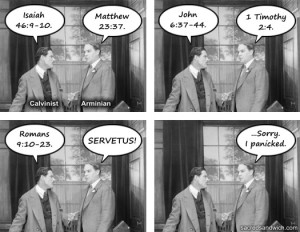
Responses to “Calvin Killed Servetus!” by Denomination (Or, Dealing with Theological Moral Hubris)

men_debate_calvinism

HT: The Sacred Sandwich

It’s a well-known fact that the heretic Michael Servetus was burned at the stake in Geneva during Calvin’s pastorate there. This is universally condemned by both Calvin fans and foes alike. At least it should be. What’s often debated is Calvin’s role in the whole affair and what impact, if any, it should have on our judgment about the man, his theology, and the subsequent theological tradition that follows him. And indeed, it is problematic. That anybody could think that burning at the stake those with whom we disagree on theological matters is, in any sense, compatible with the Gospel of the crucified Messiah, is a morally disastrous lapse in judgment to say the least.

So what do we say to this? Especially when the subject is brought up in order to discredit Calvin or the Reformed tradition as a whole?

Two Classic Responses
1. The General Point. The first typical (and I believe valid) response is to make the general point that one wrong action, incident, statement, or even habit, doesn’t necessarily invalidate someone’s entire career. Obviously, one can find dubious actions and statements in the biographies of most of history’s heroes. Lincoln’s anti-slavery record is brilliant and yet he made statements that by contemporary standards (as well as transhistorical ones) are quite racist. Martin Luther King Jr. broke his marital vows to Coretta Scott King numerous times. And no, this isn’t just prudery or relativistically equating personal sexual misdeeds with corporate violence. By engaging in the adulterous trysts he did, he risked the public moral integrity of the entire Civil Rights movement he came to represent. At the biblical level, one might point out that not a single figure in the Bible, even its authors, comes out clean except for Jesus. In that sense, Calvin keeps company with the long line of saved wretches like Abraham, Moses, David, and Paul.

2. Moving to Calvin. Second, one can move to the particulars of the case, placing Calvin in his historical context. Clearly, he wasn’t the only one at the time to make that lapse. Calvin was unfortunately a “Constantinian” in the sense that he un-biblically mixed the authority of the State with that of the Church. But then again, so was everybody else. It’s easy to forget that Servetus was already condemned to death by the Roman Catholics. He escaped a death sentence in Vienne to run to Geneva. Similarly, if the Lutherans had gotten their hands on him he would have been executed. When the Magistrates of Geneva asked the magistrates and theologians in places like Zurich, Basel, and Wittenberg, they all agreed that Servetus should have been burned.

Further, Calvin had earlier explicitly warned Servetus in correspondence not to come to Geneva or things would not go well for him there either. He even risked his own life at one point to go meet him in an area outside of Geneva where he himself was a wanted heretic in order to reconcile theologically. It is not the case that Servetus was the victim of Calvin’s peculiarly authoritarian personality that flowed from his inhuman, predestinarian God. If anything, it was an inherited, though still culpable, flaw in thought and practice. It should be noted that Calvin held no explicit political authority in Geneva and was not even a citizen until much later in life. He did play theological witness in the trial, while at the same time arguing with him in private in prison, urging him to recant. Beyond that, he is reported to have pleaded with the city elders to, at the very least, execute him in a more humane manner than burning, but rather by hanging. (Now, to us that doesn’t sound like much, but comparatively-speaking that’s something.)

To place it in a broader framework, sadly Servetus was one of many heretics tried and executed in the Reformation era by both Catholics and Protestants of all stripes–they were universally more violent and barbarous times. To put it bluntly, the reason Servetus is brought up today is that he was a little more famous, something of a symbol, and because it’s an easy way to criticize and single out Calvin. For more along these lines, see R. Scott Clark’s post on the “Calvin as Tyrant Meme“, and a more complete summary of the Servetus affair here.

Dealing with Theological Hubris by Denomination
Now, while all of these points ought to be considered and weighed, there’s another way to handle the whole charge: the tu quoque (“you too”). Admittedly, it is formally a fallacy, but in response to the ad hominem nature of the “Servetus” denunciation, I think it has a part to play in the discussion. It’s more commonly-observed that most of us suffer from chronological moral hubris, the malady that makes us think we obviously wouldn’t have done what our historical forebears did if we had been there, attributing to ourselves a righteousness in some particular area that is only ours by dint of our social-historical location. What also needs to be recognized is how easily people fall into denominational or theological moral hubris, in thinking one’s own tradition has no truly dark stains in it. This particular hubris is commonly-spotted whenever the Servetus charge is raised.

In order to remedy this situation, I thought it would be helpful to begin to catalog differing “Calvin Killed Servetus”-type rejoinders to some of the major theological and denominational traditions. Some might find this dubious and divisive. I sympathize. I find my writings dubious most of the time as well. In this case, I’d like to think of it as a helpful moral reminder to cool your theological jets when it comes to traditions other than your own. It’s a negative task, with a positive goal: greater humility towards the various wings of God’s family.  That’s a little easier when we remember that everybody’s got something–I just thought it might be helpful to list some of the biggies.

Note: this is not intended to be a comprehensive list, nor is it intended to be denial of the fact that each of these denominations have martyrs, and gentle heroes of the faith. Still, in no particular order, here goes:

  • Anglicanism – Long history of violently persecuting Puritans, Dissenters, Lollards, Society of Friends, Catholics, and everybody not going to the State church. Also, Henry the VIII. ‘Nuff said.
  • Anabaptists – John Leiden and the freaky weird, violent, Munster incident. I’ve long been convinced the Anabaptists saw the beauty of pacifism partly because they got their lunches handed to them at Munster. I know that’s not entirely true, but… (For contemporary Anabaptists brought in via John Howard Yoder, you might want to think about his shady legacy.)
  • Roman Catholics – Do I really have to? Well, just off the top of my head: the Inquisition, various Crusades, vaste swathes of Papal history…
  • Eastern Orthodoxy – Some crossover highlights with the Roman Catholics, (Crusades), 1000s of years of collaboration, collusion, and sanctioning of corrupt governments by various patriarchs and theologians in the church. In our own day, one thinks of the persecution of fellow Christian Evangelicals in Orthodox countries like Russia supported by current patriarchs.
  • Lutherans – Well, Luther wasn’t a daisy himself. Most of us know that, but let’s just mention two: “The Jews and their Lies” and the Peasant revolt.
  • Methodists, Baptists, Society of Friends – All three of these streams and denominations, in their American iterations at least, have, alongside of others, had devastating struggles with slavery and racism. For quite some time it was perfectly acceptable to own slaves within the Society of Friends until the valiant efforts of John Woolman. Both the Baptists and the Methodists had separate African-American counterparts formed because of white racism.
  • Pentecostalism, Charismatics – Now, when you start moving closer in historical distance to the current day, denominations and traditions are less likely to make some of the tragically violent mistakes of their pre-cursors, simply by dint of cultural and political shifts. Given that the rise of Pentecostalism and Charismatic movements in the last 100 or so years, most of the excesses will be of the more common sort: pastoral indiscretion, financial shadiness, abuses of power, and widespread problems with heresy and false teaching. This can happen in all streams, though.
  • Non-Denoms and Young Denoms – Of course, there are many random theologically-indeterminate, non-denominational evangelicals, or maybe emergents, who don’t feel very bound to any tradition and sit loose with respect to Christian history as a whole. They might pride themselves on their virtually stainless record. Let me just say that having a decent theological-history that goes all the way back to the 70s is nothing to brag about. That’s like boasting about your perfect attendance on the second day of school. The reality is, in some way you’re dependent on what comes before so you, regardless of whether or not you acknowledge it.

As I said, this is a far from comprehensive list. It’s open to revision and addition. Sadly the history of Christian sin and failure is broad and wide. Thankfully so is the grace of God. He can use the broken and sinful to do his good work. People like you and me. Even people like John Calvin. Just something to keep in mind next time you’re about to write of a particular thinker or an entire tradition. 

Soli Deo Gloria

Addendum: Benjamin Corey wrote a version of this Calvin argument recently. Honestly, there’s not much new here. The one extra point I did want to address is his comments about “Calvinists” who’ve never read Calvin, nor grappled with the roots of their theology. The implication is that:

  • To be a proper Calvinist is to follow the teachings of one man, John Calvin.
  • If you would just look at the source, you’d see it’s a spoiled well.

Let’s take those in reverse order. First, this is essentially a version of the genetic fallacy. The fact that my fourth grade teacher was a drunk and a torturer of puppies would do nothing to invalidate him as a source of history, mathematics, English, or anything I may have learned in his class. Also, see the whole article above.

Second, the term “Calvinist” originated as a pejorative insinuating that the Reformed Churches took their teachings only from one man, John Calvin, that they were novel, and so forth. In fact, “Calvinism”, so-called (thought of only as predestination), had its origins (excluding the NT), at least as far back as Augustine, and much of the Medieval tradition, which affirmed a very robust account of predestination (Anselm, Aquinas, Ockham, not to mention Luther, etc). Also, Calvin had a ton of contemporaries (Bucer, Zwingli, Viret, Vermigli, Musculus, etc) who taught in various churches and cities in and beyond Geneva, who crafted confessional statements and wrote theology consistent with Calvin’s, independent of Calvin, and even, at times, influencing Calvin. It is, then, a gross theological caricature of “Calvinists” or the Reformed based in historical ignorance to say that we are limited to, or even find our roots in this one teacher. It’s simply not true.

For more on this sort of thing, I’d point you to Kenneth Stewart’s 10 Myths About Calvinism.

“Good Luck! I’m Praying For You!”–Wait, What?

Fortuna“Good luck! I’m praying for you!” You ever heard that one? I noticed the peculiarity of that phrase a few years ago for the first time, and the incongruity has struck me every since.  To wish someone “good luck” is to invoke the notion of chance or fortune, the blind determination of fate. The view is an old one that’s been with us at least as far back as the Romans’ worship of the capricious goddess Fortuna. On luck, there is no dependable rhyme, rhythm, or order to the universe. It just works out for you, or it doesn’t. You have “good” luck or “bad” luck.

Prayer, on the other hand, presupposes the providence of God. For the Christian, to pray is to believe in a fatherly God like the one Jesus talks about, who hears and orders the world according to his own good plan, for the blessing and benefit of his children. Prayer and luck are incompatible ideas. Again, Calvin shines a light on things:

That this difference may better appear, we must know that God’s providence, as it is taught in Scripture, is opposed to fortune and fortuitous happenings. Now it has been commonly accepted in all ages, and almost all mortals hold the same opinion today, that all things come about through chance. What we ought to believe concerning providence is by this depraved opinion most certainly not only beclouded, but almost buried. Suppose a man falls among thieves, or wild beasts; is shipwrecked at sea by a sudden gale; is killed by a falling house or tree. Suppose another man wandering through the desert finds help in his straits; having been tossed by the waves, reaches harbor; miraculously escapes death by a finger’s breadth. Carnal reason ascribes all such happenings, whether prosperous or adverse, to fortune. But anyone who has been taught by Christ’s lips that all the hairs of his head are numbered [Matthew 10:30] will look farther afield for a cause, and will consider that all events are governed by God’s secret plan. And concerning inanimate objects we ought to hold that, although each one has by nature been endowed with its own property, yet it does not exercise its own power except in so far as it is directed by God’s ever-present hand. These are, thus, nothing but instruments to which God continually imparts as much effectiveness as he wills, and according to his own purpose bends and turns them to either one action or another.

–Calvin, Institutes 1.16.2

Or, to put it another way, the practice of Christian prayer assumes with answer 27 of the Heidelberg Catechism that:

The almighty and ever present power of God by which God upholds, as with his hand, heaven and earth and all creatures, and so rules them that leaf and blade, rain and drought, fruitful and lean years, food and drink, health and sickness, prosperity and poverty—all things, in fact, come to us not by chance but by his fatherly hand.

The point is you have to choose: either unpredictable Fortuna or the good hand of your Heavenly Father; either “good” luck, or a prayer to the God of Jesus Christ who upholds all things.

Soli Deo Gloria

Herman Bavinck and the Problem of God’s Glory in Predestination

Update: I’ve swung more Reformed since the original writing of this post, but will leave as is for the sake of being lazy, and because the main point still stands.  

I named this blog Reformedish for various reasons. Probably the main one is that I am a newcomer to the Reformed tradition and so there are parts of it I still wrestle with and that’s not likely to change any time soon. Unsurprisingly one such area is the doctrine of God’s predestination. I’ll just be honest and say I’ve never been excited about double-predestination for all of its logical-consistency and the strength of the biblical arguments. Laying my currently-held cards out on the table, I’m something of a Calvinistically-inclined Molinist. If you don’t know that means, don’t worry about it–I don’t know if that actually works, but that’s where I am most days–except on Thursdays when I teach–I need to believe God’s efficaciously calling people or else it’s on me and that’s just too much pressure. My buddy Scott and I have joked since college that we’ll definitely be full-blown Calvinists by the time we’re 40.

In any case, I’ll say that there is one argument that some Calvinists make I’ve always found unconvincing and will probably continue to find unconvincing even if/when I cross that final rubicon. Taking their cue from Paul in Romans 9:22-23–“What if God, desiring to show his wrath and to make known his power, has endured with much patience vessels of wrath prepared for destruction, in order to make known the riches of his glory for vessels of mercy, which he has prepared beforehand for glory…”–they argue along the lines that God’s decree of election to salvation and reprobation to damnation is to perfectly display his attributes for the sake of his glory. In a nutshell, on this view, God damns sinners according to their guilt in order to display his justice and saves some in order to display his mercy. Otherwise, how would we know about these perfections?

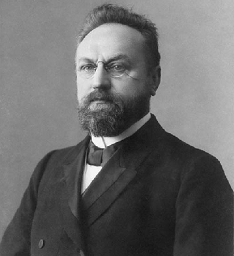
Truly dominant-looking theological man. It's a win for Reformed beardliness everywhere.

Truly dominant-looking theological man. It’s a win for Reformed beardliness everywhere.

Now, Jonathan Edwards convinced me a while back that God does all things (creation, redemption, etc) with an endview towards his glory. No need to argue that point–I’m fully on-board. But like I said, I’ve never bought this particular argument. And as I mentioned, not all Calvinists do. In fact, theologian Herman Bavinck, contemporary to Abraham Kuyper and author of the beastly 4-volume Reformed Dogmatics (which would make a great present if any generous readers are wondering–just message me), had some questions about it as well. In an article on the difference between Supralapsarianism (supra) and Infralapsarianism (infra)–two positions regarding the logical order of God’s decrees–he argues that this, typically supra, line of reasoning has some holes in it:

In the first place, to say that the manifestation of all God’s excellencies is the final goal of all of the ways of God is indeed correct; but when supra includes in that goal the manner in which the divine glory will be revealed in the eternal destiny of rational creatures, it errs. For, the eternal state of salvation or of perdition is not in itself the goal, but one of the means employed in order to reveal God’s excellencies in a manner suited to the creature. It would not do to say that God would have been unable to manifest his glory by saving all men, if this had been his pleasure. Neither is it correct to say that in the eternal state of the reprobate God reveals his justice exclusively, and that in the eternal state of the elect he manifests his mercy exclusively. Also in the church, purchased with the blood of the Son, God’s justice is revealed; and also in the place of perdition there are degrees of punishment and sparks of divine mercy. The final goal of all God’s work’s must needs be his glory, but the manner in which that glory will shine forth is not thereby given, but has been determined by God’s will; and although there were wise and holy reasons why God purposed the perdition of many and not the salvation of all, nevertheless these reasons, though known to him, are not known to us: we are not able to say why God willed to make use of this means and not of another.

Bavinck makes what’s always been my sticking point: God can and does perfectly display his mercy and justice in the Cross and Resurrection of Jesus Christ, in which case that argument could just as plausibly be deployed in favor of univeralism. In a sense, if it proves anything it proves too much.

Of course, this does not disprove Calvinism, election, reprobation, infra- or supralapsarianism, or that God’s ultimate goal isn’t that final state of glory. It’s really just dealing with this one argument. Still, Bavinck’s wisdom is to push for greater theological modesty at this point. Calvin himself warned that the one who tries to pry too deeply into God’s secret counsels “plunges headlong into an immense abyss, involves himself in numberless inextricable snares, and buries himself in the thickest darkness.” (Inst. III.xxiv.4) Instead, it’s best to look to Christ, rest in his grace, trust that “although there were wise and holy reasons” for God’s decrees about history and salvation, “nevertheless these reasons, though known to him, are not known to us.”

Soli Deo Gloria

Playful, Passionate, Principled, but never Putrid Polemics (Or, Don’t Forget Jesus in an Argument)

If you’ve ever had an “intensely engaged” discussion with a friend in person, a facebook comment, a blog, etc. the odds are that you’ve engaged in polemics. The Webster definition of polemics is “an aggressive attack on or refutation of the opinions or principles of another” or “the art or practice of disputation or controversy.” Basically it’s a form of reasoned argumentation against a position with which you disagree.

Having spent a couple of years in a philosophy program, then seminary, as well as far too much time on the blogosphere, I’ve observed and participated in quite of bit of polemics myself. I have what you might call a “polemical bent”,  which is probably why I like thinkers like Luther, Calvin, Pascal, Kierkegaard, and Plantinga. Brothers can argue.

In that time, I’ve had some time to think about  some of the basic attitudes and approaches to polemics, some of which are consistent with Christian life and some of which are not. I’d like to offer up some reflections three qualities or attitudes that should define your approach to whatever discussion you engage in, and one that shouldn’t. These aren’t comprehensive, exhaustive, or entirely correct, but, for what it’s worth, here they are.

Playful– The first quality that I think should be cultivated within our discussions with others  is playfulness, a certain amount of mirth and good humor. It’s that kind of light-hearted reasonableness that G.K. Chesterton seems to embody in his works like Orthodoxy and Heretics. To say that his arguments are playful is not to say that they aren’t “serious”, or aren’t dealing with serious issues, but that they are clearly not driven by fear or pride but rather a humble self-forgetfulness and joy deeply rooted in the Gospel. His ability to sport and laugh at, and with, his interlocutors managed to communicate both disagreement with and real fondness for them. This is not an excuse for being flippant, disrespectful, or condescending. When your heart is filled with confidence in God, it allows you to speak with humor and grace knowing that whatever the outcome of the argument, you’re securely held in the arms of your Father because of the Son. One of the benefits of engaging your intellectual “opponents” with this attitude is that it is attractive. So often people are used to dealing with Christians arguing out of their insecurities or pride which drives them to be snippy, harsh, humorless, and retaliatory. Nobody wants to listen to someone like that, or end up believing whatever they’re arguing for. The Gospel should lead to a confident, good-naturedness that, on the one hand, respects the other person, and at the same time allows you to take yourself less seriously.

Passionate– The second quality that ought to characterize our polemics is passion.  Like the first, it is deeply rooted in the truth of the Gospel and a deep love for people. You can see this is all over Paul’s letters. Paul is nothing but passionate in his polemics for the sake of the Gospel. Galatians, anybody? Paul goes aggro in that letter because of his great gospel-fear that they might be abandoning Christ, and so he forcefully makes his points at times, giving voice to his real concern in order to communicate just how important the issue was. Sometimes people might know you disagree, but really have no idea how important an issue is until they hear the concern or passion in your voice. Paul’s letter not only communicated truth, but the way he communicated it gave it an emotional tenor, an urgency, that was just as vital as the content. A lot of us may be scared of passionate engagement with our neighbors and friends over the truth. We’re scared of offending, or coming off as pushy or unloving. In a world like ours where our radios, TVs, and blogs are full of people just yelling and trying to brow-beat people into submission, that’s a real danger. I don’t want to minimize that. We should never argue just to argue. So often that’s what we find ourselves caught up in: meaningless arguments about things that really, nobody should get that agitated over. Still, this shouldn’t stop us from engaging passionately with our friends about things that really matter. Love engages over truth. Apathy or an unwillingness to trouble yourself with have a difficult conversation out of fear is not the loving thing to do. The truth is something to be passionate about because truth is about life.

Principled- The third quality that it ought to possess is that of being principled. (Honestly, I could have used other words like “integrity”, “honesty”, etc, but I’m a sucker for cheap alliteration.) We must always strive in our engagements with others to be principled in our dealings, speaking honestly, actively avoiding unfair caricatures, and cheap shots. Whenever arguing against a position we must strive to represent our interlocutors accurately, fairly, and charitably. In other words, don’t purposely take the dumbest interpretation of any statement they make and argue against that.  That’s just dishonest. I’ll be the first to admit that there is a place for irony, sarcasm, and the reductio ad absurdum in arguments. There is a place for humorously following someone’s premises out to their surprising conclusions, or creating humorous, sarcastic analogies to bring out a point. Still, there is absolutely no place for a lack of integrity in our communication with others, even those with whom we deeply disagree. This is part of how we love our neighbors as ourselves as Jesus taught us to. Being people who confess the lordship of Jesus, the one who is the Truth, we should never play fast and loose with the truth in order to score a cheap, rhetorical point.

Never Putrid– If we strive for and keep these three qualities in mind as we engage others, they will keep us from descending into the putrid polemics that seems to define our culture’s approach to “rational”discourse. So much of what we hear and read today pours out of corrupted hearts darkened by arrogance, rage, pride, fear, and the rot of our decomposing sin nature. So much of what is popular out there is just straight-up lies, fear-mongering, cynical mockery, caricature, manipulation, gracelessness, straw-manning, cheap shots, and rhetorical bullying. It is simply putrid. For those of us who have been raised in Christ and indwelled by the resurrection Spirit of God, there should be nothing rotten or foul about what we say. Even those words we utter that cut should only cut in the way a doctor’s scalpel does–in order to heal. They should be words of life, not death, because we are made, and are being remade, in the image of the God who, by his Word, speaks life into existence.

Once again, I write all of these things, not as someone who has achieved or arrived. Lord knows I have not even come close in this area. Instead, I write them as one still struggling alongside; still fumbling about trying to become the kind of person who speaks rightly and righteously.

Progressive God-Talk, Reformed Theological Method, The Doctrine of Analogy, and God’s Grace in our Knowledge

(Warning: this is a mildly dense one. If you haven’t had coffee yet, you might want to grab some, then come back. Also, it might seem dry at first, but there’s a punch-line you don’t want to miss.)

Progressive God-Talk

A few days ago, progressive author and blogger, Tony Jones threw down a challenge to his fellow progressive bloggers to start actually saying something substantive about God, “Not about Jesus, not about the Bible, but about God”, because they seem to  “have a God-talk problem. That is, progressives write lots of books and blog posts about social issues, the church, culture, and society. But we don’t write that much about God. That is, we don’t say substantive things about who God is, what God does, etc.”

I don’t have a lot to say on the subject of liberal God-talk at this point, except that its been interesting to watch as it unfolds (or the way it doesn’t.) My hope is that more liberal/progressives do post substantive pieces of theology so that a real discussion of the nature and character of God can ensue.

One thing I do have something to say about is the topic of Reformed God-talk, and the attitude that those of us who engage in theology out of the Reformed tradition should take towards the conversation that’s happening right now amongst the progressives. To do that, though, I’m gonna call in a little help.

Reformed Theological Method (Or how Reformedish people go about thinking about God)

A while back I read a great article by Michael Horton on the Reformed theological method in conversation with Open Theism that will be helpful to our conversation. In it he deals with the common charge made that the Reformed scholastics were too dependent on “Hellenistic” thought or Greek speculative, systematizing which distorted the true, “dynamic”, biblical portrait of God. Leaving aside the problem that many who lodge this charge are guilty of the genetic fallacy, Horton shows that, in fact, “Contrary to popular caricature, Reformed scholasticism championed an anti-speculative and anti-rationalistic theological method based on the Creator-creature distinction.” He quotes Francis Turretin as representative of the tradition when he says,

But when God is set forth as the object of theology, he is not to be regarded simply as God in himself . . . , but as revealed . . . Nor is he to be considered exclusively under the relation of deity (according to the opinion of Thomas Aquinas and many Scholastics after him, for in this manner the knowledge of
him could not be saving but deadly to sinners), but as he is our God  (i.e.,covenanted in Christ as he has revealed himself to us in his word) . . .

Thus although theology treats of the same things with metaphysics, physics and ethics, yet the mode of considering them is far different. It treats of God not like metaphysics as a being or as he can be known from the light of nature; but as the Creator and Redeemer made known by revelation . . . For theology treats of God and his infinite perfections, not as knowing them in an infinite but in a finite manner; nor absolutely as much as they can be known in themselves, but as much as he has been pleased to reveal them.

So, theology treats, not of God in general, but of God as he has given himself to us in Christ and in the history of Israel as attested to in the Scriptures. This straight from the mouth of Turretin, the Reformed Aquinas and the grand-daddy of all post-Reformation dogmaticians.

Horton then outlines then expands on 4 important distinctions that flow from the Creator/creature distinction that give Reformed theology its particular shape (transcendence and immanence, hidden/revealed , eternal decree/temporal execution, and archetypal/ectypal knowledge). We don’t have space to go into all of them here, but the final one, the archetypal/ectypal knowledge distinction is important for us. This distinction teaches that God’s knowledge is archetypal and primary, while our knowledge is ectypal and dependent on God’s. Horton writes that:

“It is the epistemological corollary of the ontological Creator-creature distinction. Although it had been a category in medieval system, Protestant dogmatics gave particular attention to this distinction and made it essential to their method. Just as God is not merely greater in degree (“supreme being”), but in a class by himself (“life in himself,” John 5:26), his knowledge of himself and everything else is not just quantitatively but qualitatively different from that of creatures…affirmation of this distinction is essential if we are to maintain with Scripture that no one has ever known the mind of the Lord (Rom 11:34, where the context is predestination), that his thoughts are far above our thoughts (Isa 55:8), and that he is “above” and we are “below” (Eccl 5:2)—if, in other words, we are to truly affirm the Creator-creature distinction.”

So, the idea is that because there is a radical gap in reality between God and ourselves–he is necessary, infinite, transcendent, etc. and we are contingent, finite, bound–there is also a radical gap in our knowledge. In the same way that God’s reality is at a higher level than ours and sustains ours, the same is true of our knowledge. It’s not just that we know less stuff, but that we know the stuff we do in a lesser way than God does.  This is not to say that we don’t have true knowledge, any more than to say that we are not real, simply because we’re not on the same ontological playing field as God, but that our knowledge is at a lower level than God does and is.

The Doctrine of Analogy (“God is…”)

With this distinction in hand, our discussion brings us to the doctrine of analogy, which has a long history both in Catholic and Protestant theology. I’d explain it, but here’s Horton again:

“All of this leads us, finally, to the doctrine of analogy. When we assert certain predicates of God, based on God’s own self-revelation, we use them in one of three senses: univocally, analogically or equivocally. If we say that the predicate “gracious” means exactly the same thing, whether in God or in a creature, we are using “gracious” univocally. At the other end of the spectrum, if we say that by using that predicate we are ascribing something to God whose appropriateness is unknown to us, we are using it equivocally. If, however, God is said to be “gracious” in a way that is both similar and dissimilar to creatures, we say it is analogical. For instance, when we acknowledge that God is a “person,” do we really mean to say that he is a person in exactly the same sense as we are? When we follow Scripture in using male pronouns to refer to God, do we really believe that he is male? Unless we are willing to ascribe to God (in an univocal sense) all attributes of human personhood, predications must be analogical. Human language cannot transcend its finitude, so when God reveals himself in human language, he draws on human analogies to lead us by the hand to himself. It is correct description, but not univocal description.”

This is a useful doctrine for many reasons, but as Horton points out, it both acknowledges human finitude unlike rationalistic, univocal approaches to God-talk, as well as gives a place for real knowledge of God unlike modern, skeptical, equivocal approaches God.

Calvin’s Lisp, or God’s Grace in our Knowledge

Why do I bring all of this up? Well, aside from the fact that it’s just important for theology as a discipline, it’s important for our own theology as a part of life. It’s very easy for theology types to get really puffed up when it comes to their “knowledge” of God and his ways. Paul had to administer many a 1st Century beat-down over this in the church in Corinth. (cf. 1 Cor 1-4) What all of this points to is that this should not be so for Christians, especially for those who claim to be Reformed. Listen to Horton again:

“Thus, Calvin and the Reformed do not use analogy as a fall-back strategy when they find something that does not fit their system. Rather, it is the warp and woof of their covenantal approach, a necessary implication of the Creator-creature relationship as they understand it. All of God’s self-revelation is analogical, not just some of it. This is why Calvin speaks, for instance, of God’s “lisping” or speaking “baby-talk” in his condescending mercy. Just as God comes down to us in the incarnation in order to save us who could not ascend to him, he meets us in Scripture by descending to our weakness. Thus, not only is God’s transcendence affirmed, but his radical immanence as well. Transcendence and immanence become inextricably bound up with the divine drama of redemption. Revelation no less than redemption is an act of condescension and grace.”

All of our knowledge of God is had by God’s grace. It’s not just that we find out about a gracious God when we hear the Gospel, but that our hearing the Gospel at all is an act of grace! Our very knowledge of God is God’s kindness, God’s condescension to take up our feeble language and use it in powerful ways to speak to us of his great love. For the Reformed, it should be grace all the way down to your epistemology.

This is why it makes no sense at all for us to boast, or pride ourselves as better than others because of our ability to say and believe true things of God or on our theological systems and tradition. These are good things; they’re great. They’re a rich resource. They can be a great blessing. They can be all of these things, but the one thing they cannot be, must not be, is a source of arrogance or pride. Instead  every truth we utter or find in one of our dogmatics should be a reminder of God’s grace, not our own awesomeness.

So, if you’re cruising around the blogosphere, or just in life, reading people or hearing people talk about God in what you find to be silly fumbling, or inadequate ways, your first instinct should not be to look on condescendingly or pridefully, but remember God’s condescension that made your knowledge possible. When you get that point, maybe, just maybe you can engage in a loving, humble conversation about God and his truth with those whom you disagree.