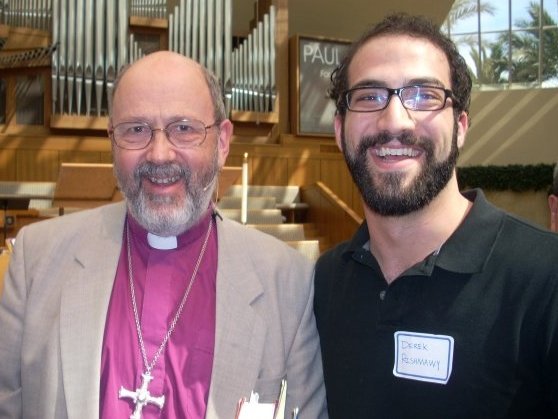
I’m an Unbeliever

Atheist biologist Richard Dawkins is fond of pointing out that Christians are all atheists of sorts. We are atheists with respect to Zeus, Thor, Marduk, and a whole host of other gods. At that point he likes to quote Stephen Roberts to the effect that he just believes in one less god than we do. One of the main points of this observation is that once you realize how silly believing in Zeus is, you’ll realize the silliness of believing in Jesus. Cute.

The other point I see being made is that the atheism/theism debate is about belief in a certain proposition: does God exist. The theist does and the atheist just doesn’t. There’s just a proposition’s difference between them and the theist is the one who has to justify his acceptance of said proposition. The problem is that this picture is too simple. Rarely do we simply “disbelieve” in something. Atheist’s minds do not have a blank space where the “theism” belief supposedly resides in the mind of the believer. No, it is filled–with something else. It’s not just believing in Christianity or disbelieving it. It’s believing something else instead.

See, in a sense, we all live by creeds.  A creed is a summary statement that encapsulates our deepest-held, foundational beliefs about reality and the world. We all have them, even if we’ve never made them explicit. Put another way, sociologists tell us that we tell ourselves stories, understand ourselves at very deep levels as actors in some drama, starting with the small, personal ones like “I am Derek, son of Arliett and Tino, born such and such, grew up in so and so, now married, living in Orange, and working towards future X”.  This is a short narrative understanding of myself. We usually fit these into broader narrative understandings such as Buddhism, Islam, Marxism, or Christianity that tell us big-picture stories about who we are, how we got here, and where were going. It’s inevitable.

Because of this, we are all living according to alternative creeds. The Christian recites the Apostles’ Creed, but she doesn’t do so in a vacuum. Rather, she does so in contrast with the other creeds on offer. It is those creeds which I find incredible and in particular, the dominant, competing creed that has been offered up as a substitute–that of the Enlightenment.

A Unbelievable Creed

Philosopher Peter Van Inwagen’s delightful essay outlining his journey from atheism to Christianity, Quam Dilecta has a very helpful description of the creed of the Enlightenment.

There is, I believe, an identifiable and cohesive historical phenomenon that named itself the Enlightenment in the eighteenth century, and which, although it long ago abandoned the name, still exists. Like the Church, it does not speak with one voice. Like the Church, it has no central government. Like the Church, it is made up of many groups some of which heartily detest many of the others–some of which, indeed, regard themselves as its sole true representatives and all others who claim to be its representatives as wolves in sheep’s clothing. Like the Church, it has a creed, although, unlike the Church’s creeds, its creed has never received an official formulation. But that is a minor point. Its creed can be written down, and here it is:

There is no God. There is, in fact, nothing besides the physical cosmos that science investigates. Human beings, since they are a part of this cosmos, are physical things and therefore do not survive death. Human beings are, in fact, animals among other animals, and differ from other animals only in being more complex. Like other animals, they are a product of uncaring and unconscious physical processes that did not have them, or anything else, in mind. There is, therefore, nothing external to humanity that is capable of conferring meaning or purpose on human existence. In the end, the only evil is pain and the only good is pleasure. The only purpose of morality and politics is the minimization of pain and the maximization of pleasure. Human beings, however, have an unfortunate tendency to wish to deny these facts and to believe comforting myths according to which they have an eternal purpose. This irrational component in the psyches of most human beings–it is the great good fortune of the species that there are a few strong-minded progressives who can see through the comforting myths–encourages the confidence-game called religion. Religions invent complicated and arbitrary moral codes and fantastic future rewards and punishments in order to consolidate their own power. Fortunately, they are gradually but steadily being exposed as frauds by the progress of science (which was invented by strong-minded progressives), and they will gradually disappear through the agency of scientific education and enlightened journalism.”

Van Inwagen goes on to concede that there are various Enlightenment denominations (Marxist, Positivist, New Atheist) who would object that he’s left something crucial out. At its core though, this complex is central to all of them.

It is this creed that I find myself unable to subscribe to for a number of reasons too large to expound here. I will simply point out that any sort of optimism about the human condition in light of the history of the 20th Century has always struck me as farcical. The idea that science and reason (whatever that last term actually means) can actually deliver anything close to a utopia, or even a decent place to live is a fairy tale. Studying almost entirely secular moral philosophy in college had the interesting effect of convincing me that prospects of finding any sort of viable, normative moral system connected with naturalism, (ie. absent the divine, or a transcendent order), is similarly risible. Once again, I commend Van Inwagen’s essay, the second half of which is devoted to showing why he finds this creed untenable.

Where am I going with this? 

I’d be lying if I were to tell you that I never find Christianity difficult and hard to accept. It has moral codes that are uncomfortable, both because they are personally hard to follow, as well as because they are socially unacceptable. Reading the Bible is weird sometimes. I mean, really? Bears? (2 Kings 2:23-25) I look out at the world filled with evil and horror, and even though I’ve read a lot of good answers on the subject, it’s still hard to stomach that God is good while he allows these things. I could go on for a while listing the difficulties. I’m sure you have a number of your own.

Still, when I look to the alternatives I find that while Christianity is tough sometimes, the competing options on offer are just impossible to swallow. At those times, I feel like Winston Churchill when speaking of democracy in the House of Commons:

“Many forms of Government have been tried, and will be tried in this world of sin and woe. No one pretends that democracy is perfect or all-wise. Indeed, it has been said that democracy is the worst form of Government except for all those other forms that have been tried from time to time.”

Please don’t misunderstand me–I think there are good, positive reasons to believe in Jesus. I have to admit though, one of the main ones is the fact I find the other options simply unbelievable.

Update and clarification: There apparently has been some confusion as to the point of his post. Please do not take this as a denigration of either reason or science. As a Christian I believe as humans made in the Image of the Creator God have been endowed with reason and given an impulse towards the exploration and study of nature. Rather, it is a rejection of a rationalism and scientism. Those are two different things. I have a healthy respect for and appreciation of the deliverances of reason and the advances of science while recognizing their limits and the dangers of misunderstanding their role and function in human life.

N.T. Wright on Penal Substitution

I’ll come clean and say that I’m a huge N.T. Wright fan. I have been for years.

Wright and I are BFFs.

For those of you wondering, Wright is a British New Testament scholar who ranks among the top 2 or 3 most prolific, somewhat controversial, and influential churchmen on either side of the pond in a wide variety of theological circles.  I attribute my love for Biblical studies, and the New Testament in particular, to my early encounters with his lectures, essays, and books. I generally pre-order his books, both popular and scholarly, and have read all of his big pieces with the exception of a couple of difficult-to-acquire texts.  (I knew my wife McKenna was a keeper when she bought me his tome The Resurrection of the Son of God for my first birthday when we were dating. Later she took me to go see him speak on our anniversary.) Which is to say, I think I’ve got a decent idea of what Wright teaches on various subjects in New Testament studies and theology. Which brings me to the subject at hand.

As I mentioned, Wright is a bit controversial in some circles due to some of his, admittedly unclear/difficult to understand, teaching on Paul’s doctrine of justification.  Wright’s an adherent of the New Perspective on Paul and a unique one at that. What’s more, his sentences can get really long. (For those of you interested, here’s his most recent, clearest piece on the subject delivered at the Evangelical Theological Society a couple years ago. Note: I am not endorsing it. Just sharing for clarity’s sake.) One of the things that’s consistently surprised me, however, is the way that both friends and foes have misunderstood his teaching on the atonement, particularly penal substitutionary atonement (the idea that Christ’s death is in some way a representative one in which he suffers the judgment/wrath of God on behalf of deserving sinners thereby releasing them from guilt and obtaining forgiveness for them). Interestingly enough, you can find both conservative Reformed types being joined by emergenty Anabaptist types saying he denies it, the former accusatorially, the latter joyfully.

I just want to take a moment to clarify, with Wright’s own words, that Wright does affirm penal substitutionary atonement. He has been clear on this over the years, but somehow that’s been lost on many due in some cases to their willingness to read all sorts of faults into him because of his position on justification, or because to some people, affirming Christus Victor components to Christ’s atonement, the idea that in his life, death, and resurrection Jesus defeated the principalities and powers of satan, sin, and death,  means a necessary denial of PSA. It doesn’t. The Reformers all affirmed both themes because both are in Scripture. Wright isn’t any different. So, without further ado here is Wright himself.

Wright Speaks

First, a short little video where Wright says it clear-out, 1:19 onward:

Next, here’s a big long quote from an easily-accessed online article in which he is critiquing a lecture by Dr. Jeffrey Johns as well as a recent book on the subject. He is dealing with what he calls “caricatures of the cross”, correcting so many bad arguments against penal substitutionary atonement by pointing out that they are based on misunderstandings of the doctrine as well as misreadings of certain biblical texts which point to it. Don’t be scared by the length. It is absolutely worth your time, specialist or not:

Quoting 2 Corinthians 5.21 and Galatians 3.13 (‘God made him to be sin for us who knew no sin,’ and ‘Christ became a curse for us’), he [Dr. Johns] tells us the explanation of these verses he was given as a child and declares that, because that explanation is repulsive and nonsensical, we must reject it. His summary starts quite mildly: God was very angry with us, and had to punish us, but instead he sent his Son as a substitute to die for us, so that God stopped being angry with us . . . But then, inserting into this account the things Dr John realised he disliked at the age of ten, and which he wants to attack to bring down the whole edifice, he goes on: ‘What sort of God was this, getting so angry with the world and the people he created, and then, to calm himself down, demanding the blood of this own Son? And anyway, why should God forgive us through punishing somebody else? It was worse than illogical, it was insane. It made God sound like a psychopath. If any human being behaved like this we’d say they were a monster . . . It just doesn’t make sense to talk about a nice Jesus down here, placating the wrath of a nasty, angry Father God in heaven. . . sending a substitute to vent his punishment on.’

Well, yes. We must of course grant that many Christians have spoken, in effect, of the angry God upstairs and the suffering Jesus placating him. Spoken? They’ve painted it: many a mediaeval altarpiece, many a devotional artwork, have sketched exactly that. And of course for some late mediaeval theologians this was the point of the Mass: God was angry, but by performing this propitiatory sacrifice once more, the priest could make it all right. And it was at least in part in reaction against this understanding of the Eucharist that the Reformers rightly insisted that what happened on the cross happened once for all. They did not invent, they merely adapted and relocated, the idea of the propitiation of God’s wrath through the death of Jesus. We must of course acknowledge that many, alas, have since then offered more caricatures of the biblical doctrine. It is all too possible to take elements from the biblical witness and present them within a controlling narrative gleaned from somewhere else, like a child doing a follow-the-dots puzzle without paying attention to the numbers and producing a dog instead of a rabbit.

This is what happens when people present over-simple stories with an angry God and a loving Jesus, with a God who demands blood and doesn’t much mind whose it is as long as it’s innocent. You’d have thought people would notice that this flies in the face of John’s and Paul’s deep-rooted theology of the love of the triune God: not ‘God was so angry with the world that he gave us his son’ but ‘God so loved the world that he gave us his son’. That’s why, when I sing that interesting recent song ‘In Christ alone my hope is found’, and we come to the line, ‘And on the cross, as Jesus died, the wrath of God was satisfied’, I believe it’s more deeply true to sing ‘the love of God was satisfied’. I commend that alteration to those who sing that song, which is in other respects one of the very few really solid recent additions to our repertoire. So we must readily acknowledge that of course there are caricatures of the biblical doctrine all around, within easy reach – just as there are of other doctrines, of course, such as that of God’s grace.

But how does the caricature relate to what we find in the New Testament? Actually, how does it relate to Dr John’s initial summary? There he states, as we saw, that God sent Jesus to do this: yes, and that’s what the New Testament says too, at all the key points; and if we ask why, the answer is always, in Paul, John and everywhere else, the wonderful greatness of God’s merciful love. You can’t play off the juridical account of atonement, so called, against an account which stresses God’s love. As those Doctrine Reports rightly saw, they belong together. If God is love, he must utterly reject, and ultimately deal with, all that pollutes, distorts and destroys his world and his image-bearing creatures.

So what should we make of Paul at this point? Dr John never says. Is he content simply to say that the key Pauline statements must be left out of consideration as we construct an atonement theology we can believe today? If so, how can he later quote 2 Corinthians 5.19 (‘God was in Christ reconciling the world to himself’), which, a mere two verses before the one he seems to reject, might be thought to be part of the same argument? What does he make of the explicit statement – this, I think, is as clear as it gets in Paul – in Romans 8.3, where Paul says explicitly that God condemned sin in the flesh of Jesus Christ? Paul does not say that God condemned Jesus; rather, that he condemned sin; but the place where sin was condemned was precisely in the flesh of Jesus, and of Jesus precisely as the Son sent from the Father. And this, we remind ourselves, is the heart of the reason why there is now ‘no condemnation’ for those who are in Christ Jesus (Romans 8.1).

Or what account does Dr John give of Romans 3.24-26? Here, whatever we may think about the notorious hilasterion (‘propitiation’? ‘expiation’? ‘mercy-seat’?), in the preceding section of the letter (1.18-3.20) God’s wrath is revealed against all ungodliness and wickedness, and by the end of the passage, in accordance with the ‘justice’ of God, those who were formerly sinners and under God’s wrath are now justified freely by grace through faith. To put it somewhat crudely, the logic of the whole passage makes it look as though something has happened in the death of Jesus through which the wrath of God has been turned away. It is on this passage that Charles E. B. Cranfield, one of the greatest English commentators of the last generation, wrote a memorable sentence which shows already that the caricature Dr John has offered was exactly that:

We take it that what Paul’s statement that God purposed Christ as a propitiatory victim means is that God, because in His mercy He willed to forgive sinful men and, being truly merciful, willed to forgive them righteously, that is, without in any way condoning their sin, purposed to direct against His own very Self in the person of His Son the full weight of that righteous wrath which they deserved. (A Critical and Exegetical Commentary on the Epistle to the Romans. 2 vols. Edinburgh: T & T Clark; vol. 1, 1975, p. 217.)

Now I do not ask that Dr John, or anyone else, necessarily accept this as the correct interpretation of Romans 3:24-26; nor that, whether or not they accept this exegesis, they believe that this is a true statement of God’s intention in the death of Jesus. All I ask is that Dr John admit that this very careful statement, in which the propitiatory effect of Jesus’ death is seen as the result of God’s overarching and overwhelming mercy and love, and in which the persons of the Trinity are held in extremely close union, is not subject to the critique he has levelled against what increasingly looks like a bizarre (if sadly still well known) caricature.

Not everyone likes Paul, of course – especially some Anglicans. But what about Jesus? Unless we are to go the route of the ‘Jesus Seminar’, and say that Jesus’ death was simply an accident which he never intended and for which, therefore, he offered no theological grid of interpretation, we must give some account of the self-understanding of Jesus in relation to the death which, as at least one substantial stream of scholarship has agreed, he must have known was just round the corner. There were ancient Jewish grids of interpretation available to him, and all the signs are that he made his own creative construal of them, understanding his vocation as the point of convergence of several rich strands of scriptural narrative, heavily freighted with the sense of Israel’s long destiny coming to a dark and decisive climax. In particular, the early Christians were clear that Jesus’ death was to be understood in terms of Isaiah 53, and they were equally clear that this was not a new idea they were wishing back on Jesus. ‘The Son of Man,’ he said, ‘came not to be served but to serve, and to give his life as a ransom for many’ (Mark 10:45). These words – which many have of course been unwilling to credit to Jesus precisely because of the frantic attempt to prevent him alluding to Isaiah 53 – capture the very heart of that great chapter, and as I and others have argued elsewhere it is extremely likely, historically, that he made that entire section of the book of Isaiah thematic for his self-understanding.

Ironically, Dr John himself alludes to Isaiah 53 at the end of his talk, suggesting that Jesus ‘bears our griefs and shares our sorrows’, without realising that if you get one part of Isaiah 53 you probably get the whole thing, and with it not only a substitutionary death but a penal substitutionary death, yet without any of the problems that the caricature would carry:

He was wounded for our transgressions
and bruised for our iniquities;
upon him was the punishment that brought us peace
and with his stripes we are healed.
All we like sheep have gone astray;
We have turned every one to his own way;
And YHWH has laid on him the iniquity of us all.
(Isaiah 53:5-6.)

It is with the Servant, and the theology of the whole of Isaiah 40-55, that we find the explanation for the otherwise bizarre idea of one person standing in for the many (which, as Dr John says, we might otherwise find incomprehensible and deeply offensive). The sense which penal substitution makes it does not make, in the last analysis, within the narrative of feudal systems of honour and shame. It certainly does not make the sense it makes within the world of some arbitrary lawcourt. It makes the sense it makes within the biblical world, the Old Testament world, within which the creator God, faced with a world in rebellion, chose Israel – Abraham and his family – as the means of putting everything right, and, when Israel itself had rebelled, promised to set that right as well and so to complete the purpose of putting humans right and thus setting the whole created order back the right way up. And the long-promised way by which this purpose would be achieved was, as hints and guesses in the Psalms and prophets indicate, that Israel’s representative, the anointed king, would be the one through whom this would be accomplished. Like David facing Goliath, he would stand alone to do for his people what they could not do for themselves. It is because Jesus, as Israel’s representative Messiah, was therefore the representative of the whole human race, that he could appropriately become its substitute. That is how Paul’s logic works. ‘One died for all, therefore all died,’ he wrote in 2 Corinthians 5.14; and thus, seven verses later, ‘God made him to be sin for us, who knew no sin,’ he concluded seven verses later, ‘so that in him we might become the righteousness of God’ (5.21). And it is within that argument that we find the still deeper truth, which is again rooted in the dark hints and guesses of the Old Testament: that the Messiah through whom all this would be accomplished would be the very embodiment of YHWH himself. ‘God was in Christ, reconciling the world to himself’ (2 Corinthians 5.19).

Underneath all this discussion is a deep concern which has emerged again in our own day, notably in the writings of the Yale theologian Miroslav Volf. In his magisterial Exclusion and Embrace (Nashville: Abingdon, 1994), he demonstrates, with sharp examples from his native Balkans, that it simply won’t do, when faced with radical evil, to say, ‘Oh well, don’t worry, I will love you and forgive you anyway.’ That (as the 1938 Doctrine Report already saw) is not forgiveness; it is belittling the evil that has been done. Genuine forgiveness must first ‘exclude’, argues Volf, before it can ’embrace’; it must name and shame the evil, and find an appropriate way of dealing with it, before reconciliation can happen. Otherwise we are just papering over the cracks. As I said early on, if God does not hate the wickedness that happens in his beautiful world, he is neither a good nor a just God, and chaos is come again. Somehow I sense that Dr John knows this, since he writes movingly of Jesus Christ as God coming down into the midst of the mess and the muddle to be with us and . . . to rescue us – though he never says how this rescue is effected. But again and again I sense in Dr John’s writing the problem which Anselm already identified: you have not yet considered how serious sin is. It isn’t that God happens to have a petulant thing about petty rules. He is the wise and loving creator who cannot abide his creation being despoiled. On the cross he drew the full force not only of that despoiling, but of his own proper, judicial, punitive rejection of it, on to himself. That is what the New Testament says. That is what Jesus himself, I have argued elsewhere, believed what was going on. That is what the classic Anglican formularies and liturgy say.

Recently, looking for something else, I came upon this:

God is love, say [some], and therefore he does not require a propitiation. God is love, say the Apostles, and therefore he provides a propitiation. Which of these doctrines appeals best to the conscience? Which of them gives reality, and contents, and substance, to the love of God? Is it not the apostolic doctrine? Does not the other cut out and cast away that very thing which made the soul of God’s love to Paul and John? . . . Nobody has any right to borrow the words ‘God is love’ from an apostle, and then to put them in circulation after carefully emptying them of their apostolic import. . . . But this is what they do who appeal to love against propitiation. To take the condemnation out of the Cross is to take the nerve out of the Gospel . . . Its whole virtue, its consistency with God’s character, its aptness to man’s need, its real dimensions as a revelation of love, depend ultimately on this, that mercy comes to us in it through judgment. (James Denney, The Second Epistle to the Corinthians, Expositor’s Bible, Hodder, 1894, p. 221f.)

When I read that, it sounded as though Denney were addressing Dr John directly. And I was put in mind of a characteristically gentle remark of Henry Chadwick, in his introductory lectures on doctrine which I attended my first year in Oxford. After carefully discussing all the various theories of atonement, Dr Chadwick allowed that there were of course some problems with the idea of penal substitution. But he said, ‘until something like this has been said, it is hard to escape the conclusion that the full story has not yet been told.’ For myself, I prefer to go with Henry Chadwick, and James Denney – and Wesley and Watts, and Cranmer and Hooker, and Athanasius and Augustine and Aquinas – and Paul, Peter, Mark, Luke, John – and, I believe Jesus himself. To throw away the reality because you don’t like the caricature is like cutting out the patient’s heart to stop a nosebleed. Christ died for our sins according to the scriptures, and all because of the unstoppable love of the one creator God. There is ‘no condemnation’ for those who are in Christ, because on the cross God condemned sin in the flesh of the Son who, as the expression of his own self-giving love, had been sent for that very purpose. ‘He did not spare his very own Son, but gave him up for us all.’ That’s what Good Friday was, and is, all about.

Finally, from the same article, Wright explains his confusion that someone could describe a work that had based its understanding of Jesus on Wright’s own scholarship as denying penal substitutionary atonement:

After all, the climax of my book Jesus and the Victory of God…is the longest ever demonstration, in modern times at least, that Jesus’ self-understanding as he went to the cross was rooted in, among other Old Testament passages, Isaiah 53, the clearest and most uncompromising statement of penal substitution you could find.

You can also find various statements elsewhere, including his big commentary on Romans.

The moral of the story is that N.T. Wright affirms penal substitutionary atonement. Sorry uber-conservative Reformed guys, he actually does get the Cross. Sorry, lefty, anti-PSA types, your Kingdom-minded hero says some really old-school Evangelical stuff about the atonement.

For everybody else, you’re welcome.

Soli Deo Gloria

Small Update: For more vindication of this point, John Piper has a statement in his critical book The Future of Justification (pp. 46-53) affirming the Wright, indeed, does affirm PSA.

You’re a Holy Mess (Or, Surprised by Sanctification)

I was teaching through 1 Corinthians last year around this time when I was first struck by something very odd in that letter. It’s something that can sneak past you unless you go through the thing a few times. Right at the outset of Paul’s letters he usually broadcasts what he’s going to be writing about in a kind of intro-prayer or in the greeting.

Paul, called by the will of God to be an apostle of Christ Jesus, and our brother Sosthenes,
To the church of God that is in Corinth, to those sanctified in Christ Jesus, called to be saints together with all those who in every place call upon the name of our Lord Jesus Christ, both their Lord and ours:
Grace to you and peace from God our Father and the Lord Jesus Christ.
(1 Cor 1:1-3)

Did you catch those words in verse 2 that I helpfully bolded for you to notice? Good. In the space of a few words, Paul calls the believers at Corinth “sanctified” and “saints”; he calls them holy.

Surprised by Sanctification

For those of us who have read the letter through, this is surprising to say the least.  This is easily the most jacked-up church we know of in the New Testament. Scholars think that Paul probably wrote more letters to the church than 1 and 2 Corinthians because of the issues with it. To give you a picture, the problems include: factions being formed dividing the church due to people buying into cultural notions of wisdom and power (chapters 1-4), Christians suing each other (5), one dude sleeping with his step-mom and everybody just acting like nothing was going on as well as people visiting prostitutes (5-6), screwy views about sex and marriage (7),  people eating food offered up to idols and demons at pagan temples (8-10), groups treating the poor like crud at church (11), getting drunk at communion (11), freaky pride connected to spiritual gifts (12-14), and, to top it off, false teaching about the resurrection (15).

Now, how in the world is Paul go and call this church “holy”? If you look up the word “saints” in a thesaurus, the antonym would probably be “Corinthians”. There is nothing that you could term righteous, moral, or upright about their character. In fact, in some ways Paul says they’re worse than the surrounding pagan culture. And yet, time and again Paul does call them just that. What’s more, in chapter six after listing off a number of practices they were supposed to avoid, he says “And such were some of you. But you were washed, you were sanctified, you were justified in the name of the Lord Jesus Christ and by the Spirit of our God.” (1 Cor 6:11 )

Did you see that? “You were sanctified” is talking about a past tense action that makes the believer holy starting at a particular point resulting in a continuous state of holiness in much the same way that in the text he speaks of justification as occurring at a specific point in time resulting in you now being “justified.”

For those of us raised in general evangelicalism this is not typically the way we think or speak. Generally we think of justification as the once and for all legal declaration by God that we are vindicated, pardoned, no longer held as guilty against the covenant because of Jesus’ death and resurrection and now part of the people of the Messiah. It’s what happens at the beginning of our experience that we look back at. Sanctification is then the process that begins afterwards and is the increasing growth in holiness that makes us look more and more like Jesus. It’s the life-long process of becoming righteous in our character.

This is not a bad way of looking at things. Still, it’s also not the most accurate way of thinking about sanctification biblically. Historically Reformed theologians have talked about the difference between “progressive sanctification” and “definitive sanctification.” The first process is the one we’ve been describing that a lot of us understand. Definitive sanctification is that “once and for all act of claiming us as saints.” (Michael Horton, The Christian Faith, pg. 650)

Rethinking Holiness

See, the original idea of holiness or sanctification in the Old Testament was to “separate” something away from their ordinary or common use to a special use for God. The Temple, the sabbath, the tithe, the utensils and furniture for the temple were all normal things, taken and set aside, consecrated for use by God. God even does this with a people, Israel, (Exod. 19) He takes one people and sets them apart to be a light to the nations and show the world what life with God is like. They were to be “holy, for I the LORD am holy.” (Lev. 20:26) Paul and the rest of the New Testament picks up on this by seeing God’s act of saving us in Christ as a setting apart, a making holy totally independent of our own righteous acts. Jesus tells us that we are clean because of the word that he has spoken to us. (John 15:3) Indeed, Jesus says that he will be the one who sanctifies us by sanctifying himself, setting us apart through setting himself apart in his death. (John 17:19) The author of Hebrews follows Jesus by telling us that “by God’s will we have been sanctified through the offering of the body of Jesus Christ once for all.” (10:29)

In Christ, by the Spirit, God definitively sanctifies us, sets us apart to be his own in a once and for all way. When we place our faith in Christ, we’re united with him so that what is true of him, becomes true of us. We are holy because Christ is holy. “All that is found in Christ is holy, because it is in Christ.” (Horton, pg. 651) This is why before we’ve done anything good, righteous, holy, cleaned up our act, made good on our promises or done anything but trust Jesus’ work for us, we are declared saints. Before we clean up, God declares us clean in Christ. This is the holiness, the saintliness that Paul is often speaking of in his letters.

Motivating his instructions to the Corinthian congregation is the reality that, in Christ, they are clean. In essence, “You’re holy! Now act like it. Become what you already are in Christ.” Over and over again in the New Testament we are told that we have been made righteous in Christ or holy in Christ and so now we should live like that’s true.

But I’m Still A Mess

“So, I’m already holy, so now I should live like it? Is that what you’re saying? Okay, here’s my problem: I don’t feel holy. In fact, most of the time I feel angry, lustful, annoyed, proud, downcast and anything but holy. Where does that leave me? It’s fine that God legally sets me apart as holy, declares me righteous, etc., but I still feel like me. What does God saying something out there have anything to do with me in here?” Everything, for at least two reasons.

First, as Michael Horton points out, for an orphan to enjoy the love and care of a new family, they must first by legally adopted. Or, for two nations who have been at war with each other to begin peaceful relations, they must first declare a legal peace. (Pg. 652-653) The definitive declaration of God “out there” is the legal basis of that secures our relationship to the sanctifier. God’s declaration is your hope of sanctification.

Second, God’s declaration isn’t really something that happens “out there.” When God sets us apart, he sets us apart in Christ, in the power of the Spirit. This act actually connects us to Christ like branches being inserted into a vine from which it then begins to draw strength. (John 15) We are connected to Christ like members of a body to the head. (1 Cor 6; 12; Eph. 4) We are given the Spirit, the Holy Spirit, who is a new power at work in us to progressively conform us to reflect the image of Christ. We receive strength and righteousness from the source of all goodness, Christ. God’s definitive sanctification of us is the source of God’s progressive sanctification in us.

You don’t feel holy, but honestly, your feelings are not the ultimate reality you need to be focusing on. Instead, you should be focusing on who you are in Christ. You’re a mess, but in Christ you’re a holy mess who’s getting cleaned up because you’re in the one who is clean. In fact, forget even focusing on who you are at all. Focus on Christ. “Abide in my and I will abide in you.” (John 15:4) When you do that, that’s when things start coming together.

Maybe this is why what Paul writes to his wayward saints the way he does. In the first 9 verses of 1 Corinthians he mentions “Jesus”, or “Jesus Christ”, or “our Lord Jesus Christ” 9 times. Apparently he believes that if his people are going to become holy, start living into the holiness that they’ve been brought into, they need to focus their eyes on Christ, the Holy One.

May we do the same.

Soli Deo Gloria

Kierkegaard on Interpreting the Text to Death

It is a truism today to say that the Bible needs to be interpreted. In fact, it was a truism back when the Bible was being written that it’s not simply a matter of just “reading” the thing all the time. Even the Bible says that it’s hard to understand. (2 Pet. 3:16) Or, as the Westminster Confession comments:

All things in Scripture are not alike plain in themselves, nor alike clear unto all: yet those things which are necessary to be known, believed, and observed for salvation are so clearly propounded, and opened in some place of Scripture or other, that not only the learned, but the unlearned, in a due use of the ordinary means, may attain unto a sufficient understanding of them. (2.7)

We’ve known for a long time then that even though the basics are clearly laid out, there are at least some parts that are not obvious or plain. For thousands of years now, Christians have wrestled with, commented on, and interpreted the text of the Bible. Today we have seminaries with classes in hermeneutics, study of the original languages and ancient cultures that form the setting and background of the text, dictionaries, commentaries that are thousands of pages long, and journals where scholars devote dozens of pages to analyzing the nuances of a single word in the context of a single verse. (No joke, I wrote 30 pages on 2 verses in Colossians in my MA program and just barely scratched the surface of the literature on the subject.) Without a doubt, our knowledge of the text has expanded and been deepened by the faithful work of scholars and interpreters over the last few generations and this is a good thing.

The people of God need preachers and pastors who will roll up their sleeves and get to work on the task of discerning what the Lord has spoken and is even now speaking in the text. Poor interpretation is at the root of so much bad preaching and teaching in the church, which leads to bad living by the church. Preachers, teachers, and even lay-people who have come to rely on them, still need to work at the task of interpretation.

Now, to some this might seem troublesome and daunting. As someone who has devoted my life to wrestling with the text in order to teach and preach it faithfully, I absolutely love this stuff. Digging into the interpretive issues and the complexity of the Scriptures is what I live for. “What’s that you say about an ingenious new understanding of that obscure verse in Leviticus? Brilliant! Let me read it.”  “Is that a new commentary on a book I finished studying last month? I must have it!” Anybody who’s seen my desk at home or at work knows that I live knee-deep in this stuff. I wouldn’t have it any other way.

Now why do I bring this up? To alert us to a deadly risk we run when engaging in the interpretive task.

Kierkegaard tells a cautionary parable about the danger that can come with an unbridled focus on interpretation:

Imagine a country. A royal command is issued to all the office-bearers and subjects, in short, to the whole population. A remarkable change comes over them all: they all become interpreters, the office-bearers become authors, every blessed day there comes out an interpretation more learned than the last, more acute, more elegant, more profound, more ingenious, more wonderful, more charming, and more wonderfully charming. Criticism which out to survey the whole can hardly attain survey of this prodigious literature, indeed criticism itself has become a literature so prolix that it is impossible to attain a survey of the criticism. Everything became interpretation—but no one read the royal command with a view to acting in accordance with it. And it was not only that everything became interpretation, but at the same time the point of view for determining what seriousness is was altered, and to be busy about interpretation became real seriousness. Suppose that this king was not a human king—for thought a human king would understand well enough that they were making a fool of him by giving the affair this turn, yet as a human king he is dependent, especially when he encounters the united front of office-bearers and subjects and so would be compelled to put the best face on a bad game, to let it seem as if all this were a matter of course, so that they most elegant interpreter would be rewarded by elevation to the peerage, the most acute would be knighted, etc.—Suppose that this kind was almighty, one therefore who is not put to embarrassment though all the office-bearers and all the subjects play him false. What do you supposed this almighty king would think about such a thing? Surely he would say, “ The fact that they do not comply with my commandment, even that I might forgive; moreover, if they united in a petition that I might have patience with them, or perhaps relieve them entirely of this commandment which seemed to them too hard—that I could forgive them. But this I cannot forgive, that they entirely alter the point of view for determining what seriousness is.” -For Self-Examination, pp. 58-59

With this little parable Kierkegaard throws up a large, flashing, red warning sign for those of us enamored with the endless study of the text. The danger comes when interpretation becomes an excuse for disobedience. Kevin Vanhoozer has pointed out that the proper interpretation of the text of Scripture requires performance. Ingenious readings are not the point–hearing and rendering a fitting response to the voice of God is. When the task of interpretation eclipses our actual response to God speaking to us out of the silence, calling us to repentance, commanding us in righteousness, convicting us of sin, consoling us in pain, and drawing us to communion with Himself, things have gone awry. At that point you have sentenced the text to a slow and agonizing death by commentary.

Do not mistake this for an anti-intellectual call to “just read the Bible” without trying to engage with it at that deeper level. Study the Bible. Wrestle with it. Don’t be satisfied with simplistic readings of difficult passages. Go read big books on the subject. At the end of the day though, we must never forget that when the “Word of the Lord” came to the prophets it didn’t come as a word to be inspected, dissected, and thereby domesticated, but as the mighty command of the King who intends for his subjects to hear and obey his voice. We study in order to hear–we interpret in order to obey.

Soli Deo Gloria

The Grace of Adoption

There’s been a lot written about the doctrine of adoption lately, both in books and around the blogosphere.  The doctrine that we are made God’s children in Christ, not just by nature, but through a sure and firm, though gracious adoption has become a great comfort to me and my wife over the last couple of years. J.I. Packer was on to something when he said that the richest description of a Christian was someone who “has God for his Father.” (Knowing God, pg. 181)

I plan on returning to this theme in the future, but I wanted to share one of my favorite descriptions of what is meant by and entailed in God’s adoption of us as his children. The Westminster Confession states in its 12th chapter:

All those that are justified, God vouchsafes, in and for His only Son Jesus Christ, to make partakers of the grace of adoption,251 by which they are taken into the number, and enjoy the liberties and privileges of the children of God,252 have His name put upon them,253 receive the spirit of adoption,254 have access to the throne of grace with boldness,255 are enabled to cry, Abba, Father,256 are pitied,257 protected,258 provided for,259 and chastened by Him as by a Father:260 yet never cast off,261 but sealed to the day of redemption;262 and inherit the promises,263 as heirs of everlasting salvation.264

This is rich and worth meditating on. I’ve left all of the footnotes in the text and included the verse references below. Take some time this weekend, and maybe the next week to read through and around these verses, considering and delighting in what it means to “Have his name put upon them” and to be one of those who have been made “partakers of the grace of adoption.”

251 EPH 1:5 Having predestinated us unto the adoption of children by Jesus Christ to himself, according to the good pleasure of his will.
GAL 4:4 But when the fulness of the time was come, God sent forth his Son, made of a woman, made under the law, 5 To redeem them that were under the law, that we might receive the adoption of sons.
252 ROM 8:17 And if children, then heirs; heirs of God, and joint-heirs with Christ; if so be that we suffer with him, that we may be also glorified together.
JOH 1:12 But as many as received him, to them gave he power to become the sons of God, even to them that believe on his name.
253 JER 14:9 Why shouldest thou be as a man astonied, as a mighty man that cannot save? yet thou, O Lord, art in the midst of us, and we are called by thy name; leave us not.
2CO 6:18 And will be a Father unto you, and ye shall be my sons and daughters, saith the Lord Almighty.
REV 3:12 Him that overcometh will I make a pillar in the temple of my God, and he shall go no more out: and I will write upon him the name of my God, and the name of the city of my God, which is new Jerusalem, which cometh down out of heaven from my God: and I will write upon him my new name.
254 ROM 8:15 For ye have not received the spirit of bondage again to fear; but ye have received the Spirit of adoption, whereby we cry, Abba, Father.
255 EPH 3:12 In whom we have boldness and access with confidence by the faith of him.
ROM 5:2 By whom also we have access by faith into this grace wherein we stand, and rejoice in hope of the glory of God.
256 GAL 4:6 And because ye are sons, God hath sent forth the Spirit of his Son into your hearts, crying, Abba, Father.
257 PSA 103:13 Like as a father pitieth his children, so the Lord pitieth them that fear him.
258 PRO 14:26 In the fear of the Lord is strong confidence: and his children shall have a place of refuge.
259 MAT 6:30 Wherefore, if God so clothe the grass of the field, which to day is, and tomorrow is cast into the oven, shall he not much more clothe you, O ye of little faith? 32 For after all these things do the Gentiles seek: for your heavenly Father knoweth that ye have need of all these things.
1PE 5:7 Casting all your care upon him; for he careth for you.
260HEB 12:6 For whom the Lord loveth he chasteneth, and scourgeth every son whom he receiveth.
261 LAM 3:31 For the Lord will not cast off for ever.
262 EPH 4:30 And grieve not the holy Spirit of God, whereby ye are sealed unto the day of redemption.
263 HEB 6:12 That ye be not slothful, but followers of them who through faith and patience inherit the promises.
264 1PE 1:3 Blessed be the God and Father of our Lord Jesus Christ, which according to his abundant mercy hath begotten us again unto a lively hope by the resurrection of Jesus Christ from the dead, 4 To an inheritance incorruptible, and undefiled, and that fadeth not away, reserved in heaven for you.HEB 1:14 Are they not all ministering spirits, sent forth to minister for them who shall be heirs of salvation?

It Takes a Hard Forehead and a Heavy Heart to Preach

Thinking about preaching while reading the prophets is a sobering thing. Whether it’s Isaiah’s commission to preach to a deaf and blind people, or Jeremiah’s call to go preach without fear to those who threaten his life and reject his message, the prophets don’t exactly make good promo material for aspiring seminarians.  (“Preaching God’s Word–Learn how to do it without getting killed.”) Nevertheless they are essential reading for anyone trying to engage in ministry within the church, especially the ministry of the Word. I was reminded of this again this week as I came to Ezekiel in my devotional.

Ezekiel’s Assignment and Ours

In Ezekiel 2-3, Ezekiel receives his commission to preach to the wicked, rebellious house of Israel in a vision. The basic call was to persevere in preaching the word of the Lord no matter what because through him God will make them know that “a prophet has been among them.” (2:5) This seems tough, but encouraging right? I mean, he is told that it will be evident that Ezekiel is God’s anointed prophet. God will be with him powerfully. That’s gotta be good?

Eh, not so much. There’s more.

See, while promising to be with him, God also makes it clear he’s not going to be greeted with a lot of success. He is going to be rejected. His message will fall on rebellious ears and stubborn hearts. He says that he’s sending him to a people who are so stubborn that, even though the message is not hard to understand, and the language is not a barrier, even so, they will reject it because they continually reject God. (3:6) Yet still, God calls him to be a “watchman” over the house of Israel (3:17), preaching a warning to God’s people so that they might turn, repent, and not come under judgment. Knowing that the people will rebel, knowing that they will reject him, knowing the difficulty he is still to preach the word of the Lord.

How are we to preach under conditions like this? What drives faithfulness in situations like this? How do we bear up under the pressure? Most of us don’t think about this going in. I mean, we might “know” it’s going to be hard. We might “know” that if we faithfully preach the word, not all that we say is going to be received well. Nevertheless, coming face to face with recalcitrant members of the body, people who won’t repent, members you’re intimidated to speak honestly to for fear of causing them to leave, can catch some of us off guard and make us lose our nerve. Even with the Spirit of God indwelling the hearts of believers, nobody likes being told to repent. The house of Israel can still be a rebellious people this side of the Cross.

A Hard Forehead

So what do you need to preach faithfully to people with stubborn hearts? First of all, you apparently need some good facial bone density.

Early in the chapter the Lord says to Ezekiel, “But the house of Israel will not be willing to listen to you, for they are not willing to listen to me: because all the house of Israel have a hard forehead and a stubborn heart. Behold, I have made your face as hard as their faces, and your forehead as hard as their foreheads. Like emery harder than flint have I made your forehead. Fear them not, nor be dismayed at their looks, for they are a rebellious house.”(3:7-9)

The Lord uses the picture of Israel having a “hard forehead” after years of rebellion; they were people with a stubborn will that won’t be turned aside, having set their face against the Lord. God tells Ezekiel that as hard as their forehead was, he would make Ezekiel’s that much firmer. God would give Ezekiel a strength of will, a forehead harder than flint that was used to strike a fire. We need a supernaturally emboldened will to preach. Ezekiel did not derive his boldness from his own strength—his strength was the Lord’s. It was the Spirit of God who proved to be the firm ground on which he could make his stand.  You can’t preach to a stubborn people if your will is weaker than theirs. Inevitably heads will butt and someone’s will have to break. Pray for the sake of your people that it’s not yours.

A Heavy Heart

Your people need you to have a hard forehead because this passage also teaches us that our message is a weighty one. It can only be preached with heavy heart, burdened with the gravity of God’s words. That’s the only way I know how to describe the Lord’s charge in the middle of the chapter. God tells Ezekiel that he must preach to the people because unless he does he’s accountable for their blood.

“Son of man, I have made you a watchman for the house of Israel. Whenever you hear a word from my mouth, you shall give them warning from me. If I say to the wicked, ‘You shall surely die,’ and you give him no warning, nor speak to warn the wicked from his wicked way, in order to save his life, that wicked person shall die for his iniquity, but his blood I will require at your hand. But if you warn the wicked, and he does not turn from his wickedness, or from his wicked way, he shall die for his iniquity, but you will have delivered your soul. Again, if a righteous person turns from his righteousness and commits injustice, and I lay a stumbling block before him, he shall die. Because you have not warned him, he shall die for his sin, and his righteous deeds that he has done shall not be remembered, but his blood I will require at your hand. But if you warn the righteous person not to sin, and he does not sin, he shall surely live, because he took warning, and you will have delivered your soul.”  (3:16-21)

God says that he will punish the wicked and forgive the repentant according to their own actions, but Ezekiel is still held liable for whether he preached the word of repentance to them or simply left them to their wickedness.

All throughout the Scriptures there is a weight to being a preacher and teacher of God’s Word. (Jas 3:1; Heb 13:17) They are to be faithful shepherds to the flock knowing they must give an account to the True Shepherd. (1 Peter 5:1-4) Paul tells Timothy “Watch your life and doctrine closely. Persevere in them, because if you do, you will save both yourself and your hearers.” (1 Tim. 4:16)

Preachers have to know that there is a weight to the words we speak. We’re not just bandying about interesting ideas that are fun to debate sometimes. We are preaching the difference between life and death, both in this life and what follows.  . This knowledge should drive us to set our foreheads like flint and preach no matter the “result.” All too often we pull back for fear of the “results” when the results of pulling back are far more terrifying. Instead, our charge should propel us forward, to humbly, but confidently speak “thus says the Lord” for the sake of our hearers.

Getting Weightier Hearts and Tougher Craniums

A lot of us reading Ezekiel 3 know that we don’t have that hard forehead or that heavy heart. In moments of weakness I want to turn aside from saying what I need to say and console myself with the thought that, in the grand scheme of things, my words won’t really make that great a difference. The bracing truth is that this is a lie that our people can’t afford for us to believe.

How do we gain some weightier hearts and tougher craniums?

  1. Pray. It’s that simple. God promises that HE will make Ezekiel’s forehead hard. We need to be on our knees, pleading with God for the might to bear up under the pressure. The Spirit is the only one who can impress upon our hearts the burden of the word as well as give us the courage we need.
  2. Preach the word alone. We gain strength and passion for preaching when we commit ourselves to studying and wrestling with God’s word in order to present it to God’s people. It is then that we are convinced and convicted of what God has said,; it is then that we are unhindered by the ambition to forward our own clever ideas; it is then that our fears are quenched that would cause us to shrink from our task. “But when I speak with you, I will open your mouth, and you shall say to them, ‘Thus says the Lord GOD.’ He who will hear, let him hear; and he who will refuse to hear, let him refuse, for they are a rebellious house.” (Ezek 3:27) When we preach the word and that alone it gives us confidence that it is the Lord “opening our mouth.”

Once again, I offer these incompletely reformed thoughts more as a prayer for my own ministry than as the distilled wisdom of achieved experience.

Soli Deo Gloria

No Such Thing as a Dumb Question?

I must confess that I’ve always thought the phrase, “There’s no such thing as a dumb or bad question” to be a bit silly.  Admittedly, patience with ignorance has not historically been a strength of mine. In high school I was that guy who would groan audibly at silly answers given by my classmates at times.  I blame this almost entirely on my arrogance.  (Occasionally it was probably merited, but that’s no excuse.) Still, arrogance aside, I always could think of a number of questions that were foolish to ask given any situation.

Now, I’ve mellowed a bit since my high school days, become more aware of my own intellectual failings, and expanded my definition of what counts as a good question, especially in a teaching situation where I myself have come to use the phrase to encourage those shy students. And yet, I still find myself wincing a bit when I hear that phrase uttered or when I come across a  particularly silly question.

Which brings me to Richard Dawkins.

Dawkins is a Big Silly

For the last couple of weeks I’ve been trekking through the New Atheist canon in preparation for an upcoming teaching series. First it was Harris, then it was Hitchens, and now I’ve finally made it to Dawkins. I was unsurprisingly unimpressed by the first two given that there really wasn’t much in the way of an actual refutation of Christianity or even theistic belief forthcoming. Well, unless you count some unhelpful platitudes about reason and faith. I came to Dawkins’ God Delusion though, expecting a bit more since he, among the 4 Horsemen, has the reputation of being most interested in giving serious arguments against God’s existence. I can’t say I was expecting much in light of some criticisms I’d read beforehand. Still, looking at the table of contents and noting that it includes a decent-length chapter on the traditional proofs for the existence of God, I allowed myself to be somewhat hopeful.  “Maybe it’s not all that bad. Maybe it’s not as painful as they say.”

I won’t bore you with all of the details of that 35-page train wreck except to say that my forehead was a nice bright pink at the end of the ordeal given the frequent face-palming I was doing. There were many delightful turns of phrases, misleading but amusing analogies, arrogant snark enough to last for months, and questions on par with “Could God make a martini so big that even HE couldn’t drink it? Ha! He’s not omnipotent!”

It was beautiful.

The one piece that irked me most was what he touted as the most damning response possible to the argument from design. The design argument is something like:

  1. Where there is design, there must be a designer.
  2. The universe exhibits unmistakable signs of complexity and design. (Insert various examples from physics, biology, the existence of salsa)
  3. The conclusion is that there must be a universal designer.

Now, what is Dawkins’ grand damning response to this? “Who made God?” (109, a question which apparently occurs to all “thinking people”) and “Who designed the designer?” (158) I swear, I am not making this up.

This, as you can tell, is what got me thinking about silly questions. For a 5-year old or even a 15-year old to ask, “Well, who made God?” is fine; nothing dumb or illegitimate about that. For an Oxford professor to trumpet this as his damning argument against God’s existence is just sad.

Now, some of you might be thinking, “Hey, wait a minute. There’s got to be more to it than that.” And, in a sense, you’d be right. Dawkins has an argument here. In fact, this is his grand argument against God’s existence. As he puts it, “However statistically improbable the entity you seek to explain by invoking a designer, the designer himself has got to be at least as improbable.” His point is that a being that can create something complex like the universe, would have to be incredibly complex: at least as complex as the universe itself. The more complex something is, the less likely it is. In which case, whatever created the universe would have to be extraordinarily complex, and therefore even more improbable which is why God probably doesn’t exist.

If that weren’t bad enough, apparently, the whole exercise is silly because in any case, since the whole point of the argument from design is to explain complexity or statistical improbability, introducing a statistically improbable, complex being to explain complexity explains nothing. (158)

This can sound convincing at the surface level. To explain why this actually isn’t, I’d like to call in an expert witness: Alvin Plantinga.

Plantinga lays the Hammer down

You’ll be hearing about Alvin Plantinga from time to time on this blog. Suffice it to say for now that he is probably THE SINGLE-MOST BRILLIANT ANALYTIC PHILOSOPHER ALIVE. In his very humorous and instructive review of Dawkins’ book, he points out a number of problems with this argument. I’m only going to excerpt a couple, but you’ll want to go read the whole thing.

First, Plantinga points out that Dawkins is confused as to what it means to speak about complexity with regards to God:

Now suppose we return to Dawkins’ argument for the claim that theism is monumentally improbable. As you recall, the reason Dawkins gives is that God would have to be enormously complex, and hence enormously improbable (“God, or any intelligent, decision-making calculating agent, is complex, which is another way of saying improbable”). What can be said for this argument?

Not much. First, is God complex? According to much classical theology (Thomas Aquinas, for example) God is simple, and simple in a very strong sense, so that in him there is no distinction of thing and property, actuality and potentiality, essence and existence, and the like. Some of the discussions of divine simplicity get pretty complicated, not to say arcane. (It isn’t only Catholic theology that declares God simple; according to the Belgic Confession, a splendid expression of Reformed Christianity, God is “a single and simple spiritual being.”) So first, according to classical theology, God is simple, not complex.  More remarkable, perhaps, is that according to Dawkins’ own definition of complexity, God is not complex. According to his definition (set out in The Blind Watchmaker), something is complex if it has parts that are “arranged in a way that is unlikely to have arisen by chance alone.” But of course God is a spirit, not a material object at all, and hence has no parts. A fortiori (as philosophers like to say) God doesn’t have parts arranged in ways unlikely to have arisen by chance. Therefore, given the definition of complexity Dawkins himself proposes, God is not complex.

Translation: First, by definition, both those of classical theology and Dawkins’ own definition as laid out elsewhere, God is not a complex being. Given that God is a simple, spiritual being God does not demonstrate physical complexity or design in a way that allows Dawkins’ question to even make sense. Therefore, Dawkins’ argument fails.

The next part is where he shows how Dawkins’ question completely misses the point and responds to his idea that introducing God as an explanation for complexity explains nothing:

In The Blind Watchmaker, he considers the claim that since the self-replicating machinery of life is required for natural selection to work, God must have jump-started the whole evolutionary process by specially creating life in the first place—by specially creating the original replicating machinery of DNA and protein that makes natural selection possible. Dawkins retorts as follows:

“This is a transparently feeble argument, indeed it is obviously self-defeating. Organized complexity is the thing that we are having difficulty in explaining. Once we are allowed simply to postulate organized complexity, if only the organized complexity of the DNA/protein replicating machine, it is relatively easy to invoke it as a generator of yet more organized complexity… . But of course any God capable of intelligently designing something as complex as the DNA/protein machine must have been at least as complex and organized as that machine itself… . To explain the origin of the DNA/protein machine by invoking a supernatural Designer is to explain precisely nothing, for it leaves unexplained the origin of the Designer…”

Here there is much to say, but I’ll say only a bit of it. First, suppose we land on an alien planet orbiting a distant star and discover machine-like objects that look and work just like tractors; our leader says “there must be intelligent beings on this planet who built those tractors.” A first-year philosophy student on our expedition objects: “Hey, hold on a minute! You have explained nothing at all! Any intelligent life that designed those tractors would have to be at least as complex as they are.” No doubt we’d tell him that a little learning is a dangerous thing and advise him to take the next rocket ship home and enroll in another philosophy course or two. For of course it is perfectly sensible, in that context, to explain the existence of those tractors in terms of intelligent life, even though (as we can concede for the moment) that intelligent life would have to be at least as complex as the tractors. The point is we aren’t trying to give an ultimate explanation of organized complexity, and we aren’t trying to explain organized complexity in general; we are only trying to explain one particular manifestation of it (those tractors). And (unless you are trying to give an ultimate explanation of organized complexity) it is perfectly proper to explain one manifestation of organized complexity in terms of another. Similarly, in invoking God as the original creator of life, we aren’t trying to explain organized complexity in general, but only a particular kind of it, i.e., terrestrial life. So even if (contrary to fact, as I see it) God himself displays organized complexity, we would be perfectly sensible in explaining the existence of terrestrial life in terms of divine activity.

Translation: We are not trying to explain organized complexity in general. The argument from design is dealing with one instance of complexity: the universe. As an explanation for that, a universal mind like God’s works even when granting complexity, (which we’ve already seen is unnecessary).

Conclusion

Now, we’ve seen why this question “Who designed the designer?” and Dawkins’ further elaboration of it into an argument against God’s existence is confused and a bit silly. The thing that makes it truly silly though, is the arrogance with which he wields it. In the mouth of a truly inquiring child, teenager, or even adult, it is perfectly legitimate question that can be answered honestly and without any condescension or arrogance. In fact, most answers should be given that way. In the mouth of a snarky professor who should know better, it becomes very silly indeed, and is safely ignored as a serious threat to belief in God.

To wrap up here are a few things to keep clear:

  1. Apparently a Ph.D. in biology doesn’t do much for your philosophical chops. So, next time you hear a biologist or a chemist pronouncing confidently on philosophic and theological issues beyond the remit of their chosen discipline, remember: they’re only scientists, not philosophers. That doesn’t mean you should listen and weigh what they say, but it also means you should take it with a grain of salt.
  2. None of this necessarily proves that the design argument “works.” It just means that Dawkins’ response to it doesn’t. Nobody needs to get freaked out by the question, “Who designed the designer?”
  3. At the same time, if you’re a believer, realize that there are legitimately thoughtful atheists who have good questions and serious doubts who should be taken seriously and lovingly answered. Pointing out the silly things that one of them has written should not cause us to think they’re all that silly and smug.

Disclaimer– I’d just like to point out that even though I’ve called attention to some intellectual problems with Mr. Dawkins’ arguments, this in no way denies his prodigious abilities as a biologist or is meant to imply that I consider myself smarter than him. Consider it an exercise in God using the foolish to shame the wise. (1 Cor 1:27) Or rather, God using the foolish (me), using the wise (Plantinga), to shame the wise (Dawkins.)

Recommended resources:

1. Go read the whole review by Plantinga that I linked above.
2. Where the Conflict Really Lies: Science, Religion, and Naturalism by Alvin Plantinga is his definitive work on the problem of theistic belief, science, and naturalism. I highly recommend this work.
3. A Shot of Faith to the Head: How to Be a Confident Believer in an Age of Cranky Atheists by Mitch Stokes is Plantinga’s awesomeness written for everybody. I’ll be reviewing this book soon.

Playful, Passionate, Principled, but never Putrid Polemics (Or, Don’t Forget Jesus in an Argument)

If you’ve ever had an “intensely engaged” discussion with a friend in person, a facebook comment, a blog, etc. the odds are that you’ve engaged in polemics. The Webster definition of polemics is “an aggressive attack on or refutation of the opinions or principles of another” or “the art or practice of disputation or controversy.” Basically it’s a form of reasoned argumentation against a position with which you disagree.

Having spent a couple of years in a philosophy program, then seminary, as well as far too much time on the blogosphere, I’ve observed and participated in quite of bit of polemics myself. I have what you might call a “polemical bent”,  which is probably why I like thinkers like Luther, Calvin, Pascal, Kierkegaard, and Plantinga. Brothers can argue.

In that time, I’ve had some time to think about  some of the basic attitudes and approaches to polemics, some of which are consistent with Christian life and some of which are not. I’d like to offer up some reflections three qualities or attitudes that should define your approach to whatever discussion you engage in, and one that shouldn’t. These aren’t comprehensive, exhaustive, or entirely correct, but, for what it’s worth, here they are.

Playful– The first quality that I think should be cultivated within our discussions with others  is playfulness, a certain amount of mirth and good humor. It’s that kind of light-hearted reasonableness that G.K. Chesterton seems to embody in his works like Orthodoxy and Heretics. To say that his arguments are playful is not to say that they aren’t “serious”, or aren’t dealing with serious issues, but that they are clearly not driven by fear or pride but rather a humble self-forgetfulness and joy deeply rooted in the Gospel. His ability to sport and laugh at, and with, his interlocutors managed to communicate both disagreement with and real fondness for them. This is not an excuse for being flippant, disrespectful, or condescending. When your heart is filled with confidence in God, it allows you to speak with humor and grace knowing that whatever the outcome of the argument, you’re securely held in the arms of your Father because of the Son. One of the benefits of engaging your intellectual “opponents” with this attitude is that it is attractive. So often people are used to dealing with Christians arguing out of their insecurities or pride which drives them to be snippy, harsh, humorless, and retaliatory. Nobody wants to listen to someone like that, or end up believing whatever they’re arguing for. The Gospel should lead to a confident, good-naturedness that, on the one hand, respects the other person, and at the same time allows you to take yourself less seriously.

Passionate– The second quality that ought to characterize our polemics is passion.  Like the first, it is deeply rooted in the truth of the Gospel and a deep love for people. You can see this is all over Paul’s letters. Paul is nothing but passionate in his polemics for the sake of the Gospel. Galatians, anybody? Paul goes aggro in that letter because of his great gospel-fear that they might be abandoning Christ, and so he forcefully makes his points at times, giving voice to his real concern in order to communicate just how important the issue was. Sometimes people might know you disagree, but really have no idea how important an issue is until they hear the concern or passion in your voice. Paul’s letter not only communicated truth, but the way he communicated it gave it an emotional tenor, an urgency, that was just as vital as the content. A lot of us may be scared of passionate engagement with our neighbors and friends over the truth. We’re scared of offending, or coming off as pushy or unloving. In a world like ours where our radios, TVs, and blogs are full of people just yelling and trying to brow-beat people into submission, that’s a real danger. I don’t want to minimize that. We should never argue just to argue. So often that’s what we find ourselves caught up in: meaningless arguments about things that really, nobody should get that agitated over. Still, this shouldn’t stop us from engaging passionately with our friends about things that really matter. Love engages over truth. Apathy or an unwillingness to trouble yourself with have a difficult conversation out of fear is not the loving thing to do. The truth is something to be passionate about because truth is about life.

Principled- The third quality that it ought to possess is that of being principled. (Honestly, I could have used other words like “integrity”, “honesty”, etc, but I’m a sucker for cheap alliteration.) We must always strive in our engagements with others to be principled in our dealings, speaking honestly, actively avoiding unfair caricatures, and cheap shots. Whenever arguing against a position we must strive to represent our interlocutors accurately, fairly, and charitably. In other words, don’t purposely take the dumbest interpretation of any statement they make and argue against that.  That’s just dishonest. I’ll be the first to admit that there is a place for irony, sarcasm, and the reductio ad absurdum in arguments. There is a place for humorously following someone’s premises out to their surprising conclusions, or creating humorous, sarcastic analogies to bring out a point. Still, there is absolutely no place for a lack of integrity in our communication with others, even those with whom we deeply disagree. This is part of how we love our neighbors as ourselves as Jesus taught us to. Being people who confess the lordship of Jesus, the one who is the Truth, we should never play fast and loose with the truth in order to score a cheap, rhetorical point.

Never Putrid– If we strive for and keep these three qualities in mind as we engage others, they will keep us from descending into the putrid polemics that seems to define our culture’s approach to “rational”discourse. So much of what we hear and read today pours out of corrupted hearts darkened by arrogance, rage, pride, fear, and the rot of our decomposing sin nature. So much of what is popular out there is just straight-up lies, fear-mongering, cynical mockery, caricature, manipulation, gracelessness, straw-manning, cheap shots, and rhetorical bullying. It is simply putrid. For those of us who have been raised in Christ and indwelled by the resurrection Spirit of God, there should be nothing rotten or foul about what we say. Even those words we utter that cut should only cut in the way a doctor’s scalpel does–in order to heal. They should be words of life, not death, because we are made, and are being remade, in the image of the God who, by his Word, speaks life into existence.

Once again, I write all of these things, not as someone who has achieved or arrived. Lord knows I have not even come close in this area. Instead, I write them as one still struggling alongside; still fumbling about trying to become the kind of person who speaks rightly and righteously.

Why Jesus Hates Heresy (And So Should You)

I’d like to take a moment to point something out that may have escaped your attention last time you went to church or watched  a Nooma: Jesus and the rest of the New Testament authors don’t like false teaching, or heresy. I mean, they really hate it. It doesn’t take long reading through the thing to see the forceful way they spoke of “false teachers/prophets” and “false teaching” about God and the Gospel.  Don’t believe me? Here are just a few quotes. See for yourself.

Gentle Jesus

Beware of false prophets, who come to you in sheep’s clothing but inwardly are ravenous wolves. You will recognize them by their fruits. Are grapes gathered from thorn bushes, or figs from thistles? So, every healthy tree bears good fruit, but the diseased tree bears bad fruit. A healthy tree cannot bear bad fruit, nor can a diseased tree bear good fruit. Every tree that does not bear good fruit is cut down and thrown into the fire. (Matthew 7:15-20)

Not so Gentle Paul

I appeal to you, brothers, to watch out for those who cause divisions and create obstacles contrary to the doctrine that you have been taught; avoid them. (Romans 16:17)

I am astonished that you are so quickly deserting him who called you in the grace of Christ and are turning to a different gospel—not that there is another one, but there are some who trouble you and want to distort the gospel of Christ. But even if we or an angel from heaven should preach to you a gospel contrary to the one we preached to you, let him be accursed. As we have said before, so now I say again: If anyone is preaching to you a gospel contrary to the one you received, let him be accursed. (Galatians 1:6-9)

Now the Spirit expressly says that in later times some will depart from the faith by devoting themselves to deceitful spirits and teachings of demons, through the insincerity of liars whose consciences are seared, who forbid marriage and require abstinence from foods that God created to be received with thanksgiving by those who believe and know the truth. For everything created by God is good, and nothing is to be rejected if it is received with thanksgiving, for it is made holy by the word of God and prayer. (1 Timothy 4:1-5)

O Timothy, guard the deposit entrusted to you. Avoid the irreverent babble and contradictions of what is falsely called “knowledge,” for by professing it some have swerved from the faith. Grace be with you. (1 Timothy 6:20-21)

Old-Man John

Beloved, do not believe every spirit, but test the spirits to see whether they are from God, for many false prophets have gone out into the world. (1 John 4:1)

Beloved, do not believe every spirit, but test the spirits to see whether they are from God, for many false prophets have gone out into the world. By this you know the Spirit of God: every spirit that confesses that Jesus Christ has come in the flesh is from God, and every spirit that does not confess Jesus is not from God. This is the spirit of the antichrist, which you heard was coming and now is in the world already. (1 John 4:1-3)

For many deceivers have gone out into the world, those who do not confess the coming of Jesus Christ in the flesh. Such a one is the deceiver and the antichrist. Watch yourselves, so that you may not lose what we have worked for, but may win a full reward. Everyone who goes on ahead and does not abide in the teaching of Christ, does not have God. Whoever abides in the teaching has both the Father and the Son. If anyone comes to you and does not bring this teaching, do not receive him into your house or give him any greeting, for whoever greets him takes part in his wicked works. (2 John 1:7-11)

Peter “the Rock” Bar-Jonah

But false prophets also arose among the people, just as there will be false teachers among you, who will secretly bring in destructive heresies, even denying the Master who bought them, bringing upon themselves swift destruction. And many will follow their sensuality, and because of them the way of truth will be blasphemed. And in their greed they will exploit you with false words. Their condemnation from long ago is not idle, and their destruction is not asleep. (2 Peter 2:1-3)

This is Weird to Us

These quotes can seem disturbing to people of our age.

Our culture likes the idea of heresy. Whenever you see the word ‘heretic’ used on your average blog, news article, etc. it’s synonymous with bold, controversial, and creative thinking. It’s thought not confined with dogma and church controls. It’s ideas that scare the “theologians”, and break out of the traditional mold. (As to why scaring theologians has become a valued activity, I’m somewhat puzzled. Is there similar trend elsewhere? Should I want to perplex philosophers? Or, mystify mathematicians?)

It’s sexy.

Alister McGrath has even gone so far as to talk about our “love affair with heresy.” It epitomizes all that us entrepreneurial, free-thinking, radically individualistic Americans believe about religion. It’s up to us to figure out and nobody has a right to lay down a “correct” or “right” way to think about spirituality and God.

In this context, anybody trying to talk about orthodoxy or heresy immediately calls to mind images of nefarious, medieval church councils, trials, and other wickedness. (Which, incidentally were the result of false teaching about the nature of the church.)

So, why do they think different?

So why do Jesus, Paul, Peter, and John seem to approach the problem of false teaching differently than we do? Their attitude seems so intolerant and harsh. What about freedom of thought? Independence of mind?  What accounts for the difference? Is it just that we are more enlightened and cosmopolitan than these backwards dogmatists?

Eugene Petersen, my favorite pastoral theologian and theological pastor, cuts to the heart of the matter when discussing John’s attitude towards false teaching:

“Our age has developed a kind of loose geniality about what people say they believe. We are especially tolerant in matters of religion. But much of the vaunted tolerance is only indifference. We don’t care because we don’t think it matters. My tolerance disappears quickly if a person’s belief interferes with my life. I am not tolerant of persons who believe that they have as much right to my possessions as I do and proceed to help themselves… I am not tolerant of businesses that believe that their only obligation is to make a profit and that pollute our environment and deliver poorly made products in the process. And [John] is not tolerant when people he loves are being told lies about God, because he knows that such lies will reduce their lives, impair the vitality of their spirits, imprison them in old guilts, and cripple them with anxieties and fears…

That is [John’s] position: a lie about God becomes a lie about life, and he will not have it. Nothing counts more in the way we live than what we believe about God. A failure to get it right in our minds becomes a failure to get it right in our lives. A wrong idea of God translates into sloppiness and cowardice, fearful minds and sickly emotions.

One of the wickedest things one person can do [is] to tell a person that God is an angry tyrant, [because the person who believes it will] defensively avoid him if he can… It is wicked to tell a person that God is a senile grandfather [because the person who believes it will] live carelessly and trivially with no sense of transcendent purpose… It is wicked to tell a person a lie about God because, if we come to believe the wrong things about God, we will think wrong things about ourselves, and we will live meanly or badly. Telling a person a lie about God distorts reality, perverts life and damages all the processes of living.”, Traveling Light: Reflections on the Free Life (Downers Grove, Ill.: InterVarsity Press, 1982), pp. 33-35.

We don’t care about false teaching and heresy because we don’t see what it does. We don’t see that “A lie about God becomes a lie about life.” Jesus is intensely opposed heresy because he doesn’t miss the connection between what we believe about God and every inch of our lives. Paul opposes it with every fiber of his being because he is passionately for the church. John is not simply out to control his “beloved”, but rather make sure that they remain free, truly free to live the life God has called his children to.

Good theology is not just an academic exercise for “theologians” in seminaries. It’s not just for pastors in their studies. It’s for everyday Christians for everyday living. This is why we care about these things. This is why we preach, teach, and correct in light of the Word of God.

So again, “Why does Jesus hate heresy?” He loves you too much to have you believe lies about God.

Soli Deo Gloria

Resources for avoiding Heresy:

1. Any good systematic theology. (Classic Christianity by Thomas Oden, The Christian Faith by Michael Horton)
2. Heresies and How to Avoid Them by Ben Quash and Michael Ward
3. Heresy: A History of Defending Truth by Alister McGrath
4. Free article by Craig Blomberg “The New Testament Definition of Heresy (Or When do Jesus and the Apostles Really Get Mad?)

Is it Really Bad if God Brings Something Good out of it? C.S. Lewis, Joseph, and Moral Judgments

“Is it really a bad thing if God does something good with it?” You may have heard this kind of question before. Maybe in a discussion after your philosophy 101 class, or a Bible study, or in a coffee shop, the issue of God and evil comes up. How can God still be good and powerful given the amount of evil and suffering we see in the world? Copious amounts of ink have been spilled on the subject and numerous answers have been given. I’m not going to attempt anything so bold as to hazard a definitive answer except to clarify a couple of important points we must keep straight in our thinking about this issue.

Good Enough Reasons and the Problem of Naming Evil

One commonly made point is that it’s possible for God to still be good and powerful and allow all the evil we see in the world, if he has a morally justifiable reason to such as avoiding a greater evil or bringing about an outweighing moral good. For instance, I’m morally justified in allowing my child to suffer pain while getting vaccination shots because it will prevent some later, horrible disease. In fact, at that point, I’m just justified in purposing the pain, because it is outweighed by the good of avoiding the disease.

This is somewhat common-sensical, and leaving aside some issues related to God’s power, you could see the way that the principle could apply to God. God can still be good and powerful, yet allow for some good purpose even if it’s one that only He can understand. (The epistemological issue is an important one, but I’ll deal with that in another post on another day.)

At this point our post title becomes relevant. God is justified in allowing something we think is evil because of the good that comes from it or that evil that it avoids. But, the question actually goes a bit further and says, “Well, in fact, it seems that instance of suffering and evil wasn’t really evil because of the good result that came from it. Maybe it’s just that evil is just a good that is misunderstood?”

Is that right, though?

Natural questions like these make some worry about appealing to some higher “plan.” They fear that it impermissibly justifies evil and makes moral language ambiguous. In other words, if that crime was really part of God’s plan that he used to bring about some greater good, are we allowed to call it evil? Is suffering really bad? If that’s the case, then doesn’t that remove moral responsibility and render us unable and name evil as evil since it is “justified”? To say otherwise is “nihilism.”

In light of this, they would want to say that, in fact, all we can morally say is that there is no “good” reason for much of the evil that we see in the world. All we know is that God hates it, will end it someday, and make everything better.

But that seems troubling as well because if we can’t say that God had a good reason for allowing an evil, that leaves us back where we started with God allowing evil for no good reason at all.

Is there a way forward from this?

C.S. Lewis on Simple Good, Simple Evil, and Complex Good

There are a great many issues to consider here, but C.S. Lewis has a great little passage in his work devoted to the problem of suffering and evil, The Problem of Painthat begins to address the issue. He’s discussing whether Christians should seek suffering because so often it is linked to spiritual growth and moral goodness. In it he says:

I answer that suffering is not good in itself. What is good in any painful experience is, for the sufferer, his submission to the will of God, and, for the spectators, the compassion aroused and the acts of mercy to which it leads. In the fallen and partially redeemed universe we may distinguish (1) The simple good descending from God, (2) The simple evil produced by rebellious creatures, and (3) the exploitation of that evil by God for His redemptive purpose, which produces (4) the complex good to which accepted; suffering and repented sin contribute. Now the fact that God can make complex good out of simple evil does not excuse – though by mercy it may save – those who do the simple evil. And this distinction is central. Offences must come, but woe to those by whom they come; sins do cause grace to abound, but we must not make that an excuse for continuing to sin. The crucifixion itself is the best, as well as the worst, of all historical events, but the role of Judas remains simply evil.

We may apply this first to the problem of other people’s suffering. A merciful man aims at his neighbour’s good and so does “God’s will”, consciously co-operating with “the simple good”. A cruel man oppresses his neighbour, and so does simple evil. But in doing such evil, he is used by God, without his own knowledge or consent, to produce the complex good – so that the first man serves God as a son, and the second as a tool. For you will certainly carry out God’s purpose, however you act, but it makes a difference to you whether you serve like Judas or like John. 

So we see it is possible to speak of simple good, simple evil, God’s redemptive work, and the complex good that follows from God’s redemptive work. It is possible for both God and humans to be at work in one and the same events event–to be able to speaking meaningfully of human evil while still affirming God’s goodness in that particular event. Sounds good Clive, but is it biblical?

Joseph: A Biblical Paradigm

There are a number of events in biblical history which God speaks of as evil on the part of humans, yet part of a broader, good divine plan. The story of Joseph is often used as a paradigm for this way of thinking. In the story, he is sold into slavery by his jealous brothers, is wrongfully imprisoned by his Egyptian slave-master, left in jail for many years, but through a providential chain of events is elevated to a position of power in Egypt before a time of great famine. This then enables him years later to provide food for his family that had initially sold him into slavery as well as provide for the entire nation of Egypt. Eventually, from that family, comes the Messiah, the savior of the world.

In an encounter with his brothers years later he realizes that they fear for their lives from him. Even years after forgiving them and treating them well, they still worry that he might be holding a grudge against him for their evil. Joseph calms their fears by assuring them he knows that although they did what they did for evil intentions, God intended for good (Gen. 50:20):

As for you, you meant evil against me, but God meant it for good, to bring it about that many people should be kept alive, as they are today.

So, in the one affirmation we see him affirm that being sold into slavery by your own brothers is evil. Being wrongfully imprisoned is evil. At the same time, being in the right place, at the right time to avert disaster for a nation and one’s own family is good. But the humanly-intended evil and the divinely-intended good were being accomplished side by side in the same events! Examples like this could be multiplied over and over again in Scripture, whether in the prophets or the preaching of the early church in Acts. Lewis is on firm, biblical ground here.

Conclusions

So let’s put this together: First, it is not that moral evil or evil events are just good not yet understood. We don’t want to deny the evil of evil, especially of sinful human actions. At the human level, we can say of those things that God condemns them as wicked and they ought not be done. Again, Judas is morally blameworthy and an evil individual for betraying Jesus. God disapproves of his actions. They are really and truly evil.

At the same time, on another level the existence of these evils is morally-justified even if we cannot see the moral justification currently,  with respect to God.  In the case of Judas and the Cross, God used Judas’ wickedness to accomplish his good divine intention. Judas is evil in his action. God is not because he had a good enough reason for allowing this evil to occur.

Admittedly, this is just a thumb-nail sketch of an answer to one of the many questions within a much broader issue. Still, I think can help us keep a couple of points clear that ought not be confused whenever we are trying to think about or discuss the issue of evil and suffering from a biblical perspective.

In all things Soli Deo Gloria.