Will I Eat Pancakes Next Tuesday? A Thought or Two on Open Theism

“Derek will eat pancakes next Tuesday.”

Question: Is this statement true or false?

“Are you serious, Derek?”

Well, it seems like it has to be one or the other doesn’t it? I can’t both eat pancakes and not eat pancakes on Tuesday, (considering the whole 24 hour period as Tuesday.)

“Sure, but really? Pancakes? Why are we talking about pancakes?”

Seems like a dumb question, but in fact, it’s connected a much bigger issue: What does God know and when does he know it?

Open Theism and the Future

According to some theologians, Open Theists, there are some things that God doesn’t know that we typically imagine that God knows. For instance, he apparently doesn’t know large chunks of the future. Now there are a number of ways that Open Theists can arrive at this conclusion, but for some of them this thought is supported by the idea that future doesn’t exist. Like Greg Boyd, they hold that while God is “omniscient”, all-knowing, his knowledge does not extend to large segments of what will happen in the future because they aren’t settled yet. Some parts, like the parts where God has already figured out, “Well about that time I’m gonna save the world, and in two years I’ll eat Chinese food”, he knows. Also, he knows that the weather will work in about 25 years because that’s just kinda rolling out from what’s going on now. He can reliably infer that. Still, the chunks that have to do with us making decisions certainly don’t because that part’s not “settled”–I haven’t made that choice yet. Due to this, God does not have “exhaustive foreknowledge” of the whole of the future. This is not a knock on God though, because it is impossible to know that part of the future given its non-existence. For them, it’s kind of like him not being able to make a married bachelor–it’s a logical contradiction. According to them, the issue then isn’t God’s knowledge, but with the nature of the future. God simply cannot know the future exhaustively because it’s not there to be known.

No biggie.

Is this really the case, though? Now, there are a number of issues that might be discussed with respect to Open Theism be they theological, philosophical, biblical, pastoral, etc. because Open Theists forward reasons for taking their view in all of these areas. Now, I’ll just come clean and say that I think the view, in all of its forms, is seriously deficient on all counts and have never found it even remotely appealing–and that was before I was Reformedish. Also, as I noted, there is a variety amongst them. This post won’t deal with every type. I can’t go into the various issues today without this being way too long. I simply want to make a few small points in this little post on this one claim: that God doesn’t foreknow significant chunks of the future because it’s not there to be known.

Is that Right? Does it Follow?

Theories of Time The assertion that the future does not exist for God to know assumes one of two possible theories about time. (Really, there are a number of formulations of each and the literature is complex and dense.) The first is called A-theory and it basically says that there is an objective present, that NOW is what exists–temporal becoming is objective. There are at least two families of this view. Some theorists think that the present and the past “exist”, and others hold that only the present moment exists. On both, the future does not exist yet. The second theory, B-theory, also has a few versions but holds something along the lines that what we call “past”, “present”, and “future” objectively exist on something like a line. In a sense, the future is “already” there.

I raise this point not because I think A-theory is wrong. I don’t. In fact, I haven’t landed anywhere on this point. I do so just to point out that there are a number of options here. One could adopt B-theory and avoid this whole issue. Plenty of philosophers and theologians do. But let’s assume A-theory. Does it immediately follow that God can’t know the future because it’s not there? I don’t think so.

How Does God Know That? For in addition to holding a particular view of time, this type of Open Theism also takes a particular view of God’s way of knowing. William Lane Craig points out that are at least two ways of thinking about God’s way of knowing, two pictures of the way God comes to possess knowledge. (The Only Wise God, pg. 121) The first is the empiricist or perceptualist picture. On this view God comes to have knowledge about the world either by immediate perception or causal inference. In a sense, God knows things about the world by “seeing it”, or inferring it based on what he “sees.” If there’s nothing there for him to see, then he can’t know it. This is the basic picture that underlies Boyd’s form of Open Theism.

But Craig points out that this isn’t the only way to think of God’s knowledge of the world. One could think of it in a rationalist or conceptualist fashion. On this view, God simply possesses knowledge of all true statements. In our own experience, much of our knowledge about the world does not come by way of perception or inference. We simply know it immediately, innately. For instance, we know that other minds exist, even if just looking at other humans and animals or argumentation alone cannot prove that they’re not just robots or mindless automata, programmed to function the way we do. We know they’re not, but we can’t prove it and direct perception doesn’t gives us that knowledge. (Don’t believe me? Philosophers have tried. It’s really stinkin’ hard.) In any case, a belief about the world like that, is kind of like the conceptual furniture that comes with our minds. We don’t come to know it, we just know it.

In the same way, on a conceptualist view of God’s knowledge of the world we might think that God knows only and all true statements about the world. If there are true statements to be known about the future (even those about human decisions), then he knows those, which would be foreknowledge. Now, there are a number of ways to think about just how God happens to possess this innate knowledge of the world (cf. Molinism, God’s decree, etc.). I won’t go into them, but it is at the very least possible to think of God’s knowledge of the world in this fashion.  If it is possible, then it does not immediately follow that God couldn’t foreknow the future, even on the A-theory of time. If there are true statements about the future, God could know them without the future “being there.”

Is the Future True?

This brings us back to the issue of whether or not I will eat pancakes on Tuesday. In order for the Open Theist’s objection to work, you have to deny that future-tense statements are either true or false. The main (if not only) objection against it is something along the lines of, “The future doesn’t exist, therefore there is nothing for future-tense statements to correspond to.” But as Craig points out, this is idea is based on a confused view of the correspondence theory of truth. (pp. 55-60)

On the classic correspondence view, “It is raining outside” is true, if and only if, it is the case that it is raining outside. It must be made clear though, that “the correspondence theory does not mean that the things or events which a true statement is about must exist.” (pg. 56) This is true only of present-tense statements. It’s obviously not true of past-tense statements like, “Obama won the election in 2008.” All that is required for their truth is that they have been the case so that the present-tense statement “Obama is winning the election” is true at some point. In the same way, for future-tense statements, “Derek will eat pancakes next Tuesday”, all that is required for their truth is that the event will exist. At that time the present-tense version of the statement will be true.

A future-tense statement is true if things turn out the way it asserts, and false if it doesn’t. This is pretty common-sense stuff. In fact, Craig goes on to list good reasons for thinking that future-tense statements are true.

1. “The same facts that make present- and past-tense statements true or false also make future-tense statements true or false.” (pg. 58) The point is that it is difficult to distinguish, “It will snow tomorrow” stated May 20 from, “It snowed yesterday” stated May 22. The same event makes both true. Craig asks, “If ‘it is raining today’ is now true, how could ‘it will rain tomorrow’ not have been true yesterday?”

2. “If future-tense statements are not true, then neither are past-tense statements.” (pg. 58) If future-tense statements are neither true or false because their corresponding realities are not there, then neither are past-tense statements because they realities they speak to no longer exist. That’s silly to think, though. By the same logic then, it is silly to think that future-tense statements have no truth-value.

3. “Tenseless statements are always true or false.” (pg. 59) You can make any statement tenseless. “The Allies invaded Normandy” can be rendered tenseless by adding a date, “on June 6, 1944 the Allies invade Normandy.” There’s some loss of meaning, but it’s essentially the same content in a tenseless statement. The point is that tenseless statements are always true or false. It’s either always true that the Allies invade on June 6, 1944, or it’s not. And if the tenseless statement is true, then so is the tensed version addressing the same realities. Therefore, past- and future-tensed statements corresponding with the tenseless ones will be true. Beyond that, tenseless statements are always true or false. If that’s the case, then before June 6, that tenseless statement was true, in which case the tensed version was also true, in which case if God knows all truths, he has foreknowledge. To recap, “Derek will eat pancakes next Tuesday” can be rendered tenseless by transforming it to “On Tuesday October 9th, Derek eats pancakes.” That statement is either true or false, in which case the future-tense version is true or false. If God knows that truth he has foreknowledge.

4. “The denial of the truth or falsity of future-tense statements leads to absurd consequences.” (pp. 59-60) So, for instance, if future-tense statements are neither true or false, then the statement “Mitt Romney either will or will not win the 2012 presidential election” would not be true. This is a compound of two future-tense statements, “Mitt Romney will win the 2012 election” and “Mitt Romney will not win the 2012 election.” But, if future-tense statements are neither true nor false, then neither or these statements, nor their compound is true or false. But that is absurd because those two options exhaust the logical possibilities. He either will or he won’t win. Even more, we can’t even say that a statement like “Romney will and will not win the 2012 election” is false because that’s another compound of two future-tense statements. But that’s a self-contradiction that seems manifestly untrue. But on this view, you can’t say that.

For these reasons it seems safe to say that future-tense statements have truth values. If future-tense statements can be true or false, even ones that have to do with human decisions, like me eating pancakes next Tuesday and Romney winning the election, then it follows that God can have knowledge of them which constitutes foreknowledge.

How ‘Bout Dem Pancakes?

So, just because I haven’t made them yet, it doesn’t necessarily mean that God is ignorant as to my future breakfast choices. Now, to be sure, this isn’t a definitive statement on the foreknowledge issue. Far from it. Open Theists have plenty of other arguments at their disposal, (although, again, I think they have been handled multiple times over), and even this short treatment of this one issue is incomplete. Still, I think we’ve seen here that even if we grant that the future doesn’t exist yet, it by no means necessarily follows that God cannot have exhaustive foreknowledge of it. That idea rests on a confused idea of the nature of truth, and an unnecessary picture of God’s knowledge. In fact, I think given the fact that future-tense statements can be true or false, we’ve even gained some reasons to think that God does have knowledge of them, in which case the denial of God’s foreknowledge because of one picture of the nature of the future is a bit hasty.

And that’s all I really wanted to show today.

Soli Deo Gloria
Talk is Blessed, Talk is Cheap (Or, Holiness is More than a Change in Vocabulary)

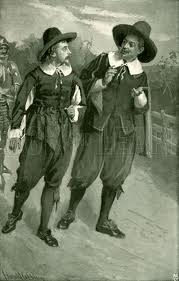
I continue to find gem after gem in my travels through Bunyan’s Pilgrim’s Progress. Both the instructive and lively narrative portrayals of the Christian life (Christian’s rousing battle with Apollyon), and the conversations between the various virtues (Charity, Faithful), vices (Sloth, Pliable), and typical attitudes (Shame, Discontent) are rich in spiritual depth and comfort.

One such exchange comes during a part of the journey when Christian and Faithful run into one claiming to be on the road to the celestial city by the name of Talkative. Faithful is quite glad to have him join them and talk of spiritual things on the journey, which it seems that Talkative is quite eager to do:

TALKATIVE: That’s it that I said; for to talk of such things is most profitable; for by so doing a man may get knowledge of many things; as of the vanity of earthly things, and the benefit of things above. Thus in general; but more particularly, by this a man may learn the necessity of the new birth, the insufficiency of our works, the need of Christ’s righteousness, etc. Besides, by this a man may learn what it is to repent, to believe, to pray, to suffer, or the like: by this, also, a man may learn what are the great promises and consolations of the Gospel, to his own comfort. Farther, by this a man may learn to refute false opinions, to vindicate the truth, and also to instruct the ignorant.

FAITHFUL: All this is true; and glad am I to hear these things from you.

TALKATIVE: Alas! the want of this is the cause that so few understand the need of faith, and the necessity of a work of grace in their soul, in order to eternal life; but ignorantly live in the works of the law, by which a man can by no means obtain the kingdom of heaven.

Apparently Talkative knows his stuff. He clearly knows the benefits of wise speech about God. Many of us could profit from an eagerness to discuss and speak about God, theology, the Bible, and our own spiritual lives more often than we do. By it we are “may learn what are the great promises and consolations of the Gospel, to his own comfort. Farther, by this a man may learn to refute false opinions, to vindicate the truth, and also to instruct the ignorant.”

Can we imagine what our general outlook would be, the witness of our lives, or the state of our faith would be if we spent more time discussing God’s goodness and not the mere trivialities to which we devote most of our conversations? How much holier would we be if we were constantly calling to mind God’s faithfulness in the face of daily temptations? Wouldn’t our constant doubts and anxieties begin to shrink in front of our eyes, if we were constantly reminding each other of the magnitude of God’s power and the unshakeable character of his promises?

The benefits to frequent godly conversation are many and deep indeed. When we read on though, we find out that Bunyan is teaching us that along with the benefits of spending our time discussing God and the Gospel, there are dangers as well.

CHRISTIAN: That is, to them that have not a thorough acquaintance with him, for he is best abroad; near home he is ugly enough. Your saying that he is a pretty man, brings to my mind what I have observed in the work of a painter, whose pictures show best at a distance; but very near, more unpleasing.

FAITHFUL: But I am ready to think you do but jest, because you smiled.

CHRISTIAN: God forbid that I should jest (though I smiled) in this matter, or that I should accuse any falsely. I will give you a further discovery of him. This man is for any company, and for any talk; as he talketh now with you, so will he talk when he is on the ale-bench; and the more drink he hath in his crown, the more of these things he hath in his mouth. Religion hath no place in his heart, or house, or conversation; all he hath lieth in his tongue, and his religion is to make a noise therewith.

FAITHFUL: Say you so? Then am I in this man greatly deceived.

CHRISTIAN: Deceived! you may be sure of it. Remember the proverb, “They say, and do not;” but the kingdom of God is not in word, but in power. Matt. 23:3; 1 Cor. 4:20. He talketh of prayer, of repentance, of faith, and of the new birth; but he knows but only to talk of them. I have been in his family, and have observed him both at home and abroad; and I know what I say of him is the truth. His house is as empty of religion as the white of an egg is of savor. There is there neither prayer, nor sign of repentance for sin; yea, the brute, in his kind, serves God far better than he. He is the very stain, reproach, and shame of religion to all that know him, Rom. 2:24,25; it can hardly have a good word in all that end of the town where he dwells, through him. Thus say the common people that know him, “A saint abroad, and a devil at home.” His poor family finds it so; he is such a churl, such a railer at, and so unreasonable with his servants, that they neither know how to do for or speak to him. Men that have any dealings with him say, It is better to deal with a Turk than with him, for fairer dealings they shall have at their hands. This Talkative (if it be possible) will go beyond them, defraud, beguile, and overreach them. Besides, he brings up his sons to follow his steps; and if he finds in any of them a foolish timorousness, (for so he calls the first appearance of a tender conscience,) he calls them fools and blockheads, and by no means will employ them is much, or speak to their commendation before others. For my part, I am of opinion that he has, by his wicked life, caused many to stumble and fall; and will be, if God prevents not, the ruin of many more.

FAITHFUL: Well, my brother, I am bound to believe you, not only because you say you know him, but also because, like a Christian, you make your reports of men. For I cannot think that you speak these things of ill-will, but because it is even so as you say.

CHRISTIAN: Had I known him no more than you, I might, perhaps, have thought of him as at the first you did; yea, had I received this report at their hands only that are enemies to religion, I should have thought it had been a slander-a lot that often falls from bad men’s mouths upon good men’s names and professions. But all these things, yea, and a great many more as bad, of my own knowledge, I can prove him guilty of. Besides, good men are ashamed of him; they can neither call him brother nor friend; the very naming of him among them makes them blush, if they know him.

FAITHFUL: Well, I see that saying and doing are two things, and hereafter I shall better observe this distinction.

CHRISTIAN: They are two things indeed, and are as diverse as are the soul and the body; for, as the body without the soul is but a dead carcass, so saying, if it be alone, is but a dead carcass also. The soul of religion is the practical part. “Pure religion and undefiled before God and the Father is this, to visit the fatherless and widows in their affliction, and to keep himself unspotted from the world.” James 1:27; see also verses 22-26. This, Talkative is not aware of; he thinks that hearing and saying will make a good Christian; and thus he deceiveth his own soul. Hearing is but as the sowing of the seed; talking is not sufficient to prove that fruit is indeed in the heart and life. And let us assure ourselves, that at the day of doom men shall be judged according to their fruits. Matt. 13:23. It will not be said then, Did you believe? but, Were you doers, or talkers only? and accordingly shall they be judged. The end of the world is compared to our harvest, Matt. 13:30 and you know men at harvest regard nothing but fruit. Not that any thing can be accepted that is not of faith; but I speak this to show you how insignificant the profession of Talkative will be at that day.

This is the danger Bunyan warns us of: apparently Talkative is just that–all talk and no action. In this passage Christian instructs Faithful in the difference between saying and doing. It’s an easy one for us to forget.  It’s easy to feel like having the right answers makes us righteous. It’s easy to feel like being able to distinguish properly between justification and sanctification means that we’ve been justified and sanctified. It’s easy to think that condemning sin with our mouths means we’ve cut it out of our lives. It’s easy to think that because we can discourse about the Trinity, we’re actually engaged in the life of the Triune God.

Bunyan reminds us that while it’s important for pilgrims on the way to discuss the beautiful things of God, we must not be satisfied with mere discussion. The Christian life is one of active participation. We must practice Christianity as well as speak of it. Faith that truly is worth the name, is one that results in a changed life, not merely a different vocabulary.

Talking about God is a great thing as long as it encourages us to talk to God; to move from conversation about the Christian life, to participation in a real Christian life.

Soli Deo Gloria

The Gospel is a Story AND a set of Propositions

Alright, l’ve had it with the silly “The Gospel is not a set of propositions, it’s a story” meme that keeps getting thrown around in church conversations and books. It’s been beat down I don’t know how many times, but let’s just be clear: the Gospel is both a story AND a set of propositions. It includes both, it is both because stories involve propositions. What do I mean? A proposition is basically an affirmation, something asserted about the world, or a situation. “It is raining” or “Abraham Lincoln was the 16th President of the United States” are good examples of propositions. Now, when you take more than 2 seconds to think about it, you’ll realize that without propositions, you don’t have stories. Let me quickly illustrate my point:

Proposition 1: Jack and Jill went up the hill to fetch some water.
Proposition 2: Jack tripped and sustained a head injury
Proposition 3: Upon seeing his fall, Jill was frightened, tripped, and fell down after him.

Put this together and you have a short story. This is not hard stuff.

Now, let’s think about the basic Gospel announcement. Here’s the King Jesus, McKnightish/Wrightish version: “Jesus Christ is Lord.” That’s an assertion about what is the case. It’s a proposition about the Lordship of Christ. Or, try this more “Soterian”-sounding one: “in Christ God was reconciling the world to himself, not counting their trespasses against them, and entrusting to us the message of reconciliation.” (2 Cor 5:19 ) “God is reconciling the world to himself” is an assertion, a proposition that sums up the Gospel.

One more:

In the beginning was the Word, and the Word was with God, and the Word was God. He was in the beginning with God. All things were made through him, and without him was not any thing made that was made. In him was life, and the life was the light of men. The light shines in the darkness, and the darkness has not overcome it.
There was a man sent from God, whose name was John. He came as a witness, to bear witness about the light, that all might believe through him. He was not the light, but came to bear witness about the light.
The true light, which gives light to everyone, was coming into the world. He was in the world, and the world was made through him, yet the world did not know him. He came to his own, and his own people did not receive him. But to all who did receive him, who believed in his name, he gave the right to become children of God, who were born, not of blood nor of the will of the flesh nor of the will of man, but of God.
And the Word became flesh and dwelt among us, and we have seen his glory, glory as of the only Son from the Father, full of grace and truth. (John bore witness about him, and cried out, “This was he of whom I said, ‘He who comes after me ranks before me, because he was before me.’”) For from his fullness we have all received, grace upon grace. For the law was given through Moses; grace and truth came through Jesus Christ. No one has ever seen God; the only God, who is at the Father’s side, he has made him known. (John 1:1-18)

Take the first verse alone:

Prop 1: “In the beginning was the Word”
Prop 2: “The Word was with God”
Prop 3: “The Word was God”

The narrative of the Word coming into the world which rejected him and the salvation that came to those who did is a series of propositions that are connected to form a version of the basic Gospel story. Are we clear then? The Gospel is a story AND a set of propositions? Good.

Now, I get where this is coming from. People have reacted against presentations of the Gospel that are a series of de-historicized, de-narrativized, “4 spiritual laws” that takes all the drama and movement out of things. I get that. I’m not a fan of those presentations either. The Gospel is a rich, deep, and dramatic reality that shouldn’t be reduced down to a formula. Still, I’m not a fan of silly, misleading statements either. This is one of them. Stop using it, people.

The Beauty of the Impassible God (Or, Is God an Emotional Teenager?)

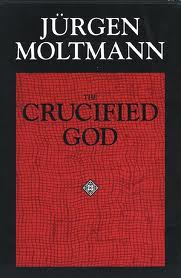
For some reason I’ve become interested in the much-maligned doctrine of the impassibility of God over the last couple of years. What is the doctrine you ask? Simply put, it is the idea that God cannot be made to suffer change from without or be overcome with passions. Ever since the early Fathers this has been the standard teaching of the Church: God is not subject to passions. I first found out about this idea in college when reading Jurgen Moltmann’s classic, The Crucified God in which he argues, among other things, that for God to be impassible in light of the world’s suffering and evil would make God wicked. In fact, in light of the cross of Christ where the Godman suffers death and alienation, it’s absolutely blasphemous. Instead, the Bible presents us with a passionate God who suffers alongside of us, who bleeds, who dies, and who understands our pains–because isn’t that what love does? In this account, impassibility is a hold-over from Greek philosophy that crept in and corrupted the pure, Hebrew view of the dynamic, living God of Scripture and turned it into the conceptual idol of the frozen absolute valued by Plato, Aristotle, and the Stoics.

This view, that of the passible God, has become the “New Orthodoxy” that has been growing apace in academic and popular theology since the earliest part of the 20th Century, especially with the rise of process theism, open theism, and panentheism. Impassibility is also generally rejected in various quarters of Evangelical theology that cling to largely traditional doctrines of God, with John Stott citing Moltmann on this point with approval in his great work, The Cross of Christ. Now, given that I first came across the doctrine of impassibility at the tender age of 20, without any real knowledge of historical theology, or most of the reasoning behind the thinking of the Fathers in articulating this doctrine, it’s not hard to imagine that I whole-heartedly rejected it as nonsensical and the silly invention of “Greek” theologians and their systematizing ways.

Luther said that for the Christian all of life is repentance. I’ve come to find out that holds true not only in moral terms, but also intellectual ones. Suffice it to say that after reading some significant criticisms of passibilist criticisms from biblical, theological, philosophical, and historical-theological angles, I’ve come back around to affirming a form of the doctrine of impassibility. Key thinkers who helped me along this path have been Kevin Vanhoozer, David Bentley Hart, and Paul Gavrilyuk.  Kevin DeYoung also has a helpful article summarizing key points.

I’m not going to attempt to cover all the relevant points or even come up with as helpful of a summary case as DeYoung has. I simply wanted to offer up some quick, semi-connected, but inevitably unsystematic correctives of popular perceptions about the doctrine as well as offer some reason to find this doctrine beautiful along the way. In doing so, I will be depending heavily on the account offered in Vanhoozer’s Remythologizing Theology, pp. 387-468. Needless to say, this will be hopelessly incomplete. Any insight that is helpful or intelligent is probably his. Anything silly or reductionistic is probably mine.

Clarifying Thoughts on Impassibility

Not a Rock – It is often charged that the doctrine of impassibility leaves us with an emotionless rock of a God. From the outset it ought to be made clear that to teach that God is impassible is not to deny that God has an emotional life with cares, joys, loves, and so forth. Impassibility does not mean impassivity any more than immutability means immobility. Both are caricatures and misunderstandings of the classical doctrine. Just as the doctrine of God’s immutability or changelessness is not a teaching about a static, stone God, but a God so perfectly overflowing with life that any “change” could only tend towards a lesser state, so the doctrine of impassibility is statement about the perfection of God’s emotional life, his sovereignty over it, not its absence. Anybody who teaches otherwise, both critic and advocate, has been misled on the subject. In the early Fathers, to teach that God was impassible was to teach that God did not have “passions”, or unrestrained feelings ungoverned by reason or will that could simply sweep over him. A passion was thought of as a sort of violent, semi-physical force that could move a person without the consent of their reason or will, or a sinful inclination. To deny that this can happen is to say that God’s emotional life is under his own control and will not erupt violently in irrational or sinful ways. God is not an emotional teenager.

The Bible? – What about those passages in the Bible that talk about God’s very strong feelings about things? What do they point to if God is not a passionate God? Are they “merely” anthropomorphisms that don’t “really” mean what they say? The Fathers and the medieval tradition made a distinction between ‘passions’ and ‘affections.’ An affection is a sort of controlled emotion that is subject to the will and mind of the one having it. It is a rational emotion that does not overcome the person, but is in line with the will. God has affections such as kindness, anger, etc. which he can display. The passages in the Bible talking about God’s anger, kindness, grief, and so forth are pointing to something real in God–his affections, the emotional life of the God of Israel. They are not “mere” anthropomorphisms, even though they are anthropomorphic. They are real descriptions, though not to be taken in a literalistic fashion, of God’s emotional life.

What’s An Emotion Anyway? – One point that clouds this discussion and makes it hard to conceive of God having emotions that are not passions, is that often-times we don’t have a clear understanding of what an emotion is. Kevin Vanhoozer draws attention to the fact that there are various theories on offer as to what an emotion is, but the split is between two basic types: non-cognitivist and cognitivist understandings. Non-cognitivist theories of emotion stress the pre-rational nature of an emotion such as the physical rush associated with fear or anger, which we then attach to cognitive content. Vanhoozer points out a few problems with that. First, God is spiritual, not physical. He cannot have an adrenaline rush with a flush of the face, a flaring of the nostrils, or moistening of the tear-ducts. For us to ascribe emotions to him on this view is to ascribe a body. The second problem with this is that with fear or anger, I feel the rush precisely because of what I believe about a certain situation or action. Third, a lot of emotions “feel” the same physically, like anger and fear, but the only thing distinguishing them is the cognitive content. Fourth, it’s hard to ascribe praise or blame to the way people feel if it’s just a physical reaction. But we seem to think that some feelings are praiseworthy and others are blameworthy. For these reasons, (and a few others), its best to opt for a cognitivist understanding of emotion.

On a cognitivist view, an emotion is a judgment or an attitude that one takes about something.  It is a concern-based, value-laden judgment about a state of affairs. My fear and happiness are flavored understandings about situations or persons that I am concerned with. Given my humanity my loves, jealousy, or fear can be both passions that I suffer as well as affections. We are both patients and agents with respect to them. God has perfect emotions, affections not passions, because his value-laden judgments are true and accurate ones. God’s love, jealousy, wrath, compassion, and kindness are involved judgments, ways of “seeing” with the heart that inclines him towards action of some sort but do not overwhelm him.  They do not incline him towards evil and they cannot sweep over him because they are fully-consonant with his perfect knowledge and will.

At this point some people might be thinking that this makes a sort of sense, but not something you’re willing to buy into too quickly. These highly cognitive emotions seem too distant from our everyday human experience.  In response, Vanhoozer would remind us that “the similarities between God’s emotional life and ours exist in the midst of an even greater dissimilarity, one that marks the infinite qualitative distinction between Creator and creation, Author and hero.” God is God. We might be made in his image, but God’s reality is a whole ontological step up from ours. We should expect things to be a little different up there. Just as God’s sense of personhood will be different than yours given that he exists as Father, Son, and Holy Spirit, while you exist as you, it’s unsurprising that his emotional life is a little beyond us.

Sovereign Relationality – A further consideration connected to impassibility is that there is nothing outside of God that is beyond his control. Those agents or situations about which he feels things are not outside of his will or agency. Given creatio ex nihilo, even with a strong view of libertarian human agency, God is not subject to his human creations. His feelings in relation to them are not things which he must passively suffer but ones which he actively chooses to endure. They are not imposed on him from without, but sovereignly accepted. Passibilists might point to passages like Hosea 11:8, where God speaks to Israel, saying that he cannot bear to be parted from him, that his heart recoils within him at the thought of extinguishing him in judgment. The thought is that here human subjects exert a force and cause a change, or suffering in the emotional life of God from without. It must be remembered that these statements are uttered within the context of a covenant relationship which God freely and sovereignly entered into without force or compulsion. God did not have to save Israel. God did not have to covenant with a people. God was not forced to create. He is under no threat to save. Therefore, the situations that he involves himself in, about which he has these value-laden judgments like anger, sadness, etc, are situations over which he is sovereign and in control.

The Incarnation–Chalcedonian Solutions  – “All this theological logic-chopping and conceptional analysis is fine, but what about the cross? Doesn’t that show that God suffers? What sense does it make to say that God is impassible if Jesus is God and Jesus truly suffers on the cross?” This is where a little Chalcedonian christology comes to the rescue.

The classic answer developed by theologians like Cyril of Alexandria is that while it is appropriate to say that the Son suffered on the cross, we make it clear that God the Son suffered in his humanity, which is capable of suffering. Because we confess the unity of the Godman, that this man, Jesus Christ, truly is the Eternal Son, it is true then, to say that God suffered, but only in the soul and flesh of the Godman. If we begin to take suffering up into the divine nature, then we begin to render the incarnation a pointless gesture. If God can suffer in his own nature, then why assume human nature at all? In a sense, it is true to say that the lover wills to suffer alongside the beloved. But without impassibility we lose the wonder of what God has done in Christ–he who knew no suffering in himself, willed to become as we were so the he could experience it alongside of us. We too often forget that nobody takes Jesus’ life from him–even in his humanity, the Son lays down his life of his own accord. (John 10:18) He is sovereign even over his death and “suffering” at the human hands he empowered to crucify him. (John 19:11) What’s more, he did so, not just to “feel our pain”, but in order to end it. There is some comfort when we read that Christ is a sympathetic high priest who knows of our temptations (Heb 4:15), but as Vanhoozer reminds us, the true comfort of the verse comes when we read that he did not give in to the temptation, but overcame it for our sake in order to cleanse us from our sins giving us free access to the throne of grace. (4:16; Heb 2:17-18)

The Beauty of the Impassible God

In the end, the doctrine of impassibility affirms that God did not incarnate himself of necessity to relieve his own unbearable suffering. His existence as Father, Son, and Holy Spirit is one of perfect, unconquerable, and impassible “light, life, and love.” (Vanhoozer) Instead, in Christ, he freely, willingly, and sovereignly endured suffering, actively making it his own, so that ours would be put to an end. To affirm God’s impassibility is to confess that God’s action in Christ is nothing other than the beautifully gratuitous outpouring of his invincible, unsurpassable, enduring love for his wayward creatures–it’s the foundation of grace itself.

Soli Deo Gloria

Christ’s Cross and Ours: Some Thoughts on Suffering and the Life of Faith

One of my favorite sections in the Institutes is Calvin’s section on the Christian life. As much as I love his exposition of the creed, or his theological-polemical engagements with Osiander, the “Papists”, and the “Enthusiasts”, Calvin shines when discussing the practical. Beyond Calvin the theologian and biblical scholar, there was Calvin the pastor–the man who was passionately concerned that all of human life be lived before God and in light of the Gospel. This might surprise many readers but the Reformation wasn’t simply a narrow theological debate about justification and the thoughts we think on a Sunday morning, but rather a restructuring of Christian life and practice. It was about, as James K.A. Smith puts it, “the sanctification of ordinary life.”  For that reason Calvin was concerned not only with teaching doctrine, but the life of piety that flows from that doctrine.

A Life of Self-Denial and the Cross

Calvin writes, “We are not our own: in so far as we can, let us therefore forget ourselves and all that is ours. Conversely, we are God’s: let us therefore live for him and die for him.” (3.7.1) Therefore, in this life between the first and second comings of Christ, a saint’s life is one of self-denial. In order to be fully devoted to God, love our neighbors in difficulty, and bear up under adversity, we must deny ourselves and look to God alone for our blessedness.

In order to do this well, he encourages his readers to consider to the cross, because the cross of the Christian is the chief part of self-denial:

But it behooves the godly mind to climb still higher, to the height to which Christ calls his disciples: that each must bear his own cross [Matthew 16:24]. For whomever the Lord has adopted and deemed worthy of his fellowship ought to prepare themselves for a hard, toilsome, and unquiet life, crammed with very many and various kinds of evil.” (3.8.1)

To many of us, it is surprising to think that we are called to carry crosses. “I thought Christ had the cross so I wouldn’t have to?” That is true, but only in a certain sense. It is true that because of Christ’s suffering and death, we no longer have to face the penal judgment of God, or worry about the ultimate victory of the powers that he defeated on it. (Col. 2:14-15) Still, the active life of discipline and self-denial, scorn, pain and difficulty that he endured, (“while he dwelt on earth he was not only tried by a perpetual cross but his whole life was nothing but a sort of perpetual cross”), is also a model for those of us who would be made holy as God intends us. As Calvin puts it: “Why should we exempt ourselves, therefore, from the condition to which Christ our Head had to submit, especially since he submitted to it for our sake to show us an example of patience in himself? Therefore, the apostle teaches that God has destined all his children to the end that they be conformed to Christ [Romans 8:29].” (ibid.) The Christian then, should expect difficulty and suffering in this life.

The Benefits of the Cross

While nobody ever accused Calvin of being an optimist, he didn’t think that the Christian should fear submitting to the cross–there is comfort in its shadow. Following Paul, he says taking up our cross allows us to know the beauty of sharing of Christ’s sufferings in a way that enables us to participate in his glory. (Phil. 3:10-11) “How much can it do to soften all the bitterness of the cross, that the more we are afflicted with adversities, the more surely our fellowship with Christ is confirmed! By communion with him the very sufferings themselves not only become blessed to us but also help much in promoting our salvation.” (ibid.)

More specifically, Calvin sees at least six benefits to the cross we are called to bear in this life.

1. The cross leads us to perfect trust in God’s power (3.8.2) We are too quick to give ourselves credit when life goes right or our accomplishments receive praise. We trust in our own awesomeness. We think that our goodness, or wisdom, or strength is the cause of our good life and that we really have this handled. It is only when difficulties and suffering comes our way, when disease hits, markets crash, relationships break, that we are humbled and taught to rely on God’s power and strength in all things. Only the cross kills our arrogance, shows us our inability, and drives us to the perfect source of strength, God’s gracious sustenance.

Believers, warned…by such proofs of their diseases, advance toward humility and so, sloughing off perverse confidence in the flesh, betake themselves to God’s grace. Now when they have betaken themselves there they experience the presence of a divine power in which they have protection enough and to spare.”

2. The cross permits us to see God’s perfect faithfulness and gives us hope for the future (3.8.3). God’s faithfulness matters most when we are in the pit. It is in the tribulations of this life that we find God’s unswerving commitment to his children to be proven to our hearts. When we see him act faithfully in our current travails, we are given hope for God’s future faithfulness. “Hope, moreover, follows victory in so far as the Lord, by performing what he has promised, establishes his truth for the time to come.”

3. The cross trains us to patience and obedience (3.8.4) Difficulty gives us occasion to practice obedience and patience.  Virtues such as these cannot be exercised when life is going swimmingly. “Obviously, if everything went according to their own liking, they would not know what it is to follow God.” Obedience in the face of difficulty is what forms a golden character, one tested in the furnace of adversity. (1 Peter 1:7) Patience is developed only when we are called to endure situations that are unpleasant. It is in the troubles of this life, not the joys, that we learn to submit fully to God’s good commands and patiently await God’s vindication and comfort in our adversity.

4. The cross is medicine for our sin-sick souls (3.8.5) Calvin sees our fleshly or sinful desires, our ill-will, as a sort of recurring illness or medical condition that, if not kept a close eye on, would grow or deteriorate due to laxity. The crosses that we bear in this life function as a medicine, a sort of chemotherapy, or possibly as physical therapy, for the soul according to the particular conditions we struggle with such as pride, lust, anger, self-centeredness. Through the ministrations of our great physician, our souls are healed and treated according to his wisdom:

Thus, lest in the unmeasured abundance of our riches we go wild; lest, puffed up with honors, we become proud; lest, swollen with other good things—either of the soul or of the body, or of fortune—we grow haughty, the Lord himself, according as he sees it expedient, confronts us and subjects and restrains our unrestrained flesh with the remedy of the cross. And this he does in various ways in accordance with what is healthful for each man. For not all of us suffer in equal degree from the same diseases or, on that account, need the same harsh cure. From this it is to be seen that some are tried by one kind of cross, others by another. But since the heavenly physician treats some more gently but cleanses others by harsher remedies, while he wills to provide for the health of all, he yet leaves no one free and untouched, because he knows that all, to a man, are diseased.

5. The cross is fatherly discipline (3.8.6) If God is a father, then at times he will discipline us according to our misdeeds so that we mature and grow into the kind of children that look like their father. Just as any parent knows to correct a child’s lying or unkindness with a light (or heavy) punishment as the situation calls, so at times our cross is connected to some disobedience we are walking in. This is not judgment, but parental concern that motivates his permission of certain troubles that awaken us to our foolishness.  Calvin quotes Proverbs 3:11-12 here,”My son, do not despise the Lord’s discipline, or grow weary when he reproves you. For whom God loves, he rebukes, and embraces as a father his son.” As the author of Hebrews says, it is through God’s discipline that we know we are legitimate children whom God cares enough about to displease for a short time. (12:8) God works through the cross to lovingly correct his wayward sons and daughters, demonstrating a love concerned not merely with the happiness of his children, but with the deep joy that comes with goodness.

6. The cross is suffering for righteousness sake (3.8.7) Calvin goes on, “Now, to suffer persecution for righteousness’ sake is a singular comfort. For it ought to occur to us how much honor God bestows upon us in thus furnishing us with the special badge of his soldiery.” To many of us it is a foreign way of thinking, but in the New Testament the apostles’ rejoiced at being thought worthy of the honor or suffering for the sake of Christ. (Acts 5:41) Jesus himself says,”Blessed are those who are persecuted for righteousness’ sake, for theirs is the kingdom of heaven. Blessed are you when others revile you and persecute you and utter all kinds of evil against you falsely on my account. Rejoice and be glad, for your reward is great in heaven, for so they persecuted the prophets who were before you.” (Matt 5:10-12) As Calvin points out, the suffering itself is not good, but because these sufferings are the source of great honor, for God will not fail to reward the faithful believer in the Kingdom to come because of goods lost here. “If, being innocent and of good conscience, we are stripped of our possessions by the wickedness of impious folk, we are indeed reduced to penury among men. But in God’s presence in heaven our true riches are thus increased. If we are cast out of our own house, then we will be the more intimately received into God’s family. If we are vexed and despised, we but take all the firmer root in Christ. If we are branded with disgrace and ignominy, we but have a fuller place in the Kingdom of God. If we are slain, entrance into the blessed life will thus be open to us.”

Conclusion

In these various ways the cross that comes into the life of the believer can be a great comfort and hope. In light of these meditations we can see how Calvin can say,”Hence also in harsh and difficult conditions, regarded as adverse and evil, a great comfort comes to us: we share Christ’s sufferings in order that as he has passed from a labyrinth of all evils into heavenly glory, we may in like manner be led through various tribulations to the same glory.” (3.8.1)

May we also come to consider the goodness of God in the cross.

Soli Deo Gloria

Wrath or Love? Calvin on Why Jesus Goes to the Cross

Why did Jesus die on the cross? Was it because of God’s wrath or rather because of his love? Here’s one of my favorite passages where my boy Calvin breaks it down. For those of us trained to think in caricatures of Calvin as the perpetrator of a cold, legalistic theological system, his answer might be surprising:

Although this statement is tempered to our feeble comprehension, it is not said falsely. For God, who is the highest righteousness, cannot love the unrighteousness that he sees in us all. All of us, therefore, have in ourselves something deserving of God’s hatred. With regard to our corrupt nature and the wicked life that follows it, all of us surely displease God, are guilty in his sight, and are born to the damnation of hell.  But because the Lord wills not to lose what is his in us, out of his own kindness he still finds something to love. However much we may be sinners by our own fault, we nevertheless remain his creatures. However much we have brought death upon ourselves, yet he has created us unto life. Thus he is moved by pure and freely given love of us to receive us into grace. Since there is a perpetual and irreconcilable disagreement between righteousness and unrighteousness, so long as we remain sinners he cannot receive us completely.

Therefore, to take away all cause for enmity and to reconcile us utterly to himself, he wipes out all evil in us by the expiation set forth in the death of Christ; that we, who were previously unclean and impure, may show ourselves righteous and holy in his sight. Therefore, by his love God the Father goes before and anticipates our reconciliation in Christ. Indeed, “because he first loved us” [1 John 4:19], he afterward reconciles us to himself. But until Christ succors us by his death, the unrighteousness that deserves God’s indignation remains in us, and is accursed and condemned before him. Hence, we can be fully and firmly joined with God only when Christ joins us with him. If, then, we would be assured that God is pleased with and kindly disposed toward us, we must fix our eyes and minds on Christ alone. For actually, through him alone we escape the imputation of our sins to us — an imputation bringing with it the wrath of God…

For this reason, Paul says that the love with which God embraced us “before the creation of the world” was established and grounded in Christ [Ephesians 1:4-5]. These things are plain and in agreement with Scripture, and beautifully harmonize those passages in which it is said that God declared his love toward us in giving his only-begotten Son to die [John 3:16]; and, conversely, that God was our enemy before he was again made favorable to us by Christ’s death [Romans 5:10]. But to render these things more certain among those who require the testimony of the ancient church, I shall quote a passage of Augustine where the very thing is taught:

“God’s love,” says he, “is incomprehensible and unchangeable. For it was not after we were reconciled to him through the blood of his Son that he began to love us. Rather, he has loved us before the world was created, that we also might be his sons along with his only-begotten Son — before we became anything at all. The fact that we were reconciled through Christ’s death must not be understood as if his Son reconciled us to him that he might now begin to love those whom he had hated. Rather, we have already been reconciled him who loves us, with whom we were enemies on account of sin. The apostle will testify whether I am speaking the truth: ‘God shows his love for us in that while we were yet sinners Christ died for us’ [Romans 5:8]. Therefore, he loved us even when we practiced enmity toward him and committed wickedness. Thus in a marvelous and divine way he loved us even when he hated us. For he hated us for what we were that he had not made; yet because our wickedness had not entirely consumed his handiwork, he knew how, at the same time, to hate in each one of us what we had made, and to love what he had made.”

These are Augustine’s words.

John Calvin, Institutes of the Christian Religion, ed. John T. McNeill, trans. Ford Lewis  Battles (Philadelphia: Westminster Press, 1960), 2.16.3-4

Soli Deo Gloria

Becoming the Archetype’s I AM = The Doctrine of God + Death Metal

Alright, so this is the one where I blow my credibility with a bunch of you: I love metal music. I’m not an expert, a connoisseur, or even an amateur. I’m just a fan. Still, I love the speed, the ferocity, the heaviness, and the creativity involved with the genre and its multiple sub-genres.

One of my favorite acts is a Christian progressive death metal band by the name of Becoming the Archetype. (Think Christ as the archetype of humanity made in the image of God into whose image we are being conformed.) They embody what I’ve been saying for the last few years: some of the most creative, theological song-writing is coming, not out of the worship music industry, but the metal and hardcore scene. With albums titled Terminate Damnation and songs like  “Ex Nihilo” and “Elemental Wrath: Requiem Aeternam”, it’s obvious they don’t pull theological punches. Redemption never sounded this brutal. Thankfully they’ve been thoughtful enough to actually handle deep theology within the medium, producing complex concept albums like “Dichotomy”, which they based on C.S. Lewis’ Space Trilogy in order to explore themes of resurrection, the knowledge of God, biology and technology. (It also features the most brutal rendition of “How Great Thou Art” you’ve ever heard.)

Now, when I learned of that the band had lost bassist and frontman, Jason Wisdom, I was worried both that the music and the message would suffer a drop-off in sound as well as theological content. (He left when his wife became pregnant. Something about wanting to be a good dad or something.) With release of their 5th full-length studio album I AM, my fears were assuaged.

In terms of sound, Christ McCane’s vocals come through loud, low, and aggressive.  The clean vocals shine at times and at times, not so much. Overall, very solid. There are quite a few good technical riffs, (the opening of the title track “I AM” comes to mind), solid drumming, a few good bass-lines, and a number of heavy break-downs, even though they’ve backed off a bit from other albums. Continuing the trend off of their last album Celestial Completion, they’ve continued to place increasing focus on progressive elements. Still, it regains some of the speed, heaviness, and aggression of Dichotomy. It’s a solid metal album. The more I listen to it, the more pleased I am. My face is quite sufficiently melted.

This is not the main reason I am excited by this album. What I love most is the theological ambition driving the sound. With I AM Becoming the Archetype has attempted to do something many academic theologians no longer try: say something substantial about God.

I AM

In the Old Testament God reveals himself to Moses in the burning bush as the great “I AM that I AM” (Exod. 3:14), or simply “I AM” (Yahweh). This is his specific covenant name by which Israel was to call him.  In Isaiah, specifically 40-55, a section that draws on Exodus themes of liberation and redemption, God repeatedly emphasizes that “I am” the one who will redeem Israel. (Isa. 41:4; 43:25; 47:10; 48:12; 51:12) In the NT we find Jesus taking up the divine self-designation in the book of John with its seven famous “I am” (ego eimi) statements. Using prominent OT images of salvation he declares himself to be the bread of God (6:33), the bread of life (6:35), the light of the world (8:12), the gate for the sheep (10:7), the resurrection and the life (11:25), the way, the truth, and the life (14:6), and the true vine (15:1). Each of these predicates symbolize some aspect or form of the salvation that Jesus brings or in fact is.

In the same vein, I AM is an extended reflection on the glorious, terrifying predicates which can be ascribed to God in his saving actions, especially as they are manifested in Jesus Christ. Check out the track list:

  1. The Ocean Walker
  2. The Time Bender
  3. The Eyes of the Storm
  4. The Sky Bearer
  5. The Machine Killer
  6. The Weapon Breaker
  7. The War Ender
  8. The Planet Maker
  9. The Sun Eater
  10. I AM

Now, let’s be honest, we’re not dealing with Thomas Aquinas, or Barth, or Bavinck here. This is a death metal band. Some over the top metalness is to be expected. Still, there’s something great about a band that will speak in the first person for God and utter:

Traversing the infinite
Transcending the evident
Watch as reality bends to my will

Navigating eternity
Dispatching uncertainty
Navigating eternity
Behold in my presence
Time standing still

I am the future
I am the past
I have seen you breathe your last

The metal epicness is almost too much to bear. What I do love is that song after song we see some attribute or action of God’s, whether eternity, the act of creation, judgment, or consummation, being defined through the Son. Ending on a truly Johannine note, the refrain of the title song simply states, “I AM THAT I AM/I AND THE FATHER ARE ONE.” We know God in and through Jesus Christ or not at all.

To sum up: if you like metal, or Jesus, check out the album. Prepare for theology and epicness.

Check out the first single, “The Time Bender” below.

Is God Allowed To Do Stuff We Can’t? Some Thoughts on Penal Substitution

Ever heard a kid ask, “Why can’t I do that when you’re always doing it?” I’m sure those of you parents have heard this refrain from your children.  Before getting hired at my church, I worked for a few years as a substitute teacher and every so often I’d get this from a kid who wanted to defend using a cell phone or eating in class.

I’d often debate with myself whether or not this was a fair argument. Is it fair for a teacher to use their cell phone in class when a student is forbidden to? What are the reasons for this? Is it fear that phones might be used for cheating? Are they a distraction in the learning process? Are they just inherently wicked? Depending on the answer, it might be an unfair double-standard; I’m pretty sure all the times I ate in front of those hungry children were.

This raises the question, though, “Are there actions that, in virtue of the different roles which students and teachers occupy, are inappropriate for students but are entirely appropriate for their teachers?” I think there are probably a few. For instance, it seems entirely appropriate for a teacher to have possession of the answers of a test out during the administration of a test while it is inappropriate for the students to have the same. Or again, it is entirely appropriate for a teacher to be talking to a student during a test, but not for another student.

Let’s broaden the principle. Is it the case that some actions are appropriate for some people given their role or job, but entirely inappropriate for others given theirs, such that the one can essentially say to the other, “Do not do what you see me doing”? I think that seems reasonable. A parent might say to a child, “Do not use the knife” without being hypocritical. A police officer might enforce restrictions on hand guns while using a gun. In virtue of their different roles, the parent is allowed to do what the child is not and the police officer is allowed to carry what the average civilian is not.

One more question: Is it possible that one person, trying to abide by the same principle as another, might have to do exactly what they have forbidden the second from doing precisely because of their different roles? Think of a chemistry professor who, in the interest of student safety, handles dangerous chemicals that he has expressly forbidden his students from handling. Think of a mother who, in the interest of fairness, forbids her older children from punishing their younger siblings for their faults because that is her job. She knows they won’t be able to do it properly, so she does it herself. In both cases, one person forbids another from taking an action that they themselves will take for exactly the same reason. The action itself is not inherently wicked or wrong–it is wrong for some given their position or abilities, while it not for others.

The Objection: Is God Unfair?

Why this digression into the fairness of in-class cell phone usage by substitute teachers? Last week I posted a little piece on penal substitutionary atonement (PSA), the teaching that part of what Jesus did on the cross was to suffer the judgment of God for sins in our place thereby saving us from having to bear the penalty ourselves. This sparked some off some friendly (and some not-so-friendly) conversation about the doctrine; apparently there are a number of people who don’t think to highly of this teaching.

Now, I have to admit, this area of Christian theology is one of those that I’ve done a fair bit of reading on, for an amateur theologian. I think I’ve heard most of the classic arguments against penal substitution that are out there (it’s unbiblical, it supports violence, it’s a hold-over of primitive deities, it’s the product of Calvin’s legalistic mind, there is no possibility of moral transfer, it’s a legal fiction, etc.). I think there are answers to all of these so I don’t plan on going into most of those today. There is one increasingly common type of argument against the doctrine that came up in the conversations that goes something like this:

God tells us to forgive one another and not to demand retribution. Jesus says to turn the other cheek, bless those who curse you, forgive those who hate you, and love those who harm you. If that’s the case, then how is it that we can conceive of God demanding retribution for sin and, specifically, imagine that this is what is happening on the cross of Jesus? Isn’t that God doing exactly what he tells us not to do? Isn’t that hypocritical and immoral? 

As one blogger recently put it, “Here’s a simple rule of thumb: if your theory of the cross completely contradicts everything Jesus stood for and taught… it’s probably wrong. It’s sad that I need to say this, but the gospel is rooted in love of enemies, not in retribution. Retribution is the opposite of forgiveness. So the idea that the entire work of Jesus was to fulfill the demands of retribution is simply absurd.” Finally, one of my recent interlocutors put it this way, “But if the cross is about retribution, punishment, then God teaches us to “do as I say, not as I do.“”

No, God is God

What can be said about this? Is penal substitution an instance of God saying “do as I say, not as I do?” Would this make God inconsistent or unfair? I won’t give an exhaustive answer to the various missteps and mistakes in this sort of thinking (particularly the false dichotomy between “retributive” and “restorative” justice, which I plan on dealing with in a future post), but I will offer up a few clarifying points on the thought that God can do things that we can’t:

Only God is God In general, there are a number of things that are appropriate for God to do given his role as God, King, Judge, Creator of all the earth, that it is not permitted for me to do in my role as human, created thing, sinner, and so forth. For instance, it is entirely appropriate for God to seek and receive worship. In virtue of his infinite perfections, his beauty, his glory, his majesty, his love, and goodness, God is absolutely worthy of worship and for him to demand or receive it is simply a right concern for truth. On the other hand, it is wicked for us to receive worship or to seek it. I am a created thing as well as a sinner, and therefore I am not worthy of worship. For anyone to worship me would be to perpetrate a lie. In fact, the reason we are not to receive worship is because it is God’s prerogative and his alone. At this point it would be the height of silliness for someone to look at God and say, “Well, you’re always seeking worship and yet you tell us not to seek worship or receive praise. What’s the deal?” The deal is that, looking at things realistically, you’re an unworthy ant, and God is God. This is at least one place, and there are a number others, where God is allowed to say, “Do as I say, not as I do…because I am God and you are not.”

Only God is Judge Turning to the subject of judgment, punishment, and retribution we find Paul writing, “Repay no one evil for evil, but give thought to do what is honorable in the sight of all. If possible, so far as it depends on you, live peaceably with all. Beloved, never avenge yourselves, but leave it to the wrath of God, for it is written, ‘Vengeance is mine, I will repay, says the Lord.’ “(Romans 12:17-19) In this particular passage Paul says not to inflict judgment on your enemies, not because God never does that sort of thing, but because he’s said that’s the sort of thing only He should do. The explicit logic of the text is, “Don’t do that. It’s my job. I don’t want you taking vengeance. Vengeance is mine.” Paul wasn’t squeamish about this sort of logic the way a number of anti-PSA advocates are because it’s all over the Old Testament. The Law (Exod. 20:5), the Psalms (Ps. 75:7), and the Prophets (Ezek. 5:8) tell us that God is the judge of the world and so it is his particular job to take care of things, vindicate whoever needs vindicating, rewarding those who should be rewarded, and punishing those who ought to be punished. He is the sovereign Lord of the world with the authority and might to execute judgments. (Ps. 94) There is no thought that judgment or punishment is inherently wicked in the Hebrew Bible, especially in the hands of the righteous Lord of all the earth. Unless we want to slide into a crypto-Marcionism that pits the God of the OT against the God of the NT, we have to factor that into our thinking. There is a difference between being Christo-centric and Christo-reductionistic in a fashion that looks at Jesus without setting his life, death, and resurrection within the context of the whole canon and God’s revelation of himself to Israel. But even just looking to Jesus, we see that indeed, his heart longs to shelter Jerusalem under his wings to save them, but this comes only in the context of his recognition and proclamation of judgment on their sins. (Matt 23:29-39)

We Can’t Handle It Why might God call us to forego retribution and not give vent to our wrath against others, when he apparently is allowed to? One reason that comes to mind is that we might not be suited to the task. Just as the mother does not allow her slightly older children to punish the younger because their own judgment is faulty, God does not allow us to exercise that kind of judgment because we are not able to do so righteously. Our judgments are flawed and provisional, while His are perfect and definitive; ours are infected by sin, while His are holy. That seems like a perfectly good reason for God to tell us not to do something that He himself does without imagining that the action is inherently wrong.

Another reason we are not suited to it is because we can’t handle it. Just as the chemistry professor forbids his students from handling the dangerous chemicals, God might forbid his children from handling vengeance. If we take vengeance upon ourselves, seeking retribution, and administering our own judgment we are liable to get sucked in. Given our sin-sick souls it is easy to see righteous anger and a passion for justice be overwhelmed by selfish pride and drawn into hate, bitterness, and malice. God is perfect love. His judgments flow from a heart free of corruption that cannot be overwhelmed by sinful passions.

How Does God Forgive? Coming to the issue of forgiveness and judgment: It is true that God tells us to forgive without seeking vengeance. Is it then wrong for him to lay the judgment for our sins on Christ in effecting our forgiveness? Two points come into consideration here:

a. Forgiveness at its most basic level is the generous release of an acknowledged debt. In commercial terms, which is where we derive the image in the NT, it is saying, “You owe me this, but I’m not going to make you repay.” Transferring it to the moral realm, “That was wrong, but I’m not going to make you suffer for it.” For us to forgive someone is for us to not make them pay or suffer for an acknowledged wrong-doing. Taking into consideration God’s role in the universe, it is entirely reasonable to think that God’s forgiveness will look slightly different from ours. As we’ve already noted, God is King and Judge of the world. Part of his faithfulness to creation is to execute justice within it, to maintain the moral order he has established–which is not some impersonal justice, but one that is reflective of his own holy nature–in essence, to make sure that payment is rendered and that wrong-doing is punished. Justice involves more than that, but certainly not less.

Given this, forgiveness cannot be a simple affair of “letting it go”, or passing it over for God. His own character, his holiness, his righteousness, his justice means that he cannot treat sin as if it did not happen. The cross is the way that God makes sure payment is rendered, that sin is punished and yet still forgive sinners by not making them pay for sins themselves. PSA is not a denial that God forgives, but an explanation of how God forgives justly. It is how He, as King of the universe, goes about lovingly forgiving His enemies who deserve judgment. He suffers the judgment in himself. Realize, this whole explanation is articulated within a Trinitarian framework in which the Father, Son, and Spirit are all cooperating to achieve atonement. The Father is not pitted against the Son because the Father sends the Son in love and the Son, out of love, voluntarily comes in the Spirit to offer up his life in our place. The Son suffering judgment on the cross is God forgiving us.

b. The second thing to recognize is that our forgiveness comes after his forgiveness, on the basis of Christ’s atoning work. We can let things go, forgive as we’ve been forgiven, forgo vengeance, and avoid retribution because we know that these things are safely in God’s loving hands. We don’t have to exact payment. Justice for the sins I suffer are handled the way my own sins are handled–either on the cross, or at the final assize.

Conclusions

These reflections are far from exhaustive or adequate to the subject matter. Much more could be and has been said on the subjects of forgiveness, substitution, justice, and the cross. In this piece I simply wanted to make one small point: sometimes it’s okay for God to tell us not to do something that he himself does. Executing judgment is one of those things.

Soli Deo Gloria

The Silliness of Impatience

This last weekend our church’s high school ministry went on a little retreat. The theme for the weekend was learning how to grow in Christ in the midst of an instant gratification culture. In our Siri and Google Voice instant-access context we are trained in so many ways to expect things instantaneously. We don’t understand the slow and steady discipline it takes to grow in holiness and in the grace of Christ. In order to illustrate the silliness of the kind of impulsive impatience we are so prone to, a couple of my students put together this little video. It is one of the many reasons I love my college students. I thought I’d pass it on for your enjoyment and edification. Check it out.

Impatient Paul from Josh Berry on Vimeo.

Where is True Peace Found?

I’ve begun my second attempt through John Bunyan’s spiritual classic, Pilgrim’s Progress this week in my attempt to find more theologically-rich devotional literature. (The first was an unfortunately broken off in college due to my immaturity.) I’m pleased to say that I have been thoroughly blessed by it. It’s easy to see why Charles Spurgeon confessed that, “Next to the Bible, the book I value most is John Bunyan’s The Pilgrim’s Progress.” The allegory is riddled with biblical quotations and wisdom designed to illustrate the pilgrimage of the Christina through the current world on to glory.

Bunyan does this by telling a dream-vision he has of the pilgrimage of Christian, an everyman character, who is on a journey from his home-town “the City of Destruction” to the “Celestial City.” His journey is provoked by his reading of a book that causes him great distress and anguish about his spiritual state.  On the way he is met by various characters such as Worldly-Wise Man and Evangelist who give him varied instructions as to ease his turmoil. Eventually after a foolish detour in the direction of the village of Morality on the advice of Worldly-Wise Man that lands him in great peril, he takes Evangelist’s advice and heads down the narrow road that leads to life and his true journey begins.

Burdens Released

Christian is committed and so he makes great headway for a while, but from the very start of his journey he is weighed down by a burden, a pack that hinders his progress. The pack symbolizes the spiritual weight of his sins, the anxiety and fear of judgment, the encumberance of great guilt and shame. He suffers with it despite his best efforts as well as the godly counsel of those good characters such as Evangelist and Interpreter who open the truth to him and he receives no respite until he catches a vision of something glorious:

Now I saw in my dream, that the highway up which Christian was to go, was fenced on either side with a wall, and that wall was called Salvation. Isaiah 26:1. Up this way, therefore, did burdened Christian run, but not without great difficulty, because of the load on his back. He ran thus till he came at a place somewhat ascending; and upon that place stood a cross, and a little below, in the bottom, a sepulchre. So I saw in my dream, that just as Christian came up with the cross, his burden loosed from off his shoulders, and fell from off his back, and began to tumble, and so continued to do till it came to the mouth of the sepulchre, where it fell in, and I saw it no more. 

Then was Christian glad and lightsome, and said with a merry heart, “He hath given me rest by his sorrow, and life by his death.” Then he stood still a while, to look and wonder; for it was very surprising to him that the sight of the cross should thus ease him of his burden. He looked, therefore, and looked again, even till the springs that were in his head sent the waters down his cheeks. Zech. 12:10. Now as he stood looking and weeping, behold, three Shining Ones came to him, and saluted him with, “Peace be to thee.” So the first said to him, “Thy sins be forgiven thee,” Mark 2:5; the second stripped him of his rags, and clothed him with change of raiment, Zech. 3:4; the third also set a mark on his forehead, Eph. 1:13, and gave him a roll with a seal upon it, which he bid him look on as he ran, and that he should give it in at the celestial gate: so they went their way. Then Christian gave three leaps for joy, and went on singing,

“Thus far did I come laden with my sin,
Nor could aught ease the grief that I was in,
Till I came hither. What a place is this!
Must here be the beginning of my bliss?
Must here the burden fall from off my back?
Must here the strings that bound it to me crack?
Blest cross! blest sepulchre! blest rather be
The Man that there was put to shame for me!”

So many of us suffer the burdens of guilt and shame. We walk day in and day out bearing a great burden, an inexpressible anxiety and grief that doesn’t seem to dissipate no matter how many self-help books we read, mantras we chant, or health-goals we set and meet.

Christian found the true source of peace: “Blest cross! blest sepulchre! blest rather be/The Man that there was put to shame for me!” In Christ all of our sins, our shames, our hurts are taken, destroyed on the cross with him, buried in the sepulchre with him, and in him we rise again to new life, freedom, joy and hope. In him we find true peace.

Soli Deo Gloria