Jesus Wasn’t a Stoic (Or, the Difference Between Socrates and Christ)

spok

Spock, the perfect Stoic. Kinda, not really.

It’s often remarked that the Christian moral ethic we see in the New Testament and the Fathers shares a great deal of similarities with Ancient Greco-Roman philosophies on offer at the time such as Platonism, and especially Stoicism. And it’s true, that superficially, there are. I remember in one early medieval philosophy class, reading Augustine’s comments on how much closer to Christianity the Stoics were as opposed to the Epicureans, who were universally condemned by the Fathers, (and, well, anybody not Epicurean).

That said, while many of the moral precepts are shared across the two systems, Christianity and Stoicism, their moral grounding, or logic, are structurally in different universes. Charles Taylor highlights this difference with respect to “affirmation of ordinary life” and the two systems’ “asceticism” or ethics of self-denial:

Christianity, particularly in its more ascetic variants, appears a continunation of Stoicism by other means, or (as Nietzsche sometimes says) a prolongation of Platonism. But for all the strong resemblances to Stoicism–for instance, its universalism, its notion of providence, its exalting of self-abnegation–there is a great gulf. In fact, the meaning of self-abnegation is radically different. The Stoic sage is willing to give up some “preferred” thing, e.g. health, freedom, or life, because he sees it genuinely as without value since only the whole order of events which, as it happens, includes its negation or loss, is of value.  The Christian martyr, in giving up health, freedom, or life, doesn’t declare them to be of no value. On the contrary, the act would lose its sense if they were not of great worth. To say that greater love hath no man than this, that a man give up his life for his friends, implies that life is a great good. The sentence would loses its point in reference to someone who renounced life from a sense of disenchantment; it presupposes he’s giving up something.

Central to the Judaeo-Christian notion of martyrdom is that one gives up a good in order to follow God. What God is engaged in is the hallowing of life. God first called Israel to be a “holy nation” (Exodus 19:6). But the hallowing of life is not antithetical to its fulness. On the contrary. Hence the powerful sense of loss at the heart of martyrdom. It only becomes necessary because of sin and disorder in the world…to turn to the paradigm Christian case, that Christ’s teaching led to his crucifixion was a consequence of evil in the world, of he darkness not comprehending the light. In the restored order that God is conferring, good doesn’t need to be sacrificed for good. The eschatological promise of Judaism and Christianity is that God will restore the integrity of the good.

This is, of course, what makes the death story of Jesus so different from that of Socrates, however much they have been put in parallel. Socrates tries to prove to his friends that he is losing nothing of value, that he is gaining a great good. In his last request to Crito, to pay his debt of a cock to Asclepius, he seems to imply that life is an illness of which death is the cure (Asclepius being the god of healing whom one rewards for cures.) Socrates is serenely troubled. Jesus suffers agony of soul in the garden, and is driven to despair on the cross, when he cries, “Why hast thou forsaken me?” At no point in the Passion is he serene and untroubled.

-Sources of the Self: The Making of the Modern Identity, pp. 218-219

In Christianity, the world is good and so are the world’s goods. God made them and to suffer their loss is true suffering. While there is evil in it, and the satan works corruption throughout it, creation is still of inestimable value.  And so, self-denial, when it involves something other than sin, is not a denial of the goodness of those things we give up.

This is why Jesus was not a Stoic. When he gave up his life for us on the Cross, he was truly giving something up–it was a real sacrifice. This was no mere, cost-less martyrdom for the truth, but a painful, arduous self-giving for our sakes. In giving his life, he was affirming the value of life and working to restore it to its intended glory. But, of course, this leads us to the truth of the Resurrection. Christ’s sacrifices of the good for us was total, but not final. It was not an end in and of itself, but a means to a greater end–the redemption of creation.

The same is true for us at a microcosmic level. We sacrifice all things, excepting sin, with a knowledge that, while a real loss, all that was good about it will be received from God’s hand once again: “And everyone who has left houses or brothers or sisters or father or mother or children or lands, for my name’s sake, will receive a hundredfold and will inherit eternal life.”(Matthew 19:29) That actually puts Christians in the ironic position of being able to more readily sacrifice natural goods–for others, for righteousness sake, etc.–while still appreciating them in a way that a Stoic never could. We should enjoy them with great joy while we have them, grieve them when lost, joyfully anticipate their restoration in the glory to come.

All that to say, Jesus wasn’t a Stoic–neither are his followers.

Soli Deo Gloria

Should Pastors (or any of us) Read the Word on an iPad? (CaPC)

bible ipad

I have a Bible app on my phone and I love it. I usually use it in the morning to listen to my daily readings as I putter around making coffee and becoming human again. I’ve sat down with a number of my students and helped them download that same app in order to show them how easy it is to read a chapter a day instead of spending those 5 minutes checking some inane Reddit thread that, like sugar with teeth, will eventually rot their souls. (I might have to pay for that one later.)

That said, there are some real misgivings about the way the tech format can shape the way we encounter the Word. Over at the Gospel Coalition Matthew Barrett raises some good questions about  pastors using tech in the pulpit in his thoughtful article “Dear Pastor, Bring Your Bible to Church.”

You can read my summary and response over at Christ and Pop Culture.

The Cure that Killed the Patient (Or, Sorry Zahnd, Marcionism isn’t a Better Option)

tumblr_mr9zzaTmj01rj8v6zo1_400A while back John Piper put out a video that defended God’s right to judge the Canaanites by the hand of the Israelites in the conquest narratives of the OT. He said something along the lines of “God is God, he made you and doesn’t owe you jack, so if he takes your life, you really have nothing to complain about. Also, God can use whom he pleases to do so.” Roughly.

Predictably, some people got mad. I mean, I get that. It’s a tough subject and any answer is going to be kind of awkward (although, honestly, at this point Piper could say that God loves kittens and somebody would snark, “But only elect ones, right?”). Beyond just general Facebook furor when it hit, it recently provoked a frontal-assault/response from author and pastor Brian Zahnd. For those who don’t know, Zahnd has been a rising voice on the Evangelical/Post-Evangelical Left since his book “Beauty Will Save the World” came out last year. I actually read it and loved it, even if I did have some qualms about the pacifism peeking out here and there.

Well, pacifist though he may be, Zahnd came out guns blazing with accusations of voluntarism against the monstrous God of Calvinism, and, just the slightest bit of Muslim-baiting in his provocatively titled, “John Piper and Allahu Akbar.” As you might have picked up, I didn’t love this post quite as much as the book and I’ll get to why in a minute. But first, a few quick caveats.

To be clear, I don’t particularly care to defend Piper’s views here as he is a big boy who can defend himself. Nor is this is denial that the OT narratives involving the conquest and destruction of the Canaanites require some serious consideration. They do. Actually, while we’re on the subject, I’d commend Paul Copan’s work on the subject in the book “Is God a Moral Monster?” or this summary article paying attention to historical, genre, and canonical considerations here. Finally, I too am very concerned about the misuse of Scripture to promote violence.

What I do want is to look at is Zahnd’s reponse, which, to mind, left something to be desired in terms of theological honesty as well as, well, ‘soundness of teaching’? (I don’t want to say orthodoxy, given his clear, robust Nicene and Chalcedonian faith.) Yes, I’m putting on my argumentative Reformed hat again, which I do try to stay away from, but, in all fairness, Zahnd shot first.

Well, without further ado, here are a few points in no particular order.

Yeah, never taught that.

Yeah, never taught that.

Calvin’s “Ism”

Zahnd found a cute short-hand for Piper’s theology of sovereignty, or rather, that of “Calvin’s disciples”, which he dubbed “Calvin’s Ism.” He then proceeded to rail on it, lamenting the way Piper and others would go to such great lengths to defend the “Ism” to the point of creating a monstrous voluntaristic/nominalist God whose will is what it is, simply because it is, and so forth. Don’t you know that we should look at Jesus, not what Calvin thought about Jesus?! Away with such Greek-philosophy-influenced, metaphysical barbarisms!

scumbag girardIt’s typical anti-Calvinist boilerplate that fires up the troops and so forth, so I get it. As one of “Calvin’s Disciples” though, I simply wanted to stop and point out that, as a matter of historical fact, Calvin strongly repudiated the overly-voluntaristic and nominalist tradition popular in his day at the Sorbonne flowing from theological giants like Scotus and Ockham. (Incidentally, I always find it funny when guys who basically riff off of French social theorists like Rene Girard’s scapegoating theory when it comes to the Gospel, have the gall to call out “Greek philosophical categories” in more traditional theology.)

Calvin explicitly rejected a view of God’s unrestrained will, or absolute power, divorced from God’s justice or God’s goodness. While he unabashedly defends God’s complete sovereignty over human history, he simultaneously condemns “that absolute will of which the Sophists babble, by an impious and profane distinction separating his justice from his power.” (Institutes 1.17.2) That’s just one among many examples.

Again, it’s a fun phrase, and when you’re driving the punch-line home, why not pick a baddie to rip on your fanbase already doesn’t like? Calvin’s perfect for that, especially since most people haven’t actually read him much. But, in this case, Zahnd should probably find another whipping boy to pin the voluntarism charge on.

Killing is Not Always Murder

Moving more to the point, Zahnd tells us that God could never have ordered the conquest and judgment of the Canaanites in the way the narratives portray it because that would involve killing which is murder and God would never order murder.

So for some this next point might seem basic: while all murder is killing, not all killing is murder. For others, this is a basic false distinction that they rejected as un-biblical a long time ago.

I’ll just say that a prima facie reading of the Scriptures, especially the OT legal code (Exod. 21), shows that while God hates human death, the law that he handed down seemed to recognize a distinction between killing and murder. Actually, very early on in the narrative of the Torah, we find out that the reason he allows for some killing is precisely because he hates murder (Gen. 9:6). Murder is unjustifiable, but executions and judgments seemed to be accounted for and even commanded by God himself in various places in the OT law and the subsequent narrative. Of course, that raises the issue of the reliability of the OT on this point.

Which brings us to the really big issue with Zahnd’s post.

Marcionism isn’t a Better Option 

See, Zahnd says we shouldn’t let something like the Old Testament slow us down when we’re thinking about these things:

And don’t let the Old Testament work you into a corner. You don’t need to defend the Old Testament to the extent that you find it necessary to justify genocide. God forbid! We can simply say this…

The Old Testament is the inspired telling of the story of Israel coming to know their God. Along the way assumptions were made and they didn’t get everything right. Keep reading the Bible until you come to Jesus and then center your reading of all Scripture in the light of Christ.

This is a perfect example of what Andrew Wilson has called the “New Marcionism“, which, while not explicitly repudiating the OT the way Marcion did, insists on seeing such a radical discontinuity between the God we see testified to in the OT and that of the NT that it has much the same effect.

Let me unsympathetically paraphrase Zahnd for you to see the problem: “The ancient Israelites who wrote the Holy Scriptures got some stuff wrong, but we know better now that Jesus came. We know that Jesus would never order something like that, so we know that God didn’t order something like that, so just don’t trouble yourself about it. The verses are just wrong. I mean, sure, Jesus said that the Scriptures all pointed to him (John 5:39), and the law is to be perfectly fulfilled (Matt. 5), and we can assume he read those parts, but he couldn’t possibly have meant all of it. Sure we have parallels in the NT with Revelation and God raining down judgment, etc. not to mention Jesus himself casting down judgment of his own, but again, don’t let that trouble you. Nevermind the deeply pervasive theology of God the Warrior who goes before Israel in battle that informs much of the OT, and depends on some of those “mistaken assumptions”–just try and skip those bits. I mean don’t worry that this even figures into Luke’s telling of Acts as a conquest narrative. Just squint until you see it properly. God wouldn’t do anything like that. I mean, don’t bother trying understand the difference between God’s administration of covenant justice in Israel v. the Church because of Christ’s ushering in a new phase in redemptive-history. It’s not that the same God can manifest his eternally good and beautiful character in consistent, but historically-distinct ways. We have the much easier option of saying the Israelites just got it wrong. Simple as that. Don’t worry about what that does to undermine the authority of the OT and its ability to actually point to Jesus Christ. Please don’t trouble yourself with the way this sort of crypto-Marcionism might spill into the subtle anti-Semitism of viewing the Old Testament as an inherently inferior text like the old-school German Liberal scholars who made this sort of argument popular back in the early part of the 20th Century. I mean, no big deal.”

In a dispute with the Pharisees in John 10:35, Jesus tells us that the scriptures cannot be “broken.” The Greek word there is luo which can be translated “to destroy, to tear down, the break to pieces” (Louw-Nida 20:35).  Essentially, it can’t be ignored, released, explained away, or rendered null or void. Except, that’s exactly what Zahnd suggests we do with those uncomfortable bits.

On ‘Christocentric’ Readings (Or, The Cure that Killed the Patient)  

Here’s the thing, when your “Christocentric” reading of the Scriptures leads you to ignore or deny parts of Scriptures the way Christ says shouldn’t happen, you might be doing it wrong. Realize that this isn’t about whether we’re going to read the Bible in light of Jesus, but about how. Does the revelation of Jesus Christ crucified and risen shed light on and transfigure the testimony of God’s dealing with Israel, or simply deny, or downgrade its validity by cutting chunks out?

Of course, this goes to the deeper theological question who we’re going to allow God to be? Will we allow him to reveal himself as a God who, though simple in essence, is narratively-complex in his self-rendering in the history of Israel?  “The Lord, the Lord, a God merciful and gracious, slow to anger, and abounding in steadfast love and faithfulness, keeping steadfast love for thousands, forgiving iniquity and transgression and sin, but who will by no means clear the guilty, visiting the iniquity of the fathers on the children and the children’s children, to the third and the fourth generation.” (Exod. 34:6-7) Do we let Jesus be both the one who longs to shelter Jerusalem under his wings to save them, all the while forcefully proclaiming God’s impending, violent, judgment on their sins (Matt 23:29-39)? Do we allow for the full picture of Jesus to emerge, or the one we’ve shoved into our pacifistic Procrustean bed, and shave off the verses that don’t fit?

Tom needs a drink after that.

Tom needs a drink after that.

While some of us are tempted to take Zahnd’s path of essentially rejecting prior revelation as the mistaken assumptions of our spiritual fathers, Might I suggest a surer, admittedly less comfortable, course? It is a route that N.T. Wright offers up in his answer to Wilson on the issue of the New Marcionism:

“There are many many things that God does, has done or will do which are not waiting for my approval or sanction before he does them. You know that line, “Many people want to serve God, but usually only in an advisory capacity.” Bonhoeffer said that putting the knowledge of good and evil before the knowledge of God is the primary sin in Genesis 3. They go for the knowledge of good and evil rather than what God says. Now that could just be an escape; it could just be throwing up our hands and saying we don’t know anything about God (when the whole point of the gospel is that we do know who God is, because of Jesus). However, if it’s the crucified Jesus, and if the cross means what it means in the light of the whole history of Israel, which is focused onto that, then … these narratives are the way in which all of those horrible, puzzling ambiguities, and all the awful things that happen – like Jesus saying, “what about those eighteen on whom the tower of Siloam fell?” – there’s a sense that the cross gathers up all those puzzling, tragic horrible fragments of life, and says swoosh this is where it’s all going.

“I hold this within the framework I articulated this morning, which is to say: from the call of Abraham onwards, what God is committing himself to do is to act to bring about the restoration of the world, but to act through deeply flawed human beings, who constantly need to be reminded that they’re deeply flawed. That then produces all kinds of (to our mind) ambiguities. And I see all of it coming together in the cross. The cross is the moment when I see Israel’s God performing the salvific event, which is simultaneously the worst and most blasphemous act of judicial, theocidal murder than one can ever imagine. And somehow the cross itself says: these things are now reconciled.”

Of course there’s more to say, but I’ve already said too much for what’s an allegedly short blog post. (May God forgive my lies.) The end of the matter is that while Zahnd may find Piper’s alleged voluntarism to be a gross misrepresentation of Jesus by distortion, his own neo-Marcionism leaves us with a highly-abridged Bible, and therefore an abridged Jesus, which is hardly an improvement. While offering a solution to the Bible’s problematic texts, Zahnd is inadvertently administering the kind of cure that kills the patient.

Soli Deo Gloria

Jesus is the Beginning, the Middle, and the End

way“I am the way, the truth, and the life” is Jesus’ (in)famous reply to Thomas’ request for directions to the Father (John 14:6). The text has been in dispute ever since, especially in light of disputes about salvation, exclusivism/inclusivism, and the sole Lordship of Christ.  What does it mean for Jesus to be the “way, the truth, and the life”? How can a person be a life? Or a way? Or the truth? How are they connected?

Once again, Calvin cuts to the core of the matter and sheds an illuminating (and worship-inspiring) light on the text:

The way, the truth, and the life. He lays down three degrees, as if he had said, that he is the beginning, and the middle, and the end; and hence it follows that we ought to begin with him, to continue in him, and to end in him. We certainly ought not to seek for higher wisdom than that which leads us to eternal life, and he testifies that this life is to be found in him. Now the method of obtaining life is, to become new creatures. He declares, that we ought not to seek it anywhere else, and, at the same time, reminds us, that he is the way, by which alone we can arrive at it. That he may not fail us in any respect, he stretches out the hand to those who are going astray, and stoops so low as to guide sucking infants. Presenting himself as a leader, he does not leave his people in the middle of the course, but makes them partakers of the truth. At length he makes them enjoy the fruit of it, which is the most excellent and delightful thing that can be imagined.

Commentary on John 14:6

These are not primarily words of divisive exclusion (although they do testify to Jesus’ exclusive role as Savior), but of assuring grace.  We might be tempted to look to our own plans, prayers, righteousness, special knowledge, inner strength, or find multiple mediators.Jesus here is telling us that he is the beginning, middle, and end of our salvation. It’s not just that we can’t turn anywhere else, but that by the mercy of God, we don’t need to.

When it comes to gaining the life that is truly life, there’s no way around, or above, or away from Jesus.  He himself is the source of that life. We don’t start by Jesus and do the rest ourselves, or move on to something deeper to get to life. No, at every step of the way, it is Jesus moving us along. He is the one who recreates us, brings us to participate in the truth that leads to life, and guides us by the hand to that life that we would not be able to find on our own strength.

Soli Deo Gloria

Was Jesus a Pacifist? Posts on Pacifism and Just War

Jedi JesusFor being the dominant position in the Western theological tradition, finding a good, cleanly argued text for Just War Theory can be pretty difficult. While popular defenses of pacifism abound, now that it’s increasingly in vogue amongst the younger theological set, similarly accessible counterpoints are rarer. Actually, I’d be surprised if most people have encountered Just War reasoning outside of pacifistic refutations of the tradition. That’s why I’ve been pleased to read Andrew Fulford’s multi-post series over at the Calvinist International defending Just War theory entitled “Was Jesus a Pacifist?”

I’d summarize  them myself, but Fulford does it himself in his brief overview of  the project in his 7th post which contains links to the first six:

The argument began with a survey of four aspects of Jesus’ background: natural law, the context of literary conventions, social context, and the Old Testament. These four aspects pointed to the conclusion that Jesus’ teaching was not pacifistic. The second post presented the various kinds of pacifisms, and the reasons offered to support these kinds, to facilitate comparison. That is, once the reasons for non-violence were clear, we could check to see whether the source documents for the Christian religion held those reasons. The third post began by concluding the background for Jesus’ teaching did not consist with pacifism. It continued by surveying the NT documents, written after Jesus’ teaching had first been given. This aimed at discovering if Jesus’ teaching, intervening as it does between OT and NT, produced effects that would suggest he had departed from what his background would lead us to expect. The third post found that all four aspects of his background continued into the age of the New Testament. This made the conclusion that Jesus was not a pacifist even more likely.  The fourth and fifth parts of the series attempted to explain the teachings and actions of Jesus that pacifists claim support their position, and found that none of these teachings or actions do so.  Finally, the sixth post provided some possible explanations as to why the early church misunderstood what those teachings were really about, and turned to embrace pacifism.

After the summary, he concludes the post with a lengthy overview of the relationship between the doctrine of the Two Kingdoms and the Just War tradition.

This is a careful, thoughtful treatment that eschews quick generalizations and snap-readings of passages, engages with scholarly work, but doesn’t get bogged down in endless detail. The articles are not quick skims, but neither are they unapproachable beasts. I’d strongly encourage anybody interested in the question Christians, war, and the state to read these posts carefully and attentively.

Soli Deo Gloria

Two Reformedish Writers to Keep An Eye On

Like most other bloggers, I read some bloggers on a regular basis, and, of course, being Reformedish, have a predilection for reading other Reformedish bloggers. Many of them are the well-known guys like Kevin DeYoung or Justin Taylor at The Gospel Coalition, or Matthew Lee Anderson and the crew at Mere Orthodoxy. Their names are familiar and merits well-attested. I wanted to take a moment to point out a couple of other writers that, while they’re better known than I am (for good reason), you may not have heard of: Andrew Wilson and Alastair Roberts.

I ran across their work both in the last couple of months and they’ve quickly become must-read writers for me. I’ll be straight to the point and say I think they should be for you as well.

andrew wilsonAndrew Wilson: Wilson is a preacher, author, and Ph.D. student out in the UK. He’s written a fabulous little apologetic book entitled “If God, Then What?” that someone has described as Tim Keller content with Donald Miller style. I’d happily hand this out to any of my skeptical or questioning friends and students. While I’d love for you to go pick up the book, you can read his stuff for free over at thinktheology.co.uk. It’s a writing collective with other, very good, authors, but I make sure to read his posts every time they come up. Wilson’s got a marvelous way of making very complicated issues seem quite simple, all the while engaging in very difficult discussions. Coming from a ‘Reformedish’ perspective, he’s comfortable discussing biblical studies, theology, or cultural observation.  He’s also got a knack for irenic polemics, winsomely engaging those whom he criticizes with integrity and grace. I’d encourage you to check out these sample pieces:

Why I Don’t Hate the Word ‘Inerrancy

‘Hunger Games and Dystopia

Also, bonus treat, you can watch Andrew Wilson disussing the issue of homosexuality with Rob Bell HERE.

robertsAlastair Roberts: Also out of the UK, Roberts is a Ph.D. student at Durham and is easily one of the most prolific writers I know of. In fact, prolific isn’t quite the word for him. It’s too short. In any case, Roberts is absolutely brilliant. He writes some of the most complete and penetrating pieces of cultural and theological analysis on the web today. While his posts can be quite lengthy, you also know they’ll be exhaustive, considering issues from every angle, asking questions that often go over-looked, and getting to the theological heart of the issue. Like Wilson, he’s comfortable with biblical studies, theology, and cultural criticism. Again, whenever he posts, I make it a point of setting aside time to work through his arguments. While you might find his work at The Calvinist International and elsewhere, you can find him at his own site Alastair’s Adversaria.

I’d encourage you to check out these sample posts:

Rob Bell and Don Draper

Online Discourse, Leadership, Progressive Evangelicalism, and the Value of Critics

Questions and Answers on Homosexuality

Well, that’s about it.

Soli Deo Gloria

My Blog Is Holier Than I Am

arrivalI don’t think I’m an intensely autobiographical writer on this blog. I write with a personal element, of course, but I don’t engage in a lot of existential, self-reflection on here, where I arrive at some personal insight leading to enlightenment that I can share with others. I’ve realized that because of this, I might come off in digital print as a better person than I actually am.

I started thinking about this because I’ve been listening to Paul David Tripp’s book Dangerous Calling, on pastoral ministry, lately and it’s been good. Well, more like “hurts so good” kind of good. At one point, Tripp goes into the problem of pastors feeling like they’ve spiritually-arrived because of various factors like theological knowledge, ministry experience, technical efficiency, or the praise of others. It’s very easy for a pastor who is experiencing some ministry success or getting the praise and thanks of parishioners who only see their public ministry persona, to start believing their own press. People don’t always see the petty thoughts, the fires of pride just stoked by their well-meaning comments (which you shouldn’t necessarily stop, because plenty of pastors do need it), the dozens of shady words uttered away from hearing ears. In any case, it’s pretty easy for a pastor to be blind to their spiritual condition.

Of course, when I started to think about it, this easily applies to bloggers too. It takes little effort to convince yourself that because you can write well, communicate gospel truths effectively, and happen to have gotten a few breaks as a writer, that you’ve arrived. As the positive comments, shares, or tweets start up, you can quickly start thinking “Yeah, that really was a good post. Man, I really did help people. I do deserve this attention. How nice is it that people are noticing the great work I’m doing?” You might not even think this consciously, but that sense of pride and accomplishment creeps in and starts to rob your sense of gratitude toward the God of grace who called you and gave you whatever gifts and accomplishments you have.

I know that I’ve had to catch myself recently in this. I’ve caught a couple of breaks here and there (big for me, but still, it’s not like I’m a big deal), little bits of God’s grace towards me, and it’s amazing how quickly that can start turning into the sense of having arrived. Write a few posts paraphrasing Calvin and other smart people, get some nice feedback, and you start to feel like you earned it–like those insights are signs of deep wisdom and spiritual maturity. I can fool myself into thinking that because I know what to say about growing in sanctification, or engaging graceful polemics, I’m actually good at those things.

The funny thing is that this kind of pride is so wily, it can even apply to those bloggers who make a regular habit of ‘vulnerability’ and honesty about their weaknesses and foibles. Kinda reminds my of this mewithoutyou song, “WOLF AM I! (AND SHADOW)” where Aaron Weiss sings:

Oh, there I go showing off again.
Self-impressed by how well I can put myself down…
and there I go again, to the next further removed
level of that same exact feigned humility, and this
for me goes on and on to the point of nausea.

Even ‘humble’ self-confession can become a substitute for actual brokenness and repentance over sin.  Being ‘confessional’ in a setting like this can easily become an opportunity of self-aggrandizement and a way of reinforcing your false sense of spiritual maturity. I won’t even try to say that there isn’t a level at which that’s at work in this post itself. I wouldn’t put that past me.

That said, I figured it was worth the risk of sharing this little reflection in digital-print as a caution to a few people:

  1. Readers – If you’ve got particular writers you look up to for their spiritual depth, insight, and knowledge, don’t forget they’re just as sinful and in need of grace as anybody else. Even if they’re particularly gifted in talking about holiness and grace.
  2. Other Bloggers – Don’t be suckered into believing your own press. You might have tons of great readers, have writing successes, gotten pretty good at your craft, and actually are blessing people through your work. Don’t for a minute forget that you’re only used because God is gracious, not because you are entitled to it, or have somehow ‘nailed’ it. Constantly bring your work before Jesus and ask him to keep you honest and humble, even in the face of your writing successes.
  3. Me – I mean, I’m the one writing this, but it’s just too easy and too important to forget. As spiritual as my blog might read at times, it’s probably holier than I am.

Well, that’s it for now.

Soli Deo Gloria

Comfort for Slaves in the NT

Bondservants, obey in everything those who are your earthly masters, not by way of eye-service, as people-pleasers, but with sincerity of heart, fearing the Lord. Whatever you do, work heartily, as for the Lord and not for men, knowing that from the Lord you will receive the inheritance as your reward. You are serving the Lord Christ. For the wrongdoer will be paid back for the wrong he has done, and there is no partiality. Masters, treat your bondservants justly and fairly, knowing that you also have a Master in heaven. –Colossians 3:22-4:1

servantOur experiences with the Civil War, the slave trade, and the Civil Rights movement made us particularly sensitive to the way certain texts have been used by those in power to oppress others. Certain verses in the NT in especially, like Paul’s household codes have been pointed to as encouraging slavery and subjugation. In some cases, they have been seen as evidence of the diversity of theologies in the NT on this issue. J.D. Crossan, for instance, sees them as evidence of a drift in the early church from a more liberated Paul (the undisputed letters), to a conservatising Pauline theologian (Ephesians, Colossians), and finally to a traditionalist disciple (the pastorals.)

Now, while I think these issues have been dealt with and adequately explained by modern NT scholars, it’s encouraging to note that long before the disturbing history of the colonial slave trade, Christians had been wrestling with what to do with these texts. For instance, commenting on this text in Colossians, Calvin doesn’t find a program for oppression, but rather a deep comfort for those who find themselves ‘under subjection’:

By the former statement he means, that service is done to men in such a way that Christ at the same time holds supremacy of dominion, and is the supreme master. Here, truly, is choice consolation for all that are under subjection, inasmuch as they are informed that, while they willingly serve their masters, their services are acceptable to Christ, as though they had been rendered to him. From this, also, Paul gathers, that they will receive from him a reward, but it is the reward of inheritance, by which he means that the very thing that is bestowed in reward of works is freely given to us by God, for inheritance comes from adoption.

-Comment on Colossians 3:22-25

Calvin sees at least three sources of comfort here: First, when the slave/bondservant renders his service willingly, he transform it from an instance of subjugation, to another opportunity to freely do honor to his Lord. Instead of work stolen from him by a powerful master, the servant of Christ transvalues it in faith and renders the work an act of spiritual freedom despite whatever political situation of oppression he finds himself in. This is a spiritually subversive counsel.

Second, this is a real source of blessing because the God who has adopted us, sees our faithfulness in this difficult situation and will surely reward us for it. Trial though it may be, God the Father of our Lord Jesus Christ, who made himself a slave for us, will see that the good works of his oppressed are crowned with glory.

Third, the justice of God is testified to here. In the world there may be no justice, but God does not judge things by outward appearance, but rather will repay masters according to the way they treat their workers. No, God has not forgotten his children in trying situations, but jealously will act in justice on their behalf. All wrongs will be righted and so the Christian can wait on the Lord, trusting him to take care of those situations which are beyond our control.

No, far from being a mere conservatising reinforcement of the status quo, we have here a pastorally appropriate word of comfort to real people dealing with a situation they likely had little control over. There is deep assurance here that the God they have found in Jesus Christ cares for the lowliest slave and that his work of judgment and salvation is not only on behalf of the masters of the world, but those whom the world has despised. For that reason, though their work is bitter, they can render it to the Lord with full assurance that it will not be in vain. While over the long haul the Gospel would prove to be corrosive of unjust systems of slavery and oppression, we see the promise of a God who sustains even in the midst of them.

Soli Deo Gloria

Is Your Ministry Driven By Fear?

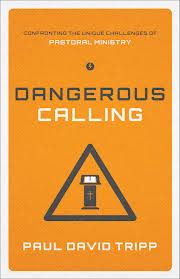
dangerousI pastor out of fear way too much. Odds are, if you’re a pastor and you’re reading this, you do too. I didn’t really grasp how much this affects my heart and ministry until a few days ago when I was listening through Paul David Tripp’s Dangerous Calling again. I’d realized in the past that, sure, I’ve got anxieties, and occasionally I’ll have a day when the weight of tasks left undone or forgotten starts to mount, but I never understood just how much fear has been in the driver’s seat. Though I’d heard about fears in ministry, in passing before, I don’t think anybody’d named it quite as clearly since I’d found myself plunged hip-deep in it over the past couple of years:

Perhaps this is a not-too-often-shared secret of pastoral ministry; that is, how much of it is driven not by faith in the truths of the gospel and in the person and work of the Lord Jesus Christ but by fear. It is very tempting for the pastor to load the welfare of the church on his shoulders, and when he does, he ends up being burdened and motivated by an endless and ever-changing catalog of “what ifs.” This never leads to a restful and joyful life of ministry but rather to a ministry debilitated by unrealistic and unmet goals, a personal sense of failure, and the dread that results.

Dangerous Calling: Confronting the Unique Challenges of Pastoral Ministry (pp. 125-126). Crossway. Kindle Edition.

This is dangerous on many levels, not only for the spiritual health of the pastor, but for the Gospel and the congregation in his hands.

Tripp points out an angle on a story I’d heard over and over again, but never really thought of as a piece of pastoral theology. Looking at Galatians 2, with Paul’s confrontation of Peter over ceasing to eat with the Gentiles because of the circumcision party that had arrived, Tripp points out that Peter’s failure is due to fear motivating his ministry, not faith. Peter’s theology wasn’t jacked. Paul knew that he knew that justification is by faith alone, not by Judaizing works. Still, out of fear of approval, or power, he was practically selling out the Gospel in his ministry.

Pastors, we can’t, absolutely can’t let this happen to us, or allow it to go on any longer than it already has. It’s absolutely normal to have some fear. Fear can actually be healthy at times in tipping us off to dangers we need to engage. That said, fear of anything but God should never control us.  In what follows, I want to briefly list and summarize the four main fears that can cripple your ministry according to Tripp, and then list his four tips for overcoming, or not letting them topple your ministry.

4 Derailing Ministry Fears – Every pastor has or will face one or all of these fears at some point in their ministry. They’re all pretty obvious, but it still helps to name them and know they’re coming.

  1. Fear of Me – Ministry exposes your junk pretty quickly. In the midst of finding out the wretchedness of pride, anger, inadequacy, weakness, and surprising wickedness of your own heart, it’s very easy to get discouraged. Looking at yourself long and hard in ministry can lead to a crippling fear of self that will side-track your ministry through discouragement. Of course, this makes the mistake that Gideon made in thinking the battle depended on the strength of his own arm, instead of that of his mighty God.
  2. Fear of Others -This classic fear is the “fear of man.” The problem with pastoring people is that it involves people; all sorts of people. Fans. Critics. Lovers. Haters. Quiet supporters. Vocal opponents. Barnabas. Demas. It’s surprisingly easy to find yourself pastoring defensively, out of a desire to silence or win over your critics, instead of a desire to please and praise God. Check your heart to see whether your closed door policy or the argument of that particular sermon was shaped by God’s wisdom or a very human fear of others.
  3. Fear of Circumstances – We are not the authors of our stories in the ultimate senses. God decrees the times and places we’re born–and a whole of difficulty afterwards. It’s very easy for the circumstances of life to unsettles us and destroy our confidence in God’s promises. Yes, God’s church won’t fail, but when the budget’s a little tight and that denominational fight’s coming up, it’s easy to let fear of present reality control our thoughts. Tripp reminds us that “Faith doesn’t deny reality. No, it is a God-focused way of considering reality.”
  4. Fear of the Future -We live in the reality of not knowing what the future holds. We are not God, we have not authored history and so what is to comes is still a vast, dark abyss to many of us and it haunts us. We live in fear of the future, struggling to believe God’s promises to be good despite the uncertainty. This can lead to sinful attempts to control, manage, and damage-control styles of ministry that do not result in fruitful congregational care. Instead, we are to entrust ourselves to the God whose will for the ages is Christ crucified and resurrected, a sure hope for the future.

4 Ways to Get Back On Track So how do we get back on track? Well, Tripp has four key steps, not silver-bullet, quick-fixes, but regular disciplines that will cut to the heart of your ministry fears, drawing you back to a ministry rooted in faith in Christ.

  1. Own Your Fears – Lying to yourself doesn’t help. Fears have greater power when they go unnamed. Instead, be honest, humbly take your fear to the One who is bigger than your fears. Let grace into the equation.
  2. Confess them and Repent – Doubling down on your sin doesn’t help, but only blinds you to the places it has its grip on your life. Confess the ways that fear has dominated your ministry, apologize those whom it has harmed and ask God to reveal the places where idolatry has led you to fear and sin.
  3. Watch your Meditation – You’re constantly preaching to yourself.  Only God knows your thoughts better than you, keep a watchful eye on the words your heart is uttering to yourself. Watch to see where fear is creeping in, where the weight of human opinion and circumstance is crowding out the weight of God’s glory.
  4. Preach the Gospel to Yourself – This is the only way to stay rooted and firm. We need to tirelessly remind ourselves the truth of the Gospel of our salvation. This Gospel is about a big God who saves us from problems beyond our reckoning–demon and death-sized problems. He can surely overwhelm what overwhelms us. This Gospel is about an acceptance that was purchased in the face of powers of hell and the weight of infinite guilt. What could ever separate us from our Lord?

It is as we remember these truths and are filled with awe of the God that we serve, that our human fears will take on their proper proportion, and we can begin to serve in faith, not fear.

Soli Deo Gloria

Vanhoozer’s 10 Theses On “Remythologizing” in Plain(er) English

remthologizingOne of the things I enjoy most about college ministry is that I’m often forced to think through whether I actually understand all the nerdy, academic theology I read. Exhibit A: Kevin Vanhoozer’s Remythologizing Theology: Divine Action, Passion, and Authorship is easily one of the top five most nerdy, theological texts I own. I’ve read it twice and constantly find myself coming back to it, even though it’s not something I’d teach a college Bible study through.

Case in point: just last week I happened to mention the text around one my college students and she immediately wanted to know what “remythologizing” was.

I mean, when someone asks you about Vanhoozer, what are you supposed to do? Ignore it?

That launched us into an hour-long discussion explaining the difference between systematic theology and biblical theology, Bultmann and demythologizing, the confluence of God, scripture, and hermeneutics that Vanhoozer calls “first theology” and so much more. (She asked very good questions.) In the middle of this crash course, I ended up talking through Vanhoozer’s “10 Theses on Remythologizing.”

Inspired by Lewis’ dictum that, if you can’t put it in common English, you probably don’t know it, I attempted to translate the theses into normal-person speak for my intelligent, but non-expert student.

Given that not many people have read this very important text yet–and it is very important text, one of the most important in the last 20 years, probably–I figured I’d attempt a command performance of the on the spot translation summary act I did for my student the other night, only in print, and maybe not as sloppy. Maybe. I’ll essentially be trying to translate Vanhoozer’s own elaborations on the theses, in plain(er), Rishmawy-language.

Ten Theses On Remythologizing
Briefly, in many ways Vanhoozer’s project is kind of a counter-point to Bultmann’s program of ‘demythologization’ that de-storifed (mythos is story) the Gospels into timeless existential truths. In contrast, Vanhoozer’s aim is to take seriously the shape and form of the story of Scripture as God’s own communication to us of Who he is, while also avoiding Feuerbach’s notion that all god-talk is simply human projections of our best attributes onto the screen of eternity. So Vanhoozer puts forward his own program of “remythologizing” that he initially summarizes in these ten theses.

One key term to know is “theodrama”, which simply smashes “theos” and “drama” together in order to speak of the divine actions in redemptive history (God doing stuff in the story of the Bible). When Vanhoozer says, “theodramatic”, it basically means “having to do with God doing and saying stuff in the Bible.”

The italicized quotations are his, and again, the rest is my attempt at translation:

1. “Remythologizing is not a “fall back into myth” but a spring forward into metaphysics.” (27) This is not about mythologizing the text, taking us back to all-too-human gods of myth, but taking seriously the mythos, the plotof the biblical storyline to see what it reveals to us about the nature of God and the world. What must the God who acts in this story be like in order to do and say the kinds of things we see in the biblical narrative. To do that, we have to pay attention to the narrative very closely.

2. “Remythologizing means recovering the “who” of biblical discourse.” (28) At its heart, remythologizing is a project focused on the main character of the drama, God, who presents himself to us in the Scriptures through Word and Spirit. What attributes and characteristics does this God show himself to have in light of what he says about himself?

3. “Remythologizing means attending to the triune “who” of communicative action.” (28) Remythologizing is necessarily trinitarian theology because the one doing the saying in the narrative is Father, Son, and Holy Spirit (or, Father, Word, & Breath). That will shape the way we understand God’s self-communication.

4. “Remythologizing conceives the God–world relation in primarily communicative rather than causal terms.” (28) Instead of more classical categories like ‘causality’, which has some more physicalist connotations, Vanhoozer wants to rethink God’s relation to the world on the analogy of communication. The God of Scripture is a speaking God who brings us the world into being through speech and saves it through his Word. That should shape the way we conceive things.

5. “Remythologizing means rethinking metaphysics, epistemology, and ethics alike in theodramatic terms.” (29)  Instead of trying to shove the story of the Gospel into some pre-made grid like modern science, history, or secular metaphysics, Vanhoozer wants us to do things the other way around. Instead, the story of the Gospel is the criterion by which we judge all else. In fact, it generates its own metaphysical categories around God’s communication made flesh, Jesus Christ.

6. “Remythologizing means faith seeking, and demonstrating, theodramatic understanding through fitting participation in the triune communicative action.” (29) Theology is not a neutral affair. To understand God’s actions in Christ truly, there is an active element. I must be trying to situate myself within the story appropriately for this work to be properly undertaken. (This was a tough one.)

7. “Remythologizing means taking Christ, together with the Spirit-breathed canon that the living Word commissions, as the chief means of God’s self-presentation and communication.” (29) “Long ago, at many times and in many ways, God spoke to our fathers by the prophets, but in these last days he has spoken to us by his Son” ( Heb. 1:1–2). Remythologizing pays attention both to the grand story of Scripture and the Incarnation at the center, as well as the various genres, modes, and methods God has used within it to communicate himself to us. In fact, the Scriptures not only report God’s communication, but are, in fact, part of the action.

8. “Remythologizing is a form of biblical reasoning, a matter of thinking about the subject matter along the various forms of biblical discourse that present it.” (29) It’s not a matter of thinking or reading the Bible, but thoughtfully paying attention to the way the Bible teaches us to think. For instance, paying attention to the particular way a metaphor is used to communicate truth as opposed to a straightforward syllogism.

9. “Remythologizing means attending to biblical polyphony and recognizing the dialogical nature of theodramatic testimony and theological truth.” (30) God isn’t a boring communicator and the subject matter is too grand to be captured in simple fashion. Vanhoozer’s project is about paying attention to all the different ways and means, as well as angles (history, eschatology, ontology) and perspectives (divine, human, powers) from which the truth is communicated in order to “do justice” to the diverse voices in Scripture. Remythologizing shouldn’t result in flat theology.

10. “In sum, remythologizing is best defined in contrast to demythologizing as a type of first theology.” (30) First theology is how your doctrine of God, Scripture, and hermeneutics all play into one another. Remythologizing is Vanhoozer’s proposal for how that all should go together in light of the triune God’s communicating activity in the theodrama of Scripture.

Of course, Vanhoozer does much more than just put forward a methodology in this work. He shows you what he means by all of this in the process of doing some real theology involving close reading of texts, addressing issues in the doctrine of God in like the Creator/creature relationship as well as God’s impassibility, developing a doctrine of the Trinity along the lines of communicative categories, and bridging the gap between Thomism and Barthianism.  Among other things.

The long and the short of it, though, is that remythologizing is a renewed program of thinking about God on the basis of what God has said and done in Jesus Christ and the Scriptures in the power of the Spirit. In many ways, it’s simply a retooling, a new articulation of a very old approach. Of course, as Pascal says, “Let no one say I have said nothing new; the arrangement of the material is new. In playing tennis both players play the same ball, but one plays it better.”

Vanhoozer plays the ball quite well in our postmodern context and theologians of all stripes would do well to learn from this master theological re-arranger.

Soli Deo Gloria