The Theologian and the “Section Man” (Or, Franny and Zooey Go to Seminary)

franny and zooeyContinuing my foray into literature, I’ve begun reading Franny and Zooey by J.D. Salinger (mostly because it’s on the shelf, Alan Noble is a Salinger fan, and I don’t feel like picking up Cormac McCarthy yet). Of course, this is a huge change of pace from Austen. It’s a different air we’re breathing–much smokier and angst-ridden. As a college pastor only a few years out of school myself, in some ways it’s all a bit too familiar. All the same, I’ve found it illuminating and enjoyable. But not in phony way.

One particular interchange early on between the young couple, Franny and Kane, got me thinking about the nature of theology; or rather, the character of the theology student. Kane is telling Franny about some critical literature paper he’s thinking of getting published. He’s obviously very proud of it, while at the same time trying to act cool, detached, and dismissive about the whole thing, and it provokes Franny’s ire. Later on in the chapter we learn that Franny’s become sick of all the “ego”, all the self-aggrandizing attached to the pursuit of a name through petty accomplishments in the world she knows. Upon seeing Kane caught up in the same sort of preening, ecocentric concerns, she responds by saying that he’s acting just like a “section man.”

When pressed on it, she explains further:

“Well, I don’t know what they are around here, but where I come from, a section man’s a person that takes over a class when the professor isn’t there or is busy having a nervous breakdown or is at the dentist or something. He’s usually a graduate student or something. Anyway, if it’s a course in Russian Literature, say, he comes in, in his little button-down-collar shirt and striped tie, and starts knocking Tur-genev for about a half hour. Then, when he’s finished, when he’s completely ruined Turgenev for you, he starts talking about Stendhal or somebody he wrote his thesis for his M.A. on. Where I go, the English Department has about ten little section men running around ruining things for people, and they’re all so brilliant they can hardly open their mouths—pardon the contradiction. I mean if you get into an argument with them, all they do is get this terribly benign expression on their—” –Franny and Zooey, pg. 14

Most of us who’ve spent time in a couple of discussion sections run by a fresh grad student can probably recognize the picture. Or even if you’ve been to seminary for that matter. Don’t get me wrong, I loved my philosophy TAs and my time in seminary, but this sort of thing can happen. It’s a particularly good picture of the way that “knowledge puffs up.”

Which brings me to the point. As I was reading this, I couldn’t help but reflect on the practice of theology and think to myself, “Theologians, we are not to be ‘section men.'”

You see, while everyone is a theologian of sorts, there are others–pastors, and theology students, usually–who become “theologians” in the technical sense. They set aside time in their lives, to study, grow, and become experts, knowledgable in their fields. They become familiar with the names, the history of theological discussion, the important categories, and so forth, that go along with that. As you might expect, in the course of things they develop opinions, convictions, passions, likes, and dislikes just as other men and women do. Expertise in any field will produce that and that’s fine.

We should be sure, though, that we do not turn in a “section men”, or “section women.” Theology students pursue these activities and specialized knowledge in order to know, love, serve and worship God, as well as to equip and prepare the church to know, love, serve, and worship God.

But this is not for our own name or prestige as an expert.

For various reasons, it’s all too tempting to enjoy being consulted as the expert in a given area. Some of us derive our justification by approval as an “expert” or a theologian rather than simply as a child of God. Others find it tempting to take pleasure in being “in the know” about these things, the inner circle of the wise, and quashing the opinions of the theologically unwashed. There is a sort of individual who loves crushing pop theology, not because of a love of truth, or because its destructive of souls, but because they love crushing things and this is the way they know how. This is not being a theologian, but rather a “section man.”

It’s not for nothing the old theologians used to say theology was impossible without prayer. Attempting to study theology without prayer is a contradictory endeavor. It’s attempting to learn and say something about the God upon whom all existence depends, all the while acting like you’ve arrived on your own steam. This can only lead to pride, self-justification, and other such folly.

Pastors, theology students, and others of the general species homo theologicus, heed that counsel. Theology is only to be studied with prayer, otherwise, you may just look up from your textbooks one of these days and see a section man staring back at you in the mirror.

Soli Deo Gloria

Jane Austen, Tim Keller, and the Happiness of Holiness

pride and prejudiceAfter many long, inexcusable years, I finally sat down to read a Jane Austen novel; Pride and Prejudice, to be exact. I suppose I had avoided them in my youth because they were the type of thing my sister–a girl, mind you–read. Also, I’d been subjected to the film Sense and Sensibility as a young boy and I’m still not sure what effect that’s had on my disposition ever since. In any case, inspired by my English acquaintances and a sense of nostalgia for literature, I picked up the copy off the shelf last week and got to work.

It was delightful, of course. Singing Austen’s praises is a bit absurd at this point; the humor, lively characters, dialogue, and so forth, was a wonderful change of pace from all the theology and biblical studies. (And ladies, I get it. That Mr. Darcy. What gallantry.)

Now, I’ve known for a while that reading literature is more than simple entertainment. Reading thick literature is a soul-expanding experience, especially with novelists possessing as keen an eye for the richly textured diversity of human experience and character as Austen. Indeed, it’s not simply that Austen was a keen observer, but she was also a moralist in the best sense of the word, whose portraits of virtue and vice not only amuse, but enlighten, shape, and form us. I remember one of the liveliest sections of Alasdair MacIntyre’s magisterial After Virtue was dedicated to examining the shape of Austen’s moral thought. I’m sadly only now in a position to begin appreciating it.

(BTW, spoiler alert on a 200-year-old novel). While there were multiple passages throughout the novel that caught my eye, one encounter between our protagonist Elizabeth Bennet and her sister Jane in particular drew my attention. It is towards the close of the novel, when the amiable, wealthy, generous, and all-around perfect match, Mr. Bingley has finally proposed to Jane and their happiness is secured. Jane and Elizabeth are rejoicing at her good fortune and we find this little nugget of moral wisdom:

Jane: “Oh Lizzy, why am I this singled from my family, and blessed above them all! If I could but see you as happy! I there were such another man for you!”

Elizabeth: “If you were to give me forty such men, I never could be so happy as you. Till I have your disposition, your goodness, I never can have your happiness.”  pg. 331

Elizabeth’s response to Jane ought to be memorized by our particularly discontented and unhappy age. Jane looked at her sister in the rapture of her own delight in her impending marriage to such a good man and wished that Elizabeth might too share in that same kind of joy. For Jane, the cause of her joy and happiness was Bingley and she supposed that if Elizabeth could also have a Bingley, she would be just as happy.

Elizabeth knows better, though. While not writing off the truth that Bingley is a good man and that the situation that goes along with him is a favorable one, she knows that the another significant difference in separates the two young women: their “goodness” and “dispositions.” In other words, their characters. All throughout the novel we are keenly aware that Jane is far more humble, less critical, a bit too trusting, but much more easily contented, and, in a word, more virtuous than Elizabeth. (Though I’m sure some Austen fan could correct me here.) The point is that Elizabeth knows happiness is not only an issue of having favorable external circumstances, or even the possession of a great good, but one of having the right character.

You see, it would not matter if even the most advantageous situation were cooked up, a woman with the wrong character would be unable to enjoy a good husband. The woman lacking in wisdom would be unable to recognize the good man for who he is. The woman lacking humility would suppose the good man is deserved and so would be unable to receive him with the delight of a gift or with gratitude; also, should there be some understandable, human defect, she would be tempted to take it as a greater affront and be less likely to forgive, be contented, or patient. I could go on listing any number of virtues and vices and you’ll the problem. It doesn’t matter how good the situation is, if the virtue is missing, there can be no long-term joy, only short-term pleasures. Of course, this applies equally to men.

I’m reminded of a section in Tim and Kathy Keller’s The Meaning of Marriage where they speak of the happiness of holiness. Many think that marriage is about making you happy, being pleased by and pleasing your spouse. The Kellers show disastrous fruit of pursuing that impossible approach at length. Instead, Paul teaches us that the end-goal of marriage is the holiness of your spouse. Marriage is about sanctification and one day seeing your husband and wife looking radiant, with the beauty of Christlike character. In that setting, the struggles, the pains, trials, as well as the pleasures, joys, and celebrations can take their place as part of a grander whole.

Now, at this point some may get the impression that marriage isn’t about happiness at all. But that would be a mistake. In fact, what we’ve seen with Austen is that happiness and goodness, or happiness and holiness go hand in hand. The Kellers write:

Does this mean “marriage is not about being happy; it’s about being holy”? Yes and no. As we have seen, that is too stark a contrast. If you understand what holiness is, you come to see that real happiness is on the far side of holiness, not the near side. Holiness gives us new desires and brings old desires into line with one another. So if we want to be happy in marriage, we will accept that marriage is designed to make us holy.

-Timothy and Kathy Keller. The Meaning of Marriage: Facing the Complexities of Commitment with the Wisdom of God (pp. 124-125).

While being so much more than this, Austen’s novel, in many ways, is parable about that suitability of character in marriage, and the happiness that attends holiness. I’d commend you, then, to pick it up, make yourself some tea, plop yourself down into a couch, and prepare to be entertained and maybe even edified at the same time.

Soli Deo Gloria

Luke Skywalker Never Shot A Blaster Rifle (Or, a Couple Options in Progressive Revelation)

lukeblasterI’ve been thinking of the issue of progressive revelation a bit lately. It keeps coming up the rather feisty discussions around the nature of Scripture, the character of God, and what we do with the Old Testament. Often-times people on both sides of the growing split (and those somewhere in the middle) will appeal to the concept, agree that it’s important for Christians to acknowledge, and yet there remain significant, troubling differences between the conversation partners as to the way this idea ought to be employed in developing our thoughts about God. Actually, it seems that in the current discussions, there is not merely a debate about the application of the concept, but rather there seem to be two entirely different kinds of progressive revelation on offer. Bear with me as I think out loud here.

1. Consistent/Adjunctive. The first concept of progressive revelation I take to be the more traditional of the two. In this case, the progress of revelation means a real growth in the knowledge of God from the beginning of the narrative in Genesis to the end of the narrative in Revelation. At the same time, it is continuous, self-consistent knowledge of God that unfolds and expands as the story progresses. While in the First Testament, we learn that God is by nature one, the New Testament revelation of the Incarnation and the Trinity does not change that, though it significantly alters our understanding of what the confession of God’s oneness means.

In other words, we don’t go from monotheists to tritheists–we go from monotheists to Trinitarian monotheists. It is not the YHWH was lying when he said that he alone was God and that his glory he would give to no other. Instead, it turns out that the Son who took on flesh in Jesus Christ was always to be identified with YHWH. YHWH remains the same today, yesterday, and forever, and all that was said of him in the First Testament is true, but now it there is a deeper layer and dimension to that truth. In a sense, it is by addition, but it’s even more than that. To steal an image from Lewis, it’s less like simply going from a square to a bigger square, but understanding that the square is a cube.

2. Contradictory/Disjunctive.  This one we might call the “evolutionary” view in that it often coincides with an evolutionary understanding of religion inherited from the older history-of-religions approach popular in European scholarship of the last couple centuries. This kind of progressive revelation isn’t progression by way of natural narrative development, or by way of simple addition. Instead, it’s more about moving from higher to lower understanding, not simply less clear to more clear. Older, more primitive religious conceptions such as the worship of multiple gods (polytheism) gives way to the worship of a chief god (henotheism), and eventually to belief in one Creator God (monotheism).*  It includes the possibility not only of expansion in our knowledge of something, but the contradiction of it. For that reason, we may also term this a “disjunctive” kind of progressive revelation.

The most popular example I’ve been seeing lately is about God’s activity in history. The classic extreme version of this is the Marcionite rejection of the Old Testament God as the revelation of a vicious, deficient, Demiurge who is superseded by the revelation of the loving Father of Jesus Christ who wants to save us from our miserable creation. The more recent model, though, is not that extreme. Instead, many suggest that our knowledge of God progresses by learning that while the Ancient Hebrews had some real encounter and true revelation of the Creating and Redeeming God, the revelation of Jesus Christ in the New Testament reveals that there was much falsehood and error mixed in, given their limited vantage point and backwards cultural presuppositions. The advent of Jesus then, “clarifies”, not only by sharpening edges still fuzzy in the OT, or adding a depth dimension, but by also by straightforward negation.  In many ways, God is actually not what Hebrew Scriptures have proclaimed, but only what Jesus in his incarnation reveals him to be. Of this sort of “christocentrism”, we have spoken before.

Revealing Luke Skywalker

Let me clarify illustrate the differences between the two types of progressive revelation by using Star Wars, because Star Wars.

In the first type, we find an analogy in the revelation in The Empire Strikes Back that Darth Vader has actually been Luke Skywalker’s father the whole time. This is the kind of narrative revelation that is mostly consistent and adjunctive. This is a new fact about Luke that is a shock to the viewer, but it is primarily one that fills out his character, even while it does not contradict what we’ve come to see about Luke’s activities, characteristics, and so forth–at least insofar as we haven’t made our entire of Luke dependent on his not-being-Darth Vader’s son. Yes, our understanding is changed of him and that even changes the way we watch the first movie again. We reinterpret Obi-wan’s words, hearing resonances and layers we didn’t see before. But again, this is essentially a filling out of his character that forwards the narrative in ways that do no violence to what has come before.

Now, imagine a different kind of progression in the story. Imagine that in coming to Return of the Jedi, upon viewing Luke Skywalker’s near-exclusive use of light-saber, we are given to now understand that in the first couple of movies, Luke actually never used a blaster rifle, it being inconsistent with his Jedi ways; it was merely the way Leia and Han understood him at the time. On this scenario, yes, Luke is a character throughout the whole story, and yes, there are some strong continuities, but the narrative unity of the storyline is severely disrupted, rendering its coherence seriously suspect and the author rather confused.

None of the above is yet a straightforward argument one way or another, but more of an exercise in clarification. Of course, I do think that proposals which make greater sense of the unity of the narrative are inherently preferable for a number of reasons. First, they give us a greater sense that the ultimate Author of Scripture is the God of Scripture, and not simply a second-trilogy Lucas sans the special effects. This strengthens our ability to affirm a unity of revelation, and therefore the unity of covenant, or the good, saving purposes of the God of both Testaments.**

Still, clarifying our options can be a helpful exercise for further conversation and study on this point and any excuse for a Star Wars analogy in theology, right?

Soli Deo Gloria

*It should be noted that much of this European scholarship was heavily influenced by Enlightenment presuppositions of a colonialist, imperialistic, and Anti-Semitic sort.

**This also makes more difficult the inadvertent Anti-Semitism of the most history-of-religions approach to progressive revelation.

5 Best Reformedish Books of 2014

The year of our Lord 2014 has been a great year of reading for me. I can only think of a couple of duds in the pile of books I’ve had the fortune of getting my hands on and cruising through. This means one thing: picking this year’s Top Reformedish books of 2014 was a difficult task. There were a great number that I thought of and considered for this. As it happened, though, there were a few standouts I would like to highlight and commend to you for your reading pleasure and edification.

A couple of notes before I proceed, though.

First, I am not including Herman Bavinck’s Reformed Dogmatics here simply because I have an article coming out on it later this month, and because it sits in a category all by itself. It is not a book of 2014. It is a work that transcends the years and decades.

Second, it just so happens that all of the books I’m highlighting I have actually already reviewed. Where relevant, I will simply note, excerpt, and forgo any more summary.

Finally, this list is not in any particular order. I am a notoriously bad ranker and decision-maker. Just ask my wife.

faith speaking understanding1. Faith Speaking Understanding by Kevin Vanhoozer. I’ve reviewed Vanhoozer’s book at The Gospel Coalition. This is some of what I said:

Let me put it this way: if Drama of Doctrine and Remythologizing Theology had a child, it would be Faith Speaking Understanding. Though intended as a briefer, less intimidating introduction to and practical application of his theodramatic theology for pastors and serious students, it isn’t a mere rehash of the last two works. As Vanhoozer explains, Faith Speaking Understanding is “an upstart sibling with a swagger of its own, namely a full-fledged proposal for the role of theology in the church’s task of making disciples” (xv).

Swagger it may have, but it’s swagger mediated through Vanhoozer’s inimitable style, irenic tone, and jovial spirit. Vanhoozer’s prose is a joy to read—a seamless movement between biblical and theological reflection (as evidenced by the extensive and helpful indexes of Scripture and theology) that is robustly catholic and winsomely evangelical.

calvin2. Calvin on the Christian Life by Michael Horton. I also reviewed this for The Gospel Coalition. Here’s what I said there:

In the history of the church, particularly its Western Protestant wing, few theological lights shine brighter than John Calvin’s. The Reformer par excellence, he stands out for his theological acumen, systematic comprehensiveness, and care as a biblical exegete. Beyond Calvin the theologian and biblical scholar, though, there was Calvin the pastor—the man passionately concerned that all of human life be lived before God (coram Deo) and in light of the gospel. Though it’s often presented this way in history textbooks, the Reformation wasn’t simply an academic theological debate about justification and the thoughts we think on a Sunday morning, but rather a total restructuring of Christian life and practice. It was about, as James K.A. Smith puts it, the “sanctification of ordinary life.” For that reason Calvin was concerned not only with teaching doctrine, but also with the life of piety flowing from that doctrine.

This is the Calvin that theologian and Westminster Seminary (California) professor Michael Horton introduces us to in his new volume on Calvin and the Christian Life. With an engaging blend of biography, theology, and commentary, and with copious reference to Calvin’s Institutes, commentaries, tracts, and key secondary literature, Horton takes us on a whirlwind tour through the Reformer’s thought as a whole.

age of atheists3. The Age of Atheists by Peter Watson. There’s a bit of a theme here in that I also reviewed this for The Gospel Coalition. Here’s what I said there:

In The Age of Atheists: How We Have Sought to Live Since the Death of God Peter Watson hopes to change the narrative by pushing back on Taylor’s impoverishment thesis. In this massive and thoroughly entrancing work of intellectual and cultural history, the prolific London-based author aims to recount hitherto-untold drama of the multifarious and rather “thick” ways we’ve tried to “live without God” ever since we discovered his death about 120 years ago.

Beginning with Nietzsche himself, Watson focuses on the lives, stories, and theories of those who haven’t merely lamented the loss of God but pushed through to find meaning—or rather “meanings”—of a more humble sort on the other side. Jumping from Europe to America to the Isles, Watson presents us with a cascading torrent of names (the back cover alone is plastered with them)—whether poet, philosopher, novelist, dancer, psychiatrist, or theologian—all of whom offered visions of life beyond traditional religious belief. The overall effect is to overwhelm you with the wealth of non-theistic options to meaning and fulfillment. To put it bluntly, Watson wants to show us we have more options than glum Dawkinsism or Jesus.

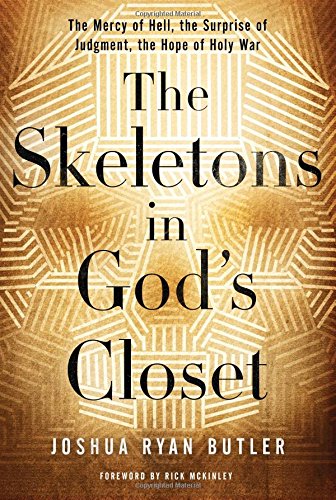
skeletons4. The Skeletons in God’s Closet by Joshua Ryan Butler.  And again, this is one I reviewed at The Gospel Coalition. Here’s some of what I said there:

The Skeletons in God’s Closet has the potential to be a game-changer for a lot of struggling Christians and skeptics. Thoroughly orthodox, Butler also speaks in a language and with the sensibility of someone who can still step out of his Christian shoes to hear, think, and feel the tension from the outside. In a lot of ways, it’s the book Love Wins tried to be but failed due to doctrinal drift. Instead, by helping readers walk through the difficult texts in Scripture, Butler sets out for them a broader vision for the beautiful character of a God who doesn’t give a doctrinal inch. Is it perfect? No. Would I have hit a couple of themes harder, or connected a couple of dots differently? Probably.

Still, Butler has done the church a magnificent service by showing a postmodern world that doctrines like hell and holy war aren’t about a God whose malevolence has to be restrained. Instead, The Skeletons in God’s Closet shows us a God who is good down to his bones, and utterly committed to loving and saving his world in Christ.

crucified king5. Tie: The Crucified King by Jeremy Treat and Atonement, Law, and Justice by Adonis Vidu.  I did not review these two at The Gospel Coalition. Still, I have already talked briefly about these two works here:

On The Crucified King:

In one sense, I found it to be a gravely disappointing book. It’s disappointing because Treat has written the book I wanted to write on the subject. Giving equal attention to biblical theology and systematic categories, Treat reunites what never should have been divorced in much modern theology: kingdom and cross as well as Christus Victor and penal substitution accounts of the atonement.

viduOn Atonement, Law and Justice:

Vidu aims to provide an account of the history of atonement theology down into the present that presents theologians against the background of the various legal and political theories dominant at the time. In this way, we can begin to appreciate better the way these theological concepts shaped and were shaped by their native settings. Five judicious, careful, and lucid chapters are devoted to the descriptive task, focusing on Patristic, Medieval, Reformation, modern, and contemporary periods…What’s more, along the way, he corrects a number of common misunderstandings and caricatures of historic positions.

If I went on to cite runners-up and honorable mentions, we’d be here for a while. It’s been a good year for books. I hope this list finds you in time for you to update your Amazon.com wishlist for last-minute purchases. If not, it ought to give you an idea of how to use your spare gift cash.

Soli Deo Gloria

Jesus, the Greater Daniel

daniel-in-the-lions-den-briton-riviereI’m a sucker for biblical typology. I’m not an expert at it, but seeing the way every story, trope, theme, or event either directly, or as part of a broader whole, points to Jesus Christ as the center of Scripture is one of my greatest joys in reading biblical theology. This is why, despite the many merits of James Hamilton’s book-length study on the biblical theology of Daniel With the Clouds of Heaven, this little chunk might be my favorite:

Daniel, who was righteous, was accused by those jealous of him on a trumped-up charge (Dan. 6:4-13). The king recognized the injustice of Daniel’s condemnation and sought to deliver him (6:14). Nevertheless, Daniel was condemned, given over to certain death; then placed in a pit with a stone laid on the opening and sealed by the king (6:15-17). At daybreak those who lamented the way Daniel was treated came and found that his God had delivered him (6:19-23).

Jesus was also declar4ed innocent (Matt. 27:24; cf. Luke 23:4, 14-15, 22, 41) but accused by those jealous of him (Matt. 27:18) on trumped-up charges (26:59-61; 27:15-19). Pilate recognized the injustice and sought to release Jesus (27:15-19). Nevertheless, Jesus was condemned to death (27:26), and after they crucified him he was put in a new tomb, with a stone rolled over the entrance (27:60), which was later sealed (27:66). At daybreak on the first day of the week those who lamented the way Jesus was treated came and found that God had raised him from the dead (28:1-10).

These points of historical correspondence, and the obvious escalation from Daniel to Jesus, constitute grounds for considering Daniel as a type of Christ.

With the Clouds of Heaven: The Book of Daniel in Biblical Theology, pg. 191

This is the sort of passage that enables to see the deeper dimensions of Scriptural fulfillment when Paul says that  “Christ died for our sins in accordance with the Scriptures, that he was buried, that he was raised on the third day in accordance with the Scriptures,” (1 Corinthians 15:3-4). Christ dies and rises again, not only in fulfillment of specific prophecies, but as the culmination of every thread and storyline of Scripture.

Jesus truly is the greater Daniel. He was thrown into the pit, not only because of his great faithfulness to God, but for the salvation of his people from the lions of sin, death, and hell. He not only risked death, but was consumed by and still emerged victorious.

Soli Deo Gloria

The Skeletons in God’s Closet (TGC Book Review)

skeletonsJoshua Ryan Butler. The Skeletons in God’s Closet: The Mercy of Hell, the Surprise of Judgment, and the Holy of Holy War. Nashville, TN: Thomas Nelson, 2014. 384 pp. $15.99.

Hell. Judgment. Holy war.

For many critics and struggling Christians, these aspects of biblical teaching represent all that is darkest about religion. They give rise to the questions that haunt them at night and linger in the back of their prayers, causing them to doubt they can pray to a merciful God. They are the secret skeletons in God’s closet that have to be denied, or at least hidden away, if we are still to believe him at all. A loving God cannot condemn people to eternal torment, or exclusively judge those in other religions, or send one nation to invade and conquer another. Many of us simply sense in our gut that either God is not like this or God is not real.

In The Skeletons in God’s Closet: The Mercy of Hell, the Surprise of Judgment, and the Hope of Holy War, Joshua Ryan Butler argues the provocative thesis that these are teachings not skeletons in God’s closet—indeed, they are evidence that he is goodness all the way down to his bones. The pastor of global outreach at Imago Dei Church in Portland, Oregon, Butler writes as one who came to faith in Christ and found hope but was then faced with the shock of a Bible that didn’t fit his initial ideas of love, goodness, and justice. But in the course of looking at the bigger story of Scripture, wrestling with theology, working against global oppression, serving on missions to rescue girls stuck in sex trafficking, and spending time in Native American reservations, he began to find in doctrines like divine judgment both hope and healing for creation’s brokenness and human evil.

Taking these biblical, theological, and practical dimensions and using persuasive, clear, and even poetic arguments, Butler weaves them into one seamless tapestry. His ability to exposit Scripture in light of scholarship and everyday personal and political realities—and to do so with theological depth—allows him to cut through so many damaging and damnable caricatures that hold people back from trusting in the fundamental goodness of God.

So what exactly does Butler say about hell, judgment, and holy war?

You can read the rest of my review at The Gospel Coalition. And really, go buy the book. It’s that good and that important.

Soli Deo Gloria

Do Not Forget, Above All Else, It is the *Lord’s* Supper

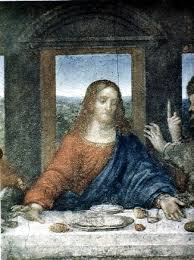
Christ at the SupperThough almost every doctrine in Christianity has been hotly disputed at some point, the debates concerning the Lord’s Supper, or Communion have been among the most heated. Despite the fact that, at its core, it is about the unity of Christians, it is the issue that kept the Lutherans and the Reformed from coming together in the midst of the Reformation. In the disputes over differing theologies of the Supper can be seen some of the central disputes between Catholics and Protestants; what is the nature of grace and its mediation?; what authority does the Church have in distributing it?; how ought we consider those aspects of Jesus’ work that are final and which are continuing? On and on the questions can go.

And for those tempted to write them off as needless nitpicking, I’d say they’re rightly important debates for they cut to the heart of the gospel. We may rightly lament them, and yet acknowledge they are necessary nonetheless.

For those of us concerned with parsing these issues, studying, arguing, and eventually administering the Supper, Herman Bavinck has an important word of caution that cannot be lost sight of, no matter where we eventually come down on the issue: do not forget that it is a meal of the Lord’s:

But it is a meal of the Lord (δειπνον κυριακον, deipnon kyriakon). Jesus was the inaugurator of it and in this regard also fulfilled his Father’s will, which it was his food to do [John 4:34]. The Lord’s Supper, like baptism, is and has to be of divine origin to be a sacrament, for God alone is the distributor of grace, and he alone can bind its distribution to the means ordained by him. Jesus specifically instituted this Supper in his capacity as mediator. In it he acts as prophet, who proclaims and interprets his death; in it he acts as priest, who gave himself up to the cross on behalf of his own; in it he also acts as king, who freely makes available the grace secured and gives it to his disciples to enjoy under the signs of bread and wine. Besides being the inaugurator of the Supper, he is also its host and administrator. He himself takes the bread and wine, blesses them, and distributes them to his disciples. Nor was he only host and administrator when he physically sat at table with his disciples, but he also is and remains the host and administrator of it always and wherever his meal is celebrated. Every Supper, administered according to his institution, is a Supper of the Lord (δειπνον κυριακον). For Christ is not only its inaugurator as an example but also its inaugurator by precept. It is a meal in remembrance of him (1 Cor. 11:24), to proclaim his death (11:26), as a participation in his body and blood (10:16, 21; 11:27). In the Lord’s Supper Christ comes together with his church, and the church comes together with Christ, thereby testifying to their spiritual communion (cf. Rev. 3:20).

Reformed Dogmatics Volume 4: Holy Spirit, Church, and New Creation, pg. 562

Yes, we are the ones fed. Yes, ours are the human hands that parcel out the bread and pass the wine. Yes, ours are the mouths the chew, and the souls that are nourished. But Christ is the great Lord of the Banquet. He is the prophet, priest, and king. He is the Son providing a feast for his younger brothers at the behest of his Father through the mediation of the Spirit.

At the center of the Lord’s Supper is the Lord Himself.

Let us not miss his invitation to the table.

Soli Deo Gloria

“I Don’t Deserve to Read the Bible…”: Three Attitudes for Christian Preachers and Scholars

with the cloudsJames Hamilton opens the preface to his new book on the theology of Daniel in this surprising and refreshing way:

I don’t deserve to read the Bible, much less write about it. What a privilege to have God reveal himself to us in his word. What a great God, keeping covenant and steadfast love, forgiving iniquity transgression and sin, and everywhere manifesting his power and love. The voice of the Lord breaks the cedars, and yet he also speaks so tenderly that the bruised reed doesn’t break. I join the ranks of the heavenly hosts, the saints across space and time, and everything in this cosmic temple to ascribe to the Lord the glory due his name. Would that I could do so in a way worthy of him. I thank God the Father through Christ the Son by the power of the Spirit for his merciful salvation, full and complete revelation, and gracious provision.

With the Clouds of Heaven: The Book of Daniel in Biblical Theology, pg. 15

Every Sunday when my pastor finishes reading the text of Scripture he’s going to preach from he says, “This is the Word of the Lord”, and the congregation responds “Thanks be to God.” There’s a beautiful reminder of the nature of God’s revelation as a gift to us. God didn’t have to say anything. He doesn’t owe us any truth beyond what we’ve already heard and suppressed in our ungodliness (Rom. 1), and yet in Scriptures, he gives us his sure word of promise for us to cling to, rely on, by comforted with, and use as a means of communion with Him.  This is surely a cause for rejoicing.

I know this in general, but when I read these words, I had to stop ask myself, “How many times have I thought  ‘I don’t deserve to read the words on these pages’?” How many times have you? It might have occurred to me once or twice, but there’s something bracing and beautiful about reading it put so bluntly. Even more so, it struck me that these words were penned by a biblical scholar who has written hundreds, thousands of pages, even, about the Scriptures. And here he is opening up his (very careful) work of biblical theology with the admission that he is unfit to the task.

This got me thinking about how I approach the Scriptures, especially as one trained to do so for the ministry of the Church. All of this has been said before, of course, much better, wiser, and likely clearer than I will. Still, in Hamilton’s little intro paragraph, I see him modelling three qualities any scholar or preacher of the text ought to aspire to in their study and instruction of God’s Word.

1. Humility.  The first, obviously, is humility. There is no doubt that Hamilton is deeply humbled before the text in front of him. As a word from God, the text has priority and authority in the relationship, as it is a mediation and form of God’s own personal address. I listen attentively to the Scriptures because I want to listen attentively to God’s voice in them. Now one of the corollaries of this reality is that I don’t assume a relation of dominance to the text. The Scriptures are not there for me to pick up and use for my own ends and devices; God has his own purposes to accomplish through his word and so I endeavor to bend my study to his agenda, not the other way around. Also, and I’ve written about this before, I am not the judge before which Scripture is proved true or false. Scripture is true and I am judged true or false in light of it. An attitude of humility before the text will not squelch intellectual struggle and striving, but, in fact, it will drive me further into intellectual striving so that I might be able to understand God’s truth as fully as he allows given then means I have available to me.

2. Piety – The second attitude is piety, by which I mean the recognition of the fact that the Bible is not just some text to be studied like any other. Yes, we use all the means available to us including philological, literary, historical, and philosophical exegesis when attempting to understand God’s word, but we do that in order to understand it as a personal, spiritual, transformative word. Kierkegaard has compared it to a lover receiving a letter from a loved one in a foreign tongue. The work is not over once the linguistics are done and words are translated on the page. To truly hear it, we must then accept it as a word from the great Lover and Author of our salvation. Scholarship is great, but grasping the meaning of the text through these means is ultimately only a means to being grasped by God himself through the text.

3. Gratitude – Finally, there is a clear sense of gratitude. As we already noted, revelation is a free act of condescension. God didn’t have to give us more of the truth we had already rejected.  This is why approaching the text with anything less than a profound sense gratitude to God constitutes a failure to recognize its connection to the free gift of the gospel. Union with Christ comes through faith, and faith comes by hearing the word of the Lord now given to us chiefly in Scripture. The Scriptures, then, are not just a record of God’s saving acts, but are themselves a key means by which the Father accomplishes his work through the Son and the Spirit.

As always, more can be said, but this will do for now. May we aspired to read the Scriptures with a heart that says, “I don’t deserve to read this book, but by the grace of my Father in Christ, I can.”

Soli Deo Gloria

The ‘Technical Stuff’ Matters in Preaching (Or, Theology is Unavoidable)

Matthew Levering makes a point I’ve seen confirmed time and again in my own preaching and teaching with college students and young adults:

Most Christians contemplate God liturgically and through personal prayer and study, rather than also by developing the intellectual habits proper to speculative theology. Nonetheless, attempts to speak about God (not merely to fellow theologians, but also and perhaps especially to persons in the pews) require some understanding of “technical” issues. Anyone who has ever heard a sermon on the Trinity – Catholics will attest to the painfully awkward experience that is “Trinity Sunday” – will admit that talk about the three Persons quickly becomes horribly thin unless the preacher has some metaphysical understanding (without denying the unfathomable mystery) of how the Persons are perfectly one and yet distinct. Simply put, no one in the pews wishes to hear about three gods. There is an expectation, rooted in Christian faith and the practices of faith, that the mystery must possess some intelligibility, that scriptural and metaphysical modes of reflection cannot ultimately be opposed. There must be some way of distinguishing the three Persons from the multiple gods of polytheism, beyond simply asserting that this is “not polytheism” and that the three are “one God,” whatever that might mean.

–Matthew Levering, Scripture and Metaphysics: Aquinas and the Renewal of Trinitarian Theology, pg. 6

Bold Theologian.

Bold Theologian.

Just the other night in Bible study with a group of young adults, working our way through Gospel of John, we had to stop and begin to parse doctrine of the Trinity in some detail. This wasn’t my own theological orientation jumping at the opportunity to explain eternal generation. We were forced by the logic of Jesus’ own words to attend to the trinitarian grammar of what Jesus was explaining to his disciples. Without a proper doctrine of the Trinity, or a working Christology, I don’t believe you can make it through half of Jesus’ encounters with the Pharisees, or dialogues with the disciples in that Gospel.

I mean, think about it. You can’t even make it past the most bottom-of-the-barrel proclamation represented by that guy holding up the poster of John 3:16 at the football game without encountering “the technical stuff”:

“For God so loved the world, that he gave his only Son, that whoever believes in him should not perish but have eternal life.”

Well, okay. But what does it mean that God “gave his only Son”? God has kids? How? Where is His Wife? Why does Mrs. God get no headlines?

You see where this goes?

All that to say, at some point, for everyone, the “technical details” matter. It doesn’t matter that all you want to do, young pastor, is “preach the gospel” or “just love people.” If any of that involves more than the most shallow truisms and generalities, you’re going to have to do some theological digging. What’s more, for those who think you had all that handled in seminary, aside from the fact that there’s no way you covered all that questions you’re going to face in ministry, or that arise when worshipping an infinite God, just realize that while our basic theology may stay the same, the popular landscape is always shifting. More study is always required.

So roll up your sleeves and get to reading. We’ve got some work to do.

Soli Deo Gloria

The Miracle of Christmas, or On the Incarnation (Advent Readings)

nativityChristmas is coming. Advent is upon us. In the rush and bluster of the season, it’s all too easy to still our hearts, to stop, wait, and prepare ourselves to receive the Savior in the manger. A few years ago I noticed my heart somewhat dry around this time and so I took up the project of listening to Christmas hymns and carols. While that can connect many of us to the spiritual reality we are celebrating, reading key texts on the theological reality we are approaching: the Incarnation of the Son of God in human flesh, the Creator humbling assuming creation in order to redeem us from the condition of alienation, oppression, and damnation.

For those looking to dive into some soul-stirring meditations on the miracle of Christmas, I would recommend two works: Athanasius and Karl Barth.

On the Incarnation

Athanasius wrote his classic treatise, “On the Incarnation of the Word” as a follow-up to his apologetic work, “Against the Heathen.” Building upon his critique of the various pagan philosophies of the time, Athanasius undertook to explain and defend the heart of the Christian gospel, the Son’s assumption of human nature in order to redeem his fallen creation. In 9 very brief chapters, he lays out the logic of creation, the dilemma of sin, the accomplishment of the cross, the Resurrection, and answers various objections from all directions (Jews, Pagans, etc.). It remains a standard work of orthodoxy Christology and Trinitarian faith. What’s more, it’s rigorous as well as beautiful.

You can purchase it, or read it for free online here. For those put off by the idea of reading an old book, either because of its difficulty, or irrelevance, I’ll merely quote from C.S. Lewis’ introduction to the work upon its republication:

When I first opened his De Incarnatione I soon discovered by a very simple test that I was reading a masterpiece. I knew very little Christian Greek except that of the New Testament and I had expected difficulties. To my astonishment I found it almost as easy as Xenophon; and only a master mind could, in the fourth century, have written so deeply on such a subject with such classical simplicity. Every page I read confirmed this impression. His approach to the Miracles is badly needed today, for it is the final answer to those who object to them as “arbitrary and meaningless violations of the laws of Nature.” They are here shown to be rather the re-telling in capital letters of the same message which Nature writes in her crabbed cursive hand; the very operations one would expect of Him who was so full of life that when He wished to die He had to “borrow death from others.” The whole book, indeed, is a picture of the Tree of Life—a sappy and golden book, full of buoyancy and confidence.

As any reader of Athanasius will tell you, this little book is worth libraries of modern volumes.

The Miracle of Christmas

That said, sometimes the moderns have something to say. Karl Barth is one of them. Now, while I can’t endorse everything in this following recommendation, for the theological student, Barth’s reflection in the Church Dogmatics (vol. 1 part 2, The Doctrine of the Word of God, 172-202), is essential reading. The whole section is typical Barth: long, winding, extensive delving into the tradition, the narratives, and ultimately into the Christological heart of the event. No summary will do it justice, but this little quote in which he speaks of the Virgin Birth forming the corresponding limit to that of the Resurrection ought to whet your appetite:

The virgin birth denotes particularly the mystery of revelation. it denotes the fact that God stands at the start where real revelation takes place–God and not the arbitrary cleverness, capability, or piety of man. In Jesus Christ God comes forth out of the profound hiddenness of His divinity in order to act as God among us and upon us. That is revealed and made visible to us in the sign of the resurrection of the dead, but it is grounded  upno the fact signified by the Virgin Birth, that here is this Jesus God Himself has really come down and concealed Himself in humanity. It is because He was veiled here that He could and had to unveil Himself as He did at Easter. The empty tomb, on the other hand, denotes particular the revelation of the mystery. It denotes that it is not for nothing that God stands at the beginning, but that it is as such that He become active and knowable. He has no need of human pwoer and is free from all human caprice. Therefore even the ultimate extremities of human existence, as He submits too them and abandons Himself to death, offer no hindrance to His being and work. That God Himself in His complete majesty was one with us, as the Virgin birth indicates, is verified in what the empty tomb indicates, that here in this Jesus the living God has spoken to us men in accents we cannot fail to hear. Because He has unveiled Himself here as the One Heis, we may and must say what the Christmas message says, that unto you is born this day the Saviour. The mystery at the beginning is the basis of the mystery at the end; and by that mystery of the end the mystery of the beginning becomes active and knowable.  — CD 1/2, pp 182-183

That’s just a paragraph, but in that short excerpt, you see the way Barth masterfully develops the miracle of the Virgin birth in light of the doctrine of revelation and Resurrection of Christ. This is just one small part of the way Barth shows that the proclamation of Christ, born of a Virgin, is actually integral to understanding the mystery of the Gospel and Christ himself. Obviously, this chapter is probably not for everyone, but again, theological students and pastors only ignore it at the risk of their own spiritual and theological impoverishment. If you don’t own the Dogmatics, which is very possible, get to a seminary or theological library nearby, photocopy the section, and take it with you. The section stands alone quite nicely.

Well, those are my two recommendations for reading during the season. I hope they offer you some encouragement. If you all have any suggestions, feel free to leave them in the comments.

Soli Deo Gloria