Two Ways of Saying All Religions Are The Same

girardOne of the biggest modernist critiques of religion in general, and Christianity especially, is that despite the claims these religions make for themselves, there’s nothing particularly unique about them. They all have basically the same structure–indeed, most have borrowed them from each other–and all play the same role in basically the same way. And if they’re all the same, why pay attention to just one of them like Christianity? All the mythologies of divine sons, corn-kings, and so forth, are just superstitious attempts to understand the world. There’s nothing exclusively true about the gospel, so just pick something that works and quit going on about it. If we can find a different, “rational” system that plays the same function (eases guilt, explains the cosmos, etc.), then so much the better.
So, the move for the critics, the early modern anthropologists, and scholars of religion with an eye towards unseating Christianity’s intellectual or cultural dominance, was to find as many similarities between all the religions and myths as possible. The move was to pile up as many similarities so that they all blend into a hazy sea of myth. Even to the point of denying, explaining away, or misreading the actual differences that were there staring them in the face.

Nowadays, French anthropologist and literary theorist Rene Girard says that with the onset of the postmodern (so, like, the last 30 years), the tack is much different:

Unlike the old modern critics, postmodern opponents of Christianity don’t try to demonstrate that the Gospels and myths are similar, identical, or interchangeable. Differences don’t trouble them, and in fact they pile up differences with ease. It is rather the resemblances they suppress.

Instead of flattening stories in order to make them all sound the same, postmodern critics approach sameness precisely by playing up the differences between religious stories. How does that work?

If there are only differences between the religions, they make up just one big undifferentiated conglomerate. We can no more say that are true and false than we could say a story by Flaubert or by Maupassant is true or false. To regard one of these works of fiction as more true or false than the other would be absurd.

In other words, the fact that all of these religions are so different points up their falsity rather than their potential truth. Of course works of fiction would be different. They are united under the category of “false” or “equally true”, precisely by their differences. Girard continues to flesh out the appeal of this “doctrine of insignificant differences.”

This doctrine of insignificant differences has seduced the contemporary world. Differences are the object of a veneration more apparent than real. Those who discuss religions give the impression of taking them very seriously, but in reality they don’t attach the least importance to them. They view religions, all the religions, as completely mythical, but each in its own fashion. They praise them all in the same spirit we all praise kindergartners’ “paintings,” which are all masterpieces. The upshot of this attitude is that we are all free to buy what pleases us in the marketplace of religions, or better still to abstain from buying anything. —I See Satan Fall Like Lightning, pg. 103

This actually reminds me in a section from the Tim Keller’s The Reason for God in which he deals with various objections to the unique truth of religion. He points out that 20 years ago, most objected that all the religions were equally true. Now, most will point out how uniquely, culturally-conditioned each of them is, in which case they must all be false. Of course, there are a number of problems with this sort of relativism that assumes a very Western, pluralist mindset that forgets its own particular, culturally-conditioned, social location. Still, these two kinds of criticisms point up an interesting theological truth about religion, human nature, and the apologetic task: there are moments when it is appropriate to appeal to both the uniqueness as well as the similarity between Christian doctrine and the truth claims of the philosophies, religions, and myths of the world.

Recently, Daniel Strange has argued in his work on the theology of religion Their Rock is Not Like Our Rock, that the relation of Christianity to other faiths is one of “subversive fulfillment.” In other words, the good news of Jesus both criticizes the claims of other systems as well as truly fulfilling their actual spiritual hopes. The reason it can do this is that most religions are rooted in our created-but-fallen nature as worshippers made in the Image of God. Without weighing in on whether these philosophies or religions are actually historical distortions and parodies of the truth of God, all them are rooted in universal concerns, problems, and cares across the whole race. So the religious stories humans have told, the salvations they offered, the moral paths they laid out, will unsurprisingly share some key, though more or less distorted and often inverted, similarities to the actual truth of our plight before God in the world.

There’s a danger in two directions in our apologetic encounters. One is the way of many progressives or liberalizing approaches to theology. Here you can so stress the similarity of Christian truth to every other myth or story, that the uniquely good news of Christ is lost in the (admittedly small) sea of COEXIST bumper stickers in the parking lot of the local Unitarian Universalist parking lot. The other way, though, is that of emphasizing the uniqueness of Christian truth that it is so radically different from any recognizable human concern across cultures that it’s rendered inaccessible to anyone not already singing in the choir. It’s reduced to the level of an inexplicably popular local, tribal faith. That’s the extreme way of putting it, of course, but hopefully that gives a spectrum to work with.

There are, then, (at least) two ways of trying to or accidentally rendering the gospel null and inaccessible: overemphasizing particularity or universality. The fact the matter is that the story of Jesus is both. On the one hand, it speaks to our universal concerns (peace, guilt, shame, social wholeness), and yet, its answer to these problems is unique in its scope, power, and the particular shape we find in the story of God’s gracious redemption accomplished in the Jesus life, death, and resurrection for us and our salvation.

Soli Deo Gloria

Calvinism and the Problem of Evil (Or, Dealing with the Sparsity Objection)

JobThere are many of overlaps between the problem of evil in philosophy and apologetics (how could a good, all-powerful God allow such evil as we see in the world?)  and issues concerning the tensions between divine sovereignty and human effort in our theology of salvation (if God is sovereign over history, then what role does our will play in things?). How you answer the one question inevitably affects the approach you take in the other. And that’s unsurprising when we think about it.

What is God’s salvation other than a practical solution to the problem of evil as it exists in history because of human sin? The Triune God of glory has dealt with and met the evil of the world in the person and work of the Son according to the decree of the Father in the power of the Spirit.

Stepping back from the existential dimension, though, and addressing some of the more traditional formulations, there are a couple of different approaches that people take to answering the problem of evil at a philosophical level. These usually end up having a corollary in your theology of salvation.

Libertarianisms, Theodicy, and Salvation

One of the most popular responses to the problem of evil is to appeal to God’s gift of human freedom. God can be all-powerful and all-good and yet still allow human evil because he has created us with the great good of free will of the libertarian sort–the ability in every situation to do otherwise than you have done, without ultimate determination from God, the natural order, or even your own character. According this argument, that’s the sort of freedom you need for love and for truly moral actions. But the freedom to choose God, love, and the good also includes the possibility to do the opposite, and that’s what we’ve done. And so, God is good, powerful, and loving, and yet still allows evil because of his own sovereign decision to give us free will.

Now, if you take this route, most of the time you’ll end up affirming some sort of Arminianism or Wesleyan synergism in salvation, where this sort of free will is necessary also for salvation. A classic Arminian will readily grant the reality of human depravity and sin, the need for God’s prevenient grace (a grace that precedes and prepares) that spiritually awakens you, so to speak, in order for you to even respond to God and trust in his mercy and Jesus’ work on the cross. Contrary to some slurs, they are not Pelagians. But the freedom God awakens you to is the freedom to do otherwise–freedom of the libertarian sort that can still reject God’s loving invitation through the Spirit. The free-will defense or theodicy usually goes against any kind of theological determinism inconsistent with Arminian or Wesleyan views.

Calvinism, Theodicy, and Salvation

Typically, Calvinists and Reformed types don’t affirm that sort of libertarian freedom. Some are trying to work it out, with some very interesting approaches, but by and large, they will view freedom in a different light that is compatibilist–positing no ultimate dichotomy between God’s foreordination or human freedom. This is usually taken to be necessary for a more “robust” view of God’s regeneration and calling of us out of the bondage of the will in sin.

On this view, when God awakens your heart from its sin-dead slumber, it is not only a prevenient act of grace but an efficacious act. It not only enables you to maybe choose life, but transforms and reforms your will–not by over-riding it, but by healing and restoring it–so that you gladly, lovingly, and willingly choose it. This view of freedom views God’s choice, not as a threat to our freedom, but the only possibility of exercising true freedom–the freedom to love what we were made for. It’s not coercive, imposed from the outside, but awakening and transforming from within.

Of course, all of this is very condensed. But the key thing to see is that this view is not likely going to push you to lean on the libertarian free-will theodicy or defense. No, in fact, it’s more likely going to appeal in a very different direction to considerations regarding our knowledge of God’s purposes–epistemological concerns.

In a nutshell, most philosophers have agreed that if he had a good enough reason to, it is possible for an all-powerful and all-wise God to allow the evil in the world to exist. This is the assumption the free-will defense draws on–freewill, love, and moral choice is a good enough reason for the risk of free will.  Well, on that same assumption, some Calvinist philosophers like Stephen Wykstra and Alvin Plantinga have pointed out that there is a massive gap between our knowledge and the knowledge of an infinite God. Their point is this: if the infinitely wise God who created all things had a good enough reason for allowing all this evil, how are you so certain you would understand it?

Or, to put it another way, in order to know there isn’t a good enough reason, you’d have to know all that an infinite God would know in order to rule out the possibility. But you couldn’t possibly do that given your limited, finite knowledge of, well, everything. The scale between your understanding and God’s isn’t even that of a child to an adult, but more on the scale of an ant and a human. In other words, saying, “If I can’t see a good enough reason for evil there must not be one” doesn’t answer the question. Just because you “can’t see” a good enough reason, that doesn’t mean it’s not there.

If that’s the case, then, while we don’t necessarily have an “answer” to the problem of evil like libertarian free will, it’s not a defeater for our belief in God. Given our belief in the cross and the resurrection of Jesus Christ, we have hope in God’s good purposes in the middle of evil even if we don’t know what those are. A God good enough to live, die, and rise for sinners is trustworthy enough.

Another Problem of Evil?

love freedom and evilBelieve it or not, all of that is just set up for what I really wanted to get to: dealing with an objection to a more Calvinistic view of God’s efficacious liberation of our will to respond to him. To do that, I’m going to quote from Thaddeus Williams’ fascinating work Love, Freedom, and Evil: Does Authentic Love Require Free Will? Now, the title of the work is a bit misleading. Williams believes love requires freedom of the will, but not of the libertarian sort. His book is an exploration of the cluster of philosophical, biblical, and theological questions surrounding love, freedom, and the problem of evil.

Towards the end of the book he takes up what he calls the “sparsity objection” to the compatibilistic view of God’s liberation of the human will I outlined above–the one Williams calls “the Heart Reforming view.” Williams quotes philosopher Jerry Walls putting the objection this way:

Arguably, the most damaging strike against compatibilism is its utter inability to explain why God has not predestined everyone to freely choose him if freedom is really compatible with determinism. In our estimation, this is the mortal blow to the compatibilist. If this question cannot be answered convincingly, then compatibilists can hardly expect their position to be taken seriously by those who firmly believe in a profoundly loving and richly relational God.

That’s a tough objection. If libertarianism isn’t necessary for love and God can liberate our wills without violating them, why doesn’t God liberate more people’s wills? Why not liberate everyone’s will and purge the evil from the world immediately? Why are God’s chosen so relatively sparse? Williams gives at least four responses, but the one that’s relevant is one that draws on the insights about the limits of human knowledge:

The insight of Plantinga…applies when approaching the Sparsity Objection. The difference is that it is no longer the atheologian arguing against God’s existence, but the libertarian theologian arguing against the existence of one particular view of God, namely, a God with the ability to bring about Heart Reformation. If we seek to justify disbelief in the existence of a Heart Reforming God on the basis of the Sparsity Objection, then we find ourselves, oddly enough, in the same plight as the atheologian. We commit ourselves to a problematic premise….:

P2: It is impossible, improbable, or less probable than some libertarian account that a God with Heart Reforming ability possesses morally sufficient reasons behind withholding a more widespread exercise of that ability.

The fatal flaw of P2 is the same as that of P1, namely, how difficult the premise is to establish given the cognitive gap between God and us. Alston argues that the atheologian’s induction from “I can see no” to “There is no” is unjustified. Alston’s point holds true for the libertarian theologian who attempts to reach the conclusion “There is no [morally sufficient reason for a God with Heart Reforming ability to exercise that ability as sparsely as it may seem]” from the premise “I can see no [morally sufficient reason for a God with Heart Reforming ability to exercise that ability as sparsely as it may seem].” The induction rests on a failure to appreciate the Creator-creature cognitive gap. –pp. 167-168

In other words, just because you can’t see a good enough reason for God to call and liberate those that he does and not others, that doesn’t mean that he doesn’t have a good enough reason. It’s just one that you can’t see. But you’re not God. You’re not the counter-intuitive Lord of all Creation who chose to redeem the world through assuming human nature, frailty, and the weight of sin and dying on a cross in order to rise to new life. That’s not the sort of thing you would come up with on your own. So maybe, just maybe, God’s ways in salvation are going to be a bit beyond us. That doesn’t mean they’re not true, though.

I’ve only scratched the surface here, obviously. And, of course, all of this matters only if Scripture points us to the idea that God’s liberation of the human will works this way. And that is a question I simply don’t have the time to address in this already longish post, which is why I would commend Williams’ work to you, as he spends quite a bit of time addressing that question. Still, in my reading and study, time and again I have come back the fundamental importance of this insight: God is the perfect Creator and we are but fallen-though-being-redeemed-creatures.

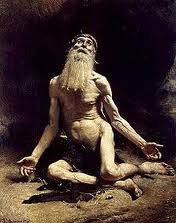
I suppose all of this boils down to an invitation to hear the wisdom of Job:

Therefore I have uttered what I did not understand,
    things too wonderful for me, which I did not know.” (Job 42:3)

Soli Deo Gloria

Mere Fidelity: After Obergefell

Mere FidelityIn June this year, the Supreme Court legalized gay marriage across the country in the landmark Obergefell v. Hodges case. Across the nation there were varieties of reactions ranging from, many hysterical on both sides. On this episode of Mere Fidelity, Anderson, Roberts, Wilson, and I sit back and try to take a sober look at the landscape as well as analyze just why the reaction was so different here in the states than across the pond. We hope you’re encouraged and challenged by this.

(By the way, take advantage of future Mere Fidelity episodes to your Anderson fix. He’s mostly offline now, except with us.

Soli Deo Gloria

Straining Gnats and Siding with Pharaoh Over the Midwives

midwives-1024x563I’d like to quickly conduct a little experiment in our responses as moral readers. Bear with me as I set the stage, though, as this is going somewhere.

Exodus opens with the story of the oppression of God’s people in Egypt. Years after Joseph lead Jacob’s sons into the land to escape the famine, they grew prosperous and multiplied–so much so that the Egyptians began to fear them. So one of the later Pharaohs actually enslaved the populace in order to subjugate and suppress them. In the end, though, the oppression only caused them to expand further. So Pharaoh took it into his head to handle the population crisis in another fashion:

Then the king of Egypt said to the Hebrew midwives, one of whom was named Shiphrah and the other Puah, “When you serve as midwife to the Hebrew women and see them on the birthstool, if it is a son, you shall kill him, but if it is a daughter, she shall live.” But the midwives feared God and did not do as the king of Egypt commanded them, but let the male children live. So the king of Egypt called the midwives and said to them, “Why have you done this, and let the male children live?” The midwives said to Pharaoh, “Because the Hebrew women are not like the Egyptian women, for they are vigorous and give birth before the midwife comes to them.” So God dealt well with the midwives. And the people multiplied and grew very strong. And because the midwives feared God, he gave them families. (Exodus 1:15-21 ESV)

So there you have it. Pharaoh’s plan was a limited genocide, but it was initially thwarted by the efforts of two Hebrew midwives, Shiprah and Puah–named slaves against a nameless king.

Here’s my question: who’s the hero of the story? Or, rather, who’s the villain? What’s your instinctive answer? In your gut, who provokes your anger? Who do you judge to be of dubious character? Who is being wronged here? Well, obviously, everyone would agree that the Hebrews, in general, were.

But what about the Pharaoh? Are you kind of tempted to see him as a victim? I mean, didn’t the midwives lie to him? Didn’t they deceive him? Weren’t they unethical in the way they misled him about their intention to follow his commands? They actively spread falsehoods about the heartiness of Hebrew women in the birthing process. That’s not just a little fib, now is it? And on top of that, you have to consider that for Pharaoh, slave labor was great for infrastructure. And it’s not like it was the only thing he did, or he was enslaving them just to enslave people.  No, I mean, it probably allowed him to provide grain and other services to the general populace and advance Egyptian society as a whole, right? Beyond that, he was entirely within his legal rights as the Pharaoh. His word was the law of the land.

But none of that really changes the way you read the story, does it? The lying Ziphrah and Puah are clearly the heroes–so much so that God blesses them for their actions. Their mild deception was in the service of life, in the service of justice, of protecting the defenseless and so the God of Israel honors them.

I bring all this up in light of the recent videos surrounding Planned Parenthood’s (PP) alleged sale of “fetal tissue”–the hearts, eyes, livers, and lungs of the unborn and aborted–to medical research facilities. These undercover videos show PP officials discussing these sales with representatives of a dummy corporation set up by the investigative organization looking to expose the practice. The videos range from simple conversations of “less crunchy” techniques of procuring tissue (over lunch), to hearing practitioners admitting that at times infants make it out of the womb intact and are still used to harvest tissue, to hearing one doctor in the middle of a procedure exclaim, “it’s another boy!” It’s truly horrifying stuff that even has presidential candidate Hilary Clinton saying the videos are disturbing.

Of course, the reactions are mixed. Die-hard Planned Parenthood advocates look to defend it as misrepresentation of an entirely legal practice*, pro-lifers are incensed calling to defund the organization**, but in the middle of all of these predictable reactions, though, there is this third group that puzzles me most: the Christian/Evangelical purist. I’ve seen it a number of times now, but you get this middling response where someone will say, “Guys, I don’t like abortion either, but we really shouldn’t have to lie about stuff like these fanatics. We’re Christians, guys. I mean, lying to Planned Parenthood representatives is kind of low.”

And here’s where I just want to say, if your first instinct when you watch or read about these videos is to think, “Geez, are you telling me they lied to get the footage of these people sorting through these fetal parts, or discussing prices non-chalantly over lunch? Woof. That’s a bridge too far”, then you’re reading the story wrong.

I don’t know what’s motivating it in various cases. Maybe it’s a desire for some progressives to not be identified with those pro-lifers. If that’s the case, then maybe your identity as a not-your-parents-kind-of-Evangelical is just a little too important to you. Or, maybe it is a genuine discomfort with the act of lying. If that’s the case, then I’d urge you to consider the fact that Scripture does give different moral weight to issues in the Law.

When Jesus was confronted by the Pharisees’ hardness of heart, he denounced them as blind guides:

“Woe to you, scribes and Pharisees, hypocrites! For you tithe mint and dill and cumin, and have neglected the weightier matters of the law: justice and mercy and faithfulness. These you ought to have done, without neglecting the others. You blind guides, straining out a gnat and swallowing a camel! (Matthew 23:23-24)

He launches into them for being so particular about smaller matters–which are fine to care about–but in their case it was at the coast of missing the broader issues of the justice of the Law. Let me put it this way: watching these videos and being more uncomfortable with the investigators and quick to denounce them than PP is like watching a police video of a man being beaten mercilessly by an out-of-line officer and asking, “Well, did he jay-walk or not?”

Be careful that you’re not swallowing moral camels in your attempt to strain the gnats.

And finally, for those of you nodding you head vigorously to all this on the more conservative side–watch your own heart on other issues where gnat-straining becomes a temptation. None of us–and I definitely include myself in this–is above this danger. Pray for humility toward your brothers and sisters. But most of all, in this time, pray for justice and clarity for the American people so that we may come one day closer to the day when the phrase “it’s another boy” is only uttered in the delivery room, not the Planned Parenthood office.

Soli Deo Gloria

*Accepting money for the tissues to cover cost does appear to be an entirely legal practice. That said, killing fetus/babies who are born intact, as the fourth video seems to admit, or possibly performing partial birth abortions, and so forth, is not. That, at least, merits investigation. Beyond that, there is serious evidence pointing to possible profit on the part of many PP affiliates that, again, at least merits investigation.

**I know that the organization does other services that can be helpful for certain communities, so I do think there needs to be conversations about replacing its infrastructures, or simply repurposing the organization. Christians need to be–and I think many are–prepared to not only expose evil but be part of the loving solution to the systemic and social structures that make it seem tragically necessary to so many poor souls.

Best Dating Advice Roundtable w/ Wilkin and Grear (TGC Video)

At this last year’s The Gospel Coalition conference, I was asked to sit down with J.D. Grear and Jen Wilkin to talk best dating tips for singles. I basically sat there and gave the one piece of advice I have (which I’ve written up here) and tried not to look foolish next to Wilkin and Grear who had some very helpful advice.

Here’s the video.

Soli Deo Gloria

The Peace of the Triune God

peaceI’ve written about this before, or rather I’ve quoted others writing about it, but time and again we must be reminded that all of God’s good gifts, especially those we receive in redemption, have a trinitarian shape to them. They come to us from the Father, through the Son, in the Spirit. Whether it be justification, adoption, or sanctification, the whole Trinity is displayed to be at work in the New Testament witness. Thomas Watson makes this point again with respect to the believer’s gift of peace, by asking,”Whence comes this Peace?”

His answer?:

It has the whole Trinity for its author. God the Father is ‘the God of peace.’ (I Thess 5:53.) God the Son is the ‘Prince of peace.’ (Isa 9:9.) Peace is said to be the ‘fruit of the Spirit.’ (Gal 5:52.)

(1.) God the Father is the God of peace. As he is the God of order, so he is the God of peace. (I Cor 14:43), and (Phil 4:4.) This was the form of the priest’s blessing upon the people. ‘The Lord give thee peace.’ (Numb 6:66.)

(2.) God the Son is the purchaser of peace. He made peace by his blood. ‘Having made peace by the blood of his cross.’ (Col 1:10.) The atonement Aaron made for the people, when he entered into the holy of holies, with blood, was a type of Christ our high priest, who by his sacrifice pacified his angry Father, and made atonement for us. Christ purchased our peace upon hard terms; for his soul was in an agony, while he was travailing to bring forth peace to the world.

(3.) Peace is a fruit of the Spirit. He seals up peace to the conscience. The Spirit clears up the work of grace in the heart, from whence arises peace. There was a well of water near Hagar, but she did not see it, therefore she wept. A Christian has grace, but does not see it, therefore he weeps. Now the Spirit discovers this well of water, it enables conscience to witness to a man that has the real work of grace, and so peace flows into the soul. Thus you see whence this peace comes – the Father decrees it, the Son purchases it, the Holy Ghost applies it.

I don’t care how many times I see that same basic structure, it still thrills me to see the workings of our Triune God traced out in the revelation of Scripture. It is Father, Son, and Holy Spirit who is the source, sum, and goal of our peace.

To understand how God can be ou peace, though, we must push further and recognize that God himself is peace. I’ve shared this Webster quote before, but I can’t pass up sharing it again:

The peace of God — the peace which God himself is— passes all understanding; ‘neither we nor the angels can understand as God, the peace which God himself enjoys’ (Augustine, City of God, XXII.29). This peace of God’s own self may be considered under the aspects of harmony and repose. First, with respect to harmony; the outer acts of the Holy Trinity are indivisible, the work of the undivided divine essence in its threefold personal modification. By appropriation, specific works may be particularly or eminently assigned to one divine person (as redemption to the Son or sanctification to the Spirit). But each person participates in all, for each shares in the undivided dvine essence, and each work is to be attributed absolutely to that one divine essence. The outer works of the Trinity are, then, harmonious — not mere conjoint or cooperative or composite action, but action which is inseparable and coinherent, and so, in a deep sense, peaceful. This harmony in the missions of the three-in-one is grounded in and gives expression to to the infinite peace which God is. There is no disorder, disruption or contradiction in the works of the Father, Son, and Spirit in the making and perfecting of the world. And so, there is in God’s inner life nothing of divergence or discord, but infinite unity and therefore peace beyond measure.

Second, to this harmony is to be added the element of repose. The outer works of God are effortlessly accomplished, without strain or agitation, without interval between willing and effecting. God rests in his work. This rest corresponds to the inner repose of God in filiation and spiriation, there is no malign diversity, no coming together out of a condition of separation, no overcoming of division or conflict, but always an already-achieved perfection of peaceful life. God’s inner peace is the peace of his triune simplicity.

This inner divine peace is the principle of creaturely peace, that upon which all other peace is founded and by which it is preserved. This is so, however, only because divine peace is in itself complete and fully satisfied. In the repleteness of his life as Father, Son, and Spirit, God is beyond need or desire. His peace is neither enhanced by created peace nor diminished by its absence…it is the harmony and repose which, because it needs nothing, is capable of pure charity, giving life and righteous order in the works of creation and providence.

The Domain of the Word: Scripture and Theological Reason, pp. 133-135

Well, that’s enough to praise him for today. May God’s peace be with you.

Soli Deo Gloria

The Big Questions of the Gospel in a Five-Verse Nutshell


questions
I’m a big fan of serious study of the Bible. That often involves learning languages, delving into the historical background of the text, and studying what church teachers in history have said about the subject. But it usually starts with reading slowly and asking a series of basic questions. Nothing has reinforced this for me as much as my small group study this year at church.

At our very last study a couple of weeks ago, we were wrapping up our study in the letter of Paul to Titus when we came to this stunning little passage:

For we ourselves were once foolish, disobedient, led astray, slaves to various passions and pleasures, passing our days in malice and envy, hated by others and hating one another. But when the goodness and loving kindness of God our Savior appeared, he saved us, not because of works done by us in righteousness, but according to his own mercy, by the washing of regeneration and renewal of the Holy Spirit, whom he poured out on us richly through Jesus Christ our Savior, so that being justified by his grace we might become heirs according to the hope of eternal life.

(Titus 3:3-7)

This is one of the best nutshells of the gospel I’ve ever seen. It answers briefly and powerfully all the key questions you might want to ask about the message of salvation.

1. What are we being saved from? Well, Paul says that we were wandering in foolish disobedience. We were slaves to passions and pleasures, unable to give ourselves to anything but our own lesser wants and desires. We were lost, having drifted from true North as we turned from worshipping God to the things God made. Not only that, we were caught up in malice and envy, as idolatry usually sets you at odds with other idolaters. Lack of peace with God leads to war with others.

2. Who saves us? In a phrase, “God our Savior.” Make note of that–God is the author of our salvation, no one else. Salvation is an absolutely theocentric reality, and, looking at the sweep of the text, a trinitarian one. God the Father, the Son Jesus Christ, and the Holy Spirit are all at work in the one sending, appearing, and renewing work of the one God.

3. When did he save us? When his goodness and loving kindness appeared. But what does that mean? I’d gloss that phrase indicating the reality of the incarnation of the Son–the appearing of the kindness of God. It is in the Christ-event–the life, death, and resurrection of the Godman–that God became our Savior. (Indeed, it’s important to note the way that Paul gives both God and Christ the title “our Savior.”)

4. Why did he save us? Here we come to the question of “why”, not in the sense of goal, but in the sense of basis or grounds. Well, Paul is very clear that it wasn’t because of our own works done by us out of our goodness. We didn’t have any of those. There’s no thought of meriting or earning God’s kindness allowed here. No, the sole grounds of our salvation is not found in the creature, but in God himself, because of his own mercy. Salvation is God’s idea, not ours. It’s an act of “grace”–a gift to those who can’t procure it for themselves by their own efforts.

5. How did he save us? Okay, so this raise the question of “how”? How did the Triune One save us? Well, that answer requires the whole NT witness to expound, but here Paul tells us that it’s by the regenerating (rebirthing) work of God in us through the Holy Spirit who cleanses us. The Holy Spirit remakes us, cleanses our sin, our consciences, and creates in us a new heart in communion with God. It’s important to note, though, that we have this Spirit because he was poured out in our lives through Jesus Christ. And I’d argue that the rest of Paul’s theology tells us that’s because of Jesus legal work in his death for sin and his authority to pour out the Spirit he was give in the resurrection and ascension. We are “justified by his grace.”

6. What did he save us for? Finally, we come to the question of purpose. What’s the point? What’s the goal? Where is all this amazing work headed? Paul is very clear: God saved us so that we might become heirs according to the hope of eternal life. We were saved so that we might become “heirs”, sons and daughters in God’s household who can expect the riches of his kingdom now and forever. What’s more, as heirs, he created us for holiness and glory. Heirs not only receive gifts, but the call (and in this case the guarantee) to carry on the family name–the bear the name of God well. This happens as we receive the Spirit who conforms us to the Image of the Son who brings glory to the Father in all that he does. It is his image that we will finally bear upon that last day.

And this, in a nutshell, is Paul’s answer to the key questions of salvation. All in about five verses. It is passages like this that make me marvel, not only at the great salvation of our God, but the marvelous saving revelation of God we have in the Scriptures.

Soli Deo Gloria

No Prophecy, Just Prescription: Solid Theology (Patheos Future of Evangelicalism)

future of evangelicalismI got asked to participate in a panel of sorts over at Patheos on the Future of Religion in America in the next 5 years. There’s actually a great line-up you should go check out (esp, Trueman, Moore, Meador, Dyck, and Wedgeworth’s pieces). Anyway, here’s the beginning of my two cents. 

When I was asked to weigh in on what I judged to be the future of Evangelicalism, my first thought was, “I am not a prophet, nor am I the son of a prophet, I’m just a shepherd of college students.” Who am I to make such weighty prognostications? By nature I’m averse to engaging in any hard futurology — sounds a bit close to astrology. Beyond that, given the increasingly volatile nature of American discourse around religion and the rapidly changing theo-political scene (Obergefell and its rainbow penumbra), we’re dealing with shifting variables whose slopes are slipperier by the day, making mapping a trajectory with any certainty a perilous proposition.

All the same, I’ll hazard a few words about the future of Evangelicalism, not as predictions, but as prescriptions for facing the changes we see all around us and their fallout. From where I stand, I’d say there’s one main priority Evangelicalism needs to set itself, if it’s going to survive the next few years let alone be salt and light for the gospel: prioritizing solid theology.

You can read the rest of my specific article here.

Soli Deo Gloria

Summarizing, Simplifying, and Expanding on the Atonement by Adam Johnson (Guest Post)

atonementAdam Johnson is a professor of theology in the Torrey Honors program at Biola University and excellent chap. He’s just put out a very helpful book–one of my new favorites on the subject–Atonement: A Guide for the Perplexed, which I’ve already written about here. What follows is an excerpted  section of one of my favorite passages in the work, reprinted with his permission. I hope it encourages you to follow up and pick the book. 

A thorough appreciation of the complexity of the atonement funds our delight and worship, while equipping the church to relate Christ’s work meaningfully to a host of other areas. An equally strong grasp of the simplicity of the doctrine yields a sense of the overall shape and structure of the doctrine, offering meaning and direction to our inquiries within its many elements. Just as in the doctrines of the Trinity and divine attributes (in fact, precisely because of them), the interplay between unity and diversity, simplicity and complexity, plays a vital role here as well. For that reason we must constantly live in the tension between seeking an expansive understanding, and concise definition of the work of Christ.

Summary I: An Exercise in Simplicity

The best summary statements about Christ’s atoning work in Scripture are the following two (closely related) verses:

“In Christ God was reconciling the world to himself.” (2 Cor. 5:19)

“In [Christ] all the fullness of God was pleased to dwell, and through him to reconcile to himself all things.” (Col. 1:19-20)

In short:

God was in Christ, reconciling all things to himself.

The beauty of this short statement is four-fold. First, the emphasis is first and foremost upon God, which is absolutely vital for the doctrine. The atonement is the work of God bringing God’s creation back to God. God is the origin, means and end of this act, and the role of theology proper is singularly and absolutely determinative for the shape of the doctrine and the coherence of our account of the atonement. Second, this is the work of God as man, as Jesus. That is to say, it is a fully human work, the work of God as one of us, one of our kind living out his life under the same realities and circumstances as we do. It is a work from within our life and experience, in which God makes our situation his own, rather than a work from the outside. Third, this is a work of reconciliation. One could say that God was in Christ, atoning (at-one-ing) all things to himself in Christ, though this does not communicate as readily in contemporary English. In principle, one could substitute “reconciling” for any of a number of soteriological synonyms, including “saving,” “redeeming,” “ransoming” or “sanctifying.” “Reconciliation” is preferable, however, for its positive (indicating salvation for just as much or more than it does salvation from) and comprehensive nature. In other words, it isn’t as readily reducible to merely marshal, judicial or commercial concerns as some of its peers.

The final reason which makes this summary the best single statement in Scripture concerning the work of Christ is its comprehensive scope: all things! Of course this must be unpacked, but such a comprehensive and indeed cosmic affirmation runs no risk whatsoever of leaving anything out. All things are involved and bound up in the death and resurrection of Christ. This is no mere matter of meeting some particular need or void in our lives—the death and resurrection of Christ are of much bigger scope than that. They gather up the identity, condition and fate of all of God’s creation, for in Christ all things are taken up and reconciled to the Father. Regardless of whether we recognize this to be the case, there is nothing in life that is not reconciled to God through the work of Christ (Col. 1:20).

In short, for a single statement that grasps the foundation of the doctrine of the atonement in the being and act of God, the means of the atonement in the man Jesus Christ, the positive and life-giving nature of atonement as a work of reconciliation, a restoring of relationships, and the scope of the atonement, which brings all things into their proper relationship and fellowship with God, there is no better statement than Paul’s claim that God was in Christ reconciling all things to himself.

Summary II – A Fuller Account

But the purpose of a summary statement is to bring clarity by highlighting the basic elements or structure of that which it summarizes. Accordingly, summary always plays its role as one part of the task of understanding its object, which is to say, summaries play a role within the dynamic movement necessary for understanding a complex reality, moving between a vision of the overall structure and interacting with the smaller parts of which the whole is composed. To honor this dynamic movement, we will briefly unpack the above summary, offering a slightly more complex rendition of the same basic statement:

The triune God, Father, Son and Holy Spirit, in the fullness of the divine perfections, was in Jesus Christ, the Messiah of Israel, bringing all created things in heaven and earth to the fulfillment of their God-given purposes through reconciliation with God.

To affirm that God was in Christ, that this was the work of God and his presence in this act is what makes it what it is, what gives it its defining features, characteristics and significance, is to affirm first and foremost that this is the work of Father, Son and Holy Spirit—the triune God. The life, death and resurrection of Jesus are what they are because they are events in the life of God, willed by the Father, executed by the Son, in the fellowship and power of the Holy Spirit. It is only because the atonement is the work of the triune God, bringing our humanity and sin into the relational dynamics of Father, incarnate Son and Holy Spirit, that this work is what it is. And it is because God does this work through his own life, that it simultaneously involves the fullness of the divine character. In this event, God enacts his love, wisdom, mercy, righteousness, holiness and presence, the fullness of the divine attributes, in his overcoming of sin and evil, and restoration of all things according to his purposes for them.

To affirm that Jesus was a man is to embrace the fact that he was not any man, but an Israelite: born of the line of David, realizing in himself the covenants, prophecies and laws of the Old Testament as the Messiah, the prophet, priest and king, the one who in himself was the faithful Israelite. As such, he is, of course, a human being just as we are, but one with a specific history, and with that history a specific identity and role. Salvation is from the Jews (John 4:22), and more concretely, from the Jew, Jesus, the son of Mary. And his work was a work of reconciliation, of atonement—of making one through restored relation to God and through him to all things. Relationally, he made things one by bringing about reconciliation or the restoration of fellowship. Cosmically, he made creation one by removing evil, conflict and decay. Judicially, he made us one by doing away with the crime, guilt and punishment. His work was a work of creating and sharing one-ness according to the many forms it takes in different contexts and relationships, bearing in himself and thereby doing away with all sin, evil and discord.

And his work touches on all things: angels and demons, Jews and Gentiles, dogs and cats, mountains and graveyards. And because the center of God’s election in Christ was for a people, for a relationship with humankind, his work relates to middle management and racial relations, body and soul, emotions and habits, families and friendships. Extending far beyond the guilty conscience, God became man in Jesus Christ to bring every aspect of creation, and every aspect of our human existence, under the Lordship of Jesus Christ, with all the flourishing and mutual-exaltation that this entails for every aspect of our being (physical, spiritual, social, sexual, economic and otherwise) and that of the creation of which we are a part.

Definition as Springboard to Exploration

But we must be clear about the fact that this more expansive summary is but a springboard to fuller reflection on each these areas. But as we engage in this pursuit, for the sake of clarity and definition, it is helpful that we be able to pull back from detailed exploration of the sub-points of the doctrine, and also be able to affirm with brevity and understanding that:

The triune God, Father, Son and Holy Spirit, in the fullness of the divine perfections, was in Jesus Christ, the Messiah of Israel, bringing all created things in heaven and earth to the fulfillment of their God-given purposes through reconciliation with God.

Or even more briefly, that:

God was in Christ, reconciling all things to himself.

Soli Deo Gloria

Huckabee’s Heart-Change And Ours: Millennial Issues With Love, The Body, and Marriage

weddingA couple of weeks ago the SCOTUS handed down the Obergefell ruling that made gay marriage the law of the land and the universe was engulfed in a sea of rainbow-colored joy. Or anger. Or grief. Or ecstasy. Honestly, there were about as many reactions as there were colors in the rainbow. In any case, a swarm of articles on the subject have gone up, both by non-Christians and Christians of all persuasions; articles full of arguments, historical narratives, questions, answers to questions, cartoons, and God knows what else.

And, honestly, I have tried to avoid them. Pretty much unsuccessfully, but there you have my vulnerable confession of how little I’ve wanted to have anything to do with discussing the subject online. It’s a difficult enough issue to discuss in person, especially when you want to be pastoral. What’s more, this is not a hobby-horse for me. In the last four years of ministry, I’ve explicitly taught on the subject twice, and only because the biblical text in question raised the question.

One of the most recent of these articles was by Tyler Huckabee–an Evangelical writer, blogger, and former editor of Relevant magazine–in which he wrote about his change of heart on same-sex marriage. It’s a personal narrative of sorts, with an articulation of his reasons thrown in, and a closing appeal at the end.

What I’d like to do in this piece is offer some analysis and commentary on his post.

Now, some of you might be asking, given that up until now I’ve kept my trap shut, why this piece? In a lot of ways, I think many millennials are resonating with this one in a particular way. It is representative of the reasoning and feelings of a many of the youngish, Evangelicals on the fence who might read the piece and say, “Ya, man, that’s kind of the deal for me too. Thanks for articulating it for me.” This is a niche that seems worth addressing.

Also, we are in similar positions. Unlike guys like Gagnon and Brownson, or DeYoung and Vines, I haven’t written academic or a popular book on the subject. Neither has Huckabee. We’re both bloggers and ex-somethings. He’s the ex-editor of a major, Christian magazine and I’m a soon to be ex-college pastor of a not-so-major college group. Also, everybody says Huckabee is a sweet, reasonable guy, so I figure he’ll be a good conversation partner.

To start, you probably ought to read his article before this one, or what follows might not make sense.

Appreciation. First, there are a couple of things I appreciate about Huckabee’s article.

Obviously, he clearly thought about it slowly and maturely, and I can appreciate that writing it can’t have been easy given the church friends he’s had/has, or the way this might affect future publishing opportunities in the Evangelical world. It will certainly make other spheres of influence easier to navigate, particularly the much broader culture outside Evangelicalism, but there will certainly be some cost. Some might cynically say that the timing is suspicious, but I think that would be unfair. It’s clear he’s been chewing on it for a while.

The other thing I really appreciate is that he doesn’t just do the full “conversion to the light” narrative, and run to seeing traditional Christians holding a classic view of marriage as obviously bigoted, or motivated by some deep-seated animus. That’s something many who have adopted an affirming stance only recently can’t seem to stop themselves from doing. And I hope, if Huckabee doesn’t change his mind back, that’s something that he’ll influence others to understand as well.

That said, I’ll try to give you what I take to be the heart of Huckabee’s argument, and offer up some assorted criticisms and questions in no particular order. To be clear, for me, the issue in this article is the affirmation of same-sex marriages or relationships as the church, not the State question, which is an interesting and important, but fundamentally distinct issue for another time.

The Main Argument. The heart of Huckabee’s argument, rooted in his reading of Genesis 2, is that the main aim of marriage is not procreation or the propagation of the human race–the relational God is more romantic than that—but rather to deal with the fact that it is not good for man to be alone. Of course, the procreative function is there, but for Huckabee, it is not primary, nor central, nor even necessary to the definition and reality of marriage as an institution or practice. No, Huckabee sees the issue of loneliness as the pressing one in Scripture, and our focus on procreation has misled us on this point. For this reason, we have unfortunately restricted those with same-sex attraction to the position of irredeemable loneliness solely on the basis of their sexual orientation. And Huckabee admits that he can’t do that anymore.

The rest of Huckabee’s arguments, or stories about the way his textbook Bible college theology crumbled in the face of real people’s struggles, are aimed at shoring up that contention.

The first real comment worth making is that his entire argument is premised on the assumption that marriage and sex are the main or only viable relationships to deal with being “alone.” For Huckabee, close friendships, parental relationships, brothers and sisters, aunts and uncles, nieces and nephews, extended families, or even the community of God given to us in the church, are just not in view as part of God’s remedy for humans being alone. And this is where I think Huckabee’s main argument shows some real inconsistency.

Huckabee rejects the claim that the narrative of Genesis 1 and 2 gives us the normative standard for marriage as the man/woman pair. He finds irrelevant Adam and Eve’s obvious, bodily complementarity, highlighted linguistically in the Hebrew pairing “ish/ishah” in the outburst of Adam’s poetry “This at last is bone of my bones/ and flesh of my flesh; she shall be called Woman / because she was taken out of Man” after having Eve plucked from his side (2:23). The earlier command in Genesis 1 to be “fruitful and multiply”(1:26-28), and even the later indications of Torah and Tanakh that marriage and procreative possibility are linked (levirate marriage, Mal.2:15, etc) are likewise of decisive importance. None of these things point Huckabee absolutely to the idea that marriage and the uniting of two to become one flesh is only about a man and a woman. It’s only and primarily about “being alone” and finding someone to fix that problem.

If that’s the case, my question is, why restrict the solution to the problem of “being alone” to the specific relationship of marriage with its spiritual and physical union, just because that’s specifically what happens to occur in the text? In other words, if all these other features of the narrative don’t figure in determinatively as a normative part of the solution to Adam’s “being alone,” why should the sexual union part of it figure in either? Why not just see it as a story of God giving one sexually-non-determinate person another sexually-non-determinate person to be friends with?

I actually think that’s a valid question, in general. Even a traditional reader might affirm the importance of sexual differentiation (all those other feature I just listed) and still note that Adam and Eve together form the basis and beginning of human community in general. That in turn provides a basis for all those other relationships that give humans whole, meaningful lives that don’t have to be spent “alone”, even outside heterosexual marriage.

It is here that Huckabee, like so many of us, has bought into the cultural (and dare I say, “Evangelical youth group”) myth that marriage and sex is the only possible completion of our human experiences of love and wholeness. Ernst Becker pointed out that in the modern period, with the loss of belief in God, we’ve idolized the sexual and romantic Other so that it has become nearly impossible to imagine a full, whole, or even joyful-though-costly life without one. And this conceit I find to be entirely untrue on the basis of Scripture, reason, and not to mention, experience.

While Huckabee worries that the procreative view insults or diminishes those couples experiencing barrenness—which I’d argue it doesn’t—I am quite sure his view ends up diminishing and deeming as lesser the experiences of millions of single, celibate men and women in the Church, both gay (and the vast majority who are straight), throughout history down into the present. I refuse to believe the contemporary narrative which sees them as “cursed” by God simply because they don’t have a romantic or sexual partner in this life, something they may even deeply desire. There’s more to be said here, but let’s pass to the next subject.

Scripture and the Meaning of the Body. One of the main themes that emerges upon examination is Huckabee’s handling of Scripture and the body. One particular element that stood out to me was his handling of the apostle Paul’s thought on the matter. Of course, that’s not a surprise. If you’re going to change your mind on sexuality and marriage, you’re going to have to reckon with Paul’s many statements on the issue.

Some of his responses are fairly common these days. He raised the often-mentioned and often-answered question of whether Paul “knew” about the kinds of gay relationships we’re talking about now, only to assert that we can’t know either way. I think Paul did, but even if he didn’t, it actually wouldn’t matter given the way Paul’s argument in Romans 1 is thoroughly rooted in his reading of Genesis 1-3. But, we can’t settle that out here.

This section was far more interesting to me:

Paul was a bit reserved about marriage to begin with: “To the unmarried and the widows,” he says in 1 Corinthians. “I say it is good for them to remain single as I am. But if they cannot exercise self control, they should marry.”

This is a rather dim view of sex, which isn’t all that surprising, considering Paul. He seemed hugely unbothered by anything that wasn’t strictly spiritual. I love him for this, but I can’t help but think he would scratch his head at a good deal of the fuss made about marriage in modern Christianity.

Having spent the last 9 months preaching through 1 Corinthians with my students, knee-deep in commentaries on the subject, I must admit I found the comment rather bizarre. What can Huckabee mean by Paul’s preoccupation with “strictly spiritual” matters? Surely not the idea that Paul didn’t care about both body and soul? That’s the point of the argument in 1 Corinthians 5-7. Read any of the major commentaries (Thiselton, Hays, or Wright) to verify this.

I mean, goodness, in the chapter right before, Paul says to the Corinthians to honor God in your body (6:20). Why? Because resurrection means the body is for the Lord (6:13), to be a Temple of the Holy Spirit (6:19), which is why God bought it at a price (6:20). For Paul, you shouldn’t eat idol food because food can be a form of worship, and, indeed, even eating and drinking can be done to the glory of God (10:31). Everything is “strictly spiritual” for Paul.

This brings me to Huckabee’s criticism of Matthew Lee Anderson’s massive article on marriage, procreation, and same-sex marriage. As you might guess, central to Anderson’s point is that eros, the romantic love central to marriage, finds its fulfillment in procreation, as the child becomes an icon of the parents’ love. What I find interesting was that Huckabee criticized it as a “crude materialism” that reduces love to “flesh and function.”

That’s a rather odd criticism of Matt’s piece and there are a number of ways’ of responding to it. The one that’s relevant to us comes in view when we connect this criticism to his comments on Paul, as well as his earlier reading of Genesis 1 and 2. When we do this, Huckabee’s critique reveals a semi-Gnostic, anti-materialistic view of humanity as body and soul, flesh and spirit, and his failure to appreciate the way the Creator has written a moral and spiritual grammar into the body itself.

For those who chafe at that idea, remember, Christianity is something of a crassly materialistic faith to begin with. God makes dirt. Then he shapes and breathes life into a man out of the dirt. Then he makes a woman from the man. Then, God becomes a man born to a woman as a gendered Jew in the 1st Century. That’s all very crudely materialistic.

Or again, our two sacraments involve or are analogues of the processes of flesh and function–dunking the body into the waters of death and resurrection, and consuming the broken body and shed blood of the covenant. It should come as no surprise, then, that marriage is an irreducibly physical reality where two become “one flesh” as a biologically and spiritually complementary pair. Here the physicality and the spirituality are two sides of the same coin. The spiritual meaning depends on the physical and vice versa.

In fact, it is precisely this meaning that is at the heart of one of other Pauline texts that Huckabee doesn’t deal with:

“Therefore a man shall leave his father and mother and hold fast to his wife, and the two shall become one flesh.” This mystery is profound, and I am saying that it refers to Christ and the church.” (Ephesians 5:31-32)

As Paul reads Genesis 2, God takes uses the sign of marriage, specifically in its binary, male and female, complementary-flesh-uniting character to point to Jesus’ own love and union with his Bride. And here’s where we come to one of my points: even leaving procreation aside—which I don’t think you should for very long—you can’t alter the pair of man and woman in marriage without altering the grammar, the syntax, the meaning of marriage and it’s God-ordained purpose of pointing to Christ’s saving love for his Church through the “crudely materialistic” processes of “flesh and function.” Childbearing or not, marriage as a sign-post of the gospel is entirely dependent on the sexual grammar of male and female.

Incidentally, can we all agree that anybody with this depth-dimension to their view of physical union can’t have a “dim view” of sex?

Instead, Paul gives us a complex view of sex with a double-movement. First, he de-idolizes our sexual desires and reminds us that they are not ultimate, nor devastating if unfulfilled. He is a contented celibate man, just as his single and celibate Lord Jesus was. He too has the Spirit of God (1 Cor. 7:40). Second, he points us to the unique, Christologically-charged meaning of the sexual act and the body that finds its expression in appreciating the glory of sexual difference in marriage. It is precisely such glorious tensions that I love him for.

Love the Sinner, Hate the Sin, and Loving the Loves of Others. We’ve all heard that phrase, “love the sinner, hate the sin.” Nobody actually has a problem with this saying when it comes to something like, say, racism. I mean, think about it. Love the racist, hate the racism, right? Otherwise, what are your options? Love the racist and his racism? Hate the racist and the racism? No. Love the racist and hate his racism seems about the only option, unless you want to go into some other sort of pattern like “love the racist, feel mutely about his racism”, or “love the racist, understand his racism non-judgmentally and be open to a conversation about these things”? Obviously not.

Huckabee says that in this particular case it’s very difficult because the “sin” in question is part of their identity in such a way that it is categorically different, raising all sorts of problems. Maybe it is, maybe it isn’t. But, I would quickly point out that the gospel is fundamentally about gifting us new identities in Christ. I would say, rather, that in the case of same-sex desires, too often we have accepted the modern mode of identity-construction via sexual desire, which, to my reckoning, is an entirely unbiblical assumption.

Pressing on, Huckabee writes:

But I know that faith, hope and love remain. And the greatest of these is love. And a love that must hold people’s identity at bay is an imperfect love—a love that refuses their own loves. If someone were to say they loved me but saw my own marriage as an affront to God, I would say that that person does not then really love me. I could not abide that sort of love in my life. I just could not.

Huckabee says here that he could not abide the sort of love that refuses to love his loves, to affirm his marriage. But does that really make sense? I know he’s been married for a year, and so he’s thinking in relation to his own marriage, but what if we thought about children?

I’m not a parent, but I work with students, and if there’s one reality that I’m acquainted with well about them, it’s that they quite frequently love the wrong thing, person, or persons. Or, they love them in the wrong way.

In fact, that’s at the heart of one of our most classic definitions of sin and idolatry: disordered love. In other words, at the heart of sin lies the fact that we often love the wrong things, or we love good things wrongly, with the wrong intensity, aim, or way. My students are a mirror of my own heart in that regard.

Thirty years ago, German theologian Wolfhart Pannenberg wrote:

Can love ever be sinful? The entire tradition of Christian doctrine teaches that there is such a thing as inverted, perverted love. Human beings are created for love, as creatures of the God who is Love. And yet that divine appointment is corrupted whenever people turn away from God or love other things more than God.

So, take the mother who loves her children above God. That’s an idolatrous love. That’s a wrong love. Or let’s switch back to romantic loves. Maybe the young man who loves his girlfriend possessively and obsessively. Or the woman who loves the husband of another woman as she ought to love her own. Or, take the case of the disordered love of incest. I do not mean to say incest and same-sex attraction are the same–do not misread me here–but simply to bring up a case we still mostly recognize as wrong in our culture. Brother and sister are supposed to love each other, even passionately. But the problem is that we all sense that it’s not supposed to be in that particular way. Even love that has an appropriate object can be wrong if it’s the wrong sort of love for that object.

Each of these cases is of a love—a real, honest love—which we are actually called to, out of love, not love and affirm in its entirety. No, at the proper time and context, if we love the person, we cannot love their loves because they are, in some way, destructive. They are another manifestation of the way that all of our loves have gone wrong this side of Eden.  (Note, I say “in its entirety”, because a man can show tender, thoughtfulness to another man, just as the couple involved in adultery can, excepting the act of involving the other in sin, be quite loving to the other.) But here’s the thing: love can, love does, in fact, at times, love must question our loves.

The fundamental question is, “What has God said about our loves in Scripture?” Remember, this is the God of love who created us, who we rejected for the sake of other, lesser loves, and who yet pursued us in love to redeem and bring us back to himself while we were yet sinners at the cost of his Son’s life (Romans 5:8). We must trust that his love moves him to reveal to us the proper patterns and parameters of marital love.

And this is true even when it doesn’t feel like it, as any parent who has ever said no to one of the many destructive loves of their children knows. How much more, then, ought we acknowledge that the Infinitely Wise Creator God knows and loves perfectly, even in a way that our finite and fallen minds may find difficult at times? It is here that our generation has yet to truly struggle with the counter-intuitive love of God.

Have I Considered That I Could Be Wrong? Huckabee closes his confession with a final appeal. He tells us that he knows he could be wrong on this issue. Christians disagree here as they have in other places, and he thinks that God won’t condemn either those who affirm a traditional position or a progressive one in the end. But the question he asks is this: 

However, I do urge you to consider: If you are wrong, what is the cost in the here and now? A life condemning others for something they can’t change about themselves? A life judging love?

That’s the wager. It’s not one I’m willing to make.

I have to admit, I’d hate to be wrong here for that reason, if that’s really the gamble. But is it? First, I’ve already dealt with the “judging love” objection above, and to be clear, the relevant question is not my judgment about love, but God’s. But is it really only the traditionalist like me who has a scary wager to make?

Huckabee quotes 1 Corinthians 6:9, earlier, but he doesn’t manage to connect the dots here:

Or do you not know that the unrighteous will not inherit the kingdom of God? Do not be deceived: neither the sexually immoral, nor idolaters, nor adulterers, nor men who practice homosexuality…

Huckabee asks us to consider the consequences here and now. And those are real, though I think even there Huckabee fails to consider the consequences even here and now if he’s wrong. But still, what about then and there? Do we really want to play the “consider the stakes” game, then? Because the thing Huckabee’s argument doesn’t consider is that you might be telling someone to continue walking unrepentantly in one of the many sins that Scripture says constitutes a rejection of the grace of eternal life.

What if God agrees with Paul, the apostle Jesus personally appeared to and appointed by knocking him off his horse and calling him to proclaim the Gospel to the Gentiles?  Or what if he agrees with the way the Church has been reading him for the last 2,000 years and not a minority of white, wealthy, post-Enlightenment Christians in North America and Europe at the beginning of the 21st Century? What if, right?

See, that is just not a wager I can make.

Wrapping It Up. To sum up, I haven’t actually made full-blown argument for natural or traditional marriage. Nor have I dealt with even half of Huckabee’s concerns, nor even my own. All the same, I think his piece reveals much about the problems we Millennials seem to have with issues concerning the meaning of the body, Scripture, and even the nature of God’s love. I pray that if you’re on the fence on these things—a position I can certainly understand—that this article and analysis help in some way.

Soli Deo Gloria

For those look for more resources, I’d recommend Kevin DeYoung’s book on the matter. Or, for a heavy academic work, Robert Gagnon’s. Or, if you want a more personal meditation, I’d highly recommend Wesley Hill’s thoughtful work. Finally, for a depth theological exploration of the subject of sexual differentiation in marriage, Christopher Roberts’ book is fantastic.