 “Why Israel?”
There are a number of angles from which we could ask this question. Why would God choose this nation among all the nations? Indeed, why should God choose any nation at all? That’s the question that’s often been termed the “scandal of particularity.” Western thinkers have often been offended that the salvation of the universe brought about by the God of the whole cosmos is given to us through specific, historical acts at a particular time and place. It all seems so narrow.
Push deeper and you’ll see there’s another question: “Why history?” Why should God waste all that time? Why thousands of years of slow interaction with the patriarchs, kings, and prophets of Israel? Why concern himself with the blood, sweat, and tears poured out in Ancient Canaan? Why should salvation come this way? And even more, why should we be concerned with such things? Now that Jesus has come and a universal salvation has come to humanity, why must we be bothered about such things?
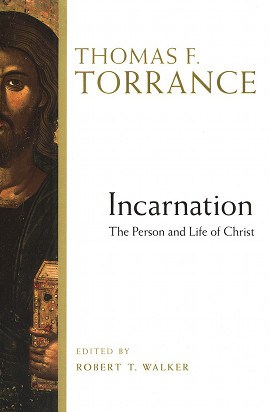
T.F. Torrance tackles the subject towards the beginning of his landmark volume Incarnation: The Person and Life of Christ. (Yes, for those wondering, I’ve finally managed to get around to Torrance). One of the elements that clearly marks his theology of the Incarnation is just how hermeneutical you have to be, in order to grasp it. This is so in at least two ways. First, the Incarnation is a hermeneutical event in that the Word of God comes revealing God to us. Jesus is the exegesis of the Triune God (John 1:17).
Second, and this is where we return to Israel, it’s that we must understand the interpretive Word of God against it’s proper pre-history, the election of Israel (37, 40-41). As Torrance notes, “if you are to understand something you must have the conceptual tools with which to grasp it and shape the knowledge of your mind” (41). But how do you go about acquiring the right conceptual tools to grasp the infinite God? You can’t do it of your own effort, could you? No, God himself would have to provide them to you. And that’s exactly what he has done in the election of Israel to himself as a people .
Torrance essentially argues that the history of Israel–all of its centuries-long struggle with grace, rebellion, resistance, slavery and redemption, exile and judgment, cultus and worship, prophecy and song–all forms the necessary interpretive background for understanding the person and work of Jesus. God’s election, patience, grace, love, and judgment of Israel are (among other things), his way of furnishing his people with the proper conceptual tools for understanding the coming of the Son into the world. This is part of what it means for the Son to come “in the fullness of time” (Galatians 4).
Why Israel? Because without Israel, we could not know mighty work of God in Christ. Torrance sums up the point in this magnificent paragraph:
Thus the knowledge of God, of Christ, and of the Jews are all boundup inseparably together, so that when at last God came into the world he came as a Jew. And to this very day Jesus remains a Jew while still the eternal Son of God. It is still through the story of Israel, through the Jewish soul shaped by the hand of God, through the Jewish Scriptures of the Old Testament and the Jewish Scriptures of the New Testament church, that the gospel comes to us, and that Jesus Christ is set before us face to face as Lord and saviour.
Apart from this Old Testament prehistory and all the biblical revelation through Israel, we would not have the tools to grasp the knowledge of God: apart from the long history of the Jews we would not be able to recognize Jesus as the Son of God’ apart from the suffering and agony of Israel we would not understand the cross of Calvary as God’s instrument to atone for sin and to enact once and for all his word of love and pardon and grace. Apart from the covenant forged in sheer grace with undeserving and rebellious Israel, and the unswerving faithfulness of the divine love, we would not be able to understand the mystery of our restoration to union with God in Jesus Christ. Apart from the context of Israel we would not even begin to understand the bewildering miracle of Jesus.
The supreme instrument of God for the salvation of the world is Israel, and out of the womb of Israel, Jesus, the Jew from Nazareth — yet he was no mere instrument in the hands of God, but very God himself, come in person in the form of a servant, to work out from within our limitations and recalcitrance, and to bring to its triumphant completion, the redemption of mankind, and our restoration to fellowship with the very life of God himself. (43-44)
While a number of answers could be given to the question, “Why Israel?” and “Why History?”, Torrance points us to the very important hermeneutical one: without them we could not have the saving knowledge of God that we needed.
This is just one of the many reasons Marcionism and all those theologies that would belittle or leave behind the Old Testament are so damnably dangerous. Christ comes clothed in the gospel, as Calvin says, and the textiles and prints are drawn from the history of God’s dealings with Israel. When we strip Christ of these glorious garments, we inevitably clothe him in the idolatrous, conceptual patterns of our own making, robbing ourselves of the truth of God come in Christ.
In a sense, Torrance reminds us that understanding takes time. And so God accommodates himself to us by coming in Christ as the culmination of Israel’s very specific history. And this too is grace.
Soli Deo Gloria
 Except there’s a quirk with Kirk’s position. He’s already on record
  Theology is a historical practice. We’ve been reading the Bible and thinking about it for a long time. While that doesn’t entirely rule out advances, it does mean we shouldn’t be so surprised when we find that some of our modern studies (biblical, systematic, and practical) are at times only catching up or reworking old variations on a theme that’s been played throughout the history of the church. I’ve said something like this before, but I’ve been reminded of it recently with the recent works on Christology (teaching about Christ) in New Testament studies I’ve been digging into lately.
 Last year I had the privilege of studying 1 Corinthians with my college students, or, as I like to call it, “The Book of Very Hard Sermons.” Among the most difficult and rich texts to preach from is chapter 10, where Paul is wrapping up a lengthy discussion about whether church members ought to grab a bite to eat with their pagan neighbors at the local temples. While I knew the passage had fascinating and challenging implications for issues like the sacraments (10:1-5, 14-22), temptation (10:6-13), other religions (10:14-22), and Christian liberty (10:23-32), I hadn’t fully grasped their relevance for the issue of Christology in the New Testament.
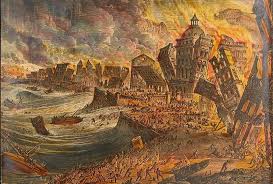 Evil and theodicy are central to the storyline of the Bible. Indeed, they are central to much of the great secular and especially religious literature in history. Theodicy, for those unaware, is the term coined (or simply popularized) by Leibniz referring to the sort of rational justifications or explanations given for the co-existence of evil and God (or the gods). Antti Laato and Johannes C. de Moor’s massive, edited work Theodicy in the World of the Bible is a collection of essays dedicated to exploring the various sorts of theodicies on offer both in the Ancient Near Eastern texts (ranging from Sumerian, Assyrian text to 2nd Temple Jewish text) surrounding the world of the Bible as well as the biblical materials themselves (both Old and New Testaments). They do so both for historiographical as well as properly theological reasons, calling on specialists to describe, critique, and retrieve the perspectives of the ancients for reflection today.
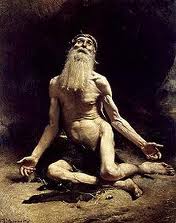 Most of Christian theology, one way or another, is caught up with the problem of evil–what it is, where it comes from, how will it be defeated, and how do we live with it in this world. God’s providence, though, is one of those doctrines that seems to uniquely impinge on the question of evil. How could a good, all-powerful God allow the amount and kinds of evil we see and experience in the world? Is it possible to speak of his control and sovereignty, his foreknowledge and wisdom, in a way that’s consistent with the world as we know it.
 For the last 30 or so years (or maybe more), there’s been a running debate surrounding the nature, shape, and origins of New Testament Christology. How high or low was it really? Was Paul really working with a concept of Christ as fully divine and fully human a la Chalcedon, or did that come later as the Church reflected on the implications of what Paul and the other apostles wrote? And did Jesus think himself divine? Was that even an option for a 1st Century Jew? Where did that Christology eventually come from? Was it the influence of Greek, pagan cult, or rooted in classic, Hebrew monotheism? And are these even the right questions? (See
  One of the striking things about Jesus’ earthly ministry, was his stark realism about the people he was working with. When the crowds initially huddled around him to make him king, impressed by his outward signs, Jesus did not entrust himself to them, “because he knew all people and needed no one to bear witness about man, for he himself knew what was in man” (John 2:24-25). John Chrysostom
  Merry Christmas! Well, presuming that you haven’t had N.T. Wright steal away your Christmas fun. The usual crew shows up this week to discuss
  There’s no way around it–the miracle of Christmas is a trinitarian event through and through. Contemplating the baby born of the virgin Mary, sleeping in the manger in 1st Century Bethlehem, eventually will draw you into eternity to worship the Triune God, Father, Son, and Holy Spirit. As I was reading Christopher Holmes’ excellent new work on the Holy Spirit this week, I ran across a fantastic passage where he is draws out some of the implications of Augustine’s theology of the Trinity by illustrating them by way of the virgin birth:
 Reformedish