What To Call a Christian (Or, Preaching The Whole Christ)

whole christTowards the early half of his new work The Whole Christ: Legalism, Antinomianism, & Gospel Assurance–Why the Marrow Controversy Still MattersSinclair Ferguson asks a pointed question that may initially seem trivial:

…what is my default way of describing a believer? Perhaps it is exactly that: “believer.” Or perhaps “disciple,” “born-again person,” or “saint” (more biblical but less common in Protestantism!). Most likely it is the term “Christian.”

Yet these descriptors, while true enough, occur relatively rarely in the pages of the New Testament. Indeed the most common of them today (“Christian”) is virtually nonexistent in the New Testament, and the contexts in which it occurs might suggest that it was  a pejorative term used of (rather than by) the early church.

“Okay”, you may think, “So what’s in a name? Why does it matter what our default term is if the reality is the same?” At it turns out, quite a bit.

Contrast these descriptors with the overwhelmingly dominant way the New Testament describes believers. It is that we are “in Christ.” The expression, in one form or another, occurs well over one hundred times in Paul’s thirteen letters.

Then draw the obvious conclusion: If this is not the overwhelmingly dominant way in which we think about ourselves, we are not thinking with the renewed mind of the gospel. But in addition, without this perspective it is highly likely that we will have a tendency to separate Christ from his benefits and abstract those benefits from him (in whom along they are to be found) as though we possessed them in ourselves. (45)

Ferguson goes on to link this problem to the main issue of his book, the 18th century controversy surrounding the theology of Edward Fisher’s little book on the gospel The Marrow of Modern Divinity and its implications for preaching the gospel.

I was struck by this section on not falsely separating Christ’s person and work in our thinking, preaching, and teaching of the gospel precisely because it’s so easy to do. Many of us know “the gospel” and how to clearly explain the nature of justification by faith, adoption, the free forgiveness of God, and so forth on their own, as atomized benefits, or gifts that God offers us.

The point Ferguson makes, which is central to the theology of the New Testament, Calvin, and the best of the Reformed tradition, is that all of these benefits only come to us in union with Christ. Paul didn’t go around preaching justification, or preaching adoption, or preaching sanctification. Paul went around preaching Christ and him crucified and risen, in union with whom we are justified, adopted, sanctified, and so forth.

Christ himself is the good news we are to preach. Ferguson notes, “while we can distinguish Christ’s person and his work in analytic theological categories, they are inseparable from each other” (46). As Thomas Boston, (one of the main heroes of Ferguson’s book), has it: “You must first have Christ himself, before you can partake of those benefits of him.” Or again, Kevin Vanhoozer has said that the declaration of the gospel is, “I now pronounce you man in Christ.”

Paul puts this message on blast in Ephesians 1:

Blessed be the God and Father of our Lord Jesus Christ, who has blessed us in Christ with every spiritual blessing in the heavenly places, even as he chose us in him before the foundation of the world, that we should be holy and blameless before him. In love he predestined us for adoption as sons through Jesus Christ, according to the purpose of his will, to the praise of his glorious grace, with which he has blessed us in the Beloved. In him we have redemption through his blood, the forgiveness of our trespasses, according to the riches of his grace, which he lavished upon us, in all wisdom and insight making known to us the mystery of his will, according to his purpose, which he set forth in Christ as a plan for the fullness of time, to unite all things in him, things in heaven and things on earth. In him we have obtained an inheritance, having been predestined according to the purpose of him who works all things according to the counsel of his will, so that we who were the first to hope in Christ might be to the praise of his glory. In him you also, when you heard the word of truth, the gospel of your salvation, and believed in him, were sealed with the promised Holy Spirit, who is the guarantee of our inheritance until we acquire possession of it, to the praise of his glory. (Ephesians 1:3-14)

Every single one of the many blessings, privileges, and graces enumerated here given to us through Christ’s work and in conjunction with Christ’s person.

The question we might ask ourselves, though, is if we were to preach this passage, or do a study through it, where would our emphasis be? Would it be on understanding the various benefits, (which obvious ought to be considered and expounded) or would the dominant note be on the Christ who gives them? Ferguson asks:

It is obvious to me and of engrossing concern, that the chief focus, the dominant note in the sermons I preach (or hear), is “Jesus Christ and him crucified”? Or is the dominant emphasis (and perhaps the greatest energies of the preacher?) focused somewhere else, perhaps on how to overcome sin, or how to live the Christian life, or on the benefits to be received from the gospel? All are legitimate emphases in their place, but that place is never center stage (50).

Emphasis matters, then. Our focus is not to get people to try to be better adoptees or feel more justified, which leaves them looking to themselves, staring at their own, spiritual navels. Instead, we want them to look to Christ in whom they are assured of their justification and adoption, and in whom they now can live out the Christian life.

A Recommendation for Preachers

I  suppose I’ll conclude by  sharing a segment that cut me to the bone:

In the nature of the case there is a kind of psychological tendency for Christians to associate the character of God with the character of the preaching they hear–not only the substance and content of it but the spirit and atmosphere it conveys. After all, preaching is the way in which they publicly and frequently “hear the Word of God.” But what if there is a distortion in the understanding and heart of the preacher that subtly distorts his exposition of God’s character? What if his narrow heart pollutes the atmosphere in which he explains the heart of the Father? When people are broken by sin, full of shame, feeling weak, conscious of failure, ashamed of themselves, and in need of counsel, they do not want to listen to preaching that expounds the truth of discrete doctrines of their church’s confession of faith but fails to connect them with the marrow of gospel grace and the Father of infinite love for sinners. It is a gracious and loving Father they need to know. (73)

This only happens when we preach Christ, the Son, who reveals the Father’s heart, not simply abstracted benefits procured in an instrumental fashion.

Honestly, I wish someone had handed me this book six years ago when I started preaching to my college students. It would have been so helpful to avoid the some of the mild, pendulum-swinging of emphasis in my preaching that could creep in despite my stated theology. Instead, much of this I had to learn the hard way, slowly recognizing a number of these tendencies only with time.

All that to say, Ferguson’s careful exposition of the issues of grace, the law, legalism, and antinomianism, while in the context of an initially arcane historical discussion, have been very helpful for thinking through the issues of contemporary gospel preaching. Simply put, I would commend Ferguson’s little book to you as a whole, and especially to any present or potential preachers.

Soli Deo Gloria


Forget Me Not (Twitter And The Fear of Death)

dark twitterHave you ever been worried you’ll be forgotten by a friend? Say they go on a long trip, or you move, and that nagging fear comes along: if I’m out of sight, will I be out of mind? Will they move on? Will our time together become just a background memory, recalled when triggered, but mostly left in the dustbins of our excess memory banks?

And the deeper question, of course, is “do I matter?” Because our thoughts are an indicator of what matters to us. If someone is thinking about us–if we are at the center, or at least the conscious periphery of their thought–then we matter to them in some way, right? If they care, then we must have value.

I started thinking about this after reading some of Tony Reinke’s interview with Kevin Vanhoozer over the weekend. They delve into all sorts of fascinating issues of discipleship in a digital age, but the segment that caught my attention came at the end:

Two anxieties drive much of what we do today: status anxiety (what will people think of me?) and the newer disconnection anxiety, which is tied to FOMO (fear of missing out). Put briefly: I connect, therefore I am. The question, however, is: connect to what? I’m afraid that, for many, the answer too often is the empire of the entertainment-industrial complex. We live in what has been described as an “attention economy,” and the Sunday morning sermon seems weak in comparison to a Safari surfing session. The latter enables us to ride the waves of popular culture and opinion. The sobering question for the disciple is whether our attention is being drawn to something worthwhile.

Spectacles are ephemeral, which is why those who suffer from FOMO are always on the lookout for The Next Big Thing. Disciples who are awake to reality have their attention fixed on the only breaking news that ultimately matters; namely, the news that the kingdom of God has broken into our world in Jesus Christ. This breaking news demands our sustained attention and a wide-awake imagination.

There’s so much to comment on in this little chunk alone. Still, the “I connect, therefore I am” bit caught my attention, especially as a fairly engaged Twitter user.

Much of the drive to connect online is definitely filtered through and shaped by the attention economy. What’s more, that economy can be an economy in a very real sense for many of us on social media. Having the right opinion at the right time on the right issue can be lucrative in ginning up writing gigs.

But honestly, beyond the crassly economic dimension, I think many of us who spend a significant amount of time online for blogging, work, or communication purposes have felt that existential anxiety.We want to be noticed. We want to be recognized, seen, heard, and I would add, remembered.

This is everybody from the 13-year-old girl wondering if her Instagram post will get as many likes as those of the other girls in her class to the political analyst hoping for Retweets on her latest, insightful live-tweet about the recent presidential debate.

I have to confess, there are seasons and days where I’ve noticed a certain anxiety about not having written anything in a while, or tweeted anything semi-clever in a few hours. Am I a particularly vain person? Possibly. But then, that’s not the sort of thing you’re able to judge for yourself.

But I think there’s a level of fear at being forgotten involved. Sure, I actually love the fun and frivolity of much of Twitter. The GIFs. The jokes. The nested conversations. The reality is, though, deep down there’s part of me that’s scared if I’m out of sight, I’ll be out of mind and I won’t matter anymore.

In a sense, this is one dimension of the looming fear of death that most of us in contemporary, American society never want to wrestle with or name anymore.

When you’re dead, eventually you’re forgotten. Even if you leave a “legacy”, it’s on the truly rare individual who is immortalized in song, statue, or prose. But those are forgotten too. How much more likely are we to be lost in an internet age when every second there are millions and billions of bits of data (stories, articles, ebooks, photos, videos, etc) being uploaded and (figuratively) papering over our photographs on the walls of history?

Of course, Twitter’s one of the most absurd ways of trying to fight the fear of death. The internet is forever, they say, but we all know that’s usually only for terrible things. In a sense, life on Twitter is very much an Ecclesiastes sort of experience. Work hard. Enjoy. Laugh. But remember that you’re going to die and all the followers you built and the reputation you’ve acquired as an insightful GIFer will fade quickly. Invested with existential weight, it too is a vanity of vanities.

Instead, I recall the concluding admonition of the editor:

Now all has been heard;
    here is the conclusion of the matter:
Fear God and keep his commandments,
    for this is the duty of all mankind.
For God will bring every deed into judgment,
    including every hidden thing,
    whether it is good or evil.

(Ecclesiastes 12:13-14)

As the Reformers were wont to remind us, we live life coram Deo–before the face of God. While it’s true that there is something of a threat of judgment–a call to remember the fear of the Lord–for those who are secure in knowing it through Christ that judgment comes (Rom. 2:16), there is a beautiful promise.

He is the eternal One who never forgets us, who keeps our lives ever before him–even those we fail to upload in perfect “Earlybird” filters. We are his creatures, his handiwork, and his adopted children who are never out of sight and never out of mind. Death is not the end, therefore. God will remember us into the resurrection and the age to come irrespective of our social media presence, but because of the presence of his Spirit of promise bestowed upon us in Christ (Eph. 1:13-14).

Soli Deo Gloria

Reading This Book Will Not Change Your Life: Review of “You Are What You Love”

you are what you loveMy title’s kind of tongue-in-cheek, but it cuts to the heart of James K.A. Smith’s thesis in his new book You Are What You Love: The Spiritual Power of Habit. Over a number of works, especially his Cultural Liturgies series (Desiring the Kingdom, Imagining the Kingdom), Smith has argued that modern, Western Christians (especially Evangelicals) have been held captive by a false picture of the human person as “thinking thing.”

On this view, you are what you think and there’s something of a simple correlation between what you believe and the way you live. Discipleship, then, is mostly a matter of proper spiritual data input.

But we’re not just thinking things. No, following Augustine (and the Scriptures), Smith argues that we’re worshipers. We’re desirers. We’re lovers who are shaped by those things we love most.

The hitch is that our deepest loves aren’t necessarily those things we consciously think we want most, but those drives that reside within us at an almost unconscious level. And they show up in our habits, our basic patterns of life.

If that’s the case, then, discipleship is not mostly a matter of data input, or simply reading the right book, but about the long, arduous path of having your desires transformed through the power of habit. Yes, our loves show up in our habits, but it’s also the case that our habits and practices give testimony to and shape our loves.

And so, we are constantly being shaped in one way or another by the various practices (liturgies) we’re engaged in, whether it’s checking our smart phones, visiting the local mall, eating fast food, or consuming varieties of ideologically-loaded pop cultural artifacts.

For this reason, the transformation of desire isn’t simply going to happen by rearranging some of our beliefs, but by adopting the sorts of practices that shape our loves to conform to the Kingdom of God. These liturgies train our hearts, sort of like batting practice trains our arms or training wheels our stabilizer muscles, in the way they should go.

Now, for those who have read Smith’s other works, much of this will be familiar. It’s an Augustinian call to virtue ethics. Indeed, it might seem so familiar that you’re wondering why Smith wrote the book. I’ll say that this work is different from the Cultural Liturgy series in a number of ways.

First, you’re not really wading through any of the French, continental philosophy of Merleau-Ponty, or the social theory of Pierre Bordeau. It’s full of all the wit, the basic insights, made in a more direct, concise fashion. For that reason alone, the work is far more accessible and user-friendly than the earlier iterations.

Second, Smith’s fleshing things out more practically on the ground than he does in the earlier works. I think this is what I loved most about the work. Smith’s vision of the habits that form us is worked out in some fairly pedestrian realities like church, marriage, educating your children, and your everyday vocation. This aspect makes it more immediately useful for both pastors and laity who might be intimidated to wade into the earlier works.

Third, because of that fleshing out, Smith does make plenty of new points. Some on the theoretical end, but the applied practice gets far more attention in this work in a number of helpful ways. Plus, there’s a load of new examples and fascinating little bits of cultural analysis (which are usually the most fun parts of Smith’s works, to be honest). I laughed multiple times throughout the work, tweeted out several segments, and flagged a number of pages as helpful preaching illustrations.

I think the most personally impacting section for me at this phase in my life was the bit on the liturgies of the home and the way a marriage is a formed through the various, liturgical practices we craft our life through. I’m in a Ph.D. program. I spend the vast majority of my day as a “thinking thing.” And as much as I think I’ve grown in theoretical knowledge and insight, the reality is that my choice to eat at the table with McKenna instead of in front of the TV shape is probably more important for shaping my understanding of the little kingdom God has given us in the world. How are the countless, daily rhythms we have adopted preparing us for life in the kingdom to come? Or for a life of discipleship and fidelity now?

Now, on a critical note, I must admit that as sympathetic as I am towards Smith’s advocating for more traditional, liturgical (in a modest, Reformed sense) worship, I did wonder if the critiques of contemporary worship services and styles was applied a bit too thickly. Or again, whether the critique of current youth groups obsessed with relevance at the expense of substance was representative of the healthy youth groups I’ve seen and the earnest youth pastors running them.

Also, Smith does open himself up to critique in that he’s over-exaggerated the power of habit and downplayed the properly cognitive dimension to the Spirit’s work of transformation through the preached Word and so forth. Now, while I can see it, I’m not sure Smith’s actually guilty of it. Especially if we take the work less as a total program or theology of sanctification (which I’m not sure Smith intends), than as a corrective of the lopsided one with which we’ve been operating. Taken in that sense, Smith’s work is a vital and timely work, full of much-need wisdom for the church, both gathered and scattered abroad in our homes and workplaces.

I suppose I’ll wrap up this brief review with a simple commendation: if you’ve already engaged Smith’s work as I have, I think you’ll find plenty that’s worth your time. If you’ve never read Smith’s work, this is probably the best place to start.

As I said in the title, reading this book won’t change your life. But it will point you to the practices that, graced by the Spirit, just might do the trick.

Soli Deo Gloria

Mere Fidelity: The Spirituality of Time

Mere FidelityThis week Alastair, Matt, and I get into the issue of time and how it affects our spiritual life. I’m not gonna lie, this one was pretty fun. We jump into everything from Augustine, to the musical nature of keeping time, the various spiritual dimensions to our awareness of time and eternity, and we manage to avoid speaking about A-Theory and B-Theory, which I’m sure everyone will thank us for.
I hope you enjoy this one. And if you do, feel free to share it.

You can also follow the podcast on iTunes, or using this RSS feed.

*WE ARE CURRENTLY LOOKING FOR PEOPLE TO HELP US TO COVER THE MONTHLY EXPENSES OF THE PODCAST. PLEASE VISIT OUR PATREON PAGE*

Soli Deo Gloria

Mere Fidelity: Out of the House of Bread w/ Preston Yancey

Mere FidelityOn this episode of Mere Fidelity, Matt, Alastair, and I are joined by our friend Preston Yancey. He’s just written a new book entitled Out of the House of Bread on the nature of the spiritual life and the spiritual disciplines. Also, it’s about baking bread. Aren’t you now quite curious how these go together? Possibly hungry for bread too? Well, listen to this episode as you drive to the market to buy bread and find out!

You can also follow the podcast on iTunes, or using this RSS feed. Listen to past episodes on Soundcloud.

*WE ARE CURRENTLY LOOKING FOR PEOPLE TO HELP US TO COVER THE MONTHLY EXPENSES OF THE PODCAST. PLEASE VISIT OUR PATREON PAGE*

Soli Deo Gloria

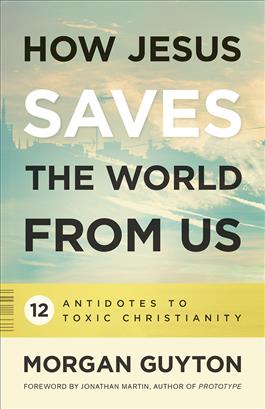
How Jesus Saves the World From Us (Review)

I tend to read different theological authors for various reasons. Some excel at putting into words my deepest, unarticulated beliefs better than I ever could. Others inspire me and provoke us to wonder. While still others are just generally informative—they tell me what I don’t know. Finally, there’s a special category that I’d put my friend Morgan Guyton in—he’s the kind who keeps me honest.

For those of you unfamiliar with him, he’s a Methodist college minister in New Orleans and a blogger at Patheos Progressive channel who gets featured at Huffington Post, Red Letter Christians, and other such periodicals. In other words, we don’t hang out at The Gospel Coalition conferences. AHow-Jesus-Saves-the-World-from-Usll the same, we’ve been blogging, chatting, and arguing quite vociferously back and forth for the last few years in such a way that I’ve been challenged, provoked, and (I think) strengthened in the faith. And this is even with some very significant, theological disagreements.

All that to say, I was pretty excited when I got my copy of his new book How Jesus Saves the World From Us: 12 Antidotes to Toxic Christianity. As you might expect given the title, it can appropriately be put in the recent spate of “progressive Evangelical” manifestos. That said, I was anxious to read it because I know Morgan to be honest, typically trying to eschew some of the sensationalism and invective that infects some of these kinds of works. Indeed, I know for a fact that he got turned down from some publishers precisely because he didn’t want to write the slash-and-burn anti-Evangelical screeds they thought would sell.

Instead, in How Jesus Saves the World From Us, Morgan attempts to put forward a more positive vision of a Christianity stripped from what he sees to be toxic attitudes, behaviors, and corruptions of a beautiful gospel. Each chapter is organized around a fairly clear binary with titles like, “Worship, Not Performance: How We Love God” or “Servanthood not Leadership: How We Follow Our Shepherd”, with the goal of presenting us with two clear paths. The point, then, is a constructive criticism of some of the deficiencies and pathologies of American Christianity with an eye towards a transformed Church. His goal is to call back or give hope to the many who have been burned out or disgusted by the many failures and excesses they’ve experienced at the hands of religious leaders and communities.

As much as I disagreed with some key chapters or sub-points, Morgan had plenty to say that I needed to hear. One of the most gripping chapters was his approach to gaining a holy body, “Breath, not Meat”—his translation of “Spirit, not Flesh.” His imagery of life lived to the flesh as bodies being turned into mere “meat”—dead life—is powerful and pastorally attuned. While, I’m not an anti-capitalist, Morgan’s section on the way our market-economy can play into our subtle commodification of persons and bodies is worth serious consideration. Overall, it’s a helpful dimension to consider in our all-too-thin “spiritual” accounts of sanctification and sin.

Given my recent forays into the theology of Leviticus and the Temple, I was also drawn especially to his chapter on “Temple, Not Program.” I really resonated with his suggestion that churches begin to recover that sense of the sacredness of time and space. Over and over again we’ve heard that the Church is a “people not a place”, but in our hyper-mobile, post-religious culture, that simply plays into the vacuous sensibility that since we can worship God “anywhere” there’s no real use to gathering somewhere with some people to meet in a special way with the Lord. And because we’ve lost that sense of the sacred space of the local church, we’ve increasingly relied on the hyper-programization of a flawlessly-executed program to gin up a sense of the divine in our people.

And, I’ll also mention his chapter on “Servanthood, not Leadership.” While I’d probably nuance his end-point about pastors seeing themselves less as shepherds than as fellow-sheep (I mean, “under-shepherd” is a biblical idea), so much of this chapter was a breath of fresh air compared to more technical models of pastoral leadership built on business-school models of success and platform-building. The professionalization of the pastorate is one of the greater tragedies of the last half-century.

I could go on like this about a number of the other chapters. But though Morgan is my friend, I will register one critical comment that sums up the various sub-points I’d make as a whole. While the format is a useful heuristic tool (“eat this, not that”), unless taken critically, the binary format often leads us to miss a possible third way between the option that Morgan is (rightly) critiquing, and his proposed positive vision.

To take an example, his chapter on “Poetry, Not Math: How We Read the Bible” gives you a nice, clean split. Either we misunderstand the Bible by trying to treat it like a problem to be solved, mastered, used, as a weapon, etc, instead of poetry to be savored and accepted with all of its mysteries and complexities. Which is good as far as it goes. But then (leaning on types like Enns and Rollins) he forwards a functionalist understanding of the Scripture’s authority and a pragmatic notion of its truth in terms of usefulness, ignoring some of the real challenges the original fundamentalists have, or current inerrantists worry about. I suppose my point is that much of the time, yes, the Bible is like poetry, and yet, sometimes it’s a little closer to math.

That’s typically how I felt about the sections I disagreed with. Morgan almost always has his finger on the problem and frequently he identifies issues I never would have thought up about coming from my location. And I really need to hear those different perspectives. But the question is about the way forward or the way we read the need to revise our understandings of certain doctrines like penal substitution or something, to fix what’s wrong.

But again, this is why I say he keeps me honest and why I gained a lot from reading this book. And I think that’s probably fine with him. I don’t see Morgan needing conservatives to agree with all of his solutions. But forcing us to grapple with real issues, hurts, corruptions, and struggles within the Church faithfully from within our own frameworks? Getting us to hear the pained voices of the wounded so that we might strive present a more beautiful gospel and a more glorious Jesus to them? I think he’d be just fine with that. And that’s what Morgan’s done for me in this book.

Soli Deo Gloria

The Scapegoating of Batman V. Superman: A Theory of Criticism

Sad Ben Affleck

Don’t cry, Ben Affleck. You were just a Girardian Scapegoat.

I have a theory about Batman v. Superman. No, this is not a fan theory about how to pull everything together (as much as we all love those). Rather, it’s a theory about the somewhat astonishing level of critical vitriol and general “mehhing” (to coin a phrase) of the film.

Three caveats before I proceed:

First, the seriousness level of this thesis is about 50/50.

Second, I am not a film critic in any professional sense. I am a watcher of movies who can occasionally approach “being thoughtful” about such things. I generally understand why I’m supposed to like the movies I am supposed to like and vice versa. While I am not a populist (in general) and I appreciate good film critics, I have to acknowledge that, at times, my tastes veer into the pedestrian.

Third, you should know that I enjoyed Man of Steel and that my overall judgment about Batman v. Superman is that it is a “decent” to “pretty good” comic book movie. It is not The Dark Knight, or Iron Man, or Avengers, to be sure. But it’s certainly not a Green Lantern which is how so many of the critics are treating it. My biggest complaint about the film as a whole was the kind of choppy editing and a couple of plot points that strained my ability to suspend belief (though, I hear there’s a director’s cut with about 30 extra minutes which could change some of that).

That said, Affleck did a pretty, darn good job of being Batman, contrary to my earlier naysaying (you won me over, Ben). Actually, everybody’s acting was pretty solid. Wonder Woman legit. I’m curious about Snyder’s story-line to follow, etc. and I thought there was some very interesting interactions at the theo-political level. Could it have been better? Yes. Was it awful and not worth seeing again? Nope.

Alright, with these caveats/reminders-to-take-this-with-a-huge-grain-of-salt out of the way, I will proceed with my theory.

Here it is: Batman v. Superman is the Girardian Scapegoat of all “Comic-book Movies.”

If you’ve been paying attention to the reviews for the most recent spate of superhero flicks, especially since this last summer, there has been a general tone of exhaustion amongst large swathes of the critic class. They are tired of these things. The stories are so similar. They’re so CGI. They just keep coming and eating up budgets that could be used on other, more original stories, etc. One of the major reasons so many critics gave Deadpool high marks was precisely because its hyper-violence and vulgarity broke up the monotony and predictability for them.

In other words, there’s been an anger/frustration/angst building, brewing, waiting to be vented and aired out.

Add to that the fact that there has already been suspicion about the Batman v. Superman flick for some time. “Is Snyder just going to try to keep doing the Nolan thing? Aren’t we done with brooding heroes? Can Affleck really pull off Batman?”

Enter the thought of French social theorist Rene Girard. In his broader theory of desire and culture, Girard talks about the “The Power of the First Stone.” Without going into all the details, Girard argues for a particular view of desire and the imitative nature of our desires and actions. We want and do largely as we see others wanting and doing. Because of this, Girard says that “casting the first stone”, so to speak, is the most difficult bit of any event of Scapegoating, because it’s without any model. But, once it’s cast, if there is enough social unrest, contagion, etc. built up, the rest start to follow very quickly.

This is kind of what I think happened with Batman v. Superman. Going into it there was already a tilt against the film, and once the first round of criticisms rolled in it triggered this the great, cathartic scapegoating of all the build-up, frustration, and exhaustion with comic films, dark heroes, etc. starts pouring out in this cascade of bad reviews, each more over-the-top than the last (partially fueled by the drive to top the last negative review in an even more clever, witty, oh-so-devastating takedown.)

Now, hear me: I am not saying that nobody is justified in not liking the film. I can see many of the criticisms being reasonable, even if they don’t hit me with the same, persuasive force. I especially give space for purist, fan concerns.

I will say, though, that had this movie come out two years ago, we would not be seeing the same, widespread, critical reaction. I mean, the fact that Thor: The Dark World has something like a 75% on Rottentomatoes.com and Batman V. Superman has a 29% is just a bizarre discrepancy when looking at the films side-by-side.

But when you start to see Batman v. Superman as the sacrificial victim being expelled from society and offered up in a cathartic moment—a sort of collective, critical purge—then it starts to make sense.

So, there you go. That’s my theory about why way more critics seem to hate this film than they should compared to other superhero flicks they’ve liked.

Doctrine and Life Go Together–Mostly, but Sometimes Not

beliefs

Why Indiana Jones? Why not?

Paul’s injunction for Timothy to keep a close watch on his “life and doctrine” in order that he might save his hearers has rung in my ears ever since I realized I was called to the minsitry (1 Tim. 4:16). Life and doctrine go together–what the mind and heart believe, the hands perform. This is why sound doctrine leads to sound living. When we understand the truth of the world, ourselves, and God, how we live in the world will begin to be aligned and attuned to this realities.

Except when it doesn’t.

See, while I still believe that doctrine and life go together, I think there’s a bit of confusion more broadly about the connection between believing and living. People seem to have bought into a popular version of what economists call “rational actor theory”, where (on my dummy definition) people make their decisions in a goal-oriented, reflective, and maximizing way. In other words, there’s something of a clean link up between beliefs and behaviors. If you know one, you should be able to draw a straight line to the other.

This is the kind of folk theory you see at work in a lot of our conversations around politics, or in theology, and so forth. Joe believes in penal substitution, and he just punched Lou in the face, so clearly it’s his violent ideology at work. Jenny struggles with anxiety, so that must be her Arminian theology of providence crushing her with stress. Jake has been flirting with progressive theology lately, so we can expect him to acquire a harem soon. And so forth. Or, we’re shocked when someone who believes as we do acts in a manner we never would.

But the more I watch people, the less that seems correct. Beliefs matter, but humans aren’t consistent, believing machines. For one thing, not all of our beliefs are consistent with each other. Talk to the average person on the street (even the well-educated ones) for very long and it’s easy to find unresolved tensions and contradictions in their thought. In which case, they might act in such a way that deeply contradicts one belief they hold, because it is perfectly consistent with another, different belief and they just haven’t connected the dots.

What’s more, even when people do have consistent beliefs, they don’t always live them out consistently. This is the point of talking about weakness of will, or akrasia as Aristotle termed it. We just know that people often consciously act against their best or conscious beliefs under pressure, temptation, or desire. Or we rationalize and note the way we are exceptions to what we generally expect for others and so forth.

Or even further, we forget that there are usually a number of different conclusions you can draw from your collection of beliefs. Especially if you’re evaluating someone else’s position from the outside. I mean, if you can’t even keep all of your own beliefs straight (as is likely), it’s not surprising that you might have trouble with others’. I can’t tell you how many times I’ve had to explain that “no, point B is not what I believe, nor does it even plausibly follow from point A” to various non-Christian friends over the years on any number of issues.

Finally, (and we could keep going) we forget the way various psychological, emotional, social, and historical pressures influence us from moment to moment, in surprising ways. Traumas (or graces) from the way we were raised might create residual behavioral patterns at the level of habit in a way that isn’t simply dislodged by a good syllogism and a few propositions being switched around in your grey matter.

Theologically, a lot of this makes sense, right? Yes, we were created in the Image of God but that’s been broken such that all of our faculties (reason, will, etc) are damaged by sin. They don’t always function or connect up properly. Even after the grace of Christ comes into our lives, the Holy Spirit is at work to restore us progressively. In which case, there will be many times when our beliefs don’t match up with our living.

I mean, this is a lot of why Paul spends so much time reminding people of what they believe, but then also trying to connect the dots between that and how they live. Whether out of folly or rebellion, they weren’t drawing proper conclusions for living from the doctrine that they were intellectually believing.

More positively, this is part of why people will surprise us with how much better they live than we imagine their beliefs would lead them to. Tim Keller talks about the way the Holy Spirit’s work of common grace in the lives of unbelievers leads many to live more wisely and graciously in some respects than believers. Some of that happens, I think, by a happy disconnect between some of the more corrosive beliefs a person may hold and their instinctive behavior. Or, there are great behaviors produced by odious or harmful beliefs.

There are a number ways this can go.

One, I think, is to maybe slow us down from drawing too straight a line between the behaviors of our intellectual opponents and the beliefs of theirs we despise. Yes, again, I do think there is a connection between life and doctrine. There are beliefs that, held in the right way, change us for the better or for the worse in the long run. But in the mess of history, unless they come out and explicitly explain their behavior, it can be very difficult to interpret just what led someone do the dastardly thing they did. Or it could be that someone–under the pressure of desire, peers, etc.–actually betrayed their beliefs. I’m not saying we can’t draw the line between behaviors and beliefs–I am saying we need to be a lot slower and take more care with that argument.

Second, I think we need to be less surprised when large chunks of population don’t behave according to the model we think they should in our head. This is true when we’re thinking of the Evangelical electorate or any other group. We need to be careful about the kinds of causes or explanations we accept for behavior or the beliefs of people we disagree with. Single-cause/single-belief explanations are almost always wrong. People are complicated, so we need to slow down, weigh a variety of complementary or competing explanations for these sorts of things. So, give the other side the kind of charitable interpretation you’d love the to give you when people on your team are being terrible.

Third, on a personal ministry level–each person is their own person. You’re almost never dealing with a cookie-cutter version of the last person you talked to. Sure, you can begin to create “types”, or “patterns”. Stereotypes usually have some basis in fact. But as soon as you’re sitting across the table from one of those types, the mold will usually start to crack, so before you begin “dialoguing” with the robust arrogance of knowing “exactly who this guy is”, maybe slow down and listen to who he actually is.

There are more conclusions we could draw, but all this to say that doctrine and life are definitely connected, but it’s a complicated affair. Which is why the spiritual life and gospel ministry isn’t a simple matter of formulaic truth-dispensing. Preaching and teaching must take their place in the Church–a web of social and historical relationships in which the Spirit works on a person’s heart, mind, body, and soul over time.

Thankfully, the Spirit’s got plenty of it.

Soli Deo Gloria

Three Mistakes to Avoid in Good Friday Preaching

Preaching “Christ and him crucified” is core to the job description of any minister of the Christian gospel (1 Corinthians 2:2).  Good Friday drives this home more than any other day in the church calendar. On that day, the preacher’s task is to proclaim and explain why the bloody spectacle of the Son of God murdered upon Golgotha is “good news.” How is this moral rupture the center of God’s great act of atonement–of God reconciling the world to himself (2 Corinthians 5:19)?
Christ’s cross itself has always provoked hostility and scorn whether among pagan Greeks or Jews and is, in many ways, no easier to stomach now than it was then; it still confronts us with our sins and bids the old Adam to come, submit to death, so that the New Adam may rise to new life. But that’s not the only difficulty involved.
The fact of the matter is that many have rightly recoiled at some of the defective ways pastors have preached the cross–especially its penal and substitutionary dimensions–in the past. When we make mistakes in this area, it’s easy to give people a distorted and destructive view of both God and the gospel. This is tragic. Both because we deprive people of the beauty of the cross, but also because, as C.S. Lewis points out, the more powerful and good something is, the more destructive it can be if it goes wrong. Much as a doctor cannot be careless in wielding a life-saving scalpel, so preachers cannot treat the preaching of the cross lightly or carelessly lest we bring death instead of life.
While there are a number of ways preaching the cross can go wrong, here are three key mistakes to avoid in your preaching of the cross this Good Friday.
You can read the rest of the article over at Reformation21.
Soli Deo Gloria


Theological Theology: Essays in Honour of John Webster

theological theologyJohn Webster has long been known for practicing and advocating “Theological Theology.” The point is not, as some might rightly worry, to practice a form of theology that exists solely for itself–“academic” in the worst sense. Instead, it is to practice theology that is confident enough in the importance of the theological task that it doesn’t need to be constantly borrowing its thought-forms, programs, and methods from other disciplines in order to prove its relevance. It means doing theology in a theological way that proceeds in a manner that fits its transcendently, unique subject matter–the Triune God as he has revealed himself in his works in the economy of creation and redemption.

It’s only fitting, then, that when R. David Nelson, Darren Sarisky, and Justin Stratis arranged a festschrift for him, it should take the title Theological Theology: Essays in Honor of John WebsterBut it’s not only the title that matches Webster’s programmatic judgment about the nature of theology–the whole of the work itself exhibits theological sensibility that Webster has cultivated over the years.  The volume really is a treasure-trove of theological theology precisely because its contributors are theologians of the highest caliber who, by and large, have managed to avoid the faddish nature of so much contemporary reflection.

And really, the line-up is quite impressive, including top shelf theologians across a variety of disciplines, theological traditions, and methodologies. Luminaries include: Robert Jenson, Stanley Hauerwas, Kevin Vanhoozer, Matthew Levering, Katherine Sonderegger, Bruce McCormack, and many more.

With over twenty essays and a biographical chapter on Webster himself, the book is impossible to review if we were to do a thorough engagement with each piece included. Instead, I’ll simply note a few of the essays I enjoyed most.

First, I’ve never had the pleasure of reading any of Ivor Davidson’s work previously, but his essay on “divine sufficiency” exhibits an elegance and judiciousness that makes me want to go dig through the archives for more. Davidson reflects on the reality that the theologians context is primarily in the presence of the all-sufficient God. Due to the perfection of the divine life, the Triune God is not only sufficient in and of himself, but is sufficient for us, making us sufficient for the theological task as we find ourself caught up in his sufficiency in the great things of the gospel.

Katherine Sonderegger has a tight little essay on the sinlessness of Christ (which was engaged profitably here), well worth the time. In it she engages the tradition broadly, ranging from Aquinas’ rather nosebleed conception, to modern “fallen” humanity interpretations we find in Karl Barth and Edward Irving, to liberation interpretations.

If you want a good primer/example on the “theological interpretation of Scripture”, in his chapter, Kevin Vanhoozer presents a lively engagement with the Acts 19. Through it, he presents a vision for a non-reductionistic, multi-faceted approach to the interpretation of Scripture which takes its unique ontology, cosmology, and teleological end into account in such a way that begins to responsibly bridge the gap between systematic theology and biblical studies.

A fantastically provocative (yet unfortunately brief) piece by Francis Watson challenges the notion that there even is such a thing as historical criticism. In brief, one of our age’s most renowned biblical interpreters takes the notion of “historical criticism” to task by exposing its history and the ideological and rhetorical function it plays within the academy, beyond its presentation as an interpretive best practice. I’ll likely return to this piece at greater length in a future post.

Francesca Murphy delivers an erudite and insightful entry on the way Aquinas’ appropriation and modification of Aristotle informs the shape and content of his section on the life of Christ in the Summa. In many ways, Murphy demonstrates the surprisingly modern shape of Aquinas’ life of Christ, especially the attention Aquinas pays to its historical structure, contrary to what we might expect in a scholastic treatment.

Again, I can’t begin to do justice to the variety of essays in the volume except to say that this is a valuable addition to any theological library–especially those of seminaries, since it’s quite pricey until the paperback comes out. More importantly, it is a fitting tribute to a theologian of Webster’s caliber.

Soli Deo Gloria