Mere Fidelity: Is it Immoral to Watch the Superbowl?

Mere FidelityKids, the Superbowl is coming up, so being the athletes that we are, we decided to take up the subject of Football (American style) for conversation. Matt, Alastair, and I invited Matt Millsap (professor of Christian studies at Midwestern Baptist) to come on and join us.

The premise is basically this: given the recent studies about the long-term damage to players’ mental and emotional health, is it moral to watch the sport or support it? Should changes be made to the way the game is played? Should our kids play it? Should we listen to anything Alastair says on the subject given the fact that he loves cricket and was probably knitting while we discussed this?

I’ll leave it for you to decide after you give it a listen.

Soli Deo Gloria

Mere Fidelity: Hillsong and “Hip Church”

Mere FidelityGQ ran a fascinating article last month entitled, “What Would Cool Jesus Do?” It was essentially a long-form investigation of Hillsong NYC, trying to figure out the phenomenon that manages to pull in thousands of young, cool New Yorkers including people like Justin Bieber and Selena Gomez. We figured that was worth discussing, so Matt, Alastair, and I took it up in this episode of Mere Fidelity.

Thanks for listening.

Soli Deo Gloria

Should Adam Have Atoned for Eve?

mountain of the LordReflecting on the nature of sin and desire in his Confessions, St. Augustine speculated that Adam sinned alongside Eve out of the bonds of natural human love. Eve was tempted by the Serpent and fell out of a lack of knowledge, but Adam knowingly chose to go down with her, since he could not bear to be parted with her. Reading Augustine’s account, we’re immediately sympathetic, recognizing the force of our bonds of love, whether married or not. My wife is “flesh of my flesh”, how would I not be drawn in with her?

Which raises an interesting question: what should Adam have done? To choose any created thing over God is idolatry. But what could he have done differently? Cut himself off from her? Let her suffer judgment alone in devotion to God? That also seems problematic for different reasons. Or maybe just difficult.

In any case, L. Michael Morales has a fascinating little excursus on the subject in his new book Who Shall Ascend to the Mountain of the Lord? A Biblical Theology of Leviticus.

But first, a word about the book. Leviticus is an oft-ignored book, shunted to the side in popular devotional reading and preaching largely because it appears to the book of arcane, pointless laws connected to the now-defunct sacrificial system. This is tragic because Leviticus is the heart of the first five books of the Bible and, in many ways, the heart of the story-line of the Bible.

Morales aims to open up the dense, confusing text by placing it in the broader story of the Scripture. Drawing on many of the advances in our study of the Ancient Near East as well as our undersanding of the narrative structure of Genesis, Exodus, and so forth, the sacrificial system of Leviticus stands as the answer to the question, “Who shall ascend to the Mountain of the Lord?” After our fall and expulsion from Eden and the presence of God, who will bring us back into his presence, into the House of the Lord? And how can we do so?

One of the key insights he builds on is the increasingly widespread recognition that there is a link between the Garden of Eden, the Mountain of God at Sinai, and the Tabernacle/Temple. Genesis 1-2, in differing ways, depict the creation of the world and especially the Garden as a cosmic house, the holy mountain where God himself intends to dwell. (I’ve listed 9 reasons the Garden was a Temple here).

In a sense, the two realities are mutually-informing. The Tabernacle and Temple both were to function as a renewed, miniature cosmos, with all kinds of creational imagery built into their structures. Much of the liturgy of the sacrificial system is aimed at restoring the relationship of worship and communion intended by God from the beginning. Honestly, I’m barely scratching the surface of all the various texts and theological problems this sheds light on.

Returning to the problem of Adam and Eve, one of the major takeaways from this recent Eden/Tabernacle connection is seeing the Priestly nature of Adam and the Adam-like nature of the High Priest. Humanity was created to be a priesthood within the Tabernacle of creation. The High Priest stands in the Tabernacle entering into the presence of God as a representative New Adam, of sorts, while the first Adam was an un-fallen high priest.

It is precisely here that Morales makes the suggestion that the text presents us with the possibility that Adam should have acted precisely as the priest he was, making atonement for Eve in his own self-sacrifice (181). While that can seem a bit speculative at first, Morales marshalls a number of arguments along that line, which I’ll briefly touch on.

First, Morales points out the priestly dimension to the reality of Adam and Eve’s “one-flesh” relationship. We have often missed how much of Genesis 2 points the priestly realities (gold, onyx, etc. are mentioned and just so happen to be material for the Tabernacle/Temple). Morales suggests that Adam naming the animals and recognizing that none are suitable helpers, none are ‘flesh of his flesh’, is at the heart of why it is not possible for the blood of bulls and goats can take away sin (Hebrews 10:4). This is at the heart of the repetitive nature of the Levitical priesthood which only finds its fulfillment i Christ. But at that point, unfallen Adam is flesh of Eve’s flesh.

Second, the fact of the matter is that throughout the Torah the theme of sacrifice or the attempt to offer self-sacrifice by Adam-like figures is fairly frequent: Noah offering sacrifice after the ark, Abraham and Isaac, Judah’s offer to take the place of his brother Benjamin, or Moses offering himself up after the Golden Calf incident. It’s certainly not out of place in a literary sense, then, and theologically it’s certainly not (182).

Finally, there is the point we’ve already made: Adam is the “archetypal high priest” in the holy of Holies of the Garden of Eden. If not him, then who? Morales goes on to say, “arguably, the original audience would have readily seen Adam’s omission” (182). Indeed, given the fact that the Second Adam came to give himself for his bride (Eph. 5), is too wild to think this could have been an option for the First Adam?

I don’t know that I’m settled on this interpretation. I wonder about issues like Adam’s presence at the time of Eve’s temptation and sin. Or whether he was responsible for driving the Serpent from the Garden even before that. But the suggestion it’s fascinating nonetheless. I know I’ll be mulling it in the future.

In any case, I hope this has whet your appetite to pick up Morales’ book. It’s really a fantastic bit of biblical theology that’s illuminating, not only for the way you read Leviticus, but Genesis, Exodus, and the whole story-line of Scripture.

Soli Deo Gloria

Why Israel? T.F. Torrance and the Hermeneutics of History

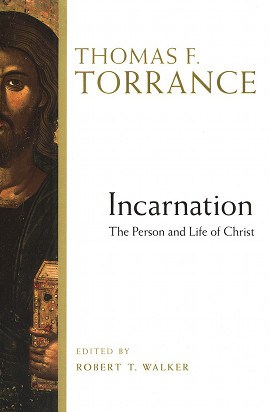
incarnation_large“Why Israel?”

There are a number of angles from which we could ask this question. Why would God choose this nation among all the nations? Indeed, why should God choose any nation at all? That’s the question that’s often been termed the “scandal of particularity.” Western thinkers have often been offended that the salvation of the universe brought about by the God of the whole cosmos is given to us through specific, historical acts at a particular time and place. It all seems so narrow.

Push deeper and you’ll see there’s another question: “Why history?” Why should God waste all that time? Why thousands of years of slow interaction with the patriarchs, kings, and prophets of Israel? Why concern himself with the blood, sweat, and tears poured out in Ancient Canaan? Why should salvation come this way? And even more, why should we be concerned with such things? Now that Jesus has come and a universal salvation has come to humanity, why must we be bothered about such things?

T.F. Torrance tackles the subject towards the beginning of his landmark volume Incarnation: The Person and Life of Christ. (Yes, for those wondering, I’ve finally managed to get around to Torrance). One of the elements that clearly marks his theology of the Incarnation is just how hermeneutical you have to be, in order to grasp it. This is so in at least two ways. First, the Incarnation is a hermeneutical event in that the Word of God comes revealing God to us. Jesus is the exegesis of the Triune God (John 1:17).

Second, and this is where we return to Israel, it’s that we must understand the interpretive Word of God against it’s proper pre-history, the election of Israel (37, 40-41). As Torrance notes, “if you are to understand something you must have the conceptual tools with which to grasp it and shape the knowledge of your mind” (41). But how do you go about acquiring the right conceptual tools to grasp the infinite God? You can’t do it of your own effort, could you? No, God himself would have to provide them to you. And that’s exactly what he has done in the election of Israel to himself as a people .

Torrance essentially argues that the history of Israel–all of its centuries-long struggle with grace, rebellion, resistance, slavery and redemption, exile and judgment, cultus and worship, prophecy and song–all forms the necessary interpretive background for understanding the person and work of Jesus. God’s election, patience, grace, love, and judgment of Israel are (among other things), his way of furnishing his people with the proper conceptual tools for understanding the coming of the Son into the world. This is part of what it means for the Son to come “in the fullness of time” (Galatians 4).

Why Israel? Because without Israel, we could not know mighty work of God in Christ. Torrance sums up the point in this magnificent paragraph:

Thus the knowledge of God, of Christ, and of the Jews are all boundup inseparably together, so that when at last God came into the world he came as a Jew. And to this very day Jesus remains a Jew while still the eternal Son of God. It is still through the story of Israel, through the Jewish soul shaped by the hand of God, through the Jewish Scriptures of the Old Testament and the Jewish Scriptures of the New Testament church, that the gospel comes to us, and that Jesus Christ is set before us face to face as Lord and saviour.

Apart from this Old Testament prehistory and all the biblical revelation through Israel, we would not have the tools to grasp the knowledge of God: apart from the long history of the Jews we would not be able to recognize Jesus as the Son of God’ apart from the suffering and agony of Israel we would not understand the cross of Calvary as God’s instrument to atone for sin and to enact once and for all his word of love and pardon and grace. Apart from the covenant forged in sheer grace with undeserving and rebellious Israel, and the unswerving faithfulness of the divine love, we would not be able to understand the mystery of our restoration to union with God in Jesus Christ. Apart from the context of Israel we would not even begin to understand the bewildering miracle of Jesus.

The supreme instrument of God for the salvation of the world is Israel, and out of the womb of Israel, Jesus, the Jew from Nazareth — yet he was no mere instrument in the hands of God, but very God himself, come in person in the form of a servant, to work out from within our limitations and recalcitrance, and to bring to its triumphant completion, the redemption of mankind, and our restoration to fellowship with the very life of God himself. (43-44)

While a number of answers could be given to the question, “Why Israel?” and “Why History?”, Torrance points us to the very important hermeneutical one: without them we could not have the saving knowledge of God that we needed.

This is just one of the many reasons Marcionism and all those theologies that would belittle or leave behind the Old Testament are so damnably dangerous. Christ comes clothed in the gospel, as Calvin says, and the textiles and prints are drawn from the history of God’s dealings with Israel. When we strip Christ of these glorious garments, we inevitably clothe him in the idolatrous, conceptual patterns of our own making, robbing ourselves of the truth of God come in Christ.

In a sense, Torrance reminds us that understanding takes time. And so God accommodates himself to us by coming in Christ as the culmination of Israel’s very specific history. And this too is grace.

Soli Deo Gloria


The Spirit of the Red Letters and “Progressive Evangelicalism”

Daniel Kirk has moved to the Progressive Channel at Patheos. And that’s great for him. Really, I’m happy. It seems like it will be a good fit for him.

That said, without wanting to pick on him, I had a quibble about his recent post on why he’s a “Progressive Evangelical.” You can read the whole thing, but here’s the conclusion that sums it up:

In the end, I’m an evangelical because the Bible will always haunt me as the authoritative articulation of the word of God we hold in our hands. But I’m a progressive because Jesus, not the Bible, is the ultimate authority to whom I must bow as a Christian—and I do not believe that the final, liberating word has yet been spoken, that the final, liberating action of God has yet been taken.

So a commitment to the Jesus I meet on the pages of the Bible means that I must continue to enact the progressive ministry of Jesus and those who followed him.

Okay. At first this sounds like an old-school, Red-Letter Jesus approach to things that pits the Red Letters of Christ over and against the Black letters of the average apostles and certainly the Old Testament. We follow Jesus, the true Word, who has the authority to interpret, fulfill, and even correct Scripture, moving us along in God’s plans and so forth. I think it’s wrong, but it makes a certain sense.

jesusbuddyjesusExcept there’s a quirk with Kirk’s position. He’s already on record saying that the Jesus of the Gospels got some things wrong. And not insignificant things, either. The meaning and nature of marriage is at the heart of the moral order of the universe.* And yet Kirk says we need to move past Jesus at this point.

In which case, it seems like reading the Bible in light of the life, death, and resurrection of Jesus is more than having Jesus as your authority over the Bible.

It’s not just the Red Letters v. the Black Letters. At this point, it appears we’ve got a Red Letters v. Red Letters situation. Or rather, a Red Letters v. “Spirit of the Red Letters as Read By Progressives At the Beginning of the 21st Century” situation.

Here I’m reminded of the quote often attributed to Albert Schweitzer, but which was apparently actually coined by George Tyrell, speaking of liberal theologian and church historian Adolf Von Harnack:

The Christ that Harnack sees, looking back through nineteen centuries of Catholic darkness, is only the reflection of a Liberal Protestant face, seen at the bottom of a deep well.

Conservatives have most certainly been guilty at times of recreating Jesus in their own image. (My buddy Dan Darling has a great little book chronicling a number of the ways we do that, by the way.)  So it’s not that this is only a danger with progressive theology. Far from it.

The problem is that Kirk’s approach virtually guarantees it.

When a conservative runs up against Scriptures that press on their economic preferences, or sexual hang-ups, or what-have-you, they at least have to go through the gymnastics of trying to explain them differently. The Jesus of the text is someone determinate to be wrestled with. His words and deeds must be reckoned with.

But once you decide that even they can be corrected, then what does it actually mean that Jesus is your authority, let alone the Bible which testifies him? Which Jesus is this? How can your admittedly fallible Jesus allow you to correct your fallible Bible? Which bits of Jesus’ teaching and life do you appeal to against the parts you’re suspicious about? I mean, what if it turns out you should be using the exact opposite parts of Jesus’ teachings and work to correct the parts you like, the way someone using the same method on a different continent might?

In other words, “Progressive Evangelicals” using Kirk’s same theological principles in Latin America, Africa, or Asia might correct the Bible in light of Jesus far differently than a White Westerner steeped in identity-politics. And at that point, how do you adjudicate in a way that isn’t just a blatant appeal to cultural prejudice? Or variable human reason? Or different human experiences?

To put it bluntly, the only real Jesus we have intellectual access to is the Jesus revealed to us in the Bible. Kirk’s model functionally ends up coming to something like, “God is still speaking, through people like me, who are inspired by our take on Jesus but not limited by the actual teaching of the actual Jesus.”

For that reason, I’m skeptical about the possibility of a progressive Evangelicalism with “a commitment to the Jesus I meet on the pages of the Bible” when both the pages of the Bible and the Jesus you meet there are subject to your judgment.

Again, I say this with no spite or hostility. I really just want us to deeply consider what we’re signing on for when we adopt these positions. Their consequences are deep and far-reaching, and I think in the long-term, they’re inevitably corrosive to the life of discipleship to which Jesus calls us. Jesus says there is blessing for those who hear his words and keep them (Matthew 7:24). That’s pretty hard to do when you’re deciding which ones actually count.

Soli Deo Gloria

*Eyebrows have been raised about this phrase. Suffice it to say that from Genesis 1-2, onwards, the nature of male and female, marriage, and family are central to the biblical account of anthropology, society, and politics. Marriage is a main (though not sole) metaphor for the covenant relationship between God and his people (both OT & NT), and caught up in the warp and woof of biblical theology. So, if “heart” of the moral universe is a bit much, it’s certainly central and not merely tangential. For Jesus to get this subject wrong, then, is not a minor point.

Can I Drag That Into Church?

snow bootsThis last Sunday was the first time I ever went to church in the snow. Chicagoland had its first snowfall of the season on Friday night continuing into Saturday, immediately transforming the landscape, covering the last vestiges of autumn red, gold, and hints of green, into a dense carpet of white powder. For a California boy, it was all a bit magical. I’d never seen snow fall before–certainly not outside my window.

Of course, that also means I’ve never dealt with snow as a reality of life. Because it is a reality of life out here. So much so that you have to get special gear for it. Not only jackets, gloves, and boots, but gear for your car like ice-scrapers for your windows and shovels to move the all the snow the snow-plow pushed up against your car in the morning. And there’s not just one kind of snow, the lovely white powder. There’s also slush. And Ice hiding under the powder and slush. And the salt, that gets poured out to get rid of the powder and the slush and the ice.

Needless to say, it can get a bit messy, especially when you’re trying to walk indoors. No matter how hard you try, or how good your boots or doormat are, it’s difficult not to track your mess inside, without taking off your shoes altogether. And even then, if the snow has been kicked up on the legs of your pants, it’s just inevitable.

Which brings me to church.

Every week at church one of our pastors leads us through a time of corporate confession of sins and an assurance of pardon. This week my pastor Jason noticed the tentative way people were walking into church. “Are we allowed to come in like this on the clean wood floors? Is all the salt, slush, dirt, and powder too much of a mess for church this morning?”

He pointed out that’s the way all too many of us walk into church every week: “Am I allowed to come in like this? Is this mess okay in here? Can I come sit in the pews with all the slush, grime, and filth from my life? Is this sin too dirty to clean up? Is my mess going to stain the carpet? Do I have to make sure I’m gotten every single speck off before I walk through the door?”

The good news of the gospel is that God’s church is a place of welcome because the God of the Gospel is a hospitable God. Our forgiving Father does not require you to clean up your mess to come through the door. In fact, in the gospel, he has sent his Son out into the highways and byways to collect you from the cold and the slush you’ve been wearily trodding in. In baptism, he himself gives you a new set of clothes–his own garment of righteousness to clothe you. And he sits you down to be warmed by the gift of the fire of the Holy Spirit. Finally, in the Lord’s Supper, he feasts you on the bread of life and the cup of the new covenant.

So to answer the question, “Can I drag this dirt into church?” Yes! Of course, you can. That’s the only way anybody ever makes it through the door.

Soli Deo Gloria 

Pastor-Theologian? Pastor-Scholar? What’s the Difference?

pastor as theologianThere’s been plenty of buzz in the air lately around the idea of the “pastor-scholar” and how the job is or isn’t impossible. And how we used to have pastor-theologians, but no longer. Or how being a scholar must be possible for the pastor because pastors are theologians and theologians are scholars and…you see the problem. There’s a lot of talk around the issue, but some confusion as to just what everyone is talking about. In order to help aid the discussion along, I figured I’d canvas and categorize a few recent articles, books, and so forth, on the subject and note some distinctions and differences.

Kevin Vanhoozer and Owen Strachan: Vanhoozer and Strachan have recently put forward the idea of the pastor as public theologian, or organic intellectual. The argument, in a nutshell, is that pastors, before they are counselors, business managers, “strategic leaders”, or whatever else, are ministers of the Word, and therefore the theologians of the public of their local churches. Pastors are in the business of theology, ministering the reality of what is “in Christ” to their people. That said, they are not arguing for (or against) the idea of pastors being scholars writing academic works, teaching courses, and so forth. It’s just a different thing than what they’re talking about.

Gerald Hiestand and Todd Wilson: Wilson and Hiestand are arguing for the unique spot of the ecclesial theologian, who does occupy that weird, middle ground of being a local church pastor who simultaneously participates and even lead the conversation in both the academy and the church. Note, this isn’t just the Vanhoozer/Strachan localist model, nor is it the pastor as popularizer of theology model (think the pastor who writes pop-theology books). But someone like a Calvin or Augustine doing game-changing theology from the social location of the local church. They don’t say all pastors should be this kind of theologian, but certainly that some should, and that this unique role ought to be recovered in our churches. So, in this case, the pastor-theologian is a scholar.

Mark Jones: In a nutshell, Jones argued that being a scholar, doing original research and so forth, requires an enormous amount of work that occupies you full time. So does being a pastor. Ergo, no true pastor-scholars because there’s no possible way of doing a good job of both unless you water down the meaning of either pastoring or scholarship. That said, a pastor-theologian? Ya, sure. That can happen.

Andrew Wilson: My boy Wilson wrote something fairly similar to Jones, basically noting the extreme difficulty of the actual practice of being a full-time pastor and a scholar. It’s got some serious tensions in it, but he doesn’t rule it out–he says it’s “nearly” impossible. Note what he does not say: he does not say it is totally impossible, nor does he ever question the idea that a pastor could be a theologian in the sense that Vanhoozer and Strachan argue for, nor even Wilson and Hiestand.

There have been other pieces, as well, with variations on these themes. Let me note two or three points that should be made clear.

Not all advocates of the pastor-theologian are advocates of the pastor-scholar.

Not all critics of the pastor-scholar are opposed to the pastor-theologian.

Much tends to ride on what you make of the terms “pastor”, “scholar”, and “theologian.” The stricter you are about the requirements of time, footnotes, pastoral visits, and position in the academy, the less likely you are to find the prospect of the pastor-scholar to be feasible. What’s more, it’s not wise to conflate the terms “scholar” and “theologian” as some tend to do. Jeff Robinson had some helpful concluding thoughts in that direction over at the Gospel Coalition today.

Well, again, I hope this little bit of explication helps as I’m sure there are not a few people confused by the welter of recent publications on the issue. And if that doesn’t, I suppose it isn’t inappropriate to note that Mere Fidelity did have a podcast with both Kevin Vanhoozer and Gerald Hiestand on the subject. You can listen in here.

Soli Deo Gloria

Mere Fidelity: Truth Overruled (w/ Ryan T. Anderson)

Mere FidelityWith the Obergefell decision on same-sex marriage come a tide of social, legal, and political shifts in the American landscape. Ryan T. Anderson, alongside Robert George, is America’s chief, cheerful, public philosophical advocate for traditional marriage as well as religious freedom issues has written a book about what comes next, Truth Overruled: The Future of Marriage and Religious FreedomMatthew Lee Anderson, Alastair Roberts, and I had the privilege of having him on the show to talk through his book, Obergefell, Kim Davis, conscience, and other such lovely topics.

We hope you’ll enjoy the show and find it instructive, encouraging, and challenging.

Soli Deo Gloria

Best Dating Advice Roundtable w/ Wilkin and Grear (TGC Video)

At this last year’s The Gospel Coalition conference, I was asked to sit down with J.D. Grear and Jen Wilkin to talk best dating tips for singles. I basically sat there and gave the one piece of advice I have (which I’ve written up here) and tried not to look foolish next to Wilkin and Grear who had some very helpful advice.

Here’s the video.

Soli Deo Gloria