Mere Fidelity: The Pursuing God with Joshua Ryan Butler

The Pursuing God.jpgJoshua Ryan Butler is a friend and one of my favorite newer authors. I got to know him after I reviewed his last book The Skeletons in God’s Closet for the Gospel Coalition and ended up loving it.

Well, now he’s back with a follow-up book The Pursuing God: A Reckless, Irrational, Obsessed Love That’s Dying to Bring Us Home.  In this book, he tackles the difficult issues like incarnation, atonement, wrath, and the Trinity in order to show that the God of the Gospel really is good, and the gospel really is good news.

Now, I’d typically give you a full review, but I sort of already blurbed it, so I’m just going to share my endorsement and urge you to pick the thing up:

Joshua Ryan Butler is enthralled by the vision of a beautiful God whose goodness goes down deep into his bones and he wants us to share it. Unlike so many today, though, his way of inviting us into that vision is not to paper over the dark stains that mar our popular pictures of God, but to face them head-on. In The Pursuing God, Butler sets out to restore a portrait of the biblical gospel of God’s incarnate, crucified, and risen Son, correcting our worst caricatures of sacrifice and atonement, and revealing the glory of the triune God who has been relentlessly seeking to restore us to himself.

Honestly, this is one of those books I’m sort of bummed I didn’t get to write myself. That said, I’m also glad Josh did. He’s got a way with images and metaphors that flip things on their head and show you that all the stuff in Christianity that we’re tempted to do away with are actually what we need most.

Also, I have to say, I was extremely impressed with the way he was able to take some of the best, recent scholarship on the issue of wrath, judgement, and penal substitution, and present it in a non-academic, life-giving way, without selling you short theologically. This is probably now my favorite, popular-level book on the subject to date, and I think it’s the place to start if you’re either having trouble with these issues, or are looking to preach to those who do.

Buy it. Read it. Get copies for your friends and family and you’ll have birthdays and Christmas covered for the next 6 months.

But in case none of this has sold you, yet, Alastair and I had Josh on the podcast to chat  about the book. I hope this whets your appetite to pick it up.

Soli Deo Gloria

Mere Fidelity: Assurance and Warning in Paul

Mere FidelityOn this week’s episode of Mere Fidelity, Andrew Wilson joins us once again to discusses a key biblical subject. He’s just finished his dissertation (and should be defending it this week if you think to pray for him) on the subject of the  warning passages and the assurance passages in the book of 1 Corinthians. In other words, Paul says some really aggressive things about not straying, possible destruction, etc. and at the same time reassures them that he is quite confident of them, that God will preserve them, and so forth. So how ought we think of that dynamic in 1 Corinthians? Or really, the Scripture as a whole?

We had fun with this one, so we hope you will too. If you do, feel free to share it or review and rate us on iTunes.

Soli Deo Gloria

Gandalf, Job, and the Indignant Love of God

Then the LORD answered Job out of the whirlwind and said: “Who is this that darkens counsel by words without knowledge? Dress for action like a man; I will question you, and you make it known to me.” (Job 38:1–3)

gandalf-job-and-the-indignant-love-of-god_350_233_90Easily one of the most bracing passages in Scripture, God’s words to Job are exhilarating in their majestically aggressive grandeur. After 36 chapters of divine silence in the face of Job’s comforters and Job’s passionate self-defense—indeed, his prosecution of God’s justice and character—the Holy One opens his mouth and reduces Job to stunned, repentant silence.

At first glance, of course, it’s easy to see these speeches simply as magnificent assertions of the Lord’s raw power over human puniness. “Where were you when I laid the foundation of the earth? Who determined its measurements—surely you know! What were you doing when I was pinning up the stars like twinkle lights, little fella?” It sounds like an old man putting a young buck in his place: “I was working this job before you were in your mama’s womb.”

God seems downright salty here.

You can read the rest of the article here at The Gospel Coalition.

Mere Fidelity: Pentecost and the Church

Mere FidelityAlright, so I’ve missed posting a few of the recent episodes of Mere Fidelity. I’ve been writing papers and the like for class. All the same, here is the latest episode in which Alastair and I discuss Pentecost, the gift of the Spirit, and our theology of the church, especially from the text of Acts 2. As you might imagine, there’s a lot of discussion of the various connections between Acts and the whole of Scripture as well as some of the theological implications we can derive for today.

As always, if you find any of this helpful, please do share. You can also follow the podcast on iTunes, or using this RSS feed. Listen to past episodes on Soundcloud and on this page on Alastair’s blog.

*WE ARE CURRENTLY LOOKING FOR PEOPLE TO HELP US TO COVER THE MONTHLY EXPENSES OF THE PODCAST. PLEASE VISIT OUR PATREON PAGE*

Becker and the Anti-Hero Church

beckerI finally got around to reading Ernest Becker’s Pulitzer Prize-winner, The Denial of Death.  Wow, have I been behind the curve. I’m only through the preface and the introduction, but it’s already been an illuminating few pages.

In a nutshell, Becker begins to argue that humans desperately crave cosmic significance—we all need to be heroes who accomplish great deeds of worth and value in order to have a sense of meaning. Cultures, by their nature, provide hero-systems through which we have the framework to achieve that hero-status. In some it is great material accomplishment, in others it is physical heroics, or literary vitality, or religious holiness, and so forth. Cultures are relative in the way hero-systems are constructed, but they all provide them, nonetheless.

Of course, writing after the 1960s and heading into the 1970s, the question that loomed large was: what happens when the major cultural, hero-systems failed? What happened when they were exposed? When it turned out that you could be solid, honest, businessman working for a corrupt corporation? Or that you could throw yourself on a grenade to save your buddies in what ends up being a senseless war? Or that consumerism might just be rotting away at your soul, so that he who had the most toys when he does, dies a villain instead of a hero of industry?

This was the crisis of the youth heading into the 1970s—at least from Becker’s point of view. We all still need that sense of cosmic heroism—a way to achieve meaning in our lives that sustains, strengthens, and drives all our actions. But what do you do when the cultural, hero-systems of the day have all been unmasked?

And here he makes a potent observation about the Church and religious faith:

“And the crisis of society is, of course, the crisis of organized religion too: religion is no longer valid as a hero system, and so the youth scorn it. If traditional culture is discredited as heroics, then the church that supports that culture automatically discredits itself. If the church, on the other hand, chooses to insist on its own special heroics, it might find that in crucial ways it must work against the culture, recruit youth to be anti-heroes to the ways of life of the society they live in. This is the dilemma of religion in our time.”

-Ernest Becker, The Denial of Death, pg. 7

Written over forty years ago, Becker is still on to something, for better or for worse. Religion and Christianity aren’t totally discredited in the “youth” today, but by most markers, it’s certainly down. Something like thirty percent of millennials identify as “Nones”, and even the more specific, religious confession among the rest is far squishier, syncretistic, and self-consciously peripheral to the core of their lives than in the past.

This is why I see a warning here for the current church, going in two directions.

First, there’s a warning about the danger of a sort of Christian traditionalism that sees itself conserving more traditional culture, almost out of sheer inertia. The kind of “good, old days” golden-ageism that rightly praises the holy elements of cultural, hero-systems of previous generations (stable families, long-term company loyalty, visible religious confession, etc), but tends to be rather myopic about the various, short-comings of its compromises along economic, racial, gender, or social lines.

I’m painting with a broad, maybe unfair brush, but the longing for a return to the days of our parents or grandparents without a critical edge to the various accommodations and failures of the Church as a prop of civil religion, or the “moral, Evangelical, suburban lifestyle” will not help us here.

Of course, the danger we’re likely to be less aware of when reading Becker is of latching onto the next wave of culturally-approved, heroic-meaning-achievement. Seeing that the Church has been identified with older, hero-systems that don’t connect and even drive off the youth, there’s a rush to jump on any bandwagon and the ideologies attached to it, in order to show that “Christianity really does get (insert issue X)” so as to catch the wave. And that may work for a while.

But in the long-run,  there’s got to be something distinctively Christian about the way the Church invites people into a meaningful life that doesn’t simply end up being a version of their neighbor’s meaning-system with a Bible-verse attached to it–because when that goes (and it always goes), so does the Christianity that’s attached to it. Or, even more—if Christianity just presents itself as another version of the currently-appealing hero-system, then why bother with it? Today’s progressivism may be (and likely will be) tomorrow’s traditionalism. And given the vagaries and inconsistencies of history, some hero-systems considered regressive today, may end up making a comeback in the near-future.

So, for instance, it’s right and good to show that Christianity has a deep logic to it which funds the work of activism for broader racial and social justice. The gospel does have social implications along those lines. But when you do so,  you have to do the hard work of showing the way these currently common values are rooted into the distinctively Christian story of Christ and him crucified, or the way that the Church offers certain distinctive ways of approaching reconciliation and truth in ways that might run counter to the dominant, activist, hero-system. Indeed, that they’re not even really part of a typical hero-system, in that sense.

Otherwise, what happens when people get burned out by that system? What happens when you’re a failure within it? When you just don’t measure up? Or key personalities within the movement end up exposed? Or someone hijacks the cause for personal gain? Or the acids of deconstructive suspicion begin to eat away even at the struggle for justice? At that point, are there distinctively Christian practices and theological values of grace, forgiveness, Sabbath, or truth-telling, rooted in the cross and resurrection of Christ, that continue to fund this work in the Church even when the rest of the world has moved on to the next, big thing?

I’m not sure that will happen, but as with so many of the great, meaning-imbuing causes of the last few centuries, it’s a possibility. Christianity needs to have a message, then, that does one thing that Becker hints at and another that he doesn’t.

First, it needs to cultivate—at least in some areas—what Becker called an “anti-hero” ethic. This is often what some refer to as a sense of being “counter-cultural.” I say that with trepidation, mostly because of the sort of criticisms my friend Matthew Lee Anderson has noted with the cheaper appeals to it. But all the same, that sensibility of knowing that Christianity stands apart (even at those moments when it stands in solidarity with!) the meaning-systems of the world is important if it is to not get dragged down into with them when they sink.

Of course, even more obvious than engaging those areas we do share in a distinctive way, we’ll be required to simply refuse to go along with others. We will have to stand apart not only the way we do things, but in what we do and advocate altogether. The rush towards reinventing every aspect of sexual and gender ethics seems to be only the most obvious example. This is one of those areas where, yes, progress in understanding can be made to a degree, but unsurprisingly we will likely have to stand almost entirely apart and inhabit the freakish space the early church did in this regard.

Second, the even more radical move that Becker does not suggest is to show the way that Christianity up-ends the normal modes of cultural hero-systems altogether. In the cross and resurrection, Christ delivers us from the elements of the world—the typical, socio-religious systems of meaning-creation—and hero-systems our world offers us to achieve our own identity, our sense of cosmic worth, by introducing us into a new cosmos altogether.

In that cosmos, it is not we who achieve our meaning and significance, but Christ from whom we receive it by faith. By faith we are united with Christ and so participate in his life, death, and resurrection which reform the world altogether, imbuing it with its true meaning and purpose.Ours is a meaning and purpose derived, dependent, and secure in his.

Yes, we are invited into his kingdom, into his Church, into a truly meaningful way of living in the world, but all the same, when we preach that message, we offer people a Christianity that stands truly apart from all the meaning-systems of the world. It is a distinctive faith with a distinctive life drawn from its distinctive center—the Lord Jesus Christ. We are different because he is different. We are invited to embrace “anti-heroes” to the ways of life of the world precisely because Jesus, our hero, was crucified by them, rose, and conquered them in himself.

Soli Deo Gloria

Three Stages of “Being A Protestant” (On Not Feeling Guilty About the Reformation)

martin-lutherWhen I was a kid, you could say I had an ecumenical instinct in some respects. It was common at the time (I’m thinking 6th-12th grade) to ask, “Are you a Christian or a Catholic?” meaning something like, “Evangelical or Catholic?” or “Catholic or something else?” depending on who was asking it. This was true of the Roman Catholic kids too. I—being me—took special delight in pointing out that technically they we were all Christians and, really, it was a matter of sub-branches. Beyond that, I didn’t trouble myself too much. I knew we had the Bible and they had the Pope, so there wasn’t much to worry about.

Oh, those were the days.

Of course, things get more complicated as you age and especially as you begin studying doctrine and history. I got to thinking about this yesterday after a conversation with a friend, so I figured I’d briefly (and roughly) explore this a bit.

In my experience, there are something like three stages or modes of being a “consciously” Protestant—where you adopt your theological stance with a fair amount of awareness of other positions, traditions, etc. Or, at least, there have been three modes that I have inhabited.

Unreconstructed Triumphalism. The first is sort of the unreconstructed or un-conflicted joy of discovering you are the heir to the great Martin Luther with his hammer, who put the Papists in their place, rediscovering the gospel again after it had long been buried under Papal dogma. This is often accompanied by a general sense that there was no church between Augustine (maybe even Paul) and Luther. What’s more, Roman Catholics are obviously likely not saved (or maybe by the skin of their teeth). Luther was a hero, Calvin had no blemishes, and there was no blood on our hands in the whole affair. I’m painting with a broad brush here, but you kind of get the feel—the ethos—so to speak. There’s no guilt about it, but there’s also sort of arrogant myopia involved. Protest on, bro.

Begrudging Embarrassment. From there we pass to a second stage: a sort of bashful, apologetic Protestantism that’s fairly conflicted about the whole thing. This ambivalent stance can come from any number of sources. Sometimes it comes with studying a bit more of church history and theology and coming to appreciate the riches of the broader tradition. Start reading the Fathers and a little Anselm or Aquinas, or some spiritual masters, and you begin to realize the Holy Spirit might have been doing a few things during that gap between the Fathers and the Reformation. This new appreciation for history might occur while simultaneously looking at the worst excesses of pop-culture Evangelicalism and getting the sense that they’re the natural outworking of Reformation theology.

Some have drunk deeply from the wells of recent narratives of decline that lay all the blame at Protestantism’s feet (ie. Reformation –> Modernity and Bad, Bad Things). Sure, there may have been some excesses in the Medieval period, and Luther and Calvin had a point on justification, but…was it all worth it? I mean, are our beliefs that different? Are beliefs even the point? Was all the blood, the division, the dis-unity really the unalloyed victory for the truth it’s painted to be? Can the solas, especially sola Scriptura, be sustained in our day anyways? This is often accompanied by an unspoken (often unrecognized) premise that unity is supposed to be of a certain, more clearly chain-link, institutional sort and is scandalized by the thought of (30,000!) denominations the Reformation has apparently left in its wake. (BTW, that’s a myth that’s been debunked even by Roman Catholic apologists).

I don’t want to make light of this. There’s a real (and right) holy grief at this disunity for the sake of witness. And there’s something wise about the chastening of un-catholic pride.

Second Naïveté Protesting. Coming in third is what I’ll call (in a very snooty manner) Protesting with a “second naïveté.” The idea is that once you’ve kind of gone through this sort of chastening, self-critical phase, you push past it to something more constructive. In other words, you get tired of feeling guilty about being a Protestant, about some of ecclesial realities on the ground, and get on with the business of confessing the faith.

How this happens, I’m not entirely sure. I suppose for me it’s involved a few things.

First, there’s been a greater appreciation for just how muddled history can be. For instance, it comes with recognizing that the Reformation was, in many ways, dependent on the diversity already present within the pre-Reformation medieval scene. In which case, Luther with his hammer, and Calvin (with his…pointy beard?) weren’t coming out of nowhere, bursting in and overturning a serene unity that needed a tune-up. In many cases they were drawing on Medieval theologies and Patristic theologies to do the work of Reformation—because they did see themselves as Reformers of the church they loved.

This is where you appreciate their claim they didn’t leave the church, but they were left by it. In their view, they weren’t the arrogant ones, but it was Rome that had arrogated to itself an un-catholic and divisive authority over the whole of the church in contradiction to the Word of God. To see Luther and Co. as the dividers, the de-unifiers, is to concede the Roman Catholic point at the outset; it is to buy that story and buy their view of the doctrine of the church, sacraments, and salvation in general.

And this is at the heart of things. Did the Reformers have a point or not? Is Christ’s work alone the basis of the justification we receive by faith, not our meritorious works? Is there a right to assurance for the troubled conscience in the gospel or not? Is Scripture as the Word of God the ultimate authority (the norming norm) in matters of faith and practice for the church, or does the church rule over the Word? On and on down the line we can go (sacraments, worship, etc), but at the core of things is the question whether the Reformation made a recovery of a key dimension to the faith that threatened to be overshadowed or not.

In other words, is there something to “protest” or not? And I don’t mean protest in the modern sense of revolution—but in the original sense of making a confession of faith against abuse. If there is, then let’s get on with it. Because if we truly get on with confessing these things, not begrudgingly, or with a shamed face, then many of the anxieties that plague the bashful Protestant will begin to take care of themselves.

The heart of the Reformation-gospel is not sectarianism, pride, disunity, or the things that make for skepticism and dissolution, but (for the most part) the New Testament call to one faith in one Lord who has promised by his one Spirit to make us one body according to his Word. To confess this gospel, then, ought not leave us complacent with ourselves, nor dismissive of the history of the church, nor other branches of the Church, nor proud and boasting against others with a sectarian spirit, unwilling to learn, grow and submit to the Word of God anew. Why should it?

But neither should it leave us anxious, guilty, and laboring with a bad conscience about being a Protestant. Fundamentally it is a message of humility and joy: humility before God and joy in what Christ has done before me and apart from me, now given to me by grace, and worked within me by the Spirit.

Soli Deo Gloria

Does “Historical Criticism” Even Exist?

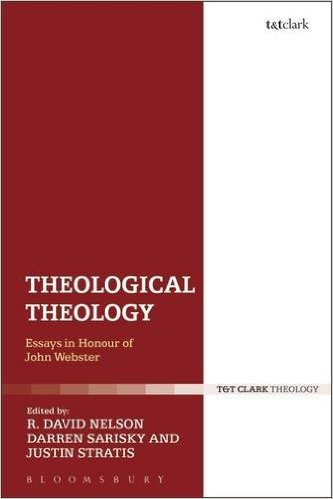
theological theologyTheological Interpretation of Scripture (TIS) is a relatively young, diverse movement in the academy right now. I’ve tried to introduce some broad themes and some helpful guidelines for how to go about doing it, but in a nutshell, it involves explicitly reading the Bible as if it were a theological text (Holy Scripture), in many ways unique because of its divine authorship, with our theological cards on the table. Predictably, not everybody is as sanguine about the proposal (and to be fair, some are better and worse), but this especially is the case of a certain kind of advocate of more mainstream, “historical critical” biblical scholarship. To a certain kind of biblical critic, TIS advocates are interlopers, threatening to pervert the text with their dogmatic presuppositions, colonizing it with their unscientific means of interpretation.

Francis Watson, eminent interpreter of Paul in the New Testament (Paul and the Hermeneutics of Faith, Paul, Judaism, and the Gentiles), tackles this adversarial relationship in a provocative fashion in his essay “Does Historical Criticism Exist? A Contribution to the Debate on the Theological Interpretation of Scripture” in the recent festschrift Theological Theology (307-318). This early paragraph gives you a taste of the argument:

It is widely assumed that the biblical scholarship characteristic of the modern era may properly be labelled ‘historical criticism.’ One may welcome the dominance of historical-critical scholarship or one may deplore it, but few seem to doubt it. In spite of this consensus, my aim here is to detach the label ‘historical criticism’ from the ongoing reality of interpretive practice. I shall argue that this label is not only misleading and limiting but also that it systematically distorts the reality it claims to represent (emphasis added). ‘Historical criticism’ is to be understood not as a neutral characterization of modern interpretive practice but as a rhetorical figure mobilized for transparent ideological ends. (307-308)

His aim in forwarding such a controversial claim is to show the way “historical criticism” is in many ways just as ideological, presuppositional, and so forth, as TIS. In which case, its advocates’ complaints and criticisms of TIS are no more than a form of misleading, special pleading, and disciplinary gamesmanship.

While I can’t give you the whole argument, certainly not the details, I thought I’d outline it since (a) it’s interesting for me, and (b), it’s becoming a live issue.

Historical Criticism As Novum

Watson begins his case by briefly reviewing the history of biblical scholarship, noting that in the 3rd Century CE, Origen was already compiling various Greek translations with the Hebrew test to make textual comparisons (Hexapla). Eusebius did comparative gospel parallels. Augustine develops an elaborate hermeneutical treatise, advocating original-language study, text-critical scrutiny, and interdisciplinary work, as well as devoting himself to comparative Gospel work. Of course, all of this was done with an eye towards preaching in the Church and the love of God (308-310). The question Watson raises here is to call attention to the “pre-modern genealogy of many interpretive issues”, despite the difference in idiom and agenda from the modern period.

“Yet, we are often told, our biblical scholarship is not just different from the scholarship known to Augustine, as it obviously is, but fundamentally different.” According to Watson, the proposed difference that we moderns are “critical” and they were “pre-critical.” They are confessional and we fit right at home in secular universities. “Historical-critical” scholarship is obviously very different because it’s not the sort of thing they practiced and we do.

And here’s where Watson goes on the offense to looking at the way the term is used beyond its neutral signifier by advocates and foes as indicating what modern scholars do differently that pre-critical scholars. He points out that the term functions as a polemical device, as a “declaration of war” against “church” interpretations; it is “anti-dogmatic” in tenor and “therefore anti-ecclesial insofar as the church remains the natural habitat of inherited dogma.” In this role, it is a weapon for modernizers against traditionalists, “an assertion of modernity, with secularity, of participation in a world come of age which has outgrown confessional certainties.”

In case this seems like bluster, he footnotes pertinent quotes by James Barr, who openly worried that new literary approaches (as opposed to source-critical, compositional methods), might undo the gains made by historical criticism if they fall into the hands of conservatives. Or Heikki Raisanen who wondered aloud at the end of his work Beyond New Testament Theology: “Will [biblical scholars] remain guardians of cherished confessional traditions, anxious to provide modern man with whatever normative guidance they can still manage to squeeze out of sacred texts..” (p. 141). The answer is, “maybe”, but that’s not what academic scholars should be concerned with.

Watson goes on to note the way that a simple appeal to “historical criticism” is used ideologically to shut down any suggestion that the doctrine of the Trinity could have any exegetical basis in the text, despite the sophisticated exegesis one finds in patristic writers. But they’re “pre-critical”, so off-limits. (For an alternative, theologically-attuned approach, see Wesley Hill, Paul and the Trinity). Or again, it often functions to limit the horizon of interest for the text, since historical criticism is worried only with the “original historical contexts”, which is a subtler way of ideologically cutting off the questions of current theological interest, with the assumption that we inhabit totally different worlds from that of the text.

The point is, “historical critics” are just as ideologically-motivated in their aims and methods as “confessional” readers, if not as willing to acknowledge the fact.

History and Exegesis

This brings him to issues of “history” and “criticism” in “historical criticism”, beyond its function as an ideological signifier. Watson is convinced there are a number of confusions at this point.

Take history. First, Watson notes that historical critics are not pure historians. They also need to be exegetes looking at things like internal structure, literary shape, etc. which are trans-historical in accessibility. In which case, they might give historically-informed readings, but they are still readings.

Second, historical critics often appeal to the great historical distance between our time and the historical circumstances of the texts in order to distance us from it. But the past is not wholly different from the present and contextualizing as a practice serves more to bridge the gap, bringing us closer to understanding the world we share with the humans on the “other side” of the gap, so to speak.

Third, Watson suggests that there are a number of historical contexts beyond the “original” that interpretation might profitably engage. Yes, they ought to be informed by the original contexts, but there’s no reason to not expand the context wider in various directions beyond simply what precedes the text.

The Radical As Norm

The other key term is “critical.” The term, as most know, originates with the practices of textual criticism, but then gets identified with the 19th century “higher” criticism of identifying textual prehistories like Priestly, Yahwistic, Elohistic, and the rest of the alphabet soup the Germans gave us. Beyond that, though, Watson says that “critical”, as a term, goes beyond textual restoration. It is not “scholarship that is critical of received opinion about the biblical texts and their significance” (315). Like Descartes, doubt is the order of the day.

From there, Watson gives an interesting genealogy of the critical Gospel scholarship noting the ideological way that Schweitzer told the story to make Reimarus’ the hero: a German who, like himself, saw Jesus as a son-of-David-Messiah type, and didn’t mind critiquing and putting aside Christian dogma  from his rationalist, deistic view in the process. Watson notes that, in fact, the sort of “life of Jesus” project both Reimarus and Schweitzer were embarked on, began much earlier in the pre-critical era with the works of the histories and harmonies of Jean Leclerc (1699) or Bernard Lamy (1699). Reimarus did little to get anything going and was handily dealt with by noted, biblical scholar Johann Salomo Semler.

Watson’s point is “to indicate how the aura of radical chic” to which life-of-Jesus research “lays claim—from Reimarus to the ‘Jesus Seminar’—has been manufactured.” No, beyond the story many tell themselves, “Iconoclastic assault on cherished beliefs is not a constitutive element in modern biblical interpretation.” When that sort of thing happens, it’s usually the biblical scholars doing damage control who make the real gains in scholarship.

Wrapping Up

He closes things out by noting that it is possible to find scholarship that pretty much conforms to the “picture” given by the term “historical criticism.” By and large, though, it’s misleading with respect to the majority of what’s going on. Stick to “biblical interpretation”, “modern”, or even “critical” (when methodologically appropriate), but leave the rhetorical sledgehammer of “historical criticism” to the side as fairly unhelpful.

Finally, he suggests that with this sort of “loosening” the ties between historical criticism, so-called, and standard interpretive practice, gives breathing room for TIS to not worry and “locate itself on the margins” of biblical scholarship. TIS practitioners should not let themselves be pushed around by people attempting to maintain ideological, disciplinary hegemony, but lay claim to the mainstream and engage, drawing on the variety of disciplines and resources found there.

And this is a wise way to end. TIS, done properly, I think should not be cordoned off from the riches of historical studies, of which there are many. But they don’t need to be scared of the critical project, especially since so many of its presuppositions have been exposed. For those interested, I’d commend Kevin Vanhoozer’s essay in the same volume, or Daniel Treier’s  Introducing Theological Interpretation of Scriptureor something like Peter Leithart’s commentary on 1 & 2 Kings in the Brazos series.

Soli Deo Gloria

Everybody Wants to be Christocentric, But What Does that Even Mean?

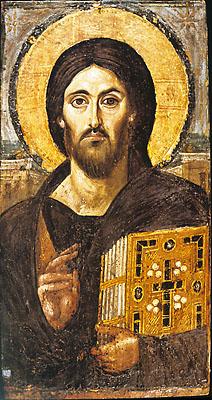
christ pantokrator“Our theology ought to be truly Christocentric.”

I can’t tell you how often I’ve heard that phrase used, nodded along, and then had to stop and ask myself, “Okay, but what does that even mean?”

Apparently I’m not the only one.

In a short article entitled “A Note on ‘Christocentrism’ and the Imprudent Use of Such Terminology” [WTJ 68 (2006): 253-60], Richard A. Muller registers a number of prudent protests about the contemporary discussions about whether certain kinds of Reformed theology are “truly christocentric” enough. Mostly this has to do with in-house conversations that started in the 20th century about whether there was a major difference between Calvin’s “Christocentric” theology and that of later theologians like Beza and the Post-Reformation Orthodox who followed. Calvin was supposed to be a good, pre-Barthian Christocentric theologian, while the rest of the tradition unfortunately took a wrong turn and based all their theology around God’s predestinarian decree, making things lopsided and decidedly un-Christocentric.

Without getting into all the details of Muller’s article and the Reformational historiography (which has largely put the aforementioned myth to bed), one the main benefits of Muller’s discussion is calling attention to the rhetorical gamesmanship that gets played when people throw the term around as a trump card: “Well, I’m just being Christocentric in my theology.” As if anyone doesn’t want to be “Christocentric”? Indeed, if you cruised through history and asked any major theological figure, especially in the Reformed tradition, “Are you trying to be Christocentric or centered on something else?”, I’ll give you to ten to one that all of them will answer, “Of course, I’m Christocentric. Jesus is everything to me.”

What’s even more helpful, though, is the attention he calls to the equivocation and confusion around the term that muddles things. “Given that such diverse figures as Irenaeus, Bonaventure, Duns Scotus, John Calvin, Theodore Beza, Jerome Zanchi, Jacob Arminius, Friedrich Schleiermacher, Ι. Α. Dorner, Gottfried Thomasius, E. V Gerhart, Henry B. Smith, William Adams Brown, and Karl Barth have been described as christocentric thinkers, some distinction is most surely necessary” (254).

And so, in order to clear the ground for a more helpful use of the term, Muller gives a taxonomy or typology of at least three kinds of christocentrism that scholars could be using to describe a theologian.

First, there’s what he calls “soteriological” christocentrism. Basically, on this view, a theologian or theology is Christocentric if it confesses that Jesus Christ is central to the process and work of salvation. At this point, unless you’re essentially a Pelagian, a radical liberal, or something on that order, most traditional, Christian theology qualifies as Christocentric at this foundational level.

Second, he says there is a kind of which places a “systematizing emphasis on the Adam-Christ typology and the priority of Christ over Adam.” He calls this “prototypical” christocentrism in that there is importance given beyond Christ as savior, to Christ as a logically and theologically prior to Adam in the plan of God for history. You can find this in the “incarnation-anyways” line of theology, or in the theology of Irenaeus or Scotus and Fransiscan order.

Third, he dubs “principial” christocentrism in that it makes Christ the “principle” of theology, building on the last two “still more speculatively, that the Christ-idea must be used as the interpretive key to understanding and elucidating all doctrinal topics.” Forms of this can be spotted in the liberal tradition from Schleiermacher onwards, which makes the Christ event a central, often corrective, interpretive grid over Scripture, and the rest of theology. In some cases, Christ is the only revelation. Barth, in a different way, is a chief representative of this type, though he has been (fairly or not) accused of more than christocentrism, but rather, christomonism (on which, I have little bit here).

Given these varieties of “christocentrisms”, it does seem wise to have some handy terms like this and be clear about what we mean when we use them. Especially since Muller notes that it is largely this last, historically-novel form that has been assumed in various discussions, and then used as the standard by which previous theologies have been judged, instead of taken on their own terms.

One more point that ought to be brought out is the way the issue of Scriptural interpretation plays a role in all of this. Muller brings out the various “christocentrisms” with respect to the structure of theological systems. And that’s good, but this also bleeds out into the issue of have a christocentric or “Christ-centered” hermeneutic. In other words, what do we mean when we say we read all of Scripture in light of Christ? How do these three types of christocentrism match up (if at all) with different approaches to typology and so forth? Can you only be christocentric in the first sense and still affirm a “Christ-centered” reading of Scripture, or do you have to buy into the second and third kinds as well?

Are we talking about seeing Christ as the fulfillment of all the prior history of revelation in a way that still acknowledges it as true revelation? Or about all prior revelation as somehow pointing to Christ and therefore legitimately read as testimony to Christ? Do we see all of Scripture pointing to Christ, then, because the eternal Son, through the Spirit, by the will of the Father is actually the active agent of revelation throughout all of redemptive history?

Or are we talking about Christ as a corrective revelation that sort of overlays prior revelation in a way that is disjunctive and discounts earlier portions as lesser, false, and in many ways misguided? Is the event of Christ, then, the only truly true revelation? In other words, we’re back the issue of the Jesus-Lens or the Jesus-Tea-Strainer and the theological presuppositions that go along with them.

Not that we’ve solved anything here, but I don’t think there’s enough clear thinking around this in popular writing on the issue.

Soli Deo Gloria

What To Call a Christian (Or, Preaching The Whole Christ)

whole christTowards the early half of his new work The Whole Christ: Legalism, Antinomianism, & Gospel Assurance–Why the Marrow Controversy Still MattersSinclair Ferguson asks a pointed question that may initially seem trivial:

…what is my default way of describing a believer? Perhaps it is exactly that: “believer.” Or perhaps “disciple,” “born-again person,” or “saint” (more biblical but less common in Protestantism!). Most likely it is the term “Christian.”

Yet these descriptors, while true enough, occur relatively rarely in the pages of the New Testament. Indeed the most common of them today (“Christian”) is virtually nonexistent in the New Testament, and the contexts in which it occurs might suggest that it was  a pejorative term used of (rather than by) the early church.

“Okay”, you may think, “So what’s in a name? Why does it matter what our default term is if the reality is the same?” At it turns out, quite a bit.

Contrast these descriptors with the overwhelmingly dominant way the New Testament describes believers. It is that we are “in Christ.” The expression, in one form or another, occurs well over one hundred times in Paul’s thirteen letters.

Then draw the obvious conclusion: If this is not the overwhelmingly dominant way in which we think about ourselves, we are not thinking with the renewed mind of the gospel. But in addition, without this perspective it is highly likely that we will have a tendency to separate Christ from his benefits and abstract those benefits from him (in whom along they are to be found) as though we possessed them in ourselves. (45)

Ferguson goes on to link this problem to the main issue of his book, the 18th century controversy surrounding the theology of Edward Fisher’s little book on the gospel The Marrow of Modern Divinity and its implications for preaching the gospel.

I was struck by this section on not falsely separating Christ’s person and work in our thinking, preaching, and teaching of the gospel precisely because it’s so easy to do. Many of us know “the gospel” and how to clearly explain the nature of justification by faith, adoption, the free forgiveness of God, and so forth on their own, as atomized benefits, or gifts that God offers us.

The point Ferguson makes, which is central to the theology of the New Testament, Calvin, and the best of the Reformed tradition, is that all of these benefits only come to us in union with Christ. Paul didn’t go around preaching justification, or preaching adoption, or preaching sanctification. Paul went around preaching Christ and him crucified and risen, in union with whom we are justified, adopted, sanctified, and so forth.

Christ himself is the good news we are to preach. Ferguson notes, “while we can distinguish Christ’s person and his work in analytic theological categories, they are inseparable from each other” (46). As Thomas Boston, (one of the main heroes of Ferguson’s book), has it: “You must first have Christ himself, before you can partake of those benefits of him.” Or again, Kevin Vanhoozer has said that the declaration of the gospel is, “I now pronounce you man in Christ.”

Paul puts this message on blast in Ephesians 1:

Blessed be the God and Father of our Lord Jesus Christ, who has blessed us in Christ with every spiritual blessing in the heavenly places, even as he chose us in him before the foundation of the world, that we should be holy and blameless before him. In love he predestined us for adoption as sons through Jesus Christ, according to the purpose of his will, to the praise of his glorious grace, with which he has blessed us in the Beloved. In him we have redemption through his blood, the forgiveness of our trespasses, according to the riches of his grace, which he lavished upon us, in all wisdom and insight making known to us the mystery of his will, according to his purpose, which he set forth in Christ as a plan for the fullness of time, to unite all things in him, things in heaven and things on earth. In him we have obtained an inheritance, having been predestined according to the purpose of him who works all things according to the counsel of his will, so that we who were the first to hope in Christ might be to the praise of his glory. In him you also, when you heard the word of truth, the gospel of your salvation, and believed in him, were sealed with the promised Holy Spirit, who is the guarantee of our inheritance until we acquire possession of it, to the praise of his glory. (Ephesians 1:3-14)

Every single one of the many blessings, privileges, and graces enumerated here given to us through Christ’s work and in conjunction with Christ’s person.

The question we might ask ourselves, though, is if we were to preach this passage, or do a study through it, where would our emphasis be? Would it be on understanding the various benefits, (which obvious ought to be considered and expounded) or would the dominant note be on the Christ who gives them? Ferguson asks:

It is obvious to me and of engrossing concern, that the chief focus, the dominant note in the sermons I preach (or hear), is “Jesus Christ and him crucified”? Or is the dominant emphasis (and perhaps the greatest energies of the preacher?) focused somewhere else, perhaps on how to overcome sin, or how to live the Christian life, or on the benefits to be received from the gospel? All are legitimate emphases in their place, but that place is never center stage (50).

Emphasis matters, then. Our focus is not to get people to try to be better adoptees or feel more justified, which leaves them looking to themselves, staring at their own, spiritual navels. Instead, we want them to look to Christ in whom they are assured of their justification and adoption, and in whom they now can live out the Christian life.

A Recommendation for Preachers

I  suppose I’ll conclude by  sharing a segment that cut me to the bone:

In the nature of the case there is a kind of psychological tendency for Christians to associate the character of God with the character of the preaching they hear–not only the substance and content of it but the spirit and atmosphere it conveys. After all, preaching is the way in which they publicly and frequently “hear the Word of God.” But what if there is a distortion in the understanding and heart of the preacher that subtly distorts his exposition of God’s character? What if his narrow heart pollutes the atmosphere in which he explains the heart of the Father? When people are broken by sin, full of shame, feeling weak, conscious of failure, ashamed of themselves, and in need of counsel, they do not want to listen to preaching that expounds the truth of discrete doctrines of their church’s confession of faith but fails to connect them with the marrow of gospel grace and the Father of infinite love for sinners. It is a gracious and loving Father they need to know. (73)

This only happens when we preach Christ, the Son, who reveals the Father’s heart, not simply abstracted benefits procured in an instrumental fashion.

Honestly, I wish someone had handed me this book six years ago when I started preaching to my college students. It would have been so helpful to avoid the some of the mild, pendulum-swinging of emphasis in my preaching that could creep in despite my stated theology. Instead, much of this I had to learn the hard way, slowly recognizing a number of these tendencies only with time.

All that to say, Ferguson’s careful exposition of the issues of grace, the law, legalism, and antinomianism, while in the context of an initially arcane historical discussion, have been very helpful for thinking through the issues of contemporary gospel preaching. Simply put, I would commend Ferguson’s little book to you as a whole, and especially to any present or potential preachers.

Soli Deo Gloria


Mere Fidelity: The Spirituality of Time

Mere FidelityThis week Alastair, Matt, and I get into the issue of time and how it affects our spiritual life. I’m not gonna lie, this one was pretty fun. We jump into everything from Augustine, to the musical nature of keeping time, the various spiritual dimensions to our awareness of time and eternity, and we manage to avoid speaking about A-Theory and B-Theory, which I’m sure everyone will thank us for.

I hope you enjoy this one. And if you do, feel free to share it.

You can also follow the podcast on iTunes, or using this RSS feed.

*WE ARE CURRENTLY LOOKING FOR PEOPLE TO HELP US TO COVER THE MONTHLY EXPENSES OF THE PODCAST. PLEASE VISIT OUR PATREON PAGE*

Soli Deo Gloria