Jane Austen, Tim Keller, and the Happiness of Holiness

pride and prejudiceAfter many long, inexcusable years, I finally sat down to read a Jane Austen novel; Pride and Prejudice, to be exact. I suppose I had avoided them in my youth because they were the type of thing my sister–a girl, mind you–read. Also, I’d been subjected to the film Sense and Sensibility as a young boy and I’m still not sure what effect that’s had on my disposition ever since. In any case, inspired by my English acquaintances and a sense of nostalgia for literature, I picked up the copy off the shelf last week and got to work.

It was delightful, of course. Singing Austen’s praises is a bit absurd at this point; the humor, lively characters, dialogue, and so forth, was a wonderful change of pace from all the theology and biblical studies. (And ladies, I get it. That Mr. Darcy. What gallantry.)

Now, I’ve known for a while that reading literature is more than simple entertainment. Reading thick literature is a soul-expanding experience, especially with novelists possessing as keen an eye for the richly textured diversity of human experience and character as Austen. Indeed, it’s not simply that Austen was a keen observer, but she was also a moralist in the best sense of the word, whose portraits of virtue and vice not only amuse, but enlighten, shape, and form us. I remember one of the liveliest sections of Alasdair MacIntyre’s magisterial After Virtue was dedicated to examining the shape of Austen’s moral thought. I’m sadly only now in a position to begin appreciating it.

(BTW, spoiler alert on a 200-year-old novel). While there were multiple passages throughout the novel that caught my eye, one encounter between our protagonist Elizabeth Bennet and her sister Jane in particular drew my attention. It is towards the close of the novel, when the amiable, wealthy, generous, and all-around perfect match, Mr. Bingley has finally proposed to Jane and their happiness is secured. Jane and Elizabeth are rejoicing at her good fortune and we find this little nugget of moral wisdom:

Jane: “Oh Lizzy, why am I this singled from my family, and blessed above them all! If I could but see you as happy! I there were such another man for you!”

Elizabeth: “If you were to give me forty such men, I never could be so happy as you. Till I have your disposition, your goodness, I never can have your happiness.”  pg. 331

Elizabeth’s response to Jane ought to be memorized by our particularly discontented and unhappy age. Jane looked at her sister in the rapture of her own delight in her impending marriage to such a good man and wished that Elizabeth might too share in that same kind of joy. For Jane, the cause of her joy and happiness was Bingley and she supposed that if Elizabeth could also have a Bingley, she would be just as happy.

Elizabeth knows better, though. While not writing off the truth that Bingley is a good man and that the situation that goes along with him is a favorable one, she knows that the another significant difference in separates the two young women: their “goodness” and “dispositions.” In other words, their characters. All throughout the novel we are keenly aware that Jane is far more humble, less critical, a bit too trusting, but much more easily contented, and, in a word, more virtuous than Elizabeth. (Though I’m sure some Austen fan could correct me here.) The point is that Elizabeth knows happiness is not only an issue of having favorable external circumstances, or even the possession of a great good, but one of having the right character.

You see, it would not matter if even the most advantageous situation were cooked up, a woman with the wrong character would be unable to enjoy a good husband. The woman lacking in wisdom would be unable to recognize the good man for who he is. The woman lacking humility would suppose the good man is deserved and so would be unable to receive him with the delight of a gift or with gratitude; also, should there be some understandable, human defect, she would be tempted to take it as a greater affront and be less likely to forgive, be contented, or patient. I could go on listing any number of virtues and vices and you’ll the problem. It doesn’t matter how good the situation is, if the virtue is missing, there can be no long-term joy, only short-term pleasures. Of course, this applies equally to men.

I’m reminded of a section in Tim and Kathy Keller’s The Meaning of Marriage where they speak of the happiness of holiness. Many think that marriage is about making you happy, being pleased by and pleasing your spouse. The Kellers show disastrous fruit of pursuing that impossible approach at length. Instead, Paul teaches us that the end-goal of marriage is the holiness of your spouse. Marriage is about sanctification and one day seeing your husband and wife looking radiant, with the beauty of Christlike character. In that setting, the struggles, the pains, trials, as well as the pleasures, joys, and celebrations can take their place as part of a grander whole.

Now, at this point some may get the impression that marriage isn’t about happiness at all. But that would be a mistake. In fact, what we’ve seen with Austen is that happiness and goodness, or happiness and holiness go hand in hand. The Kellers write:

Does this mean “marriage is not about being happy; it’s about being holy”? Yes and no. As we have seen, that is too stark a contrast. If you understand what holiness is, you come to see that real happiness is on the far side of holiness, not the near side. Holiness gives us new desires and brings old desires into line with one another. So if we want to be happy in marriage, we will accept that marriage is designed to make us holy.

-Timothy and Kathy Keller. The Meaning of Marriage: Facing the Complexities of Commitment with the Wisdom of God (pp. 124-125).

While being so much more than this, Austen’s novel, in many ways, is parable about that suitability of character in marriage, and the happiness that attends holiness. I’d commend you, then, to pick it up, make yourself some tea, plop yourself down into a couch, and prepare to be entertained and maybe even edified at the same time.

Soli Deo Gloria
Do Not Forget, Above All Else, It is the *Lord’s* Supper

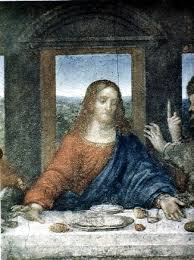
Christ at the SupperThough almost every doctrine in Christianity has been hotly disputed at some point, the debates concerning the Lord’s Supper, or Communion have been among the most heated. Despite the fact that, at its core, it is about the unity of Christians, it is the issue that kept the Lutherans and the Reformed from coming together in the midst of the Reformation. In the disputes over differing theologies of the Supper can be seen some of the central disputes between Catholics and Protestants; what is the nature of grace and its mediation?; what authority does the Church have in distributing it?; how ought we consider those aspects of Jesus’ work that are final and which are continuing? On and on the questions can go.

And for those tempted to write them off as needless nitpicking, I’d say they’re rightly important debates for they cut to the heart of the gospel. We may rightly lament them, and yet acknowledge they are necessary nonetheless.

For those of us concerned with parsing these issues, studying, arguing, and eventually administering the Supper, Herman Bavinck has an important word of caution that cannot be lost sight of, no matter where we eventually come down on the issue: do not forget that it is a meal of the Lord’s:

But it is a meal of the Lord (δειπνον κυριακον, deipnon kyriakon). Jesus was the inaugurator of it and in this regard also fulfilled his Father’s will, which it was his food to do [John 4:34]. The Lord’s Supper, like baptism, is and has to be of divine origin to be a sacrament, for God alone is the distributor of grace, and he alone can bind its distribution to the means ordained by him. Jesus specifically instituted this Supper in his capacity as mediator. In it he acts as prophet, who proclaims and interprets his death; in it he acts as priest, who gave himself up to the cross on behalf of his own; in it he also acts as king, who freely makes available the grace secured and gives it to his disciples to enjoy under the signs of bread and wine. Besides being the inaugurator of the Supper, he is also its host and administrator. He himself takes the bread and wine, blesses them, and distributes them to his disciples. Nor was he only host and administrator when he physically sat at table with his disciples, but he also is and remains the host and administrator of it always and wherever his meal is celebrated. Every Supper, administered according to his institution, is a Supper of the Lord (δειπνον κυριακον). For Christ is not only its inaugurator as an example but also its inaugurator by precept. It is a meal in remembrance of him (1 Cor. 11:24), to proclaim his death (11:26), as a participation in his body and blood (10:16, 21; 11:27). In the Lord’s Supper Christ comes together with his church, and the church comes together with Christ, thereby testifying to their spiritual communion (cf. Rev. 3:20).

Reformed Dogmatics Volume 4: Holy Spirit, Church, and New Creation, pg. 562

Yes, we are the ones fed. Yes, ours are the human hands that parcel out the bread and pass the wine. Yes, ours are the mouths the chew, and the souls that are nourished. But Christ is the great Lord of the Banquet. He is the prophet, priest, and king. He is the Son providing a feast for his younger brothers at the behest of his Father through the mediation of the Spirit.

At the center of the Lord’s Supper is the Lord Himself.

Let us not miss his invitation to the table.

Soli Deo Gloria

Mere Fidelity: Theosis and the Warning Passages

On this episode of Mere Fidelity we take up two subjects.

1. The warning passages in Hebrews and elsewhere. Andrew and Alastair have some excellent insights. Actually, Alastair gave the best read of the warning passages in Hebrews, I’ve heard.

2. How about that Eastern Orthodoxy theosis? Is it kosher for Evangelicals? Can Reformed types make any sense of it? Well, maybe. You’ll just have to listen in.

Also, I explain why I sound dumber than everyone else on the podcast.

There you go.

Also, we have links to books and articles over at Mere Orthodoxy for this subject.

Soli Deo Gloria

Christ the King: Kingdom of Power, Kingdom of Grace

christ pantokratorIn a section on church government, Herman Bavinck begins to elaborate the Reformed view in contrast to a number of others by reflecting on the nature of Christ’s kingship and kingdom. Simply put, this is one of the most majestic passages I’ve ever read on the subject.

The Reformed, thanks to their deep sense of the sovereignty of God, understood this. Those who proceed unilaterally from the goodness or the love or the fatherhood of God do not come to this understanding. But those who do not just highlight one of God’s attributes but bring all his attributes to the fore and proceed from God as [the living] God have no choice but to subordinate all creatures to him, in dependence and humility. God is sovereign always and everywhere, in nature and grace, in creation and re-creation, in the world and in the church. His statutes and laws are the rule of our lives, for humans are his creatures, subject to him, and obligated to respond in total obedience.

In the church this view naturally led to the confession of the kingship of Christ. For just as in civil life God instituted the government on account of sin, so he anointed his Son to be king of Zion, the mountain of his holiness, and appointed him to be head over all things for the church (Ps. 2:6; Eph. 1:20; Phil. 2:9–11). Christ is not only a prophet who teaches by his word and example, not only a priest who atones by his sacrifice, but also the king who preserves and protects his own and to that end has been clothed with power in heaven and earth. He is king in a much more authentic sense than any secular ruler. He is that not only according to his divine nature but also according to his human nature. The human Christ Jesus has been exalted to sit at his Father’s right hand. He was all this not just from eternity and in the days of the Old Testament and during his sojourn on earth, but is still all this today and will be to the end of the ages. He is the same yesterday, today, and forever. Indeed, he is this now in the state of exaltation in a much richer sense than he was in the state of humiliation and in the time that preceded it. Granted, he had from eternity been anointed king and exercised this office, along with that of prophet and priest, immediately after the fall and up until his death on the cross; but on account of his humiliation God highly exalted him and gave him a name above every name. By his resurrection he was declared with power to be the Son of God, became Lord, received all power in heaven and on earth, and now reigns until he has completed the kingdom and put all his enemies under his feet.

This kingship of Christ is twofold. On the one hand, it is a kingship of power (Pss. 2:8–9; 72:8; 110:1–3; Matt. 28:18; 1 Cor. 15:27; Eph. 1:21–22; Phil. 2:9–11; Heb. 1:6; 1 Pet. 3:22; Rev. 17:14). In order that Christ may truly be king over his people, the king who redeems, protects, and preserves them, he must have power in heaven and on earth, over Satan and the world. It is a kingship of power, subordinate to, and a means for, his kingship of grace. It does not mean that the Father has ceased to govern the world and that now all authority in the creation comes down from Christ and is exercised in his name. But, based on Christ’s perfect obedience, God has granted the Mediator the right and the power to gather his people together out of the world, to protect them against all their enemies, and to completely subdue those enemies themselves. God so rules the world that Christ may ask for the Gentile nations as his inheritance and the ends of the earth as his possession [Ps. 2:8]. In the event of Christ’s exaltation, the Father recognized his Son and appointed him as the heir of all things (Heb. 1:2).

On the other hand, the kingship of Christ is a kingship of grace (Ps. 2:6; Isa. 9:5–6; Jer. 30:9; Ezek. 37:24; Luke 1:33; John 18:33ff.; Eph. 1:22; 4:15; 5:23; Col. 1:18; 2:19). Inasmuch as this kingship is totally different from that of the kings of the earth, the New Testament much more frequently calls Christ “the head” than the king of the church. For it is a kingdom of grace in which Christ rules by his word and Spirit. His word comes to us from the past, binds us to the historical person of Christ and to the work he accomplished in time, and asks of us faith in the sense of assent and acknowledgment. But he who descended is the same as he who also ascended far above all the heavens [Eph. 4:10], is seated at God’s right hand, and dwells in us “with his divinity, majesty, grace, and Spirit and never again departs from us” [Heidelberg Catechism, Q&A 47]. It is the living Christ exalted to sit at the right hand of God who consciously and endowed with all power gathers his church, defeats his enemies, and guides the history of the world to the day of his parousia. As our Mediator, he is still always active in heaven and present by his Spirit on earth in church and in the offices, in Word and sacrament.

-Reformed Dogmatics Volume 4: Holy Spirit, Church, and New Creation. pp. 370-372

Three points I want to highlight:

  • Christ is king according to both his divine and his human nature. Jesus is the resurrected and ascended human Lord of all things who fulfills God’s intention for Adam’s race.
  • Christ is a king with power who subdues his enemies for the sake of his people.
  • Christ is a king with grace who rules by word and Spirit. It is a gospel-kingship.

May these truths fill you with love and adoration for our glorious king. Marvel before him and offer up your lives as a faithful service to the King who served us.

Soli Deo Gloria

Deep Church Rising by Andrew Walker and Robin Parry (Christianity Today Review)

deep church risingHistorically, schisms have been rather public, bloody things. This was clearly the case when the church split between East and West. Even though some hope of reconciliation was on the table at various points, excommunications had been traded, Crusades had happened, and everybody knew the two or three theological disputes that needed settling. Roughly the same thing could be said of the split between Protestants and Roman Catholics. Following a number of bloody wars, mutual persecutions, and martyrdoms, the results were different communions, confessional documents, and other marks of separation.

In their recent book Deep Church Rising: The Third Schism and the Recovery of Christian Orthodoxy, Andrew Walker and Robin Parry argue that, unbeknownst to many, the Western church is in the midst of a third great schism. Unlike the last two, though, the split hasn’t resulted in a clear line between new denominations and old ones, but runs right through the various churches of the West. On one side stand those who affirm a broadly supernaturalist Christian orthodoxy embodied in the Nicene and Chalcedonian Creeds. And on the other, you find those who can at best recite the creeds with their fingers crossed. Having embraced the various presuppositions of Enlightenment and postmodern thinking, they are skeptical of supernatural claims and often doubt the very idea of objective truth.

Set against the backdrop of Western consumerism, our “secular age,” and evangelical tendencies toward thinner understandings of the church, Walker and Parry are worried about a widespread loss of the gospel within the Christian community. Taking a cue from C. S. Lewis, the authors propose a vision for recovering what they call “Deep Church,” meaning a thick orthodoxy of belief and practice woven together from the wisdom of our past. They want to help us recuperate from a bad case of “gospel amnesia” by renewing interest in the church’s historical journey.

You can read the rest of my review at Christianity Today.

Soli Deo Gloria

Christianity Today Interview with Mark Labberton: “Called” to Follow Jesus

labbertonFollowing Jesus has never been an easy task. All the same, from the time of the disciples until today, Christians have been called to strap on their sandals, so to speak, and walk the road their Lord calls them down. While the basic New Testament call remains the same, though, each age places unique speed-bumps and detours along the path of discipleship. In Called: The Crisis and Promise of Following Jesus Today (InterVarsity Press) Mark Labberton, president of Fuller Theological Seminary, gives a bracing assessment of the challenges facing the North American church, as well as a hopeful invitation to trust the promises of God as we respond to the call of Jesus in the world. Derek Rishmawy, a minister to students and young adults in California, spoke with Labberton about that vision.

You talk about the crisis and the promise of following Jesus. In a nutshell, what’s the crisis?

The crisis we’re facing is that many people outside and inside the church don’t understand what it’s supposed to be about. It has become encrusted with so many cultural, historical, political, economic forms. As these get thicker and thicker, they distance us from the core affirmation of living as disciples of Jesus. If you look at the New Testament and ask “What is the church?” I think the primary answer is: people living their lives as an act of worship and response to Jesus Christ and seeking to live as daily disciples in community and for the sake of their world. The crisis is that Christians inside the church don’t seem to view this way of life as necessary. This leaves outsiders puzzled about the purpose of the church, because so little of it seems related to Jesus.

And what’s the promise?

The most illuminating moment of the “promise,” in cultural terms, is the shock of Pope Francis. The Catholic Church has been embroiled in scandal for many years. It has been seen as bureaucratic and unresponsive. Then, all of a sudden, there appears this authentic, living disciple. Here is someone who seems to live out of this deep spirit of humility—a Jesus follower who wants a life rooted in simple action.

Across the world, people have looked at his example—economically, politically, socially—and said, “That’s what the church is about?” And Francis is shocked by their shock: “This is what Christians do.” To live with integrity in a way that’s counterintuitive to the wider culture—that’s the promise of following Jesus today.

You can read the rest of the interview here at Christianity Today

Triune Justification

trinityFrom time to time I hear the charge that Protestant and Evangelical approaches to salvation are sub-trinitarian. By focusing so narrowly on the question of justification as a legal or forensic action, or Jesus’ cross-work as its grounding, Protestants have ignored the Father and crowded out the Spirit. While I must admit that may be true in some popular presentations, it’s certainly not the case of classic Reformed theology. Not only was God’s justification set within the context of a broader trinitarian theology of union with Christ, the completion of justification considered in itself can only be conceived of as the gracious work of the Triune One.

Herman Bavinck lays out the trinitarian shape of our justification in laying out the nature of God’s grace as the forgiving mercy of God as opposed to the more metaphysical conception of the medieval Roman church:

The establishment of the covenant of grace proceeds from God and from him alone. It is he and he alone who for his own sake blots out our transgressions and no longer remembers our sins (Isa. 43:25). We are justified by his grace as a gift (Rom. 3:24; Gal. 3:18; Eph. 2:8; Titus 3:5–7). More specifically, it is the Father from whom this benefit proceeds, for he is the lawgiver and judge (James 4:12), but also the merciful God, who abounds in steadfast love, and blots out transgressions for his name’s sake (Num. 14:18; Pss. 32:2; 103:3; 130:4; Isa. 43:25; Rom. 3:24; 4:6; 8:33; 2 Cor. 5:19). He himself paved a way in Christ to distribute this benefit, so that Christ, too, possessed the power to forgive sins (Matt. 9:2–6; John 5:22, 27), and himself sent the Holy Spirit to apply this benefit to the hearts of his children (John 14:26; Rom. 8:15–16; 1 Cor. 6:11). In the past, Reformed theologians put it as follows: The Father justifies effectively; the Son, meritoriously; the Holy Spirit, applicationally. And to complete the picture at once, let us add: faith apprehends, the sacraments seal, and works declare.

Reformed Dogmatics Volume 4: Holy Spirit, Church, and New Creation, pg. 205

Here we see Augustine’s formula “Opera trinitatis ad extra indivisa sunt”, which translates “the works of the Trinity on the outside are indivisible.” In every act of creation and redemption, it is the Father working through, as Ireneaus classically put it, his “two hands” the Son and the Spirit.

So then, must a Protestant view of salvation be sub-trinitarian? While we must always keep in view the broad shape of salvation from election all the way through to glorification, even a laser-like focus on the article of justification cannot eradicate the Triune shape of our faith. It is God who justifies us: Father, Son, and Holy Spirit.

For those looking to go deeper into the trinitarian shape of our faith, I would again commend Fred Sanders’ excellent little book The Deep Things of God

Soli Deo Gloria

Guilt Isn’t Just a ‘Religious’ Problem.

I’m pretty sure everyone’s had one of those conversations where days or months afterwards you think to yourself, “Man, that’s what I should have said to So-n-so!” After analyzing the problem with the heat turned down, you end up spotting the fatal flaw, or key unquestioned assumption that was driving it in the direction it was going. Unfortunately, I have those all the time, both because I overthink things, and because I’m not always as quick on my feet as I’d like to be.

One such conversation arose in one of my philosophy classes in my undergrad. We were talking about the ethics of belief, the sub-section of philosophy that deals with when it’s okay to believe something. Questions such as: Can you believe something just because you want to? Is evidence always necessary for every belief you hold? Is it ever okay to believe something you can’t prove? That kind of thing.

Well, we were discussing Pascal’s famous (and widely misunderstood) argument The Wager. Pascal was writing in Catholic France at a time when philosophical skepticism had made a comeback and the classic arguments for the existence of God were in doubt. As part of a broader apologetic, he proposed a little thought-experiment to show that even without evidence skepticism still wasn’t your best option.  

guiltyThe gist of it is this: you’ve got two things at stake when it comes to belief in God, the truth of the matter and your happiness in this life. What’s more, you’ve got two faculties you use to come to your belief, your reason and your will. He says, “Well, say the odds for and against the existence of God are 50/50–there are good arguments both ways, and so your reason can’t settle the issue and the truth is unverifiable. Then what? Well, you shouldn’t consider the issue settled. You still have your will and your happiness to think about.” In Pascal’s view, it makes sense that you should still go for belief in God because that’s the only way to achieve the joy of meaning, purpose, and so forth that comes with belief in God. For the purposes of the story we don’t need to go further. For a better explanation, consult Peter Kreeft’s excellent summary and retooling of the Wager.

Here’s the payout for the story. Pascal argued that believing in God had benefits and joys for this life like meaning, purpose, virtue, and so forth. As we discussed this, my professor–let’s call him Professor Jones–said something I’ll never forget. He asked, gently, but with a hint of sarcasm, “Oh, you mean the joy of going around feeling guilty all the time for your sins?”  In Professor Jones’ mind, the corollary of belief in God is an overwhelming and unrelievable sense of guilt for violating his rules. This clearly didn’t seem like a step up to him.

Now, at the time, I didn’t have conversational space, or wherewithal to respond adequately, but if I had, I would have said, “Oh, but Professor Jones, you already walk around struggling with guilt over failing your god.”

Now, what do I mean by that? Well, let me break it down in a few steps.

Everybody Has a God. The first step is understanding that everybody has a ‘god’ of some sort. The world we live in tends to split people up between “believers” and “non-believers.” The Bible has a different dividing line: worshipers of the true God, or worshipers of something else. See, everybody has something in their life that they treat as a functional god. Whatever you look to in order to give you a sense of self, meaning, worth, and value is a ‘god.’ Martin Luther put it this way:

A god means that from which we are to expect all good and to which we are to take refuge in all distress, so that to have a God is nothing else than to trust and believe Him from the [whole] heart; as I have often said that the confidence and faith of the heart alone make both God and an idol. —Large Catechism

So whether you “believe” intellectually, in a deity or not, you still worship something. This is because we were created by God for worship, so if we won’t worship him something else rushes in to plays that role in your life, be it money,  career, status, relationships, and so forth. It’s either God, or an idol. There is no other option.

Everybody Follows and Fails that God’s Commands. Following off of this, every god has commands and demands worship. If make money your god, then you are under command (compulsion) in order to do whatever it takes to acquire it. You will work as hard as you need to (become a workaholic) and sacrifice whatever you have to (relationships, kids, ethics) in order to get it. When you have it, you feel secure. You’ve achieved and obeyed and so the god has blessed you. The flipside is, if you fail it, make a bad investment, lose your cash in a housing crash, then you feel the loss of security, but also the crushing sense of guilt that comes with failing your god. Wrath descends.

A few moment’s reflection You can see this everywhere: from the careerist who can’t forgive herself for blowing that promotion, to that bitter young scholar struggling to live up to his father’s expectations, to the mother who crushes herself because her child-god didn’t turn out picture perfect the way she needed her to. All of them struggle under the weight of the guilt brought on by their failure to please their functional gods. All of them suffer guilt and shame, even if we don’t call it that.

David Foster Wallace has a justly famous quote on the subject:

Because here’s something else that’s true. In the day-to-day trenches of adult life, there is actually no such thing as atheism. There is no such thing as not worshipping. Everybody worships. The only choice we get is what to worship.And an outstanding reason for choosing some sort of God or spiritual-type thing to worship — be it J.C. or Allah, be it Yahweh or the Wiccan mother-goddess or the Four Noble Truths or some infrangible set of ethical principles — is that pretty much anything else you worship will eat you alive. If you worship money and things — if they are where you tap real meaning in life — then you will never have enough. Never feel you have enough. It’s the truth. Worship your own body and beauty and sexual allure and you will always feel ugly, and when time and age start showing, you will die a million deaths before they finally plant you. On one level, we all know this stuff already — it’s been codified as myths, proverbs, clichés, bromides, epigrams, parables: the skeleton of every great story. The trick is keeping the truth up-front in daily consciousness. Worship power — you will feel weak and afraid, and you will need ever more power over others to keep the fear at bay. Worship your intellect, being seen as smart — you will end up feeling stupid, a fraud, always on the verge of being found out. And so on.

Only the Biblical God Offers Forgiveness and Grace.

Here’s where it all clicked for me, though. I was reading Tim Keller’s The Reason for God and I ran across this brilliant passage at the end of his chapter breaking down this idolatry dynamic:

Remember this— if you don’t live for Jesus you will live for something else. If you live for career and you don’t do well it may punish you all of your life, and you will feel like a failure. If you live for your children and they don’t turn out all right you could be absolutely in torment because you feel worthless as a person. If Jesus is your center and Lord and you fail him, he will forgive you. Your career can’t die for your sins. You might say, “If I were a Christian I’d be going around pursued by guilt all the time!” But we all are being pursued by guilt because we must have an identity and there must be some standard to live up to by which we get that identity. Whatever you base your life on— you have to live up to that. Jesus is the one Lord you can live for who died for you— who breathed his last breath for you. Does that sound oppressive?

..Everybody has to live for something. Whatever that something is becomes “Lord of your life,” whether you think of it that way or not. Jesus is the only Lord who, if you receive him, will fulfill you completely, and, if you fail him, will forgive you eternally.

The Reason for God: Belief in an Age of Skepticism, (pp. 170-171)

So to sum up: Everybody has a god. Every god has rules and everybody fails their god. Everybody walks around with guilt and shame. But only the God we find in Jesus Christ will forgive those sins so that we don’t have to walk around feeling guilty all the time. Ironically enough, believing in God isn’t the road to more guilt, but the road out from underneath the guilt you already struggle with.

This is really the answer I’d wish I’d given Professor Jones.

Soli Deo Gloria

Anselm’s Individualist Account of Atonement? Nope.

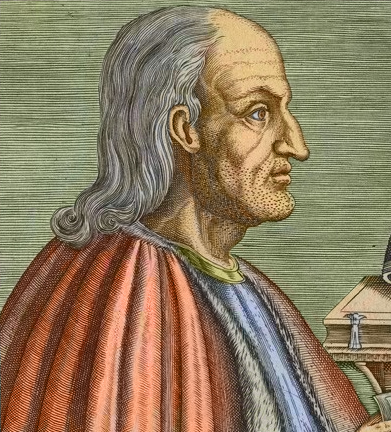
NPG D23949; St Anselm after Unknown artistSt. Anselm of Canterbury is almost universally recognized as one of the greatest theological lights of the Western church. This also makes him, along with Augustine and a couple others, one of contemporary theology’s favorite whipping boys.  His theological legacy is most commonly linked to two subjects in popular mind: the ontological argument for the existence of God, and the so-called satisfaction “theory” of atonement.  Both run in for heavy fire. For instance, have a problem with the Western tradition when it comes to God? Blame Anselm for his attempt to formulate “perfect being” theology via logical argumentation in the Middle Ages. It’s that simple.

From my readings, though, he is far more commonly attacked for his satisfaction account of Christ’s work to atone for our sins and save us through the cross in his classic Cur Deus Homo  (Why God Became Man). For those unfamiliar with it, very roughly: humanity has through sin failed to render God the honor due him, have robbed him, violated his law, and thereby fallen under God’s judgment. As the Godman, Christ’s obedient life and death for sin are meritorious in such a way that they “satisfy”, or make up for the damage we have incurred. We are then set free from judgment to be reconciled to God. Incidentally, this is not the only thing Anselm thought about the cross or atonement. Witness early on in the work:

For, as death came upon the human race by the disobedience of man, it was fitting that by man’s obedience life should be restored. And, as sin, the cause of our condemnation, had its origin from a woman, so ought the author of our righteousness and salvation to be born of a woman. And so also was it proper that the devil, who, being man’s tempter, had conquered him in eating of the tree, should be vanquished by man in the suffering of the tree which man bore. Many other things also, if we carefully examine them, give a certain indescribable beauty to our redemption as thus procured. — Cur Deus Homo, Bk. 1.3

I mention this because people who have problems with satisfaction or its more Evangelical descendent, penal substitution account, blame it on Anselm’s logic-chopping and his mindset anchored in the feudal world for reducing the accomplishment of the cross to satisfaction and nothing else.

While there’s something to the charge that the feudal setting influenced Anselm’s formulation, one of the silliest charges I’ve seen crop up against him lately is to say that the account of this premodern medieval theologian is the root of individualistic accounts of sin. Now, I’ll agree that Anselm’s un-mooring of the Scriptural logic from its thicker narrative and cultural context can be problematic. But honestly, can anyone read this passage and tell me we’re dealing with an individualistic account of salvation and sin?

Anselm. It now remains to inquire whence and how God shall assume human nature. For he will either take it from Adam, or else he will make a new man, as he made Adam originally. But, if he makes a new man, not of Adam’s race, then this man will not belong to the human family, which descended from Adam, and therefore ought not to make atonement for it, because he never belonged to it. For, as it is right for man to make atonement for the sin of man, it is also necessary that he who makes the atonement should be the very being who has sinned, or else one of the same race. Otherwise, neither Adam nor his race would make satisfaction for themselves. Therefore, as through Adam and Eve sin was propagated among all men, so none but themselves, or one born of them, ought to make atonement for the sin of men. And, since they cannot, one born of them must fulfil this work. Moreover, as Adam and his whole race, had he not sinned, would have stood firm without the support of any other being, so, after the fall, the same race must rise and be exalted by means of itself. For, whoever restores the race to its place, it will certainly stand by that being who has made this restoration. Also, when God created human nature in Adam alone, and would only make woman out of man, that by the union of both sexes there might be increase, in this he showed plainly that he wished to produce all that he intended with regard to human nature from man alone. Wherefore, if the race of Adam be reinstated by any being not of the same race, it will not be restored to that dignity which it would have had, had not Adam sinned, and so will not be completely restored; and, besides, God will seem to have failed of his purpose, both which suppositions are incongruous: It is, therefore, necessary that the man by whom Adam’s race shall be restored be taken from Adam. —Cur Deus Homo, Bk. 2.8

Whatever else you make of it, Anselm’s entire logic depends on the fact that we are not discrete, atomized individuals, but rather members of a family, a corporate whole that is capable of being represented by either Adam or Christ. This is a robust notion of corporate sin and corporate salvation through corporate solidarity with the person of Jesus, our perfect, human brother. This is completely in line with the Old Testament with its notion of corporate representatives (1 Kings 12, Isaiah 53, Daniel 7). And though different in the details, it parallels and is clearly dependent on Paul’s corporate Adam-Christ logic in Romans 5:

Therefore, just as sin came into the world through one man, and death through sin, and so death spread to all men because all sinned—for sin indeed was in the world before the law was given, but sin is not counted where there is no law. Yet death reigned from Adam to Moses, even over those whose sinning was not like the transgression of Adam, who was a type of the one who was to come. But the free gift is not like the trespass. For if many died through one man’s trespass, much more have the grace of God and the free gift by the grace of that one man Jesus Christ abounded for many. And the free gift is not like the result of that one man’s sin. For the judgment following one trespass brought condemnation, but the free gift following many trespasses brought justification. For if, because of one man’s trespass, death reigned through that one man, much more will those who receive the abundance of grace and the free gift of righteousness reign in life through the one man Jesus Christ. Therefore, as one trespass led to condemnation for all men, so one act of righteousness leads to justification and life for all men. For as by the one man’s disobedience the many were made sinners, so by the one man’s obedience the many will be made righteous. Now the law came in to increase the trespass, but where sin increased, grace abounded all the more, so that, as sin reigned in death, grace also might reign through righteousness leading to eternal life through Jesus Christ our Lord. (Romans 5:12-21)

Heck, jump ahead and you’ll find this in Ireneaus and most of the other church Fathers who don’t get tagged with the “individualism” charge. What’s more, classic penal substitution theology follows him in this via refinements in covenant theology. Adam and Christ are covenant heads whose sin (in the case of the former) and redemptive, holy death (in the case of the latter) have corporate effects for those whom they represent. Read Calvin, or most of the other Reformers and you will not find some atomized theology of merely individual salvation. Yes, each individual is the object of God’s saving grace, but they are so through the union the Mediator of the New Covenant (a very corporate structure).

Now, given then way pop-Evangelicalism has individualized everything, sure, I can definitely see satisfaction and penal substitution accounts being taught in individualistic fashions. That said, there is nothing inherently hyper-individualistic about either of these approaches.

Again, while there’s probably plenty to critique about Anselm’s discussion of the satisfaction element in the atonement, individualism is one charge we should probably leave behind.

Soli Deo Gloria