Is God Allowed To Do Stuff We Can’t? Some Thoughts on Penal Substitution

Ever heard a kid ask, “Why can’t I do that when you’re always doing it?” I’m sure those of you parents have heard this refrain from your children.  Before getting hired at my church, I worked for a few years as a substitute teacher and every so often I’d get this from a kid who wanted to defend using a cell phone or eating in class.

I’d often debate with myself whether or not this was a fair argument. Is it fair for a teacher to use their cell phone in class when a student is forbidden to? What are the reasons for this? Is it fear that phones might be used for cheating? Are they a distraction in the learning process? Are they just inherently wicked? Depending on the answer, it might be an unfair double-standard; I’m pretty sure all the times I ate in front of those hungry children were.

This raises the question, though, “Are there actions that, in virtue of the different roles which students and teachers occupy, are inappropriate for students but are entirely appropriate for their teachers?” I think there are probably a few. For instance, it seems entirely appropriate for a teacher to have possession of the answers of a test out during the administration of a test while it is inappropriate for the students to have the same. Or again, it is entirely appropriate for a teacher to be talking to a student during a test, but not for another student.

Let’s broaden the principle. Is it the case that some actions are appropriate for some people given their role or job, but entirely inappropriate for others given theirs, such that the one can essentially say to the other, “Do not do what you see me doing”? I think that seems reasonable. A parent might say to a child, “Do not use the knife” without being hypocritical. A police officer might enforce restrictions on hand guns while using a gun. In virtue of their different roles, the parent is allowed to do what the child is not and the police officer is allowed to carry what the average civilian is not.

One more question: Is it possible that one person, trying to abide by the same principle as another, might have to do exactly what they have forbidden the second from doing precisely because of their different roles? Think of a chemistry professor who, in the interest of student safety, handles dangerous chemicals that he has expressly forbidden his students from handling. Think of a mother who, in the interest of fairness, forbids her older children from punishing their younger siblings for their faults because that is her job. She knows they won’t be able to do it properly, so she does it herself. In both cases, one person forbids another from taking an action that they themselves will take for exactly the same reason. The action itself is not inherently wicked or wrong–it is wrong for some given their position or abilities, while it not for others.

The Objection: Is God Unfair?

Why this digression into the fairness of in-class cell phone usage by substitute teachers? Last week I posted a little piece on penal substitutionary atonement (PSA), the teaching that part of what Jesus did on the cross was to suffer the judgment of God for sins in our place thereby saving us from having to bear the penalty ourselves. This sparked some off some friendly (and some not-so-friendly) conversation about the doctrine; apparently there are a number of people who don’t think to highly of this teaching.

Now, I have to admit, this area of Christian theology is one of those that I’ve done a fair bit of reading on, for an amateur theologian. I think I’ve heard most of the classic arguments against penal substitution that are out there (it’s unbiblical, it supports violence, it’s a hold-over of primitive deities, it’s the product of Calvin’s legalistic mind, there is no possibility of moral transfer, it’s a legal fiction, etc.). I think there are answers to all of these so I don’t plan on going into most of those today. There is one increasingly common type of argument against the doctrine that came up in the conversations that goes something like this:

God tells us to forgive one another and not to demand retribution. Jesus says to turn the other cheek, bless those who curse you, forgive those who hate you, and love those who harm you. If that’s the case, then how is it that we can conceive of God demanding retribution for sin and, specifically, imagine that this is what is happening on the cross of Jesus? Isn’t that God doing exactly what he tells us not to do? Isn’t that hypocritical and immoral? 

As one blogger recently put it, “Here’s a simple rule of thumb: if your theory of the cross completely contradicts everything Jesus stood for and taught… it’s probably wrong. It’s sad that I need to say this, but the gospel is rooted in love of enemies, not in retribution. Retribution is the opposite of forgiveness. So the idea that the entire work of Jesus was to fulfill the demands of retribution is simply absurd.” Finally, one of my recent interlocutors put it this way, “But if the cross is about retribution, punishment, then God teaches us to “do as I say, not as I do.“”

No, God is God

What can be said about this? Is penal substitution an instance of God saying “do as I say, not as I do?” Would this make God inconsistent or unfair? I won’t give an exhaustive answer to the various missteps and mistakes in this sort of thinking (particularly the false dichotomy between “retributive” and “restorative” justice, which I plan on dealing with in a future post), but I will offer up a few clarifying points on the thought that God can do things that we can’t:

Only God is God In general, there are a number of things that are appropriate for God to do given his role as God, King, Judge, Creator of all the earth, that it is not permitted for me to do in my role as human, created thing, sinner, and so forth. For instance, it is entirely appropriate for God to seek and receive worship. In virtue of his infinite perfections, his beauty, his glory, his majesty, his love, and goodness, God is absolutely worthy of worship and for him to demand or receive it is simply a right concern for truth. On the other hand, it is wicked for us to receive worship or to seek it. I am a created thing as well as a sinner, and therefore I am not worthy of worship. For anyone to worship me would be to perpetrate a lie. In fact, the reason we are not to receive worship is because it is God’s prerogative and his alone. At this point it would be the height of silliness for someone to look at God and say, “Well, you’re always seeking worship and yet you tell us not to seek worship or receive praise. What’s the deal?” The deal is that, looking at things realistically, you’re an unworthy ant, and God is God. This is at least one place, and there are a number others, where God is allowed to say, “Do as I say, not as I do…because I am God and you are not.”

Only God is Judge Turning to the subject of judgment, punishment, and retribution we find Paul writing, “Repay no one evil for evil, but give thought to do what is honorable in the sight of all. If possible, so far as it depends on you, live peaceably with all. Beloved, never avenge yourselves, but leave it to the wrath of God, for it is written, ‘Vengeance is mine, I will repay, says the Lord.’ “(Romans 12:17-19) In this particular passage Paul says not to inflict judgment on your enemies, not because God never does that sort of thing, but because he’s said that’s the sort of thing only He should do. The explicit logic of the text is, “Don’t do that. It’s my job. I don’t want you taking vengeance. Vengeance is mine.” Paul wasn’t squeamish about this sort of logic the way a number of anti-PSA advocates are because it’s all over the Old Testament. The Law (Exod. 20:5), the Psalms (Ps. 75:7), and the Prophets (Ezek. 5:8) tell us that God is the judge of the world and so it is his particular job to take care of things, vindicate whoever needs vindicating, rewarding those who should be rewarded, and punishing those who ought to be punished. He is the sovereign Lord of the world with the authority and might to execute judgments. (Ps. 94) There is no thought that judgment or punishment is inherently wicked in the Hebrew Bible, especially in the hands of the righteous Lord of all the earth. Unless we want to slide into a crypto-Marcionism that pits the God of the OT against the God of the NT, we have to factor that into our thinking. There is a difference between being Christo-centric and Christo-reductionistic in a fashion that looks at Jesus without setting his life, death, and resurrection within the context of the whole canon and God’s revelation of himself to Israel. But even just looking to Jesus, we see that indeed, his heart longs to shelter Jerusalem under his wings to save them, but this comes only in the context of his recognition and proclamation of judgment on their sins. (Matt 23:29-39)

We Can’t Handle It Why might God call us to forego retribution and not give vent to our wrath against others, when he apparently is allowed to? One reason that comes to mind is that we might not be suited to the task. Just as the mother does not allow her slightly older children to punish the younger because their own judgment is faulty, God does not allow us to exercise that kind of judgment because we are not able to do so righteously. Our judgments are flawed and provisional, while His are perfect and definitive; ours are infected by sin, while His are holy. That seems like a perfectly good reason for God to tell us not to do something that He himself does without imagining that the action is inherently wrong.

Another reason we are not suited to it is because we can’t handle it. Just as the chemistry professor forbids his students from handling the dangerous chemicals, God might forbid his children from handling vengeance. If we take vengeance upon ourselves, seeking retribution, and administering our own judgment we are liable to get sucked in. Given our sin-sick souls it is easy to see righteous anger and a passion for justice be overwhelmed by selfish pride and drawn into hate, bitterness, and malice. God is perfect love. His judgments flow from a heart free of corruption that cannot be overwhelmed by sinful passions.

How Does God Forgive? Coming to the issue of forgiveness and judgment: It is true that God tells us to forgive without seeking vengeance. Is it then wrong for him to lay the judgment for our sins on Christ in effecting our forgiveness? Two points come into consideration here:

a. Forgiveness at its most basic level is the generous release of an acknowledged debt. In commercial terms, which is where we derive the image in the NT, it is saying, “You owe me this, but I’m not going to make you repay.” Transferring it to the moral realm, “That was wrong, but I’m not going to make you suffer for it.” For us to forgive someone is for us to not make them pay or suffer for an acknowledged wrong-doing. Taking into consideration God’s role in the universe, it is entirely reasonable to think that God’s forgiveness will look slightly different from ours. As we’ve already noted, God is King and Judge of the world. Part of his faithfulness to creation is to execute justice within it, to maintain the moral order he has established–which is not some impersonal justice, but one that is reflective of his own holy nature–in essence, to make sure that payment is rendered and that wrong-doing is punished. Justice involves more than that, but certainly not less.

Given this, forgiveness cannot be a simple affair of “letting it go”, or passing it over for God. His own character, his holiness, his righteousness, his justice means that he cannot treat sin as if it did not happen. The cross is the way that God makes sure payment is rendered, that sin is punished and yet still forgive sinners by not making them pay for sins themselves. PSA is not a denial that God forgives, but an explanation of how God forgives justly. It is how He, as King of the universe, goes about lovingly forgiving His enemies who deserve judgment. He suffers the judgment in himself. Realize, this whole explanation is articulated within a Trinitarian framework in which the Father, Son, and Spirit are all cooperating to achieve atonement. The Father is not pitted against the Son because the Father sends the Son in love and the Son, out of love, voluntarily comes in the Spirit to offer up his life in our place. The Son suffering judgment on the cross is God forgiving us.

b. The second thing to recognize is that our forgiveness comes after his forgiveness, on the basis of Christ’s atoning work. We can let things go, forgive as we’ve been forgiven, forgo vengeance, and avoid retribution because we know that these things are safely in God’s loving hands. We don’t have to exact payment. Justice for the sins I suffer are handled the way my own sins are handled–either on the cross, or at the final assize.

Conclusions

These reflections are far from exhaustive or adequate to the subject matter. Much more could be and has been said on the subjects of forgiveness, substitution, justice, and the cross. In this piece I simply wanted to make one small point: sometimes it’s okay for God to tell us not to do something that he himself does. Executing judgment is one of those things.

Soli Deo Gloria
N.T. Wright on Penal Substitution

I’ll come clean and say that I’m a huge N.T. Wright fan. I have been for years.

Wright and I are BFFs.

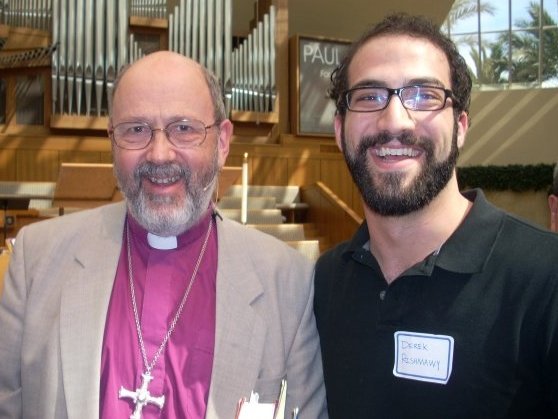
For those of you wondering, Wright is a British New Testament scholar who ranks among the top 2 or 3 most prolific, somewhat controversial, and influential churchmen on either side of the pond in a wide variety of theological circles.  I attribute my love for Biblical studies, and the New Testament in particular, to my early encounters with his lectures, essays, and books. I generally pre-order his books, both popular and scholarly, and have read all of his big pieces with the exception of a couple of difficult-to-acquire texts.  (I knew my wife McKenna was a keeper when she bought me his tome The Resurrection of the Son of God for my first birthday when we were dating. Later she took me to go see him speak on our anniversary.) Which is to say, I think I’ve got a decent idea of what Wright teaches on various subjects in New Testament studies and theology. Which brings me to the subject at hand.

As I mentioned, Wright is a bit controversial in some circles due to some of his, admittedly unclear/difficult to understand, teaching on Paul’s doctrine of justification.  Wright’s an adherent of the New Perspective on Paul and a unique one at that. What’s more, his sentences can get really long. (For those of you interested, here’s his most recent, clearest piece on the subject delivered at the Evangelical Theological Society a couple years ago. Note: I am not endorsing it. Just sharing for clarity’s sake.) One of the things that’s consistently surprised me, however, is the way that both friends and foes have misunderstood his teaching on the atonement, particularly penal substitutionary atonement (the idea that Christ’s death is in some way a representative one in which he suffers the judgment/wrath of God on behalf of deserving sinners thereby releasing them from guilt and obtaining forgiveness for them). Interestingly enough, you can find both conservative Reformed types being joined by emergenty Anabaptist types saying he denies it, the former accusatorially, the latter joyfully.

I just want to take a moment to clarify, with Wright’s own words, that Wright does affirm penal substitutionary atonement. He has been clear on this over the years, but somehow that’s been lost on many due in some cases to their willingness to read all sorts of faults into him because of his position on justification, or because to some people, affirming Christus Victor components to Christ’s atonement, the idea that in his life, death, and resurrection Jesus defeated the principalities and powers of satan, sin, and death,  means a necessary denial of PSA. It doesn’t. The Reformers all affirmed both themes because both are in Scripture. Wright isn’t any different. So, without further ado here is Wright himself.

Wright Speaks

First, a short little video where Wright says it clear-out, 1:19 onward:

Next, here’s a big long quote from an easily-accessed online article in which he is critiquing a lecture by Dr. Jeffrey Johns as well as a recent book on the subject. He is dealing with what he calls “caricatures of the cross”, correcting so many bad arguments against penal substitutionary atonement by pointing out that they are based on misunderstandings of the doctrine as well as misreadings of certain biblical texts which point to it. Don’t be scared by the length. It is absolutely worth your time, specialist or not:

Quoting 2 Corinthians 5.21 and Galatians 3.13 (‘God made him to be sin for us who knew no sin,’ and ‘Christ became a curse for us’), he [Dr. Johns] tells us the explanation of these verses he was given as a child and declares that, because that explanation is repulsive and nonsensical, we must reject it. His summary starts quite mildly: God was very angry with us, and had to punish us, but instead he sent his Son as a substitute to die for us, so that God stopped being angry with us . . . But then, inserting into this account the things Dr John realised he disliked at the age of ten, and which he wants to attack to bring down the whole edifice, he goes on: ‘What sort of God was this, getting so angry with the world and the people he created, and then, to calm himself down, demanding the blood of this own Son? And anyway, why should God forgive us through punishing somebody else? It was worse than illogical, it was insane. It made God sound like a psychopath. If any human being behaved like this we’d say they were a monster . . . It just doesn’t make sense to talk about a nice Jesus down here, placating the wrath of a nasty, angry Father God in heaven. . . sending a substitute to vent his punishment on.’

Well, yes. We must of course grant that many Christians have spoken, in effect, of the angry God upstairs and the suffering Jesus placating him. Spoken? They’ve painted it: many a mediaeval altarpiece, many a devotional artwork, have sketched exactly that. And of course for some late mediaeval theologians this was the point of the Mass: God was angry, but by performing this propitiatory sacrifice once more, the priest could make it all right. And it was at least in part in reaction against this understanding of the Eucharist that the Reformers rightly insisted that what happened on the cross happened once for all. They did not invent, they merely adapted and relocated, the idea of the propitiation of God’s wrath through the death of Jesus. We must of course acknowledge that many, alas, have since then offered more caricatures of the biblical doctrine. It is all too possible to take elements from the biblical witness and present them within a controlling narrative gleaned from somewhere else, like a child doing a follow-the-dots puzzle without paying attention to the numbers and producing a dog instead of a rabbit.

This is what happens when people present over-simple stories with an angry God and a loving Jesus, with a God who demands blood and doesn’t much mind whose it is as long as it’s innocent. You’d have thought people would notice that this flies in the face of John’s and Paul’s deep-rooted theology of the love of the triune God: not ‘God was so angry with the world that he gave us his son’ but ‘God so loved the world that he gave us his son’. That’s why, when I sing that interesting recent song ‘In Christ alone my hope is found’, and we come to the line, ‘And on the cross, as Jesus died, the wrath of God was satisfied’, I believe it’s more deeply true to sing ‘the love of God was satisfied’. I commend that alteration to those who sing that song, which is in other respects one of the very few really solid recent additions to our repertoire. So we must readily acknowledge that of course there are caricatures of the biblical doctrine all around, within easy reach – just as there are of other doctrines, of course, such as that of God’s grace.

But how does the caricature relate to what we find in the New Testament? Actually, how does it relate to Dr John’s initial summary? There he states, as we saw, that God sent Jesus to do this: yes, and that’s what the New Testament says too, at all the key points; and if we ask why, the answer is always, in Paul, John and everywhere else, the wonderful greatness of God’s merciful love. You can’t play off the juridical account of atonement, so called, against an account which stresses God’s love. As those Doctrine Reports rightly saw, they belong together. If God is love, he must utterly reject, and ultimately deal with, all that pollutes, distorts and destroys his world and his image-bearing creatures.

So what should we make of Paul at this point? Dr John never says. Is he content simply to say that the key Pauline statements must be left out of consideration as we construct an atonement theology we can believe today? If so, how can he later quote 2 Corinthians 5.19 (‘God was in Christ reconciling the world to himself’), which, a mere two verses before the one he seems to reject, might be thought to be part of the same argument? What does he make of the explicit statement – this, I think, is as clear as it gets in Paul – in Romans 8.3, where Paul says explicitly that God condemned sin in the flesh of Jesus Christ? Paul does not say that God condemned Jesus; rather, that he condemned sin; but the place where sin was condemned was precisely in the flesh of Jesus, and of Jesus precisely as the Son sent from the Father. And this, we remind ourselves, is the heart of the reason why there is now ‘no condemnation’ for those who are in Christ Jesus (Romans 8.1).

Or what account does Dr John give of Romans 3.24-26? Here, whatever we may think about the notorious hilasterion (‘propitiation’? ‘expiation’? ‘mercy-seat’?), in the preceding section of the letter (1.18-3.20) God’s wrath is revealed against all ungodliness and wickedness, and by the end of the passage, in accordance with the ‘justice’ of God, those who were formerly sinners and under God’s wrath are now justified freely by grace through faith. To put it somewhat crudely, the logic of the whole passage makes it look as though something has happened in the death of Jesus through which the wrath of God has been turned away. It is on this passage that Charles E. B. Cranfield, one of the greatest English commentators of the last generation, wrote a memorable sentence which shows already that the caricature Dr John has offered was exactly that:

We take it that what Paul’s statement that God purposed Christ as a propitiatory victim means is that God, because in His mercy He willed to forgive sinful men and, being truly merciful, willed to forgive them righteously, that is, without in any way condoning their sin, purposed to direct against His own very Self in the person of His Son the full weight of that righteous wrath which they deserved. (A Critical and Exegetical Commentary on the Epistle to the Romans. 2 vols. Edinburgh: T & T Clark; vol. 1, 1975, p. 217.)

Now I do not ask that Dr John, or anyone else, necessarily accept this as the correct interpretation of Romans 3:24-26; nor that, whether or not they accept this exegesis, they believe that this is a true statement of God’s intention in the death of Jesus. All I ask is that Dr John admit that this very careful statement, in which the propitiatory effect of Jesus’ death is seen as the result of God’s overarching and overwhelming mercy and love, and in which the persons of the Trinity are held in extremely close union, is not subject to the critique he has levelled against what increasingly looks like a bizarre (if sadly still well known) caricature.

Not everyone likes Paul, of course – especially some Anglicans. But what about Jesus? Unless we are to go the route of the ‘Jesus Seminar’, and say that Jesus’ death was simply an accident which he never intended and for which, therefore, he offered no theological grid of interpretation, we must give some account of the self-understanding of Jesus in relation to the death which, as at least one substantial stream of scholarship has agreed, he must have known was just round the corner. There were ancient Jewish grids of interpretation available to him, and all the signs are that he made his own creative construal of them, understanding his vocation as the point of convergence of several rich strands of scriptural narrative, heavily freighted with the sense of Israel’s long destiny coming to a dark and decisive climax. In particular, the early Christians were clear that Jesus’ death was to be understood in terms of Isaiah 53, and they were equally clear that this was not a new idea they were wishing back on Jesus. ‘The Son of Man,’ he said, ‘came not to be served but to serve, and to give his life as a ransom for many’ (Mark 10:45). These words – which many have of course been unwilling to credit to Jesus precisely because of the frantic attempt to prevent him alluding to Isaiah 53 – capture the very heart of that great chapter, and as I and others have argued elsewhere it is extremely likely, historically, that he made that entire section of the book of Isaiah thematic for his self-understanding.

Ironically, Dr John himself alludes to Isaiah 53 at the end of his talk, suggesting that Jesus ‘bears our griefs and shares our sorrows’, without realising that if you get one part of Isaiah 53 you probably get the whole thing, and with it not only a substitutionary death but a penal substitutionary death, yet without any of the problems that the caricature would carry:

He was wounded for our transgressions
and bruised for our iniquities;
upon him was the punishment that brought us peace
and with his stripes we are healed.
All we like sheep have gone astray;
We have turned every one to his own way;
And YHWH has laid on him the iniquity of us all.
(Isaiah 53:5-6.)

It is with the Servant, and the theology of the whole of Isaiah 40-55, that we find the explanation for the otherwise bizarre idea of one person standing in for the many (which, as Dr John says, we might otherwise find incomprehensible and deeply offensive). The sense which penal substitution makes it does not make, in the last analysis, within the narrative of feudal systems of honour and shame. It certainly does not make the sense it makes within the world of some arbitrary lawcourt. It makes the sense it makes within the biblical world, the Old Testament world, within which the creator God, faced with a world in rebellion, chose Israel – Abraham and his family – as the means of putting everything right, and, when Israel itself had rebelled, promised to set that right as well and so to complete the purpose of putting humans right and thus setting the whole created order back the right way up. And the long-promised way by which this purpose would be achieved was, as hints and guesses in the Psalms and prophets indicate, that Israel’s representative, the anointed king, would be the one through whom this would be accomplished. Like David facing Goliath, he would stand alone to do for his people what they could not do for themselves. It is because Jesus, as Israel’s representative Messiah, was therefore the representative of the whole human race, that he could appropriately become its substitute. That is how Paul’s logic works. ‘One died for all, therefore all died,’ he wrote in 2 Corinthians 5.14; and thus, seven verses later, ‘God made him to be sin for us, who knew no sin,’ he concluded seven verses later, ‘so that in him we might become the righteousness of God’ (5.21). And it is within that argument that we find the still deeper truth, which is again rooted in the dark hints and guesses of the Old Testament: that the Messiah through whom all this would be accomplished would be the very embodiment of YHWH himself. ‘God was in Christ, reconciling the world to himself’ (2 Corinthians 5.19).

Underneath all this discussion is a deep concern which has emerged again in our own day, notably in the writings of the Yale theologian Miroslav Volf. In his magisterial Exclusion and Embrace (Nashville: Abingdon, 1994), he demonstrates, with sharp examples from his native Balkans, that it simply won’t do, when faced with radical evil, to say, ‘Oh well, don’t worry, I will love you and forgive you anyway.’ That (as the 1938 Doctrine Report already saw) is not forgiveness; it is belittling the evil that has been done. Genuine forgiveness must first ‘exclude’, argues Volf, before it can ’embrace’; it must name and shame the evil, and find an appropriate way of dealing with it, before reconciliation can happen. Otherwise we are just papering over the cracks. As I said early on, if God does not hate the wickedness that happens in his beautiful world, he is neither a good nor a just God, and chaos is come again. Somehow I sense that Dr John knows this, since he writes movingly of Jesus Christ as God coming down into the midst of the mess and the muddle to be with us and . . . to rescue us – though he never says how this rescue is effected. But again and again I sense in Dr John’s writing the problem which Anselm already identified: you have not yet considered how serious sin is. It isn’t that God happens to have a petulant thing about petty rules. He is the wise and loving creator who cannot abide his creation being despoiled. On the cross he drew the full force not only of that despoiling, but of his own proper, judicial, punitive rejection of it, on to himself. That is what the New Testament says. That is what Jesus himself, I have argued elsewhere, believed what was going on. That is what the classic Anglican formularies and liturgy say.

Recently, looking for something else, I came upon this:

God is love, say [some], and therefore he does not require a propitiation. God is love, say the Apostles, and therefore he provides a propitiation. Which of these doctrines appeals best to the conscience? Which of them gives reality, and contents, and substance, to the love of God? Is it not the apostolic doctrine? Does not the other cut out and cast away that very thing which made the soul of God’s love to Paul and John? . . . Nobody has any right to borrow the words ‘God is love’ from an apostle, and then to put them in circulation after carefully emptying them of their apostolic import. . . . But this is what they do who appeal to love against propitiation. To take the condemnation out of the Cross is to take the nerve out of the Gospel . . . Its whole virtue, its consistency with God’s character, its aptness to man’s need, its real dimensions as a revelation of love, depend ultimately on this, that mercy comes to us in it through judgment. (James Denney, The Second Epistle to the Corinthians, Expositor’s Bible, Hodder, 1894, p. 221f.)

When I read that, it sounded as though Denney were addressing Dr John directly. And I was put in mind of a characteristically gentle remark of Henry Chadwick, in his introductory lectures on doctrine which I attended my first year in Oxford. After carefully discussing all the various theories of atonement, Dr Chadwick allowed that there were of course some problems with the idea of penal substitution. But he said, ‘until something like this has been said, it is hard to escape the conclusion that the full story has not yet been told.’ For myself, I prefer to go with Henry Chadwick, and James Denney – and Wesley and Watts, and Cranmer and Hooker, and Athanasius and Augustine and Aquinas – and Paul, Peter, Mark, Luke, John – and, I believe Jesus himself. To throw away the reality because you don’t like the caricature is like cutting out the patient’s heart to stop a nosebleed. Christ died for our sins according to the scriptures, and all because of the unstoppable love of the one creator God. There is ‘no condemnation’ for those who are in Christ, because on the cross God condemned sin in the flesh of the Son who, as the expression of his own self-giving love, had been sent for that very purpose. ‘He did not spare his very own Son, but gave him up for us all.’ That’s what Good Friday was, and is, all about.

Finally, from the same article, Wright explains his confusion that someone could describe a work that had based its understanding of Jesus on Wright’s own scholarship as denying penal substitutionary atonement:

After all, the climax of my book Jesus and the Victory of God…is the longest ever demonstration, in modern times at least, that Jesus’ self-understanding as he went to the cross was rooted in, among other Old Testament passages, Isaiah 53, the clearest and most uncompromising statement of penal substitution you could find.

You can also find various statements elsewhere, including his big commentary on Romans.

The moral of the story is that N.T. Wright affirms penal substitutionary atonement. Sorry uber-conservative Reformed guys, he actually does get the Cross. Sorry, lefty, anti-PSA types, your Kingdom-minded hero says some really old-school Evangelical stuff about the atonement.

For everybody else, you’re welcome.

Soli Deo Gloria

Small Update: For more vindication of this point, John Piper has a statement in his critical book The Future of Justification (pp. 46-53) affirming the Wright, indeed, does affirm PSA.

You’re a Holy Mess (Or, Surprised by Sanctification)

I was teaching through 1 Corinthians last year around this time when I was first struck by something very odd in that letter. It’s something that can sneak past you unless you go through the thing a few times. Right at the outset of Paul’s letters he usually broadcasts what he’s going to be writing about in a kind of intro-prayer or in the greeting.

Paul, called by the will of God to be an apostle of Christ Jesus, and our brother Sosthenes,
To the church of God that is in Corinth, to those sanctified in Christ Jesus, called to be saints together with all those who in every place call upon the name of our Lord Jesus Christ, both their Lord and ours:
Grace to you and peace from God our Father and the Lord Jesus Christ.
(1 Cor 1:1-3)

Did you catch those words in verse 2 that I helpfully bolded for you to notice? Good. In the space of a few words, Paul calls the believers at Corinth “sanctified” and “saints”; he calls them holy.

Surprised by Sanctification

For those of us who have read the letter through, this is surprising to say the least.  This is easily the most jacked-up church we know of in the New Testament. Scholars think that Paul probably wrote more letters to the church than 1 and 2 Corinthians because of the issues with it. To give you a picture, the problems include: factions being formed dividing the church due to people buying into cultural notions of wisdom and power (chapters 1-4), Christians suing each other (5), one dude sleeping with his step-mom and everybody just acting like nothing was going on as well as people visiting prostitutes (5-6), screwy views about sex and marriage (7),  people eating food offered up to idols and demons at pagan temples (8-10), groups treating the poor like crud at church (11), getting drunk at communion (11), freaky pride connected to spiritual gifts (12-14), and, to top it off, false teaching about the resurrection (15).

Now, how in the world is Paul go and call this church “holy”? If you look up the word “saints” in a thesaurus, the antonym would probably be “Corinthians”. There is nothing that you could term righteous, moral, or upright about their character. In fact, in some ways Paul says they’re worse than the surrounding pagan culture. And yet, time and again Paul does call them just that. What’s more, in chapter six after listing off a number of practices they were supposed to avoid, he says “And such were some of you. But you were washed, you were sanctified, you were justified in the name of the Lord Jesus Christ and by the Spirit of our God.” (1 Cor 6:11 )

Did you see that? “You were sanctified” is talking about a past tense action that makes the believer holy starting at a particular point resulting in a continuous state of holiness in much the same way that in the text he speaks of justification as occurring at a specific point in time resulting in you now being “justified.”

For those of us raised in general evangelicalism this is not typically the way we think or speak. Generally we think of justification as the once and for all legal declaration by God that we are vindicated, pardoned, no longer held as guilty against the covenant because of Jesus’ death and resurrection and now part of the people of the Messiah. It’s what happens at the beginning of our experience that we look back at. Sanctification is then the process that begins afterwards and is the increasing growth in holiness that makes us look more and more like Jesus. It’s the life-long process of becoming righteous in our character.

This is not a bad way of looking at things. Still, it’s also not the most accurate way of thinking about sanctification biblically. Historically Reformed theologians have talked about the difference between “progressive sanctification” and “definitive sanctification.” The first process is the one we’ve been describing that a lot of us understand. Definitive sanctification is that “once and for all act of claiming us as saints.” (Michael Horton, The Christian Faith, pg. 650)

Rethinking Holiness

See, the original idea of holiness or sanctification in the Old Testament was to “separate” something away from their ordinary or common use to a special use for God. The Temple, the sabbath, the tithe, the utensils and furniture for the temple were all normal things, taken and set aside, consecrated for use by God. God even does this with a people, Israel, (Exod. 19) He takes one people and sets them apart to be a light to the nations and show the world what life with God is like. They were to be “holy, for I the LORD am holy.” (Lev. 20:26) Paul and the rest of the New Testament picks up on this by seeing God’s act of saving us in Christ as a setting apart, a making holy totally independent of our own righteous acts. Jesus tells us that we are clean because of the word that he has spoken to us. (John 15:3) Indeed, Jesus says that he will be the one who sanctifies us by sanctifying himself, setting us apart through setting himself apart in his death. (John 17:19) The author of Hebrews follows Jesus by telling us that “by God’s will we have been sanctified through the offering of the body of Jesus Christ once for all.” (10:29)

In Christ, by the Spirit, God definitively sanctifies us, sets us apart to be his own in a once and for all way. When we place our faith in Christ, we’re united with him so that what is true of him, becomes true of us. We are holy because Christ is holy. “All that is found in Christ is holy, because it is in Christ.” (Horton, pg. 651) This is why before we’ve done anything good, righteous, holy, cleaned up our act, made good on our promises or done anything but trust Jesus’ work for us, we are declared saints. Before we clean up, God declares us clean in Christ. This is the holiness, the saintliness that Paul is often speaking of in his letters.

Motivating his instructions to the Corinthian congregation is the reality that, in Christ, they are clean. In essence, “You’re holy! Now act like it. Become what you already are in Christ.” Over and over again in the New Testament we are told that we have been made righteous in Christ or holy in Christ and so now we should live like that’s true.

But I’m Still A Mess

“So, I’m already holy, so now I should live like it? Is that what you’re saying? Okay, here’s my problem: I don’t feel holy. In fact, most of the time I feel angry, lustful, annoyed, proud, downcast and anything but holy. Where does that leave me? It’s fine that God legally sets me apart as holy, declares me righteous, etc., but I still feel like me. What does God saying something out there have anything to do with me in here?” Everything, for at least two reasons.

First, as Michael Horton points out, for an orphan to enjoy the love and care of a new family, they must first by legally adopted. Or, for two nations who have been at war with each other to begin peaceful relations, they must first declare a legal peace. (Pg. 652-653) The definitive declaration of God “out there” is the legal basis of that secures our relationship to the sanctifier. God’s declaration is your hope of sanctification.

Second, God’s declaration isn’t really something that happens “out there.” When God sets us apart, he sets us apart in Christ, in the power of the Spirit. This act actually connects us to Christ like branches being inserted into a vine from which it then begins to draw strength. (John 15) We are connected to Christ like members of a body to the head. (1 Cor 6; 12; Eph. 4) We are given the Spirit, the Holy Spirit, who is a new power at work in us to progressively conform us to reflect the image of Christ. We receive strength and righteousness from the source of all goodness, Christ. God’s definitive sanctification of us is the source of God’s progressive sanctification in us.

You don’t feel holy, but honestly, your feelings are not the ultimate reality you need to be focusing on. Instead, you should be focusing on who you are in Christ. You’re a mess, but in Christ you’re a holy mess who’s getting cleaned up because you’re in the one who is clean. In fact, forget even focusing on who you are at all. Focus on Christ. “Abide in my and I will abide in you.” (John 15:4) When you do that, that’s when things start coming together.

Maybe this is why what Paul writes to his wayward saints the way he does. In the first 9 verses of 1 Corinthians he mentions “Jesus”, or “Jesus Christ”, or “our Lord Jesus Christ” 9 times. Apparently he believes that if his people are going to become holy, start living into the holiness that they’ve been brought into, they need to focus their eyes on Christ, the Holy One.

May we do the same.

Soli Deo Gloria

Why Jesus Hates Heresy (And So Should You)

I’d like to take a moment to point something out that may have escaped your attention last time you went to church or watched  a Nooma: Jesus and the rest of the New Testament authors don’t like false teaching, or heresy. I mean, they really hate it. It doesn’t take long reading through the thing to see the forceful way they spoke of “false teachers/prophets” and “false teaching” about God and the Gospel.  Don’t believe me? Here are just a few quotes. See for yourself.

Gentle Jesus

Beware of false prophets, who come to you in sheep’s clothing but inwardly are ravenous wolves. You will recognize them by their fruits. Are grapes gathered from thorn bushes, or figs from thistles? So, every healthy tree bears good fruit, but the diseased tree bears bad fruit. A healthy tree cannot bear bad fruit, nor can a diseased tree bear good fruit. Every tree that does not bear good fruit is cut down and thrown into the fire. (Matthew 7:15-20)

Not so Gentle Paul

I appeal to you, brothers, to watch out for those who cause divisions and create obstacles contrary to the doctrine that you have been taught; avoid them. (Romans 16:17)

I am astonished that you are so quickly deserting him who called you in the grace of Christ and are turning to a different gospel—not that there is another one, but there are some who trouble you and want to distort the gospel of Christ. But even if we or an angel from heaven should preach to you a gospel contrary to the one we preached to you, let him be accursed. As we have said before, so now I say again: If anyone is preaching to you a gospel contrary to the one you received, let him be accursed. (Galatians 1:6-9)

Now the Spirit expressly says that in later times some will depart from the faith by devoting themselves to deceitful spirits and teachings of demons, through the insincerity of liars whose consciences are seared, who forbid marriage and require abstinence from foods that God created to be received with thanksgiving by those who believe and know the truth. For everything created by God is good, and nothing is to be rejected if it is received with thanksgiving, for it is made holy by the word of God and prayer. (1 Timothy 4:1-5)

O Timothy, guard the deposit entrusted to you. Avoid the irreverent babble and contradictions of what is falsely called “knowledge,” for by professing it some have swerved from the faith. Grace be with you. (1 Timothy 6:20-21)

Old-Man John

Beloved, do not believe every spirit, but test the spirits to see whether they are from God, for many false prophets have gone out into the world. (1 John 4:1)

Beloved, do not believe every spirit, but test the spirits to see whether they are from God, for many false prophets have gone out into the world. By this you know the Spirit of God: every spirit that confesses that Jesus Christ has come in the flesh is from God, and every spirit that does not confess Jesus is not from God. This is the spirit of the antichrist, which you heard was coming and now is in the world already. (1 John 4:1-3)

For many deceivers have gone out into the world, those who do not confess the coming of Jesus Christ in the flesh. Such a one is the deceiver and the antichrist. Watch yourselves, so that you may not lose what we have worked for, but may win a full reward. Everyone who goes on ahead and does not abide in the teaching of Christ, does not have God. Whoever abides in the teaching has both the Father and the Son. If anyone comes to you and does not bring this teaching, do not receive him into your house or give him any greeting, for whoever greets him takes part in his wicked works. (2 John 1:7-11)

Peter “the Rock” Bar-Jonah

But false prophets also arose among the people, just as there will be false teachers among you, who will secretly bring in destructive heresies, even denying the Master who bought them, bringing upon themselves swift destruction. And many will follow their sensuality, and because of them the way of truth will be blasphemed. And in their greed they will exploit you with false words. Their condemnation from long ago is not idle, and their destruction is not asleep. (2 Peter 2:1-3)

This is Weird to Us

These quotes can seem disturbing to people of our age.

Our culture likes the idea of heresy. Whenever you see the word ‘heretic’ used on your average blog, news article, etc. it’s synonymous with bold, controversial, and creative thinking. It’s thought not confined with dogma and church controls. It’s ideas that scare the “theologians”, and break out of the traditional mold. (As to why scaring theologians has become a valued activity, I’m somewhat puzzled. Is there similar trend elsewhere? Should I want to perplex philosophers? Or, mystify mathematicians?)

It’s sexy.

Alister McGrath has even gone so far as to talk about our “love affair with heresy.” It epitomizes all that us entrepreneurial, free-thinking, radically individualistic Americans believe about religion. It’s up to us to figure out and nobody has a right to lay down a “correct” or “right” way to think about spirituality and God.

In this context, anybody trying to talk about orthodoxy or heresy immediately calls to mind images of nefarious, medieval church councils, trials, and other wickedness. (Which, incidentally were the result of false teaching about the nature of the church.)

So, why do they think different?

So why do Jesus, Paul, Peter, and John seem to approach the problem of false teaching differently than we do? Their attitude seems so intolerant and harsh. What about freedom of thought? Independence of mind?  What accounts for the difference? Is it just that we are more enlightened and cosmopolitan than these backwards dogmatists?

Eugene Petersen, my favorite pastoral theologian and theological pastor, cuts to the heart of the matter when discussing John’s attitude towards false teaching:

“Our age has developed a kind of loose geniality about what people say they believe. We are especially tolerant in matters of religion. But much of the vaunted tolerance is only indifference. We don’t care because we don’t think it matters. My tolerance disappears quickly if a person’s belief interferes with my life. I am not tolerant of persons who believe that they have as much right to my possessions as I do and proceed to help themselves… I am not tolerant of businesses that believe that their only obligation is to make a profit and that pollute our environment and deliver poorly made products in the process. And [John] is not tolerant when people he loves are being told lies about God, because he knows that such lies will reduce their lives, impair the vitality of their spirits, imprison them in old guilts, and cripple them with anxieties and fears…

That is [John’s] position: a lie about God becomes a lie about life, and he will not have it. Nothing counts more in the way we live than what we believe about God. A failure to get it right in our minds becomes a failure to get it right in our lives. A wrong idea of God translates into sloppiness and cowardice, fearful minds and sickly emotions.

One of the wickedest things one person can do [is] to tell a person that God is an angry tyrant, [because the person who believes it will] defensively avoid him if he can… It is wicked to tell a person that God is a senile grandfather [because the person who believes it will] live carelessly and trivially with no sense of transcendent purpose… It is wicked to tell a person a lie about God because, if we come to believe the wrong things about God, we will think wrong things about ourselves, and we will live meanly or badly. Telling a person a lie about God distorts reality, perverts life and damages all the processes of living.”, Traveling Light: Reflections on the Free Life (Downers Grove, Ill.: InterVarsity Press, 1982), pp. 33-35.

We don’t care about false teaching and heresy because we don’t see what it does. We don’t see that “A lie about God becomes a lie about life.” Jesus is intensely opposed heresy because he doesn’t miss the connection between what we believe about God and every inch of our lives. Paul opposes it with every fiber of his being because he is passionately for the church. John is not simply out to control his “beloved”, but rather make sure that they remain free, truly free to live the life God has called his children to.

Good theology is not just an academic exercise for “theologians” in seminaries. It’s not just for pastors in their studies. It’s for everyday Christians for everyday living. This is why we care about these things. This is why we preach, teach, and correct in light of the Word of God.

So again, “Why does Jesus hate heresy?” He loves you too much to have you believe lies about God.

Soli Deo Gloria

Resources for avoiding Heresy:

1. Any good systematic theology. (Classic Christianity by Thomas Oden, The Christian Faith by Michael Horton)
2. Heresies and How to Avoid Them by Ben Quash and Michael Ward
3. Heresy: A History of Defending Truth by Alister McGrath
4. Free article by Craig Blomberg “The New Testament Definition of Heresy (Or When do Jesus and the Apostles Really Get Mad?)

Is it Really Bad if God Brings Something Good out of it? C.S. Lewis, Joseph, and Moral Judgments

“Is it really a bad thing if God does something good with it?” You may have heard this kind of question before. Maybe in a discussion after your philosophy 101 class, or a Bible study, or in a coffee shop, the issue of God and evil comes up. How can God still be good and powerful given the amount of evil and suffering we see in the world? Copious amounts of ink have been spilled on the subject and numerous answers have been given. I’m not going to attempt anything so bold as to hazard a definitive answer except to clarify a couple of important points we must keep straight in our thinking about this issue.

Good Enough Reasons and the Problem of Naming Evil

One commonly made point is that it’s possible for God to still be good and powerful and allow all the evil we see in the world, if he has a morally justifiable reason to such as avoiding a greater evil or bringing about an outweighing moral good. For instance, I’m morally justified in allowing my child to suffer pain while getting vaccination shots because it will prevent some later, horrible disease. In fact, at that point, I’m just justified in purposing the pain, because it is outweighed by the good of avoiding the disease.

This is somewhat common-sensical, and leaving aside some issues related to God’s power, you could see the way that the principle could apply to God. God can still be good and powerful, yet allow for some good purpose even if it’s one that only He can understand. (The epistemological issue is an important one, but I’ll deal with that in another post on another day.)

At this point our post title becomes relevant. God is justified in allowing something we think is evil because of the good that comes from it or that evil that it avoids. But, the question actually goes a bit further and says, “Well, in fact, it seems that instance of suffering and evil wasn’t really evil because of the good result that came from it. Maybe it’s just that evil is just a good that is misunderstood?”

Is that right, though?

Natural questions like these make some worry about appealing to some higher “plan.” They fear that it impermissibly justifies evil and makes moral language ambiguous. In other words, if that crime was really part of God’s plan that he used to bring about some greater good, are we allowed to call it evil? Is suffering really bad? If that’s the case, then doesn’t that remove moral responsibility and render us unable and name evil as evil since it is “justified”? To say otherwise is “nihilism.”

In light of this, they would want to say that, in fact, all we can morally say is that there is no “good” reason for much of the evil that we see in the world. All we know is that God hates it, will end it someday, and make everything better.

But that seems troubling as well because if we can’t say that God had a good reason for allowing an evil, that leaves us back where we started with God allowing evil for no good reason at all.

Is there a way forward from this?

C.S. Lewis on Simple Good, Simple Evil, and Complex Good

There are a great many issues to consider here, but C.S. Lewis has a great little passage in his work devoted to the problem of suffering and evil, The Problem of Painthat begins to address the issue. He’s discussing whether Christians should seek suffering because so often it is linked to spiritual growth and moral goodness. In it he says:

I answer that suffering is not good in itself. What is good in any painful experience is, for the sufferer, his submission to the will of God, and, for the spectators, the compassion aroused and the acts of mercy to which it leads. In the fallen and partially redeemed universe we may distinguish (1) The simple good descending from God, (2) The simple evil produced by rebellious creatures, and (3) the exploitation of that evil by God for His redemptive purpose, which produces (4) the complex good to which accepted; suffering and repented sin contribute. Now the fact that God can make complex good out of simple evil does not excuse – though by mercy it may save – those who do the simple evil. And this distinction is central. Offences must come, but woe to those by whom they come; sins do cause grace to abound, but we must not make that an excuse for continuing to sin. The crucifixion itself is the best, as well as the worst, of all historical events, but the role of Judas remains simply evil.

We may apply this first to the problem of other people’s suffering. A merciful man aims at his neighbour’s good and so does “God’s will”, consciously co-operating with “the simple good”. A cruel man oppresses his neighbour, and so does simple evil. But in doing such evil, he is used by God, without his own knowledge or consent, to produce the complex good – so that the first man serves God as a son, and the second as a tool. For you will certainly carry out God’s purpose, however you act, but it makes a difference to you whether you serve like Judas or like John. 

So we see it is possible to speak of simple good, simple evil, God’s redemptive work, and the complex good that follows from God’s redemptive work. It is possible for both God and humans to be at work in one and the same events event–to be able to speaking meaningfully of human evil while still affirming God’s goodness in that particular event. Sounds good Clive, but is it biblical?

Joseph: A Biblical Paradigm

There are a number of events in biblical history which God speaks of as evil on the part of humans, yet part of a broader, good divine plan. The story of Joseph is often used as a paradigm for this way of thinking. In the story, he is sold into slavery by his jealous brothers, is wrongfully imprisoned by his Egyptian slave-master, left in jail for many years, but through a providential chain of events is elevated to a position of power in Egypt before a time of great famine. This then enables him years later to provide food for his family that had initially sold him into slavery as well as provide for the entire nation of Egypt. Eventually, from that family, comes the Messiah, the savior of the world.

In an encounter with his brothers years later he realizes that they fear for their lives from him. Even years after forgiving them and treating them well, they still worry that he might be holding a grudge against him for their evil. Joseph calms their fears by assuring them he knows that although they did what they did for evil intentions, God intended for good (Gen. 50:20):

As for you, you meant evil against me, but God meant it for good, to bring it about that many people should be kept alive, as they are today.

So, in the one affirmation we see him affirm that being sold into slavery by your own brothers is evil. Being wrongfully imprisoned is evil. At the same time, being in the right place, at the right time to avert disaster for a nation and one’s own family is good. But the humanly-intended evil and the divinely-intended good were being accomplished side by side in the same events! Examples like this could be multiplied over and over again in Scripture, whether in the prophets or the preaching of the early church in Acts. Lewis is on firm, biblical ground here.

Conclusions

So let’s put this together: First, it is not that moral evil or evil events are just good not yet understood. We don’t want to deny the evil of evil, especially of sinful human actions. At the human level, we can say of those things that God condemns them as wicked and they ought not be done. Again, Judas is morally blameworthy and an evil individual for betraying Jesus. God disapproves of his actions. They are really and truly evil.

At the same time, on another level the existence of these evils is morally-justified even if we cannot see the moral justification currently,  with respect to God.  In the case of Judas and the Cross, God used Judas’ wickedness to accomplish his good divine intention. Judas is evil in his action. God is not because he had a good enough reason for allowing this evil to occur.

Admittedly, this is just a thumb-nail sketch of an answer to one of the many questions within a much broader issue. Still, I think can help us keep a couple of points clear that ought not be confused whenever we are trying to think about or discuss the issue of evil and suffering from a biblical perspective.

In all things Soli Deo Gloria.

Progressive God-Talk, Reformed Theological Method, The Doctrine of Analogy, and God’s Grace in our Knowledge

(Warning: this is a mildly dense one. If you haven’t had coffee yet, you might want to grab some, then come back. Also, it might seem dry at first, but there’s a punch-line you don’t want to miss.)

Progressive God-Talk

A few days ago, progressive author and blogger, Tony Jones threw down a challenge to his fellow progressive bloggers to start actually saying something substantive about God, “Not about Jesus, not about the Bible, but about God”, because they seem to  “have a God-talk problem. That is, progressives write lots of books and blog posts about social issues, the church, culture, and society. But we don’t write that much about God. That is, we don’t say substantive things about who God is, what God does, etc.”

I don’t have a lot to say on the subject of liberal God-talk at this point, except that its been interesting to watch as it unfolds (or the way it doesn’t.) My hope is that more liberal/progressives do post substantive pieces of theology so that a real discussion of the nature and character of God can ensue.

One thing I do have something to say about is the topic of Reformed God-talk, and the attitude that those of us who engage in theology out of the Reformed tradition should take towards the conversation that’s happening right now amongst the progressives. To do that, though, I’m gonna call in a little help.

Reformed Theological Method (Or how Reformedish people go about thinking about God)

A while back I read a great article by Michael Horton on the Reformed theological method in conversation with Open Theism that will be helpful to our conversation. In it he deals with the common charge made that the Reformed scholastics were too dependent on “Hellenistic” thought or Greek speculative, systematizing which distorted the true, “dynamic”, biblical portrait of God. Leaving aside the problem that many who lodge this charge are guilty of the genetic fallacy, Horton shows that, in fact, “Contrary to popular caricature, Reformed scholasticism championed an anti-speculative and anti-rationalistic theological method based on the Creator-creature distinction.” He quotes Francis Turretin as representative of the tradition when he says,

But when God is set forth as the object of theology, he is not to be regarded simply as God in himself . . . , but as revealed . . . Nor is he to be considered exclusively under the relation of deity (according to the opinion of Thomas Aquinas and many Scholastics after him, for in this manner the knowledge of
him could not be saving but deadly to sinners), but as he is our God  (i.e.,covenanted in Christ as he has revealed himself to us in his word) . . .

Thus although theology treats of the same things with metaphysics, physics and ethics, yet the mode of considering them is far different. It treats of God not like metaphysics as a being or as he can be known from the light of nature; but as the Creator and Redeemer made known by revelation . . . For theology treats of God and his infinite perfections, not as knowing them in an infinite but in a finite manner; nor absolutely as much as they can be known in themselves, but as much as he has been pleased to reveal them.

So, theology treats, not of God in general, but of God as he has given himself to us in Christ and in the history of Israel as attested to in the Scriptures. This straight from the mouth of Turretin, the Reformed Aquinas and the grand-daddy of all post-Reformation dogmaticians.

Horton then outlines then expands on 4 important distinctions that flow from the Creator/creature distinction that give Reformed theology its particular shape (transcendence and immanence, hidden/revealed , eternal decree/temporal execution, and archetypal/ectypal knowledge). We don’t have space to go into all of them here, but the final one, the archetypal/ectypal knowledge distinction is important for us. This distinction teaches that God’s knowledge is archetypal and primary, while our knowledge is ectypal and dependent on God’s. Horton writes that:

“It is the epistemological corollary of the ontological Creator-creature distinction. Although it had been a category in medieval system, Protestant dogmatics gave particular attention to this distinction and made it essential to their method. Just as God is not merely greater in degree (“supreme being”), but in a class by himself (“life in himself,” John 5:26), his knowledge of himself and everything else is not just quantitatively but qualitatively different from that of creatures…affirmation of this distinction is essential if we are to maintain with Scripture that no one has ever known the mind of the Lord (Rom 11:34, where the context is predestination), that his thoughts are far above our thoughts (Isa 55:8), and that he is “above” and we are “below” (Eccl 5:2)—if, in other words, we are to truly affirm the Creator-creature distinction.”

So, the idea is that because there is a radical gap in reality between God and ourselves–he is necessary, infinite, transcendent, etc. and we are contingent, finite, bound–there is also a radical gap in our knowledge. In the same way that God’s reality is at a higher level than ours and sustains ours, the same is true of our knowledge. It’s not just that we know less stuff, but that we know the stuff we do in a lesser way than God does.  This is not to say that we don’t have true knowledge, any more than to say that we are not real, simply because we’re not on the same ontological playing field as God, but that our knowledge is at a lower level than God does and is.

The Doctrine of Analogy (“God is…”)

With this distinction in hand, our discussion brings us to the doctrine of analogy, which has a long history both in Catholic and Protestant theology. I’d explain it, but here’s Horton again:

“All of this leads us, finally, to the doctrine of analogy. When we assert certain predicates of God, based on God’s own self-revelation, we use them in one of three senses: univocally, analogically or equivocally. If we say that the predicate “gracious” means exactly the same thing, whether in God or in a creature, we are using “gracious” univocally. At the other end of the spectrum, if we say that by using that predicate we are ascribing something to God whose appropriateness is unknown to us, we are using it equivocally. If, however, God is said to be “gracious” in a way that is both similar and dissimilar to creatures, we say it is analogical. For instance, when we acknowledge that God is a “person,” do we really mean to say that he is a person in exactly the same sense as we are? When we follow Scripture in using male pronouns to refer to God, do we really believe that he is male? Unless we are willing to ascribe to God (in an univocal sense) all attributes of human personhood, predications must be analogical. Human language cannot transcend its finitude, so when God reveals himself in human language, he draws on human analogies to lead us by the hand to himself. It is correct description, but not univocal description.”

This is a useful doctrine for many reasons, but as Horton points out, it both acknowledges human finitude unlike rationalistic, univocal approaches to God-talk, as well as gives a place for real knowledge of God unlike modern, skeptical, equivocal approaches God.

Calvin’s Lisp, or God’s Grace in our Knowledge

Why do I bring all of this up? Well, aside from the fact that it’s just important for theology as a discipline, it’s important for our own theology as a part of life. It’s very easy for theology types to get really puffed up when it comes to their “knowledge” of God and his ways. Paul had to administer many a 1st Century beat-down over this in the church in Corinth. (cf. 1 Cor 1-4) What all of this points to is that this should not be so for Christians, especially for those who claim to be Reformed. Listen to Horton again:

“Thus, Calvin and the Reformed do not use analogy as a fall-back strategy when they find something that does not fit their system. Rather, it is the warp and woof of their covenantal approach, a necessary implication of the Creator-creature relationship as they understand it. All of God’s self-revelation is analogical, not just some of it. This is why Calvin speaks, for instance, of God’s “lisping” or speaking “baby-talk” in his condescending mercy. Just as God comes down to us in the incarnation in order to save us who could not ascend to him, he meets us in Scripture by descending to our weakness. Thus, not only is God’s transcendence affirmed, but his radical immanence as well. Transcendence and immanence become inextricably bound up with the divine drama of redemption. Revelation no less than redemption is an act of condescension and grace.”

All of our knowledge of God is had by God’s grace. It’s not just that we find out about a gracious God when we hear the Gospel, but that our hearing the Gospel at all is an act of grace! Our very knowledge of God is God’s kindness, God’s condescension to take up our feeble language and use it in powerful ways to speak to us of his great love. For the Reformed, it should be grace all the way down to your epistemology.

This is why it makes no sense at all for us to boast, or pride ourselves as better than others because of our ability to say and believe true things of God or on our theological systems and tradition. These are good things; they’re great. They’re a rich resource. They can be a great blessing. They can be all of these things, but the one thing they cannot be, must not be, is a source of arrogance or pride. Instead  every truth we utter or find in one of our dogmatics should be a reminder of God’s grace, not our own awesomeness.

So, if you’re cruising around the blogosphere, or just in life, reading people or hearing people talk about God in what you find to be silly fumbling, or inadequate ways, your first instinct should not be to look on condescendingly or pridefully, but remember God’s condescension that made your knowledge possible. When you get that point, maybe, just maybe you can engage in a loving, humble conversation about God and his truth with those whom you disagree.

Beefing Up Your “Quiet Times”: Catechisms and Confessions as Devotional Literature

A little bit ago, a buddy of mine was musing about the fact that he doesn’t connect to most devotional literature of the type that truly “spiritual” people normally rave about. His critical, analytical mind and personality just doesn’t connect with warm meditation, but rather with critical analysis of history and culture.

For a while I’d found myself in a similar place. After seminary, my devotional life became a bit trickier. I find that my mind comes most alive to God when I’m reading systematic theology, or wrestling with some interesting piece of biblical theology, but when I try to slow down, pause, and meditate on something like My Utmost for His Highest, I just can’t do it. (That’s not to disparage Chambers. I loved it in college. The sad thing is, most current, popular stuff doesn’t even come close to his depth.) Because of this, finding good devotional material has been a challenge.

This didn’t trouble me much at first. I would simply pray, read my Bible, and then move on to my academic reading. Still, after a while I realized that I need a slowing down, a place for a more contemplative, heart-oriented approach to God in my devotional life. When I “just read my Bible” I found it hard to turn off the analytic mode. When I did, I didn’t really find my heart moved, but rather just bored.

The Good News We Almost Forgot

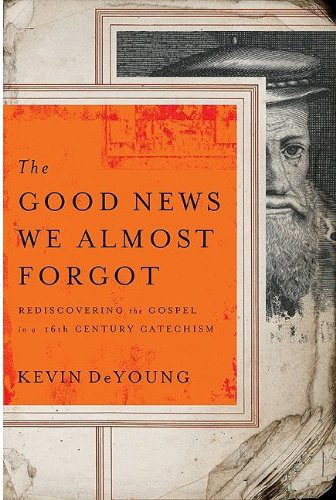
Just when I thought all was lost, I got my hands on The Good News We Almost Forgot: Rediscovering the Gospel in a 16th Century Catechism by Kevin DeYoung. The book is basically a commentary on the Heidelberg Catechism, which you can read for yourself here. For those of you unfamiliar with catechisms, they are a series of questions and answers designed to be memorized by either new believers, old believers in need of depth, or children in order to teach them the content of the Christian faith. They’re employed across various confessional church traditions and they usually they have scripture references attached to the answers for believers to look up and study as well.

The Heidelberg Catechism was written at the University of Heidelberg at the commission of Elector Frederick III and was approved by the Synod of Heidelberg in 1563. The Catechism has 129 questions and answers that are basically commentary on the Apostles’ Creed, the Lord’s Prayer, and the 10 Commandments, but it is divided into fifty-two sections, called “Lord’s Days,” so that pastors could preach through them on each of the 52 Sundays of the year.  It is one of the most universally recognized pieces of Reformed theology across confessions and was adopted by the great Synod of 1618-1619, as one of the Three Forms of Unity, along with the Canons of Dort and the Belgic Confession.

How exciting!!!

Now for myself, having been raised in a barely-denominational Friends church, I hadn’t spent more than a minute with anything like a catechism, except to know \the Westminster Shorter Catechism’s famous first question and answer: “Q. What is the Chief End of Man? A. Man’s chief end is to glorify God and enjoy him forever.”  To my less-than-enlightened mind that was great, deep, but spare stuff.  The thought of spending a whole book reading about a catechism didn’t originally strike me as an edifying experience, because at that point, “I already knew that stuff.”

Still, my buddy told me that he’d been using DeYoung’s book as a devotion because it breaks up into 52 short chapters (2-3 pages) commenting on each of the Lord’s days.  I figured, why not? It can’t hurt.

After a short introduction to the catechism much more exhaustive than my paragraph, I got to the first Lord’s Day and read Question and Answer 1:

Q. What is your only comfort in life and in death?
A. That I am not my own, but belong—body and soul, in life and in death—to my faithful Savior, Jesus Christ. He has fully paid for all my sins with his precious blood, and has set me free from the tyranny of the devil. He also watches over me in such a way that not a hair can fall from my head without the will of my Father in heaven; in fact, all things must work together for my salvation. Because I belong to him, Christ, by his Holy Spirit, assures me of eternal life and makes me wholeheartedly willing and ready from now on to live for him.

When I read this I nearly started to tear up immediately. The first sentence alone gripped me: “I am not my own.” There is nothing sterile, dry or impersonal about this answer. At the same time, it deploys in a matter of sentences the doctrines of atonement, providence, adoption, union with Christ, the Holy Spirit, assurance, and sanctification, in order to draw me into the saving reality of the Gospel. As you read through the rest of the catechism, there are other questions of similar depth and power. DeYoung’s commentary each day was solidly theological, scriptural, and very pastoral. For the next month and a half I found myself daily edified by the truths encapsulated in the short answers and the meditation that followed.

I had finally found something to found the devotional gap in my life.

Why Read Catechisms– After this I went on a search and started reading through the different catechisms and confessions I could find, (Westminster, Luther’s, Belgic, Scots), as a part of my daily time of prayer and scripture. I found myself time and time again, blessed, challenged, and moved to worship and delight. I also found myself wondering why I had never done this before.

If you’ve never spent time with a catechism, here are three reasons you should in no particular order.

1. Hearing voices from other centuries– Christianity has been around for 2,000 years. This means that Christians have been reading, praying, thinking, and writing about the Gospel for 2,000 years. It is foolish to not pay attention to what our mothers and fathers in the faith have said in past generations as if the truth of the Gospel had a 2 month shelf-life. Their voices are needed if we are to hear the Gospel in all of its fullness in our own day. Catechisms  are a great way of doing that given that most of them were written centuries ago and have still been found spiritually beneficial after all of these years.

2. Deep truths; short phrases. Most catechisms and confessions are doing serious theology and yet condensing it down into short, memorable phrases that are perfect for meditation and contemplation throughout the day. They are perfect for engaging the mind as well as the heart with the truth of God throughout your day.

3. Know Your Bible- Finally, most catechisms and confessions are packed to the gills with scriptural references backing up every statement. You can trace them down as a devotional exercise that can help you get to know your Bible better than you did before, as well as learn the deep, biblical basis for what we believe. It also can help you get into the scriptures in a focused, guided way that is less intimidating for some people than just opening the thing up and reading it.

Where Do I Start?

Honestly, I think DeYoung’s book, The Good News We Almost Forgot is a great place to start. I don’t have a copy of my own any more because I keep giving it away. When one of my college students asks me if I know of a book they should read, it’s one of the first two or three that I recommend.

If you want to start checking out catechism right away, you can start here.

G.K. Beale on the difference between a “Literal” and a “Biblical” Hermeneutic of Old Testament Prophecies

G.K. Beale is quickly becoming one of my favorite New Testament interpreters. He has a long list of impressive works including authoring what is likely the new standard commentary on the book of Revelation, editing the New Testament Commentary on the New Testament use of the Old Testament, and delivering the recent tome that is A New Testament Biblical Theology: The Unfolding of the Old Testament in the New. Needless to say based on the titles of these last two works, one of his specialties is the problem of the interpretation of the use of the Old Testament, especially prophecies, in the New Testament.

One of the main issues in this area of study is whether or not certain interpretations, both by the NT authors and their later commentators, seem to illegitimately “spiritualize” the fulfilment of a “literal” prophecy. Beale has a helpful passage on this very problem with respect to his interpretation of the Antichrist (“the man of lawlessness”) and the Temple in 2 Thessalonians in his work The Temple and the Church’s Mission: A Biblical Theology of the Dwelling Place of God.  One of the central contentions of his book is that in the NT, the Temple is replaced by Christ and in Christ by the people of God.  Therefore, the reference to the Temple in 2 Thessalonians is a reference to the church. On this basis and many other exegetical insights he claims that the prophecies of Daniel being alluded to in the text about the man of lawlessness setting up his rule in the Temple are ultimately taking place in the Church, not in some reconstructed Temple in Jerusalem as is commonly thought in popular Dispensationalism.

Obviously, for those advocating a strictly “literal hermeneutic” this will be a hopelessly spiritualizing interpretation that violates the principle by which all Scripture is to be interpreted. His responses to this charge are instructive both for general biblical hermeneutics as well as the specific problem of prophecy:

First, a ‘literal hermeneutic’ is not the best way to describe a biblical hermeneutic. Perhaps a ‘literate hermeneutic’ that aspires to the broad literary meaning in the canonical context is the better way to put it. We should want to follow an interpretive method that aims to unravel the original intention of biblical authors, realizing that that intention may be multi-layered, without any layers contradicting the others. Such original intentions may have meaning more correspondent to physical reality (hence so-called ‘literal interpretation’) while others may refer to ‘literal’ spiritual realities…”

So, there is a difference between reading something “literally” and “literately”. Kevin Vanhoozer has elsewhere said that if we want to talk about what the Reformers meant, and we ought to mean, by the term “literal interpretation”, we should speak of a “literary interpretation.” Basically, if the author intended a statement to be taken as a straightforward description, “the tree is outside”, we should understand it that way. But, if the author says, “the tree was a skyscraper”, we shouldn’t understand him to be saying that the tree is actually “scraping” the sky.  So, if a text is meant to be taken spiritually, then to read it appropriately is to read it spiritually.

“Second, the progress of revelation certainly reveals expanded meanings of earlier biblical texts. Later biblical writers further interpret earlier biblical writings in ways that amplify earlier texts. These subsequent interpretations may formulate meanings that earlier authors may not have had in mind but which do not contravene their original, essential, organic meaning. This is to say that original meanings have ‘thick’ content and that original authors likely were not exhaustively aware of the full extent of that content. In this regard, fulfilment often ‘fleshes out’ prophecy with details of which even the prophet may not have been fully cognizant.” (pg. 289)

So, a prophecy about the Temple, the dwelling place of God on earth amongst his people, can ultimately fulfilled in the church, who are now the dwelling place of God on earth amongst his people. For a prophecy to be fulfilled this way is not disruptive or illegitimate because the essential, organic content of the prophecy is preserved and grows naturally out of the original. Beale uses the example of a father in the year 1900 promising to buy his son a horse and buggy when he gets married, but by the time the son has grown up 30 years later, he ends up buying him a Ford. (pg. 291) The essential content of the promise is fulfilled even if the form is somewhat altered in a way the original utterer of the promise was unaware of.

I found these insights helpful. I pass them on to you with the hope that they will aid in your understanding of the scriptures and the surprising way that all of God’s promises “find their Yes in him.” (2 Cor 1:20)

The Gospel According to Luther

So, another confession I have to make: Martin Luther’s a favorite of mine. So sue me, I’m a Protestant. He’s an atrociously flawed man, but the more I read him, the more I love him despite the flaws. He is easily one of my top 5 “Dead Guys I’d love to have a Beer with.”

Despite the fact that he’s been dead for over 500 years and he’s a favorite whipping boy in many wings of Biblical studies, he’s kind of a must-read for anyone trying to get a handle on the New Testament or the Gospel. This absolutely brilliant passage on the Gospel is one of the many reasons why:

One should thus realize that there is only one Gospel, but that it is described by many apostles. Every single epistle of Paul and of Peter, as well as the Acts of the Apostles by Luke, is a Gospel, even though they do not record all the works and words of Christ, but one is shorter and includes less than another. There is not one of the four major Gospels anyway that includes all the words and works of Christ; nor is this necessary. Gospel is and should be nothing else than a discourse or story about Christ, just as happens among men when one writes a book about a king or a prince, telling what he did, said, and suffered in his day. Such a story can be told in various ways; one spins it out, and the other is brief. Thus the Gospel is and should be nothing else than a chronicle, a story, a narrative about Christ, telling who he is, what he did, said, and suffered-a subject which one describes briefly, another more fully, one this way, another that way.

For at its briefest, the Gospel is a discourse about Christ, that he is the Son of God and became man for us, that he died and was raised, that he has been established as a Lord over all things. This much St. Paul takes in hand and spins out in his epistles. He bypasses all the miracles and incidents [in Christ’s ministry] which are set forth in the four Gospels, yet he includes the whole Gospel adequately and abundantly. This may be seen clearly and well in his greeting to the Romans [1:1-4], where he says what the Gospel is, and declares, “Paul, a servant of Jesus Christ, called to be an apostle, set apart for the Gospel of God which he promised beforehand through his prophets in the holy scriptures, the Gospel concerning his Son, who was descended from David according to the flesh and designated Son of God in power according to the Spirit of holiness by his resurrection from the dead, Jesus Christ our Lord,” etc.

There you have it. The Gospel is a story about Christ, God’s and David’s Son, who died and was raised and is established as Lord. This is the Gospel in a nutshell. Just as there is no more than one Christ, so there is and may be no more than one Gospel….

– excerpt from Martin Luther, A Brief Instruction on What to Look For and Expect in the Gospels’