Is ‘Grace’ Only a Redemption Word?

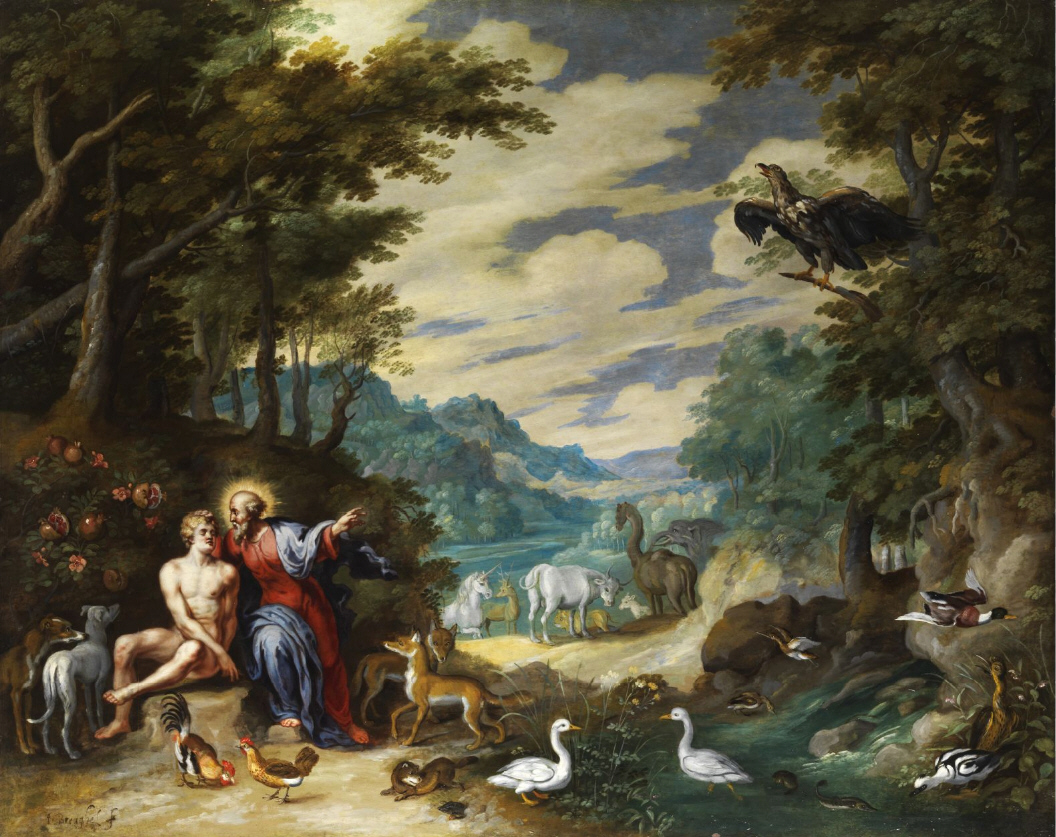
Jan_Brueghel_the_Younger_Creation_of_AdamMany of us tend to think that ‘grace’ is only a redemption word; God is gracious to us because he decides to forgive us and save us through the redeeming work of Christ. While the grace of redemption is deep and glorious, three authors point our hearts to understand the grace of God in Creation as well.

Following Paul’s lead in Colossians 1:15-20, Athanasius points out that it is God’s kindness which leads to our existence, for he holds the world together through the Word:

But the reason why the Word, the Word of God, has united Himself with created things is truly wonderful, and teaches us that the present order of things is none otherwise than is fitting. For the nature of created things, inasmuch as it is brought into being out of nothing, is of a fleeting sort, and weak and mortal, if composed of itself only. But the God of all is good and exceeding noble by nature,—and therefore is kind. For one that is good can grudge nothing: for which reason he does not grudge even existence, but desires all to exist, as objects for His loving-kindness. Seeing then all created nature, as far as its own laws were concerned, to be fleeting and subject to dissolution, lest it should come to this and lest the Universe should be broken up again into nothingness, for this cause He made all things by His own eternal Word, and gave substantive existence to Creation, and moreover did not leave it to be tossed in a tempest in the course of its own nature, lest it should run the risk of once more dropping out of existence; but, because He is good He guides and settles the whole Creation by His own Word, Who is Himself also God, that by the governance and providence and ordering action of the Word, Creation may have light, and be enabled to abide alway securely.

Against the Heathens, §41

Athanasius lyrically reminds us that in itself, creation is not self-sustaining, having been made out of nothing, but must receive its coherence and existence from without. This is exactly what God gives it through the gift of creating through the Son, the Word, who gives the world his own order because “the God of all is good and exceeding noble by nature,—and therefore is kind.”  God’s grace is seen in that he doesn’t even begrudge us our existence, but gives it to us freely and under no compulsion.

Robert M. Adams proposes another way in which grace has a role to play in creation. Many have suggested that if God is perfect, his creation must necessarily be the best of all possible worlds. But given the presence of evil in the world, many doubt this could be the best of all possible worlds. Channeling Augustine’s argument in, I think, Book 3 of On the Freedom of the Will, Adams suggests that it’s not necessarily the case that a perfect God must create the best of all possible worlds:

A God who is gracious with respect to creating might well choose to create and love less excellent creatures than He could have chosen. This is not to suggest that grace in creation consists in a preference for imperfection as such. God could have chosen to create the best of all possible creatures, and still have been gracious in choosing them. God’s graciousness in creation does not imply that the creatures He has chosen to create must be less excellent than the best possible. It implies, rather, that even if they are the best possible creatures, that is not the ground for His choosing them. And it implies that there is nothing in God’s nature or character which would require Him to act on the principle of choosing the best possible creatures to be the object of His creative powers.

-“Must God Create the Best?” in The Problem of Evil: Selected Readings, pg. 281

Contingent beings that we are, it seems that God exercises his grace in creating less than perfect creatures like you and me. Writing in the same vein, Miroslav Volf tells a story that claims rabbinic origins:

Before setting out to create the world, the Almighty took a moment to look into the future of creation. God saw beauty, truth, goodness and the joy of creatures, but the All-Knowing One also saw a never-ending stream of human misdeeds, small, large, and horrendous, a trail of sights, tears, and blood. “If I give sinners their due,” though the Just One, “I’ll have to destroy the world I am about to create. Should I create just to destroy?” And so God decided to forgive the world in advance so that the world could be brought into being. Creation owes its very existence to God’s forgiveness.

Free of Charge: Giving and Forgiving in a Culture Stripped of Grace, pg. 136

While the story is certainly extra-biblical and a bit speculative, Volf rightly contends that it contains a truth testified to in the Scriptures that Christ is “God’s Lamb” destined “before the foundation of the world” (1 Peter 1:20), to be sacrificed to bring sinners into the family of God. For the All-Knowing One, grace towards sin has to be extended even before creation.

God’s grace then, is the foundation, not only of our redemption, but our creation.  We would not exist if it were not for the unmerited and unrestrained bounty of the Triune God pouring forth blessing upon unworthy creatures such as us.

Soli Deo Gloria

Some Thoughts on the Superman and Jesus Thing

man of steel 2After months of waiting, I finally watched the Man of Steel in a midnight showing early Friday (or late Thursday) night. My first comment is that the critics are idiots–it was a fantastic movie.  Unsurprisingly given the team of Nolan, Snyder, and Zimmer, this is easily the best Superman movie to date; plot, cast, visuals, emotional complexity, etc. surpass anything that’s been done with the franchise yet.

But I’m not here to write a movie review. Like most films do, it got me thinking about theology. There have been a number of recent articles on difference and similarities between Jesus and Superman. I haven’t read any of them, but I’ve seen them online and the parallels and divergences aren’t hard to imagine–intentionally so with the former.

Superman is a Messianic figure, a son sent by a father from a different world, raised by surrogate parents, come to save us all. He’s not one of us, but he identifies with our cause, fights the battles we can’t against demons too big for merely human strength. He’s a shining beacon of truth, morality, and hope to a people who misunderstand and fear him despite his unrelenting will to save. The film plays this up to the point where its unmistakable, revealing him to be 33 years of age, and even setting him in a church struggling with a decision about whether to sacrifice himself for the planet, with a stained-glass picture of Jesus in the background.

Of course, every Messianic analogy breaks down and it’s easy enough to point that out with Superman. He really isn’t like Jesus in some very important ways–one of the biggest is that he’s not really human. He might identify with our cause and plight, but he doesn’t ever fully share it. Unless he’s exposed to some Kryptonite or Red Sun, he’s impervious to just about anything you throw at him. Jesus knows what it is to feel human fear and pain–he’s wasn’t bullet, or nailproof. Superman doesn’t bleed out and die, but Jesus does.

The flidside is that he’s not fully divine either; Superman is at best a demi-God. His feats of power, strength, speed, flight, and lasers do not entitle him to the title “Creator.” He is not eternal, immutable, immortal, or omnipotent, no matter how potent he is. He is a being among beings but not the source of all being; a superior being perhaps, but still on the ‘creation’ side of the Creator/creature distinction (if that holds in the DC Universe.)

In fact, when you think about it, theologically Superman is more like the Arian picture of Christ. The teacher Arius taught a savior who was not the eternal Son of God, (“there was a time when he was not”), and yet not a normal man either. He was a mediating being, the chief over creation who was yet still a part of it, and not to be thought of as equal to the Father.

Similarly, the salvation he offers us is that of a shining exemplar, not a redeeming Savior. Yes, he sacrifices himself for us and fights the battle we could never fight, against a ruthless enemy we could not beat. And yet, like so many other popular Hollywood Messiah figures, the goal is that one day he can teach us, inspire us, when we’re ready, to live a new a better way. In a sense, he saves, yes by feats of strength and moral courage, but the redemption of mankind will come by imitation. There is no atonement, or conversion, for Superman is the heroic, morally-educative Pelagian Christ.

This isn’t a real knock on the movie, of course, or even the Superman character. It’s not Kal-El’s fault–only Jesus can be Jesus.

And that’s really the point I’ve wanted to make. While all of our heroes, in some way, seem to point us to the ultimate Hero, all of them fall short. Some have pointed out that Batman is fully human like us, knowing our pains and plight, and in that way, he’s really the more Christ-like hero. The problem is that when he dies, he dies. Part of what makes Jesus glorious, and that the Superman myth draws on is our need for a Savior who can rescue us from the curse of death; we need a hero who can’t be held down by it. Down the line I could go, with blockbuster hero after hero pointing out the various ways they either measure up, or fall miserably short.

The key difference that I’ve seen, though, is that not one of the various heroes on offer can truly offer us the redemption we need most–that liberation of the soul that comes when our sins are paid for and the Spirit is poured out in our hearts, setting us free from our bondage to sin. None but the Crucified and Risen one is strong enough offer me the salvation of a conscience cleansed from sin and reconciled with God.

Soli Deo Gloria

A Proper Christian Mysticism?

mysticismIs there a place for Christian “mysticism?” Thinking of the various incense-laden mysticisms of the East, some implying a denial of the Creator/creature distinction or a strong doctrine of Revelation, many Christians, especially Protestant ones, would vigorously reject the notion. Writing about the “intimacy of relation” we find in our Union with Christ, Reformed theologian John Murray does not shy away from suggesting properly Christian “mysticism”:

Here indeed is mysticism on the highest plane. It is not the mysticism of vague unintelligible feeling or rapture. It is the mysticism of communion with the one true and living God, and it is communion with the one true and living God because and only because it is communion with the three distinct persons of the Godhead in the strict particularity which belongs to each person in that grand economy of saving relationship to us. Believers know the Father and have fellowship with him in his own distinguishing character and operation as Father. They know the Son and have fellowship with him in his own distinguishing character and operation as the Son, the Saviour, the Redeemer, the exalted Lord. They know and have fellowship with the Holy Spirit in his own distinguishing character and operation as the Spirit, the Advocate, the Comforter, the Sanctifier. It is not the blurred confusion of rapturous ecstasy. It is faith solidly founded on the revelation deposited for us in the Scripture and it is faith actively receiving that revelation by the inward witness of the Holy Spirit. But it is also faith tha stirs the deepest springs of emotion in the raptures of love and joy. Believers enter into the holy of holies of communion with the triune God and they do so because they have been raised up together and made to sit together in the heavenlies in Christ Jesus (Eph. 2:6). Their life is hid with Christ in God (Col. 3:3). They draw nigh in full assurance of faith having their hearts sprinkled from an evil conscience and their bodies washed with pure water because Christ is not entered into holy places made with hands but into heaven itself now to appear in the presence of God for them (Heb. 9:24)

-Redemption: Accomplished and Applied, pp. 172-173

So is there a place for a properly Christian mysticism? Yes–within the coordinates of trinitarianly-conceived Union with Christ, the Scriptures teach us that we can rejoice and delight in communion with Father, Son, and Spirit.

Soli Deo Gloria

Who Adopts Us in Salvation?

The FatherIt was in seminary that I began to appreciate the significance of adoption as a distinct moment in our salvation. Even greater than our justification, being declared and thereby rendered righteous with God the King, is being received by grace into his family as beloved children. It is as children that we call out ‘Abba, Father’ and approach the throne of grace with full confidence, knowing that the King of Glory delights to hear our prayers.

The question I had in seminary was, “Who exactly am I adopted by? Is it by the Father, or the whole Trinity?” I initially believed it to be the Father as I understood adoption to occur through union with Christ the Son into his relationship with the Father. Upon hearing me express this view, one of my professors quickly corrected me and warned against introducing a split in the Trinity. To him, it is only proper to attribute adoption to the whole Trinity.  Since that time I’ve gone back and forth, but have come to the conclusion that my initial instincts were correct.

Two principles of trinitarian theology have guided me:

  • First, that although the external acts of the Trinity are undivided, the persons are still to be distinguished. In other words, the Trinity acts in a trinitarian fashion. It’s not that the Father creates, the Son saves, and the Spirit does, whatever he does. Instead, the early church fathers would say that more properly the Father creates, redeems, and sanctifies through the Son and the Spirit. In every action, the whole Trinity is involved.
  • Second, the complementary doctrine of appropriations teaches that, although the work of the Trinity is undivided, it is still fitting to attribute certain graces and actions more properly to a particular person. So, for instance, although the Father and the Spirit are involved, only the Son is properly said to become incarnate. Only the Son is born of a virgin, dies, and rises again, and so forth, even though they happen at the command of the Father in the power of the Spirit.

With these two principles in place, we are in a position to appreciate John Murray’s biblical arguments in Redemption Accomplished and Applied for thinking it is the Father who adopts us, although he does this through the Son and the Spirit:

  1. The first and simplest is that the name “Father” belongs to the first person of the Trinity, just as “the Son” is the second, and the “Holy Spirit” is the third. Jesus directed his prayers to the Father, and he is the Father of our Lord Jesus Christ. (pg. 137)
  2. In John 20:17, Jesus tells Mary Magdalene that he is not yet “ascended to the Father”, clearly referring to the first person, before going on “My Father and your Father, My God and your God.” (pp. 137-138)
  3. In a very similar point, Murray points out that Jesus’ frequent prayer to his “Father in heaven”, or some similar form of address. He also directs his disciples to pray to their Father in heaven, implying that the same divine person is in view. (pg. 138)
  4. In the New Testament, the term “Father” is the personal name of the first person of the Trinity. The Father is often called “the God and Father of our Lord Jesus Christ” (Rom. 15:6; 2 Cor. 1:3; 11:31; Eph. 1:3; Col. 1:3; 1 Pet. 1:3). The phrase “God the Father” also must refer to him (Gal. 1:1; Eph. 6:23; Phil. 2:11; 1 Thes. 1:1; 2 Thess. 1:2; 1 Tim. 1:2; 2 Tim. 1:2; Tit. 1:4; 1 Pet. 1:2; 2 Pet. 1:17; 2 John 3; Jude 1; Rev. 1:6) In almost all of these passages the Father is clearly not referring to the Son or the Spirit. From there Murray says that it is important to observe that “when God is called the Father of believers we have close similarity of expression” to the point where it is an unavoidable conclusion that the same person of the Trinity is being referred to. Again, in places like Romans 1:7 where the phrase “peace from God our Father and the Lord Jesus Christ” is used, both persons are mentioned and distinguished, while one is named “our Father.” (cf. 1 Cor. 1:3; 2 Cor. 1:2; Gal. 1:3; Eph. 1:2; Phil. 1:2; Philemon 3)

For these reasons it seems Biblically-appropriate to understand ourselves to have been adopted through the mediatorial work of the Son and the gift of the Spirit into the Father’s family by grace. This is good news. As Murray writes:

Could anything disclose the marvel of adoption or certify the security of its tenure and privilege more effectively than the fact that the Father himself, on account of whom are all things and through whom are all things, who made the captain of salvation perfect through suffering becomes by deed of grace the Father of the many sons whom he will bring to glory? (pg. 140)

Soli Deo Gloria

In What Sense Was The Atonement Necessary?

redemptionThat Christ died for our sins is beyond question. (1 Cor. 15:3; Rom. 5:8-11; 2 Cor. 5:21) In what sense was Jesus’s death for sin necessary, though? The issue of the necessity of atonement is a complex one involving many layers from various angles. John Murray sheds some light on at least one area by making a very helpful distinction in his work Redemption: Accomplish and Applied between two views of the necessity of Christ’s work on the Cross that have been held throughout the history of theology.

Hypothetical Necessity – First is the view that he terms “hypothetical necessity” (pg. 11), in which Jesus’ death is held to be not strictly necessary. Theoretically it is possible that God could have saved his church through some means other that Christ’s sin-bearing death, and victorious resurrection if he so chose. He is God for whom all things are possible. Apparently in his wisdom though, he found that this was the most fitting means in that it combines the greatest amount of blessings, virtues, and so forth. Murray cites Augustine and Aquinas as historical representatives of this view. Knowing what I know of them, it sounds like the sort of conclusion they might come to.

Consequent Absolute Necessity – The second view Murray calls “consequent absolute necessity” and it is apparently the historical Protestant position (Calvin, Institutes, II.16.5). It holds that, given God’s decision to save, Christ’s death for sin was absolutely necessary. So, to be clear, first, it affirms that strictly speaking, Christ’s death is unnecessary. God did not need Christ to die. He is perfect and complete in his own life before the creation or the redemption of the world without it. And yet, consequent, or logically-following his decision to save, it is absolutely necessary given the nature of sin and the nature of God that it should happen through Christ’s vicarious sacrifice. (pg. 12) So, if moved by love, God is going to save people in a way consistent with his own holy, just, and merciful character, the atonement is necessary. It is this view that Murray judges to be the correct one and to which I myself subscribe.

Support Some might find this to be ‘vain speculation’, but Murray points various texts to the effect that such a conclusion is warranted. (See pp. 13-18) One particular argument he forwards is connected to the fact that the Scriptures point to Christ’s death as greatest proof we have of the love of God (Rom. 5:8; 1 John 4:10) That God was willing to spare his own Son testifies to the costliness of his love. (Rom 8:32) Murray asks, “would the Cross be an extreme exhibition of love if there were no necessity for such costliness?” (pg. 17) Can’t we only draw that conclusion if there were no other options? If there wasn’t some extreme sense of necessity involved? I find that conclusion hard to escape. As another has pointed out, it makes no sense for your friend to tell you, “Look how much I love you!” and then jump into a lake and drown. If he jumps in front of a bus to push you out of the way, that’s another story.

Another theological objection is that this seems to put limits on God. Isn’t it arrogant to say what God can and can’t do? At one level yes, we ought to be careful about being too eager to say what God can’t or cannot do. That’s why Murray spends several pages showing that this is a judgment made on scriptural grounds; its safest to make judgments on what God has told us about himself. It must also be pointed out that there are several things it is perfectly fine to say God’s ‘cannot’ do which do not rob him of glory. God’s inability to lie, be wicked, or deny himself is no affront to his majesty. In fact, “such ‘cannots’ are his glory and for us to refrain from reckoning with such ‘impossibles’ would be to deny his glory and perfection.” (pg. 13)

So was Jesus’ death necessary? In one sense, no. Jesus didn’t need to die–he could have left us to our peril and woe. In another sense, once God decided (in some pre-temporal sense) to save us by grace, it could come in no other way than through the death of His Own Son.

Soli Deo Gloria

Perfection And Incarnation (Or, Some Thoughts on Zack Hunt’s Imperfect Bible)

Insert stock Bible image here.

Insert stock Bible image here.

The law of the LORD is perfect, reviving the soul; the testimony of the LORD is sure, making wise the simple – (Psalm 19:7)

If you read this blog often, you know I don’t typically pick fights with specific bloggers, or even positions–I generally just like putting forward positive content. I certainly don’t like challenging smart guys like Zack Hunt. I mean dude’s got some theological chops, a big blog, he’s going to Yale, and is a good enough writer to score a book deal; I have a kind of ugly-but-functional blog my mom reads and a poorly-followed Twitter account. Still he wrote a piece over at Red Letter Christians on the inerrancy or rather, non-inerrancy, of the Bible that I found interesting and worth examining. Also, I was kind of bored.

His basic argument, as far as I followed it, was that the reason he believed the Bible isn’t perfect is because the Bible itself told him so. Also, nobody believed in its ‘inerrancy’ until like, 150 years ago. Or something like that.

If I had to boil down the argument into one quote, it’d probably be this chunk right here:

Do you remember the other big moment when we read about something being “God-breathed” in scripture? Sure you do. We find it in the very beginning, in Genesis chapter 2 verse 7 when God took the dust of the ground and breathed life into it to create humanity.

In that moment God breathed something into existence…..which wasn’t perfect. It couldn’t be. It wasn’t God.

Because scripture is also “God-breathed” it means it too isn’t God. Nor does it even come directly from God, but instead it passes through an intermediary. In the beginning, the intermediary between us and God was dirt. God breathed into it and the result was that we were created.

In the case of the Bible, God breathed His truth into the hearts and minds of people and the result was that the Bible was created. But like that ancient dirt that gave birth to us, the people who wrote the Bible, God’s intermediaries, weren’t perfect. Which is why Paul says “For now we see in a mirror dimly, but then face to face; now I know in part, but then I will know fully just as I also have been fully known.”

Hunt then goes on to affirm that we can basically trust the Bible because, even though Noah probably didn’t get all those animals on the boat, we can still believe what the story is trying to teach: God will take care of us in the storms. We don’t need something to be inerrant or “perfect” for it to convey truth, it just needs to be honest enough. A basically truthful message doesn’t need to keep all the details straight for it to be correct and trustworthy. That’s what faith is about–kinda like with your parents, you trust it even when you have some doubts about it. Holding out for some theoretical inerrancy that doesn’t fit the text itself isn’t faith, but a fearful struggle to control the divine.

Now, on the issue of faith and I’d simply note that Karl Barth had some different ideas than Paul Tillich which are worth considering. The historical point, I will leave to others to debate without comment as well. I think there is definitely something to the idea that testimony can be essentially reliable while a couple of minor details are crossed. I’m not saying that’s what’s happening in the Bible, but I think it’s important to affirm valid points when you see them.

On his argument about perfection I do have a few thoughts, though.

To be clear at the outset, I’m not going to argue in detail for some particular view of inerrancy or infallibility simply because, to be honest, it’s a short blog so there isn’t time. I do think it’s helpful to point out that there are varying views as to what constitutes inerrancy such as the Chicago Statement (which has multiple interpretations), Old Princetonian articulations, and other more rigid views. It’d probably be helpful to define it, but since Hunt doesn’t and it won’t affect my argument, I’ll leave it be. For the curious, whatever Kevin Vanhoozer says, I’m right around there.

What I do want is to briefly, and incompletely, examine a few of the basic components or assumptions in the argument forwarded by Hunt, in no particular order.

It’s Not God, But it is His Work

As Hunt astutely points out, the Bible is not God, but is “God-breathed” (theopneustos). So, it’s wrong to attribute to the Bible all of God’s perfections. Only God is immortal, immutable, eternal, all-powerful, and so forth. The Bible is not these things and to say that it is, is a sort of idolatry that ignores the fact that it is clearly a human book that “was written by people”; humans who left their individual marks on the texts they produced.

Now, to begin, I’d just like to note that the proponents of inerrancy that I know of would easily confess this. For instance, Old Princeton theologian B.B. Warfield, truly old-school on inerrancy, makes a big deal about the way Paul’s letters bear his distinctive stamp–they have the unique marks of his very human personality, thought, and history. And yet, Warfield still affirms that they are God’s works and are to be identified with him. In other words, he ascribes to a view of dual authorship whereby, without violating creaturely freedom and contingency, God somehow brings it about that Paul writes what he wanted him to write; even though they’re human words, it doesn’t prevent them from somehow being divine ones as well. That’s why Jesus can say “it is written”, and Paul can quote the OT and say “Scripture says”, as if it were equivalent to “God says.”

Warfield writes:

When the Christian asserts his faith in the divine origin of his Bible, he does not mean to  deny that it was composed and written by men or that it was given by men to the world. He believes that the marks of its human origin are ineradicably stamped on every page of the whole volume. He means to state only that it is not merely human in its origin…

The Scriptures, in other words, are conceived by the writers of the New Testament as through and through God’s book, in every part expressive of His mind, given through men after a fashion which does no violence to their nature as men, and constitutes the book also men’s book as well as God’s, in every part expressive of the mind of its human authors.

In which case, it’s not quite as simple as distinguishing Creator from creation then, because the two are related. The integrity and characteristics of the one speaks to the ability of the other.

“God-Breathed Humans” and Types of Perfection

Hunt also points out that the other thing we read in Scripture was God-breathed were humans–and they clearly weren’t perfect, just good. Cutting off a quick objection, he says we can’t simply point to the Fall either and say, “Well, we were and then we became sinful.” The Bible only says that we were very good, and yet clearly we were capable of temptation. I mean, we’re not God, so how could we be perfect? So neither is the Bible.

Now once again, yes, humans are not perfect–certainly not as God is perfect. And yet that isn’t the end of it. You see, we are meant to be perfected in redemption, just as we were meant to be perfected in the Garden. Just as there is an eschatological dimension to our salvation now, there was one then; God had the goal of bringing his “good” creation to a point of perfection. One thing we always forget about the glory of salvation is that one day we will be made like Christ, the perfectly glorified human one, without becoming the Creator. We will be a perfectly redeemed creation. What I’m trying to say is that simply pointing out that the Bible isn’t God, doesn’t mean it can’t be perfect. It means it can’t be perfect in the way God is, but it doesn’t rule out a derivative, analogical sort of perfection–perfect for the sort of thing that it is. Eventually we will be perfect for the sorts of non-divine things we are. It seems at least possible then, for something created, like the Bible, to be perfect in it’s own particular way.

Intermediaries and Incarnation

I’ll be briefer here because this point follows after the others, but Hunt makes something of the Bible coming by way of intermediaries. Just as God used dirt to make humans and so we came out a bit dirty (not in that sense), God used dirty humans to get his message across and they wrote a “dirty”  Bible. It’s good enough, but since it is the work of a human intermediary we shouldn’t expect perfection.

Now, to my mind, it seems relevant that we believe in a Gospel that has the Incarnation right at its center. The Divine Son, takes up humanity in order to perfectly say and do what God says and does in a human way. To put it another way, the man Jesus Christ’s saying and doing is simply God saying and doing as a human. Humanity made in the Image of God, set free from sin, is apparently a fit vehicle for the perfect-but-veiled revelation of God himself in Jesus. I’ll be the first to throw up a big caution before collapsing the Creator/creature distinction, but working from the Incarnation, as unique and unrepeatable as it is, we seem to be presented with the truth that a thing’s non-divinity does not disqualify it as medium of perfect, if limited, revelation.

Now, to be sure, “perfect” does not mean “complete” or “full without remainder.” In that sense, yes, we see “through a glass darkly.” This side of the eschaton we do not know all things, nor do we know them as God does; we should not expect to. We can trust that God has perfectly told us those things we need to know now in order to know God fully then. Incidentally, to use that verse as an argument for the errancy of Scripture is as persuasive exegetically as cessationists’ appeal to it as evidence that the gifts ended when we got the Bible–which is to say, not very much at all because those verses aren’t talking about the Bible.

Again, this isn’t a full response, nor was it intended to be. I’m sure I haven’t convinced anybody as to the inerrancy, non-inerrancy, or infalliblity of the Bible. There are probably 20 different issues I could have brought up that play a role in our understanding of Scripture. I simply wanted to make a few clarifying points with respect to Divine authorship, redemption, and Incarnation that might shed some light on the possibility of the Bible’s “perfection.”

Soli Deo Gloria

Love Them Anyways

Even Scumbag Steve is made in the Image of God.

Even Scumbag Steve is made in the Image of God.

Every once in a while you have one of those encounters when you’re reminded of the fact that people are corrupt. I mean, it could be anything from turning on the news and watching widespread violence, to 5 minutes of watching the way people treat the baristas at Starbucks and you remember that there is something deeply perverse in the human heart. In those moments it’s tempting to look at people think, “You’re not worth it. You don’t deserve my respect, my kindness, my courtesy, and certainly not my love. God, I just can’t do it. Not that guy.”

John Calvin knew a little something about that. Not known for having the sunniest anthropology in the world, he offers those who stumble in the face of human corruption a scriptural exhortation to love:

Furthermore, not to grow weary in well-doing {Galatians 6:9], which otherwise must happen immediately, we ought to add that other idea which the apostle mentions: “Love is patient… and is not irritable” [1 Corinthians 13:4-5]. The Lord commands all men without exception “to do good” [Hebrews 13:16]. Yet the great part of them are most unworthy if they be judged by their own merit. But here Scripture helps in the best way when it teaches that we are not to consider that men merit of themselves but to look upon the image of God in all men, to which we owe all honor and love. However, it is among members of the household of faith that this same image is more carefully to be noted [Galatians 6:10], in so far as it has been renewed and restored through the Spirit of Christ. Therefore, whatever man you meet who needs your aid, you have no reason to refuse to help him.

–Institutes of the Christian Religion, III.7.6

While Calvin was not an optimist but a biblical realist about the human person, he strongly championed the worth of the individual, not according to their own merit, but because of the distorted, but still-present, Image of God in every person. There is no one who is beyond our responsibility to aid because they are made in the image of our Maker; to despise the former is to reject the latter.

Anticipating objections on the order of, “But you don’t know this guy…” Calvin lists various situations in which we, like the lawyer who asked “who is my neighbor”, might try to escape God’s command to love him and answers them in turn:

Say, “He is a stranger”; but the Lord has given him a mark that ought to be familiar to you, by virtue of the fact that he forbids you to despise your own flesh [Isaiah 58:7, Vg.].
Say, “He is contemptible and worthless”; but the Lord shows him to be one to whom he has deigned to give the beauty of his image.
Say that you owe nothing for any service of his; but God, as it were, has put him in his own place in order that you may recognize toward him the many and great benefits with which God has bound you to himself.
Say that he does not deserve even your least effort for his sake; but the image of God, which recommends him to you, is worthy of your giving yourself and all your possessions.
-ibid. III.7.6

He finally turns to the last situation, that of an enemy–one who has done us active wrong and probably deserves some sort of vengeance:

Now if he has not only deserved no good at your hand, but has also provoked you by unjust acts and curses, not even this is just reason why you should cease to embrace him in love and to perform the duties of love on his behalf [Matthew 6:14; 18:35; Luke 17:3]. You will say, “He has deserved something far different of me.” Yet what has the Lord deserved? While he bids you forgive this man for all sins he has committed against you, he would truly have them charged against himself. Assuredly there is but one way in which to achieve what is not merely difficult but utterly against human nature: to love those who hate us, to repay their evil deeds with benefits, to return blessings for reproaches [Matthew 5:44]. It is that we remember not to consider men’s evil intention but to look upon the image of God in them, which cancels and effaces their transgressions, and with its beauty and dignity allures us to love and embrace them.

-ibid. III.7.6

Calvin points us here, as he always does, to the Gospel. In it we see a God who tells us, “Forgive what is to his account, but charge it to me, for I have already paid it. Look to the deep ransom I have bled in order to regain that beautiful Image and reconsider.” Calvin wants us to take the time to look at people, not according to their merit, but according the lovely Image, as damaged and broken as it is, of the Beautiful One who deserves all of our love and devotion.

Soli Deo Gloria

Meditation and Communion with God: Contemplating Scripture in an Age of Distraction (Book Review)

meditation and communion with GodMeditation is viewed with suspicion within many wings of modern Protestantism today. Begin to mention the spiritual discipline of contemplation and immediately accusations or apprehensions that one has imported or smuggled in foreign notions from Eastern philosophies, Buddhism, or less-than-Evangelical mystical pieties start to be leveled. Indeed, at times this isn’t too far off the mark. In our pluralistic culture there is much that passes for Christian spirituality is little more than cleverly-disguised syncretism. And yet, it would be a mistake to miss the need to recover the contemplative dimension to Christian spirituality in our stressed-out, surface-level, consumeristic North American Christianity.

This is why I have been so blessed as I read John Jefferson Davis’ recent work Meditation and Communion with God: Contemplating Scripture in an Age of DistractionIn this short, but rich essay, Davis argues and provides a theological foundation for a robust practice of contemplating scripture within an orthodox Evangelical framework. Instead of the mind-emptying techniques rooted in Advaita Hinduism, or Zen Buddhism, Davis wants to present a vision of the soul-expanding practice of deeply contemplating the riches of biblical truth in such a way that actually mediates the life of God himself in union with the Son by the power of the Spirit of the Age to Come.

Six Reasons

Aside from the fact that the Reformed tradition, especially Puritanism, has long had a rich tradition of scriptural contemplation including such lights as John Owen, Thomas Watson, William G.T. Shedd, and others, Davis notes six current factors which make recovering a practice scriptural contemplation urgent and beneficial:

  1. Renewal of interest in spiritual disciplines within Evangelicalism. (pg. 10)
  2. Growing interest in Eastern practices of meditation within a pluralistic context. (pg. 13)
  3. Widespread biblical illiteracy in North American churches. (pg. 18)
  4. Our growing awareness of the effects of the digital age on attention spans and reading habits. (pg. 21)
  5. New research on the effects of meditation on the brain and personal health. (pg. 25)
  6. Trend in biblical and systematic theology which have yet to be integrated into a theology of contemplating Scripture. (pg. 28)

As I read Davis outline his case, I found myself vigorously nodding in agreement, particularly as I thought of my own ability to simply sit down and read the book without compulsively checking my social media. If there is one thing our “distracted” age needs, it is something that forces them to sit down, breath, and think. I don’t think anybody would dispute that. The question becomes then, what are these theological foundations?

Three Themes

Davis devotes most of the rest of the essay to developing a theology of contemplation in light of three key theological developments:

  1. Inaugurated Eschatology (pp. 34-41)- NT scholars for the past couple of generations have highlighted eschatology as the warp and woof of the theology of the NT. Jesus preached the inbreaking kingdom of God which was “now” here and “not yet” fully consummated. Paul taught that through the Resurrection of Jesus Christ, the powers of the New Age had broken into the Old Age of sin and darkness and were available to us in the Spirit. The Old Covenant having been fulfilled, judgment rendered, victory accomplished, the Spirit is now poured out on all flesh drawing us near into a new access to the Father by grace.
  2. Union with Christ (pp. 41-51)- Connected to this is a renewed emphasis on the reality of our union with Christ. The idea that salvation ought to be thought of in terms of our current union with Christ saves us from a purely-future notion of redemption. Even now we are united to the risen Christ and all of his saving benefits, even though we are not yet fully like him. The Holy Spirit unites us to Christ in faith and makes us present to him, even though we are separated in space and time because of the inbreaking of the New Age.
  3. Trinitarian Theology (pp. 51-55) – Finally, the 20th Century renaissance of trinitiarian theology has reminded us of a few key realities: knowing God as he truly is–Father, Son, and Holy Spirit–can only help remind us of the fact that we can have personal relations with this personal God (1); having been made in the image of the Triune God, we are inherently relational beings which has implications for our ideas of personal existence and knowing (2); salvation is inherently trinitarian in nature as we are being brought into the life of the Triune God (3).

The Results

Building on these Davis develops them into a re-hauled “inaugurated ontology” that generates insights into our theology of God, cosmos, humanity, salvation, epistemology, and scripture that sets up a new way of understanding what is going one when we read the Bible. We are actually being brought into the presence of and communion with the Triune God through the power of the Spirit who unites us to the Risen Christ. This brief theological outline forms the basis of his rehabilitation of the Medieval Church’s practice of the four-fold interpretation of Scripture, which he believes ought to play an important role in the life of the church, especially in spiritual contemplation of scripture, even while we hang on to the real insights gained by the Reformers’ renewed emphasis on the “literal” sense of the text. Finally, after all of this, he includes a section outlining an actual approach towards a scriptural meditation which includes exercises in “whole-brain” reading and prayer.

A Couple of Final Words

While I’ve enjoyed this book immensely, I’d just add a few words of caveat and warning: this isn’t the easiest book. It’s not the hardest, either. Just realize that it isn’t just a nice little handbook on contemplation. Some background in theology and biblical studies will be helpful in reading it. Also, he has some interesting little philosophical sections on the idea of the self and its location in space; they’re fine as far as they go, but don’t worry about skipping them.

I tell you this now because overall this is an excellent little book. Davis has done the church a real service in working through some of the real theological issues involved in contemplation. Davis’ work assures us that we can be confident that Christ is really present to us, by the power of the Spirit of the New Age, in the reading of Scripture. Slow, prayerful meditation on the Biblical text can be a real means of communion with the Triune God.

Soli Deo Gloria

10 Theses on Union With Christ

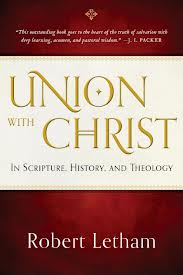
unionI finished Letham’s work on union with Christ last week, but I wanted to return to it one last time. Letham has a fascinating chapter entitled “Union with Christ and Transformation”  in which he examines the relationship between union with Christ and Eastern and Reformed conceptions of deification. At the end of the chapter, he lists and expounds 10 theses on union which summarize much of his findings with respect to the transformative aspect of union:

  1. The union we enjoy with Christ is more real and more fundamental that the union we have with members of our own body” (pg. 123) By this he means that our union with Christ is of such a nature that any analogy ultimately falls short of the reality. Legal, organic, familial, and structural metaphors all convey some of the truth, but none fully captures the fullness of the saving union with our savior.
  2. This is not a union of essence–we do not cease to be human and become God or get merged into God like ingredients in an ontological soup. This is is not apotheosis.” (pg. 123) This union is not to be taken pantheistically. Even the patristic dictum, “God became man so that we might become god” must be taken within the context of a strong acknowledgment of the Creator/creature distinction. If anything, the point is that we become more fully human than we ever were before.
  3. We do not lose our personal individual identities in some universal generic humanity.” (pg. 123) Just as the one God is distinctly three from all of eternity, and the humanity of the Son is not destroyed, but elevated in the incarnation, so in our union with Christ, our identity is not destroyed or collapsed into his. We are one by the power of the Holy Spirit, but we remain who we are.
  4. Union with Christ comes to expression in, and is cultivated by, the Word and the sacraments.” (pg. 124) Through the efficacious preaching of the Word, the Holy Spirit calls us to life and faith (1 Pet. 1:23; Jas. 1:18; Rom. 10:9-17).  Those brought to life through the Word are sustained through feeding, by the mysterious activity of the Spirit, on Christ’s flesh and blood (John 6:63).
  5. The body and blood of Christ are not materially, corporeally, or physically present in the Lord’s Supper.” (pg. 125) Unlike Roman Catholic, and to some extent Lutheran, accounts. We truly are given Christ, united with Christ, not physically but by the action of the Holy Spirit who mediates his presence truly.
  6. In the Lord’s Supper we are lifted up by the Holy Spirit to feed on Christ.” (pg. 126) Here Letham builds on Calvin’s spatial language with reference to the Ascension. The Holy Spirit joins us to Christ’s person in the Supper by way of faith receiving his promises. Horton has suggested elsewhere that the spatial language be replaced by eschatological language. In the Supper, the Spirit makes present Christ’s resurrection life of the New Age in the life of the believer.
  7. We are not hypostatically united to the Son.” (pg. 126) The incarnation is unique; the Son takes on humanity only once. The Spirit indwells many, united them to Christ and bringing them into the fullness of life in Christ. We are not to confuse the types of unions involved.
  8. We are united with Christ’s person.” (pg. 126) At the same time, union is not only indwelling, but is rooted in the incarnation of the Son who thereby makes himself one with us according to our humanity. This is a tricky that I’m not quite sure I’ve grasped (not that I have the others). but it’s not only that we are in fellowship with God, communing with him, but are actually united with him, the Godman. It’s a mystical, metaphysical, transformative reality that ought not be downplayed.
  9. It is effected and developed by the Holy Spirit through faith, in and through the means of grace…” (pg. 127) Union with Christ isn’t an individualistic thing, but “churchly.” It happens through the everyday stuff of the life of the church: the breaking of bread, the scriptures, the community, and prayer by which the Spirit has promised to meet us.
  10. “It will eventually lead to our being ‘like Christ’ (1 John 3:1-2).” (pg.128)  God wants to make us more like himself. For right now we are “partakers of the divine nature” (2 Pet. 1:4), by being set free from sin and the inevitable curse of death. When Christ returns though, we will be glorified like him. United with him, how can the body not eventually be made like the head?

Of course, each of these points could be, and are in the book, expanded upon at length. For now they chart a course through the deep theological waters we enter in when considering the riches of our union with Christ.

Soli Deo Gloria

Moses = Mini-Israel = Jesus (Or, Theological Inception)

inceptionOne principle of Christian theological interpretation of Scripture is the practice of identifying typology. To over-simplify it, in the flow of redemptive-history, the sovereign God who ordains all things, prefigures the salvation to be accomplished through Jesus Christ by way of types (events, persons, symbols) to which Jesus Christ’s person and works are the anti-type.

For instance, Adam points to Jesus as Second Adam through whom God is creating a new humanity (Romans 5; 1 Corinthians 15). Abraham’s willingness to sacrifice his only son Isaac points to the true Sacrifice of God’s only Son (John 3:16). The Tabernacle and Temple where God dwells with Israel points to the ultimate Tabernacling of God with humanity in Jesus Christ (John 1:14). Once you start to think in these terms, it’s almost impossible not to see Christ on every page of the Scriptures.

A particularly important type of Christ in the OT is Israel’s greatest prophet and deliver–Moses. In various ways, the NT reveals Jesus as the New Moses. Like Moses, Jesus escapes the death at the hands of a murdering king as an infant (Matt 2:13-18); he goes up on a Mount to give a new Law (Matt 5-7), which fulfills the old Law; he also institutes a new covenant that supersedes the old one (Lk 22); he rescues his people in a New Exodus of the Egypt of sin, death, and oppression into the Promised Land of salvation (Col 1:13-14). The list could easily be expanded.

While I’d known about these typological parallels between Moses and Jesus, I was nonetheless struck by this passage drawing out the way that Moses functions as a type and representative of Israel as well:

Moses, who narrowly escapes disaster by being placed in an ark in the River Nile (Exod. 2:1-10)…Moses’ salvation echoes backwards and forwards in the text; backwards to the salvation of humanity from the judgment of the flood by Noah (Gen. 6-8), and forwards to the Israelites’ future escape from the waters of the Reed Sea (Exod 14). Significantly…the figure of Moses, this child born as a type of saviour figure, not only saves Israel but also embodies Israel at times. His rescue from the water prefigures the nation’s salvation from the water; his escape after the death of an Egptian (Exod. 2:11-15) is a prelude to the Israelites flight after the death of many Egyptians (Exod. 12:29-39); his experience of being in the desert for forty years (Exod. 2:21-25) foreshadows the same for Israel (Num, 14:33); his divine encounters before the burning bush (Exod. 3) anticipates Israel before the fire of Sinai (Exod. 19-24).

Stephen G. Dempster, Dominion and Dynasty: A Theology of the Hebrew Bible, pg. 94

Moses is not only a type of Christ, but a type for Israel. Israel, God’s firstborn son (Exod. 4:22) is another type of Christ, who also wanders in the desert for 40 days and is tested (Matthew 4), so on and so forth. Moses is also Israel’s embodiment at times, which is a type for Christ’s representative embodiment of his newly re-formed Israel. We could chase the connections for pages, but what I’m saying is that this is like a theological version of Inception: we have found a type within a type within a type.

The intricacy, beauty, and inter-canonical-coherence of the biblical history of redemption should lead us to awe and worship. While human authors create inter-textual resonances, the sovereign Lord of time creates inter-historical ones.

Soli Deo Gloria