The Gospel According to Bach

Because Chris Tomlin just wasn’t good enough for Reformation Sunday, our choir performed a majestic rendition of Johann Sebastian Bach’s Cantata No. 4 this morning. Now, I have to admit I am a bit of a neanderthal and growing up in the churches I have, great as they were, I was never really exposed to high church culture; it’s not my natural jam. Still, I was deeply moved by this piece.

Musically, it was Bach–’nuff said. Lyrically, again, it was Bach, but this particular piece was based on Martin Luther’s hymn, “Christ Lay in Death’s Cold Prison.” While it was meant to be heard, not merely read, I’d encourage you to take some time this week to work your way through the verses, meditating on the deep, Gospel truths about Christ’s death for sin, and hard-won victory of the powers of hell and the grave. It is heavy with theological and spiritual substance; rich food for the soul. Eat up.

Christ lay in death’s cold prison
bound fast for our transgression;
but now he has arisen
and brought to us salvation.
Let us all be joyful, then,
praise God and give thanks to Him
and sing Hallelujah,
Hallelujah!

O Death, you spared no mortal soul
of any race or nation,
for all were under sins control,
none was without transgression.
Therefore came grim Death so soon
and with swift advance it brought our doom,
and held us in its realm of terror.
Hallelujah!

Our Savior Jesus, God’s own Son,
here in our stead descended.
The knot of sin has been undone,
the claim of death is ended!
Christ has crushed the power of hell;
now there is naught but death’s gray shell;
It’s sting he now has ended.
Hallelujah!

It was a war of majesty,
of Life and Death together;
but Life gained the victory,
and did destroy the other.
Scripture has proclaimed it so,
how one death devoured its foe,
and mocked its fleeting power.
Hallelujah!

Here is the spotless Easter-lamb,
that God the Lord did give us,
who high upon the cross was hung
and sacrificed to save us.
On our doorposts is his blood,
The price he paid to conquer Death:
the Strangler now cannot destroy us.
Hallelujah!

Then let us keep this holy feast
with all delight and pleasure,
which God the Lord makes manifest;
he is our light and pleasure,
who through the splendor of his grace
has lightened our most sacred place.
The night of sin has vanished.
Hallelujah!

So Christians, feast with joy each day
on Christ, the bread of heaven,
the Word of grace has purged away
the old and evil leaven.
Christ alone, our holy meal,
the hungry soul will feed and heal;
faith lives upon no other!
Hallelujah!

Soli Deo Gloria

Some Stuff on the Holy Spirit and Being Used by God and Stuff

“Can God ever use someone like me?” I’m sure if you’ve been in church for a long enough time, you’ve either heard or wrestled with that question. It’s almost inevitable when thinking about the majesty of God, the weightiness of his kingdom-work and then considering our own weakness and frailty that we’ll doubt that we can ever play a part in it.

The quick answer to that question though, is, yes. Why? “Jesus?” Well, close–the Holy Spirit.

See, all throughout the Scriptures we see this thing happen when God wants to use someone, he sends the Holy Spirit on them. Whether it be prophet (Num. 11), king (1 Sam. 10:6), judge (Judg 3:10), or temple craftsmen (Exod 31:3), if God was going to use you in a spectacular way, he empowered you to do so through his divine breath of life, his ruach, his Spirit. It didn’t matter who you were before the Spirit got a hold of you, if God’s Spirit was with you, his purposes were accomplished through you. Samson, “an arsonist, an informer, and a brawler” was used powerfully by the Spirit of God to liberate God’s people time and again. (Judg 15)

In order to understand and act in light of this, we need to know two things about the Holy Spirit.

Spirit of Life The first thing we need to know is that He is the Spirit of life. See, some of us doubt we can be used because of the handicaps we face. In our view, we’re simply limited. It might be a physical handicap connected to illness or one that we’ve struggled with from birth that hobbles and defeats us. Possibly we struggle financially in ways that make doing something beyond earning a paycheck seem like a nice fairy-tale. Others of us wonder if we’re smart enough, loud enough, or skilled enough. So often it seems to those of us raised in American Christianity that only those fit to be on stage leading the show are the ones doing things for the Lord and we’re just not that kind of person.

We forget that the Spirit of God is the one who was hovering over the waters at creation (Gen 1:2), bringing life and form out of the chaos. He is the Spirit that puts flesh on dry bones and makes them live again. (Ezek 37) He is the Spirit who holds even our fragile life together as we speak. (Job 34:14-15) This Spirit is the one who empowered the earliest Christians, simple fishermen and uneducated tradesmen to testify and work miracles in the name of the Lord. This is why Gideon, the cowardly member of the smallest family of the smallest tribe in Israel was able to overcome the Midianites, when “the Spirit of God clothed him.” (Judg 6:34) Whatever your weakness, whatever your handicap, when you confess Christ you can be assured that you have the Spirit and therefore have been clothed with his strength to accomplish whatever good work God calls you to. (1 Cor 12)

Spirit of Holiness The other thing we often-times forget is that this is the Spirit of holiness we’re dealing with. See, for some of us the road-block is past failures. Maybe we came to Christ later in life, or we racked up some heavy mileage getting there in a short of amount of time and we struggle with shame, wondering if we can ever really be clean enough. Others of us wonder if our current weaknesses would disqualify us. We look at our current spiritual struggles, the anger, insecurity, apathy, shame or lust that fills our hearts and wonder, “Me? Really? Do you know what’s in me?”

When we think of the ‘holy’ in Holy Spirit we usually often focus on the fact that this Spirit is holy and therefore pure; we think of it as a description of the Spirit’s own holiness. That’s mostly a good thing. The problem comes when we forget that it’s also a job description. The Spirit’s job is not only to be holy but to make holy. He is the one who sets us apart and sanctifies us. He is the one who takes what is common and unclean and makes it holy to the Lord, purifying us for use in the Temple of the Lord. (1 Cor 3, 6) He is the one that leads us in the life of righteousness. (Rom 8) The long and the short of it is that yes, despite your past, despite your present, God can use you. If he can take Paul, an ex-murdering, racist and turn him into the greatest missionary and theologian who ever lived, then the Spirit can take you, set you apart, and use you for his kingdom-work as well.

This is a pitifully tiny glimpse into the work of the Holy Spirit, but hopefully it’s enough of an encouragement to know that, yes, you can be used by God. Your weakness, your frailty, your sin are not obstacles too strong for the Spirit of Life to empower you or the Spirit of Holiness to set you apart for God’s good works.

Soli Deo Gloria

Is Jesus Actually Smart?

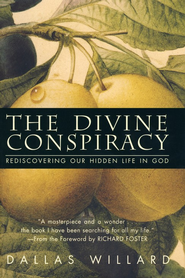
It’s really a good question and one that I hadn’t considered until encountering Dallas Willard’s masterpiece The Divine Conspiracy in college. I had not thought about it in a while until Dr. Todd Hunter came to guest-teach at our church this Sunday. He was making the basic point that unless we actually consider Jesus to be a competent instructor about life and reality, we will never actually listen to him and follow him. This called to mind one of my favorite passages in The Divine Conspiracy where Willard calls our attention to the simple fact that Jesus is really smart:

Our commitment to Jesus can stand on no other foundation than a recognition that he is the one  who knows the truth about our lives and our universe. It is not possible to trust Jesus, or anyone else, in matters where we do not believe him to be competent. We cannot pray for this help and rely on his collaboration in dealing with real-life matter we suspect might defeat his knowledge or abilities.

And can we seriously imagine that Jesus could be Lord if he were not smart? If he were divine, would he be dumb? Or uninformed? Once you stop to think about it, how could he be what we take him to be in all other respects and not be the best-informed and most intelligent person of all, the smartest person who ever lived?

That is exactly how his earliest apprentices in kingdom living thought of him. He was not regarded as, perhaps, a magician, who only knew “the right words” to get results without understanding or who could effectively manipulate appearances. Rather, he was accepted as the ultimate scientist, craftsman and artist.

The biblical and continuing vision of Jesus was of one who made all of reality and kept it working, literally, “holding together” (Col 1:17). And today we think people are smart who make light bulbs and computer chips and rockets out of “stuff” already provided! He made “the stuff”!

Small wonder, then, that the first Christians thought he held within himself, “all of the treasure of wisdom and knowledge” (Col. 2:3). This confidence in his intellectual greatness is the basis of the radicalism of Christ-following in relation to the human order. It sees Jesus now living beyond death as “the faithful witness, the first-born of the dead, the ruler of the kings of the earth…the first and the last, the living One, ” the one who can say “I was dead, and behold, I am alive forever more, the master of death and the world of the dead” (Rev. 1:5, 18)…

He is not just nice, he is brilliant. He is the smartest man who ever lived. He is now supervising the entire course of world history (Rev 1:5) while simultaneously preparing the rest of the universe for our future role in it (John 14:2). He always has the best information on everything and certainly also on the things that matter most in human life.

The Divine Conspiracy: Rediscovering our Hidden Life in God, pp. 94-95

When considering this reality, the fact that Jesus is the all-competent Lord of the universe who holds all things together, it has to strikes us that he must be absolutely, colossally wise, and an excellent guide into the reality of all things. In which case, we have to ask ourselves, why don’t we listen to him more often? Why is it that of all the places to go for an opinion, a point of view, sound advice on any and all questions concerning my relationships, my family, my work-stresses, my finances, I always seem to come to Jesus last? What are the areas that I seem to act like I know more than he does? “Well, Jesus, that’s a nice thought, but you see, my situation is a little different than what you were talking about in your sermons…” Really? Honestly? Jesus is God, but he doesn’t really know what he’s talking about when it’s your life, because you’re so special? Hmm….

This is where the rubber hits the road. Do I really trust Jesus as Lord or don’t I? If I trust him with my death, I ought to be able to trust him with my life. Even more to the point, if I don’t trust him with my life, am I really trusting him with my death?

Friends, we can trust Jesus. He won’t let us don’t or lead us astray. He knows what he’s talking about–he’s really smart.

Soli Deo Gloria

Talk is Blessed, Talk is Cheap (Or, Holiness is More than a Change in Vocabulary)

I continue to find gem after gem in my travels through Bunyan’s Pilgrim’s Progress. Both the instructive and lively narrative portrayals of the Christian life (Christian’s rousing battle with Apollyon), and the conversations between the various virtues (Charity, Faithful), vices (Sloth, Pliable), and typical attitudes (Shame, Discontent) are rich in spiritual depth and comfort.

One such exchange comes during a part of the journey when Christian and Faithful run into one claiming to be on the road to the celestial city by the name of Talkative. Faithful is quite glad to have him join them and talk of spiritual things on the journey, which it seems that Talkative is quite eager to do:
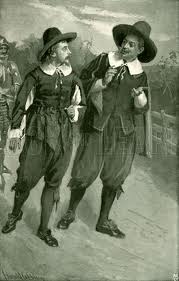
TALKATIVE: That’s it that I said; for to talk of such things is most profitable; for by so doing a man may get knowledge of many things; as of the vanity of earthly things, and the benefit of things above. Thus in general; but more particularly, by this a man may learn the necessity of the new birth, the insufficiency of our works, the need of Christ’s righteousness, etc. Besides, by this a man may learn what it is to repent, to believe, to pray, to suffer, or the like: by this, also, a man may learn what are the great promises and consolations of the Gospel, to his own comfort. Farther, by this a man may learn to refute false opinions, to vindicate the truth, and also to instruct the ignorant.

FAITHFUL: All this is true; and glad am I to hear these things from you.

TALKATIVE: Alas! the want of this is the cause that so few understand the need of faith, and the necessity of a work of grace in their soul, in order to eternal life; but ignorantly live in the works of the law, by which a man can by no means obtain the kingdom of heaven.

Apparently Talkative knows his stuff. He clearly knows the benefits of wise speech about God. Many of us could profit from an eagerness to discuss and speak about God, theology, the Bible, and our own spiritual lives more often than we do. By it we are “may learn what are the great promises and consolations of the Gospel, to his own comfort. Farther, by this a man may learn to refute false opinions, to vindicate the truth, and also to instruct the ignorant.”

Can we imagine what our general outlook would be, the witness of our lives, or the state of our faith would be if we spent more time discussing God’s goodness and not the mere trivialities to which we devote most of our conversations? How much holier would we be if we were constantly calling to mind God’s faithfulness in the face of daily temptations? Wouldn’t our constant doubts and anxieties begin to shrink in front of our eyes, if we were constantly reminding each other of the magnitude of God’s power and the unshakeable character of his promises?

The benefits to frequent godly conversation are many and deep indeed. When we read on though, we find out that Bunyan is teaching us that along with the benefits of spending our time discussing God and the Gospel, there are dangers as well.

CHRISTIAN: That is, to them that have not a thorough acquaintance with him, for he is best abroad; near home he is ugly enough. Your saying that he is a pretty man, brings to my mind what I have observed in the work of a painter, whose pictures show best at a distance; but very near, more unpleasing.

FAITHFUL: But I am ready to think you do but jest, because you smiled.

CHRISTIAN: God forbid that I should jest (though I smiled) in this matter, or that I should accuse any falsely. I will give you a further discovery of him. This man is for any company, and for any talk; as he talketh now with you, so will he talk when he is on the ale-bench; and the more drink he hath in his crown, the more of these things he hath in his mouth. Religion hath no place in his heart, or house, or conversation; all he hath lieth in his tongue, and his religion is to make a noise therewith.

FAITHFUL: Say you so? Then am I in this man greatly deceived.

CHRISTIAN: Deceived! you may be sure of it. Remember the proverb, “They say, and do not;” but the kingdom of God is not in word, but in power. Matt. 23:3; 1 Cor. 4:20. He talketh of prayer, of repentance, of faith, and of the new birth; but he knows but only to talk of them. I have been in his family, and have observed him both at home and abroad; and I know what I say of him is the truth. His house is as empty of religion as the white of an egg is of savor. There is there neither prayer, nor sign of repentance for sin; yea, the brute, in his kind, serves God far better than he. He is the very stain, reproach, and shame of religion to all that know him, Rom. 2:24,25; it can hardly have a good word in all that end of the town where he dwells, through him. Thus say the common people that know him, “A saint abroad, and a devil at home.” His poor family finds it so; he is such a churl, such a railer at, and so unreasonable with his servants, that they neither know how to do for or speak to him. Men that have any dealings with him say, It is better to deal with a Turk than with him, for fairer dealings they shall have at their hands. This Talkative (if it be possible) will go beyond them, defraud, beguile, and overreach them. Besides, he brings up his sons to follow his steps; and if he finds in any of them a foolish timorousness, (for so he calls the first appearance of a tender conscience,) he calls them fools and blockheads, and by no means will employ them is much, or speak to their commendation before others. For my part, I am of opinion that he has, by his wicked life, caused many to stumble and fall; and will be, if God prevents not, the ruin of many more.

FAITHFUL: Well, my brother, I am bound to believe you, not only because you say you know him, but also because, like a Christian, you make your reports of men. For I cannot think that you speak these things of ill-will, but because it is even so as you say.

CHRISTIAN: Had I known him no more than you, I might, perhaps, have thought of him as at the first you did; yea, had I received this report at their hands only that are enemies to religion, I should have thought it had been a slander-a lot that often falls from bad men’s mouths upon good men’s names and professions. But all these things, yea, and a great many more as bad, of my own knowledge, I can prove him guilty of. Besides, good men are ashamed of him; they can neither call him brother nor friend; the very naming of him among them makes them blush, if they know him.

FAITHFUL: Well, I see that saying and doing are two things, and hereafter I shall better observe this distinction.

CHRISTIAN: They are two things indeed, and are as diverse as are the soul and the body; for, as the body without the soul is but a dead carcass, so saying, if it be alone, is but a dead carcass also. The soul of religion is the practical part. “Pure religion and undefiled before God and the Father is this, to visit the fatherless and widows in their affliction, and to keep himself unspotted from the world.” James 1:27; see also verses 22-26. This, Talkative is not aware of; he thinks that hearing and saying will make a good Christian; and thus he deceiveth his own soul. Hearing is but as the sowing of the seed; talking is not sufficient to prove that fruit is indeed in the heart and life. And let us assure ourselves, that at the day of doom men shall be judged according to their fruits. Matt. 13:23. It will not be said then, Did you believe? but, Were you doers, or talkers only? and accordingly shall they be judged. The end of the world is compared to our harvest, Matt. 13:30 and you know men at harvest regard nothing but fruit. Not that any thing can be accepted that is not of faith; but I speak this to show you how insignificant the profession of Talkative will be at that day.

This is the danger Bunyan warns us of: apparently Talkative is just that–all talk and no action. In this passage Christian instructs Faithful in the difference between saying and doing. It’s an easy one for us to forget.  It’s easy to feel like having the right answers makes us righteous. It’s easy to feel like being able to distinguish properly between justification and sanctification means that we’ve been justified and sanctified. It’s easy to think that condemning sin with our mouths means we’ve cut it out of our lives. It’s easy to think that because we can discourse about the Trinity, we’re actually engaged in the life of the Triune God.

Bunyan reminds us that while it’s important for pilgrims on the way to discuss the beautiful things of God, we must not be satisfied with mere discussion. The Christian life is one of active participation. We must practice Christianity as well as speak of it. Faith that truly is worth the name, is one that results in a changed life, not merely a different vocabulary.

Talking about God is a great thing as long as it encourages us to talk to God; to move from conversation about the Christian life, to participation in a real Christian life.

Soli Deo Gloria
Christ’s Cross and Ours: Some Thoughts on Suffering and the Life of Faith

One of my favorite sections in the Institutes is Calvin’s section on the Christian life. As much as I love his exposition of the creed, or his theological-polemical engagements with Osiander, the “Papists”, and the “Enthusiasts”, Calvin shines when discussing the practical. Beyond Calvin the theologian and biblical scholar, there was Calvin the pastor–the man who was passionately concerned that all of human life be lived before God and in light of the Gospel. This might surprise many readers but the Reformation wasn’t simply a narrow theological debate about justification and the thoughts we think on a Sunday morning, but rather a restructuring of Christian life and practice. It was about, as James K.A. Smith puts it, “the sanctification of ordinary life.”  For that reason Calvin was concerned not only with teaching doctrine, but the life of piety that flows from that doctrine.

A Life of Self-Denial and the Cross

Calvin writes, “We are not our own: in so far as we can, let us therefore forget ourselves and all that is ours. Conversely, we are God’s: let us therefore live for him and die for him.” (3.7.1) Therefore, in this life between the first and second comings of Christ, a saint’s life is one of self-denial. In order to be fully devoted to God, love our neighbors in difficulty, and bear up under adversity, we must deny ourselves and look to God alone for our blessedness.

In order to do this well, he encourages his readers to consider to the cross, because the cross of the Christian is the chief part of self-denial:

But it behooves the godly mind to climb still higher, to the height to which Christ calls his disciples: that each must bear his own cross [Matthew 16:24]. For whomever the Lord has adopted and deemed worthy of his fellowship ought to prepare themselves for a hard, toilsome, and unquiet life, crammed with very many and various kinds of evil.” (3.8.1)

To many of us, it is surprising to think that we are called to carry crosses. “I thought Christ had the cross so I wouldn’t have to?” That is true, but only in a certain sense. It is true that because of Christ’s suffering and death, we no longer have to face the penal judgment of God, or worry about the ultimate victory of the powers that he defeated on it. (Col. 2:14-15) Still, the active life of discipline and self-denial, scorn, pain and difficulty that he endured, (“while he dwelt on earth he was not only tried by a perpetual cross but his whole life was nothing but a sort of perpetual cross”), is also a model for those of us who would be made holy as God intends us. As Calvin puts it: “Why should we exempt ourselves, therefore, from the condition to which Christ our Head had to submit, especially since he submitted to it for our sake to show us an example of patience in himself? Therefore, the apostle teaches that God has destined all his children to the end that they be conformed to Christ [Romans 8:29].” (ibid.) The Christian then, should expect difficulty and suffering in this life.

The Benefits of the Cross

While nobody ever accused Calvin of being an optimist, he didn’t think that the Christian should fear submitting to the cross–there is comfort in its shadow. Following Paul, he says taking up our cross allows us to know the beauty of sharing of Christ’s sufferings in a way that enables us to participate in his glory. (Phil. 3:10-11) “How much can it do to soften all the bitterness of the cross, that the more we are afflicted with adversities, the more surely our fellowship with Christ is confirmed! By communion with him the very sufferings themselves not only become blessed to us but also help much in promoting our salvation.” (ibid.)

More specifically, Calvin sees at least six benefits to the cross we are called to bear in this life.

1. The cross leads us to perfect trust in God’s power (3.8.2) We are too quick to give ourselves credit when life goes right or our accomplishments receive praise. We trust in our own awesomeness. We think that our goodness, or wisdom, or strength is the cause of our good life and that we really have this handled. It is only when difficulties and suffering comes our way, when disease hits, markets crash, relationships break, that we are humbled and taught to rely on God’s power and strength in all things. Only the cross kills our arrogance, shows us our inability, and drives us to the perfect source of strength, God’s gracious sustenance.

Believers, warned…by such proofs of their diseases, advance toward humility and so, sloughing off perverse confidence in the flesh, betake themselves to God’s grace. Now when they have betaken themselves there they experience the presence of a divine power in which they have protection enough and to spare.”

2. The cross permits us to see God’s perfect faithfulness and gives us hope for the future (3.8.3). God’s faithfulness matters most when we are in the pit. It is in the tribulations of this life that we find God’s unswerving commitment to his children to be proven to our hearts. When we see him act faithfully in our current travails, we are given hope for God’s future faithfulness. “Hope, moreover, follows victory in so far as the Lord, by performing what he has promised, establishes his truth for the time to come.”

3. The cross trains us to patience and obedience (3.8.4) Difficulty gives us occasion to practice obedience and patience.  Virtues such as these cannot be exercised when life is going swimmingly. “Obviously, if everything went according to their own liking, they would not know what it is to follow God.” Obedience in the face of difficulty is what forms a golden character, one tested in the furnace of adversity. (1 Peter 1:7) Patience is developed only when we are called to endure situations that are unpleasant. It is in the troubles of this life, not the joys, that we learn to submit fully to God’s good commands and patiently await God’s vindication and comfort in our adversity.

4. The cross is medicine for our sin-sick souls (3.8.5) Calvin sees our fleshly or sinful desires, our ill-will, as a sort of recurring illness or medical condition that, if not kept a close eye on, would grow or deteriorate due to laxity. The crosses that we bear in this life function as a medicine, a sort of chemotherapy, or possibly as physical therapy, for the soul according to the particular conditions we struggle with such as pride, lust, anger, self-centeredness. Through the ministrations of our great physician, our souls are healed and treated according to his wisdom:

Thus, lest in the unmeasured abundance of our riches we go wild; lest, puffed up with honors, we become proud; lest, swollen with other good things—either of the soul or of the body, or of fortune—we grow haughty, the Lord himself, according as he sees it expedient, confronts us and subjects and restrains our unrestrained flesh with the remedy of the cross. And this he does in various ways in accordance with what is healthful for each man. For not all of us suffer in equal degree from the same diseases or, on that account, need the same harsh cure. From this it is to be seen that some are tried by one kind of cross, others by another. But since the heavenly physician treats some more gently but cleanses others by harsher remedies, while he wills to provide for the health of all, he yet leaves no one free and untouched, because he knows that all, to a man, are diseased.

5. The cross is fatherly discipline (3.8.6) If God is a father, then at times he will discipline us according to our misdeeds so that we mature and grow into the kind of children that look like their father. Just as any parent knows to correct a child’s lying or unkindness with a light (or heavy) punishment as the situation calls, so at times our cross is connected to some disobedience we are walking in. This is not judgment, but parental concern that motivates his permission of certain troubles that awaken us to our foolishness.  Calvin quotes Proverbs 3:11-12 here,”My son, do not despise the Lord’s discipline, or grow weary when he reproves you. For whom God loves, he rebukes, and embraces as a father his son.” As the author of Hebrews says, it is through God’s discipline that we know we are legitimate children whom God cares enough about to displease for a short time. (12:8) God works through the cross to lovingly correct his wayward sons and daughters, demonstrating a love concerned not merely with the happiness of his children, but with the deep joy that comes with goodness.

6. The cross is suffering for righteousness sake (3.8.7) Calvin goes on, “Now, to suffer persecution for righteousness’ sake is a singular comfort. For it ought to occur to us how much honor God bestows upon us in thus furnishing us with the special badge of his soldiery.” To many of us it is a foreign way of thinking, but in the New Testament the apostles’ rejoiced at being thought worthy of the honor or suffering for the sake of Christ. (Acts 5:41) Jesus himself says,”Blessed are those who are persecuted for righteousness’ sake, for theirs is the kingdom of heaven. Blessed are you when others revile you and persecute you and utter all kinds of evil against you falsely on my account. Rejoice and be glad, for your reward is great in heaven, for so they persecuted the prophets who were before you.” (Matt 5:10-12) As Calvin points out, the suffering itself is not good, but because these sufferings are the source of great honor, for God will not fail to reward the faithful believer in the Kingdom to come because of goods lost here. “If, being innocent and of good conscience, we are stripped of our possessions by the wickedness of impious folk, we are indeed reduced to penury among men. But in God’s presence in heaven our true riches are thus increased. If we are cast out of our own house, then we will be the more intimately received into God’s family. If we are vexed and despised, we but take all the firmer root in Christ. If we are branded with disgrace and ignominy, we but have a fuller place in the Kingdom of God. If we are slain, entrance into the blessed life will thus be open to us.”

Conclusion

In these various ways the cross that comes into the life of the believer can be a great comfort and hope. In light of these meditations we can see how Calvin can say,”Hence also in harsh and difficult conditions, regarded as adverse and evil, a great comfort comes to us: we share Christ’s sufferings in order that as he has passed from a labyrinth of all evils into heavenly glory, we may in like manner be led through various tribulations to the same glory.” (3.8.1)

May we also come to consider the goodness of God in the cross.

Soli Deo Gloria

Where is True Peace Found?

I’ve begun my second attempt through John Bunyan’s spiritual classic, Pilgrim’s Progress this week in my attempt to find more theologically-rich devotional literature. (The first was an unfortunately broken off in college due to my immaturity.) I’m pleased to say that I have been thoroughly blessed by it. It’s easy to see why Charles Spurgeon confessed that, “Next to the Bible, the book I value most is John Bunyan’s The Pilgrim’s Progress.” The allegory is riddled with biblical quotations and wisdom designed to illustrate the pilgrimage of the Christina through the current world on to glory.

Bunyan does this by telling a dream-vision he has of the pilgrimage of Christian, an everyman character, who is on a journey from his home-town “the City of Destruction” to the “Celestial City.” His journey is provoked by his reading of a book that causes him great distress and anguish about his spiritual state.  On the way he is met by various characters such as Worldly-Wise Man and Evangelist who give him varied instructions as to ease his turmoil. Eventually after a foolish detour in the direction of the village of Morality on the advice of Worldly-Wise Man that lands him in great peril, he takes Evangelist’s advice and heads down the narrow road that leads to life and his true journey begins.

Burdens Released

Christian is committed and so he makes great headway for a while, but from the very start of his journey he is weighed down by a burden, a pack that hinders his progress. The pack symbolizes the spiritual weight of his sins, the anxiety and fear of judgment, the encumberance of great guilt and shame. He suffers with it despite his best efforts as well as the godly counsel of those good characters such as Evangelist and Interpreter who open the truth to him and he receives no respite until he catches a vision of something glorious:

Now I saw in my dream, that the highway up which Christian was to go, was fenced on either side with a wall, and that wall was called Salvation. Isaiah 26:1. Up this way, therefore, did burdened Christian run, but not without great difficulty, because of the load on his back. He ran thus till he came at a place somewhat ascending; and upon that place stood a cross, and a little below, in the bottom, a sepulchre. So I saw in my dream, that just as Christian came up with the cross, his burden loosed from off his shoulders, and fell from off his back, and began to tumble, and so continued to do till it came to the mouth of the sepulchre, where it fell in, and I saw it no more. 

Then was Christian glad and lightsome, and said with a merry heart, “He hath given me rest by his sorrow, and life by his death.” Then he stood still a while, to look and wonder; for it was very surprising to him that the sight of the cross should thus ease him of his burden. He looked, therefore, and looked again, even till the springs that were in his head sent the waters down his cheeks. Zech. 12:10. Now as he stood looking and weeping, behold, three Shining Ones came to him, and saluted him with, “Peace be to thee.” So the first said to him, “Thy sins be forgiven thee,” Mark 2:5; the second stripped him of his rags, and clothed him with change of raiment, Zech. 3:4; the third also set a mark on his forehead, Eph. 1:13, and gave him a roll with a seal upon it, which he bid him look on as he ran, and that he should give it in at the celestial gate: so they went their way. Then Christian gave three leaps for joy, and went on singing,

“Thus far did I come laden with my sin,
Nor could aught ease the grief that I was in,
Till I came hither. What a place is this!
Must here be the beginning of my bliss?
Must here the burden fall from off my back?
Must here the strings that bound it to me crack?
Blest cross! blest sepulchre! blest rather be
The Man that there was put to shame for me!”

So many of us suffer the burdens of guilt and shame. We walk day in and day out bearing a great burden, an inexpressible anxiety and grief that doesn’t seem to dissipate no matter how many self-help books we read, mantras we chant, or health-goals we set and meet.

Christian found the true source of peace: “Blest cross! blest sepulchre! blest rather be/The Man that there was put to shame for me!” In Christ all of our sins, our shames, our hurts are taken, destroyed on the cross with him, buried in the sepulchre with him, and in him we rise again to new life, freedom, joy and hope. In him we find true peace.

Soli Deo Gloria

You’re a Holy Mess (Or, Surprised by Sanctification)

I was teaching through 1 Corinthians last year around this time when I was first struck by something very odd in that letter. It’s something that can sneak past you unless you go through the thing a few times. Right at the outset of Paul’s letters he usually broadcasts what he’s going to be writing about in a kind of intro-prayer or in the greeting.

Paul, called by the will of God to be an apostle of Christ Jesus, and our brother Sosthenes,
To the church of God that is in Corinth, to those sanctified in Christ Jesus, called to be saints together with all those who in every place call upon the name of our Lord Jesus Christ, both their Lord and ours:
Grace to you and peace from God our Father and the Lord Jesus Christ.
(1 Cor 1:1-3)

Did you catch those words in verse 2 that I helpfully bolded for you to notice? Good. In the space of a few words, Paul calls the believers at Corinth “sanctified” and “saints”; he calls them holy.

Surprised by Sanctification

For those of us who have read the letter through, this is surprising to say the least.  This is easily the most jacked-up church we know of in the New Testament. Scholars think that Paul probably wrote more letters to the church than 1 and 2 Corinthians because of the issues with it. To give you a picture, the problems include: factions being formed dividing the church due to people buying into cultural notions of wisdom and power (chapters 1-4), Christians suing each other (5), one dude sleeping with his step-mom and everybody just acting like nothing was going on as well as people visiting prostitutes (5-6), screwy views about sex and marriage (7),  people eating food offered up to idols and demons at pagan temples (8-10), groups treating the poor like crud at church (11), getting drunk at communion (11), freaky pride connected to spiritual gifts (12-14), and, to top it off, false teaching about the resurrection (15).

Now, how in the world is Paul go and call this church “holy”? If you look up the word “saints” in a thesaurus, the antonym would probably be “Corinthians”. There is nothing that you could term righteous, moral, or upright about their character. In fact, in some ways Paul says they’re worse than the surrounding pagan culture. And yet, time and again Paul does call them just that. What’s more, in chapter six after listing off a number of practices they were supposed to avoid, he says “And such were some of you. But you were washed, you were sanctified, you were justified in the name of the Lord Jesus Christ and by the Spirit of our God.” (1 Cor 6:11 )

Did you see that? “You were sanctified” is talking about a past tense action that makes the believer holy starting at a particular point resulting in a continuous state of holiness in much the same way that in the text he speaks of justification as occurring at a specific point in time resulting in you now being “justified.”

For those of us raised in general evangelicalism this is not typically the way we think or speak. Generally we think of justification as the once and for all legal declaration by God that we are vindicated, pardoned, no longer held as guilty against the covenant because of Jesus’ death and resurrection and now part of the people of the Messiah. It’s what happens at the beginning of our experience that we look back at. Sanctification is then the process that begins afterwards and is the increasing growth in holiness that makes us look more and more like Jesus. It’s the life-long process of becoming righteous in our character.

This is not a bad way of looking at things. Still, it’s also not the most accurate way of thinking about sanctification biblically. Historically Reformed theologians have talked about the difference between “progressive sanctification” and “definitive sanctification.” The first process is the one we’ve been describing that a lot of us understand. Definitive sanctification is that “once and for all act of claiming us as saints.” (Michael Horton, The Christian Faith, pg. 650)

Rethinking Holiness

See, the original idea of holiness or sanctification in the Old Testament was to “separate” something away from their ordinary or common use to a special use for God. The Temple, the sabbath, the tithe, the utensils and furniture for the temple were all normal things, taken and set aside, consecrated for use by God. God even does this with a people, Israel, (Exod. 19) He takes one people and sets them apart to be a light to the nations and show the world what life with God is like. They were to be “holy, for I the LORD am holy.” (Lev. 20:26) Paul and the rest of the New Testament picks up on this by seeing God’s act of saving us in Christ as a setting apart, a making holy totally independent of our own righteous acts. Jesus tells us that we are clean because of the word that he has spoken to us. (John 15:3) Indeed, Jesus says that he will be the one who sanctifies us by sanctifying himself, setting us apart through setting himself apart in his death. (John 17:19) The author of Hebrews follows Jesus by telling us that “by God’s will we have been sanctified through the offering of the body of Jesus Christ once for all.” (10:29)

In Christ, by the Spirit, God definitively sanctifies us, sets us apart to be his own in a once and for all way. When we place our faith in Christ, we’re united with him so that what is true of him, becomes true of us. We are holy because Christ is holy. “All that is found in Christ is holy, because it is in Christ.” (Horton, pg. 651) This is why before we’ve done anything good, righteous, holy, cleaned up our act, made good on our promises or done anything but trust Jesus’ work for us, we are declared saints. Before we clean up, God declares us clean in Christ. This is the holiness, the saintliness that Paul is often speaking of in his letters.

Motivating his instructions to the Corinthian congregation is the reality that, in Christ, they are clean. In essence, “You’re holy! Now act like it. Become what you already are in Christ.” Over and over again in the New Testament we are told that we have been made righteous in Christ or holy in Christ and so now we should live like that’s true.

But I’m Still A Mess

“So, I’m already holy, so now I should live like it? Is that what you’re saying? Okay, here’s my problem: I don’t feel holy. In fact, most of the time I feel angry, lustful, annoyed, proud, downcast and anything but holy. Where does that leave me? It’s fine that God legally sets me apart as holy, declares me righteous, etc., but I still feel like me. What does God saying something out there have anything to do with me in here?” Everything, for at least two reasons.

First, as Michael Horton points out, for an orphan to enjoy the love and care of a new family, they must first by legally adopted. Or, for two nations who have been at war with each other to begin peaceful relations, they must first declare a legal peace. (Pg. 652-653) The definitive declaration of God “out there” is the legal basis of that secures our relationship to the sanctifier. God’s declaration is your hope of sanctification.

Second, God’s declaration isn’t really something that happens “out there.” When God sets us apart, he sets us apart in Christ, in the power of the Spirit. This act actually connects us to Christ like branches being inserted into a vine from which it then begins to draw strength. (John 15) We are connected to Christ like members of a body to the head. (1 Cor 6; 12; Eph. 4) We are given the Spirit, the Holy Spirit, who is a new power at work in us to progressively conform us to reflect the image of Christ. We receive strength and righteousness from the source of all goodness, Christ. God’s definitive sanctification of us is the source of God’s progressive sanctification in us.

You don’t feel holy, but honestly, your feelings are not the ultimate reality you need to be focusing on. Instead, you should be focusing on who you are in Christ. You’re a mess, but in Christ you’re a holy mess who’s getting cleaned up because you’re in the one who is clean. In fact, forget even focusing on who you are at all. Focus on Christ. “Abide in my and I will abide in you.” (John 15:4) When you do that, that’s when things start coming together.

Maybe this is why what Paul writes to his wayward saints the way he does. In the first 9 verses of 1 Corinthians he mentions “Jesus”, or “Jesus Christ”, or “our Lord Jesus Christ” 9 times. Apparently he believes that if his people are going to become holy, start living into the holiness that they’ve been brought into, they need to focus their eyes on Christ, the Holy One.

May we do the same.

Soli Deo Gloria

Beefing Up Your “Quiet Times”: Catechisms and Confessions as Devotional Literature

A little bit ago, a buddy of mine was musing about the fact that he doesn’t connect to most devotional literature of the type that truly “spiritual” people normally rave about. His critical, analytical mind and personality just doesn’t connect with warm meditation, but rather with critical analysis of history and culture.

For a while I’d found myself in a similar place. After seminary, my devotional life became a bit trickier. I find that my mind comes most alive to God when I’m reading systematic theology, or wrestling with some interesting piece of biblical theology, but when I try to slow down, pause, and meditate on something like My Utmost for His Highest, I just can’t do it. (That’s not to disparage Chambers. I loved it in college. The sad thing is, most current, popular stuff doesn’t even come close to his depth.) Because of this, finding good devotional material has been a challenge.

This didn’t trouble me much at first. I would simply pray, read my Bible, and then move on to my academic reading. Still, after a while I realized that I need a slowing down, a place for a more contemplative, heart-oriented approach to God in my devotional life. When I “just read my Bible” I found it hard to turn off the analytic mode. When I did, I didn’t really find my heart moved, but rather just bored.

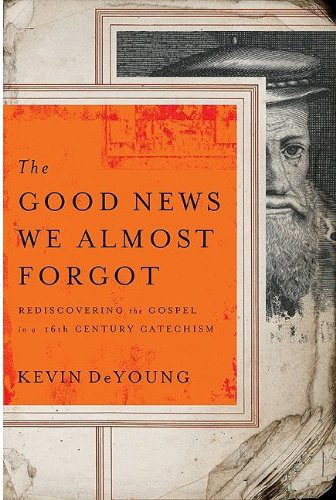
The Good News We Almost Forgot

Just when I thought all was lost, I got my hands on The Good News We Almost Forgot: Rediscovering the Gospel in a 16th Century Catechism by Kevin DeYoung. The book is basically a commentary on the Heidelberg Catechism, which you can read for yourself here. For those of you unfamiliar with catechisms, they are a series of questions and answers designed to be memorized by either new believers, old believers in need of depth, or children in order to teach them the content of the Christian faith. They’re employed across various confessional church traditions and they usually they have scripture references attached to the answers for believers to look up and study as well.

The Heidelberg Catechism was written at the University of Heidelberg at the commission of Elector Frederick III and was approved by the Synod of Heidelberg in 1563. The Catechism has 129 questions and answers that are basically commentary on the Apostles’ Creed, the Lord’s Prayer, and the 10 Commandments, but it is divided into fifty-two sections, called “Lord’s Days,” so that pastors could preach through them on each of the 52 Sundays of the year.  It is one of the most universally recognized pieces of Reformed theology across confessions and was adopted by the great Synod of 1618-1619, as one of the Three Forms of Unity, along with the Canons of Dort and the Belgic Confession.

How exciting!!!

Now for myself, having been raised in a barely-denominational Friends church, I hadn’t spent more than a minute with anything like a catechism, except to know \the Westminster Shorter Catechism’s famous first question and answer: “Q. What is the Chief End of Man? A. Man’s chief end is to glorify God and enjoy him forever.”  To my less-than-enlightened mind that was great, deep, but spare stuff.  The thought of spending a whole book reading about a catechism didn’t originally strike me as an edifying experience, because at that point, “I already knew that stuff.”

Still, my buddy told me that he’d been using DeYoung’s book as a devotion because it breaks up into 52 short chapters (2-3 pages) commenting on each of the Lord’s days.  I figured, why not? It can’t hurt.

After a short introduction to the catechism much more exhaustive than my paragraph, I got to the first Lord’s Day and read Question and Answer 1:

Q. What is your only comfort in life and in death?
A. That I am not my own, but belong—body and soul, in life and in death—to my faithful Savior, Jesus Christ. He has fully paid for all my sins with his precious blood, and has set me free from the tyranny of the devil. He also watches over me in such a way that not a hair can fall from my head without the will of my Father in heaven; in fact, all things must work together for my salvation. Because I belong to him, Christ, by his Holy Spirit, assures me of eternal life and makes me wholeheartedly willing and ready from now on to live for him.

When I read this I nearly started to tear up immediately. The first sentence alone gripped me: “I am not my own.” There is nothing sterile, dry or impersonal about this answer. At the same time, it deploys in a matter of sentences the doctrines of atonement, providence, adoption, union with Christ, the Holy Spirit, assurance, and sanctification, in order to draw me into the saving reality of the Gospel. As you read through the rest of the catechism, there are other questions of similar depth and power. DeYoung’s commentary each day was solidly theological, scriptural, and very pastoral. For the next month and a half I found myself daily edified by the truths encapsulated in the short answers and the meditation that followed.

I had finally found something to found the devotional gap in my life.

Why Read Catechisms– After this I went on a search and started reading through the different catechisms and confessions I could find, (Westminster, Luther’s, Belgic, Scots), as a part of my daily time of prayer and scripture. I found myself time and time again, blessed, challenged, and moved to worship and delight. I also found myself wondering why I had never done this before.

If you’ve never spent time with a catechism, here are three reasons you should in no particular order.

1. Hearing voices from other centuries– Christianity has been around for 2,000 years. This means that Christians have been reading, praying, thinking, and writing about the Gospel for 2,000 years. It is foolish to not pay attention to what our mothers and fathers in the faith have said in past generations as if the truth of the Gospel had a 2 month shelf-life. Their voices are needed if we are to hear the Gospel in all of its fullness in our own day. Catechisms  are a great way of doing that given that most of them were written centuries ago and have still been found spiritually beneficial after all of these years.

2. Deep truths; short phrases. Most catechisms and confessions are doing serious theology and yet condensing it down into short, memorable phrases that are perfect for meditation and contemplation throughout the day. They are perfect for engaging the mind as well as the heart with the truth of God throughout your day.

3. Know Your Bible- Finally, most catechisms and confessions are packed to the gills with scriptural references backing up every statement. You can trace them down as a devotional exercise that can help you get to know your Bible better than you did before, as well as learn the deep, biblical basis for what we believe. It also can help you get into the scriptures in a focused, guided way that is less intimidating for some people than just opening the thing up and reading it.

Where Do I Start?

Honestly, I think DeYoung’s book, The Good News We Almost Forgot is a great place to start. I don’t have a copy of my own any more because I keep giving it away. When one of my college students asks me if I know of a book they should read, it’s one of the first two or three that I recommend.

If you want to start checking out catechism right away, you can start here.