Godzilla and the Salvific Destruction of God (TGC)

la_ca_0505_godzillaGodzilla–King of the Monsters. Born from the fallout of the Bomb, the original incarnation stood as the grotesque apotheosis of the atomic power we’d unleashed in the Second World War. Reflecting the atomic age’s ambivalence about our destructive capabilities, the now-iconic figure would appear in multiple roles across the 20-something movies that were made after Ishiro Honda’s original 1954 film. Appearing as an unmitigated villain in one, the leviathan would play savior against the threat of worse monsters in another, and lesser of two evils in the next. Beyond being fun monster flicks, the movies drawing on the Godzilla mythos represent various answers to the question, “What hath man wrought?”

Reframing the question, Gareth Edwards new Godzilla film recasts the monster as a part of the natural order. Godzilla and the behemoths he fights are ancient beasts from another, wilder, primordial age. They are stand as beings beyond our ken and our grasp. We could not create something of this magnitude and it is folly to think think could control them. They are Other. Indeed, as Ken Watanabe’s scientist character, Serizawa, says in what stands as the thesis line for the whole film, “The arrogance of man is thinking nature is under our control…”

Now, before anybody gets the impression that Godzilla is either masterful, or pretentious, it’s not. Edwards knows he’s making a summer monster movie and does a bang-up job of it. Huge, improbable monster fights, the destruction of cityscapes, and cinematic havoc. Still, sitting there in the theater, beholding the devastation, it’s impossible not to let the Edwards’ reframing of the question recast the destruction in a theological light.

You see, because just like the God of Israel, Godzilla brings destruction in order to save.

You can read the rest of this over at The Gospel Coalition.

Soli Deo Gloria


Delicate Tastes (TGC)

gluttonyI can think of maybe one sermon I’ve heard on the subject of gluttony. Whether for fear of shaming portlier parishioners, or because our pastors have noticed how much closer the pulpit has moved to their own waistlines, it’s not a subject we address much in church. Yet precisely for that reason our thinking on the issue has become so shallow and one-dimensional, leaving the church, especially our affluent, North American congregations, exposed to a much less obvious, and all the more deceptive form of the temptation.

I have to admit that I struggle with gluttony. Yet those who know me probably wouldn’t suspect it. Indeed, I’m tempted to deny it myself because I don’t tend to have a weight issue, nor do I find myself eating to excess regularly—well, not since the holidays at least. All the same, this is a sin I’m beginning to realize I need to be increasingly watchful against.

Of course, that confession only makes sense when you understand that there’s more than one way of being a glutton. I’ll let C. S. Lewis explain what I mean.

Please go read the rest of the article HERE at the Gospel Coalition.

Soli Deo Gloria

Is There Such a Thing as ‘Moral Orthodoxy’?

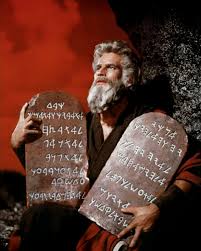
Heston, bro. 'Nuff said.

Heston, bro. ‘Nuff said.

Note: The following is a somewhat tentative post. It is offered in a spirit of exploration and invitation to conversation, not as a definitive pronouncement or prescription on the issue.

Just yesterday, in a post on the Future of Protestantism (#protfuture), I raised the issue of what we might term “moral orthodoxy.” In the contemporary Evangelical discussion about sexuality, marriage, and the moral permissibility of same-sex romantic or sexual relationships, one of the big issues that’s been toyed around with is whether or not differing sexual ethics is a “gospel issue” and so forth.

The question has become, “Is rejecting the traditional position on same-sex relationships an issue of orthodoxy? Especially since it’s not something explicitly referred to in any of the creeds? Is it appropriate to call an Apostolic-, Nicene-, Chalcedon-affirming Christian, who nonetheless changes their mind on this issue, heterodox? Or is this more in the adiaphora category? Or maybe it’s not something that will brand you a heretic, but certainly not an Evangelical? Are the creeds sufficient to define the faithful, then?” Or something on that order.

Note, the issue isn’t whether someone is saved or not. Rather, it’s about the category of seriousness, or the classification of the sort of error (assuming a revisionist position is in error), this happens to be.

To be honest, I find myself sympathizing in both directions. While I would never say that the issue is adiaphora–a departure of this nature is far more serious than that–I initially have trouble reconciling myself to calling a resurrection-affirming, Trinity-praising, even justification-by-faith confessing believer a heretic because of their position on gay marriage. I tend to think heresy is a heavy word to be used mostly with reference to the classic heresies (Arianism, Pelagianism, Doceticsm, etc)–errors with a council condemning it or something.

That said, I do wonder how much of that tends to reflect a rather modern split between theology and ethics. “As long as you get your Christology right, then most of the rest of it we can discuss.” Being more of a dogmatics guy, I’m probably even more bent in that direction. The problem is, I’m not sure I really see that kind of divide countenanced in Scripture. Indeed, thinking of Paul’s first letter to the Corinthians, he moves seamlessly from correcting doctrinal deviancies to ethical ones and drawing a number of connections in between. Chapter 6 ties a tight knot holding the resurrection of the body together with its sexual uses. It’s a Christological sexual ethic. In which case, a deviance on sex seems to imply a deviance on Christology.

Which, as I begin to think of it, reminds me of Alastair Roberts’ suggestion that such a demarcation of creedal sufficiency isn’t really even how creedalism works.

Affirming the Creeds
In a thoughtful post on what it means to be a creedal Christian, Roberts examines what that actually involves. Does being a creedal Christian simply mean that one happens to affirm the content of, say, the 12 articles of the Apostles’ creed as a summary? A lowest, common-denominator of faith? Or is it more than that? Does affirming the creed actually involve posture of humility and commitment towards believing and living within them as norm (normed under the Word of God, of course)? Possibly accepting it as firm yardstick of orthodoxy and so forth? Is there a depth beyond the surface?

Those are leading questions, of course. Roberts answers them quite clearly and suggests that mere affirmation of the words of the creed isn’t really enough. No, indeed, a certain level of adherence to accepted interpretation is involved:

The creed is given to us as a tool by which to discern error and as a form within which to recognize shared truths. Much is implied within the creed that is not explicitly stated. Various theological stances adopted by people who express the creed may be discovered to be unorthodox as their positions are revealed to be contrary to the creed on account of their hidden implications.

Pelagianism isn’t explicitly contrary to, say, any of the big three symbols I named earlier, and yet the Church later saw that it was in fact deeply destructive to the faith, constituting a fundamental denial of the truth of salvation in Christ. Tied to this point also is the fact that the creeds don’t deal with a number of issues of great importance (creation in the Image of God, etc.).

Finally, and crucially for my point, it must be noted that some can even affirm the creeds verbally while substantially denying them. It’s easily possible to see someone confessing the Apostles Creed while being a Trinity-denying heretic. Actually, in the 4th century there were teachers who held variations of Arianism that still affirmed the first Nicene creed. Their interpretation of the received text is rightly deemed to be a false one, contrary to the content it was designed to protect. So, while affirming Nicaea, they weren’t actually properly Nicene. Therefore, heretics.

The same would hold true today. Someone may come along and claim to affirm Nicaea, and yet reinterpret it–honestly, in good faith–along Arian lines, and we would say, “No, I know you think you’re affirming the creed, but really, you’ve changed it and filled it with new meaning.” It would be a verbal affirmation, but a substantial denial.

So what does this have to do with moral orthodoxy?

The Commandments as a Moral Creed
Well, Roberts goes on to discuss the “sufficiency of the creed”, pointing out that the creeds themselves were never actually designed to function on their own as sufficient to define the faithful apart from the liturgy and the rest of the church’s moral instruction. It’s at this point that the very unremarkable thought occurred to me that, despite the fact that there was no major ecumenical council adopting it as such, Christians have had a basic, unquestioned moral creed we’ve used for 2,000 years–indeed, the Jews for a 1,000 before that–the 10 Commandments.

As far as I can tell from the study of church history, alongside the early baptismal confessions, and the later expanded creeds, the 10 Commandments have functioned as an effective moral creed for the whole of Christendom. Catechism in the early church would have included teaching on the commands (See article links below.) Moving through the Middle Ages on into the catechisms and confessions of the Reformation (Luther’s, Westminster, Heidelberg, etc.) all have large sections devoted to them as they were seen as the basic skeleton of Biblical piety and ethics. As I understand it, they’re similarly central for Eastern Orthodox and Roman Catholic catechisms. As Roberts pointed out without quite making this point, the Commandments function as the creed does for the doctrinal storyline, standing as the summary of the rest of Torah, and really, Biblical ethics as a whole. Denying any of them, then, along with being a clear denial of Scripture, would be an unthinkable denial of the core of the faith.

If I’m correct, then, it’s just here that Roberts’ comments about the creed become relevant. It’s not that anybody in the revisionist camp actually explicitly denies the 10 Commandments. All but the most extreme liberal fringe would probably be horrified at the suggestion of such a repudiation; there’s no need to impugn motives here. Still, the question is whether or not this constitutes something similar to one of those unintentional, yet ultimately destructive, moves on the order of affirming Nicaea while actually holding beliefs that lean or are Arian. It could very well be that when properly understood there are revisionist positions–not only on same-sex issues, but with respect to premarital sex, divorce, etc.–that constitute a functional denial of the command against adultery as it sums up and embodies the biblical sexual ethic as a whole.

Any revision, then, of the traditional interpretation that has crossed confessional boundaries of Protestant, Roman Catholic, and Eastern Orthodox thought for 20 centuries, if wrong, is not likely to be a mere adiaphora.

This seems like a plausible line of thought to pursue. In fact, I’m quite sure someone already has.

Is There a Middle Category?
All the same, while I’ve floated this suggestion out there for discussion, I still find myself uneasy calling someone a heretic while they still hold the basic theology of the creeds in a fairly conservative form. Perhaps I’m too slow to call a spade a spade. It’s precisely here where I wonder, though, if there is possibly some third category between heresy and adiaphora. I don’t have a fancy name for it, but possibly something along lines of  “really, really, serious theological error.” As in, excommunication maybe isn’t fitting for the person who holds this, but then again, neither should you be signing them up to teach Sunday School for the kids.

I’m not sure where this leaves us. I guess I’m floating the idea that, no, bare-bones creedal affirmation is not enough. But then again, it doesn’t seem to have ever been–the Christian tradition has always said there was a bit more, especially in regards to biblical morality. Nor has that standard been an arbitrary one, but an ethic at the heart of biblical revelation.

As I said, this is all somewhat tentative. I think it makes sense, which is I why I wrote it, but I welcome your gracious corrections, thoughts, and comments. Please do be respectful of each other, though, and pleased don’t be offended if I don’t respond.

Soli Deo Gloria

Update:

1. Interesting post on the possible (non)-use the 10 commandments in early church catechesis. I don’t think it changes the usefulness of the proposal, but still a thing.
2. Post by Brad Littlejohn on Hooker’s distinctions when it comes to adiaphora. Longish, but helpful read.
3. Andrew Fulford has an especially instructive discussion on the difference between essential beliefs and beliefs that one is culpable or not culpable for holding. 

The Ecumenism of Exile and the Future of Protestant Unity

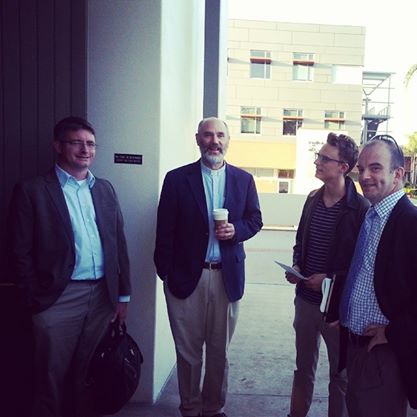
Sanders, Leithart, R. Gaffin's grandson (RG4), and yes, I did get Trueman in a photo. Unfortunately it wasn't a selfie.

Sanders, Leithart, R. Gaffin’s grandson (RG4), and yes, I did get Trueman in a photo. Unfortunately it wasn’t a selfie.

Just this last week Biola University hosted conversation on The Future of Protestantism between theologians Peter Leithart, Fred Sanders, and Carl Trueman. Matthew Lee Anderson over at MereOrthodoxy.com got it into his head to pull these three together after and exchange last year between LeithartSanders, and, once again, Leithart, on whether Protestantism as a sort of “Glad Protestantism” should have a future, or whether it should give way to some sort of “Reformational Catholicism.” So, the newly formed Davenant Trust (which you should go check out and support!), Biola’s Torrey Honors Program, and First Things sponsored the whole thing, pulling Trueman in, because, well, he’s Trueman.

The conversation was wide-ranging and fascinating, and has been aptly summarized elsewhere, and can be viewed in its entirety here. Kudos to everyone involved in putting it on. These are exactly the sort of conversations Evangelicalism needs to having more often.

Two major, overarching comments before proceeding to my main point. The first is that it could have been aptly named the The Present of Protestantism, or The Past of Protestantism Recapitulated. In recently reading a Calvin biography, I couldn’t help but see in the differing approaches of Sanders, Leithart, and Trueman to the present challenges, an analogue to the original debates between the early Reformers who had varying contextual concerns. One seemed more concerned to reunify with Rome while beating off the Anabaptists, another to bring the Swiss and the Germans together, and still another to the Turkish threat looming from the East.

Second, the interlocuters seemed to be discussing the issues on different registers. Every time Sanders or Trueman pressed Leithart on some doctrinal or practical point, he’d say something like, “Well, yes, I don’t see any problem with you doing that,” or, “Yes, I don’t think I’ve ever denied that.” At that point I’d think to myself, “Well, that argument seemed to shrink quite a bit.”

All that said, there was one thread in particular that I thought deserved some development, or tugging on and that’s the issue of what we might call “the ecumenism of exile.” Do forgive the ramble the follows.

Ecumenism in Exile?

At the heart of Dr. Leithart’s proposal was a now widely-discussed figural reading of Israel’s history in which the split and reunification of Israel in the forge of the exile is something of a picture of, or historical precursor to, the reunification in which the public unity of the church is realized. It’s not merely the death of Protestant tribalism, but really, the eschatological coming together of Protestant and Roman two into one new man again, a la, Ephesians 2.

What was interesting to me was how that dovetailed with Trueman’s initial comments on the coming cultural isolation and marginalization of Christianity in the modern American West. He’s helpfully excerpted them here:

Christianity, at least in its traditional, orthodox forms, is about to see itself politically and socially marginalized in America in a way unprecedented in history.  Central to this is the way in which same sex marriage has come to function both culturally and legally. Recent judicial rulings and the appropriation of the idioms of the Civil Rights movement have effectively shut down intelligent discussion on the issue in the public square. This will change everything for Christians.   It is one thing to be regarded as intellectually foolish for believing in the resurrection of the dead; it is quite another to be regarded as morally dangerous for believing that marriage is to be between one man and one woman.  Societies generally tolerate idiots, allowing them to go about their daily business unhindered. Peddlers of hate typically have a harder time.  Conservative American Christians must realize not simply that they are no longer kingmakers in election years; they might soon not even be regarded as legitimate members of society in many quarters. 

These two threads were pulled together by Brad Littlejohn’s question in the Q&A portion to Dr. Leithart on the visible unity of the Church in the headlines of the Huffington post. Essentially, Littlejohn asked whether or not we haven’t achieved a sort of functional, public unity in the eyes of a progressive, unbelieving world that stands opposed to the supernaturalist, and especially moral conservatism of Christianity across confessions. In other words, the Huffington Post doesn’t care about what type of Presbyterian you are, or if you’re Orthodox instead of Catholic, so long as you’re on the wrong side of whatever social  justice issue they happen to be championing. And if, as Dr. Leithart mentioned, we do have Evangelical pastors reading papal encyclicals for moral guidance, linking arms with Catholics at the picket lines, haven’t we reached a place of effective public unity? Or something along those lines.

No, Yes, Maybe

As I listened to Littejohn’s question I found myself thinking, “Well, no. But, yes. But…maybe.” First, the no.

In the first place, we have to take into account the various liberal denominations out there, the rise of vocal, progressive Evangelicals on various social issues, and so forth. One of the things The Huffington Post and similar outlets like exploiting, in particular, is the kind of disunity on these social issues that American Christianity allows for because of its freewheeling character, lack of doctrinal discipline, and capitalism’s tendency to foster theological novelty as a form of entrepeneuership. Just last week the UCC sued for gay marriage in one state. I had a friend suggest, not implausibly, that next Time Man of the Year will probably be the first major Evangelical pastor to declare for gay marriage. So, in that case, I’d say the issue of public unity on moral and major theological issues is problematic.

And yet, and yet…I do find myself wondering whether the coming public exile, the marginalization of those who hold to a sort of historic moral orthodoxy (along with broadly Trinitarian confession), is precisely the cauldron that will purify, unify, and so forth. In other words, as conservative Catholics, Evangelicals, Fundamentalists, and Orthodox get kicked out of the public square for not playing by postmodern liberalism’s rules, we might possibly begin to band together since we don’t have the luxuries of living in Christendom, where clinging to denominational/doctrinal fights make sense.

Maybe this is where Sanders’ proposal comes into play. Maybe the future of Protestantism is a Trinitarian, Evangelical, “mere orthodoxy” that isn’t necessarily shy about distinctives, but doesn’t walk away from the table because of them? I do think there was quite a bit of overlap there between Sanders’ call for low church Evangelicals to return to the broad tradition, with Trueman’s more specific call to plunge deeply into Reformational, confessional, and yes, broadly catholic, sources. Perhaps that’s the answer?

I’m still not sure, though, for at least two reasons. First, I don’t have Leithart’s upbeat, postmillenial (possibly Hegelian) eschatology, so my convictions about the already/not-yet keep me from being so optimistic about the sort of almost institutional, visible, unity that he does. Truemanian pessimism has taken root for me here.

Second, this is where the issue of Trinitarian, Evangelical progressives comes in, which is the sort of thing that Sanders, Leithart, and Trueman didn’t address. Maybe that’s because they’re real theologians unconsumed with the blogosphere like I am. Still, in conversation with a couple of friends (Andrew Wilson and Alastair Roberts) we mused over the fact that if you try and go for some of that kind of lowest-common-denominator, Nicene, Evangelicalism as the baseline for agreement, then the challenge to present a public unity comes at you, not from the Catholics, but from the progressive left. Increasingly we’re seeing people who self-identify Evangelical (or Post-Evangelical), are Trinitarian, resurrection-affirming types, who nonetheless have left behind what I earlier referred to as the moral orthodoxy, that, though never enshrined in an ecumenical creed, up until about 40 years ago, was unquestioned across Christendom. The question that’s beginning to come up in these discussions is “Are the Apostles’ and Nicene Creeds enough?”

Unfortunately, there’s a sort of “damned if you do, damned if you don’t” logic here. If you let the progressives in, so to speak, then–liberal fantasies about Francis aside–you essentially lose the ecumenism of exile with our Roman Catholic and Eastern Orthodox brethren. But, if you don’t, then there goes your broadly Trinitarian, Evangelical unity, and it seems sharper confessional lines have to be drawn. So, I guess it’s a “no, yes…well, probably not, but maybe if we sort this out…”

This isn’t an easy issue and it will take brighter minds than mine to puzzle it out. I think there are some good early stabs at an answer out there, and yet, ultimately, this is a puzzle only the Lord of the Church can sort out. The Future of Protestantism, and indeed, Christianity as whole, is thankfully in his hands.

So, along with having important conversations such as these, let us not forget to pray with the early church for our deepest hope of unity: “Come Lord Jesus!”

Soli Deo Gloria

Experts: “Wanna read faster? Read more.”

booksEvery once in a while a student of mine will ask me how I’ve gotten to read the books I do at the rate I do. While I don’t think I’m an extraordinarly fast reader, I will say that I’ve gotten faster over time. A book that would have taken me a month back when I was starting my theological studies now might take me a week or two.

Why is that?

I assure you, I haven’t taken any speed-reading classes, or begun using any specialized apps (although I am quite excited about the possibilities for Spritz). Apparently, it’s simply because I’ve been reading for a while. In other words, it’s called expertise:

In their forthcoming bookMake It Stick: The Science of Successful Learning, researchers Henry Roediger III and Mark McDaniel (along with writer Peter Brown) liken expertise to a “brain app” that makes reading and other kinds of intellectual activity proceed more efficiently and effectively. In the minds of experts, the authors explain, “a complex set of interrelated ideas” has “fused into a meaningful whole.”

The mental “chunking” that an expert — someone deeply familiar with the subject she’s reading about — can do gives her a decided speed and comprehension advantage over someone who is new to the material, for whom every fact and idea encountered in the text is a separate piece of information yet to be absorbed and connected. People reading within their domain of expertise have lots of related vocabulary and background knowledge, both of which allow them to steam along at full speed while novices stop, start, and re-read, struggling with unfamiliar words and concepts.

Deep knowledge of what we’re reading about propels the reading process in other ways as well. As we read, we’re constantly building and updating a mental model of what’s going on in the text, elaborating what we’ve read already and anticipating what will come next. A reader who is an expert in the subject he’s reading about will make more detailed and accurate predictions of what upcoming sentences and paragraphs will contain, allowing him to read quickly while filling in his already well-drawn mental model. A novice reader, by contrast, faces surprises at every turn in the text; her construction of a mental model is much more effortful and slow, since she’s building it from the ground up.

Lastly, the expert reader is able to vary the pace of her reading: skimming parts that she knows about already, or parts that she can tell are less important, then slowing down for passages that are new or that (she can judge from experience) are especially important. The novice, on the other hand, tends to read at just a single speed: if he tries to accelerate that speed, by skimming or by using an app like Spritz, it’s likely his comprehension will slide. What’s worse, he probably won’t even realize it: lacking deep familiarity with the subject, he won’t know what he doesn’t know, and may confuse main ideas with supporting details or miss important points altogether.

You can read more about it here.

I’ll say, as I read this description for myself, I can recognize the claims Roediger and McDaniels are claiming in my own reading habits. This chunking and deep knowledge is what allows you to read the 10th book on a given subject, even if it’s much harder than the first you read, at a much quicker speed. So, for me, when reading about the atonement, I already know what’s going on in the debates about propitiation and ‘expiation’, in which case I can anticipate a number of the points being made. And yet, in a book on the finer points of ecclesiastical polity, I probably have to go slower since I’ve spent far less time parsing those issues. In other words, if I’m not constantly going to the dictionary to look up words, or re-read my highlights, I can go quicker.

All that to say, if you want to get faster at reading on a given subject at a higher comprehension rate, the best thing you can do is just keep reading about it. Go figure.

Maybe start with the Bible.

Soli Deo Gloria

Are We Losing a Generation? (CaPC Podcast with @dandarling)

capcThis week at the Together for the Gospel conference I had a chance to hang out with my editor Richard Clark and connect with Dan Darling of the Ethic and Religious Liberty Commission to do a little podcast for Christ and Pop Culture. We chatted evangelism, the new cultural situation we find ourselves in, and whether or not we’re “losing a generation.” It was a good time.

You can go listen to it here at the Christ an Pop Culture site.

You can also go check out Dan Darling’s CNN article on the same subject here.

Soli Deo Gloria

In Which Calvin Defends Lip-Gloss (Christ and Pop Culture)

lip-glossMy wife spent this last Saturday morning ministering to and mentoring young women in foster care. As part of a larger program, she spent focused one-on-one time with a number of six teenage girls, listening to their stories, talking to them, and giving them a gift that she has cultivated with care and grace over a number of years: proper skin care and a knowledge of how to apply makeup that works with their facial features.

A number of these young women have grown up in difficult and abusive homes. Some don’t have mothers. Others had never had a stitch of makeup on in their lives and wouldn’t know where to start. And so, my wife, expert that she is, taught them how to wash their faces, massaged them, and then helped them understand how to use makeup in a way that amplifies and accentuates their natural features–eyes, cheeks, lashes, and lips–instead of drowning them out in a wash of paint.

I see this as a service and not simply a misguided encouragement to vanity, and to make my case, I’d like to call to the stand a witness: Genevan Reformer John Calvin’s theology of the body.

You can go read the rest of this, admittedly provocative, story at Christ and Pop Culture.

Keller, Evangelical Polarization, and the Folly of Measuring Coffins

So, the Evangelical twitter world just had another blowout this week. While these sorts of things happen every month or so, providing a bit of cathartic release from the build-up of rage, veiled contempt, and genuine frustration, this last one over the World Vision hiring policy kerfuffle seemed particularly nasty. Hysterical accusations were levelled, tweets were tweeted, unfriendly farewells were traded across the aisle, and a few sane arguments were sprinkled in for good measure.

In the middle of it all, on an unrelated note, Tim Keller tweeted out this:

It echoed his opening analysis in his best-seller The Reason for God, which seems worth quoting at length:

There is a great gulf today between what is popularly known as liberalism and conservatism. Each side demands that you not only disagree with but disdain the other as (at best) crazy or (at worst) evil. This is particularly true when religion is the point at issue. Progressives cry out that fundamentalism is growing rapidly and nonbelief is stigmatized. They point out that politics has turned toward the right, supported by mega-churches and mobilized orthodox believers. Conservatives endlessly denounce what they see as an increasingly skeptical and relativistic society. Major universities, media companies, and elite institutions are heavily secular, they say, and they control the culture.

Which is it? Is skepticism or faith on the ascendancy in the world today? The answer is Yes. The enemies are both right.

Skepticism, fear, and anger toward traditional religion are growing in power and influence. But at the same time, robust, orthodox belief in the traditional faiths is growing as well. The non-churchgoing population in the United States and Europe is steadily increasing. The number of Americans answering “no religious preference” to poll questions has skyrocketed, having doubled or even tripled in the last decade. A century ago most U.S. universities shifted from a formally Christian foundation to an overtly secular one. As a result, those with traditional religious beliefs have little foothold in any of the institutions of cultural power. But even as more and more people identify themselves as having “no religious preference,” certain churches with supposedly obsolete beliefs in an infallible Bible and miracles are growing in the United States and exploding in Africa, Latin America, and Asia. Even in much of Europe, there is some growth in church attendance. And despite the secularism of most universities and colleges, religious faith is growing in some corners of academia. It is estimated that 10 to 25 percent of all the teachers and professors of philosophy in the country are orthodox Christians, up from less than 1 percent just thirty years ago…

In short, the world is polarizing over religion. It is getting both more religious and less religious at the same time. There was once a confident belief that secular European countries were the harbingers for the rest of the world. Religion, it was thought, would thin out from its more robust, supernaturalist forms or die out altogether. But the theory that technological advancement brings inevitable secularization is now being scrapped or radically rethought. Even Europe may not face a secular future, with Christianity growing modestly and Islam growing exponentially.

–The Reason for God, pp. ix-x

As I thought about it, I couldn’t help observing that it seems like we’re witnessing something of the same thing at work in Evangelicalism, with some slight variations. On the one hand, you see more conservative tribes, especially of the Reformed sort, talking about the growth of the movement, praising the blitz of theologically-conservative books, and conferences. On the other hand, its not hard to find progressives and post-Evangelicals speak about the tide going their way, the upsurge of popular support amongst the younger generations, a similar spate of books, and general grass-roots rejection of conservative ham-handedness.

So who’s right? From where I’m standing, they both are. What seems to be getting lost is the Evangelical middle. Why? Well, probably a lot of reasons, but in view of the last week’s “dialogue”, in the technologically-amplified Argument Culture, centrist voices tend to get marginalized and the loudest mouths dominate the air/screen-time.

Now, though I line up theologically more to the Reformed right, as I you might be able to tell, I don’t think this is necessarily a good thing. While the ‘Evangelical middle’ isn’t always some theological safe zone, a spectrum is usually more helpful in terms of thoughtful conversation and deliberation that a highly-politicized, whole-package, two-party system you have to buy into in order to have a voice. In a polarized culture, every event, every issue becomes a battle-line to take your place on. While I don’t mind laying my cards on the table most of the time, I do like having a full deck to choose from.

As for long-term prospects, I’d say that in light the overall secularization of culture and the broader influence of liberal theology in the culture, despite the institutional decline of the mainline that Christian Smith and others have talked about, progressives and Post-Evangelicals do seem to have the cultural edge.

Of course, it’s an open issue whether they can pull their disparate streams into the corresponding institutions needed to sustain a full-fledged movement. Its anti-hierarchical, and, at times, anti-doctrinal stance makes that more difficult than more conservative or confessional groups. What’s more, I have admit, I do wonder if the superficial unity we see on flash-point cultural issues, or in vocal opposition to mutually-disdained conservative organizations, covers a deeper, disunity on fundamental presuppositions within it. Who knows? I’m just spit-balling here.

CoffinsFollowing off of this, if Church history teaches us anything, it’s that measuring coffins is an ugly business and an unpredictable one. All you have to do is study the ebb and flow of the Trinitarian controversies in the 4th century to know what I mean. A lot happened between the First and the Second councils of Nicaea.

This is why I’ll admit that I kind of cringe when some Reformed types talk in self-assured tones about the “death” of the emergent movement. The name died, sure, and Brian McClaren books maybe don’t have the sex-factor they used to, but evaluations like that still underestimate the movement’s long-term impact, and metamorphosis into the Post-Evangelicalisms of various sorts we’re seeing.

On the flipside, when progressives talk about millennial exodus from Evangelicalism and hopefully predict the imminent death of its conservative expressions, they ignore how much of that movement is not to progressive forms, but to conservative communions like Eastern Orthodoxy, Roman Catholicism, and other confessional traditions. What’s more, these prognostications seem a bit parochial in their focus on the Western, American context at the expense of the growth of robustly conservative Christianity in the Majority world and Asia.

Now, for a final note that may undermine all of my ramblings: we Evangelical/Post-Evangelical Twitteratti (and yes, I do include myself in the mix now), often-times have an over-inflated sense of the importance of our own conversations. For every blog post shared, thousands wouldn’t think to waste their time reading one. Not that it’s right, but more American Evangelicals probably know about Chris Martin and Gwyneth Paltrow breaking up than they do about the World Vision (non-)decision this week. Every once in a while, it’s good to step back and take a breathe on this stuff.

Soli Deo Gloria

The Church’s Speech Impediment (Christ and Pop Culture)

church wordsMost of us take our facility of speech for granted. We form words, sentences, and paragraphs with relative ease and think little of it in our daily conversation. For those with speech impediments, the case isn’t so simple. Rachel Kadish tells of her own story in the New York Times:

As a child, I had a relatively unusual speech impediment: I couldn’t form the sounds shj or ch properly, and this made a large swath of words difficult to pronounce. The word just would come out sounding like chust or shust; double-whammy words like church never emerged cleanly even if I squared myself and took a good run at them…Because I found this mortifying, I learned early to plan each word in advance. Given enough determination, almost any message could be recast in less perilous, albeit slightly formal vocabulary — vocabulary that might have seemed a bit peculiar coming from a child, but served me well. I never offered a suggestion or a choice, only an alternative; I never judged a playground contest, only decided or considered or even weighed it; I’d no sooner have used a word like challenge in front of my peers than I’d have ordered chimichangas.

Kadish goes to elaborate on the various strategies she learned to employ in order to avoid social embarrassment: weighing her words carefully, pausing to find the right word, or letting others fill in the blanks for her, cautiously side-stepping the verbal landmines that could be set off with a stray syllable. As trying as her childhood speech impediment was, coping with her challenges led her to develop linguistic skills that became strengths as a writer and a communicator.

In reading Kadish’s story I couldn’t help but find in a parable for the proclamation of the Church in a culture that has made Christian speech problematic. For many of us, the thought of pronouncing words like “sinner”, “Jesus Christ”, “salvation”, “mercy”, “judgment”–staples of the basic vocabulary of the Gospel–induces that same sort of social anxiety. Some of us fear, not so much mispronouncing the words, as being misheard.

You can go read the rest of my reflections on how the Church can learn to speak with a cultural-speech impediment over at Christ and Pop Culture.


Was Jesus a Celebrity Pastor?

Jesus and the crowdsThe apostles gathered around Jesus and reported to him all they had done and taught. Then, because so many people were coming and going that they did not even have a chance to eat, he said to them, “Come with me by yourselves to a quiet place and get some rest.” So they went away by themselves in a boat to a solitary place. But many who saw them leaving recognized them and ran on foot from all the towns and got there ahead of them. When Jesus landed and saw a large crowd, he had compassion on them, because they were like sheep without a shepherd. So he began teaching them many things –Mark 6:30-34

There’s been a lot of talk about “Celebrity Pastors” lately, especially in light of all the recent Steven Furtick/Mark Driscoll shenanigans. While most of the criticism remains needed, solid, grounded, and helpful, Kevin DeYoung had a few thoughts yesterday, 9 to be exact, that I thought were helpful correctives. (Of course, some might write this off as DeYoung defending himself in advance as a somewhat well-known, well-published, and popular pastor-blogger. I don’t, so I’ll move on.) The first one in particular caught my eye:

The term “celebrity pastor” is decidedly pejorative. I don’t know anyone who would be happy to own the phrase. That doesn’t mean we can’t use it. But it means we should not attach it to pastors in a knee jerk way. A Christian with some combination of influence, social media followers, books, a large church, and speaking engagements may be a public Christian or a well known individual, but let’s not use “celebrity pastor” unless we mean to say he relishes the spotlight, has schemed his way into the spotlight, and carries himself as being above mere mortals. Does this fit some popular preachers? Probably. Does it fit all of them? By no means.

This is important to say: just because so and so happens to be very popular, have a big name, sell books, and so forth, that doesn’t mean they’ve fallen into the celebrity pastor trap. They may just be attracting a lot of attention in the midst of a faithful and smart ministry. I’m struck with the fact that the for the first part of Jesus’ ministry, judging by numbers and popularity alone, Jesus was a celebrity pastor–for a bit.

People crowded towns to see him. They filled up countryside hills like amphitheaters to hear him speak. Everybody wanted him at their dinner parties. They wanted his opinion on important subjects. His ministry was the subject of controversy and great furor…you see where I’m going. Popularity and controversy alone doesn’t make a “celebrity pastor.” What are his practices? Does he seek out the fame? Does he avoid speaking the whole Gospel in order to keep the crowd?

What’s more, the inverse is also true: obscurity and the lack of a New York Times Bestseller is not an automatic badge of righteousness. (Actually, I had one chap boasting at me the other day that he never had a Bestseller. Now, that might have meant something if he had actually written a good book, or really, any book.) DeYoung is insightful here as well:

Let us also acknowledge that one can become something of a “celebrity” critiquing celebrity pastors. This doesn’t make the critiques wrong or inappropriate. But it does mean we aren’t out of the Woods of Pride just because we’ve aligned ourselves against the proud. Besides, are pastors the only Christians susceptible to these pitfalls? What about celebrity professors or celebrity pollsters or celebrity social justice advocates?

Again, the celebrity pastor phenomenon is not a good thing. This is NOT defense of Driscoll or Furtick whose behavior needs to be called out. We need the faithful critics. We just may need to be careful about assuming our own righteousness because we’re so good and ferreting out the wickedness in the hearts of others. I know I’ll probably be a little more careful about the conversations I have around this subject matter.

How about ya’ll out there? What do you think?

Soli Deo Gloria