The Complex Beauty of the Orthodox Jesus (Or, Why Heresy is too Simple)

My pastor’s sermon this week on Christ reminded me why Ross Douthat’s Bad Religion: How We Became a Nation of Heretics is easily one of the top 5 books I’ve read this year. Amidst the incisive analysis of recent American, religious history and sagacious social commentary he found and quoted one of those passages brimming with spiritual insight into the beauty of the Orthodox faith that Roman Catholics like Douthat seem particularly gifted at expressing. With great paradox and pathos, Douthat lays out the key to understanding the peculiar character of the Christian faith: the perplexing figure of Jesus Christ himself:

Christianity is a paradoxical religion because the Jew of Nazareth is a paradoxical character. No figure in history or fiction contains as many multitudes as the New Testament’s Jesus. He’s a celibate ascetic who enjoys dining with publicans and changing water into wine at weddings. He’s an apocalyptic prophet one moment, a wise ethicist the next. He’s a fierce critic of Jewish religious law who insists that he’s actually fulfilling rather than subverting it. He preaches a reversal of every social hierarchy while deliberately avoiding explicitly political claims. He promises to set parents against children and then disallows divorce; he consorts with prostitutes while denouncing even lustful thoughts. He makes wild claims about his own relationship with God, and perhaps his own divinity, without displaying any of the usual signs of megalomania or madness. He can be egalitarian and hierarchical, gentle and impatient, extraordinarily charitable and extraordinarily judgmental. He sets impossible standards and then forgives the worst of sinners. He blesses the peacemakers and then promises that he’s brought not peace but the sword. He’s superhuman one moment; the next he’s weeping. And of course the accounts of his resurrection only heighten these paradoxes, by introducing a post-crucifixion Jesus who is somehow neither a resuscitated body nor a flitting ghost but something even stranger still–a being at once fleshly and supernatural, recognizable and transfigured, bearing the wounds of the crucifixion even as he passes easily through walls.

The boast of Christian orthodoxy, as codified by the councils of the early Church and expounded in the Creeds, has always been its fidelity to the whole of Jesus. Its dogmas and definitions seek to encompass the seeming contradictions in the gospel narratives rather than evading them. Was he God or was he man? Both, says orthodoxy. Is the kingdom he preached something to be lived out in this world or something to be expected in the next? Both. Did he offer a blueprint for moral conduct or a call to spiritual enlightenment? Both. Did he mean to fulfill Judaism among the Jews, or to convert the Gentile world? Both. Was he the bloodied Man of Sorrows of Mel Gibson; the hippie, lilies of the field Jesus of Godspell; or the wise moralist beloved of Victorian liberals? All of these and more…

He goes on to explain how that paradoxicality gives rise to classic (and modern) heresies–they are sad, misbegotten attempts to handle the tension, usually by subtraction or suppression.

The goal of the great heresies, on the other hand, has often been to extract from the tensions of the gospel narratives a more consistent, stream-lined, and non-contradictory Jesus. For the Marcionites in the second century, this meant a merciful Jesus with no connection to the vengeful Hebrew God; for their rivals the Ebionites, it meant a Jesus whose Judaism required would-be followers to be come observant Jews themselves. For the various apocalyptic sects that have dotted Christian history, this has meant a Jesus whose only real concern was the imminent end-times; for modern  Christians seeking a more secular, this-worldly religion, it’s meant a Jesus who was mainly a moralist and social critic, with no real interest in eschatology.

These simplifications have usually required telling a somewhat different story about Jesus than the one told across the New Testament. Sometimes this retelling has involved thinning out the Christian canon, eliminating tensions by subtracting them. Sometimes it’s been achieved by combining the four gospels into one, smoothing out their seeming contradictions in the process. More often, though, it’s been achieved by straightforwardly rewriting or even inventing crucial portions of the New Testament account, as the Gospel of Judas’ authors did, to make them offer up a smoother, more palatable, and more straightforward theology.

Bad Religion: How We Became a Nation of Heretics, pp. 154-155

This is why, ultimately, heresies are usually too simple, or rather, simplistic, to be the truth about Jesus. They treat Jesus like a high school kid treats a Charles Dickens novel–they get an abridged version. When it comes to Jesus, though, dealing with the abridged version isn’t good enough. As soon as you start chopping off, or ignoring bits, or harmonizing the tension away, you lose the beauty of the Gospel because you lose Jesus, the complex, comprehensive savior. He is God and man; he saves body and soul; he is loving and just; he is something completely new that can only be understood as fulfillment of all that comes before. Again, as Douthat puts it, “He is all these things and more…”

Take some time this week to read the Gospels and think about the paradoxical Jew of Nazareth, the Lion who appears as the Lamb that was slain, the Jesus you love and the Jesus who makes you uncomfortable–the wisdom of creeds and councils, of the Gospels themselves, was to know that you need him in all of his complex beauty.

Soli Deo Gloria

Is Jesus Actually Smart?

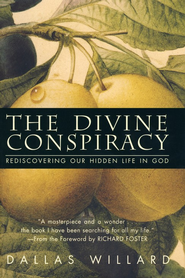
It’s really a good question and one that I hadn’t considered until encountering Dallas Willard’s masterpiece The Divine Conspiracy in college. I had not thought about it in a while until Dr. Todd Hunter came to guest-teach at our church this Sunday. He was making the basic point that unless we actually consider Jesus to be a competent instructor about life and reality, we will never actually listen to him and follow him. This called to mind one of my favorite passages in The Divine Conspiracy where Willard calls our attention to the simple fact that Jesus is really smart:

Our commitment to Jesus can stand on no other foundation than a recognition that he is the one  who knows the truth about our lives and our universe. It is not possible to trust Jesus, or anyone else, in matters where we do not believe him to be competent. We cannot pray for this help and rely on his collaboration in dealing with real-life matter we suspect might defeat his knowledge or abilities.

And can we seriously imagine that Jesus could be Lord if he were not smart? If he were divine, would he be dumb? Or uninformed? Once you stop to think about it, how could he be what we take him to be in all other respects and not be the best-informed and most intelligent person of all, the smartest person who ever lived?

That is exactly how his earliest apprentices in kingdom living thought of him. He was not regarded as, perhaps, a magician, who only knew “the right words” to get results without understanding or who could effectively manipulate appearances. Rather, he was accepted as the ultimate scientist, craftsman and artist.

The biblical and continuing vision of Jesus was of one who made all of reality and kept it working, literally, “holding together” (Col 1:17). And today we think people are smart who make light bulbs and computer chips and rockets out of “stuff” already provided! He made “the stuff”!

Small wonder, then, that the first Christians thought he held within himself, “all of the treasure of wisdom and knowledge” (Col. 2:3). This confidence in his intellectual greatness is the basis of the radicalism of Christ-following in relation to the human order. It sees Jesus now living beyond death as “the faithful witness, the first-born of the dead, the ruler of the kings of the earth…the first and the last, the living One, ” the one who can say “I was dead, and behold, I am alive forever more, the master of death and the world of the dead” (Rev. 1:5, 18)…

He is not just nice, he is brilliant. He is the smartest man who ever lived. He is now supervising the entire course of world history (Rev 1:5) while simultaneously preparing the rest of the universe for our future role in it (John 14:2). He always has the best information on everything and certainly also on the things that matter most in human life.

The Divine Conspiracy: Rediscovering our Hidden Life in God, pp. 94-95

When considering this reality, the fact that Jesus is the all-competent Lord of the universe who holds all things together, it has to strikes us that he must be absolutely, colossally wise, and an excellent guide into the reality of all things. In which case, we have to ask ourselves, why don’t we listen to him more often? Why is it that of all the places to go for an opinion, a point of view, sound advice on any and all questions concerning my relationships, my family, my work-stresses, my finances, I always seem to come to Jesus last? What are the areas that I seem to act like I know more than he does? “Well, Jesus, that’s a nice thought, but you see, my situation is a little different than what you were talking about in your sermons…” Really? Honestly? Jesus is God, but he doesn’t really know what he’s talking about when it’s your life, because you’re so special? Hmm….

This is where the rubber hits the road. Do I really trust Jesus as Lord or don’t I? If I trust him with my death, I ought to be able to trust him with my life. Even more to the point, if I don’t trust him with my life, am I really trusting him with my death?

Friends, we can trust Jesus. He won’t let us don’t or lead us astray. He knows what he’s talking about–he’s really smart.

Soli Deo Gloria

Becoming the Archetype’s I AM = The Doctrine of God + Death Metal

Alright, so this is the one where I blow my credibility with a bunch of you: I love metal music. I’m not an expert, a connoisseur, or even an amateur. I’m just a fan. Still, I love the speed, the ferocity, the heaviness, and the creativity involved with the genre and its multiple sub-genres.

One of my favorite acts is a Christian progressive death metal band by the name of Becoming the Archetype. (Think Christ as the archetype of humanity made in the image of God into whose image we are being conformed.) They embody what I’ve been saying for the last few years: some of the most creative, theological song-writing is coming, not out of the worship music industry, but the metal and hardcore scene. With albums titled Terminate Damnation and songs like  “Ex Nihilo” and “Elemental Wrath: Requiem Aeternam”, it’s obvious they don’t pull theological punches. Redemption never sounded this brutal. Thankfully they’ve been thoughtful enough to actually handle deep theology within the medium, producing complex concept albums like “Dichotomy”, which they based on C.S. Lewis’ Space Trilogy in order to explore themes of resurrection, the knowledge of God, biology and technology. (It also features the most brutal rendition of “How Great Thou Art” you’ve ever heard.)

Now, when I learned of that the band had lost bassist and frontman, Jason Wisdom, I was worried both that the music and the message would suffer a drop-off in sound as well as theological content. (He left when his wife became pregnant. Something about wanting to be a good dad or something.) With release of their 5th full-length studio album I AM, my fears were assuaged.

In terms of sound, Christ McCane’s vocals come through loud, low, and aggressive.  The clean vocals shine at times and at times, not so much. Overall, very solid. There are quite a few good technical riffs, (the opening of the title track “I AM” comes to mind), solid drumming, a few good bass-lines, and a number of heavy break-downs, even though they’ve backed off a bit from other albums. Continuing the trend off of their last album Celestial Completion, they’ve continued to place increasing focus on progressive elements. Still, it regains some of the speed, heaviness, and aggression of Dichotomy. It’s a solid metal album. The more I listen to it, the more pleased I am. My face is quite sufficiently melted.

This is not the main reason I am excited by this album. What I love most is the theological ambition driving the sound. With I AM Becoming the Archetype has attempted to do something many academic theologians no longer try: say something substantial about God.

I AM

In the Old Testament God reveals himself to Moses in the burning bush as the great “I AM that I AM” (Exod. 3:14), or simply “I AM” (Yahweh). This is his specific covenant name by which Israel was to call him.  In Isaiah, specifically 40-55, a section that draws on Exodus themes of liberation and redemption, God repeatedly emphasizes that “I am” the one who will redeem Israel. (Isa. 41:4; 43:25; 47:10; 48:12; 51:12) In the NT we find Jesus taking up the divine self-designation in the book of John with its seven famous “I am” (ego eimi) statements. Using prominent OT images of salvation he declares himself to be the bread of God (6:33), the bread of life (6:35), the light of the world (8:12), the gate for the sheep (10:7), the resurrection and the life (11:25), the way, the truth, and the life (14:6), and the true vine (15:1). Each of these predicates symbolize some aspect or form of the salvation that Jesus brings or in fact is.

In the same vein, I AM is an extended reflection on the glorious, terrifying predicates which can be ascribed to God in his saving actions, especially as they are manifested in Jesus Christ. Check out the track list:

  1. The Ocean Walker
  2. The Time Bender
  3. The Eyes of the Storm
  4. The Sky Bearer
  5. The Machine Killer
  6. The Weapon Breaker
  7. The War Ender
  8. The Planet Maker
  9. The Sun Eater
  10. I AM

Now, let’s be honest, we’re not dealing with Thomas Aquinas, or Barth, or Bavinck here. This is a death metal band. Some over the top metalness is to be expected. Still, there’s something great about a band that will speak in the first person for God and utter:

Traversing the infinite
Transcending the evident
Watch as reality bends to my will

Navigating eternity
Dispatching uncertainty
Navigating eternity
Behold in my presence
Time standing still

I am the future
I am the past
I have seen you breathe your last

The metal epicness is almost too much to bear. What I do love is that song after song we see some attribute or action of God’s, whether eternity, the act of creation, judgment, or consummation, being defined through the Son. Ending on a truly Johannine note, the refrain of the title song simply states, “I AM THAT I AM/I AND THE FATHER ARE ONE.” We know God in and through Jesus Christ or not at all.

To sum up: if you like metal, or Jesus, check out the album. Prepare for theology and epicness.

Check out the first single, “The Time Bender” below.

Kierkegaard on Interpreting the Text to Death

It is a truism today to say that the Bible needs to be interpreted. In fact, it was a truism back when the Bible was being written that it’s not simply a matter of just “reading” the thing all the time. Even the Bible says that it’s hard to understand. (2 Pet. 3:16) Or, as the Westminster Confession comments:

All things in Scripture are not alike plain in themselves, nor alike clear unto all: yet those things which are necessary to be known, believed, and observed for salvation are so clearly propounded, and opened in some place of Scripture or other, that not only the learned, but the unlearned, in a due use of the ordinary means, may attain unto a sufficient understanding of them. (2.7)

We’ve known for a long time then that even though the basics are clearly laid out, there are at least some parts that are not obvious or plain. For thousands of years now, Christians have wrestled with, commented on, and interpreted the text of the Bible. Today we have seminaries with classes in hermeneutics, study of the original languages and ancient cultures that form the setting and background of the text, dictionaries, commentaries that are thousands of pages long, and journals where scholars devote dozens of pages to analyzing the nuances of a single word in the context of a single verse. (No joke, I wrote 30 pages on 2 verses in Colossians in my MA program and just barely scratched the surface of the literature on the subject.) Without a doubt, our knowledge of the text has expanded and been deepened by the faithful work of scholars and interpreters over the last few generations and this is a good thing.

The people of God need preachers and pastors who will roll up their sleeves and get to work on the task of discerning what the Lord has spoken and is even now speaking in the text. Poor interpretation is at the root of so much bad preaching and teaching in the church, which leads to bad living by the church. Preachers, teachers, and even lay-people who have come to rely on them, still need to work at the task of interpretation.

Now, to some this might seem troublesome and daunting. As someone who has devoted my life to wrestling with the text in order to teach and preach it faithfully, I absolutely love this stuff. Digging into the interpretive issues and the complexity of the Scriptures is what I live for. “What’s that you say about an ingenious new understanding of that obscure verse in Leviticus? Brilliant! Let me read it.”  “Is that a new commentary on a book I finished studying last month? I must have it!” Anybody who’s seen my desk at home or at work knows that I live knee-deep in this stuff. I wouldn’t have it any other way.

Now why do I bring this up? To alert us to a deadly risk we run when engaging in the interpretive task.

Kierkegaard tells a cautionary parable about the danger that can come with an unbridled focus on interpretation:

Imagine a country. A royal command is issued to all the office-bearers and subjects, in short, to the whole population. A remarkable change comes over them all: they all become interpreters, the office-bearers become authors, every blessed day there comes out an interpretation more learned than the last, more acute, more elegant, more profound, more ingenious, more wonderful, more charming, and more wonderfully charming. Criticism which out to survey the whole can hardly attain survey of this prodigious literature, indeed criticism itself has become a literature so prolix that it is impossible to attain a survey of the criticism. Everything became interpretation—but no one read the royal command with a view to acting in accordance with it. And it was not only that everything became interpretation, but at the same time the point of view for determining what seriousness is was altered, and to be busy about interpretation became real seriousness. Suppose that this king was not a human king—for thought a human king would understand well enough that they were making a fool of him by giving the affair this turn, yet as a human king he is dependent, especially when he encounters the united front of office-bearers and subjects and so would be compelled to put the best face on a bad game, to let it seem as if all this were a matter of course, so that they most elegant interpreter would be rewarded by elevation to the peerage, the most acute would be knighted, etc.—Suppose that this kind was almighty, one therefore who is not put to embarrassment though all the office-bearers and all the subjects play him false. What do you supposed this almighty king would think about such a thing? Surely he would say, “ The fact that they do not comply with my commandment, even that I might forgive; moreover, if they united in a petition that I might have patience with them, or perhaps relieve them entirely of this commandment which seemed to them too hard—that I could forgive them. But this I cannot forgive, that they entirely alter the point of view for determining what seriousness is.” -For Self-Examination, pp. 58-59

With this little parable Kierkegaard throws up a large, flashing, red warning sign for those of us enamored with the endless study of the text. The danger comes when interpretation becomes an excuse for disobedience. Kevin Vanhoozer has pointed out that the proper interpretation of the text of Scripture requires performance. Ingenious readings are not the point–hearing and rendering a fitting response to the voice of God is. When the task of interpretation eclipses our actual response to God speaking to us out of the silence, calling us to repentance, commanding us in righteousness, convicting us of sin, consoling us in pain, and drawing us to communion with Himself, things have gone awry. At that point you have sentenced the text to a slow and agonizing death by commentary.

Do not mistake this for an anti-intellectual call to “just read the Bible” without trying to engage with it at that deeper level. Study the Bible. Wrestle with it. Don’t be satisfied with simplistic readings of difficult passages. Go read big books on the subject. At the end of the day though, we must never forget that when the “Word of the Lord” came to the prophets it didn’t come as a word to be inspected, dissected, and thereby domesticated, but as the mighty command of the King who intends for his subjects to hear and obey his voice. We study in order to hear–we interpret in order to obey.

Soli Deo Gloria

No Such Thing as a Dumb Question?

I must confess that I’ve always thought the phrase, “There’s no such thing as a dumb or bad question” to be a bit silly.  Admittedly, patience with ignorance has not historically been a strength of mine. In high school I was that guy who would groan audibly at silly answers given by my classmates at times.  I blame this almost entirely on my arrogance.  (Occasionally it was probably merited, but that’s no excuse.) Still, arrogance aside, I always could think of a number of questions that were foolish to ask given any situation.

Now, I’ve mellowed a bit since my high school days, become more aware of my own intellectual failings, and expanded my definition of what counts as a good question, especially in a teaching situation where I myself have come to use the phrase to encourage those shy students. And yet, I still find myself wincing a bit when I hear that phrase uttered or when I come across a  particularly silly question.

Which brings me to Richard Dawkins.

Dawkins is a Big Silly

For the last couple of weeks I’ve been trekking through the New Atheist canon in preparation for an upcoming teaching series. First it was Harris, then it was Hitchens, and now I’ve finally made it to Dawkins. I was unsurprisingly unimpressed by the first two given that there really wasn’t much in the way of an actual refutation of Christianity or even theistic belief forthcoming. Well, unless you count some unhelpful platitudes about reason and faith. I came to Dawkins’ God Delusion though, expecting a bit more since he, among the 4 Horsemen, has the reputation of being most interested in giving serious arguments against God’s existence. I can’t say I was expecting much in light of some criticisms I’d read beforehand. Still, looking at the table of contents and noting that it includes a decent-length chapter on the traditional proofs for the existence of God, I allowed myself to be somewhat hopeful.  “Maybe it’s not all that bad. Maybe it’s not as painful as they say.”

I won’t bore you with all of the details of that 35-page train wreck except to say that my forehead was a nice bright pink at the end of the ordeal given the frequent face-palming I was doing. There were many delightful turns of phrases, misleading but amusing analogies, arrogant snark enough to last for months, and questions on par with “Could God make a martini so big that even HE couldn’t drink it? Ha! He’s not omnipotent!”

It was beautiful.

The one piece that irked me most was what he touted as the most damning response possible to the argument from design. The design argument is something like:

  1. Where there is design, there must be a designer.
  2. The universe exhibits unmistakable signs of complexity and design. (Insert various examples from physics, biology, the existence of salsa)
  3. The conclusion is that there must be a universal designer.

Now, what is Dawkins’ grand damning response to this? “Who made God?” (109, a question which apparently occurs to all “thinking people”) and “Who designed the designer?” (158) I swear, I am not making this up.

This, as you can tell, is what got me thinking about silly questions. For a 5-year old or even a 15-year old to ask, “Well, who made God?” is fine; nothing dumb or illegitimate about that. For an Oxford professor to trumpet this as his damning argument against God’s existence is just sad.

Now, some of you might be thinking, “Hey, wait a minute. There’s got to be more to it than that.” And, in a sense, you’d be right. Dawkins has an argument here. In fact, this is his grand argument against God’s existence. As he puts it, “However statistically improbable the entity you seek to explain by invoking a designer, the designer himself has got to be at least as improbable.” His point is that a being that can create something complex like the universe, would have to be incredibly complex: at least as complex as the universe itself. The more complex something is, the less likely it is. In which case, whatever created the universe would have to be extraordinarily complex, and therefore even more improbable which is why God probably doesn’t exist.

If that weren’t bad enough, apparently, the whole exercise is silly because in any case, since the whole point of the argument from design is to explain complexity or statistical improbability, introducing a statistically improbable, complex being to explain complexity explains nothing. (158)

This can sound convincing at the surface level. To explain why this actually isn’t, I’d like to call in an expert witness: Alvin Plantinga.

Plantinga lays the Hammer down

You’ll be hearing about Alvin Plantinga from time to time on this blog. Suffice it to say for now that he is probably THE SINGLE-MOST BRILLIANT ANALYTIC PHILOSOPHER ALIVE. In his very humorous and instructive review of Dawkins’ book, he points out a number of problems with this argument. I’m only going to excerpt a couple, but you’ll want to go read the whole thing.

First, Plantinga points out that Dawkins is confused as to what it means to speak about complexity with regards to God:

Now suppose we return to Dawkins’ argument for the claim that theism is monumentally improbable. As you recall, the reason Dawkins gives is that God would have to be enormously complex, and hence enormously improbable (“God, or any intelligent, decision-making calculating agent, is complex, which is another way of saying improbable”). What can be said for this argument?

Not much. First, is God complex? According to much classical theology (Thomas Aquinas, for example) God is simple, and simple in a very strong sense, so that in him there is no distinction of thing and property, actuality and potentiality, essence and existence, and the like. Some of the discussions of divine simplicity get pretty complicated, not to say arcane. (It isn’t only Catholic theology that declares God simple; according to the Belgic Confession, a splendid expression of Reformed Christianity, God is “a single and simple spiritual being.”) So first, according to classical theology, God is simple, not complex.  More remarkable, perhaps, is that according to Dawkins’ own definition of complexity, God is not complex. According to his definition (set out in The Blind Watchmaker), something is complex if it has parts that are “arranged in a way that is unlikely to have arisen by chance alone.” But of course God is a spirit, not a material object at all, and hence has no parts. A fortiori (as philosophers like to say) God doesn’t have parts arranged in ways unlikely to have arisen by chance. Therefore, given the definition of complexity Dawkins himself proposes, God is not complex.

Translation: First, by definition, both those of classical theology and Dawkins’ own definition as laid out elsewhere, God is not a complex being. Given that God is a simple, spiritual being God does not demonstrate physical complexity or design in a way that allows Dawkins’ question to even make sense. Therefore, Dawkins’ argument fails.

The next part is where he shows how Dawkins’ question completely misses the point and responds to his idea that introducing God as an explanation for complexity explains nothing:

In The Blind Watchmaker, he considers the claim that since the self-replicating machinery of life is required for natural selection to work, God must have jump-started the whole evolutionary process by specially creating life in the first place—by specially creating the original replicating machinery of DNA and protein that makes natural selection possible. Dawkins retorts as follows:

“This is a transparently feeble argument, indeed it is obviously self-defeating. Organized complexity is the thing that we are having difficulty in explaining. Once we are allowed simply to postulate organized complexity, if only the organized complexity of the DNA/protein replicating machine, it is relatively easy to invoke it as a generator of yet more organized complexity… . But of course any God capable of intelligently designing something as complex as the DNA/protein machine must have been at least as complex and organized as that machine itself… . To explain the origin of the DNA/protein machine by invoking a supernatural Designer is to explain precisely nothing, for it leaves unexplained the origin of the Designer…”

Here there is much to say, but I’ll say only a bit of it. First, suppose we land on an alien planet orbiting a distant star and discover machine-like objects that look and work just like tractors; our leader says “there must be intelligent beings on this planet who built those tractors.” A first-year philosophy student on our expedition objects: “Hey, hold on a minute! You have explained nothing at all! Any intelligent life that designed those tractors would have to be at least as complex as they are.” No doubt we’d tell him that a little learning is a dangerous thing and advise him to take the next rocket ship home and enroll in another philosophy course or two. For of course it is perfectly sensible, in that context, to explain the existence of those tractors in terms of intelligent life, even though (as we can concede for the moment) that intelligent life would have to be at least as complex as the tractors. The point is we aren’t trying to give an ultimate explanation of organized complexity, and we aren’t trying to explain organized complexity in general; we are only trying to explain one particular manifestation of it (those tractors). And (unless you are trying to give an ultimate explanation of organized complexity) it is perfectly proper to explain one manifestation of organized complexity in terms of another. Similarly, in invoking God as the original creator of life, we aren’t trying to explain organized complexity in general, but only a particular kind of it, i.e., terrestrial life. So even if (contrary to fact, as I see it) God himself displays organized complexity, we would be perfectly sensible in explaining the existence of terrestrial life in terms of divine activity.

Translation: We are not trying to explain organized complexity in general. The argument from design is dealing with one instance of complexity: the universe. As an explanation for that, a universal mind like God’s works even when granting complexity, (which we’ve already seen is unnecessary).

Conclusion

Now, we’ve seen why this question “Who designed the designer?” and Dawkins’ further elaboration of it into an argument against God’s existence is confused and a bit silly. The thing that makes it truly silly though, is the arrogance with which he wields it. In the mouth of a truly inquiring child, teenager, or even adult, it is perfectly legitimate question that can be answered honestly and without any condescension or arrogance. In fact, most answers should be given that way. In the mouth of a snarky professor who should know better, it becomes very silly indeed, and is safely ignored as a serious threat to belief in God.

To wrap up here are a few things to keep clear:

  1. Apparently a Ph.D. in biology doesn’t do much for your philosophical chops. So, next time you hear a biologist or a chemist pronouncing confidently on philosophic and theological issues beyond the remit of their chosen discipline, remember: they’re only scientists, not philosophers. That doesn’t mean you should listen and weigh what they say, but it also means you should take it with a grain of salt.
  2. None of this necessarily proves that the design argument “works.” It just means that Dawkins’ response to it doesn’t. Nobody needs to get freaked out by the question, “Who designed the designer?”
  3. At the same time, if you’re a believer, realize that there are legitimately thoughtful atheists who have good questions and serious doubts who should be taken seriously and lovingly answered. Pointing out the silly things that one of them has written should not cause us to think they’re all that silly and smug.

Disclaimer– I’d just like to point out that even though I’ve called attention to some intellectual problems with Mr. Dawkins’ arguments, this in no way denies his prodigious abilities as a biologist or is meant to imply that I consider myself smarter than him. Consider it an exercise in God using the foolish to shame the wise. (1 Cor 1:27) Or rather, God using the foolish (me), using the wise (Plantinga), to shame the wise (Dawkins.)

Recommended resources:

1. Go read the whole review by Plantinga that I linked above.
2. Where the Conflict Really Lies: Science, Religion, and Naturalism by Alvin Plantinga is his definitive work on the problem of theistic belief, science, and naturalism. I highly recommend this work.
3. A Shot of Faith to the Head: How to Be a Confident Believer in an Age of Cranky Atheists by Mitch Stokes is Plantinga’s awesomeness written for everybody. I’ll be reviewing this book soon.

Why Jesus Hates Heresy (And So Should You)

I’d like to take a moment to point something out that may have escaped your attention last time you went to church or watched  a Nooma: Jesus and the rest of the New Testament authors don’t like false teaching, or heresy. I mean, they really hate it. It doesn’t take long reading through the thing to see the forceful way they spoke of “false teachers/prophets” and “false teaching” about God and the Gospel.  Don’t believe me? Here are just a few quotes. See for yourself.

Gentle Jesus

Beware of false prophets, who come to you in sheep’s clothing but inwardly are ravenous wolves. You will recognize them by their fruits. Are grapes gathered from thorn bushes, or figs from thistles? So, every healthy tree bears good fruit, but the diseased tree bears bad fruit. A healthy tree cannot bear bad fruit, nor can a diseased tree bear good fruit. Every tree that does not bear good fruit is cut down and thrown into the fire. (Matthew 7:15-20)

Not so Gentle Paul

I appeal to you, brothers, to watch out for those who cause divisions and create obstacles contrary to the doctrine that you have been taught; avoid them. (Romans 16:17)

I am astonished that you are so quickly deserting him who called you in the grace of Christ and are turning to a different gospel—not that there is another one, but there are some who trouble you and want to distort the gospel of Christ. But even if we or an angel from heaven should preach to you a gospel contrary to the one we preached to you, let him be accursed. As we have said before, so now I say again: If anyone is preaching to you a gospel contrary to the one you received, let him be accursed. (Galatians 1:6-9)

Now the Spirit expressly says that in later times some will depart from the faith by devoting themselves to deceitful spirits and teachings of demons, through the insincerity of liars whose consciences are seared, who forbid marriage and require abstinence from foods that God created to be received with thanksgiving by those who believe and know the truth. For everything created by God is good, and nothing is to be rejected if it is received with thanksgiving, for it is made holy by the word of God and prayer. (1 Timothy 4:1-5)

O Timothy, guard the deposit entrusted to you. Avoid the irreverent babble and contradictions of what is falsely called “knowledge,” for by professing it some have swerved from the faith. Grace be with you. (1 Timothy 6:20-21)

Old-Man John

Beloved, do not believe every spirit, but test the spirits to see whether they are from God, for many false prophets have gone out into the world. (1 John 4:1)

Beloved, do not believe every spirit, but test the spirits to see whether they are from God, for many false prophets have gone out into the world. By this you know the Spirit of God: every spirit that confesses that Jesus Christ has come in the flesh is from God, and every spirit that does not confess Jesus is not from God. This is the spirit of the antichrist, which you heard was coming and now is in the world already. (1 John 4:1-3)

For many deceivers have gone out into the world, those who do not confess the coming of Jesus Christ in the flesh. Such a one is the deceiver and the antichrist. Watch yourselves, so that you may not lose what we have worked for, but may win a full reward. Everyone who goes on ahead and does not abide in the teaching of Christ, does not have God. Whoever abides in the teaching has both the Father and the Son. If anyone comes to you and does not bring this teaching, do not receive him into your house or give him any greeting, for whoever greets him takes part in his wicked works. (2 John 1:7-11)

Peter “the Rock” Bar-Jonah

But false prophets also arose among the people, just as there will be false teachers among you, who will secretly bring in destructive heresies, even denying the Master who bought them, bringing upon themselves swift destruction. And many will follow their sensuality, and because of them the way of truth will be blasphemed. And in their greed they will exploit you with false words. Their condemnation from long ago is not idle, and their destruction is not asleep. (2 Peter 2:1-3)

This is Weird to Us

These quotes can seem disturbing to people of our age.

Our culture likes the idea of heresy. Whenever you see the word ‘heretic’ used on your average blog, news article, etc. it’s synonymous with bold, controversial, and creative thinking. It’s thought not confined with dogma and church controls. It’s ideas that scare the “theologians”, and break out of the traditional mold. (As to why scaring theologians has become a valued activity, I’m somewhat puzzled. Is there similar trend elsewhere? Should I want to perplex philosophers? Or, mystify mathematicians?)

It’s sexy.

Alister McGrath has even gone so far as to talk about our “love affair with heresy.” It epitomizes all that us entrepreneurial, free-thinking, radically individualistic Americans believe about religion. It’s up to us to figure out and nobody has a right to lay down a “correct” or “right” way to think about spirituality and God.

In this context, anybody trying to talk about orthodoxy or heresy immediately calls to mind images of nefarious, medieval church councils, trials, and other wickedness. (Which, incidentally were the result of false teaching about the nature of the church.)

So, why do they think different?

So why do Jesus, Paul, Peter, and John seem to approach the problem of false teaching differently than we do? Their attitude seems so intolerant and harsh. What about freedom of thought? Independence of mind?  What accounts for the difference? Is it just that we are more enlightened and cosmopolitan than these backwards dogmatists?

Eugene Petersen, my favorite pastoral theologian and theological pastor, cuts to the heart of the matter when discussing John’s attitude towards false teaching:

“Our age has developed a kind of loose geniality about what people say they believe. We are especially tolerant in matters of religion. But much of the vaunted tolerance is only indifference. We don’t care because we don’t think it matters. My tolerance disappears quickly if a person’s belief interferes with my life. I am not tolerant of persons who believe that they have as much right to my possessions as I do and proceed to help themselves… I am not tolerant of businesses that believe that their only obligation is to make a profit and that pollute our environment and deliver poorly made products in the process. And [John] is not tolerant when people he loves are being told lies about God, because he knows that such lies will reduce their lives, impair the vitality of their spirits, imprison them in old guilts, and cripple them with anxieties and fears…

That is [John’s] position: a lie about God becomes a lie about life, and he will not have it. Nothing counts more in the way we live than what we believe about God. A failure to get it right in our minds becomes a failure to get it right in our lives. A wrong idea of God translates into sloppiness and cowardice, fearful minds and sickly emotions.

One of the wickedest things one person can do [is] to tell a person that God is an angry tyrant, [because the person who believes it will] defensively avoid him if he can… It is wicked to tell a person that God is a senile grandfather [because the person who believes it will] live carelessly and trivially with no sense of transcendent purpose… It is wicked to tell a person a lie about God because, if we come to believe the wrong things about God, we will think wrong things about ourselves, and we will live meanly or badly. Telling a person a lie about God distorts reality, perverts life and damages all the processes of living.”, Traveling Light: Reflections on the Free Life (Downers Grove, Ill.: InterVarsity Press, 1982), pp. 33-35.

We don’t care about false teaching and heresy because we don’t see what it does. We don’t see that “A lie about God becomes a lie about life.” Jesus is intensely opposed heresy because he doesn’t miss the connection between what we believe about God and every inch of our lives. Paul opposes it with every fiber of his being because he is passionately for the church. John is not simply out to control his “beloved”, but rather make sure that they remain free, truly free to live the life God has called his children to.

Good theology is not just an academic exercise for “theologians” in seminaries. It’s not just for pastors in their studies. It’s for everyday Christians for everyday living. This is why we care about these things. This is why we preach, teach, and correct in light of the Word of God.

So again, “Why does Jesus hate heresy?” He loves you too much to have you believe lies about God.

Soli Deo Gloria

Resources for avoiding Heresy:

1. Any good systematic theology. (Classic Christianity by Thomas Oden, The Christian Faith by Michael Horton)
2. Heresies and How to Avoid Them by Ben Quash and Michael Ward
3. Heresy: A History of Defending Truth by Alister McGrath
4. Free article by Craig Blomberg “The New Testament Definition of Heresy (Or When do Jesus and the Apostles Really Get Mad?)

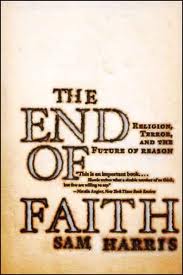
Sam Harris, the End of Faith, and “The Myth of Religious Violence”

I’ve begun reading Sam Harris’ breakout work on religion and violence The End of Faith that gained him notoriety as one of the “4 Horsemen” of the New Atheism. In prepping for a teaching series on the intellectual objections to Christianity in the fall, I thought it appropriate to read some of the popular literature on the subject.

To be honest, before beginning to read it I was scared…of facepalming the whole way through.

My only acquaintance with Harris’ work was his debate with William Lane Craig at Notre Dame last year. In my opinion Craig thoroughly trounced him, but I was struck by Harris’ cool, composed, unflappably secure attitude that all religious belief was basically nonsense, and demonstrably so. He was a great communicator, if not always the clearest-thinking philosopher. (In point of fact, he is not a philosopher, but rather has his Ph.D. in neuroscience.)

Nothing about that judgment has changed since reading the majority of his manuscript. He writes marvelously clear prose and has a peculiar gift for asking questions with an incredulous tone–in print. He also excels in finding particularly horrifying stories of violence associated or motivated by religious belief, and purposefully picking the least charitable reading of any given text of scripture he can. That being said, my faith is in no danger from his philosophical arguments against Christianity, simply because there aren’t many to speak of. Or, if they’re there, they’ve been answered over and over again.

The one truly positive thing I can say that I appreciate about Harris’ work is that he is refreshingly free of postmodern squishiness when it comes to moral relativism, or even metaphysical relativism. He is a realist and understands that beliefs link up to actions in important ways. He also understands Christian theological claims about the Resurrection, the Virgin Birth, etc. are claims about reality, not just subjective statements about my consciousness, (unlike so many postmodern theologians.) This, in fact, is a crucial portion of his argument; it is precisely the absurd beliefs of the religious that lead to insane, unjustifiably horrible violence.

I am not interested in giving a full review and critique here. That has been many times over and would be rather pointless. What I want to do is draw attention to the fact that this work is basically a popular example of the conventional wisdom on the subject of religion and violence that William T. Cavanaugh writes about in The Myth of Religious Violence

In a short lecture entitled “Does Religion Cause Violence?” he outlines his argument deconstructing the “conventional wisdom” like this:

But what is implied in the conventional wisdom that religion is prone to violence is that Christianity, Islam, and other faiths are more inclined toward violence than ideologies and institutions that are identified as “secular.” It is this story that I will challenge here. I will do so in two steps. First, I will show that the division of ideologies and institutions into the categories “religious” and “secular” is an arbitrary and incoherent division. When we examine academic arguments that religion causes violence, we find that what does or does not count as religion is based on subjective and indefensible assumptions. As a result certain kinds of violence are condemned, and others are ignored. Second, I ask, “If the idea that there is something called ‘religion’ that is more violent than so-called ‘secular’ phenomena is so incoherent, why is the idea so pervasive?” The answer, I think, is that we in the West find it comforting and ideologically useful. The myth of religious violence helps create a blind spot about the violence of the putatively secular nation-state. We like to believe that the liberal state arose to make peace between warring religious factions. Today, the Western liberal state is charged with the burden of creating peace in the face of the cruel religious fanaticism of the Muslim world. The myth of religious violence promotes a dichotomy between us in the secular West who are rational and peacemaking, and them, the hordes of violent religious fanatics in the Muslim world. Their violence is religious, and therefore irrational and divisive. Our violence, on the other hand, is rational, peacemaking, and necessary. Regrettably, we find ourselves forced to bomb them into the higher rationality. 

Cavanaugh does this and more in his book, and delivers on his promises in the lecture as well. I highly recommend both.

Now, I read this a while back, but when I was reading Harris’ work, I ran across a passage that sounded remarkably familiar. I returned to this lecture and I found that Cavanaugh had addressed Harris’ work specifically. If you’ll pardon me, I’ll quote him at length again:

Sam Harris’s book about the violence of religion, The End of Faith, dramatically illustrates this double standard [Secular violence is rational, but religious violence is irrational and unjustified]. Harris condemns the irrational religious torture of witches, but provides his own argument for torturing terrorists. Harris’s book is charged with the conviction that the secular West cannot reason with Muslims, but must deal with them by force. In a chapter entitled “The Problem with Islam,” Harris writes: “In our dialogue with the Muslim world, we are confronted by people who hold beliefs for which there is no rational justification and which therefore cannot even be discussed, and yet these are the very beliefs that underlie many of the demands they are likely to make upon us.” This is especially a problem if such people gain access to nuclear weapons. “There is little possibility of our having a cold war with an Islamist regime armed with long-range nuclear weapons. . . . In such a situation, the only thing likely to ensure our survival may be a nuclear first strike of our own. Needless to say, this would be an unthinkable crime—as it would kill tens of millions of innocent civilians in a single day—but it may be the only course of action available to us, given what Islamists believe.” Muslims then would likely misinterpret this act of “self-defense” as a genocidal crusade, thus plunging the world into nuclear holocaust. “All of this is perfectly insane, of course: I have just described a plausible scenario in which much of the world’s population could be annihilated on account of religious ideas that belong on the same shelf with Batman, the philosopher’s stone, and unicorns.”

In other words, if we have to slaughter millions through a nuclear first strike, it will be the fault of the Muslims and their crazy religious beliefs.

This, to me, is the most amazing, (and dangerous) irony in Harris’ work. Essentially, Harris believes, that some religious people’s beliefs are so dangerous to other people’s lives, that we should take their lives, and possibly millions alongside of them.

Harris is absolutely right: our beliefs matter when it comes to dealing with violence in the world. Some beliefs are dangerous. What he’s missing is the fact that some of them are his own.