Constantine and the Gladiators: Politics or Culture? (Mere-Orthodoxy Piece)

I don't care how obvious or cliche this is--this is Gladiator.

I don’t care how obvious or cliche this is–this is Gladiator.

Is the legal and political downstream from culture, or vice versa? That’s the debate going on in religious conservative circles today. A rising number of voices, mostly in reaction to the excesses and missteps of the Religious Right, have been arguing that religious conservatives have been largely blind to the way that culture is upstream from law. In an effort to secure legal ground against progressive advances, the Right was ceding the deeper war for the imagination and affections of the populace. Gay marriage is an obvious example of this. As social conservatives secured dozens of temporary political victories, the vision of the general population was being captured through media narratives that were laying the groundwork for the generation-shaping, sea-change in popular opinion we’ve witnessed in the last few years.

While many of us might have been nodding our heads in agreement with this line of critique over the last couple of years, a jaunt into early church history might complicate the picture a bit. Peter Leithart’s fascinating cultural analysis of the Roman spectacles and their proscription by Constantine in Defending Constantine: The Twilight of An Empire and the Dawn of Christendom suggests a more intricate relationship between the two spheres than any strict dichotomy can capture.

You can read the rest of the piece here at Mere Orthodoxy

4 Reasons We Tend to Ignore the Past

creedalCarl Trueman notes 3 main assumptions that underlie confessional Protestantism in his incisive, recent work The Creedal Imperative:

  1. The past is important, and has things of positive relevance to teach us.” (pg. 22)
  2. Language must be an appropriate vehicle for the stable transmission of truth across time and geographical space.” (pg. 22)
  3. There must be a body or an institution that can authoritiatively compose and enforce creeds and confessions.” (pg. 23)

Unfortunately, all three are increasingly problematic.

In a chapter outlining the cultural case against creeds, Trueman notes various trends that make them untenable to an expanding number of postmoderns and Evangelicals. I’d like to focus on the 4 that he identifies as weakening our appreciation for the past:

  1. “Science” – First, we must be clear that Trueman isn’t attacking science per se but rather the cultural mindset that science inculcates. The essential point is that for “science”, used in this sense, the “present is better than the past” (pg. 24). Our bias is tilted towards the present in such a way that we are increasingly skeptical that the past has anything to teach us. For instance, nobody wants to consult a 16th century medical text-book to learn how to heal a cold, so why should the Christians in that same century have anything to say about religion and spirituality?
  2. Technology – Technology has reversed the typical flow of information. In the past, elders taught children the various skills they need to live and work in the world. Youths were apprenticed to masters who were experienced experts in their trades. Nowadays technology has reversed the knowledge flow. If they’re over the age of 5, unless you’re a tech expert, your kids know more about technology than you do. Grandparents are particularly hopeless, needing tutorials in basic social requirements, like how to use a smart-phone. The general environment created is one where the old are dependent on the young, and, in a tech-dominated age, no longer relevant to the creation of culture or knowledge. If old people don’t know much, then dead people definitely can’t help us.
  3. Consumerism -Consumerism is problematic in the first place, simply as a species of materialism. Still, one might wonder what this has to do with an antipathy for creeds. Trueman points out that that central to modern consumerism is not just simply materialism, but the process of buying and consuming these new goods. Marketing strategies are aimed at creating a sense of the inadequacy of what is presently possessed for happiness: last year’s clothes, cars, and tech just isn’t good enough now. All of this feeds into the creation and funding of a culture in which the young and the new has status, while the old does not. 18-year olds rarely want to dress like 40-year olds, but the opposite is assumed in almost all modern marketing strategies. This is part of why young pop stars are interviewed on subjects like politics, religion, and morality. “Apparently, the lack of ‘baggage’ (to uses the standard pejorative) is an advantage to being able to speak with authority on complex subjects. In other professions, of course–‘baggage’ is generally referred to as ‘appropriate training.‘” (pg. 29) In which case, who cares what a bunch of old, dead religious “experts” thought about the matter? What’s Lady Gaga think instead? Or for Evangelicals, who cares what a Ph.D. in historical theology thinks about this? I wanna hear what the hip kid with the skinny jeans, candles, and an iPad says.
  4. The Disappearance of “Human Nature” – Without getting too technical about it, we are painfully aware of our social location in a way that no other society has been before us. You are a Hispanic, middle-class, single female navigating life primarily in your minority-culture community in the 21st Century, while the Westminster written by well-educated, upper-class, married, English, white men in the 17th. What could the latter possibly  have to say to the former? We have little sense that there is some stable “essence” we can call human nature that is constant enough, in history and space, that binds us all together, how could anybody speak across history and space to another. The framers of the Nicene Creed had no idea what the internet is,  who was Osama Bin Laden, or current geopolitical realities, so how could their thoughts on “spirituality” impact me today?

Again, none of this is meant to imply that science or technology are bad, just that some of the philosophical baggage and attitudes that comes with them, when paired with consumerism and the disappearance of human nature lead to some heavy currents leading us away from trusting or valuing the past as a source of knowledge of any kind. The idea that an ancient document might actually be binding on us is an even bigger pill to swallow.

All of these cultural trends are at work, not only against creeds, but against trust in the Scriptures and the Gospel itself. Christianity proclaims a truth tied to history, a salvation accomplished once and for all by a Jewish prophet 2,000 years ago on bloody Golgotha, and testified to by his disciples writing in the contest of Roman Imperial authority. To be a Christian is to stake one’s life on the importance of the past. Pastors and preachers need to be aware of the currents they’re navigating and trying to guide their congregants and hearers through. Wise as serpents they must learn to enter the world of their hearers, in order to present the truth from inside in a way that gently unravels (or explodes) their bias against the past.

Speaking practically, they might begin unraveling their own bias first.  American Evangelical pastors especially, swimming against/in a tide of anti-intellectualism and a strong cultural history of mantras like “no Creed but the Bible”,  are often-times just as jaded against the past as their congregations. Ask yourself this question: When was the last time I read a book that wasn’t published in the last 5 years? How about 50? How about 500? You  don’t need to become an expert in patristics, but it makes sense to become familiar with some Athanasius yourself, if you’re going to tell people that holding to the doctrine of the Trinity as taught in the Nicene Creed is important. Maybe lay your hands on some Calvin (not just Calvin as mediated by your favorite current author) before you go into the importance of the doctrines of grace.

Pastors, we have our work cut out for us.

Thankfully, deeper than even our own studies, stronger than any cultural force, we can to rely on the power of the Holy Spirit who makes present the historically-completed work of the Risen and Ascended Christ in the preaching of the Word and the sacraments.

Soli Deo Gloria

Justin Bieber: On the Dangers of Being Famous Too Early (CaPC)

That happened.

That happened.

Back when my wife and I used to watch American Idol with her family every week, I had a staunch policy of not supporting any contestants under the age of 18, regardless of talent or the competition.  My gut feeling was that 16 is just too young for most people to have that much attention focused on them.  If they were good, take a shot at it in another couple of years.

A few years on, a couple of years of college ministry later, my gut hasn’t changed. (Well, my inner gut. We’ll pass over my waist size in silence.) I still think being too famous too early is an unfortunate turn of events.

My evidence? Justin Bieber and Anne Frank.

You can go read the rest of the article over at Christ and Pop Culture HERE.

Who Are You Sleeping With? My Conversation with Tim Keller (CaPC)

Me and KellerSo, I was talking to Tim Keller this week when the topic of sex came up…no, wait, that’s not right.

Let’s re-frame that without me lying.  I managed to snag a ticket to the Gospel Coalition’s National Conference this week and sit in on a breakout session on the subject of revival by Dr. Keller.

I think that’s enough of a teaser. You can go read the rest over at Christ and Pop Culture HERE.

Could Constantine Have Been James Madison?

Definitely not a 4th Century Emperor.

Definitely not a 4th Century Emperor.

So after a few months of having it stare at me from my book shelf, I was able to start reading Peter Leithart’s Defending Constantine:The Twilight of an Empire and the Dawn of Christendom.  Admittedly I’m only about half-way through the work, but to me this is a tour de force of historiography and theological polemic re-examining the life and times of the first Christian Emperor, as well as the theological critique of “Constantinian” relations between church and state a la John Howard Yoder. Given that I’ve just arrived in Orlando for the Gospel Coalition 2013 National Conference I can’t take time for a truly substantial post about it yet. Still, one section in particular stuck me as worth briefly sharing and commenting on.

In reviewing his involvement in the internal affairs of the Church such as the Arian controversy and conflict between the Catholics and the Donatists, Leithart addresses the criticism Constantine receives as an un-baptized Emperor with no particular religious authority mucking about in such matters. For us moderns, it seems so obvious that there ought to be a separation between Church and State. Constantine should have taken a hands-off approach and left it bishops to handle their “spiritual” business while he took care of the affairs of state. Leithart calls this suggestion “implausible” and comments:

As we saw in the last chapter, Constantine did in fact follow a policy of tolerant concord. Beyond that, no one in the fourth century would have thought that a political regime could function without religious sanction, and it is naive to think that Constantine’s conversion  would have instantly turned him into James Madison…The question is, what were Constantine’s historical options in the fourth century? What were the constraints on his action? What, perhaps more important, were the limits of his imagination? Only when we have considered those questions are we capable of doing justice to Constantine’s interventions in church politics.

Defending Constantine, -pg. 132

The point is, when dealing with Constantine’s political legacy, we need to consider our historical distance and the limits of the subject’s own political horizon. Constantine wasn’t ruling his Empire after the Reformation, the Enlightenment, and the various historico-political developments that have shaped Western thought on religion and politics. Indeed, the separation between the two would have been an entirely foreign one, and so would the idea of an Emperor who kept a distance from the cultus. While admittedly not the biblical ideal, Leithart gives us good historical reason to think that Constantine’s foray into a constructive relationship between the State and the Church isn’t the sheer, unmitigated disaster that popular polemics would have us believe.

Soli Deo Gloria

Killswitch Engage, Edwards, and the Hell Inside Us All

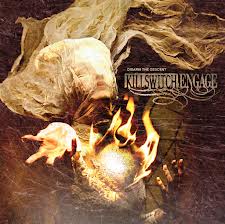
disarmKillswitch Engage’s new album Disarm the Descent came out this last week. I don’t know how many times I’ve listened to it already, but I know I’ve got a few hundred more to go. Needless to say, it’s text-book shredding perfection. Adam D. is a metal machine; he couldn’t produce a weak metal album if he tried. Also, for those of you worried about the loss of frontman Howard Jones (who was amazing), Jesse Leach has returned to the helm stronger than ever both vocally and lyrically. He even manages to do a pretty good job filling in for Jones on the live version of “My Curse” included in the special edition.

Now, this is isn’t a full album review. In fact, I mostly just want to call attention to Leach’s forceful lyric-writing in the opening track, “The Hell in Me.”


Now, once I stopped air-shredding and paid attention to what he was saying, I realized he was speaking of the spiritual struggle at work in us all he sings:

Fall down into the chaos
Staring into the depths of pain darkness and suffering
I will not be from this place, inside of me
Until I understand this part of me that bleeds and captures my spirit
If it’s the death of me, then I will loosen its grip.

[Chorus:]
Protect me from the hell that burns inside me
No one can see this is the hell in me
Bring light into the darkness
Awaken and stir this war within us all
Reveal my true intentions

[Chorus:]
No one can see this is the hell in me
Lead me out of the darkness
Strengthen and protect the voice that makes no sound
Suffer and bleed for me
Pulled from the hell that is in me
Set me free
Will you set me free?

Leach picks up on the very biblical image of fire, torment, and hell to speak of the way a soul is consumed from within by sin. Sin burns the spirit. Indeed, this is ultimately the darkest truth of the doctrine of hell–we carry its seeds around within ourselves. Paul testifies that the wrath of God is seen, not so much in his active judgment, but in handing us over the the darkness of our own hearts as they lust after those things which dehumanize them. (Rom 1:18-15)

In depicting our spiritual struggle this way, Leach channels the spirit of Jonathan Edwards who brilliantly laid out this truth in his (in)famous sermon “Sinners in the Hand of an Angry God”:

There are in the souls of wicked men those hellish principles reigning, that would presently kindle and flame out into hell fire, if it were not for God’s restraints. There is laid in the very nature of carnal men, a foundation for the torments of hell. There are those corrupt principles, in reigning power in them, and in full possession of them, that are seeds of hell fire. These principles are active and powerful, exceeding violent in their nature, and if it were not for the restraining hand of God upon them, they would soon break out, they would flame out after the same manner as the same corruptions, the same enmity does in the hearts of damned souls, and would beget the same torments as they do in them. The souls of the wicked are in scripture compared to the troubled sea,Isa. 57:20. For the present, God restrains their wickedness by his mighty power, as he does the raging waves of the troubled sea, saying, “Hitherto shalt thou come, but no further;” but if God should withdraw that restraining power, it would soon carry all before it. Sin is the ruin and misery of the soul; it is destructive in its nature; and if God should leave it without restraint, there would need nothing else to make the soul perfectly miserable. The corruption of the heart of man is immoderate and boundless in its fury; and while wicked men live here, it is like fire pent up by God’s restraints, whereas if it were let loose, it would set on fire the course of nature; and as the heart is now a sink of sin, so if sin was not restrained, it would immediately turn the soul into fiery oven, or a furnace of fire and brimstone. -Jonathan Edwards, Sinners in the Hands of an Angry God, sec. 6

Songs like this remind me to thank God for his restraining hand. Even more, I thank God that he saw the hell in me and decided to “suffer and bleed for me”, to set me free, fully and finally from the torment of sin in Jesus Christ.

Soli Deo Gloria

Planned Parenthood, Infanticide, And The Return to Paganism (CaPC)

snowWe believe that any decision that’s made should be left up to the woman, her family, and the physician.

Normally it isn’t terrifying to hear the representative of a medical organization say something like this. In most circumstances I’d love hearing about a less bureaucratic approach to medicine and health care decisions. When the representative is from Planned Parenthood, and the “decision” in question is whether to save the life of an already-born-and-on-the-table baby or kill it, it sends chills down my spine.

You can read the rest of this post over at Christ and Pop Culture.

Vanhoozer’s 10 Rules for Cultural Interpretation

I don't know what he's thinking right here, but it could probably serve as a Ph.D. thesis.

I don’t know what he’s thinking right here, but it could probably serve as a Ph.D. thesis.

I was planning on doing a couple more posts on Kevin Vanhoozer’s theory and methodology of cultural interpretation. (I still might, partly for my own benefit.) But for now, I’m going to cheat and cut to the end by laying out Vanhoozer’s 1o Guidelines for Everyday Theological Interpretation of Culture. Some of them need some unpacking, but since that would be too much work (and you really should go buy the book anyways), here they are:

  1. Try to comprehend a cultural text on its own terms (grasp its communicative intent) before you “interpret” it (explore its broader social, political, sexual, or religious significance.)
  2. Attend to what a cultural text is doing as well as saying by clarifying its illocutionary act (e.g. stating a belief, displaying a world).
  3. Consider the world behind (e.g. medieval, modern), of (i.e., the world displayed by the cultural text), and in front of (i.e., its proposal for your world) the cultural text.
  4. Determine what “powers” are served by particular texts or trends by discovering whose material interests are served (e.g.. follow the money!).
  5. Seek the “world hypothesis” and/or “root metaphor” implied by a cultural text.
  6. Be comprehensive in your interpretation of a cultural text; find corroborative evidence that makes best sense of the whole as well as the parts.
  7. Give “thick” descriptions of the cultural text that are nonreductive and sensitive to the various levels of communicative action.
  8. Articulate the way of being human to which a cultural text directly or indirectly bears witness and gives commendation.
  9. Discern what faith a cultural text directly or indirectly expresses. to what convictions about God, the world, and ourselves does a cultural text commit us?
  10. Locate the cultural text in the biblical creation-fall-redemption schema and make sure that biblical rather than cultural texts have the lead role in shaping your imagination and hence or interpretive framework for your experience.

Everyday Theology: How to Read Cultural Texts and Interpret Trends, pp. 59-60

Soli Deo Gloria

What’s a Culture and How Does it Work? 4 Functions of Culture According to Vanhoozer

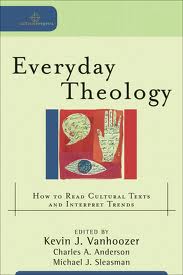
everyday theologyThe notion of culture has been on my mind for a long time now, but after joining the writing staff over at Christ and Pop Culture, I figured it was appropriate to do a little more digging on the notion of culture and cultural analysis. To that end I finally picked up a little volume edited by Kevin Vanhoozer Everyday Theology: How to Read Cultural Texts and Interpret Trends. While there are many volumes out that address the issue of biblical exegesis, there are few that address the crucial task of “cultural exegesis”, the practice of reading culture, interpreting the “signs of the times” (Matt. 16:1-3), in light of God and his revelation. That’s the gap that Vanhoozer and his co-editors (Charles A. Anderson, Michael J. Sleasman) aimed to fill. The volume opens with an programmatic essay by Vanhoozer in which he outlines a theory of culture, as well as a methodology for cultural interpretation. The essays that follow are examples of the method put into practice, with explorations of the check-out line, Eminem, Gladiator, and the blogosphere. In this post I’d like to take a (very) quick look at Vanhoozer’s view of culture and the way it works.

What’s a Culture? (Again)
Working primarily at the levels of what Roger Scruton has identified as “common culture” and “pop culture”, Vanhoozer’s discussion is fascinating and helpful many ways. One important point to note is his dependence on Dilthey’s idea that cultural studies observes the realm of human freedom, spirit, and creation v. that of nature. On this view cultural artifacts are concrete expressions of the human spirit by which our values, beliefs, and aspirations are given objective existence. As such, cultural artifacts such as songs, architecture, poetry, games, literature, and political practices “call not for explanation but for interpretation.” (pg. 22) Hermeneutics is key.

Another distinction he makes is the difference between culture and society; his chosen metaphor to understand the difference is hardware and software. Society is viewed more as the hardware of social institutions that gives shape to the shared life of a people. Culture he says, “is the software that determines how things function and how people relate in a given society. Culture is both system and practice, a means through which visions of the meaning of life (cultural worlds) are expressed, experienced, and explored through the diverse human products (cultural texts).” (pg. 27) So, police are institutional hardware that can be found across cultures, and yet an American “cop” is understood differently than a British “bobby” that usually doesn’t carry a gun. (pg. 23) Same institution, different cultural implementation.

How, then does Vanhoozer define culture? I won’t go into his very long and rewarding discussion, but in the end, Vanhoozer views culture “as a world and work of meaning. Better, culture is made up of “works” and “worlds” of meaning.” (pg. 26) It’s a work because it’s what humans do freely. Cultural objects are intentional creations–texts that communicate meaning. It is a world because these texts “create a meaningful environment in which humans dwell physically as well as imaginatively.” *(pg. 26)On this view,  popular culture is the shared context, practices, and “resources” that shapes and forms our way of life. (pg. 30)

How Does it Work?
The question remains, how does culture do this? Vanhoozer identifies 4 things that culture does to shape our lives.

  1. Culture communicates – First of all, culture is constantly communicating to us in ways both explicit as well as subtle, in a variety of formats, media, advertisements, and cultural artifacts. While there are hundreds of different specific messages aimed at a every discernable area of human life, the over-arching goal is to communicate a vision of the meaning of life, and the embodied form it should take. We mustn’t be naive the way this vision is communicated though. As Vanhoozer notes, “form and packaging” are just as important as content here. (pg. 28) Most cultural communication happens not through propositional argumentation but through allusion, suggestion, and connotation. It gives us pictures and metaphors (“life is like a box of chocolates”) that give rise to broader stories about the world we live in; subtle hermeneutical suggestions that shape the way we interpret our lives.
  2. Culture orients – This gives rise to the next function of culture: it orients us. By providing us with metaphors and models it gives us the inner logic by which we live our lives. “Life is like a baseball game”, “Life is like an episode of X show”, etc. These models also have “evaluative” and “affective” dimensions to them, in that they shape and form our loves and hates, our very sense of right and wrong. (pg. 29) Culture maps the world for us and creates a sense of mood by which we experience life. Moral and social orientation that we previously drew from family, community, and cult, we now draw from popular cultural texts such as movies, shows, song lyrics through which we construct the scripts of our lives. While How I Met Your Mother gives us a script about dating, childhood soccer-fields teach us about the nature of victory and competition. Importantly for Christians, Vanhoozer notes that while in the past culture gave us narratives of faith, we now more often find stories of “broken faith: defiance or anger at God; of fear of an indifferent or oppressive reality; of escape from sorrow over the absent God by finding joy in one’s immediate, mundane life.” (pg. 29)
  3. Culture reproduces -We need to understand that culture spreads. “Culture spreads beliefs, values, ideas, fashions, and practices from one social group to another.” (pp. 29-30) in the past through institutional force or colonization, but now it mostly happens through memetic reproduction. A “meme” is a “cultural unit” analogous to a gene in that it reproduces and passes itself on by means of imitation (mimesis). This could be anything from an idea, a fashion, phrase, song, or practice. The point is that cultural “programming” is spread from person to person, sort of like a virus, as people encounter each other and begin to copy or imitate the cultural behaviors that they see. This can happen institutionally in schools, or through parental instruction, but more often than not it’s happening informally all the time through everyday interactions with friends, online content, and media saturation.
  4. Culture cultivates – Finally, culture “cultivates”–it develops and grows. What does it grow? Well, recalling Dilthey’s point earlier, it cultivates the human spirit. By communicating and creating worlds for us to inhabit, metaphors to live by, or the basic orientation for our lives, culture develops our souls. It gives a vision of the meaning of life for our “hearts”–the seat our willing and acting–to desire and pattern itself against. “In short, culture cultivates character traits–the habits of the heart–and in doing so forms our spirit so that we become this kind of a person rather than that kind.” (pg. 31) The point isn’t that we are helpless against the onslaught of culture’s imagination or affection-shaping power. It is rather that we need to understand that it’s not a question of whether a particular show is educational, but what’s the lesson being taught? (pg. 31) Prolonged exposure to cultural texts presenting us with similar narratives and worlds shape our self-understandings and create a sort of “second nature” for good or ill. (pg. 32) Culture is a spirit-forming reality.

Because of this, Vanhoozer calls Christians to wake up and not simply walk about in culture like “sleep-walkers” unaware of the worlds which they are being invited to inhabit. (pg. 32) We need to be discerning readers both of Scripture and of culture, determining which is exerting a greater force on our hearts, and for what end. What vision of the good life are we buying into? What narratives and metaphors have we adopted? Which works and worlds dominate our imagination? The various little texts provided by marketers and other meaning-makers in pop culture, or the works and world of God as found in his Text?

Soli Deo Gloria