Reformedish Seminary Starter Kit

WestminsterAssemblyPortraitYou might not be able to tell based on my blog, but I didn’t go to a Reformed seminary; Haggard School of Theology at Azusa Pacific University is rooted is the Wesleyan-Holiness background (I kind of slowly went Reformed by way of reaction.) I went there on a partial scholarship through the godly people over at the Evangelical Friends Southwest Center and took classes in Friends Church theology and history. While I’m grateful for my time there, my excellent professors, and deeply pastoral education, you can understand when I say that giving me a Reformed, or even Reformedish, perspective on theology or ministry wasn’t a high priority. Which makes sense.

Given that, I’ve kind of had to give myself a Reformed education on the fly, mostly piecing things together via footnotes in books I’ve liked, amazon.com recommendations, and so forth. Knowing how difficult that can be, I put together a quick list of books in various ministry areas, of the sort I would have appreciated, for those unable to get to seminary yet, or what to supplement their own seminary ed with more Reformed(ish) voices. Think of it like a Reformedish starter kit.

A few caveats: This is by no means an exhaustive list. The theology and biblical studies section could be expanded by quite a bit. Also, I think people outside the Reformed tradition would be blessed by these, and there are many excellent books written outside of the Reformed tradition that have blessed me in these areas. Finally, this is not an endorsement of every single point of exegesis or position taken in each book. I just think they’re pretty good. If any of you have others to recommend in these various areas, go ahead and recommend them in the comments.

Systematic Theology

The Christian Faith:A Systematic Theology for Pilgrims on the Way by Michael Horton

Institutes of the Christian Religion by John Calvin

Union with Christ: Reframing Theology and Ministry for the Church by J. Todd Billings

Update: A friend of mine pointed out a glaring absence. It’s absolutely necessary to cruise through a couple of the catechisms and confessions like the Heidelberg Catechism or the Westminster Confession. I’d highly commend Kevin DeYoung’s accessible commentary on Heidelberg The Good News We Almost Forgot.

Biblical Studies & Hermeneutics:

New Testament Biblical Theology: The Unfolding of the Old Testament in the New by G.K. Beale

Introduction to Biblical Interpretation by William W. Klein, Craig L. Blomberg, & Robbert. I Hubbard Jr.

Ministry Philosophy and Practice:

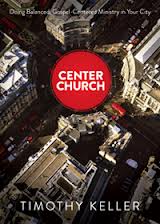
Center Church: Doing Balanced, Gospel-Centered Ministry in Your City by Tim Keller

Dynamics of Spiritual Life by Richard Lovelace

Preaching:

Christ-Centered Preaching: Redeeming the Expository Sermon by Bryan Chapell

Preaching Christ in a Post-Modern World (Lectures) by Dr. Timothy Keller and Dr. Edmund Clowney

Evangelism & Apologetics:

Lectures on Apologetics and Evangelism by Jerram Barrs

The Reason For God by Tim Keller

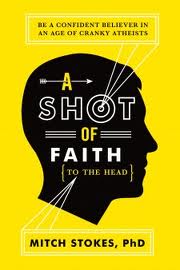
A Shot of Faith to the Head by Mitch Stokes

Theological Spirituality:

Knowing God by J.I. Packer

Counterfeit Gods by Timothy Keller

Pastoral Counseling:

Instruments in the Redeemer’s Hand by Paul David Tripp

Pastoral Ministry:

Dangerous Calling: Confronting the Unique Challenges of Pastoral Ministry by Paul David Tripp

The Pastor by Eugene Peterson

Reformation History and Historical Doctrine

The Christian Tradition 4: Reformation of Church and Dogma by Jaroslav Pelikan

The Reformation by Diarmaid MacCulloch

10 Myths About Calvinism by Kenneth Stewart

Soli Deo Gloria

Death By Living by N.D. Wilson (The Gospel Coalition Review)

death by livingN.D. Wilson. Death By Living: Life Is Meant to Be Spent. Nashville, TN: Thomas Nelson, 2013. 208 pp. $19.99.

The first thing I’ll note about Death By Living, N.D. Wilson’s follow-up to his celebrated Notes From the Tilt a Whirl, is that I couldn’t give you a book report if I tried. Much like Notes, Wilson’s direct, yet roundabout, tilt-a-whirling style puckishly mocks the straight-laced summary-reviewer for even thinking to attempt the mighty feat.

For return readers looking for quick comparison between Notes and Death, I’d say that if the last one changed the way I thought, this one might change the way I live. Notes invites you to embrace God as the sovereign, beyond imagining Author of the ridiculously unexpected universe in which we find ourselves. Death challenges you to live as a character, or rather, sub-writer of enfleshed, breathing words. Big ones. Interesting ones. Once again, you’ll find yourself in a well-shaken cocktail of poetic memoir, philosophy, theology, sharp wit, polemical fisticuffs, hilarity, and exhortation, in the form of a paean to the grace of a life well-lived in the shadow eternity. For the newcomer, you may want to strap in first.

“Death by Living, life is meant to be spent. ” That’s Wilson’s thesis and philosophy of family life (xi); scuffed knees are apparently as much an evidence of life as a pulse in the Wilson household. In many ways it’s a quirky entry into the venerable devotio moderna genre, along with A Kempis’ De Imitatione Christi; only in this one, we’re encouraged to follow our Covenant Head, take up our swords, fight the dragon, and live hard until it kills us like Jesus, the Image of humanity done right (62, 79). That might involve a little dirt. Don’t worry though, resurrection should take the stains right out.

As the book defies summary, being somewhat unruly and misbehaved, I’m simply going to highlight a couple of content points, and make one note on style for pastors.

You can read the rest of the review over at The Gospel Coalition.

The End of Our Exploring (CaPC Review)

end

Humans question things all the time, but why? What’s a question and how does it work? Beyond that, makes a question good? Are there bad questions? Should I question everything? Who says? Is there ever a time to stop questioning? When do you know you have an answer? Where is God in our questions? Is he prosecutor, witness, defendant? Are all questions ‘doubts’? Are all doubts bad? Where does faith come into our questions? What would it look like to make questioning a habit, a lifestyle, a disposition, a formative discipline?

Finally, where can I find a book about all of these questions? Who would take the time to write such a thing? Until recently I wouldn’t have had an answer for those last two. Thankfully, Matthew Lee Anderson, lead writer over at Mere Orthodoxy, published his wonderfully querulous little book, The End of Our Exploring: A Book About Questioning and the Confidence of Faithtaking up all these questions and more.

You can read the rest of my review of this excellent book at Christ and Pop Culture.


Meditation and Communion with God: Contemplating Scripture in an Age of Distraction (Book Review)

meditation and communion with GodMeditation is viewed with suspicion within many wings of modern Protestantism today. Begin to mention the spiritual discipline of contemplation and immediately accusations or apprehensions that one has imported or smuggled in foreign notions from Eastern philosophies, Buddhism, or less-than-Evangelical mystical pieties start to be leveled. Indeed, at times this isn’t too far off the mark. In our pluralistic culture there is much that passes for Christian spirituality is little more than cleverly-disguised syncretism. And yet, it would be a mistake to miss the need to recover the contemplative dimension to Christian spirituality in our stressed-out, surface-level, consumeristic North American Christianity.

This is why I have been so blessed as I read John Jefferson Davis’ recent work Meditation and Communion with God: Contemplating Scripture in an Age of DistractionIn this short, but rich essay, Davis argues and provides a theological foundation for a robust practice of contemplating scripture within an orthodox Evangelical framework. Instead of the mind-emptying techniques rooted in Advaita Hinduism, or Zen Buddhism, Davis wants to present a vision of the soul-expanding practice of deeply contemplating the riches of biblical truth in such a way that actually mediates the life of God himself in union with the Son by the power of the Spirit of the Age to Come.

Six Reasons

Aside from the fact that the Reformed tradition, especially Puritanism, has long had a rich tradition of scriptural contemplation including such lights as John Owen, Thomas Watson, William G.T. Shedd, and others, Davis notes six current factors which make recovering a practice scriptural contemplation urgent and beneficial:

  1. Renewal of interest in spiritual disciplines within Evangelicalism. (pg. 10)
  2. Growing interest in Eastern practices of meditation within a pluralistic context. (pg. 13)
  3. Widespread biblical illiteracy in North American churches. (pg. 18)
  4. Our growing awareness of the effects of the digital age on attention spans and reading habits. (pg. 21)
  5. New research on the effects of meditation on the brain and personal health. (pg. 25)
  6. Trend in biblical and systematic theology which have yet to be integrated into a theology of contemplating Scripture. (pg. 28)

As I read Davis outline his case, I found myself vigorously nodding in agreement, particularly as I thought of my own ability to simply sit down and read the book without compulsively checking my social media. If there is one thing our “distracted” age needs, it is something that forces them to sit down, breath, and think. I don’t think anybody would dispute that. The question becomes then, what are these theological foundations?

Three Themes

Davis devotes most of the rest of the essay to developing a theology of contemplation in light of three key theological developments:

  1. Inaugurated Eschatology (pp. 34-41)- NT scholars for the past couple of generations have highlighted eschatology as the warp and woof of the theology of the NT. Jesus preached the inbreaking kingdom of God which was “now” here and “not yet” fully consummated. Paul taught that through the Resurrection of Jesus Christ, the powers of the New Age had broken into the Old Age of sin and darkness and were available to us in the Spirit. The Old Covenant having been fulfilled, judgment rendered, victory accomplished, the Spirit is now poured out on all flesh drawing us near into a new access to the Father by grace.
  2. Union with Christ (pp. 41-51)- Connected to this is a renewed emphasis on the reality of our union with Christ. The idea that salvation ought to be thought of in terms of our current union with Christ saves us from a purely-future notion of redemption. Even now we are united to the risen Christ and all of his saving benefits, even though we are not yet fully like him. The Holy Spirit unites us to Christ in faith and makes us present to him, even though we are separated in space and time because of the inbreaking of the New Age.
  3. Trinitarian Theology (pp. 51-55) – Finally, the 20th Century renaissance of trinitiarian theology has reminded us of a few key realities: knowing God as he truly is–Father, Son, and Holy Spirit–can only help remind us of the fact that we can have personal relations with this personal God (1); having been made in the image of the Triune God, we are inherently relational beings which has implications for our ideas of personal existence and knowing (2); salvation is inherently trinitarian in nature as we are being brought into the life of the Triune God (3).

The Results

Building on these Davis develops them into a re-hauled “inaugurated ontology” that generates insights into our theology of God, cosmos, humanity, salvation, epistemology, and scripture that sets up a new way of understanding what is going one when we read the Bible. We are actually being brought into the presence of and communion with the Triune God through the power of the Spirit who unites us to the Risen Christ. This brief theological outline forms the basis of his rehabilitation of the Medieval Church’s practice of the four-fold interpretation of Scripture, which he believes ought to play an important role in the life of the church, especially in spiritual contemplation of scripture, even while we hang on to the real insights gained by the Reformers’ renewed emphasis on the “literal” sense of the text. Finally, after all of this, he includes a section outlining an actual approach towards a scriptural meditation which includes exercises in “whole-brain” reading and prayer.

A Couple of Final Words

While I’ve enjoyed this book immensely, I’d just add a few words of caveat and warning: this isn’t the easiest book. It’s not the hardest, either. Just realize that it isn’t just a nice little handbook on contemplation. Some background in theology and biblical studies will be helpful in reading it. Also, he has some interesting little philosophical sections on the idea of the self and its location in space; they’re fine as far as they go, but don’t worry about skipping them.

I tell you this now because overall this is an excellent little book. Davis has done the church a real service in working through some of the real theological issues involved in contemplation. Davis’ work assures us that we can be confident that Christ is really present to us, by the power of the Spirit of the New Age, in the reading of Scripture. Slow, prayerful meditation on the Biblical text can be a real means of communion with the Triune God.

Soli Deo Gloria

What’s a Culture and How Does it Work? 4 Functions of Culture According to Vanhoozer

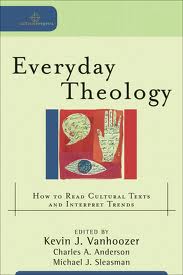
everyday theologyThe notion of culture has been on my mind for a long time now, but after joining the writing staff over at Christ and Pop Culture, I figured it was appropriate to do a little more digging on the notion of culture and cultural analysis. To that end I finally picked up a little volume edited by Kevin Vanhoozer Everyday Theology: How to Read Cultural Texts and Interpret Trends. While there are many volumes out that address the issue of biblical exegesis, there are few that address the crucial task of “cultural exegesis”, the practice of reading culture, interpreting the “signs of the times” (Matt. 16:1-3), in light of God and his revelation. That’s the gap that Vanhoozer and his co-editors (Charles A. Anderson, Michael J. Sleasman) aimed to fill. The volume opens with an programmatic essay by Vanhoozer in which he outlines a theory of culture, as well as a methodology for cultural interpretation. The essays that follow are examples of the method put into practice, with explorations of the check-out line, Eminem, Gladiator, and the blogosphere. In this post I’d like to take a (very) quick look at Vanhoozer’s view of culture and the way it works.

What’s a Culture? (Again)
Working primarily at the levels of what Roger Scruton has identified as “common culture” and “pop culture”, Vanhoozer’s discussion is fascinating and helpful many ways. One important point to note is his dependence on Dilthey’s idea that cultural studies observes the realm of human freedom, spirit, and creation v. that of nature. On this view cultural artifacts are concrete expressions of the human spirit by which our values, beliefs, and aspirations are given objective existence. As such, cultural artifacts such as songs, architecture, poetry, games, literature, and political practices “call not for explanation but for interpretation.” (pg. 22) Hermeneutics is key.

Another distinction he makes is the difference between culture and society; his chosen metaphor to understand the difference is hardware and software. Society is viewed more as the hardware of social institutions that gives shape to the shared life of a people. Culture he says, “is the software that determines how things function and how people relate in a given society. Culture is both system and practice, a means through which visions of the meaning of life (cultural worlds) are expressed, experienced, and explored through the diverse human products (cultural texts).” (pg. 27) So, police are institutional hardware that can be found across cultures, and yet an American “cop” is understood differently than a British “bobby” that usually doesn’t carry a gun. (pg. 23) Same institution, different cultural implementation.

How, then does Vanhoozer define culture? I won’t go into his very long and rewarding discussion, but in the end, Vanhoozer views culture “as a world and work of meaning. Better, culture is made up of “works” and “worlds” of meaning.” (pg. 26) It’s a work because it’s what humans do freely. Cultural objects are intentional creations–texts that communicate meaning. It is a world because these texts “create a meaningful environment in which humans dwell physically as well as imaginatively.” *(pg. 26)On this view,  popular culture is the shared context, practices, and “resources” that shapes and forms our way of life. (pg. 30)

How Does it Work?
The question remains, how does culture do this? Vanhoozer identifies 4 things that culture does to shape our lives.

  1. Culture communicates – First of all, culture is constantly communicating to us in ways both explicit as well as subtle, in a variety of formats, media, advertisements, and cultural artifacts. While there are hundreds of different specific messages aimed at a every discernable area of human life, the over-arching goal is to communicate a vision of the meaning of life, and the embodied form it should take. We mustn’t be naive the way this vision is communicated though. As Vanhoozer notes, “form and packaging” are just as important as content here. (pg. 28) Most cultural communication happens not through propositional argumentation but through allusion, suggestion, and connotation. It gives us pictures and metaphors (“life is like a box of chocolates”) that give rise to broader stories about the world we live in; subtle hermeneutical suggestions that shape the way we interpret our lives.
  2. Culture orients – This gives rise to the next function of culture: it orients us. By providing us with metaphors and models it gives us the inner logic by which we live our lives. “Life is like a baseball game”, “Life is like an episode of X show”, etc. These models also have “evaluative” and “affective” dimensions to them, in that they shape and form our loves and hates, our very sense of right and wrong. (pg. 29) Culture maps the world for us and creates a sense of mood by which we experience life. Moral and social orientation that we previously drew from family, community, and cult, we now draw from popular cultural texts such as movies, shows, song lyrics through which we construct the scripts of our lives. While How I Met Your Mother gives us a script about dating, childhood soccer-fields teach us about the nature of victory and competition. Importantly for Christians, Vanhoozer notes that while in the past culture gave us narratives of faith, we now more often find stories of “broken faith: defiance or anger at God; of fear of an indifferent or oppressive reality; of escape from sorrow over the absent God by finding joy in one’s immediate, mundane life.” (pg. 29)
  3. Culture reproduces -We need to understand that culture spreads. “Culture spreads beliefs, values, ideas, fashions, and practices from one social group to another.” (pp. 29-30) in the past through institutional force or colonization, but now it mostly happens through memetic reproduction. A “meme” is a “cultural unit” analogous to a gene in that it reproduces and passes itself on by means of imitation (mimesis). This could be anything from an idea, a fashion, phrase, song, or practice. The point is that cultural “programming” is spread from person to person, sort of like a virus, as people encounter each other and begin to copy or imitate the cultural behaviors that they see. This can happen institutionally in schools, or through parental instruction, but more often than not it’s happening informally all the time through everyday interactions with friends, online content, and media saturation.
  4. Culture cultivates – Finally, culture “cultivates”–it develops and grows. What does it grow? Well, recalling Dilthey’s point earlier, it cultivates the human spirit. By communicating and creating worlds for us to inhabit, metaphors to live by, or the basic orientation for our lives, culture develops our souls. It gives a vision of the meaning of life for our “hearts”–the seat our willing and acting–to desire and pattern itself against. “In short, culture cultivates character traits–the habits of the heart–and in doing so forms our spirit so that we become this kind of a person rather than that kind.” (pg. 31) The point isn’t that we are helpless against the onslaught of culture’s imagination or affection-shaping power. It is rather that we need to understand that it’s not a question of whether a particular show is educational, but what’s the lesson being taught? (pg. 31) Prolonged exposure to cultural texts presenting us with similar narratives and worlds shape our self-understandings and create a sort of “second nature” for good or ill. (pg. 32) Culture is a spirit-forming reality.

Because of this, Vanhoozer calls Christians to wake up and not simply walk about in culture like “sleep-walkers” unaware of the worlds which they are being invited to inhabit. (pg. 32) We need to be discerning readers both of Scripture and of culture, determining which is exerting a greater force on our hearts, and for what end. What vision of the good life are we buying into? What narratives and metaphors have we adopted? Which works and worlds dominate our imagination? The various little texts provided by marketers and other meaning-makers in pop culture, or the works and world of God as found in his Text?

Soli Deo Gloria

Rob Bell At the Areopagus (CaPC Feature)

Seth T. Hahne is the man.

Seth T. Hahne is the man.

Paul’s debate with the philosophers at the Areopagus remains a favorite story of mine. The Areopagus, or Mars Hill, in Athens was the cultural and intellectual center of the ancient world, so when the apostle Paul was asked to speak there on this strange new teaching about “Jesus” and “the Resurrection”, he spoke with great erudition and made an appeal for the Gospel tailored to his ‘religious’ but intellectually skeptical audience.

What We Talk About When We Talk About God is Rob Bell’s Areopagus speech.

You can read the rest of my feature review of his book HERE at Christ and Pop Culture.

Soli Deo Gloria

PS. It’s why I haven’t written anything this week and might not write much else.

For the Love of God Read Your Bible This Year

The title of the blog’s a little cheeky.

On one level I’m quite serious–in order to love God better, it’s a good idea to read your Bible this new year. Now, don’t get me wrong, I’m not saying that reading your Bible will silver-bullet style immediately kill sin and light up your heart for Jesus. I mean, the Holy Spirit could do that, but typically not so much. Instead, you might think of it more like a balanced diet or vitamins. Eating one good meal or taking 2 or 3 vitamins won’t help much if 99% of your diet sucks. Still, day after day, week after week, month after month, getting the right nutrients and supplements will improve your health.

bibleIn a somewhat similar fashion, daily engagement with the scriptures, starting with something like just 5-10 minutes a day will, over time, give you a greater appreciation for the story of Bible, knowledge of God, Jesus Christ, your sin, the power of the Spirit, the sweep of salvation, and the Gospel message that saves. And really, that’s what changes your heart, what fills it with love for God in light of who He is and what He has done–the Spirit applying the Gospel of Jesus to your heart as you engage with it. Diving deep into the Gospel, meeting Jesus, is what will save you from the million different ways you try to sinfully save yourself throughout the day (money, sex, power, busyness, etc.). Being daily reminded of his glory, of his patient dealings with Israel, the eternal scope of his love, the suffering and triumphant Savior, the falseness of idols in comparison with his matchless beauty–all of these things are what will, over time, overwhelm sin with love.

Now, many of us know this but we struggle knowing how to go about reading our Bible more each year. We start out thinking we’re going to read it through cover to cover, but right about the time the Israelites are wandering in the desert, dying of thirst, we give up, or wish we could join them. Leviticus seems like it was written as part of the judgment on that first sinful generation.

Part of the problem is that we don’t have a guide, or a good plan to lead us through the wilderness sections of scripture, or even to know what we should be enjoying in its oases. We want to, but we don’t know where to start, and when we start, we don’t know what we’re reading. The spirit is willing, but the flesh is weak. O who will save me from this reading of death?!

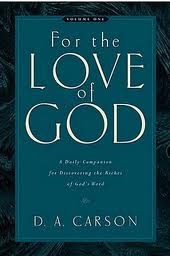
Love of GodEnter D.A. Carson
This last year my wife and I went through the first volume of D.A. Carson’s For the Love of God daily devotional based on the Murray M’Cheyne reading program and it’s been great. Robert Murray M’Cheyne designed a daily reading program that, at about 4 chapters a day, gets you through the New Testament and Psalms twice and the Old Testament once in the course of a year. So, for instance, January 1 begins with Genesis 1, Matthew 1, Ezra 1, Acts 1. It goes on from there. Originally the first two columns were labeled “family” intended to be read with the whole family, and the second two columns were “private” for personal devotion. It’s not necessarily the lightest program, but the arrangement is much better than most of the chronological reading programs or even some of the mixed year-long Bible programs.

With Carson’s devotional, you get a about a page of highly-readable biblical, theological, and pastoral commentary on one of the chapters by a top-notch theologian and scholar. Really, I compare the notes you get in this little devotional to the top-level commentaries sometimes and it’s amazing how he is quickly and, in an understandable fashion, making available the best scholarship and then moving to apply it to your daily life. I can’t begin to tell you how much I have enjoyed and personally benefited from both the daily Bible reading and Carson’s commentary. The arrangement of the chapters is helpful because it keeps you going through whole books of the Bible as they were intended to be read, instead of the “open and point” method that lands you reading a random chapter in Zechariah, leading you to think the prophet was on acid. Also, usually at least 2 of the chapters are in non-boring books, so you never have to truck through Leviticus all by itself.

No Sweat
Many of you might be intimidated at the thought of 4 chapters a day. Realize that’s only about 20 minutes total which can be broken up throughout the day if you have to. Still, that’s about 2% of the time you probably spend on facebook in a given day, so you have more time than you think. Also, you may choose to simply go through one book of the daily readings and whatever chapter Carson happens to be commenting on that day. Know that you might might miss a day. Or a week. Or a month. That’s fine, but just get back to it when you remember. When I asked my wife if we wanted to do volume 2 this year she said yes, because even though she didn’t get to it every day, she still had read more of her Bible this year than in any year prior. Sounds good to me.

Finally, if you’re worrying about dropping that 10 bucks on something you haven’t cruised through, or period, then you should know that D.A. Carson’s blog over at the Gospel Coalition is actually just his daily devotion. This last year they’ve been posting through volume 2, so next year will be volume 1 again. So, you can go check it out, or just use the blog as your daily devotional. You can even do it on your computer at work (on your break or lunch, of course).

The point of all of this is, for the love of God, read your Bible this year. It’s worth it and it just became a whole lot easier.

Soli Deo Gloria

Top 5 Reformedish Books of 2012

Everybody else is doing one so I figure I will too. I must note that my “Top 5” of 2012 were not all published in 2012—I may just have happened to read them this last year. Also, they appear in no particular order:

  1. A Shot of Faith to the Head: Be a Confident Believer in an Age of Cranky Atheists by Mitch Stokes – I’ve already reviewed this book here. Read it if you want the run-down.
  2. union with christUnion with Christ: Reframing Theology and Ministry for the Church by J. Todd Billings – Union with Christ is an essential theme and doctrine in Christianity, particularly within the Reformed tradition. In conversation with Augustine, Calvin, Bavinck, Barth, and others, Billings does some serious, but readable theological work, expounding the deep implications for theology and ministry of our union with Christ. For under 200 pages Billings’ scope is wide, covering everything from salvation to theological epistemology, the doctrine of God, Christology, the Lord’s Supper, social justice, and paradigms for mission. It also functions as an excellent, irenic introduction Calvin and the Reformed tradition as a whole. I cannot recommend this book highly enough.
  3. Meaning of MarriageThe Meaning of Marriage by Timothy and Kathy Keller – What can I say? It’s a Tim Keller book on marriage. That means it’s going to be well-researched, relevant, biblical, practical, theological, very readable, and, of course, gospel-centered. I’ve recommended this book to just about everybody: college students, engaged couples, newly-weds, oldly-weds, pastors, and marital experts. The great thing is that what you learn in this book won’t just teach you about marriage, it will teach you about all of your relationships, and most of all, the way the good news of Jesus Christ really does change everything.
  4. Lord and servantLord and Servant: A Covenant Christology by Michael Scott Horton – While this book was probably one of the most fun for me to read this year, it was also one of the nerdiest. Lord and Servant is the second in Horton’s quadrilogy of dogmatics and maybe the most important. In this series, he sets out to explore various classic theological topics letting the biblical notion of covenant–with its all-important Creator/creature distinction—and the eschatological story-line of the Bible shape the discussion. Much like the others, he’s working with some very high level theological and exegetical tools, interspersing and engaging with contemporary philosophical theology (Radical Orthodoxy), biblical studies (N.T. Wright), and patristics (Irenaeus) with insights from Calvin and the post-Reformation dogmatic tradition. As the subtitle indicates the end-goal of the work is Christology, but Horton does so much more in this volume with significant sections on: the doctrine of God, anthropology, Christology proper, and the contemporary atonement discussion. Horton has some of the finest discussions I’ve seen on the contemporary doctrine of God debates, as well as a thoroughly Reformed proposal for understanding the atonement in its fullness that beautifully incorporates insights from other traditions, as well as from its critics. In fact, the atonement discussion is worth the price of the book alone. Although this is admittedly not easy reading, for anybody with a taste for serious theology, it is a must.
  5. New Testament Biblical TheologyNew Testament Biblical Theology: The Unfolding the Old Testament in the New by G.K. Beale – It was almost a tie for me between this volume and Beale’s earlier one The Temple and the Church’s Mission: A Biblical Theology of the Dwelling Place of God. At a whopping 967 pages of text, excluding indexes, it is hard to convey the truly colossal accomplishment of Beale’s magnum opus. Beale doesn’t set out to write your typical New Testament Theology with summaries of the Pauline corpus, or the Gospels, with a minor constructive chapter at the end. Instead, Beale gives us a truly Biblical theology focusing on the major redemptive-historical storyline of scripture, showing the way the promises in the OT of a New Creation Kingdom are inaugurated and fulfilled through the life, death, and resurrection of Jesus Christ. Not only does he trace the fulfillment of the OT storyline in the NT, but he does so in light of Second Temple Jewish background material, and with an eye towards contemporary theological discussions. On top of it all, this stuff preaches!! Pastors, seminarians, biblical scholars, and students would do well to purchase this and work their way slowly through it, page by page. There is a wealth of biblical riches here.
  • Honorable Mention: Christianity and Liberalism by J. Gresham Machen – Written at the height of the Fundamentalist/Modernist controversy, Machen aims to set out a clear choice between classic Christianity, the faith essentially shared for 2,000 years across Protestant, Catholic, and Orthodox lines, and that of the Modern theological liberalism that was prevailing in his day. I finally hunkered down to read it these last couple of weeks and have been stunned at the relevance this work still has nearly 90 years after it was written. Get this book, if only for the fact that you can download it for free.

So if you’re looking for something to read in the 2013 year, you may want to start with one of these. All of them will faithfully point you to Christ and help you love God with all of your heart, soul, strength, and mind.

Soli Deo Gloria

P.S. There are a couple that probably should be on here, but this thing was taking too long so they’ll make next year’s: Tim Keller’s Center Church and Ross Douthat’s Bad Religion.

Quick-Blog #8 Tim Keller on the Way the Gospel Frees Us to Witness

I’ve been reading Tim Keller’s new book on church, Center Church and it is everything they say it is: amazing, rich, deep, helpful, game-changing, etc. One gem of a chapter so far is chapter 3,”The Gospel Affects Everything”, on the way that the Gospel has deep implications for all of life–it’s not just the “ABCs but the A-Z” of Christianity. In one section Keller takes the time to outline the way that the Gospel gives us a third way to think about various subjects (family, human authority, community, sexuality, etc.) It’s not moralism, nor relativism, but a different thing entirely.

One little chunk in particular chunk that caught my attention was the one about witness. Here’s what he says:

The moralist believes in proselytizing, because “we are right, and they are wrong.” Such an approach is almost always offensive. The relativist/pragmatist approach denies the legitimacy of evangelism altogether. Yet the gospel produces a constellation of traits in us. We are compelled to share the gospel out of generosity and love, not guilt. We are freed from the fear of being ridiculed or hurt by others , since we have already received the favor of God by grace. Our dealings with others reflect humility because we know we are saved by grace alone, not because of our superior insight or character. We are hopeful of everyone, even the “hard cases,” because we were saved only because of grace, not because we were the people likely to become Christians. we are courteous and careful with people. We don’t have to push or coerce them, for it is only God’s grace that opens hearts, not our eloquence or persistence or even their openness (Exod 4:10-12). Together, these traits create not only an excellent neighbor in a multicultural society but also a winsome evangelist. –Center Church, pp 49-50

For Christians looking to be salt and light, witnesses in the culture who don’t downplay the Gospel, or add unnecessary offense to it, Keller points us to the way the Gospel itself is the answer to evangelism–it is the power of salvation unto all who believe, (Rom 1:16) and even changes how we invite people to believe.

Take some time to think through your approach towards witness and evangelism. Ask yourself some questions:

Am I controlled by fear?
Is my approach humbly confident, or nervously arrogant?
Are their people in my life I’ve given up on because they’re “hard cases”?
Am I a good neighbor to those with whom I disagree?

Pray over these and see how God might be calling you to either move out of moralist arrogance, or relativist indifference. Most of all, meditate on the Gospel–let Jesus do the work of turning you into a witness.

Soli Deo Gloria

Book Review- A Shot of Faith (to the Head): Be a Confident Believer in an Age of Cranky Atheists by Mitch Stokes

Mitch Stokes. A Shot of Faith (to the Head): Be a Confident Believer in an Age of Cranky Atheists. Nashville: Thomas Nelson, 2012. 252 pp. $16.99. ($11.35 on Amazon)

In the last few years, with the rise of the New Atheism, authors like Dawkins, Dennett, Harris, and Hitchens have made popular Christian apologetics popular again. A veritable cottage industry of “responses” and rejoinders have been churned out by top-notch scholars (and some hacks too) either presenting arguments for Christianity or attempting to dismantle the claims of the New Atheists. While a number of these books are well-written and quite valuable, none of them quite accomplish what Mitch Stokes’ has in his recent work, A Shot of Faith to the Head: Be A Confident Believer in an Age of Cranky Atheists.  

He Knows What He’s Doing

What makes this book different? The key is that Stokes knows what he’s doing and, more importantly, what he isn’t. So often works of apologetics try to cover everything and don’t end up adequately covering anything.  Stokes knows better. He’s narrowed his focus, honed in on the key issues, and goes to work on them in a humorous, engaging, and readable fashion. What are those issues? The relationship between faith and reason, science, and the problem of evil.

Stokes is particularly qualified to tackle these. Before taking up his position as the Senior Fellow of Philosophy at New St. Andrews in Moscow, Idaho he got his MA in religion at Yale under Nicholas Wolterstorff, then went on to get his Ph.D. at Notre Dame under Alvin Plantinga and Peter Van Inwagen. No big deal–just three of the foremost philosophers of religion alive. And, if that weren’t enough,  prior to entering the philosophy game, he got an MS in mechanical engineering. The man knows what he’s talking about.

Introducing Reformed Epistemology–You’re Welcome

One way of describing Stokes’ project is translating Alvin Plantinga for everybody. Plantinga, while being, in my opinion, the most brilliant Christian philosopher working in the analytic tradition today, has not gone out of his way to make his philosophical genius widely accessible to the general reader. Don’t get me wrong, I think he’s hilarious and pretty clear as far as analytic philosophers go. Let’s be honest though, the average layman or pastor won’t take the time to read all 500 pages of Warranted Christian Belief  even if it’s worth it (which it is). Stokes takes the best of the Reformed epistemological approach developed by Plantinga and Wolterstorff (don’t worry, you don’t have to be a Calvinist to buy into it) applied to various issues in philosophy over the last 40 years and condenses it into short, winsome, witty, and clearly laid-out chapters uncluttered with small print or symbolic logic.  He also includes helpful “For Your Arsenal” summary points at the back of each chapter for easy recall of the information.

This isn’t to say that he merely repeats Plantinga, or offers nothing new–he does, especially the way he frames the discussion historically, concretely grounding these ideas in conversation with Hume and Locke on down to W.V.O. Quine. Still, even if translating Plantinga were all he did, this would be crucial because in engaging with both believers and unbelievers with the Gospel over the last couple of years, I’ve come to realize that the issue of epistemology is one that is too often ignored, or simply botched in most popular works on apologetics even though it lies at the root of so many of these discussions. By focusing his sights on the epistemological questions, Stokes really is aiming to give readers a “shot of faith to the head.”

So how does he actually do it? Stokes starts out by explaining and debunking the evidentialist objection to belief in God, that there isn’t sufficient evidence to “prove” he exists. He shows that, in fact, evidentialism is self-defeating–some beliefs must be basic, taken without reasons or evidence, otherwise reasoning itself cannot get off the ground. In fact, he pushes on to show that a demand for arguments and “reasons” for all of our beliefs, actually leads us to the conclusion that atheism itself is self-defeating. In place of the rationalism and evidentialism so commonly assumed by skeptics, Stokes proposes an alternative definition for what it means for a belief to be rational, that it is the product of “properly-functioning cognitive faculty operating in the appropriate environment” (read as good thinking equipment), like sense-perception, memory, and reason; this is a Reidian, reliabilist approach to epistemology as recovered and retooled by Plantinga and others. Stokes goes on to show that belief by way of testimony, or faith, is actually another valid way of coming by our beliefs, and that it is perfectly rational to believe in God by way faith, testimony, or “taking God at his word.”  Pressing a bit further, Stokes makes the very Plantingan point that if the “Christian epistemic story” is true, then the Christian can believe in God in a way that is basic and rational. Basically, in order to show that faith is irrational, you have to prove Christianity false first.

Now, none of these considerations means that he discounts reason or even the arguments for the existence of God–he actually has a very helpful “intermission” section dealing with the nature of the arguments and the problem of the burden of proof. Instead, Stokes shows that these arguments are helpful in supplementing faith and in dealing with “defeater” beliefs.

Defeaters and Highlights

What’s a “defeater”? A defeater is basically a reason to ditch a belief we gained previously in light of new evidence to the contrary, or that casts suspicion on the way we arrived at our belief. This is why Stokes moves on from his general discussion on faith and reason to consider the two main defeater beliefs for God out there today: science and the problem of evil.

I won’t review these two sections extensively, but some highlights include:

  • Helpful corrections of the historical record when it comes to the “history of the warfare between science and religion.” (Stokes has written short biographies of both Galileo and Newton so he’s well-equipped to handle this.)
  • A good discussion of the difference between the unnecessary “god of the Gaps” who intervenes from time to time to fix things that science can’t figure out and the God of the Bible who supervenes over and upholds the created order.
  • A much-needed guide to distinguishing between methodological naturalism, philosophical naturalism, and the scientific provincialism that convinces so many that accepting the former is predicated by the latter.
  • A fascinating historical and philosophical analysis of the rise of science, the way science actually proceeds, and how theism gives us confidence to engage in scientific study given belief in the Image of God and the rationality of a universe created by God.
  • Numbers. Stokes has an absorbing discussion on the nature of numbers that made even a math-hater like me wonder at the beauty of a mathematically-ordered universe–and how bizarre the existence of such a one truly is unless the world was created by a rational God.
  • A clean introduction into the “problem of evil” discussion that’s been going on in academic philosophy since the 1960s.
  • Short, but clear, Plantingan responses to both the logical and the probabilistic versions of the problem of evil, using both the Free Will Defense with respect to the logical, and a sober reflection on the epistemological limitations of finite thinkers in relation to the probabilistic.
  • A theistic turning of the tables, using the insights of the moral argument to point out that, without God, there is no absolute, moral standard, in which case the objection from evil can’t even get off the ground.
  • A bold statement of the uncommon yet undeniably appealing O Felix Culpa (Happy Fault) theodicy. (I won’t blow the surprise for you.)

Conclusions 

To sum up: Mitch Stokes has done the church a great service with this book.  By making available some of the best insights of the Christian community’s academic philosophers, believers who read this can be humbly confident that their faith in the Gospel is not blind, irrational, or illegitimate. Rather, it is in fact capable of standing up to the fiercest intellectual objections. I highly recommend this book to doubting believers, inquisitive skeptics, and especially pastors who want to be able to lovingly and persuasively commend the Gospel to the both groups.

Soli Deo Gloria