Mere Fidelity: The Transfiguration

Mere FidelityAnd after six days Jesus took with him Peter and James, and John his brother, and led them up a high mountain by themselves. And he was transfigured before them, and his face shone like the sun, and his clothes became white as light. And behold, there appeared to them Moses and Elijah, talking with him. And Peter said to Jesus, “Lord, it is good that we are here. If you wish, I will make three tents here, one for you and one for Moses and one for Elijah.” He was still speaking when, behold, a bright cloud overshadowed them, and a voice from the cloud said, “This is my beloved Son, with whom I am well pleased; listen to him.” When the disciples heard this, they fell on their faces and were terrified. But Jesus came and touched them, saying, “Rise, and have no fear.” And when they lifted up their eyes, they saw no one but Jesus only. And as they were coming down the mountain, Jesus commanded them, “Tell no one the vision, until the Son of Man is raised from the dead.” And the disciples asked him, “Then why do the scribes say that first Elijah must come?” He answered, “Elijah does come, and he will restore all things. But I tell you that Elijah has already come, and they did not recognize him, but did to him whatever they pleased. So also the Son of Man will certainly suffer at their hands.” Then the disciples understood that he was speaking to them of John the Baptist.

(Matthew 17:1-13)

The Transfiguration is one the most enigmatic and suggestive episodes in all the Gospels. This week on Mere Fidelity, Alastair, Andrew, and I had a truly fascinating conversation on the Transfiguration from biblical and theological perspectives. It’s one of my favorite discussions we’ve had in a while. I hope this conversation is as much of a blessing and challenge to you for it was for us.

Soli Deo Gloria

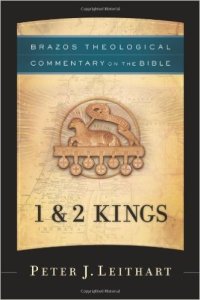
1 And 2 Kings as Wisdom Literature

kingsOver and over again, I’ve been convinced that the individual passages and books of Scripture only yield their full fruit when read in the context of the whole canon. If individual words take their meaning and nuance from whole sentences, sentences from paragraphs, and paragraphs in the sweep of larger arguments, then assuming the unity of the Scriptures, individual books can only take their full and proper meaning from being read against the rest of Scripture. Peter Leithart takes this even further, by showing the way that even the type of literature we understand a book to be shifts when set in conversation with the rest of  Scripture.

In his illuminating introduction to his Brazos commentary on 1 and 2 Kings–a clear example of biblical narrative if there ever was one–Leithart suggests that it can profitably read as wisdom literature along with Proverbs and Ecclesiastes:

The book of Kings can thus be fruitfully read as wisdom literature, albeit in a rather counterintuitive way. Proverbs describes wisdom as the way to life and prosperity: those devoted to Lady Wisdom are told that “riches and honor” as well as “enduring wealth and righteousness” come with her (8:18). According to Proverbs, there are stable patterns in the world, a moral cause-and-effect overseen by a just God, who rewards those who fear him. Yet, much of the wisdom literature of the Old Testament teaches an apparently contradictory message. Job is blameless in all his ways, yet suffers such excruciating loss that he concludes that Yahweh has abandoned him, and Ecclesiastes seems to directly challenge Proverbs with its recurring message that the wise and the foolish are both teetering toward the grave (Eccles. 2:14—16). Proverbs and Ecclesiastes are not contradictory, but rather highlight two poles of the biblical understanding of wisdom: if Proverbs teaches that Yahweh operates by a moral calculus, Ecclesiastes teaches that this calculus is as much beyond our grasp as Yahweh himself is, and as a result we experience the world as “vapor” (often mistranslated “vanity”) that slips away when we try to understand or control it.

The book of Kings might be read as a historical endorsement of the viewpoint of Proverbs. Good and faithful kings achieve unbelievable wealth and notoriety (Solomon) and are miraculously delivered from enemies (Hezekiah) (2 Kgs. 18-19). Bad kings brace themselves for stinging rebukes from prophets, die randomly in battle (1 Kgs. 22:34-36), and are devoured by wild dogs and scavenging birds (14:11; 2 Kgs. 9:36-37). Though the judgment of the wicked is doubtless a strong theme in 1-2 Kings, the overall effect of the narrative is the opposite, closer to Ecclesiastes than to Proverbs. Wicked kings are delivered as frequently as righteous ones: Ahab defeats the Arameans twice (1 Kgs. 20) before falling to a “chance” Aramean arrow, and Ahabs son also defeats the Arameans twice (2 Kgs. 6-7). Wicked Jehoash of Israel trounces righteous Amaziah of Judah (14:8—14), and Yahweh leads Israel in triumph over Aram during the reigns of Jehoahaz and the equally wicked Jeroboam II (13:22-25; 14:23—27). The book of Kings, especially 1 Kgs. 1-11, narrates the limitations of royal wisdom, while the book as a whole demonstrates the wisdom of Ecclesiastes, a wisdom that finds history elusive, unfathomable, uncontrollable. In its treatment of wisdom, then, 1-2 Kings is prophetic literature, demonstrating that wisdom is essential yet ultimately ineffectual to secure the health and salvation of Israel. –1 & 2 Kings, Brazos Theological Commentary on the Bible, pg. 19

Soli Deo Gloria

Language For God in Patristic Thought by Mark Sheridan

patristicStudying Christian history, it’s funny to see the way certain verses take on out-sized significance for how the Bible is read and the faith is interpreted in the tradition. For instance, Etienne Gilson has traced the way a certain “metaphysics of the Exodus” developed around the declaration of the LORD, “I AM who I AM” (Exod. 3:14).

In his study of Language for God in Patristic Tradition:Wrestling with Biblical Anthropomorphism, Mark Sheridan shows that the verse, “God is not as man to be deceived nor as the son of man to be threatened” (Numbers 23:19) and an early (mis)rendering Deuteronomy 1:31 (“As a man takes on the manners of his son”) were two of the key texts that shaped and gave rise to ancient Christian methods of interpreting Scripture. Following the tradition of Philo of Alexandria and others, the Fathers had an explicitly theological method for reading Scripture, especially as it pertained to speaking of the ways and works of God in human language in ways “appropriate” and “fitting” to the divine being. This especially concerned the ascription to God of things like human hands, feet, physical activity (anthropomorphism) as well as human emotions like delight, surprise, repentance, or even anger (anthropopathism), which were particularly problematic for the Fathers.

Sheridan traces the various Scriptural and philosophical intuitions shaping the Fathers of the early Church from essentially three sources: Greco-Roman reading strategies, Hellenistic Jewish appropriations, and finally, the New Testament texts themselves.  First comes the strategy of allegorical interpretations developed by the Hellenistic exegetes in order to save texts like Homer’s Illiad and Odyssey from the moral critiques of the philosophers like Xenophanes, who took aim at the questionable morals and oh-so-human depictions of the gods in such works. Hellenistic Jews like Philo redeployed them in order to read the Old Testament narratives and Law for apologetic and edificatory purposes. Later on, seeing warrant in Pauline and New Testament allegorical and typological readings of the Old Testament, the Fathers drew on the Philonic tradition in order to aid them in their own Christological and moral readings of Scripture.

Having established this groundwork, Sheridan examines the way the Fathers treated key problem texts such as the creation narratives, patriarchal misconduct, or even the Divine command in the Conquest of the Holy Land. He also devotes a lengthy chapter to patristic interpretation of the Psalms, both for their anthropopathic and anthropomorphic language, as well as their morally compromising character in the imprecatory language. Finally, he ends with some comparisons between modern and ancient strategies for reading Scripture, and a very helpful, summary appendix on the theological structures and presuppositions to patristic interpretation. In a sense, it sort of sums up the work as a whole.

First of all, some positives. The book is clean, clear, and well-researched. Sheridan’s obviously an expert and he’s done a marvelous job setting out his theses from the primary sources, focusing on some of the key patristic figures such as Chrysostom, Augustine, and especially Origen. Second, his commentary is uncluttered, to the point, and informative. Next, Sheridan’s great at not simply focusing on the shape of the reading strategies, nor simply doing history for antiquarian interest. He cuts to the heart of the theological issues involved by returning to the question that concerned the Fathers which still concerns us today: what are we to say about God in light of the Scriptures? What is fitting to ascribe to him? These are not easy questions to answer but Sheridan helpfully makes available patristic perspectives that could prove fruitful for current generations to adopt, redeploy, or at least consider as they do their own wrestling with the text, as every generation must do afresh.

On the negative side, I had a couple complaints. First, I found it a bit odd that while the Fathers’ concern with how to treat ascriptions of anger or violence to the Godhead seems to be a special concern, there is no treatment of one of the clearest texts on the matter, Lactantius’ De Ira Dei (On the Anger of God). You can’t treat everything, but that text also might undermine the fairly consistent portrait of the Fathers’ handling of the issue. Second, Sheridan’s own theological interests come out towards the end chapters comparing Ancient and Modern strategies for reading the Bible, especially with respect to texts like the moral failures of the patriarchal narratives, or the conquest narratives, judgment, and so forth. He’s fairly critical of the modern, “literalist” approaches, clearly favoring ancient and, to be honest, rather moralizing interpretations. That said, he gives a fairly thin theological argument in favor of his preference beyond descriptively and unsympathetically explaining modern approaches and saying something like, “that doesn’t seem like enough does it?” Rarely does he theologically argue against modern concern for issues of historicity, sensitivity to genre, and so forth.

In general, though, I came away both more appreciative and critical of the Fathers’ interpretive efforts. Their theological concerns are not always our theological concerns, nor are their prejudices our prejudices. When reading Genesis, we’re not typically afraid that our hearers will think God has actual, physical hands he’s shaping Adam with. We’re worried about evolution and science, while the Fathers were worried about a fall back into the mythology their hearers had just come from, and so rightly aim to highlight God’s distinction from the gods they knew. This is corrective and instructive. Popular preaching in many churches isn’t as concerned as it might be that people draw the wrong impression from the anthropopathic portrayals of God’s ways with us. We fail to consider what it means that “God is not a man.” What’s more, for those interested in Christ-centered preaching, some of the Christological readings Sheridan draws our attention to are simply fantastic. Chrysostom, in particular, comes out shining like a star. Origen, as well, rose in my admittedly prejudiced estimation.

All the same, though I’m quite allergic to modernist, chronological snobbery, I simultaneously came away more appreciative of some of the advances of in modern hermeneutics by comparison. We simply can’t do the same kind etymological theology that was common at the time. Taking seriously historical context, comparative religious backgrounds, and more sober philological work has curbed our tendency to seek out “hidden meanings” often divorced from the literal sense of the text (which not all Fathers did!). And this is a good thing. I don’t think turning the story of Hagar and Sarah into an allegory of moving from the study of logic and rhetoric to the deeper study of philosophy is an adequate reading of the text, as some of the Fathers did. Nor, for all their problems, do I think turning the conquest narratives into a treatment of the conquest of the vices of the soul a reading that respects the texts as the historical narratives as they were given to us.

In sum, the Fathers were careful, sensitive, educated, and time-bound interpreters of Scripture, whose readings and ways of reading are worth our time and attention. They are our spiritual and theological Fathers worthy of our respect, consideration, and apprenticeship, though not our slavish imitation.

Soli Deo Gloria

Are We Really Just Like Those Who Embraced the Gentiles?

Dr. J.R.D. Kirk says he has finally “come out” as fully accepting and affirming of non-celibate, gay and lesbian Christians within the community of the Church. Which, he himself seems to note, should really come as a surprise to no one after reading his recent posts or his scholarly work on the subject.

As it turns out, his arguments for this decision are fairly unsurprising as well.

To his credit, Kirk says that none of the verses in the Old or New Testaments go his way on this issue. They’re all fairly against same-sex erotic activity in a general way, not merely with reference to specific practices like idolatry or pederasty. So, he had to find another paradigm for making theological decisions that takes us beyond, or even formally contrary to Scripture. He did that in the paradigm of the inclusion of the Gentiles.

In inviting in the Gentiles to the Church, the apostles and early Jewish believers had to transgress and go beyond a lot of clearly written commands. In a nutshell, they did so because of their experience of the Spirit in the lives of these Gentile believers who had been “washed” and made pure. Think Peter and Cornelius (Acts 10). This is really not a great summary, so you should go read the article, make sure I’m not misrepresenting him, and then come back for the rest of this.

I bring this up, not because I have any particular beef with Dr. Kirk–he seems like an amiable fellow. Still, his argument has been shared widely, and likely comes as a welcome novelty to some looking to rethink their position on this existentially challenging issue. So, I figured it would be worth commenting on.

Now, having written on this very argument before, I suppose it’s alright if I begin by just quoting myself on a very similar argument a while back. Then, I’ll add a few points just to deal with some of Kirk’s additional materials. Finally, as always, this is far from an extensive treatment of the issues involved. I’m trying to do the very limited work of seeing whether Kirk’s argument does what he says it does.

Six Reasons For Thinking This is Not Like the Gentile Thing

I’m not convinced Peter’s encounter with Cornelius is an adequate model for Christians reconsidering their position on same-sex relationships within the Christian body. Ironically enough, it highlights a number of reasons for caution against breaking with 2,000 years of the Church’s scriptural teaching on this point:Peter Baptizing the Centurion Cornelius by Fra...

1. No New Revelation – One clear distinction between the two situations is that no special revelation has happened with respect to same-sex relationships. Peter wasn’t transformed by a mere experience of the “sincere faith” of the Other he had despised, but was given a supernatural revelation and confirmation in the form of a vision and the Spirit empowering Cornelius with visible, supernatural signs, so that as an authoritative apostle, he could testify to God’s acceptance of the Gentiles by faith. As far as I know there aren’t any apostles, witnesses of the risen Christ, walking around having experienced new, authoritative revelation on this issue. We should be careful not to act is if there has been.

2. Sexual Attraction is Not Race – Without fully elaborating on this point, the analogy problematically presumes a Biblical equivalence or adequate similarity between sexual attraction and race or ethnicity. I’ll just say that even when inborn, sexual attraction is not equivalent to race or ethnicity. My Arabness is not something I act on in the same fashion as my sexual and romantic inclinations. That is an increasingly common category mistake that does injustice to the complexity of both race and sexuality, especially within a Biblical framework.

3. There Was a Plan For Cornelius – What’s more, the Scriptures have always testified to the future-inclusion of the Gentiles as Gentiles within the covenant people of God. Passages could be multiplied ad nauseum, but Isaiah presents us with a vision of God’s plans for the nations:

It shall come to pass in the latter days, that the mountain of the house of the Lord shall be established as the highest of the mountains, and shall be lifted up above the hills; and all the nations shall flow to it, and many peoples shall come, and say: “Come, let us go up to the mountain of the Lord, to the house of the God of Jacob, that he may teach us his ways and that we may walk in his paths.” For out of Zion shall go the law, and the word of the Lord from Jerusalem. (Isaiah 2:2-3)

Being a Gentile was never sinful per se, but only as it was connected to idolatrous practices that inevitably went along with being outside the covenant. In other words, the Israelites were commanded to be holy, different from the Gentiles because of election and the unrighteousness of Gentile actions, not because non-Jewishness was inherently unrighteous. What’s more, within the Old Testament, there were covenantal purposes for Israel remaining distinct and separate from the Gentiles precisely because the election of the Jews would eventually be for the sake of the Gentiles (Gen. 12:1-3).

Peter’s experiences with Cornelius then, are a personal, experiential confirmation of a movement already foreshadowed in Scripture. So any modification revealed does not come as a radical disjunct, but comes as part of the surprising fulfillment of what is already written.. As difficult as it is to accept, there is no such prophecy, foreshadowing, or hinting that homosexual behavior is something that will one day be sanctioned and blessed for God’s children.

4. The 1970s Were Not Eschatological – Following this is an insight from Kathryn Greene-McCreight: the Sexual Revolution is not a new eschatological event. Cornelius’ inclusion, along with the rest of the Gentiles, was brought about by the eschatological turning of the ages. In the life, death, and resurrection of Jesus Christ, the particular covenant with national Israel was fulfilled, pouring forth into the always-intended blessing of Gentiles joining Jews in being built up into Christ. (Rom. 4; 15:8-12; Gal. 3; Eph. 2:11-22) Nothing similarly climactic has happened in salvation history to suggest a new administration of God’s covenant is in place, which includes behaviors clearly forbidden to God’s people in both Old and New Testaments. In that sense, unlike Peter, we’re not standing in a eschatologically-new situation calling for a radical revision of Christian theological ethics. The 1970s were a big deal, but not that big.

5.  About Those Conversions… –  Which brings me to the theological repentance of Paul, Augustine, and Luther. Paul’s conversion of attitude towards the Gentiles was, as with Peter, the result of scales falling from his eyes in light of the Risen Christ, to see past his own religious nationalism. It was an authoritative revelation that shifted his perspective, not a new experience of diversity. Augustine changed his mind on a number of issues, but in his Retractions you see that it’s constantly a process of going back to the Word and letting it correct his earlier Manichaeism and Neo-Platonism. Luther’s theological reformation was an attempt to recover what he believed had actually already been revealed, but was covered over by years of scholastic teaching.

While Paul’s conversion was qualitatively different from Luther’s and Augustine’s, all were transforming encounters with God’s Word, Incarnate, written, or both. Paul’s was inspiration, and we could say Augustine and Luther’s experiences were illumination of what had already been said. We need to make sure that when we change our minds about something on the basis of “new biblical insights, movements of the Spirit, and new friends” we don’t turn God into a confused deity who contradicts himself because he’s changed his mind.

6. Already Included–In Christ – Finally, and this one is probably the most crucial to understand, the New Testament already includes those with same-sex attractions on the same grounds as it does everybody else–union by faith with Christ whose shed blood purchases forgiveness and whose Holy Spirit sanctifies us from all uncleanliness. The Gospel is for everyone. Really. God’s family is open, adopting new sons and daughters with all sorts of struggles and backgrounds. I too shudder at the idea of calling impure that which Christ calls clean. I too think the grace of God extends far and wide–if it didn’t, I wouldn’t stand a chance.

What I also don’t want to do, though, is blunt the Gospel and its promise of new Creation that says, “And such were some of you. But you were washed, you were sanctified, you were justified in the name of the Lord Jesus Christ and by the Spirit of our God.” (1 Corinthians 6:11) I would hate to look at my brother struggling with same-sex attraction and say, “Yeah, that’s true of everything except your sexuality.” No, the Gospel gives us a better, if not always easier, hope than that.

On the Presence of the Spirit

Alright, what else is there to be added?

A few points. First, it needs to be reiterated that–to my knowledge–a great defenders of the traditional view of things have no objections to acknowledging the presence of the Spirit in the lives of LGBT people. I also don’t object to talking about them having been cleansed in keeping with the New Testament. The difference, I take it, comes with our understanding of what that means and what theologically follows from that reality.

For instance, as we’ve already noted, Paul said the young, ex-pagan Christians in the church of Corinth had been cleansed. They were holy, saints of God. Now, given the sweep of the letter, do we think he believed they had nothing yet to repent of? Does having the Spirit automatically mean that every desire you still have even with the presence of the Spirit is blessed and cleansed by the Spirit? Reading the rest of the New Testament authors (John, Peter, James, Hebrews?) ought to disabuse us of that idea fairly quickly.

Acknowledging someone has the Spirit doesn’t mean ruling out the reality that there are sins, brokenness, and areas in their lives in need of further spiritual growth, healing, strength to endure through, or outright repentance. I can probably name about 10 in my own life right now that I can only pray don’t rule out the presence of the Spirit.

I suppose what I’m getting at is, Kirk’s arguments in this respect don’t seem to overturn our older understanding about the meaning of the presence of the Spirit.

On the Sabbath

Next, we come to the Sabbath parallel. Now, the problems with this one are legion. First, let’s remember there are Sabbatarians. But really, there is a long history of interpretive disagreements within the orthodox tradition here, with sophisticated hermeneutics attached them (skipped over by Kirk) that stems from one main difference between the Sabbath and the same-sex issue: we seem to have verses written by apostles in the inspired New Testament witness as well as the practice of the early church that points to the, at least partial, restructuring of the Sabbath command because of the change in the covenants brought about in Christ. In other words, the debate about altering our understanding of the Sabbath comes from a feature which Kirk notes the same-sex relationship issue doesn’t have: New Testament warrant.

The New Testament apostles who very firmly reiterated the Old Testament’s restrictions on sexual ethics, were also the same ones who saw a change in the administration in the covenant on the basis of it’s fulfillment in Christ (Hebrews 4; Gal. 4:10;  Col. 2:16). Which means that it’s fully possible to do our theologizing about these matters as most Christians (Roman Catholic, Eastern Orthodox, Protestant) without explicitly extending ourselves beyond, or rather against, the logic or the clear text of the New Testament, as Kirk suggests we ought to in respect to sexual ethics. For a fairly classic treatment of the issues, here’s Calvin. For a more contemporary treatment, Michael Horton has a helpful article.

Of course, I forgot to mention Jesus’ own comments about being the Lord of the Sabbath in his own controversies with the Pharisees (Mk. 2:27-28).  I suppose, though, it makes sense to remind everyone that another feature of Kirk’s logic on this position is holding that Jesus himself actually got his theology of divorce and marriage wrong. So, maybe Jesus’ words don’t help much there, either. Which, for most Christians, is probably enough reason to be hesitant about accepting Kirk’s invitation.

Soli Deo Gloria

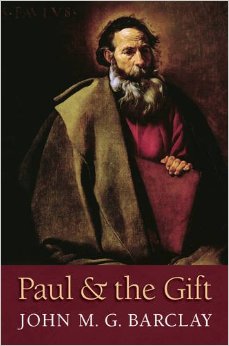
Barclay’s “Paul and the Gift” According to Barclay W/ A Couple Of Notes

paul and the giftEverybody has been raving about John Barclay’s Paul and the GiftPeter Leithart’s given the work some extended attention and my Mere Fidelity podcast compatriot Andrew Wilson has been blogging through it with his characteristically incisive analysis. The word on the street is that this is the book that’s going to blow up a number of paradigms in New Testament studies, especially studies in Paul, for the next couple of decades, upsetting (or delighting) advocates of both Old and New Perspectives on Paul. As someone who originally cut his teeth theologically on these debates, and has long had the intuition that something of a middle way” was likely closer to the truth than has been typically granted by advocates, I was immediately intrigued.

Thankfully, Eerdmann’s heard my plea for a review copy (yes, I was provided one, though without the requirement of a positive review or anything like that). As soon as a clear bit of space opened up this last weekend, I dove in. And, well, after the first hundred pages or so, the hype appears well-deserved. Barclay’s thesis about the nature of grace in Paul is surprisingly unique, nuanced, and extensively well-researched. What’s more, for all the heavy footnoting and sourcing, as of yet, the writing is clear, elegant, and the argument flows quite naturally, even intuitively once the lines have been drawn out. When you hear what Barclay’s up to, you almost begin to think, “Well, of course, how come we haven’t framed it like this before?”

Which raises the question some of you may be asking, “Well, what is Barclay up to?” At this point, there have been a number of helpful summaries of some of the key moves that Barclay makes, but as it happens, Barclay himself cleanly lays out his three main moves, sections, or theses (however you want to put it), early on in the work. I figured I’d just let the man clarify the project on his own behalf:

  1. “Grace” is a multi-faceted concept best approached through the category of gift. It is susceptible to “perfection” (conceptual extension) in a number of different ways, which do not constitute a unified package. Some who discuss this theme will maximize the superabundance, the priority, or the efficacy of grace, and others its incongruity with the worth of the recipients (as gift to the unworthy). Others again will urge the singularly of grace (that God is nothing but gracious), and some that God’s gifts are given “with no strings attached.” These are not better or worse interpretations of grace, just different, and it is perfectly possible to speak of grace without defining it, for instance, as gift to the unworthy. These perfections have been various deployed in the history of reception of Paul, though some are better supported than others by Pauline texts themselves. Much in Jewish interpretations of grace, and in the history of interpretation of Paul, can be clarified by distinguishing between these six perfections.
  2. Grace is everywhere in Second Temple Judaism but not everywhere the same. Instead of uniformity, a careful examination of the texts indicates diversity in their representations of divine beneficence; they differ, for instance, on whether God’s mercy is properly applied without regard to worth. Paul stands in the midst of this diversity. His theology of grace does not stand in antithesis to Judaism, but neither is there a common Jewish view with which it wholly coincides.
  3. Paul’s theology of grace characteristically perfects the incongruity of the Christ-gift, given without regard to worth. This theology is articulated within and for Paul’s Gentile mission, and grounds the formation of innovative communities that crossed ethnic and other boundaries. This incongruous gift bypasses and thus subverts pre-constituted systems of worth. It disregards previous forms of symbolic capital and thus enables the creation of new communities whose norms are reset by the Christ-gift itself. Grace took its meaning in and from Paul’s experience and social practice: the nature of the gift was embodied and clarified in novel social experiments. In the subsequent interpretation of Paul, within and established Christian tradition, this motif has played a number of other roles, but has generally shifted from undermining the believers’ previous criteria of worth to undercutting their self-reliance in attaining to Christian norms or their understanding of this effort as necessary for salvation. (6-7)

Again, I’m only a little over 100 pages in, but so far he’s delivering up the goods. I’ll make a few observations early on, all the same.

First, his literature review on the subject of the gift in modern anthropology and philosophy is, as I said, extensive, though, without the sense of being overwhelming. Actually, for those interested, it pairs well with Leithart’s work in Gratitude: An Intellectual History that I just noted last week. This conversation sets up his analysis of, not only contemporary Western thought on the nature of the gift and the way that it has shaped our interpretation of Paul, but also sets up his discussion of the Greco-Roman milieu into which Paul would have been preaching.

Which brings me to a point that’s worth highlighting on the relationship between biblical studies and theology in general. There are times where it seems that biblical scholars beholden to philosophical categories and presuppositions–whether in the Medieval, Reformation, or Enlightenment period–have distorted and misread the text. We’ve imposed our own culture’s categories and read binaries that simply don’t apply to the text, or blurred lines that should have been kept sharp. Barclay’s use of the anthropological and philosophical nature of the gift, though, appears to be one of those cases where we see that extra-biblical conceptual analysis can help us cut through our own cultural fog in order refine our reading of Scripture in ways that highlight and clarify the text, rather than obscure it.

Second, before actually tackling Paul Barclay devotes a little over 100 pages to analyzing the reception history of Paul’s theology of grace throughout a diverse series of historical figures such as Augustine, Marcion, Calvin, and down on into recent critical scholars. What’s more, as Wilson noted, he does it as someone who actually seems to have read the historical sources and not simply resorting to hackneyed, caricatured, hand-waving about them. And guess what? It seems also to have paid exegetical dividends in allowing him to engage in finer conceptual analysis of the nuances of the various “perfections” of the concept of grace. This is but one more area where we can see that a solid grasp and greater engagement with historical theology have salutary effects beyond mere antiquarian interest. Modern exegetes can learn from the readings (and misreadings) of the past for today.

Well, I’ll wrap things up here for now. Suffice it to say, I don’t imagine I’ll agree with everything Barclay has to say–that rarely happens with anybody in NT scholarship, I’m excited to engage it nonetheless. I plan on offering up at least a couple more posts related to Barclay’s work and the the Mere Fidelity boys have already committed to having an episode (or two!) on the subject. So keep an eye out for that.

Soli Deo Gloria

When it Comes to the Bible, Sometimes It’s Best To Say, “I Don’t Know”

This is Idris Elba playing a guy named 'Luther.' Martin Luther said this quote. Ergo, I feel justified using this picture to get you to read the article.

This is Idris Elba playing a guy named ‘Luther.’ Martin Luther said this quote. Ergo, I feel justified using this picture to get you to read the article.

The Bible can be a hard book at times. And that’s so for a number of reasons. In the first place, we’re sinners and so we don’t always like listening to what God has to say through it. Kind of like when your mom would call you to take out the trash from up the hall–you manage not to “hear” the message.

Beyond that, sometimes even when you want to understand it’s just plain difficult. It’s a grown-up book, translated from a different language (two or three, actually), at a remove of thousands of years, across cultures, and shared histories. What’s more, this collection of narratives, poetry, visions, and letters concerns itself with the most sublime and transcendent Subject of all: God and his works.

Of course, that’s not to say we can’t understand it all. That would be rather extreme. No, much of the Bible can be read and understood by most, and there is enough that can be understood by all so that they may know what they need to be saved and live life with God. God has can and does reach us through his Word. That’s the classic doctrine of the clarity of Scripture.

All the same, the doctrine of the clarity of Scripture does not teach that no part of the Bible is difficult, or that it will always be equally obvious to all (2 Pet. 3:16). There will be much that is beyond us. And this is important for believers to admit, at times, for a number of reasons I’ll get into in a moment.

But first, I was reminded of this point as I was reading some Luther the other night. At this point, he’s preaching through the John 3 and he comes to the line about being born again of water and the Spirit and the difficulties of interpretation. Luther thinks that Munzer has badly misinterpreted the Scriptures here and he moves to correct him, but before doing so, he makes an important point:

But let these words stand, and do not indulge in subtle arguments, even though they appear foolish and strange to reason. Take them in their simple sense, just as they read, not as some have interpreted them. Munzer, for example, declared that water here symbolizes affliction and temptation. One must not be willful with the Word of God. It is better to say: “I do not understand the words,” than to alter them. It is better to leave my hands off and to commend it to God than to add to or detract from God’s words. Holy Writ must be treated with veneration and profound awe. In their impudence, however, the schismatic spirits do not do this; they are forward, as we read in the second chapter of the Second Epistle of St. Peter. They consider the Word of God nothing else than the word of man (2 Peter 2:10). But don’t meddle with God’s Word. If you do not understand it, accord it the honor to say: “I shall wait until I do understand it.”

Sermons on the Gospel of St. John, Chapters 1-4, pg. 283

There is a wisdom in slowing down in your interpretation of Scripture. God’s Word is holy. It is the set apart of his apostles and prophets–heralds of the Holy One–for the divine purpose of drawing his people into fellowship with the Triune God. It is, therefore, as a Kingly proclamation, nothing to be trifled or meddled with. It must “be treated with veneration and profound awe.” In which case, Luther says there will come times when it’s entirely appropriate to say, “I do not understand the words.” There’s absolutely nothing wrong with that.

I think it’s especially important for those of us called to teach the Bible–whether in the classroom or the pulpit–to give heed to Luther’s here.

There is a pressure for the pastor or the teacher to be the one who knows everything all the time. Now, of course, it’s quite reasonable for us to expect the pastor to know some things. Maybe even more things than most in the congregation. (Though, as any pastor knows, there are usually a number of saints who can give you a run for your seminary education sitting in the pews). Still, whether it’s self-imposed or put on them by others, the pressure to “know it all”; to have every verse down, ready to comment on, and every theological equation solved is there.

And so the temptation is to spout off an answer when we really don’t know what we’re talking about. Here are some reasons it’s better to just say “I don’t know,” sometimes.

First, as Luther says, we avoid dishonoring God’s Word that way. When we say God’s Word says something it doesn’t, we’re altering it. We’re changing what God’s written to us and that is no small thing. Now, to be sure, every preacher has done this at some point, even in their earnest desire to preach the Word. And I believe God understands and has mercy on these things. But to do so, not out of earnest conviction, but merely because one hasn’t given enough thought to the issue or simply in order to have something to say and prop up your pride is sinful. When faced with a passage too difficult, better to simply say, “I don’t know.”

Second, by doing so, not only do you honor God’s Word, but you teach your people to honor God’s Word. You teach them humility before God’s Word that they then take with them to their own study. What’s more, by admitting your own lack of knowledge at certain points, you give them permission to “not know” things and yet continue to study nonetheless. I think that was one of the more helpful things I did for my students. They all knew I read and studied like crazy, but I’d still have moments where I’d have to look at them and say, “You know, I have to go look that up more. I’m just not sure.”

Finally, it should help prevent you from discrediting God’s Word in the ears of your hearers. Unfortunately, your bad teaching that flows from your inability to just admit you’re beyond your depths can turn people off from the Bible because of the distortion you inject into it. Speculative, shallow, half-cocked answers to difficult questions don’t make you sound smarter, they only make the Bible sound worse. Being willing to simply admit you don’t know avoids that danger.

Obviously, none of this is an argument for simply shutting up and never preaching anything. As I said, I think there’s plenty that’s clear, and with some study, we are able to truly understand, preach, and teach the Bible. All the same, it’s okay to admit there are times it’s beyond us. It may be that in precisely that way we treat it as we ought: as God’s Holy Word.

Soli Deo Gloria

What Does Systematic Theology Add to Biblical Theology?

booksI’ve been on a bit of a Henri Blocher kick since his visit to Trinity this last week and I have to say it’s been paying off. For instance, I looked up an article of his, “The Justification of the Ungodly” in the second Paul volume, Justification and Variegated Nomism to thumb through this weekend. While most of it is caught up with the nature of justice and justification in relation to the New Perspective, Blocher opened up with some important insights on the nature of systematic theology as different from other disciplines.

Important, at least, to me. When people ask me what I’m studying and I say, “Systematic theology”, I can’t tell you how many times I get the question, “Okay, so what makes it ‘systematic’ theology?” Then when you try and explain that it’s systematic versus “biblical”–but not unbiblical!–you just get this funny stare until you sputter something about a logical ordering of topics and hope the subject changes. If you’ll pardon the comparison, I’m reminded of that famous line of Justice Potter Stewart on trying to define what counts as pornography:

“I shall not today attempt further to define the kinds of material I understand to be embraced within that shorthand description…and perhaps I could never succeed in intelligibly doing so. But I know it when I see it...”

(I leave it to others to decide whether there are any more comparisons between the two phenomena to be made.)

All the same, there have been a number of different approaches to distinguishing the two sub-disciplines of biblical and systematic theology–a couple of which I will probably return to in the future–but I think Blocher’s little section gets at some key insights worth laying out.

Blocher begins to get at the issue with this initial paragraph:

On the one hand, systematic theologians draw from Scripture the substance and light of their thinking. They are not seeking for another source or standard. In Berkouwer’s words: “Beyond the word of Scripture we dare not go, in speech or in theological reflection; for it is in this word that God’s love in Jesus Christ is revealed. There is nothing beyond that.” This dependence entails for them a major interest in the work of biblical scholars, through whom they receive knowledge of scriptural contents. On the other hand, they also make their own contribution to the joint enterprise of Bible study: as Heinrich Ott emphasized, Dogmatics should be included in the “hermeneutical circle.”

Protestant, Evangelical, and especially Reformed systematic theologians are–or ought to be–firmly committed to the normative status of the text of Scripture for doing theology. Sola Scriptura is not something we simply confess, but something we practice. Scripture alone is the final authority, and so faithful theologians will want to be attentive to what biblical studies has to say. We are concerned with and must draw the roots of our theologizing from solid exegesis.

But is theology anything more than exegesis? Blocher asks, “How distinctive is the contribution of systematic theology?” What do systematicians do beyond repeating the biblical scholars? Blocher’s brief answer begins, first, by dispelling the notion that or some sort of faith-interest or presupposition is what separates the two:

Theological interests motivate exegetes and historical critics as well; they cannot dispense with theological criteria to guide their search nor with a “fiduciary framework” (Polanyi’s phrase) to give meaning to their findings; they do think these findings “together.”

It’s not, then, that systematics’ only contribution is a theological bias–no matter what some biblical scholars might claim. No, what systematics does is deepen the reading.

Systematic (or dogmatic) theology only pushes a little further the effort at synthesis, representing the “whole” as opposed to the “parts” in the older construal of the hermeneutical circle; critical integration becomes its specific object; it establishes itself at a few more removes from textual ground level, in a more reflective mood. It does so in deliberate interaction with the history of Christian thought (and, in various degrees, with “human” thought, past and present). Systematic theology thus faces more openly or squarely the challenge of personal commitment: “What do you say. . . ?” (cf. Matt 16:15). It delineates and expounds for the use of the church the credendum: the focus is no longer on what Paul thought and believed – but nostra res agitur. The systematic concern for appropriation makes one vulnerable, exposing the person in the weakness of his or her faith. It corresponds to the other construal of the hermeneutical circle, the involvement of subject with object.

A few things are worth noting here.

First, Blocher is already assuming that biblical studies/theology is a “synthetic” task. Biblical scholars are trying to forward readings of biblical texts that bring together the various parts into a coherent, synthetic whole. Systematic theology shares that concern but pushes a bit further down the road. Or, to change the metaphor, a bit further back from the pages of Scripture, in order to take in the broader sweep.

Second, systematic theology typically does this in conversation with other historical-theological readings of Scripture. Biblical studies, as a discipline, is typically concerned with recent scholarship, Ancient Near Eastern or Greco-Roman backgrounds, and so forth, but not so much with Patristic, Medieval, or Reformation readings of those same texts. Though, that does seem to be changing in some circles. All the same, systematic theology typically takes the history of exegesis as a more obvious conversation partner, since systematics–or dogmatics, to introduce another term–is a churchly activity.

Which brings me to the third point Blocher makes–the subjectivity of systematics. Here, it seems that Blocher sees systematics more openly owning the subjective, confessional dimension to theology. As he says, it’s not so much a matter of only putting together “what Paul believed then”, as drawing conclusions about “what Paul believed then”, for “what we as the church believe now.” Theoretically, biblical studies can be done with some separation from personal confession. Obviously, it can’t be done entirely so. Believing Paul to be an inspired, authoritative writer does shape the way you come to the text. Believing in the possibility or reality of miracles will change how you construct the intention and theology of the Gospel writers. Still, it’s possible to have a brilliant Pauline scholar who can describe the apostle’s thought then, without actually subscribing to it. The systematic theologian cannot do that. The theologian puts forward claims as truths to be owned by the individual, the community they are a part of, and, ultimately, the world.

There is likely more to be said about the relationship and distinction between biblical and systematic theology, but this seems like an excellent place to start.

Soli Deo Gloria

Does Jesus Judge the Wrong People? Or is it Still A Bit Silly to Disagree With Him?

disciplesWas Jesus overly judgmental? Did he ever look at someone and condemn them when ought to have welcomed and affirmed them? Did he ever call something evil, which was really good? Did he say that some things were unacceptable in the sight of God that really were acceptable in the sight of God?

To most orthodox Christians (Roman Catholic, Eastern Orthodox, and Protestant), the confession of Jesus as Messiah, the Son of God, the only-begotten of the Father, would rule that sort of thing out. I mean, Scripture clearly says he is without sin in a number of places. Beyond that, it’s part of the logic of the Gospel itself and a key to the salvific efficacy of his representative humanity on our behalf.

I bring this up because of an interesting post by J.R. Daniel Kirk on ‘Disagreeing With Jesus.’ It’s apparently a follow-up to Robert Gagnon’s piece at First Things piece praising Fuller’s decision not to offer Kirk tenure because of some of his views about Christ, as well as his evolving views on same-sex marriage. In it, Gagnon basically says that had Fuller done otherwise, they would have been allowing and opting for a position on sexuality squarely at odds with Jesus’ view on the matter per Mark 10:2-12 and Matthew 19:3-9.

Kirk’s response is basically to point out that we all disagree with Jesus on a number of issues:

I disagree with Jesus about some of the opinions of Jesus that he stated:

  • Moses wrote the Pentateuch
  • The truly final eschatological judgment would arrive within a generation of his life
  • My divorced and remarried friends are living in adulterous relationships

I disagree with Jesus about some of the opinions he probably had but didn’t state:

  • The world is flat
  • The world is 3,000 or 4,000 years old (in the first century)
  • The earth is at the center of the universe and the sun revolves around it

I agree with Jesus in some areas where many (or most) Christians disagree with us:

  • To understand Jesus best we have to understand his ministry as that of God’s faithful human representative (the son of humanity/the Human One)
  • Jesus didn’t know everything that God knows (like “the day or the hour”)

I also agree with the church about things that Jesus didn’t think or say:

  • Gentiles get to be part of the people of God without becoming Jewish
  • I’m not guilty of sin when I break the Sabbath every single Saturday

The idea, apparently, is that since many obviously disagree with Jesus on all sorts of issues, Gagnon’s argument is just a rhetorical ploy and not a serious, theological argument. Good disciples can disagree with Jesus at certain points without much of a Christological problem.

Now, I don’t really want to comment on the Fuller situation, nor even the same-sex issue. The Christological claims made in this short piece, however, seem very problematic. Since Kirk’s piece was brief, I’ll try to keep this as short as I can.

First, a number of the things Kirk says he disagrees with Jesus about assumes positions that are by no means foregone conclusions in Gospel scholarship. The old thesis about Jesus’ mistaken view of the coming, final day of judgment within a generation is one that is highly debatable. Another is his judgment that Jesus viewed divorce and remarriage as necessarily sinful, especially given the historic witness in Matthew 19:9 of Jesus giving at least one legitimate exception.

Second, that throwaway bit about germs is rather odd. As Adam Nigh pointed out in the comments, that’s just a historically focused version of the general problem of evil: why didn’t God use any number of supernatural or human means to tells us about germs or a half-dozen other medical insights Jesus failed to pass on? Quite frankly, bringing it up like it’s a serious, moral challenge is a bit silly.

Third, the idea of “disagreeing with Jesus” seems to suffer a bit when we get into counterfactual about what thoughts Jesus didn’t think and didn’t say. Kind of seems like we’re padding the list of disagreements for effect.

Fourth, and more importantly, Kirk mixes up a number of different categories of Jesus’ beliefs into a jumble. We’ve got Jesus’ (potential) views on the age of the earth thrown in with Mosaic authorship as well as his views on eschaton. But that’s really a questionable logical and “rhetorical ploy.” It seems plausible to make a distinction between Jesus knowing according to his human nature the age of the earth and a bit of geography, versus the onset of the coming kingdom of God, doesn’t it? Mixing all them up together just muddies the waters.

To sharpen this, let’s come back to the questions I opened with above. There’s nothing inherently sinful about Jesus not knowing certain cosmological questions. I’m fine with admitting a limitation to Christ’s total knowledge of random facts according to his human nature. That’s not sin. That’s just finitude. There’s nothing Christologically-riding admitting Christ was finite according to his human nature. Indeed, that’s Chalcedonian logic.

But what about his allegedly mistaken views about divorce and remarriage? In this case, Jesus is making a significant, moral judgment about the aims and intentions of the Creator regarding the most basic of all relationships. What’s more, given his own Messianic, self-understanding and his explicit statements about the binding authority of his own words as the Son of Man, making a judgment about this kind of thing isn’t a morally insignificant thing. Jesus getting divorce and remarriage wrong–saying it’s immoral when it really isn’t immoral–condemns as sinners those whom God doesn’t condemn as sinners. He morally binds those who shouldn’t be bound–the very sin Jesus criticizes in the Pharisees.

Let’s be clearer. The implication here is that the very Logos of God, sent to reveal the heart of the Father to the world, would be grievously misrepresenting God’s will for the world. That’s actually a lot more serious that Kirk lets on. For my money, I think we ought to be a bit less cavalier about admitting we disagree with Jesus on the aims and intentions of the one he called Father.

It’s a bit difficult to say, “Lord, you have the words of eternal life” with Peter and then add on, “except for on marriage, the eschaton, etc.” Seems like the sort of thing a disciple shouldn’t do.

Soli Deo Gloria

I, Tertius

papyrusFor my money, the Epistle to the church in Rome–the book of Romans more commonly–is the finest, most important letter in church history. Certainly in the canon. So who wrote this tremendous piece of work? The apostle Paul, right? Actually, no. That’s a bit of a trick question. Paul is the author–it is full of his words and thoughts–but the writer is another chap we only find out about towards the end of the letter:

I Tertius, who wrote this letter, greet you in the Lord. (Romans 16:22)

Tertius was apparently Paul’s writer–his amanuensis— as he dictated the letter to the Romans. Now, there might be any number of reasons for having a writer take down the letter for you. Some speculate that Paul had vision or health issues. Others point out that writing, in those days, was a much more difficult skill than reading. The materials required sharp, deft strokes that required training to develop. Tertius was a believer who was one such scribe.

I don’t know why, but this guy fascinates me. This is a verse in the Bible. This chap whom we don’t know anything about, really, was a part of this massively crucial piece of Christian history. And that largely because he knew how to write. He wasn’t an apostle. We don’t know that he was a teacher or preacher, a deacon, or particularly skilled in any area. All we know is that the brother had a technical skill and made himself available to Paul as a scribe.

There’s no big lesson I have beyond saying this: there are millions of Tertiuses sitting in the pews. Millions of ordinary Christians, with ordinary skills, doing ordinary things. And who knows what God will do with theses gifts? What ordinary skill is God currently using to get his extraordinary work done?

Soli Deo Gloria

The Jerusalem Council: More Law, Random Rules, or Something Else?

acts of JesusOne of the key interpretive puzzles in the book of Acts comes towards the end of chapter 15 with the famous decision of the Jerusalem Council on the inclusion of the Gentiles. Jesus’ commission to the disciples to be his witnesses to the gospel in the power of the Spirit in Jerusalem, Judea and Samaria, and all the ends of the earth (Acts 1:8), meant that eventually some Gentiles were going to hear the gospel. And, as we might expect given the power of God, many responded positively in faith and confessed Christ as Lord. This raised a number of questions: on what basis are they to be admitted into God’s people? Is the Mosaic law still binding on them? Must they become Jews (get circumcised, eat kosher, keep Torah), in order to be justified?

Resolving these questions takes up a great deal of the narrative of Acts. Peter’s vision and encounter with Cornelius in Acts 10-11, makes it clear that certain food laws don’t apply. As a part of the new stage of history brought on by Jesus’ life death, resurrection, and ascension, God seems to have abrogated or set aside key food laws and has cleansed the Gentiles like Cornelius who confess faith in Christ through the forgiveness of sins and by faith.

That’s not the end of the story, though. In Acts 15 we read that some Jews from Judea had come down to Antioch and began stirring up trouble in Paul’s church by teaching that Gentiles had to be circumcised and keep the Law of Moses in order to be saved (v. 1). Obviously, Paul wasn’t having it, so they had it until they all decided to go up to Jerusalem to have the council of apostles and elders sort out the issue for them. In council, in the face of opposition, Peter stands up, gives a solid defense of justification by faith, not Torah-keeping (vv. 7-11), and eventually the council basically sides in his and Paul’s favor. The Gentiles are saved by grace as well as the Jews and so they shouldn’t be “troubled” by being made to keep the Law in detail, certainly not by being circumcised.

All the same, there is a caveat. James says:

“Therefore my judgment is that we should not trouble those of the Gentiles who turn to God, but should write them to abstain from things polluted by idols, and from sexual immorality, and from what has been strangled, and from blood.” (vv. 19-20)

Okay. So no need for circumcision—the covenant isn’t restricted to Jews or strict Torah-keepers—but it still seems like some of the restrictions of the Law are in play. Now this doesn’t seem like this fits into the classic categories that Protestants typically use to think about the way the Old Testament Law does and doesn’t still apply to New Testament believers (moral, ceremonial, and civil). There seems to be a couple that are moral (sexual immorality, things polluted by idols) and a couple that are clearly ceremonial (strangled food and blood). And why those moral categories? Why is sexual immorality mentioned and not stealing or murder or something?

What gives?

Three Options

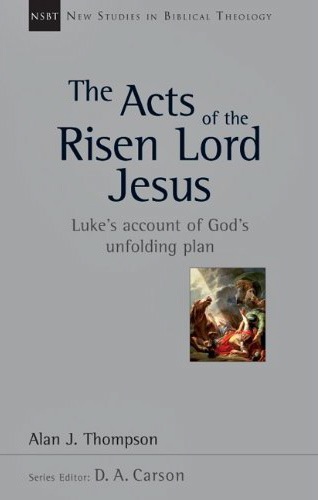
Alan J. Thompson, in his work The Acts of the Risen Lord Jesus, notes that there are a number of options put forward by scholars (pp. 184-187).

Some think that these restrictions are a sign of the Law’s continuing binding authority drawn from Leviticus 17-18 that govern the behavior of Gentile sojourners in Israel. But that wouldn’t cover the strangled animal issue and there are a bunch of laws elsewhere covering sojourners.

Others have suggested that requirements are kind of on the spot laws picked because they were particularly offensive to Jews. So, this isn’t a requirement of the Law, but more like pragmatic commands just to suit that time and those groups. So, salvation by grace, but don’t offend your Jewish neighbors. The problem with that, though, is that it “overlooks the general applicability of these requirements to all the Gentiles in 15:19 and 21:25” (185).  And the language used about them refers, not to preferences, but binding “decisions” made by the council.

The final view that Thompson notes and opts for is Ben Witherington’s which is that, essentially, these form a restriction on idol practice. Witherington observes that all four of the practices were all associated with pagan temple practices at the time. He notes that the language used of “Gentiles turning to God” in Acts 15:19 is similar to that of 1 Thessalonians 1, where Paul talks about turning from idols to God. Also, there’s a very strong link between food practice and idolatry in 1 Corinthians 8-10, especially where Paul says to “flee from idolatry” (10:4). Beyond that, this fits with the polemic against idolatry in Acts, Paul’s preaching, and early Christianity.

Thompson summarizes the twofold thrust of the council’s decision this way, then:

The Jerusalem Council therefore clarifies two issues involved in how Gentiles may be saved: (1) Gentiles do not have to become Jews; salvation for Jew and Gentile alike is by grace alone through faith in the Lord Jesus alone. (2) However, Gentiles cannot remain pagan idolaters either; they must turn from their pagan idolatrous past. (p. 187)

This option makes sense out of the general applicability of the commands, the fact that they’re not to be seen as just a pragmatic grouping of requests, and the fact that it shouldn’t be seen as a continuation of the OT covenant Law’s binding character on the Gentiles.

Moving Forward

What comes of this? Well, I’ve seen it argued that this text is a good example of the somewhat arbitrary approach to the OT law, or the moral commands of the New Testament. It’s then taken, in some cases, to be part of a case for seeing the New Testament’s commands about sexual immorality to be of the same category as the temporary and apparently pragmatic as the food laws. In which case, now that we’re in a different situation, we’re free to thoughtfully move past them as we have the food restrictions.

Of course, this is all too brief. Still, I think this way of viewing the Jerusalem council’s decision is quite helpful, though, in understanding the way that commands of both sorts—perennial moral commands grounded in the norms of creation and what seem to us to be temporary ceremonial ones—can be coherently grouped together under the broader, perennial concern about idolatry. And this is without falling into the view that we are still partially under the Old Covenant, or that there is no significant difference between the New Testament’s restrictions on sexual practice and food practice.

Insofar as eating food that’s been strangled or with blood in it is connected to idolatry, it is always wrong. On the flipside, given that there are a number of different lines of reasoning behind the prohibition against sexual immorality (porneia), just because it might not be connected to explicit idolatry as in Temple prostitution, that doesn’t mean it’s now okay. As we might expect, it’s a bit more complicated than that.

While there are a number of lessons we could draw here, once again are faced with the reality that we must be wary of constructing our moral and theological frameworks on the basis of single texts or narratives. We have the whole New Testament—narratives, epistles, and so forth—for a reason. While individual texts must be heard, studied, and paid attention to in their own right, this is a case where issues regarding the law, authority, sexuality, and so forth, must be judged in light of the broader canon given to us through the apostles and prophets. 

Soli Deo Gloria