Theological Interpretation of Scripture? Three Dimensions

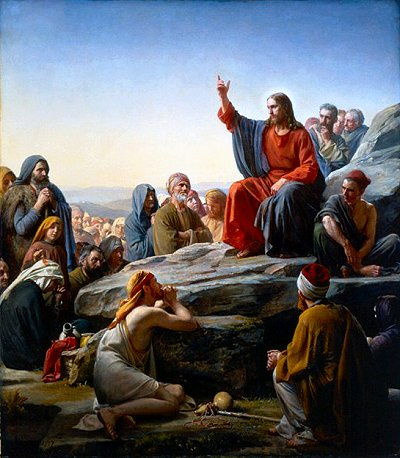
Jesus and the BibleWhat is Theological Interpretation of Scripture (TIS)? It’s kind of a hot new thing in the theological academy–at least among those of a more conservative orientation–but despite the various publications and authors laying claim to it, there doesn’t seem to be a clear, unified usage of the term. At least not that I’ve heard or read.

What I’d like to do in this (brief) post is simply note three threads, or types of TIS, I’ve seen in my little bit of reading on the subject as a bit of a quick reference to the interested, and then invite others to add what they’d like in the comments.

Theological location of the Text. The first thread or theme I’ve seen highlighted in theological interpretation is the idea that we read the text of Scripture in a theological context. By that I don’t simply mean that most of us read it in our churches. No, the idea is that the Bible is not just like any other book that we might happen upon in the library. It’s a book that is the result of God’s own saving activity. It is not only the story of redemption, but part of the activity of the Triune God’s “economy” of salvation. It is part of how God gets his saving work done, not only an informational book about it. In which case, we need to understand that we don’t approach this book like any other, treating as a mere product of history, but as the result of divine activity. What’s more, as Christians, we are to understand ourselves as readers dependent on the gracious illumining work of the Holy Spirit. Along with that, different accounts will place more or less emphasis on the community of faith as the proper location of interpretation in the “economy of grace.”

Reading for Theological Content. Second, either flowing from this, or separate, theological interpretation of Scripture means trying to read the text for, you know, actual theology. Instead of treating it as a bit of interesting history or “religious thought”, to be picked apart for the light it sheds on the beliefs and the experiences of ancient Jews and Greeks, we read it in order to learn about God. So, when we read Paul speaking of Christ as the Image of the invisible God, firstborn over all creation, and so forth, (Col. 1:15-20) it’s not enough to simply speak of the way his conception of Christ may or may not be related to Philo’s thought on Pre-existent Wisdom, or that of other 2nd Temple Jewish thought. We need to speak of what that text is actually telling us about the nature of the Triune God we worship. It’s not simply a text for there and then, but the revelatory self-attestation of the Triune God, meant for the church today. In other words, theology is not something we do after or in addition to exegesis. Exegesis is aimed at theological truth.

Reading with Explicitly Theological Presuppositions. Third, theological interpretation of Scripture also often means reading the text with explicitly theological presuppositions in mind. In other words, instead of acting as if we can come to the text “objectively”, without presuppositions, as neutral scholars, we come to the Bible openly acknowledging that we’re reading it as Christians, as Trinitarians, and so forth. For some, that means using a certain understanding of redemptive history to guide our reading. Others would emphasize a regula fidei “rule of faith” reading that takes its orientation from the Apostles’ Creed. For others, a “Christ-centered” hermeneutic is involved, or perhaps a more comprehensive confessionalism is called for. In any case, it’s not only a matter putting our theological cards on the table, but putting them to work, allowing our reading of Scripture to be shaped by what we believe to be true on the basis of Scripture, in order to arrive at more holistic interpretations. Hopefully, then, we will be reading in a way that honors the intended purposes for which God gave the Scriptures: a saving knowledge of Father, Son, and Spirit.

Obviously, as I noted before, this is incomplete, so I welcome further comment and correction. For those interested, it’s hopefully been a start.

Soli Deo Gloria 

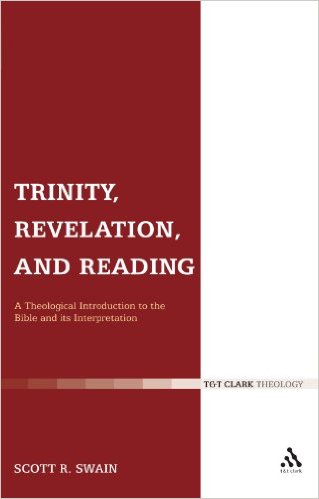
By the way, if you’re really interested, I’d point you to Todd Billings The Word of God for the People of God, Kevin Vanhoozer’s The Drama of Doctrine, Scott Swain’s Trinity, Reading, and Revelation and John Webster’s The Domain of the Word. 

Vanhoozer & Carson: Is Biblical Theology Really Closer to the Text Than Systematic Theology?

A couple of weeks ago, I wrote a piece on Henri Blocher’s take on the relationship between Biblical and Systematic Theology, which I found quite helpful (his take, not my piece, that is). I’d like to return to the subject, though, for a couple of reasons. First, I’m in a class on Prolegomena, and I’m in the process of trying to get straight what it is I’m doing when I say I’m studying systematic theology–so this is sort on my mind. Second, that means I’ve run across a couple of interesting, recent articles on the subject worth comparing. As it happens, they both are by Trinity professors.

Carson on Biblical and Systematic

carsonFirst, there is what I found to be a characteristically helpful piece over at The Gospel Coalition by D.A. Carson on the way the various sub-disciplines of theology (biblical, systematic, historical, pastoral) affect how we read the Bible, as well as their relationship to each other. In it, Carson defines the various disciplines, gives their particular marks, notes their relationship to the text, necessity, as well the various feedback loops between them. I’ll focus on his take on biblical and systematic theology for now.

According to Carson, Biblical theology (BT) answers the question of how God has revealed himself organically and historically. For that reason, it reads the Bible progressively, assumes the unity of the canon, works inductively from the text, and “makes connections the Bible itself authorizes.” It does this by focusing on the works of individual books or writers and traces interlocking, interweaving themes between them. For that reason, we might say it’s a story-focused theology.

On the other hand, Carson says systematic theology (ST) is a bit different. Assuming the unity of the text as BT does, systematics focuses on what the Bible says about certain subjects like God and the world. It’s organization, then, is systematic and logical and oriented toward specific subjects. What’s more, it’s ordered towards communicating these truths to the culture and other philosophical worldviews.

Comparatively, Carson says, “BT is historical and organic; ST is relatively ahistorical and universal.” The former is necessary for understanding the storyline, the latter for gaining depth and clarity of subject. Of necessity, then, systematics can “legitimately” work at 2 or 3 levels removed from the text. Though, for that reason, while systematicians may cherish narrative, ST will be, of necessity, a bit more distant from the concerns of the text than BT.

Exegesis and BT have an advantage over ST because the Bible aligns more immediately with their agendas. ST has an advantage over exegesis and BT because it drives hard toward holistic integration.

ST tends to be a little further removed from the biblical text than does BT, but ST is a little closer to cultural engagement. In some ways, BT is a kind of bridge discipline between exegesis and ST because it overlaps with them, enabling them to hear each other a little better. In some ways, ST is a culminating discipline because it attempts to form and transform one’s worldview. BT is important today because the gospel is virtually incoherent unless people understand the Bible’s storyline. ST is important today because, rightly undertaken, it brings clarity and depth to our understanding of what the Bible is about.

Again, I found much of Dr. Carson’s analysis about the relationship between BT and ST quite helpful. That said, my own advisor, Dr. Vanhoozer, thinks of the relationship a bit differently, especially on the question of whether systematics works at more of a remove from the text than biblical theology.

I’ll devote a bit more space to his article because, well, I think systematics is constantly fighting an uphill battle here and it needs some unpacking.

Closer to the Biblical Text?

Vanhoozer tackles the subject in an article in the recent volume Reconsidering the Relationship Between Biblical and Systematic Theology in the New Testament dedicated to Robert Gundry  (“Is the Theology of the New Testament One or Many? Between (the Rock of) Systematic Theology and (the Hard Place of) Historical Occasionalism”, pp 17-38). Most of the the article is beyond me to summarize at this point, but at least part of what he’s up to is challenging the notion that systematics is at something of a disadvantage compared to biblical studies when it comes to being attuned to the concerns of the text.

I don't know what he's thinking right here, but it could probably serve as a Ph.D. thesis.

Another way of putting Carson’s concerns, as well as those of other biblical theologians such as James Hamilton, is that biblical theology explicitly seems to think and make its main connections within the confines of the Bible’s own thought-world, sticking to such symbolic and typological markers like Temple, Land, and so forth (24-25). The danger of systematics is that it threatens to distort that thought-world by squishing the text into unfitting conceptual molds drawn from without the text, in order to engage concerns not immediate to it. States Vanhoozer:

As we have seen, some (they’re usually exegetes or biblical theologians) claim that systematic theology changes the rich wine of redemptive-history and typology in to the water of timeless truths and philosophical concepts (26).

This is exactly the charge Yale theologian David Kelsey makes in Proving Doctrine. To answer Kelsey’s fear, Vanhoozer draws on the distinction forwarded by Lutheran theologian David Yeago between that of “concept” and a “judgment.” Yeago argues that the very same “judgments” of Scripture can be rendered in different conceptual thought forms. So, the idea is that different terms can adequately and similarly refer to and describe the same underlying reality. For this reason, Vanhoozer says of systematics:

…at its best, it preserves the same “thought world” of the biblical authors, and understands their symbolic universe, in new interpretive categories and with different conceptual terms. (27)

In a certain way this is nothing new. It’s a variation on what Athanasius said in De Decretis. The philosophic term homoousius used at Nicaea is just a “non-identically equivalent” conceptual rendering of Paul’s judgments about the nature of the Son written in specific times and particular churches like the Philippian (2:6) and the Colossians (2:9), (27).

If Nicaea says the same thing – if, like the apostle Paul, it judges Jesus Christ to be the unique Son of God – in different terms, then we may say that its dogmatic judgment is every bit as biblical as the attempt to set forth Paul’s theology in its own terms. Indeed, this is precisely what makes systematic theology biblical: that it renders the same underlying apostolic judgments in different conceptual terms. (28)

From History to System

At this point, I can easily imagine someone saying, “Yes, well, that may be. But how exactly, then, does Vanhoozer conceive of the relation between the two disciplines? Or, rather, how do we construe systematic theology in a way that keeps its ‘conceptual’ renderings faithful to the redemptive-historical, contextual judgments that God has given us in Scripture?”

Vanhoozer attempts to briefly forward a form of theology as wisdom that is:

…both context-sensitive – alert to particular occasions, past and present – and ontologically-attuned to the reality that is in Christ, a reality that ought to be expressed, in some conceptuality, by everyone, everywhere, and at all times. (34)

He has three theses as to how the conversation should move forward (as it turns out, I’ve learned he really likes theological theses) in the reunion of biblical and systematic theology:

  1. “Descriptions of redemptive-history, while necessary, are theologically incomplete until one spells out their ontological implications (i.e., their presuppositions about what is real), not least because history itself is a staging area for divine speech and action.” (35) In other words, yes, we must focus the action, the drama of the unfolding of redemptive history. But in order to properly understand the movements, we need to be prepared to unfold some of the necessary ontological or metaphysical realities that make it possible. So, what kind of a being, what kind of natures, must Jesus the Christ have in order to do and be the culmination of the historically-unfolding reality the Bible presents us with? What kind of God must the Holy One of Israel be (Triune) if he is the faithful covenant Lord who comes to save us himself through his two hands (Son and Spirit)? You can’t properly understand the story without these ontological and systematic judgments spelled out. Actually, Wesley Hill has recently argued in his work Paul and the Trinity that key, historically-situated New Testament texts in Christology are actually best read using the categories of systematic theology.
  2. “The “line” of redemptive-historical development that biblical theology traces is actually the “plot-line” of a unified drama of redemption; systematic theology ministers understanding by saying what the whole drama means and by setting forth, and exploring, its ontological presuppositions.” (35-36) Second, biblical theology rightly pays attention to the unity-in-diversity of the different acts, witnesses, and authors in their unique voices and canonical places. Systematics is about viewing those same realities in light of the one, broad, over-arching drama that has the Triune God as its author and lead protagonist, and fleshing out what the means for disciples drawn into that continuing drama today.
  3. “Biblical theology describes what the biblical authors are saying/ doing in their particular contextual scenes, to their particular audiences, in their own particular terms and concepts; systematic theology searches out the underlying patterns of biblical-canonical judgments, and suggests ways of embodying these same theodramatic judgments for our own particular cultural contexts, in our own particular terms and concepts.” (37) God didn’t write a systematic theology text, dropped from the sky in supra-historical form. The diverse texts come to us in all their glorious, historical particularities and differing emphasis (James contra antinomianism, Paul against–well, whatever the latest consensus is). All the same, this diversity serves to manifest the mind of Christ which applies to all times and all places. Understanding the particular apostolic judgments that embody the universal mind of Christ, at times, requires expressing the same judgments of Scriptures in differing conceptual forms according to our diverse contexts–be it a 4th century church council or a 21st century seminary.

To sum up, systematics isn’t that thing that happens after biblical theology does its thing.

Systematic theology is not simply a second step that follows biblical theology; rather, it is a partner in the exegetical process itself, explicating the text’s meaning by penetrating to the level of judgments: moral, ontological, and theodramatic. By studying the various ways in which Jesus’ disciples embodied the mind of Christ in their own contexts (i.e., the diverse historical occasions that prompted the apostles to write), disciples today come to learn how they can express the same theodramatic judgments– the same judgments about what is fit for followers of Jesus to say and do – via different language and concepts, in situations far removed from the original context. (38)

At the close of this, I think it’s clear that from their different perspectives and disciplines, Carson and Vanhoozer aren’t actually that far off from each other in their evaluations of the differing roles of BT and ST. I think Vanhoozer would simply hasten to add that they’re both about the same distance from the text as well.

Soli Deo Gloria
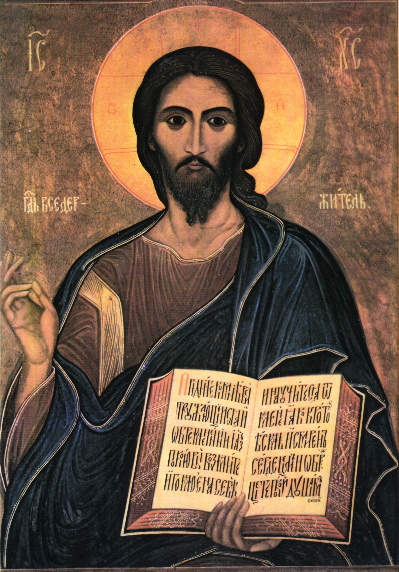
People Disagreed With Jesus About the Bible Too

Jesus talking“Yeah, but there are so many interpretations of that text, so many denominations claiming that Scripture for their own, you can’t really say there’s a wrong way of reading it.”

If you’ve been in a Bible study or spent more than about 10 minutes surfing pop theology writings, you have probably run across a claim of this sort. The idea is that with so many different readings of Scripture, it’s either arrogant or hopeless to think we can come to a determinate, or correct understanding of it. In other words, the mere fact of interpretive disagreement ought to put us off from claiming very much for our interpretations of Scripture.

This sort of charge can take a couple of different forms.

First, someone can go full-blown, radical skeptic and just say that the text has no inherent, determinate meanings, only uses. Or maybe that it’s a springboard for our own thoughts about God and Jesus and so forth, but no more. In this view, the plasticity, the squishiness, if you will, of interpretation lies within the text.

Second, someone can say that the text means something(s), but the problem lies with us as readers. Given the variety of interpretations, it’s arrogant to claim that we know what it says. We’re fallen, finite, and therefore dubious readers. We ought not claim too much for ourselves. Now, I’ll come back to this, because it’s important to note there’s something to this point. We are sinners and that does affect things.

Here’s the main problem with these views when taken too far, though: Jesus’ own use of Scripture.

Over and over again in his disputes with the Pharisees and the Sadducees, Jesus appealed to the Scriptures in order to refute his opponents. One classic text is his debate with the Sadducees over whether there is marriage at the time of the Resurrection or not. They posed a “gotcha” question in order to trap him–which is always silly when you’re dealing with Jesus–and here’s his reply:

But Jesus answered them, “You are wrong, because you know neither the Scriptures nor the power of God. For in the resurrection they neither marry nor are given in marriage, but are like angels in heaven. And as for the resurrection of the dead, have you not read what was said to you by God: ‘I am the God of Abraham, and the God of Isaac, and the God of Jacob’? He is not God of the dead, but of the living.” And when the crowd heard it, they were astonished at his teaching. (Matthew 22:29-33)

The money quote is that line: “you know neither the Scriptures nor the power of God.” Jesus accuses them of being wrong precisely because they’re misreading the text that they apparently should have understood. And this isn’t the only time he says this sort of thing. Jesus constantly accuses his opponents as well as his disciples with missing what they should have seen in the text (Mark 7:13; Luke 24:25–26; John 5:39-40).

Jesus’ use of Scripture, then, presumes that the words of the Bible have a determinate meaning (which can be complex!) that can be read and discerned. Jesus isn’t flustered, or worried, nor does begin to expound a radical interpretive skepticism, simply because his opponents disagree with him. He just says they’re wrong because they got the text wrong. They didn’t know how to read it. He did.

That, at least, is rules out the first form of the objection.

You may still try to appeal to the second form, though. And as I said, there’s something to that one. Jesus speaks very clearly about human sin, blindness, and hardness of heart as obstacles that hinder reception and proper interpretation of the Bible. But to stop there ignores a number of realities, a couple of which we can only gesture at.

First, again, Jesus himself does appeal to Scripture in his arguments in such a way that presumes that, then and there, some of his hearers should be able to follow his argument.

Second, pushing deeper, we have to place our thoughts on interpretation within the broader sweep of Jesus’ work of salvation. Jesus doesn’t simply redeem our inner, spiritual souls, nor only our physical bodies, but also our created intellects. We forget that Jesus came to be the light that gives sight to the blind–and not only to those physically, but spiritually blind (Isa. 29:18; John 9). He does so by shining out as the Incarnate, Crucified, and Resurrected one, whose whole purpose was to be the one who reconciles and shows us God’s truth, by being God’s Truth with us (Matthew 1:23), who overcomes the darkness that did not recognize it (John 1).

Third, connected to this, Jesus commissions his apostles to preach and teach the gospel, making disciples on his authority, in his personal presence through the Holy Spirit (Matthew 28:18-20; Acts 1:7-8). As Jesus said to his disciples, to some it has been granted to know the mysteries of the kingdom of heaven (Matthew 13:11) through the preaching of the Word. He empowered those apostles to preach a Word which, through the work of the Spirit, overcomes even sinful resistance, lightening even darkened minds and hearts (Eph. 1:17). That is the same apostolic Word which is inscripturated in the New Testament. 

All of this is why we are commended to follow the example of the Jews in Berea, who we’re told were more noble than many other communities Paul encountered. Why? Because in their eagerness, they examined “the Scriptures daily to see if these things were so” (Acts 17:11). The Bereans are not berated as arrogant, proud, or interpretively naive. They are faithful in their desire to do the hard work of trusting that in the Scriptures God has spoken in a way that he can be heard if we would but listen.

None of this, of course, removes the difficulties involved with the reality of plurality in interpretation. It does put the brakes on us simply tossing our hands up in the air every time we come upon a disputed verse or issue. There is truth in the text and we can know it. Why? Because Jesus said so.

Soli Deo Gloria

When it Comes to the Bible, Sometimes It’s Best To Say, “I Don’t Know”

This is Idris Elba playing a guy named 'Luther.' Martin Luther said this quote. Ergo, I feel justified using this picture to get you to read the article.

This is Idris Elba playing a guy named ‘Luther.’ Martin Luther said this quote. Ergo, I feel justified using this picture to get you to read the article.

The Bible can be a hard book at times. And that’s so for a number of reasons. In the first place, we’re sinners and so we don’t always like listening to what God has to say through it. Kind of like when your mom would call you to take out the trash from up the hall–you manage not to “hear” the message.

Beyond that, sometimes even when you want to understand it’s just plain difficult. It’s a grown-up book, translated from a different language (two or three, actually), at a remove of thousands of years, across cultures, and shared histories. What’s more, this collection of narratives, poetry, visions, and letters concerns itself with the most sublime and transcendent Subject of all: God and his works.

Of course, that’s not to say we can’t understand it all. That would be rather extreme. No, much of the Bible can be read and understood by most, and there is enough that can be understood by all so that they may know what they need to be saved and live life with God. God has can and does reach us through his Word. That’s the classic doctrine of the clarity of Scripture.

All the same, the doctrine of the clarity of Scripture does not teach that no part of the Bible is difficult, or that it will always be equally obvious to all (2 Pet. 3:16). There will be much that is beyond us. And this is important for believers to admit, at times, for a number of reasons I’ll get into in a moment.

But first, I was reminded of this point as I was reading some Luther the other night. At this point, he’s preaching through the John 3 and he comes to the line about being born again of water and the Spirit and the difficulties of interpretation. Luther thinks that Munzer has badly misinterpreted the Scriptures here and he moves to correct him, but before doing so, he makes an important point:

But let these words stand, and do not indulge in subtle arguments, even though they appear foolish and strange to reason. Take them in their simple sense, just as they read, not as some have interpreted them. Munzer, for example, declared that water here symbolizes affliction and temptation. One must not be willful with the Word of God. It is better to say: “I do not understand the words,” than to alter them. It is better to leave my hands off and to commend it to God than to add to or detract from God’s words. Holy Writ must be treated with veneration and profound awe. In their impudence, however, the schismatic spirits do not do this; they are forward, as we read in the second chapter of the Second Epistle of St. Peter. They consider the Word of God nothing else than the word of man (2 Peter 2:10). But don’t meddle with God’s Word. If you do not understand it, accord it the honor to say: “I shall wait until I do understand it.”

Sermons on the Gospel of St. John, Chapters 1-4, pg. 283

There is a wisdom in slowing down in your interpretation of Scripture. God’s Word is holy. It is the set apart of his apostles and prophets–heralds of the Holy One–for the divine purpose of drawing his people into fellowship with the Triune God. It is, therefore, as a Kingly proclamation, nothing to be trifled or meddled with. It must “be treated with veneration and profound awe.” In which case, Luther says there will come times when it’s entirely appropriate to say, “I do not understand the words.” There’s absolutely nothing wrong with that.

I think it’s especially important for those of us called to teach the Bible–whether in the classroom or the pulpit–to give heed to Luther’s here.

There is a pressure for the pastor or the teacher to be the one who knows everything all the time. Now, of course, it’s quite reasonable for us to expect the pastor to know some things. Maybe even more things than most in the congregation. (Though, as any pastor knows, there are usually a number of saints who can give you a run for your seminary education sitting in the pews). Still, whether it’s self-imposed or put on them by others, the pressure to “know it all”; to have every verse down, ready to comment on, and every theological equation solved is there.

And so the temptation is to spout off an answer when we really don’t know what we’re talking about. Here are some reasons it’s better to just say “I don’t know,” sometimes.

First, as Luther says, we avoid dishonoring God’s Word that way. When we say God’s Word says something it doesn’t, we’re altering it. We’re changing what God’s written to us and that is no small thing. Now, to be sure, every preacher has done this at some point, even in their earnest desire to preach the Word. And I believe God understands and has mercy on these things. But to do so, not out of earnest conviction, but merely because one hasn’t given enough thought to the issue or simply in order to have something to say and prop up your pride is sinful. When faced with a passage too difficult, better to simply say, “I don’t know.”

Second, by doing so, not only do you honor God’s Word, but you teach your people to honor God’s Word. You teach them humility before God’s Word that they then take with them to their own study. What’s more, by admitting your own lack of knowledge at certain points, you give them permission to “not know” things and yet continue to study nonetheless. I think that was one of the more helpful things I did for my students. They all knew I read and studied like crazy, but I’d still have moments where I’d have to look at them and say, “You know, I have to go look that up more. I’m just not sure.”

Finally, it should help prevent you from discrediting God’s Word in the ears of your hearers. Unfortunately, your bad teaching that flows from your inability to just admit you’re beyond your depths can turn people off from the Bible because of the distortion you inject into it. Speculative, shallow, half-cocked answers to difficult questions don’t make you sound smarter, they only make the Bible sound worse. Being willing to simply admit you don’t know avoids that danger.

Obviously, none of this is an argument for simply shutting up and never preaching anything. As I said, I think there’s plenty that’s clear, and with some study, we are able to truly understand, preach, and teach the Bible. All the same, it’s okay to admit there are times it’s beyond us. It may be that in precisely that way we treat it as we ought: as God’s Holy Word.

Soli Deo Gloria

Trophimus I Left Sick (Blocher On Why More Aren’t Healed)

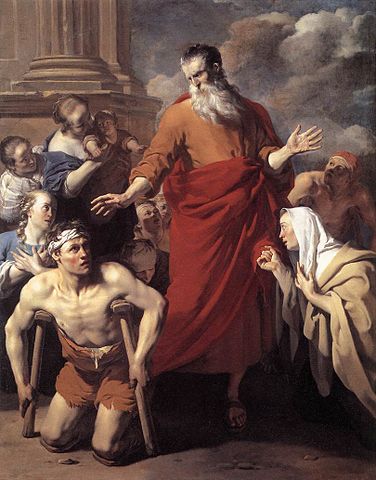
Paul healing DujardinI’ve had occasion to write about the problem of healing, or lack thereof, before on this blog. There are a number of challenges for modern Christians when they read reports of miraculous healing in the Scriptures. First, trained as we are to think in largely physicalist parameters, conceiving the universe as something of a closed continuum, there is our initial skepticism that the miraculous is even possible. Of course, there are formidable arguments against this view, and we appear to be less hostile to the miraculous than we have been in generations past.

And so for many of us, the problem is far different. We admit that if there is an omnipotent God, it’s easily possible for him to heal. The question for us is “why doesn’t he do so as he used to?” We read the New Testament and find a wealth of reports of physical healing on an extraordinary level. The blind gain sight, the lame walk, the deaf hear, and even the dead are raised. And this is not only Jesus in his ministry pulling off fantastic feats like this, but in that of the apostles.

Indeed, so much healing was going on it verges on the ridiculous:

And God was doing extraordinary miracles by the hands of Paul, so that even handkerchiefs or aprons that had touched his skin were carried away to the sick, and their diseases left them and the evil spirits came out of them. (Acts 19:11-12)

Paul could blow his nose, drop his handkerchief, and God would use that rag to heal people of diseases and cast out demons. If that’s the case, then why not more? Why does it seem relegated to then and there and not here and now? We’re just as sick as they were in the 1st Century. We know people who would come to believe if they saw someone healed, so why don’t we see more? Is it, as so many faith-healers and their like teach, simply a matter of our weaker faith? Do we remain ill because of our faithlessness?

This last week I had the honor of sitting in a small Q&A discussion with theologian Henri Blocher as he’s in town giving the Kantzer lectures in Revealed Theology at TEDS. His topic his been related to the problem and possibility of evil, so naturally some of our questions turned there. One fellow student asked him just that question. He responded with three general lines of thought, which I’m going to relay in an artificial order and much more poorly than he originally articulated it.

First, he pointed out that we’re often victims of optical distortion when it comes to our reading of the New Testament evidence. While it’s true that there are many instances healing in the early the Church, we often ignore the evidence that points us in the other direction. For instance, while it’s true that Paul had a powerful ministry of healing, we also read him write in his final greetings in his second letter to Timothy that he had “left Trophimus, who was ill, at Miletus” (4:20). Now, if healing was as automatic and plentiful as all that, it seems that Paul–handkerchief healing master–wouldn’t have left his co-worker for the gospel sick, now would he?

Second, Blocher pointed out that, while not restricted to this situation, miraculous signs and wonders seemed to accompany the inbreaking of the gospel into a new mission ground as a sign of its truth. Then, upon the establishment of the Church in that area–miracles may not die out entirely–but Christians themselves, in their holy living, are to be the chief signs of the gospel. Depending on how charismatic you are, you’ll find that one more or less convincing.

Finally, humble and cautious as he tends to be in any area of theologizing that isn’t closely grounded in the text, Blocher reminded us that we are ultimately dealing with the wisdom of our free God. Our God is personal and supremely so–Father, Son, and Spirit–and so he responds to our prayers with the discretion and care of one who can say yes and–at times-no, according to his own good plans. Any theology that expects God to act on command has forgotten that it is dealing, not with a dispensing machine, but with our saving Lord.

We must, for these reasons, be careful about speculating about the faithfulness of our brothers and sisters who pray for healing and yet do not receive it. Nor should we be quick to doubt the infinite goodness, power, and love of our God who has healed us of our most grievous ills–sin and death–by suffering these ills himself, on our behalf, in the man Jesus Christ.

Soli Deo Gloria

When the Accuser Stood Face to Face With the Atoner

Jesus on trialThere are multiple levels of irony in the Gospel narratives, especially surrounding Jesus’ arrest, trial, crucifixion, and resurrection. One that’s commonly pointed out is that of Jesus’ confrontation with Pilate on the gospel of John. As A.T. Lincoln has shown in his Truth on Trial, we are given a narrative portrayal of Karl Barth’s theme that Christ is the Judge judged in our place.

As Jesus, the Truth, the Judge over all the earth, stands face to face with his would-be earthly judges, they end up on trial, rendering judgment upon themselves as they pass judgment on him. In doing so, they send the Judge to the cross to be judged in our place, suffering the judgment of God for their own sins.

One other irony struck me the other day, though this one comes, not in the trial with Pilate, but in Jesus encounter with the Temple leadership. Matthew recounts the first trial following Jesus’ arrest in the garden:

Then those who had seized Jesus led him to Caiaphas the high priest, where the scribes and the elders had gathered. And Peter was following him at a distance, as far as the courtyard of the high priest, and going inside he sat with the guards to see the end. Now the chief priests and the whole council were seeking false testimony against Jesus that they might put him to death, but they found none, though many false witnesses came forward. At last two came forward and said, “This man said, ‘I am able to destroy the temple of God, and to rebuild it in three days.’” And the high priest stood up and said, “Have you no answer to make? What is it that these men testify against you?” But Jesus remained silent. And the high priest said to him, “I adjure you by the living God, tell us if you are the Christ, the Son of God.” Jesus said to him, “You have said so. But I tell you, from now on you will see the Son of Man seated at the right hand of Power and coming on the clouds of heaven.” Then the high priest tore his robes and said, “He has uttered blasphemy. What further witnesses do we need? You have now heard his blasphemy. What is your judgment?” They answered, “He deserves death.” Then they spit in his face and struck him. And some slapped him, saying, “Prophesy to us, you Christ! Who is it that struck you?” (Matthew 26:57-68)

Again, the dynamic of the Judge judged in our place is plainly here, especially in the reference to the Son of Man drawn from Daniel 7–a scene of judgment and vindication. All the same, the point that struck me was the fact the main prosecutor in the trial was none other than Caiaphas, the High Priest himself.

The irony, of course, is that, as the High Priest, his chief job was to serve as a Mediator–the Mediator–for the people of Israel. His chief task was to bringing the sacrifices for the sins of the people before the LORD in the Temple once a year on the Day of Atonement (Lev. 16). His job, you might say, was to be chief intercessor and defense for the people of God, seeking mercy for their sins.

Instead, we find him in another role: the accuser, (ha satan). That’s right, for those unaware, Satan’s name comes from the role he plays in the biblical drama–the accuser, the prosecutor of the people of God. And this is the role we find Caiaphas playing on the day of Jesus’ trial, relying on false testimony and trumped up charges in order to convict the Holy One.

Now, as a friend of mine pointed out the other day, this calls to mind another passage from the prophets, Zechariah 3:

Then he showed me Joshua the high priest standing before the angel of the LORD, and Satan standing at his right hand to accuse him. And the LORD said to Satan, “The LORD rebuke you, O Satan! The LORD who has chosen Jerusalem rebuke you! Is not this a brand plucked from the fire?” Now Joshua was standing before the angel, clothed with filthy garments. And the angel said to those who were standing before him, “Remove the filthy garments from him.” And to him he said, “Behold, I have taken your iniquity away from you, and I will clothe you with pure vestments.” And I said, “Let them put a clean turban on his head.” So they put a clean turban on his head and clothed him with garments. And the angel of the LORD was standing by. And the angel of the LORD solemnly assured Joshua, “Thus says the LORD of hosts: If you will walk in my ways and keep my charge, then you shall rule my house and have charge of my courts, and I will give you the right of access among those who are standing here. Hear now, O Joshua the high priest, you and your friends who sit before you, for they are men who are a sign: behold, I will bring my servant the Branch. For behold, on the stone that I have set before Joshua, on a single stone with seven eyes, I will engrave its inscription, declares the LORD of hosts, and I will remove the iniquity of this land in a single day. In that day, declares the LORD of hosts, every one of you will invite his neighbor to come under his vine and under his fig tree.” (Zechariah 3)

(This, by the way, is where I clearly get out of my depth as a systematic theology guy.) Still, after the Exile and the return to Israel and the Land, Zechariah receives a vision of the current high priest Joshua in the heavenly council of the LORD, being accused by none other than the Satan. And yet, the LORD rebukes him. He changes Joshua’s filthy garments for new ones, cleansing him of sin, qualifying him to represent the people, and removing the basis of Satan’s accusations. Of course, besides the clear linguistic link (Joshua = Jesus in Hebrew), this screams “type of Christ”, the coming priest who has no filthy garments of his own, being perfectly sinless.

On top of this, Joshua is then given a promise of a coming “Branch”, the servant of the LORD, whom some commentators think is a blend of Isaiah’s Servant visions (40-55, cf. esp 53) with Ezekiel, Isaiah, and Jeremiah’s idea of a David-like King to come. So you end up with a vision of a coming priest-king along the lines of Melchizedek. Melchizedek, the priest-king who is the type of Christ to come (Hebrews 7).

So right after this scene of the accusation of Joshua comes a dense cluster of images pointing to a coming day when God will remove all the sins of Israel in a single day, through this Branch. Of course, with Christian eyes there a million red lights flashing, begging you to draw connections between it all. Not that I’m suggesting that Matthew intended a clear literary connection, but the theological connections seem like they’re not much of a stretch.

Coming back to the trial of Jesus before Caiaphas, the long and the short of it is that, in the irony of God’s providence, like Satan in the vision of Zechariah, this false High Priest Caiaphas ends up playing the Accuser of Jesus the True High Priest, who is on the dark path he must tread to become the Atoner who goes to remove the sins of the people of God.

Soli Deo Gloria

What Does the Church’s “Teaching Authority” Mean for Protestants?

Trinity Reading and RevelationProtestants are popularly known as being skittish about talking about the Church’s “teaching authority.” Certainly Evangelicals are. There is a sense that acknowledging the Scriptures as the Word of God and affirming the doctrine of sola Scriptura–that Scripture, not the Magisterium of the Church is the final authority in establishing matters of doctrine–should cause us to turn our noses up, or at least be suspicious of claims for churchly authority. And there’s something to that.

We want to be clear of a few misconceptions of the Church’s teaching authority. For one thing, we want to make sure and remember that the Church is subject to the Word, not the other way around. The Word authorizes the Church, the Church doesn’t authorize the Word. The Church responds to the Word, even recognizes it as the Word, but it does not establish it.  The Church is brought into being by the Word–it is the “creature of the Word” as Luther puts it. Just as God speaks a word at creation and the world comes into being, so God speaks the word of the Gospel and the Church comes into being.

All that I affirm as a Protestant. But that’s not all that we can say about the Church’s teaching authority. It’s not a matter of Magisterium or ‘What this means to me’ in your local small-group. No, many Reformed have recognized that God has given the Church in its broadest and narrower institutional expressions the task of representatively serving Holy Scripture.

Scott Swain, in his smashing little book Trinity, Reading, and Revelation (pp. 102-103) summarizes William Whitaker’s answer to the question of the role of the Church with respect to the Scriptures given in his treatise A Disputation on Holy Scripture. Whitaker notes four roles for the Church:

  1. “First, the church is the witness and guardian of the sacred writings, and discharges, in this respect, as it were the function of a notary.” God has entrusted the Scriptures to the church for safekeeping, to guard and protect them from corruption or harm (cf. Deut 31:9; Rom. 3:2). Again, though, just because Israel was entrusted with the tablets of the covenant, that does not mean they established or authorized the covenant, but they themselves were governed and authorized as God’s people by them.
  2. “The second office of the church is, to distinguish and discern the true, sincere, and genuine scriptures from the spurious, false, and suppositious” (cf. 1 Cor. 14:37; 2 Thess. 2:1-2). The Church, again, doesn’t authorize or establish the canon, but it does recognize it. In other words, the Scriptural texts have their authority before the Church says so, but the Church is given the Spirit of God in order to recognize which texts possess that authority. As Swain says (possibly paraphrasing Whitaker), a goldsmith is trained to recognize gold, but his recognition doesn’t make the gold what it is.
  3. “The third office of the church is to publish, set forth, preach, and promulgate the scriptures; wherein it discharges the function of a herald, who ought to pronounce with a loud voice the decrees and edicts of the king, to omit nothing, and to add nothing of its own” (c. Isa. 40:9; Rom. 10:6; 2 Cor. 5:19). Whitaker’s quote is fairly clear, but the point is, the text of Scripture is supposed to be read, preached, and passed on. That does require a body of people committed to its dissemination and faithful transmission.
  4. “The fourth office of the church is to expound and interpret the scriptures; wherein its function is that of an interpreter. Here it should introduce not fictions of its own, but explain the scriptures by the scriptures” (cf. Mt. 13:52; Rom. 12:6; 1 Cor. 14:3, 29; Eph. 4:11; 2 Tim. 2:15). The Church is called to interpret the Scriptures and give their sense, not adding or subtracting, but attempting to humbly and simply explain the Word of God. This happens in all sorts of ways, but especially in the giving of preachers and teachers who take the apostolic message and explain it to the people of God, much as Ezra did the returned exiles.

So then, according to Protestants, what profit is there in the Church understanding the Scriptures? Much in every way!

As Swain says:

…the church is that community created and authorized by the Word of God in order that it might obediently guard, discern, proclaim, and interpret the Word of God. (103)

While Protestants are right to be careful of churchly overreach–claiming a magisterial authority over the Word, as if we ourselves were responsible for making the Word what it is–we rob ourselves if we fail to acknowledge the proper role God has granted his people in regard to the Word.

Soli Deo Gloria

P.S. Swain’s little book has to be one of the tightest, power-packed treatments of Scripture and hermeneutics I’ve read yet. It’s up there with John Webster’s little gem Holy Scripture. I cannot recommend it highly enough.

Two Ways of Saying All Religions Are The Same

girardOne of the biggest modernist critiques of religion in general, and Christianity especially, is that despite the claims these religions make for themselves, there’s nothing particularly unique about them. They all have basically the same structure–indeed, most have borrowed them from each other–and all play the same role in basically the same way. And if they’re all the same, why pay attention to just one of them like Christianity? All the mythologies of divine sons, corn-kings, and so forth, are just superstitious attempts to understand the world. There’s nothing exclusively true about the gospel, so just pick something that works and quit going on about it. If we can find a different, “rational” system that plays the same function (eases guilt, explains the cosmos, etc.), then so much the better.

So, the move for the critics, the early modern anthropologists, and scholars of religion with an eye towards unseating Christianity’s intellectual or cultural dominance, was to find as many similarities between all the religions and myths as possible. The move was to pile up as many similarities so that they all blend into a hazy sea of myth. Even to the point of denying, explaining away, or misreading the actual differences that were there staring them in the face.

Nowadays, French anthropologist and literary theorist Rene Girard says that with the onset of the postmodern (so, like, the last 30 years), the tack is much different:

Unlike the old modern critics, postmodern opponents of Christianity don’t try to demonstrate that the Gospels and myths are similar, identical, or interchangeable. Differences don’t trouble them, and in fact they pile up differences with ease. It is rather the resemblances they suppress.

Instead of flattening stories in order to make them all sound the same, postmodern critics approach sameness precisely by playing up the differences between religious stories. How does that work?

If there are only differences between the religions, they make up just one big undifferentiated conglomerate. We can no more say that are true and false than we could say a story by Flaubert or by Maupassant is true or false. To regard one of these works of fiction as more true or false than the other would be absurd.

In other words, the fact that all of these religions are so different points up their falsity rather than their potential truth. Of course works of fiction would be different. They are united under the category of “false” or “equally true”, precisely by their differences. Girard continues to flesh out the appeal of this “doctrine of insignificant differences.”

This doctrine of insignificant differences has seduced the contemporary world. Differences are the object of a veneration more apparent than real. Those who discuss religions give the impression of taking them very seriously, but in reality they don’t attach the least importance to them. They view religions, all the religions, as completely mythical, but each in its own fashion. They praise them all in the same spirit we all praise kindergartners’ “paintings,” which are all masterpieces. The upshot of this attitude is that we are all free to buy what pleases us in the marketplace of religions, or better still to abstain from buying anything. —I See Satan Fall Like Lightning, pg. 103

This actually reminds me in a section from the Tim Keller’s The Reason for God in which he deals with various objections to the unique truth of religion. He points out that 20 years ago, most objected that all the religions were equally true. Now, most will point out how uniquely, culturally-conditioned each of them is, in which case they must all be false. Of course, there are a number of problems with this sort of relativism that assumes a very Western, pluralist mindset that forgets its own particular, culturally-conditioned, social location. Still, these two kinds of criticisms point up an interesting theological truth about religion, human nature, and the apologetic task: there are moments when it is appropriate to appeal to both the uniqueness as well as the similarity between Christian doctrine and the truth claims of the philosophies, religions, and myths of the world.

Recently, Daniel Strange has argued in his work on the theology of religion Their Rock is Not Like Our Rock, that the relation of Christianity to other faiths is one of “subversive fulfillment.” In other words, the good news of Jesus both criticizes the claims of other systems as well as truly fulfilling their actual spiritual hopes. The reason it can do this is that most religions are rooted in our created-but-fallen nature as worshippers made in the Image of God. Without weighing in on whether these philosophies or religions are actually historical distortions and parodies of the truth of God, all them are rooted in universal concerns, problems, and cares across the whole race. So the religious stories humans have told, the salvations they offered, the moral paths they laid out, will unsurprisingly share some key, though more or less distorted and often inverted, similarities to the actual truth of our plight before God in the world.

There’s a danger in two directions in our apologetic encounters. One is the way of many progressives or liberalizing approaches to theology. Here you can so stress the similarity of Christian truth to every other myth or story, that the uniquely good news of Christ is lost in the (admittedly small) sea of COEXIST bumper stickers in the parking lot of the local Unitarian Universalist parking lot. The other way, though, is that of emphasizing the uniqueness of Christian truth that it is so radically different from any recognizable human concern across cultures that it’s rendered inaccessible to anyone not already singing in the choir. It’s reduced to the level of an inexplicably popular local, tribal faith. That’s the extreme way of putting it, of course, but hopefully that gives a spectrum to work with.

There are, then, (at least) two ways of trying to or accidentally rendering the gospel null and inaccessible: overemphasizing particularity or universality. The fact the matter is that the story of Jesus is both. On the one hand, it speaks to our universal concerns (peace, guilt, shame, social wholeness), and yet, its answer to these problems is unique in its scope, power, and the particular shape we find in the story of God’s gracious redemption accomplished in the Jesus life, death, and resurrection for us and our salvation.

Soli Deo Gloria

Straining Gnats and Siding with Pharaoh Over the Midwives

midwives-1024x563I’d like to quickly conduct a little experiment in our responses as moral readers. Bear with me as I set the stage, though, as this is going somewhere.

Exodus opens with the story of the oppression of God’s people in Egypt. Years after Joseph lead Jacob’s sons into the land to escape the famine, they grew prosperous and multiplied–so much so that the Egyptians began to fear them. So one of the later Pharaohs actually enslaved the populace in order to subjugate and suppress them. In the end, though, the oppression only caused them to expand further. So Pharaoh took it into his head to handle the population crisis in another fashion:

Then the king of Egypt said to the Hebrew midwives, one of whom was named Shiphrah and the other Puah, “When you serve as midwife to the Hebrew women and see them on the birthstool, if it is a son, you shall kill him, but if it is a daughter, she shall live.” But the midwives feared God and did not do as the king of Egypt commanded them, but let the male children live. So the king of Egypt called the midwives and said to them, “Why have you done this, and let the male children live?” The midwives said to Pharaoh, “Because the Hebrew women are not like the Egyptian women, for they are vigorous and give birth before the midwife comes to them.” So God dealt well with the midwives. And the people multiplied and grew very strong. And because the midwives feared God, he gave them families. (Exodus 1:15-21 ESV)

So there you have it. Pharaoh’s plan was a limited genocide, but it was initially thwarted by the efforts of two Hebrew midwives, Shiprah and Puah–named slaves against a nameless king.

Here’s my question: who’s the hero of the story? Or, rather, who’s the villain? What’s your instinctive answer? In your gut, who provokes your anger? Who do you judge to be of dubious character? Who is being wronged here? Well, obviously, everyone would agree that the Hebrews, in general, were.

But what about the Pharaoh? Are you kind of tempted to see him as a victim? I mean, didn’t the midwives lie to him? Didn’t they deceive him? Weren’t they unethical in the way they misled him about their intention to follow his commands? They actively spread falsehoods about the heartiness of Hebrew women in the birthing process. That’s not just a little fib, now is it? And on top of that, you have to consider that for Pharaoh, slave labor was great for infrastructure. And it’s not like it was the only thing he did, or he was enslaving them just to enslave people.  No, I mean, it probably allowed him to provide grain and other services to the general populace and advance Egyptian society as a whole, right? Beyond that, he was entirely within his legal rights as the Pharaoh. His word was the law of the land.

But none of that really changes the way you read the story, does it? The lying Ziphrah and Puah are clearly the heroes–so much so that God blesses them for their actions. Their mild deception was in the service of life, in the service of justice, of protecting the defenseless and so the God of Israel honors them.

I bring all this up in light of the recent videos surrounding Planned Parenthood’s (PP) alleged sale of “fetal tissue”–the hearts, eyes, livers, and lungs of the unborn and aborted–to medical research facilities. These undercover videos show PP officials discussing these sales with representatives of a dummy corporation set up by the investigative organization looking to expose the practice. The videos range from simple conversations of “less crunchy” techniques of procuring tissue (over lunch), to hearing practitioners admitting that at times infants make it out of the womb intact and are still used to harvest tissue, to hearing one doctor in the middle of a procedure exclaim, “it’s another boy!” It’s truly horrifying stuff that even has presidential candidate Hilary Clinton saying the videos are disturbing.

Of course, the reactions are mixed. Die-hard Planned Parenthood advocates look to defend it as misrepresentation of an entirely legal practice*, pro-lifers are incensed calling to defund the organization**, but in the middle of all of these predictable reactions, though, there is this third group that puzzles me most: the Christian/Evangelical purist. I’ve seen it a number of times now, but you get this middling response where someone will say, “Guys, I don’t like abortion either, but we really shouldn’t have to lie about stuff like these fanatics. We’re Christians, guys. I mean, lying to Planned Parenthood representatives is kind of low.”

And here’s where I just want to say, if your first instinct when you watch or read about these videos is to think, “Geez, are you telling me they lied to get the footage of these people sorting through these fetal parts, or discussing prices non-chalantly over lunch? Woof. That’s a bridge too far”, then you’re reading the story wrong.

I don’t know what’s motivating it in various cases. Maybe it’s a desire for some progressives to not be identified with those pro-lifers. If that’s the case, then maybe your identity as a not-your-parents-kind-of-Evangelical is just a little too important to you. Or, maybe it is a genuine discomfort with the act of lying. If that’s the case, then I’d urge you to consider the fact that Scripture does give different moral weight to issues in the Law.

When Jesus was confronted by the Pharisees’ hardness of heart, he denounced them as blind guides:

“Woe to you, scribes and Pharisees, hypocrites! For you tithe mint and dill and cumin, and have neglected the weightier matters of the law: justice and mercy and faithfulness. These you ought to have done, without neglecting the others. You blind guides, straining out a gnat and swallowing a camel! (Matthew 23:23-24)

He launches into them for being so particular about smaller matters–which are fine to care about–but in their case it was at the coast of missing the broader issues of the justice of the Law. Let me put it this way: watching these videos and being more uncomfortable with the investigators and quick to denounce them than PP is like watching a police video of a man being beaten mercilessly by an out-of-line officer and asking, “Well, did he jay-walk or not?”

Be careful that you’re not swallowing moral camels in your attempt to strain the gnats.

And finally, for those of you nodding you head vigorously to all this on the more conservative side–watch your own heart on other issues where gnat-straining becomes a temptation. None of us–and I definitely include myself in this–is above this danger. Pray for humility toward your brothers and sisters. But most of all, in this time, pray for justice and clarity for the American people so that we may come one day closer to the day when the phrase “it’s another boy” is only uttered in the delivery room, not the Planned Parenthood office.

Soli Deo Gloria

*Accepting money for the tissues to cover cost does appear to be an entirely legal practice. That said, killing fetus/babies who are born intact, as the fourth video seems to admit, or possibly performing partial birth abortions, and so forth, is not. That, at least, merits investigation. Beyond that, there is serious evidence pointing to possible profit on the part of many PP affiliates that, again, at least merits investigation.

**I know that the organization does other services that can be helpful for certain communities, so I do think there needs to be conversations about replacing its infrastructures, or simply repurposing the organization. Christians need to be–and I think many are–prepared to not only expose evil but be part of the loving solution to the systemic and social structures that make it seem tragically necessary to so many poor souls.

The Big Questions of the Gospel in a Five-Verse Nutshell


questions
I’m a big fan of serious study of the Bible. That often involves learning languages, delving into the historical background of the text, and studying what church teachers in history have said about the subject. But it usually starts with reading slowly and asking a series of basic questions. Nothing has reinforced this for me as much as my small group study this year at church.

At our very last study a couple of weeks ago, we were wrapping up our study in the letter of Paul to Titus when we came to this stunning little passage:

For we ourselves were once foolish, disobedient, led astray, slaves to various passions and pleasures, passing our days in malice and envy, hated by others and hating one another. But when the goodness and loving kindness of God our Savior appeared, he saved us, not because of works done by us in righteousness, but according to his own mercy, by the washing of regeneration and renewal of the Holy Spirit, whom he poured out on us richly through Jesus Christ our Savior, so that being justified by his grace we might become heirs according to the hope of eternal life.

(Titus 3:3-7)

This is one of the best nutshells of the gospel I’ve ever seen. It answers briefly and powerfully all the key questions you might want to ask about the message of salvation.

1. What are we being saved from? Well, Paul says that we were wandering in foolish disobedience. We were slaves to passions and pleasures, unable to give ourselves to anything but our own lesser wants and desires. We were lost, having drifted from true North as we turned from worshipping God to the things God made. Not only that, we were caught up in malice and envy, as idolatry usually sets you at odds with other idolaters. Lack of peace with God leads to war with others.

2. Who saves us? In a phrase, “God our Savior.” Make note of that–God is the author of our salvation, no one else. Salvation is an absolutely theocentric reality, and, looking at the sweep of the text, a trinitarian one. God the Father, the Son Jesus Christ, and the Holy Spirit are all at work in the one sending, appearing, and renewing work of the one God.

3. When did he save us? When his goodness and loving kindness appeared. But what does that mean? I’d gloss that phrase indicating the reality of the incarnation of the Son–the appearing of the kindness of God. It is in the Christ-event–the life, death, and resurrection of the Godman–that God became our Savior. (Indeed, it’s important to note the way that Paul gives both God and Christ the title “our Savior.”)

4. Why did he save us? Here we come to the question of “why”, not in the sense of goal, but in the sense of basis or grounds. Well, Paul is very clear that it wasn’t because of our own works done by us out of our goodness. We didn’t have any of those. There’s no thought of meriting or earning God’s kindness allowed here. No, the sole grounds of our salvation is not found in the creature, but in God himself, because of his own mercy. Salvation is God’s idea, not ours. It’s an act of “grace”–a gift to those who can’t procure it for themselves by their own efforts.

5. How did he save us? Okay, so this raise the question of “how”? How did the Triune One save us? Well, that answer requires the whole NT witness to expound, but here Paul tells us that it’s by the regenerating (rebirthing) work of God in us through the Holy Spirit who cleanses us. The Holy Spirit remakes us, cleanses our sin, our consciences, and creates in us a new heart in communion with God. It’s important to note, though, that we have this Spirit because he was poured out in our lives through Jesus Christ. And I’d argue that the rest of Paul’s theology tells us that’s because of Jesus legal work in his death for sin and his authority to pour out the Spirit he was give in the resurrection and ascension. We are “justified by his grace.”

6. What did he save us for? Finally, we come to the question of purpose. What’s the point? What’s the goal? Where is all this amazing work headed? Paul is very clear: God saved us so that we might become heirs according to the hope of eternal life. We were saved so that we might become “heirs”, sons and daughters in God’s household who can expect the riches of his kingdom now and forever. What’s more, as heirs, he created us for holiness and glory. Heirs not only receive gifts, but the call (and in this case the guarantee) to carry on the family name–the bear the name of God well. This happens as we receive the Spirit who conforms us to the Image of the Son who brings glory to the Father in all that he does. It is his image that we will finally bear upon that last day.

And this, in a nutshell, is Paul’s answer to the key questions of salvation. All in about five verses. It is passages like this that make me marvel, not only at the great salvation of our God, but the marvelous saving revelation of God we have in the Scriptures.

Soli Deo Gloria