N.T. Wright’s Pro-Government Paul

GovernmentLet every person be subject to the governing authorities. For there is no authority except from God, and those that exist have been instituted by God. (Romans 13:1, ESV)

While yesterday I highlighted some of the anti-imperial thrust of Paul’s eschatology, Wright doesn’t want us to get the wrong impression about his overall theology of governmental authority, or authority in general:

The present scholarly mood, which I understand and in a measure share, is all for finding points of conflict, for reading between Paul’s lines to see the way he implicitly and sometimes explicitly undermined the imperial rhetoric and religion that pervaded his world. Fair enough. Yet I believe that, in the last analysis, Paul did affirm the goodness, the God-givenness, of human structures of authority, even while at the same time undermining, through central aspects of his theology, the hubris, idolatry, blasphemy and other wickednesses which, as a Jew never mind a follower of Jesus, he associated with the arrogance and swagger of Rome. To say that a particular police force is riddled with corruption, racism or collusion with organized crime is not to say, ‘therefore we should not have a police force’. To say that the present imperial system encourages and sustains wickedness or folly of various sorts is not to say, ‘therefore we should have no human authorities.’. (The possibility of replacing an existing empire with some other system lies some way off the side of Paul’s page. In any case, we should not forget that when Rome acquired its empire – a long time before it acquired its monarchical empire – it was a proud republic whose office-holders, appointed by public votes, were accountable to public scrutiny.) The answer to corrupt authorities is not anarchy. Paul, once again as a good creational monotheist, would not suggest such a thing; that is what is underneath his strong affirmations so shocking to some liberal democrats, never mind some Anabaptists, in Romans 13.1-7. That is why the poem of Colossians 1.15-20 is so important. Creational monotheism entails a strong statement about the God-givenness of human structures, even while at the same time also indicating that the one God will hold office-holders to account.

Paul and the Faithfulness of God, pg. 381

Just because some governments are bad, that doesn’t mean that all government is bad; just because authority can be abused, that doesn’t mean that all authority must be rejected. No, within the sovereign purposes of God, there is a place for delegated authority to rule and order human societies and peoples. When we read Paul’s very real and important criticisms, implicit or explicit, of the existing power structures, we must not be drawn into thinking that all power structures are bad. They are accountable to God and will be judged for their arrogance and folly in going against the commands of God, but there is no suggestion that they shouldn’t exist at all (or, for that matter, that Christians have no business with them.)

In essence, here we have the pro-government Paul.

Soli Deo Gloria

Inerrant Text ≠ Inerrant Interpretation (TGC)

inerrancy-of-Scripture-570x427-300x224

I recently ran across a couple of different writers raising questions about the value of affirming inerrancy or infallibility for the Bible, both of which hinged on the link between the text and interpretation. One wondered aloud at the coherence of claiming an infallible text when you’re a finite sinner, whose faculties are limited, likely disordered by sin and self-will, and whose interpretations must therefore be flawed. The other, a little more boldly, claimed the doctrine unnecessary, only serving human arrogance by lending added weight to the claimant’s own fallible pronouncements.

While both objections are quite understandable, and the first quite reasonable, they share a common failure to distinguish between theological claims being made about the Bible itself, and those for our interpretation of the Bible. In other words, it’s the difference between inspiration and illumination, and their relationship to the text.

I clarify these relationships and give two reasons why an infallible text matters despite our errant interpretations here at the The Gospel Coalition.

Hodge and Warfield: Our View of Inspiration Reflects Our View of God

Great beard. Great theologian.

Great beard. Great theologian.

Based on Twitter it seems like everybody is talking about the doctrine of Scripture at this year’s gather of the Evangelical Theological Society (ETS). It seemed fitting then to highlight this little gem from the modern grand-daddies of the doctrine of Inspiration, Archibald Hodge and B.B. Warfield:

…it is also evident that our conception of revelation and its methods must be conditioned upon our general views of God’s relation to the world, and His methods of influencing the souls of men. The only really dangerous opposition to the Church doctrine of Inspiration comes either directly or indirectly, but always ultimately, from some false view of God’s relation to the world, of His methods of working, and of the possibility of a supernatural agency penetrating and altering the course of a natural process. But the whole genius of Christianity, all of its essential and most characteristic doctrines, presuppose the immanence of God in all His creatures, and His concurrence with them in all their spontaneous activities. In Him, as an active, intelligent Spirit, we all live and move and have our being. He governs all His creatures and all their actions, working in men even to will, and spontaneously to do His good pleasure. The currents, thus, of the divine activities do not only flow around us, conditioning or controlling our action from without, but they none the less flow within the inner current of our personal lives confluent with our spontaneous self-movements, and contributing to the effects whatever properties God may see fit that they shall have.

–INSPIRATION, by Archibald Hodge and Benjamin Warfield, The Presbyterian Review 6 (April 1881), pp. 225-60.

As Vanhoozer* never tires of pointing out, the God question and the Scripture question can’t be separated. What you think about one is bound to affect what you think about the other.

Soli Deo Gloria

*I’ve been busy so this will have to serve as a place-holder for my “Engaging KJV” series. Should be back to it next week.

Does Diversity of Form Lead to Diversity of Message in Theology? (Engaging KJV Pt. 2)

Last week I kicked off a little series engaging Kevin Vanhoozer’s Remythologizing Theology by working through the essays devoted to it in a recent volume of the Southeastern Theological Review. I opened with an appreciative post outlining Vanhoozer’s unique place in Evangelical theology, but from there I figured it would make sense just going through the various essays in order, beginning with Stephen J. Wellum’s “A Critical Appreciation of Kevin Vanhoozer’s Remythologizing Theology.

“A Critical Appreciation” aptly sums up the thrust of the essay; it’s appreciative, then critical. Wellum begins with an excellent multi-page summary outline of RT, noting carefully the methodological as well as material proposals Vanhoozer is making. From there, he moves into three areas of criticism within his overall appreciative take on the work. While Wellum raises some material issues (how does the author-analogy for sovereignty deal with reprobation?), he settles in mostly on issues of theological framework, truth, and method.

Though his section on the absence of apologetics, or rather the assumption of a Reformed theological framework, is worth pursuing, it overlaps with the thrust of Crisp’s essay, so I’ll leave that to the side for this post. What I’d like to do is frame Wellum’s question to Vanhoozer on the issue of literary forms, and then summarize what Vanhoozer has to say in his puckishly-titled follow-up article “Vanhoozer responds to the four horsemen of an apocalyptic panel discussion on Remythologizing Theology.”

mediumMore Than One Medium, More Than One Message? – Back in the day, Marshall McLuhan taught everybody that the “medium is the message”–essentially form and content are inseparable; how you say something is part of what you’re saying. For instance, print media and visual media are two very different things and they radically shape what is being communicated. Vanhoozer is well-known for giving the dictum a theological twist and arguing that the form, or forms, of the message–specifically the various genres of literature in Scripture–should play a role in our theologizing about the message, especially in Is There a Meaning in this Text? and The Drama of Doctrine.

It’s here that Wellum starts to wonder, “are literary forms overblown?” (pg. 24) See, it’s not just that Vanhoozer claims we should be paying more attention to genre so we can figure out that you’re not supposed to read Revelation the same way you read the book of Acts. That’s all fine and good. What causes his query is the further claim that he sees Vanhoozer making–that the plurality of mediums and genres (canonical plurality) yields a plurality of conceptualities and theologies (theological plurality.) Quoting Vanhoozer in DoD (pg. 275):

The plurality on the level of the canon may call for an equivalent plurality on the level of interpretative traditions. If no single conceptual (read, confessional) system is adequate to the theological plentitude of the canon, then we need a certain amount of polyphony outside the canon, too, in order to do justice to it. The church would be a poorer place if there were not Mennonite or Lutheran or Greek Orthodox voices in it.

Applying the idea to atonement theology, this would mean that instead of privileging one of the many metaphors used to speak of Christ’s work to one, single, conceptual framework, a remythologizing approach will let them all come to play and shape our understanding. In RT, he says something along the same lines about our theology of God. Again, he quote Vanhoozer,“The reality of God outruns any one theologian’s attempt to conceptualize it, just as Scripture outruns the attempt of any one interpretative scheme to capture its meaning (RT, p. 474).”

At this point, Wellum throws up his hands and confesses that he’s not quite sure what to make of all of this. It’s all fine and good to think through the various genres of Scripture, as we struggle to do theology that honors all that God revealed, but “why does this lead to theological diversity?” (pg. 25) Sure, we should think through and include all the metaphors used in Scripture when thinking through the Cross, but isn’t it possible to take them all into account and land at an account of things that is better than other attempts? “…does this entail that there is no single conceptual system which accurately understands the Scripture, or at least, in terms of the areas that are central to an understanding of the Gospel?” (pg. 25) Pushing further, Wellum also asks whether this holds up in light of the inter-textual usage of the Old Testament texts by New Testament authors, who seem to appropriate texts freely across literary forms as they re-read them in light of the redemptive-historical story-line of Scripture.

These are good questions. So what does Vanhoozer have to say about it? Well, as with everything he says, he says it playfully and humbly–especially since Wellum happens to be his former student.

The Master Responds – So what’s he getting at? Well, to begin Vanhoozer does a little clarifying as to what he does not mean by theological plurality:

The first thing to be said is that I am careful to locate diversity on the level of vocabulary (e.g., metaphors) and concepts, not the more fundamental judgments that underlie them (e.g., ontological judgments). A second
preliminary observation: diversity is not the same thing as indeterminacy or contradiction. To be sure, there is a certain tension in saying that the same basic theological judgment may be rendered in more than one set of concepts, some of which catch certain nuances better than others. But we need only think of the various metaphors to describe the saving significance of Jesus’  cross to see how canonical perspectives generate theological perspectives. (pg. 75)

In other words, don’t take this too far. Recognizing understandable theological plurality is not a charter contradictory or incoherent doctrinal formulations. It is, however, a call to humility in our theological pronouncements given our finiteness and the fecundity of texts themselves.

Next, Vanhoozer happily concedes Wellum’s last observation about the NT author’s seeming emphasis on redemptive-historical readings over ones sensitive to literary form. That said, in the dispute between Christ and the Tempter (Luke 4), Vanhoozer points out that they’re not just trading true propositions. The issue up for dispute is where these statements fit in the canonical narrative of redemption. In other words, the issue of re-reading texts in light of redemptive history is still an issue of appreciating form–in this case, the form of the whole canon.

Finally, one of the key points to understand, is that Vanhoozer’s reflections on form and genre are an attempt at correcting against some approaches to the place of genre in theology on offer.  For so many Evangelical theologians, possibly including Wellum, understanding genres is important so that you can better crack open the shell of the text, and get to the juicy propositional content. Vanhoozer’s basic hunch about the forms of biblical discourse is that they “do more than provide packaging for theological content.” (pg. 75) Vanhoozer’s concern is that we see Scripture not merely as a treasure-trove of divine propositions to be deciphered and reassembled in the proper, systematic order.

God had particular purposes in using wisdom, apocalyptic, narrative, instead of one, clear, monological form, and this is an insight of theological importance:

Form is also an ingredient in “rightly handling [orthotomeo] the word of truth” (2 Tim. 2:15). It is through the various literary forms of Scripture, including stories and histories, that the divine authorial imagination shapes our view of God, the world, and ourselves, thus forming us to be those who can make right judgments concerning fittingness. (pg. 76)

At a more than systematic level, the forms of Scripture train the disciple in ways of seeing, hearing, knowing, loving, and responding to drama of the Gospel, and that says something about the God of the Gospel.

One of Ricoeur’s line in particular continues to intrigue me: “Not just any theology can be wed to the narrative form.” How much more is this the case with a theology wed to history, apocalyptic, wisdom, prophecy, law, and gospel! (pg. 76)

A Clarifying Word – For some, questions will remain. I have a couple myself. Knowing this, Vanhoozer points the inquisitive to works by Ricoeur, as well as his own essay “Love’s Wisdom: the authority of Scripture’s form and content for faith’s understanding and theological judgment ” (Journal of Reformed Theology 5, 2011) At the end of the day, given the amount of space he had, this is a helpful, clarifying word, though not a final one from Vanhoozer.

Still, in the space he takes, we find a challenge to go back to the text and really see the formal diversity for what it is: not an obstacle to be puzzled apart, reduced to a clear, propositional form, but God’s diverse word that strikes “all the chords of the human soul, not just the intellectual”, in order to train us to take our place in the grand Theo-drama of redemption.

Soli Deo Gloria 

3 Things We Can Learn From The Genealogies

genealogyWhenever I read the Chronicles, I generally skipped the first 12 chapters full of genealogies. Yes, they’re in the Bible. Yes, I believe they’re inspired, but, let’s be honest, they can be pretty boring. It’s kind of hard to see the point of 12 chapters of list after list of people who don’t actually do anything of note. I can’t imagine I’m the only one who has felt this way.

Enter Gerald Bray.

In his systematic theology God is Love, Bray helpfully gives us three questions that we should always ask when studying any text:

  1. What does it tell us about God? What does it say about who he is and what he does?
  2. What does it tell us about human beings? What are we meant to be and what has gone wrong?
  3. What has God done about this problem and how does he expect of us in light of what he’s done?

As a test-case, he applies them to the study of the genealogies, to see what these “endless list of ‘begats'” can tell us, shedding on light the deep riches of God’s Word that await those patient enough to mine for it:

What do the genealogies reveal about God? They tell us that he is a faithful Lord, who keeps his covenant from one generation to another. Whoever we are and however far we may have descended from the source of our human life in Adam, we are still part of God’s plan. Over the centuries we have developed differently, we have lost contact with on another, and we have even turned on each other in hostility, but in spite of all that, we are still related and interconnected in ways that go beyond our immediate understanding or experience.

Secondly, what do the genealogies say about us? They say that form the world’s point of view, most of us are nobodies. We live and die in a long chain of humanity, but there is not much that anyone will remember about us as individuals. Yet without us, future generations will not be born and the legacy of the past will not be preserved. We are part of a great cloud of witnesses, a long chain of faithful people who have lived for God in the place where he put them. Even if we know little about our ancestors, we owe them a great debt of gratitude for their loyalty and perseverance, when they had little or nothing to gain from it or to show for it.

Finally, what do the genealogies say about God’s dealings with us? They tell us that we are called to be obedient and to keep the faith we have inherited, passing it on undiminished to the next generation. They remind us that there is a purpose in our calling that goes beyond ourselves. Even if we are not celebrated by future generations and leave little for posterity to remember us by, we shall nevertheless have made an indispensable contribution to the purposes of God in human history. So the genealogies bring us a message from God, even if they appear on the surface to be barren and unprofitable. All we have to do is ask the right questions, and their meaning will be quickly opened up to us.

God is Love: A Biblical And Systematic Theology, pg. 59

Now things might not open up that quickly for you and I, and yet Bray is right. All of Scripture really is profitable for the believer who seeks to hear God’s word to his people (2 Tim 3:16), and is willing to learn the right questions.

Soli Deo Gloria 

How Do You Explain the Jews without the Exodus?

exodusWhile I’m sure there are a number of historical and archeological arguments for the historicity of the Exodus, I found this passage Andy Crouch’s Culture Making compelling for its brevity and force:

The exodus does not just have religious significance. It stakes a claim to human history. To be sure, more than a few moderns question whether the events recounted in the Bible happened the way they were recorded. Undoubtedly the biblical texts, like all texts, streamline or condense certain features of the historical events. Yet those who would deny the basic historicity of the exodus, like those who would deny the historicity of the resurrection, are left with a daunting historical problem: how to convincingly explain the coming into being of such a distinctive people, with such deeply rooted and enduring religious, ethical, and cultural practices, without any cataclysmic event like the deliverance from Egypt. One need only compare the exodus account to the crazy quilt of national origin stories in Greek or Roman mythology. We have to admit a pantheon filled with a wild variety of gods of various sort and conditions, playing favorites, and capriciously intervening in history in an endless cosmic competition, seems much better suited to the haphazard process of cultural consolidation in the ferment of the Mediterranean Basin than the idea of a single Creator God who has chosen a particular people and sticks with them with the ferocity of covenant love. Even in spite of their admitted temptations to assimilation and syncretism, even through cycles of marginalization and exile, the Jewish people maintained a tenacious and culture-shaping faith in that one God, YHWH They did so despite living, generation after generation, in cultural contexts where monotheism in general and worship of YHWH in particular was all but impossible. In the face of such and extraordinary religious and cultural achievement, something like the exodus comes much closer to being the simplest and most plausible explanation.

–Culture Making: Recovering Our Creative Calling, pg. 204-205

In essence, “How do you explain the Jews without the Exodus?” You can’t.

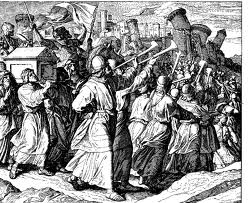
The Importance of Context in the Conquest of Canaan (The Story Notes #7)

jerichoMy church is, across all departments, going through The Story, a chronological, abridged edition of the Bible that takes you through the story of Scripture from Genesis to the end of Acts in 31, novel-like chapters. It’s a fun project that’s challenging me to deal with narrative sections, teach large chunks at a clip, and point my kids to Christ throughout the whole redemptive-historical story-line of the text.

That said, it seemed worth it to start posting my notes for these talks on a regular basis. It might happen every week, or not, depending on how helpful I think it is, or time constraints. My one request is that you remember these are pretty rough notes and I’m teaching my students, not a broader audience.

Text – Joshua 6 and the Invasion of Jericho

While a lot of us have trouble with most of what they read in the Old Testament, up until now a lot of us could get by okay. Let’s not play around here, though–there is a serious difficulty for many of us reading and understanding texts like this. The invasion and conquest of Canaan presents an assault on the modern mind, with modern sensitivities, horrified at what strikes us as a simple war of conquest in the name of God. We live in a post-9/11 world and the specter of religious terrorism, and not to mention modern ethnic cleansing, so this stuff understandably terrifies us.

Problem is, it seems like the Bible is full of awkward sections like this. What do we do with these pictures of violence? Or all the weird laws that we find in the Torah? How do we accept them as the word of God and possibly relate them to our own lives when they seem so terrible? We have to do something with them don’t we? This isn’t just an academic question for a lot of us. These are the texts that get thrown in our faces by our atheist and agnostic classmates when the Bible comes up. And, if we’re honest, they’re the ones that keep some of us up at night, doubting if what we’ve been taught in Sunday School is really all just a made-up, human construction.

What I want to do tonight is try to deal with this text, yes, but also the importance of reading the troubling texts of Scripture in context. In this case there are three contexts that I would tell you that you have to consider: historical, redemptive-historical, and the Gospel. But to set that up, let’s recap the story.

The Story Recap– At this point, the 40 years are up, and the Israelites are beginning to enter and take the promised Land. Joshua, Moses’ Second in Command, is now leading Israel’s armies and beginning to fight the Amalekites, and the rest of the Canaanite peoples, in order to take possession of it. That’s pretty much the story so far from last week.

1. Historical Context – So, here they are, about to take the ‘city’ of Jericho, and here’s where it becomes important to start examining the first context, the historical one, in order to understand what we’re reading.

a. Geopolitical-Theological Power Centers – Most of us, when we hear about a city like Jericho, make the mistake of thinking of a modern city, or maybe an old town, filled with normal life, families, etc. with Israel camping around, ready to invade. Here’s where modern archeology and biblical scholarship begins to shed some light. See, the reality is, most of the “cities” we see listed as being taken are really concentrated military/political/theological centers that controlled the regions.

They were small, maybe about the size of Trinity (our church campus). Realize, this is not LA or even Tustin we’re talking about. These were small, composed of maybe a couple hundred people which is why Israel can march around seven times in one day, and then still have the energy to conquer it. Beyond that, they consisted of military personnel, local royalty, slaves and prostitutes, with the civilian populations (if significant) living outside the walls. This was an attack on the equivalent of a key military base.

And here we come to something important: there is every reason to think that these civilian populations cleared out as the armies approached. There are a number of texts in the Law and in Exodus where God promises to “drive them out” before the Israelites:

I will send my terror in front of you, and will throw into confusion all the people against whom you shall come, and I will make all your enemies turn their backs to you. And I will send the pestilence in front of you, which shall drive out the Hivites, the Canaanites, and the Hittites from before you. I will not drive them out from before you in one year, or the land would become desolate and the wild animals would multiply against you. Little by little I will drive them out from before you, until you have increased and possess the land. –Exod 23:27-31

So, when Rahab talks about the “Fear” that had fallen on the land, there is the strong implication that most of any civilian population had cleared out before the Israelites ever got there. If they didn’t, before, then after 7 days of watching Israel marching around the gates, they did. These were not large massacres, but strategic strikes on key religious and political centers.

b. War Hyperbole and Rhetoric-– Beyond that, we need to address the language about total destruction in these texts right? Because we read these awkward phrases about “men and women and children”, “left no one breathing”, “left no survivors”, etc. According to Scholar Paul Copan we need to know that this is typical Ancient Near Eastern War Rhetoric:

This stereotypical ancient Near East language of “all” people describes attacks on what turn out to be military forts or garrisons containing combatants — not a general population that includes women and children. We have no archaeological evidence of civilian populations at Jericho or Ai (6:21; 8:25).8 The word “city [‘ir]” during this time in Canaan was where the (military) king, the army, and the priesthood resided. So for Joshua, mentioning “women” and “young and old” turns out to be stock ancient Near East language that he could have used even if “women” and “young and old” were not living there. The language of “all” (“men and women”) at Jericho and Ai is a “stereotypical expression for the destruction of all human life in the fort, presumably composed entirely of combatants.”9 The text does not require that “women” and “young and old” must have been in these cities — and this same situation could apply to Saul’s battling against the Amalekites.

So we have good reason to doubt that there was even close to the picture of  families and dense, civilian populations here. And this is not an issue of the text lying either. This is typical ANE war rhetoric and most people would have heard and read it that way.

c. Infiltration as Well — This is backed up by the fact that If you look at the earlier sections of the Law, there are dozens of laws talking about not inter-marrying with people of the land, or later on in Judges, the Bible talks about fights with the Canaanites, that assume they weren’t all wiped out, but continued to be a significant presence in the land. Again, as we saw in this Exodus text, the strategy wasn’t coming in and actually totally wiping people out, but slowly infiltrating key power centers and moving into the land that way. This is not the indiscriminate wholesale slaughter that we might be tempted to picture.

These and a number of other historical factors need to be considered when reading these texts. We live at a distance of thousands of years from these text and bring assumptions to it that the original readers wouldn’t have shared, and don’t assume things that they would have. So whenever you run across a difficult text in the OT, realize that there are a times when a lot of confusion and heart-ache can be avoided with a good commentary and some historical scholarship. Not entirely, of course, but still significant.

2. Redemptive-Historical Context – That said, the historical context isn’t the only one to consider. Another level that we have to consider is the “Redemptive-historical” context–or the whole story of the Bible. These events take their place in a longer story and must be understood within that context or they don’t make sense.

a. God’s patient judgment – One angle on this is to consider why God says he is driving out the Canaanites. Back in Genesis 15:13-16 God says:

Then the Lord said to Abram, “Know for certain that your offspring will be sojourners in a land that is not theirs and will be servants there, and they will be afflicted for four hundred years. But I will bring judgment on the nation that they serve, and afterward they shall come out with great possessions. As for you, you shall go to your fathers in peace; you shall be buried in a good old age. And they shall come back here in the fourth generation, for the iniquity of the Amorites is not yet complete.”

Then again, we read in Deuteronomy 9:4-5:

“Do not say in your heart, after the Lord your God has thrust them out before you, ‘It is because of my righteousness that the Lord has brought me in to possess this land,’ whereas it is because of the wickedness of these nations that the Lord is driving them out before you.  Not because of your righteousness or the uprightness of your heart are you going in to possess their land, but because of the wickedness of these nations the Lord your God is driving them out from before you, and that he may confirm the word that the Lord swore to your fathers, to Abraham, to Isaac, and to Jacob.”

In these texts we see that God was using the Israelites as his sword of judgment. This is not God just looking around at random and destroying a people. The cultures that were invaded were abysmally dark, notorious for their rampant injustices towards the weak and the poor. They were conquerors and bloody bullies who soaked the land in blood and death. These are not peaceful monasteries in Tibet we’re talking about here. Their worship was corrupted to the point that it involved bestiality, temple prostitution (which like involved sex-slavery), and, most horrifying of all, child sacrifice. We have archeological digs with pits, full of the skulls of children these cultures offered up to the flame. As an associate of mine pointed out, just consider Rahab the prostitute–how weird is it that she was willing for invaders to come? No, for her, and those like her, this was not just invasion, but in many ways, liberation.

See, God tells us that he is the God who care about poor, powerless, etc. He cannot and will not let injustice go on forever and so, at times, his final judgment breaks out in the present in order to stop gross injustice. Beyond that, in the first text we see that God waited 400+ years for the people to become corrupt enough to justify thing. He didn’t just pick a land and take it, he waited until the culture became so corrupt and wicked that their judgment was merited and necessary. This was God’s extreme patience towards the Canaanites–he waits hundreds of years for their sin to ripen and mature (far longer than we probably would have), until even God’s patient mercy must give way to judgment.

b. God will give them no taste for conquest — The other thing we need to note is that this is not a set-up for empire-building. In Deuteronomy he commands them not to have standing armies, chariots, or any of the other paraphernalia of empires. This a limited project, undertaken at one time, for a specific purpose. This is not a program of Empire to be appropriated later, or used to justify other violence. “You get this land, about half the size of California and no more.” This is part of the logic of the total destruction of these key sites. Israel is not to get a taste for war. And you see in the rest of the OT, the rest of the Yahweh-approved wars are fought defensively.

c. God’s other purpose is to create a Redemptive Space — The second reason that needs to be considered is what were God’s purposes with Israel. God had project: he wanted to create a people through whom the world would see what God was like. What’s more, the ultimate goal is not for Israel alone, but that all the nations of the world may be saved and blessed by God through Israel in the coming of her Messiah. For this to happen, Israel needed a land, a space to develop a culture as a people, set apart from other peoples, for the redemption of all peoples. They needed space to practice the 10 commandments. A set-apart, holy land devoted to justice, peace, and the true worship of God, in a way that would be un-corrupted by the local Canaanites and their distorted practices.

This is another, if not the key reason to understand that this was not a whole-sale killing, genocide or ethnic-cleansing. Israel took Rahab and her family in as they acknowledged the true God, and as a friend pointed out, this is likely just a shadow of Israel’s mercy to other people–the accounts don’t cover everything. Just as they included repentant Egyptians in the crowd as they left Egypt, it is not unlikely that repentant Canaanites could join the people. Of course, this points ahead to the Gospel of Jesus and the inclusion of the Gentiles. Clearing out the nations serves the purpose of one day bringing in the nations.

So what we’re seeing then, is a tactical, limited invasion, whose goal was to establish beach-heads, driving out the surrounding peoples and their corrupt cultures slowly. Why? For God’s specific, purposes of judgment on a wicked people, and the grand redemptive purpose of saving all peoples. (Incidentally, this is why this can’t be used as a warrant for modern violence–different covenant, no divine command, etc.)

This is where I make an analogy that might not work. Most of us look back at WW2 and think there was a lot of horrible stuff that happened on both sides. I mean, I think I’m only now reconciling myself to the horror of the firebombing of Dresden and the terror of Hiroshima. These were…damnable. Thing is, with all of Europe in the choke-hold of a monster, and the gaping jaws of Auschwitz and the camps devouring millions of Jews, I don’t think any of us would say that no bullets should have been fired or that no bombs ought to have been dropped.

If that holds true for the temporal salvation of some people and one point in history, how much more then for the salvation of the whole world? Again, this may not work for you. I get that. I’m not sure it does entirely for me either. Still, it might put the breaks on our rush to rule this out as something God “couldn’t” do. We have a God who has committed to saving historical beings, precisely in history. We shouldn’t be surprised if that involves some messy moments.

3. Theological Context of Christ – Of course, the final context I would say we need to look at this in, is the Gospel of Jesus Christ. On the one hand, you can’t understand Jesus without the rest of the story of the Bible. On the other, you can’t understand the story of the Bible without look at the Gospel of Jesus. The life, death, and resurrection of Jesus are like a light at the center of the Story-line that allows us to see all things properly in its light.

In this case, I think the Gospel reminds us of a couple of big-picture theological truths that we need to keep in mind when we look at these stories.

God Hates Sin – One thing these texts remind us of is the radical seriousness with which God takes sin. I was talking to a buddy the other day and he was telling me how it just really occurred to him that God hates sin–like, he really can’t stand it to the core of his being. But honestly, that’s a good thing, right? If God is good, loving, just, great, righteous, and holy, he really can’t love sin. He can’t and shouldn’t put up with it forever, right? I mean oppressing the poor has to end sometime right? Violence, arrogance, racism, rape, child-sacrifice, sex-slave trade, and idolatry can’t go on forever. And we don’t want it to.

This is what we see in the Cross of Jesus. The cross of Jesus is God judging sin for what it is–something damnable and horrifying–something that has not place in God’s world and will ultimately be done away with. What happened to Jesus is what ought to happen to us, and will, if we don’t allow him to be judged in our place.

God Loves Sinners – Now, while that’s one truth we need to see, there’s a far deeper one beneath it that is essential for us to consider–God loves sinners:

For while we were still weak, at the right time Christ died for the ungodly. For one will scarcely die for a righteous person—though perhaps for a good person one would dare even to die—but God shows his love for us in that while we were still sinners, Christ died for us. Since, therefore, we have now been justified by his blood, much more shall we be saved by him from the wrath of God. For if while we were enemies we were reconciled to God by the death of his Son, much more, now that we are reconciled, shall we be saved by his life. (Romans 5:6-10, ESV)

The fundamental truth about God that we see in the Cross and resurrection of Jesus Christ is that his will is to save them. He loves them. He doesn’t want to judge us. He doesn’t want to ultimately condemn us. He is just, so if we refuse to turn, if we continue to hate good and choose evil, well, he’ll let us do that and suffer the consequence. But his deep desire is to draw us to himself. He looks at us and says, “Though I can’t stand what you’ve done, both to me, your neighbor, and yourself, yet I love you. I would separate you from your guilt. I would remove from you your sin, that I might hold you to my own heart that loves you still.”

So in order to do that, he suffers judgment himself. Realize, the God we see in the OT, is the same God who was willing  to become a man and suffer the worst pain that anyone in human history has ever faced. This is the God who suffers the rejection of Hell for us, so that we might not face it. In the end, God conquers sinners through judgment–His own, on the Cross. This is ultimately what I have to look to.

We’ve gone through a lot of these different contextual issues and historical considerations that change the shape of how we think about these text. They’re important to consider and helpful as we wrestle with the awkwardness of the story of scripture. At the end of the day, though, I have to put my trust in that God is who I see in Jesus Christ and him crucified–the God who proved himself perfectly just and perfectly loving in a way I could have never imagined. I never could have fathomed a God so good he was willing to die for those who wanted to put him to death in order to save them from death.

So when I come to these troubling texts, no, I don’t just read them and say, “Welp, it’s the Bible, so, no problem here.” I have doubts and struggles. What I do say is, “God, you’ve already proven yourself to be unfathomably just and unfathomably loving beyond my finite and fallen comprehension. I still don’t have a grid for the Gospel. I’m having trouble accepting this, but I trust you, so shine a light on this.” Then I wait. I study, pray, and wait. And you know what? I think God’s okay with that.

If you’re struggling tonight, that’s okay. Church is meant to be a place where, yes, we confess, praise, trust, and grow. It also should be a place where you can safely struggle. What I do hope you’ve seen is that when it comes to difficult texts, context matters–a lot. And can make a big difference. So before you chuck your Bible across the room, slow down, ask questions, do a little digging and prayer and trust God to show up.

Soli Deo Gloria

Okay, so, I know this is an incomplete treatment of the text, or even the whole conquest. I didn’t address God’s rights as creator, scratch the surface of the epistemological issues, moral grounding, and the authority of scripture over culture. Honestly, I had a half hour, and I try not to push my students beyond that. For those who are interested in exploring the question in greater depth, I would commend these resources to you:

1. Is God a Moral Monster? by Paul Copan – This has three chapters devoted to the question of the context that are extremely helpful on this question.
2. How Could God Order the Killing of the Canaanites? by Paul Copan – Short article summarizing much of the book.
3. Is YHWH a War Criminal? by Alastair Roberts — Another thoughtful, article-length treatment of the subject.

A Kingdom of Forgiven Priests (Story Notes #6)

GoldCalfMy church is, across all departments, going through The Story, a chronological, abridged edition of the Bible that takes you through the story of Scripture from Genesis to the end of Acts in 31, novel-like chapters. It’s a fun project that’s challenging me to deal with narrative sections, teach large chunks at a clip, and point my kids to Christ throughout the whole redemptive-historical story-line of the text.

That said, it seemed worth it to start posting my notes for these talks on a regular basis. It might happen every week, or not, depending on how helpful I think it is, or time constraints. My one request is that you remember these are pretty rough notes and I’m teaching my students, not a broader audience.

Things get screwy when you forget who you are–even for a little bit. For instance, when a poor college kid forgets that he’s a poor college kid, and acts like a rich one–well, that looks like years of credit card debt. The same thing is true for Christians who forget their identity–it can look ugly. Tonight we’re looking at the story of Israel getting its primary identity, and as we look at that, we’ll learn something about our own identity as a Kingdom of Forgiven Priests.

Recap – Now, at this point in the story, God has already set the Israelites free. God basically kicked the Egyptians butts by sending ten plagues from everything like flies, to hailstorms to boils to killing the firstborn in every household and so finally the Pharoah let the people Go (Sunday school style). Yeah, and so Moses led them out of Egypt into the desert and here’s where we pick up in verse 1

Text – Exodus 19:1-6

A Kingdom of Priests — Ok, so here we are at the base of the mountain and God here is about to make his covenant with the Israelites. He’s about to make the deal that will make the Israelites his people and he tells them that if they will be his people, if they will keep his covenant, his ordinances and worship him, then the nation of Israel will be for him “A Kingdom of Priests and a holy nation.”

Here we see what God was up to in saving the Israelites. He saved them out of slavery to Pharoah in order that they could be free to be for him a “Kingdom of Priests and a Holy nation.” He saved them for a task. He saved them so that they might serve God his priests, so that they might be a holy nation “out of all the nations.”

In this context, what does it mean to be a priest? Well, in the ancient world and even today, a priest was someone who stood between God and the rest of the people. He was the person who represented God to man and brought man to God. He was the go-between, the representative, the middleman. He taught people the ways of God and led the people in the worship of God. If you wanted to know what a god was like, you’d go check out his priest.

So, what does it mean for God to call an entire nation to be his “Kingdom of Priests”? Well, God is calling these people, to be his representatives to the world. They were to be a nation that taught the rest of the world what God was like. Like Adam in the Garden, they were to live in a way that revealed God to his world.

Israel and the Church

Ok, now, if you have your Bibles I want you to go to 1 Peter 2:9. Fast-forward from Moses about a thousand years to about the year 60 something A.D. Peter, one of the first followers of Jesus is writing a letter of encouragement to Jewish and Gentile Christians, the beginnings of the Church scattered throughout Asia Minor who are possibly suffering persecution and whatnot. Towards the beginning of the letter here in chapter 2 verse 9 he drops this statement:

“But you are a chosen people, a royal priesthood, a holy nation, a people belonging to God, that you may declare the praises of him who called you out of darkness into his wonderful light. Once you were not a people, but now you are the people of God; once you had not received mercy, but now you have received mercy…Live such good lives among the pagans that, though they accuse you of doing wrong, they may see your good deeds and glorify God on the day he visits us.”

Hold on there, did you hear that first part? “But you are a chosen people, A ROYAL PRIESTHOOD, A HOLY NATION, belonging to God that you may declare the praises of him who called you out of darkness into his wonderful light.” Do you see what Peter is doing here? He’s writing to this early Christian community composed of both Gentiles and Jews and invokes the Exodus text about the Israelites to apply it now to the community that has formed around the person of Jesus.

He tells this group that they are now to be to Jesus, what the Israelites had been for God back in the day. They are to be the people who declare the praises of “Him” who called them out of darkness into his marvelous light. Just as the Israelites were supposed to do this for the God revealed himself in the Exodus, the church is supposed to do this for that same God who revealed himself in Jesus.

This happens in two basic ways, both in the OT and in the NT:

1. Living Good Lives Among the Pagans — See, in just a chapter, Moses is going to lay down the 10 commandments (and the rest of the commands of the covenant) that express God’s expectations for the relationship. As Israel obeys those commands and observes them, the world begins to see what God is like.

It’s kind of like in your family, you have family rules. When you find out about your friends house-rules growing up, you find out about their parents. Are they uptight? Relaxed? Fun? Organized? Etc. In the same way, God’s commands are the house-rules that reflect God himself. That’s because those commands are not just arbitrary rules that God makes up, but expressions of his character. So, when you look at the commands they begin to tell you about what he’s like:

1-3 God demands we worship no other gods, we worship him and honor him properly because he cares about true relationship.

4. God tells us to rest because he is the creator and wants us to trust in him.

5. He wants us to honor our parents, and respect the authority by which the world functions.

6. Lying about our neighbors destroys the fabric of love and respect he wants for the world.

7. Stealing is the opposite of the generosity which characterizes the Creator God.

8. Murder is the opposite of the God who gives life.

9. Adultery is an affront to the value God places on relationships and promise-keeping.

10. Coveting reflects an ingratitude and lack of contentment that denies God’s provision.

The point is, in each of these commands you see something about the world and the God who made it. As Israel lives out these commands, the pagan nations around them find out something about the God that they worship. They would see that the God of Israel had just and wise laws and so was a just and wise God.

The same is true for us. As we live good, just, patient, honest lives in front of our neighbors, they should see something about the God we worship. It should be the kind of thing where, even though they don’t believe in God, or agree with our beliefs, they should be glad we’re their neighbors because of the lives we live with them.

Problem –  The problem is that Israel sucks at this. I mean, really, royally sucks at this. They hear the law, agree to it in a very sacred ceremony, and then Moses goes up the mountain for a 40 day to get the law on Tablets. In the middle of that, Israel get’s antsy and decides, “You know, let’s make an idol. That sounds like just what we need. Let’s get an idol.” Of course, right at the front of the list of commands is, “no idols”, right? Now, as usually happens, when you start worshiping other things, other sins follow. All idolatry leads to immorality somehow. In this case, they start partying, doing weird, freaky sexual stuff, and just getting crazy.

Now, I read this and kinda shake my head, but that’s totally me, right? I mean, I’ll be at church one minute, and then next I’m cursing somebody out in my car, or hating my neighbor, or back at that same sinful pattern I’ve been trying to break. I don’t know what it is for you. Maybe it’s being at that party. The blunt in hand. Blacked out again. Sinfully controlling people around you. Lying to make yourself look better. Disrespecting your parents. Coveting and comparing yourself to your neighbor. Murdering people in your heart.

So, how are we supposed to be priests if we’re caught up in all of this? How do we represent God to the world if half the time we look just like them?

2.  Singing His Praises For Salvation. This leads us to the next way we show the world what God is like. Its something that comes up, not so much in the text of the chapter, but in all the chapters that the Story cuts out. See, over next chunk of Exodus, and the whole book of Leviticus, God lays out a pattern for worshiping him, the other key task of the priests.

“And let them make me a sanctuary, that I may dwell in their midst.(Exodus 25:8, ESV)” Just like in the Garden, God wants to dwell with his people. He gives laws for how the Tabernacle, the traveling tent in which God met with Moses should be made. If you study it, it’s gorgeous and intricate, in-laid with all kinds of craftsmanship. Beyond that, it goes through in painstaking detail the processes involved in dwelling and worshiping the holy God. There is chapter after chapter about how to deal with ceremonial issues, and at the center of them all stands the chapter on the Day of Atonement.

See, God gives the people of God his laws, but the fundamental truth about Israel is that it can’t keep it. Inevitably, they will fail to obey God’s commands and so for them to maintain right relationship, God institutes the sacrificial system in order to deal with that. The sacrificial system teaches two truths simultaneously: God wants relationship with us, and our sin gets in the way of that. God’s holy and perfect character is opposed to our sin, while still loving us.  Throughout the system of sacrifice we see that God is totally holy, perfect, righteous, and will not tolerate sin. And yet, he loves sinners and wants to be near them, so he provisionally accepts sacrifices in their place to pay for their sins.

In the sacrifices, there were multiple levels of meaning going on, but at the heart of it was the recognition that sin deserves death. As the worshiper brought the animal to be slaughtered, they were basically saying, “God, through my sin I’ve chosen to reject you, the source of life, which deserves death. Through sin, I’ve chosen to break relationship with you, the source of life, so I shouldn’t have life with you.” And God accepted that animal in their place.

Thing is, all of this points to the Gospel of Jesus at multiple levels. In Jesus, God makes a way for the relationship to work. In Jesus, God comes near to us despite all of our failures and all of our inability to perfectly keep the Law. Jesus is God in the flesh, coming near to dwell with us. It is God saying, “I know what you’re like. I know you can’t pull this off, or make this relationship work, so I’ll go ahead and ensure it.” And so Jesus goes to the Cross, and actually substitutes himself for us to pay for our sins as they deserve, without destroying us in the process.

So, in the sacrificial system we see why we worship. We worship because God has come near in Jesus and saved us from sin and guilt, and set us free to live for him. And there’s a holy irony about it: when you see God’s grace towards you in Christ, forgiving you for your failure to keep the commands, you begin to worship him more, and the reverse of the idolatry pattern kicks in: you start to obey more.

And this is the pattern that we model to the world. We show the world who God is in our obedience, our praise to God for his mercy on our disobedience, and our renewed love and gratitude for him in that.

What does this Look like? A lot of things, but it includes people who praise God by obeying and singing about his forgiveness for the times they fail. People who strive to live holy lives in front of the world around them. People who are honest about their failure to one another. People who are gracious when others do the same. It looks like a Kingdom of Forgiven Priests.

Soli Deo Gloria

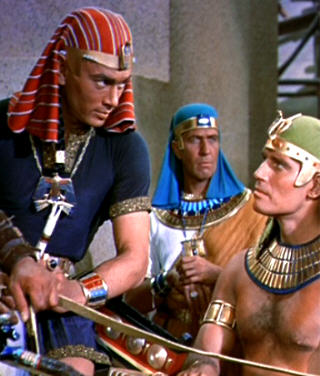
God v. The gods in the Exodus (The Story Notes #5)

moses and ramses

My church is, across all departments, going through The Story, a chronological, abridged edition of the Bible that takes you through the story of Scripture from Genesis to the end of Acts in 31, novel-like chapters. It’s a fun project that’s challenging me to deal with narrative sections, teach large chunks at a clip, and point my kids to Christ throughout the whole redemptive-historical story-line of the text.

That said, it seemed worth it to start posting my notes for these talks on a regular basis. It might happen every week, or not, depending on how helpful I think it is, or time constraints. My one request is that you remember these are pretty rough notes and I’m teaching my students, not a broader audience.

Text: Exod. 3

We come here to the story of the Exodus. If you’ve seen the 10 Commandments or the Prince of Egypt, or just grown up in Sunday School, you know what I’m talking about. Thing is, as far as the Bible goes, there are few books, or stories more important than this one. The story of the Exodus shapes the rest of the story to come, and the Gospel as a whole. While we can’t hit all of it tonight, I want us to see a few key points that you need to grasp if you’re going to understand the Exodus and really the Gospel itself.

So, what we’re going to do is answer three questions: What does God do in the Exodus? How does he do it? What’s the result?

Re-Cap – But first, let’s do a little recapping. So, last week we saw that Joseph led his family down into Egypt and life was good. It was good for a long time but then, his family grew and started becoming a mighty nation, so a later Pharoah enslaved them and put them to work. This last for hundreds of years and it was generally a horrible time. After about 400 years of this, things got interesting.

Pharaoh decided to kill all the little boys of the Hebrews in order to curb the population. It didn’t work too well, but one little Hebrew boy in particular was saved and, through a quirky chain of events, was adopted by Pharaoh’s sister/niece. He was named Moses. So, this Moses was a Hebrew, raised as an Egyptian in the household of Pharaoh. After he grew up, there came a point when he began to be burdened by the plight of his people. He ended up killing a guard who was beating a Hebrew slave, and it kinda looks like he might have been trying to save his people, so, the current Pharaoh got pissed and Moses had to run away.

Moses ran away to the desert, met a family, married a girl and then worked as a shepherd for 40 years. And that’ where we pick up the story.

What Does God Do? Now we can start to answer the question, what does God do? He reveals Himself in Saving Israel. That’s something you need to understand. God’s beating heart in saving Israel is that people would know him for who he is, the saving God who keeps covenants, unlike all the false gods. So God drafts Moses to head up this effort.

Encounter w/ Moses in Genesis 3

There’s a lot going on here, but the big thing is God’s revelation of his name. See, Moses asks him, “What should I call you?” In Egyptian theology, to know a god’s name is to know how he works. Well, God wants Israel know him for who he is so he gives them the name ‘I am that I am.’ That tells them a few things:

  • You can’t control me. I’ll give you a name, but the name just tells you that as opposed to all the gods you know, the God who promised your ancestors is the real God.
  • It also tells us that  “I’m faithful and you can count on me. You can’t know me fully, but I do want to be known by you.”

God wants to be known for who he is, not the false, silly ideas we make up about him. He wants Israel to know hims as faithful, sovereign, and good. And so he goes on to tell Moses that he will make himself known in saving Israel, through the Exodus.

So how does God do it?

How Does God do it? Well, what stands in the way of Israel’s knowing him? Two things: Pharaoh/gods & the Israelite’s own guilt.

a. Judging the gods – The first great obstacle in Israel not knowing who God was her slavery to Pharaoh and the gods of Egypt. Israel was tempted to doubt, or fail to see God for who he is because they enslaved or overpowered by other gods, other dominating forces in their lives. And this is true of us. When there’s something in our lives that just seems to own us (slavery to porn, to relationship, work, etc.) we’re tempted to doubt God, right? Or maybe, if it’s something we like, we’re just tempted to not even look for him, right? I mean, this other little god, this thing is good enough, so why go looking?

God knows this, and so He moves to dominate the false gods of Egypt, to show that these false pretender gods are no match for his glory. That’s what most of this account is about: a demonstration of God’s power, God’s true supremacy over the false gods of the Egyptians who claimed power, including Pharaoh. It starts with Moses encounter with Pharaoh and the staffs.

1. The Rod – Moses goes to tell Pharaoh to let God’s people go, and he puts forward God’s staff as a symbol of authority. Now, the rod, in Egypt was a symbol of royal, god-like power. So, Moses throws his down and it turns into a snake. Pharaoh has the magicians do the same thing. Then, Moses’ snake eats the other snakes demonstrating that the rod that Moses bears is a true symbol of authority, God’s authority. Pharaoh still won’t acknowledge the Lord.

2. The plagues – In the same way, the rest of the plagues are a demonstration of God’s power. The Nile river had a god attached to it, as it was the source of life for the whole Delta, but the God of Israel turns it to blood. From there, all the rest of the plagues with animals, boils, etc. are systematically taking apart the pantheon and showing his total sovereignty over nature and everything in it. You can see this again, especially in the blotting out of the Sun, “You think Ra is the sun-god? Watch me turn off my lamp for a few days.” Still, every time, Pharaoh hardens his heart and refuses to listen to God in his stubbornness.

3. The death of the firstborn – Finally, this comes to it’s climax in the terrible judgment on the firstborn of Egypt and we see clearly God’s intent to reveal himself in judging the god’s of Egypt:

12:12 For I will pass through the land of Egypt that night, and I will strike all the firstborn in the land of Egypt, both man and beast; and on all the gods of Egypt I will execute judgments: I am the Lord

See, Pharoah had exercised the power of life and death over Israel’s firstborn, slaughtering an entire generation of them. Now God claims the firstborn of Egypt in recompense and judgment on the arrogance of Pharaoh and the gods of Egypt, showing that He is the true lord of life and death.

God will, over and over again judge the gods in your life, eventually showing you the way they either enslave your, or fail you. (Story of God exposing a false god in my life.) God will show you that every other god fails and is false. He will judge it and you need to pray for that, because in the end, the true God is what you need. He is the one who will not fail. He is only one who can satisfy your soul and save you in the day of trouble.

But that’s not the only way he reveals himself.

b. Showing Mercy to Israel — See, the other problem of was that Israel was guilty of sin and idolatry as well. We’ve already kind of gotten there, but while they were in the land and there is every indication that they had sinned and worshipped foreign gods as well. So, in The Passover God gives them a way of escaping the judgment they deserved.

The destroyer was coming through all of Egypt that night. While in most of the other plagues, God was separating out Israel from Egypt, to demonstrate his intent, here he would not. The destroyer would come through and take the firstborn in all of Egypt. As we talked about last week, the firstborn represented the hope and future of the whole family. To take them was atonement for the sin of the people. But God was gracious and so he told them that if they would take a Lamb, slaughter and put the blood over the doorway, they’d be saved. (For those concerned, there are hints that the Egyptians had the chance to put blood on their doorpost as well, if they had learned to fear the God of Israel at that point.)

He was saying to them, “I’m going to set you free, but realize that I know you are culpable as well. You’ve been willingly worshipping false gods that enslave you. And that deserves judgment. Instead, I will show mercy and deal with your sin by accepting this lamb in your place.” And so, through the judgment on the Firstborn and the Passover, God revealed himself by saving Israel. In that one act, Pharaoh and the gods were judged, and Israel’s sins were forgiven in mercy.

Of course, that’s how he reveals himself to us as well, through Jesus Christ. See, Jesus Christ is the Passover lamb that was slain, and in his death and resurrection is the judgment on all the false gods that enslave us. His death and resurrection reveal the powerful, merciful God who saves us.

3. What is the result?  So what is the result? We are set free from slavery to false gods, to worship/serve the real God. See, God kept on telling Pharaoh to let Israel go so that they could ‘serve’ him. That word is the Hebrew ‘avodah.’ It can mean serve, or worship. In the end, it’s the same thing. The point is, God wasn’t setting Israel free so they could go off and do their own thing. He set them free from Egypt so that they could come and serve him, worship him, ultimately, to be in relationship with himself.

That is true of us. God doesn’t set you free from false gods, just to go off and do your own thing. He sets you free for relationship with himself. To serve him because serving him is the only true freedom there is. Of course, this only happens though when you see God for who he is in the Gospel: Powerful. Real. True. Covenant-keeping. Just. Merciful. Gracious. Loving.  Basically, all the things we see in Jesus.

And when you see that, the only fitting response is to worship, to serve him with your whole self.

Soli Deo Gloria

The Spiritual Value of Mortgage Banking

houseIn some churches, guys are often fed the lie that unless they’re a pastor, or doing some ‘secular’ work that can be quickly linked to some moral or spiritual value, it’s 2nd-class work. Or if you’re in a church where the whole ‘man of adventure’ thing is being pushed, unless you’re out chopping down wood, or fighting some battle, it’s ‘just a job’ that you have to suck it up and work it for a paycheck. Mike Erre addresses this myth in his book Why Guys Need God: The Spiritual Side of Money, Sex, and Relationships, by talking about his buddy who’s an average, un-sexy job in the mortgage industry:

How should my friend see his job? As simply a means of paying the bills? Or as something much more?

The first thing we might say to this friend is that he must see his job within the big, epic, story we talked about…[creation, fall, redemption]. It is part of being human and being a man. And he must find a way to name the animals in his current occupation in order for him to see its place within the larger story. This is absolutely critical if he is to discover God’s purposes for him in his job. How does he do this?

We might begin by saying that human beings need shelter. That is not optional. Owning a house, then, is a good thing. Helping people to live in a way that brings comfort and security is an important thing. Not only that, but because of the legal and financial gymnastics involved in buying a home, my friend is offering a valuable service to his clients by guiding them through the bewildering maze of numbers, points, and payments.

This man also does his work with honesty and integrity. He genuinely seems to put his clients first and tries to bring Jesus glory by speaking kindly and considerately to all around him. He truly does his work “as unto the Lord.” Is this not worship? Is this any less spiritual than pastoral work or missionary work? Of course not. Many have come to faith because of this man’s life and work. He demonstrates what Jesus is like through his kindness and honesty. And he is generous with his money. He works to remedy injustice around him, and he supports several ministries as well as his local church. (pg. 68)

This is an ordinary man following God’s call. Through the way he carries out his daily work as a mortgage broker he is living as an Image-bearer and a disciple of Jesus, on mission in the world.

Honestly, whatever you’re doing (excluding the obviously immoral), you can do as part of your call as an Image-bearer and a disciple of Jesus. Do not be fooled into thinking that the only ‘spiritual’ things you do are those that happen in the local body. I love the local body, and I think people need to serve in it, but don’t for a minute think that the other 40-50 hours a week you spend at your job isn’t also an opportunity to love your neighbor and glorify God in what you do.

Soli Deo Gloria