Turning the King Into a Fox (Or, Irenaeus on the Silliness of Heresy)

fox

I love foxes, but still, not as good as Jesus.

Among other things I’ve been reading Irenaeus’ classic Against Heresies and loving it. His goal in the work is to describe and debunk the heretical teaching of the Valentinian gnostics who were perverting Christian teaching into their bizarre, absurd system. The most frustrating part was the way these gnostic teachers, in their attempt to fool the faithful, were twisting scriptures in order to support their teaching:

Such, then, is their system, which neither the prophets announced, nor the Lord taught, nor the apostles delivered, but of which they boast that beyond all others they have a perfect knowledge. They gather their views from other sources than the Scriptures; and, to use a common proverb, they strive to weave ropes of sand, while they endeavour to adapt with an air of probability to their own peculiar assertions the parables of the Lord, the sayings of the prophets, and the words of the apostles, in order that their scheme may not seem altogether without support. In doing so, however, they disregard the order and the connection of the Scriptures, and so far as in them lies, dismember and destroy the truth. By transferring passages, and dressing them up anew, and making one thing out of another, they succeed in deluding many through their wicked art in adapting the oracles of the Lord to their opinions. –Against Heresies, 1.7.1

Explaining the way the gnostic use of the Bible was unbiblical, he came up with a brilliant analogy for their method of scriptural interpretation:

Their manner of acting is just as if one, when a beautiful image of a king has been constructed by some skilful artist out of precious jewels, should then take this likeness of the man all to pieces, should rearrange the gems, and so fit them together as to make them into the form of a dog or of a fox, and even that but poorly executed; and should then maintain and declare that this was the beautiful image of the king which the skilful artist constructed, pointing to the jewels which had been admirably fitted together by the first artist to form the image of the king, but have been with bad effect transferred by the latter one to the shape of a dog, and by thus exhibiting the jewels, should deceive the ignorant who had no conception what a king’s form was like, and persuade them that that miserable likeness of the fox was, in fact, the beautiful image of the king. In like manner do these persons patch together old wives’ fables, and then endeavour, by violently drawing away from their proper connection, words, expressions, and parables whenever found, to adapt the oracles of God to their baseless fictions. We have already stated how far they proceed in this way with respect to the interior of the Pleroma. -ibid, 1.7.1

Basically it’s like they’ve taken the Mona Lisa, cut it up, and re-pasted it together in the shape of a toilet and called it Leonardo’s masterpiece–or rather an improvement on it. Now, the fact that this can happen with the scriptures, that people can take them, quote them, and use them to justify all sorts of doctrines is troubling to some. Many, in seeing the way scripture is used in the mouths of false teachers and heretics, might despair of them, or doubt their beauty and efficacy. Not Irenaeus. He says that for the faithful, this shouldn’t invalidate the scriptures or make them any less true and precious:

In like manner he also who retains unchangeable in his heart the rule of the truth which he received by means of baptism, will doubtless recognise the names, the expressions, and the parables taken from the Scriptures, but will by no means acknowledge the blasphemous use which these men make of them. For, though he will acknowledge the gems, he will certainly not receive the fox instead of the likeness of the king. But when he has restored every one of the expressions quoted to its proper position, and has fitted it to the body of the truth, he will lay bare, and prove to be without any foundation, the figment of these heretics. -ibid, 1.9.1

The key is taking the precious stones and restoring them to their “proper position”; contextual reading of the scriptures according to basic principles of exegesis matters. Verses need to be taken within chapters, chapters within book, books within the canon, and, yes, for those of us at the end of the 20th century, canon within the broader churchly tradition of interpretation. (Not that the tradition stands over the scriptures, but at the very least it doesn’t hurt to listen to what wise biblical teachers of other generations past have found in them.) When we do these things, instead of the fox, the beautiful picture of King Jesus emerges once more, ready for the adoration and worship God intended to lead us into through his Spirit-inspired scriptures.

Soli Deo Gloria

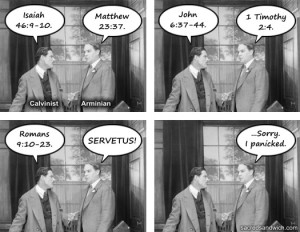
Responses to “Calvin Killed Servetus!” by Denomination (Or, Dealing with Theological Moral Hubris)

men_debate_calvinism

HT: The Sacred Sandwich

It’s a well-known fact that the heretic Michael Servetus was burned at the stake in Geneva during Calvin’s pastorate there. This is universally condemned by both Calvin fans and foes alike. At least it should be. What’s often debated is Calvin’s role in the whole affair and what impact, if any, it should have on our judgment about the man, his theology, and the subsequent theological tradition that follows him. And indeed, it is problematic. That anybody could think that burning at the stake those with whom we disagree on theological matters is, in any sense, compatible with the Gospel of the crucified Messiah, is a morally disastrous lapse in judgment to say the least.

So what do we say to this? Especially when the subject is brought up in order to discredit Calvin or the Reformed tradition as a whole?

Two Classic Responses
1. The General Point. The first typical (and I believe valid) response is to make the general point that one wrong action, incident, statement, or even habit, doesn’t necessarily invalidate someone’s entire career. Obviously, one can find dubious actions and statements in the biographies of most of history’s heroes. Lincoln’s anti-slavery record is brilliant and yet he made statements that by contemporary standards (as well as transhistorical ones) are quite racist. Martin Luther King Jr. broke his marital vows to Coretta Scott King numerous times. And no, this isn’t just prudery or relativistically equating personal sexual misdeeds with corporate violence. By engaging in the adulterous trysts he did, he risked the public moral integrity of the entire Civil Rights movement he came to represent. At the biblical level, one might point out that not a single figure in the Bible, even its authors, comes out clean except for Jesus. In that sense, Calvin keeps company with the long line of saved wretches like Abraham, Moses, David, and Paul.

2. Moving to Calvin. Second, one can move to the particulars of the case, placing Calvin in his historical context. Clearly, he wasn’t the only one at the time to make that lapse. Calvin was unfortunately a “Constantinian” in the sense that he un-biblically mixed the authority of the State with that of the Church. But then again, so was everybody else. It’s easy to forget that Servetus was already condemned to death by the Roman Catholics. He escaped a death sentence in Vienne to run to Geneva. Similarly, if the Lutherans had gotten their hands on him he would have been executed. When the Magistrates of Geneva asked the magistrates and theologians in places like Zurich, Basel, and Wittenberg, they all agreed that Servetus should have been burned.

Further, Calvin had earlier explicitly warned Servetus in correspondence not to come to Geneva or things would not go well for him there either. He even risked his own life at one point to go meet him in an area outside of Geneva where he himself was a wanted heretic in order to reconcile theologically. It is not the case that Servetus was the victim of Calvin’s peculiarly authoritarian personality that flowed from his inhuman, predestinarian God. If anything, it was an inherited, though still culpable, flaw in thought and practice. It should be noted that Calvin held no explicit political authority in Geneva and was not even a citizen until much later in life. He did play theological witness in the trial, while at the same time arguing with him in private in prison, urging him to recant. Beyond that, he is reported to have pleaded with the city elders to, at the very least, execute him in a more humane manner than burning, but rather by hanging. (Now, to us that doesn’t sound like much, but comparatively-speaking that’s something.)

To place it in a broader framework, sadly Servetus was one of many heretics tried and executed in the Reformation era by both Catholics and Protestants of all stripes–they were universally more violent and barbarous times. To put it bluntly, the reason Servetus is brought up today is that he was a little more famous, something of a symbol, and because it’s an easy way to criticize and single out Calvin. For more along these lines, see R. Scott Clark’s post on the “Calvin as Tyrant Meme“, and a more complete summary of the Servetus affair here.

Dealing with Theological Hubris by Denomination
Now, while all of these points ought to be considered and weighed, there’s another way to handle the whole charge: the tu quoque (“you too”). Admittedly, it is formally a fallacy, but in response to the ad hominem nature of the “Servetus” denunciation, I think it has a part to play in the discussion. It’s more commonly-observed that most of us suffer from chronological moral hubris, the malady that makes us think we obviously wouldn’t have done what our historical forebears did if we had been there, attributing to ourselves a righteousness in some particular area that is only ours by dint of our social-historical location. What also needs to be recognized is how easily people fall into denominational or theological moral hubris, in thinking one’s own tradition has no truly dark stains in it. This particular hubris is commonly-spotted whenever the Servetus charge is raised.

In order to remedy this situation, I thought it would be helpful to begin to catalog differing “Calvin Killed Servetus”-type rejoinders to some of the major theological and denominational traditions. Some might find this dubious and divisive. I sympathize. I find my writings dubious most of the time as well. In this case, I’d like to think of it as a helpful moral reminder to cool your theological jets when it comes to traditions other than your own. It’s a negative task, with a positive goal: greater humility towards the various wings of God’s family.  That’s a little easier when we remember that everybody’s got something–I just thought it might be helpful to list some of the biggies.

Note: this is not intended to be a comprehensive list, nor is it intended to be denial of the fact that each of these denominations have martyrs, and gentle heroes of the faith. Still, in no particular order, here goes:

  • Anglicanism – Long history of violently persecuting Puritans, Dissenters, Lollards, Society of Friends, Catholics, and everybody not going to the State church. Also, Henry the VIII. ‘Nuff said.
  • Anabaptists – John Leiden and the freaky weird, violent, Munster incident. I’ve long been convinced the Anabaptists saw the beauty of pacifism partly because they got their lunches handed to them at Munster. I know that’s not entirely true, but… (For contemporary Anabaptists brought in via John Howard Yoder, you might want to think about his shady legacy.)
  • Roman Catholics – Do I really have to? Well, just off the top of my head: the Inquisition, various Crusades, vaste swathes of Papal history…
  • Eastern Orthodoxy – Some crossover highlights with the Roman Catholics, (Crusades), 1000s of years of collaboration, collusion, and sanctioning of corrupt governments by various patriarchs and theologians in the church. In our own day, one thinks of the persecution of fellow Christian Evangelicals in Orthodox countries like Russia supported by current patriarchs.
  • Lutherans – Well, Luther wasn’t a daisy himself. Most of us know that, but let’s just mention two: “The Jews and their Lies” and the Peasant revolt.
  • Methodists, Baptists, Society of Friends – All three of these streams and denominations, in their American iterations at least, have, alongside of others, had devastating struggles with slavery and racism. For quite some time it was perfectly acceptable to own slaves within the Society of Friends until the valiant efforts of John Woolman. Both the Baptists and the Methodists had separate African-American counterparts formed because of white racism.
  • Pentecostalism, Charismatics – Now, when you start moving closer in historical distance to the current day, denominations and traditions are less likely to make some of the tragically violent mistakes of their pre-cursors, simply by dint of cultural and political shifts. Given that the rise of Pentecostalism and Charismatic movements in the last 100 or so years, most of the excesses will be of the more common sort: pastoral indiscretion, financial shadiness, abuses of power, and widespread problems with heresy and false teaching. This can happen in all streams, though.
  • Non-Denoms and Young Denoms – Of course, there are many random theologically-indeterminate, non-denominational evangelicals, or maybe emergents, who don’t feel very bound to any tradition and sit loose with respect to Christian history as a whole. They might pride themselves on their virtually stainless record. Let me just say that having a decent theological-history that goes all the way back to the 70s is nothing to brag about. That’s like boasting about your perfect attendance on the second day of school. The reality is, in some way you’re dependent on what comes before so you, regardless of whether or not you acknowledge it.

As I said, this is a far from comprehensive list. It’s open to revision and addition. Sadly the history of Christian sin and failure is broad and wide. Thankfully so is the grace of God. He can use the broken and sinful to do his good work. People like you and me. Even people like John Calvin. Just something to keep in mind next time you’re about to write of a particular thinker or an entire tradition. 

Soli Deo Gloria

Addendum: Benjamin Corey wrote a version of this Calvin argument recently. Honestly, there’s not much new here. The one extra point I did want to address is his comments about “Calvinists” who’ve never read Calvin, nor grappled with the roots of their theology. The implication is that:

  • To be a proper Calvinist is to follow the teachings of one man, John Calvin.
  • If you would just look at the source, you’d see it’s a spoiled well.

Let’s take those in reverse order. First, this is essentially a version of the genetic fallacy. The fact that my fourth grade teacher was a drunk and a torturer of puppies would do nothing to invalidate him as a source of history, mathematics, English, or anything I may have learned in his class. Also, see the whole article above.

Second, the term “Calvinist” originated as a pejorative insinuating that the Reformed Churches took their teachings only from one man, John Calvin, that they were novel, and so forth. In fact, “Calvinism”, so-called (thought of only as predestination), had its origins (excluding the NT), at least as far back as Augustine, and much of the Medieval tradition, which affirmed a very robust account of predestination (Anselm, Aquinas, Ockham, not to mention Luther, etc). Also, Calvin had a ton of contemporaries (Bucer, Zwingli, Viret, Vermigli, Musculus, etc) who taught in various churches and cities in and beyond Geneva, who crafted confessional statements and wrote theology consistent with Calvin’s, independent of Calvin, and even, at times, influencing Calvin. It is, then, a gross theological caricature of “Calvinists” or the Reformed based in historical ignorance to say that we are limited to, or even find our roots in this one teacher. It’s simply not true.

For more on this sort of thing, I’d point you to Kenneth Stewart’s 10 Myths About Calvinism.

Preaching A and B (Or, How Preaching is Like Feeding Your Kids Vegetables)

I don't think I was ever this cute--my mom says I was cuter.

I don’t think I was ever this cute–my mom says I was cuter.

I didn’t like eating broccoli as a kid. I don’t think any kid does. In fact, I distrust people who tell me they’ve always liked it. I mean, I’ve made my peace with it over the years–I had freakishly high cholesterol for some reason, so my parents fed it to me almost every night–but you never really like broccoli. That’s why parents usually try to find some way of feeding it to their kids. It’s good for them, but they won’t willingly eat it. It has to be fed to them.

Biblical truth is like that sometimes. There are a number of doctrines that we need to believe for our spiritual health, for us to have a correct view of God, the Gospel, and our lives, that aren’t particular appealing to us given our life-circumstances, intellectual history, etc. This is true not just at a personal level, but also at a cultural level. Certain aspects of biblical truth are just going to be harder to swallow in each culture given the dominant paradigms within them. For instance, in our relativistic-individualist culture teaching about truth and authority won’t be particularly popular. Still, we need to understand the nature of truth and God’s authority or our lives will go off the rails. Or again, the doctrine of God’s judgment is ridiculous, harsh, and arbitrary to the vast majority of Americans and secular Westerners, but it’s a core biblical teaching we need to understand if we are to understand the Gospel of the Cross, the Kingdom, or God’s promised salvation.

So, how do we preach and teach these truths in our culture in a way that they’re received and heard?

Keller on Preaching A and B
KellerPreaching to skeptical Manhattanites Tim Keller’s become a bit of an expert on this sort of thing. In his book Center Church he says that preachers need to be able to distinguish two types of beliefs in our culture: “A” beliefs and “B” beliefs. “A” beliefs are those bits of biblical teaching that people in the culture already hold by common grace. For instance, after a couple thousand years of Christian influence, our Western culture places a premium on forgiveness, or on the notion of human rights, so they readily accept those parts. Still, there are “B” beliefs in the culture, beliefs that function as ‘defeaters’ that make other Christian doctrines seem implausible and problematic as we pointed out above. (pg. 123-125)  You’ll have to do some thinking and research on this because these will change from culture to culture.

Keller says there are two things we need to do once we’ve identified those two sets:

  1. First, we need to make sure and affirm the “A” doctrines. God’s common grace has given people in the culture real wisdom, real truth, and we need to be as positive about them and preach them as forcefully as we can and show them that, in fact, we believe these truths even more strongly. “You believe in human rights? Great! So do we, but even more strongly because of the doctrine of the Image of God.” We do so first because they are scriptural. I mean, we should be talking about forgiveness, the Image of God, and grace anyways. Beyond that though, these ‘A’ doctrines form points of contact with our culture that enable us to gain a hearing within it.
  2. The second thing we need to do is challenge the “B” doctrines that make the Christian faith implausible. We need to engage our hearers to show them that their doubts are rather doubtful, or more problematic than they realize. One of the ways we do this is on the basis of the “A” doctrines we already identified and affirmed. The goal is to show that their “B” beliefs are inconsistent with their “A” beliefs. This is why it’s particularly important to emphasize the “A” doctrines. Keller uses an illustration about trying to make rocks float. Logs float and rocks sink. If you’re going to get rocks and logs across a river, you have to lash the logs together and put the rocks on top and “float” them across. In a sense, the same thing is true with doctrines. Your goal in preaching is to connect the dots between doctrines that people like, their “A” beliefs, to the ones that they’ve rejected on the basis of their faulty “B” beliefs.

Making it Concrete
What does this look like? Well, an “A” belief we’ve already identified is that of human rights. Our culture has a particularly keen sense of the rights and worth of the individual. Despite the abuses and confusion surrounding the issue, I think that’s a good, biblical insight. As we already said, the Image of God gives us good reason for affirming basic human rights. Now, a “B” belief that our culture holds which undermines basic Christian doctrines such as sin, judgment, God’s authority, etc. is the pervading moral relativism that relegates moral judgments to the sphere of mere personal opinion. Our culture strongly assumes that everyone has the right to make their own judgments about what is acceptable behavior, and that no one view can claim to be the “right” one. It’s a matter of individual preference. But “A” and “B” can’t both be true. If you want a robust notion of human rights, you can’t keep your relativism. If you think the Civil Rights movement was a good thing, a right thing, a thing that ought to have happened, not just something that suits your particular fancies, then you can’t consistently be a relativist.

Again, I remember having a conversation with my friend a few years ago on how to preach the difficult doctrine of the wrath of God. In a traditional Reformed fashion he argued that God’s holiness and righteousness require his wrath against evil and that’s generally how he approached it. Now, I think he’s basically right, but still, when it comes to preaching I favor recent approaches like that of Miroslav Volf who argues for it from the reality of God’s love. He points out that most of us will concede God is a God of love, but if God does not have wrath and judgment against the creation-destroying sin we participate in, he can’t truly be love. A God who doesn’t strongly reject and judge that which destroys the objects of his affection, can’t really be said to love them. To have a God of love, you need a God of judgment.

Or again, our culture is currently rediscovering community. We realize that we need each other–we don’t function well as islands. That’s a thoroughly biblical thought, taught over and over again in the Gospel. At the same time, our radical individualism and worship of the autonomy of the sovereign individual makes any idea of standards of belief or practice very distasteful. No one has the right to tell me there is a “right” and a “wrong” way to believe and act that I don’t determine for myself. The problem is that any community, even the most inclusive and anti-authoritarian, if it is to remain stable and safe, needs standards and norms governing its shared life.  If you want community, any kind of community, you’re inevitably going to have to accept norms of belief and practice.

Examples like this abound (cf. Paul at the Areopagus in Acts 17 for a biblical model) but to sum up, in preaching and teaching you move to establish “A” because its right, but also because it is your best way of undermining “B”, enabling you to teach counter-intuitive but necessary truths to your people.

Conclusion
This is why preaching is like feeding your kids vegetables. Often-times the only way you can get your kids to eat their vegetables is to feed it to them clothed in other food, or connected to some promised dessert. To many these suggestions might seem like over-pragmatic suggestions to water down the Gospel. They’re not. God’s truth ought to be proclaimed and I’d never ask anybody to not speak the difficult truth. I think it’s perfectly fine to affirm God’s holiness, righteousness, and justice in and of themselves, especially in theological discussion. I’m just saying it’s better to not adopt the “you’re gonna sit there and you won’t eat anything else until you eat these” school of preaching.

The point, as always, is to “preach Christ and him crucified” like Paul, knowing that our words will be foolishness to the Greeks and an offense to the Jews (1 Cor 1-2). At the same time, like Paul, we should care about getting our hearers to listen to us so that they might come to know the beautiful Gospel of Christ.

Soli Deo Gloria

“I’m Actually a Better Follower of Jesus Than Most Christians…”

buddy Jesus

This is how most Americans imagine Jesus.

I get into conversations with non-traditional believers and skeptics on a decently regular basis and, given what I do for a living, almost inevitably the subject of  Jesus and Christianity comes up. (“So what do you do, Derek?” “Well since you asked…”)

Depending on who I’m talking to, the conversation goes in one or more of a few familiar directions. One fairly common one goes something like:

“Well, even though I don’t go to church, or pray, or believe Christian dogma, or do anything particularly religious, I am actually a better follower of Jesus than most Christians.You see, I try to follow more closely to Jesus’ teachings on love, grace, forgiveness, and caring about the poor than they do. So really, I’m like Jesus where it counts most.”

What should we think of this claim?

Well, at one level, I’ve no doubt that for many this is true. Christianity teaches that all are created in the Image of God, so even though the Image might be marred or distorted, I have no trouble recognizing that a good many non-Christians live lives filled with beauty, love, compassion, and decency that probably surpasses my own.

Now, if we’re being honest, often this protest comes from a deluded self-righteousness, or as an insecure self-justification. That being said, it’s pretty easy for me to think of a number of very decent, moral, courageous, non-Christian people whose lives may be imitated to great benefit by Christians in their attempt to follow Jesus.

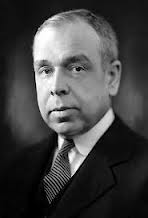
At another level though, this statement is entirely misleading. Once again, J. Gresham Machen points out the main problem with this line of thought:

Jesus is an example, moreover, not merely for the relations of man to man but also for the relation of man to God; imitation of Him may extend and must extend to the sphere of religion as well as to that of ethics. Indeed religion and ethics in Him were never separated; no single element in His life can be understood without reference to His heavenly Father. Jesus was the most religious man who ever lived; He did nothing and said nothing and thought nothing without the thought of God. If His example means anything at all it means that a human life without the conscious presence of God − even though it be a life of humanitarian service outwardly like the ministry of Jesus − is a monstrous perversion. If we would follow truly in Jesus’ steps, we must obey the first commandment as well as the second that is like unto it; we must love the Lord our God with all our heart and soul and mind and strength. –Christianity & Liberalism, pg. 84

See, leaving aside the fact that a great number of the things that Jesus tells us to do are those “religious” things like praying and worshiping with the community, the main problem with this line of thinking is that it rips out the heart of Jesus’ ethics. It focuses mainly on a select group of things that Jesus said to do, but it misses why he says to do them.

Machen calls our attention to the fact that the heart of Jesus’ ethics was his religion, the perfect love of the Father, and a desire to glorify him in all things (Matt 5:16, 48). You can’t read the Sermon on the Mount and escape the constant reference to “the Father” (Matt 5:16, 45, 48; 6:1, 4, 6, 8, 9, 14, 15, 18, 26. 32; 7:11, 21) and the theocentric nature of all of our righteousness. Jesus is remarkably clear that all of his ‘ethics’, his morality, flows from his relationship of loving trust of God; so if you’re truly going to “follow him”, then your obedience has to have a deep love for the Father at the center of it.

The upshot of all this is that simply doing moral things doesn’t mean you’re really “following Jesus”–his own words rule that out. This should be a sobering thought even for Christians. Far too many of us have God’s glory or God’s delight nowhere on our radar when considering our moral choices. In light of Jesus’ words, both the believer and the non-believer who claims to imitate Jesus, should stop and think, “If the glory of the Father, the love of the Father, is at the heart of what Jesus words and actions, why isn’t it at the heart of mine?”

Soli Deo Gloria

The Jesus Who Quotes Himself

Jesus SpeakingBack in the day, liberal theologians liked to say Jesus never claimed any particularly extraordinary authority for himself; not to be the Messiah, the Son of God, or any of it, and that all of the church’s later teaching on it was an unjustified addition and corruption of Jesus’ originally pure, moral message about God’s Fatherhood, and the universal brotherhood of man. Usually this claim was advanced in order to forward a less doctrinally-“rigid” Christianity, more in keeping with the modern spirit, picturing Jesus as a teacher of universal moral truths and general wisdom suited to their post-Victorian sensibilities.

Actually, this kind of move still gets made today only we don’t use the “sexist” and gendered language of the “Fatherhood of God”, or the “brotherhood of man.” Typically we replace that with some talk about justice, equality, the end of oppression and such things. Don’t get me wrong, justice and ending oppression are good, biblical things. Still, it’s not uncommon to hear sentiments like, “If only we could forget all this business about Christ being ‘Lord’, or those abstruse Trinitarian controversies, or his atoning death with all of the silly theological disputes that go along with it, we could get down to the real business Jesus was about–you know, all that stuff in the Sermon on the Mount. The Sermon on the Mount! That’s the real Jesus. That’s the Jesus we should be listening to, considering, and putting what he preaches into practice. The Sermon on the Mount is where you find what Jesus was really all about–not all of this silly dogma about him that mainstream Christianity has gotten hi-jacked with.”

MachenBasically, if we could get Jesus’ ethics, his moral teachings, without all the doctrine, then we’d be good.  When J. Gresham Machen encountered this line of thinking back in his own day he pointed out the flaw, at least from the New Testament standpoint, with it:

Even those parts of the Gospels which have been regarded as most purely ethical are found to be based altogether upon Jesus’ lofty claims….But even in the Sermon on the Mount there is far more than some men suppose. Men say that it contains no theology) in reality it contains theology of the most stupendous kind. In particular, it contains the loftiest possible presentation of Jesus’ own Person. That presentation appears in the strange note of authority which pervades the whole discourse; it appears in the recurrent words, “But I say unto you.” Jesus plainly puts His own words on an equality with what He certainly regarded as the divine words of Scripture; He claimed the right to legislate for the Kingdom of God. Let it not be objected that this note of authority involves merely a prophetic consciousness in  Jesus, a mere right to speak in God’s name as God’s Spirit might lead. For what prophet ever spoke in this way? The prophets said, “Thus saith the Lord,” but Jesus said, “I say.” We have no mere prophet here, no mere humble exponent of the will of God; but a stupendous Person speaking in a manner which for any other person would be abominable and absurd. –Christianity and Liberalism, pg. 31-32

In essence he said, “Fine, let’s look at the Sermon on the Mount. Let’s see what kind of Jesus we find there: the Jesus who quotes himself.” What’s significant about that? Well, I mean, even in our modern context if you find a guy walking around quoting himself, you know he’s got a high opinion of himself. In the Bible this was a slightly bigger deal. See, a prophet of God would say, “Thus says the Lord”, but Jesus goes ahead and basically says, “Here’s what I say”–essentially elevating his word alongside the word of Lord. Actually, Machen goes on to point out that Jesus explicitly does that:

The same thing appears in the passage Matt. vii. 21-23: “Not everyone who says to me Lord, Lord, shall enter into the Kingdom of Heaven, but he who does the will of my Father who is in heaven. Many shall say to me in that day: Lord, Lord, have we not prophesied in thy name, and in thy name cast out demons, and in thy name done many mighty works? And then I shall confess to them, ‘I never knew you; depart from me, ye that work lawlessness.”’ This passage is in some respects a favorite with modern liberal teachers; for it is interpreted − falsely, it is true, yet plausibly − as meaning that all that a man needs to attain standing with God is an approximately right performance of his duties to his fellow-men, and not any assent to a creed or even any direct relation to Jesus. But have those who quote the passage triumphantly in this way ever stopped to reflect upon the other side of the picture − upon the stupendous fact that in this same passage the eternal destinies of men are made dependent upon the word of Jesus?

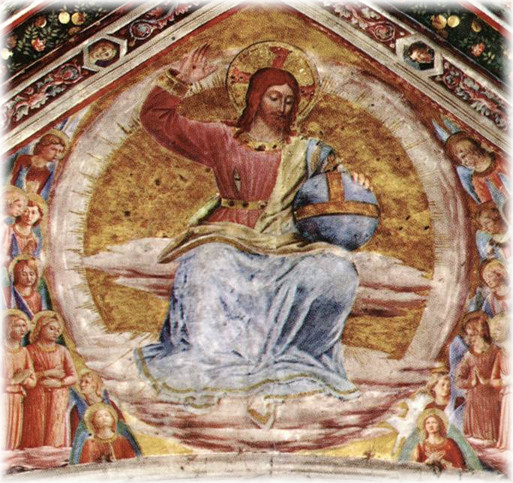
Jesus here represents Himself as seated on the judgment-seat of all the earth, separating whom He will forever from the bliss that is involved in being present with Him. Could anything be further removed than such a Jesus from the humble teacher of righteousness appealed to by modern liberalism? Clearly it is impossible to escape from theology, even in the chosen precincts of the Sermon on the Mount. A stupendous theology, with Jesus’ own Person at the center of it, is the presupposition of the whole teaching. -ibid., pg 32

Basically, if you want the Jesus of the Sermon on the Mount, you can’t get away from that Jesus of “doctrine”. Inevitably Jesus himself points you to the Jesus of the creeds–the Messiah, dead, buried, risen, ascended, the ruling and reigning Lord, equal with the Father, and coming to judge the quick and the dead. There is no ethical Jesus without the doctrinal Jesus; eventually you have to deal with the Jesus who quotes himself.

Soli Deo Gloria

Will I Eat Pancakes Next Tuesday? A Thought or Two on Open Theism

“Derek will eat pancakes next Tuesday.”

Question: Is this statement true or false?

“Are you serious, Derek?”

Well, it seems like it has to be one or the other doesn’t it? I can’t both eat pancakes and not eat pancakes on Tuesday, (considering the whole 24 hour period as Tuesday.)

“Sure, but really? Pancakes? Why are we talking about pancakes?”

Seems like a dumb question, but in fact, it’s connected a much bigger issue: What does God know and when does he know it?

Open Theism and the Future

According to some theologians, Open Theists, there are some things that God doesn’t know that we typically imagine that God knows. For instance, he apparently doesn’t know large chunks of the future. Now there are a number of ways that Open Theists can arrive at this conclusion, but for some of them this thought is supported by the idea that future doesn’t exist. Like Greg Boyd, they hold that while God is “omniscient”, all-knowing, his knowledge does not extend to large segments of what will happen in the future because they aren’t settled yet. Some parts, like the parts where God has already figured out, “Well about that time I’m gonna save the world, and in two years I’ll eat Chinese food”, he knows. Also, he knows that the weather will work in about 25 years because that’s just kinda rolling out from what’s going on now. He can reliably infer that. Still, the chunks that have to do with us making decisions certainly don’t because that part’s not “settled”–I haven’t made that choice yet. Due to this, God does not have “exhaustive foreknowledge” of the whole of the future. This is not a knock on God though, because it is impossible to know that part of the future given its non-existence. For them, it’s kind of like him not being able to make a married bachelor–it’s a logical contradiction. According to them, the issue then isn’t God’s knowledge, but with the nature of the future. God simply cannot know the future exhaustively because it’s not there to be known.

No biggie.

Is this really the case, though? Now, there are a number of issues that might be discussed with respect to Open Theism be they theological, philosophical, biblical, pastoral, etc. because Open Theists forward reasons for taking their view in all of these areas. Now, I’ll just come clean and say that I think the view, in all of its forms, is seriously deficient on all counts and have never found it even remotely appealing–and that was before I was Reformedish. Also, as I noted, there is a variety amongst them. This post won’t deal with every type. I can’t go into the various issues today without this being way too long. I simply want to make a few small points in this little post on this one claim: that God doesn’t foreknow significant chunks of the future because it’s not there to be known.

Is that Right? Does it Follow?

Theories of Time The assertion that the future does not exist for God to know assumes one of two possible theories about time. (Really, there are a number of formulations of each and the literature is complex and dense.) The first is called A-theory and it basically says that there is an objective present, that NOW is what exists–temporal becoming is objective. There are at least two families of this view. Some theorists think that the present and the past “exist”, and others hold that only the present moment exists. On both, the future does not exist yet. The second theory, B-theory, also has a few versions but holds something along the lines that what we call “past”, “present”, and “future” objectively exist on something like a line. In a sense, the future is “already” there.

I raise this point not because I think A-theory is wrong. I don’t. In fact, I haven’t landed anywhere on this point. I do so just to point out that there are a number of options here. One could adopt B-theory and avoid this whole issue. Plenty of philosophers and theologians do. But let’s assume A-theory. Does it immediately follow that God can’t know the future because it’s not there? I don’t think so.

How Does God Know That? For in addition to holding a particular view of time, this type of Open Theism also takes a particular view of God’s way of knowing. William Lane Craig points out that are at least two ways of thinking about God’s way of knowing, two pictures of the way God comes to possess knowledge. (The Only Wise God, pg. 121) The first is the empiricist or perceptualist picture. On this view God comes to have knowledge about the world either by immediate perception or causal inference. In a sense, God knows things about the world by “seeing it”, or inferring it based on what he “sees.” If there’s nothing there for him to see, then he can’t know it. This is the basic picture that underlies Boyd’s form of Open Theism.

But Craig points out that this isn’t the only way to think of God’s knowledge of the world. One could think of it in a rationalist or conceptualist fashion. On this view, God simply possesses knowledge of all true statements. In our own experience, much of our knowledge about the world does not come by way of perception or inference. We simply know it immediately, innately. For instance, we know that other minds exist, even if just looking at other humans and animals or argumentation alone cannot prove that they’re not just robots or mindless automata, programmed to function the way we do. We know they’re not, but we can’t prove it and direct perception doesn’t gives us that knowledge. (Don’t believe me? Philosophers have tried. It’s really stinkin’ hard.) In any case, a belief about the world like that, is kind of like the conceptual furniture that comes with our minds. We don’t come to know it, we just know it.

In the same way, on a conceptualist view of God’s knowledge of the world we might think that God knows only and all true statements about the world. If there are true statements to be known about the future (even those about human decisions), then he knows those, which would be foreknowledge. Now, there are a number of ways to think about just how God happens to possess this innate knowledge of the world (cf. Molinism, God’s decree, etc.). I won’t go into them, but it is at the very least possible to think of God’s knowledge of the world in this fashion.  If it is possible, then it does not immediately follow that God couldn’t foreknow the future, even on the A-theory of time. If there are true statements about the future, God could know them without the future “being there.”

Is the Future True?

This brings us back to the issue of whether or not I will eat pancakes on Tuesday. In order for the Open Theist’s objection to work, you have to deny that future-tense statements are either true or false. The main (if not only) objection against it is something along the lines of, “The future doesn’t exist, therefore there is nothing for future-tense statements to correspond to.” But as Craig points out, this is idea is based on a confused view of the correspondence theory of truth. (pp. 55-60)

On the classic correspondence view, “It is raining outside” is true, if and only if, it is the case that it is raining outside. It must be made clear though, that “the correspondence theory does not mean that the things or events which a true statement is about must exist.” (pg. 56) This is true only of present-tense statements. It’s obviously not true of past-tense statements like, “Obama won the election in 2008.” All that is required for their truth is that they have been the case so that the present-tense statement “Obama is winning the election” is true at some point. In the same way, for future-tense statements, “Derek will eat pancakes next Tuesday”, all that is required for their truth is that the event will exist. At that time the present-tense version of the statement will be true.

A future-tense statement is true if things turn out the way it asserts, and false if it doesn’t. This is pretty common-sense stuff. In fact, Craig goes on to list good reasons for thinking that future-tense statements are true.

1. “The same facts that make present- and past-tense statements true or false also make future-tense statements true or false.” (pg. 58) The point is that it is difficult to distinguish, “It will snow tomorrow” stated May 20 from, “It snowed yesterday” stated May 22. The same event makes both true. Craig asks, “If ‘it is raining today’ is now true, how could ‘it will rain tomorrow’ not have been true yesterday?”

2. “If future-tense statements are not true, then neither are past-tense statements.” (pg. 58) If future-tense statements are neither true or false because their corresponding realities are not there, then neither are past-tense statements because they realities they speak to no longer exist. That’s silly to think, though. By the same logic then, it is silly to think that future-tense statements have no truth-value.

3. “Tenseless statements are always true or false.” (pg. 59) You can make any statement tenseless. “The Allies invaded Normandy” can be rendered tenseless by adding a date, “on June 6, 1944 the Allies invade Normandy.” There’s some loss of meaning, but it’s essentially the same content in a tenseless statement. The point is that tenseless statements are always true or false. It’s either always true that the Allies invade on June 6, 1944, or it’s not. And if the tenseless statement is true, then so is the tensed version addressing the same realities. Therefore, past- and future-tensed statements corresponding with the tenseless ones will be true. Beyond that, tenseless statements are always true or false. If that’s the case, then before June 6, that tenseless statement was true, in which case the tensed version was also true, in which case if God knows all truths, he has foreknowledge. To recap, “Derek will eat pancakes next Tuesday” can be rendered tenseless by transforming it to “On Tuesday October 9th, Derek eats pancakes.” That statement is either true or false, in which case the future-tense version is true or false. If God knows that truth he has foreknowledge.

4. “The denial of the truth or falsity of future-tense statements leads to absurd consequences.” (pp. 59-60) So, for instance, if future-tense statements are neither true or false, then the statement “Mitt Romney either will or will not win the 2012 presidential election” would not be true. This is a compound of two future-tense statements, “Mitt Romney will win the 2012 election” and “Mitt Romney will not win the 2012 election.” But, if future-tense statements are neither true nor false, then neither or these statements, nor their compound is true or false. But that is absurd because those two options exhaust the logical possibilities. He either will or he won’t win. Even more, we can’t even say that a statement like “Romney will and will not win the 2012 election” is false because that’s another compound of two future-tense statements. But that’s a self-contradiction that seems manifestly untrue. But on this view, you can’t say that.

For these reasons it seems safe to say that future-tense statements have truth values. If future-tense statements can be true or false, even ones that have to do with human decisions, like me eating pancakes next Tuesday and Romney winning the election, then it follows that God can have knowledge of them which constitutes foreknowledge.

How ‘Bout Dem Pancakes?

So, just because I haven’t made them yet, it doesn’t necessarily mean that God is ignorant as to my future breakfast choices. Now, to be sure, this isn’t a definitive statement on the foreknowledge issue. Far from it. Open Theists have plenty of other arguments at their disposal, (although, again, I think they have been handled multiple times over), and even this short treatment of this one issue is incomplete. Still, I think we’ve seen here that even if we grant that the future doesn’t exist yet, it by no means necessarily follows that God cannot have exhaustive foreknowledge of it. That idea rests on a confused idea of the nature of truth, and an unnecessary picture of God’s knowledge. In fact, I think given the fact that future-tense statements can be true or false, we’ve even gained some reasons to think that God does have knowledge of them, in which case the denial of God’s foreknowledge because of one picture of the nature of the future is a bit hasty.

And that’s all I really wanted to show today.

Soli Deo Gloria

Is God Allowed To Do Stuff We Can’t? Some Thoughts on Penal Substitution

Ever heard a kid ask, “Why can’t I do that when you’re always doing it?” I’m sure those of you parents have heard this refrain from your children.  Before getting hired at my church, I worked for a few years as a substitute teacher and every so often I’d get this from a kid who wanted to defend using a cell phone or eating in class.

I’d often debate with myself whether or not this was a fair argument. Is it fair for a teacher to use their cell phone in class when a student is forbidden to? What are the reasons for this? Is it fear that phones might be used for cheating? Are they a distraction in the learning process? Are they just inherently wicked? Depending on the answer, it might be an unfair double-standard; I’m pretty sure all the times I ate in front of those hungry children were.

This raises the question, though, “Are there actions that, in virtue of the different roles which students and teachers occupy, are inappropriate for students but are entirely appropriate for their teachers?” I think there are probably a few. For instance, it seems entirely appropriate for a teacher to have possession of the answers of a test out during the administration of a test while it is inappropriate for the students to have the same. Or again, it is entirely appropriate for a teacher to be talking to a student during a test, but not for another student.

Let’s broaden the principle. Is it the case that some actions are appropriate for some people given their role or job, but entirely inappropriate for others given theirs, such that the one can essentially say to the other, “Do not do what you see me doing”? I think that seems reasonable. A parent might say to a child, “Do not use the knife” without being hypocritical. A police officer might enforce restrictions on hand guns while using a gun. In virtue of their different roles, the parent is allowed to do what the child is not and the police officer is allowed to carry what the average civilian is not.

One more question: Is it possible that one person, trying to abide by the same principle as another, might have to do exactly what they have forbidden the second from doing precisely because of their different roles? Think of a chemistry professor who, in the interest of student safety, handles dangerous chemicals that he has expressly forbidden his students from handling. Think of a mother who, in the interest of fairness, forbids her older children from punishing their younger siblings for their faults because that is her job. She knows they won’t be able to do it properly, so she does it herself. In both cases, one person forbids another from taking an action that they themselves will take for exactly the same reason. The action itself is not inherently wicked or wrong–it is wrong for some given their position or abilities, while it not for others.

The Objection: Is God Unfair?

Why this digression into the fairness of in-class cell phone usage by substitute teachers? Last week I posted a little piece on penal substitutionary atonement (PSA), the teaching that part of what Jesus did on the cross was to suffer the judgment of God for sins in our place thereby saving us from having to bear the penalty ourselves. This sparked some off some friendly (and some not-so-friendly) conversation about the doctrine; apparently there are a number of people who don’t think to highly of this teaching.

Now, I have to admit, this area of Christian theology is one of those that I’ve done a fair bit of reading on, for an amateur theologian. I think I’ve heard most of the classic arguments against penal substitution that are out there (it’s unbiblical, it supports violence, it’s a hold-over of primitive deities, it’s the product of Calvin’s legalistic mind, there is no possibility of moral transfer, it’s a legal fiction, etc.). I think there are answers to all of these so I don’t plan on going into most of those today. There is one increasingly common type of argument against the doctrine that came up in the conversations that goes something like this:

God tells us to forgive one another and not to demand retribution. Jesus says to turn the other cheek, bless those who curse you, forgive those who hate you, and love those who harm you. If that’s the case, then how is it that we can conceive of God demanding retribution for sin and, specifically, imagine that this is what is happening on the cross of Jesus? Isn’t that God doing exactly what he tells us not to do? Isn’t that hypocritical and immoral? 

As one blogger recently put it, “Here’s a simple rule of thumb: if your theory of the cross completely contradicts everything Jesus stood for and taught… it’s probably wrong. It’s sad that I need to say this, but the gospel is rooted in love of enemies, not in retribution. Retribution is the opposite of forgiveness. So the idea that the entire work of Jesus was to fulfill the demands of retribution is simply absurd.” Finally, one of my recent interlocutors put it this way, “But if the cross is about retribution, punishment, then God teaches us to “do as I say, not as I do.“”

No, God is God

What can be said about this? Is penal substitution an instance of God saying “do as I say, not as I do?” Would this make God inconsistent or unfair? I won’t give an exhaustive answer to the various missteps and mistakes in this sort of thinking (particularly the false dichotomy between “retributive” and “restorative” justice, which I plan on dealing with in a future post), but I will offer up a few clarifying points on the thought that God can do things that we can’t:

Only God is God In general, there are a number of things that are appropriate for God to do given his role as God, King, Judge, Creator of all the earth, that it is not permitted for me to do in my role as human, created thing, sinner, and so forth. For instance, it is entirely appropriate for God to seek and receive worship. In virtue of his infinite perfections, his beauty, his glory, his majesty, his love, and goodness, God is absolutely worthy of worship and for him to demand or receive it is simply a right concern for truth. On the other hand, it is wicked for us to receive worship or to seek it. I am a created thing as well as a sinner, and therefore I am not worthy of worship. For anyone to worship me would be to perpetrate a lie. In fact, the reason we are not to receive worship is because it is God’s prerogative and his alone. At this point it would be the height of silliness for someone to look at God and say, “Well, you’re always seeking worship and yet you tell us not to seek worship or receive praise. What’s the deal?” The deal is that, looking at things realistically, you’re an unworthy ant, and God is God. This is at least one place, and there are a number others, where God is allowed to say, “Do as I say, not as I do…because I am God and you are not.”

Only God is Judge Turning to the subject of judgment, punishment, and retribution we find Paul writing, “Repay no one evil for evil, but give thought to do what is honorable in the sight of all. If possible, so far as it depends on you, live peaceably with all. Beloved, never avenge yourselves, but leave it to the wrath of God, for it is written, ‘Vengeance is mine, I will repay, says the Lord.’ “(Romans 12:17-19) In this particular passage Paul says not to inflict judgment on your enemies, not because God never does that sort of thing, but because he’s said that’s the sort of thing only He should do. The explicit logic of the text is, “Don’t do that. It’s my job. I don’t want you taking vengeance. Vengeance is mine.” Paul wasn’t squeamish about this sort of logic the way a number of anti-PSA advocates are because it’s all over the Old Testament. The Law (Exod. 20:5), the Psalms (Ps. 75:7), and the Prophets (Ezek. 5:8) tell us that God is the judge of the world and so it is his particular job to take care of things, vindicate whoever needs vindicating, rewarding those who should be rewarded, and punishing those who ought to be punished. He is the sovereign Lord of the world with the authority and might to execute judgments. (Ps. 94) There is no thought that judgment or punishment is inherently wicked in the Hebrew Bible, especially in the hands of the righteous Lord of all the earth. Unless we want to slide into a crypto-Marcionism that pits the God of the OT against the God of the NT, we have to factor that into our thinking. There is a difference between being Christo-centric and Christo-reductionistic in a fashion that looks at Jesus without setting his life, death, and resurrection within the context of the whole canon and God’s revelation of himself to Israel. But even just looking to Jesus, we see that indeed, his heart longs to shelter Jerusalem under his wings to save them, but this comes only in the context of his recognition and proclamation of judgment on their sins. (Matt 23:29-39)

We Can’t Handle It Why might God call us to forego retribution and not give vent to our wrath against others, when he apparently is allowed to? One reason that comes to mind is that we might not be suited to the task. Just as the mother does not allow her slightly older children to punish the younger because their own judgment is faulty, God does not allow us to exercise that kind of judgment because we are not able to do so righteously. Our judgments are flawed and provisional, while His are perfect and definitive; ours are infected by sin, while His are holy. That seems like a perfectly good reason for God to tell us not to do something that He himself does without imagining that the action is inherently wrong.

Another reason we are not suited to it is because we can’t handle it. Just as the chemistry professor forbids his students from handling the dangerous chemicals, God might forbid his children from handling vengeance. If we take vengeance upon ourselves, seeking retribution, and administering our own judgment we are liable to get sucked in. Given our sin-sick souls it is easy to see righteous anger and a passion for justice be overwhelmed by selfish pride and drawn into hate, bitterness, and malice. God is perfect love. His judgments flow from a heart free of corruption that cannot be overwhelmed by sinful passions.

How Does God Forgive? Coming to the issue of forgiveness and judgment: It is true that God tells us to forgive without seeking vengeance. Is it then wrong for him to lay the judgment for our sins on Christ in effecting our forgiveness? Two points come into consideration here:

a. Forgiveness at its most basic level is the generous release of an acknowledged debt. In commercial terms, which is where we derive the image in the NT, it is saying, “You owe me this, but I’m not going to make you repay.” Transferring it to the moral realm, “That was wrong, but I’m not going to make you suffer for it.” For us to forgive someone is for us to not make them pay or suffer for an acknowledged wrong-doing. Taking into consideration God’s role in the universe, it is entirely reasonable to think that God’s forgiveness will look slightly different from ours. As we’ve already noted, God is King and Judge of the world. Part of his faithfulness to creation is to execute justice within it, to maintain the moral order he has established–which is not some impersonal justice, but one that is reflective of his own holy nature–in essence, to make sure that payment is rendered and that wrong-doing is punished. Justice involves more than that, but certainly not less.

Given this, forgiveness cannot be a simple affair of “letting it go”, or passing it over for God. His own character, his holiness, his righteousness, his justice means that he cannot treat sin as if it did not happen. The cross is the way that God makes sure payment is rendered, that sin is punished and yet still forgive sinners by not making them pay for sins themselves. PSA is not a denial that God forgives, but an explanation of how God forgives justly. It is how He, as King of the universe, goes about lovingly forgiving His enemies who deserve judgment. He suffers the judgment in himself. Realize, this whole explanation is articulated within a Trinitarian framework in which the Father, Son, and Spirit are all cooperating to achieve atonement. The Father is not pitted against the Son because the Father sends the Son in love and the Son, out of love, voluntarily comes in the Spirit to offer up his life in our place. The Son suffering judgment on the cross is God forgiving us.

b. The second thing to recognize is that our forgiveness comes after his forgiveness, on the basis of Christ’s atoning work. We can let things go, forgive as we’ve been forgiven, forgo vengeance, and avoid retribution because we know that these things are safely in God’s loving hands. We don’t have to exact payment. Justice for the sins I suffer are handled the way my own sins are handled–either on the cross, or at the final assize.

Conclusions

These reflections are far from exhaustive or adequate to the subject matter. Much more could be and has been said on the subjects of forgiveness, substitution, justice, and the cross. In this piece I simply wanted to make one small point: sometimes it’s okay for God to tell us not to do something that he himself does. Executing judgment is one of those things.

Soli Deo Gloria

I’m an Unbeliever

Atheist biologist Richard Dawkins is fond of pointing out that Christians are all atheists of sorts. We are atheists with respect to Zeus, Thor, Marduk, and a whole host of other gods. At that point he likes to quote Stephen Roberts to the effect that he just believes in one less god than we do. One of the main points of this observation is that once you realize how silly believing in Zeus is, you’ll realize the silliness of believing in Jesus. Cute.

The other point I see being made is that the atheism/theism debate is about belief in a certain proposition: does God exist. The theist does and the atheist just doesn’t. There’s just a proposition’s difference between them and the theist is the one who has to justify his acceptance of said proposition. The problem is that this picture is too simple. Rarely do we simply “disbelieve” in something. Atheist’s minds do not have a blank space where the “theism” belief supposedly resides in the mind of the believer. No, it is filled–with something else. It’s not just believing in Christianity or disbelieving it. It’s believing something else instead.

See, in a sense, we all live by creeds.  A creed is a summary statement that encapsulates our deepest-held, foundational beliefs about reality and the world. We all have them, even if we’ve never made them explicit. Put another way, sociologists tell us that we tell ourselves stories, understand ourselves at very deep levels as actors in some drama, starting with the small, personal ones like “I am Derek, son of Arliett and Tino, born such and such, grew up in so and so, now married, living in Orange, and working towards future X”.  This is a short narrative understanding of myself. We usually fit these into broader narrative understandings such as Buddhism, Islam, Marxism, or Christianity that tell us big-picture stories about who we are, how we got here, and where were going. It’s inevitable.

Because of this, we are all living according to alternative creeds. The Christian recites the Apostles’ Creed, but she doesn’t do so in a vacuum. Rather, she does so in contrast with the other creeds on offer. It is those creeds which I find incredible and in particular, the dominant, competing creed that has been offered up as a substitute–that of the Enlightenment.

A Unbelievable Creed

Philosopher Peter Van Inwagen’s delightful essay outlining his journey from atheism to Christianity, Quam Dilecta has a very helpful description of the creed of the Enlightenment.

There is, I believe, an identifiable and cohesive historical phenomenon that named itself the Enlightenment in the eighteenth century, and which, although it long ago abandoned the name, still exists. Like the Church, it does not speak with one voice. Like the Church, it has no central government. Like the Church, it is made up of many groups some of which heartily detest many of the others–some of which, indeed, regard themselves as its sole true representatives and all others who claim to be its representatives as wolves in sheep’s clothing. Like the Church, it has a creed, although, unlike the Church’s creeds, its creed has never received an official formulation. But that is a minor point. Its creed can be written down, and here it is:

There is no God. There is, in fact, nothing besides the physical cosmos that science investigates. Human beings, since they are a part of this cosmos, are physical things and therefore do not survive death. Human beings are, in fact, animals among other animals, and differ from other animals only in being more complex. Like other animals, they are a product of uncaring and unconscious physical processes that did not have them, or anything else, in mind. There is, therefore, nothing external to humanity that is capable of conferring meaning or purpose on human existence. In the end, the only evil is pain and the only good is pleasure. The only purpose of morality and politics is the minimization of pain and the maximization of pleasure. Human beings, however, have an unfortunate tendency to wish to deny these facts and to believe comforting myths according to which they have an eternal purpose. This irrational component in the psyches of most human beings–it is the great good fortune of the species that there are a few strong-minded progressives who can see through the comforting myths–encourages the confidence-game called religion. Religions invent complicated and arbitrary moral codes and fantastic future rewards and punishments in order to consolidate their own power. Fortunately, they are gradually but steadily being exposed as frauds by the progress of science (which was invented by strong-minded progressives), and they will gradually disappear through the agency of scientific education and enlightened journalism.”

Van Inwagen goes on to concede that there are various Enlightenment denominations (Marxist, Positivist, New Atheist) who would object that he’s left something crucial out. At its core though, this complex is central to all of them.

It is this creed that I find myself unable to subscribe to for a number of reasons too large to expound here. I will simply point out that any sort of optimism about the human condition in light of the history of the 20th Century has always struck me as farcical. The idea that science and reason (whatever that last term actually means) can actually deliver anything close to a utopia, or even a decent place to live is a fairy tale. Studying almost entirely secular moral philosophy in college had the interesting effect of convincing me that prospects of finding any sort of viable, normative moral system connected with naturalism, (ie. absent the divine, or a transcendent order), is similarly risible. Once again, I commend Van Inwagen’s essay, the second half of which is devoted to showing why he finds this creed untenable.

Where am I going with this? 

I’d be lying if I were to tell you that I never find Christianity difficult and hard to accept. It has moral codes that are uncomfortable, both because they are personally hard to follow, as well as because they are socially unacceptable. Reading the Bible is weird sometimes. I mean, really? Bears? (2 Kings 2:23-25) I look out at the world filled with evil and horror, and even though I’ve read a lot of good answers on the subject, it’s still hard to stomach that God is good while he allows these things. I could go on for a while listing the difficulties. I’m sure you have a number of your own.

Still, when I look to the alternatives I find that while Christianity is tough sometimes, the competing options on offer are just impossible to swallow. At those times, I feel like Winston Churchill when speaking of democracy in the House of Commons:

“Many forms of Government have been tried, and will be tried in this world of sin and woe. No one pretends that democracy is perfect or all-wise. Indeed, it has been said that democracy is the worst form of Government except for all those other forms that have been tried from time to time.”

Please don’t misunderstand me–I think there are good, positive reasons to believe in Jesus. I have to admit though, one of the main ones is the fact I find the other options simply unbelievable.

Update and clarification: There apparently has been some confusion as to the point of his post. Please do not take this as a denigration of either reason or science. As a Christian I believe as humans made in the Image of the Creator God have been endowed with reason and given an impulse towards the exploration and study of nature. Rather, it is a rejection of a rationalism and scientism. Those are two different things. I have a healthy respect for and appreciation of the deliverances of reason and the advances of science while recognizing their limits and the dangers of misunderstanding their role and function in human life.

No Such Thing as a Dumb Question?

I must confess that I’ve always thought the phrase, “There’s no such thing as a dumb or bad question” to be a bit silly.  Admittedly, patience with ignorance has not historically been a strength of mine. In high school I was that guy who would groan audibly at silly answers given by my classmates at times.  I blame this almost entirely on my arrogance.  (Occasionally it was probably merited, but that’s no excuse.) Still, arrogance aside, I always could think of a number of questions that were foolish to ask given any situation.

Now, I’ve mellowed a bit since my high school days, become more aware of my own intellectual failings, and expanded my definition of what counts as a good question, especially in a teaching situation where I myself have come to use the phrase to encourage those shy students. And yet, I still find myself wincing a bit when I hear that phrase uttered or when I come across a  particularly silly question.

Which brings me to Richard Dawkins.

Dawkins is a Big Silly

For the last couple of weeks I’ve been trekking through the New Atheist canon in preparation for an upcoming teaching series. First it was Harris, then it was Hitchens, and now I’ve finally made it to Dawkins. I was unsurprisingly unimpressed by the first two given that there really wasn’t much in the way of an actual refutation of Christianity or even theistic belief forthcoming. Well, unless you count some unhelpful platitudes about reason and faith. I came to Dawkins’ God Delusion though, expecting a bit more since he, among the 4 Horsemen, has the reputation of being most interested in giving serious arguments against God’s existence. I can’t say I was expecting much in light of some criticisms I’d read beforehand. Still, looking at the table of contents and noting that it includes a decent-length chapter on the traditional proofs for the existence of God, I allowed myself to be somewhat hopeful.  “Maybe it’s not all that bad. Maybe it’s not as painful as they say.”

I won’t bore you with all of the details of that 35-page train wreck except to say that my forehead was a nice bright pink at the end of the ordeal given the frequent face-palming I was doing. There were many delightful turns of phrases, misleading but amusing analogies, arrogant snark enough to last for months, and questions on par with “Could God make a martini so big that even HE couldn’t drink it? Ha! He’s not omnipotent!”

It was beautiful.

The one piece that irked me most was what he touted as the most damning response possible to the argument from design. The design argument is something like:

  1. Where there is design, there must be a designer.
  2. The universe exhibits unmistakable signs of complexity and design. (Insert various examples from physics, biology, the existence of salsa)
  3. The conclusion is that there must be a universal designer.

Now, what is Dawkins’ grand damning response to this? “Who made God?” (109, a question which apparently occurs to all “thinking people”) and “Who designed the designer?” (158) I swear, I am not making this up.

This, as you can tell, is what got me thinking about silly questions. For a 5-year old or even a 15-year old to ask, “Well, who made God?” is fine; nothing dumb or illegitimate about that. For an Oxford professor to trumpet this as his damning argument against God’s existence is just sad.

Now, some of you might be thinking, “Hey, wait a minute. There’s got to be more to it than that.” And, in a sense, you’d be right. Dawkins has an argument here. In fact, this is his grand argument against God’s existence. As he puts it, “However statistically improbable the entity you seek to explain by invoking a designer, the designer himself has got to be at least as improbable.” His point is that a being that can create something complex like the universe, would have to be incredibly complex: at least as complex as the universe itself. The more complex something is, the less likely it is. In which case, whatever created the universe would have to be extraordinarily complex, and therefore even more improbable which is why God probably doesn’t exist.

If that weren’t bad enough, apparently, the whole exercise is silly because in any case, since the whole point of the argument from design is to explain complexity or statistical improbability, introducing a statistically improbable, complex being to explain complexity explains nothing. (158)

This can sound convincing at the surface level. To explain why this actually isn’t, I’d like to call in an expert witness: Alvin Plantinga.

Plantinga lays the Hammer down

You’ll be hearing about Alvin Plantinga from time to time on this blog. Suffice it to say for now that he is probably THE SINGLE-MOST BRILLIANT ANALYTIC PHILOSOPHER ALIVE. In his very humorous and instructive review of Dawkins’ book, he points out a number of problems with this argument. I’m only going to excerpt a couple, but you’ll want to go read the whole thing.

First, Plantinga points out that Dawkins is confused as to what it means to speak about complexity with regards to God:

Now suppose we return to Dawkins’ argument for the claim that theism is monumentally improbable. As you recall, the reason Dawkins gives is that God would have to be enormously complex, and hence enormously improbable (“God, or any intelligent, decision-making calculating agent, is complex, which is another way of saying improbable”). What can be said for this argument?

Not much. First, is God complex? According to much classical theology (Thomas Aquinas, for example) God is simple, and simple in a very strong sense, so that in him there is no distinction of thing and property, actuality and potentiality, essence and existence, and the like. Some of the discussions of divine simplicity get pretty complicated, not to say arcane. (It isn’t only Catholic theology that declares God simple; according to the Belgic Confession, a splendid expression of Reformed Christianity, God is “a single and simple spiritual being.”) So first, according to classical theology, God is simple, not complex.  More remarkable, perhaps, is that according to Dawkins’ own definition of complexity, God is not complex. According to his definition (set out in The Blind Watchmaker), something is complex if it has parts that are “arranged in a way that is unlikely to have arisen by chance alone.” But of course God is a spirit, not a material object at all, and hence has no parts. A fortiori (as philosophers like to say) God doesn’t have parts arranged in ways unlikely to have arisen by chance. Therefore, given the definition of complexity Dawkins himself proposes, God is not complex.

Translation: First, by definition, both those of classical theology and Dawkins’ own definition as laid out elsewhere, God is not a complex being. Given that God is a simple, spiritual being God does not demonstrate physical complexity or design in a way that allows Dawkins’ question to even make sense. Therefore, Dawkins’ argument fails.

The next part is where he shows how Dawkins’ question completely misses the point and responds to his idea that introducing God as an explanation for complexity explains nothing:

In The Blind Watchmaker, he considers the claim that since the self-replicating machinery of life is required for natural selection to work, God must have jump-started the whole evolutionary process by specially creating life in the first place—by specially creating the original replicating machinery of DNA and protein that makes natural selection possible. Dawkins retorts as follows:

“This is a transparently feeble argument, indeed it is obviously self-defeating. Organized complexity is the thing that we are having difficulty in explaining. Once we are allowed simply to postulate organized complexity, if only the organized complexity of the DNA/protein replicating machine, it is relatively easy to invoke it as a generator of yet more organized complexity… . But of course any God capable of intelligently designing something as complex as the DNA/protein machine must have been at least as complex and organized as that machine itself… . To explain the origin of the DNA/protein machine by invoking a supernatural Designer is to explain precisely nothing, for it leaves unexplained the origin of the Designer…”

Here there is much to say, but I’ll say only a bit of it. First, suppose we land on an alien planet orbiting a distant star and discover machine-like objects that look and work just like tractors; our leader says “there must be intelligent beings on this planet who built those tractors.” A first-year philosophy student on our expedition objects: “Hey, hold on a minute! You have explained nothing at all! Any intelligent life that designed those tractors would have to be at least as complex as they are.” No doubt we’d tell him that a little learning is a dangerous thing and advise him to take the next rocket ship home and enroll in another philosophy course or two. For of course it is perfectly sensible, in that context, to explain the existence of those tractors in terms of intelligent life, even though (as we can concede for the moment) that intelligent life would have to be at least as complex as the tractors. The point is we aren’t trying to give an ultimate explanation of organized complexity, and we aren’t trying to explain organized complexity in general; we are only trying to explain one particular manifestation of it (those tractors). And (unless you are trying to give an ultimate explanation of organized complexity) it is perfectly proper to explain one manifestation of organized complexity in terms of another. Similarly, in invoking God as the original creator of life, we aren’t trying to explain organized complexity in general, but only a particular kind of it, i.e., terrestrial life. So even if (contrary to fact, as I see it) God himself displays organized complexity, we would be perfectly sensible in explaining the existence of terrestrial life in terms of divine activity.

Translation: We are not trying to explain organized complexity in general. The argument from design is dealing with one instance of complexity: the universe. As an explanation for that, a universal mind like God’s works even when granting complexity, (which we’ve already seen is unnecessary).

Conclusion

Now, we’ve seen why this question “Who designed the designer?” and Dawkins’ further elaboration of it into an argument against God’s existence is confused and a bit silly. The thing that makes it truly silly though, is the arrogance with which he wields it. In the mouth of a truly inquiring child, teenager, or even adult, it is perfectly legitimate question that can be answered honestly and without any condescension or arrogance. In fact, most answers should be given that way. In the mouth of a snarky professor who should know better, it becomes very silly indeed, and is safely ignored as a serious threat to belief in God.

To wrap up here are a few things to keep clear:

  1. Apparently a Ph.D. in biology doesn’t do much for your philosophical chops. So, next time you hear a biologist or a chemist pronouncing confidently on philosophic and theological issues beyond the remit of their chosen discipline, remember: they’re only scientists, not philosophers. That doesn’t mean you should listen and weigh what they say, but it also means you should take it with a grain of salt.
  2. None of this necessarily proves that the design argument “works.” It just means that Dawkins’ response to it doesn’t. Nobody needs to get freaked out by the question, “Who designed the designer?”
  3. At the same time, if you’re a believer, realize that there are legitimately thoughtful atheists who have good questions and serious doubts who should be taken seriously and lovingly answered. Pointing out the silly things that one of them has written should not cause us to think they’re all that silly and smug.

Disclaimer– I’d just like to point out that even though I’ve called attention to some intellectual problems with Mr. Dawkins’ arguments, this in no way denies his prodigious abilities as a biologist or is meant to imply that I consider myself smarter than him. Consider it an exercise in God using the foolish to shame the wise. (1 Cor 1:27) Or rather, God using the foolish (me), using the wise (Plantinga), to shame the wise (Dawkins.)

Recommended resources:

1. Go read the whole review by Plantinga that I linked above.
2. Where the Conflict Really Lies: Science, Religion, and Naturalism by Alvin Plantinga is his definitive work on the problem of theistic belief, science, and naturalism. I highly recommend this work.
3. A Shot of Faith to the Head: How to Be a Confident Believer in an Age of Cranky Atheists by Mitch Stokes is Plantinga’s awesomeness written for everybody. I’ll be reviewing this book soon.

Playful, Passionate, Principled, but never Putrid Polemics (Or, Don’t Forget Jesus in an Argument)

If you’ve ever had an “intensely engaged” discussion with a friend in person, a facebook comment, a blog, etc. the odds are that you’ve engaged in polemics. The Webster definition of polemics is “an aggressive attack on or refutation of the opinions or principles of another” or “the art or practice of disputation or controversy.” Basically it’s a form of reasoned argumentation against a position with which you disagree.

Having spent a couple of years in a philosophy program, then seminary, as well as far too much time on the blogosphere, I’ve observed and participated in quite of bit of polemics myself. I have what you might call a “polemical bent”,  which is probably why I like thinkers like Luther, Calvin, Pascal, Kierkegaard, and Plantinga. Brothers can argue.

In that time, I’ve had some time to think about  some of the basic attitudes and approaches to polemics, some of which are consistent with Christian life and some of which are not. I’d like to offer up some reflections three qualities or attitudes that should define your approach to whatever discussion you engage in, and one that shouldn’t. These aren’t comprehensive, exhaustive, or entirely correct, but, for what it’s worth, here they are.

Playful– The first quality that I think should be cultivated within our discussions with others  is playfulness, a certain amount of mirth and good humor. It’s that kind of light-hearted reasonableness that G.K. Chesterton seems to embody in his works like Orthodoxy and Heretics. To say that his arguments are playful is not to say that they aren’t “serious”, or aren’t dealing with serious issues, but that they are clearly not driven by fear or pride but rather a humble self-forgetfulness and joy deeply rooted in the Gospel. His ability to sport and laugh at, and with, his interlocutors managed to communicate both disagreement with and real fondness for them. This is not an excuse for being flippant, disrespectful, or condescending. When your heart is filled with confidence in God, it allows you to speak with humor and grace knowing that whatever the outcome of the argument, you’re securely held in the arms of your Father because of the Son. One of the benefits of engaging your intellectual “opponents” with this attitude is that it is attractive. So often people are used to dealing with Christians arguing out of their insecurities or pride which drives them to be snippy, harsh, humorless, and retaliatory. Nobody wants to listen to someone like that, or end up believing whatever they’re arguing for. The Gospel should lead to a confident, good-naturedness that, on the one hand, respects the other person, and at the same time allows you to take yourself less seriously.

Passionate– The second quality that ought to characterize our polemics is passion.  Like the first, it is deeply rooted in the truth of the Gospel and a deep love for people. You can see this is all over Paul’s letters. Paul is nothing but passionate in his polemics for the sake of the Gospel. Galatians, anybody? Paul goes aggro in that letter because of his great gospel-fear that they might be abandoning Christ, and so he forcefully makes his points at times, giving voice to his real concern in order to communicate just how important the issue was. Sometimes people might know you disagree, but really have no idea how important an issue is until they hear the concern or passion in your voice. Paul’s letter not only communicated truth, but the way he communicated it gave it an emotional tenor, an urgency, that was just as vital as the content. A lot of us may be scared of passionate engagement with our neighbors and friends over the truth. We’re scared of offending, or coming off as pushy or unloving. In a world like ours where our radios, TVs, and blogs are full of people just yelling and trying to brow-beat people into submission, that’s a real danger. I don’t want to minimize that. We should never argue just to argue. So often that’s what we find ourselves caught up in: meaningless arguments about things that really, nobody should get that agitated over. Still, this shouldn’t stop us from engaging passionately with our friends about things that really matter. Love engages over truth. Apathy or an unwillingness to trouble yourself with have a difficult conversation out of fear is not the loving thing to do. The truth is something to be passionate about because truth is about life.

Principled- The third quality that it ought to possess is that of being principled. (Honestly, I could have used other words like “integrity”, “honesty”, etc, but I’m a sucker for cheap alliteration.) We must always strive in our engagements with others to be principled in our dealings, speaking honestly, actively avoiding unfair caricatures, and cheap shots. Whenever arguing against a position we must strive to represent our interlocutors accurately, fairly, and charitably. In other words, don’t purposely take the dumbest interpretation of any statement they make and argue against that.  That’s just dishonest. I’ll be the first to admit that there is a place for irony, sarcasm, and the reductio ad absurdum in arguments. There is a place for humorously following someone’s premises out to their surprising conclusions, or creating humorous, sarcastic analogies to bring out a point. Still, there is absolutely no place for a lack of integrity in our communication with others, even those with whom we deeply disagree. This is part of how we love our neighbors as ourselves as Jesus taught us to. Being people who confess the lordship of Jesus, the one who is the Truth, we should never play fast and loose with the truth in order to score a cheap, rhetorical point.

Never Putrid– If we strive for and keep these three qualities in mind as we engage others, they will keep us from descending into the putrid polemics that seems to define our culture’s approach to “rational”discourse. So much of what we hear and read today pours out of corrupted hearts darkened by arrogance, rage, pride, fear, and the rot of our decomposing sin nature. So much of what is popular out there is just straight-up lies, fear-mongering, cynical mockery, caricature, manipulation, gracelessness, straw-manning, cheap shots, and rhetorical bullying. It is simply putrid. For those of us who have been raised in Christ and indwelled by the resurrection Spirit of God, there should be nothing rotten or foul about what we say. Even those words we utter that cut should only cut in the way a doctor’s scalpel does–in order to heal. They should be words of life, not death, because we are made, and are being remade, in the image of the God who, by his Word, speaks life into existence.

Once again, I write all of these things, not as someone who has achieved or arrived. Lord knows I have not even come close in this area. Instead, I write them as one still struggling alongside; still fumbling about trying to become the kind of person who speaks rightly and righteously.