Mere Fidelity: The Benedict Option

Mere FidelityChristians are increasingly struggling with how they are to relate to the surrounding culture. It seems hostile and designed in ways too multifarious to counts to work against any kind of consistent Christian community ethic. For that reason some have put forward the idea of the ‘Benedict Option’: a communal withdrawal from the mainstream, for the sake of sheltering one’s faith and family from corrosive modernity and cultivating a more traditional way of life.

But is that really the best Christian option out there? Matt, Jake Meador, Matthew Loftus, and I take up that question on this week’s Mere Fidelity.

As always, feel free to rate and review, or share. The iTunes feed for Mere Fidelity is here if you’d like to subscribe (thanks to everyone who has reviewed us so kindly), and an RSS feed for the show lives here.

Soli Deo Gloria

Is It Possible to Be Too Christocentric? Vanhoozer on Christomonism and the OT

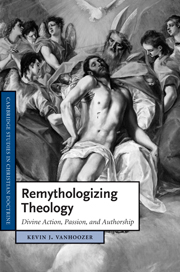
remthologizingPart of Kevin Vanhoozer’s project in his massive work Remythologizing Theology is developing a method of moving from Scripture to theology, especially with respect to a properly gospel-centered doctrine of God. Roughly, the idea is to get from the narrative (mythos) of God’s “theodramatic” doings in redemptive history and derive a metaphysic, an account of God’s being (or being-in-act), that takes its cues and categories from that, instead of speculative philosophical categories (re-mythologizing = re-narrativizing). It asks, “what this ‘who’ is like – on the basis of what God says and does?” I’ve tried to summarize Vanhoozer summarizing himself here.

Vanhoozer examines Karl Barth’s approach in the process–one that informs his own at various points–to see its strengths and weaknesses, and set it up as a sort of foil for his own project. Barth clearly wants to speak of God on the basis of God’s own self-revelation, the Word we see uttered in the history of the Godman Jesus Christ. For Barth, God is who he is in the act of his revelation. To speak of his attributes is to speak of God’s divine activity. Still, Vanhoozer notes that there are a number of questions to be raised about Barth’s approach:

Yet questions remain: (1) Is God who he is apart from his act – his lived history in Jesus Christ – as well? It is one thing to say that God is in se the one who loves in freedom, quite another to say that God only becomes who he is – the one who loves in freedom – thanks to his self-actualization as Word become flesh. (2) If God is who he is in the history of Jesus, how are we to distinguish deity from humanity, divine loving-in-freedom from human loving-in-freedom? (3) Does Barth do justice to the idea that “the personalizing of the Word does not lead to its deverbalizing” if, as Wolterstorff thinks, he regards the Incarnation as God’s sole illocutionary act? [DZR: ‘illocutionary act‘ = act of revelation]

These three questions resolve into one: can Christian theologians ever be too christocentric? Usually Barth’s critics worry about his tendency so to emphasize the work of Christ that it reduces the significance of human action. The present concern moves in the other direction, however, questioning Barth’s tendency to let the work of Christ reduce the significance of other instances of divine action: Why must we equate God’s being-in-act exclusively with God’s revelation in Jesus Christ when the Bible depicts God as in-act at other points of the biblical narrative as well? 

Barth resists christomonism inasmuch as he accepts the witness of the Old Testament. Yet does he show sufficient awareness that without Israel’s Scripture we would lack the right interpretative framework with which to understand the event of Jesus Christ? More pointedly: without a prior revelatory rather than merely religious (i.e., man-made) framework, the event of Jesus Christ would ultimately be unintelligible. We must therefore press for greater clarity: is there nothing we can know of God prior to christology, on the basis not of speculative metaphysics but the mythos of Israel’s history with YHWH? Does YHWH’s activity in ancient Israel (not to mention the Ten Commandments and other texts that purport to be direct divine communication) count for Barth as divine revelation or not? Are there not events in Israel’s history in which one catches glimpses of God’s being-in-act?

Remythologizing Theology: Divine Action, Passion, and Authorship, pp. 202-203

Vanhoozer goes on to wonder if Barth works a christological doctrine of simplicity, whereby God is defined solely by the narrative of the life of Jesus and nothing else. But there seem to be some problems with that:

Yet it is difficult to see how he can derive a complete list of divine attributes by analyzing the life of Jesus alone…For example, is God essentially related to the world, or is the world the result of God’s free (and hence contingent) choice? It is also difficult to see how Barth can demarcate divine from human attributes from the history of Jesus alone inasmuch as it exemplifies both “true humanity” and “true deity.” To be sure, Jesus’ taking on human flesh and laying down his life for many speaks volumes about God’s love, but what about Jesus’ sleeping ( Mk. 4:38) or increasing in wisdom and stature ( Lk. 2:52)? Is every moment in Jesus’ life equally essential to God’s being?

–ibid, pg. 204

What’s more, given what he says about the humanity of the biblical witness, which doesn’t truly become revelatory until God takes it up to confirm what he has said through Christ, it seems we’re in a bit of revelatory bind. This is why Vanhoozer later says:

Barth is clearly a kindred remythologizing spirit…Yet we have wondered whether Barth takes the biblical depictions of divine speaking seriously enough. Is the knowledge of God such that everything can be derived from his single incarnate illocution? By viewing Jesus Christ as God’s singular speech act, does Barth inadvertently demythologize the biblical accounts of God’s speaking by refusing to take them literally, that is, as ascriptions that render an agent?

–ibid, pg. 205

While there’s a lot more going on, and I’ve probably botched the summary sections, you can start to see the problem with a particular way of being “christocentric”–it ends up being not so much christocentric, but christomonistic. In focusing on the ‘Word’ uttered in Christ, he relativizes and doesn’t seem to have a place for the words that set up and help disambiguate that Word.

Where am I going with this? I’ve seen people complain recently that Evangelicals and other typical Christians have too long let the OT define Jesus rather than letting Jesus redefine the OT. And I can see that. I’m all for reading the whole OT as pointing to and finding its ultimate meaning, resolution, and clarity in the revelation of the Incarnate Christ in the New. Still, while this is not exactly what’s going on with Barth, you can start to see some of the same problems emerge in those ‘christocentric’ accounts that place so sharp a distinction between the life of the Incarnate Christ, and the OT that forms the revelatory background for the Word God speaks through His Son.

In my best Vanhoozer, then: Christ is the center of the action to be sure, the climactic act and dramatis personae who explains and gives meaning to the whole drama of redemption. But he doesn’t step onto an empty stage. The earlier acts of the drama between YHWH and Israel recorded in the Old Testament are what form the necessary background to understanding Christ’s lead role. To write off the earlier acts as parochial, confused, or semi-inspired testimonies of a backward religious age, actually ends up undermining our ability to see the way Christ’s redemption resolves the various dramatic tensions at work in the plot-line of God’s relationship with Israel, and impugns the artistry of the Divine Playwright.

Soli Deo Gloria

Does God Let His Kids Lie About Him? A Thought (or Two) on the Enns/Bell Interview

enns

Look that face. What a friendly-looking dude. You almost hate disagreeing with him. Almost. 😉

Does God let his kids lie about him? That’s the question I found myself asking after reading this interview of Pete Enns by Rob Bell. Enns has a new book on the Bible coming out, and it promises to be the new progressive-Evangelical handbook for scrapping your old doctrine of Scripture, so, of course, Bell pulled him onto the blog to chat. Unsurprisingly the issue of ancient science and Old Testament violence came up.  I’ll quote Enns said about it at length, because why not?:

OK, so can we focus on one specific issue here that troubles a lot of people? In your book you do a spectacular job of explaining those violent passages in the Old Testament. Can you give my readers a bit on that?

I spend a chapter on in my book on God’s commend to the Israelites to exterminate every Canaanite man, woman, and child and take over their land. This is the go-to example many point to of God acting more like Megatron than a God of love. 

This is a huge issue that has bothered people ever since there’s been a Bible. It’s nothing new. It’s hard to find Christians or Jews that don’t have at least some problem with this. When we hear of modern genocides, where perpetrators claim that God is on their side, we just call that ethnic cleansing at the hands of crazy people. So how can Christians say God opposes genocide today when he commanded it yesterday? That’s what we call a real theological problem.

Well, that and the fact that Jesus said, “Love your enemies” and “my kingdom is not of this world” rather than “Let’s kill all the Gentiles [Romans] and take back our land.” So, on top of the moral problem, Jesus doesn’t seem to be on the same page with what God says in the Old Testament. 

This issue is involved enough that you can’t Tweet an answer. You really need to walk through the paces of discovering the Bible’s ancient voice. We take a step back and try to understand the Israelites as ancient people with ancient ways of thinking. They weren’t like the “nice Christians” we meet at church picnics and who listen to gospel quartets.

The Israelites lived at a rough time, the Iron Age, when nations fought tooth and nail over land and resources and the gods fought right along side of them, leading the charge

The nations that won had the mightier gods, and victory (slaughter, pillaging) gave gods honor. Losing meant your god was either a wimp or he was mad at your people for some reason and wanted to teach them a lesson in obedience. 

The Israelites were part of this ancient Iron Age world of warring, land acquisition, and destroying the enemy. They fit right in, and to expect their God-talk to be on a totally different page is to start off on the wrong foot. 

We shouldn’t cheer the Israelites and emulate them, which is what Christians with a violent streak throughout history have done—Spanish conquerors of the “West Indies” or European settlers of “America” treat the “new world” like it was Canaan and take over. And neither can we sidestep or minimize the violence, which is another strategy Christians have had for handling these passages.

They are what they are, and the Bible looks the way it does because God lets his children tell the story

Children tell stories of their parents from their point of view as children, which is not the whole story. Think of boys bragging about their dads on the playground. I loved my father and I defended his honor. He was a mighty man who could lift heavy objects, was a sharpshooter, brilliantly smart, and as strong as any man anywhere. 

Not everything I said about my dad was fully and objectively true, but this is how I saw my father, a description born of love, from my youthful perspective, that followed the “rules of the playground.” 

Eventually, looking back from a later vantage point, I realized how much my dad-talk actually limited my father, but that was how we talked and I wasn’t able, obviously, to take a step back and tell my father’s story some other way. 

And even if I could, if I had said things back then like how hard he worked to support us, how he stayed up when I was throwing up at night, and how he never missed my Little League games, I wouldn’t have gotten across to the other guys how awesome my dad was, how much better he was than all the others.

The Israelites described God according to their “rules,” how they and the people around them understood gods in general. And here’s a huge lesson in there for us today. 

We always perceive God from our vantage point, according to ways of thinking we aren’t even aware of most of the time. In these stories, the Bible gives us a glimpse of ancient Israelites doing that very same thing. 

So, when we read these stories, we don’t read them as absolute rules to live by or the final word about what God is like. Christians believe that in the Gospels, we get a deeper understanding about God from Jesus. The Gospels don’t allow us to remain where the Iron Age Israelites were in their understanding of God.

In other words, the Bible isn’t a rulebook for Christian living. It is a narrative that has movement and a trajectory. 

And while we’re at it, archaeologists are about as sure as you can be that the mass extermination of Canaanites that the Bible talks about didn’t happen—which is good news, I think. This helps us see these stories are stories that tell us how the ancient Israelites, at least at some point in their history, understood God.

And that, I realize, is a very long answer, but it’s as short as I can make it.

Alright, there’s a lot going on in there, some of it good and some of it bad. It’s kind of a variation on the Jesus-Tea-Strainer theme we’ve chatted about before. But like I said, the main question I’m left with is, “Does God allow his kids to lie about him?” Because that’s the basic thrust of Enns’ answer, right? The Israelites are young kids, excited about their dad, who told tall, pretty violent, tales about him in terms their kid conceptions of reality could grasp. And God looked on smilingly, letting it go because they meant well.

Now, to some degree I go along with a theology of accommodation in revelation. Most Reformed do. Calvin used to say that God used a sort of baby-talk to tell his children about himself, using terms they would understand to communicate. Bavinck developed this way of thinking at length. Isn’t what Enns saying kind of like that? Kind of, but where they part ways is the issue of truth. Does divine accommodation mean that well-meaning lies are okay about God? Calvin, Bavinck, and most of the Christian tradition would probably say no.

Indeed, looking at the thrust of the Old Testament revelation, God doesn’t seem to take lying about him too well. What are the first few commands?

And God spoke all these words, saying, “I am the LORD your God, who brought you out of the land of Egypt, out of the house of slavery. “You shall have no other gods before me. “You shall not make for yourself a carved image, or any likeness of anything that is in heaven above, or that is in the earth beneath, or that is in the water under the earth. You shall not bow down to them or serve them, for I the LORD your God am a jealous God, visiting the iniquity of the fathers on the children to the third and the fourth generation of those who hate me, but showing steadfast love to thousands of those who love me and keep my commandments. “You shall not take the name of the LORD your God in vain, for the LORD will not hold him guiltless who takes his name in vain. (Exodus 20:1-7)

So:

  1. Don’t worship other gods.
  2. Don’t make idols or false representations of me.
  3. Don’t misuse my name and cheapen it.

Well, it seems to me that making up stories about God, saying he did a bunch of stuff he didn’t really do, like commanding a bunch of stuff he would never command because it’s clearly abhorrent to him, would probably fall afoul of 2 and 3, don’t you think? I mean, if Enns’ reading of the New Testament is right, and Jesus really is uber-pacifistic to the degree that all judgment or violence is just completely foreign to the nature of God, then these stories aren’t just tall tales, but pretty big whoppers. In fact, they’d seem to be blasphemous.

Now that would be odd wouldn’t it? For God to deliver commands to us about not falsely representing him and taking his name in vain, through narratives that falsely represent him and take his name in vain? What kind of confusing father is that? A little exaggeration here and there is one thing, but to fundamentally miss a key component like that is kind of a big deal. I mean, especially when God seems particularly picky about the “no false images” thing (Ex. 32-33).

In fact, in his helpful little work Against the Gods, John D. Currid has argued that when the OT picks up images from the surrounding culture, there’s usually a polemical edge. In other words, the OT revelation is often-times taking up cultural ideas and then subverting them, or explicitly opposing them through ironic use. I’m not that convinced, then, that God would inspire, or semi-inspire, or even simply ‘tolerate’ texts remaining in Scripture, his covenant documents, that grossly misrepresent him to his covenant people, the nations, and future generations of believers. It’s not just about inerrancy, but about having a trustworthy God. Accommodation is one thing, but if your accommodation includes aggressive falsehood, it’s actually not accommodation but misrepresentation.

Beyond that, the issue of culture and chronological snobbery pops up again. Enns makes the point that we always view God from our vantage point, thinking of God in terms that our culture finds amenable and understandable. But if that’s the case, then shouldn’t we slow the train down on judging the stories the Israelites told? Shouldn’t we be careful about our own modern, therapeutic ideas of parenting, democracy and such creeping in to our theology? Why is our culture’s judgment about the divine, or violence, or whatever, obviously more trustworthy? Because it’s ours? I don’t think Enns wants to go there.

Finally, yes, the passages in question can be pretty troubling. Still, I think there are answers that are helpful. I’ve got my own article on the issue of the conquest of the Canaanites trying to treat the issue in historical and theological context. But again, I’d point people to the work of Paul Copan in Is God a Moral Monster?or this helpful piece by Alastair Roberts. I’d also argue that even if Jesus does point us to a pacifistic ethic (which I doubt), there are ways of relating the Old and New Testaments in such a fashion that you don’t have to argue the OT was false in certain ways.

Because I’m lazy, I’ll quote myself from a post on a related subject:

So what do we say instead? I…would say something like, “Well, looking at Christ, his affirmation of the OT, as well as instruction to the effect that he has fulfilled and we’re moving on now, let’s look back and see how this command was functionally-appropriate for the time.” It’s a way of accepting all of what Jesus says when he affirms:

“Do not think that I have come to abolish the Law or the Prophets; I have not come to abolish them but to fulfill them. For truly I tell you, until heaven and earth disappear, not the smallest letter, not the least stroke of a pen, will by any means disappear from the Law until everything is accomplished.”

There’s both an affirmation that it’s all true, it was all valid, and yet, at the same time, now that Christ has come, we aren’t going back there. God spoke it all and did it all–every single law, judgment, story, and so forth–to somehow point forward towards a climax of grace and justice in the life, death and resurrection of Jesus Christ. But of course, if you just cut bits out, or say the Israelites or Moses were confused at such & such point when the text says “the word of the Lord”, then you’re actually leaving out some of the testimony to the Glory of Christ.

Well, there’s more to say, but I suppose I’ll end my ramble here. Do I think God accommodates himself to be understood by his children? Yup. Do I think that includes lies about him? Nope. And neither should you.

Soli Deo Gloria

P.S. I like Pete Enns. He seems like a fun guy and I’d love to consume a sandwich and beverage with him at some point. So, though we disagree, please don’t be a jerk in the comments.

This Too Is The Day the Lord Has Made (9/11–Thirteen Years On)

Firefighters Battle Troy Blaze in CaliforniaThis is the day that the Lord has made;
    let us rejoice and be glad in it. -Psalm 118:24

Thirteen years ago 19 men hijacked a few airplanes a blew a hole in the psyche of the Western world. We may not think of it this way, but in a sense, they claimed the day. For 13 years we have marked this day as the day we were attacked. It is a day when loved ones were taken from us. It is a day when a dark design was executed to great destruction and a historic, culture-shaping aftermath. It is a day, much like December 7th, that will live in infamy.

It’s also a day that still inspires fear. Many of us around the nation grow anxious at its approach. We wonder whether other men will choose to mark the occasion with similar violence, or an even worse attack that will eclipse the original. We avoid public places, possibly keeping our children at home, or simply go about our daily business with dark thoughts and breathe sighs of relief when the tense day closes.

My wife is one of those people. Last night I prayed with her about those fears. I prayed against the schemes of the Satan, the liar who would, just like every other cheap terrorist, use fear to control and oppress far beyond his actual power to threaten. I prayed against (and for) the dark hearts of wicked men. I prayed for the peace of God in the world and in her heart.

And as I prayed with her I was struck by the thought that, at core, I was praying against a lie. Through their terror, those men claimed one of the days the Lord had made as their own. They claimed ultimate authority, the power of life and death, and sought to stamp history with the mark of their ideology of annihilation. They said “this day is ours.”

But that is a lie, for this too is a day the Lord has made.

In the psalm quoted above, the Psalmist (possibly David) is speaking of the day when the Lord has vindicated him against his enemies and established him on his throne. In light of the Gospel we know it is ultimately about the victory of Jesus, “the stone the builders rejected” that has become the cornerstone (v. 22). Calvin comments that,

“Doubtless, all days were created alike by God, nevertheless David, by way of eminence, calls that the day of God which, after a long period of darkness, had dawned for the weal of the Church, because it was signalized by a notable event, deserving of being remembered by succeeding generations.”

Exegetically the text is singling out the day as the day the Lord has made, and yet it repays to consider the theological reality that “doubtless, all days were created by God.” Every day is a day that the Lord has made. He has crafted each with care. He is the Lord of History and every year, month, week, day, hour, and second of it is his and it is not for the taking. Indeed, it is his by virtue of creation, and once again by redemption. The cross and resurrection of the Christ is the Lord’s declaration that even history’s bleakest moments are not beyond the scope of his salvific purposes.

As I child I sang the Sunday school song based on the Davidic hymn quoted above:

This is the day, this is the day.
That the Lord has made, that the Lord has made.
We will rejoice, we will rejoice,
And be glad in it, and be glad in it.

This is the day that the Lord has made.
We will rejoice and be glad in it.
This is the day, this is the day
That the Lord has made.

It was a happy song and it pleased me. It assured me that the world was good and pleasant and that I could live at peace int. And yet as a child I don’t remember ever pushing on to hear the next verse:

We are the sons, we are the sons,
Of the living God, of the living God.
We will rejoice, we will rejoice,
And be glad in Him, and be glad in Him.
We are the sons of the living God.
We will rejoice and be glad in Him.
We are the sons, we are the sons
Of the living God.

The reason we can rejoice and be glad in each day the Lord has made, is that we meet it as sons and daughters of the Living God who has promised to that whatever weal or woe we face will be worked “together for good, for those who are called according to his purpose”, so that we may be conformed to the perfect image of his Son (Romans 8:28-29). We need not fear the day,

For I am sure that neither death nor life, nor angels nor rulers, nor things present nor things to come, nor powers, nor height nor depth, nor anything else in all creation, will be able to separate us from the love of God in Christ Jesus our Lord. (Romans 8:38-39)

As we go about our days then, stop and rejoice, for this too is the day that the Lord has made.

Soli Deo Gloria

The Importance of a Genitive in Your Practical Theology of Church

thiseltonWhile it’s easy to gloss over the introductions to Paul’s letters in everyday reading, virtually every commentator would say that’s a disastrous approach to reading Paul. The Apostle is very careful in making every phrase count, setting the theological stage for his later corrections and encouragement to whatever church he happens to be addressing. The intros and thanksgivings are like theological overtures dropping hints at themes to be developed at length in the broader symphony of Paul’s argument.

Paul opens his letter to the Corinthian church in this way:

Paul, called by the will of God to be an apostle of Christ Jesus, and our brother Sosthenes, To the church of God that is in Corinth, to those sanctified in Christ Jesus, called to be saints together with all those who in every place call upon the name of our Lord Jesus Christ, both their Lord and ours: (1 Corinthians 1:1-2)

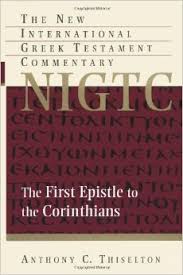
Though there are many riches to be gleaned from this particular intro, the phrase that caught my eye in my study this week was this little genitive ekklesia tou theou; the first thing Paul calls the Corinthian gathering of believers is “the church of God.” Anthony Thiselton notes in his massive commentary that this phrase is ‘possessive’. Paul will say many other things about the believers in Corinth, but the first thing he tells them is this: you are God’s. Thiselton continues:

The church, Paul insists, belongs not to the wealthy, or to the “patrons,” or to some self-styled inner circle of “spiritual people who manifest gifts,” but to God. —The First Epistle to the Corinthians (pg. 73)

It pays to reflect on that reality. At the risk of exaggeration, I’d say that most of the current pathologies plaguing our current church practices, or at least the worst ones–consumerism, over-authoritarianism, individualism, pragmatism, etc–have their root in the fact that we have forgotten to observe this little genitive: “of God.”

How often do think of the Church as something other than the body which God purchased with his own blood (Acts 20:28)? How often have we thought of our church primarily in terms of the fact that it’s the place we’ve grown up? Or the church ‘I’ve decided to attend’? Or, the ‘building I helped pay for’? Or in terms of its denominational affiliation? Or how many times have we asked “oh, whose church is that up the way” with its pastor in mind?

Or even more, pastors, how often have we let that attitude creep into our own thought? Have we slipped into the attitude of confusing our call to a congregation with our possession of a congregation? Do we tend forget that we are but ministers of the Gospel, not its authors? Are we constantly remembering that we are but construction managers under the great Architect and Lord of the house? That we are under-shepherds to the Great Shepherd and owner of the flock?

Whatever else we might say of the Church universal, or the local body that instantiates is, Paul reminds us that first and foremost we must recognize it as God’s. Any other description insofar as it is uttered apart from this confession is thereby transformed into falsehood. We are his inheritance, accomplishment, and achievement. He has called us, redeemed us, and sanctified us for himself. The Church’s existence is to, by, and for Him.

Soli Deo Gloria

8 Reasons the Resurrection Matters

resurrection jesusOne of the things I love about reading Bavinck is that he continually disabuses me of the notion that recent challenges to the faith are really all that new, or that the sound, biblical theology that forms an answer to it was only recently discovered by a few insightful, North American (or British) scholars in the 1990s or something. Instead, Christian theologians have been taking up the charge to defend the faith, and pass on the richness of the biblical vision for a long time.

I was reminded of this when reading through Bavinck’s lengthy treatment of the Resurrection. In it he discusses various alternative, modern hypotheses, that would turn the Resurrection appearances into mere, subjective visions, or even divinely appointed projections of the risen Christ. Or, again, more agnostic accounts that would say the physical resurrection is really of no theological import as long as we affirm Christ’s current Lordship in either case. Besides not being historically satisfying accounts, Bavinck says they’re also theologically disastrous being a rather gnostic, dualist approach to the gospel.  He then goes on to explain how the Resurrection presents us with thick, rich approach to salvation that is indispensable or Christian faith and quickly lists 8 reasons it is absolutely crucial to affirm:

Scripture, however, proceeds from a totally different view. It teaches that both heaven and earth, spirit and matter, have been created by God; that the body belongs to the essential being of humans and in its way exhibits the image of God; that death is a consequence of and punishment for sin. For Scripture, then, everything depends on the physical resurrection of Christ. The that is integral to the how: if Christ did not arise physically, then death, then sin, then he who had the power of death has not been defeated. In that case, actually, not Christ but Satan came out the victor. According to Scripture, therefore, the significance of the physical resurrection of Christ is inexhaustibly rich.

Briefly summarized, that resurrection is

(1) proof of Jesus’ messiahship, the coronation of the Servant of the Lord to be Christ and Lord, the Prince of life and Judge (Acts 2:36; 3:13–15; 5:31; 10:42; etc.);

(2) a seal of his eternal divine sonship (Acts 13:33; Rom. 1:3);

(3) a divine endorsement of his mediatorial work, a declaration of the power and value of his death, the “Amen!” of the Father upon the “It is finished!” of the Son (Acts 2:23–24; 4:11; 5:31; Rom. 6:4, 10; etc.);

(4) the inauguration of the exaltation he accomplished by his suffering (Luke 24:26; Acts 2:33; Rom. 6:4; Phil. 2:9; etc.);

(5) the guarantee of our forgiveness and justification (Acts 5:31; Rom. 4:25);

(6) the fountain of numerous spiritual blessings: the gift of the Spirit (Acts 2:33), repentance (Acts 5:31), spiritual eternal life (Rom. 6:4f.), salvation in its totality (Acts 4:12);

(7) the principle and pledge of our blessed and glorious resurrection (Acts 4:2; Rom. 8:11; 1 Cor. 6:14; etc.);

(8) the foundation of apostolic Christianity (1 Cor. 15:12ff.).

I’m sure we could all think of more reasons. Indeed, Bavinck himself does in other sections as well as this one. Still, even this brief list demonstrates how inextricably the benefits and accomplishment of salvation, not only of individuals, but the whole cosmos is tied up with the Resurrection of Jesus Christ. This isn’t only about the coming back to life of one particularly good, holy man, but literally the redemption of the whole world. All of this only serves to confirm Paul’s affirmation that the totality of Christian faith rises or falls with the Resurrection of the Son:

For if the dead are not raised, not even Christ has been raised. And if Christ has not been raised, your faith is futile and you are still in your sins.  Then those also who have fallen asleep in Christ have perished. If in Christ we have hope in this life only, we are of all people most to be pitied. (1 Corinthians 15:16-19)

Which is why I thank God for Paul’s next pivot–it’s one of my favorites in all of Scripture:

 But in fact Christ has been raised from the dead, the firstfruits of those who have fallen asleep. (v. 20)

Take some time to meditate on the Jesus’ glorious resurrection today. Maybe work your way through Bavink’s 8 reasons. Stop to think about each for a minute or two, and just praise him for what he’s done. More than that, praise him for who he is: the Resurrected Lord of All Creation.

Soli Deo Gloria

The Age of Atheists by Peter Watson (TGC Review)

age of atheistsPeter Watson. The Age of Atheists: How We Have Sought to Live Since the Death of God. New York: Simon & Schuster, 2014. 640 pp. $35.00.

After Plato’s allegory of the cave, Nietzsche’s parable of the Madman is probably the most famous in all of Western philosophy; indeed, the Madman’s declaration “God is dead and we have killed him” has probably penetrated its consciousness at a far deeper level. Nietzsche asked an intellectual culture still living off the borrowed values of a Christianity it no longer professed: “How do we live in a world that has lost its central conceptual, moral, existential focus? What do we make of meaning now that we know God doesn’t exist?”

Through two major works, Sources of the Self (1989) and A Secular Age (2007), Canadian philosopher Charles Taylor has argued that in the wake of Nietzsche the onslaught of scientism, rationalism, and secularism has thinned out the moral world we moderns inhabit. As a subtraction story secularism disenchants the world, emptying our sense of transcendence and pushing us into an “immanent frame” of living that’s inevitably hollow and existentially impoverished. Other secular thinkers such as Luc Ferry and Ronald Dworkin have, in their own ways, joined Taylor in this judgment.

In The Age of Atheists: How We Have Sought to Live Since the Death of God Peter Watson hopes to change the narrative by pushing back on Taylor’s impoverishment thesis. In this massive and thoroughly entrancing work of intellectual and cultural history, the prolific London-based author aims to recount hitherto-untold drama of the multifarious and rather “thick” ways we’ve tried to “live without God” ever since we discovered his death about 120 years ago.

You can read the rest of my review of this fabulous book over here at The Gospel Coalition

Soli Deo Gloria

Mere Fidelity: Cultural Presuppositions and the Practices that Embody Them

Mere FidelityIn this chat Matt, Alastair, and I discuss our common cultural presuppositions and the particular actions which might embed them. We begin with the issue of in-vitro fertilization, but we move on to other subjects.

This is the bit from O’Donovan that started us off:

“It may, of course, be wondered whether such subtleties are beyond the understanding of most couples who participate in the IVF programme, and whether such a practice can only have the effect of enforcing the widespread view of procreation as a project of the will.

It may even be thought that the cultural influence of the practice is likely to be so bad that IVF should be discouraged for that reason alone. To such a suggestion perhaps we are in no position to put up a strong resistance. After all, the experience with contraception makes it highly plausible.  It is possible that a wise society would understand IVF as a temptation; it is possible that a strong-willed society would resolve to put such a temptation aside.

But this takes us beyond the scope of our fairy-tale, in which no cultural consequences need be feared. These cultural questions are different from the question of whether there is something intrinsically disorded about IVF. And to that question we have not found reason (speaking simply, of course, of IVF as practised by fairy-godmothers in fairy-tales) to return a negative answer.”

40 Days That Make Sense of the New Testament

Jesus talkingMany know that after he rose from the dead, Jesus appeared to his disciples to manifest his resurrected glory and commission them for ministry. What is often forgotten is that Luke tells us in Acts 1 that he spent 40 days with his disciples instructing them about the kingdom and preparing them. Because Luke only mentions this in the one verse, we often forget about this dimension of his earthly ministry.

Herman Bavinck makes the case, though, that we forget these 40 days at great peril to our ability to make sense of the shape of much of New Testament teaching and preaching:

After he had suffered, he not only presented himself alive with many compelling proofs for forty days but also spoke to them of the things pertaining to his kingdom (Acts 1:3; 10:40–42; 13:31). All too often this instruction that Christ gave to his disciples between his resurrection and ascension is ignored, but it fully deserves our attention. Those who do not take account of it create a large chasm between what Jesus himself taught before his death and what was later preached by his apostles. These men, certainly, linked up with the instruction given by Jesus to his disciples specifically in that forty-day period. Jesus did not appear to his disciples in order from that point on to leave them to their own reflection and reasoning, but in those forty days impressed upon them much more clearly than he could do earlier the significance of his death and resurrection, of his person and work. For before his death and  resurrection, his disciples did not understand him. Over and over they misconstrued his intentions. They would only understand them afterward. But after Jesus died and rose again, appeared to them in another form, and spoke with them about the kingdom of God, they learned more in those forty days than in the three years they had daily associated with him. Only then did they for the first time understand the words he had spoken to them earlier.

Of the greatest significance were the things in which Jesus now further instructed them. They concerned—briefly to mention the most important—the necessity and significance of his suffering (Luke 24:26–27), the explanation of the prophecies of the Old Testament in light of their fulfillment (Luke 24:27; 44–46), the glory and power to which he was now being raised (Matt. 28:18). Additionally, his enduring presence in his church (Matt. 28:20), the equipment of his apostles for the office of their ministry (Mark 16:17–18; Luke 24:48; John 20:21–23), the restoration of Peter (John 21:15–17), the proclamation of the gospel to all peoples (Matt. 28:19; Mark 16:15; Luke 24:47; Acts 1:8), the nature of faith in his name (Mark 16:16; John 20:29), the benefits to be obtained by it (Mark 16:16; Luke 24:27). Finally, the meaning and administration of baptism (Matt. 28:19), the future of the kingdom of God (Acts 1:7), the promise of the Holy Spirit (Luke 24:49; Acts 1:4–5), his own deity (John 20:28), and the full revelation of God as Father, Son, and Spirit (Matt. 28:19).

Reformed Dogmatics Volume 3: Sin and Salvation in Christ, pg. 444

Commenting on the apparent disparity between Jesus’ ministry and that of the apostles Alfred Loisy’s famously quipped, “Jesus came proclaiming the Kingdom, and what arrived was the Church.” Now, while scholars like N.T. Wright have accounted for the apparent differences in emphasis between Jesus’ proclamation in the Gospels and that of the apostles (Kingdom –> Risen King),  when we begin to take seriously the account of Jesus’ post-Resurrection instruction, we can start to appreciate how much the apostles’ teaching was still rooted in the words of their Lord.

It’s not that after his Resurrection, the apostles all of a sudden, under the inspiration of the Spirit, had a burst of theological creativity. Jesus himself revealed to them truths they could not see before, and clarified for them the reality of what he had been instructing them in all along. The disciples didn’t just have to sit back and remember “Now what did Jesus mean when he said…” when they were writing the Gospels. Many of the interpretations of Jesus’ ministry as the fulfillment of prophecy were probably taken from Jesus’ own lips as he spent time teaching them about the kingdom of God.

I don’t know about you, but this offers me great encouragement to my faith in the authority of the rest of the New Testament witness. Even without bringing in the strong theology of inspiration I already have, the New Testament is not merely the disciples’ witness to the Risen Christ, but likely the Risen Christ’s own witness to himself.

And on that note, I think I’ll wrap this up and go crack open my Bible. Seems like the right application at this point.

Soli Deo Gloria