The Three-fold Work of the Spirit

people and placeWarning: This is a nerdy one.

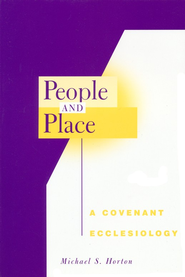
I’ve long found the three-fold office of Christ as Prophet, Priest, and King to be an extremely helpful and biblical way of organizing the complex fullness of his once-for-all reconciling work in his life, death, resurrection, ascension, and session at the right hand of the Father. What I’ve not found is a succinct piece linking the accomplishment of Christ’s final mediatorial with the present work of the Spirit in the community and the life of the believer–that is until I ran across this passage by Michael Horton:

From John 14-16 we also see that the Spirit brings about the…effect of the threefold office of Christ in these last days. As prophet, the Spirit bears the covenant word of judgment and justification, conviction of sin and faith-creating promise. This is what it means for the Spirit to be poured out on all flesh (Joel 2). As Barth famously put it, “The Lord of speech is also the Lord of our hearing.”

Furthermore, the Spirit is not merely a bonding agent between the Father and the Son, but an equal actor in the economy of grace. Although the external works of God are undivided, the agency of each person is distinct. The one Word is spoken by the Father and reaches its creaturely goal through the perfecting power of the Spirit. As the Spirit is different from the Son (“another Paraclete”), Pentecost is a genuinely new episode in the economy of grace. The Spirit “translates” for us and within us the intra-Trinitarian discourse concerning us (election, redemption, and renewal in Christ). The content of the Spirit’s teaching ministry is Christ (John 15:26b)–not another Word, but its inward effect in our hearts, provoking an “Amen!” AS one sent by the Father in the name of Christ, the Spirit preaches Christ, gives faith to hearers, and thereby unites them to Christ as members of his mystical body.

As “another Advocate,” the Spirit also ministers within us as that priestly office that Christ holds objectively outside of us. The Spirit is not our high priest, but applies the benefits of Christ’s completed work to us and unites us to Christ himself. Apart from the Spirit’s agency, we would remain “dead in trespasses and sins,” refusing the Gift, without any vital connection to Christ’s person and work (Eph. 2:1-5) We have already been reconciled to God in Christ “while we were still enemies” (Rom. 5:10), but the Spirit comes to make us friends and children of God (Rom. 8:1-27). As a covenant attorney, the Spirit makes more than a truce–a mere cessation of hostilities–and brings about a state of union.

Mediating Christ’s royal ministry, the Spirit subdues unbelief and the tyranny of sin in the lives of believers, creating a communion of saints as body ruled by its living head through prophets and apostles, evangelists, pastors, and teachers that Christ has poured out as the spoils of his victory (Eph. 4:11-16). The Spirit makes Christ’s rule effective in us and mong us by inspiring the scriptural canon and by creating a people who will be constituted by it. Jesus Christ had already appointed apostles as Spirit-inbreathed witnesses, but now at last through the ordinary ministry of pastors, teachers, and other officers in the church, Moses’ request in Numbers 11:29 (“Would that all the LORD’s people were prophets, and that the LORD would put his Spirit on them!”) will be fulfilled beyond his wildest dreams. Not only the seventy elder, but also the whole camp of Israel is made a Spirit-filled community of witnesses. The charismata bestowed on the whole body are orchestrated by the Spirit through the ordained office-bearers, who differ only in the graces (vocation), but in the grace (ontic status) of the Spirit. Thus, the mission of the Twelve in Luke 9:1-6 widens to the seventy in chpater 10. Yet this was but a prelude to the commissioning ceremony of Pentecost.

People and Place: A Covenant Ecclesiology, pp 24-25

Soli Deo Gloria

Justin Bieber: On the Dangers of Being Famous Too Early (CaPC)

That happened.

That happened.

Back when my wife and I used to watch American Idol with her family every week, I had a staunch policy of not supporting any contestants under the age of 18, regardless of talent or the competition.  My gut feeling was that 16 is just too young for most people to have that much attention focused on them.  If they were good, take a shot at it in another couple of years.

A few years on, a couple of years of college ministry later, my gut hasn’t changed. (Well, my inner gut. We’ll pass over my waist size in silence.) I still think being too famous too early is an unfortunate turn of events.

My evidence? Justin Bieber and Anne Frank.

You can go read the rest of the article over at Christ and Pop Culture HERE.

A Political Non-Pacifist Reading of The Sermon on the Mount

constantineIt’s often alleged that any reading of Jesus’ teaching in the Sermon on the Mount that doesn’t result in a pacifist ethic is a depoliticized and de-historicized one. Jesus’ commands against retaliation and of neighbor-love, (Matthew 5:38-48) set in a context of Roman oppression and violence must lead obviously one of non-violence lest the politics of Jesus be lost. Leithart notes that for John Howard Yoder without pacifism Jesus’ ethic loses its political force because Yoder believes that Jesus’ teaching offered no instruction for his disciples in political power because his followers were never to have that sort of power.

In a striking passage Leithart moves to counter that contention by offering a brief, non-pacifist, “political” reading of the Sermon on the Mount in which Jesus’ words for his disciples can shape the governance of those disciples who happen to hold political authority; for a way in which the “Eucharistic city” of the Church can offer guidance to the City of Man based on the teachings of her King:

  1. “Turn the other cheek” gives instruction not about self-defence but about honor and shame. To slap someone on the right cheek, you have to slap back-handed, and back-handed slap expresses contempt, not threat. Is this relevant to political ethics? Of course. The Roman Empire was built on a system of honor, insult and retaliation. Before Rome, Thycidides knew that wars arose from “fear, honor, and interest.” Remove retaliation and defense of honor from international politics, and a fair number of the world’s wars would have been prevented. There would have been a lot of slapping but not nearly so much shooting.
  2. The Eucharistic city would teach rulers to agree with their adversaries quickly, to defuse domestic and international disputes before they explode.
  3. What if rulers were instructed not to look at a woman lustfully? That would also prevent some wars, keep presidents busy with papers and things at their desks, protect state secrets, save money and divisive scandals. The church would insist that rulers be faithful to their wives and not put them away for expediency or a page girl (or boy.)
  4. The church would insist on honesty and truth telling, urging rulers to speak the truth even when it is painful.
  5. The church would insist that a ruler not do alms or pray or fast or do any other good things to be seen by others, especially by others with cameras—a rule that would revolutionize modern politics.
  6. Rulers would be instructed to love enemies and do good to all. Obama would be seeking the best for the Republican Party, Ms. Anonymous Republican would be doing her best to serve the president. A ruler would have to stand firm against the antics of tyrants, not out of hatred but out of love, to prevent the tyrant from doing great evil to himself and others. If the tyrant attacked, the rule would have to defend his people out of love for them and out of love for his enemy. Punishments would be acts of love for the victims, the public and the punished, just as a father disciplines his son in love. The church would insist that the ruler not use his legitimate powers of force for unjust ends, on pain of excommunication.
  7. The church would urge rulers to beware their own blind spots and remove logs from their eyes so they can see rightly in order to judge.
  8. The church would remind a ruler that she will face a Judge who will inquire what she had done for the homeless, the weak, the sick, the imprisoned, the hungry.
  9. At the extreme, a ruler might place himself on a cross, sacrifice his political future and his reputation, for the sake of righteousness. In certain kinds of polities, he would be the first soldier, the first to fly against the enemy, because being the leader means you get to die first. In great extremity, he might follow Jeremiah’s example and submit to conquest, defeat, deportation—endure a national crucifixion to preserve people for future rebirth.

Defending Constantine, pp. 338-339

Whether you’re in full agreement with this list or not, Leithart demonstrates that one doesn’t have to be a pacifist in order to give “an earful of the politics of Jesus” to any ruler.

Soli Deo Gloria

5 Tips on How To Read Stuff on the Internet

computerThe internet is a funny place–particularly the blogosphere. Recently, I’ve been forced to reflect on the way that people read things the internet–about the way I read things on the internet–and I thought it worthwhile to share a few of the tips I’ve been learning to work on.

  1. The words “A” and “The” are different words. – Seriously, read carefully. Pay attention to whether an author is making broad or specific claims. Is it an absolute or conditional statement? It’s good to be careful about those sorts of things.
  2. Don’t always assume the author knows you personally and is obviously writing about your experience. There have been a number of instances where I have misread an author’s intent by immediately connecting whatever they’re writing about with my personal history. In other words, don’t be narcissistic in your reading. Obviously, you will always come to the text with your own personal history. It’s important to stop and realize that your life does not and can not encompass the sum total of human wisdom and experience. The author might have a whole different set of experiences that they’re drawing on and addressing that have nothing to do with you.*
  3. Read the whole article, not just particular paragraphs. This point should be obvious as well. Still, I can’t tell you how many times I have had to come back to an article and realize that the author wasn’t saying what I thought they were saying because I, with my myopic tendencies, had fixated on some particular phrase instead of catching the whole shape of the argument. Instead, it’s good to make sure and read the whole thing before coming to a firm judgement. You don’t know the way that the author might balance or correct for your concerns later on.
  4. Calm down and read it again. This one is implied in the last one, but sometimes it pays to read an article more than once. I know for myself, I’ve approached certain authors or articles with controversial titles with a grid in place that skewed even a thorough first reading. It pays to read it again and again to make sure you’re hearing properly.
  5. Read as you’d like to be read. This is simply the golden rule in practice. If you’d like others to pay attention to what you say, give grace for your linguistic infelicities, and ask for clarifications before making final judgments about your pieces, then go ahead and do the same for others.

*If you’re offended right now because you think I’m writing this post about you, please refer back to #2.

The Strong Voice of the Lord

 Ascribe to the Lord, O heavenly beings,

ascribe to the Lord glory and strength.

 Ascribe to the Lord the glory due his name;

worship the Lord in the splendor of holiness.

 The voice of the Lord is over the waters;

the God of glory thunders,

the Lord, over many waters.

 The voice of the Lord is powerful;

the voice of the Lord is full of majesty.

 The voice of the Lord breaks the cedars;

the Lord breaks the cedars of Lebanon.

 He makes Lebanon to skip like a calf,

and Sirion like a young wild ox.

The voice of the Lord flashes forth flames of fire.

The voice of the Lord shakes the wilderness;

the Lord shakes the wilderness of Kadesh.

The voice of the Lord makes the deer give birth

and strips the forests bare,

and in his temple all cry, “Glory!”

 The Lord sits enthroned over the flood;

the Lord sits enthroned as king forever.

 May the Lord give strength to his people!

May the Lord bless his people with peace!

Psalm 29

Kind of a fake-out blog–it’s just the Bible this time. I’m intentionally not going to comment on it except to say:

  • Read it a few times through and note which phrases or thoughts are repeated or highlighted.
  • Read it again and note the differences between the lines.
  • Ask questions like, “What is the prayer to the Lord?” or “What is the command to the people?” and “On what basis does the Psalmist tell the people to do these things?”
  • Before all of these things, though, pray that the Spirit would illumine the text for you.

I pray the Lord’s strong voice speaks to you in this morning through his Word.

Soli Deo Gloria

The Morality of the Story (Mere-Orthodoxy Guest Piece)

So, I wrote a piece a while back on the way looking at our lives in the narrative key shapes the way we understand our moral situation. After some tuning up and heavy editing, Matthew Lee Anderson was kind enough to give me the honor of publishing it over at Mere Orthodoxy. You can read it HERE.

Soli Deo Gloria

Who Were Rufus And Alexander? Why Are They In The Bible?

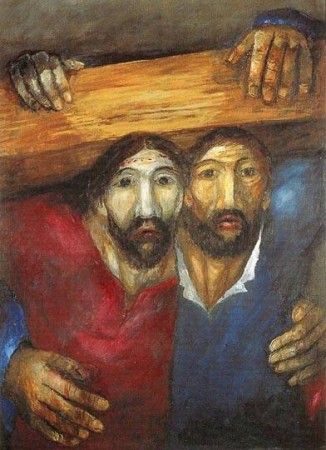
Simon CyreneAnd they compelled a passerby, Simon of Cyrene, who was coming in from the country, the father of Alexander and Rufus, to carry his cross. (Mark 15:21)

Many of us growing up in church know who Simon of Cyrene is. Simon was forced to carry Jesus’ Cross for him on the road to Golgotha. His inclusion in Mark’s account makes sense; when the almighty Son of God’s mortal strength was failing him, Simon helped bear his burden. What makes less sense, initially, is the inclusion of his sons, Alexander and Rufus, who, to our knowledge, did absolutely nothing. Why then should they be there, included in the text? What’s the point in telling us who his sons are, especially when so many others go unnamed in the account, including the relations of prominent disciples, such as Peter’s mother-in-law who was actually the subject of healing (Mark 1:30-31)?

Richard Bauckham steps in to clear things up for us:

…the way Simon is described by Mark — as “Simon the father of Alexander and Rufus” — needs explanation. The case is not parallel to that of Mary the mother of James the little and Joses (Mark 14:40), where the sons serve to distinguish this Mary from others, because Simon (very common though this name was) is already sufficiently distinguished by reference to his native place, Cyrene. Matthew and Luke, by omitting the names of the sons, who that they recognize that. Nor is it really plausible that Mark names the sons merely because they were known to his readers. Mark is far from prodigal with names. The reference to Alexander and Rufus certainly does presuppose that Mark expected many of his readers to know them, in person or by reputation, as almost all commentators have agreed, but this cannot in itself explain why they are named. There does not seem to be any good reason available other than that Mark is appealing to Simon’s eyewitness testimony, known in the early Christian movement not from his own firsthand account but through his sons. Perhaps Simon himself did not, like his sons, join the movement, or perhaps he died in the early years, while his sons remained well-known figures, telling their father’s story of the crucifixion of Jesus. That they were no longer such when Matthew and Luke wrote would be sufficient explanation of Matthew’s and Luke’s omission of their names.

Jesus and the Eyewitnesses: The Gospels as Eyewitness Testimony, pg. 52

What we have here is an early invitation to check with the witnesses. The implication, much as with Paul’s laundry-list of names in 1 Corinthians 15:3-7, is for the reader feel free to ask them about it, should they care to. Simon might be dead, but Rufus and Alexander are living witnesses who can verify what Mark has written about their father.

The constant witness of the New Testament is that the apostles were not teaching “cleverly devised stories” but were dealing with “eyewitnesses of his majesty.” (2 Peter 2:16) Our faith is still faith–it is not yet sight–and yet, it is not blind. We are asked to place whole-hearted trust in credible testimony, human, and ultimately divine, that the promises of God have been fulfilled in Jesus Christ, who, though he was strong, became weak for our sake that day on Golgotha.

Soli Deo Gloria

Who Are You Sleeping With? My Conversation with Tim Keller (CaPC)

Me and KellerSo, I was talking to Tim Keller this week when the topic of sex came up…no, wait, that’s not right.

Let’s re-frame that without me lying.  I managed to snag a ticket to the Gospel Coalition’s National Conference this week and sit in on a breakout session on the subject of revival by Dr. Keller.

I think that’s enough of a teaser. You can go read the rest over at Christ and Pop Culture HERE.

Could Constantine Have Been James Madison?

Definitely not a 4th Century Emperor.

Definitely not a 4th Century Emperor.

So after a few months of having it stare at me from my book shelf, I was able to start reading Peter Leithart’s Defending Constantine:The Twilight of an Empire and the Dawn of Christendom.  Admittedly I’m only about half-way through the work, but to me this is a tour de force of historiography and theological polemic re-examining the life and times of the first Christian Emperor, as well as the theological critique of “Constantinian” relations between church and state a la John Howard Yoder. Given that I’ve just arrived in Orlando for the Gospel Coalition 2013 National Conference I can’t take time for a truly substantial post about it yet. Still, one section in particular stuck me as worth briefly sharing and commenting on.

In reviewing his involvement in the internal affairs of the Church such as the Arian controversy and conflict between the Catholics and the Donatists, Leithart addresses the criticism Constantine receives as an un-baptized Emperor with no particular religious authority mucking about in such matters. For us moderns, it seems so obvious that there ought to be a separation between Church and State. Constantine should have taken a hands-off approach and left it bishops to handle their “spiritual” business while he took care of the affairs of state. Leithart calls this suggestion “implausible” and comments:

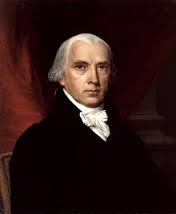
As we saw in the last chapter, Constantine did in fact follow a policy of tolerant concord. Beyond that, no one in the fourth century would have thought that a political regime could function without religious sanction, and it is naive to think that Constantine’s conversion  would have instantly turned him into James Madison…The question is, what were Constantine’s historical options in the fourth century? What were the constraints on his action? What, perhaps more important, were the limits of his imagination? Only when we have considered those questions are we capable of doing justice to Constantine’s interventions in church politics.

Defending Constantine, -pg. 132

The point is, when dealing with Constantine’s political legacy, we need to consider our historical distance and the limits of the subject’s own political horizon. Constantine wasn’t ruling his Empire after the Reformation, the Enlightenment, and the various historico-political developments that have shaped Western thought on religion and politics. Indeed, the separation between the two would have been an entirely foreign one, and so would the idea of an Emperor who kept a distance from the cultus. While admittedly not the biblical ideal, Leithart gives us good historical reason to think that Constantine’s foray into a constructive relationship between the State and the Church isn’t the sheer, unmitigated disaster that popular polemics would have us believe.

Soli Deo Gloria

Killswitch Engage, Edwards, and the Hell Inside Us All

disarmKillswitch Engage’s new album Disarm the Descent came out this last week. I don’t know how many times I’ve listened to it already, but I know I’ve got a few hundred more to go. Needless to say, it’s text-book shredding perfection. Adam D. is a metal machine; he couldn’t produce a weak metal album if he tried. Also, for those of you worried about the loss of frontman Howard Jones (who was amazing), Jesse Leach has returned to the helm stronger than ever both vocally and lyrically. He even manages to do a pretty good job filling in for Jones on the live version of “My Curse” included in the special edition.

Now, this is isn’t a full album review. In fact, I mostly just want to call attention to Leach’s forceful lyric-writing in the opening track, “The Hell in Me.”


Now, once I stopped air-shredding and paid attention to what he was saying, I realized he was speaking of the spiritual struggle at work in us all he sings:

Fall down into the chaos
Staring into the depths of pain darkness and suffering
I will not be from this place, inside of me
Until I understand this part of me that bleeds and captures my spirit
If it’s the death of me, then I will loosen its grip.

[Chorus:]
Protect me from the hell that burns inside me
No one can see this is the hell in me
Bring light into the darkness
Awaken and stir this war within us all
Reveal my true intentions

[Chorus:]
No one can see this is the hell in me
Lead me out of the darkness
Strengthen and protect the voice that makes no sound
Suffer and bleed for me
Pulled from the hell that is in me
Set me free
Will you set me free?

Leach picks up on the very biblical image of fire, torment, and hell to speak of the way a soul is consumed from within by sin. Sin burns the spirit. Indeed, this is ultimately the darkest truth of the doctrine of hell–we carry its seeds around within ourselves. Paul testifies that the wrath of God is seen, not so much in his active judgment, but in handing us over the the darkness of our own hearts as they lust after those things which dehumanize them. (Rom 1:18-15)

In depicting our spiritual struggle this way, Leach channels the spirit of Jonathan Edwards who brilliantly laid out this truth in his (in)famous sermon “Sinners in the Hand of an Angry God”:

There are in the souls of wicked men those hellish principles reigning, that would presently kindle and flame out into hell fire, if it were not for God’s restraints. There is laid in the very nature of carnal men, a foundation for the torments of hell. There are those corrupt principles, in reigning power in them, and in full possession of them, that are seeds of hell fire. These principles are active and powerful, exceeding violent in their nature, and if it were not for the restraining hand of God upon them, they would soon break out, they would flame out after the same manner as the same corruptions, the same enmity does in the hearts of damned souls, and would beget the same torments as they do in them. The souls of the wicked are in scripture compared to the troubled sea,Isa. 57:20. For the present, God restrains their wickedness by his mighty power, as he does the raging waves of the troubled sea, saying, “Hitherto shalt thou come, but no further;” but if God should withdraw that restraining power, it would soon carry all before it. Sin is the ruin and misery of the soul; it is destructive in its nature; and if God should leave it without restraint, there would need nothing else to make the soul perfectly miserable. The corruption of the heart of man is immoderate and boundless in its fury; and while wicked men live here, it is like fire pent up by God’s restraints, whereas if it were let loose, it would set on fire the course of nature; and as the heart is now a sink of sin, so if sin was not restrained, it would immediately turn the soul into fiery oven, or a furnace of fire and brimstone. -Jonathan Edwards, Sinners in the Hands of an Angry God, sec. 6

Songs like this remind me to thank God for his restraining hand. Even more, I thank God that he saw the hell in me and decided to “suffer and bleed for me”, to set me free, fully and finally from the torment of sin in Jesus Christ.

Soli Deo Gloria