God is Creatively Creative

creationMost believers in God, if they’ve given our world more than a cursory glance, must come to the conclusion that we serve a creative God. The Maker of heaven and earth filled it with everything from aphids to the Aurora Borealis. Canvas after canvas is filled with the glory of our God’s infinitely fecund imagination. What we don’t often give thought to is the creative way in which God is creative. Let me rephrase that: God is not simply creative as to his works, but also in the way that he works.

Robert Letham notes at least three ways that God works to shape the our world in the creation account in Genesis 1:

In particular, he forms the earth in a threefold manner. First, he issues direct fiats. He says, “Let there be light,” and there is light (v.3). So, too, he brings into being with seemingly effortless command the expanse (v. 6), the dry ground (v. 9), the stars (vv. 14-15), the birds and the fish (vv. 20-21). Each time it is enough for God to speak, and his edict is fulfilled.

Second, he works. He separates the light from the darkness (v. 4), he makes the expanse and separates the waters (v. 7), he makes the two great lights, the sun and the moon (v.16), and sets them in the expanse to give light on the earth (v. 17), he creates the great creatures of the seas and various kinds of birds (v. 21), he makes the beasts of the earth and the reptiles (v. 25), and finally he creates man–male and female–in his own image (v. 26-27) The thought is of focused, purposive action by God, of divine labor accomplishing his ends.

But there is also a third way of formation, in which God uses the activity of the creatures themselves. God commands the earth to produce vegetation, plants, and trees (vv. 11-12). He commands the lights to govern the day and the night (vv. 14-16). Here the creatures follow God’s instructions and contribute to the eventual outcome.

–Robert Letham, Union with Christ: In Scripture, History, and Theology, pp. 10-11

God might be described as a king, a craftsman, and a delegator in his threefold creation. He issues decrees that are immediately fulfilled, gets his hands dirty by getting the job done himself, and giving creation itself tasks to accomplish. There are a number of observations that can be made on this basis, but I’ll limit myself to three.

For one, it begins to set the stage for understanding God in a more fully-personal fashion. We see the Father acting by what Ireneaus called his two hands, the Word and the Spirit, to bring about a varied-but-united order. “This God loves order and variety together” (pg. 11), because he himself is the Triune one who is One and yet Three.

We also see in this threefold activity an incipient theology of multiple-levels of causality. Sometimes God’s action is a direct, creative word which needs to mediation. Sometimes, God acts through creaturely means in ways that can be properly ascribed both to God as primary cause, and creature as a secondary, but no less real, cause. It gives God no glory to ascribe to him strict mono-causality in an effort to secure his sovereignty. (Which good Reformed theologians shouldn’t do.)

Finally, something of the nature of redemption is prefigured here. First, God speaks by fiat a declarative word in justification that brings to life those who were dead. God also separates out a people, making them holy by his Word and Spirit. Finally, he uses creaturely means such as the preaching of the Word, water, bread, and wine to save and recreate his people. 

Our Triune God is not only creative, he is creatively creative.

Soli Deo Gloria
The Three-fold Work of the Spirit

people and placeWarning: This is a nerdy one.

I’ve long found the three-fold office of Christ as Prophet, Priest, and King to be an extremely helpful and biblical way of organizing the complex fullness of his once-for-all reconciling work in his life, death, resurrection, ascension, and session at the right hand of the Father. What I’ve not found is a succinct piece linking the accomplishment of Christ’s final mediatorial with the present work of the Spirit in the community and the life of the believer–that is until I ran across this passage by Michael Horton:

From John 14-16 we also see that the Spirit brings about the…effect of the threefold office of Christ in these last days. As prophet, the Spirit bears the covenant word of judgment and justification, conviction of sin and faith-creating promise. This is what it means for the Spirit to be poured out on all flesh (Joel 2). As Barth famously put it, “The Lord of speech is also the Lord of our hearing.”

Furthermore, the Spirit is not merely a bonding agent between the Father and the Son, but an equal actor in the economy of grace. Although the external works of God are undivided, the agency of each person is distinct. The one Word is spoken by the Father and reaches its creaturely goal through the perfecting power of the Spirit. As the Spirit is different from the Son (“another Paraclete”), Pentecost is a genuinely new episode in the economy of grace. The Spirit “translates” for us and within us the intra-Trinitarian discourse concerning us (election, redemption, and renewal in Christ). The content of the Spirit’s teaching ministry is Christ (John 15:26b)–not another Word, but its inward effect in our hearts, provoking an “Amen!” AS one sent by the Father in the name of Christ, the Spirit preaches Christ, gives faith to hearers, and thereby unites them to Christ as members of his mystical body.

As “another Advocate,” the Spirit also ministers within us as that priestly office that Christ holds objectively outside of us. The Spirit is not our high priest, but applies the benefits of Christ’s completed work to us and unites us to Christ himself. Apart from the Spirit’s agency, we would remain “dead in trespasses and sins,” refusing the Gift, without any vital connection to Christ’s person and work (Eph. 2:1-5) We have already been reconciled to God in Christ “while we were still enemies” (Rom. 5:10), but the Spirit comes to make us friends and children of God (Rom. 8:1-27). As a covenant attorney, the Spirit makes more than a truce–a mere cessation of hostilities–and brings about a state of union.

Mediating Christ’s royal ministry, the Spirit subdues unbelief and the tyranny of sin in the lives of believers, creating a communion of saints as body ruled by its living head through prophets and apostles, evangelists, pastors, and teachers that Christ has poured out as the spoils of his victory (Eph. 4:11-16). The Spirit makes Christ’s rule effective in us and mong us by inspiring the scriptural canon and by creating a people who will be constituted by it. Jesus Christ had already appointed apostles as Spirit-inbreathed witnesses, but now at last through the ordinary ministry of pastors, teachers, and other officers in the church, Moses’ request in Numbers 11:29 (“Would that all the LORD’s people were prophets, and that the LORD would put his Spirit on them!”) will be fulfilled beyond his wildest dreams. Not only the seventy elder, but also the whole camp of Israel is made a Spirit-filled community of witnesses. The charismata bestowed on the whole body are orchestrated by the Spirit through the ordained office-bearers, who differ only in the graces (vocation), but in the grace (ontic status) of the Spirit. Thus, the mission of the Twelve in Luke 9:1-6 widens to the seventy in chpater 10. Yet this was but a prelude to the commissioning ceremony of Pentecost.

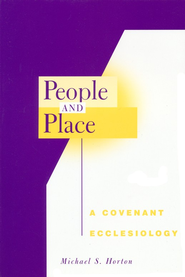
People and Place: A Covenant Ecclesiology, pp 24-25

Soli Deo Gloria

Three Solid (and Readable) Books on the Trinity

I love reading about the Trinity. Between the Trinity and the Cross, you have the core of my theological interests. I’ve been reading about the Trinity on and off since the end of college. While I can’t say I’m an expert or that I’ve read everything out there, or even all of the essential works, I can say I’ve read a few. Ironically though, up until a year or two ago, I didn’t know of any that I could recommend to somebody looking to get started on the subject. Now, I have three. They’re listed in order of ease and immediate accessibility, but all of them are in the novice-intermediate category. I commend them to any who are interested.

Our Triune God: Living in the Love of the Three-in-One (2011) — Philip Graham Ryken and Michael Lefevre provide a wonderful little work chock-full of insights into the workings and ways of our gloriously Triune God. Unlike a lot of other works on the Trinity, instead of going through a long digression into the historical development of the doctrine, or the various key figures and disputes by which we arrived at Nicene Orthodoxy, it cuts to the chase, going straight to the Biblical material, showing that very warp and woof of the Bible is Trinitarian through and through. After a quick little introduction, Ryken and Lefevre immediately plunge into a very readable-yet-penetrating exposition of Ephesians 1, laying out the Trinitarian shape of salvation, making it quite clear that the Christian Gospel is unintelligible apart from the workings of the Father, Son and Holy Spirit. From there, we enter a number of illuminating discussion on the Trinity and the practical life, apologetic sections dealing with the consistency of Trinitarian doctrine with Old Testament revelation, and a delightful chapter on the impact this has for the way we think about life in community.  It is a short work, less than 130 pages, but out-sized in terms of actual content. I highly recommend this for readers with any level of theological education.

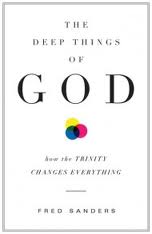
The Deep Things of God: How the Trinity Changes Everything (2010— Fred Sanders just nails it with this book. I read it a couple of years ago with great appreciation and was surprised once again at it’s richness this summer while working through it with a few of my college students. Sanders is an Evangelical who wants the rest of his brethren to understand that when we’re talking about the Trinity, we’re not wandering into enemy-occupied territory–Evangelicals are Trinitarians because Evangelicals are Gospel-people. These “Deep Things of God” are not a subject foreign to the practical, Gospel Christianity preached from the pulpit every Sunday, but absolutely central to it. In order to make his case, Sanders takes us through some very helpful discussions of theological method and doctrine of God proper. He then sets about connecting the dots between the central Gospel message and the eternal, Trinitarian reality underlying great Gospel truths such as the Incarnation, Atonement, Union with Christ, and the Grace of Adoption.  He also has excellent chapters on the way Evangelical approaches to the Bible and practices of prayer simply don’t make sense outside of a properly-Trinitarian framework. Really, the chapter on prayer, “Praying with the Grain”, is quite eye-opening. Again, as with Ryken and Lefevre, Sanders takes us into to Scripture in order to make his case. While not quite as easy for the absolute novice, I strongly commend this work to anybody interested not only in the Trinity, but how to think theologically. Sanders is an excellent guide.

The Triune God; An Essay in Post-Liberal Theology (2007) — William C. Placher has quickly become one of my favorite theologians to engage with. As a student of Hans Frei, he does Trinitarian theology from a post-liberal perspective, with an emphasis on narrative theology, as well as a keen appreciation for insights of philosophers such as Kierkegaard, Wittgenstein, and Levinas, especially when it comes to the problem of too-quickly speaking about God. At the same time, he exhibits that wonderful Reformed Catholic sensibility by doing theology in conversation with Calvin, Edwards, Barth, Aquinas, the Cappodocians, and Balthasar in a way that is intellectually-sophisticated, yet remarkably readable. Placher constructs a contemporary, orthodox, Trinitarian theology, rooted in Scripture while organically incorporating the best of the tradition. He does so with a special eye on the epistemological issues involved with speaking fittingly of the transcendent and holy God, who nonetheless draws near to us in Jesus Christ, and blesses us with understanding through the agency of the Holy Spirit. While I don’t embrace all of his assumptions about scripture, not being a post-liberal myself, I find Placher to be a first-rate chaperon into the company of serious theologians, navigating the reader through various theological mine-fields in such a way that those uninitiated aren’t even aware of the skill with which they are being guided. Again, this is a slight step up from Sanders’ work in terms of rigor, still, I would say that it is not beyond the serious newcomer to Trinitarian theology.

Soli Deo Gloria