Mere Fidelity: “On Creeping Perichoresis”

Mere FidelityIf you follow any discussions about the Trinity nowadays, you’re likely to hear the idea of “perichoresis”, or the mutual indwelling of the Father, Son, and Spirit. It’s long been a piece of trinitarian theology. But does it and should it have applications elsewhere in our theology? Like our doctrine of humanity, or our view of creation? That’s the issue we take up this week on Mere Fidelity as we interact with this article by Peter Leithart.
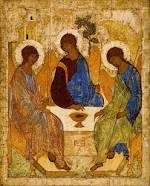
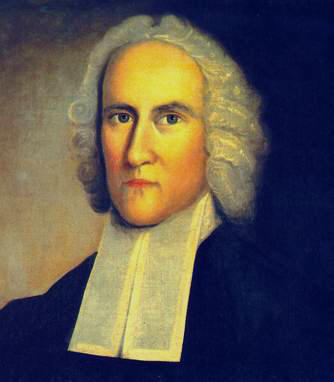
Hope you enjoy the show.

Also, you may find this article by Karen Kilby helpful, as well.

Soli Deo Gloria

You Can’t Sideline the Trinity (Or, Realize that Every Sunday is Trinity Sunday)

trinityIn closing his tremendous section in the Reformed Dogmatics Volume 2: God and Creation on the dogma of the Trinity–God’s being one being, yet three persons–Bavinck gives a number of arguments for importance of the Trinity. That God is Father, Son, and Spirit gives us the truth of the fact that God is a living God without pulling us into the various errors of pantheism, monism, and deism (p. 331). He is the one who is Three whose internal life is truly lively with the generation of the Son of the Father and the procession of the Spirit from them both. What’s more, out of this fullness  of eternal life consisting in mutual glorification, blessedness, is the ground for a doctrine of creation that, again, doesn’t fall into those various errors. Instead, because God is triune, out of the movement and perfection of his own inner life he can make a world that is not himself, upon which he is not dependent or in needy, yet can truly be an object of his love and self-communication (p. 332-333).

Beyond these meta-theological questions, though, Bavinck says that this doctrine is of “incalculable importance” for the Christian religion–the actual lived, practice of knowing and worshipping the True and Living God. Bavinck states:

The entire Christian belief system, all of special revelation, stands or falls with the confession of God’s Trinity. It is the core of the Christian faith, the root of all its dogmas, the basic content of the new covenant. It was this religious Christian interest, accordingly, that sparked the development of the church’s doctrine of the Trinity.

This isn’t just a matter of philosophic speculation, or having our doctrinal ducks in a row so that our early church bishops could have something to fight about and feel important. No, deep down, every Christian who properly owns the name knows that something more fundamental, more primary, valuable than a tidy metaphysical set-up is at stake; salvation, the history of redemption itself, hangs in the balance:

This is so strongly felt that all who value being called a Christian recognize and believe in a kind of Trinity. The profoundest question implicit in every Christian creed and system of theology is how God can be both one and yet three. Christian truth in all its parts comes into its own to a lesser or greater extent depending on how that question is answered. In the doctrine of the Trinity we feel the heartbeat of God’s entire revelation for the redemption of humanity. Though foreshadowed in the Old Testament, it only comes to light fully in Christ. Religion can be satisfied with nothing less than God himself. Now in Christ God himself comes out to us, and in the Holy Spirit he communicates himself to us. The work of re-creation is trinitarian through and through. From God, through God, and in God are all things. Re-creation is one divine work from beginning to end, yet it can be described in terms of three agents: it is fully accomplished by the love of the Father, the grace of the Son, and the communion of the Holy Spirit.

Not only does the question of the Trinity matter for the broader history of redemption, but God being Father, Son, and Holy Spirit matters at a personal level too. It is something that a Christian ought to feel in their own “flesh and bones”, so to speak. The Trinity is essential to the life of faith:

A Christian’s faith life, accordingly, points back to three generative principles. “We know all these things,” says article 9 of the Belgic Confession, “from the testimonies of holy Scripture, as well as from the operations of the persons, especially from those we feel within ourselves.” We know ourselves to be children of the Father, redeemed by the Son, and in communion with both through the Holy Spirit. Every blessing, both spiritual and material, comes to us from the triune God. In that name we are baptized; that name sums up our confession; that name is the source of all the blessings that come down to us; to that name we will forever bring thanksgiving and honor; in that name we find rest for our souls and peace for our conscience. Christians have a God above them, before them, and within them. Our salvation, both in this life and in the life to come, is bound up with the doctrine of the Trinity; yet we grant that we cannot determine the measure of knowledge—also of this mystery—needed for a true and sincere faith.

I’m writing this post today because, in the broader church calendar, this is “Trinity Sunday”, a Sunday traditionally set apart for preaching on, teaching about, and honoring God as Trinity. And there is wisdom setting aside a Sunday to explicitly do so. The one caution I would throw up is to say is this: take care that we don’t think the doctrine of the Trinity is one we can save for one Sunday a year, to reflect on. It’s not to be sidelined, or put in the corner again until next year, as we preach on the “main things” of the gospel or the Christian life.

Why? Because in all of Christianity, in the gospel, we have to do with God–restoring right relationship with him, living before him, being transformed into his Image. But what we must remember is that there is no other God than He who is Father, Son, and Holy Spirit. In other words, today might be Trinity Sunday, but every Sunday we have to do with the things of the gospel, we have to do with the things of the Trinity.

Soli Deo Gloria

Edwards: Heaven is a World of Triune Love (W/ Some Help From Strobel)

Cheesy

Cheesy “Heaven” Image, because nobody clicks on pages with Jonathan Edwards.

Recently, I’ve been on something a Jonathan Edwards kick. Though I’d been kind of interested in Edwards before–his The End for Which God Created the World and a collection of his sermons exercised a deep influence on me a few years ago–I hadn’t really dug deeply into his voluminous and wide-ranging works (sermons, treatises, miscellanies), partially because I felt I needed a guide into them. Some might think, “A guide for Edwards? Really?” Yup.

See, generations of U.S. History students have been spoiled for reading Jonathan Edwards simply because they’ve only been exposed to hostile expositions of his classic Great Awakening sermon “Sinner in the Hands of an Angry God” at the age of 15, or so. The unfortunate picture that emerges is of a hell-obsessed, brimstone preacher, with little to no theological imagination except in expositing the tortures of the damned. Push a little beyond that, though, and you come to find out the revival preacher was also a creative theologian, pastor, and philosophical innovator of the highest order. Indeed, according to many intellectual historians, it’s likely he’s the first and most original theologian the Americas ever produced, capable of being ranked among the greatest intellects of his age across the Atlantic.  Theologian Robert Jenson, himself no slouch, has called him “America’s Theologian.”

As it turns out, Edwards was rather metaphysically-sophisticated, and, in some places, kind of a quirky odd-ball in the Reformed tradition, which plays out in places you wouldn’t expect. For that reason, I decided to get my hands on Kyle Strobel’s Jonathan Edwards’ Theology: A Reinterpetation. It’s been an eye-opener. Thing is, this isn’t just a modest field-guide for the novice reader. Strobel’s work comes in the midst of a recent wave of Edwards scholarship in the blossoming field of “Edwards Studies”, with an aim to correct a lot of the discussion that’s gone before, and reset a lot of the conversation surrounding the basic shape of Edwards’ theology. Now, from where I stand as a total non-expert and unqualified observer, I can’t judge how much he does that. What I can say is that’s been a fascinating, helpful read so far.

At the heart of Strobel’s argument–insofar as I’m following it–is that Edwards’ Reformed theology (not philosophy, mind you), is a vision of the Triune God whose fundamental existence is one of “personal beatific delight.” The God from whom are all things and to whom all things are oriented, is the one whose inner life is that of the Father and Son’s mutual gaze in the delight of the Spirit. The Father’s own knowledge is the Son whom he loves and delights in through the love that is the Spirit. But it does not end with the Father’s love of the Son, in the Spirit. As he writes in Heaven is a World of Love:

And the Son of God is not only the infinite object of love, but he is also an infinite subject of it. He is not only the beloved of the Father, but he infinitely loves him. The infinite essential love of God, is, as it were, an infinite and eternal, mutual, holy, energy between the Father and the Son: a pure and holy act, whereby the Deity becomes, as it were, one infinite and unchangeable emotion of love proceeding from both the Father and the Son. This divine love has its seat in the Deity, as it is exercised within the Deity, or in God toward himself.

From this eternally happy and glorious self-knowledge and love, flows God’s purpose in creation and the history of redemption: God’s benevolent self-glorification in the communication of the overflow of that good to creatures. Everything else from Edwards’ quirky take on the attributes of God, his understanding of heaven, earth, and hell, the structure of redemptive history, the nature of union, justification, sanctification, and glorification, and so on, has its ground in Edwards’ irrefragably trinitarian theology.

And yes, thinking these things through with Edwards and Strobel really is as heady, intoxicating, difficult, and rewarding it sounds.

Heaven is a World of Triune Love

One particular section that caught my attention was the way this vision grounds Edwards’ vision of heaven as “a world of love”, which he gets into in a sermon by the same title I have already quoted above. Edwards’ vision of heaven is fascinating for a number of reasons, not least of which is his appreciation for its dynamic, historical character. Yes, according to Edwards, even heaven has a history, with different eras ushered in by the different stage of Christ’s historical work of redemption. Heaven and earth and more intimately bound up with each other, in that respect, than many of us typically appreciate.

But what makes heaven a world of love? Well, God, of course:

Here I remark that the God of love himself dwells in heaven. Heaven is the palace or presence-chamber of the high and holy One, whose name is love, and who is both the cause and source of all holy love…And this renders heaven a world of love; for God is the fountain of love, as the sun is the fountain of light. And therefore the glorious presence of God in heaven, fills heaven with love, as the sun, placed in the midst of the visible heavens in a clear day, fills the world with light. The apostle tells us that “God is love;” and therefore, seeing he is an infinite being, it follows that he is an infinite fountain of love.

Like Bavinck, Edwards knows that the best part of Heaven or the New Creation is that it is the dwelling of God himself. God is not secondary or tertiary to the good of heaven, but the central focus of it. God is what makes heaven heavenly.

It’s not enough, though, to talk about God as the fountain of love, as the source of love, or the presence of love. We must press forward and understand that it is because this God is Father, Son, and Holy Spirit that heaven is a world of love:

There, even in heaven, dwells the God from whom every stream of holy love, yea, every drop that is, or ever was, proceeds. There dwells God the Father, God the Son, and God the Spirit, united as one, in infinitely dear, and incomprehensible, and mutual, and eternal love.

There dwells God the Father, who is the father of mercies, and so the father of love, who so loved the world as to give his only-begotten Son to die for it.

There dwells Christ, the Lamb of God, the prince of peace and of love, who so loved the world that he shed his blood, and poured out his soul unto death for men. There dwells the great Mediator, through whom all the divine love is expressed toward men, and by whom the fruits of that love have been purchased, and through whom they are communicated, and through whom love is imparted to the hearts of all God’s people. There dwells Christ in both his natures, the human and the divine, sitting on the same throne with the Father.

And there dwells the Holy Spirit — the Spirit of divine love, in whom the very essence of God, as it were, flows out, and is breathed forth in love, and by whose immediate influence all holy love is shed abroad in the hearts of all the saints on earth and in heaven.

Strobel points out that this vision of heaven is one of “personal beatific delight” in God (106). The God of Heaven is the God given us in the Son, our Mediator in two natures, who reveals the Father who sent him and the Spirit who comes to us as another Advocate to apply the Son’s work in our lives. In other words, the delight is one that believers (and angels as well) receive through the mediating work of Jesus, which continues even in heaven and is effected in us by the Spirit. In this way, Christians participate in a secondary and derived sense, in “God’s own personal beatific delight.”

This delight doesn’t consist only in the believer’s union with God, but, if I’m getting it right, in the greater union believers have with each other. Strobel says, “seeing and knowing God in this manner results in unity among the members” as they jointly grow in their love, knowledge, and worship of the Redeemer to whom they are mutually united (106). The communion of the saints is part of the delight of heaven brought about by, founded on, and participating in the communion of the Triune God.

At the heart of Edwards’ vision of heaven, then, is this:

…infinite fountain of love — this eternal Three in One — is set open without any obstacle to hinder access to it, as it flows forever. There this glorious God is manifested, and shines forth, in full glory, in beams of love. And there this glorious fountain forever flows forth in streams, yea, in rivers of love and delight, and these rivers swell, as it were, to an ocean of love, in which the souls of the ransomed may bathe with the sweetest enjoyment, and their hearts, as it were, be deluged with love!

That is a vision to stir the affections, create a longing in our hearts, and a vision of hope that ought to press us to anticipate our future with God even now.

How?

Well, first by seeking after the glory of the Triune God through prayer. Remember, we have access even now through Jesus and the Spirit, to the throne room of the Father. What’s more, in Scripture, we are presented with a vision of Jesus, our Redeemer, working in the power of the Spirit, in whom we see the perfect Image of the Father.

Soli Deo Gloria

How Does God’s Wisdom in Salvation Display the Glory of All of God’s Attributes and Each of The Persons?

edwards2Good theology texts usually point you to other good theology texts. Recently, Adam Johnson’s little book Atonement: A Guide to the Perplexedtipped me off to Jonathan Edwards’ fascinating collection of sermons The Wisdom of God, Displayed in the Way Salvation. The title basically says it all. Taking his cue from Ephesian 3:10 (“To the intent that now unto the principalities and powers in heavenly places, might be known by the church the manifold wisdom of God“), Edwards sets himself investigate in just what way the multifaceted wisdom of God is displayed before the angels and heavenly authorities in the way of salvation.

This is a particularly creative work because, as Johnson notes, the emphasis on the display of wisdom presses Edwards to look at the work of God in salvation in a holistic way extending beyond the narrow focus on sin, guilt, wrath, satisfaction, and forgiveness (important as that is). In one section, for instance, Edwards expounds the wisdom of God in everything, including his choice of the person of Christ, and the way he is particularly suited as the Godman to be our Redeemer. Not only that, he examines the necessity and wisdom of the various dimensions of Christ including his birth, his life, his teaching, his death, his resurrection, and even his exaltation. Each of these facets is shown to be an important component for our reconciliation, growth in holiness, and restoration to God.

Commenting on the exaltation, he writes:

As it is wonderful, that a person who is truly divine should be humbled so as to become a servant, and to suffer as a malefactor, so it is in like manner wonderful that he who is God-man, not exclusive of the manhood, should be exalted to the power and honor of the great God of heaven and earth. But such wonders as these has infinite wisdom contrived, and accomplished in order to our salvation (emphasis added).

Attributes and Glory. The section that most caught my attention so far is the second in which he discusses the way God’s wise procurement of our of salvation in Christ points us to the glory of God’s being and attributes with particular force:

God has greatly glorified himself in the work of creation and providence. All his works praise him, and his glory shines brightly from them all. But as some stars differ from others in glory, so the glory of God shines brighter in some of his works than in others. And amongst all these, the work of redemption is like the sun in his strength. The glory of the author is abundantly the most resplendent in this work.

How does salvation highlight the being and nature of God so well? Far too often, we think of God’s salvation involving only one or two of his attributes. Well, it turns out that if we pay requisite attention to the shape of reconciliation, we would see that “Each attribute of God is glorified in the work or redemption.” Edwards backs his claim in this stunning section by examining the way the salvation wrought in Jesus displays or glorifies five of God’s attributes, with the understanding that he could just keep going down the line.

1. Power. First, it clearly displays God’s power (Edwards dwells on this more than any other attribute). I mean, how powerful do you have to be to unite both God and man in one person? “This is a greater and more marvelous work than creation.” Not only that, for God to save humanity in this way shows a greater power involved than in creation for two reasons. Creating a glorified creature is better than a mere creature. Also, creation involved bringing something into being out of nothing, but redemption means making something beautiful out of something already spoiled. Beyond that, God did all this in the face of the opposition of Satan and his minions, whom Christ the mighty triumphed over (Col. 2:14-15).

2. Justice. Second, it’s a beautiful work of justice. In salvation, we see God’s unfailing will that, “Justice should take place, though it cost his infinitely dear Son his precious blood, and his enduring such extraordinary reproach, and pain, and death in its most dreadful form.”

3. Holiness. Third, God’s holiness is displayed in the salvation of sinners. He is too pure to make peace with sin and so wills to save us in a way that makes clear “his hatred of sin” in the cross and suffering of his own Son.

4. Truth. Fourth, his truth is glorified and displayed, “both in his threatenings and his promisings.” The life, death, and resurrection of the Son prove God’s commitment to the curses and the blessings of his covenant in the Garden. “God showed hereby, that not only heaven and earth should pass away, but, which is more, that the blood of him who is the eternal Jehovah should be spilt, rather than one jot or tittle of his word should fail, till all be fulfilled.”

5. Mercy. Finally, his mercy is most gloriously manifested in the redemption. Here Edwards points out something interesting. Before the work of redemption, yes, we’d seen God’s goodness, his power, his truth, and yet no one had seen him exercise mercy until the coming of sin and our liability to judgment:

But now God has shown that he can find in his heart to love sinners, who deserve his infinite hatred. And not only has he shown that he can love them, but love them so as to give them more and do greater things for them than ever he did for the holy angels, that never sinned nor offended their Creator. He loved sinful men so as to give them a greater gift than ever he gave the angels; so as to give his own Son, and not only to give him to be their possession and enjoyment, but to give him to be their sacrifice. And herein he has done more for them than if he had given them all the visible world; yea, more than if he had given them all the angels, and all heaven besides. God has loved them so, that hereby he purchased for them deliverance from eternal misery, and the possession of immortal glory.

Persons and Glory. Obviously, Edwards could go on through attribute after attribute. Instead, he turns his attention to the glory that the work of salvations brings by displaying the particular work of the persons of the Trinity. In fact, it’s not just that he thinks the persons are shown to be glorious in redemption, but that they are specifically shown as glorious in a way that they are not in other works:

The attributes of God are glorious in his other works. But the three persons of the Trinity are distinctly glorified in no work as in this of redemption. In this work every distinct person has his distinct parts and offices assigned him.

In the work of salvation, Edwards thinks the works of the Trinity in the economy–the historical outward work of salvation–display in a fitting way the “distinct, personal properties, relations, and economical offices” in a way that just isn’t as clear in, say, creation. And this brings them particular glory and us a greater sense of worship each particular person.

So what does that look like? Well, it’s hard to communicate this any more elegantly or tightly than Edwards himself, so I’ll just quote him at length:

The Father appoints and provides the Redeemer, and accepts the price of redemption. The Son is the Redeemer and the price. He redeems by offering up himself. The Holy Ghost immediately communicates to us the thing purchased. Yea, and he is the good purchased. The sum of what Christ purchased for us is holiness and happiness. But the Holy Ghost is the great principle both of all holiness and happiness. The Holy Ghost is the sum of all that Christ purchased for men. Gal. 3:13, 14, “He was made a curse for us, that we might receive the promise of The Spirit, through faith.”

For Edwards, then, we have a distinct reason to depend on, praise and glorify each of the Persons: “the Father, as he provides the Redeemer, and the person of whom the purchase is made, — the Son as the purchaser, and the price, — the Holy Ghost, as the good purchased.”

Of course, we may want to be careful to run this through the recent posts by Fred Sanders and Scott Swain on the unity of divine actions of the Trinity. Nonetheless, Edwards’ careful attention to the shape of salvation and desire to explore its beauty in light of the nature and character of God in his triunity does two helpful things. First, he gives us very specific reasons to praise and worship our God. I don’t know how anybody could read that text and not simply marvel at the wisdom of our God. Second, Edwards serves as a role model for our own study of the Scriptures. In every work of God, we ought to be diligent to stop, meditate, and seek out the multi-faceted wisdom of God, and the multi-dimensional glory that pours forth from all of his mighty works.

Soli Deo Gloria

In What Ways Is God our God in the Covenant of Grace?

Opening his lengthy treatment of the covenant of grace in the Institutes, Francis Turretin notes that getting this right is of central importance to theology because it is “the center and bond of all religion, consisting in the communion of God with man and embracing in its compass all the benefits of God towards man and his duties towards God” (Top. 12, Qu. 1, par. I). That certainly doesn’t leave much out does it? But that’s not surprising, is it? Turretin is right. Looking at the biblical storyline, it’s a matter of covenants made, broken, renewed, enforced, and ultimately fulfilled in Christ.

Of course, the central covenant promise in the Scriptures is that “you will be my people, and I will be your God” (Jer, 30:22′ cf. Exod. 6:7; Lev. 26:12). God’s gift to us, in the covenant, is quite simply himself. We will be his and he will be ours. But that raises the question, “How is God our God in the covenant of grace?” not in the sense of, “How is this accomplished?”, but “What is the result?” What goes into God becoming our God? What are the “benefits” of God being our God, so to speak?

In the next section (Top. 12, Qu. 2), among other things, Turretin goes ahead and tries to outline four ways in which God becomes our God in the promise of the covenant. God becomes ours: (1) according to his nature & attributes and persons; (2) according to the communication of goods; (3) according to our conformity to God; and (4) according eternity of good things. The section is rather stunning (and lengthy). While I can barely scratch the surface, in what follows, I’ll try sketch what a blessings Turretin outlines in our possession of God according to these four categories. And when I do, we’ll hopefully begin to see how he can say that the covenant encompasses “all the benefits of God towards man.”

1. According to Nature and Persons. For all Turretin’s strengths as a theologian, he rarely waxes poetic, but this next section is beautiful, so I’ll end up quoting him at length a couple of times. Turretin notes that in reconciliation, we are brought into communion with God. We move from a relationship of opposition to love, we relate to God no longer as an angry judge to us but a Father. In the covenant, we are betrothed to him as a husband and brought under his protection as a King protects his people. Because of this, we receive him as our God according to his attributes. But what does that mean?

God so gives himself to us as to be ours as to all the attributes (conducing to our advantage and salvation). They are well said to be ours by fruition and use because their salutary effects flow unto us. Ours is the wisdom of God for direction; the power of God for protection; the mercy of God for the remission of sins; the grace of God for sanctification and consolation; the justice of God for the punishment of enemies; the faithfulness of God for the execution of promises; the sufficiency of God for the communication of all manner of happiness. And as sin brought innumerable evils upon us, we find a remedy for all in the divine properties: wisdom heals our ignorance and blindness, grace our guilt, power our weakness, mercy our misery, goodness our wickedness, justice our iniquity, the sufficiency and fulness of God our poverty and indigence, fidelity our inconstancy and fickleness, holiness our impurity and life our death.

Okay, so that’s the attributes. But what does it mean for God to be given to us “personally”, or according to the persons of the Trinity? Again, Turretin, at length:

God is ours personally, inasmuch as the individual persons are ours and give themselves to us for accomplishing the work of redemption: the Father electing, the Son redeeming, the Holy Spirit sanctifying. He becomes our Father by adoption when he receives us into his own family and regards, cherishes and loves us as sons (1 Jn. 3:1). The Son becomes ours by suretyship when he offers himself as the surety to make satisfaction for us and as the head, to rule over and quicken us. He becomes ours as a Prophet, revealing salvation by the light of his doctrine; our Priest, who purchases it by his merit; and our King, who applies it (when acquired) by the efficacy of the Spirit. The Holy Spirit becomes ours when he is sent to us and gives himself to us as sanctifier and consoler that he may dwell in us as his temples and enrich us with his blessings, light, strength, joy, liberty, holiness and happiness. Thus our communion is with the Father and the Son and the Holy Spirit (1 Jn. 1:3; 2 Cor. 13:14). Hence, baptism, which is a seal of the covenant, is administered in their name so that we may be consecrated as sons of God, the Father, as members of the Son and as temples of the Holy Spirit and enjoy the blessings flowing from each person–the mercy of the Father, the grace of the Son and the power of the Holy Spirit.*

Already, it becomes apparent what Turretin means when he says that all of the benefits and blessings of God towards humanity are seen in the benefits of the covenant in communion with God. But wait, there’s more!

2. In the Communication of Goods. I won’t do the lengthy quote thing here. Still, Turretin moves on to point out that “He cannot be our God without all things belonging to him becoming ours.” As Paul tells us, all things are ours because we are Christ’s and Christ is God’s and so we have all things in him (1 Cor. 3:21-23). Piling up verse after verse, Turretin shows us how God’s creatures serve us, God’s angels protect us, God’s earth is our inheritance, and God’s promises (for this life and the next) are ours. Every spiritual blessing in the heavenlies is ours because God is our God through the covenant in Christ (Eph. 1:3).

3. In Conformity to God. It would be absurd, though, to believe that God could become ours without our own transformation. Turretin teaches us that God “is not satisfied with pouring upon us the salutary effects of his properties, but wishes further to impress upon us their mark and likeness (as far as a finite creature can bear it) that we may be ‘partakers of the divine nature’ (2 Pet. 1:4) and be like to it (which is the most perfect form of communion).” Here is the beginning of what we might loosely call Turretin’s doctrine of “theosis“, only with a very careful attention to the Creator/creature distinction. Turretin says here that just as the sun shining into a diamond irradiates it with its glory, so does God’s shining splendor fill his children and “makes us shine like many suns” (Matt. 13:43). True communion through the covenant requires conformity to his holy character, as well as happiness, immortality, and glory in body as well as as the soul, which means that our conformity will include our resurrection so that “we shall be like him; for we shall see him as he is” (1 Jn. 3:2).

4. For An Eternity of Good Things. Finally, Turretin tells us that none of these things could make us perfectly happy “unless perpetuity was added to them.” In other words, could you imagine being perfectly satisfied in having all of these things while knowing they that were only for a little while? Because God is unfailingly good, his promise to be our God extends into eternity. “So that as long as God will be God (and he will be so forever), he will also be our god that we may forever enjoy his communion and happiness”, as the Psalmist declares “This God is our God for ever and ever” (Ps. 48:14). And we can be confident of this, not only because of the nature of the promise, but with all the other blessings of the covenant like justification, deliverance from death, adoption, the gift of the Spirit, a new heart, and the resurrection of the body, who can imagine this continuing for only a short time?

I think there’s more than enough to meditate on here for while–actually, for an eternity–so I’ll wrap it up. The underlying point I hope you’ll come away with is this: blessing of the covenant is God. We don’t go to God for anything else because anything else we might want is already given to us with the gift of the Triune God who is the overflowing source of all good things. You will never receive a greater promise than this: “I will be your God.”

Soli Deo Gloria 

*I also found a post where Scott Swain comments on the two lengthy Turretin quotes after I decided to write this post. Not only did he save me the time of typing them out, the comments are worth your time.

When the Trinity said, “Let there Be Light”

lightOne of the problems with reading Augustine as a blogger is the pain at not being able to write about every little choice tidbit or argument you run across. Unfortunately, it’s not possible without simply turning your blog into a commentary on City of God (a not unworthwhile proposition). For now I simply want to highlight one fascinating bit of trinitarian theology Augustine does in his discussion of creation in book 11.

In this section, he begins to treat the truth of the Christian faith against the pagans and so moves to discussing the reality of the world, God’s creation ex nihilo and the fact that creation had a beginning. At one point he sets himself to meditate on the statement, “God saw that it was good” after declaring “let there be light.” He argues that this doesn’t mean that God found out after creating that he’d managed to do a good job. Scripture indicates God’s delight in what he has made according to his own eternal wisdom and will. God’s thoughts are not successive or time-bound like ours. He knows all with a perfect knowledge we cannot imagine. After some elaboration in this vein, he concludes by reflecting on the way Scripture communicates the truth of God’s creation in Genesis 1:

For this reason, if we were merely being asked, ‘Who made the light?’ it would be enough to answer, ‘God.’ If further information regarding the means by which it was made had been intended, it would have sufficed to say, ‘And God said, Let there be light, and there was light,’ that we might know not only that God had made the world, but also that He had made it by the Word. But there are three things above all which we need to know about a created thing, three things we must be told: who made it, how he made it, and why he made it. That is why the Scripture says, ‘God said, “Let there be light, and there was light.  And God saw the light that it was good.”‘  If, then, we ask who made it, it was ‘God.’  If, by what means, He said ‘Let it be,’ and it was.  If we ask, why He made it, ‘it was good.’  Neither is there any author more excellent than God, nor any skill more efficacious than the word of God, nor any cause better than that good might be created by the good God. (Bk. XI.21)

Three questions give three answers. Who made the world? God. How did he make it? His Word. Why did he make it? Because a good God makes good things. Where is the Trinity is all this? Well, just a couple of chapters later he concludes a section critiquing Origen by asking:

As I suggested above, there are three questions to be asked in respect of any created being: Who made it? How? and Why? I put forward the answers: ‘God’, ‘Through His Word’, ‘Because it was good.’ Now whether this formula is to be regarded as a mystical revelation of the Trinity, the Father, the Son, and the Holy Spirit, or whether there is anything which prevents this interpretation of the passage in Scripture is a question meriting extended discussion; and we are not to be forced to unravel every question in a single volume. (Bk. XI.23)

So it seems he might be shutting the question down. But then he moves on to discuss the revelation of the divine Trinity in Creation in the very next chapter, suggesting an answer to the question. He begins that section by affirming the Father’s eternal generation of the Son and the Holy Spirit’s procession from both so that we have these three who are co-eternal and consubstantial with each other, one, undivided, distinctive according to the persons, but inseparable according to the divine nature and action. He then begins to connect some interesting dots by way of examining the Holy Spirit’s relationship to the Father and the Son. He says this:

As for the question whether the Holy Spirit of the good Father and the good Son can rightly be called the goodness of both, as being common to both, I should not dare to hazard a rash judgment about that. I should however be more ready to risk the statement that he is the holiness of them both, not as a mere quality, but being himself a subsistent being — a substance — and the third person in the Trinity. What lends probability to this suggestion is the fact that although the Father is spirit, and the Son is spirit, and the Father and the Son are both holy, it remains true that holiness is the distinguishing attribute of the Spirit, which suggests that he is the holiness of both, in substantial and consubstantial form. Now if the divine goodness is identical with the divine holiness, it is evidently not a rash presumption but a reasonable inference to find a hint of the Trinity in the description of God’s creative works, expressed somewhat enigmatically, so as to exercise our speculations. This hint we may find when we ask the questions. Who? How? and Why? (Bk. XI.24)

Now we come to the heart of Augustine’s speculative investigation of whether God’s act of creation points us to God’s Trinitarian being.

It was, of course, the Father of the Word who said, ‘Let it be made.’ And since creation was effected by his speaking, there can be no doubt that it was done by means of the Word. And the statement, ‘God saw that it was good’ makes it quite plain that God did not create under stress of any compulsion, or because he lackes something for his own needs; his only motive was goodness; he created because his creation was good. And the assertion of the goodness of the created work follows the act of creation in order to emphasize that the work corresponded with the goodness which was the reason for its creation.

Now if his goodness is rightly interpreted as the Holy Spirit, then the whole united Trinity is revealed to us in its works. Hence comes the origin, the enlightenment, and the felicity of the Holy City constituted by the angels on high. If we ask whence it arises, God founded it; if whence comes its wisdom, it receives light from God; if whence comes its bliss, it rejoices in God. It receives its mode of being by subsisting in God, its enlightenment by beholding him, its joy from cleaving to him. It exists; it sees; it loves. It is strong with God’s eternity; it shines with God’s truth; it rejoices in God’s goodness. (ibid.)

All of this may seem a bit far-fetched and strained to modern readers and exegetes. And that may be. Staring at the sun too long can strain the eyes, and Augustine as known to strain a bit in his ardent desire to see the glory of the Triune God in all things. Of course, we might stop and consider that it is our eyes are weak from lack of effort to penetrate beyond the shallows into the depths of Scriptural texts by reading it in light of the broader confession of the Canon and the Church.

In either case, Augustine has given us hints at a rich vision of activity and purposes of the Triune God in creation. God does not create in some impersonal, mechanistic fashion, but via his powerful, personal Word. Father and Son are good with the goodness that is the Holy Spirit. For that reason, God does not make in order to fulfill some existential gap in his own being, but because the good God makes good things. It is from the fullness of his own Triune life that God says, “Let there be light” and rejoices in the good work of his Word.

Soli Deo Gloria

Careful About Being Too Careful of What You Read

questOne of the things I’ve learned over the last few years of reading theology is that caution and discernment ought to be exercised in our caution and discernment in our sources for theology.

What do I mean by that?

Well, let me give you an example I ran across while reading Stephen Holmes’ excellent work The Quest for the Trinity. (I highly recommend this so far!) Tertullian was a church leader in Carthage in the North of Africa in the early part of 3rd Century and one of the greatest theologians in the West up until that point.  His writings are voluminous and he was a staunch apologist and defender of the faith against such heresies as those of Marcion, the Gnostics, and the anti-Trinitarians.

Ironically enough, later in life, embraced the teachings of Montanism–a “New Prophecy” that ended up being condemned by the Church as a heresy. It was during that time that Holmes says Tertullian penned an important text entitled Against Praxeas, which ended up becoming one of the most important texts for solidifying and shaping Latin Trinitarianism. While Holmes contends that Tertullian didn’t essentially add anything new to the doctrine of the Trinity, or work it out fully, he still refuted a number of dangerous heresies and he basically cleaned up the discussion and gave the Western church the language it needed to codify it and protect it (trinitas, person, substantia, etc).

This is all the while being technically a heretic in another area of doctrine.

What are we to make of this? Well, I think it serves as a caution that we ought to be careful about being too careful about who we read, or even who we think can teach us truth. There is a a healthy care that students of theology should take in who they select as their main sources of theological inspiration. For instance, if your major inspiration for theological development, or your only precedent for a particular position, are the rationalist Socinians in the 16th Century, that’s a good sign you’re probably on the wrong track.

Still, the Church Father Origen said some really weird things that were eventually rightly condemned by the Church. But his concept of eternal generation, in the right hands, was gold for theology, and his commentaries, defenses of the faith may still be read with intellectual and spiritual profit. God can and has used even those theologians and philosophers whose views have suffered serious deficiencies and flaws to strengthen the faith of the Church.

I’m a pastor, so I take care about the books I tend to recommend, especially with my students. If I suspect that it will lead unsuspecting students astray, I won’t recommend it. Or if it has a redeeming value beyond some issues, I will strongly caution about the aspects of a work that are could distract from its overall value. Yet pastors and other students of theology need to beware of cloistering ourselves in the comfortable halls of our own favored theological neighborhoods. I can admit in my own life, when I’ve found out that a certain author espouses a view on the atonement or God’s covenants I find defective, I’ve been tempted to simply steer clear altogether and not “waste my time.” But that would be a mistake.

We ought to be careful about dismissing the theological offerings of theologians who differ from our favored tradition in theology. As a Reformed Christian I can (and have!) read Wesleyans, or even Roman Catholics and Eastern Orthodox theologians with great profit, both in areas of overlap as well as areas of theology I strongly differ. Just because I disagree with them on justification or the nature of sanctification, that does not mean I can’t glean insights or have my own theological convictions sharpened and strengthened.

My brief point, then, is: be careful of what you’re careful of. Be a discerning reader. Know yourself well and have friends and mentors who can challenge you and keep you on the rails. But for the student of theology, hyper-active fear of reading the “wrong” material might be something to be something to guard against as well.

Soli Deo Gloria

The Liberation of the Triune God

exodusOne of the helpful emphases of the Reformed tradition is its acknowledgment of the continuity as well as discontinuity of Old and New Testaments. This comes through very strongly in Turretin’s Institutes and even makes an appearance in his doctrine of the Trinity. After a couple of clarifying questions, as well as a lengthy question devoted to proving the doctrine of the Trinity from New Testament Scripture, he moves on to try and demonstrate the revelation of the Trinity in the Old Testament. For while it is admittedly true that God reveals himself as Father, Son, and Holy Spirit with greater clarity in New Testament, that does not at all mean that we cannot see him revealed as such in the Old as well.

He then proceeds to do some careful lexical and exegetical work in some of the usual places such as Genesis 1:26, and other references to the Divine plural in the manner of the Fathers, as well as some other surprises. The passage that caught my eye was his treatment of the salvation of Israel from Egypt. Here argues from the works of Father, Son, and Spirit in the Exodus to their unified of the Triune action in the Old Testament.

…the same may be proved from the deliverance of the people out of Egyptian bondage, the guidance of them through the wilderness, and introduction into Canaan. He is that true God whom the Israelite. He is that true God whom the Israelites acknowledged and worshipped, who brought them out of Egypt, lead them through wilderness and introduced them into the land of promise. For no other besides God could have performed so great a work, as he himself testifies in the preface to the Law. “I am the Lord thy God who brough thee out of the land of Egypt.” Also, he often claims this as his prerogative (Ex. 3:2; 23:20; 32:34), in which this work is ascribed to the three persons of the Trinity–the Father, the Son, and the Holy Spirit.

Concerning the Father, the adversaries do not doubt; concerning the Son, the following passages prove (Ex. 3:2; 23:20; 32:34), in which this work is ascribed to the “angel of Jehovah.” That this angel is not a created angel, but the uncreated Son of God himself, sent by God for this work and often manifesting himself under this form to the patriarchs, is evident from the description of him and the various attributes given to him (which are such as cannot apply to a creature, but belong to God alone). (1) He says he is the God of Abraham, of Isaac and of Jacob (Ex. 3:6); calls the Israelites his people (Ex. 3:7); sends Moses to Pharaoh (Ex. 3:10); promises himself divine worship after their deliverance from Egypt (Ex. 3:12). (2) He is said to have gone before the Israelites in a pillar of cloud and fire (Ex. 4:19), which is expressly attributed to Jehovah (Ex. 13:21; Num. 11:25; 14:14). (3) It is said that “the name of God” will be in himso that they will not escape unpunished who rebel against him (Exd. 23:20, 21). (4) He is called “the very presence of God” (“My presence shall go with thee,” Ex. 33:14) because he is the image of the invisible God, the express image of the person of the Father.

That the Holy Spirit also here concurred as a person with the others is evident from the noted passage: “I will mention the lovingkindesses of the Lord” (Is. 63:7-14). He said “surely they are my people, so he was their Savior.” “The angel of his presence saved them in his love, but they rebelled and vexed his Holy Spirit,” Here three distinct person are enumerated: “Jehovah,” “the angel of his presence,” and “the Holy Spirit.” Distinct operations are ascribed to each: to Jehovah, lovingkindness towards the people; to the angel of his presence, redemption; and to the Holy Spirit, vexation and contention with the people, which he was turned to be their enemy. Since, then, a truly divine work is ascribed to these three, it is necessary that they should be one true God essentially (although mutually distinguished in mode of subsisting and personall). –Third Topic, Q. XXV, sec. IX

There are a number of features worth noting in this treatment. The first is Turretin’s view of the Angel of the LORD, or the Angel of YHWH. As he makes clear in a number of places, Turretin views this as an appearance of the pre-incarnate Son. It is an appearance in angelic/human form that is, nonetheless, distinct from his incarnation in that there is no hypostatic union, but only concrete manifestation. Still, this is a thesis that Christian theologians have long appealed to in order to explain the way the Angel is both identified as a distinct agent who nonetheless is identified as the LORD somehow.

Connected with that is the issue of narrative identification of God by his works. The idea is that God is to be identified by his activities in history. God’s being is not constituted by his activity in history. Nonetheless, he is known and identified by his activity in history. YHWH is the God who rescued Israel from Egypt. That is YHWH’s activity and YHWH’s identity. Therefore, if an actor is identified as an actor in that same salvation, then they are identified with YHWH himself. In other words, if someone is doing what Scripture says only God does, then we must be dealing with God.

At the same time, there is clearly a distinction of the persons in their working of the one work of redeeming Israel from Egypt. The Fathers had a phrase that summed up this principle that while “the external works of the Trinity are undivided”–in other words, Father, Son, and Spirit are at work in the same work–nonetheless, the order and distinction among the persons should be observed. Father, Son, and Spirit are at work in the Incarnation of the Son, but only the Son becomes incarnate. The same is true here. While it is true that Father, Son, and Spirit are identified as agents of Israel liberation and are therefore identified as God, their particular activities are not lost to view. The God who is Father, Son, and Spirit acts Triunely to bring about Israel’s salvation.

Finally, the issue of “canonical” interpretation pops up in the passage. Turretin practices what might be called a form of canonical interpretation, taking the whole of the Old Testament to be the proper context for the interpretation of the Exodus event. Though the Exodus texts might not explicitly mention the activity of the Spirit, the LORD’s words in Isaiah about the same event illuminates it theologically. While we see Turretin employing this canonical reading within the Old Testament, the same principle holds true for the New Testament and the Old Testament. The New Testament’s clearer light is normative for how Christians are to read the Old Testament. Of course, that also takes some careful examination of the way that the New Testament is actually using an Old Testament text. Still, the principle holds. Jesus tells us what divorce law was about (Mark 10). Paul’s reading of the events of Exodus 34 in 1 Corinthians 10 actually helps us read Exodus 34. Hebrews tells us what the sacrificial system was really all about.

This is why I keep reading dead types. There’s gold in them thar hills. Turretin reminds us that our liberating God is our Triune God and our Triune God is a liberating God.

Soli Deo Gloria

Locating Atonement in Romans 8 #LATC15

This last week was the LA Theology Conference 2015 put on by Fred Sanders and Oliver Crisp and as usual, it was a delight. It was also a challenge. The subject of the conference was “locating atonement” with respect to other key doctrines. The idea is that atonement is one doctrine that, in particular, tends to get stretched out of shape unless it is properly situated within the broader framework of Christians thought. Well, the speakers all did a bang-up job of relating the atonement to various subjects in Christian theology and I can’t wait for the book to come out in the fall. But instead of summarizing them, I figured I would honor the spirit of the conference by doing a bit of “locating” of my own.

lamb slainIn this (hopefully) brief post, I want to say something about what we can see about the proper doctrinal location of the atonement based in most part on Romans 8:1-17, (with some bouncing about in the rest of Romans 8 and a few other texts). In other words, given that this section contains a passage universally acknowledged as a key atonement text in the New Testament, which doctrinal layers or themes need to be acknowledged in order to grasp Paul’s logic in the text. If you don’t have a Bible nearby, I invite you to read it here.

First, I have to acknowledge this will be an uneven, rather surface-level, engagement at points. It is a blog post. Second, not everything that can be said about atonement, nor atonement in this passage, will be said. I go into far greater depth in this lengthy piece, as well as others, but this is just a short one intended to demonstrate the way the Scriptures themselves situate the truth of God’s work through the Cross of Jesus.

1. Triune – First, note that the atoning action is clearly the work of the Triune God.  The work of Father, Son, and Holy Spirit structure the passage as a whole. It all begins in verse 3 with God (the Father)’s action in “sending his own Son in the likeness of sinful flesh.” Here we have the first action of the Father who moves to “send” the Son, in proper Trinitarian fashion, as the originator of the atoning action in Christ. At the same time, this verse also introduces the Son’s action: being “sent.” For this action–this sending/being sent–to happen, there is an inner conformity, a unity of action between the Father and the Son. While the Father “offers up” his Son (Rom. 8:32), the Son offers himself up to Father (Eph. 5:1). Although it is not stated in this text, it must also be remembered that Luke shows us that the Father sends the Son on his historical mission which culminates at the Cross in and by the power of the Holy Spirit (Lk. 1:33-35; 3:16, 21-22; 4:1, 14, 18). Also, the author of Hebrews reminds us that the Son “through the eternal Spirit offered himself without blemish to God” (Heb. 9:14).  In which case, we see already the three Persons at work in the Father’s sending of his Son and the Son’s coming at the behest of the Father. (As we’ll see below, the Spirit’s presence and work pervades the passage).

2. Incarnational—Looking to that same early passage, we see that the atonement of Christ has as its necessary condition the coming of the Son in “the likeness of sinful flesh” (8:3). It was necessary that the Father send the Son in the “likeness” (homoioma) of this sinful flesh, in order to identify with sinful humanity as far as possible, without sinning, as the rest of the New Testament tells us, and thereby be the place where He could deal with the sin of humanity. The logic of sinlessness is present here, even if it is not as clearly spelled out as it is in other texts. While not present here, we should also note that it is in the incarnation that the impassible God assumes humanity in order to undergo passion on our behalf, in order to one day end our passion.

3. Penal—Next, the atonement of the Son has, in some sense, a clearly legal and penal efficacy. Whatever the Son does, it is clear the result is that “There is therefore no condemnation for those who are in Christ Jesus” (8:1). What’s more, Paul tells us that the Father sent the Son precisely to do what “the Law” was insufficient to do, weakened as it was by our sinful flesh, which set us in constant opposition to it (8:7).  God “condemned (katakrima) sin in the flesh” of Jesus, “in order that the righteous requirement of the law might be fulfilled in us, who walk not according to the flesh but according to the Spirit” (8:3-4). For anyone looking to grapple with text of Scripture, I don’t know what we can term this language of “condemnation” other than legal, forensic, and penal.

4. Sacrificial—Of course, the atonement is also sacrificial.  The Father condemns sin in the flesh of Jesus by putting him forward “for sin” (8:3). This term peri hamartias (for sin) was regularly used in the LXX to translate the Hebrew term for “sin offering” in the OT (Lev. 5:6-7; 11; 16:3, 5, 9; Num. 6:16;  7:16; 2 Chron. 29:23-24). How does this deal with sin? James Dunn says in his Romans commentary, “The theology is fairly clear…the death of the sin offering effects God’s condemnation of sin by destruction of the sinful flesh.” In this way, the wrath of God is propitiated/expiated/cleared, and judgment is rendered (Rom. 3:25). So then, the Father hands over the Son, the Son offers himself up in the Spirit to be a sin offering, removing the guilt from his people.

5. Covenantal–Which brings us to the next locus, the covenantal dimension. While this should be evident from the language of the Law in the passage, it is made even clearer when we notice the “in Christ” language. As N.T.Wright has argued, “Christ” should not simply be taken as a name, but rather read with its full titular sense drawn from its Jewish background, Messiah, “the one in whom the people of God are summed up.” Along with this, the phrase “in the Messiah” should be seen to have an incorporative sense. It can at times connote or denote “the people of whom the Messiah is the representative.” Jesus is the Representative Messiah in whom people can be incorporated by faith, so that his accomplishments can become theirs.It is because of this logic that, if the Father deals with sin in his Son, then he has dealt with the sin of those who are in him. It is for this reason that there is “no more condemnation” for those who are “in Christ Jesus” (8:1). (Also, for those who weren’t aware, Wright’s formulation is basically a modified, Reformed federal theology of union with Christ with some 2nd Temple beef.)

6. Pneumatological– This next one is not immediately obvious, but in this passage the atonement is a pneumatological reality in various senses. First, as we pointed out from Hebrews, the Son offers himself in the Spirit. Second, The Father’s actions through the Spirit do not end with sending the Son, or condemning sin, but continue on through the resurrection of Jesus Christ by the power of that same Spirit (8:11).  Paul indicates that the Spirit is the agent by which God raises Jesus from the dead, by the corollary that if we have the same Spirit we will “also” be given life through that same Spirit as Christ was.   Jesus’ resurrection is an important part of God’s atoning action in Christ because according to Paul, he “was handed over to death for our trespasses and was raised for our justification” (Rom. 4:25). Resurrection as vindication is itself a justifying act, vindicating Jesus as the Representative Messiah of his people.

Third, the Spirit is the gift the atonement is aimed at, as well as the agent of the atonement’s sanctifying goal. Having received the Spirit, believers can live not according to the flesh, but out of the power of the Spirit. They are then no longer hostile towards God and his law (Rom. 8:7-9). It is in this way that Paul says the “righteous decree” was “fulfilled in us”(Rom. 8:4). The term translated “righteous decree” (dikaioma) is a peculiar one which speaks of “the righteous decree”, or the “covenant decree” of the law for life. In this case, the “decree” is the decree of Deut. 30:6-20, which says that those who do these things “shall live.” The believers’ lives in the Spirit conform to it and so the decree is “fulfilled” in them. The Son was sent that believers might be given the Spirit, through whom they can now have a life at peace with God. They can be obedient to his revealed will, his law. This is because this Spirit is a “spirit of adoption”, which confirms them as children of God, co-heirs with Christ who enables them to pray with Christ, “Abba! Father!” (Rom. 8:15-17).

7. Eschatological – Finally, the atonement is connected to eschatology. The atonement exhausts the curse of the law and so issues in New Resurrection and New Creation. Paul says, “If the Spirit of him who raised Jesus from the dead dwells in one, he who raised Christ Jesus from the dead will also give life to your mortal bodies through his Spirit who dwells in you” (Rom. 8:11). This new life of reconciled relationship with God issues ultimately in the resurrection of the believer. Later Paul notes that those who are in Christ and have the “first fruits of the Spirit” wait for the “redemption of our bodies” (Rom. 8:23). This is the final stage in our being remade into the image of our firstborn brother, Jesus (Rom. 8:29). It is not a present reality, but a hope which believers wait for in patience (Rom. 8:25). This hope is also connected to reconciliation with creation. “For the creation waits with eager longing for the revealing of the sons of God…in hope that the creation itself will be set free from its bondage to decay and obtain the freedom of the glory of God” (Rom. 8:19-21). When believers receive the redemption of their bodies, creation itself will receive redemption. The two are intimately connected (Rom. 8:23).

According to Paul, atonement has Triune, incarnational, penal, sacrificial, covenantal, pneumatological, and eschatological dimensions. And that’s just one passage. So how much of a tragedy is it, then, when in our preaching and teaching we separate out Christ’s work into its own airtight, doctrinal package? No, it is only when we set the atonement in its proper doctrinal location in our preaching and teaching that our people can see it for the multi-faceted, saving jewel of the Gospel that it is.

Soli Deo Gloria

The Beauty of the Cross: 19 Objections and Answers on Penal Substitutionary Atonement (500th Post)

christ-on-the-cross-1587The cross of Christ has always been a scandal and an offense. As a symbol of social shame in the Greco-Roman world, the idea of a Crucified God elicited scorn from the cultured elites. For 1st Century Jews, a crucified Messiah was a nonsensical contradiction in terms. Even today, speaking of Jesus’ death as the saving center of history provokes a quizzical response both in the pews and the marketplace. Beyond that, there has been a wide variety of debate around just how Jesus’ death saves us within the church itself. Historically, there has been no binding ecumenical statement on the issue comparable to those on of the Trinity and the person of Christ. The result is that many different approaches to explaining the way the death Christ exercises a saving function in the economy of the Triune God.

Though widely-held by Evangelicals and Protestants of all stripes (and seemingly even some Catholics like H.U Von Balthasar), among the most controversial views is that of “penal substitution” or “penal representation”, PSA for short (penal substitutionary atonement). At its heart, the idea is that Jesus’ death on the cross was the divine means of dealing and dispensing with the guilt incurred by sinners who have rebelled against the true God. Humanity through its sin violated the divine law, wrecking God’s intended shalom, bringing down condemnation upon them, and alienating them from proper relationship with God. God being just as well as loving and merciful sends the Son, Jesus, as an innocent, representative person, the Godman, to take responsibility for human sin and suffer punishment on behalf of sinners. Or rather, he suffers the legal consequences of sinners, the judgment and just wrath of God against sin, thereby relieving them of guilt, bringing about reconciliation. Roughly.

As with just about any idea in theology, there has been no little confusion around this issue, provoking a number of criticisms and responses over the years. Now, I happen to be convinced on the basis of Scripture that some form of penal substitution is at the heart of Jesus’ saving work on the cross. I thought it might be helpful, then, to have some sort of post dedicated to listing and answering most of the standard objections against the doctrine, as well as engaging some of the modern objections against it. Mind you, this post is not intended to be extensive in every sense. I will not and cannot go into detailed exegetical arguments establishing the doctrine according to a number of key texts, nor establishing the long-range biblical theology that undergirds it. I think the case is there, but I will point you to resources for that along the way and at the bottom of the post.

That said, I do want to engage some of the broadly theological objections against it, as well as correct popular caricatures of the doctrine along the way. I have to say that a number of the issues that people have with penal substitution are quite understandable when you consider some of the silliness that passes for biblical preaching on the subject in popular contexts. Those who affirm the doctrine as true and beautiful do our hearers no benefit when we defend misshapen, caricatured versions of the doctrine. I’ll try to do my best to avoid that in what follows.

First Principles

A few principles will serve to ground the rest of the discussion.

First, many problems arise when advocates treat penal substitution as a totalizing theory of atonement set against Christus Victor or moral influence, or some other kind of atoning action. Proponents all-too-often hold it up as “The One Atonement Theory To Rule Them All”, as one friend put it. Instead, I’ve already argued before that all of these “theories” are more properly seen as containing insights into various aspects and angles of one great work of atonement. I do think there is a place for ordering these elements logically, and penal substitution is something of a lynchpin here, but there is no excuse for downplaying or ignoring the other themes. For more on this, see here and here.

Second, one important principle to observe is that when it comes to theology “abuse does not forbid proper use.” In other words, because the doctrine has been misused in the past, that doesn’t mean it cannot be properly taught or deployed again. Virtually any can be and has been abused at some point. Growing up Evangelical, I’ve certainly seen distortions and caricatures of the doctrine. We should be prepared to find, though,  despite the distortions, there is a properly biblical truth to be held on to here.

Well, with those caveats out of the way, let’s get to it, shall we?

1. Critics often allege that penal substitution is anti-trinitarian in that it pits an angry Father punishing a loving Son, introducing a false split in the Godhead. While this can happen in popular preaching, when it comes to the tradition, this charge is manifestly false. Penal substitution is inherently trinitarian in that it follows the best Patristic pattern of thought in seeing atonement as the work of the whole Trinity. All trinitarian action begins with the Father, is accomplished through the Son, and perfected by the Spirit. In a properly-trinitarian PSA the Father hands over the Son, while the Son willingly offers himself up in obedience to the Father, and he does so through the empowering work of the Spirit.  It is a costly work of love and sacrifice that posits no split purposes within the Godhead, for the Three being one God have one will.

Also, contrary to popular mischaracterizations, the Father never hates the Son, but always looks on the Son in love, even while the Son suffers the penal consequences of sin in place of sinners. Calvin says as much:

Yet we do not suggest that God was ever inimical or angry toward him. How could he be angry toward his beloved Son, “in whom his heart reposed” [cf. Matthew 3:17]? How could Christ by his intercession appease the Father toward others, if he were himself hateful to God? This is what we are saying: he bore the weight of divine severity, since he was “stricken and afflicted” [cf. Isaiah 53:5] by God’s hand, and experienced all the signs of a wrathful and avenging God. –Institutes, II.xvi.11

In fact, it is precisely because of the Son’s willingness to suffer on their behalf that the Father loves the Son (John 10:18). What’s more, classically, advocates of PSA have also held to divine simplicity, thereby ruling out tout court any thought of a split in the Godhead. All of the best exponents hold this up from Calvin all the way to J.I. Packer and John Stott. For more, see Thomas McCall’s excellent little book Forsaken on this.

2. Others charge that PSA has God directly “killing”Jesus. Alternatively, in another version, the charge is that if PSA is true, then the mobs who crucified Jesus were doing God’s will. There are a number of issues with these charges. The first, and most obvious, is that it rejects the appropriateness of distinguishing divine intention from human one. If God “wills” the death of Jesus in any sense, he is a killer, or murderer, or we have no room to say that the Romans were guilty of a crime because they were only doing God’s will at that point. However, biblical thought is not that cramped.

Instead, we are trained by Scripture to see God and humanity working at different levels with different aims at their own level of being. In other words, God’s being and activity is not “univocal” but “analogical” with ours. God is Creator and so he does not operate on the same level of being as we do. His purposes for history are different than ours, even in the same events of history. As Joseph tells his brothers of their sinful actions in selling him into slavery, “You intended it for evil, but God intended it for good.” God might will an action or an event for a good reason, concurring and allowing human actions, even while the humans perpetrating it are doing so for evil reasons that God does not share. This is sort of thing is common throughout the Old Testament. Various events of judgment such as the Exile at the hand of the Assyrians and Babylonians are both the wicked work of evil empires, all the while being God’s own judgment through them. It is clear from the biblical witness at numerous points that God intends Jesus’ (indeed his own!) death on the cross (John 12:27; Acts 2:23; 4:27-28). Most of the exegetical gymnastics at this point are simply astounding. To reject the cross as divinely-intended in some sense is to simply reject the witness of the Gospels, Paul, Hebrews, and Jesus himself who says that these things “must” (dei) happen to fulfill Scripture.

3. Related to the last claim, PSA has been infamously referred to as “Divine Child Abuse” and charged with encouraging victims of abuse, especially women, to identify with models of passive, redemptive suffering in imitation of the Son. Let me say at the outset, if there are people who have suffered under preaching that encourages women, children, or anyone else to passively suffer under the abuse of the violent, I am deeply sorry to hear this. This is a gross distortion of Christian doctrine that I strongly repudiate. Penal substitution properly preached does not encourage that kind of passive submission to abuse.

First, I would point out that the abuse the Son suffers is at human hands. The Father does not abuse the Son, though it is by God’s will that he suffers in this fashion. Remember that divine and human intentionality need to be distinguished here. Second, it also teaches that the Son’s work is uniquely redemptive. Moreover, this point is important. Not everything that God does in Christ is strictly imitable. You cannot create reality out of nothing. You cannot pour the Spirit out into creation. You are not the Eternal Son who is going save anyone by suffering that abuse. Your abuse is not atoning in the least bit. It is a sin against you and God is very angry with it. In fact, God’s judgment on the cross is a testimony to his judgment against abuse and injustice.

Still, there is a place for self-denial and cross-bearing in the Christian life. This is simply a matter of the biblical record and at the heart of Jesus’ own path of discipleship.  However, with every piece of biblical insight, there needs to be careful, wise application. Paul tells us that we can serve Christ in whatever station we find ourselves in, but there’s nothing wrong with getting your freedom if you can (1 Cor. 7). There is nothing in PSA that requires us to passively endure abuse in imitation of Christ. What’s more, if anything, PSA properly though through ought to be deployed as a testimony of the non-selfish, sacrificial life of all, including men, or anyone else in authority ought to lead in their dealings with others.

Finally, and this is crucial, in PSA the Son is not some weak child subject to an all-dominating Father. He is the Eternal Son who willingly and authoritatively laid down his life, offering himself up through the Spirit. The Son is an active, willing adult. No one takes his life from him, but he lays it down willingly (Mk. 10:45; Lk. 23:46; John 10:11, 15, 17-18; 13:1; Gal. 2:20). He heroically gives up his life for others and is not simply a victim of violent forces beyond his control.

4. Classically, some have objected that PSA is morally repugnant because moral guilt is not transferable. It is wicked to punish the guilty in the place of the innocent. In response to this, some have noted that some forms of debt are transferable. People can pay off each other’s financial debts all the time. Why not Christ? Well, as long as it is thought of financially, yes, that seems unproblematic. But moral debt seems different and non-transferable. We are not usually supposed to punish the guilty in the place of the innocent. At this point, it seems that a few things ought to be made clear.

First, Jesus is the Christ, not just any other person. Christ is not just a name; it is a title meaning “Messiah”, the Anointed King. In the biblical way of thinking, kings of nations stood in a special representative relationship with their people. As N.T. Wright says, when you come to the phrase “In the Messiah” in the NT, then, you have to think “what is true of the King, was true of the people.” So, if the King won a victory, then so did the people, and so forth. The King was able to assume responsibility for the fate of a people in a way that no other person could. This is the underlying logic at work in the Bible text. We do not think this way because we are modern, hyper-individualists, but he is the one in whom his people are summed up.

Though sadly this gets left out of many popular accounts of PSA, this is actually what classic, Reformed covenant theology is about.  Jesus occupies a unique moral space precisely as the mediator of the new covenant relationship. Most people cannot take responsibility for the guilt of others in such a way that they can discharge their obligations on their behalf. Jesus can because he is both God and Man, and the New Adam, who is forging a new relationship between humanity and God. This, incidentally, is just a variation on Irenaeus’ theology of recapitulation (re-headship). As all die in Adam, so all are given life in Christ (Rom. 5:12-20). If Christ dies a penal death for sins, then those who are in Christ die that death with him (2 Cor 5:14). His relationship is, as they say, sui generis, in its own category.

This is where modern, popular analogies drawn from the lawcourt fail us. We ought not to think of Christ dying to deal with the sins of people as some simple swap of any random innocent person for a bunch of guilty people. It is the death of the King who can legally represent his people in a unique, but appropriate fashion before the bar of God’s justice. He is our substitute because he is our representative. Strictly speaking there are no proper analogies, but there is a moral logic that is deeply rooted in the biblical narrative.

5. Some say that any idea of justice must not be retributive, but only restorative. It is repugnant to think that justice must include some tit for tat “balancing of the moral scales.” I would first point out that pitting retribution against restoration is a false dichotomy. Retribution has claims of its own alongside distributive and restorative concerns when it comes to a broader, holistic biblical account of justice. Theologians such as Miroslav Volf, Oliver O’Donovan, and Garry Williams have pointed out that in the biblical record, retribution is not merely about getting payment for a debt, but about naming evil. Judgment is about calling evil what it is, as well as giving it what it deserves. According to the Scriptures, a God who does not name evil, and does not treat it as it deserves is not good. Quite frankly, it is impossible to screen out any notion of retribution from the biblical account without simply chopping out verses and narrative wholesale.

Herman Bavinck establishes quite clearly the retributive principle in Scripture and worth quoting at length:

…retribution is the principle and standard of punishment throughout Scripture. There is no legislation in antiquity that so rigorously and repeatedly maintains the demand of justice as that of Israel. This comes out especially in the following three things: (1) the guilty person may by no means be considered innocent (Deut. 25:1; Prov. 17:15; 24:24; Isa. 5:23); (2) the righteous may not be condemned (Exod. 23:7; Deut. 25:1; Pss. 31:18; 34:21; 37:12; 94:21; Prov. 17:15; Isa. 5:23); and (3) the rights of the poor, the oppressed, the day laborer, the widow, and the orphan especially may not be perverted but, on the contrary, must be upheld for their protection and support (Exod. 22:21f.; Deut. 23:6; 24:14, 17; Prov. 22:22; Jer. 5:28; 22:3, 16; Ezek. 22:29; Zech. 7:10). In general, justice must be pursued both in and outside the courts (Deut. 16:20). All this is grounded in the fact that God is the God of justice and righteousness, who by no means clears the guilty, yet is merciful, gracious, and slow to anger, and upholds the rights of the poor and the afflicted, the widow and the orphan (Exod. 20:5–6; 34:6–7; Num. 14:18; Ps. 68:5; etc.). He, accordingly, threatens punishment for sin (Gen. 2:17; Deut. 27:15f.; Pss. 5:5; 11:5; 50:21; 94:10; Isa. 10:13–23; Rom. 1:18; 2:3; 6:21, 23; etc.) and determines the measure of the punishment by the nature of the offense. He repays everyone according to his or her deeds (Exod. 20:5–7; Deut. 7:9–10; 32:35; Ps. 62:12; Prov. 24:12; Isa. 35:4; Jer. 51:56; Matt. 16:27; Rom. 2:1–13; Heb. 10:30; Rev. 22:12).

Reformed Dogmatics Volume 3: Sin and Salvation, pp. 162-163

For those interested in following up, it’s instructive to peruse Bavinck’s Scripture references, to see they are not merely proof-texts. Upon examination, one is struck by the massive amount of biblical material that has to be reinterpreted or shunted to the side in order to screen out the retributive principle. (Also, for those who have access, the entire section examining justice, retribution, and punishment is worthwhile.)

Also, it should be said here that the judgment of the cross is not simply about God matching up ounces of suffering according to some pecuniary punishment scale. It is about Jesus suffering the final, ultimate judgment of alienation on our behalf. Instead of thinking about it in terms of units of suffering matching up for sins, think of it in terms of total exile and alienation. Sin ultimately alienates and cuts us off from God in a total sense. We reject God and so in his judgment God names and answers our sin by handing us over to the fate we have chosen: exile from the source of all good, life, and joy, which is simply death and hell. This is what Jesus suffers on the cross on our behalf. He takes that situation of total alienation and damnation upon himself.

What’s more, retribution can be part of a broadly restorative aim.  Christ’s penal death was not simply a strict act of retributive justice whose sole aim was to satisfy God’s wrath or a strict, economic tit for tat exchange of punishment for sin. God could have had that by simply leaving people in their sins so that they might pay out their just wages, death (Rom. 6:23a). Instead, God’s atoning act through the cross transcends strict retributive exchange, not by ignoring, but by fulfilling the claims of justice and pushing past them to the gift of God which is eternal life in Christ Jesus (Rom. 6:23b). God did not simply want to deal with sin; he wanted to save sinners. God did not only want to be vindicated as just, but instead wanted to be both “just and the justifier of one who has faith in Jesus” (Rom. 3:26). Wrath is dealt with to be sure, but it is dealt with in Christ in order to clear the path for the gift of the Spirit that enables believers to live new, reconciled lives now which will issue in the final total restoration through the gift of resurrection. “God pours himself out for us, not in an economic exchange, but in an excess of justice and love.”  The gift of God far outweighs the trespass of man (Rom. 5:16). The penal, retributive justice of God has a more-than-retributive goal; it aims at the “restoration of community and eternal peace” with God and others. Peace happens through the gift of life in the Spirit, which is peace (Romans. 8:6). Thus, the retributive justice of God has a restorative goal which transcends strict, economic justice through his gift-giving grace which comes out only when developed in light of its Triune goal: the gift of the Spirit.

Finally, for those still struggling with the necessity of thinking in terms of retribution, I would direct your attention to C.S. Lewis’ classic essay, “The Humanitarian Theory of Punishment.” Vintage Lewis, the discussion is still relevant to the issues addressed in this section.

6. From another angle, some charge that PSA encourages moral passivity. It is said that is no active ethic that can be derived from Jesus’ sin-bearing work on the cross. Indeed, it seems to mute it. There are a number of points to be mentioned here. First, we should question the idea that PSA even has to be justified on this account. We must not fall prey to the populist, pragmatic idea that for a doctrine to be true, it has to be immediately practical and imitable. As theologian Karen Kilby has pointed outwith respect to the doctrine of the Trinity, we do not need to be justifying our model of what God is like based on what kind of political programme it generates. We measure our account on the basis of what God has revealed of himself, not of what use he can be to us. The same thing is true for atonement. We affirm our understanding of atonement on the basis of Scripture, not simply because it is useful. What’s more, we have to remember that each doctrine has its place within the wider structure of Christian truth. Atonement is not the only doctrine in our toolkit for constructing our ethics. We get to work with a lot of truth. So the formal charge does not hold water.

All the same, the charge is materially false as well.  For Christ to be able to offer up the sacrifice that he did on our behalf, he had actively to resist the satanic powers and principalities arrayed against the kingdom of God. In other words, precisely through his obedience that qualified him to be our representative and substitute, he embodied the kingdom of God among us. His holy life was a perfect testimony to the perfect will for human flourishing according to God’s covenant standards. Advocates of penal substitution get to read all of the same gospel stories, teachings, commands, and so forth.

It must be remembered that PSA does not need to be separated off from other aspects or angles of the atonement such as his victory against the powers. As we said earlier, just because PSA is seen as the lynchpin securing the victory of Christ over the powers, that doesn’t mean that we have to sidelines the Gospels’ testimony about Christ’s cross-bearing life as an active resistance against the powers of oppression. That is a false dichotomy that needs to be forcefully rejected. Jeremy Treat’s newest book The Crucified King decisively answers it. Indeed, in this he is only following the tradition. Witness Calvin who seamlessly integrates both understandings:

Therefore, by his wrestling hand to hand with the devil’s power, with the dread of death, with the pains of hell, he was victorious and triumphed over them, that in death we may not now fear those things which our Prince has swallowed up [cf.1 Peter 3:22, Vg.]. –Institutes, II.16.11

Quotes like this could be piled up from Luther, Calvin, and countless other Protestant stalwarts.

Finally, the cross as judgment does not undermine the moral life for a number of reasons. First, we are provoked to a life of obedience in gratitude for God’s great forgiveness. Second, we only participate in the benefits of Christ’s cross-work only when we are united with Christ in the power of the sanctifying Spirit. The aim of PSA is the restored, regenerate disciple who is being increasingly conformed to the image of Christ.

7. Is the God of PSA a God who says “Do as I Say Not as I do?” Does he tell us to forgo vengeance and then go and exact it? Isn’t that inconsistent? Actually, no.God is God, and we are not. The Creator/creature distinction is the grounding of a lot of ethics in the Bible. God often says to us, “Do as I say, not as I do precisely because that is only mine to do.” In general, there are a number of things that are appropriate for God to do given his role as God, King, Judge, Creator of all the earth, that it is not permitted for us to do as humans, created things, sinners, and so forth. For instance, it is entirely appropriate for God to seek and receive worship. In virtue of his infinite perfections, his beauty, his glory, his majesty, his love, and goodness, God is absolutely worthy of worship and for him to demand or receive it is simply a right concern for truth. On the other hand, it is wicked for us to receive worship or to seek it. I am a created thing as well as a sinner, and therefore I am not worthy of worship.

Turning to the subject of judgment, punishment, and retribution we find Paul writing, “Repay no one evil for evil, but give thought to do what is honorable in the sight of all. If possible, so far as it depends on you, live peaceably with all. Beloved, never avenge yourselves, but leave it to the wrath of God, for it is written, ‘Vengeance is mine, I will repay, says the Lord’ “(Romans 12:17-19). In this particular passage Paul says not to inflict judgment on your enemies, not because God never does that sort of thing, but because he is said that’s the sort of thing only He should do. The explicit logic of the text is, “Don’t do that. It is my job. I do not want you taking vengeance. Vengeance is mine.” Paul was not squeamish about this sort of logic the way a number of anti-PSA advocates are because it’s all over the Old Testament. The Law (Exod. 20:5), the Psalms (Ps. 75:7), and the Prophets (Ezek. 5:8) tell us that God is the judge of the world and so it is his particular job to take care of things, vindicate whoever needs vindicating, rewarding those who should be rewarded, and punishing those who ought to be punished. He is the sovereign Lord of the world with the authority and might to execute judgments (Ps. 94). There is no thought that judgment or punishment is inherently wicked in the Hebrew Bible, especially in the hands of the righteous Lord of all the earth.

8. God tells us to just forgive, so why can’t he just forgive? Why does he need to punish us? Isn’t that the negation of forgiveness? Forgiveness at its most basic level is the generous release of an acknowledged debt. In commercial terms, which is where we derive the image in the NT, it is saying, “You owe me this, but I’m not going to make you repay.” Transferring it to the moral realm, “That was wrong, but I’m not going to make you suffer for it.” Instead of payment, though, condemnation of sin is at issue. For us to forgive someone is for us not to condemn them for an acknowledged wrong-doing. Taking into consideration God’s role in the universe, it is entirely reasonable to think that God’s forgiveness will look slightly different from ours. As we’ve already noted, God is King and Judge of the world. Part of his faithfulness to creation is to execute justice within it, to maintain the moral order he has established–which is not some impersonal justice, but one that is reflective of his own holy nature–in essence, to make sure that that wrongdoing is condemned and punished. Justice involves more than that, but certainly not less.

Given this, forgiveness cannot be a simple affair of “letting it go”, or passing it over for God. His own character, his holiness, his righteousness, his justice means that he cannot treat sin as if it did not happen. And it bears repeating that we don’t want him to. We honestly don’t want a God who looks at sin, idolatry, murder, oppression, racism, sexism, rape, genocide, theft, infidelity, child abuse, and the thousand dirty “little” sins we’d like to sweep under the rug, and just shrugs his shoulders and lets it go. That is a God who is lawless and untrustworthy. As a number of the Fathers said, a God who doesn’t enforce his law is a God whose word cannot be trusted.

All the same, the cross is the way that God makes that sin is punished and yet still forgives sinners by not making them suffer for sins themselves. PSA is not a denial that God forgives, but an explanation of how God forgives justly. It is how He, as King of the universe, goes about lovingly forgiving His enemies who deserve judgment. He suffers the judgment in himself. Once again, this whole explanation is articulated within a Trinitarian framework in which the Father, Son, and Spirit are all cooperating to achieve atonement. The Father is not pitted against the Son because the Father sends the Son in love and the Son, out of love, voluntarily comes in the Spirit to offer up his life in our place. The Son suffering judgment on the cross is God forgiving us.

The second thing to recognize is that our forgiveness is dependent upon his forgiveness, on the basis of Christ’s atoning work. We can let things go, forgive as we’ve been forgiven, forgo vengeance, and avoid retribution because we know that these things are safely in God’s loving hands. We do not have to exact judgment. Justice for the sins I suffer are handled the way my own sins are handled–either on the cross or at the final assize.

9. Some charge that PSA points us to a God who has to be convinced to love us. He can only love us after he gets rid of his wrath against us. Again, I am sorry if you’ve heard presentations like this, but against the classic accounts, the charge just misses the point. In PSA, the Father sends the Son precisely because he does love us. He sends the Son out of love to deal with the just judgment that hangs over us because of sin, to defeat the powers the stand against us, and to bring us back into relationship with himself, though justly. Calvin himself says quite clearly that God’s love is the deep motivation for Christ’s atonement:

Therefore, to take away all cause for enmity and to reconcile us utterly to himself, he wipes out all evil in us by the expiation set forth in the death of Christ; that we, who were previously unclean and impure, may show ourselves righteous and holy in his sight. Therefore, by his love God the Father goes before and anticipates our reconciliation in Christ. Indeed, “because he first loved us” [1 John 4:19], he afterward reconciles us to himself. But until Christ succors us by his death, the unrighteousness that deserves God’s indignation remains in us, and is accursed and condemned before him. Hence, we can be fully and firmly joined with God only when Christ joins us with him.

I could go on to find text after text and multiple analogies here. Say my friend wrongs me. I am angry with him because he stole from me and he has made himself my enemy. I might go pursue him out of love and friendship and yet still insist that there be an apology and acknowledgement of wrongdoing even while I look to forgive the debt.

I suppose it is appropriate here to clarify what is meant by wrath. God’s wrath is not some irrational flare-up of anger and foaming hatred. Wrath is God’s settled, just attitude of opposition towards all the defaces creation. It is his stance and judgment of displeasure towards sin, as well as his will to remove it. It also must be noted that God’s wrath needs to be qualified by the doctrine of impassibility and analogy. God moves to remove wrath, or his stance of opposition to our guilt and rebellion, precisely because he already loves us. It is quite possible for God to have complex attitudes towards his creatures.

For those still thinking of denying wrath, or aiming to pit wrath as antithetical to love, I’d suggest you consult Tony Lane’s excellent article on “The Wrath of God as an Aspect of the Love of God.” Indeed, for those who affirm it a little too violently, I’d suggest you read it as well as it corrects a number of unbiblical exaggerations and distortions preachers can fall into in their zeal to be “biblical.”

10. Related to this, it is claimed that PSA pits divine attributes against each other. Holiness v. mercy, love v. justice, and so forth, threatening the unity of God.While some popular presentations trend this way, as I mentioned before, classically the truth of God’s action on the cross has always been held consistently with the truth of God’s simplicity. It functions as a qualifier on every statement about God’s attributes and actions. So God’s holiness is not at variance with his mercy or his love with his justice. God is fully loving, just, righteous, and fully himself in all of his acts in history. And yet in the narrative of his historic dealings with Israel, it is not always easy to see the consistency and unity of his character. At times he judges immediately, and yet in others he shows mercy and delays wrath. He is named variously as Father, Judge, King, Lover, Friend, and the roles seem to come up in apparent conflict within the narrative of Scripture itself.

Properly conceived, though, PSA is about demonstrating the fundamental unity and consistency of God’s good character by resolving the narrative tension given in the Bible’s portrait of God. In that sense, God’s action on the cross is the revelation and enactment of his mercy, justice, love, holiness, wisdom, sovereignty, power, and grace, all simultaneously displayed. It is not about pitting his attributes against one another, but displaying their glorious, harmony as the culmination of his historical redemption. It is holiness as mercy, love through justice, and so forth.

11. It is often said that PSA as an account does not need Resurrection. It just stands alone, concerned only with Christ’s death for sin.Let me say that, yes, many popular accounts have been presented in this fashion. However, once again, this is not necessarily the case. If you look at the best exponents and defenders of penal representation as a strand of atonement, there is absolutely a place for Resurrection as part of God’s act in Christ. First, the resurrection is the public announcement that Jesus’ death for sin counts. Second, resurrection is itself the public vindication and justification of the Messiah and his people. As Paul says in Romans 4:25: “he was handed over for our sins, and raised for our justification.” According to N.T. Wright, Michael Bird, and a number of Reformed theologians, resurrection itself is the justifying act. The cross clears away our guilt, but it cannot stand alone.

Also, again, PSA is an angle on, but not the only truth of atonement. It deals with guilt, wrath, and the grip of death, but not death itself. Resurrection is still very much needed to accomplish Christ’s victory over all that stands against us. You can find this in Calvin, Bavinck, and many other stalwart defenders and exponents of penal substitution. There simply is no conflict and definitely a place for the resurrection in a system with penal atonement in it. On all of this, I would further suggest Michael Bird, Michael Horton, and Robert Letham as well.

12. Penal substitution is presented as an abstract legal transaction that sort of floats above history, concerned with a sort of celestial mathematics to be solved. It is a legalistic abstraction. While this might be true of Evangelical youth camps, it is definitely not of classic Reformed presentations. The “law” whose judgments must be satisfied is not some abstract idea floating around with other Platonic ideas in the realm of the forms. No, the idea of the law is grounded in the history of the covenants, which are inherently legal documents.

Adam broke the covenant in the Garden by explicitly violating God’s express command. That law is God’s revealed will in history. Law refers to God’s covenant charter with Israel expressed in the Sinai covenant, the book of the Law, and the Deuteronomic covenant. You can think of these laws as Suzerain-Vassal covenants where Israel’s love and loyalty are pledged, and blessings are given out with obedience, while curse/punishment is threatened for disobedience. Or again, it is like a marriage covenant, a set of promises with binding stipulations enforced by law. There is the promise of love, blessing, and joy with fidelity, but for infidelity/disobedience there lies the curse of divorce from the covenant God. The concept of law, blessing, and curse is present throughout the whole of Torah, the historical narratives, the Psalms, and the Prophets who act as God’s covenant enforcers. This is the background for Paul speaking of Christ suffering the curse of the law for us. It is within this framework in which Christ acts as the covenant representative. On all of this, I suggest consulting Michael Horton’s Lord and Servant.

We have, then, not some abstract legal theory foisted upon the text because Anselm could not think past his medieval, feudal context. Indeed, if anything, this was something that Anselm’s feudal context allowed him to pick up on better than our modern one can. No, in PSA we have careful reflection on the shape of the biblical narrative and an atonement derived from its own categories.

13. Another more political charge is that somehow PSA is tacitly supportive of the status quo and prevailing power structures of oppression. Honestly, I have a hard time taking this one as seriously as the others because the connections are so tenuous. It is usually caught up in the dubious narrative of the Constantinian fall of the Church, Anselm accommodation to the cozy church/state relationship, and other theological conspiracies. Still, say for the sake of the argument that PSA has been associated or used as a way of supporting power structures, I would argue that it is not inherently so. If it has, this is an abuse of the doctrine and the quirk of historical happenstance, not the necessary inner-logic of the position.

First, we must again note that PSA is not necessarily separate from Christus Victor themes. To the extent that it has, that has been a serious a doctrinal mistake. Through the cross Christ is reestablishing his rule against the powers, exposing their false claims, and releasing people from the fear of death. Beyond that, it’s been often pointed out by advocates of other theories that on the cross, God stands with the victims by identifying with them. I think there is a real truth there. Still, I would move on to say that the unique contribution of thinking of the cross as judgment is that it stands as a warning against oppressors. Yes, there is repentance available because Jesus has dealt with sin on the cross, but also note that God’s judgment is coming. Those are your options: repentance and forgiveness, or God’s just wrath against your consistent oppression of the weak, the poor, and the powerless.  This seems to be is a powerful witness against oppressive power structures that deface and destroy all that God loves.

14. It could also be argued that  PSA could be used as a supporter of inequality among the sexes or races. If guilt is simply atoned for, we can passively accept unjust social situations. If people have used PSA as an excuse to sit comfortably with abuse, this is a gross abuse and caricature. The cross as judgment for sin is the great leveller of human pride that declares all have fallen short of the glory of God, Greek and Jew, male and female, and all stand in need of grace, forgiveness, and the mercy offered. All have offended against God by violating his law and in violating each other, his Image-bearers in some way or another. And so all go to Christ together for mercy. Indeed, the cross is where these inequalities go to die. As the old phrase has it, “the ground is level at the foot of the cross.”

By placing the vertical claims of justice at the center of the cross, PSA does what Christus Victor and many of the other atonement angles can’t do: reconcile us to each other by dealing with the history of wrongs, sins, oppression, guilt, shame, and violence. In Christ, the dividing line is torn down through the blood of his cross and one new humanity is wrought in him, the Church (Col 1:15-20; Eph. 2:10-20). For a beautiful exposition of the way Jesus’ cross-work brings about reconciliation and repentance, see Trillia Newbell’s little book United: Captured by God’s Vision for Diversity.

15. Many charge that PSA is legalistic due to its narrow focus on law, punishment, and so forth. While we’ve already dealt with this to some degree, the Bible does say that while it is more than this, sin is at least law-breaking (1 John 3:4). The legal dimension of sin is real and needs to be dealt with definitively. In that sense, PSA is as legalistic as the Bible is. Now, it is true that insofar as PSA has been divorced from other angles on the cross it becomes narrowly legalistic, sure. But as we’ve seen over and again, that need not be the case.

16. Many claim that PSA encourages violence. Divine violence against sin is imitated by humans on earth, unleashing violence against one another.First of all, this objection usually assumes a theological pacifism based on quite contestable interpretation of the Sermon on the Mount (and even then, usually only a few verses within it). Then, this pacifistic hermeneutic is extrapolated and superimposed upon the entire Scriptures. Often it is connected with some Girardianism that sees “violence” as the aboriginal heart of sin to be avoided in all instances. Despite the copious amounts of biblical evidence that God uses force or “violence” in his judgments, an idiosyncratic, non-violent Jesus is held up as counterpoint that rules all of that out. Indeed, in many cases this hermeneutic is used to simply eliminate texts from the canon, or create an overriding canon within the canon that simply rules out key verses on atonement.

But for those intending to be faithful to Scripture, it is simply a matter of the biblical record that God is not personally a pacifist. Hans Boersma has argued that God’s hospitality requires him to employ coercive force and violence. God hates human violence, but in a violent world, at times God deals in the violent exigencies of history. God judges the unrepentantly violent by handing them over to their own chosen means of living and dying. God is not violent in his being, but in order to hold back the tide of chaos and rage that threatens to destroy creation, he says, “this far you may come and go no farther”; and he backs it up.

Beyond that, this objection, again, assumes that all divine action in Scripture must be imitated. But this is simply not the case. In fact, there is plenty of space for those wanting to maintain a generally pacifist stance to see God’s judgment in Christ as his exclusive prerogative. In fact, Miroslav Volf has argued that the soundest basis for rejecting violence as a path for dealing with conflict at the human level is if we reserve it for the just, perfect judgment of God:

One could object that it is not worthy of God to wield the sword. Is God not love, long-suffering and all-powerful love? A counter-question could go something like this: Is it not a bit too arrogant to presume that our contemporary sensibilities about what is compatible with God’s love are so much healthier than those of the people of God throughout the whole history of Judaism and Christianity? Recalling my arguments about the self-immunization of the evildoers, one could further argue that in a world of violence it would not be worthy of God not to wield the sword; if God were not angry at injustice and deception and did not make the final end to violence God would not be worthy of our worship. Here, however, I am less interested in arguing that God’s violence is not unworthy of God than in showing that it is beneficial to us. Atlan has rightly drawn our attention to the fact that in a world of violence we are faced with an inescapable alternative: either God’s violence or human violence. Most people who insist on God’s “nonviolence” cannot resist using violence themselves (or tacitly sanctioning its use by others). They deem the talk of God’s judgment irreverent, but think nothing of entrusting judgment into human hands, persuaded presumably that this is less dangerous and more humane than to believe in a God who judges! That we should bring “down the powerful from their thrones” (Luke 1:51-52) seems responsible; that God should do the same, as the song of that revolutionary Virgin explicitly states, seems crude. And so violence thrives, secretly nourished by belief in a God who refuses to wield the sword.

My thesis that the practice of nonviolence requires a belief in divine vengeance will be unpopular with many Christians, especially theologians in the West. To the person who is inclined to dismiss it, I suggest imagining that you are delivering a lecture in a war zone (which is where a paper that underlies this chapter was originally delivered). Among your listeners are people whose cities and villages have been first plundered, then burned and leveled to the ground, whose daughters and sisters have been raped, whose fathers and brothers have had their throats slit. The topic of the lecture: a Christian attitude toward violence. The thesis: we should not retaliate since God is perfect noncoercive love. Soon you would discover that it takes the quiet of a suburban home for the birth of the thesis that human nonviolence corresponds to God’s refusal to judge. In a scorched land, soaked in the blood of the innocent, it will invariably die. And as one watches it die, one will do well to reflect about many other pleasant captivities of the liberal mind.

–Exclusion and Embrace, pgs. 303-304

So then, even for those who accept a pacifist reading of the Sermon on the Mount, it’s not clear at all that one must embrace contemporary non-violent atonement theories.

17. A fairly important charge that is often made is that PSA is simply not found in the Fathers. It is a theological novelty that ought to be at least suspect.There are two responses to be made here. First, I am a Protestant and so while I hold a significant place for the witness of the tradition and the theological interpretation of the Fathers, what matters most is whether the doctrine is found in Scripture. As I indicated earlier, I think a very strong exegetical case can be made that it is indeed in the Bible and that has been amply demonstrated.

All the same, a number of scholars have been doing more research in the Fathers and indicating that while penal motifs are not the dominant picture of salvation in the Fathers, it’s definitely an exaggeration to say it is entirely missing. Indeed, there is good evidence that Fathers like Irenaeus, Athanasius, Chrysostom, Hilary of Poitier, Augustine, and a number of other Fathers included considerations of Jesus’ death as penalty and curse born on behalf of sinners. Consult the link for extensive quotations.

18. Some have charged that PSA is an inherently individualistic theology of sin and salvation linked to Western, modern categories of jurisprudence. It should be clear from what was said above about Jesus as our Messianic representative that this is simply not the case when it comes to a more classic Reformed account of things. The whole logic runs against individualistic notions of sin and punishment. Now, it is true that it has often been presented individualistically in our modern context. But that is nowhere inherentto the theology. Instead, penal substitution is the work of our covenant head Jesus, who takes responsibility for the sins of his people, the Church. My sin and guilt are dealt with as I am united to Christ and brought into the broader family of his forgiven, set-apart people. For more on this and the similar charge made against Anselm, see here.

19. PSA as a theory is fairly divorced from the narrative of the gospels, floating above them, like oil on water.While many have constructed the doctrine on the basis of Pauline proof-texts, I cannot see this charge holding water. I myself wrote four papers in seminary demonstrating penal dimensions to each of the Gospel-writers thought about the cross. Consulting N.T. Wright or Jeremy Treat’s work, or any number of other scholars doing biblical theology will reveal the way penal representation fits squarely within the mission and message of Jesus. I can’t to the exegetical work here, but roughly, Jesus came to restore the kingdom of God, fight the great battle against God’s enemies, and bring about the end of Exile of judgment for Israel. Jesus does this in accordance with Isaiah’s picture of the Suffering Servant, David’s Seed and true heir, who brings about a New Exodus by suffering a representative Exile for Israel on the Cross. This is how the great forgiveness of sins is brought about and the basis on which people are invited into the new Israel of God that’s been reconstituted in the person of Jesus. Again, roughly. For those who know the biblical themes, it all starts fitting together quite nicely.

I don’t have the time or the space, but we could talk about the Temple theology here, or Jesus the Lamb who takes away the sin of the world, or Jesus the innocent sufferer, or the ransom-sayings, or A.T. Lincoln’s work on the trial motif in John, and a half-dozen other sub-themes that connect Jesus’ mission in the Gospels to the penal dimension of his work. Indeed, N.T. Wright has said that his own work in Jesus and the Victory of God as the most extensive modern defense of penal substitution grounded in Jesus’ own self-understanding. Penal substitution isn’t an extraneous, foreign element needing to be grafted onto the Gospels, but an idea that sits quite comfortably at their heart.

Conclusions and Resources

While this has been absurdly long for a blog post, I’m well aware that this is ultimately inadequate. I am sure there are a number of questions I’ve left unaddressed, or addressed too quickly to be satisfactory for some. Still, I think it is been demonstrated that a number of the largest objections rest on misunderstandings, or mischaracterizations of the doctrine. What’s more, though I did not address every variation and objection out there, I think the seeds and forms of basic answers to those challenges are present in the various responses given. Many of the new objections are simply variations on older themes.

As I said before, though it is not the only work Christ does on the cross, his sin-bearing representation is at the heart of the gospel. While we need to be careful about using it as a political tool to establish Christian orthodoxy, the issues at stake make it worth defending with grace and care. The justification of God’s righteousness in the face of evil, the graciousness of grace, the finality and assurance of forgiveness, the costliness of God’s love, and the mercy of God’s kingdom are all caught up in properly understanding the cross of Christ.

Soli Deo Gloria

For those looking for more concrete resources, I would point you to these excellent works.

Articles

Books

These are generally holistic accounts that do an excellent job with the biblical material:

  • The Cross of Christ by John Stott. The classic Evangelical standard.
  • God the Peacemaker by Graham Cole. A newer, all-around balanced account.
  • The Crucified King by Jeremy Treat. New favorite on reconciling PSA and CV, and setting them both in biblical-theology categories
  • The Apostolic Preaching of the Cross by Leon Morris. Older, but still solid exegetical and linguistic work.
  • Mysterium Paschale by H.U. Von Balthasar. Though this only has 30 pages on Good Friday, they’re absolute gold. I cannot overstate how good that chunk is.
  • The Glory of the Atonement An excellent collection of biblical, historical, and theological articles on atonement. Vanhoozer’s essay on atonement in postmodernity alone is worth the price.

For those interested in postmodern critiques from violence, Girardianism, feminism, postcolonialism, and so forth, I highly commend these works:

(Finally, I must say thanks to Alastair Roberts and Andrew Fulford for looking at earlier drafts. Their advice made this much better than it was. Any failures that remain are mine.)