Love Them Anyways

Even Scumbag Steve is made in the Image of God.

Even Scumbag Steve is made in the Image of God.

Every once in a while you have one of those encounters when you’re reminded of the fact that people are corrupt. I mean, it could be anything from turning on the news and watching widespread violence, to 5 minutes of watching the way people treat the baristas at Starbucks and you remember that there is something deeply perverse in the human heart. In those moments it’s tempting to look at people think, “You’re not worth it. You don’t deserve my respect, my kindness, my courtesy, and certainly not my love. God, I just can’t do it. Not that guy.”

John Calvin knew a little something about that. Not known for having the sunniest anthropology in the world, he offers those who stumble in the face of human corruption a scriptural exhortation to love:

Furthermore, not to grow weary in well-doing {Galatians 6:9], which otherwise must happen immediately, we ought to add that other idea which the apostle mentions: “Love is patient… and is not irritable” [1 Corinthians 13:4-5]. The Lord commands all men without exception “to do good” [Hebrews 13:16]. Yet the great part of them are most unworthy if they be judged by their own merit. But here Scripture helps in the best way when it teaches that we are not to consider that men merit of themselves but to look upon the image of God in all men, to which we owe all honor and love. However, it is among members of the household of faith that this same image is more carefully to be noted [Galatians 6:10], in so far as it has been renewed and restored through the Spirit of Christ. Therefore, whatever man you meet who needs your aid, you have no reason to refuse to help him.

–Institutes of the Christian Religion, III.7.6

While Calvin was not an optimist but a biblical realist about the human person, he strongly championed the worth of the individual, not according to their own merit, but because of the distorted, but still-present, Image of God in every person. There is no one who is beyond our responsibility to aid because they are made in the image of our Maker; to despise the former is to reject the latter.

Anticipating objections on the order of, “But you don’t know this guy…” Calvin lists various situations in which we, like the lawyer who asked “who is my neighbor”, might try to escape God’s command to love him and answers them in turn:

Say, “He is a stranger”; but the Lord has given him a mark that ought to be familiar to you, by virtue of the fact that he forbids you to despise your own flesh [Isaiah 58:7, Vg.].
Say, “He is contemptible and worthless”; but the Lord shows him to be one to whom he has deigned to give the beauty of his image.
Say that you owe nothing for any service of his; but God, as it were, has put him in his own place in order that you may recognize toward him the many and great benefits with which God has bound you to himself.
Say that he does not deserve even your least effort for his sake; but the image of God, which recommends him to you, is worthy of your giving yourself and all your possessions.
-ibid. III.7.6

He finally turns to the last situation, that of an enemy–one who has done us active wrong and probably deserves some sort of vengeance:

Now if he has not only deserved no good at your hand, but has also provoked you by unjust acts and curses, not even this is just reason why you should cease to embrace him in love and to perform the duties of love on his behalf [Matthew 6:14; 18:35; Luke 17:3]. You will say, “He has deserved something far different of me.” Yet what has the Lord deserved? While he bids you forgive this man for all sins he has committed against you, he would truly have them charged against himself. Assuredly there is but one way in which to achieve what is not merely difficult but utterly against human nature: to love those who hate us, to repay their evil deeds with benefits, to return blessings for reproaches [Matthew 5:44]. It is that we remember not to consider men’s evil intention but to look upon the image of God in them, which cancels and effaces their transgressions, and with its beauty and dignity allures us to love and embrace them.

-ibid. III.7.6

Calvin points us here, as he always does, to the Gospel. In it we see a God who tells us, “Forgive what is to his account, but charge it to me, for I have already paid it. Look to the deep ransom I have bled in order to regain that beautiful Image and reconsider.” Calvin wants us to take the time to look at people, not according to their merit, but according the lovely Image, as damaged and broken as it is, of the Beautiful One who deserves all of our love and devotion.

Soli Deo Gloria

Three Dangers and One Hope for Pastors

parsonCalvin was nothing if not a theologian in service of the church. As much as he had to say about justification, faith, salvation in Christ, all of that was for the sake of the church and the right worship of God. To that end, he devoted a significant section to the proper calling and role of elders within the Christ’s Church, not only in the Institutes, but within the commentaries. As a careful student of the apostles though, he was not only concerned with right order but faithful pastoral care as we can see by his expansive comments on 1 Peter 5:1-4.

First he lays out the 3-fold structure of Peter’s instructions for pastors:

In exhorting pastors to their duty, he points out especially three vices which are found to prevail much, even sloth, desire of gain, and lust for power. In opposition to the first vice he sets alacrity or a willing attention; to the second, liberality; to the third, moderation and meekness, by which they are to keep themselves in their own rank or station.

Commentary on Catholic Epistles, 1 Peter 5:1-4

He then goes on to comment on the three at length, notably devoting special attention to the issue of pride or power:

  1. Sloth – He then says that pastors ought not to exercise care over the flock of the Lord, as far only as they are constrained; for they who seek to do no more than what constraint compels them, do their work formally and negligently. Hence he would have them to do willingly what they do, as those who are really devoted to their work.
  2. Avarice – To correct avarice, he bids them to perform their office with a ready mind; for whosoever has not this end in view, to spend himself and his labor disinterestedly and gladly in behalf of the Church, is not a minister of Christ, but a slave to his own stomach and his purse.
  3. Lust for Power – The third vice which he condemns is a lust for exercising power or dominion. But it may be asked, what kind of power does he mean? This, as it seems to me, may be gathered from the opposite clause, in which he bids them to be examples to the flock. It is the same as though he had said that they are to preside for this end, to be eminent in holiness, which cannot be, except they humbly subject themselves and their life to the same common rule. What stands opposed to this virtue is tyrannical pride, when the pastor exempts himself from all subjection, and tyrannizes over the Church. It was for this that Ezekiel condemned the false prophets, that is, that . (Ezekiel 34:4.) Christ also condemned the Pharisees, because they laid intolerable burdens on the shoulders of the people which they would not touch, no, not with a finger. (Matthew 23:4.) This imperious rigour, then, which ungodly pastors exercise over the Church, cannot be corrected, except their authority be restrained, so that they may rule in such a way as to afford an example of a godly life.

-ibid., v. 1-3

Far from encouraging an overweening authoritarianism, Calvin exhorts pastors not to keep themselves above the flock. Spiritual leadership does not equal license, or an invitation to “tyrannical pride.” “Imperious rigor” is not what is needed, but the “example of a godly life” in which pastors are chief in pursuit of holiness before anything else. Then, he moves to impress them with the importance of following the Peter’s commands by acknowledging the real obstacles pastors face:

Except pastors retain this end in view, it can by no means be that they will in good earnest proceed in the course of their calling, but will, on the contrary, become often faint; for there are innumerable hindrances which are sufficient to discourage the most prudent. They have often to do with ungrateful men, from whom they receive an unworthy reward; long and great labors are often in vain; Satan sometimes prevails in his wicked devices.

-ibid. v. 4

In fact, there is only “one remedy” for the discouragement they face amidst their many labors:

…to turn his eyes to the coming of Christ. Thus it will be, that he, who seems to derive no encouragement from men, will assiduously go on in his labors, knowing that a great reward is prepared for him by the Lord. And further, lest a protracted expectation should produce languor, he at the same time sets forth the greatness of the reward, which is sufficient to compensate for all delay: An unfading crown of glory, he says, awaits you.

-ibid. v 4

Finally, he calls attention to the fact that in the end Peter “calls Christ the chief Pastor”:

for we are to rule the Church under him and in his name, in no other way but that he should be still really the Pastor. So the word chief here does not only mean the principal, but him whose power all others ought to submit to, as they do not represent him except according to his command and authority.

-ibid, v. 4

This is a warning and a comfort. All pastoral authority is exercised only under the authority of Christ–remembering this will keep us from that tyrannical pride and vice. The comfort comes in knowing that as we pastor and fail, we have an unfailing Pastor who is keeping care over our souls as well.

Soli Deo Gloria

Meditation and Communion with God: Contemplating Scripture in an Age of Distraction (Book Review)

meditation and communion with GodMeditation is viewed with suspicion within many wings of modern Protestantism today. Begin to mention the spiritual discipline of contemplation and immediately accusations or apprehensions that one has imported or smuggled in foreign notions from Eastern philosophies, Buddhism, or less-than-Evangelical mystical pieties start to be leveled. Indeed, at times this isn’t too far off the mark. In our pluralistic culture there is much that passes for Christian spirituality is little more than cleverly-disguised syncretism. And yet, it would be a mistake to miss the need to recover the contemplative dimension to Christian spirituality in our stressed-out, surface-level, consumeristic North American Christianity.

This is why I have been so blessed as I read John Jefferson Davis’ recent work Meditation and Communion with God: Contemplating Scripture in an Age of DistractionIn this short, but rich essay, Davis argues and provides a theological foundation for a robust practice of contemplating scripture within an orthodox Evangelical framework. Instead of the mind-emptying techniques rooted in Advaita Hinduism, or Zen Buddhism, Davis wants to present a vision of the soul-expanding practice of deeply contemplating the riches of biblical truth in such a way that actually mediates the life of God himself in union with the Son by the power of the Spirit of the Age to Come.

Six Reasons

Aside from the fact that the Reformed tradition, especially Puritanism, has long had a rich tradition of scriptural contemplation including such lights as John Owen, Thomas Watson, William G.T. Shedd, and others, Davis notes six current factors which make recovering a practice scriptural contemplation urgent and beneficial:

  1. Renewal of interest in spiritual disciplines within Evangelicalism. (pg. 10)
  2. Growing interest in Eastern practices of meditation within a pluralistic context. (pg. 13)
  3. Widespread biblical illiteracy in North American churches. (pg. 18)
  4. Our growing awareness of the effects of the digital age on attention spans and reading habits. (pg. 21)
  5. New research on the effects of meditation on the brain and personal health. (pg. 25)
  6. Trend in biblical and systematic theology which have yet to be integrated into a theology of contemplating Scripture. (pg. 28)

As I read Davis outline his case, I found myself vigorously nodding in agreement, particularly as I thought of my own ability to simply sit down and read the book without compulsively checking my social media. If there is one thing our “distracted” age needs, it is something that forces them to sit down, breath, and think. I don’t think anybody would dispute that. The question becomes then, what are these theological foundations?

Three Themes

Davis devotes most of the rest of the essay to developing a theology of contemplation in light of three key theological developments:

  1. Inaugurated Eschatology (pp. 34-41)- NT scholars for the past couple of generations have highlighted eschatology as the warp and woof of the theology of the NT. Jesus preached the inbreaking kingdom of God which was “now” here and “not yet” fully consummated. Paul taught that through the Resurrection of Jesus Christ, the powers of the New Age had broken into the Old Age of sin and darkness and were available to us in the Spirit. The Old Covenant having been fulfilled, judgment rendered, victory accomplished, the Spirit is now poured out on all flesh drawing us near into a new access to the Father by grace.
  2. Union with Christ (pp. 41-51)- Connected to this is a renewed emphasis on the reality of our union with Christ. The idea that salvation ought to be thought of in terms of our current union with Christ saves us from a purely-future notion of redemption. Even now we are united to the risen Christ and all of his saving benefits, even though we are not yet fully like him. The Holy Spirit unites us to Christ in faith and makes us present to him, even though we are separated in space and time because of the inbreaking of the New Age.
  3. Trinitarian Theology (pp. 51-55) – Finally, the 20th Century renaissance of trinitiarian theology has reminded us of a few key realities: knowing God as he truly is–Father, Son, and Holy Spirit–can only help remind us of the fact that we can have personal relations with this personal God (1); having been made in the image of the Triune God, we are inherently relational beings which has implications for our ideas of personal existence and knowing (2); salvation is inherently trinitarian in nature as we are being brought into the life of the Triune God (3).

The Results

Building on these Davis develops them into a re-hauled “inaugurated ontology” that generates insights into our theology of God, cosmos, humanity, salvation, epistemology, and scripture that sets up a new way of understanding what is going one when we read the Bible. We are actually being brought into the presence of and communion with the Triune God through the power of the Spirit who unites us to the Risen Christ. This brief theological outline forms the basis of his rehabilitation of the Medieval Church’s practice of the four-fold interpretation of Scripture, which he believes ought to play an important role in the life of the church, especially in spiritual contemplation of scripture, even while we hang on to the real insights gained by the Reformers’ renewed emphasis on the “literal” sense of the text. Finally, after all of this, he includes a section outlining an actual approach towards a scriptural meditation which includes exercises in “whole-brain” reading and prayer.

A Couple of Final Words

While I’ve enjoyed this book immensely, I’d just add a few words of caveat and warning: this isn’t the easiest book. It’s not the hardest, either. Just realize that it isn’t just a nice little handbook on contemplation. Some background in theology and biblical studies will be helpful in reading it. Also, he has some interesting little philosophical sections on the idea of the self and its location in space; they’re fine as far as they go, but don’t worry about skipping them.

I tell you this now because overall this is an excellent little book. Davis has done the church a real service in working through some of the real theological issues involved in contemplation. Davis’ work assures us that we can be confident that Christ is really present to us, by the power of the Spirit of the New Age, in the reading of Scripture. Slow, prayerful meditation on the Biblical text can be a real means of communion with the Triune God.

Soli Deo Gloria

10 Theses on Union With Christ

unionI finished Letham’s work on union with Christ last week, but I wanted to return to it one last time. Letham has a fascinating chapter entitled “Union with Christ and Transformation”  in which he examines the relationship between union with Christ and Eastern and Reformed conceptions of deification. At the end of the chapter, he lists and expounds 10 theses on union which summarize much of his findings with respect to the transformative aspect of union:

  1. The union we enjoy with Christ is more real and more fundamental that the union we have with members of our own body” (pg. 123) By this he means that our union with Christ is of such a nature that any analogy ultimately falls short of the reality. Legal, organic, familial, and structural metaphors all convey some of the truth, but none fully captures the fullness of the saving union with our savior.
  2. This is not a union of essence–we do not cease to be human and become God or get merged into God like ingredients in an ontological soup. This is is not apotheosis.” (pg. 123) This union is not to be taken pantheistically. Even the patristic dictum, “God became man so that we might become god” must be taken within the context of a strong acknowledgment of the Creator/creature distinction. If anything, the point is that we become more fully human than we ever were before.
  3. We do not lose our personal individual identities in some universal generic humanity.” (pg. 123) Just as the one God is distinctly three from all of eternity, and the humanity of the Son is not destroyed, but elevated in the incarnation, so in our union with Christ, our identity is not destroyed or collapsed into his. We are one by the power of the Holy Spirit, but we remain who we are.
  4. Union with Christ comes to expression in, and is cultivated by, the Word and the sacraments.” (pg. 124) Through the efficacious preaching of the Word, the Holy Spirit calls us to life and faith (1 Pet. 1:23; Jas. 1:18; Rom. 10:9-17).  Those brought to life through the Word are sustained through feeding, by the mysterious activity of the Spirit, on Christ’s flesh and blood (John 6:63).
  5. The body and blood of Christ are not materially, corporeally, or physically present in the Lord’s Supper.” (pg. 125) Unlike Roman Catholic, and to some extent Lutheran, accounts. We truly are given Christ, united with Christ, not physically but by the action of the Holy Spirit who mediates his presence truly.
  6. In the Lord’s Supper we are lifted up by the Holy Spirit to feed on Christ.” (pg. 126) Here Letham builds on Calvin’s spatial language with reference to the Ascension. The Holy Spirit joins us to Christ’s person in the Supper by way of faith receiving his promises. Horton has suggested elsewhere that the spatial language be replaced by eschatological language. In the Supper, the Spirit makes present Christ’s resurrection life of the New Age in the life of the believer.
  7. We are not hypostatically united to the Son.” (pg. 126) The incarnation is unique; the Son takes on humanity only once. The Spirit indwells many, united them to Christ and bringing them into the fullness of life in Christ. We are not to confuse the types of unions involved.
  8. We are united with Christ’s person.” (pg. 126) At the same time, union is not only indwelling, but is rooted in the incarnation of the Son who thereby makes himself one with us according to our humanity. This is a tricky that I’m not quite sure I’ve grasped (not that I have the others). but it’s not only that we are in fellowship with God, communing with him, but are actually united with him, the Godman. It’s a mystical, metaphysical, transformative reality that ought not be downplayed.
  9. It is effected and developed by the Holy Spirit through faith, in and through the means of grace…” (pg. 127) Union with Christ isn’t an individualistic thing, but “churchly.” It happens through the everyday stuff of the life of the church: the breaking of bread, the scriptures, the community, and prayer by which the Spirit has promised to meet us.
  10. “It will eventually lead to our being ‘like Christ’ (1 John 3:1-2).” (pg.128)  God wants to make us more like himself. For right now we are “partakers of the divine nature” (2 Pet. 1:4), by being set free from sin and the inevitable curse of death. When Christ returns though, we will be glorified like him. United with him, how can the body not eventually be made like the head?

Of course, each of these points could be, and are in the book, expanded upon at length. For now they chart a course through the deep theological waters we enter in when considering the riches of our union with Christ.

Soli Deo Gloria

Barna Shock Poll: Christians Still Need Jesus

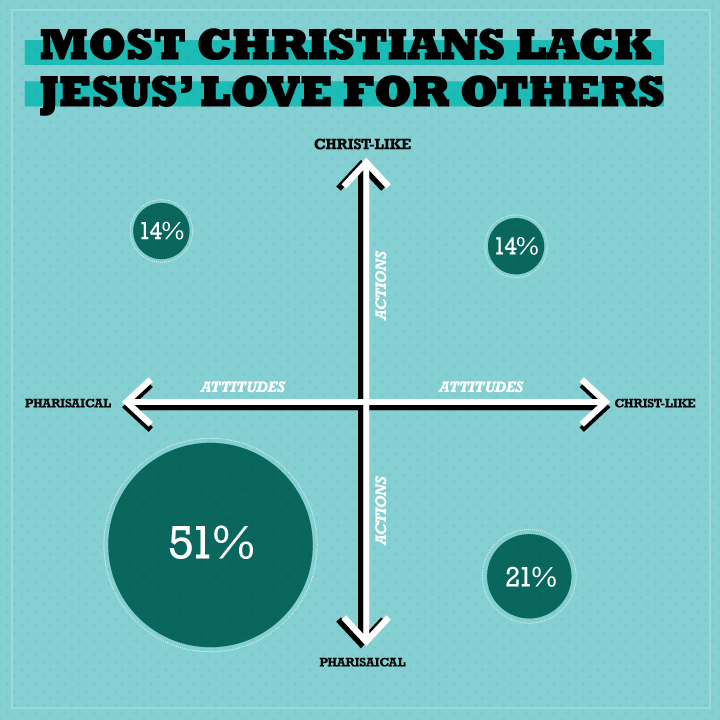
phariseesThe Barna Group released a new poll last week in which the proposed question was: “Are Christians more like Jesus or the Pharisees?” Christians get accused of hypocrisy all the time, so why not see if there’s some statistical evidence to back up the claim?

According to the Christian Post:

The findings were derived from 1,008 telephone interviews of which 718 respondents self-identified as Christian from Nov. 11 until Nov. 18, 2012. Respondents who identified themselves as Christian were asked 20 questions, ten of which compared their responses to Jesus’ actions and attitudes and ten of which compared their responses to the Pharisees of the New Testament.

You can go read my article about why this really isn’t a big deal over at Christ and Pop Culture.

Moses = Mini-Israel = Jesus (Or, Theological Inception)

inceptionOne principle of Christian theological interpretation of Scripture is the practice of identifying typology. To over-simplify it, in the flow of redemptive-history, the sovereign God who ordains all things, prefigures the salvation to be accomplished through Jesus Christ by way of types (events, persons, symbols) to which Jesus Christ’s person and works are the anti-type.

For instance, Adam points to Jesus as Second Adam through whom God is creating a new humanity (Romans 5; 1 Corinthians 15). Abraham’s willingness to sacrifice his only son Isaac points to the true Sacrifice of God’s only Son (John 3:16). The Tabernacle and Temple where God dwells with Israel points to the ultimate Tabernacling of God with humanity in Jesus Christ (John 1:14). Once you start to think in these terms, it’s almost impossible not to see Christ on every page of the Scriptures.

A particularly important type of Christ in the OT is Israel’s greatest prophet and deliver–Moses. In various ways, the NT reveals Jesus as the New Moses. Like Moses, Jesus escapes the death at the hands of a murdering king as an infant (Matt 2:13-18); he goes up on a Mount to give a new Law (Matt 5-7), which fulfills the old Law; he also institutes a new covenant that supersedes the old one (Lk 22); he rescues his people in a New Exodus of the Egypt of sin, death, and oppression into the Promised Land of salvation (Col 1:13-14). The list could easily be expanded.

While I’d known about these typological parallels between Moses and Jesus, I was nonetheless struck by this passage drawing out the way that Moses functions as a type and representative of Israel as well:

Moses, who narrowly escapes disaster by being placed in an ark in the River Nile (Exod. 2:1-10)…Moses’ salvation echoes backwards and forwards in the text; backwards to the salvation of humanity from the judgment of the flood by Noah (Gen. 6-8), and forwards to the Israelites’ future escape from the waters of the Reed Sea (Exod 14). Significantly…the figure of Moses, this child born as a type of saviour figure, not only saves Israel but also embodies Israel at times. His rescue from the water prefigures the nation’s salvation from the water; his escape after the death of an Egptian (Exod. 2:11-15) is a prelude to the Israelites flight after the death of many Egyptians (Exod. 12:29-39); his experience of being in the desert for forty years (Exod. 2:21-25) foreshadows the same for Israel (Num, 14:33); his divine encounters before the burning bush (Exod. 3) anticipates Israel before the fire of Sinai (Exod. 19-24).

Stephen G. Dempster, Dominion and Dynasty: A Theology of the Hebrew Bible, pg. 94

Moses is not only a type of Christ, but a type for Israel. Israel, God’s firstborn son (Exod. 4:22) is another type of Christ, who also wanders in the desert for 40 days and is tested (Matthew 4), so on and so forth. Moses is also Israel’s embodiment at times, which is a type for Christ’s representative embodiment of his newly re-formed Israel. We could chase the connections for pages, but what I’m saying is that this is like a theological version of Inception: we have found a type within a type within a type.

The intricacy, beauty, and inter-canonical-coherence of the biblical history of redemption should lead us to awe and worship. While human authors create inter-textual resonances, the sovereign Lord of time creates inter-historical ones.

Soli Deo Gloria

Karl Barth and C.S. Lewis on the Birth of ‘Chronological Snobbery’

progressivismIn assessing various arguments across over the years, I’ve found C.S. Lewis’ notion of the fallacy of “chronological snobbery” to be extremely helpful. He describes this flawed thought process as the “the uncritical acceptance of the intellectual climate common to our own age and the assumption that whatever has gone out of date is on that account discredited.” (Surprised by Joy,  p. 207) In other words, “That’s what people a hundred years ago believed, surely you can’t expect me to agree to that?”

Although writing off an idea simply because it is old is a fairly common move in our context, ancient philosophers, theologians, and moralists regularly appealed to the antiquity of a doctrine in order to establish its authority for the present. Somewhere along the line the witness of history ceased to be a source of credibility for an idea, and in some cases, became a liability.

I was reminded of this after writing the other day about Barth’s characterization of eighteenth century man as “the absolute man.” His attitude towards life, the natural order, politics, philosophy, the inner and outer self is that of an autonomous master who has come, or is coming, fully into his own such that his power and potentiality is increasingly limitless. It is an impulse that can be traced throughout various spheres of life including, as Barth points out, his attitude towards history.

Barth and the ‘Absolute’ Historians

Barth notes that the Enlightenment is often unfairly criticized as being historically “deficient.” He recognizes that it was during the birth of the modern academy and the proliferation of the various fields of academic discipline which accompanied the time that much careful research into ancient history was conducted.  At the same time, and it is here that Barth sees the force of the accusation, it is at this point that the problematic “critical study of history” began:

But what else can this mean but that it was in the eighteenth century that man began to axiomatically to credit himself with being superior to the past, and assumed a standpoint in relation to it whence he found it possible to set himself up as a judge over past events according to fixed principles, as well as to describe its deeds and to substantiate history’s own report? And the yardstick of these principles, at least as applied by the typical observer of history living at that age, has the inevitable effect of turning that judgment of the past into an extremely radical one. For the yardstick is quite simply the man of the present with his complete trust in his own powers of discernment and judgment, with his feeling for freedom, his desire for intellectual conquest, his urge to form and his supreme moral self-confidence.

What historical facts, even, can be true except those which to the man of the age seem psychologically and physiologically probable, or at any rate not improbable? How, in face of such firm certainty about what was psychologically and physiologically probable and improbably could eighteenth century man conceive of the existence of historical riddles and secrets? And what else in fact could the past consist of than either of light, in so far as it reveals itself to be a preparation and mount for the ever-better present ‘You’ll pardon me–it is my great diversion, to steep myself in ages long since past; to see how prudent men did think before us, and how much further since we have advanced’–or simply of darkness–a warning counter-example and as such, if you like, a welcome counter-example–in so far as the past had not yet sense the right road to the future, or had even actively opposed it.

The third thing which this attitude precluded was that the historian should take history seriously as a force outside himself, which had it in its power to contradict him and which spoke to him with authority. One way or another the historian himself said that which he considered history might seriously be allowed to say, and, being his own advocate, he dared to set for both aspects of what he alleged history to have said, its admonitory and its encouraging aspect.

Protestant Thought: Rousseau to Ritschl, pg. 36

Apparently if we’re looking for the birthplace of chronological snobbery as a dominant intellectual instinct, we need look no farther than eighteenth century man. At root, the impulse to chronological snobbery is the absolute one; it is the confident assurance that history has been in motion leading moral and historical thought to culminate in the worldview or cultural assumptions of the critical historian. Like nature, history was the raw material of time upon which the absolute historian could impose his moral will to reshape and retell the story of his own understanding of greatness. It must be understood, not on its own terms, but from the historian’s own, critical standpoint–one which at no point could be challenged by the object of its study.

Barth draws out a number of deleterious effects this mode of historical inquiry had on this generation of historians, one of the most instructive and damning of which was that, “although as a race they were very learned in historical matters, they were at the same time singularly uninstructed, simply because their modern self-consciousness as such made them basically unteachable.” (pg. 37) When you come to believe that the judgments of this age are inherently superior to those of prior generations simply because they are further down the time-stream, you’ve rendered yourself unteachable; you can’t be corrected or called to account or caused to question any of your own assumptions by any other age than your own.

On Avoiding Snobbery

Unfortunately, the Enlightenment’s absolutist instinct towards history is alive and well in popular Western culture. The myth of progress, and the unconscious tendency to assume a posture of historical maturity and superiority towards our benighted forbears is part of the intellectual air we breathe. Of course, 200 years on some of the details are different; a certain postmodern fuzziness enters into the equation. A touch of historicism or relativism may prevent some of us from judging the past too harshly, and yet the basic structure of thought, in which our ancestors cannot speak a real word of correction or instruction to the present still dominates.

How might we avoid rendering ourselves unteachable by the past? Lewis gives us some sound advice at this point. He says that whenever we encounter an idea or an assumption that we deem regressive, passe, or “out of date”:

You must find why it went out of date. Was it ever refuted (and if so by whom, where, and how conclusively) or did it merely die away as fashions do? If the latter, this tells us nothing about its truth or falsehood. From seeing this, one passes to the realization that our own age is also “a period,” and certainly has, like all periods, its own characteristic illusions. They are likeliest to lurk in those widespread assumptions which are so ingrained in the age that no one dares to attack or feels it necessary to defend them.

–ibid, pg. 208

In the words of Tim Keller, be prepared to “doubt your own doubt.” Be “radical” enough to question the assumptions of the present age–even the radical, progressive ones–in order to listen to ages past, which, at times, had a better feel for what life in the “age to come” is to be.

Soli Deo Gloria

In Christ It’s All There

puzzle pieceAll of us come to God at one point or another for some sort of help; we have a need, problem, guilt, angst, or longing we think he might be able to deal with. Some of us find it and some don’t. The difference between the Christian and the seeker who eventually walks away is whether we come to see, as Calvin put it, that there is no benefit from God that isn’t attached to Christ, “as if he alone did not contain all things in himself.”

In order to show the futility of such thinking Calvin’s comments expansively on 1 Corinthians 1:30 (“And because of him you are in Christ Jesus, who became to us wisdom from God,righteousness and sanctification and redemption”) and demonstrates that the sum of our salvation–our righteousness, wisdom, holiness, and redemption–are only had in Christ. Christ does not simply give these differing elements to us as separate gifts, but rather, he gives us himself, he unites us to his glorious person and in him we have and become all of these things. They are not infused from without or accounted to us in an external, extrinsic fashion, but are made ours because we have been knit by the Spirit through faith into Christ’s living body:

  1. First, he is made unto us wisdom, by which he means, that we obtain in him an absolute perfection of wisdom, inasmuch as the Father has fully revealed himself to us in him, that we may not desire to know any thing besides him. There is a similar passage in Colossians 2:3: “In whom are hid all the treasures of wisdom and knowledge.” Of this we shall have occasion to speak afterwards when we come to the next chapter.
  2. Secondly, made unto us righteousness, by which he means that we are on his account acceptable to God, inasmuch as he expiated our sins by his death, and his obedience is imputed to us for righteousness. For as the righteousness of faith consists in remission of sins and a gracious acceptance, we obtain both through Christ.
  3. Thirdly, he calls him our sanctification, by which he means, that we who are otherwise unholy by nature, are by his Spirit renewed unto holiness, that we may serve God. From this, also, we infer, that we cannot be justified freely through faith alone without at the same time living holily. For these fruits of grace are connected together, as it were, by an indissoluble tie, so that he who attempts to sever them does in a manner tear Christ in pieces. Let therefore the man who seeks to be justified through Christ, by God’s unmerited goodness, consider that this cannot be attained without his taking him at the same time for , or, in other words, being renewed to innocence and purity of life. Those, however, that slander us, as if by preaching a free justification through faith we called men off from good works, are amply refuted from this passage, which intimates that faith apprehends in Christ regeneration equally with forgiveness of sins...
  4. Fourthly, he teaches us that he is given to us for redemption, by which he means, that through his goodness we are delivered at once from all bondage to sin, and from all the misery that flows from it. Thus redemption is the first gift of Christ that is begun in us, and the last that is completed. For the commencement of salvation consists in our being drawn out of the labyrinth of sin and death; yet in the meantime, until the final day of the resurrection, we groan redemption, (as we read in Romans 8:23.) If it is asked in what way Christ is given to us for redemption, I answer — “Because he made himself a ransom.”

Commentary on 1 Corinthians 1:30

Calvin concludes that in the end, “we must seek in Christ not the half, or merely a part, but the entire completion. For Paul does not say that he has been given to us by way of filling up, or eking out righteousness, holiness, wisdom, and redemption, but assigns to him exclusively the entire accomplishment of the whole.” This is why we place our faith in Christ alone. God can deal with our issues, but he does it through Christ. The Christian is the one who looks to Christ and finally confesses with Peter, “Lord, to whom shall we go?” (John 6:68)

In Christ it’s all there.

Soli Deo Gloria

The Gospel–It’s a Union Thing

One more bit from Letham:

Indeed, the Christian faith can be summed up as, inter alia, a series of unions. There is the union of the three persons in the Trinity, the union of the Son of God with our human nature, the union of Christ with his church, the union established by the Holy Spirit with us as he indwells us. Each of these unions preserves the integrity of the constituent elements or members, being at once a real union and simultaneously not absorbing the one into the other.

Union with Christ: In Scripture, History, and Theology, pp. 37-38

You could spend the rest of your Christian life simply studying the various unions mentioned by Letham and still not come to the end of the grace and glory of the Gospel. The Triunity of God alone ought to, and will, delight us for all eternity, before we even get to the unions whereby God includes us in that life, becomes our brother, makes us part of the church, or sets us free from sin. Simply put: the Gospel is a union thing.

Soli Deo Gloria

Letham on Union with Christ and Salvation

unionRobert Letham briefly summarizes the connection between union with Christ and our justification, sanctification, and resurrection:

Union and Justification

According to Paul in Romans 5:12-21, just as Adam plunged the whole race into sin and death because of their relationship of solidarity with him, so the second Adam brings life and righteousness to all who sustain a relationship of solidarity with him

If, because of one man’s trespass, death reigned through that one man, much more will those who receive the abundance of gracee and the free gift of righteousness reign in life through the one man Jesus Christ. (Rom. 5:17 ESV)

Here Paul reflects on his previous statement of the one way of salvation from sin by the propitiatory death of Christ, which avails for all who believe (Rom. 3:21ff). Justification is received only by faith and is grounded in what Christ did once for all in his death and resurrection (4:25).  Paul’s point is that we are not addressed merely as discrete individuals; instead, we are a team of which we all were members. His sin plunged the whole team into sin, ruin, death, and condemnation. What Christ did for us was also done as the head of a team of which we are a part. He did it on our behalf, for us–and God reckons it to our account as a result of our being united, through faith, with him as the head of the team. Our justification is therefore grounded on union with Christ.

Union and Sanctification

In Romans 6:1ff, in answer to charges that his gospel encourages moral indifference, Paul insists that believers, the justified, live to Christ and do not give themselves over to sin.  This is because they died with Christ to sin and rose again to new life in his resurrection. Not only did Christ die and rise again for them, but they died and rose with him. Union with Christ is the foundational basis for sanctification and the dynamic force that empowers it. As Paul says, “Do you not know that as many were baptized into Christ Jesus were baptized into his death; we were buried with him through baptism into death, so that as Christ was raised from the dead through the glory of the Father so we too should live in newness of life” (6:3-4).

Union and Resurrection

Paul argues in 1 Corinthians 15 that the resurrection of Christ and the future resurrection of his church is one reality (vv. 12-19). Paul argues back and forth from one to the other. If Christ is not raised, there can be no resurrection of believers. If there is no general resurrection, Christ cannot have been raised himself. The two stand together. In fact, Christ has been raised–and so, therefore, will we be. Christ is the firstfruits of the resurrection of believers at his return (vv. 19-23). Not only is his resurrection first in time, but as firstfruits, it is of the same kind as the full harvest. Hence, it is the guarantee not only that the full harvest will be gathered but that both his resurrection and ours are identical. From this it is clear that the resurrection of believers at the parousia is a resurrection in Christ. The resurrections are effectively the same…Christ resurrection and the resurrection of the righteous, separated by indefinite time, are identical because the later occurs in union with the former.

Union with Christ: In Scripture, History, and Theology, pg. 5-7

Each of those points could be expanded upon at length, but this brief summary gives us a glimpse into the way the biblical record places our union with Christ at the blazing center of our salvation through Christ. There is no Gospel without union.

Soli Delo Gloria