Is Your Ministry Driven By Fear?

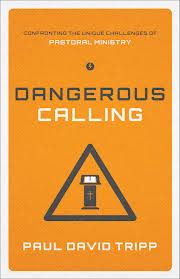
dangerousI pastor out of fear way too much. Odds are, if you’re a pastor and you’re reading this, you do too. I didn’t really grasp how much this affects my heart and ministry until a few days ago when I was listening through Paul David Tripp’s Dangerous Calling again. I’d realized in the past that, sure, I’ve got anxieties, and occasionally I’ll have a day when the weight of tasks left undone or forgotten starts to mount, but I never understood just how much fear has been in the driver’s seat. Though I’d heard about fears in ministry, in passing before, I don’t think anybody’d named it quite as clearly since I’d found myself plunged hip-deep in it over the past couple of years:

Perhaps this is a not-too-often-shared secret of pastoral ministry; that is, how much of it is driven not by faith in the truths of the gospel and in the person and work of the Lord Jesus Christ but by fear. It is very tempting for the pastor to load the welfare of the church on his shoulders, and when he does, he ends up being burdened and motivated by an endless and ever-changing catalog of “what ifs.” This never leads to a restful and joyful life of ministry but rather to a ministry debilitated by unrealistic and unmet goals, a personal sense of failure, and the dread that results.

Dangerous Calling: Confronting the Unique Challenges of Pastoral Ministry (pp. 125-126). Crossway. Kindle Edition.

This is dangerous on many levels, not only for the spiritual health of the pastor, but for the Gospel and the congregation in his hands.

Tripp points out an angle on a story I’d heard over and over again, but never really thought of as a piece of pastoral theology. Looking at Galatians 2, with Paul’s confrontation of Peter over ceasing to eat with the Gentiles because of the circumcision party that had arrived, Tripp points out that Peter’s failure is due to fear motivating his ministry, not faith. Peter’s theology wasn’t jacked. Paul knew that he knew that justification is by faith alone, not by Judaizing works. Still, out of fear of approval, or power, he was practically selling out the Gospel in his ministry.

Pastors, we can’t, absolutely can’t let this happen to us, or allow it to go on any longer than it already has. It’s absolutely normal to have some fear. Fear can actually be healthy at times in tipping us off to dangers we need to engage. That said, fear of anything but God should never control us.  In what follows, I want to briefly list and summarize the four main fears that can cripple your ministry according to Tripp, and then list his four tips for overcoming, or not letting them topple your ministry.

4 Derailing Ministry Fears – Every pastor has or will face one or all of these fears at some point in their ministry. They’re all pretty obvious, but it still helps to name them and know they’re coming.

  1. Fear of Me – Ministry exposes your junk pretty quickly. In the midst of finding out the wretchedness of pride, anger, inadequacy, weakness, and surprising wickedness of your own heart, it’s very easy to get discouraged. Looking at yourself long and hard in ministry can lead to a crippling fear of self that will side-track your ministry through discouragement. Of course, this makes the mistake that Gideon made in thinking the battle depended on the strength of his own arm, instead of that of his mighty God.
  2. Fear of Others -This classic fear is the “fear of man.” The problem with pastoring people is that it involves people; all sorts of people. Fans. Critics. Lovers. Haters. Quiet supporters. Vocal opponents. Barnabas. Demas. It’s surprisingly easy to find yourself pastoring defensively, out of a desire to silence or win over your critics, instead of a desire to please and praise God. Check your heart to see whether your closed door policy or the argument of that particular sermon was shaped by God’s wisdom or a very human fear of others.
  3. Fear of Circumstances – We are not the authors of our stories in the ultimate senses. God decrees the times and places we’re born–and a whole of difficulty afterwards. It’s very easy for the circumstances of life to unsettles us and destroy our confidence in God’s promises. Yes, God’s church won’t fail, but when the budget’s a little tight and that denominational fight’s coming up, it’s easy to let fear of present reality control our thoughts. Tripp reminds us that “Faith doesn’t deny reality. No, it is a God-focused way of considering reality.”
  4. Fear of the Future -We live in the reality of not knowing what the future holds. We are not God, we have not authored history and so what is to comes is still a vast, dark abyss to many of us and it haunts us. We live in fear of the future, struggling to believe God’s promises to be good despite the uncertainty. This can lead to sinful attempts to control, manage, and damage-control styles of ministry that do not result in fruitful congregational care. Instead, we are to entrust ourselves to the God whose will for the ages is Christ crucified and resurrected, a sure hope for the future.

4 Ways to Get Back On Track So how do we get back on track? Well, Tripp has four key steps, not silver-bullet, quick-fixes, but regular disciplines that will cut to the heart of your ministry fears, drawing you back to a ministry rooted in faith in Christ.

  1. Own Your Fears – Lying to yourself doesn’t help. Fears have greater power when they go unnamed. Instead, be honest, humbly take your fear to the One who is bigger than your fears. Let grace into the equation.
  2. Confess them and Repent – Doubling down on your sin doesn’t help, but only blinds you to the places it has its grip on your life. Confess the ways that fear has dominated your ministry, apologize those whom it has harmed and ask God to reveal the places where idolatry has led you to fear and sin.
  3. Watch your Meditation – You’re constantly preaching to yourself.  Only God knows your thoughts better than you, keep a watchful eye on the words your heart is uttering to yourself. Watch to see where fear is creeping in, where the weight of human opinion and circumstance is crowding out the weight of God’s glory.
  4. Preach the Gospel to Yourself – This is the only way to stay rooted and firm. We need to tirelessly remind ourselves the truth of the Gospel of our salvation. This Gospel is about a big God who saves us from problems beyond our reckoning–demon and death-sized problems. He can surely overwhelm what overwhelms us. This Gospel is about an acceptance that was purchased in the face of powers of hell and the weight of infinite guilt. What could ever separate us from our Lord?

It is as we remember these truths and are filled with awe of the God that we serve, that our human fears will take on their proper proportion, and we can begin to serve in faith, not fear.

Soli Deo Gloria

Vanhoozer’s 10 Theses On “Remythologizing” in Plain(er) English

remthologizingOne of the things I enjoy most about college ministry is that I’m often forced to think through whether I actually understand all the nerdy, academic theology I read. Exhibit A: Kevin Vanhoozer’s Remythologizing Theology: Divine Action, Passion, and Authorship is easily one of the top five most nerdy, theological texts I own. I’ve read it twice and constantly find myself coming back to it, even though it’s not something I’d teach a college Bible study through.

Case in point: just last week I happened to mention the text around one my college students and she immediately wanted to know what “remythologizing” was.

I mean, when someone asks you about Vanhoozer, what are you supposed to do? Ignore it?

That launched us into an hour-long discussion explaining the difference between systematic theology and biblical theology, Bultmann and demythologizing, the confluence of God, scripture, and hermeneutics that Vanhoozer calls “first theology” and so much more. (She asked very good questions.) In the middle of this crash course, I ended up talking through Vanhoozer’s “10 Theses on Remythologizing.”

Inspired by Lewis’ dictum that, if you can’t put it in common English, you probably don’t know it, I attempted to translate the theses into normal-person speak for my intelligent, but non-expert student.

Given that not many people have read this very important text yet–and it is very important text, one of the most important in the last 20 years, probably–I figured I’d attempt a command performance of the on the spot translation summary act I did for my student the other night, only in print, and maybe not as sloppy. Maybe. I’ll essentially be trying to translate Vanhoozer’s own elaborations on the theses, in plain(er), Rishmawy-language.

Ten Theses On Remythologizing
Briefly, in many ways Vanhoozer’s project is kind of a counter-point to Bultmann’s program of ‘demythologization’ that de-storifed (mythos is story) the Gospels into timeless existential truths. In contrast, Vanhoozer’s aim is to take seriously the shape and form of the story of Scripture as God’s own communication to us of Who he is, while also avoiding Feuerbach’s notion that all god-talk is simply human projections of our best attributes onto the screen of eternity. So Vanhoozer puts forward his own program of “remythologizing” that he initially summarizes in these ten theses.

One key term to know is “theodrama”, which simply smashes “theos” and “drama” together in order to speak of the divine actions in redemptive history (God doing stuff in the story of the Bible). When Vanhoozer says, “theodramatic”, it basically means “having to do with God doing and saying stuff in the Bible.”

The italicized quotations are his, and again, the rest is my attempt at translation:

1. “Remythologizing is not a “fall back into myth” but a spring forward into metaphysics.” (27) This is not about mythologizing the text, taking us back to all-too-human gods of myth, but taking seriously the mythos, the plotof the biblical storyline to see what it reveals to us about the nature of God and the world. What must the God who acts in this story be like in order to do and say the kinds of things we see in the biblical narrative. To do that, we have to pay attention to the narrative very closely.

2. “Remythologizing means recovering the “who” of biblical discourse.” (28) At its heart, remythologizing is a project focused on the main character of the drama, God, who presents himself to us in the Scriptures through Word and Spirit. What attributes and characteristics does this God show himself to have in light of what he says about himself?

3. “Remythologizing means attending to the triune “who” of communicative action.” (28) Remythologizing is necessarily trinitarian theology because the one doing the saying in the narrative is Father, Son, and Holy Spirit (or, Father, Word, & Breath). That will shape the way we understand God’s self-communication.

4. “Remythologizing conceives the God–world relation in primarily communicative rather than causal terms.” (28) Instead of more classical categories like ‘causality’, which has some more physicalist connotations, Vanhoozer wants to rethink God’s relation to the world on the analogy of communication. The God of Scripture is a speaking God who brings us the world into being through speech and saves it through his Word. That should shape the way we conceive things.

5. “Remythologizing means rethinking metaphysics, epistemology, and ethics alike in theodramatic terms.” (29)  Instead of trying to shove the story of the Gospel into some pre-made grid like modern science, history, or secular metaphysics, Vanhoozer wants us to do things the other way around. Instead, the story of the Gospel is the criterion by which we judge all else. In fact, it generates its own metaphysical categories around God’s communication made flesh, Jesus Christ.

6. “Remythologizing means faith seeking, and demonstrating, theodramatic understanding through fitting participation in the triune communicative action.” (29) Theology is not a neutral affair. To understand God’s actions in Christ truly, there is an active element. I must be trying to situate myself within the story appropriately for this work to be properly undertaken. (This was a tough one.)

7. “Remythologizing means taking Christ, together with the Spirit-breathed canon that the living Word commissions, as the chief means of God’s self-presentation and communication.” (29) “Long ago, at many times and in many ways, God spoke to our fathers by the prophets, but in these last days he has spoken to us by his Son” ( Heb. 1:1–2). Remythologizing pays attention both to the grand story of Scripture and the Incarnation at the center, as well as the various genres, modes, and methods God has used within it to communicate himself to us. In fact, the Scriptures not only report God’s communication, but are, in fact, part of the action.

8. “Remythologizing is a form of biblical reasoning, a matter of thinking about the subject matter along the various forms of biblical discourse that present it.” (29) It’s not a matter of thinking or reading the Bible, but thoughtfully paying attention to the way the Bible teaches us to think. For instance, paying attention to the particular way a metaphor is used to communicate truth as opposed to a straightforward syllogism.

9. “Remythologizing means attending to biblical polyphony and recognizing the dialogical nature of theodramatic testimony and theological truth.” (30) God isn’t a boring communicator and the subject matter is too grand to be captured in simple fashion. Vanhoozer’s project is about paying attention to all the different ways and means, as well as angles (history, eschatology, ontology) and perspectives (divine, human, powers) from which the truth is communicated in order to “do justice” to the diverse voices in Scripture. Remythologizing shouldn’t result in flat theology.

10. “In sum, remythologizing is best defined in contrast to demythologizing as a type of first theology.” (30) First theology is how your doctrine of God, Scripture, and hermeneutics all play into one another. Remythologizing is Vanhoozer’s proposal for how that all should go together in light of the triune God’s communicating activity in the theodrama of Scripture.

Of course, Vanhoozer does much more than just put forward a methodology in this work. He shows you what he means by all of this in the process of doing some real theology involving close reading of texts, addressing issues in the doctrine of God in like the Creator/creature relationship as well as God’s impassibility, developing a doctrine of the Trinity along the lines of communicative categories, and bridging the gap between Thomism and Barthianism.  Among other things.

The long and the short of it, though, is that remythologizing is a renewed program of thinking about God on the basis of what God has said and done in Jesus Christ and the Scriptures in the power of the Spirit. In many ways, it’s simply a retooling, a new articulation of a very old approach. Of course, as Pascal says, “Let no one say I have said nothing new; the arrangement of the material is new. In playing tennis both players play the same ball, but one plays it better.”

Vanhoozer plays the ball quite well in our postmodern context and theologians of all stripes would do well to learn from this master theological re-arranger.

Soli Deo Gloria

Holy Hilarity (Or, Don’t Forget Jesus in Your Jokes)

jokeCalvin’s not usually known for his sense of humor, nor should he be. I mean, he’s funny in print sometimes, but the general consensus is that he was a pretty serious fellow. Actually, Luther was the riot among the Magisterial Reformers. I mean, the man named a treatise “TO THE SUPERCHRISTIAN, SUPERSPIRITUAL, AND SUPERLEARNED BOOK OF GOAT EMSER OF LEIPZIG WITH A GLANCE AT HIS COMRADE MURNER: GOAT, BUTT ME NOT.” To my knowledge, aside from an early treatise satirizing the use of spiritual trinkets and other ‘holy’ objects, Calvin didn’t produce anything so…pugnaciously humorous. He did use the word “stupid” on numerous occasions to great effect, though.

In any case, he makes an important exhortation on the subject of humor in his comments in Colossians. When explaining what it means to “sing Psalms, hymns, and spiritual songs” to one another (3:16), Calvin would have us expand Paul’s encouragement to all aspects of our speech:

Psalms, hymns. He does not restrict the word of Christ to these particular departments,but rather intimates that all our communications should be adapted to edification, that even those which tend to hilarity may have no empty savor. “Leave to unbelievers that foolish delight which they take from ludicrous and frivolous jests and witticisms; and let your communications, not merely those that are grave, but those also that are joyful and exhilarating, contain something profitable. In place of their obscene, or at least barely modest and decent, songs, it becomes you to make use of hymns and songs that sound forth God’s praise.”

Commentary on Colossians 3:16

Now, we might find Calvin a bit dour here. Surely there’s a time and a place for nearly pointless jokes. I enjoy a funny cat-falling-off-of-a-fan video as the next guy. I also love the back and forth of a good-natured battle of witty replies and roasts. Still, I find myself challenged a bit here when it comes to the way I use my humor. We live in snarky, sarcastic, and downright mean culture. And, let’s be honest, it’s hilarious sometimes. Okay, I’ll be really honest and say that a good chunk of my own humor is mockery-related. I mean, I work with college students–things get ridiculous at times.

Still, for those of us called by the God who speaks life and redemption through his words, all of our words should somehow bear testimony to that grace. I’m not saying we should all start making Bible jokes, (which are incredibly hard to do well unless you: a. know a good bit of the Bible; b, have an audience who does as well; and c. have a good sense of timing). And yet, I am saying that we still have something to hear in Calvin’s comments here.

Too often our speech-patterns, including our humor, is too conformed to the patterns of the world. Calvin spoke more directly to obscene and frivolous speech, but it might equally apply to uncharitable utterances. I had a mentor who would constantly call out his boys in Sunday School for putting each other down and then trying to cover it with “Just Kidding.” He’d look at us and say, “Here’s the thing, most of the time it still hurts anyways and you don’t want to tear down your brother, so just find something else to say.” Or something like that. I was in the 5th grade. In any case, while I think some playful ribbing is fine among brothers and sisters, he had a point. How often are our words aimed at building up our brothers and sisters? Can we think of the last time we used our humor positively? To build someone up instead of chipping away at them?

Calvin seems to think there’s a way for all of our speech to be ‘profitable’, even our hilarity.

To some this might seem like a recipe for a stiff, humorless life. Of course, the challenge is to get more creative with your humor. If you can’t think of a joke that doesn’t somehow trade on negativity, attack, or a put-down, you might not just be lacking in charity, but in imagination.

Take it as a challenge then: it’s not that you’re going to entirely eliminate the occasional joke at another’s expense, but rather, try to see your humor as one more area where you can obediently submit yourself to Christ/  Strive to creatively build up the body in all that you do–even in your jests.

Soli Deo Gloria

The God of Theology or Reality? (Or, The Value of Spiritual Cartography)

desertTowards the end of Mere Christianity C.S. Lewis tackles the doctrine of the Trinity as well as salvation. Before he does so, he gives a bit of an apologetic for the task of teaching and studying theology to those who would say its unnecessary or dry in light of the reality of God that they’ve experienced in nature, watching a sunset, hiking in the woods, or in those dark moments where we’ve “felt” him.  This is easily among my top 5 favorite passages in Lewis’ works. And really, it’s so good, I don’t think it even needs more comment than to say that it’s as relevant today as it was 60 years ago. Take this passage to heart and meditate on it:

Everyone has warned me not to tell you what I am going to tell you in this last book. They all say “the ordinary reader does not want Theology; give him plain practical religion.” I have rejected their advice. I do not think the ordinary reader is such a fool. Theology means “the science of God,” and I think any man who wants to think about God at all would like to have the clearest and most accurate ideas about Him which are available. You are not children: why should you be treated like children?

In a way I quite understand why some people are put off by Theology. I remember once when I had been giving a talk to the RA.F., an old, hard-bitten officer got up and said, “I’ve no use for all that stuff. But, mind you, I’m a religious man too. I know there’s a God. I’ve felt Him: out alone in the desert at night: the tremendous mystery. And that’s just why I don’t believe all your neat little dogmas and formulas about Him. To anyone who’s met the real thing they all seem so petty and pedantic and unreal!”

Now in a sense I quite agreed with that man. I think he had probably had a real experience of God in the desert. And when he turned from that experience to the Christian creeds, I think he really was turning from something real to something less real.

In the same way, if a man has once looked at the Atlantic from the beach, and then goes and looks at a map of the Atlantic, he also will be turning from something real to something less real: turning from real waves to a bit of coloured paper. But here comes the point. The map is admittedly only coloured paper, but there are two things you have to remember about it. In the first place, it is based on what hundreds and thousands of people have found out by sailing the real Atlantic. In that way it has behind it masses of experience just as real as the one you could have from the beach; only, while yours would be a single isolated glimpse, the map fits all those different experiences together.

In the second place, if you want to go anywhere, the map is absolutely necessary. As long as you are content with walks on the beach, your own glimpses are far more fun than looking at a map. But the map is going to be more use than walks on the beach if you want to get to America.

Now, Theology is like the map. Merely learning and thinking about the Christian doctrines, if you stop there, is less real and less exciting than the sort of thing my friend got in the desert. Doctrines are not God: they are only a kind of map. But that map is based on the experience of hundreds of people who really were in touch with God—experiences compared with which any thrills or pious feelings you and I are likely to get on our own are very elementary and very confused. And secondly, if you want to get any further, you must use the map.

You see, what happened to that man in the desert may have been real, and was certainly exciting, but nothing comes of it. It leads nowhere. There is nothing to do about it. In fact, that is just why a vague religion—all about feeling God in nature, and so on—is so attractive. It is all thrills and no work; like watching the waves from the beach. But you will not get to Newfoundland by studying the Atlantic that way, and you will not get eternal life by simply feeling the presence of God in flowers or music. Neither will you get anywhere by looking at maps without going to sea. Nor will you be very safe if you go to sea without a map.

In other words, Theology is practical: especially now. In old days, when there was less education and discussion, perhaps it was possible to get on with a very few simple ideas about God. But it is not so now. Everyone reads, everyone hears things discussed. Consequently, if you do not listen to Theology, that will not mean that you have no ideas about God. It will mean that you have a lot of wrong ones—bad, muddled, out-of-date ideas. For a great many of the ideas about God which are trotted out as novelties today, are simply the ones which real Theologians tried centuries ago and rejected. To believe in the popular religion of modern England is retrogression—like believing the earth is flat.
Mere Christianity, Bk. 4.1 (Making and Begetting)

While I might like to say a little bit more about the role the Bible plays as the authorized set of interpreted experiences of God, this passage gives the lie to the idea that studying theology is of no practical value, or a discipline divorced from reality. If your goal is to actually know God, love God, worship God, as he is and not merely feel some vague fluff of a religious sense, then theology, or spiritual cartography, is necessary and vital.

Soli Deo Gloria

The Church Failed Millennials, Just Not in the Way You Think (CaPC)

churchIf you hadn’t already heard, millennials are leaving the church in droves leaving many church leaders scratching their heads as to what to do about it. Rachel Held Evans came out with a piece on CNN.com stepping into the gap to explain why they are leaving Apparently it struck a nerve; it was shared over 170,000 times. Speaking as the voice of a generation, she raised issues like our exhaustion with the culture wars, poor handling of teaching on sexuality, gay marriage, science and religion, and putative weakness on social justice. Instead, millennials want, and need, a deeper encounter with Jesus.

Of course, as the college and young adult guy at my church, as well as a millennial myself (freshly 27), I read her piece and the follow-up with great interest. I saw a number of those 170,000 shares in my Facebook feed, with loud cries of “Amen!” and some disgruntled nay-saying. I probably uttered both as I read it. While there were a number of insightfulreassuringly critical, and helpful interactions with her piece, addressed to the churches and readers in general, I wanted to briefly address myself more directly to my fellow millennials here.

You can read the rest of my piece at Christ and Pop Culture.

5 Tips for Finding Your Theological Balance

TightropeIf I had to name my theological pet peeves, right near the top would be what I’ve called pendulum-swing theology. You grow up hearing one particular view of something, you get sick of it, and you swing to the opposite extreme. Grow up a hyper-Calvinist, something happens and you swing to Open Theism. This happens a lot in atonement theology too. Sometimes when Evangelicals who’ve grow up on a steady diet of penal substitutionary preaching find out that Jesus did some other things, like defeat the powers, demonstrate God’s love, and so forth, instead of integrating them all into a holistic doctrine of reconciliation, they end up chucking PSA altogether.  Luther described the history of theology as a drunk man getting on his horse only to fall off the other side, only to repeat the process. This irks me.

Of course this means that finding even-handed treatments of just about any subject is one of my greatest delights. A sense for balance is one of the highest virtues a theologian can possess, while a lack of balance is a serious vice. In trinitarian theology, focusing on God’s oneness over his threeness, or vice versa, leads to either modalism or tritheism, neither of which really works well with the Gospel. Actually, they both destroy it. In Christology, the Chalcedonian definition is bedrock because it keeps us from tipping into an overemphasis of the Son’s divinity or his humanity to the exclusion or distortion of the other. Again, lose your balance, you lose the Gospel. God is both immanent and transcendent–tip one way or the other and you end up either in a soggy pantheism or a cold deism, neither of which leads to Gospel. You see how that works?

Now, that said, it’s important that we be balanced even our love of balance in theology. Bruce Ware explains this for us in his foreword to Rob Lister’s excellent, balanced book on the doctrine of impassibility:

Theological balance, like physical balance, is normally a sign of health and well-being. The reason such balance is “normally” but not exclusively best is simply that, in some situations, imbalance is clearly required. So physically, balancing equally on both legs with sustained upright posture is normally best, yet if one wishes to dive into a swimming pool, one must embrace the imbalance of leaning altogether forward–a position that if done “normally” would result in endless bloody noses and skull fractures. –God is Impassible and Impassioned: Toward a Theology of Divine Emotion, pg 16

In all sorts of areas then, balance is good. Sometimes, though, there is no balance to be had. Ware reminds us specifically of the Reformation solas. Christ is not one among many mediators, or else he is not Savior. We aren’t saved by by divine grace and our own human merit and if faith is supplemented by works, the Gospel is confused with Law. It can’t be God’s glory and ours. And, of course, as soon as we elevate other authorities alongside of Scripture, we begin to lose sight of this.

No, there are times when balance is no virtue, but a Gospel-destroying vice. The Gospel requires a few head-long plunges. In other words, a true sense of balance will recognize that there are times for both/ands and times for either/ors. Knowing the difference between the two is crucial to avoiding heresy and preserving the Gospel. Finding your theological balance can be difficult, so here are five tips for those still in process:

  1. Read your Bible like crazy. I mean, really, you can’t know the Scriptures too well. And by “knowing the Scriptures” I don’t just mean the canon within a canon you’ve chosen for yourself out of 3 of Paul’s epistles and a Gospel, or the book of James and Matthew. Get a few prophets, OT narratives, and maybe some Torah in there. God gave us 66 books to reveal himself, so ignoring bits will inevitably leave you off-balance. Get this one wrong and the rest won’t matter.
  2. Read more than one theologian. Focusing on that one pastor or thinker you found that you connect to, to the exclusion of all others is a recipe for imbalance. As a limited, fallible human, they’re going to be myopic somewhere. Expand your horizons a bit. Read outside your tradition a bit. Maybe even wander outside your century. Who knows what gems you’ll find.
  3. Read the key irenic, broad-focused theologians. Every theologian has their hobby-horses and pet issues, but some are well-known for their controversies and some for their broad, even-keeled treatments of issues. Look for those theologians who are widely consulted even across traditional boundaries. If there’s a Methodist or Catholic being quoted by a Reformed theologian, like a Thomas Oden, go ahead and pick him up.
  4. Read the key polemical theologians. I’ve recently set myself the task of reading some of the key theologians in the early church controversies. Ireneaus against the Gnostics, Athanasius against the Arians, Cyril against the Nestorians, Augustine against the Pelagians, and so forth. These teachers demonstrated an ability to defend or preserve some necessary tension, or holy imbalance, in the faith. The ability to defend one issue clearly is often-times a sign of having a good grasp of the whole.
  5. Read about more than one subject. This one should be obvious, but if you fixate on one issue, no matter how central it is, you’ll have balance issues. It’s okay to give sustained attention to key or interesting subjects, but if I’ve only ever read about the cross and never a treatment of the resurrection or the ascension, I’ll have a skewed view of Christ’s person and work. What’s more, usually you won’t have as good of an understanding of the couple of subjects you do study since every doctrine takes it’s meaning within the framework of the whole.

I could easily list more (and if you have any ideas, feel free comment), but the point is, don’t be that drunk guy falling off of his horse. Study widely, read deeply, and constantly check yourself against the whole of Scripture. Do that, and you may just begin to find your balance.

Soli Deo Gloria

Careful Reader

close readingCareful readers of Scripture see instruction in every turn of phrase. That’s how Calvin read the text. Trained as a humanist scholar, he was attentive to both the content as well as the form in which we receive it. Actually, more accurately, he understood that the way the authors said something was part of what they were saying. Commenting on Paul’s greeting to the Colossians, Calvin draws out the significance of his prayer of thanksgiving for the believers:

He praises the faith and love of the Colossians, that it may encourage them the more to alacrity and constancy of perseverance. Farther, by shewing that he has a persuasion of this kind respecting them, he procures their friendly regards, that they may be the more favourably inclined and teachable for receiving his doctrine. We must always take notice that he makes use of thanksgiving in place of congratulation, by which he teaches us, that in all our joys we must readily call to remembrance the goodness of God, inasmuch as everything that is pleasant and agreeable to us is a kindness conferred by him. Besides, he admonishes us, by his example, to acknowledge with gratitude not merely those things which the Lord confers upon us, but also those things which he confers upon others.

Commentary on Colossians 1:3

He notes first the rhetorical purpose of the greeting: to encourage his readers to faith and perseverance and endear himself to the readers at Colossae by assuring him of his warm affections for them. Calvin reads the text understanding that, though inspired and having apostolic authority, Paul writes at the human level as one who still uses common language, specific rhetorical forms, and rational approach to persuade his reader.

Next, and this is the significant portion, Calvin calls attention to the fact that when Paul wants to encourage them, he doesn’t congratulate them, he thanks God for them. Calvin not only sees what he says, but what he doesn’t say. Typically we would congratulate someone on their faith, hope, and love. Not Paul—he knows the true source of our goodness. Instead, Paul thanks God to acknowledge the theological reality that all blessings come from comes from his fatherly hand. Not only that, it points to a brotherly love grateful even for those things which don’t come directly to us. Again, even the shape of his encouragement is pedagogical.

Calvin was not a cursory or careless reader, and just as Paul teaches us in the way he encourages the Colossians, so Calvin gives us an example in our studies of the Word. Convinced that we are reading more than just an ancient text, but God’s own self-disclosure through human speech, we read that human speech with reverent sensitivity to every detail.

Soli Deo Gloria 

Sin: Self or Circumstances?

Society-of-the-spectacleChristianity has a simple message: Jesus saves from sin. When you start asking questions about what that means, you realize that simple message can generate, and indeed, necessitates some very complicated explanations. A simple question like “Who is Jesus?” can call forth debates that span centuries, councils, and countless learned treatises that, even when they establish a solid baseline, never fully come to the end of the issue.

So what of the other part of the equation? What are we talking about when it comes to the ‘sin’ that Jesus saves us from? While we could tackle this from a number of angles, one question that has been a rather thorny one in the modern period is whether sin is more of a personal or a social reality. Painting with a ridiculously broad brush, one could say that contemporary pop-Evangelicalism and mainline liberalism have typically taken opposing approaches to sin and sanctification.

Evangelicalism has typically focused on sin as a problem with individuals. I choose to sin, personally disobeying God, loving things other than the Lord my God with heart, soul, mind, and strength first. If society as a whole is debauched or unjust, it is because of the collective individuals of which it consists. Liberalism has typically given priority to society and structural issues. Sin is less about personal acts of unrighteousness, but rather unjust systems of oppression that trap people in harmful, destructive behavioral cycles. If holiness is to be achieved, we must change the social structures first and the individual issues will be mended from there.

So which is it? The sinful self or the circumstances that lead to sin? Jurgen Moltmann weighs in:

‘Change yourself’ some say, ‘and then your circumstances will also change.’ The kingdom of God and of freedom is supposed to have to do only with persons. Unfortunately the circumstances will not oblige. Capitalism, racism, and inhuman technocracy quietly develop in their own way. The causes of misery are no longer to be found in the inner attitudes of men, but have long been institutionalized.

‘Change the circumstances’ others say, ‘and men will change with them.’ The kingdom of God and of freedom is supposed to be a matter only of circumstances and structures. Unfortunately, however, men will not oblige. Breakdowns in marriage, drug addiction, suicide and alcoholism continue undisturbed. Structures which make people unhappy can be broken down, but no guarantee is attached that men will be happy.

Thus both must be done at the same time. Personal, inner change without a change in circumstances and structures is an idealist illusion, as though man were only a soul and not a body as well.  But a change in external circumstances without inner renewal is a materialist illusion, as though man were only a product of his social circumstances and nothing else.

The Crucified God, pg. 23

Once again, the Gospel is a simple message but it is not simplistic. We need salvation both from our own personal sin and rebellion, as well as the redemption of broken social structures that are generated by and aggravate that rebellion. Evangelical that I am, I think the latter is rooted in the former; in the narrative of Scripture, sin moves progresses from the personal (the garden, Gen. 3) to the social (Babel, Gen. 11). Still, it does not help to ignore either as we think through reality of redemption.

Now, as always, its beyond me to suggest how that all plays out. I work in the local church, primarily at the level of the individual, and am only now framing my theology of how the Church, either as an organism or an institution, should be engaged in social change. I do know that as I continue to pursue these questions, I don’t have to panic as the world is firmly in Jesus’ saving hands.

Soli Deo Gloria

A Few Good Links and a Hymn on the Fourth

Stare into the face of America.

Stare into the face of America.

I was going to write something this 4th of July, but I decided not to. It’s been a busy week already. Maybe next year. Still, as our nation celebrates Independence, I figured I’d offer up a few helpful links for your consideration:

First, Ryan Hoselton over at Christ and Pop Culture gives us a quick history lesson and reminds us:

On July 4th, Americans will wave our flags proudly, belt out our national songs triumphantly, and consume our barbecue and lemonade a little too freely. Why? Because we live in America, the best nation this planet has had the privilege to host. I’m grateful to be an American, and I enjoy the many freedoms and benefits that come with my citizenship. Nonetheless, our nation’s history has a track record for taking patriotism beyond gratitude and into nationalist idolatry. Many Americans through the years have harvested a superiority complex—a mentality and posture that has been harmful to our country and others. Patting our backs for our supreme eminence is not how we should be celebrating this holiday.

Brett McCracken offers up a defense of patriotism as nostalgia for home:

Patriotism is more existential than ideological, I think. It’s less about propagandistic justification for “exceptionalism-oriented” foreign policy (though it can be this) than it is a natural feeling of admiration and nostalgia for the place we call home.

My buddy Carson T. Clark offers up his annual downer of a post exposing 10 Myths about Independence Day (read at risk to your good mood):

This week a lot of American Christians are experiencing a patriotic fervor that’s premised upon historical falsehoods concerning our country’s origin. Let’s correct some of those misconceptions, shedding light on the Top 10 most unsightly facts that most of these folks haven’t heard, or refuse to acknowledge, about our country’s war for independence.

To lift your spirits, the best version of “Battle Hymn of the Republic” by Page CXVI. This one has been stripped of some the more nationally-idolatrous verses and is simply beautiful:

Finally, an apostolic injunction for Christians looking be faithful to King Jesus in the way they relate to their nation:

First of all, then, I urge that supplications, prayers, intercessions, and thanksgivings be made for all people, for kings and all who are in high positions, that we may lead a peaceful and quiet life, godly and dignified in every way. (1 Timothy 2:1-2, ESV)

Soli Deo Gloria

The Theological Importance of Knowing What ‘Time’ It Is

old-clockMost of us don’t think of knowing what time it is as a significant theological issue. Beyond showing up promptly out of respect for an acquaintance, or knowing when to get to church on Sunday, how could it be? According to Athanasius it could mean difference between heresy and orthodoxy. In his First Discourse Against the Arians he sets about answering objections to the Son’s deity from Scripture, showing that the Arians’ hermeneutics were hopelessly misguided and indeed, characterized by interpretive folly.

Bringing forward texts like Hebrews 1:4 “being made so much better to angels as the name he has inherited is more excellent than theirs”, they argued from this that it is clear that the Son is made ‘better’ in which case he could not be eternal, uncreated, admitting of improvement. Athanasius says that this exegetical failure is rooted in their ignorance of time.

Appealing to the Eunuch’s question to the apostle Philip, “of whom does the Prophet speak, of himself, or of some other man?” (Acts 7:34), he expounds the very important interpretive rule that:

…it is right and necessary, as in all divine Scripture, so here, faithfully to expound the time of which the Apostle wrote, and the person, and the point; lest the reader, from ignorance missing either these or any similar particular, may be wide of the true sense… (7.54)

Athanasius notes how persistent the disciples were about understanding these particulars, especially the time, so that they would not fall into error:

…And the disciples, wishing to learn the time of what was foretold, besought the Lord, ‘Tell us,’ said they, ‘when shall these things be? and what is the sign of Thy coming?’ And again, hearing from the Saviour the events of the end, they desired to learn the time of it, that they might be kept from error themselves, and might be able to teach others; as, for instance, when they had learned, they set right the Thessalonians. who were going wrong. When then one knows properly these points, his understanding of the faith is right and healthy; but if he mistakes any such points, forthwith he falls into heresy… (ibid.)

Scripture also gives us the negative example of what happens when one is temporally disoriented:

…Thus Hymenæus and Alexander and their fellows were beside the time, when they said that the resurrection had already been; and the Galatians were after the time, in making much of circumcision now. And to miss the person was the lot of the Jews, and is still, who think that of one of themselves is said, ‘Behold, the Virgin shall conceive, and bear a Son, and they shall call his Name Emmanuel, which is being interpreted, God with us;’ and that, ‘A prophet shall the Lord your God raise up to you,’ is spoken of one of the Prophets; and who, as to the words, ‘He was led as a sheep to the slaughter,’… (ibid)

Arius and his followers were making Hymenaeus and Alexander’s mistake, not noting the time with respect to the texts in dispute. If they had, they would have observed that the apostle is not referring to the Lord with respect to his pre-incarnate state, but within the economy of salvation with respect to his humanity. That is the time when God “spoke to us by His Son” (Heb. 1:2), and the Son obtained a more excellent name than the angels (Heb. 1:3, 4).  In other words, they didn’t understand the hermeneutical difference it makes that the story’s main character has a “history” that begins in eternity.

Christianity is a historical faith about things that took place in particular locations at precise times. Salvation is a dramatic reality which means that knowing which act we’re in can drastically impact the way we read the lines. While modern biblical studies have directed us to pay closer attention to the concrete socio-historical circumstances surrounding the texts, and recent narratival/canonical approaches have re-emphasized the redemptive-historical location of the text, Athanasius reminds us to keep an eye on the distinction between history and eternity.

Soli Deo Gloria