Mere Fidelity Cast: Surprised by N.T. Wright

Mere FidelityWell, we finally did it–now that Andrew got back from a jaunt to France, we sat down (figuratively) to chat about N.T. Wright. This will be a two-parter and in this episode we introduce Wright’s work, chat about his popularity, a few criticisms, and so forth. The second will follow up and address Reformed criticisms of Wright’s work. I’ll be honest, this was a fun one that I think you’ll enjoy.

As always, please feel free to share, review, and rate us on iTunes. Also, various show notes are linked over at Mere Orthodoxy.

Soli Deo Gloria

A Brief Definition of ‘Theology’ a la Plantinga

See, even Snoopy does theology.

See, even Snoopy does theology.

What is theology?

At first blush, that sounds like a grand, magnificent, heavy, and “meta” question. And it can be. For those who love it, the practice, discipline, and joy that is the study of theology requires and calls forth numerous complementary (and contradictory) explanations of just what we think we’re doing when we study and write “theology”–which is valid, and none of which could possibly be the last word on the subject. I myself have spent a decent bit of my time thinking and reading about over the last few years and I don’t think I’ll ever tire of it. It’s kind of like philosophy that way.

That said, in another sense, the practice of theology is quite straightforward and it’s a shame that so many people feel intimidated away from engaging it just at the sound of the word. It’s my conviction that because all of life has to do with God, to some degree every Christian should be trying to think theologically about life at some level.

What I want to put forward very simple (and hopefully helpful) definition of theology for those who seem to be scared off by the very thought of engaging in such an “exalted” task. To do so, I’d like to rip off Alvin Plantinga.

Plantinga opens his very short, but landmark work God, Freedom, and Evil thus:

This book discusses and exemplifies the philosophy of religion, or philosophical reflection on central themes of religion. Philosophical reflection (which is not much different from just thinking hard) on these themes has a long history: it dates back at least as far as the fifth century B.C. when some of the Greeks thought long and hard about the religion they had received from their ancestors. In the Christian era such philosophical reflection begins in the first or second century with the early church fathers, or “Patristics” as they are often called; it has continued ever since.

God, Freedom, and Evil, pg. 1

Did you catch that? Plantinga defines philosophical reflection as “not much different from just thinking hard” about some theme. And honestly, that seems about right.

What I want to propose is that the practice of theology, and especially Christian theology, could be very simply defined as:

“Just thinking hard about what God has said about himself.”

This isn’t overly technical. Nor do I think it’s very scary. But in a pinch it gets to the heart of what theology is all about.

Now, while I think it serves pretty well on its own, let me spell out a few basic implications of the definition:

  1. First, Christian theology is clearly a human practice. Even though we’re thinking about God, thinking hard is still something people do. There’s no escaping the human character of theology.
  2. Second, and this should be obvious, it’s a matter of thinking hard. While theology should involve prayer and practice, you inevitably have to use the mind God gave you to engage in theology. What’s more, you have to really use it. So, while I do think everybody should try to think theologically, don’t take that to mean that it’s obvious, or easy all the time. It’s not. But then again, what is there that’s truly worth doing that doesn’t involve some effort?
  3. Finally, and most importantly, Christian theology is rooted in divine revelation. The main thing that separates Christian theology from pure philosophy is that the Christian theologian doesn’t just think hard about “God” in general, or based on their own experiences, perceptions, and so forth. Christian theologians think hard about what the Triune God of the covenant has already told us about himself. The good news is that God has spoken, so we don’t have to figure everything out on our own. Now, different Christian traditions will then argue about the priority of the Bible in that revelation, the teaching of the Church, or how much principles of human thought drawn from outside ought to contribute to our theological reflection. As a Protestant, I’m going to do my best to give primacy and finality to the Bible. Still, at the end of the day, if a theology is going to properly claim the name ‘Christian’, it’s going to start with revelation and then work from there. The main test of theology is not how it makes us feel, nor how hip, interesting, or relevant it is to modern concerns, but how well it matches up with what God has revealed.

So there you go. At core, for everybody who’s too scared to start studying theology because it sounds so esoteric, scary, and abstract, remember theology is just “thinking really hard about what God has said about himself.”

So what are you waiting for? Grab your Bible, get to reading, and get to thinking.

Soli Deo Gloria

Does Discussing the One God Before the Triune God Distort our View of God?

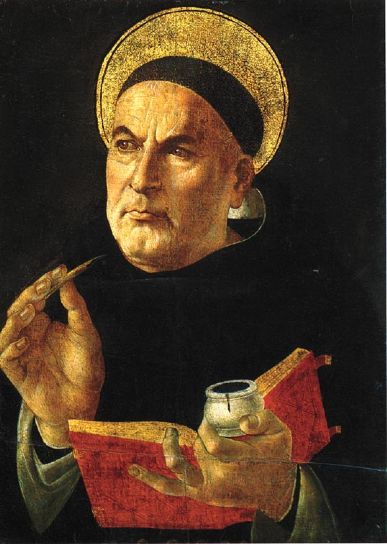
There's Thomas--he's probably  thinking about how to distort the doctrine of God right now.

There’s Thomas–he’s probably thinking about how to distort the doctrine of God right now.

In theology, everything is connected. One doctrine implies another and unless we’re careful, seemingly innocuous modifications in the order of arguments, or the way we proceed methodologically, can lead to surprising conclusions and unfortunate results. In the wake of Barth’s trinitarian revolution in mainstream theology, many 20th century theologians have argued that just such a process happened in classical theology when it comes to the doctrine of God.

Among others, Jurgen Moltmann and Colin Gunton gloomily point to Aquinas’ decision to order his discussion of the doctrine of God in such a way that he treats the divine attributes (simplicity, aseity, omnipotence, etc.) before he comes to the trinitarian persons. Because of this fateful decision, they say his discussion and the classical tradition following him comes up with a concept of God rooted less in the biblical revelation of God as Father, Son, and Holy Spirit, and more from generic categories of being drawn from Greek philosophy and human reason. From there, theologians are faced with the difficult task of trying to reconcile revelation and reason resulting in all sorts of theological puzzles plaguing the tradition ever since.

But is that necessarily the case? Does a decision to treat the divine nature or being prior to treating the doctrine of the Trinity necessarily result in a sub-trinitarian doctrine of God? Herman Bavinck actually faced that argument about 30 years before the Barthian revolution, answering the objection in the negative and defending the classical ordering in theology:

In the work of some theologians the locus of the Trinity precedes that of the attributes of God; and Frank even has serious objections to the reverse order. If treating the attributes of God before the doctrine of the Trinity implied a desire to gradually proceed from “natural” to “revealed” theology, from a natural to the Christian concept of God, then this procedure would undoubtedly be objectionable. But this is by no means the case. In the doctrine of the attributes of God the tradition includes the treatment of the divine nature as it is revealed us in Scripture, is confessed by the Christian faith, and exists–as will be evident in the locus of the Trinity–in a threefold manner. In order for us to understand in the locus of the Trinity that Father, Son, and Spirit share in the same divine nature, it is necessary for us to know what the divine nature comprises and in what ways it differs from every created nature.

And this is not merely a matter of logical ordering that classical theologians have come up because of their own prior methodological preferences. In this, they only follow Scripture:

In the matter of order, too, Scripture is our model. In Scripture, the nature of God is shown earlier and more clearly that his trinitarian existence. The Trinity is not clearly revealed until we get to the New Testament. The names of YHWH and Elohim precede those of Father, Son, and Spirit. The first thing Scripture teaches us concerning God is that he has a free, independent existence and life of his own that is distinct from all creatures. He has a being (“nature”, “substance”, “essence”) of his own, not in distinction from his attributes, but coming to the fore and disclosing itself in all his perfections and attributes.

Reformed Dogmatics Volume 2: God and Creation, pp. 149-150

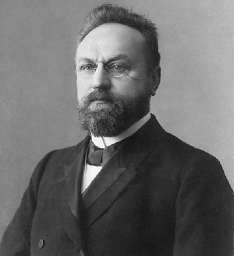
Truly dominant-looking theological man. It's a win for Reformed beardliness everywhere.

Truly dominant-looking theological man. It’s a win for Reformed beardliness everywhere.

From there Bavinck goes on to substantiate and develop with extensive biblical argumentation the doctrine of the independence of God at the head of his discussion of the attributes.

Now, I won’t say that critics like Moltmann and Gunton haven’t had some real beefs worth looking at. I almost never want to play the Greek card, but I’ll admit there are times when I read a classical bit of theology and think there’s a bit of the gap between their doctrine of God and their doctrine of the Trinity. Nor will I necessarily fault any modern theologians who’ve chosen to reverse the order and treat the Trinity first. I’m a bit partial to the method myself.

My point here is that Bavinck has given us two solid reasons for thinking that ordering our discussions in the doctrine of God in the classical way is not simply an exercise in “natural” theology, or will necessarily result in a non-trinitarian conception of God’s being. In order to speak about the way that Father, Son, and Spirit all possess the one divine nature, it’s quite logical to want to know what the divine nature is. Beyond that, and more importantly, this order of study mirrors the order of God’s own revelation. Yes, it is true that there are hints of the Trinity in the Old Testament revelation, but the doctrine only comes into its own in the New Testament. It’s hard to fault a theologian for modeling himself explicitly on Scripture this way.

Bavinck himself stands as a counter-example to this whole charge. Read through his explorations of the divine attributes and you’ll see their clear and extensive grounding in Scripture and revelation, including God’s triunity, long before he engages in any sort of theological development or philosophical reasoning that could be accused of being “natural” theology. What’s more, his locus on the Trinity is stunning; I’d be hard-pressed to find any distortions there.

In other words, what I’m is that, it does no good to write off the classical tradition as sub-trinitarian and refuse to read anything before Barth or Rahner. Individual theologians might be, but then again that’s true of modern theologians. What’s more, if you’re looking to do some theology yourself, you may have an option open to you considered closed off before.

It wouldn’t surprise me that there’s probably more than one way to testify rightly to the glory of the Triune God.

Soli Deo Gloria

Godzilla and the Salvific Destruction of God (TGC)

la_ca_0505_godzillaGodzilla–King of the Monsters. Born from the fallout of the Bomb, the original incarnation stood as the grotesque apotheosis of the atomic power we’d unleashed in the Second World War. Reflecting the atomic age’s ambivalence about our destructive capabilities, the now-iconic figure would appear in multiple roles across the 20-something movies that were made after Ishiro Honda’s original 1954 film. Appearing as an unmitigated villain in one, the leviathan would play savior against the threat of worse monsters in another, and lesser of two evils in the next. Beyond being fun monster flicks, the movies drawing on the Godzilla mythos represent various answers to the question, “What hath man wrought?”

Reframing the question, Gareth Edwards new Godzilla film recasts the monster as a part of the natural order. Godzilla and the behemoths he fights are ancient beasts from another, wilder, primordial age. They are stand as beings beyond our ken and our grasp. We could not create something of this magnitude and it is folly to think think could control them. They are Other. Indeed, as Ken Watanabe’s scientist character, Serizawa, says in what stands as the thesis line for the whole film, “The arrogance of man is thinking nature is under our control…”

Now, before anybody gets the impression that Godzilla is either masterful, or pretentious, it’s not. Edwards knows he’s making a summer monster movie and does a bang-up job of it. Huge, improbable monster fights, the destruction of cityscapes, and cinematic havoc. Still, sitting there in the theater, beholding the devastation, it’s impossible not to let the Edwards’ reframing of the question recast the destruction in a theological light.

You see, because just like the God of Israel, Godzilla brings destruction in order to save.

You can read the rest of this over at The Gospel Coalition.

Soli Deo Gloria


Casting Across the Pond Podcast

Last week I had a virtual sit-down with  a couple of my favorite writers from across the pond–Andrew Wilson and Alastair Roberts–and had a chat. Not only that, we recorded it and gave it a fancy name: “Casting Across the Pond.” That’s right kids, it’s our first podcast.

In this episode we take some time to talk about the connection between Jesus, the Old Testament, and our use of problem texts in our conversations on things like, say, the death penalty. It was a great convo and me excited for what’s to come.

You can find it here at Mere Orthodoxy, where Matt Anderson has graciously demanded that it be hosted. Please give it a listen and maybe share it with some friends. Thanks!!

But really, go listen to it.

Honestly.

Like, right now.

Soli Deo Gloria


Two Instances of NT Judgment (Or, Apparently Luke Didn’t Get the Memo)

sapphira-leclercEverybody knows that God allegedly struck people down in wrath in the Old Testament. We find dozens of instances in the Torah of God dealing out judgment in the form of illness or death, both on foreign enemies (Pharaoh & the Egyptians) as well as his own people (Sons of Korah, the snakes, etc.) for their sins. The pattern continues on through the historical prophets, as well as the the literary prophets. In text after text we see God prove that he both “kills, and makes alive” (Deut. 32:39; 1 Sam. 2:6), as he executes his righteous rule over the earth.

Of course, that’s the Old Testament. It’s now quite common to assert something along the lines of “Well, though the OT was really inspired (to a point), the fact of the matter is the OT authors were confused on some realities when it comes to God. How do we know this? Well, Jesus. I mean, Jesus is the fullest revelation of God, who does whatever he sees the Father doing, right? So Jesus never killed anybody nor did he teach anybody to kill anybody. Therefore, we know that God’s not the kind of God who would kill anybody or ever command anybody to be killed like we see in a number of OT narratives and legal passages. Now that Jesus came, we can overlay Jesus’ picture on the OT and see clearly which parts get God right and which don’t.” Or something like that.

This is the sort of thing Andrew Wilson has dubbed the Jesus Tea Strainer hermeneutic. I’ve dealt at length  with this sort of logic before in a few places myself, dealing with the problematic theology of revelation, hyper-pacifism, and it’s contradiction of Jesus’ own views of the Old Testament. Once here with respect to some unfortunate things Brian Zahnd said, and a second time with respect to Steve Chalke and Sabbath Sticks. Still, it’s worth pursuing the line of thought from another angle.

You see, it appears to me that if this logic were true, then the New Testament writers who had seen Jesus wouldn’t have gotten God wrong, right? I mean, they’d seen him face to face and received the New Covenant blessing of the Holy Spirit in union with Christ who would reveal all things to them, right? And anybody being discipled by them in subsequent years who also wrote inspired Scriptures should have that gift as well, right? So then, if any biblical writers might be expected to get the totally non-violent nature of God right, it would be the New Testament writers.

Except for it seems that they didn’t get the memo. At least Luke didn’t. Observe:

But a man named Ananias, with his wife Sapphira, sold a piece of property, and with his wife’s knowledge he kept back for himself some of the proceeds and brought only a part of it and laid it at the apostles’ feet. But Peter said, “Ananias, why has Satan filled your heart to lie to the Holy Spirit and to keep back for yourself part of the proceeds of the land? While it remained unsold, did it not remain your own? And after it was sold, was it not at your disposal? Why is it that you have contrived this deed in your heart? You have not lied to man but to God.” When Ananias heard these words, he fell down and breathed his last.

And great fear came upon all who heard of it. The young men rose and wrapped him up and carried him out and buried him. After an interval of about three hours his wife came in, not knowing what had happened. And Peter said to her, “Tell me whether you sold the land for so much.” And she said, “Yes, for so much.” But Peter said to her, “How is it that you have agreed together to test the Spirit of the Lord? Behold, the feet of those who have buried your husband are at the door, and they will carry you out.” Immediately she fell down at his feet and breathed her last. When the young men came in they found her dead, and they carried her out and buried her beside her husband. And great fear came upon the whole church and upon all who heard of these things. (Acts 5:1-11)

In this dark and disturbing story we see the judge of all the earth disciplining his church. Ananias and Sapphira greedily and foolishly conspired to lie to the church about their giving and in doing so lied to God himself, bringing down his judgment. Now, of course, it’s possible for you to try and speculate as to whether both Ananias and his wife both just so happened to have cardiac failures on the same day, in the same situation, (shared eating habits & whatnot), or you can accept it in line with the revelation of the OT as the hand of God.

Still, if that’s not convincing enough, jump ahead a few chapters to Acts 12:

Now Herod was angry with the people of Tyre and Sidon, and they came to him with one accord, and having persuaded Blastus, the king’s chamberlain, they asked for peace, because their country depended on the king’s country for food. On an appointed day Herod put on his royal robes, took his seat upon the throne, and delivered an oration to them. And the people were shouting, “The voice of a god, and not of a man!” Immediately an angel of the Lord struck him down, because he did not give God the glory, and he was eaten by worms and breathed his last.  (Acts 12:20-23)

Just as in the Old Testament, the Lord strikes down a tyrant who has been oppressing his people for his pride and arrogance. If in the last story Luke left the author of judgment anonymous, here he explicitly names him: “Immediately an angel of the Lord struck him down…” Now again, if you want to go about speculating as to whether this was a rogue angel, prone to disobey God, who nonetheless goes about defending his name…well, that’s your prerogative. It seems clear enough from the context, though, that this is to be taken as a divinely authorized judgment–angels are “messengers” bringing God’s righteous message here.

Of course, it’s worth pointing out that in both cases Jesus’ followers are not the ones executing judgment. A pacifist reading of these texts is totally possible; I don’t mean to settle that issue here. What I will say is that unless you want to go around calling into question the New Testament’s revelation of the character of God as well, then you have to have an amazing level of confidence in your ability to distinguish the really inspired bits from the not-so-inspired bits–one that I’ll admit I simply don’t share. This is especially the case when I consider that the inspired author of Acts is also the inspired author of one of those Gospels I’m relying on to get my picture of the non-violent Jesus who points us to a God who never violently judges people.

Now, this may not be enough to convince you, but I do hope it at least slows you down from the overhasty judgments about Jesus & the OT we’ve been seeing lately. Buying into these claims means biting off, chewing up, (and eventually spitting out) a bit more than you might have anticipated.

Soli Deo Gloria


The Ecumenism of Exile and the Future of Protestant Unity

Sanders, Leithart, R. Gaffin's grandson (RG4), and yes, I did get Trueman in a photo. Unfortunately it wasn't a selfie.

Sanders, Leithart, R. Gaffin’s grandson (RG4), and yes, I did get Trueman in a photo. Unfortunately it wasn’t a selfie.

Just this last week Biola University hosted conversation on The Future of Protestantism between theologians Peter Leithart, Fred Sanders, and Carl Trueman. Matthew Lee Anderson over at MereOrthodoxy.com got it into his head to pull these three together after and exchange last year between LeithartSanders, and, once again, Leithart, on whether Protestantism as a sort of “Glad Protestantism” should have a future, or whether it should give way to some sort of “Reformational Catholicism.” So, the newly formed Davenant Trust (which you should go check out and support!), Biola’s Torrey Honors Program, and First Things sponsored the whole thing, pulling Trueman in, because, well, he’s Trueman.

The conversation was wide-ranging and fascinating, and has been aptly summarized elsewhere, and can be viewed in its entirety here. Kudos to everyone involved in putting it on. These are exactly the sort of conversations Evangelicalism needs to having more often.

Two major, overarching comments before proceeding to my main point. The first is that it could have been aptly named the The Present of Protestantism, or The Past of Protestantism Recapitulated. In recently reading a Calvin biography, I couldn’t help but see in the differing approaches of Sanders, Leithart, and Trueman to the present challenges, an analogue to the original debates between the early Reformers who had varying contextual concerns. One seemed more concerned to reunify with Rome while beating off the Anabaptists, another to bring the Swiss and the Germans together, and still another to the Turkish threat looming from the East.

Second, the interlocuters seemed to be discussing the issues on different registers. Every time Sanders or Trueman pressed Leithart on some doctrinal or practical point, he’d say something like, “Well, yes, I don’t see any problem with you doing that,” or, “Yes, I don’t think I’ve ever denied that.” At that point I’d think to myself, “Well, that argument seemed to shrink quite a bit.”

All that said, there was one thread in particular that I thought deserved some development, or tugging on and that’s the issue of what we might call “the ecumenism of exile.” Do forgive the ramble the follows.

Ecumenism in Exile?

At the heart of Dr. Leithart’s proposal was a now widely-discussed figural reading of Israel’s history in which the split and reunification of Israel in the forge of the exile is something of a picture of, or historical precursor to, the reunification in which the public unity of the church is realized. It’s not merely the death of Protestant tribalism, but really, the eschatological coming together of Protestant and Roman two into one new man again, a la, Ephesians 2.

What was interesting to me was how that dovetailed with Trueman’s initial comments on the coming cultural isolation and marginalization of Christianity in the modern American West. He’s helpfully excerpted them here:

Christianity, at least in its traditional, orthodox forms, is about to see itself politically and socially marginalized in America in a way unprecedented in history.  Central to this is the way in which same sex marriage has come to function both culturally and legally. Recent judicial rulings and the appropriation of the idioms of the Civil Rights movement have effectively shut down intelligent discussion on the issue in the public square. This will change everything for Christians.   It is one thing to be regarded as intellectually foolish for believing in the resurrection of the dead; it is quite another to be regarded as morally dangerous for believing that marriage is to be between one man and one woman.  Societies generally tolerate idiots, allowing them to go about their daily business unhindered. Peddlers of hate typically have a harder time.  Conservative American Christians must realize not simply that they are no longer kingmakers in election years; they might soon not even be regarded as legitimate members of society in many quarters. 

These two threads were pulled together by Brad Littlejohn’s question in the Q&A portion to Dr. Leithart on the visible unity of the Church in the headlines of the Huffington post. Essentially, Littlejohn asked whether or not we haven’t achieved a sort of functional, public unity in the eyes of a progressive, unbelieving world that stands opposed to the supernaturalist, and especially moral conservatism of Christianity across confessions. In other words, the Huffington Post doesn’t care about what type of Presbyterian you are, or if you’re Orthodox instead of Catholic, so long as you’re on the wrong side of whatever social  justice issue they happen to be championing. And if, as Dr. Leithart mentioned, we do have Evangelical pastors reading papal encyclicals for moral guidance, linking arms with Catholics at the picket lines, haven’t we reached a place of effective public unity? Or something along those lines.

No, Yes, Maybe

As I listened to Littejohn’s question I found myself thinking, “Well, no. But, yes. But…maybe.” First, the no.

In the first place, we have to take into account the various liberal denominations out there, the rise of vocal, progressive Evangelicals on various social issues, and so forth. One of the things The Huffington Post and similar outlets like exploiting, in particular, is the kind of disunity on these social issues that American Christianity allows for because of its freewheeling character, lack of doctrinal discipline, and capitalism’s tendency to foster theological novelty as a form of entrepeneuership. Just last week the UCC sued for gay marriage in one state. I had a friend suggest, not implausibly, that next Time Man of the Year will probably be the first major Evangelical pastor to declare for gay marriage. So, in that case, I’d say the issue of public unity on moral and major theological issues is problematic.

And yet, and yet…I do find myself wondering whether the coming public exile, the marginalization of those who hold to a sort of historic moral orthodoxy (along with broadly Trinitarian confession), is precisely the cauldron that will purify, unify, and so forth. In other words, as conservative Catholics, Evangelicals, Fundamentalists, and Orthodox get kicked out of the public square for not playing by postmodern liberalism’s rules, we might possibly begin to band together since we don’t have the luxuries of living in Christendom, where clinging to denominational/doctrinal fights make sense.

Maybe this is where Sanders’ proposal comes into play. Maybe the future of Protestantism is a Trinitarian, Evangelical, “mere orthodoxy” that isn’t necessarily shy about distinctives, but doesn’t walk away from the table because of them? I do think there was quite a bit of overlap there between Sanders’ call for low church Evangelicals to return to the broad tradition, with Trueman’s more specific call to plunge deeply into Reformational, confessional, and yes, broadly catholic, sources. Perhaps that’s the answer?

I’m still not sure, though, for at least two reasons. First, I don’t have Leithart’s upbeat, postmillenial (possibly Hegelian) eschatology, so my convictions about the already/not-yet keep me from being so optimistic about the sort of almost institutional, visible, unity that he does. Truemanian pessimism has taken root for me here.

Second, this is where the issue of Trinitarian, Evangelical progressives comes in, which is the sort of thing that Sanders, Leithart, and Trueman didn’t address. Maybe that’s because they’re real theologians unconsumed with the blogosphere like I am. Still, in conversation with a couple of friends (Andrew Wilson and Alastair Roberts) we mused over the fact that if you try and go for some of that kind of lowest-common-denominator, Nicene, Evangelicalism as the baseline for agreement, then the challenge to present a public unity comes at you, not from the Catholics, but from the progressive left. Increasingly we’re seeing people who self-identify Evangelical (or Post-Evangelical), are Trinitarian, resurrection-affirming types, who nonetheless have left behind what I earlier referred to as the moral orthodoxy, that, though never enshrined in an ecumenical creed, up until about 40 years ago, was unquestioned across Christendom. The question that’s beginning to come up in these discussions is “Are the Apostles’ and Nicene Creeds enough?”

Unfortunately, there’s a sort of “damned if you do, damned if you don’t” logic here. If you let the progressives in, so to speak, then–liberal fantasies about Francis aside–you essentially lose the ecumenism of exile with our Roman Catholic and Eastern Orthodox brethren. But, if you don’t, then there goes your broadly Trinitarian, Evangelical unity, and it seems sharper confessional lines have to be drawn. So, I guess it’s a “no, yes…well, probably not, but maybe if we sort this out…”

This isn’t an easy issue and it will take brighter minds than mine to puzzle it out. I think there are some good early stabs at an answer out there, and yet, ultimately, this is a puzzle only the Lord of the Church can sort out. The Future of Protestantism, and indeed, Christianity as whole, is thankfully in his hands.

So, along with having important conversations such as these, let us not forget to pray with the early church for our deepest hope of unity: “Come Lord Jesus!”

Soli Deo Gloria

5 Theses on The Knowledge of God (Or, Bavinck Puts Himself in a Nutshell)

Truly dominant-looking theological man. It's a win for Reformed beardliness everywhere.

Truly dominant-looking theological man. It’s a win for Reformed beardliness everywhere.

Herman Bavinck developed one of the most comprehensive and sophisticated theologies of revelation of the early 20th Century. I was remarking to a friend the other day that one simply has to trade out a few of the names, update a few references here and there, and Bavinck could have cranked it out last year. What’s more, it’s stunning in its comprehensiveness and continued relevance.  The first volume of the Reformed Dogmatics alone clocks in at just over 600 pages and he continues to work out some of the implications and corollaries in the first pages of volume two on God and creation.

Of course, summarizing it all would be impossible. And yet in one helpful little passage, Bavinck does us the favor of summarizing himself in five broad points on the nature of our knowledge of God in revelation:

  1. All our knowledge of God is from and through God, grounded in his revelation, that is, in objective reason.
  2. In order to convey the knowledge of him to his creatures, God has to come down to the level of his creatures and accommodate himself to their powers of comprehension.
  3. The possibility of this condescension cannot be denied since it is given with creation, this is, with the existence of finite being.
  4. Our knowledge of God is always only analogical in character, that is, shaped by analogy to what can be discerned of God in his creatures, having as its object not God in himself in his knowable essence, but God in his revelation, his relation to us, in the things that pertain to his natural, in his habitual disposition to his creatures. Accordingly, this knowledge is only a finite image, a faint likeness and creaturely impression of the perfect knowledge that God has of himself.
  5. Finally, our knowledge of God is nevertheless true, pure, and trustworthy because it has for its foundation God’s self-consciousness, its archetype, and his self-revelation in the cosmos.

–Reformed Dogmatics Vol. 2: God and Creation, pg. 110

To paraphrase:

If you know anything about God, it’s because God himself has revealed it. We can’t reason our way up to God, or imagine what God is like on our own power, or natural, human abilities. For us to know what God is like, he has to take the initiative to tell us.

For him to do this inevitably involves adjusting himself to our limitations, so to speak, by using human language, concepts, and created reality to point beyond itself to the uncreated. Calvin described this as a nurse talking in baby-talk to the child she’s caring for, stooping to the child’s level to be understood.

Now, this initially seems problematic. Isn’t it possibly idolatrous to compare God to creation? Bavinck says not inherently so, because God himself created everything for the purpose of revealing his glory. In other words, creation is already suited to the task by God’s own humble and glorious design, as evidenced by the fact that we, as the crown of creation, are made to be Image-bearers.

That said, all of our knowledge of God is analogical–for every human or created thing we say God is like, we also have to see he is also unlike and beyond. These created pictures don’t reveal all there is to know about God, or exhaustively capture the reality of what the analogy is pointing to. As I’ve put it elsewherewhen you’re saying something about God or reading it in the Bible–whether about his being or emotions or something else–you have to insert a little qualifier because you’re comparing the transcendent, uncreated one to something created. Kind of like, “God is good (but not exactly the way you think of good)”, or “God is strong (and that is an understatement so serious you don’t have a category for it)”, or “God is angry (but you can’t think of it like sinful human anger)”, or “God repented (but not in the way that implies he didn’t know what he was doing)”. It’s like, but also unlike.

Of course, that doesn’t mean our knowledge of God isn’t any good. Simply because we don’t know God as fully as he knows himself, that doesn’t mean we don’t know him at all, or even falsely. No, our analogous knowledge is perfectly adequate knowledge, true and trustworthy, though suited to our cognitive capabilities.

So there you have it–Bavinck in a nutshell. Hopefully, that whets your appetite for the full dosage. I mean, if he can get all that done in brief paragraph, imagine what he can do with four volumes?

Soli Deo Gloria 

‘Once Saved Always Saved’, or ‘Preservation and Perseverance in Christ’?

one-with-christ-an-evangelical-theology-of-salvation-199x300From time to time I’m asked by one of my students whether or not I think you can lose your salvation. Being that many of them come to me as default Arminians, a few of them are clearly expecting me to dispel the silly notion that ‘once saved, always saved’ no matter what else you do. The idea that you could pray a prayer when you’re five, then go live your life in whatever kind of debauchery appeals to you for the rest of your life, and still be saved is repugnant to them. And rightfully so. Yet, still others, having caught the drift of some of my talks on grace, security in Christ, and so forth, strongly push back that grace is a grace and so it’s all covered. The idea of someone being lost by God is repugnant to them. And rightfully so.

At that point, the challenge is to explain a doctrine of perseverance that gives both the full assurance that those “whom he predestined he also called, and those whom he called he also justified, and those whom he justified he also glorified” (Rom. 8:30), as well as the need to “continue in the faith, stable and steadfast, not shifting from the hope of the gospel that you heard” (Col. 1:23).

In his excellent new work One with Christ: An Evangelical Theology of SalvationMarcus Johnson gives a little summary of the distinction between pop-level “once saved, always saved’ theology and a more classic understand of “preservation and perseverance in Christ” that ought to be helpful for anyone else struggling to explain this key truth. Prudently he begins with the words of the Heidelberg Catechism:

Q. 1. What is your only comfort in life and death?

A. 1. That I am not my own, but belong with body and soul, both in life and in death, to my faithful Saviour Jesus Christ. He has fully paid for all my sins with His precious blood, and has set me free from all the power of the devil. He also preserves me in such a way that without the will of my heavenly Father not a hair can fall from my head; indeed, all things must work together for my salvation. Therefore, by His Holy Spirit He also assures me of eternal life and makes me heartily willing and ready from now on to live for Him.

Notice the careful wording of the catechism: the believer is able to express complete confidence that she will never be separated from Christ, but salvation has an ongoing content that includes willingness and readiness to live for Christ. This is why Reformed theology has always insisted that salvation includes “the perseverance of the saints.” This does not mean that believers are saved because they persevere in their faith— as if continually to merit God’s grace— but that they persevere as they are preserved by God’s grace in Christ. The saints indeed stumble in sin, and may sometimes even doubt that they truly belong to Christ, but they will never finally be overcome by sin or lose their assurance of God’s fatherly care. The saints experience in their lives the faithfulness of Christ as they grow into his manifold blessings.

This is why a doctrine of “eternal security” that asserts that believers are eternally saved irrespective of the carnality of their lives, including the act of apostasy, is to be rejected strenuously. Quite simply, this construal fails to take into account that the believer’s eternal security is grounded in his preservation in the living, crucified, resurrected Christ, who will never fail to nourish his body. It is also typically reductionistic in its understanding of salvation, emphasizing that we have been saved to the exclusion of the equally important truth that we are being saved. The content of salvation, according to this view, is reduced to, and is often synonymous with, what is referred to as the “gift of eternal life,” an abstraction that neglects the truth that Christ is himself eternal life. The inevitable result is a doctrine of “eternal security” that vitiates the good news that God continually imparts the very life of Christ to his children. When Christ promises us eternal life, he is promising more than a gift to be redeemed when we die— a “get-out-of-jail-free” card, as it were. He is promising us a life in and with him that begins when we receive him, manifests itself throughout our lives, and necessarily wells up into eternal blessedness (John 4: 14; 15: 1– 8; 1 John 5: 18– 20).

Contrary to the rather crass notion of “ once saved, always saved,” the doctrine of preservation in Christ insists that the one who is united to Christ (is saved) inevitably experiences the manifold benefits of that union (is being saved). Christ gives us himself in salvation, and because he is the crucified, resurrected, living Son of God, salvation means a participation in his death, resurrection, and life. This means we not only receive the benefit of justification through this union, we also receive the benefit of sanctification. Sanctification, as we have seen, means not only that we have been made holy in Christ , but that we are being made holy in him —and this because we have been crucified and resurrected with him. In fact, the very design of our predestination in Christ is that we will “be conformed to the image of [God’s] Son” (Rom. 8: 29). We are told, further, that we were created in Christ Jesus “for good works, which God prepared beforehand, that we should walk in them” (Eph. 2: 10). God is in the process of sanctifying us “completely. . . . He who calls you is faithful; he will surely do it” (1 Thess. 5: 23– 24).

–One with Christ: An Evangelical Theology of Salvation (Kindle Locations 3548-3578). Crossway. Kindle Edition.

To be clear, it’s unthinkable that someone who has been truly united to Christ, placed in his unbreakable grip, to be lost. Johnson brings out the staggering implications if that were true:

When God joins us to Christ through faith, he is making real in our temporal lives what he has already decreed in his eternal will and accomplished in the incarnation, life, death, resurrection, and ascension of his Son. To be severed from the Son would require that the Father rescind what he has already decreed and accomplished. Every benefit that we have received from being united to Christ would have to be undone. Having already justified us in Christ, God would have to re-condemn us and repeal our participation in Christ’s righteousness; having already sanctified us in Christ, God would have to reverse our baptism into Christ’s death, burial, and new resurrection life; having already adopted us in Christ, God would have to make us orphans; having already resurrected us with Christ and raised us in his ascension, God would have to lower us into death and cast us from the heavenly realms; and having already glorified us in Christ, God would have to terminate the end to which he appointed all of his blessings. In sum, having joined us to Christ, God would have to dismember the body of Christ.

–ibid, (Kindle Locations 3523-3530).

And yet, it’s also similarly unthinkable that someone truly united with Christ, filled with the Spirit and the gifts of justification, sanctification, adoption, and so forth, to turn aside and live in unrepentant sin. In a sense, yes, “once saved, always saved” is true, but what the doctrines of preservation and perseverance make clear is that a more accurate summary is “once saved, inevitably saved.

 Soli Deo Gloria

Abraham Kuyper Was a Heretic Too

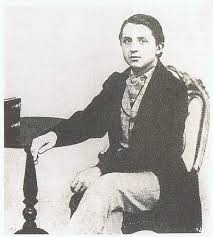
kuyperOver the last few years I’ve been saddened to see a number of teachers and preachers of the word of God, along with friends in the pews, begin a sad doctrinal decline, wandering into either questionable teaching, or even outright heresy. (And believe me, though I’ve given the issue a bit of thought, I’m not one to quickly throw out the ‘h-word.’)  The narratives are diverse, and the motivations multifarious, but in all, there is a tragic departure that brings me to distress for their spiritual lives and sometimes, for the churches they serve.

What do we do in these cases? What should we think when someone we know departs from the truth of the faith “once for all delivered” and veers into what we believe to be serious, and dangerous, error? While I don’t have an exhaustive answer, I think one course of action we ought to rule out categorically is completely writing them off as lost and beyond hope.

G.C. Berkouwer tells this story of theological giant, Abraham Kuyper:

When Kuyper referred to Modernism as “bewitchingly beautiful,” he doubtlessly recalled the fascination which the modernism of Scholten had exerted on him as a student. He acknowledges in 1871 that he too had once dreamed the dream of Modernism. And when at the age of eighty he addressed the students of the Free University, he harked back to the “unspiritual presumption” which had caused him to slip. “At Leiden I joined, with great enthusiasm, in the applause given Professor Rauwenhoff when he, in his public lectures, broke with all belief in the Resurrection of Jesus.” “Now when I look back,” he writes, “my soul still shudders at times over the opprobrium I then loaded on my Savior.” Kuyper concludes his lecture with a reference to the Incarnation of the Word and points out the unfathomable cleavage between the church of Christ and Modernism. Now that endorsement of Rauwenhoff’s negation and criticism has given way to adoration of the Son of Man, Kuyper recognizes in Arianism the image of the Modernism of his own day. “One merely has to write other names and other dates into the history of the Arian heresy, and, provided one takes it in broad outline, the course of Modernism is repeated.” –The Person of Christ, pp. 9-10

Early in his theological career Kuyper flirted with Modernism of the worst sort, and could even applaud the rejection of that most central, pivotal of gospel truths: the Resurrection of Christ. Let’s remember what the apostle Paul tells us:

For if the dead are not raised, not even Christ has been raised. And if Christ has not been raised, your faith is futile and you are still in your sins. Then those also who have fallen asleep in Christ have perished. If in Christ we have hope in this life only, we are of all people most to be pitied. (1 Cor. 15:16-19)

This is no ancillary, disputed, or adiaphora truth that Kuyper was fussing about with, then. This is the definition of denying the truth of the Gospel in the most pernicious way possible–much in the way some false teachers had in Corinth. And yet, in later years, we find this man at the center of one of the most powerful revivals of orthodox Reformed thought in Europe.

What this little story demonstrates, is that, while heresies need to be forcefully rejected, by the grace of God, even heretics can repent. To believe otherwise is to neglect two pertinent realities:

  1. Narrative – Persons are not static realities. We have storied identities full of development, regression, and plot turns galore. That’s what we see on display is the story of Kuyper. For all intents and purposes, Kuyper was a heretic. He ended a stalwart defender of the faith. Doubtless, countless others could be added to this list.
  2. Grace – No matter how grave the error, it seems that God can work in the lives of those who currently are turned against his gospel. Isn’t that what he did for you when you were in your unbelief?

Don’t get me wrong here. I think false doctrine needs to be confronted, rejected, and exposed. I also think that pastors who go off the rails and start preaching things contrary to the scriptures, especially central gospel issues, ought go through the proper disciplinary procedures instituted within their denominations or bylaws. The health of the flock and the truth of the gospel is too precious to be trifled with. What’s more, this isn’t even only for the good of the broader flock–it’s supremely unloving to allow the teacher who is in error to continue to propagate a false Gospel.

Still, what I would argue, is that beyond being confronted, in the economy of God, heretics, or those wandering into error ought also be forcefully prayed for. Let’s not forget that, “prayer enlists the help of him who can move heaven and earth” (Ryle) I don’t know what human means finally brought about Kuyper’s theological and spiritual renewal, but I do know that whatever it was, it came about through the grace of God who is sovereign over human hearts and minds. Who knows which of those walking in error today are being prepared for a mighty work for the Gospel tomorrow?

Soli Deo Gloria